True or False ?
Posted: May 23, 2025 Filed under: Child Centered Activities, Chronicles of a First Time Parent, What is an Art Farm | Tags: history, Magna Carta, philosophy, Plato, Socrates 1 Comment
This week in homeschooling, a true/false question arose: Is habeas corpus “…a constitutional right that the president has to be able to remove people from this country”? We have, by coincidence, been studying habeas corpus for the past seven weeks so this question did not come out of the blue. What has been wildly surprising is to see the topic so hotly discussed in the news.
Our humanities seminar has been titled “Habeas Corpus, Habeas Vox,” which I described in my blog dated 11 April. We began by considering those words. My son knows that a hearse carries a dead body, which is a “corpse,” so the Latin word corpus was readily understood. Habeas corpus, he knows, has something to do with a body, rather than a Presidential right.
But what to make of that Latin verb habeas? We approached that by studying the Ancient Greeks. The Spartans governed by a combination of diarchy (two kings ruled), oligarchy with limited democracy. The Athenians, however, invented direct democracy, not representative democracy like our modern form. From Athens we jumped to Medieval England to read about the Magna Carta. In his “end-of-week” essay on 2 May my son wrote:
This week in Humanities we studied the legacy of Greece. Greece is located on the Mediterranean Sea. In Classical Greece, Athens was a city state that created democracy, but only the men citizens could vote; slaves and women could not vote.
The Greeks were known for the arts, architecture and philosophy. In Athens there was a teacher named Socrates, known for teaching by the “Socratic Method” which was asking questions to engage his students. Socrates was put to death by the courts because they thought he was corrupting his students. One of his students was Plato, who wrote the Republic, which is his views of democracy.
Something else we studied was English history. I read about the Magna Carta, a document that gives liberties granted to the English people. The English Barons and Nobles argued and threatened a Civil War unless King John granted those rights. King John was very greedy and selfish. The Magna Carta was settled on June 15, 1215 when King John affixed his seal.
The Magna Carta gives guarantees for the people as a whole. The people could not be convicted of their crimes unless they were lawfully convicted. The Barons (Nobles) had the right to declare war upon the King. The Magna Carta is considered one of the basic documents of British law.
Next week we will do studying more on English history!
We next proceeded to study the English Bill of Rights, and then the USA Constitution. Last week, my son wrote:
This week, Harvard University discovered they had an original copy of the Magna Carta. There are seven original copies, and Harvard just happened to have one. In 2007 an original copy of the Magna Carta sold for $21.3 Million Dollars. This could not have come at a better time!
The Magna Carta was written in cursive script on a sheepskin parchment 810 years ago. It is a legal document that gave power from the King to a small group of Men. What the Magna Carta did was similar to the Greek direct democracy, by including people in political discussion, instead of the King alone.
The British Bill of Rights, signed in 1689, which is 336 years ago, was a sort of New Age version of the Magna Carta. For nowadays, the new age of the Magna Carta would be the Declaration of Independence. The British Bill of Rights basically gave everyone a fair trial and banned cruel and unnecessary punishment.
All of these political texts – the Magna Carta, the British Bill of Rights, the American Declaration of Independence, and all other that I have not mentioned – have slowly but surely lead up to what we have today; having “freedom,” a fair trial, and due process. Whether you like the current President of the United States or not, he continues to challenge these monumental, historic and foundational concepts.
Next week we will study the 1st Amendment and Abraham Lincoln’s Habeas Corpus Suspension Act. Harvard University’s discovery of an original copy of the Magna Carta is a wild coincidence as we are studying all this!!
I should mention that the essays are entirely my son’s concepts and phrasing, but together we edit them. As his scribe, I raise questions of grammar, word choice and structure; using the Socratic method, I challenge him but he decides as he dictates. We use library books as primary sources to frame the concepts, which he rephrases into his own words. If he does not know the word “plagiarism” he most certainly knows to avoid the practice.
As the school year draws to its close, we are preparing for a debate – 6th grade version – on the essential nature of government. Plato, the Athenian philosopher, argued that democracy is not viable, and the ideal form of government is a “benevolent dictator” more politely referred to as the Philosopher King. This is an argument for absolute strength in the Executive branch. In the current American moment, the occupant of that office is reviled by some as a dictator, and praised by no one as benevolent. My son shall argue in the affirmative that the strong leader must not only be unchecked and absolute in his control, but guided by good will, even compassion.
My son’s cousin, a Professor of Law, shall present the challenging argument, that “We the people” is a most radical proposition, but ultimately, an essential truth. We shall leave to him to define precisely how the many can actively support the one well being of the state. He shall argue that habeas corpus, which is due process, which is the rule of law, is the key to that functioning: the “Great Writ of Popular Sovereignty.”
My son clearly knew the answer to the true/false question, and summed the matter up well, saying, “Do you know how embarrassing it is when a 12-year old knows habeas corpus better than an adult?!! That is really embarrassing! It just makes Americans look really dumb!” He shall be fully prepared to debate what is good, what is benevolent, what is effective leadership for the state.
______________________________
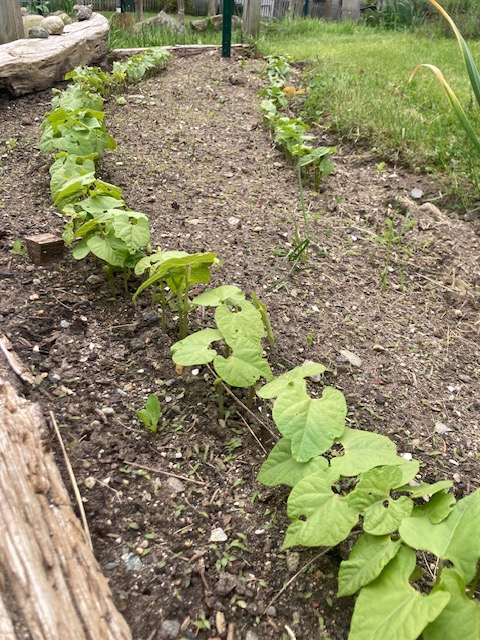
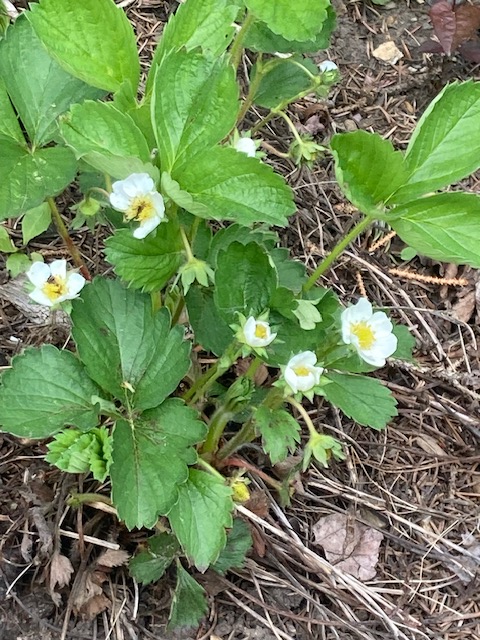
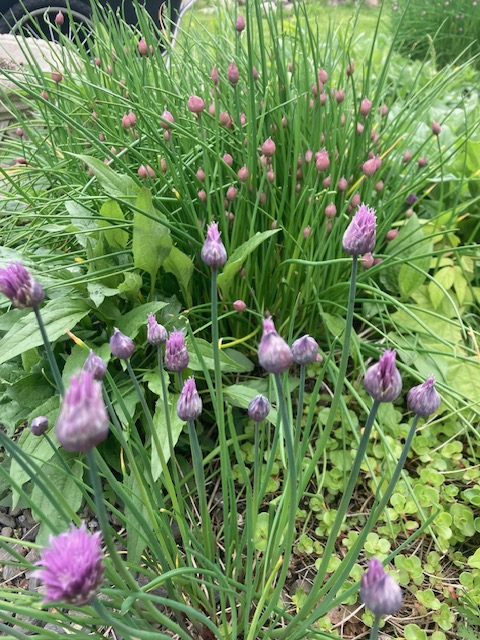
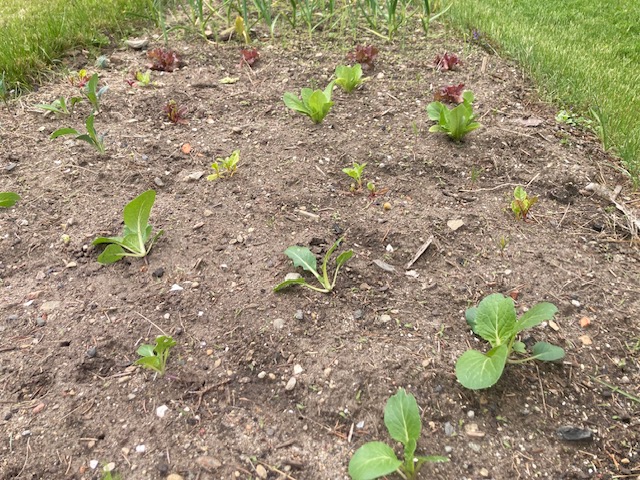
Summer is upon us! Our warm weather starts are ready to go into the ground: tomatoes, peppers, cucumbers, basil, and potatoes. Our cold weather starts do well and grow ever upright.



 an Art Farm
a finer curriculum, or a more rigorous sixth-grade one, it would be hard to find. delighted to know the Professor teaches at all points of entry. he thrills in the art of teaching, and he loves his dear dear sweet cousin! i learn right along with M, as i knew nothing about diarchies until now! thanks for schooling me, socrates.