Seven Sages
Posted: June 27, 2025 Filed under: consciousness, Little Green Thumbs, What is an Art Farm | Tags: akpallu, Hammurabai, hokmah, kwan yin, saptarishi, Solon 1 Comment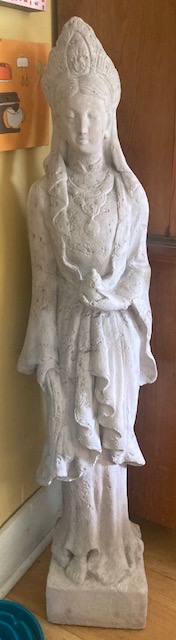
The tradition of the Seven Sages is common to ancient China, India, Persia, Mesopotamia, Greece and Rome. The sages, although different to each culture, always are the enlightened souls who brought wisdom.
To the Chinese, they were the “Seven Sages of the Bamboo Grove,” a group of scholars, writers and musicians of the 3rd century CE. In India, the “Saptarishi” are seven of semi-immortal status, the seers extolled in the Vedas, the sacred texts “not of a man, superhuman…authorless,” revelations of sacred sounds and texts heard by ancient sages after intense yogic meditation. To the Hindu, the seven stars of the Big Dipper represent these seven sages; the Dipper’s handle points to the North Star by which countless wise men have traveled the globe.
The “Apkallu” were the sages of Mesopotamia, the primordial beings, demigods, part man and part fish or bird, associated with human wisdom. In the 7th century BCE Greece, the seven were the philosophers, statesmen, poets and lawgivers renowned for their wisdom. Solon of Athens, a statesman and poet, is honored for his legal reforms, which shaped democracy. Pittacus of Mytilene governed Lesbos where he reduced the power of the nobility, to govern with the support of the common people. Thales of Miletus was a mathematician and astronomer, credited with predicting a solar eclipse, is said to have coined the aphorism “Know thyself,” which was engraved on the Temple of Apollo in Delphi.
The “Seven Wise Masters” is a cycle of stories of Sanskrit, Persian or Hebrew origins, which through the “Seven Sages of Rome” was passed down to German, English, French and Spanish in the form of popular street literature published throughout early modern Europe.
A modern version of this tradition resides above the doors of the House Chamber in the U.S. Capital, known as the “Relief Portrait Plaques of Lawgivers.” Seven (sic) sculptors carved bas relief plaques, using white Vermont marble, to honor 23 governing figures across world culture: Hammurabi, Justinian, Solon, Suleiman, Napoleon and Thomas Jefferson rank among these lawmakers, while Moses holds center court.
Of note, across all of these cultures, all of the sages are men.
In my experience, women rank among the sages who have helped shape my path. It is rather stunning to pause and consider the inherent bias, among world cultures, over millennia, that males alone are the sages. Wisdom, as an abstract concept, would be considered gender-neutral. But grammatically, the word “wisdom” – “hokmah” in Hebrew and “Sophia” in Greek – is feminine. Personified in literature, such as in the Book of Proverbs, wisdom is depicted as a female, referred to as “She” and “Lady Wisdom.
I should like to undertake a summer project to compile a list of the “Seven Women Sages.” It seems a Herculean task to select only seven, but such could be a worthy first pass at this project.
I should like to invite my readers to weigh in on this topic. Over coming weeks I shall endeavor to find stories of great women who have walked among us. Some may be a grandmother, or school nurse, others may be dominant figures of their times, but all shall be told as a counterpoint to the conventional wisdom of the Seven Sages.
In these chaotic times we do well to restore balance.
Note: Thanks go out to David Purpur who helped with information on the Vedic rishis.
______________________________
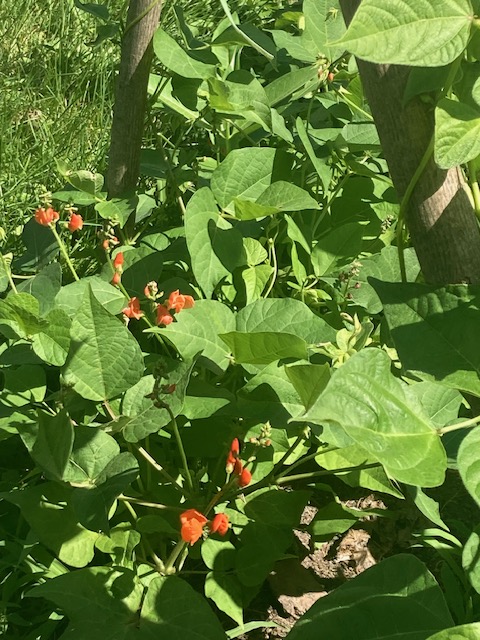
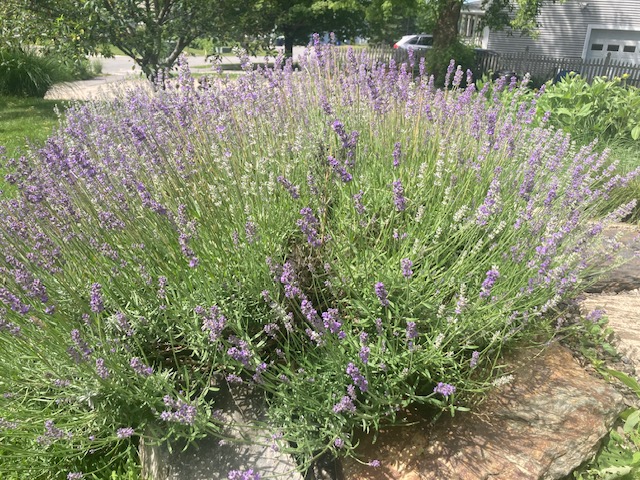
Our garden pushes ever higher: the Cuke climbs its trellis, fruit forms on the vine, pole beans push tendrils ever higher, greens come daily, grapes reach outward, lavendar is lush, potatoes have been hilled.






 an Art Farm
a fine summer’s project. Perhaps begin with Wisdom herself. Hildegard of Bingen might certainly be one. I’d add Dorothy Day to my list.