The Queen Bee
Posted: July 18, 2025 Filed under: Chronicles of a First Time Parent, consciousness, What is an Art Farm | Tags: beekeeping, bees, honeybees, Mother of All Living, nature, pollinators, royal jelly, the Shimmy, White Goddess Leave a comment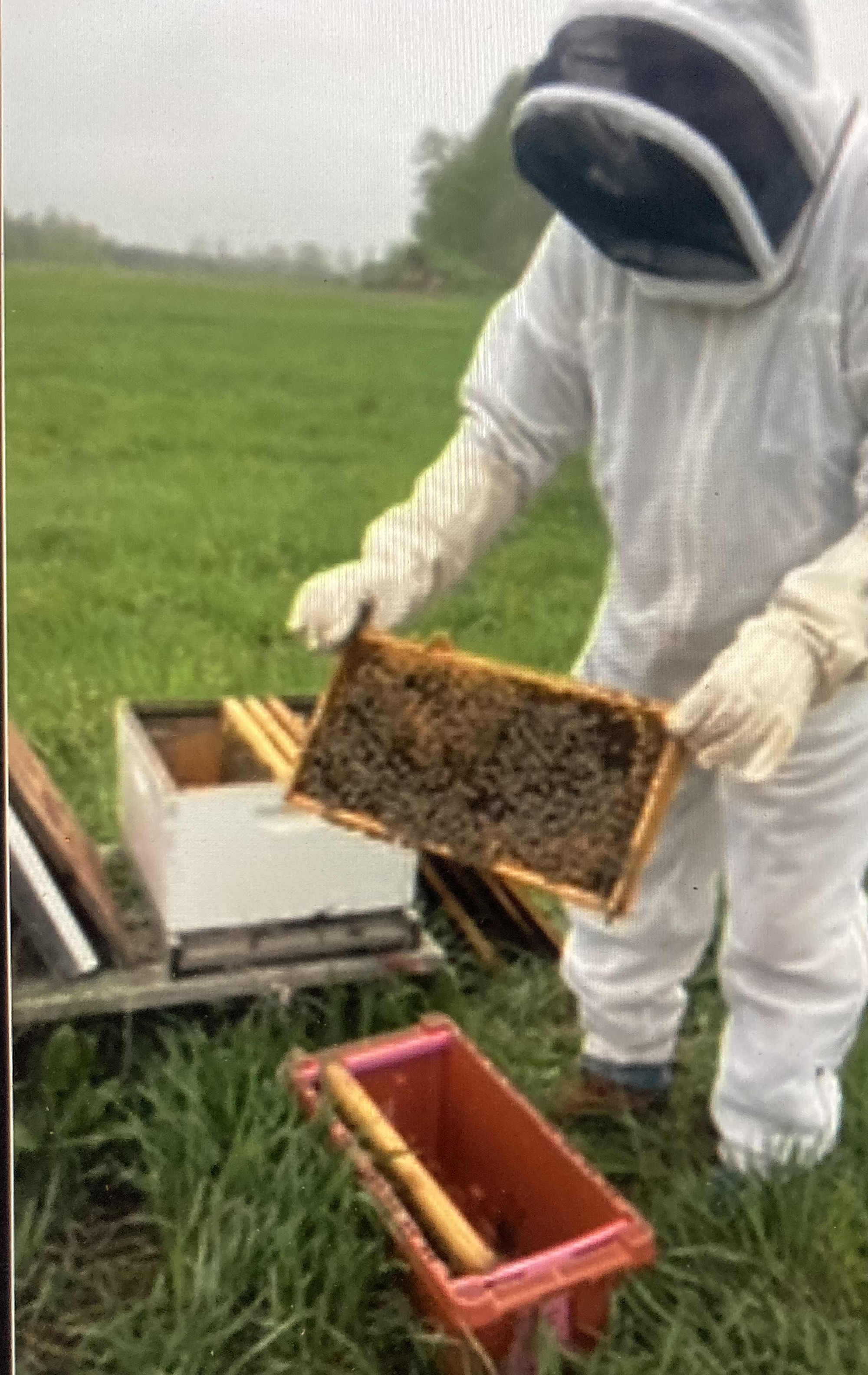
Honoring a good friend, who has a good friend passing; the ripples which cannot be denied that reinforce the web of our community, I write here of The Queen Bee.
The “bees knees” as slang means something excellent, of the highest quality. It arose during the “Roaring Twenties,” when flappers danced the Charleston, the Black Bottom and the Shimmy, their knees and elbows flailing wildly to the back beat of the jazzmans’ rhythms. It might be a corruption of “The Business,” 1920s street slang for something excellent, or perhaps it refers to pollen baskets on bees’ legs, the “good stuff” that worker bees carry back to their Queen.
In our quest for seven wise women, let us follow that “good stuff” back to the Queen Bee. In a colony of 20,000 to 80,000 bees she alone lays more than 1,500 eggs per day, an amount greater than her body weight. Coming of age at day 23 of life, her egg laying begins.
During incubation the Queens are fed protein rich royal jelly, secreted from the glands on the heads of young worker bees. Worker bees are fed a mixture of nectar and pollen – bee bread – but the Queen alone is fed the royal jelly, and as a result develops into the sexually mature female, the propagator of the colony. The colony’s future rests upon the fruit of her loins.
The Queen was selected by the worker bees, not through a democratic process, but through luck of the draw plus natural selection. The worker bees randomly choose a few larvae just days old, and begin feeding them the royal jelly. If multiple Queens emerge at the same time then they will fight to the death.
By genetics her stinger is not barbed, and so she is able to sting repeatedly. Sting she does, seeking out virgin queen rivals in her quest to kill. The Queen as nurturing mother sets firm limits; dominance is her key to control the colony. The Queen, to whom the worker bees bring “the good stuff” is the one and only; nature knows its rules and the colony falls in line behind its Queen.

The Queen’s hive is a model of efficiency and output. She weighs about 0.007 ounces, twice the weight of the worker bees, but their combined efforts produce 30-60 pounds of honey, or even upwards of 100 pounds or more, per year. Honey is half of the proverbial “land of milk and honey” which is an ancient symbol of abundance and prosperity. “Bread and honey” is slang for money, the coin of the realm. The Queen controls the honey, which is to say “the money” because she produces the abundance.
All things come to pass, and the Queen eventually matures into dominance. Some virgins escape the hive to avoid being killed, to seek out a new hive whereupon another fight to the death begins. If the prime swarm has both a virgin queen and an old queen, the old queen will continue laying eggs, until within a couple of weeks, she will die a natural death and the former virgin, mated, will assume the throne.
Natural selection is a biological imperative, but wisdom is an insight, something metaphysical, the source, perhaps, of that biological imperative. Our quest then leads back to the creator, God the Father in the current era, but the Queen of Heaven in older times. In the ancient Near Middle East, the Queen of Heaven embodied themes of love, war, fertility and motherhood, of which all the Queen Bee is a master.
About the Queen Bee, her celestial connectedness and her poetry, the Irish poet Robert Graves wrote, “…a true poem is necessarily an invocation of the White Goddess, or Muse, the Mother of All Living, the ancient power of fright and lust – the female spider or the queen-bee whose embrace is death.”
The Queen Bee, it seems, is one key to the wise woman.

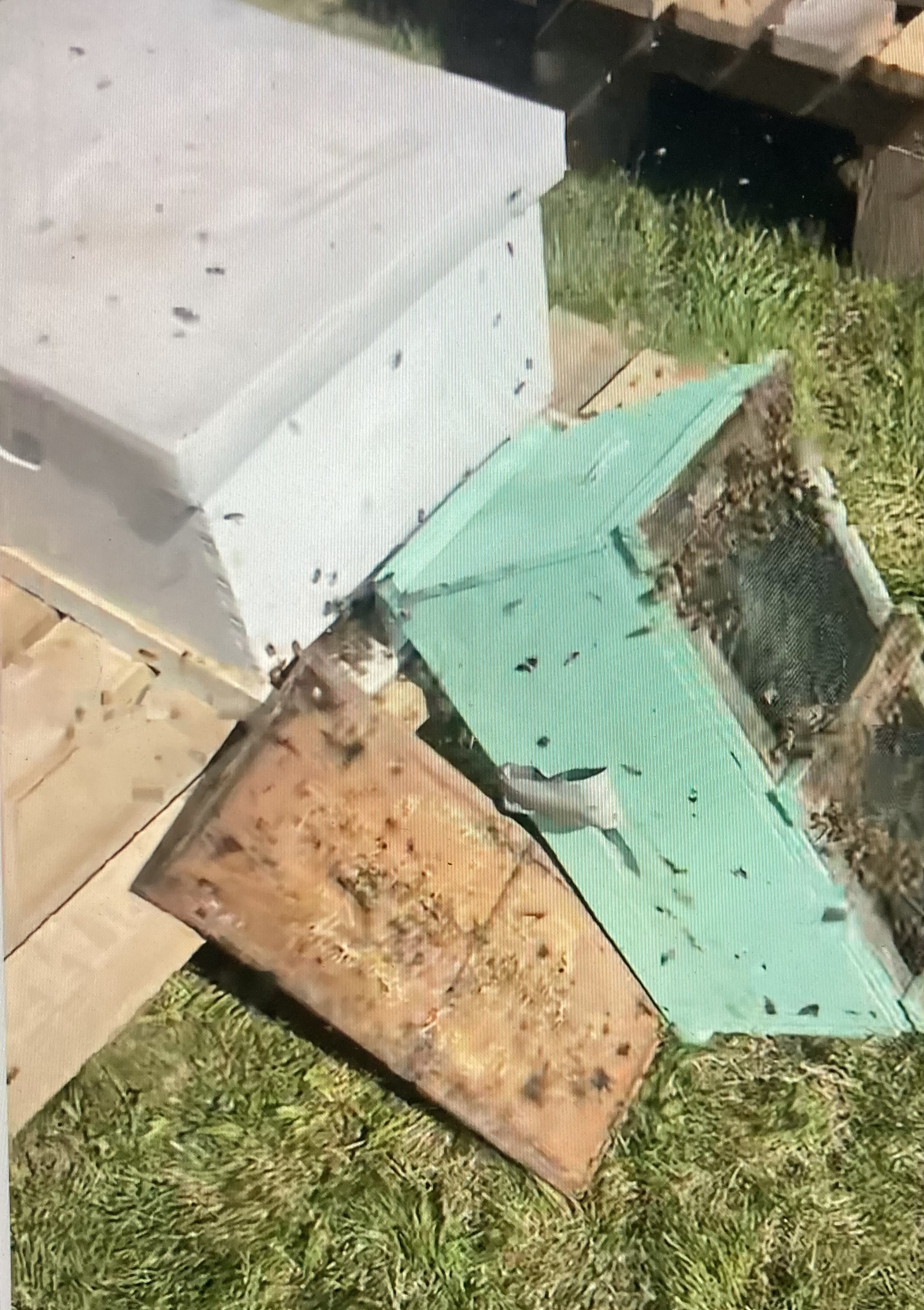
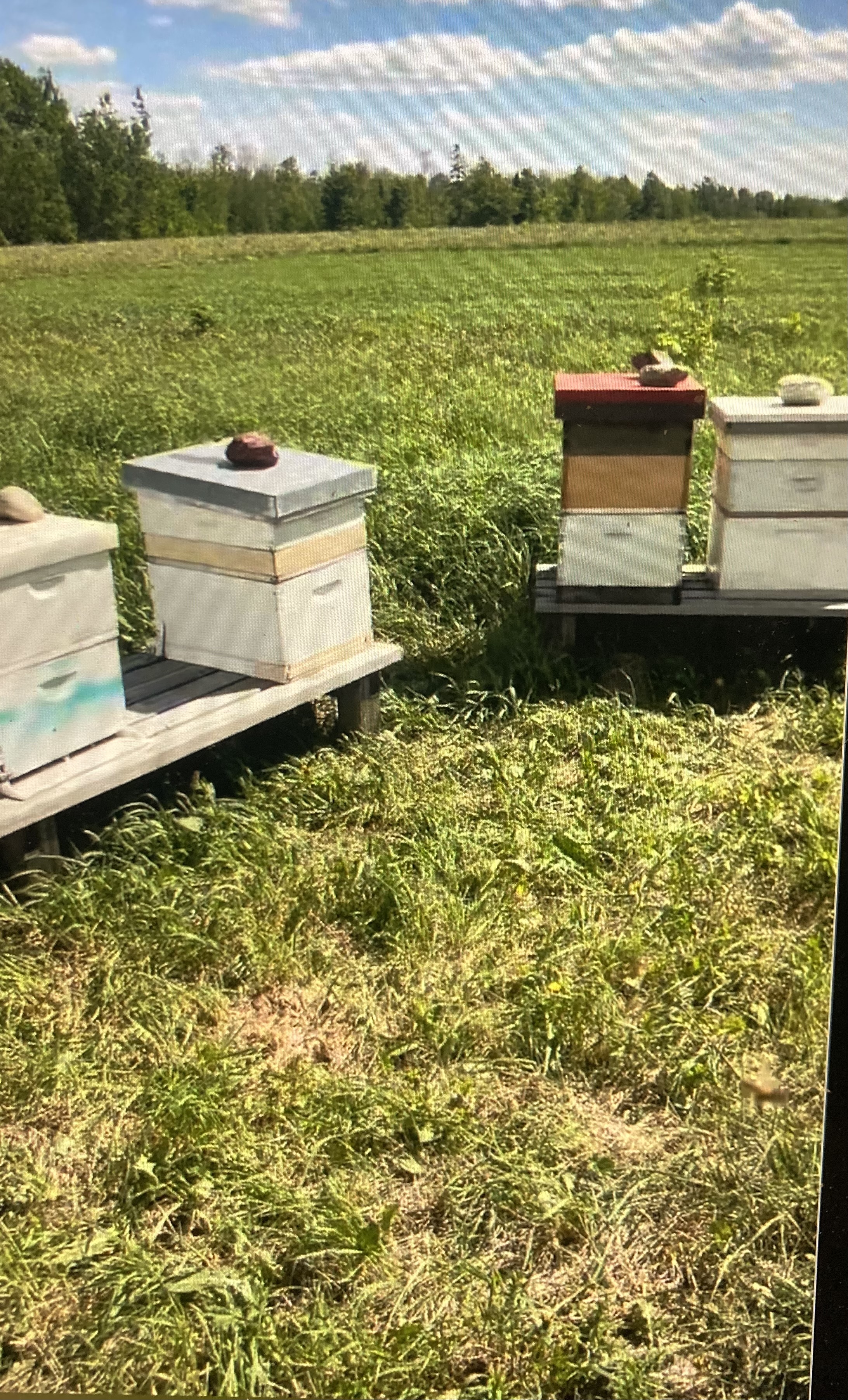
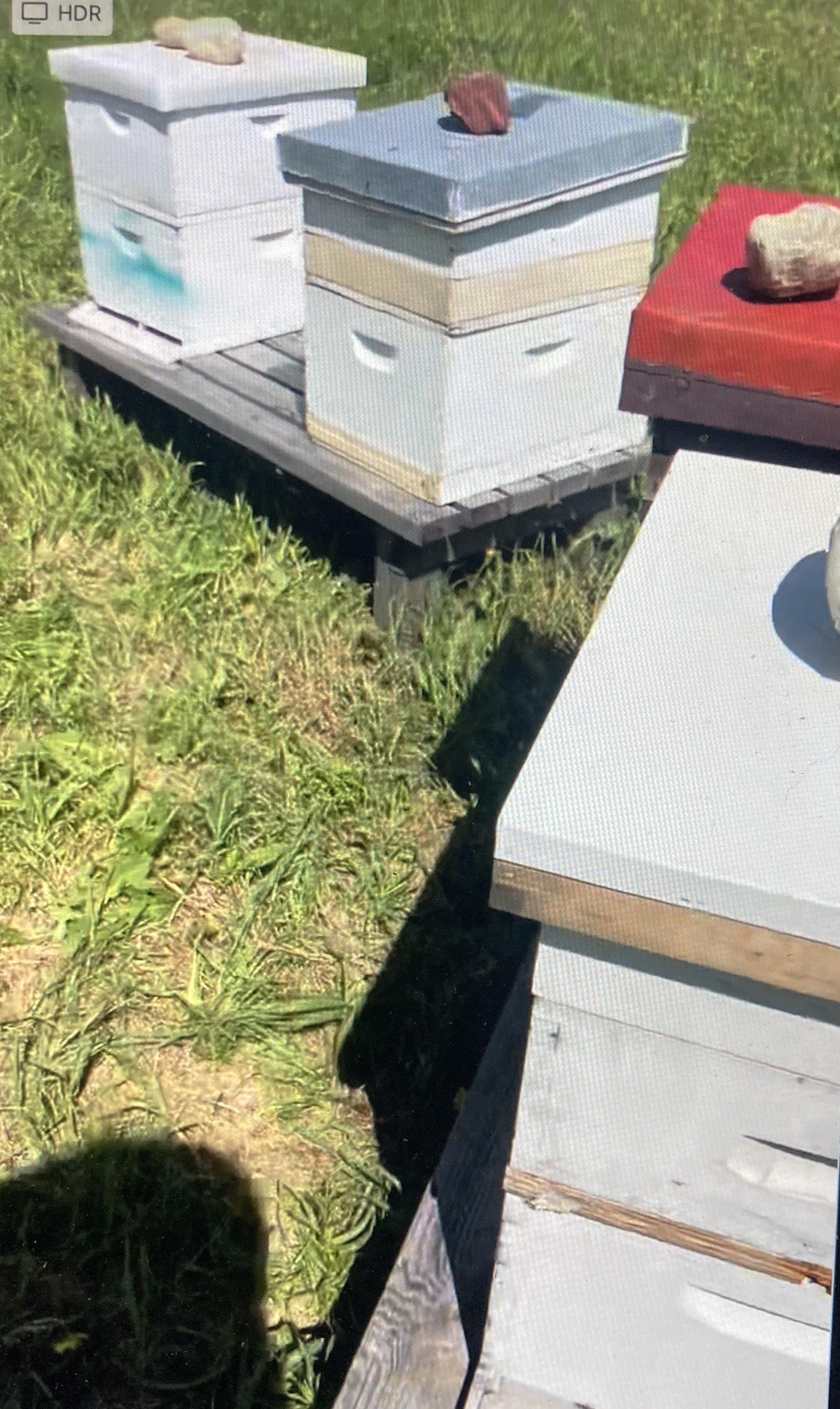

Credit where credit is due: one wise woman suggested this topic; Master Electrician, Master Cabinetmaker & Humble Farmer Kirk provided the beekeeping photos and inspiration; the curly-haired Goddess with whom I live asked sage questions about natural selection.
It takes a village.
_____________________________
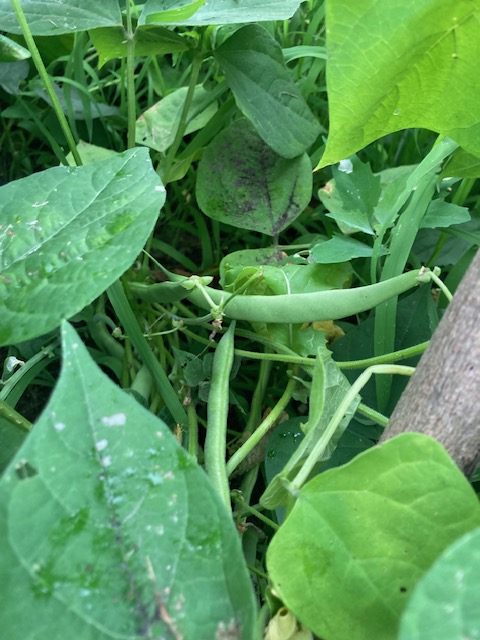
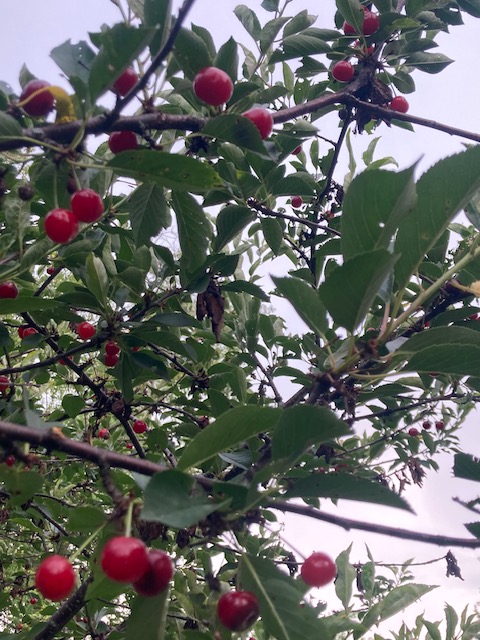
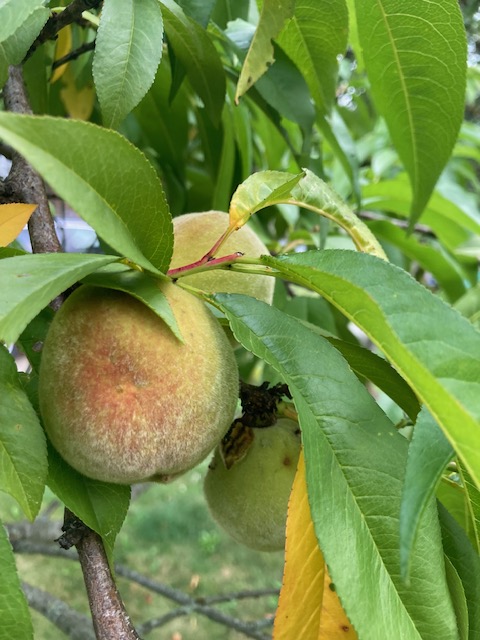
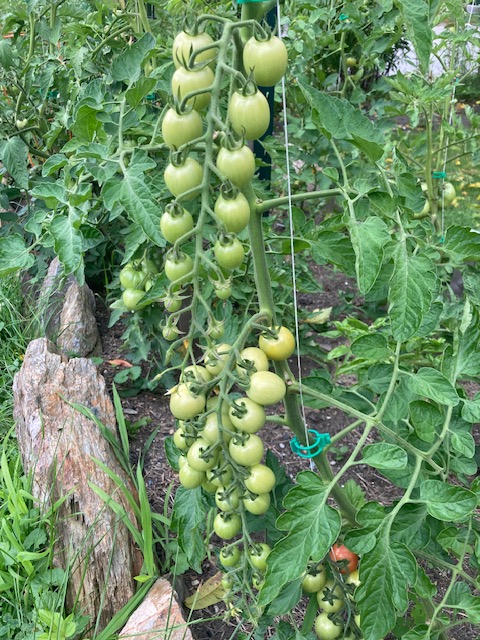
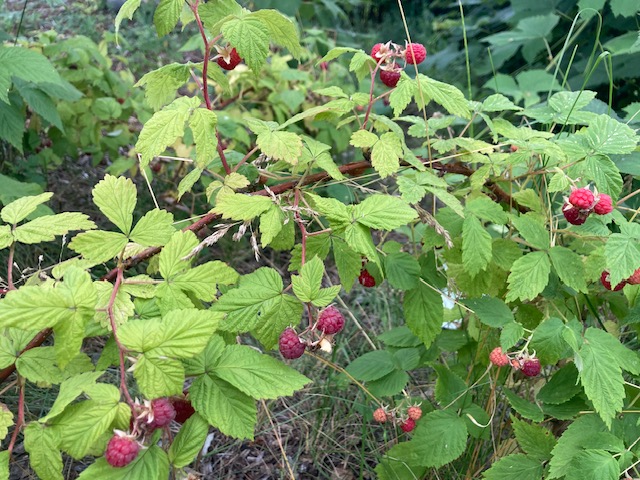
In the garden now – thanks to pollinators – fruits form, vines reach ever higher; mid-summer is past and the dog days descend.





 an Art Farm