Mr. Sneed and His Eggs
Posted: November 21, 2025 Filed under: Chronicles of a First Time Parent, Money & Banking, Portfolio - Elena's work, What is an Art Farm 2 Comments
The soundtrack of my childhood is best captured in the screech of sneakers on a parquet floor, the sharp, clear trill of a referee’s whistle, its echo down an empty gymnasium. On saturday mornings my father would drive my older brother and me to the Walden School for intramural basketball games. My brother is a gifted natural athlete who thrived there, while I found the game incredibly dull, the challenge of throwing a ball through a hoop entirely lost on me.
From my parent’s perspective it was a brilliant set-up; the house emptied for an entire morning, my Mother had quiet, my Father had no distractions and we returned home exhausted, which ensured a peaceful afternoon. My enduring intramural memory is that Mr. Sneed, who ran the program and was its referee, made his living trading eggs on the floor of the former Chicago Butter & Egg Board.
Eggs, to Mr. Sneed, were a fungible commodity, bought and sold in bulk. Eggs, in our house, were a thing scrambled, served with bacon, raspberry jam and English Muffins, for Sunday Brunch in our Dining Room after the 10:30am guitar mass at Holy Cross Church.
My Father’s day job was food merchandising. Known as the “Grocery Guru,” he wrote and lectured on three continents on how to market food at the retail grocery level. He was a stock and bond man so Mr. Sneed’s world of commodity futures contracts seemed an abstraction; foreign, opaque and mysterious. But there must have been some spark. I followed that path.
During college, I met people who worked in the markets and I visited the floor, experiencing the open outcry pits in action. Sheer bedlam, it was capitalism at its most raw and rapacious: I win, you lose, a buyer for every seller. Eventually I got a job at the Chicago Board of Trade’s Financial Futures floor, where more than $350 Billion in US Treasury bond future contracts change hands daily. It was the pits, an awful place to work, but fascinating all the same.
Eventually I became the “squawker,” reporting the 30-year Treasury bond pit action to a trading desk in Lower Manhattan, giving them an edge on market timing. The Broker for whom I worked had a superstition and would allow me to use black ink only, never red ink, which marks a loss in accounting, which he could not allow under his stead.
Following the pits I ended up managing the food service in a residence for women artists. From my office desk I traded stock options on the S&P 500. While working at a wholesale flower market I traded corn futures. Eventually I ended up trading the 30-year Treasury bond futures not on the floor but from an office. I never did well enough to quit the day job, but I never washed up, either. It was an odd fascination.
And so I came to meet the Wizard, a CPA active in off shore banking who was born in the 1920s in Nemaha County, Kansas. He had been named in honor of the traveling banker who visited the town, “an old Kansas man, born and bred in the heart of the Western Wilderness.” Close to the 100th meridian, it is hard to fathom how remote Nemaha County would have been in that age before electricity, running water and phones. It was Dorothy’s Kansas.

By conventional terms he was the Father of a college classmate, but in truth he was the Wizard of Oz trading the futures markets. He was curious about my experience and we began talking. Eventually he told me about the sanctus sanctorum, the Golden Fleece, the goose that lays the golden egg, which was the “cash forward discounting of 108% bank debentures.” And so into the land of smoke and mirrors I went.
He introduced me to a financier who had helped launch McDonalds and whose Uncle had financed the Hollywood mavens: Marcus Lowe, Samuel Goldwyn and Cecil B. DeMille. I found myself managing discussions with Sheik Mohammed Had, an Emissary and Confidante to the Royal House of Saud. I flew to Manila to meet with a mild-mannered man named Jun, possessor of 100 Metric Tons of Gold Bullion stored in the underground vaults at Kloten, Switzerland. Whether or not he was the illegitimate son of Ferdinand Marcos, the Dictator of the Philippines, was an open question, which is about the way things go in the land of smoke and mirrors. I worked with Abraham, a Christian from the South of India, who possessed a 1 kilogram rough cut emerald, the largest in the world. He was trying to leverage the asset to fund development programs for his community but when the planes struck the Twin Towers, it became all but impossible to work with rare and unusual assets.
I spent hours reading at Northwestern University’s Law Library and stumbled upon Public Law 104-62. Known as the Philanthropy Protection Act of 1995, this exempts certain charitable organizations from federal securities laws. Signed into law by the 2nd Patrician of Kennebunkport, 104-62 is a loophole large enough to drive a Brink’s truck through. I contacted McDermott Will and Emery, the world’s largest tax law firm, but was declined as a client because, “Having checked our entire roster of Associates, no one has ever heard of this law and we feel it would be unethical to learn on your dime.” Although arcane, humanitarian finance is an official law. In the land of smoke and mirrors I found the path less travelled, which proved to be almost impossibly difficult to follow.
While in London, I worked with a CPA from Toronto who had helped Kuwait finance reconstruction after the 1st Patrician’s Iraq-Kuwait War. Following the liberation, the Central Bank of Kuwait revived the Dinar at an exchange rate of USD 3.47 to 1 new Kuwaiti Dinar, making it the strongest currency in the world. That the power to organize, finance and fund can change an entire country has always struck me as fascinating.
At this season of life, these experiences are long in my past. On a recent trip back to Chicago, I took my children to the Board of Trade, but the open outcry markets are gone, replaced by electronic trading. Since 9-11 the Board allows no visitors into the Exchange. This chapter has entirely vanished.
The eggs I buy to feed my family now come unwashed at room temperature, from a local school teacher. Buying as close to the source is as far as imaginable from the fungible commodities of the Chicago markets.
That the power of capitalism can be used at scale to fund the common good remains a compelling idea, which runs counter to rational self-interest. And so I keep one line in the water still, just waiting for when the Great White Whale swims into the Casco Bay.
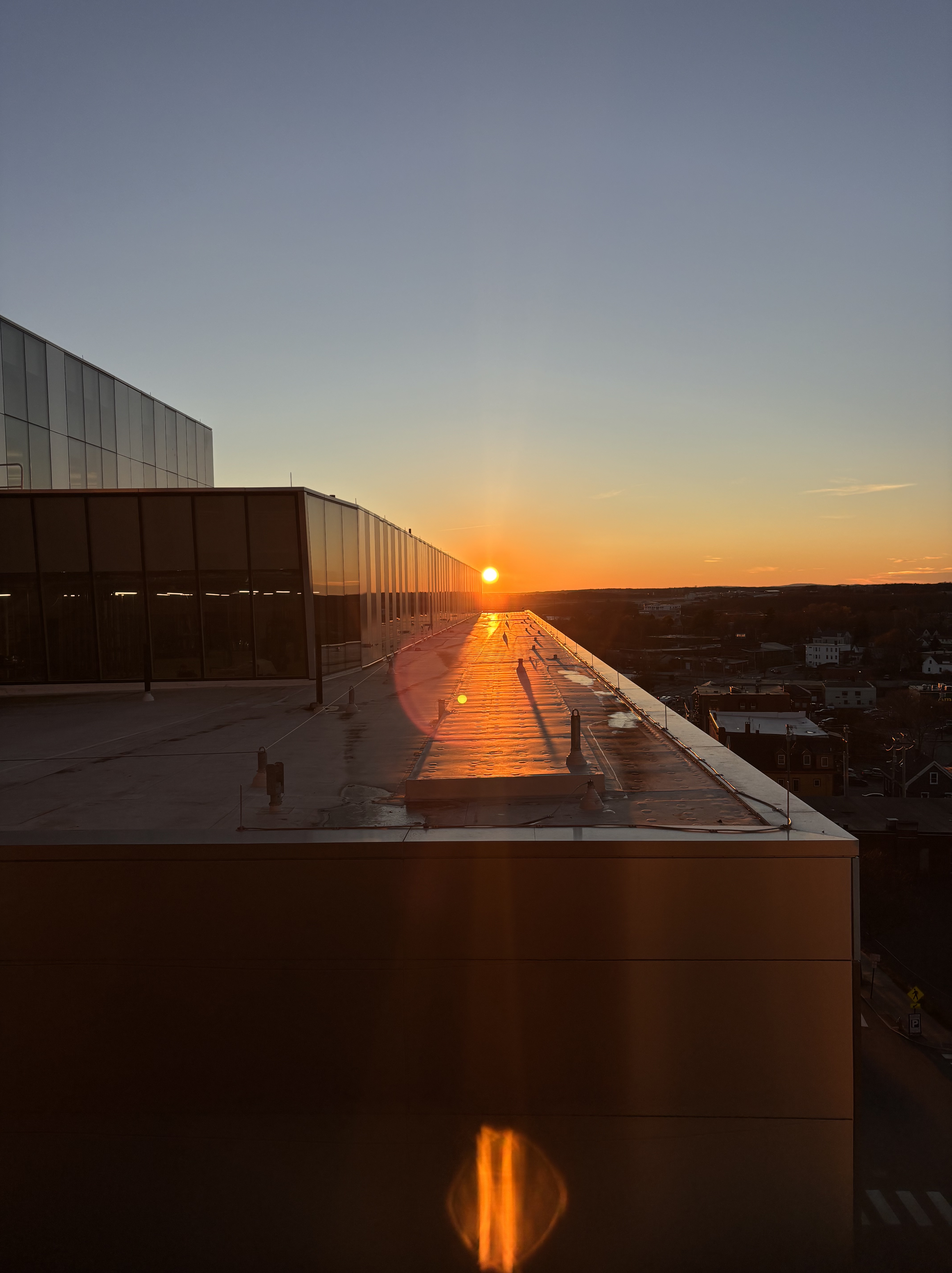
credit where credit is due: photos by Elena
 an Art Farm
LOVE the title, and the writing. much of this reads mythically. emeralds the size of a deck of cards. cecil b demille. illegitimate sons of ferdinand marcos. and still one line in the pond, awaiting the improbable whale……
>
quite interesting to read this now and learn of things I did not know from years ago or have forgotten…as siblings we started out under the same roof and now we are each on our own journey in life….