Ohm, not om
Posted: February 6, 2026 Filed under: Child Centered Activities, Chronicles of a First Time Parent, Portfolio - David's work 3 Comments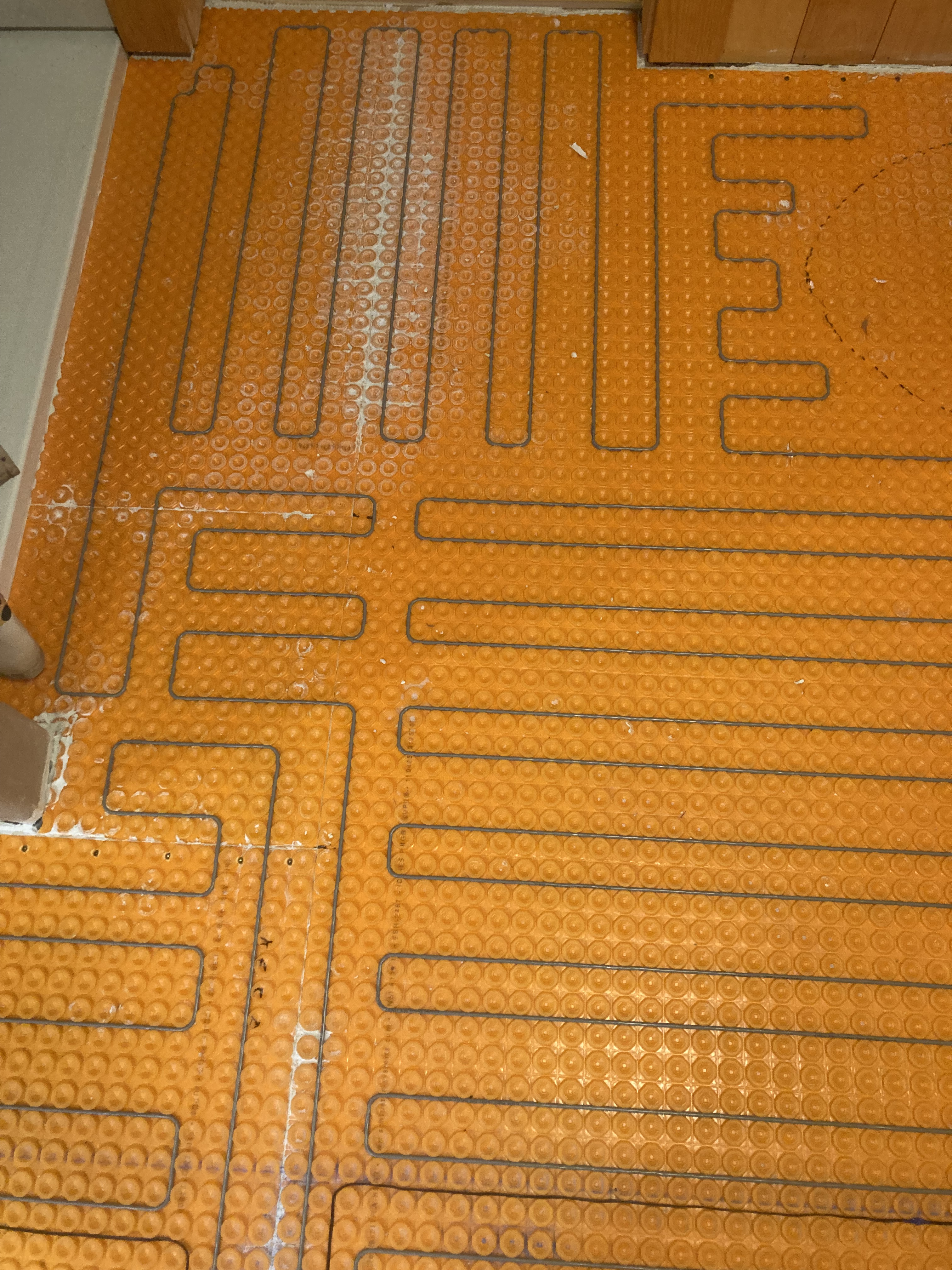
The Professor makes house calls.
His full title is the “Pema Professor,” to honor Pema Chödrön, the American-born Tibetan Buddhist. The Professor came to our house and held class in the bathroom, not about Om – the sacred syllable – but about Ohms, the measurement of electrical resistance in circuits or conductors.
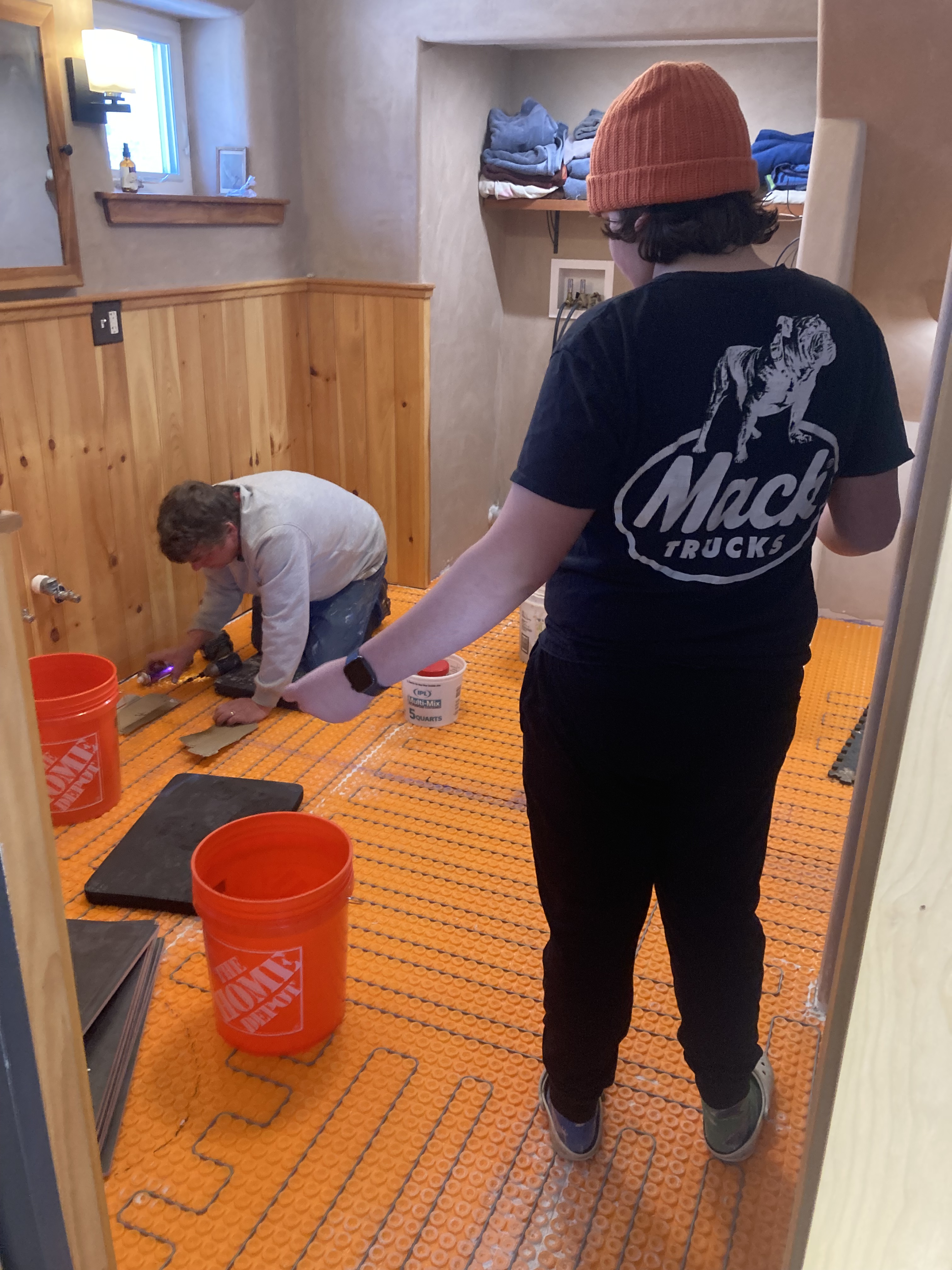
We are doing the finish work, finally, in the bathroom we added onto our house back in 2017. For nine years that room has had the basic plumbing but no heat, and a subfloor painted grey. Immense is our blessing to be able to do this finish work now, when masked jackels rampage our community, when our brown skinned neighbors stay indoors afraid to leave their house, more than 200 people having been arrested and absconded during “Operation Catch of the Day,” while so many homeless still live on street corners begging for coins; that we are able to afford such luxury now is a privilege not lost upon us. But still, our addition needs to be finished.
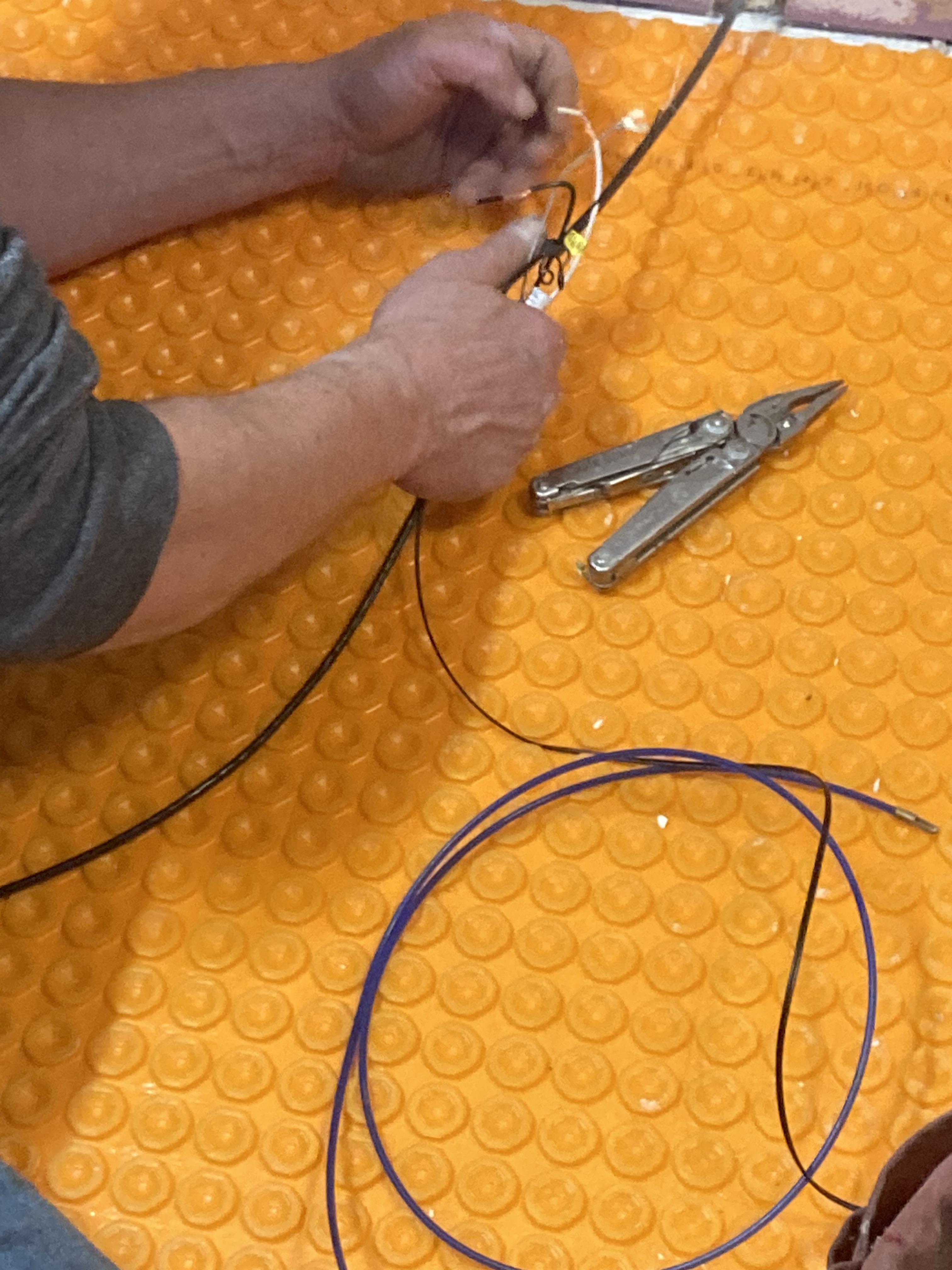
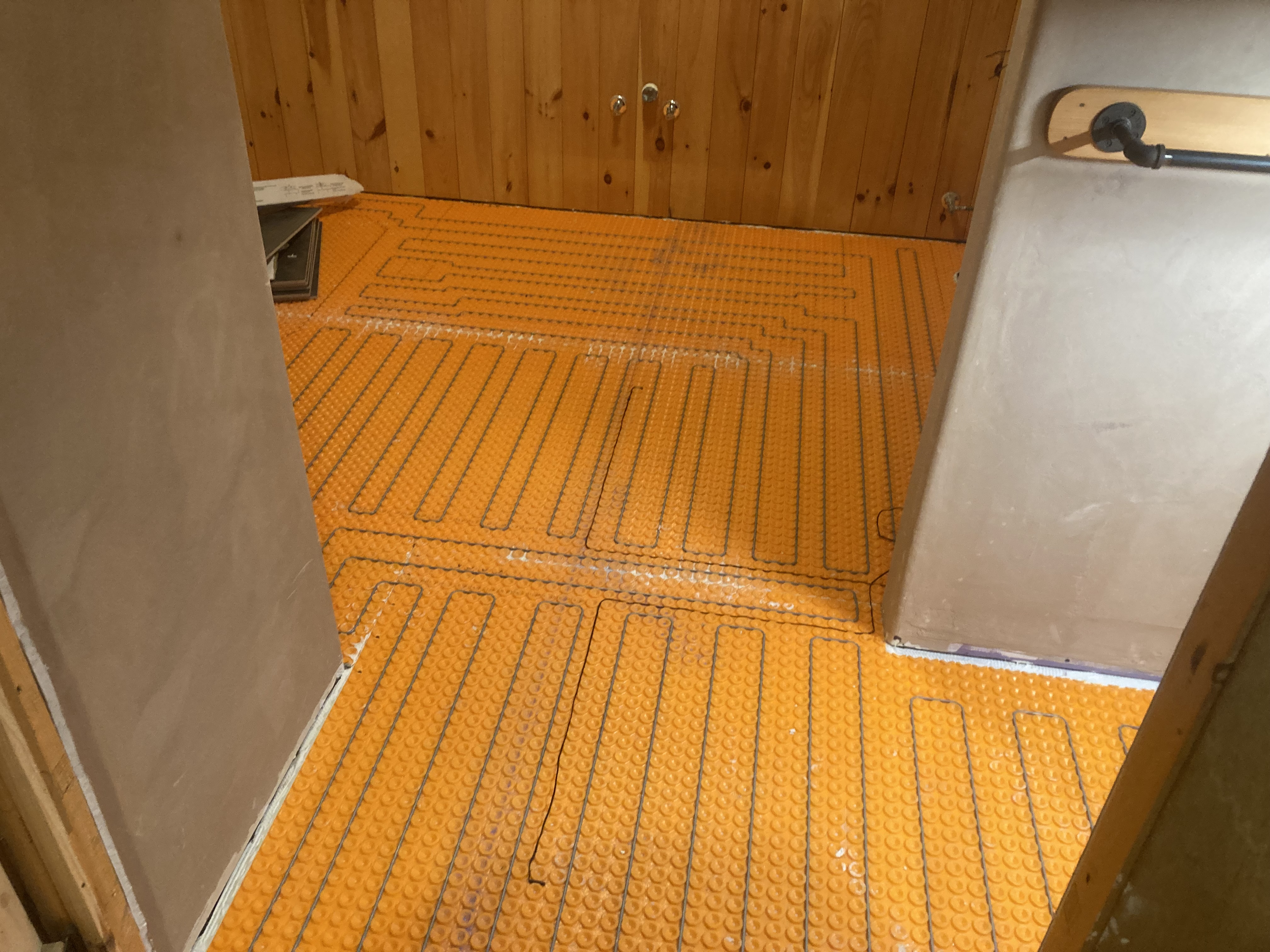
We are laying electric radiant heat on the bathroom floor, and then tiling. The Cadillac approach. The process begins by laying a waterproof uncoupling membrane which prevents tiles from cracking if the wooden subfloor moves. Into the membrane’s grid, we snapped in place 84 square feet of heating cable. That wire connects to a 15 amp Ground Fault Circuit Interrupter circuit breaker. Before laying tile, we needed to test both the Ohm resistance in the cable and its ground fault continuity, to ensure the integrity of the cable and circuit.
An Ohm is the measure of resistance, an object’s opposition to a flow of electric current. That resistance to flow creates friction, which friction creates heat, which is what we desire in the floor of the bathroom. We need to test this before laying tile.
Ohm’s formula is R = V/I, where V is voltage – the push driving the flow of electric charge – and I is current – the electric charge that flows past a specific point in a complete electric circuit. The formula for resistance was discovered by George Ohm, a high school teacher in Cologne, Germany, who published his theory and formula in 1827. The academics rejected his idea, but in 1841 Ohm was recognized and received the Royal Society’s Copley Medal. The unit of electrical resistance, the Ohm, is named in his honor.
In Language Arts my son has been learning the Greek alphabet. By happy coincidence, the Greek letter omega (Ω) is the symbol for ohms, chosen because its sound is similar to Ohm’s last name. Everything seems concordant here at the art farm.
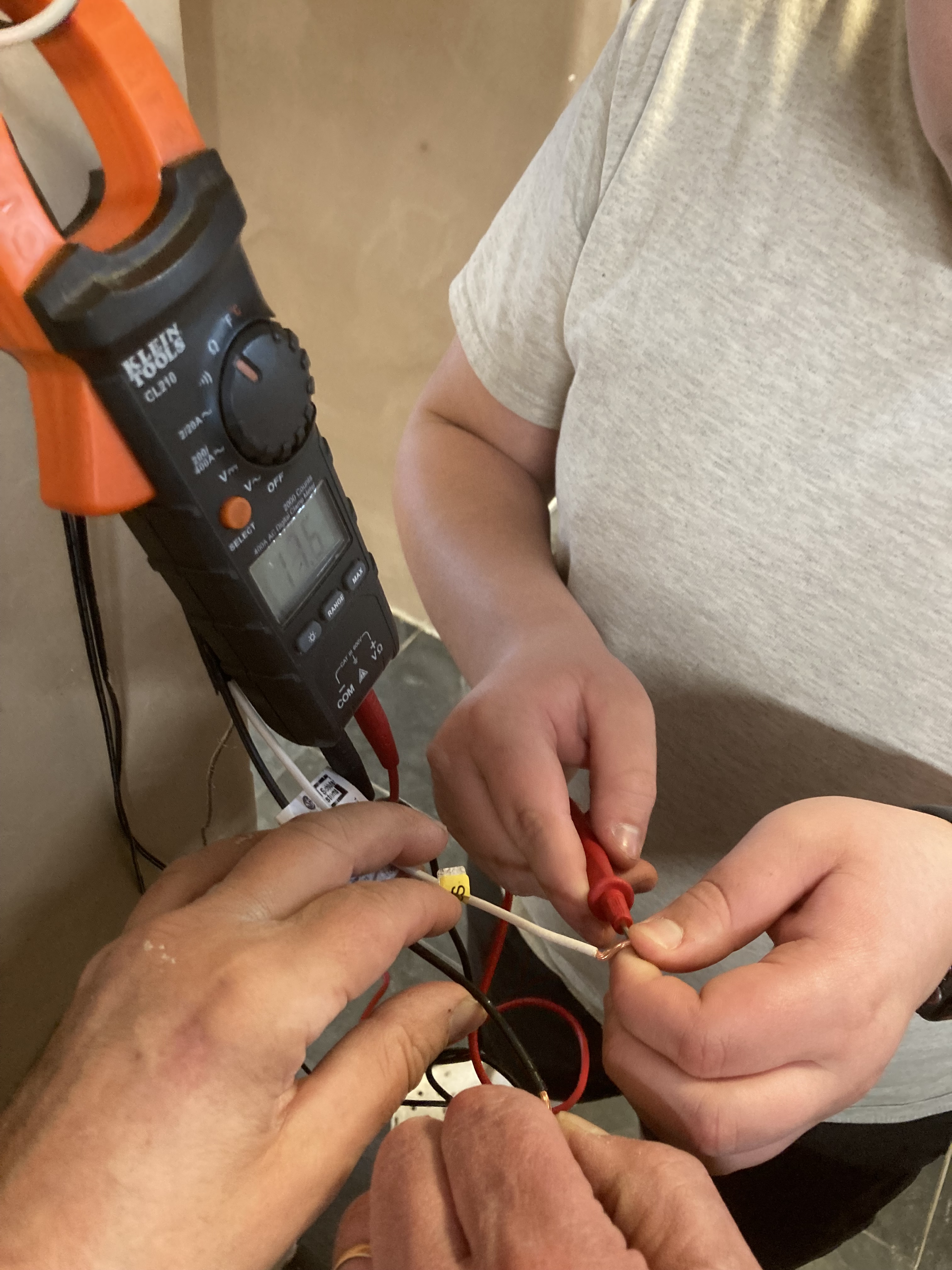
To install the radiant floor heating cable, we made multiple tests of “conductor resistance” to ensure the circuit was functional. We used the Professor’s megohmmeter to take an ohms reading between the two power leads. At the factory the cable tested 14.8 ohms, but our test before installation was 14.1, after cable installation was 14.2, and after tile installation was 13.4. The manufacturer allows a 10% variance, so we remain within that range. Our test was positive and we proceed.
Of note, if the tester uses his fingers to press the megohmmeter leads against the copper lines, then the resistance reading shows the resistance through his body; he has become a part of the circuit. As a homeschool experiential, my son tested the resistance that way and got a reading of 4.3 ohms. The Professor did same and had a 4.7 ohm reading. The lower the ohms the easier electricity flows through a circuit. The circuit breaker was off so he was not at risk. Salt and magnesium in my son’s body can account for the difference because they are conductive electrolytes which increase the flow of electricity. My son does take a magnesium supplement so there is a line of reasoning here.
And so life goes here at an art farm. Ohms not om, our homeschool tutorial was one step the toward tiling the new bathroom. Updates to follow, as this journey continues.
 an Art Farm
amazing all that comes from the floor below…..
thanks for the history lesson and explanation of ‘ohm’ and love the body testing experiment!
My brother John shared this comment. There have been issues with WordPress, and so I am posting it on his behalf.
Very interesting, David. In airplanes, we measure volts and amps, but not ohms. There’s no indication for ohms. I was curious, so I looked it up. Aircraft electrical systems primarily monitor voltage (volts) and current flow (amps) to ensure operational safety, rather than measuring resistance (ohms) during flight. Voltmeters track system pressure (14V or 28V), while ammeters measure electrical load/flow. Ohms are used for ground-based trouble shooting to test continuity, not for in-flight monitoring.
When I was teaching aircraft systems in ground school at my old job, this included the electrical system. Older piston airplanes like my Cessna 150 have a 14 Volt DC system. Newer aircraft use a 28VDC. And turbine aircraft have both 28 VDC and also use 115 VAC.
Anyway, your story about Ohms is really interesting!! :). I enjoyed it!!