Love Languages
Posted: February 20, 2026 Filed under: Art & Healing, Child Centered Activities, consciousness | Tags: mental health 1 Comment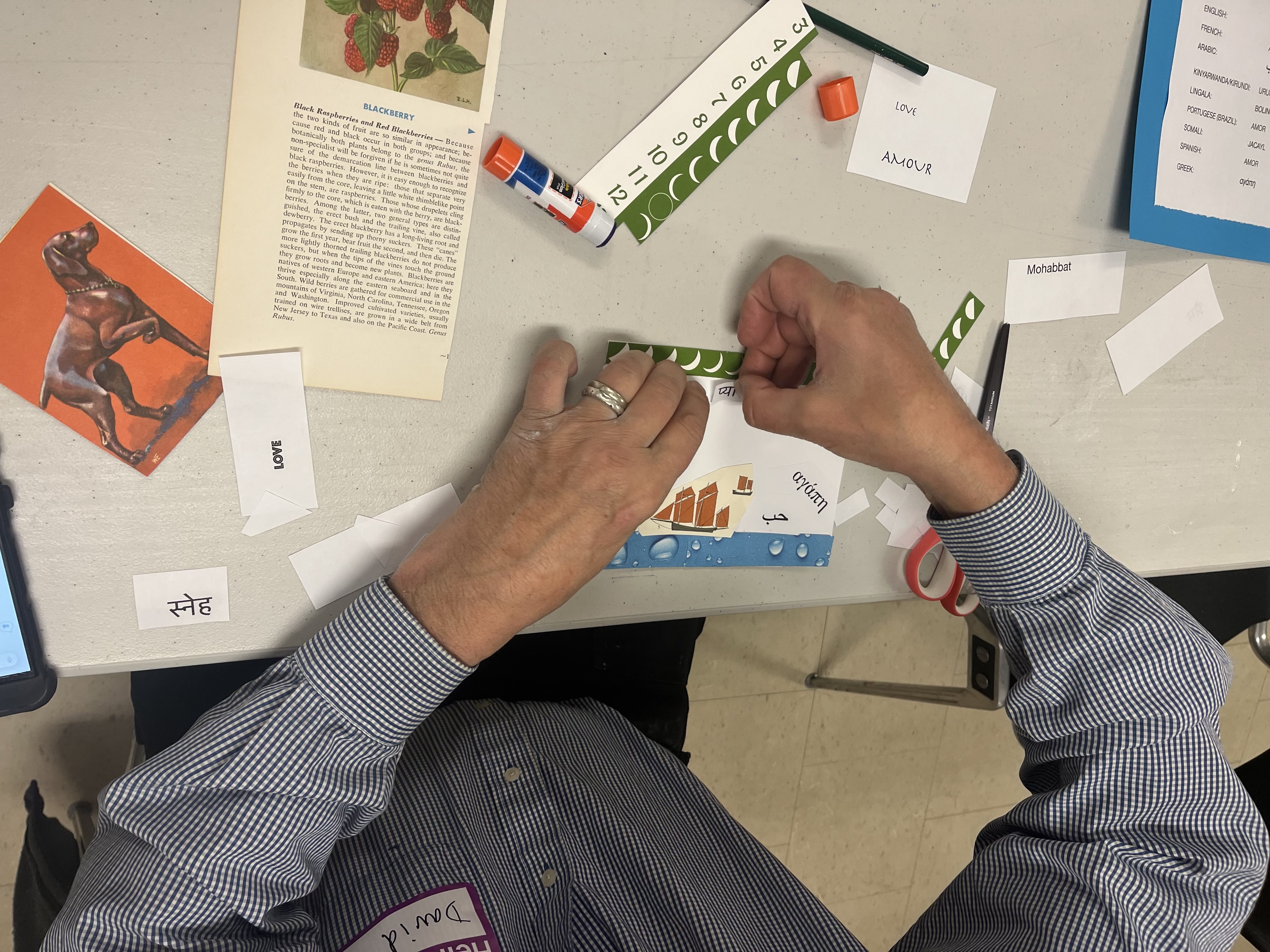
Greek has 8 distinct words for love. Sanskrit has 96. English, 1.
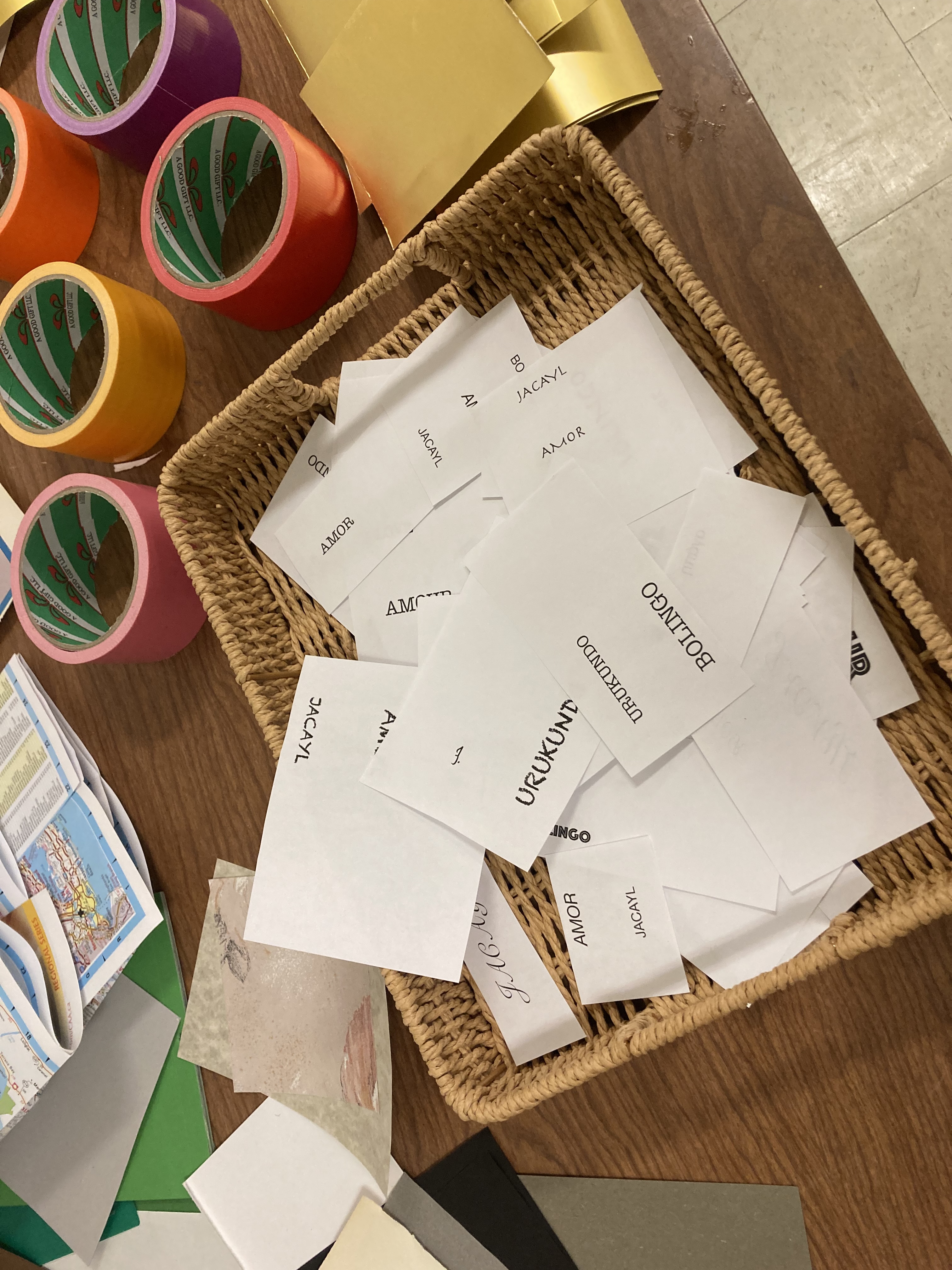
In South Portland Public Schools over 35 different languages are spoken, with the primary languages being Arabic, French, Kinyarwanda/Kirundi, Lingala, Portuguese, Somali, Spanish and English. Love here is most frequently spoken as Amour, حب, Urukundo, Bolingo, Amor, Jacayl, Amor and αγάπη. Adding in Sanskrit and Hindi we have प्रेम, प्यार, Mohabbat, and स्नेह. All saying the same, merely different vowels and consonants.
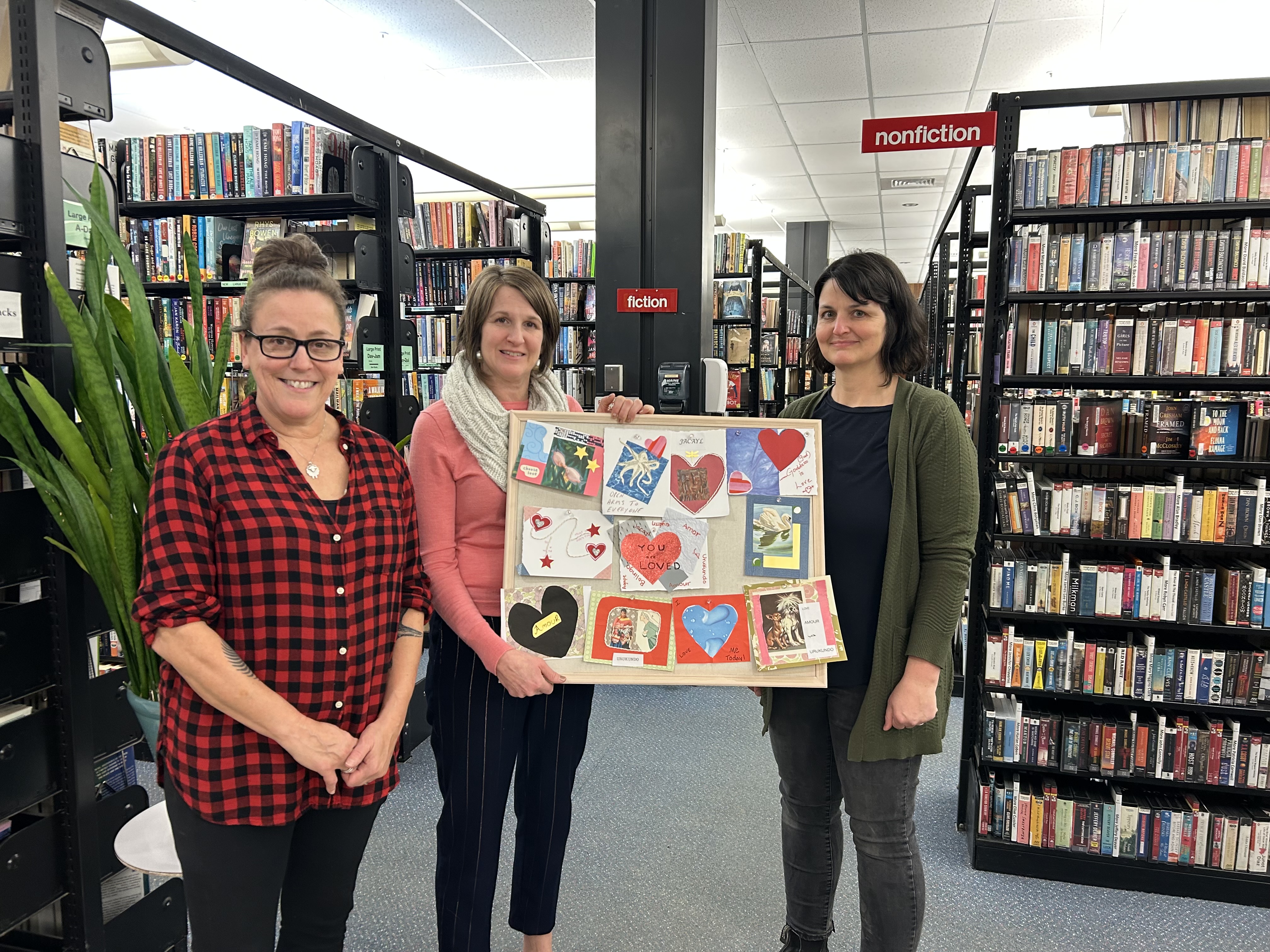
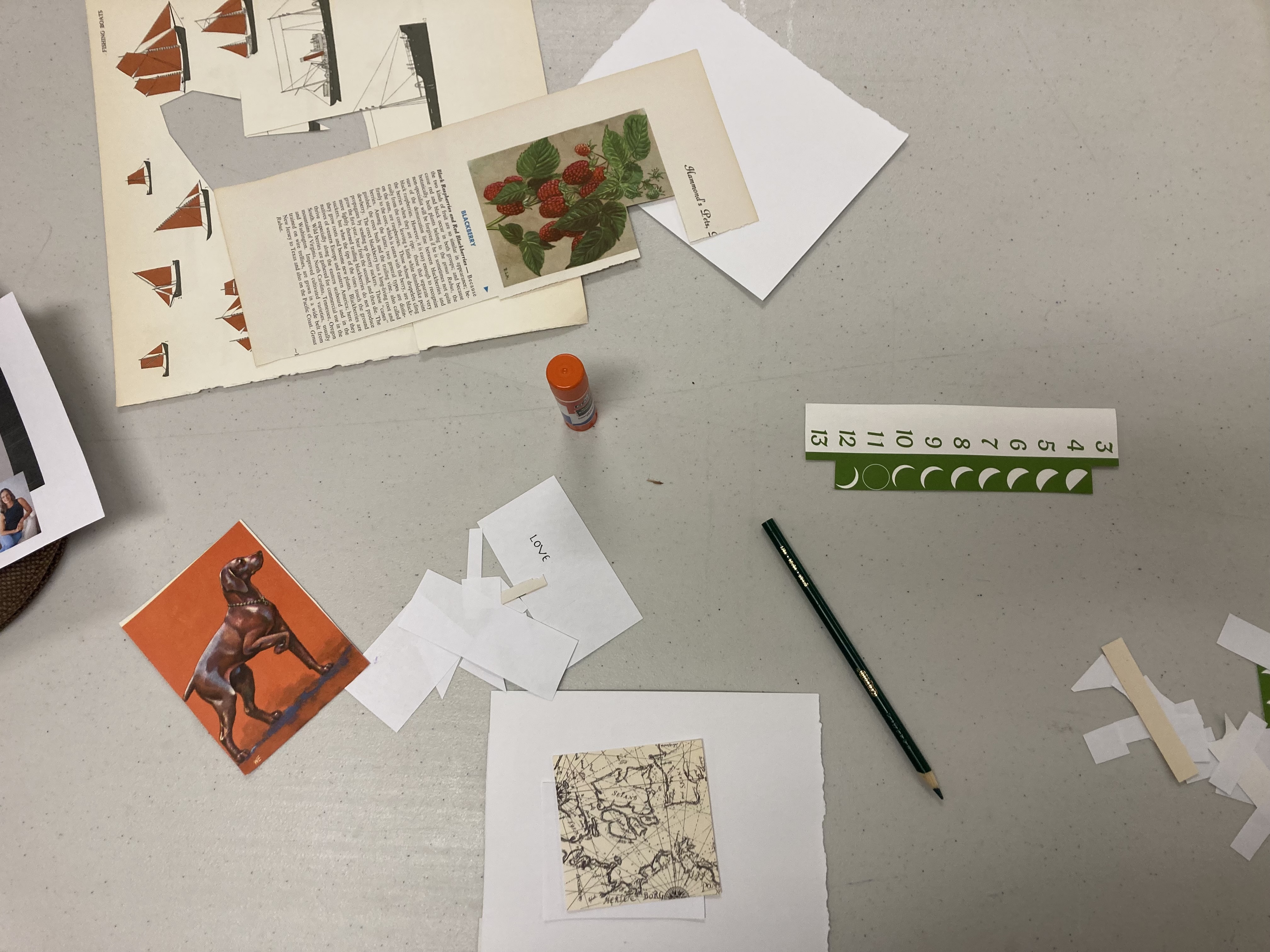
Valentines Day presented an opportunity to underscore the many languages of love through a “Postcards from the Heart” art-making experiential held at the South Portland Public Library. The curly haired Goddess with whom I live developed the idea with colleagues and then served as the leader for this life-affirming response to the masked jackals rampaging our communities locally and nationally. Love is an antidote to fear, or as the Governor of Illinois said this week, “love is the light that gets you through a long night.”
The small minded Christian Nationalists argue that English is the one and only “pure” language of these United States. But we “the tired, the poor, the huddled masses, yearning to breathe free” know the truth is far more varied, nuanced and beautifully complex. The Postcards quietly acknowledged this, and gave people a chance to express themselves in a non-violent and compassionate way.
When authoritarian anger rips our communities asunder, when protests rightfully organize, and food drives bring meals to those unable to go to work or school, art-making might seem a trivial pursuit, but its healing power is unquestioned and clinically proven. The process of non-verbal expression creates a safe space to explore feelings, especially for trauma survivors. The act of creation triggers the release of “feel good” chemical messengers – dopamine and serotonin – which are uplifting and promote resilience. Externalizing our emotions offers perspective and empowers the maker.
Open to the public, 27 people participated with ages ranging from elementary school age children to elderly. One group of 15 from a women’s shelter wanted to attend but that would have overwhelmed the space.
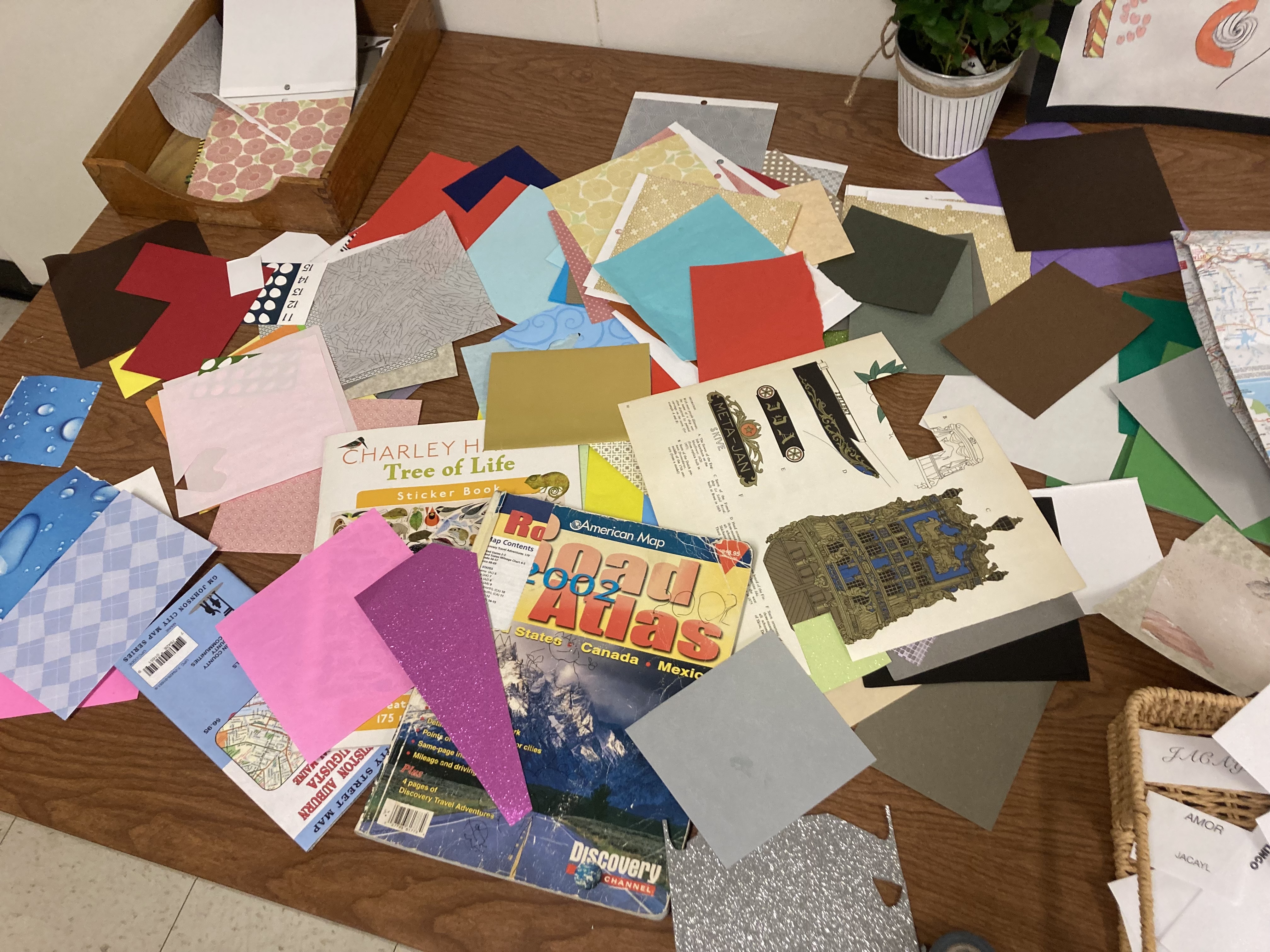
I participated in one 45-minute session, gluing images of the Moon cycle, cutouts from old picture books, and “love” from 10 different languages. 7 other women participated, one of whom was older and wore delightfully eccentric glasses, while the other 6 were young women from a “sober house.” Everyone was engaged, focused silently on their work. At the end we walked about looking at each others’ creations, all of which were as varied and diverse as the forms and expressions of love. There was a deep sense of connection in a non-verbal form.
A friend, who works with immigrant women, strongly wanted to invite those women but feared they would not want to risk coming out in public. The idea has been raised about creating art-making kits that can be delivered to homebound people so that they also might give voice to their love, in any language. A local group, Maine Needs, appears to be doing something along these lines.
The City of South Portland has a wellness program for its staff, and a librarian pondered whether art-therapy could be engaged for them. The idea is scalable and replicable, and the need for healing only grows in these times of Mammon and the cult of personality.
 an Art Farm
“like” doesn’t begin to say it. i LOVE this. love the curly-haired Goddess with whom you live and with whom you incubate and execute brilliant ideas. as always, beautiful.