Misery
Posted: February 27, 2026 Filed under: Child Centered Activities, Farming off the Farm, What is an Art Farm 1 Comment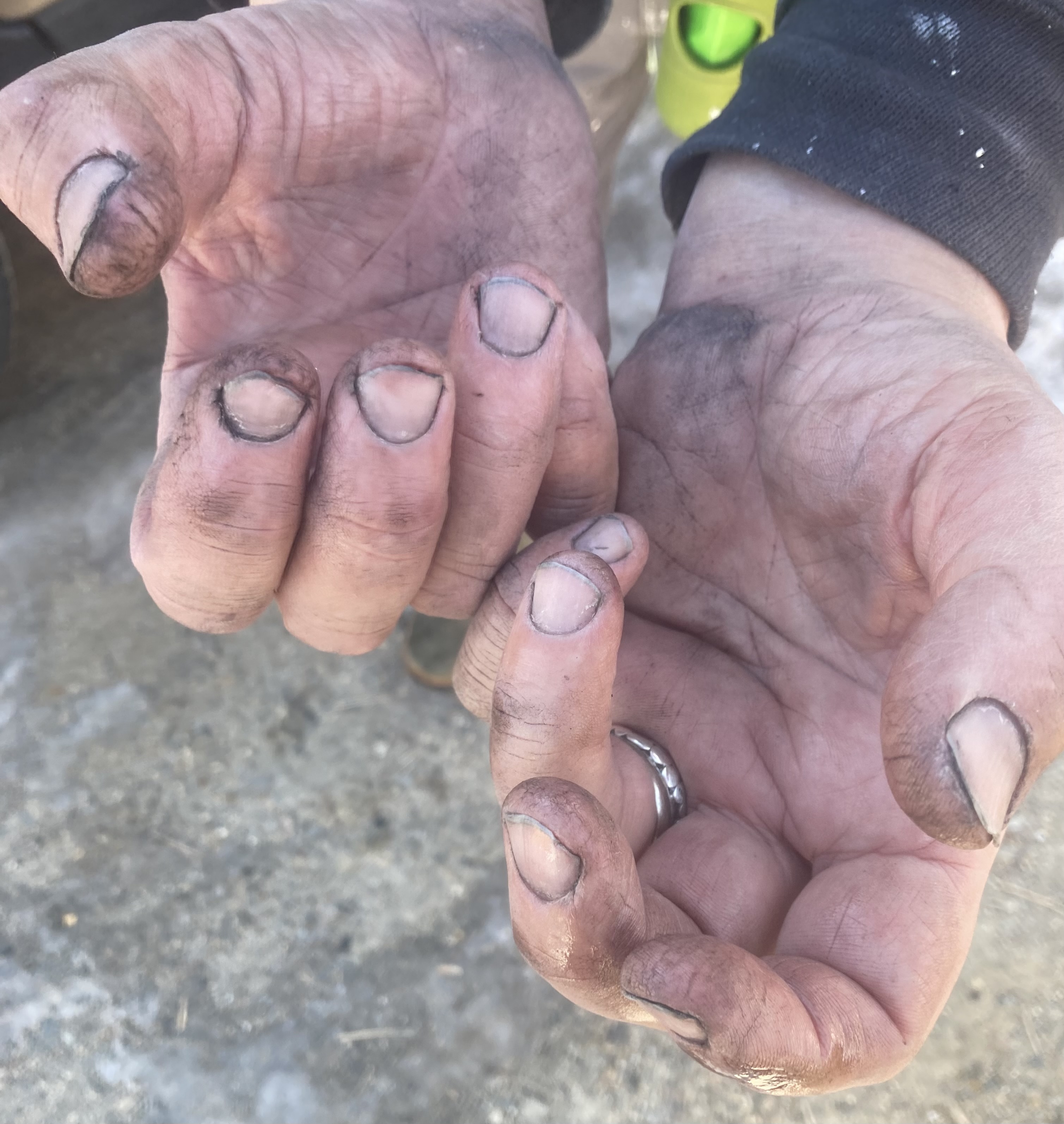
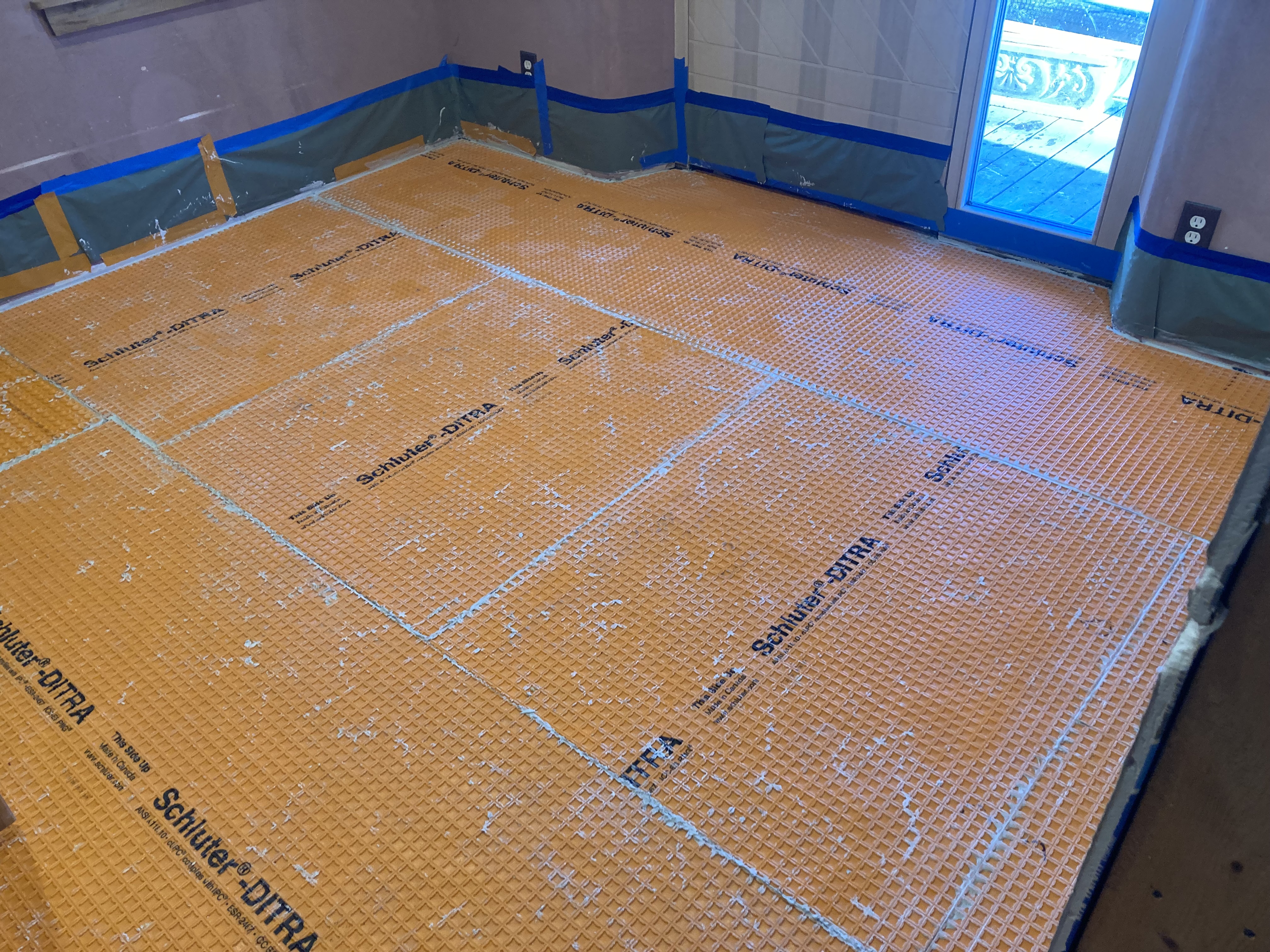
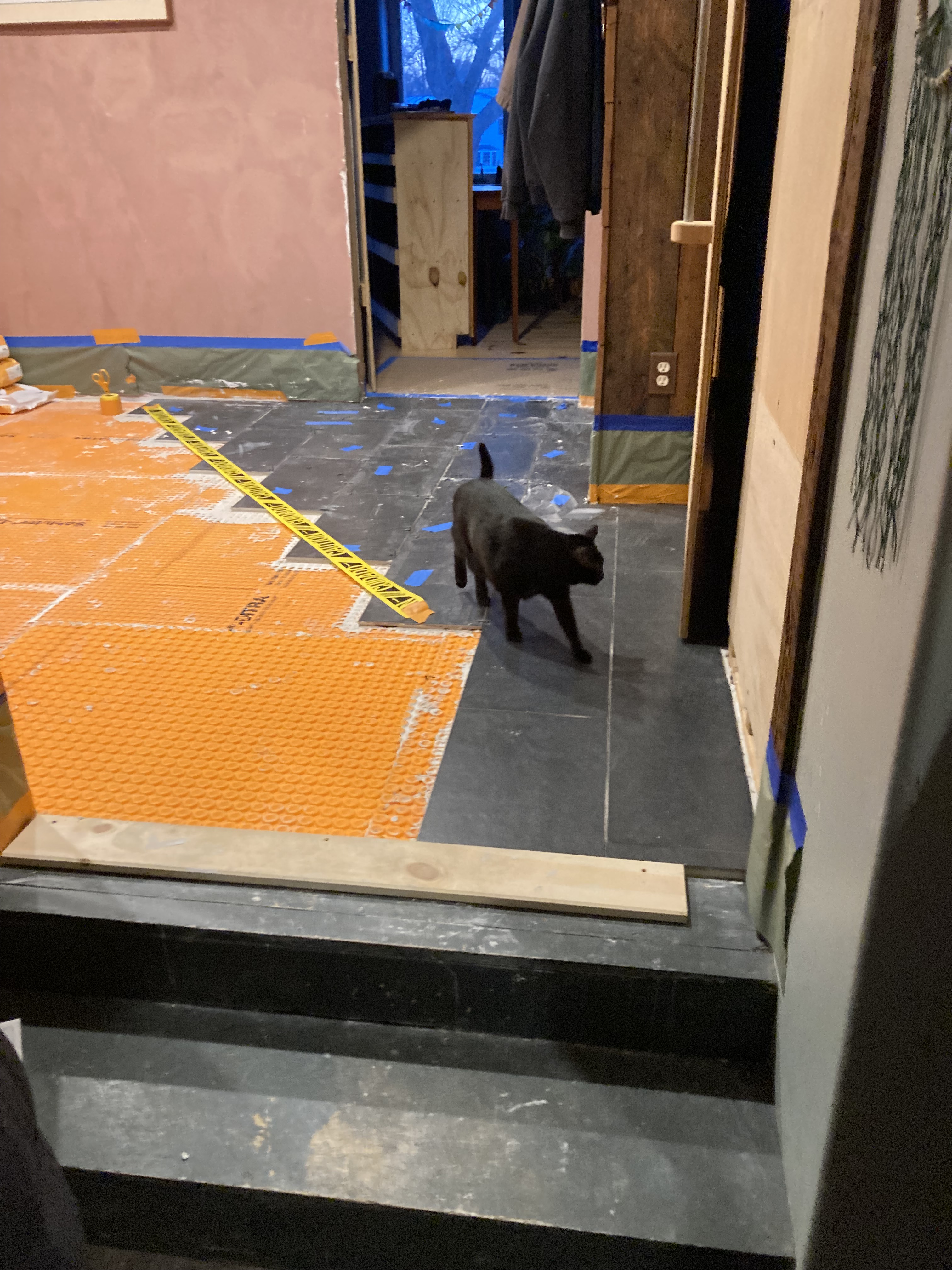
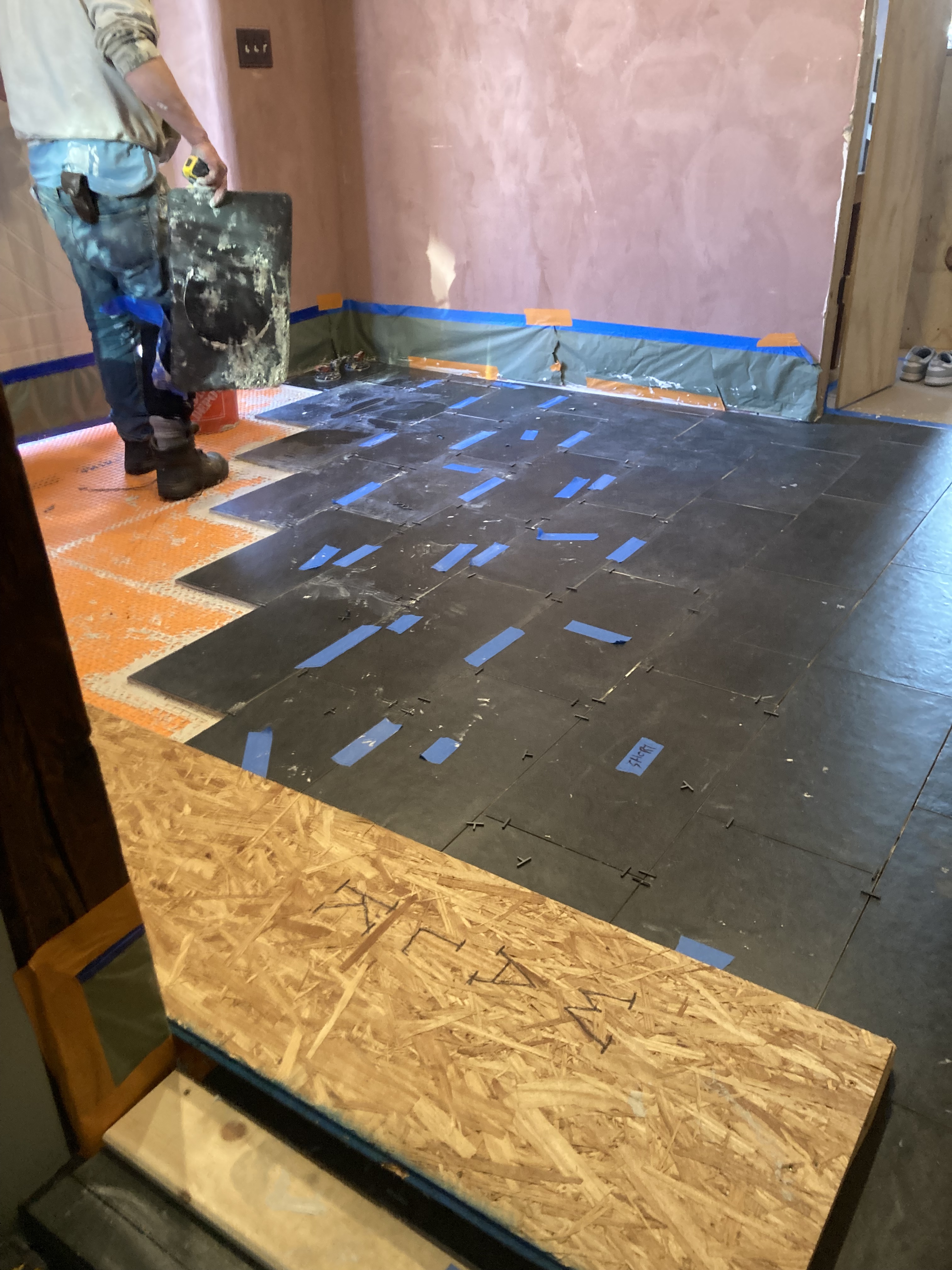
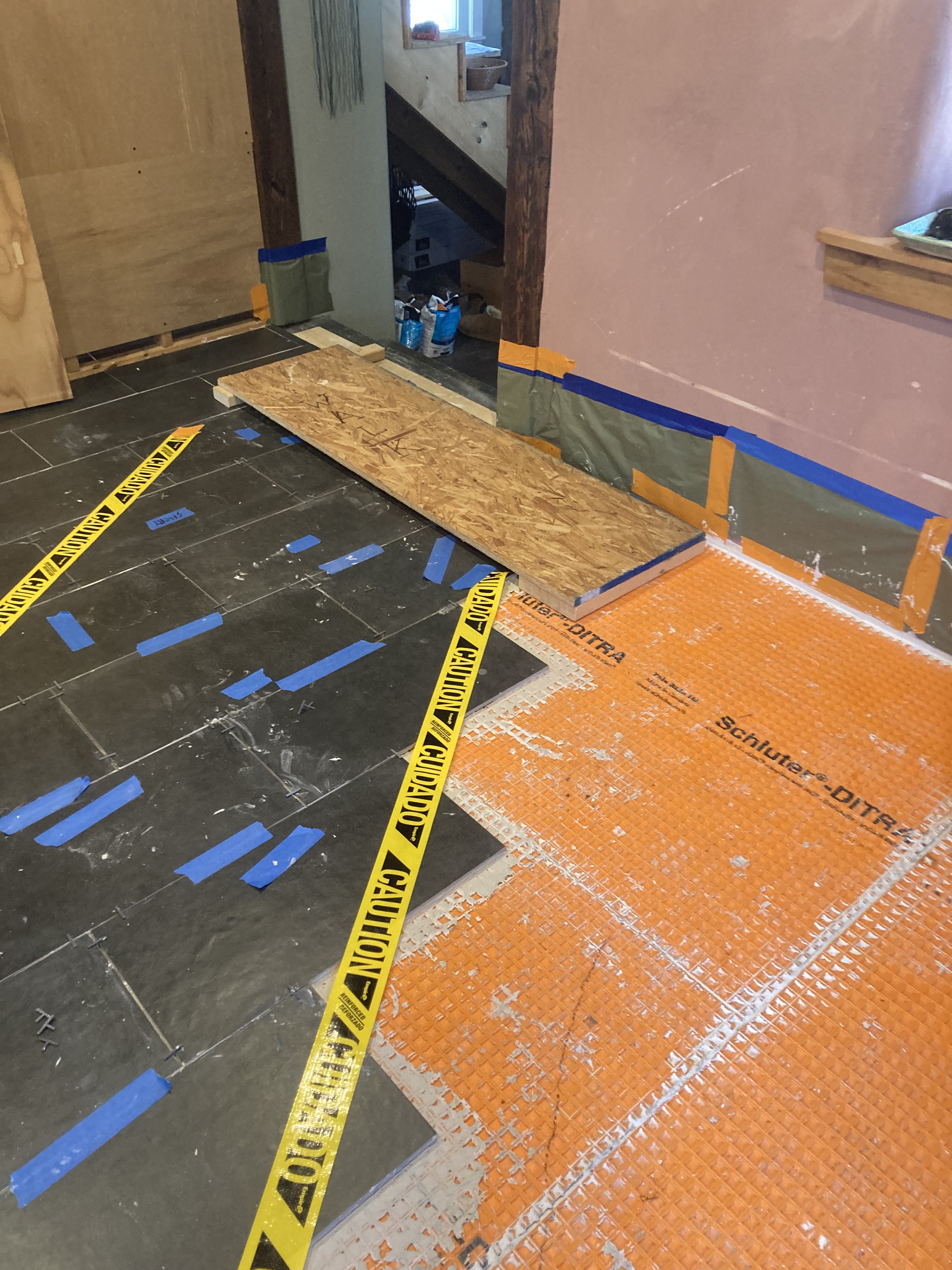
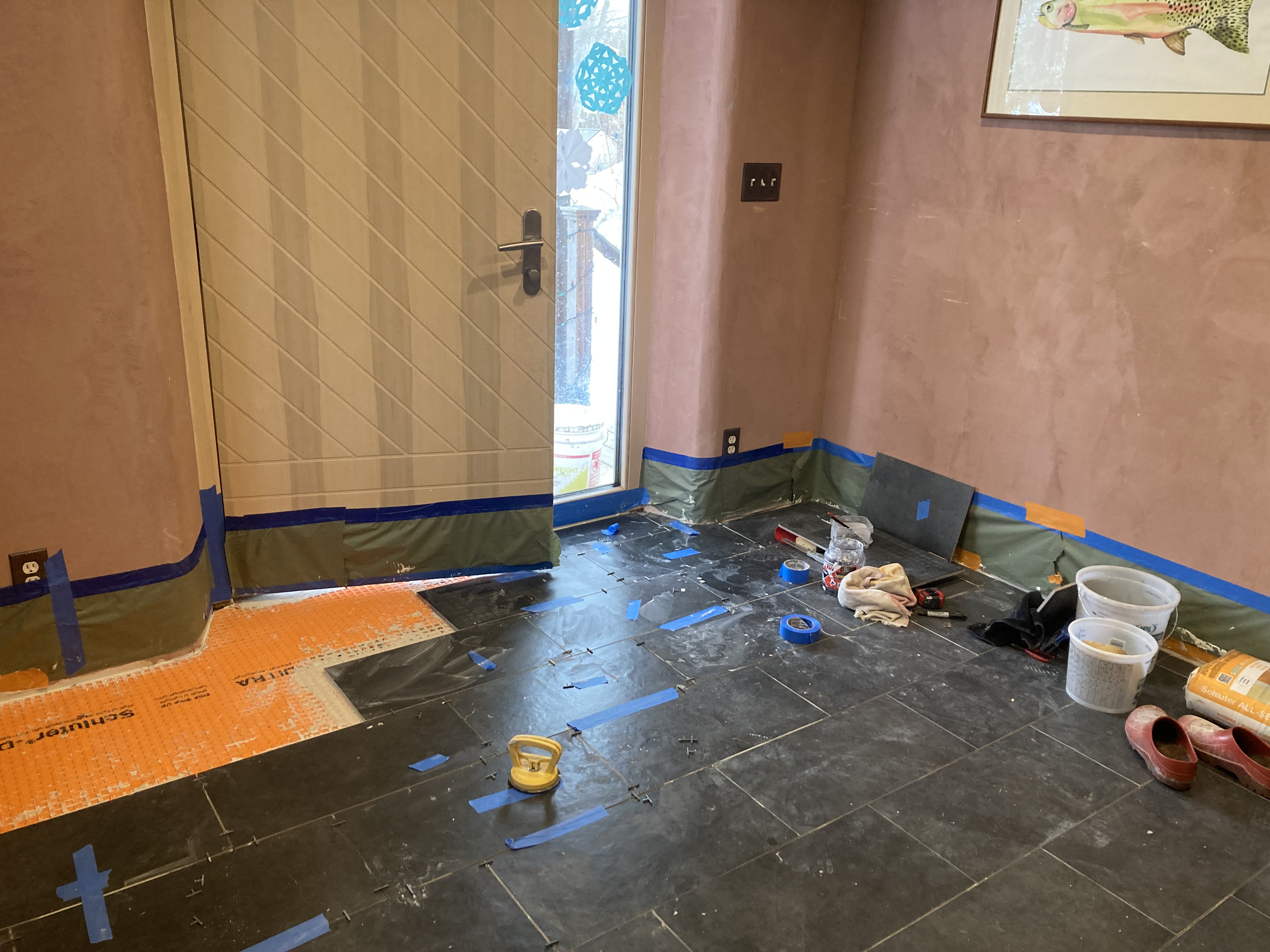
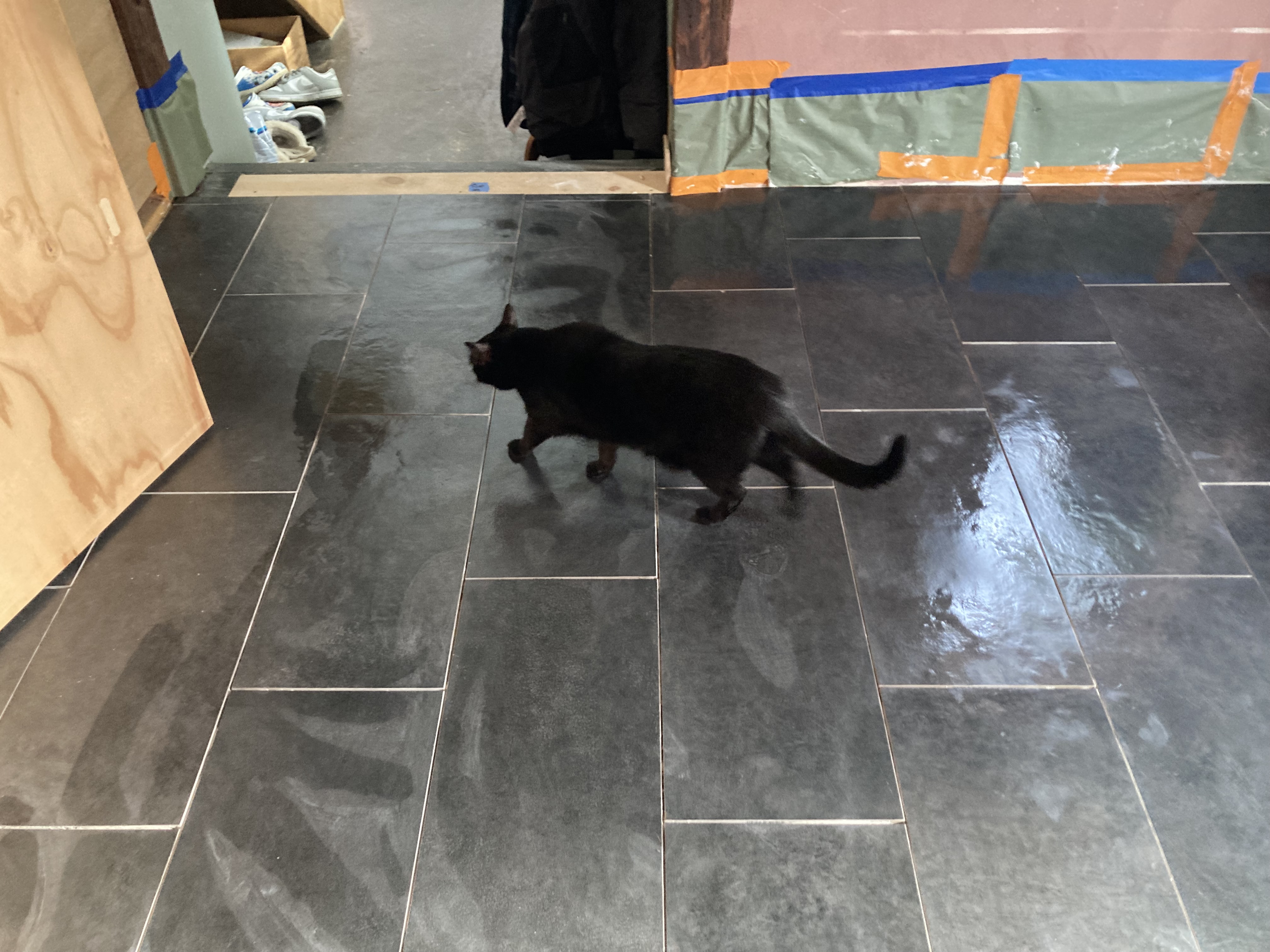
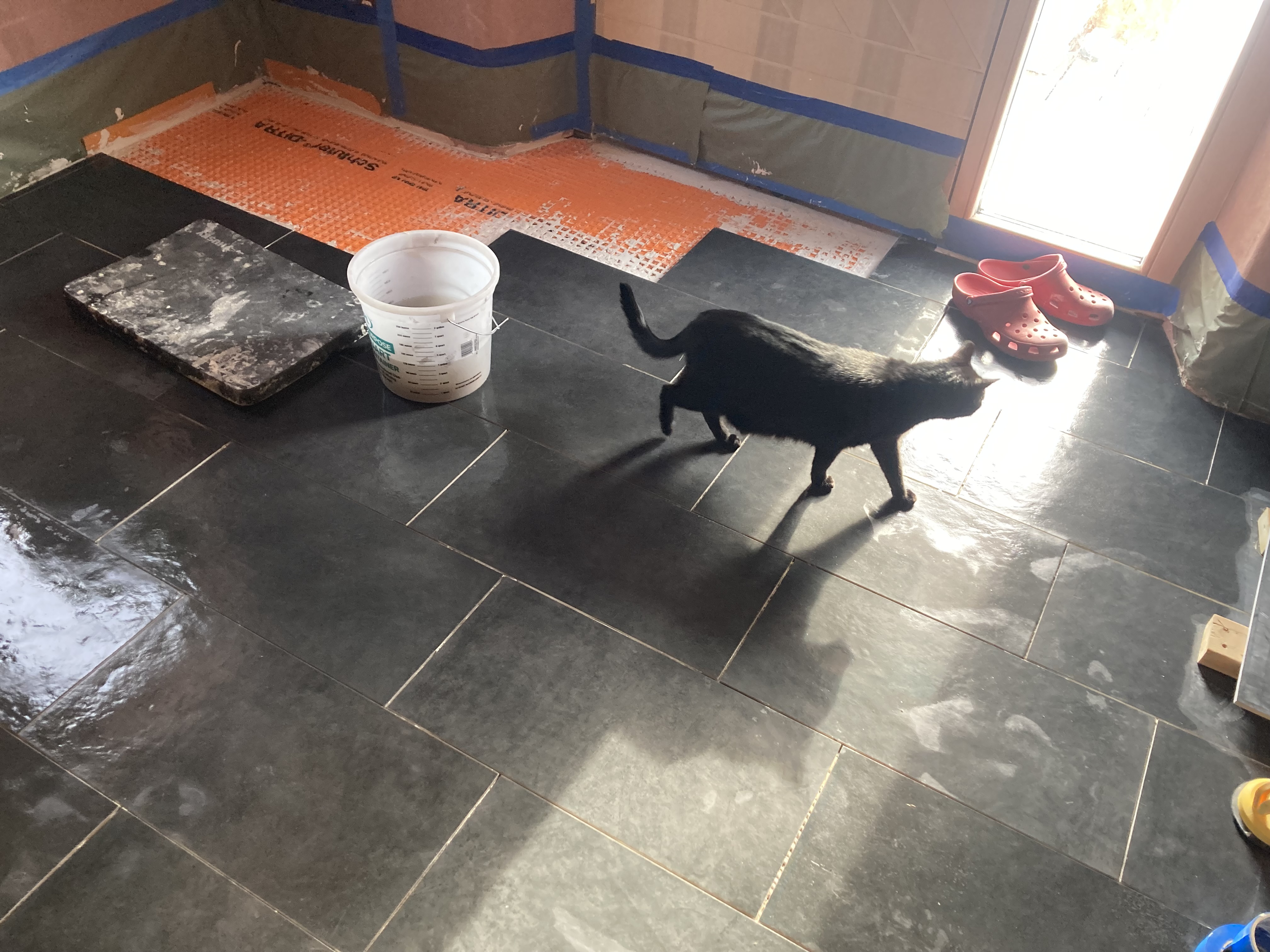
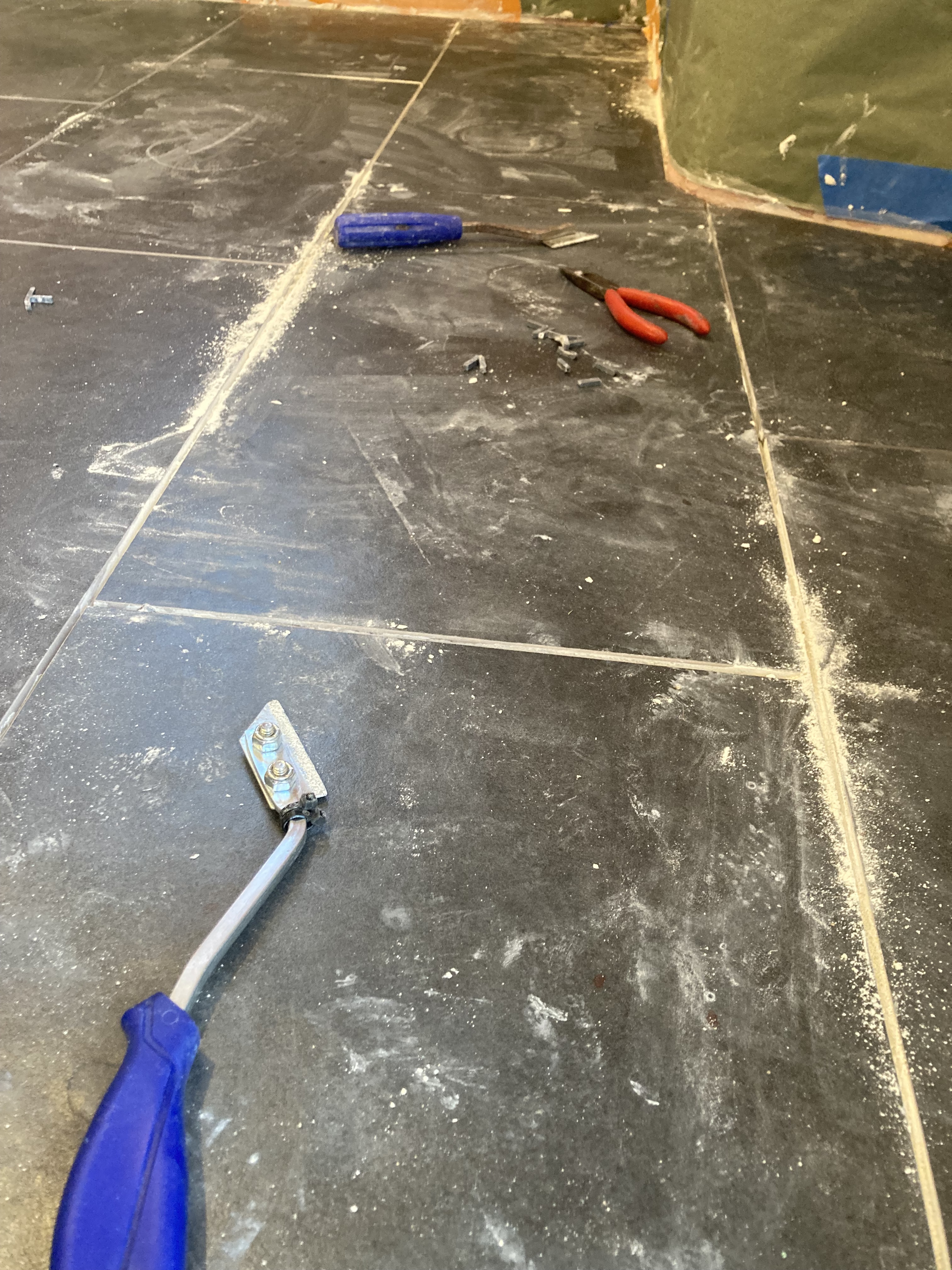
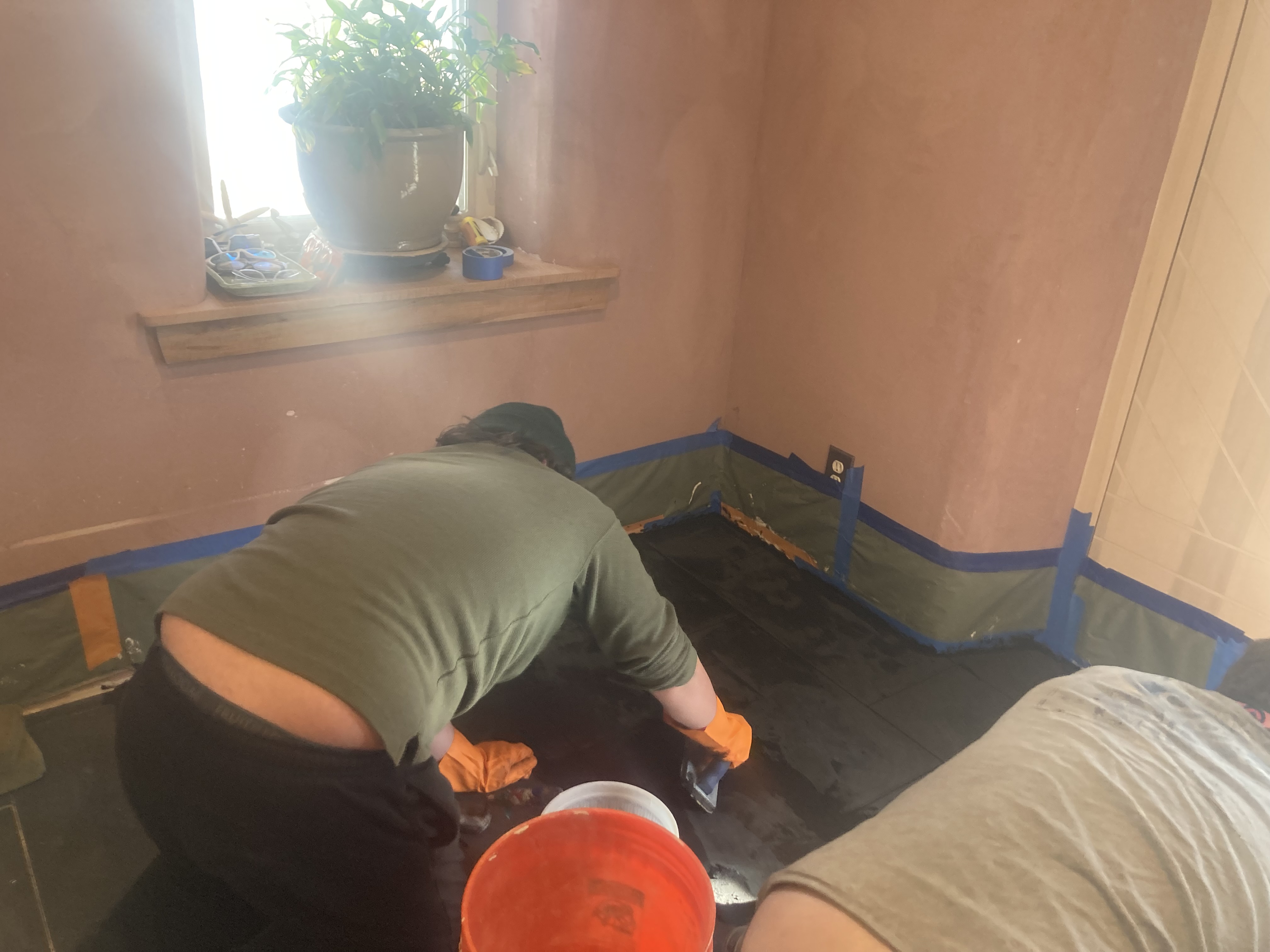
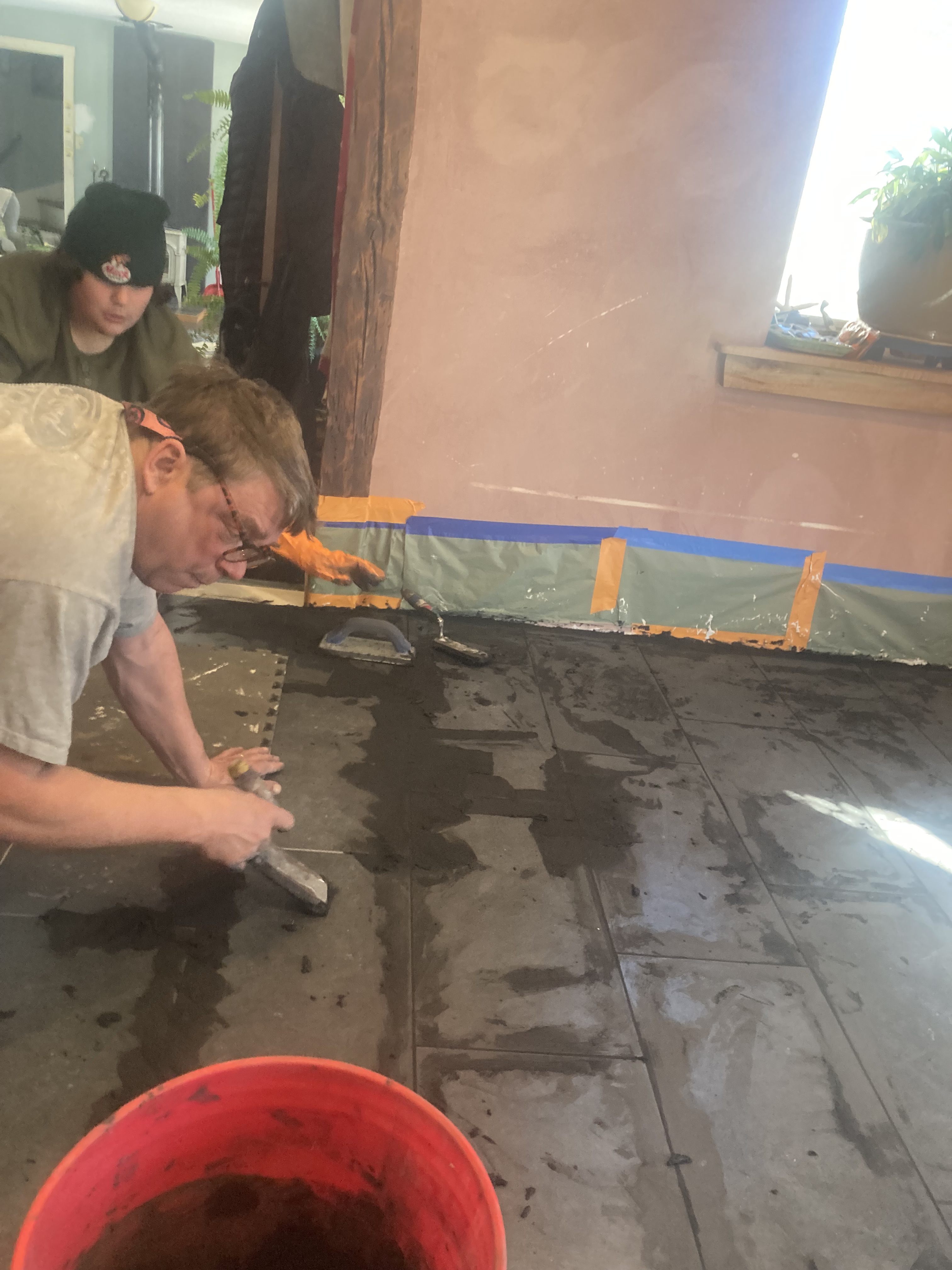
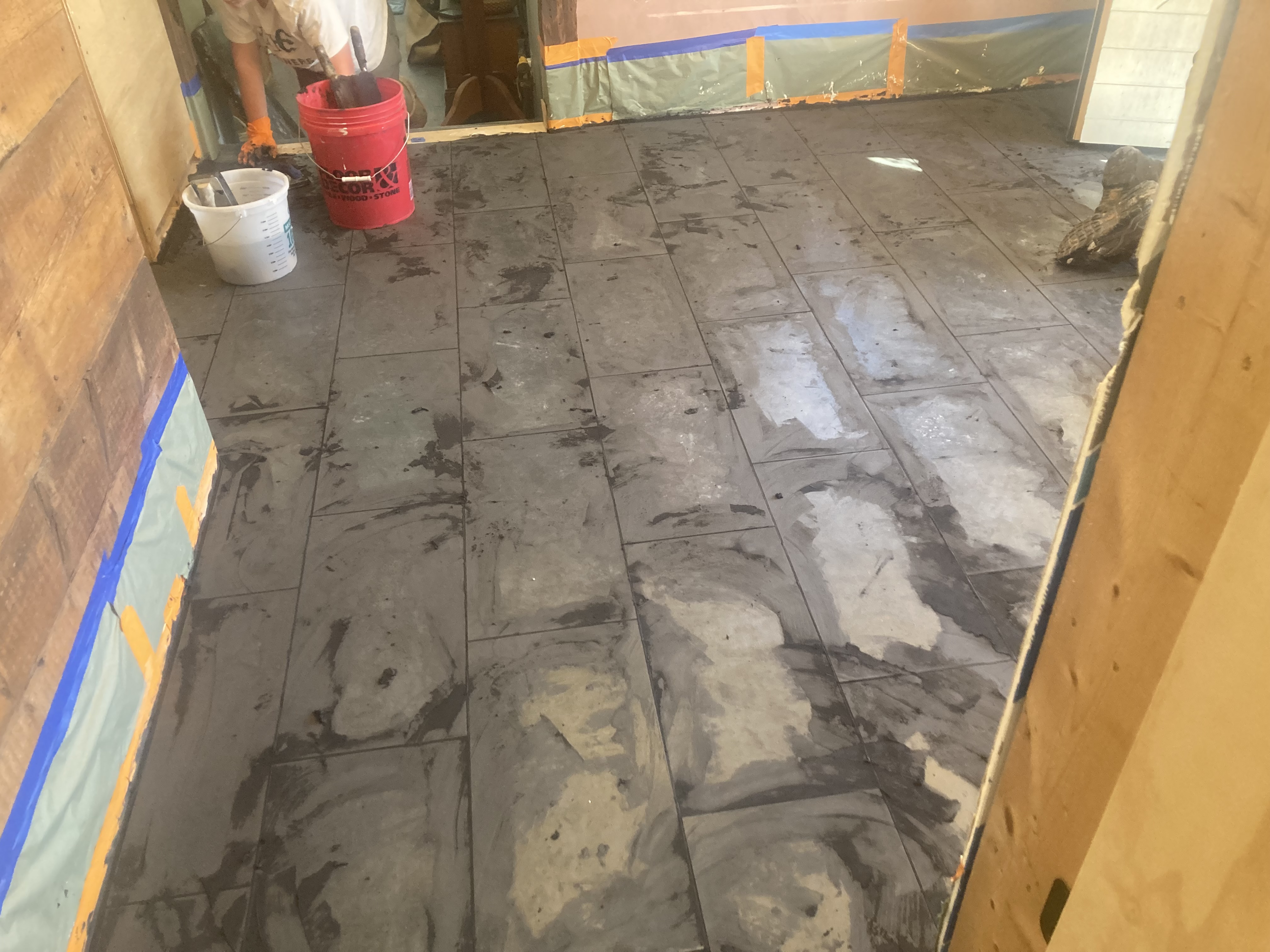
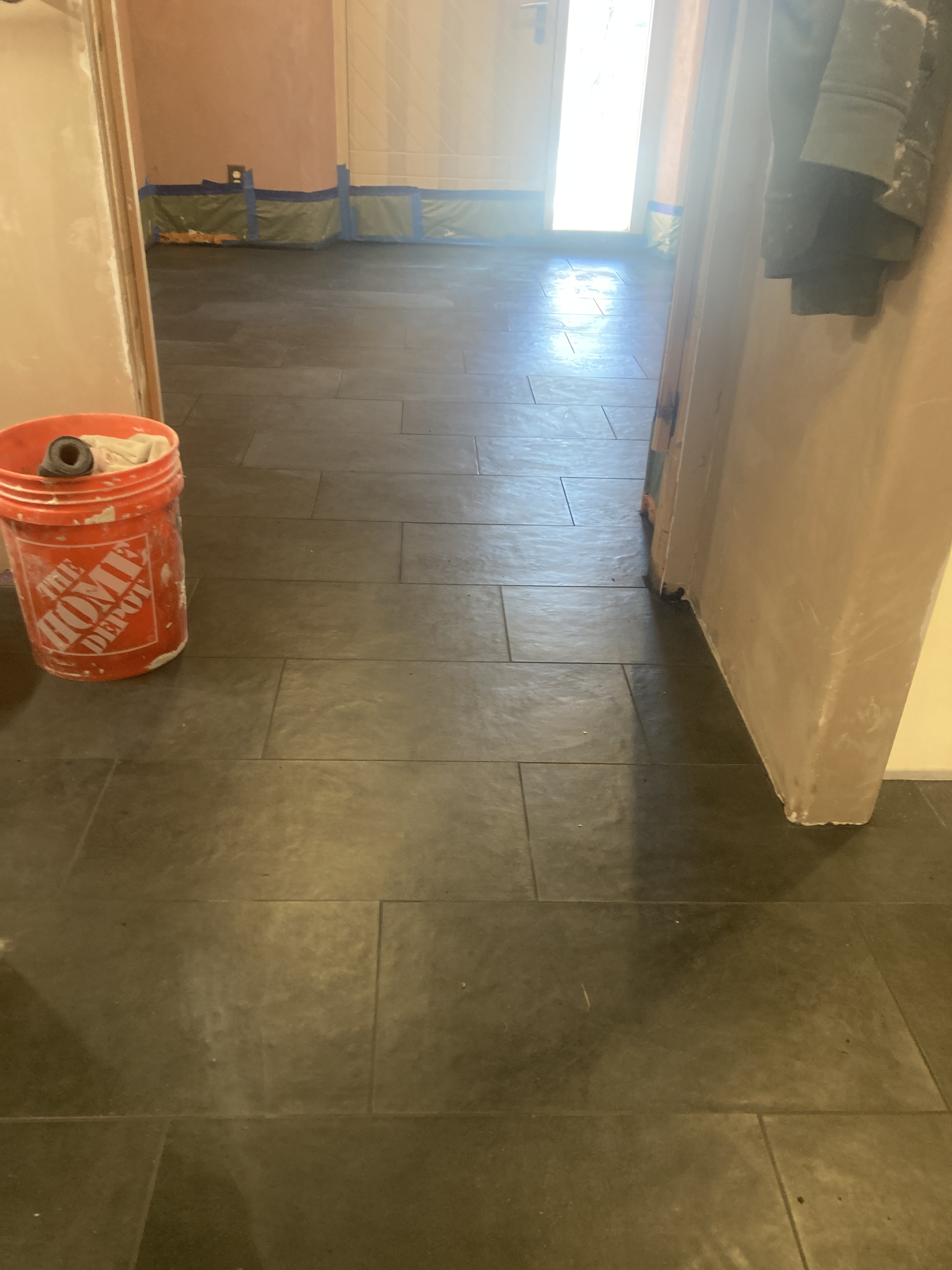
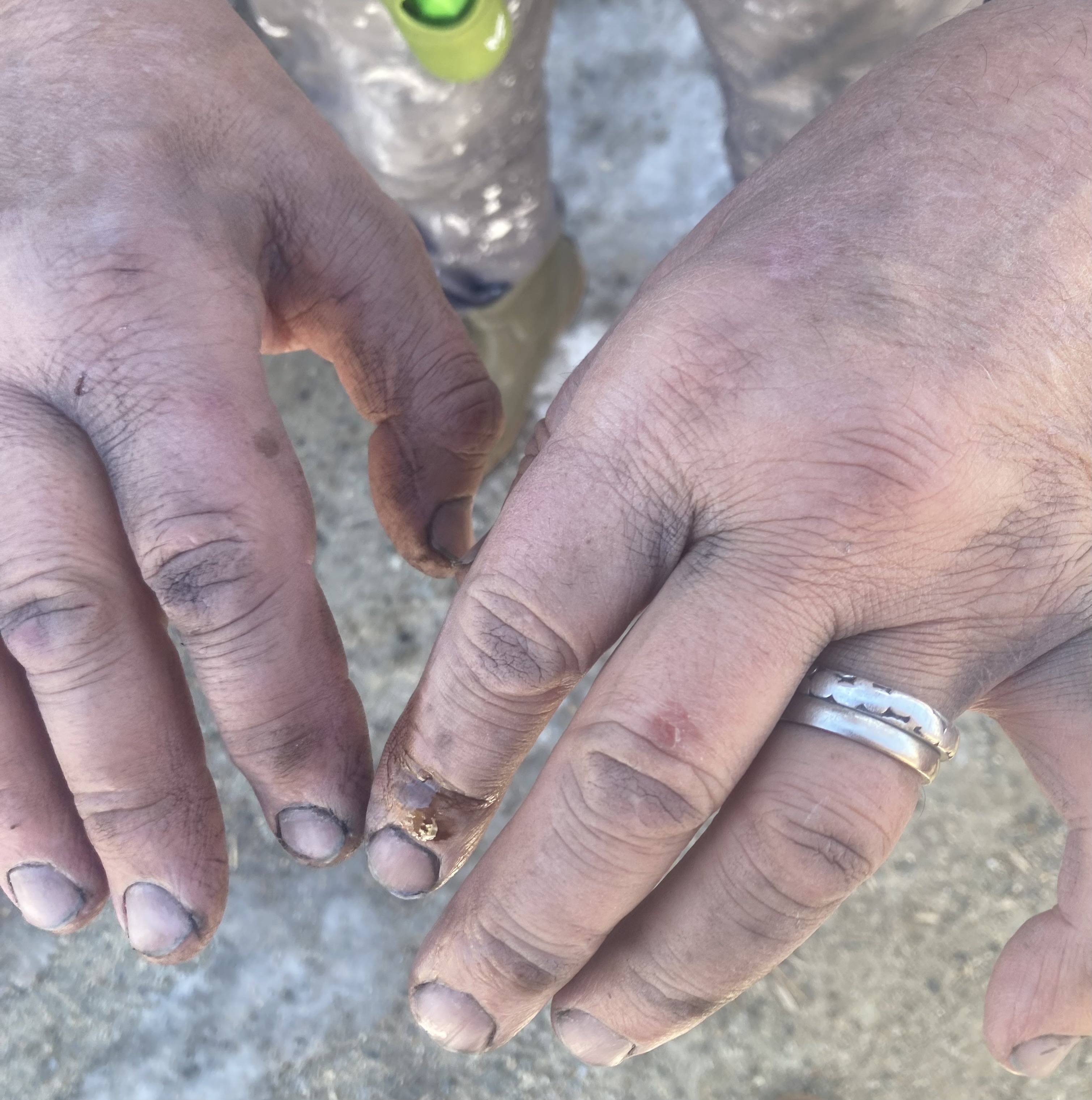
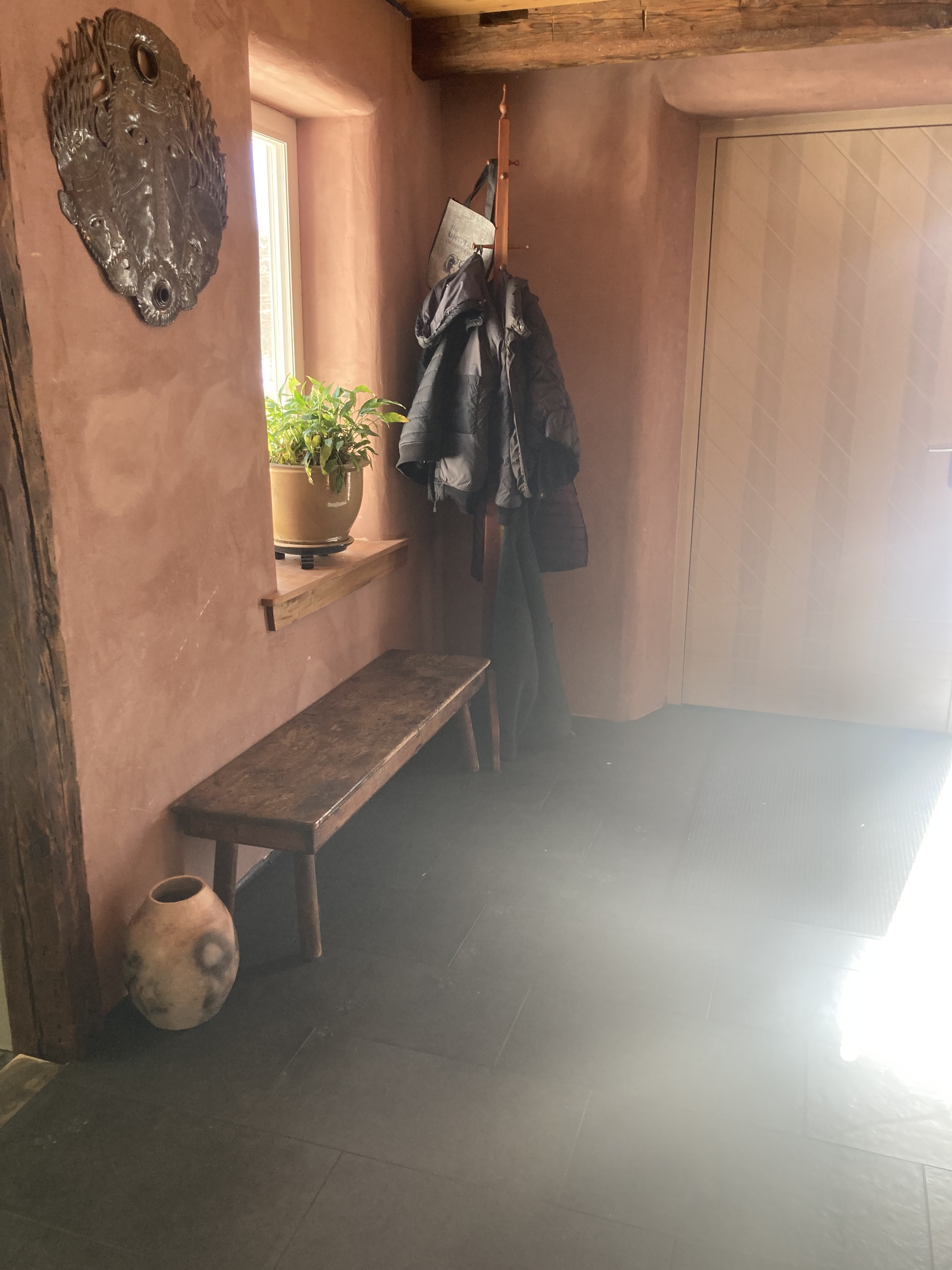
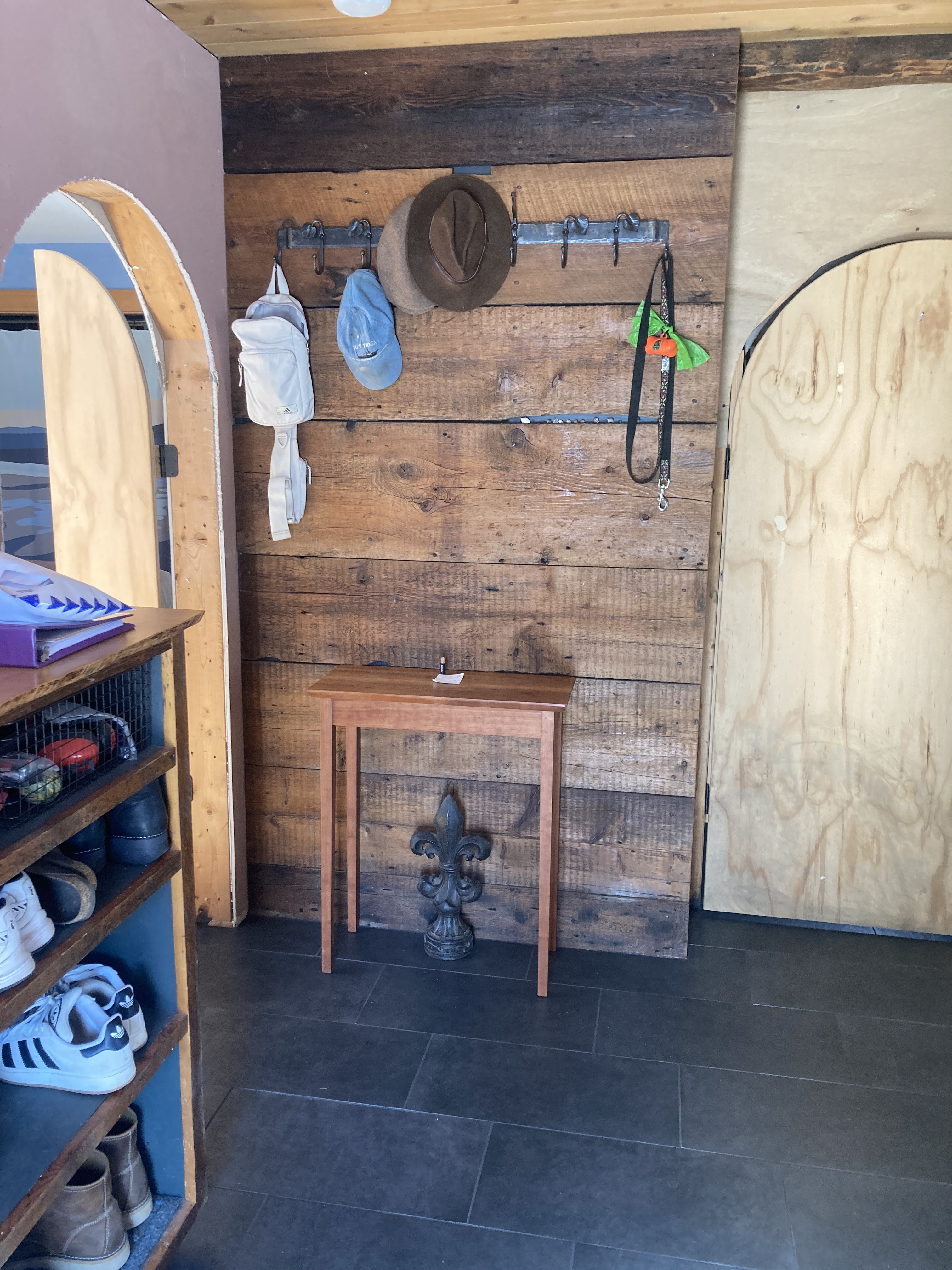
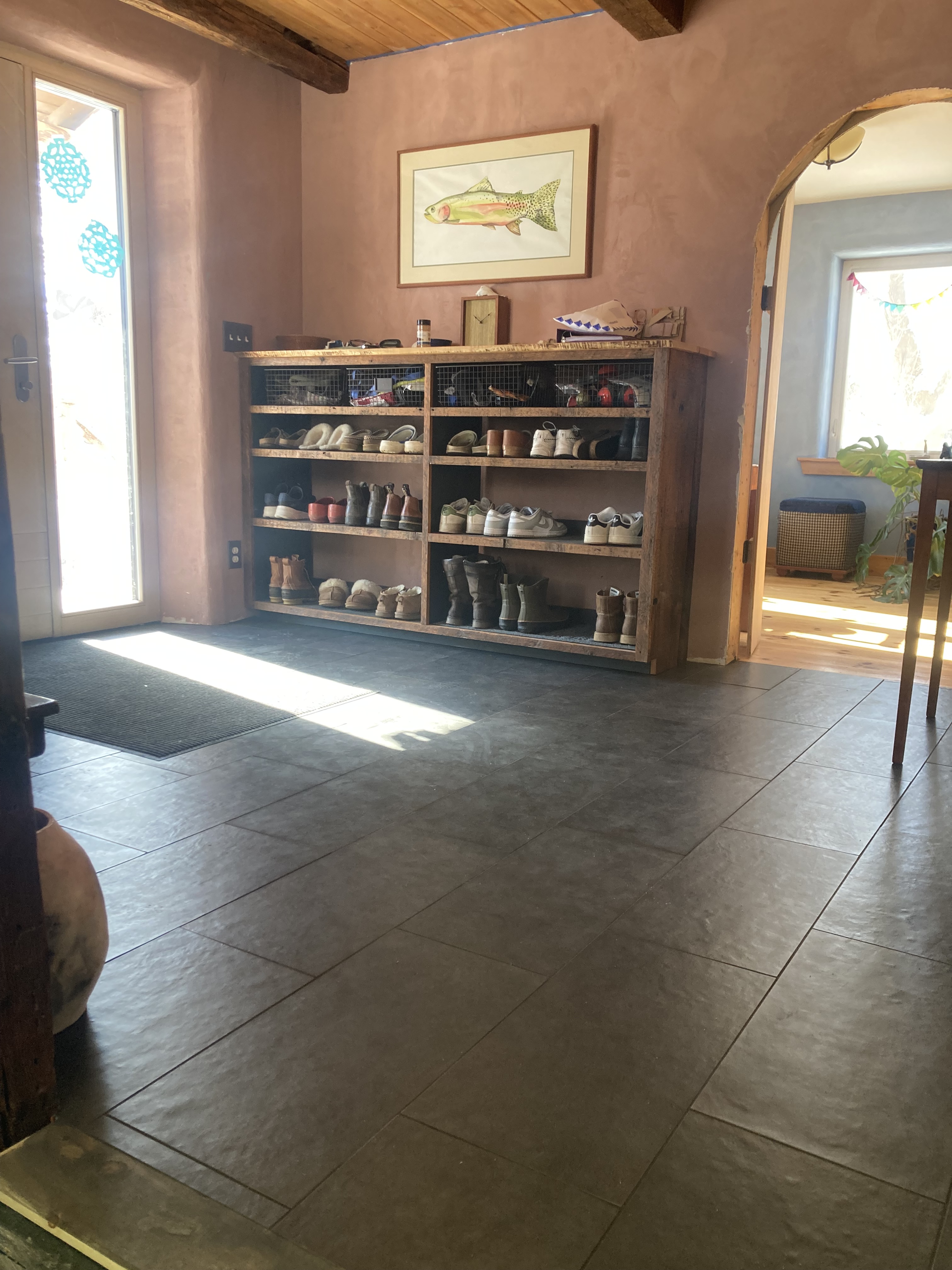
Misery loves company, which is why we did the tiling work as a team, laying 259 square feet of tiles on hands and knees. The work is finished now and indeed, “teamwork makes the dream work,” which saying the end result has proved.
To make a distraction from tiling, we played the “Greek Syllabification” game. In fact, this was a lesson in logical thinking and, even though the local schools were on February Break, our Art Farm Academy remained open for business.
My son’s Language Arts teacher, known as “The Magister,” created the game as, “…an excellent, brief object lesson in logical thinking…a fitting complement to his thinking about and then articulating how an English sentence can be composed one way or another to suit the purpose of the statement. …it’s time to slyly ratchet up his ability to think and express himself more critically–and at the same time build his pride and confidence, which the strangeness of the Greek can occasion.”
I dared not tell my son this was an assignment, but instead spoke of the “game,” with four basic rules:
- Every word is made up of syllables and consonants.
- Every syllable makes one sound.
- The sound of a syllable is made by a vowel, or by a consonant with a vowel.
- To syllabify means to divide a word into its syllables.
Seven letters are vowels in Greek: α, ε, η, ι, ο, ω, υ. The combinations of αι and οι make up one vowel, which combination is called a diphthong. A Greek word has as many syllables as it has vowels or diphthongs.
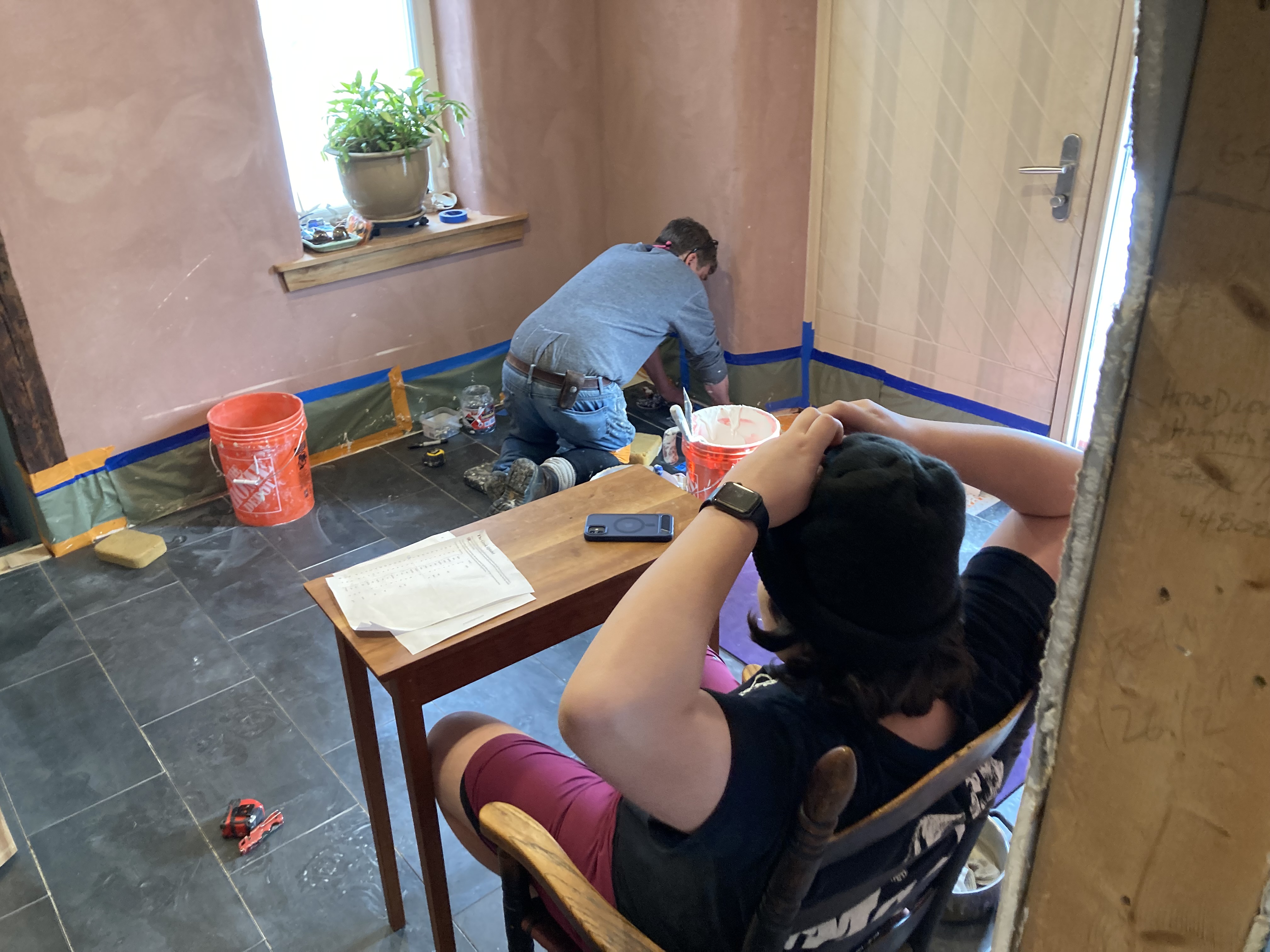
While the Professor and I worked on our hands and knees, my son set up a table and chair, and we began. The contrast in postures was as comical as playing the game was wildly impractical. But we pushed on enough to lay both the game’s ground rules as well as more tiles.
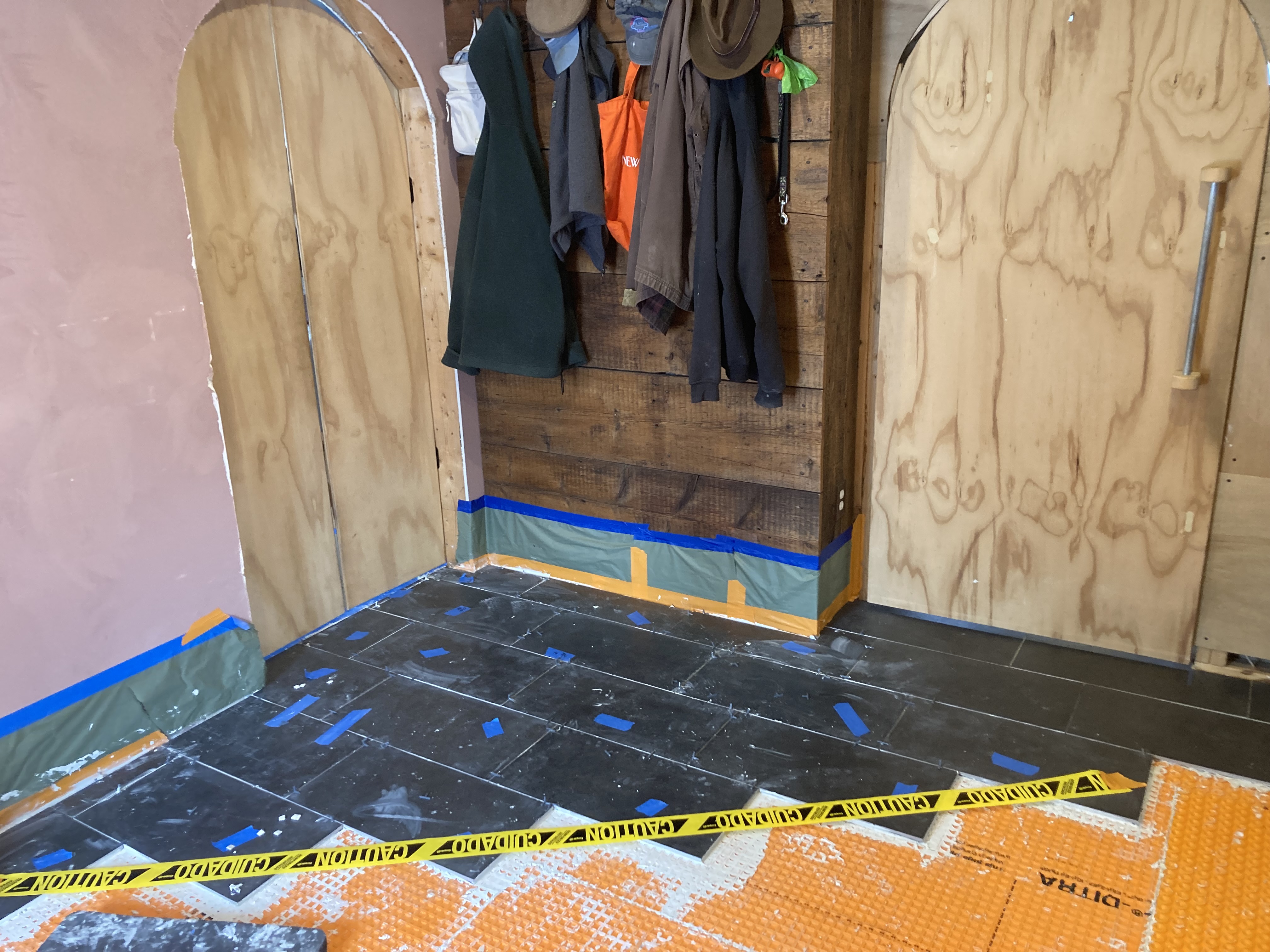
Another assignment during last week was to calculate the degrees of the triangle formed from our first day’s tiling work. My son knows that every triangle contains 180 degrees, and our day’s work was a right triangle, meaning a 90 degree angle at the base. Using a tape measure, we found the hypotenuse was 115″ but the sides were not equal – one was 71” while the other was 90” – and if not equal then the angles could not both be 45 degrees. We needed trigonometry, not geometry, to solve the ratio of the sides of a right-triangle to find a specific angle.
My daughter, who excels in high school, was amazed that we would tackle trigonometry but such was the task at hand. Conventional schooling regards trigonometry as a subject for Junior or Senior year of high school, but anyone in the trades learns that you use the tool when needed. My son has already studied ratios so this was a chance to apply that knowledge.
Our problem, it turns out, has been discussed as far back as the Babylonians and Egyptians; was refined by the Greek astronomers, but Aryabhata, an Indian mathematician, discovered the terms used today: sine and cosine.
The word “sine” is derived from the Latin “sinus” which means “fold in a garment,” but that was a mistranslation of the Sanskrit word “jya-ardha” which meant “half a bowstring;” the Sanskrit derived from Persian, which, in turn, came from the Greek “χορδή” which meant “a bow string made of gut.”
The Babylonian, Egyptian and Greek astronomers were trying to understand arcs in a circle, which is the shape of the cosmos. Trigonometry became their language to divide a circle in order to map the heavens, and thereby understand the movement of celestial bodies. Rich history lay behind the very tangible question of the triangle we laid on day one of our mudroom tiling.
“Sine” is simply the ratio between the right triangle’s hypotenuse and its opposite side; the 71″ Opposite divided by the 115″ Hypotenuse equals 0.617. Converting that ratio into an angle requires the inverse function known as the arcsin; given the known sides we want to know the angle they form, the space between. Because the math to calculate the arcsin is complex, we used a calculator, but the concept became clear: our tiling had angles of 90, 38, and 52 degrees (which add up to 180). Not surprisingly, the Greek letter theta θ is used to represent the unknown angle. The strangeness that Greek can occasion!
Our Art Farm, then, teaches a practical truth that life is about problem solving, not meeting the metrics of a school curriculum. And in the “there are no coincidences” department, the Goddess happened to read to us a passage written by Melody Beattie about solving problems:
When we spend more time reacting to a problem than we do solving it, we miss the point. We miss the lesson; we miss the gift. Problems are a part of life. So are solutions.
A problem doesn’t mean life is negative or horrible. Having a problem doesn’t mean a person is deficient. All people have problems.
Recovery does not mean immunity to or exemption from problems; recovery means learning to face and solve problems, knowing they will appear regularly. We can trust our ability to find solutions and know we’re not doing it alone. Having problems does not mean life is picking on us. Some problems are part of life; others are ours to solve, and we’ll grow in necessary ways in the process.
Face and solve today’s problems. Don’t worry needlessly about tomorrow’s. When they appear, we’ll have the resources necessary to solve them.
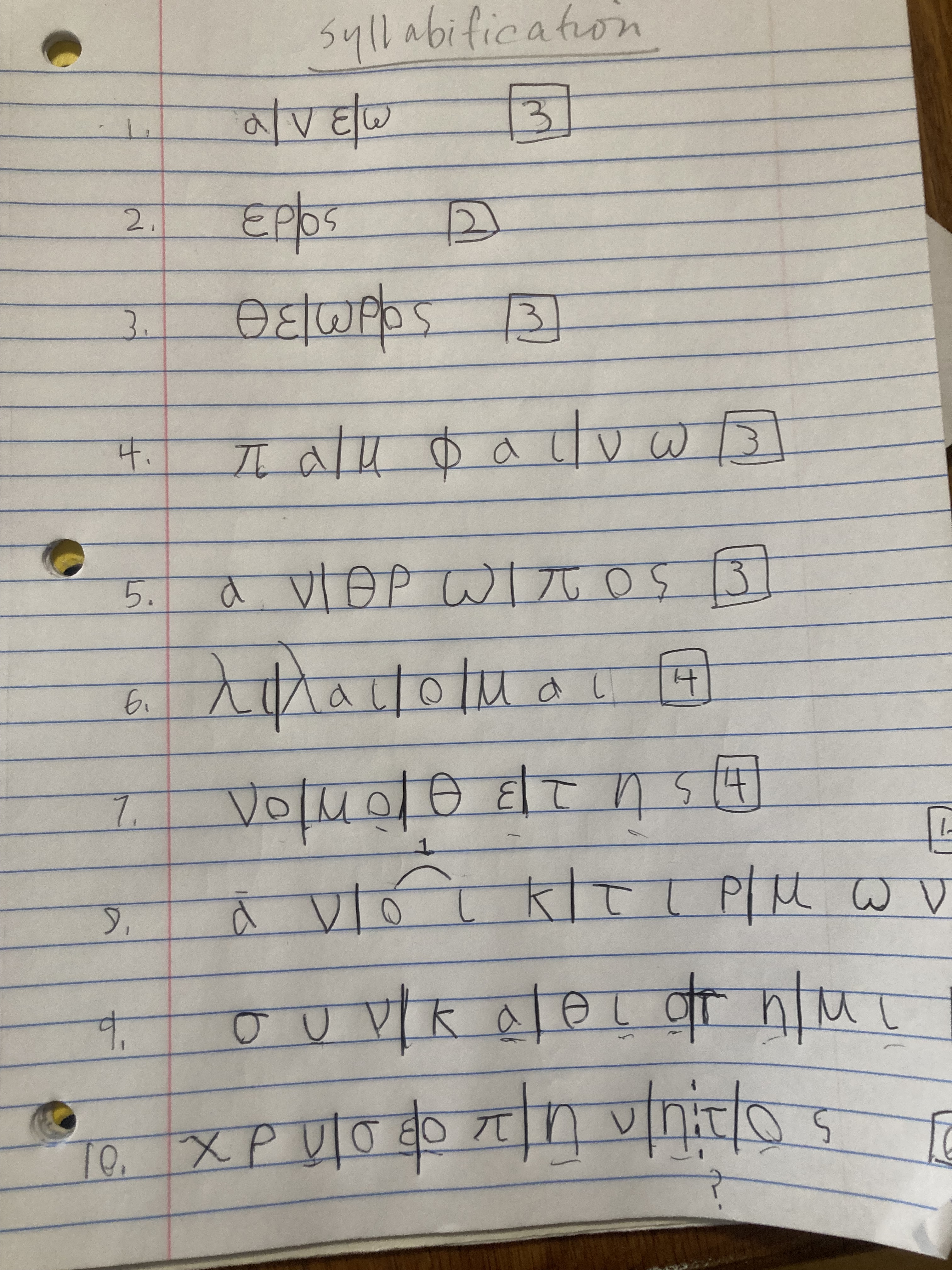
Indeed, our core curriculum increasingly is the very practical lesson of stepping up to life to solve problems. And about that game of Greek Syllabification? By Sunday my son had finished the task. Greek is the least of the lesson. The point is to play by the rules and gain confidence in approaching and working through the unknown. Some serious mental gymnastics ensued, as he worked this through, including pronouncing the words after breaking them into the syllables.
1) ανεω (silently) 3 syllables: α νε ω
2) ερος (love) 2 syllables: ε ρος
3) θεωρος (spectator) 3 syllables: θε ω ρος
4) παμφαινω (to shine) 3 syllables: παμ φαι νω
5) ανθρωπος (man) 3 syllables: αν θρω πος
6) λιλαιομαι (to desire) 4 syllables: λι λαι ο μαι
7) νομοθετης (lawgiver) 4 syllables: νο μο θε της
8) ανοικτιρμων (merciless) 4 syllables: αν οικ τιρ μων
9) συγκαθιστημι (to bring together) 5 syllables: συγ κα θισ τη μι
10) χρυσεοπηνητος (woven with gold) 6 syllables: χρυ σε ο πη νη τος
 an Art Farm
mon dieu! who knew how much could be laid in a floor!?!?!!?
your lessons amaze…..that kid is getting the best education in the whole state of maine.