The log splitter
Posted: January 30, 2026 Filed under: Portfolio - Elena's work, What is an Art Farm 1 Comment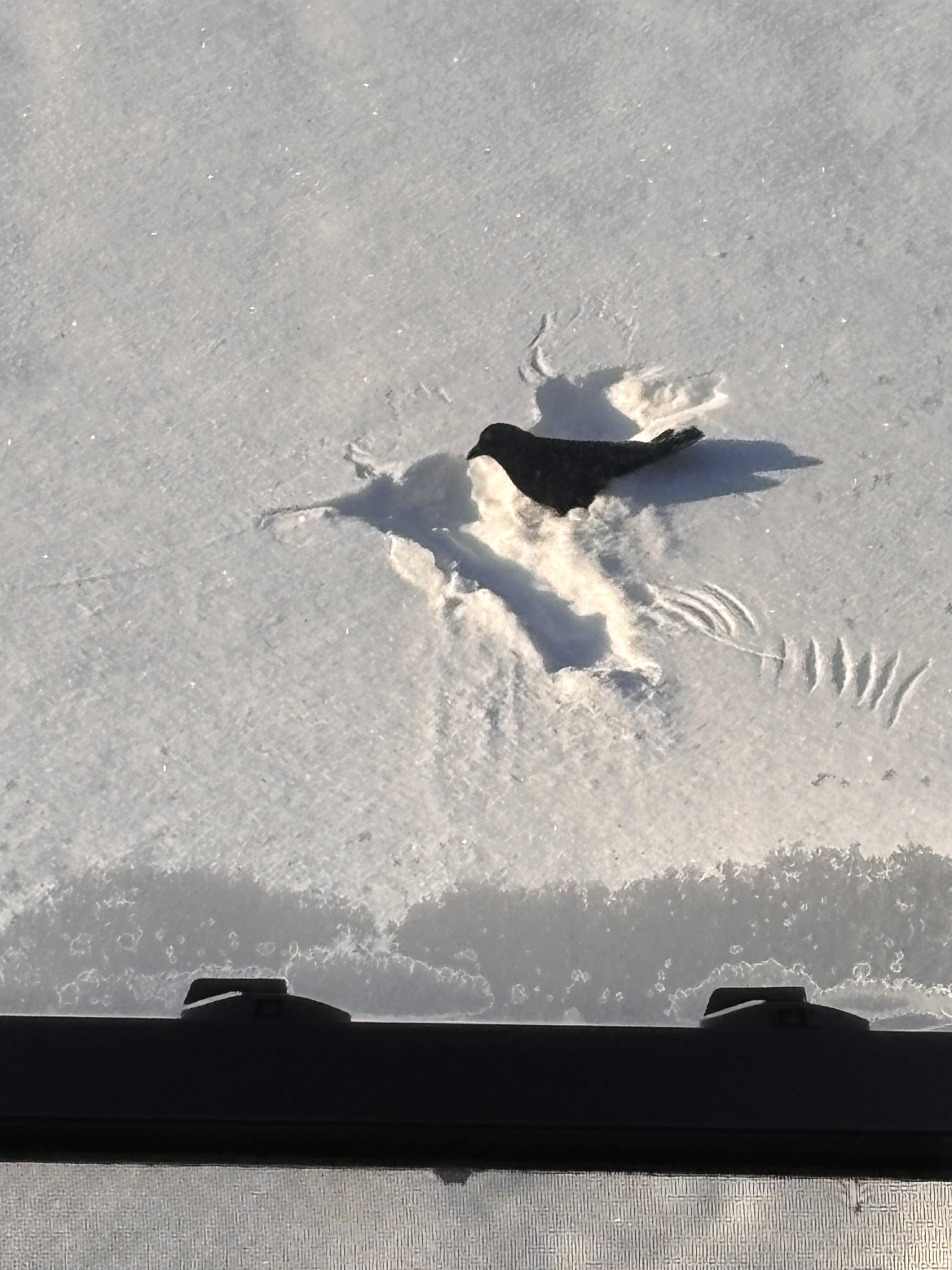
Growing up in Illinois, a “log splitter” was not a tool but a moniker for the young man downstate who later became the “Great Emancipator.” Honest Abe, known by many names, did in fact work as a young boy clearing fields and splitting logs by hand.
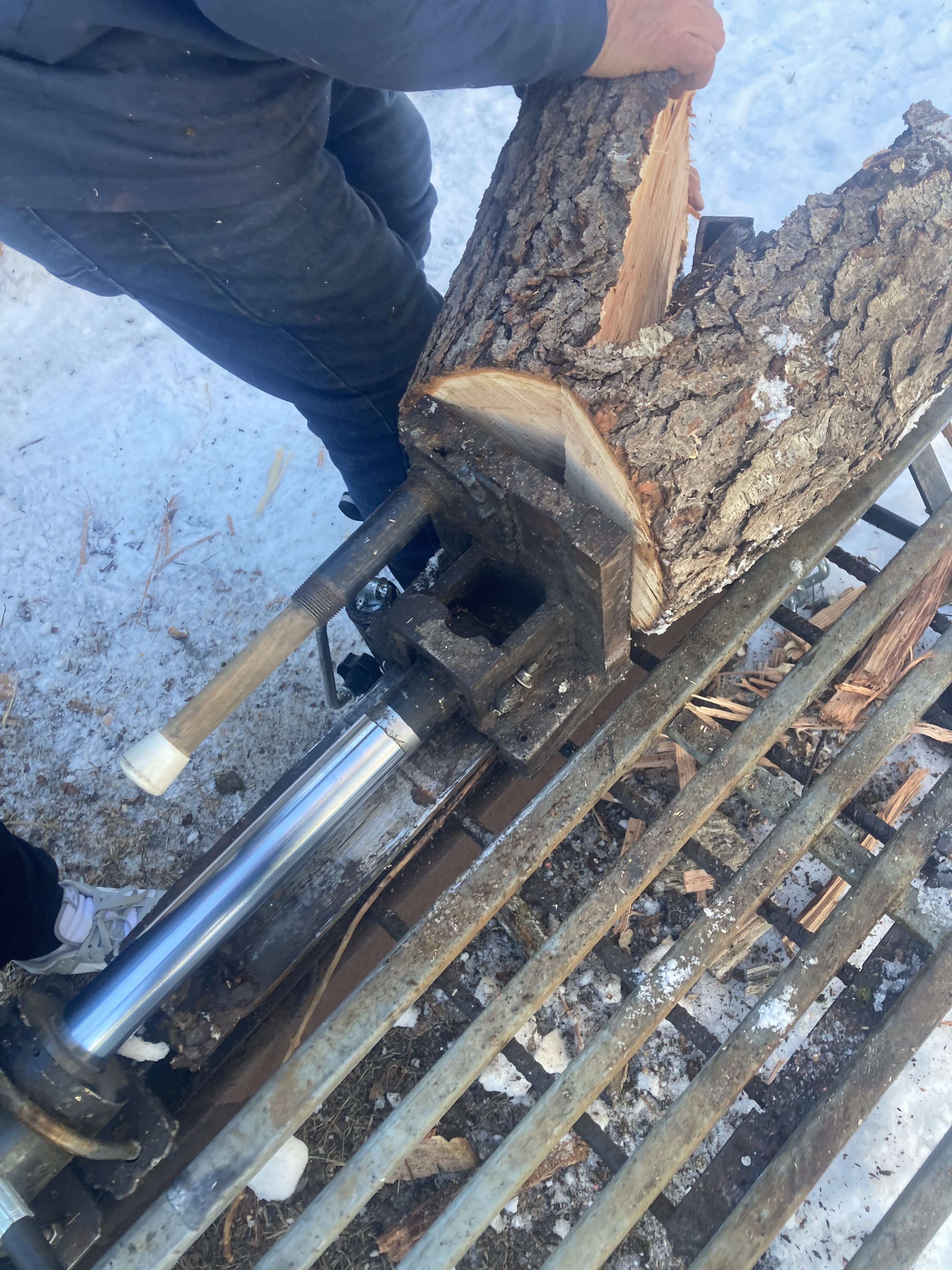
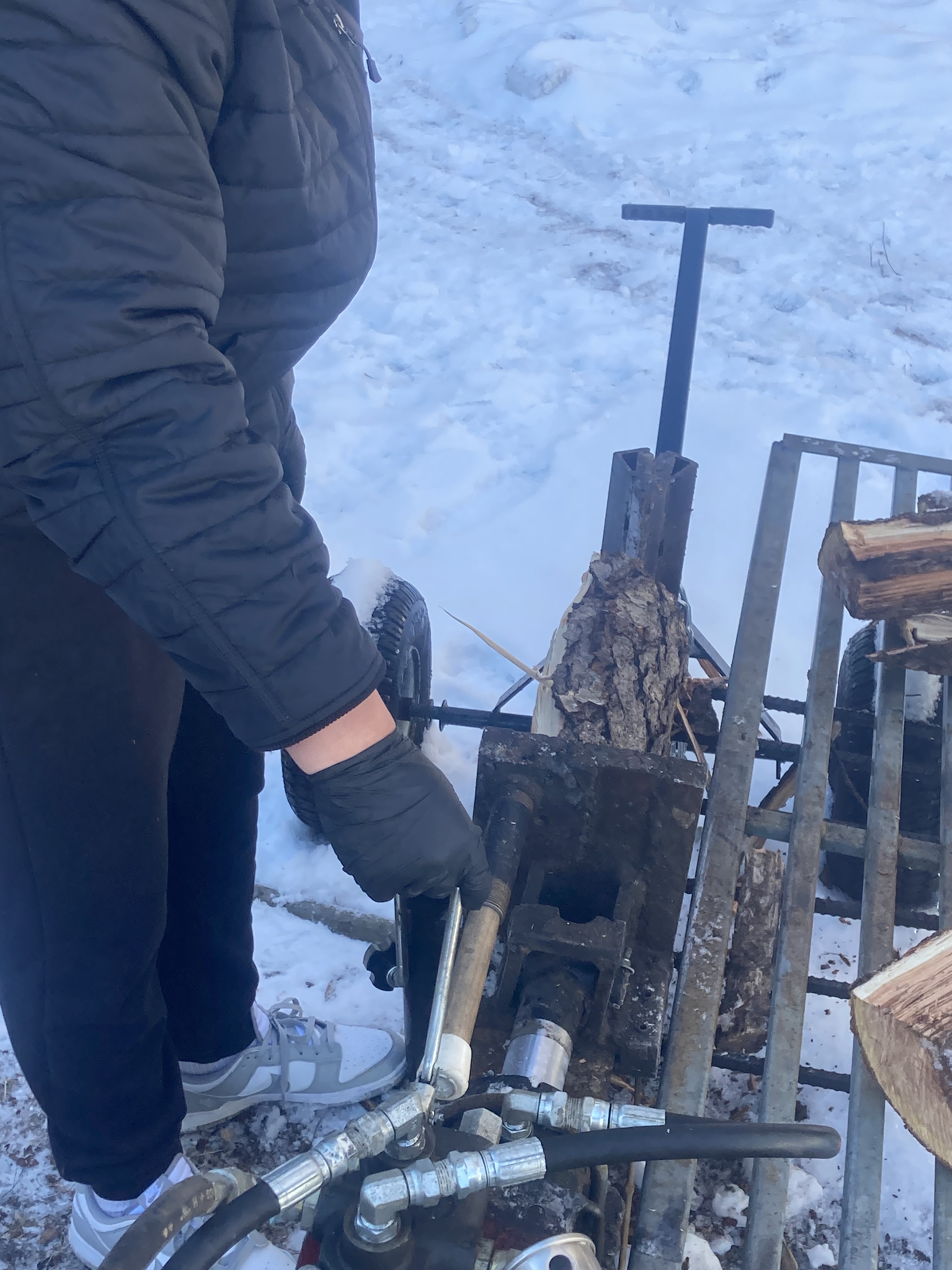
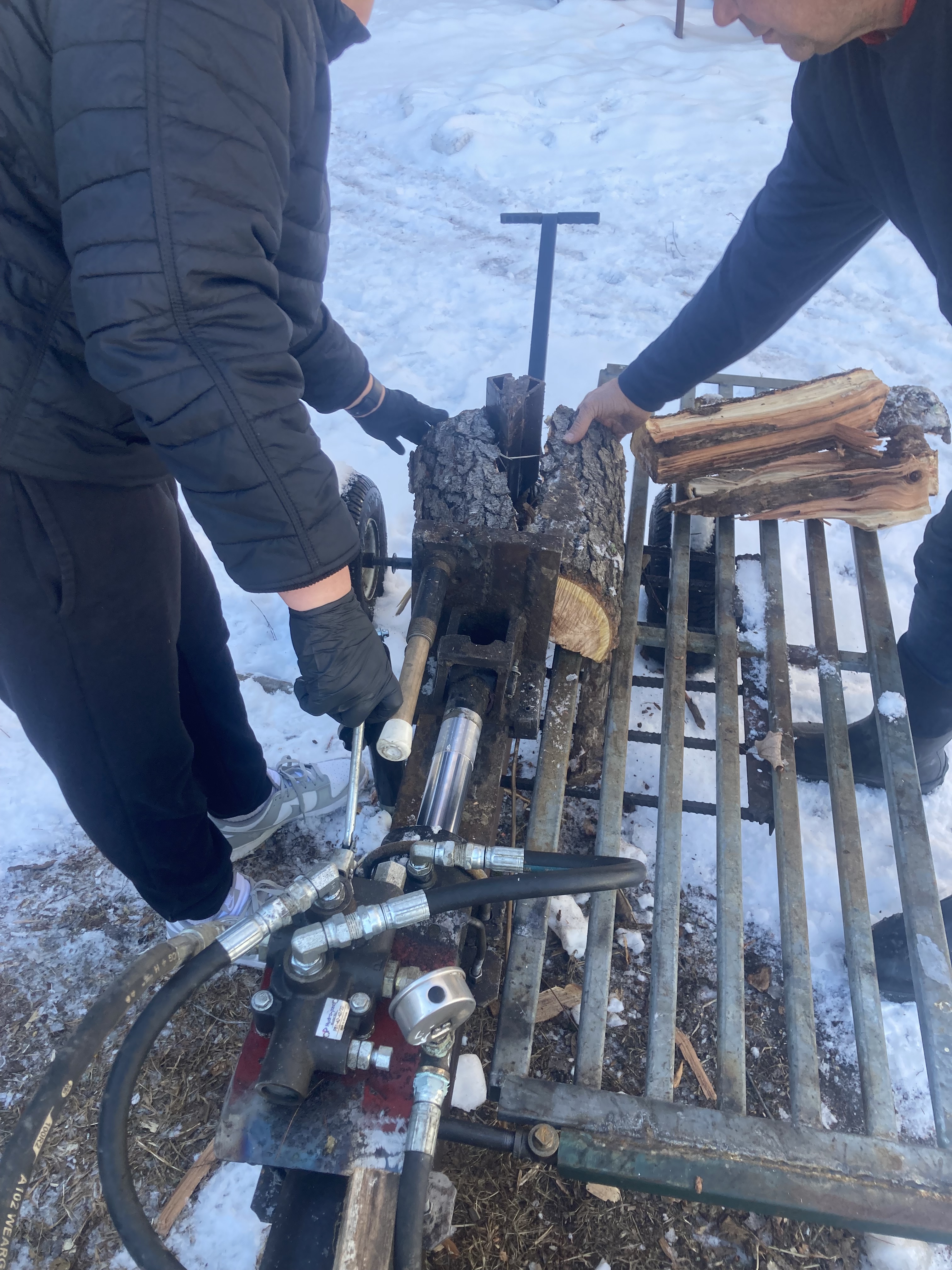
Here in Maine almost half of the homes are heated by wood stoves so log splitters are a tool – not a nickname – used everywhere. My son has learned how to swing an axe, and in homeschooling he has been learning the hydraulics of a log splitter.
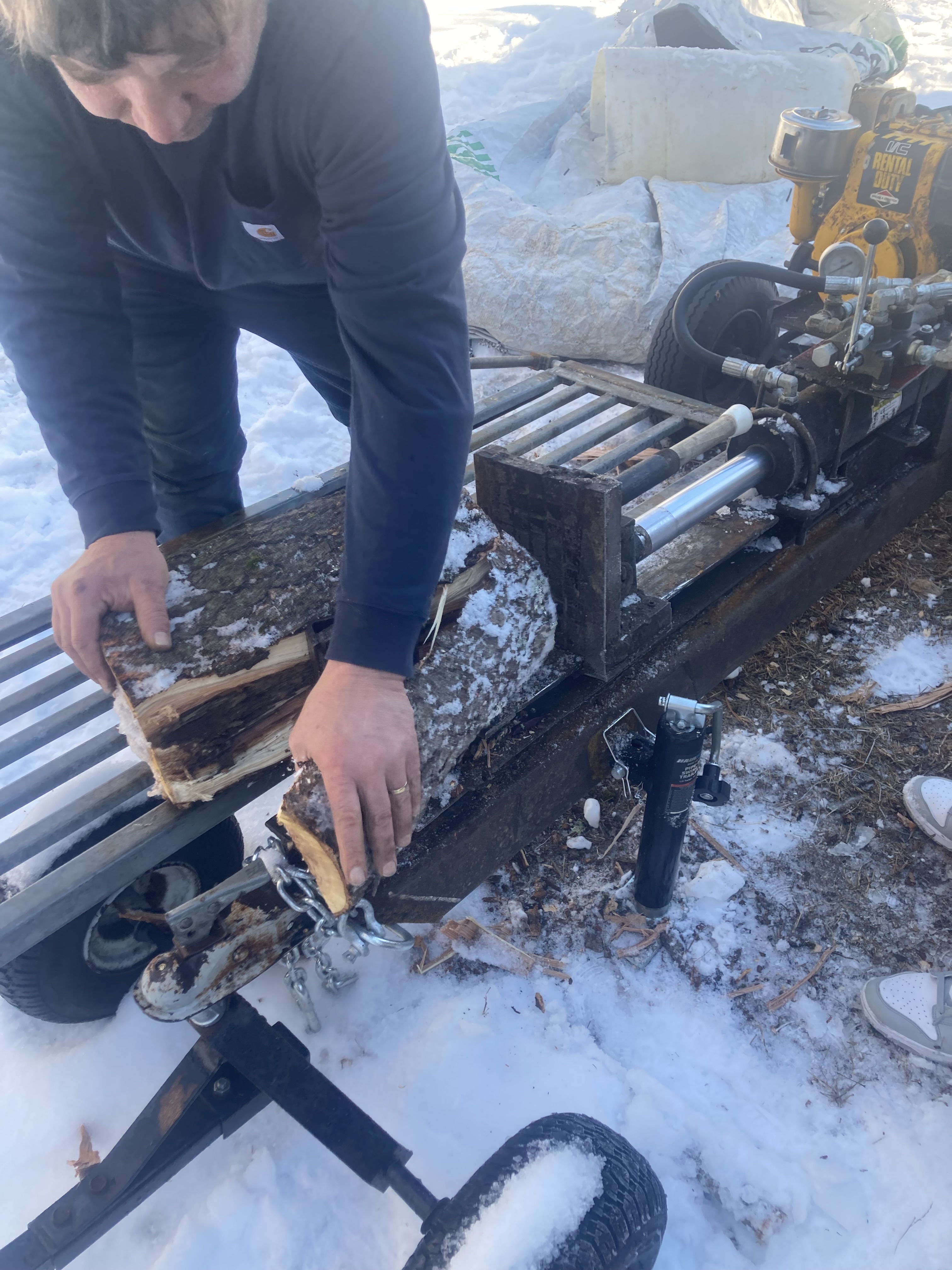
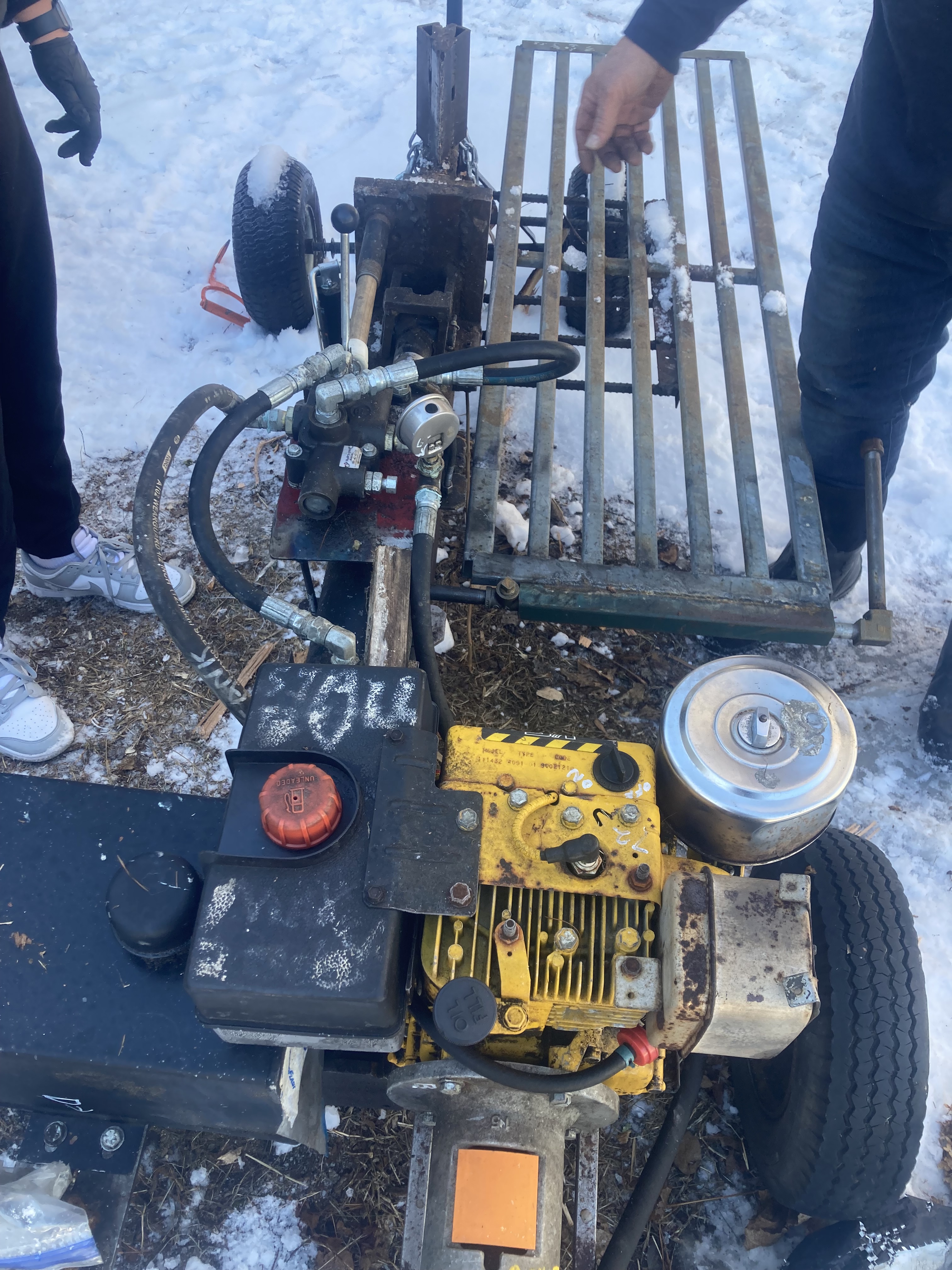
The Professor built his log splitter with a hydraulic ram able to push 30 tons, enough to move a semi-trailer. That power proved too strong for a weld on the chassis and so, when splitting a black elder log, the weld cracked before the log split. Black Elder is a hardwood indeed!
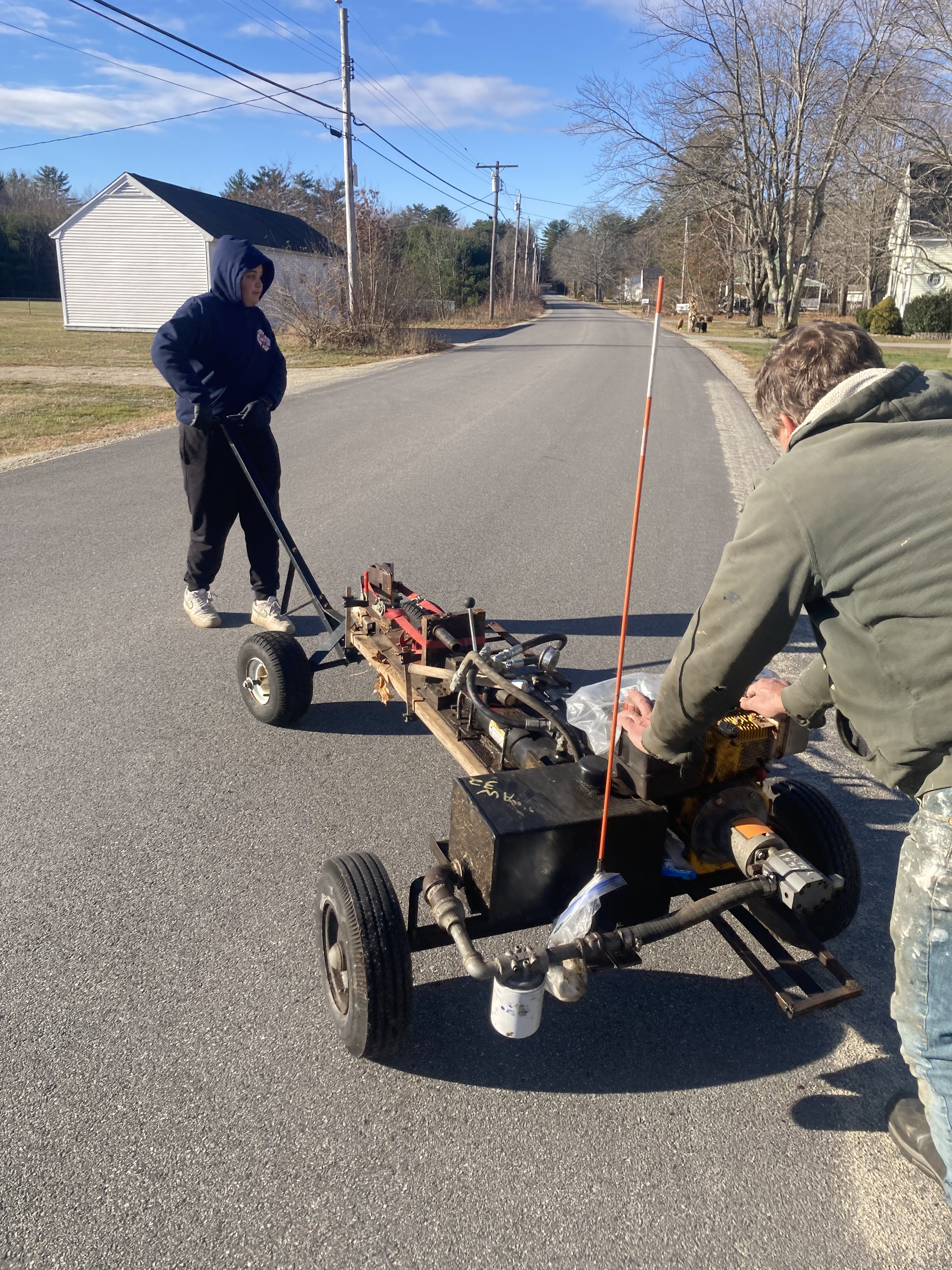
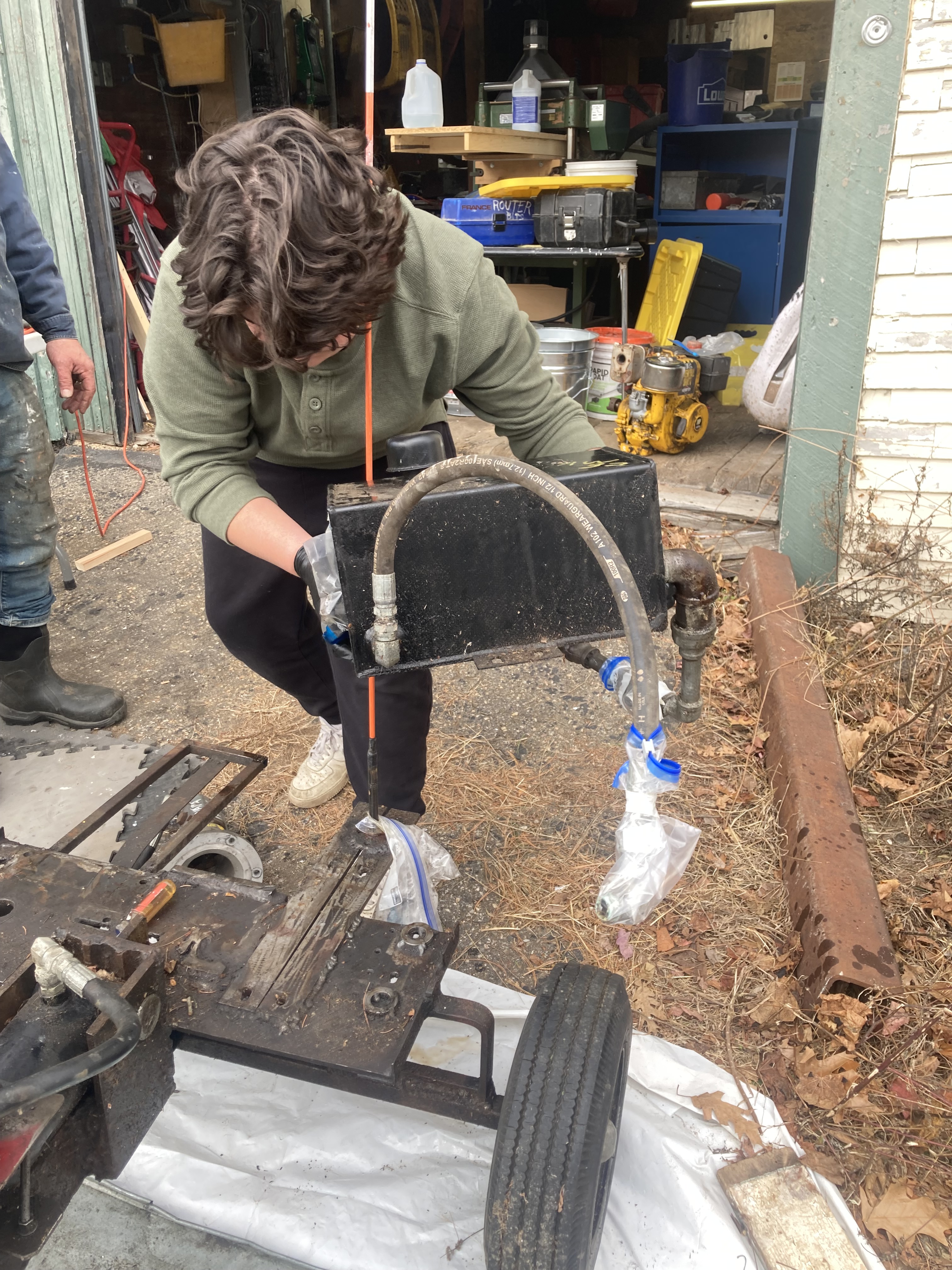
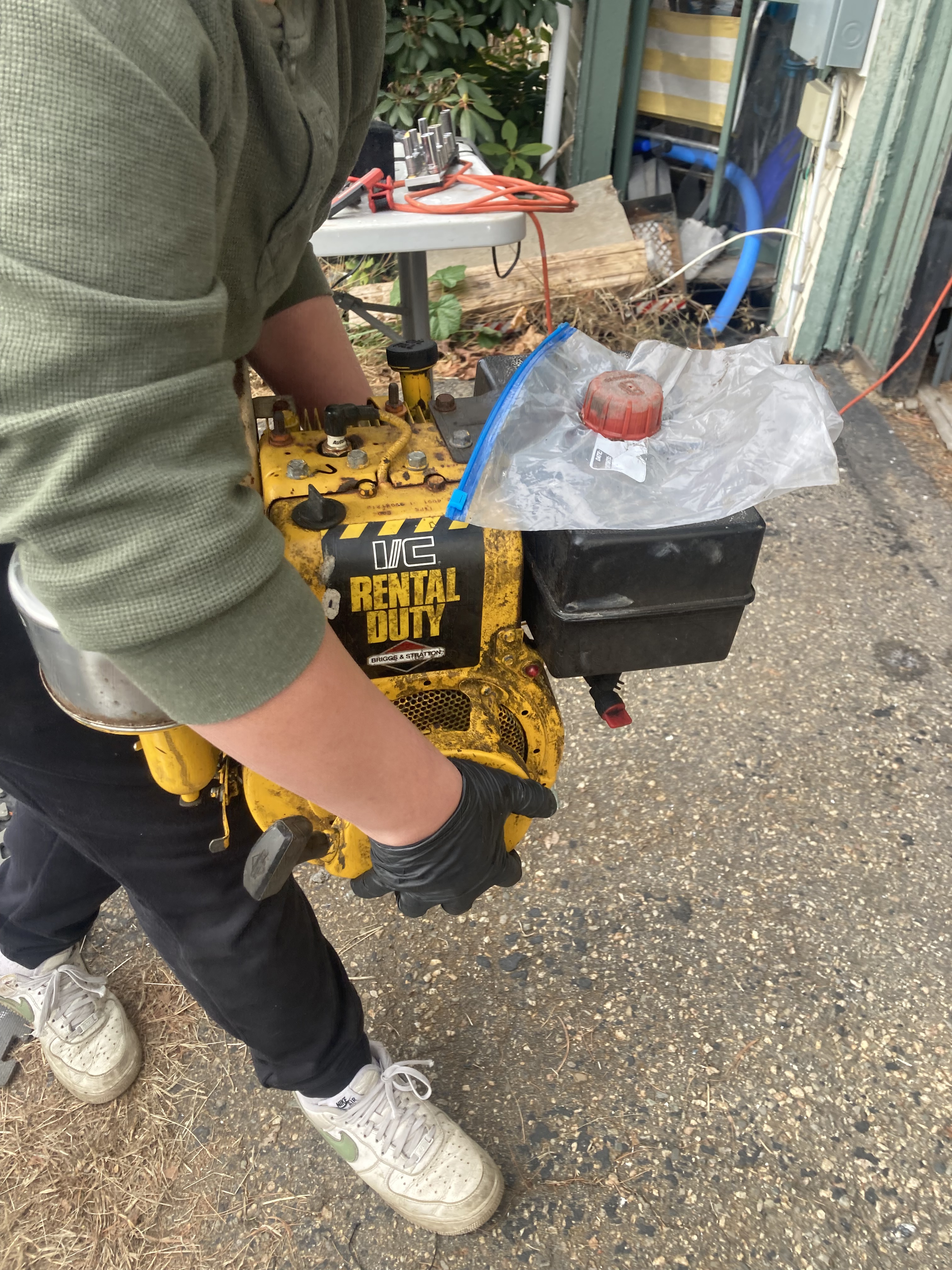
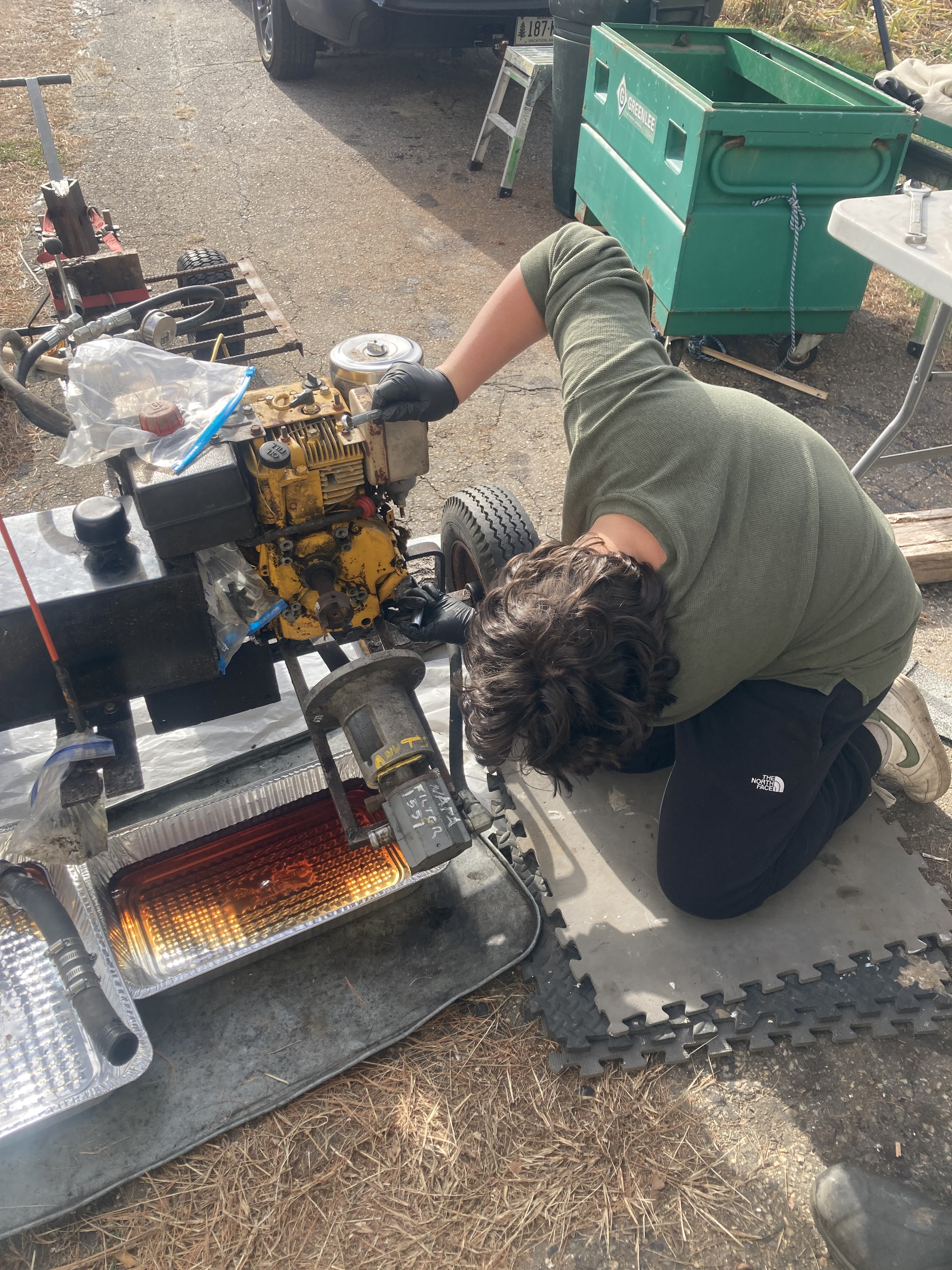
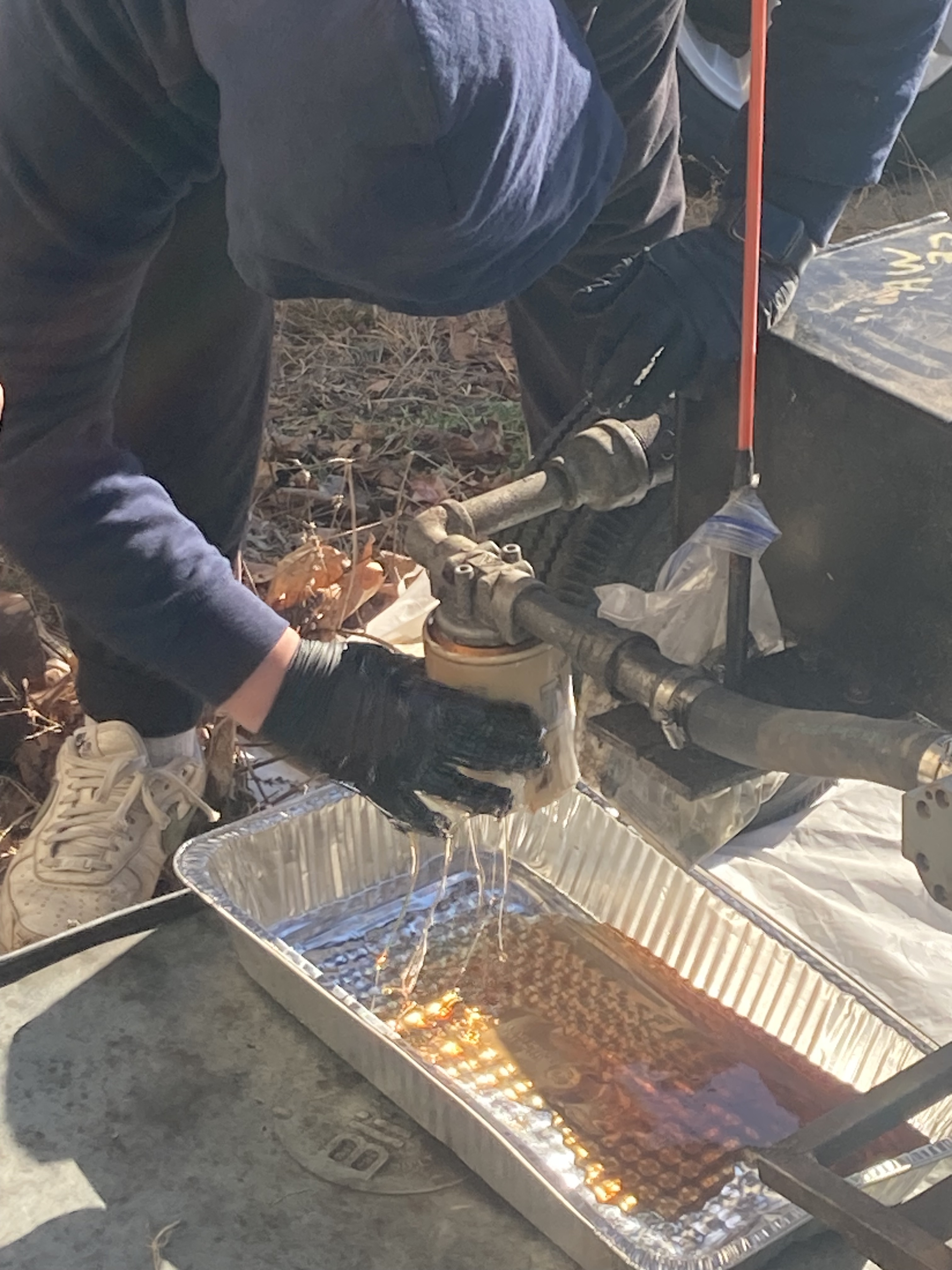
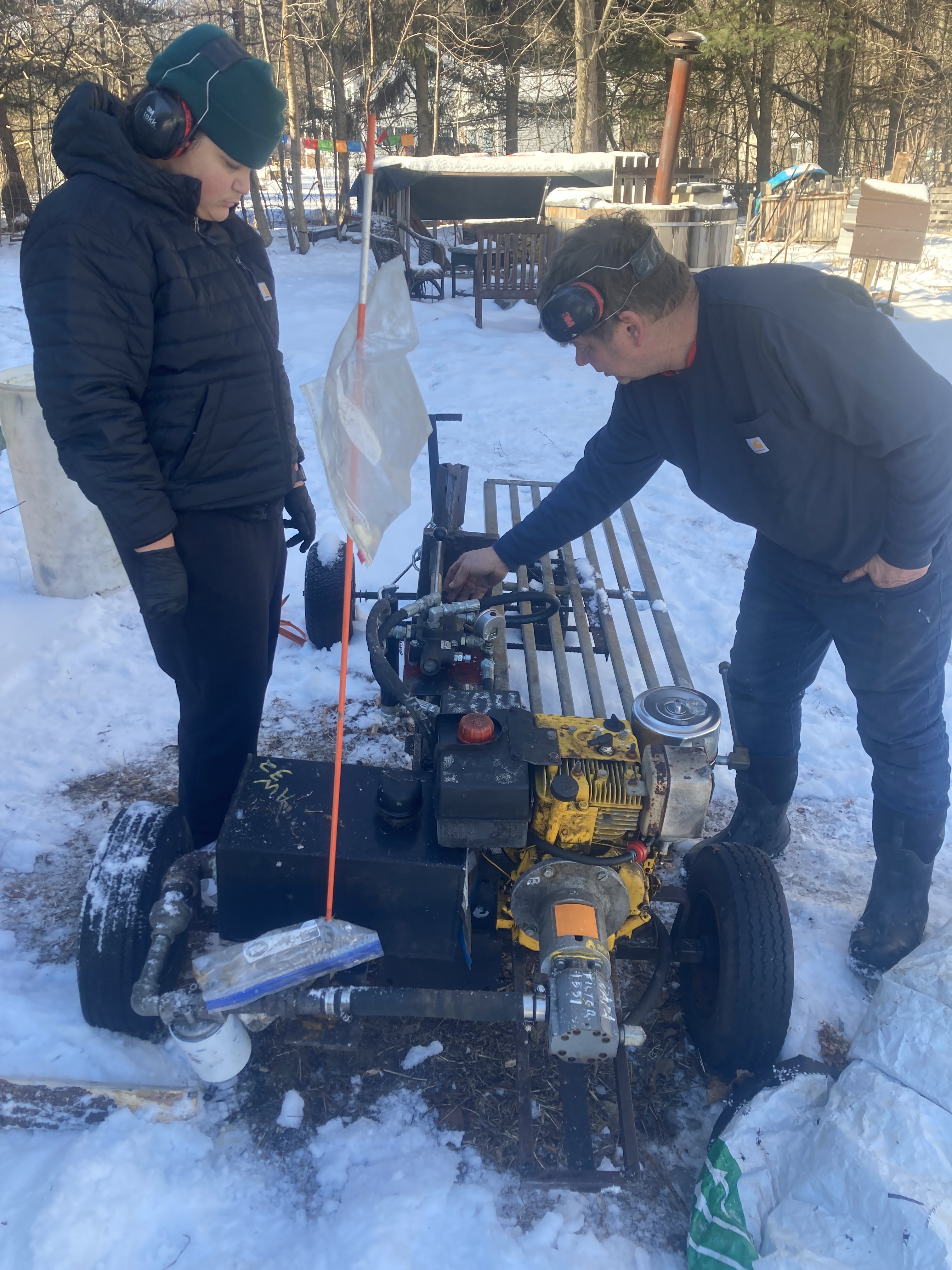
The Professor invited my son to disassemble the log splitter; a “shade tree science class” on small engines and fluid mechanics. The math of fluid dynamics gets very complex quickly, so we focused on the basic principles and how hydraulics work.
The motor is a 4-stroke internal combustion engine, which means the piston completes four rotations while turning the crankshaft. The four strokes are (1) intake, (2) compression, (3) combustion, (4) exhaust. The 4-stroke offers higher fuel efficiency, lower emissions and better durability.
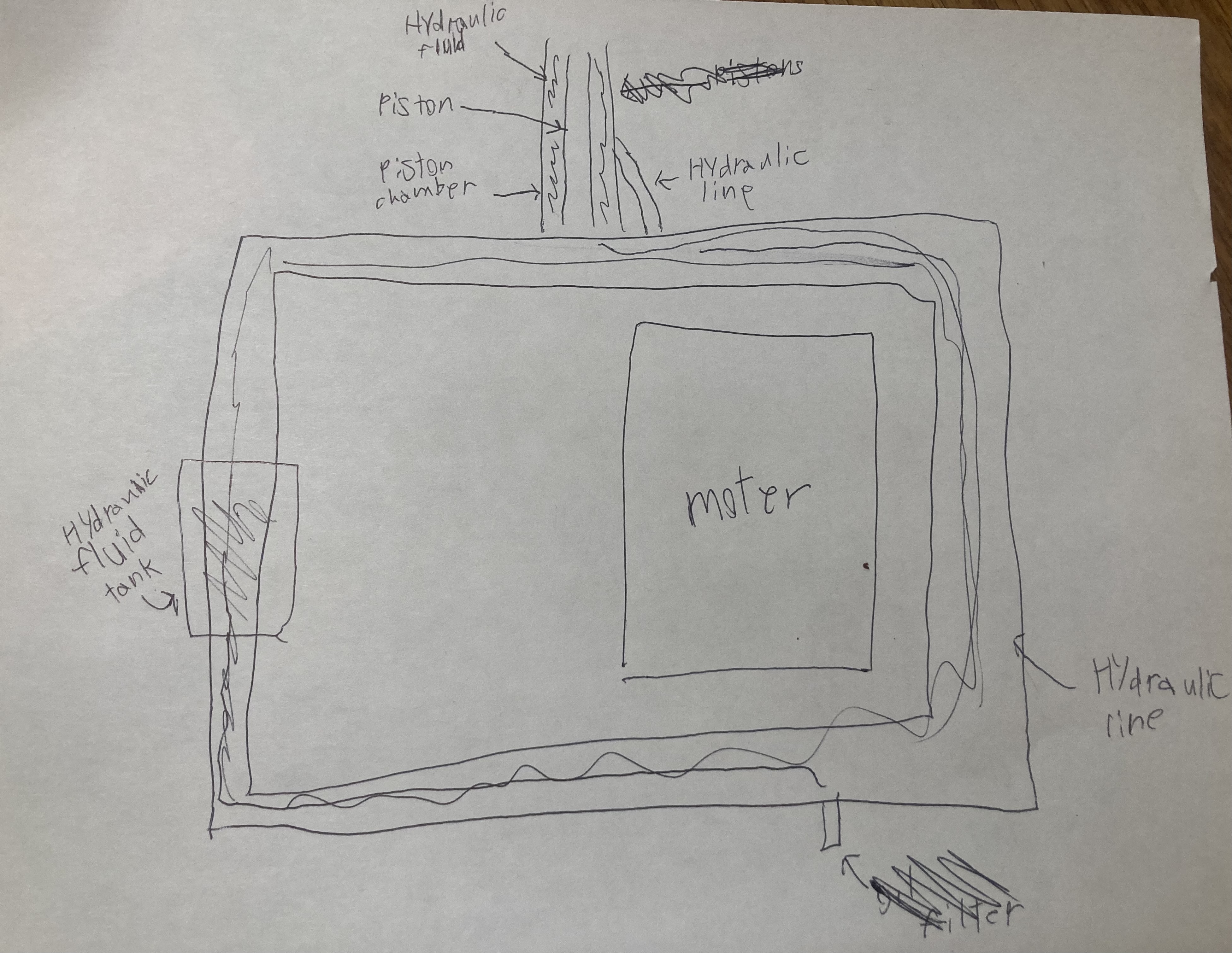
To explain how the hydraulics work my son drew a diagram then described the hydraulics like this: “It is like a big rectangle. When you turn the motor on, the hydraulic fluid moves through the lines…around the edge of the rectangle, and then it goes into the piston chamber with a diameter about 5”. As you open the lever, the fluid fills the chamber, where the piston is centered, and the piston begins to move forward, in the path of least resistance. When you toggle the switch back, the piston retreats. It is something like that.”
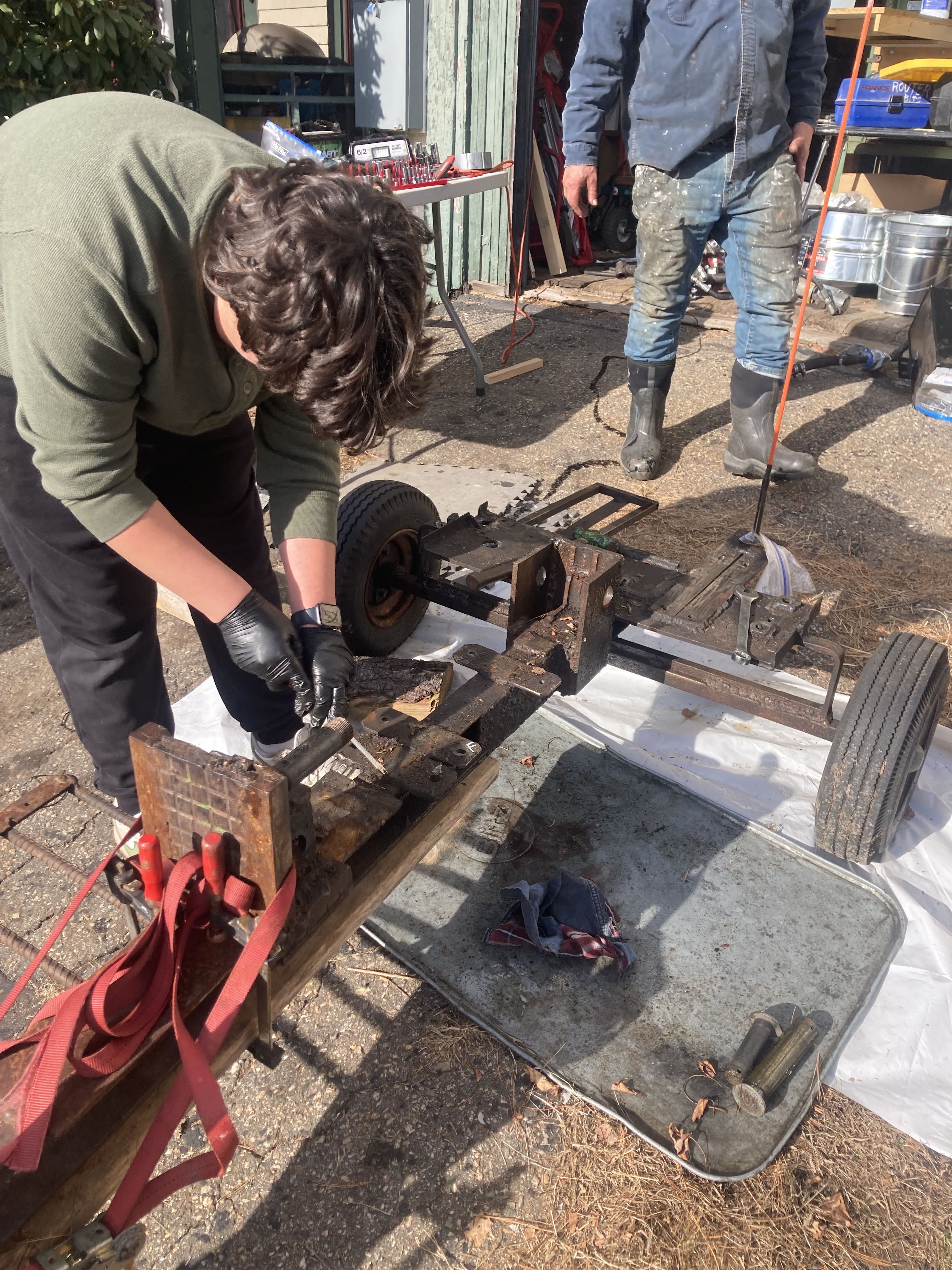
The process was for my son to reverse engineer the log splitter, taking it apart and carefully numbering every part in the process. The Professor taught my son how to measure the size of a nut by using your finger. My son’s finger is about 1/2”. My finger is about 3/4”. When looking for a socket, you can use your finger as a rough gauge. My son mastered this quickly.
After the chassis was stripped bare, the Professor welded a new metal frame beneath the old chassis. He doubled the strength. He then reassembled the machine following my son’s carefully numbered plan.
In early January we drove to his house, and beneath the shade tree split wood using the log splitter. We had come full circle. And the Professor has split wood to heat his home during this bitter cold winter.
________________________________________________
Credit where credit is due: Lead photo, “Black bird, White snow” by Elena.
As Above, So Below
Posted: December 26, 2025 Filed under: consciousness, Little Green Thumbs, Portfolio - Elena's work | Tags: hildegard-von-bingen, mother-trees 1 Comment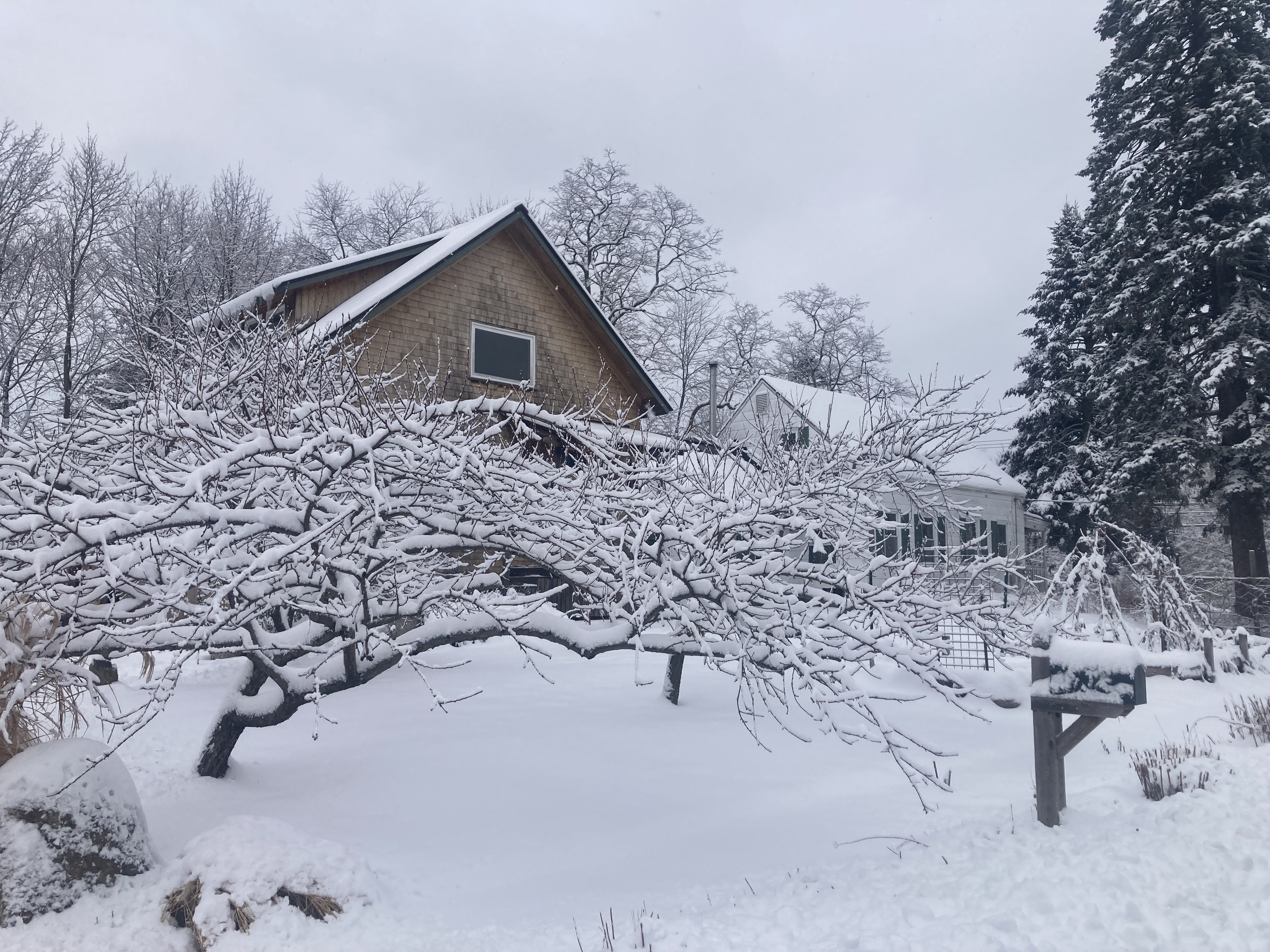
Two wise women demonstrate the ancient wisdom, passed down millennia, of the Emerald Tablet: “That which is above is from that which is below, and that which is below is from that which is above,”
The “Sibyl of the Rhine” is our first wise woman, the polymath writer, composer, philosopher, mystic and visionary of the High Middle Ages. The Abbess of several Benedictine monasteries, the breadth of her intellect included being a founder of scientific natural history in Germany. A truly remarkable and wise woman was Hildegard van Bingen.
Hildegard’s central theme was Vriditas, a Latin term meaning “greenness” but with added nuance of vitality, growth and lushness; the creative life-giving force of nature and spirit. Simply stated, physical well-being is the “greening power” of Gaia, that relates both to the physical and to the spiritual. As above, so below; all life is one, all is connected.
Her scientific master work is the Book of the Subtleties of the Diverse Nature of Creatures. Divided into two sections, the Physica is a comprehensive treatise and medicinal catalog of plants, fish, birds, insects and minerals, while the Causae et Curae emphasized the causes of disease and their corresponding natural treatments.
Hildegard closely observed the plants in her monastery’s garden and how – as Babs Mahany wrote – “stem and bud absorbed the sunlight [which] brought the fronds’ unfurling.” Her closely observed empirical observations combined with mystical visions detailed that which is above ground.
The “wood wide web” scientist, the forest ecologist and professor of the underground, is our second wise woman. Dr. Suzanne Simard is a titan among modern scientists, who challenged the conventional view that ecosystems are competitive and forests are simply the source of timber or pulp. Over decades she researched and discovered the cooperative nature of forests through roots and fungal networks, the mycorrhizal, that facilitate nutrient, water, sugar and carbon exchange; a chemical signaling between trees communicating stress and providing a network for communal support.
Dr. Simard identified century old “Mother Trees” that nurture younger seedlings, sending nutrients outward to feed and sustain the weaker, baby trees. Her Mother Tree Project is rooted in the idea that forests are deeply interconnected ecosystems, social creatures demonstrating traits of cooperative civil society.
Soil is not “dirt,” but a vital and complex life source of sharing and exchange, the basis upon which life unfurls. The soil maven Nance Klehm in her book, “The Soil Keepers,” described it: “When we stand on land, we stand on the ones who have come before us. We stand on our ancestors. We realize we have inherited their legacy, the way they perceived land, the way they lived with the ground, the way their hands worked the soil, or didn’t.”
As above there is light, so below there is darkness;
As above vriditas unfurling, so below nutrients and sugars flow;
As above oxygen creation, so below communication and exchange;
As above the lotus flower, so below the mud.
All is interconnected, the cosmic dance of Gaia.
The Emerald Tablet is a foundational text, attributed to the Hellenistic figure Hermes Trismegistus, who integrated Greek and Egyptian wisdom into a body of knowledge on the interrelationship between the material and the divine. The teachings influenced both Pythagorus and Plato, formed the basis of Gnosticism and Neoplatonism, were key to Renaissance humanists.
The Emerald Tablet was most likely written in the Syriac language of the Fertile Crescent, but the first extant text appeared in the Arabic, during the Islamic Golden Age, written by Jābir ibn Ḥayyān, the “Father of Chemistry.” From the 12th century onward multiple Latin translations followed, introducing the text to Europe and then in 1680, seven years before publishing his magnum opus The Principia, Isaac Newton made an English translation. More recently, it significantly influenced the work of Madame Blavatsky, William Butler Yeats, and Carl Jung.
And two wise women, 900 years apart, exemplify the enduring truth of “as above, so below,” the essence of the Emerald Tablet. Here is the full text in English from the Arabic of Jābir ibn Ḥayyān:
Truth! Certainty! That in which there is no doubt!
That which is above is from that which is below, and that which is below is from that which is above,
working the miracles of one [thing]. As all things were from One.
Its father is the Sun and its mother the Moon.
The Earth carried it in her belly, and the Wind nourished it in her belly,
as Earth which shall become Fire.
Feed the Earth from that which is subtle,
with the greatest power. It ascends from the earth to the heaven
and becomes ruler over that which is above and that which is below.
حقا يقينا لا شك فيه
إن الأعلى من الأسفل والأسفل من الأعلى
عمل العجائب من واحد كما كانت الأشياء كلها من واحد
وأبوه الشمس وأمه القمر
حملته الأرض في بطنها وغذته الريح في بطنها
نار صارت أرضا
اغذوا الأرض من اللطيف
بقوة القوى يصعد من الأرض إلى السماء
فيكون مسلطا على الأعلى والأسفل
________________________________________
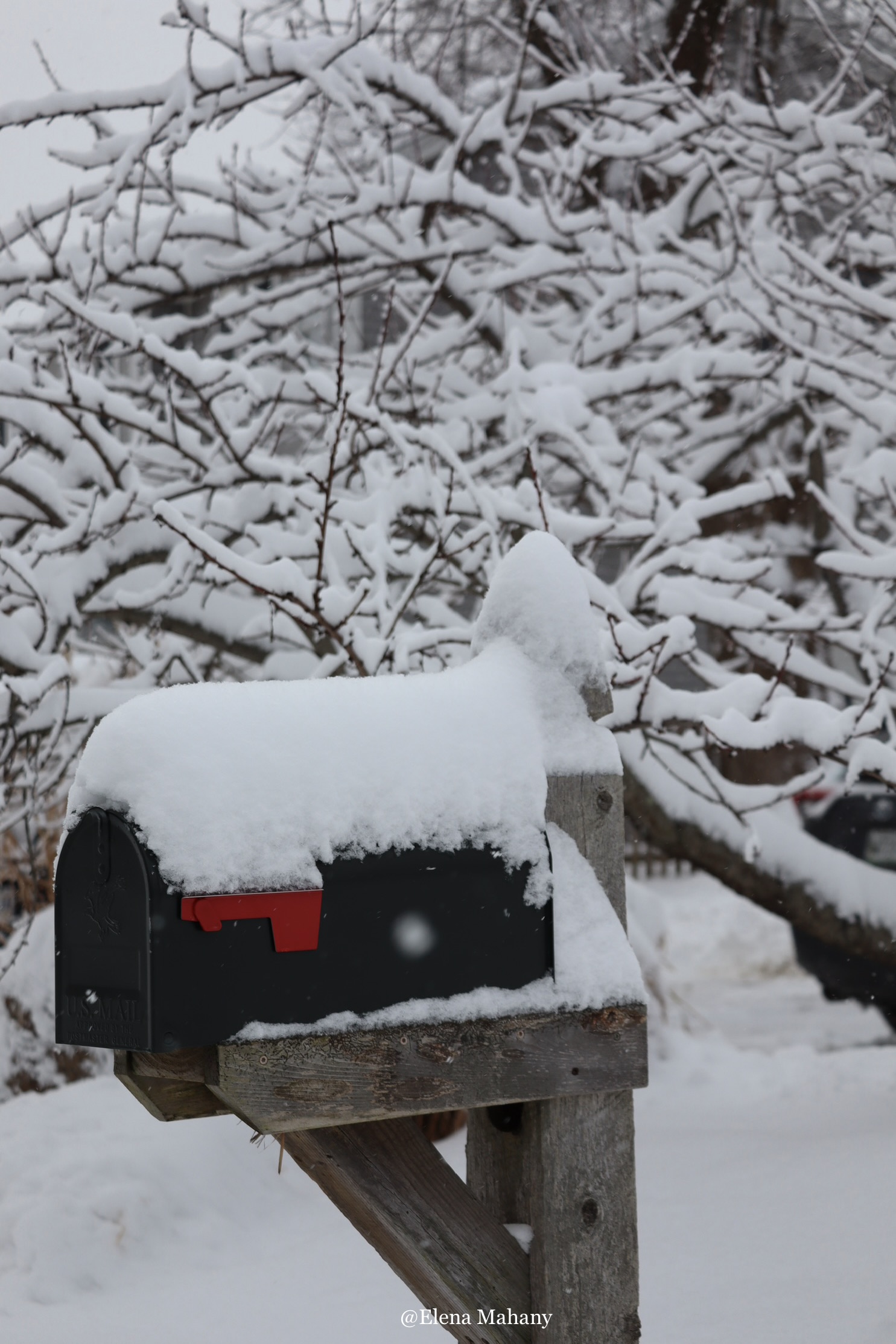
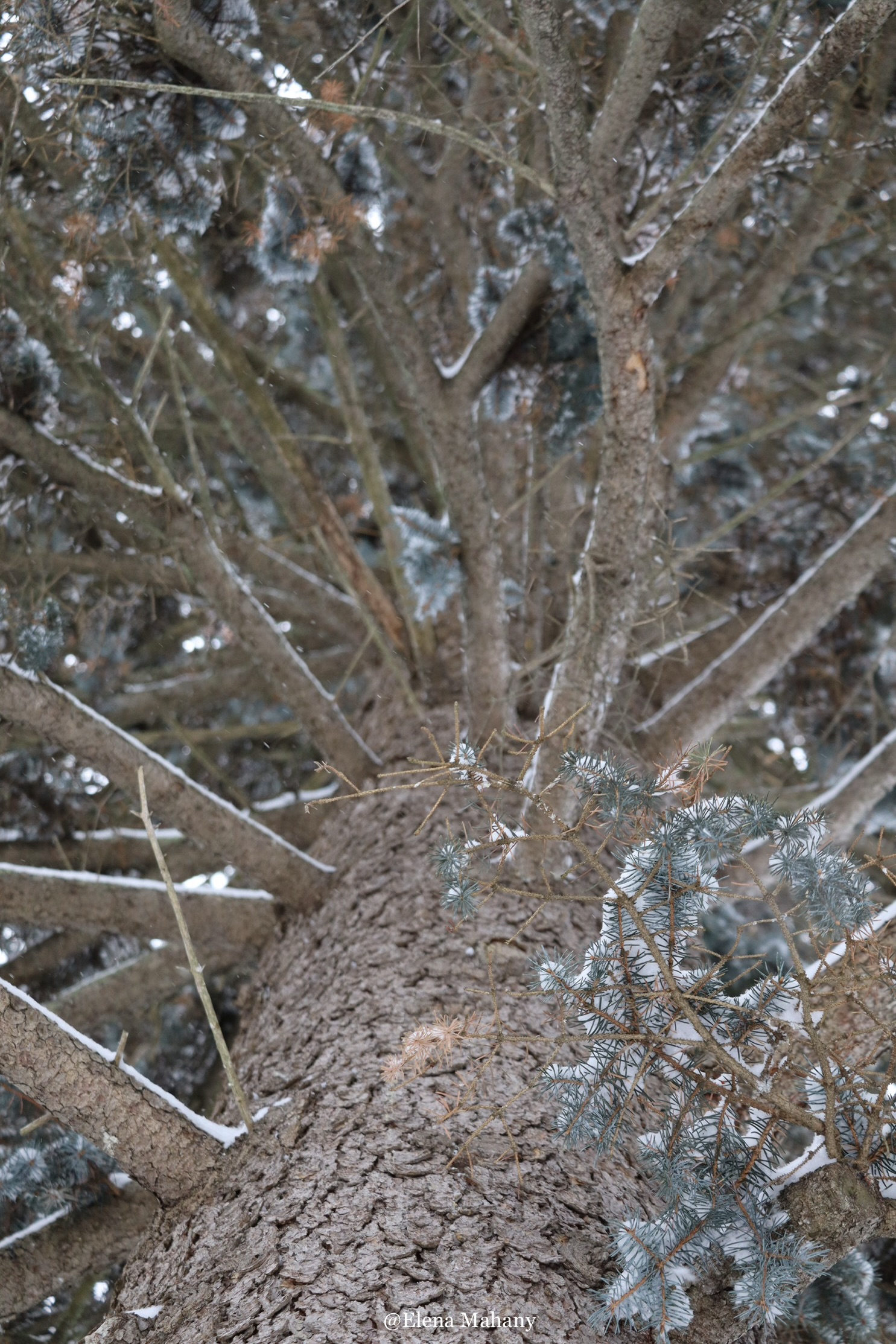
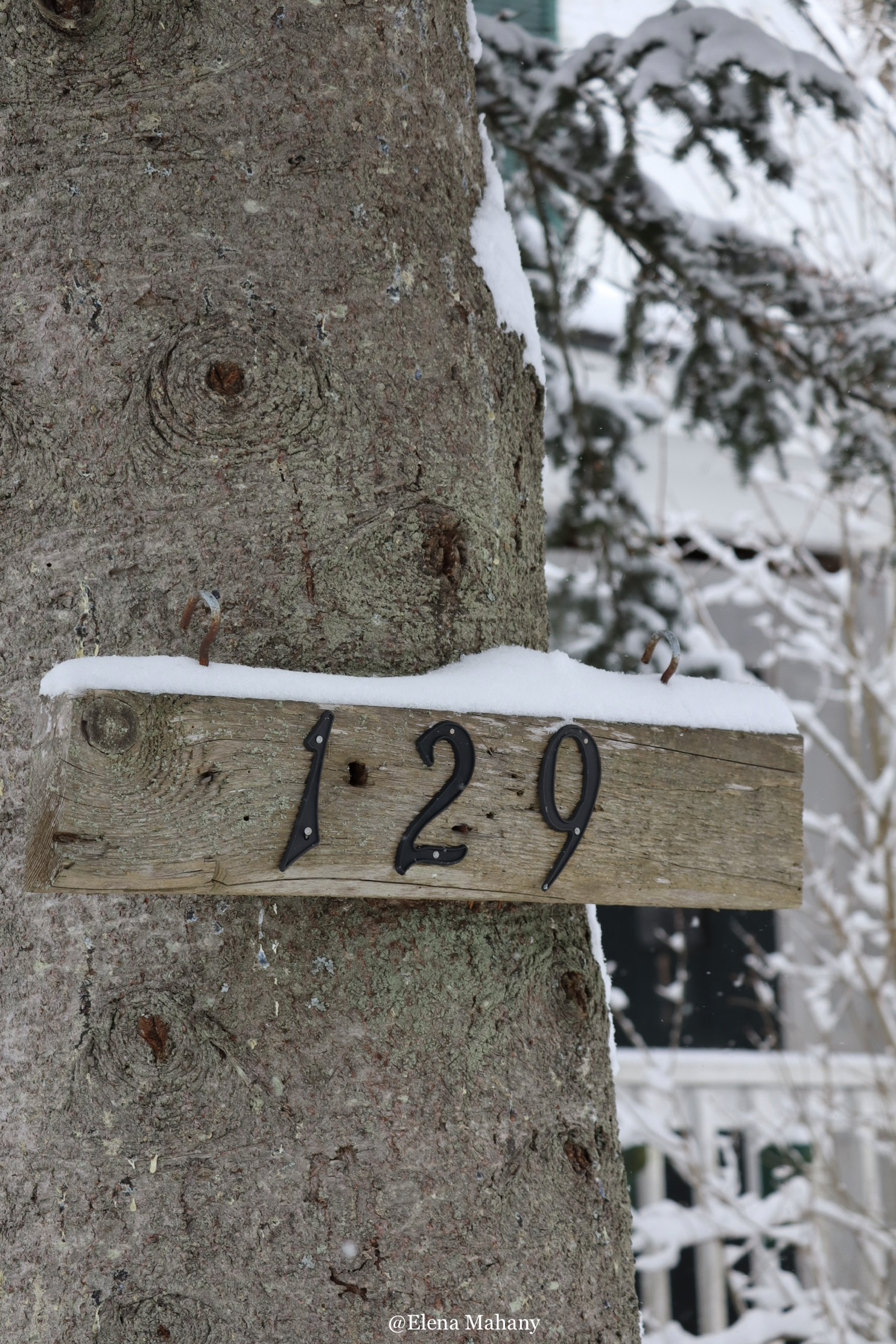
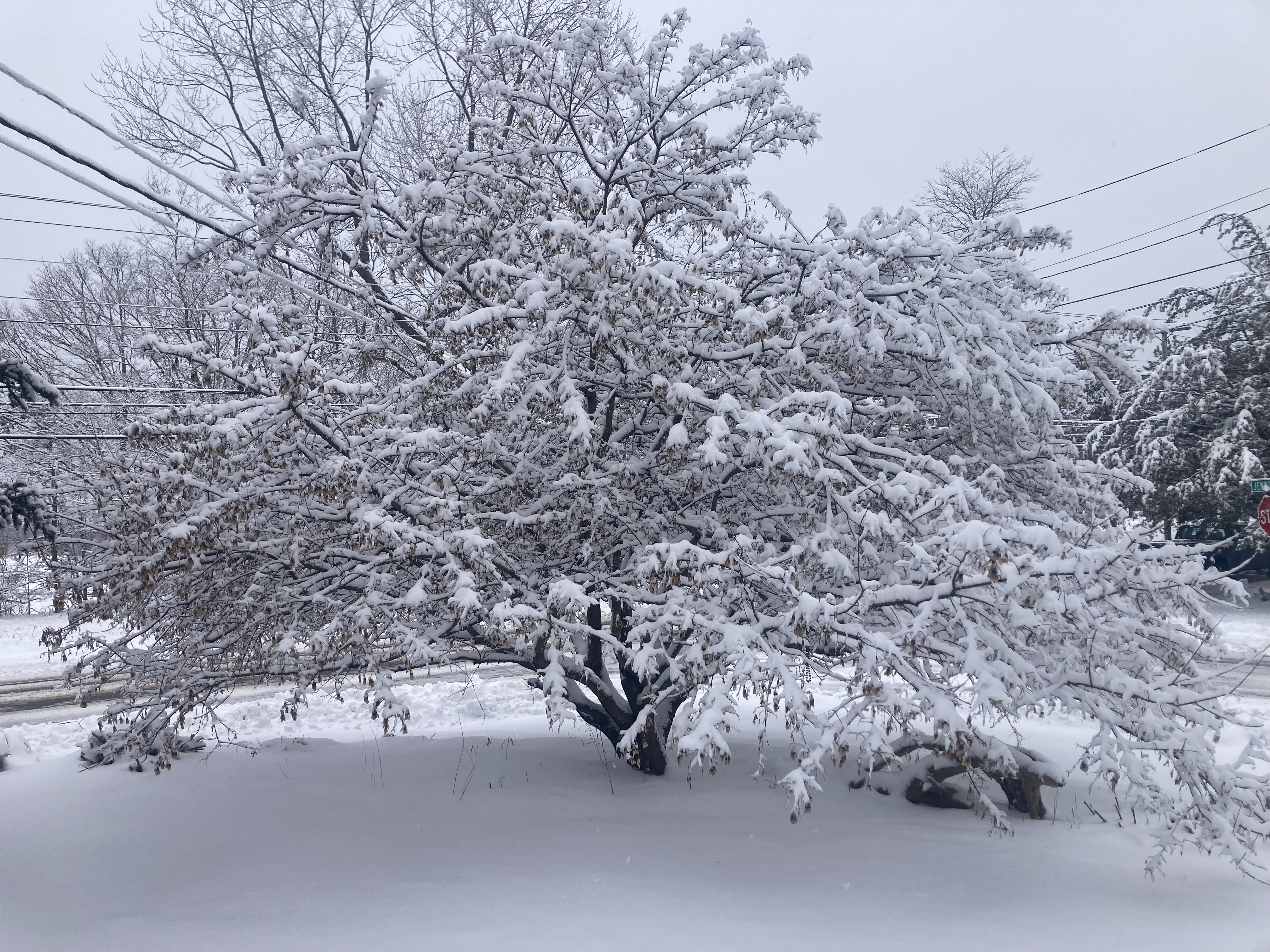
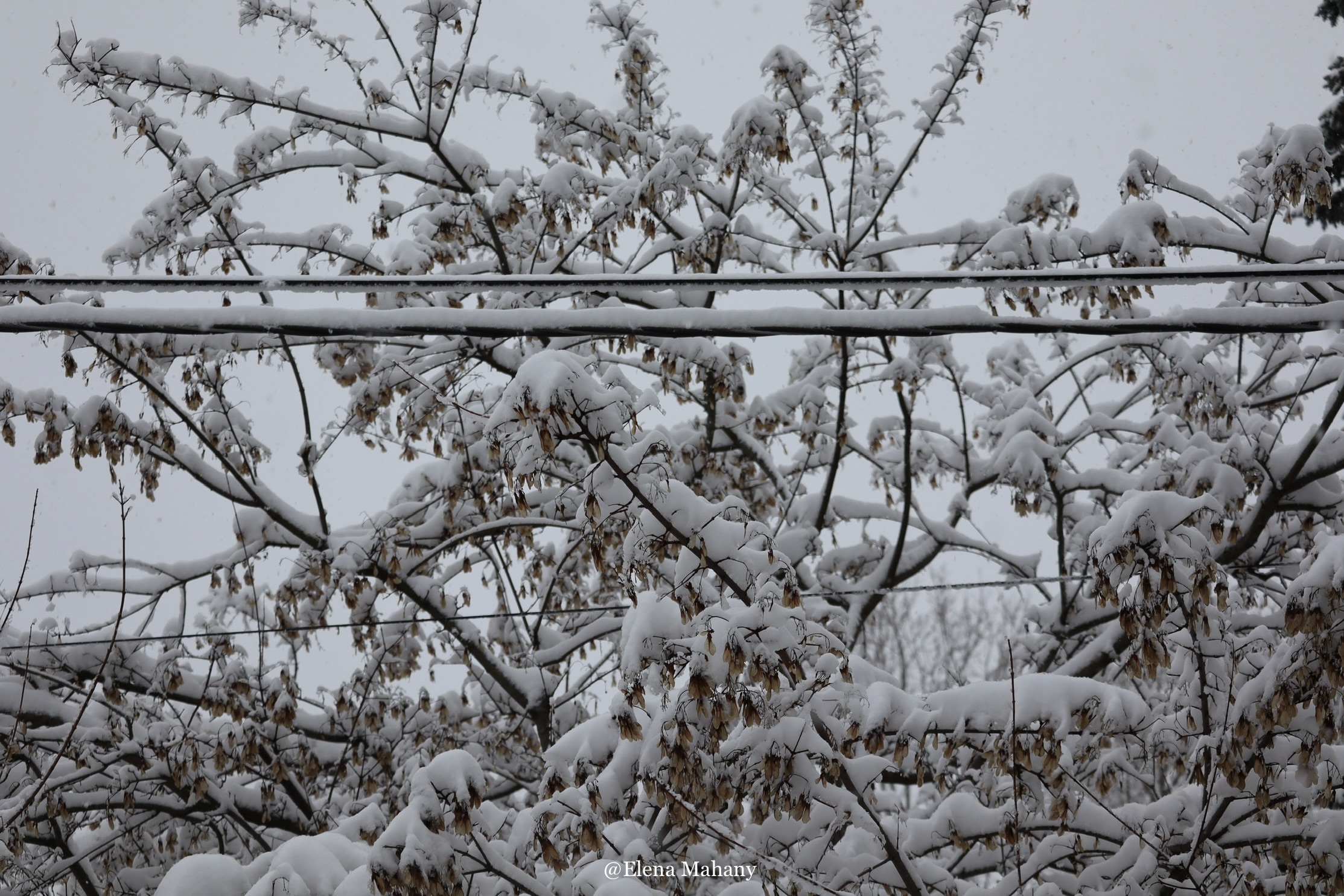
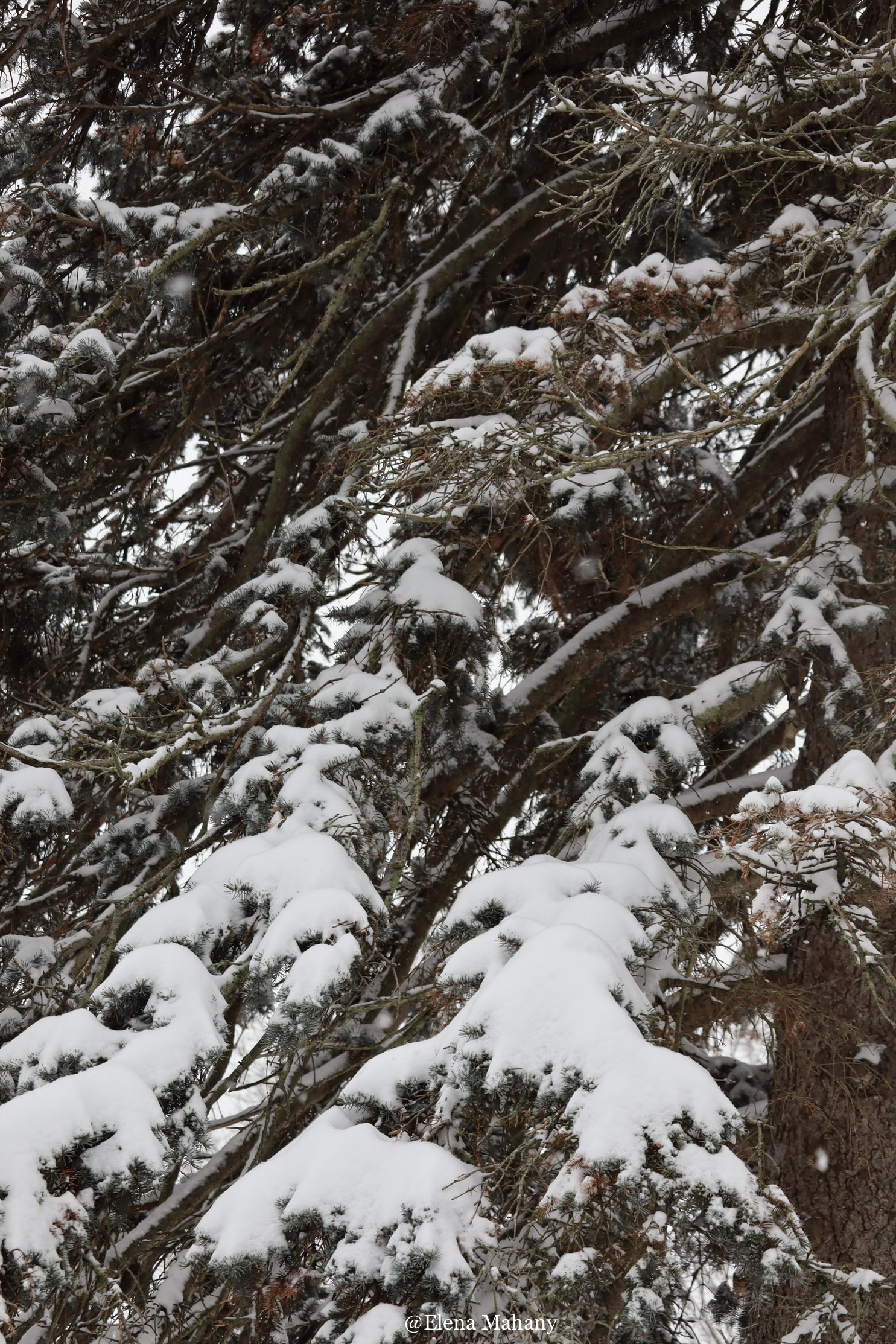
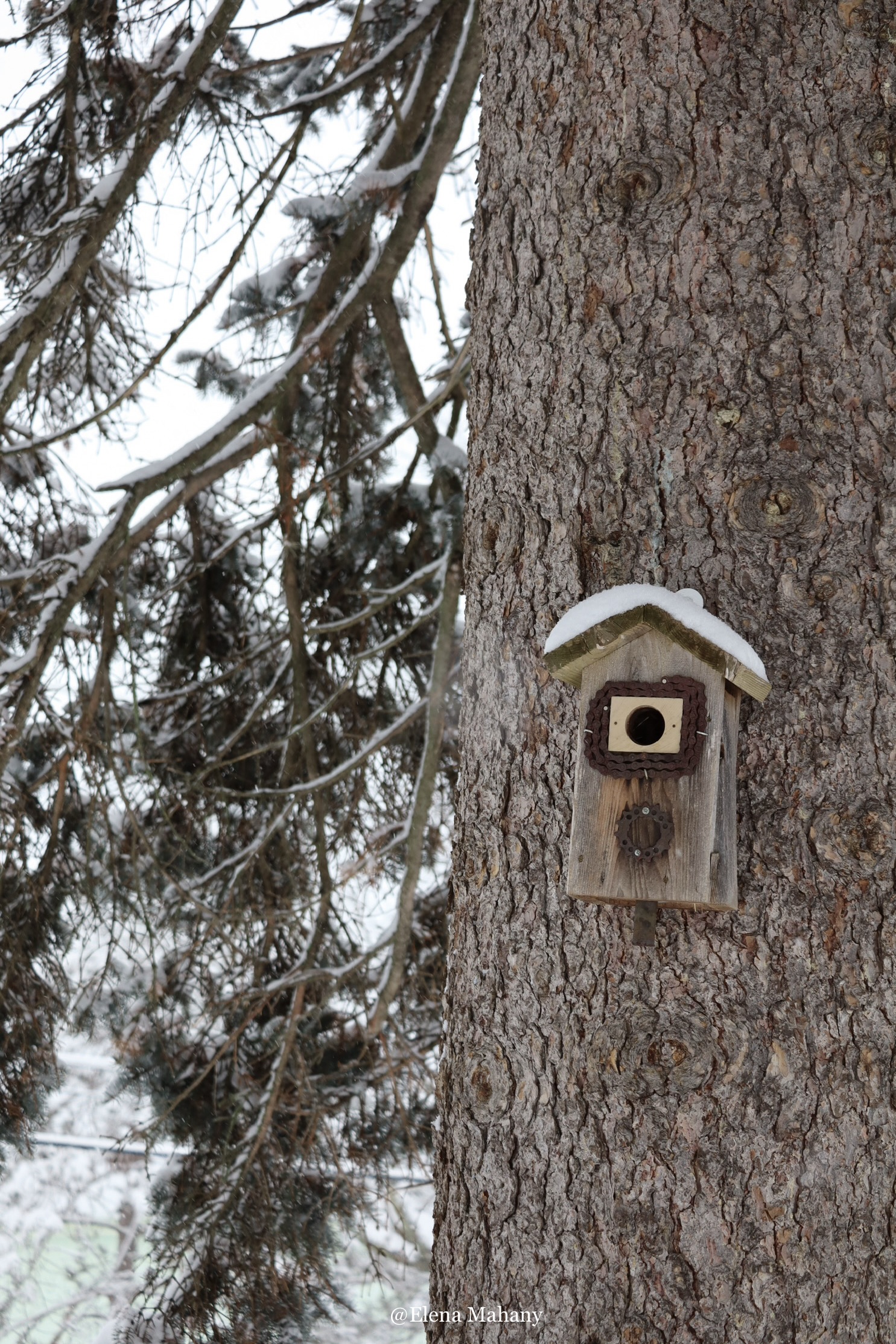
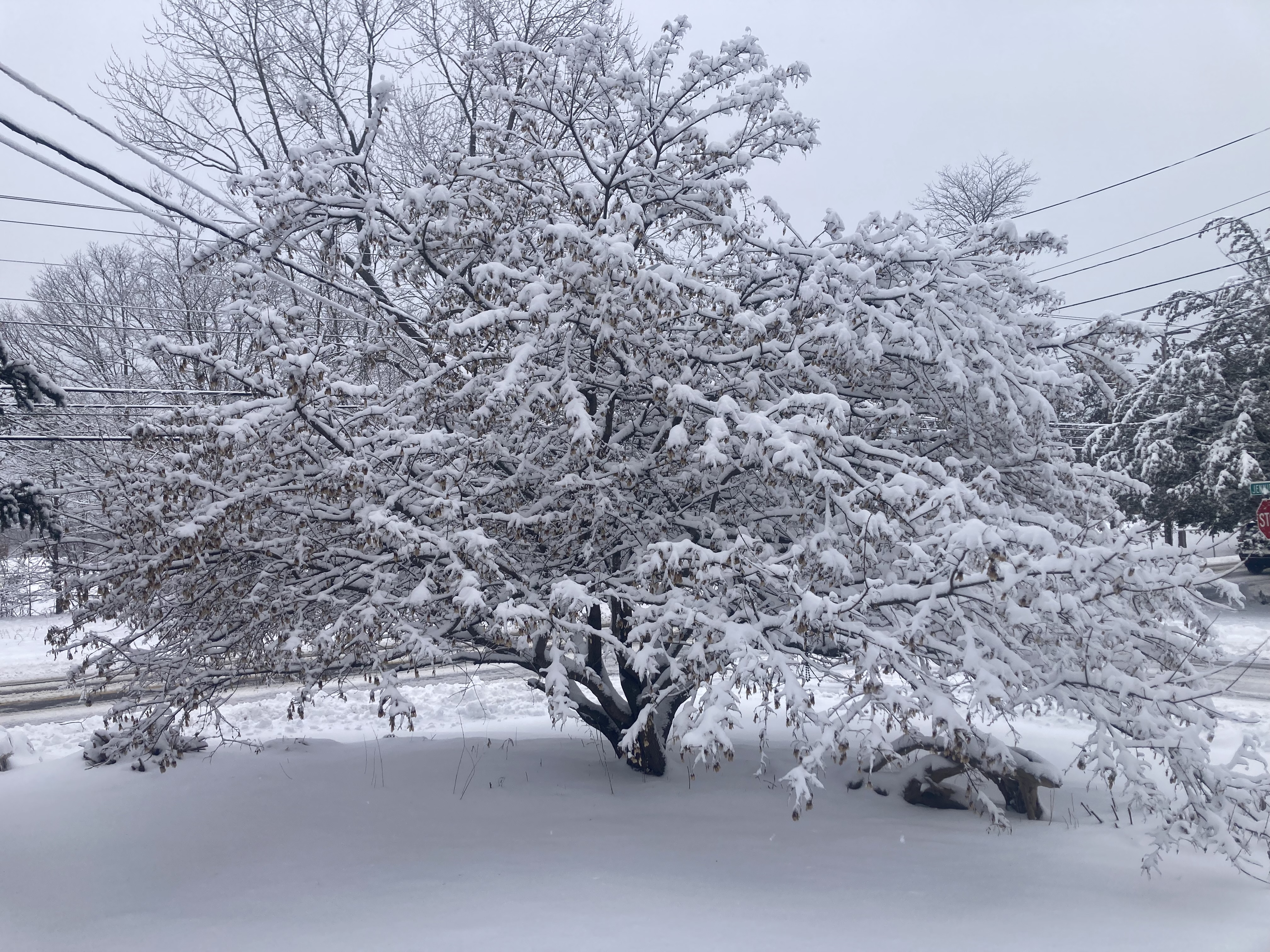
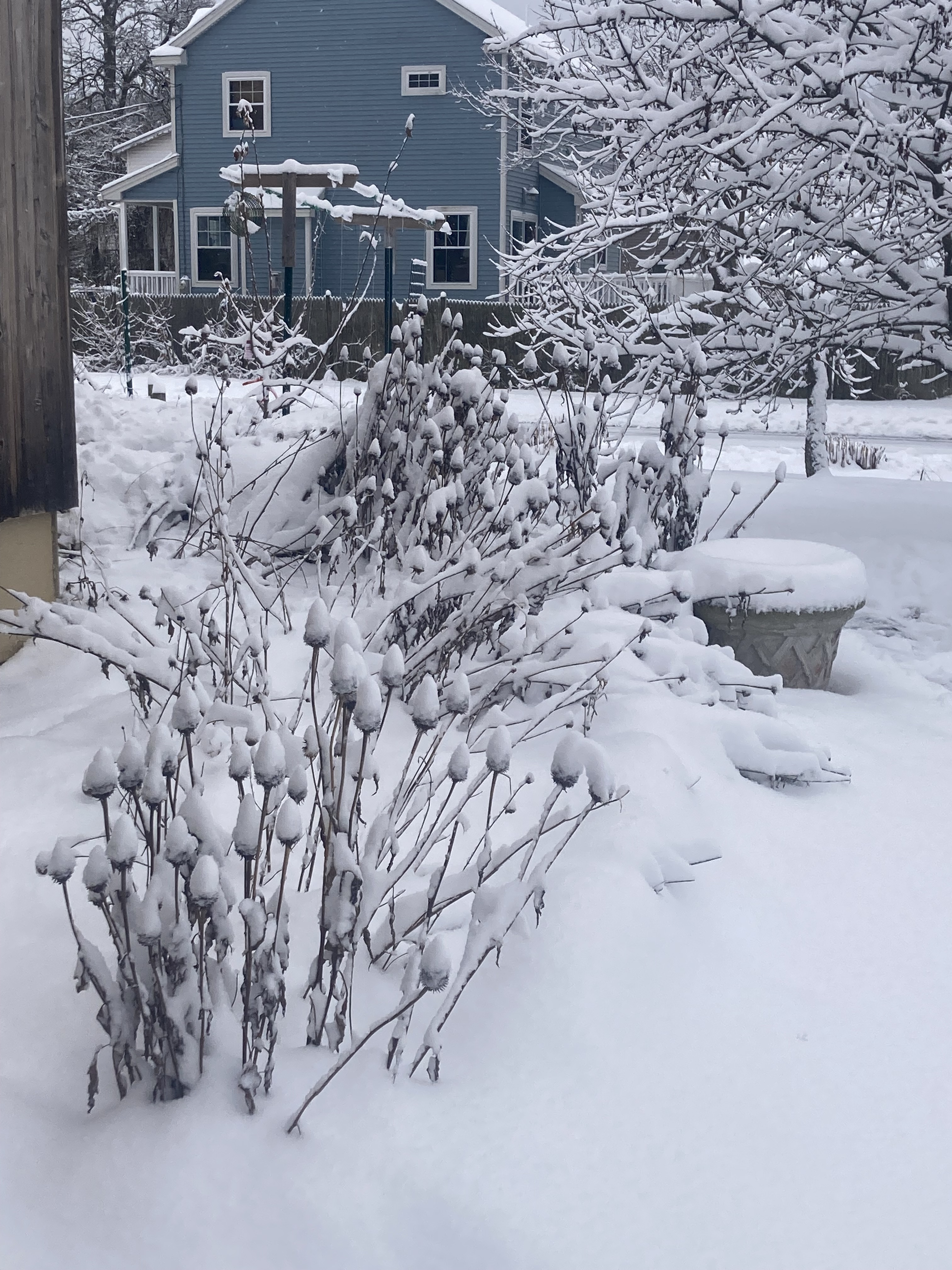
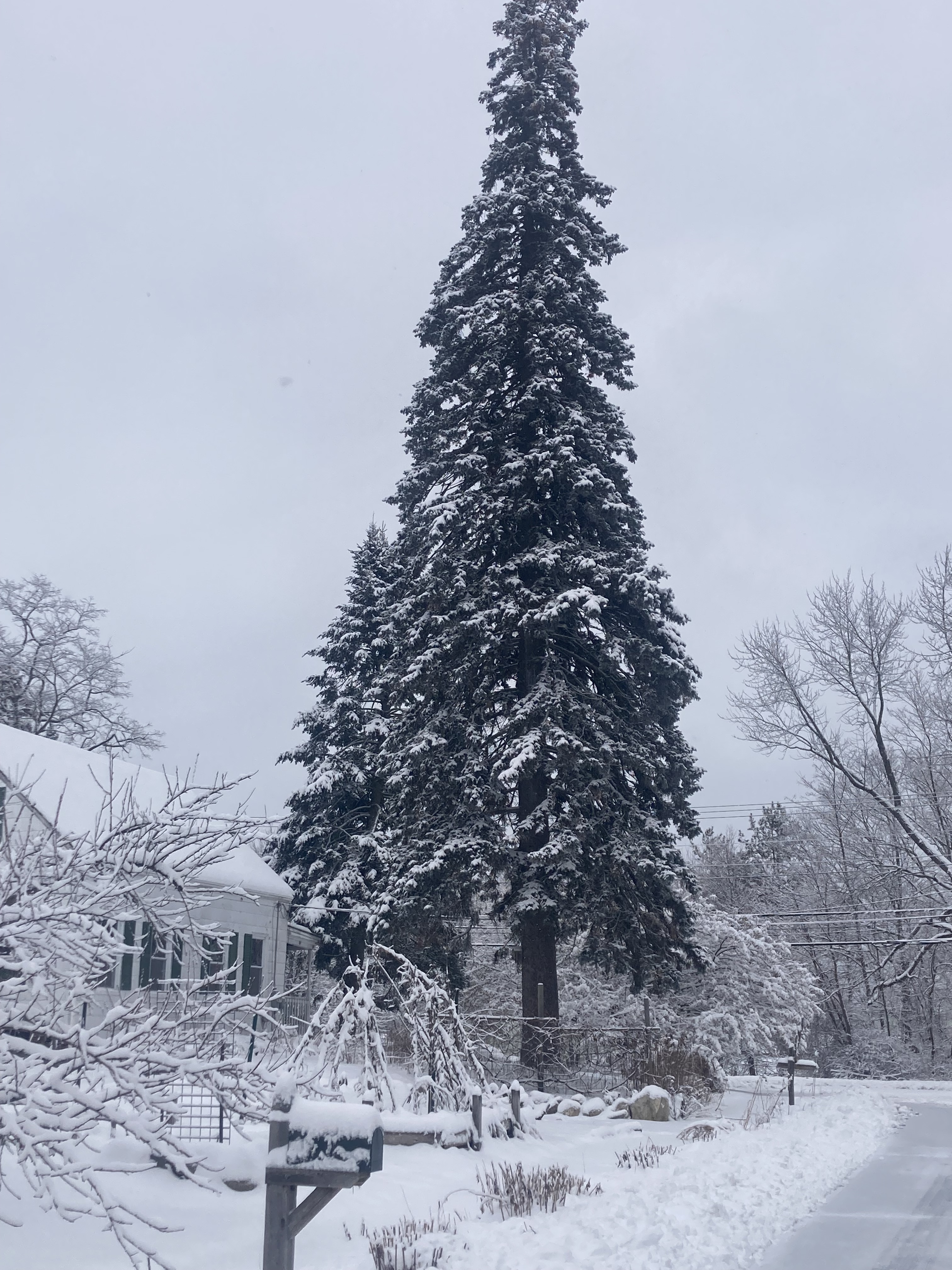
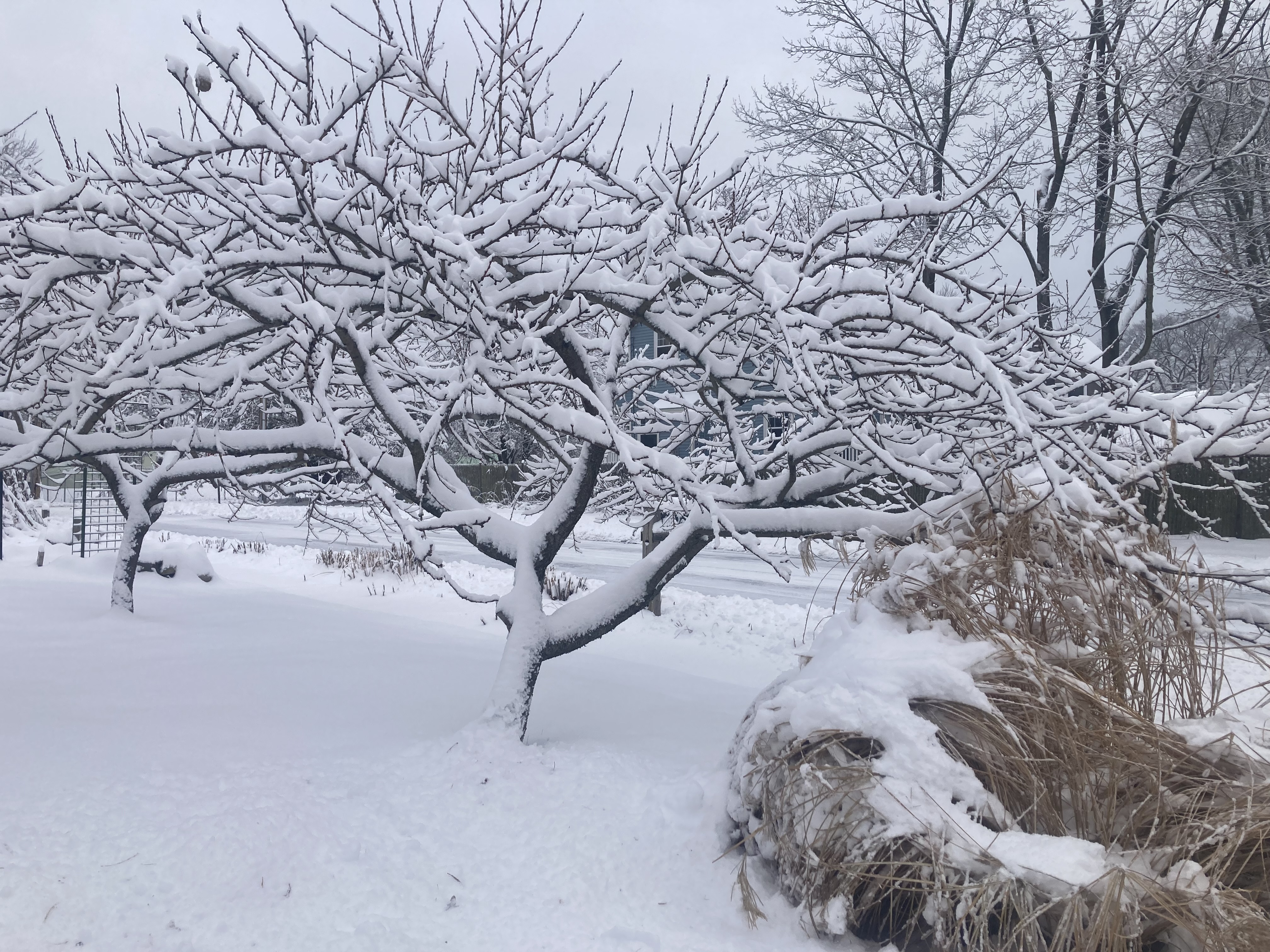
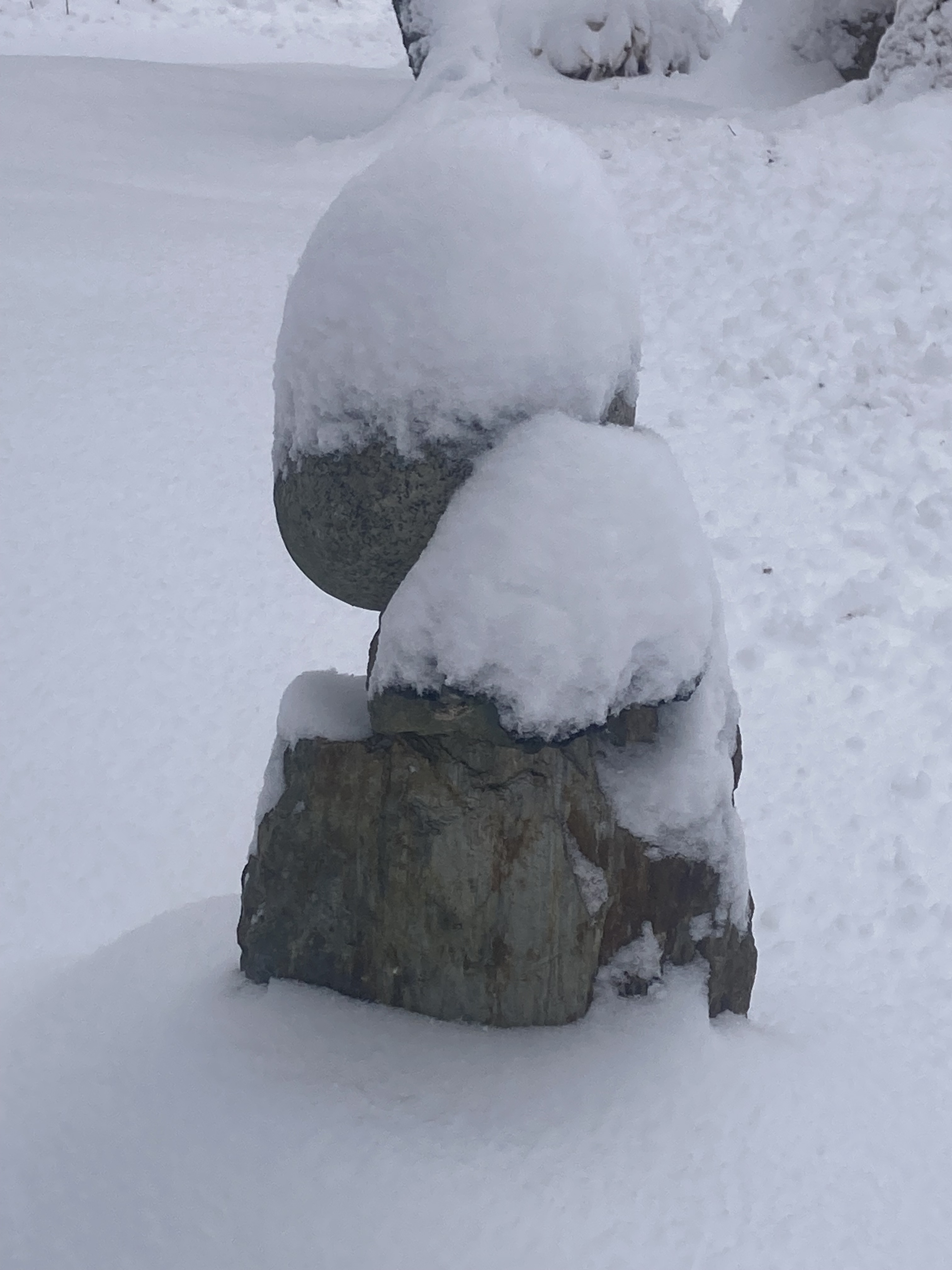
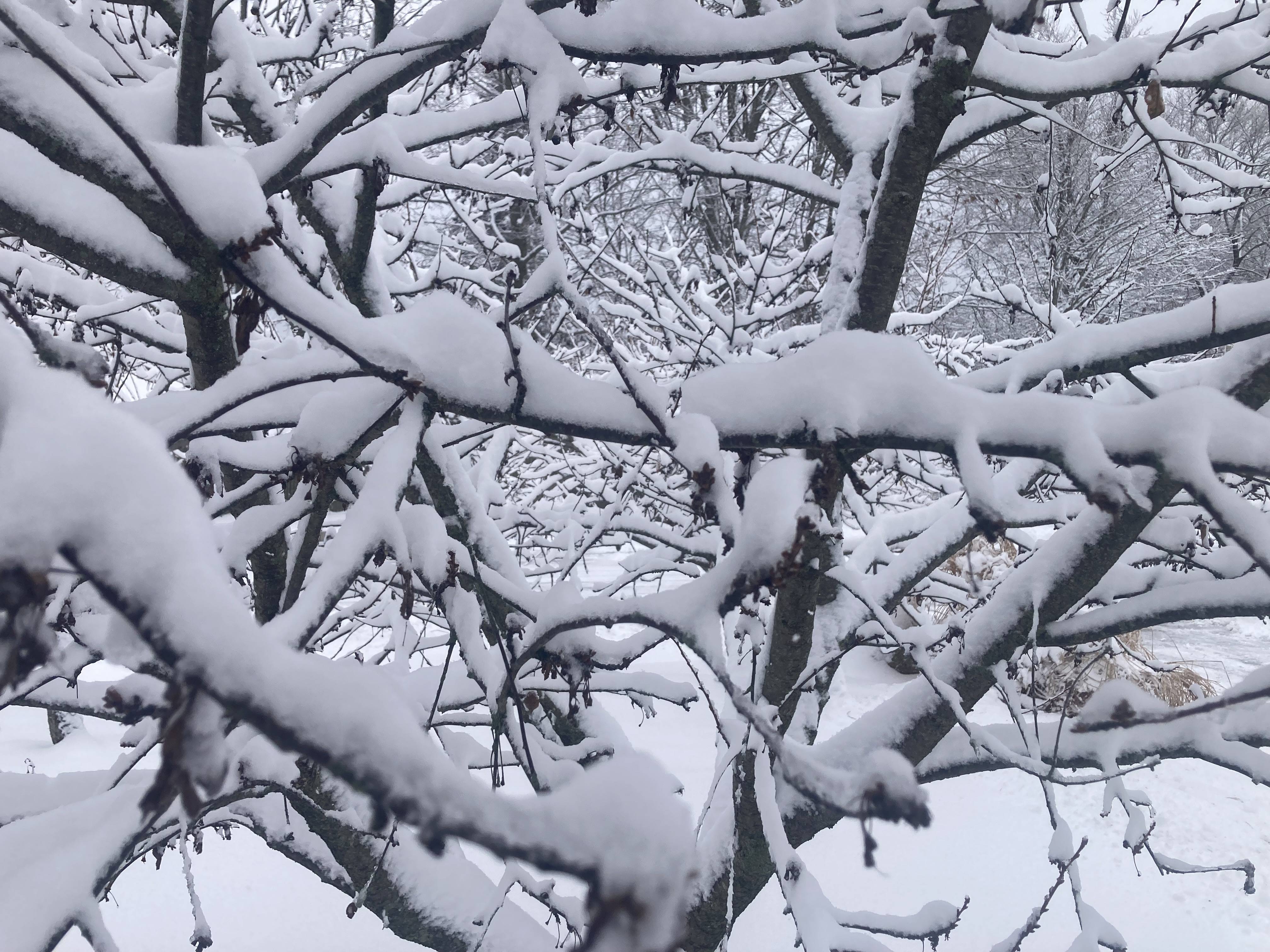
Snow here, photos by Elena where marked.















Mr. Sneed and His Eggs
Posted: November 21, 2025 Filed under: Chronicles of a First Time Parent, Money & Banking, Portfolio - Elena's work, What is an Art Farm 2 Comments
The soundtrack of my childhood is best captured in the screech of sneakers on a parquet floor, the sharp, clear trill of a referee’s whistle, its echo down an empty gymnasium. On saturday mornings my father would drive my older brother and me to the Walden School for intramural basketball games. My brother is a gifted natural athlete who thrived there, while I found the game incredibly dull, the challenge of throwing a ball through a hoop entirely lost on me.
From my parent’s perspective it was a brilliant set-up; the house emptied for an entire morning, my Mother had quiet, my Father had no distractions and we returned home exhausted, which ensured a peaceful afternoon. My enduring intramural memory is that Mr. Sneed, who ran the program and was its referee, made his living trading eggs on the floor of the former Chicago Butter & Egg Board.
Eggs, to Mr. Sneed, were a fungible commodity, bought and sold in bulk. Eggs, in our house, were a thing scrambled, served with bacon, raspberry jam and English Muffins, for Sunday Brunch in our Dining Room after the 10:30am guitar mass at Holy Cross Church.
My Father’s day job was food merchandising. Known as the “Grocery Guru,” he wrote and lectured on three continents on how to market food at the retail grocery level. He was a stock and bond man so Mr. Sneed’s world of commodity futures contracts seemed an abstraction; foreign, opaque and mysterious. But there must have been some spark. I followed that path.
During college, I met people who worked in the markets and I visited the floor, experiencing the open outcry pits in action. Sheer bedlam, it was capitalism at its most raw and rapacious: I win, you lose, a buyer for every seller. Eventually I got a job at the Chicago Board of Trade’s Financial Futures floor, where more than $350 Billion in US Treasury bond future contracts change hands daily. It was the pits, an awful place to work, but fascinating all the same.
Eventually I became the “squawker,” reporting the 30-year Treasury bond pit action to a trading desk in Lower Manhattan, giving them an edge on market timing. The Broker for whom I worked had a superstition and would allow me to use black ink only, never red ink, which marks a loss in accounting, which he could not allow under his stead.
Following the pits I ended up managing the food service in a residence for women artists. From my office desk I traded stock options on the S&P 500. While working at a wholesale flower market I traded corn futures. Eventually I ended up trading the 30-year Treasury bond futures not on the floor but from an office. I never did well enough to quit the day job, but I never washed up, either. It was an odd fascination.
And so I came to meet the Wizard, a CPA active in off shore banking who was born in the 1920s in Nemaha County, Kansas. He had been named in honor of the traveling banker who visited the town, “an old Kansas man, born and bred in the heart of the Western Wilderness.” Close to the 100th meridian, it is hard to fathom how remote Nemaha County would have been in that age before electricity, running water and phones. It was Dorothy’s Kansas.

By conventional terms he was the Father of a college classmate, but in truth he was the Wizard of Oz trading the futures markets. He was curious about my experience and we began talking. Eventually he told me about the sanctus sanctorum, the Golden Fleece, the goose that lays the golden egg, which was the “cash forward discounting of 108% bank debentures.” And so into the land of smoke and mirrors I went.
He introduced me to a financier who had helped launch McDonalds and whose Uncle had financed the Hollywood mavens: Marcus Lowe, Samuel Goldwyn and Cecil B. DeMille. I found myself managing discussions with Sheik Mohammed Had, an Emissary and Confidante to the Royal House of Saud. I flew to Manila to meet with a mild-mannered man named Jun, possessor of 100 Metric Tons of Gold Bullion stored in the underground vaults at Kloten, Switzerland. Whether or not he was the illegitimate son of Ferdinand Marcos, the Dictator of the Philippines, was an open question, which is about the way things go in the land of smoke and mirrors. I worked with Abraham, a Christian from the South of India, who possessed a 1 kilogram rough cut emerald, the largest in the world. He was trying to leverage the asset to fund development programs for his community but when the planes struck the Twin Towers, it became all but impossible to work with rare and unusual assets.
I spent hours reading at Northwestern University’s Law Library and stumbled upon Public Law 104-62. Known as the Philanthropy Protection Act of 1995, this exempts certain charitable organizations from federal securities laws. Signed into law by the 2nd Patrician of Kennebunkport, 104-62 is a loophole large enough to drive a Brink’s truck through. I contacted McDermott Will and Emery, the world’s largest tax law firm, but was declined as a client because, “Having checked our entire roster of Associates, no one has ever heard of this law and we feel it would be unethical to learn on your dime.” Although arcane, humanitarian finance is an official law. In the land of smoke and mirrors I found the path less travelled, which proved to be almost impossibly difficult to follow.
While in London, I worked with a CPA from Toronto who had helped Kuwait finance reconstruction after the 1st Patrician’s Iraq-Kuwait War. Following the liberation, the Central Bank of Kuwait revived the Dinar at an exchange rate of USD 3.47 to 1 new Kuwaiti Dinar, making it the strongest currency in the world. That the power to organize, finance and fund can change an entire country has always struck me as fascinating.
At this season of life, these experiences are long in my past. On a recent trip back to Chicago, I took my children to the Board of Trade, but the open outcry markets are gone, replaced by electronic trading. Since 9-11 the Board allows no visitors into the Exchange. This chapter has entirely vanished.
The eggs I buy to feed my family now come unwashed at room temperature, from a local school teacher. Buying as close to the source is as far as imaginable from the fungible commodities of the Chicago markets.
That the power of capitalism can be used at scale to fund the common good remains a compelling idea, which runs counter to rational self-interest. And so I keep one line in the water still, just waiting for when the Great White Whale swims into the Casco Bay.
credit where credit is due: photos by Elena
A sharp knife, a spotlight
Posted: October 31, 2025 Filed under: Chronicles of a First Time Parent, consciousness, Portfolio - Elena's work | Tags: david-mamet, sophocles 1 Comment
“All the world is a stage” is repeated so often it has become a cliche. Shakespeare’s monologue from “As You Like It” opens with this:
All the world’s a stage,
And all the men and women merely players;
They have their exits and their entrances;
And one man in his time plays many parts,
His acts being seven ages.
Concerning that stage, Nietzsche argued the apex of artistic achievement and high point of civilization was achieved on stage in Classical Athens by the tragic dramatists, particularly Aeschylus and Sophocles. When their Apollonian and Dionysian met in balance – order, form, reason commingling with chaos, passion, ecstasy – the citizens of Athens confronted both the suffering of life and the majesty of its beauty, experiencing an integrated whole comprising the breadth of the human condition.
But how, precisely, does the stage work?
Who better than a playwright from Chicago’s south side to make plain the inner workings of the stage? David Mamet, winner of the Pulitzer Prize, playwright on Broadway and member of the American Theatre Hall of Fame, screenwriter for Hollywood, author of 223 books, published in 1998 “Three Uses of the Knife: on the nature and purpose of drama.”
He wrote, “It is in our nature to dramatize. At least once a day we reinterpret the weather – an essentially impersonal phenomenon – into an expression of our current view of the universe: ‘Great. It’s raining. Just when I’m blue. Isn’t that just like life?’ The weather is impersonal, and we both understand it and exploit it as dramatic, i.e., having a plot, in order to understand its meaning, for the hero, which is to say for ourselves.”
Drama’s structure plays out in three acts. “In act 1 Our Team takes the field and, indeed, prevails over its opponents, and we, its partisans, feel pride. But before that pride can mature into arrogance this new thing occurs: Our Team makes an error, the other side is inspired and pushes forth with previously unsuspected strength and imagination. Our Team weakens and retreats.”
And so begins act 2, the play’s midlife crisis. Conflict is present, a new set of problems arise. Our attention narrows toward climax, denouement and conclusion, but a challenge must be overcome while the playwright holds the audience’s attention. Again Mamet, “Joseph Campbell calls this period in the belly of the beast – the time in which the artist and the protagonist doubt themselves and wish the journey had never begun.” The ease of act 1 becomes complex.
On rarified occasions, in an auditorium, drama achieves that pinnacle of insight and cultural healing. But more often the drama is bawdy and common, played out on the street, a vaudeville stage or in the daily news.
“The stoics wrote that the excellent king can walk through the streets unguarded. Our contemporary Secret Service spends tens of millions of dollars every time the president and his retinue venture forth.
“Mythologically, the money and the effort are spent not to protect the president’s fragile life – all our lives are fragile but to protect the body politic against the perception that his job is ceremonial, and that for all our attempts to invest it with real power – the Monroe Doctrine, the war powers act, the “button” – there’s no one there but us.
“Our Defense Department (sic) exists neither to ‘maintain our place in the world’ nor to ‘provide security against external threats.’ It exists because we are willing to squander all – wealth, youth, life, peace, honor, everything – to defend ourselves against feelings of our own worthlessness, our own powerlessness.”
What to the Christian mystics is the Trinity, to the German philosophers was thesis, antithesis, synthesis and to playwrights and poets from the dawn of time has been the 3-act structure; the “Rule of Three” as an axiom of psychology and communications provides clarity and order to simplify decision making, to navigate life.
Given conflict, act 3 moves us into climax and resolution. The hero finds within themself the will and strength to continue. What Sophocles called the tragic flaw, Shakespeare termed “this mortal coil,” Nietzsche saw an absurd void, while Mamet writes of “our own worthlessness, our own powerlessness.” Such is our conflict. But reason cannot resolve this.
“The purpose of theatre, like magic, like religion…is to inspire a cleansing awe….Most great drama is about betrayal of one sort or another. A play is about rather terrible things happening to people who are as nice or not as nice as we ourselves are.
“But reason, as we see in our lives, is employed one thousand times as rationale for the one time it may be used to further understanding. And the cleansing lesson of the drama is, at its highest, the worthlessness of reason. In great drama we see this lesson learned by the hero. More important, we undergo the lesson ourselves, as we have our expectations raised only to be dashed, as we find that we have suggested to ourselves the wrong conclusion and that, stripped of our intellectual arrogance, we must acknowledge our sinful, weak, impotent state – and that, having acknowledged it, we may find peace.”
If reason wants to reduce life to an either/or, the dramatist knows that life is a both/and proposition: the apex was reached in the perfect balance between Apollonian order and Dionysian ecstasy. Nietzsche argued that it was art that allowed humans to overcome the absurdity, and so too Mamet:
“It is our nature to elaborate perception into hypotheses and then reduce those hypotheses to information upon which we can act. It is our special adaptive device, equivalent to the bird’s flight – our unique survival tool. And drama, music, and art are our celebration of that tool, exactly like the woodcock’s manic courting flight, the whale’s breaching leap. The excess of ability/energy/skill/ strength/love is expressed in species-specific ways. In goats it is leaping, in humans it is making art.”
_______________________________________
Photo credit goes to Elena.
Alma Mater’s Daily Bread
Posted: September 5, 2025 Filed under: Child Centered Activities, Farming off the Farm, Little Green Thumbs, Portfolio - Elena's work, What is an Art Farm | Tags: Social ecologies 1 Comment
The often repeated phrase, “Give us this day, our daily bread” must be about soil fertility as much as about hope. The common collegiate phrase “alma mater” is Latin for “nourishing Mother” and so we turn our attention to Gaia, one wise soul herself, the Earth as our nourishing Mother, whose fertile soil gifts freely an abundance beyond compare.
Many soulful stewards of Gaia have I crossed paths with, one of whom was the “Corn Cart Queen.” The common cliche is “know your food, know your farmer,” but the Corn Cart Queen brought that to the fore in Chicago, during the summer season 2003, when she planted Golden Bantam in a shopping cart, then organized people to push the corn cart around the town: Meet your food, meet your farmer.
The Chicago Tribune wrote, “A woman of quiet dedication and passion, she initially planned to push the corn around the city by herself…. However, as word spread about the project, she happily surrendered the cart to a growing community of corn stewards, some of them artists or gardeners themselves. They water it, push it and distribute, if they choose, the small packets of blue corn seeds (three each)… taped to the cart. The seeds are pre-Depression-era corn, which she bought directly from a farmer when she visited Cuernavaca, Mexico.”
The Tribune quoted her, “When people talk about the environment in the city, they always see it as outside themselves. They talk about the lake or whatever. . . . I really want people to see how we consume nature, how we consume corn, how we eat, how we do things — it all has an effect on homelessness, on loss of farms, on history. There’s a 10,000-year history of the domestication of this grass called corn.”
Sandor Katz, the New York Times best selling author, in “The Revolution Will Not Be Microwaved,” wrote about this, “Cornography…was a sort of performance art installation featuring a few stalks of this corn growing in a shopping cart and many different people taking turns, walking it across Chicago.” Katz quoted the Queen, “The corn cart has visited community gardens, toured supermarkets, politicized a street fair, gone out for coffee, and rested in many backyards. When you give someone a seed, it’s such a small gift, but it entails a responsibility to interact with the land.”
Nance Klehm is the “Corn Cart Queen.” As art predates agriculture, her work unfolds at those fertile crossroads; she teaches of our connection, our utter reliance upon, the earth, the sacred ground beneath us. She is a muse among us, having lectured and taught at Chicago’s Museum of Contemporary Art, the Hammer Museum in Los Angeles, the University of Cincinnati, and the Canadian Centre for Architecture in Montreal. She has taught at the University of California – Los Angeles, Northwestern University in Evanston, Illinois, and Dartington College in the United Kingdom, as well as for countless community groups worldwide. This Queen was honored in 2012 as one of Utne Reader’s “Twelve Visionaries Who Are Changing Your World.”

It can be lonely at the vanguard, but Nance always works in community, teaching others the art and science of the soil. Along her path she worked with Flordemayo, a Mayan Elder, who founded The Seed Temple in Estancia, New Mexico. Nance helped assemble the “sacred heritage seeds for future generations.” My family was asked to grow heirloom beans and then give some back to help keep the Temple’s stock alive. For many years now we have grown those seven varieties annually, whereby my children learn first hand that food does not come from a grocery store, that harvesting is harder than consuming but the wild abundance of a fresh grown tomato or peach picked in late August is a joy beyond compare.
Flordemayo herself is one of the 13 Indigenous Grandmothers, all of whom are “committed to supporting all people in reclaiming their relationship with Mother Earth, advocating for a shift toward a more conscious and harmonious connection with nature and all living beings.” The International Council of Thirteen Indigenous Grandmothers come from around the world – Nepal, Brazil, South Dakota, Gabon, Montana, Mexico, Japan, France – as “a collective of women devoted to restoring and uplifting the sacred feminine wisdom that nurtures balance and harmony in the world. [They] stand for peace, justice, human rights, environmental protection, food sovereignty, and the health and welfare of children and the elderly, for today and generations to come.”
Nance and I crossed paths almost 30-years ago, both on Chicago’s west side, and in the LaSalle Street canyons of the financial district; she was outbound to WWOOF in Australia (Worldwide Opportunities on Organic Farms), while I was headed to Manila, the Philippines on a humanitarian finance quest to establish a currency based upon humans’ ability to communicate. Nance’s path always has been more rooted, more practical.
Among her challenges has been pursuing community-based work during the 50-year period – 1975 to 2025 – when American culture shifted dramatically towards rampant consumerism, free market ideology, and unchecked individualism. Talking about my generation – the Baby Boomers – Bill McKibben wrote, “So what the hell happened? How did we go from an America where that kind of modest [suburban] paradise seemed destined to spread to more and more of the country to the doubtful nation we inhabit fifty years later: a society strained by bleak racial and economic inequality, where life expectancy was falling even before a pandemic that deepened our divisions, on a heating planet whose physical future is dangerously in question?”
How did the forward thinking Civil Rights Act of 1964 and the Voting Rights Act of 1965 give way to the radical gerrymandering of our era? Money, banking, free markets and power politics are the domain of mankind, human invention, while the Grandmothers and Queens of Gaia speak of the ground beneath our feet, the soil, everywhere beneath everyone all of the time.
Nance’s 2019 tome, “The Soil Keepers,” makes plain, in her preface, our path forward: “To the entire menagerie of animal, fungal, and plant beings, both the seen and unseen, thank you for your unflinching love and core teachings. I am forever your student.”
All life is one. Life calls to us. We are wise to heed her call.
_____________________________________
A Corn Cart video is here: https://youtu.be/iTKbrO7ZTzk?si=5wnScRsxE3OZmlSo
Nance Klehm’s “Social Ecologies” is here: https://socialecologies.net
Grandmothers’ Wisdom is here: https://www.grandmotherswisdom.org
Grandmother Floredemayo is here: https://www.grandmotherflordemayo.com
_____________________________________
Credit where credit is due, Elena’s photographs appear here.
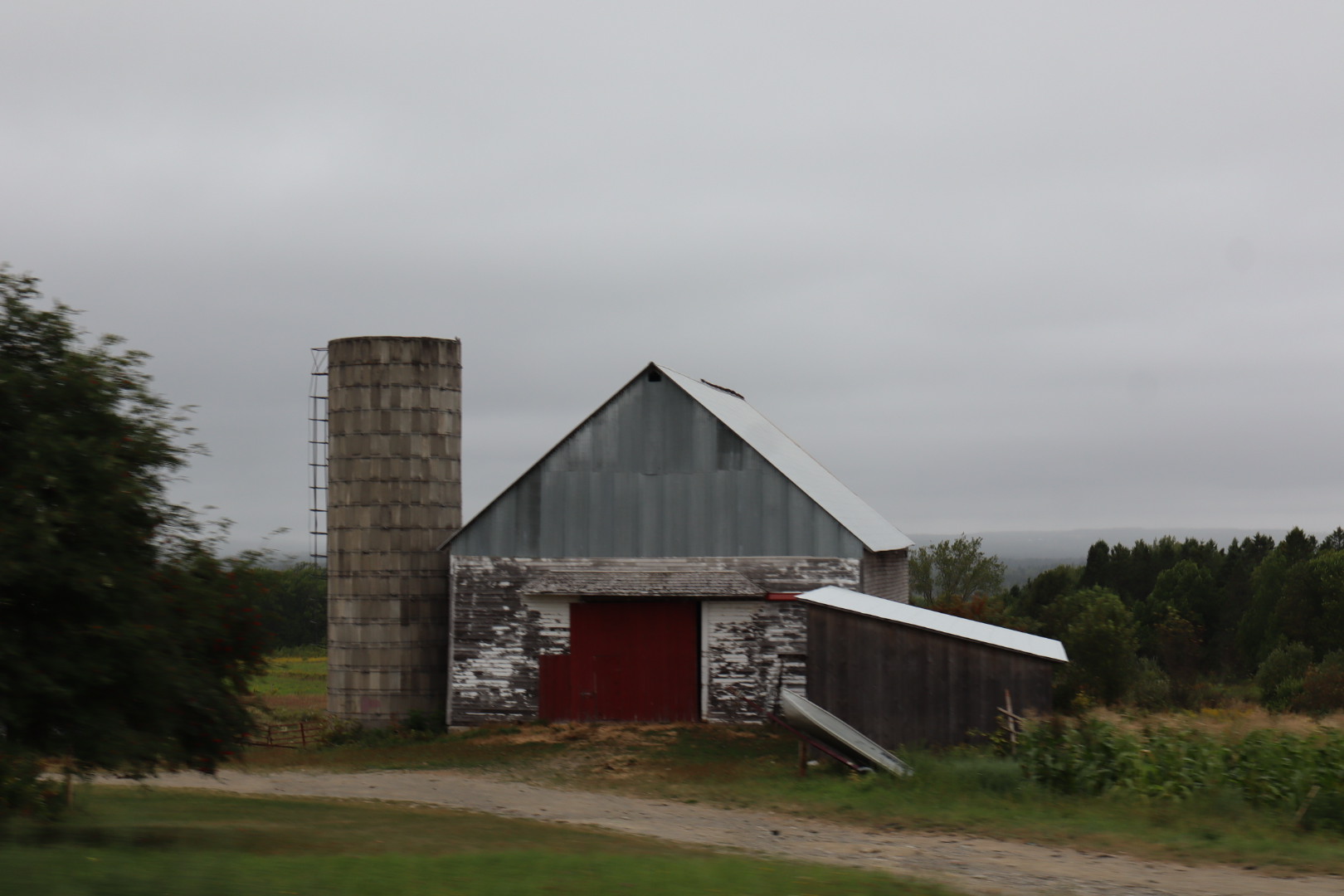
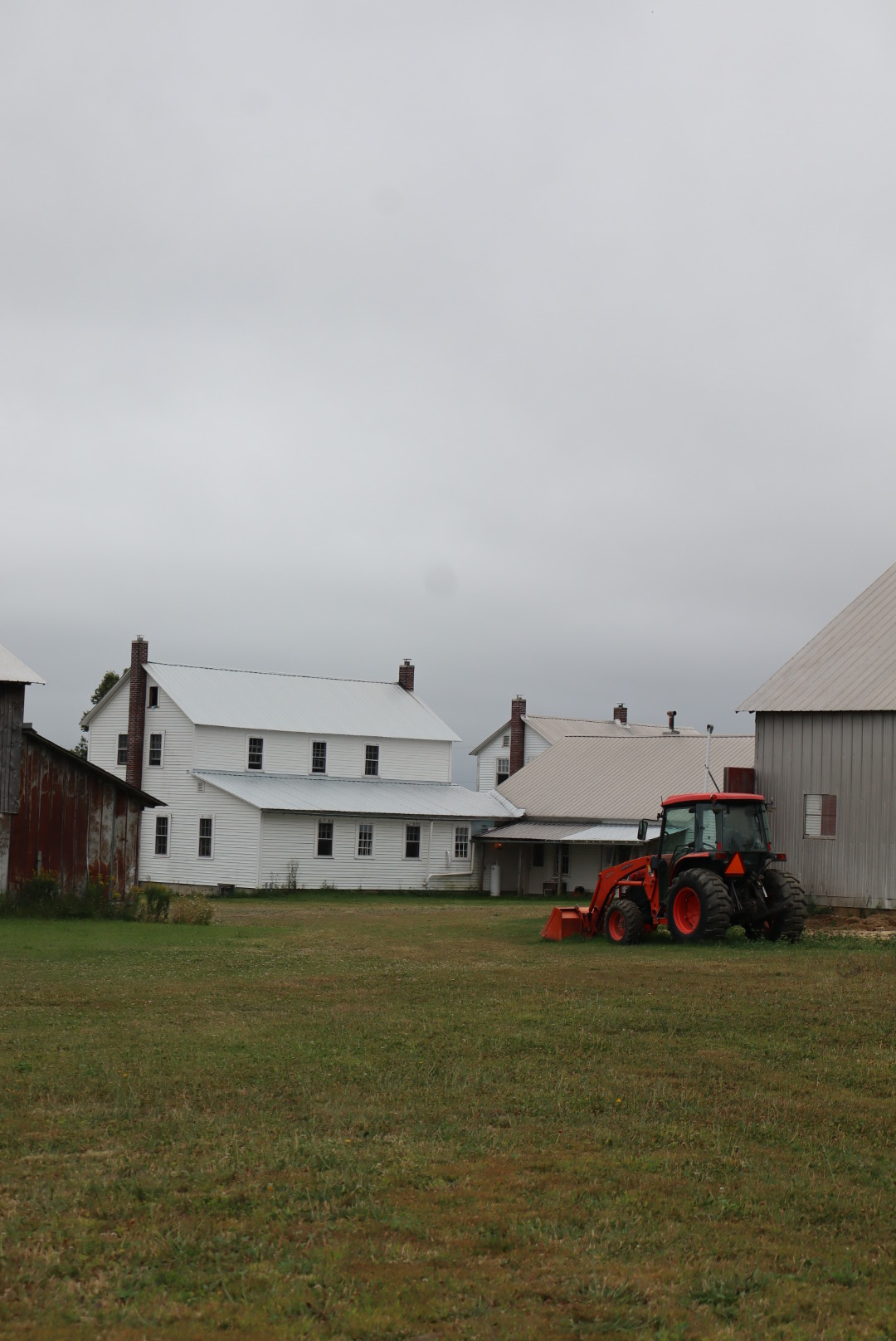
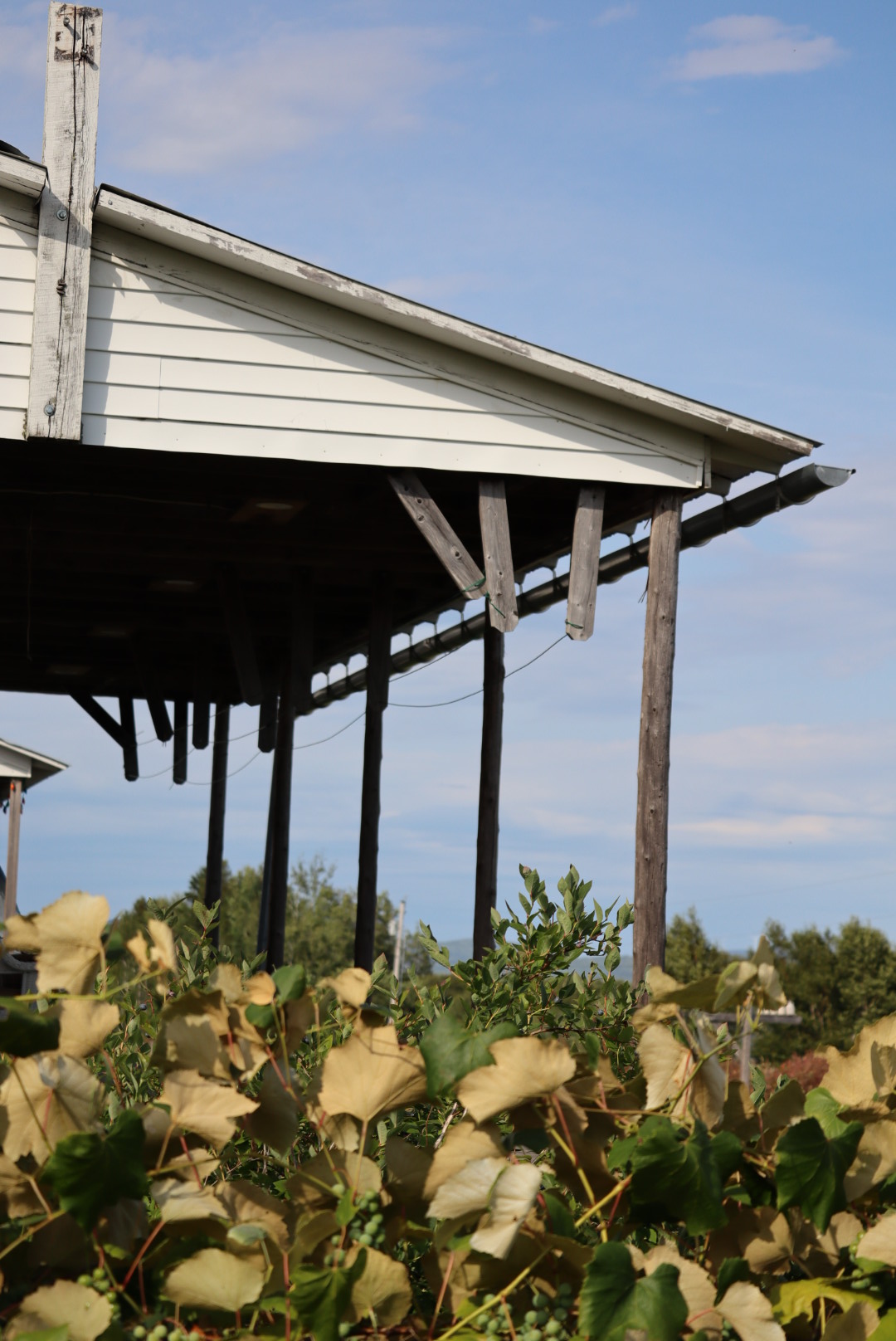
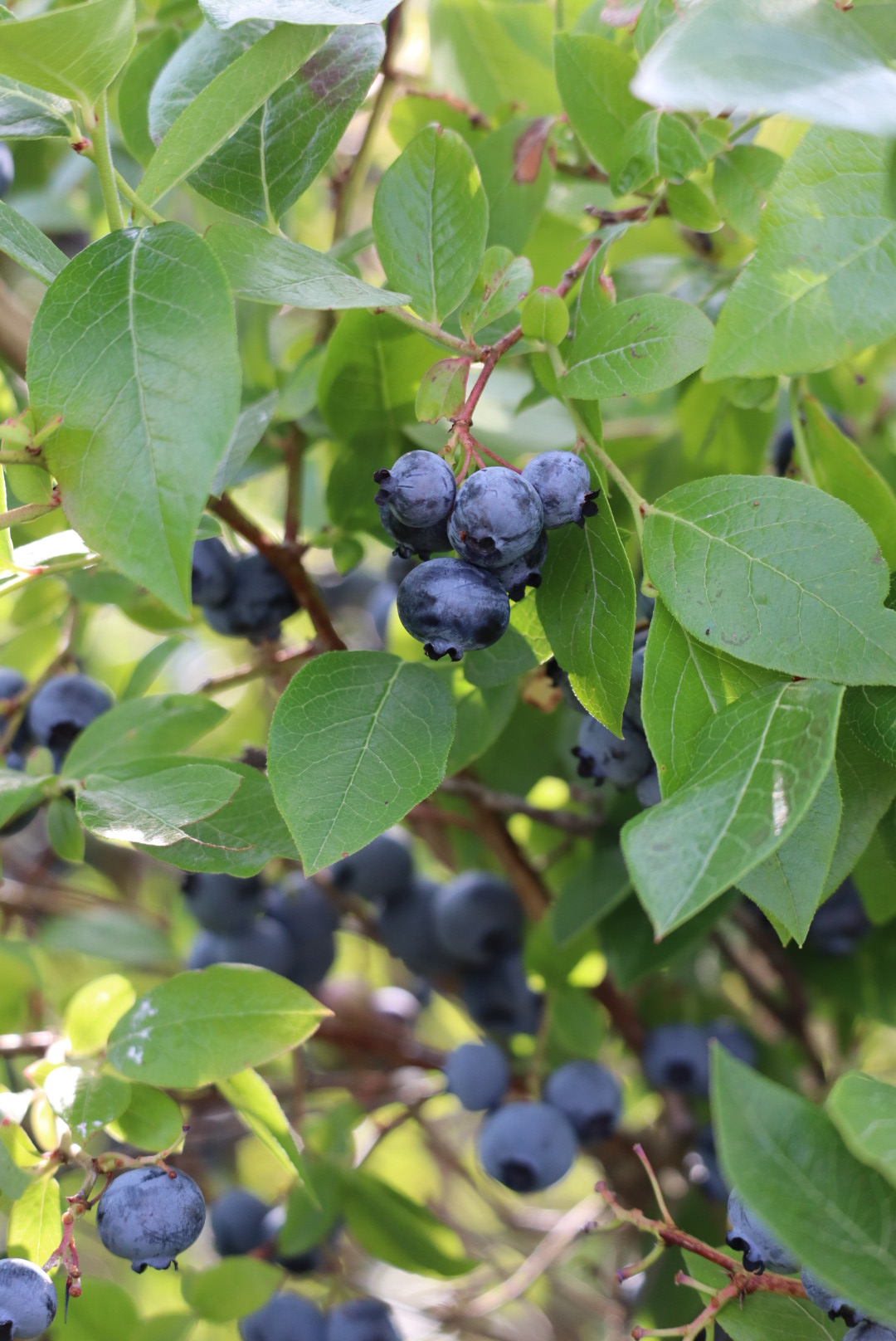
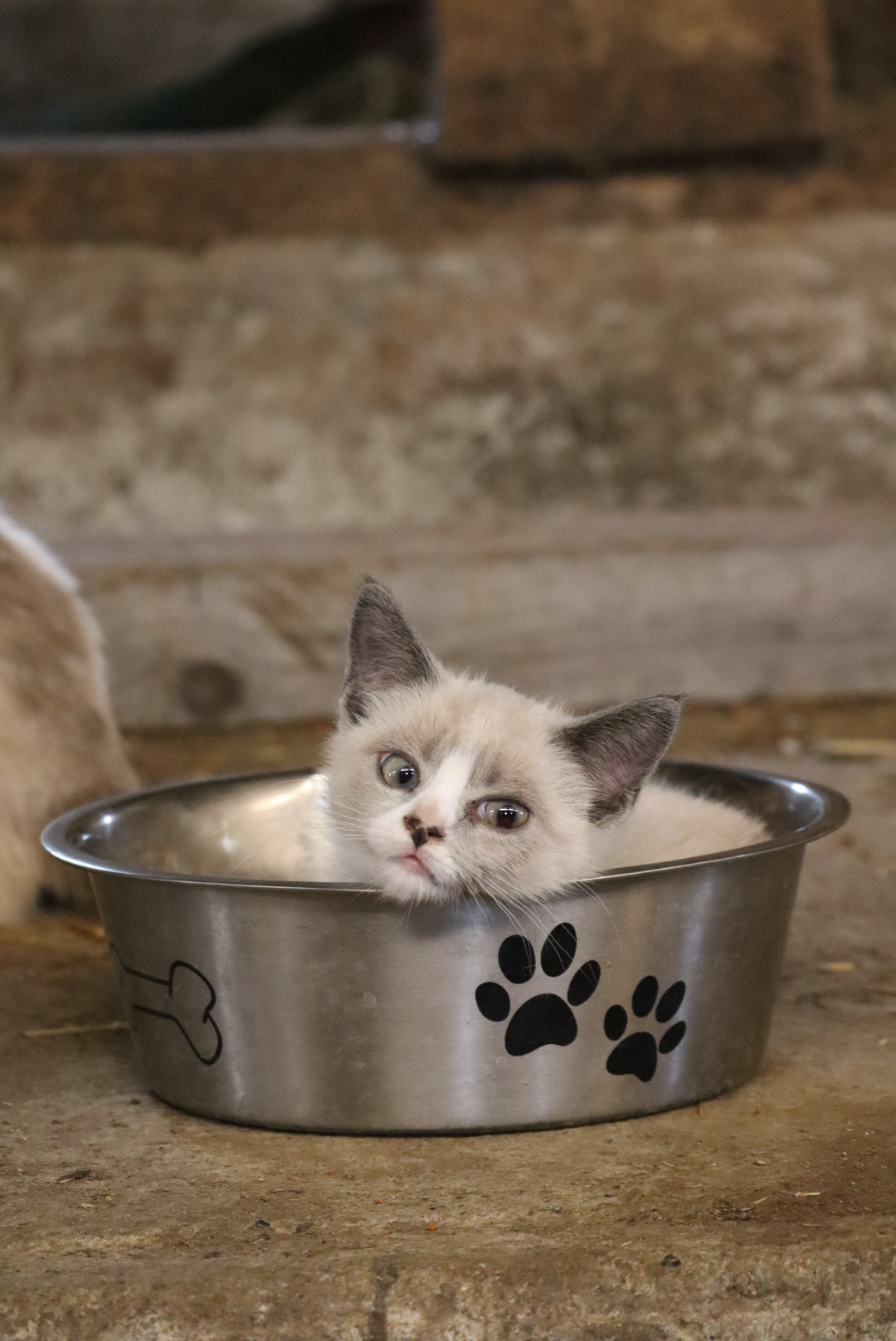
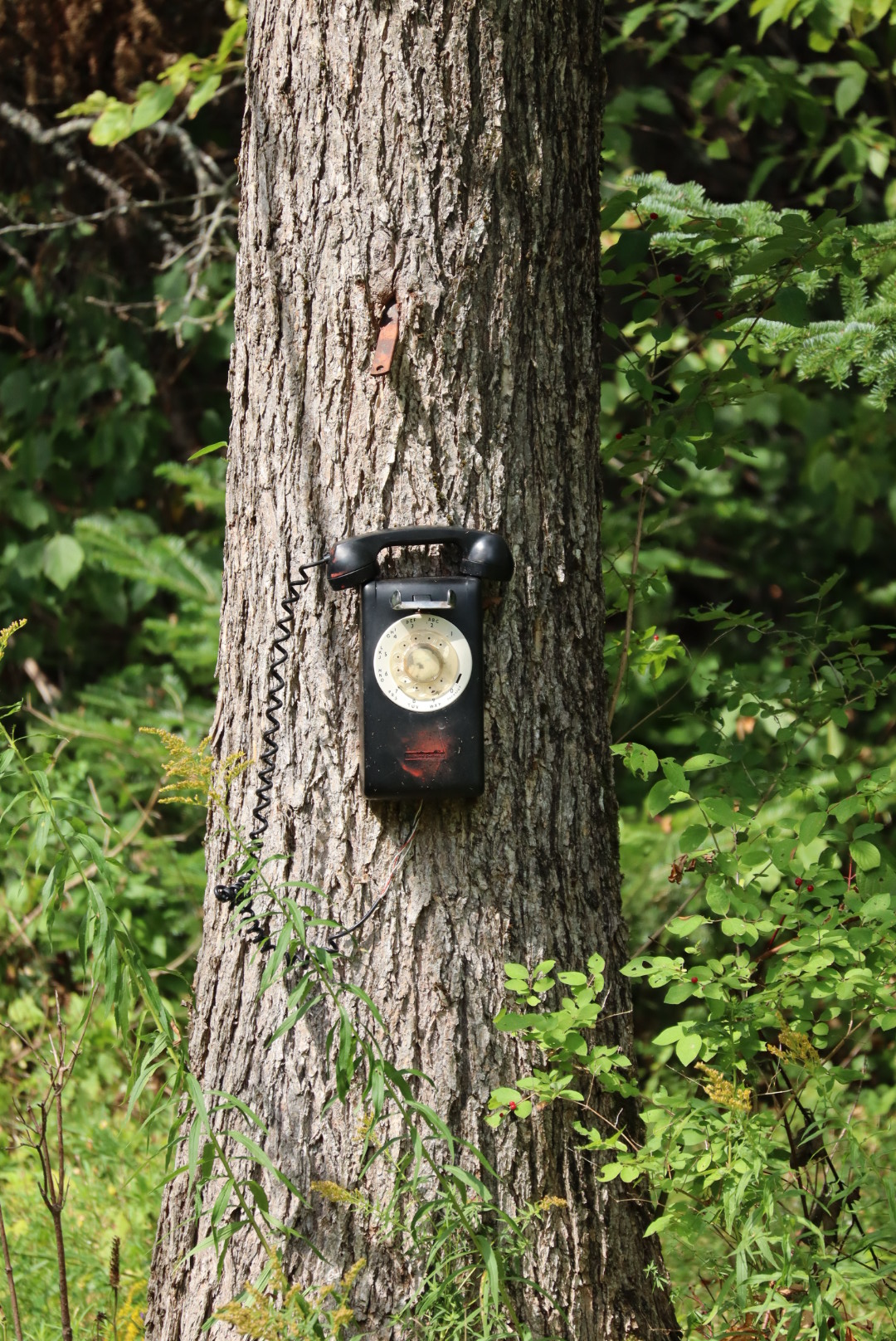
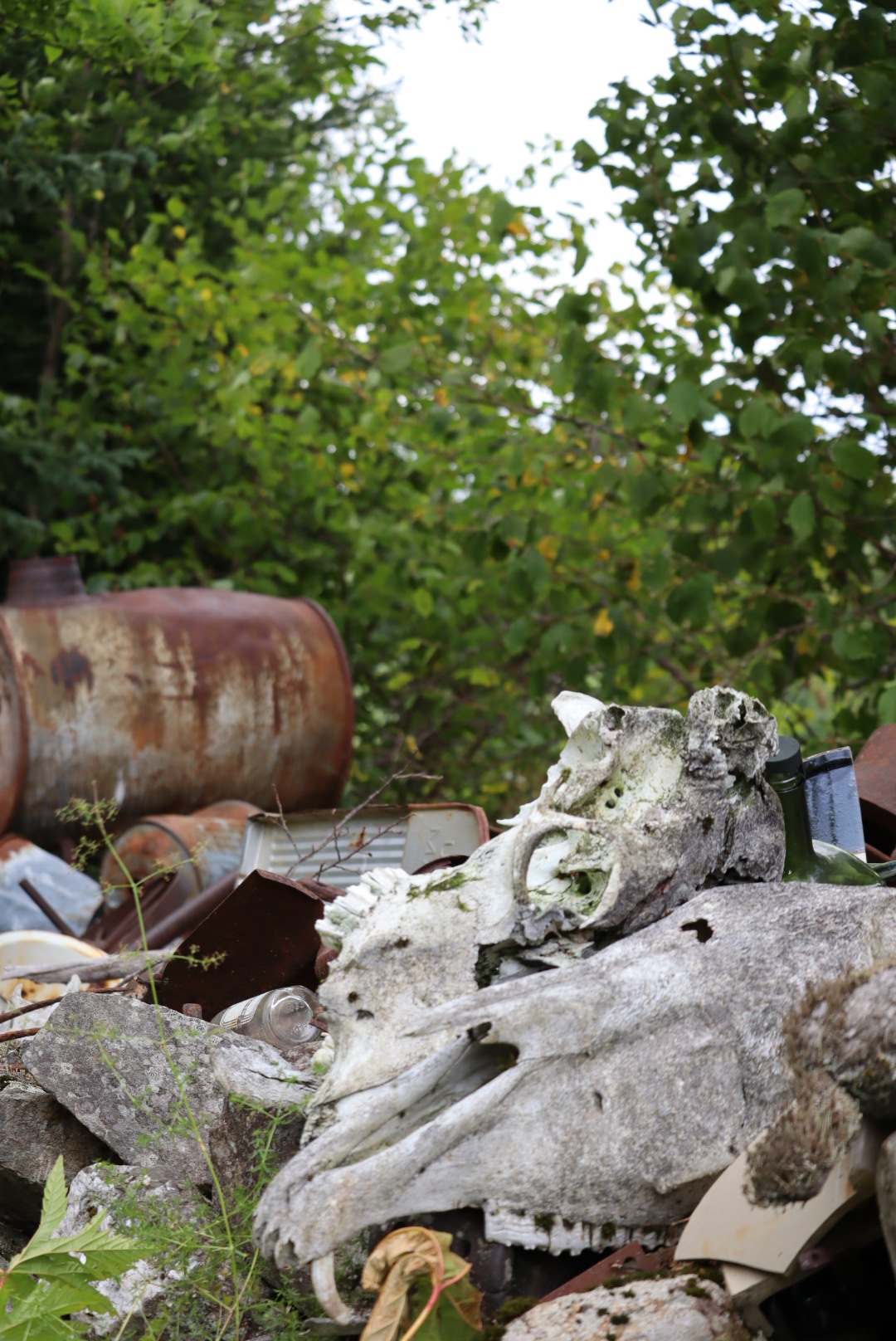
Recently we drove north to nowhere, Cold Brook Road in Southern Aroostook County, Maine. Between 1793 and 1815 Northern Maine was a major producer of wheat, known as “the breadbasket of New England.” In the 1940s and 1950s Aroostook County was the top producer of potatoes in America. Big skies, open vistas, quiet abounds there. Our friend Kirk, a Master Electrician, Master Cabinetmaker, Builder and Humble Farmer welcomed us to his 157 acre-farm in Amish country.









Swashbuckling Swamp Tales
Posted: April 25, 2025 Filed under: Child Centered Activities, Chronicles of a First Time Parent, Portfolio - Elena's work Leave a comment
The children and I recently walked the swamp trails at 29°56’33” N by 89°59’39” W, the Barataria Preserve in the Mississippi River Delta of Louisiana. Long ago this was the land of Jean Lafitte, a swashbuckling rogue of French or Spanish or Haitian descent, a pirate and slave trader, as handsome as he was cunning and shrewd, who played all sides against the others in the era when Thomas Jefferson purchased Louisiana from the French in 1803.
During the war of 1812, King George III of England offered Lafitte and his men citizenship and land grants if they would fight for the British. Lafitte shrewdly leveraged that offer to form an alliance with the Americans – his piracy was easier against US Revenue agents than the British Navy – but then after Andrew Jackson agreed to a full pardon for all of his men, Lafitte’s troops fought with Jackson to defeat the British at the battle of New Orleans. The pirates’ skill with artillery was greater than the British Navy and Andrew Jackson praised their “courage and fidelity.”
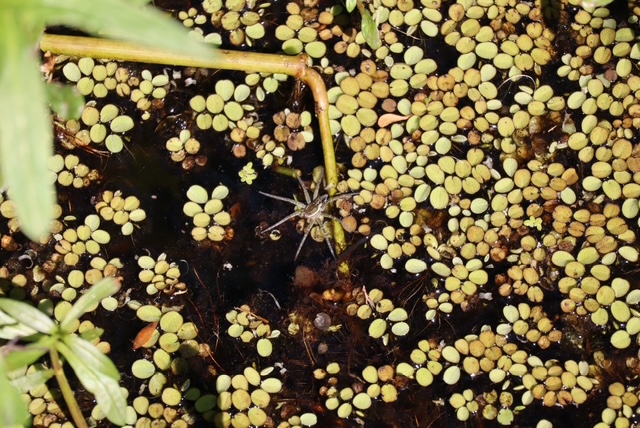
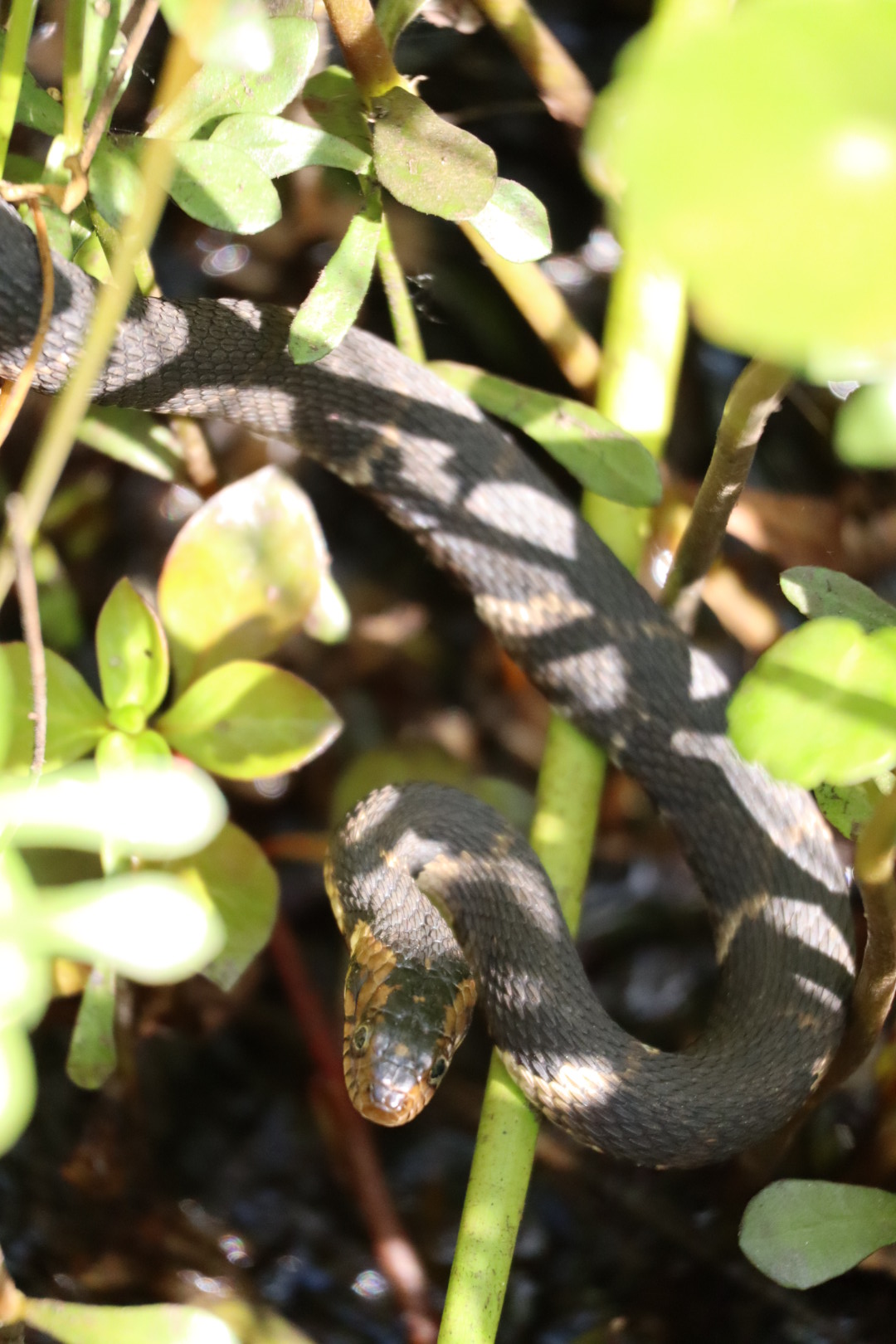
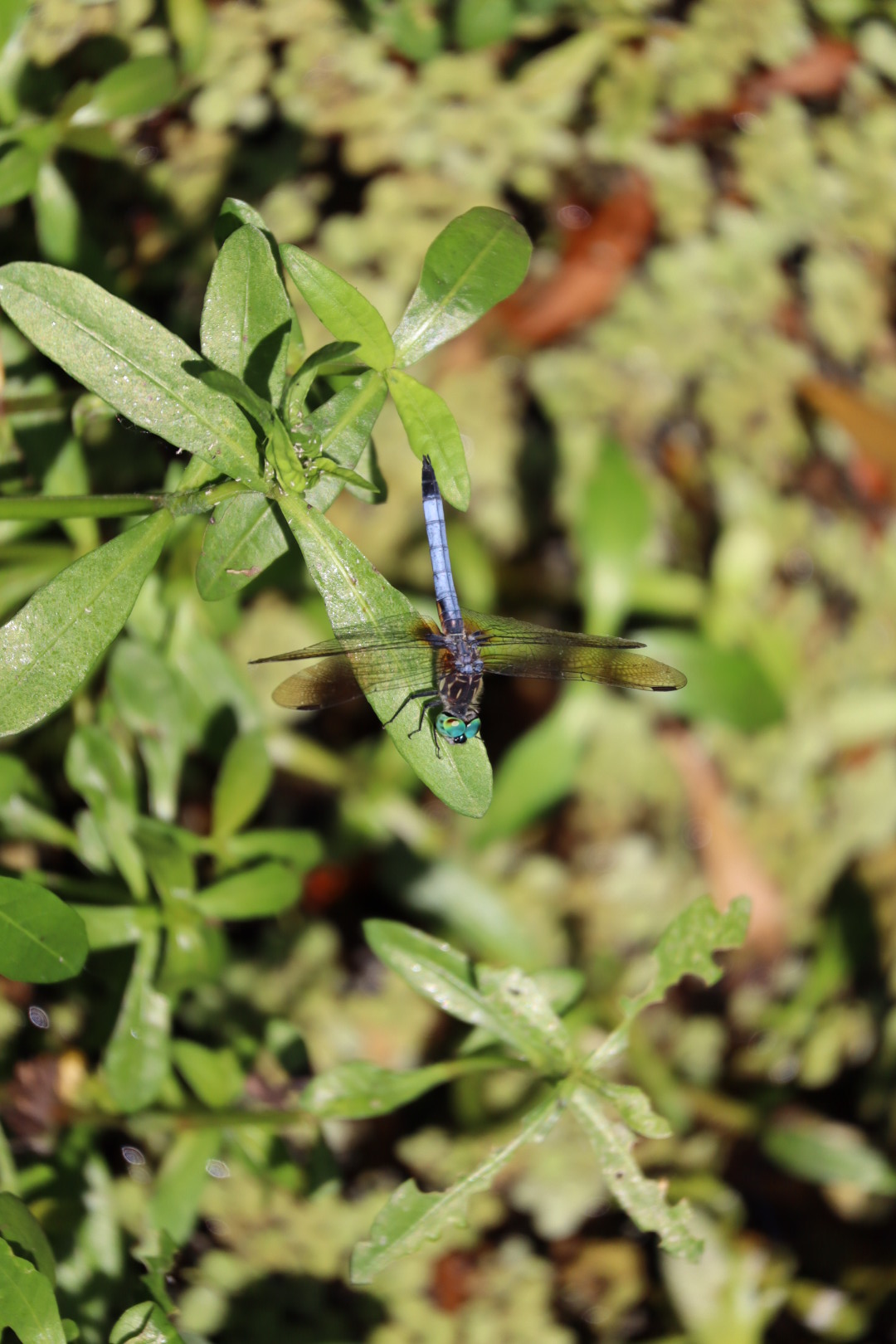
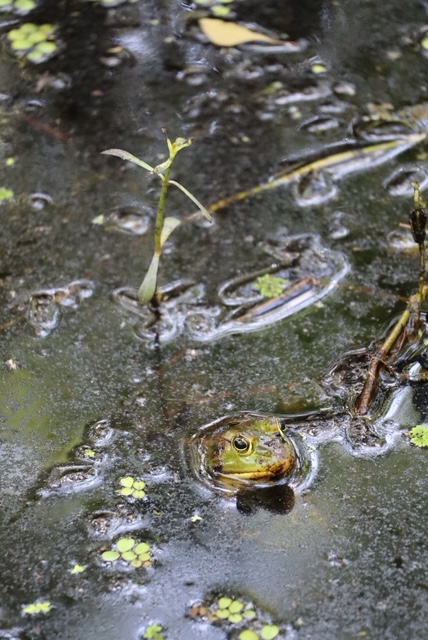
During the Mexican War of Independence in 1815, Lafitte and his brother acted as spies for Spain, which allowed them to develop Galveston Island as another smuggling base outside the authority of the United States. The swashbuckling history was of great interest to me, but my children only wanted to see an alligator. To no avail though, as the temperatures were warm enough that the gators laid low, hidden in the water to stay cool from the sun’s heat. We saw no gators, but plenty of snakes, frogs and spiders.






 an Art Farm