0, 1, 1, 2, 3, 5, 8…
Posted: July 4, 2024 Filed under: Farming off the Farm, Gallery - Visual, Little Green Thumbs, Permaculture & Home Renovation | Tags: fibonacci sequence, golden ratio, phi 2 Comments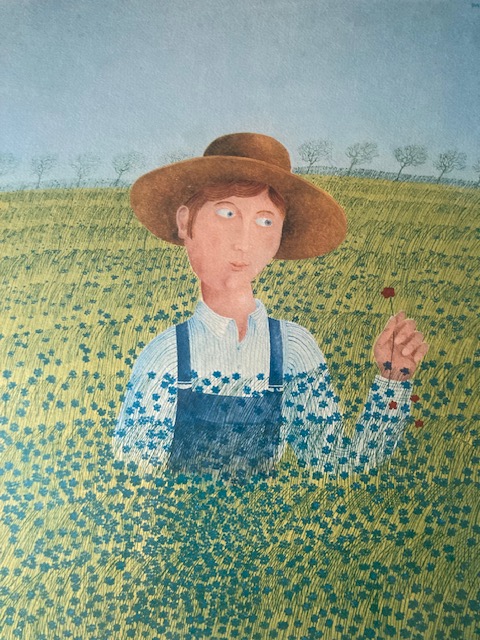
Donald J. Glaser was a rare bird, a beautiful soul, who loved beauty, and traveled the world in its search. My uncle, he was born in August 1924, studied at the Parsons School of Design in NYC, then entered the seminary but dropped out, remained a “permanent bachelor” and in 1951 found his calling as a buyer of art and antiques. In the golden age, when department stores were locally owned paragons of regional taste, at Stewart Dry Goods, in Louisville, Kentucky, he ran the home furnishings boutique.
For more than 45 years he circumnavigated the globe, annually, from East to West buying the best: silks in Hong Kong, brass in Bombay, furniture in Italy, paintings in England. “Good things last” was his motto. In 1972 Associated Dry Goods bought the regional company, and Don became the buyer, and had furniture made, for an entire national chain.
He was my Godfather, and sometime in the 1970s while traveling in the South of France, Don saw in a gallery a portrait that reminded him of me. It arrived at our house, an unannounced surprise from afar.
A truer portrait never was made. How many times I have pondered its meanings. It hangs now in the stairs to my son’s room. The young boy gazes into a flower, and what does he see in his hand, but the universe in stunning mathematical order. I speak, of course, of the Fibonacci sequence.
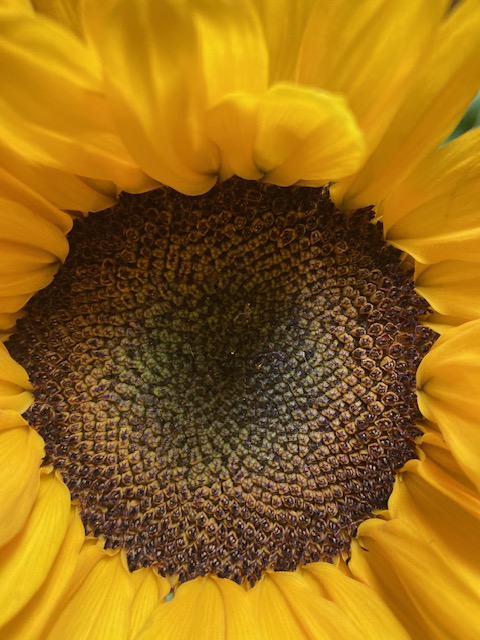
The Fibonacci numbers were first described in Asian Indian mathematics circa 200 BC by Pingala on possible patterns of Sanskrit poetry formed from syllables of two lengths. The Italian mathematician Leonardo of Pisa, also known as Fibonacci, introduced the sequence to Western European mathematics in 1202. Because the West has been dominant, his name has reigned supreme.
The Fibonacci sequence is a pattern wherein each number is equal to the sum of the preceding two numbers. The sequence begins 0, 1, 1, 2, 3, 5, 8, 13, 21, 34, 55, 89, 144, 233 … and goes on to infinity.
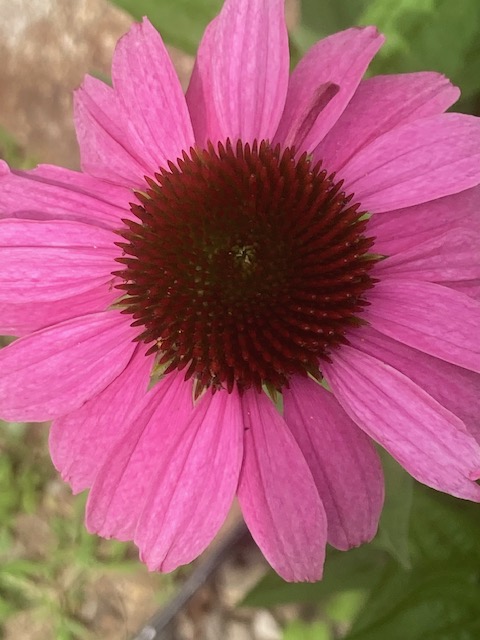
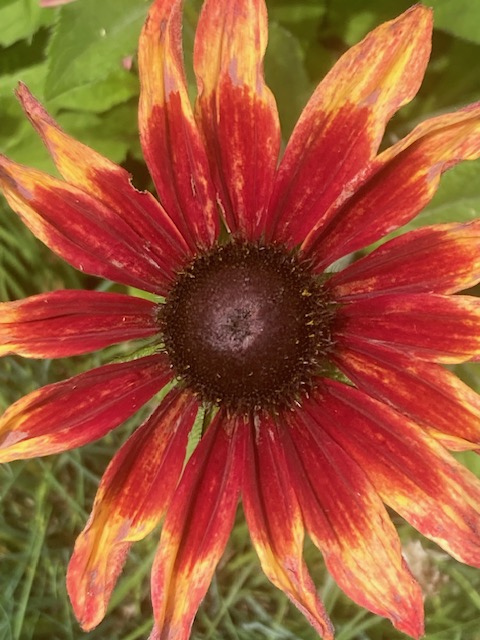
The Fibonacci sequence is manifest throughout nature, prominently in the spirals of Sunflower seed heads, that radiate from the center. The numbers of these spirals, when counted in opposite directions, are often consecutive Fibonacci numbers. The sequence also appears in the branching of trees, the arrangement of leaves on a stem, fruit sprouts of a pineapple, an artichoke, in pine cone bracts; a tiling of Fibonacci squares forms the nautilus shell, which appears also in the spiral of a hurricane and galaxies across the cosmos. The sequence does not appear everywhere but its presence is abundant.

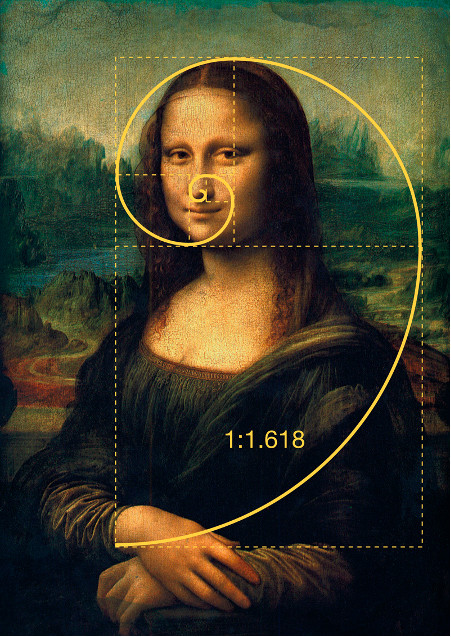
Fibonacci is related, mathematically, to the golden ratio – 1.618 – which is ubiquitous, though hidden in plain sight; credit cards and every drivers license replicate this rectangular form, based on reciprocal numbers of height to width.
The Golden Ratio, also known as Phi, is found throughout art and architecture. Many find the ratio in the Great Pyramid of Giza, and the Greek Parthenon in Athens (although a mathematician at the University of Maine has challenged that). In Renaissance art it was present among many of the master works, notably in Leonardo de Vinci’s Mona Lisa. In the modern era, the golden ratio has informed the art of Seurat, Picasso, Gris, Duchamp, Debussey, Le Corbusier, and Mondrian, to name but a few.
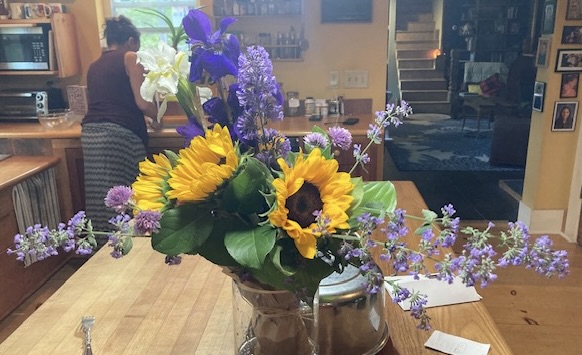
When gathering flowers for a bouquet, pause to ponder the breadth of universal beauty, ever present, bundled within your arms.
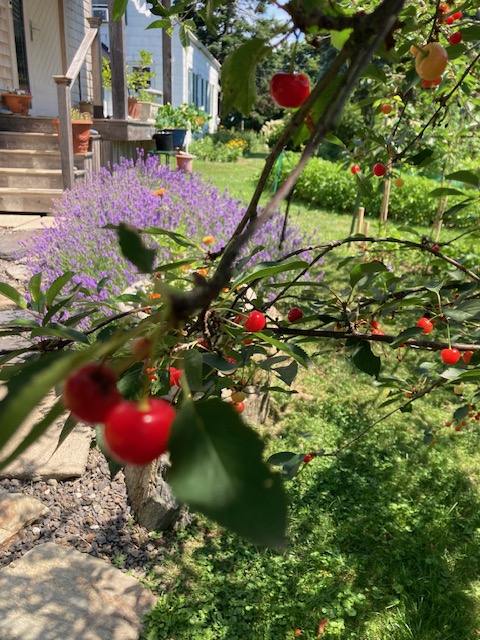
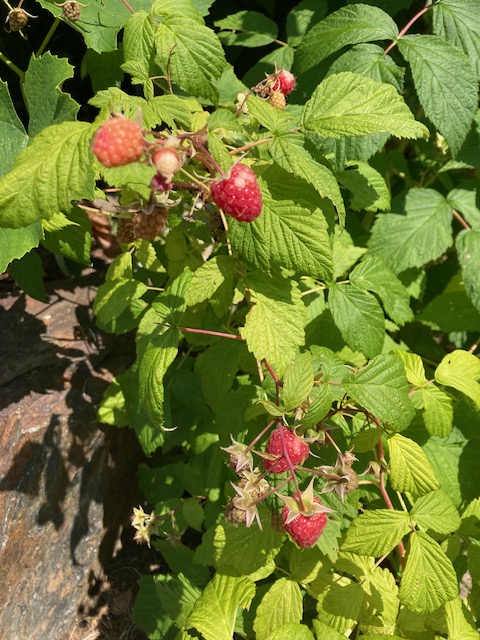
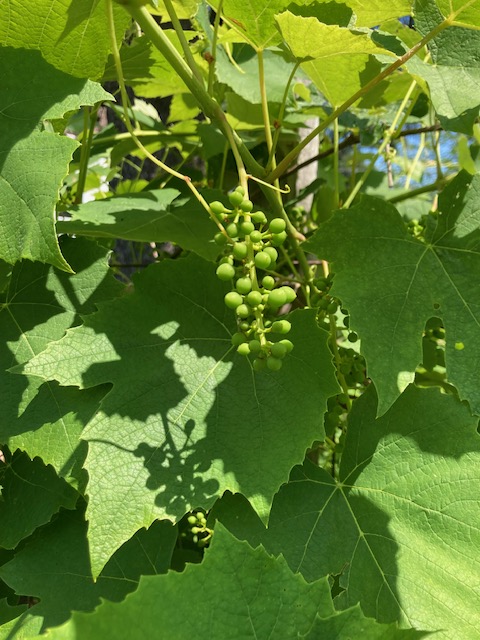
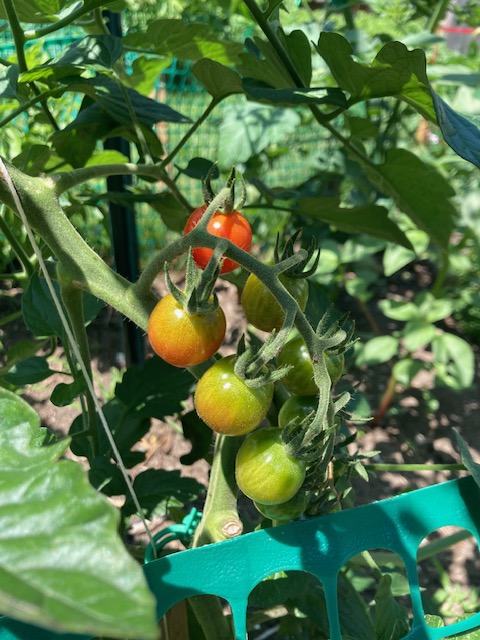
Here at an art farm, our gardens are lush and due to the heat, fruits ripen almost two weeks ahead of schedule.
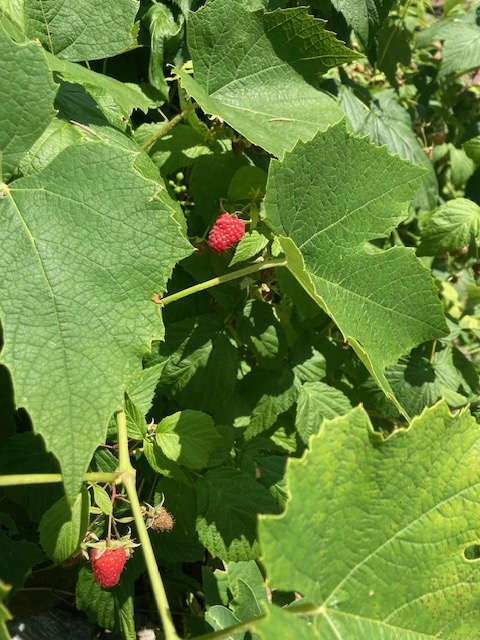
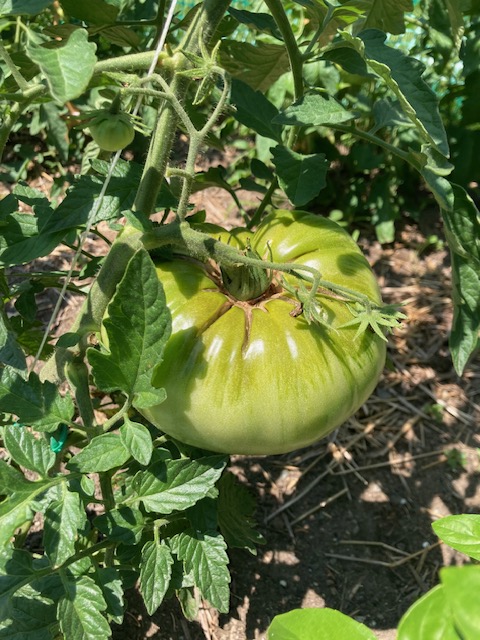
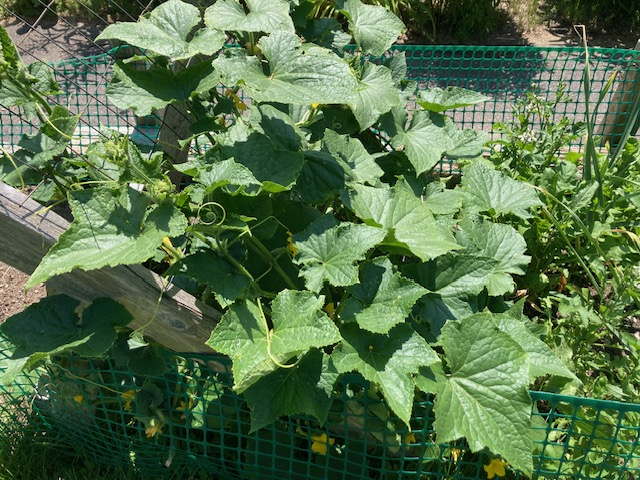
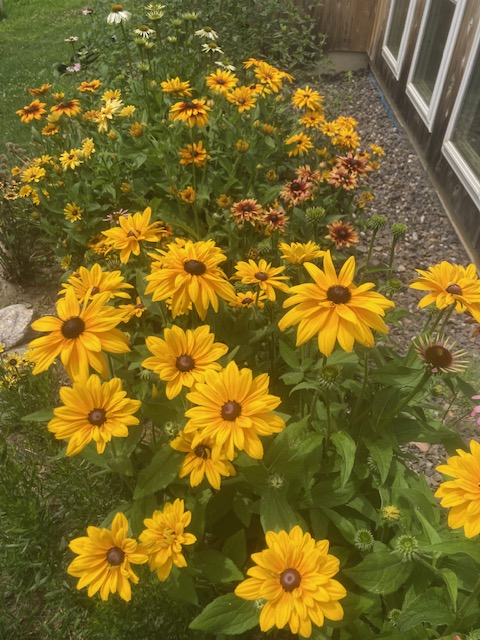
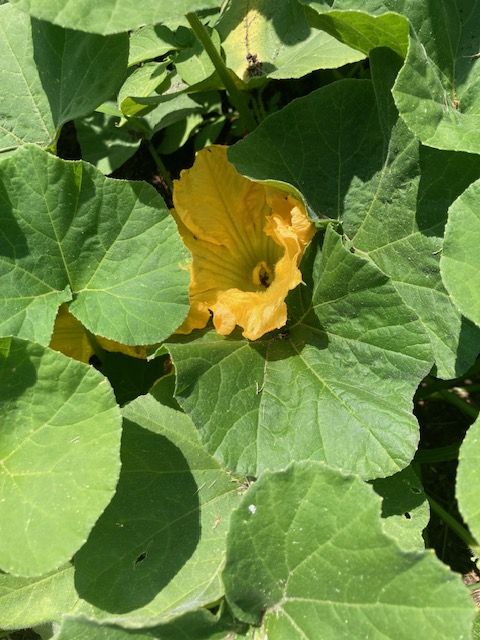
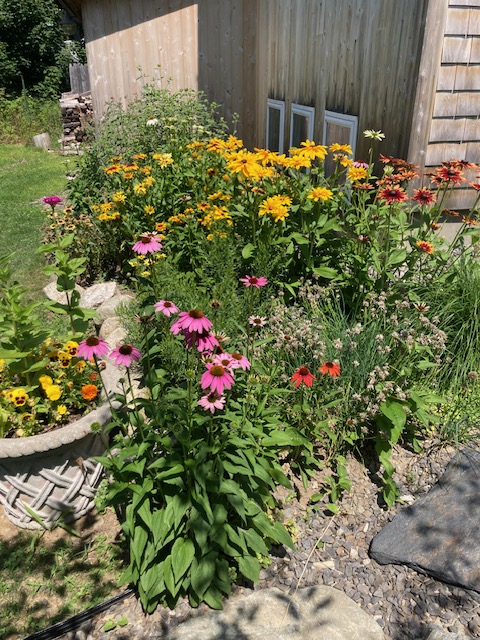
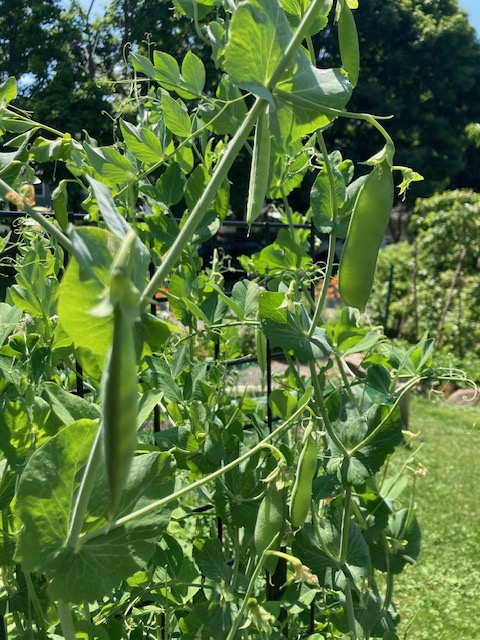
Growing up, the Midwestern mantra was corn “knee high by the 4th of July.” In Zone 5 coastal Maine, the snap peas tower at 5′ tall, tomatoes ripen, cucumbers flower while the grapes fatten; raspberries and cherries – radiant red – hang for the picking, while the coneflower and echinacea proudly display their Fibonacci ways.


NOTE: Credit here need be shared with Richard M. Neumann, a mensch and lover of mathematics, who shared valuable insights to Fibonacci and phi, including gifting me the book “The Golden Ratio: the story of phi, the world’s most astonishing number” written by Mario Livio, (c)2002.
 an Art Farm