True or False ?
Posted: May 23, 2025 Filed under: Child Centered Activities, Chronicles of a First Time Parent, What is an Art Farm | Tags: history, Magna Carta, philosophy, Plato, Socrates 1 Comment
This week in homeschooling, a true/false question arose: Is habeas corpus “…a constitutional right that the president has to be able to remove people from this country”? We have, by coincidence, been studying habeas corpus for the past seven weeks so this question did not come out of the blue. What has been wildly surprising is to see the topic so hotly discussed in the news.
Our humanities seminar has been titled “Habeas Corpus, Habeas Vox,” which I described in my blog dated 11 April. We began by considering those words. My son knows that a hearse carries a dead body, which is a “corpse,” so the Latin word corpus was readily understood. Habeas corpus, he knows, has something to do with a body, rather than a Presidential right.
But what to make of that Latin verb habeas? We approached that by studying the Ancient Greeks. The Spartans governed by a combination of diarchy (two kings ruled), oligarchy with limited democracy. The Athenians, however, invented direct democracy, not representative democracy like our modern form. From Athens we jumped to Medieval England to read about the Magna Carta. In his “end-of-week” essay on 2 May my son wrote:
This week in Humanities we studied the legacy of Greece. Greece is located on the Mediterranean Sea. In Classical Greece, Athens was a city state that created democracy, but only the men citizens could vote; slaves and women could not vote.
The Greeks were known for the arts, architecture and philosophy. In Athens there was a teacher named Socrates, known for teaching by the “Socratic Method” which was asking questions to engage his students. Socrates was put to death by the courts because they thought he was corrupting his students. One of his students was Plato, who wrote the Republic, which is his views of democracy.
Something else we studied was English history. I read about the Magna Carta, a document that gives liberties granted to the English people. The English Barons and Nobles argued and threatened a Civil War unless King John granted those rights. King John was very greedy and selfish. The Magna Carta was settled on June 15, 1215 when King John affixed his seal.
The Magna Carta gives guarantees for the people as a whole. The people could not be convicted of their crimes unless they were lawfully convicted. The Barons (Nobles) had the right to declare war upon the King. The Magna Carta is considered one of the basic documents of British law.
Next week we will do studying more on English history!
We next proceeded to study the English Bill of Rights, and then the USA Constitution. Last week, my son wrote:
This week, Harvard University discovered they had an original copy of the Magna Carta. There are seven original copies, and Harvard just happened to have one. In 2007 an original copy of the Magna Carta sold for $21.3 Million Dollars. This could not have come at a better time!
The Magna Carta was written in cursive script on a sheepskin parchment 810 years ago. It is a legal document that gave power from the King to a small group of Men. What the Magna Carta did was similar to the Greek direct democracy, by including people in political discussion, instead of the King alone.
The British Bill of Rights, signed in 1689, which is 336 years ago, was a sort of New Age version of the Magna Carta. For nowadays, the new age of the Magna Carta would be the Declaration of Independence. The British Bill of Rights basically gave everyone a fair trial and banned cruel and unnecessary punishment.
All of these political texts – the Magna Carta, the British Bill of Rights, the American Declaration of Independence, and all other that I have not mentioned – have slowly but surely lead up to what we have today; having “freedom,” a fair trial, and due process. Whether you like the current President of the United States or not, he continues to challenge these monumental, historic and foundational concepts.
Next week we will study the 1st Amendment and Abraham Lincoln’s Habeas Corpus Suspension Act. Harvard University’s discovery of an original copy of the Magna Carta is a wild coincidence as we are studying all this!!
I should mention that the essays are entirely my son’s concepts and phrasing, but together we edit them. As his scribe, I raise questions of grammar, word choice and structure; using the Socratic method, I challenge him but he decides as he dictates. We use library books as primary sources to frame the concepts, which he rephrases into his own words. If he does not know the word “plagiarism” he most certainly knows to avoid the practice.
As the school year draws to its close, we are preparing for a debate – 6th grade version – on the essential nature of government. Plato, the Athenian philosopher, argued that democracy is not viable, and the ideal form of government is a “benevolent dictator” more politely referred to as the Philosopher King. This is an argument for absolute strength in the Executive branch. In the current American moment, the occupant of that office is reviled by some as a dictator, and praised by no one as benevolent. My son shall argue in the affirmative that the strong leader must not only be unchecked and absolute in his control, but guided by good will, even compassion.
My son’s cousin, a Professor of Law, shall present the challenging argument, that “We the people” is a most radical proposition, but ultimately, an essential truth. We shall leave to him to define precisely how the many can actively support the one well being of the state. He shall argue that habeas corpus, which is due process, which is the rule of law, is the key to that functioning: the “Great Writ of Popular Sovereignty.”
My son clearly knew the answer to the true/false question, and summed the matter up well, saying, “Do you know how embarrassing it is when a 12-year old knows habeas corpus better than an adult?!! That is really embarrassing! It just makes Americans look really dumb!” He shall be fully prepared to debate what is good, what is benevolent, what is effective leadership for the state.
______________________________
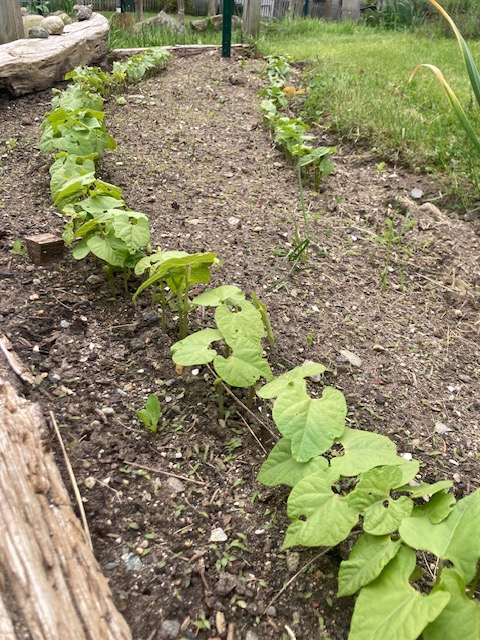
Summer is upon us! Our warm weather starts are ready to go into the ground: tomatoes, peppers, cucumbers, basil, and potatoes. Our cold weather starts do well and grow ever upright.






Art Predates Agriculture
Posted: May 16, 2025 Filed under: Art & Healing, consciousness, What is an Art Farm | Tags: authors, ethics, history, philosophy 2 Comments
Civilization began, it is widely believed, with the advent of agriculture. The time was around 10,000 BC and the place was the Fertile Crescent, which is the present day Middle East. Sheep and pigs were first domesticated, followed by plants such as flax, wheat, barley and lentils. The nomadic hunter-gatherers settled into agricultural communities, developed irrigation systems and established permanent settlements.
It should be noted that this definition of “civilization” speaks to the cultures of the Abrahamic religions (Muslim, Judaism and Christianity). The Clovis culture, however, were precursors to the Indigenous peoples of the America’s, and between 15,000 to 20,000 years ago developed stone tools, as well as agriculture, engineering, astronomy, trade, civic and monumental architecture. Some established permanent or urban settlements, but all did not forsake their nomadic lifestyle. There is not one civilization, but many co-inhabiting this planet.
However civilization may be defined, the plain fact is long before we worked the soil to plant seeds, the hunter gatherers were digging to get clay and earth based pigments for painting the caves at Altamira and Lascaux; art making predates agriculture, which is to say it predates civilization, which speaks to its fundamental role in shaping human life. Mark making is meaning making, hard-wired in our DNA, the act of making is a core means of problem-solving, both utilitarian and ideational.
Ellen Dissanayake is an ethno-anthropologist whose writings synthesize disciplines ranging from evolutionary biology to cognitive and developmental psychology. She lived for fifteen years in non-Western countries (Sri Lanka, Papua New Guinea, India and Nigeria) among indigenous pre-literate peoples and found that all shared the trait of embellishing their tools in non-utilitarian ways; the act of “making pretty” is consistent across the globe. This lead her to develop “…a unique perspective that considers the arts to be normal, natural, and necessary components of our evolved nature as humans.”
Far more than practical, the act of making is healing. Art therapy is based upon this insight, which, since the 1940s, has been used in conjunction with traditional psychotherapy, to provide a non-verbal avenue for exploring emotions and experiences. The simple act of making can help treat a wide range of mental health issues and support emotional well-being, based upon the interconnectedness of mind, body, and spirit.
Works of art such as the Sistine Chapel, a human achievement of extraordinary scale, can be overwhelming and lead most of us to cower, and say “I can’t draw.” But that seems ego-driven, as we are schooled in a comparative and competitive paradigm, which blocks the fact that art making is biologically and psychologically at the core of everyone’s individual life. Art, and the act of making, become the great equalizer.
One of the lessons of carpentry – which is to say making in the practical sense – is that adverbs and adjectives do not pertain; the wall is plumb or it is not, the corner square or it is not, the house will long endure or it will not. There is something exquisitely liberating in that plain fact. More “sophisticated” professions do not fall under this simple truth, for example, politics and the law are based upon argumentation and persuasion rather than objective truth. The word “sophisticated” is derived from the Sophists, in Ancient Greece, who excelled in clever deception, using rhetoric to win arguments regardless of the truth.
In a world that is increasingly argumentative, clever and AI-interconnected, the simple act of making can become a grounding and centering force. Let us proclaim there are four necessities in life: food, clothing, shelter and beauty; “making pretty” creates beauty while making becomes the means to achieve all the former. And all of which become an act of healing.
___________________________
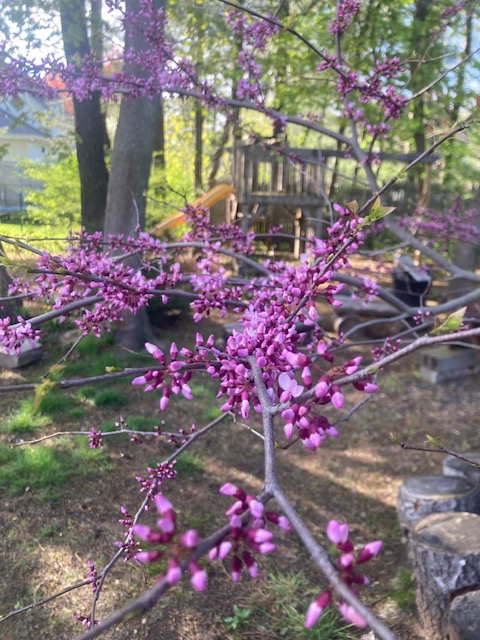
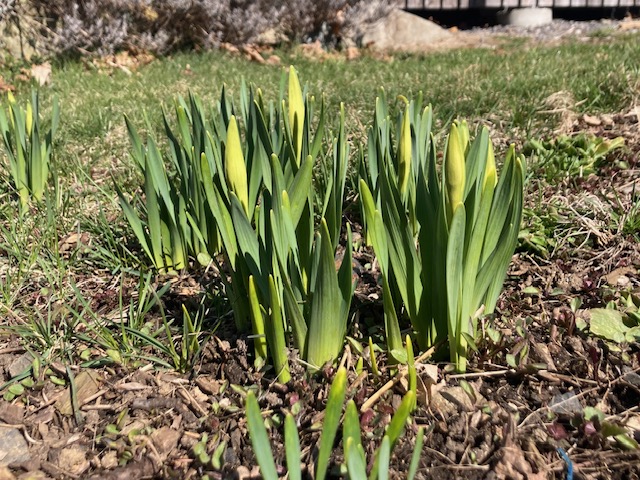
Plants push up, fruit trees blossom, and pollinators abound!




Forex Foray
Posted: May 9, 2025 Filed under: Chronicles of a First Time Parent, Money & Banking | Tags: economy, finance, history, money, politics Leave a comment
For your next dinner party, an interesting parlor game is to ask the question, “What is the strongest currency in the world?” The answer will stump many, and most likely, will surprise all.
My son and I talked about this recently. We were at our Credit Union and he asked about gold in their vaults – they have none – which lead to gold backing the United States Dollar (USD) – there is none.
I quoted the old joke, “There is not enough gold in Fort Knox…” and explained the Nixon Shock, when on the hot summer night of 15 August 1971, Richard Nixon – by Executive Order – suspended the convertibility of US dollars into gold. With a stroke of his pen, Nixon unilaterally ended the post World War II Bretton Woods monetary system.
In Latin “fiat” means “let it be done,” an authoritative decree and in monetary terms the USD is a “fiat” currency; there is no underlying asset base because it is secured only by “the promise to pay.” In an era of rising national debt and hyper-partisan politics, that promise to pay can seem frightfully uncertain.
“Isn’t the USD the strongest currency” my son sagely asked? I explained that the USD is the world’s reserve currency, and so the strength of all currencies is in comparison to it. Some currencies are weaker (less value) while others are stronger.
As most people would, my son reasoned the strongest currency must be either in Europe or Asia, “Asia produces so much.” Economic output logically focuses on the “Group of 7” leading industrialized nations: Canada, France, Germany, Italy, Japan, the United Kingdom and the USA. Our bias inherently is G7-centric.
We continued to talk, and he said, “No, it must be in the Middle East! They have so much oil.” He was onto something, and I told him, in fact, the Kuwaiti Dinar is the strongest currency in the world. The next three strongest currencies are also from the Middle East: Bahraini dinar, Omani rial and the Jordanian dinar. All are net exporters of oil, with a strong inflow of foreign currencies and stable governments.
A few years ago we drove north to Montreal, Canada. Before the trip my son and I went to a currency exchange to buy Canadian Dollars. He paid $1.00 USD to purchase about $1.25 Canadian Dollars. In other words, when he bought a Lego set in Canada it cost less than it would back at home; his money went further. A valuable lesson, and we had many fine meals on the cheap.
The lesson here is that the value of money is relative, not fixed. Long ago money was backed by gold, now it is fiat, while oil is becoming a dominant base of value. All oil sales are settled in United States Dollars – known as “petrodollars” – but China and Saudi Arabia have begun to settle in Chinese Yuan. The USD now is declining. The global movement seems away from fiat to asset-backed currencies. The omnipotence of oil backed currency would seem to make the transition to clean energy more difficult by an order of magnitude.
In the age when gold was the standard, there were arguments for both Gold and Silver to serve as the underlying basis. William Jennings Bryan’s historic speech advocating bimetallism, delivered in 1896 in Chicago, ranks among the finest examples of oratory in world history.
The gold proponents were the monied class on the East Coast. The silver constituency were the workers, the masses, the common man. Bryan reasoned:
“The man who is employed for wages is as much a business man as his employer; the attorney in a country town…the merchant at the cross-roads store…the farmer who goes forth in the morning and toils all day,.. the miners who go down a thousand feet into the earth…are as much business men as the few financial magnates who, in a back room, corner the money of the world. We come to speak of this broader class of business men.”
He then addressed the gold proponents, and argued against supply-side economics:
“There are two ideas of government. There are those who believe that, if you will only legislate to make the well-to-do prosperous, their prosperity will leak through on those below. The Democratic idea, however, has been that if you legislate to make the masses prosperous, their prosperity will find its way up through every class which rests upon them.”
He rhetorically cut down the gold position, advocating the bimetal monetary basis to support the common man, and then in crescendo, rose to his time-honored conclusion:
“Having behind us the producing masses of this nation and the world, supported by the commercial interests, the laboring interests, and the toilers everywhere, we will answer their demand for a gold standard by saying to them: “You shall not press down upon the brow of labor this crown of thorns; you shall not crucify mankind upon a cross of gold.”
Dead silence filled the Chicago Coliseum. Bryan feared he had missed his mark, until pandemonium broke out and he was raised onto the shoulders of delegates. “Bedlam broke loose, delirium reigned supreme” the Washington Post reported.
Gold, silver, fiat, or oil…in a world of constant change, the lesson for my son is that integrity need be his bank account, his word his bond, character alone counts. By that true standard he will do well regardless of the rising or falling tides of money and banking.
__________________________
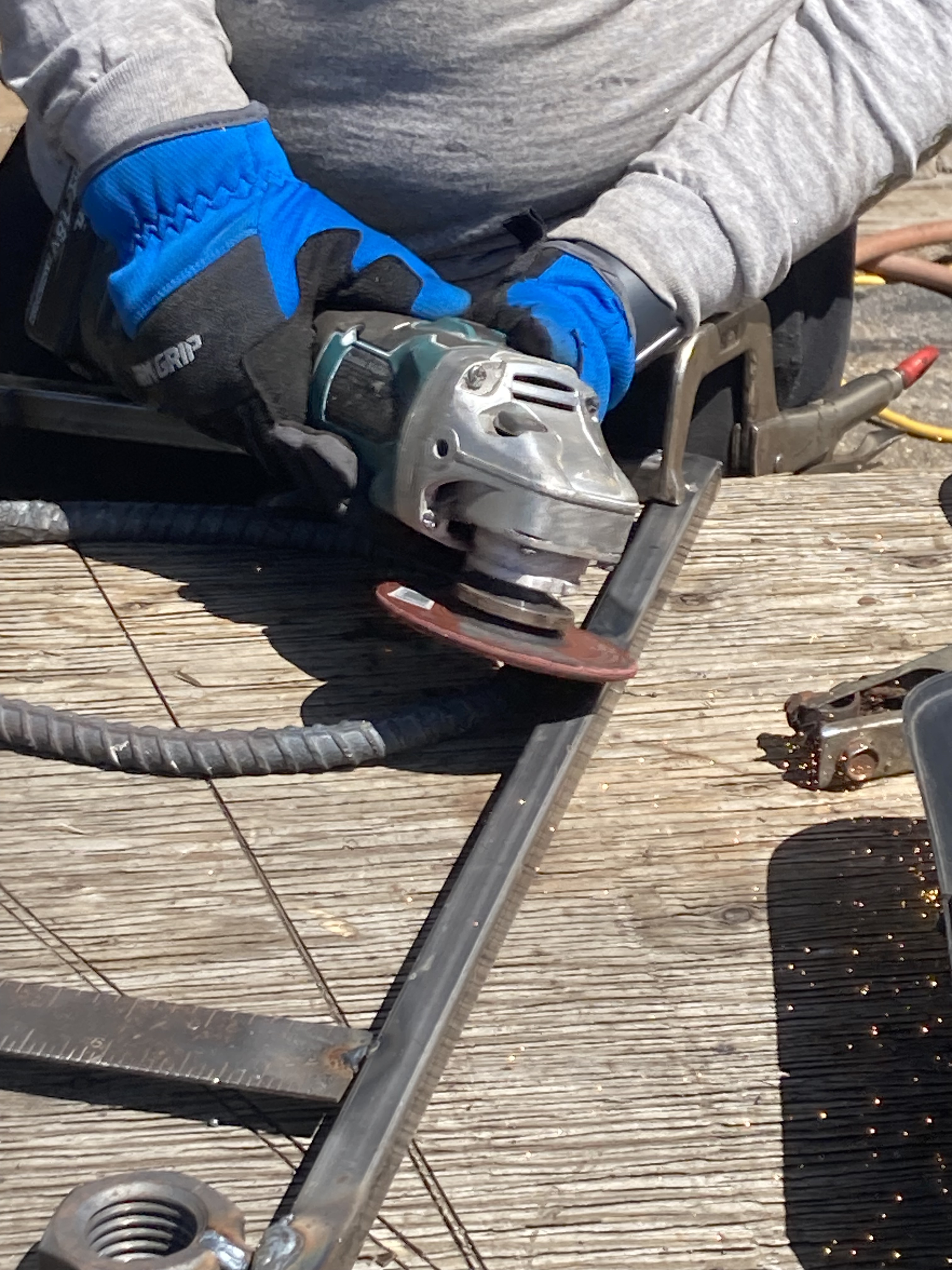
In our home school chemistry class, solid progress had been made, my son has made his mark.


Isaac in Isolation
Posted: April 18, 2025 Filed under: Child Centered Activities | Tags: alchemy, books, consciousness, history, Isaac Newton, philosophy, rational mind, science 1 Comment
In 1665 the plague descended upon London, forcing all the residents to go into isolation. The COVID-19 of its day, in an age before plumbing or electricity, before iPhones and apps, the isolation was complete to a degree that we can barely fathom today.
A 22-year old named Isaac used his solitude well, conceiving the laws of infinitesimal calculus. Leibniz is credited with developing Calculus but young Isaac was 8 years ahead of him. Einstein has hailed the insights as “perhaps the greatest advance in thought.”
At the age of 44 Isaac walked in the gardens of Cambridge University and observed an apple falling straight down to the earth. So he surmised and proceeded to publish, in 1687, Principia which established the foundation for classical mechanics. A manuscript from the Royal Society retells this conversation of 15 April 1726, when Isaac told a colleague how the idea came to him:
“we went into the garden, & drank thea under the shade of some appletrees, only he, & myself. amidst other discourse, he told me, he was just in the same situation, as when formerly, the notion of gravitation came into his mind. “why should that apple always descend perpendicularly to the ground,” thought he to him self: occasion’d by the fall of an apple, as he sat in a comtemplative mood: “why should it not go sideways, or upwards? but constantly to the earths centre? assuredly, the reason is, that the earth draws it. there must be a drawing power in matter. & the sum of the drawing power in the matter of the earth must be in the earths center, not in any side of the earth. therefore dos this apple fall perpendicularly, or toward the center. if matter thus draws matter; it must be in proportion of its quantity. therefore the apple draws the earth, as well as the earth draws the apple.”
By the age of 55 Isaac had been named, by the British Crown, the Warden of the Mint, and then served as the Master of the Mint for 30-years. In contemporary terms, the Master was essentially the Chairman of the Federal Reserve, responsible to ensure the value and to assay the gold content of the King’s coins.
At the age of 62 the King bestowed upon him Knighthood, which is why we universally refer to him as Sir Isaac Newton, one of the towering figures in history, a paragon of rational thought.
What is less well known of Sir Isaac is that he was a leading alchemist of his day. The irony is almost mind-boggling: when alchemy was a crime punishable by death by public hanging the Master of the Mint was busy trying to turn base metals into gold. It is said of more than 10 million words of notes taken by Newton, 1 million at least pertained to alchemy. His interest was more than just a passing curiosity. By any conventional thought, that is an idea laughably hard to grasp.
What if alchemy is not about base metals turned into gold, but rather a symbolic language for the pursuit of higher consciousness? In the three-dimensional realm of conventional thought, where the laws of physics and Darwinian materialism reign supreme, what better symbolism could there be than “base metals” and “gold” referring to the path to wisdom of a greater whole.
Carl Jung in his Alchemy and Psychology and Fabricius in Alchemy: The Medieval Alchemists and Their Royal Art suggest that this is, in fact, the more accurate understanding. In The Foundations of Newton’s Alchemy, B.J.T. Dobbs argues that “Newton’s primary goal was not the study of nature for its own sake but rather an attempt to establish a unified system that would have included both natural and divine principles.” Newton was a critical link between the Renaissance Hermeticism and the rational chemistry and mechanics of the scientific revolution; in moving the scientific world forward, he looked back upon Neoplatonism, which in turn drew upon the writings of Hermes Trismegistus, the towering Hellenistic sage.
History teaches that higher consciousness threatens conventional thought. In 33 AD the self-righteous Pharisees had the radical street preacher put to death by public hanging. Martin Luther King had an FBI file and was assassinated for arguing that “all people are created equal.” In the year 2025, the pious among us ban books from libraries that challenge their narrow minded sense of self. The orthodox, it seems, are not expansive but restrictive and limiting.
Newton was wise never to publish his alchemical writings. In fact, many of them were burned by a fire; the story told that a dog knocked over a candle in his study, but one wonders what was the risk to his reputation for that intellectual pursuit. He remained, in a sense, in isolation throughout his life for his pursuit of alchemy.
The record shows that when Newton stepped down from the 2nd Lucasian Professorship of Mathematics – considered the single most prestigious professorship in the world – his replacement, William Whiston excoriated Newton publicly for his highly unorthodox views. No doubt Professor Whiston was smug in his self righteous words and considered the case closed. But in fact, it may be that he had simply locked himself, and his peers, inside the box of self limiting, rational thought.
The world is more vast than we tend to conceive. It would seem the challenge of our times now is to expand our collective higher consciousness, to awaken and more fully hear and embrace those “mystic chords…of our better angels.”
________________________________





Habeas Corpus, Habeas Vox
Posted: April 11, 2025 Filed under: Child Centered Activities, Chronicles of a First Time Parent, consciousness | Tags: constitution, history, politics 2 Comments
One recent morning, my son stood in the kitchen, riveted, listening to the radio. Briskly he spoke, “Dad, how can the President deport citizens for what they say? Isn’t this a violation of their First Amendment rights? When someone enters the country legally, they gain the right of free speech!…upon entry, but they are being deported for saying things the President does not like! They have the right to speak! I don’t understand this!!?” My son’s concern for Free Speech coincides with the right of Due Process.
Knowing it takes a village, I reached out to his cousin WMMK – my nephew – a young law professor who, as it were, is an expert in habeas corpus, which is to say Due Process. WMMK has been published, arguing that habeas corpus is the “…Great Writ of Popular Sovereignty — a tool for We the People to insist that when our agents in government exercise our delegated penal powers, they remain faithful to our sovereign will.” WMMK argues “…the implications for the law of habeas are profound…Paradoxically, shifting from a libertarian to a popular-sovereigntist conception of the writ might yield habeas doctrine more capable of protecting individual liberty.”
My son having raised questions of individual liberty, and given his cousin’s strong clear voice, I decided to create a homeschool Humanities Seminar. Habeas corpus in Latin means “you should have the body.” And where there is a body, there is a voice. Thus we prepare to homeschool “Habeas Corpus, Habeas Vox: Due Process and the 1st Amendment.”
All roads do not lead to Rome. Plato and Aristotle taught that justice within the state held civic virtue (“arete”) as its key; they did not teach specific legal mechanisms to protect individual liberties.
It would take a peasant boy, born in Dardania (present day Balkans) to craft those mechanisms. Justinian – Emperor of the Byzantine Empire – not only built the Hagia Sophia but codified the great Roman jurists; his Corpus Juris Civilis (“Body of Civil Law”) (529-534 AD) endures as the basis of European and International law. But the heavy lifting came in medieval England.
King John was arbitrary and autocratic, and so his Barons spoke up and rebelled. They forced him, in 1215, to sign the Magna Carta which guaranteed “No freeman shall be taken or imprisoned or disseised or exiled or in any way destroyed…except upon the lawful judgement of his peers or the law of the land.” Given habeas vox, so then habeas corpus; the Habeas Corpus Act was codified in 1679 and remains on the statute book to this day: prisoners cannot be held indefinitely without a judicial review of their detention.
The origins of free speech – in the Western tradition – go back to Athenian democracy, in the late 6th or early 5th century BC. They had two concepts of free speech; isegoria was “equality of speech” where all freeborn males had a direct voice in debating and passing laws, while parrhesia was “uninhibited speech,” a culture of tolerance and the free exchange of ideas and criticisms. Erasmus (circa 1500) and Milton (1644) weighed in, but again it was the English Parliament, whose Bill of Rights in 1689 established the constitutional right of freedom of speech. On that recent weekday morning, my son honored that tradition, arguing on behalf of individual liberty.
What then shall our seminar entail? I have begun assembling a reading list to include:
- In Classical Greece justice was the proper functioning of the state as a whole, with community and mutual respect valued higher than individual liberties. The greatest punishment was for the intransigent to be exiled, which is to say to have their voice taken away.
- Justinian’s reign occurred at a hinge point of history. Considered among the greatest, and the last, of the Roman Emperors, his achievements marked the apex of Roman expansion, until a flea carrying the bubonic plague brought massive death: between 25 and 100 Million deaths and the downfall of the empire. The armies of Mohammad easily ransacked both Rome and Persia, and history moved from late antiquity to the medieval world.
- The Magna Carta was foundational to British Common Law, as developed through judicial decisions rather than written codes; “Stare Decisis” means that courts shall follow earlier rulings in similar cases, with precedent as the governing basis. Stability is a virtue. The British Bill of Rights built upon this tradition and became the basis for much of American law.
- The Judiciary Act of 1789 established the American judiciary – the mechanism of due process – and was followed by Amendment One to the USA Constitution, ratified on December 15, 1791: “Congress shall make no law respecting an establishment of religion, or prohibiting the free exercise thereof; or abridging the freedom of speech, or of the press; or the right of the people peaceably to assemble, and to petition the Government for a redress of grievances.”
- Abraham Lincoln suspended the right of habeas corpus at his sole discretion when he signed The Habeas Corpus Suspension Act of 1863. He argued the public safety required it, such as during rebellion or invasion of the Civil War.
- And finally, we will come to the present day, to discuss the fundamental meaning of freedom of speech with American habeas as the vindication not of individual physical liberty, but of popular sovereignty. How does the state protect the voice of “We the People”? WMMK will lead this discussion.
We need pay heed to the fact that for every minute we ponder such noble thoughts, in El Salvador, Kilmar Abrego Garcia is detained wrongfully, without due process, by an administration driven not by justice but reptilian id, anger and revenge for its own gratification; how frail is the law to those who shall not heed its calling. The Magna Carta is but words on paper in the face of any regime that abuses human rights, and these rights must belong not to the privileged few, but to all people created equal.
We study the past to inform our future; patterns of discrimination are the reality against which this philosophy need be understood, in order to raise my son with both an intellectual understanding and the emotional intelligence of a 21st Century global citizen.
______________________
Persephone returns…






Rogue Hollywood; from the Library of Alexandria to Carnegie Libraries
Posted: March 7, 2025 Filed under: Chronicles of a First Time Parent, consciousness, Portfolio - David's work, What is an Art Farm | Tags: books, carnegie libraries, cosimo de'medici, Dreamworks SKG, education, history, library of alexandria, technology, travel 1 Comment
Douglas was attending classes in History and Theology at Loyola University but his most serious work was done at the RMG office. He and I were joined at the hip, constant conversation, swapping ideas at a fever pitch.
RMG formed the Information Alliance among leaders in library automation:
- Robert F. Asleson, Esq, had decades of experience as President of five library and information industry companies: University Microfilms International, R.R. Bowker, Information Handling Services, International Thomson Information, Inc., and The Library Corporation. He was thoroughly versed in all issues of copyright clearance.
- Brower Murphy, a self-described “information egalitarian” had pioneered the use of CD-ROM technology for data storage. He then developed NlightN®, a hypermedia universal network allowing a single search across the entire world of published electronic information. This was google before Google, except, created in 1991, it was not designed for the internet.
- Vinod Chachra, President and sole owner of VTLS, Inc. oversaw a staff of 70 with customers in 18 countries, requiring 16 difference languages and multiple character sets and scripts. His software provided a turn-key solution to all library functions.
- Rob McGee and Howard Harris, another RMG Consultant, formed the alliance and Rob acted as editor of the “Concept & Vision” and the business plan.
Our approach to the Worlds Digital Library was direct: “Empowering the individual by access through libraries to the world’s information, ‘anyplace, anytime.’” The philosophy was broad and inclusive, the battle plan was specific and precise. A holding company, the DLC would operate through subsidiaries, each business creating a component of the whole. The first subsidiary was The Index Company, which would:
- digitize book images from collections of widely-used library materials
- compile collections of machine-readable tables-of-contents and back-of-the-book-indexes for subject oriented sets and collections of books
- create and distribute merged collections of the indexed records to provide access to Digital Libraries.
The DLC was the economic engine driving GDC. On paper, the DLC projected a Year 1 loss of ($4.08 M) but turned positive in Year 3 and by Year 5 was in the black at a profit of $6.3 Million USD. At the end of the 20th century, “hockey stick” projections were not uncommon, but questioned by conservative bankers.
On 7 May 1994 the “Concept & Vision” paper was finished, and letters of support were received from:
- Chair of the Virginia State Library Board
- Librarian of Harvard College
- Executive Director of CAVAL (Co-operative Action by Victorian Academic Libraries [Australia])
- President Council on Library Resources
- Deputy Director General, National Library of Australia
- President of the Council of the European Information Industry Association
- Executive Director off the United States National Commission on Libraries and Information Science
It is worth noting some of their comments:
- The Librarian of Harvard College wrote, “There are going to be a number of modest efforts to build the digital library. Yours could be the one most likely to succeed on a large scale.”
- Deputy Director-General of the National Library of Australia wrote, “The approach envisaged in this paper is sensible and shows the appropriate understanding of the current state of the industry which is needed for success to be likely.”
- The President of the Council, European Information Industry Association, “…we shall have no hesitation in bringing this proposal to the attention of our members and examining ways in which we can lay a supportive role in Europe.”
While writing the “Global Data” plan, the landscape in Hollywood was changing. Steven Spielberg, Jeffrey Katzenberg, and David Geffen announced they were going rogue, to create their own live-action and animation film studio. This meant Hollywood’s studio model was being revolutionized, and the financier with whom I was hoping to meet had deep roots – I was told – in that old model. If the paradigm was changing, then I needed to write my own version.
One spring evening at the Chase Street house, Douglas and I sat down at the kitchen table to write “Top-Down meets Bottom-Up” which compared Paramount Communications and Global Dakota Corporation, a $10 Billion colossus versus our $38 Million start up. I was David out to slay Goliath. Working deep into the night, we laid out the categories and filled in the blanks, referencing medieval history through the Internet. Laurie, who is quite savvy in the C-suite, told us it was sheer hubris.
Libraries have been central to all civilizations, throughout recorded time, our collective repository of knowledge, a storehouse of the written word – cuneiform or bound – a place where scholars gather to share knowledge, to push the vanguard. The earliest libraries have been discovered in present-day Syria, and in temple rooms in Sumer (present day Iraq), each in the Cradle of Civilization. The Library of Alexandria, in Cleopatra’s Ptolemaic Egypt reigned among the most significant libraries of the Ancient World, the corpus of Greece and Egypt in one repository, until Julius Caesar’s boys came to town, on military conquest, they burned the library. Dust to dust, ashes to ashes.
30,000 clay tablets from the Library of Ashurbanipal have been discovered at Nineveh – the recorded wealth of Mesopotamia – while the University of Chicago holds baked clay tablets, the administrative backbone of the vast territory of Persia, written in Old Persian, Elamite, and Babylonian languages. The Imperial Library of Constantinople is worthy of mention, authors such as Plato, Aristotle, Demosthenes, Socrates, Thucydides, Homer and Zeno stored and sought. Themeistius, a pagan philosopher and teacher, hired calligraphers and craftsman to produce the actual codices then created a university-like school centered around the library. Lao Tzu, author of the Tao Te Ching, was the keeper of books in the earliest library in China. Into this majestic idea Rob McGee stepped as a young boy, his bike’s basket filled, riding home to 1505 Grace Street with “talking books” for his Grandmother, an armful for himself.
The Free Public Library is not free financially – it is paid for by taxes – so what is free is the access to information. Traditionally libraries had been the private domain of Princes and Kings, Bankers or Clergy. The Renaissance brought an awakening when, in 1444, Cosimo de’Medici created the San Marcos Library, one of the earliest public libraries. Cosimo combined his own extensive collection with the 800 manuscripts of Niccolo de Niccoli, a humanist who worked as a copyist and collator of ancient manuscripts, and was the creator of cursive script, known today as “italics.” Niccolo’s humanist vision was inclusive: “…to the common good, to the public service, to a place open to all, so that all eager for education might be able to harvest from it as from a fertile field the rich fruit of learning.”
Pierpont Morgan’s Library, in the grand style of the Italian Renaissance, was opened to scholars and the public in 1924, the gift of J.P. Morgan, the banker of legend, who indirectly was behind the greatest public library building program in history. In 1901, J.P. Morgan bought the Carnegie Steel Company for $18 Billion (in 2025 dollars), which allowed Andrew Carnegie to vastly expand his brick and mortar ambitions. Between 1883 and 1929 2,509 Carnegie Libraries were built around the world, free to the public. By 1929 almost half of the public libraries in the United States were Carnegie Libraries.
At the end of the 20th Century, many saw change on the horizon, bricks and mortar becoming digital, access universal, which seemed like Archimedes’ fulcrum, upon which we could move the world. Rational self-interest held no motivation for me; e-commerce and social media pale in comparison to the humanist tradition. Douglas, though, had that capitalist urge, and his enthusiasm was grounding for me. He and Rob delivered the Information Alliance which undoubtedly could make the products to drive revenues. The Digital Library Corporation was the core asset, while the Turtle News Network and the community retail outlets expanded our reach.
I played the hand I was dealt. “Top Down Meets Bottom Up” became page 41 of the Global Dakota Business Plan. On 1 July 1994 the Business Plan, with consolidating Pro-Forma Financial Statements, was complete, weighing in at 12 pounds, almost 1,000 pages printed on 100% post consumer recycled paper. Having finished the first task, I tackled the second challenge: a meeting with the Senior Chairman of the Board of McDonald’s Corporation.

Kennebunkport Patrician, Red-Neck Riveria, Skull Valley
Posted: February 21, 2025 Filed under: Art & Healing, Chronicles of a First Time Parent, consciousness, Portfolio - David's work, What is an Art Farm | Tags: history, nature, photography, travel 2 Comments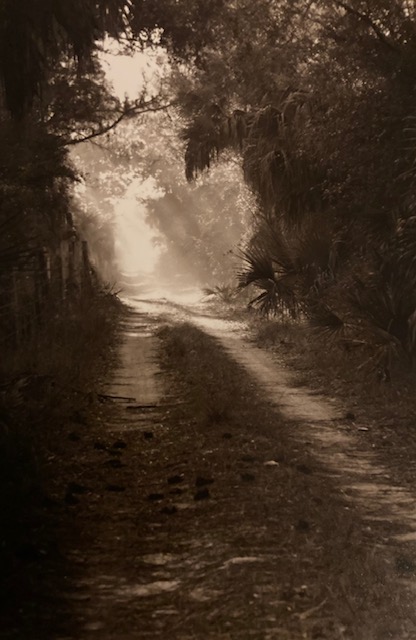
RMG Consultants, Inc. was mission driven, not pursuing rational self interest as conventionally defined. Rob’s mantra was to remain “ruthlessly objective” and have no conflicts of interest. We served the library as civic institution of learning and education.
Douglas became a corporate officer, with increasing responsibilities, was named Vice President of Operations and Treasurer of RMG Consultants, Inc. He encouraged Rob to pursue the for-profit sector and so they launched Infostrat, Inc., then formed an Australian-based company, RMG/CAVAL to pursue the Austral-Asian market. Douglas became an officer of those entities.
On the home front, I had left the barrio, moved north to Rogers Park, on the lakefront. Brian had graduated from Cornell College with a Bachelors of Arts in Economics and Political Science, moved back to Chicago, full-time at RMG, and lived with me. Douglas also moved to Rogers Park, but found a studio apartment off Howard Avenue, at the El terminus. I believe there was a crack house across the hall, and once he heard gunshots while walking on Howard Avenue. We were on very opposite sides of Sheridan Road.
In January 1991, the first patrician from Kennebunkport, Maine announced that Operation Desert Storm – the First Iraq War – would be televised live; we all pulled up chairs around the TV. Tal Lekberg, my carpenter friend, was in the Coast Guard and had been called to active duty in the Persian Gulf. Not knowing if he would return home alive, he brought his entire collection of single malt Scotch Whiskey to our apartment – at least two dozen bottles – asking me to safeguard it. “It’s okay if you drink it. Maybe some will remain if I return.” Like a fox guarding the hen house, we heartily imbibed while watching the destruction of the cradle of civilization, in pursuit of the quest for oil.
December 1991, Douglas and Laurie had decided to get married, and Douglas pined to be wed in Paris, at the Cathedral of Notre Dame, I as their witness. It made great sense and we all bought tickets, flew across the pond; I arrived first, Douglas and Laurie a day or two later. A friend arranged an apartment for me, and Laurie knew someone from the U of C who had a flat there. We met and celebrated love in Paris, when we were young and all life easily opened before us. But Notre Dame was not so easily scheduled and the wedding did not take place. We took the train south to Chartres, and beside the Cathedral I ran the table at a bakery beside the nave doors. I bought one of everything and together we ate pastries, at the foot of Chartres Cathedral. It was grand. Essentially they were married then, but officially it took two months more.
In February 1992 Douglas and Laurie got married. In April I moved off-grid, to Holmes County, Florida’s “red-neck riviera,” to a swamp along the Choctawhatchee River. Such was the synchronicity of the times, that even the swamp had a role in library automation.

In the tradition of eccentric booksellers, Bob Allenson seems worthy of mention. He is a third-generation bookseller of religious literature but his passion is making bibliographies of rare antiquarian books; his “John Henry Newman, 1801 – 1890: A Preliminary Register of Editions from 1818 to 1890, Together with Original Editions Published Posthumously” is the definitive catalog of Newman’s work. Sometime in the 1980s he was hired by the American Theological Library Association to select the texts that would be digitized for their online corpus of theological literature. Bob was still working on that when I moved there.
Alec R. Allenson, Inc., was launched in London, then relocated to Baltimore, Maryland and eventually to Naperville, Illinois. Bob’s father was a businessman who created a successful company selling textbooks and research materials to Christian seminarians. Bob is a Quaker, committed to social justice who joined the March to Selma and has little interest in business. By 1979, he had decided to remove himself from the mainstream culture and purchased acreage along the Choctawhatchee River in rural Westville, Florida, population 261. Wanting to get away, he found his spot. A friend and I packed the Naperville bookstore – a most remarkable experience – and shipped five semi-trailers of books to the swamp, where Bob’s son-in-law Caleb had built two pole-barn houses where the books would be stored, for sale.
I had kept in touch with Bob, and he asked me to help him with the business. To my mind, at the age of 31, moving off-grid seemed a most sensible thing to do. In April of 1992, Brian and Douglas drove me to Union Station in Chicago, we said goodbye, then I climbed aboard Amtrak’s “City of New Orleans” southbound, down the Mississippi River to New Orleans. I spent the night at a hostel, then boarded a Greyhound Bus east, along the Mississippi and Alabama coast. Somewhere along Florida State Route 20 I got off the bus, then rode my bike north. The Sheriff and his men stopped and questioned me – I stood out like a sore thumb – but let me continue and eventually Bob and his wife Dorothy Ann drove down to pick me up.
Bob embodied his Quaker ideals by visiting prisoners in the State Penitentiary, and, for honesty and transparency, by wearing no clothes. I recall Bob in his kitchen, holding a glass of white wine, cooking ratatouille and lamb chops, discussing the Christian mystics Swedenborg and Meister Eckhart, all while standing buck naked in his birthday suit. To the question, “what’s the recent weather like over there Bob? I’m trying to figure out what to wear?” he replied “Well as far as I’m concerned, you don’t need to wear anything at all.” My guess is he wore clothes to the State Penitentiary.
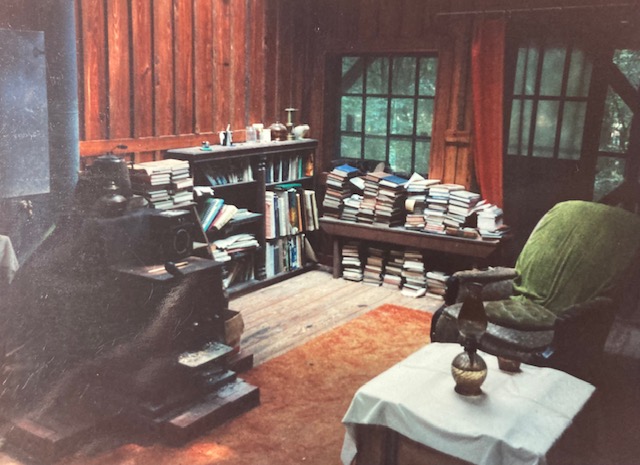
There was no work to be done, and neither electricity nor running water, so in the swamp – which was, in fact, an oxygen factory – I mostly sat, listened and read. Storm clouds would amass over the Gulf of Mexico, then by afternoon would float north overhead. Almost daily, rain like a typhoon fell, massive amounts of water, relieving the humidity. Caleb and his family also lived in the swamp and at night we would paddle on the river, I in front with a flashlight, scanning for the green eyes of alligators at the water’s level. Once found, they would drop beneath the water and silently swim away, even beneath our canoe. Caleb laughed at his unseasoned passenger from the North.
Eventually it became clear that life there was not sustainable and so I returned to Deerfield, and then unexpectedly, moved out west to Prescott, Arizona. I settled into a trailer, at the foot of a butte, near Skull Valley. By coincidence I had been introduced to an older gentleman, who was active in trading agricultural commodities. Given my background, he was curious of my interests and offered to introduce me to a financier he knew, who purportedly had helped launch McDonald’s Corporation. He had two conditions: I needed to write a Business Plan and get the approval of the Senior Chairman of the Board of McDonald’s Corporation. No small task, although the writing seemed more daunting than the approval, so willing to shovel coal, I was willing to get to work.
The Chicago Tribune had announced an architecture competition for public housing, to redesign the Cabrini-Green projects. I entered. I had met Paolo Soleri, the architect and urban planner – a visionary, widely overlooked – who had built Cosanti and Arcosanti based upon the design of medieval cities of the Italian countryside; he advocated a hyper-dense city surrounded by open space and the natural environment. Living on the high desert, in a trailer with no phone or TV, I began to ponder the social contract, how design manifests those ideas, and the coming impact of unlimited access to information.


New Orleans, The Library of Congress, the pits
Posted: February 14, 2025 Filed under: Chronicles of a First Time Parent, Money & Banking, Portfolio - David's work, What is an Art Farm | Tags: australia, history, libraries, library automation, news, RMG Consultants, technology 1 Comment
In the summer of 1988 we traveled to New Orleans, another food-rich destination, for the ALA Annual Conference. What I experienced changed the direction of my life: Thos Moser Cabinetmakers, from Auburn, Maine, had a vast display of its solid Cherry tables and study carrels, Ash-spindled chairs and rockers. I stopped in my tracks, in awe that people built this…by hand! Douglas thrived in the virtual world of IT but I was drawn to the tactile, the tangible, the act of making.
RMG continued to grow, more people hired to word process the documents until we outgrew our office in a two-bedroom condominium in a residential high-rise. The condo-building did not allow an office but we were on a mission so we expanded into the condominium next door. Pat McClintock, a librarian from Kentucky joined the team. RMG already had an office on the East Coast – inside the DC Beltway – and would soon add one in Southern California.
RMG Consultants ran the table during that era, its client list grew to more than 1,000 libraries internationally:
- The Library of Congress & national libraries of Australia, New Zealand, South Africa.
- Academic and research libraries throughout the U.S., Australia, New Zealand and South Africa, and in Abu Dhabi, Canada, Egypt, Kuwait
- State library agencies and public libraries throughout the U.S. – small, medium, large, very large
- Urban public libraries, including, e.g.: NYPL, Brooklyn, Queens, Miami-Dade, Cincinnati, Cleveland, Cuyahoga County, Dallas, Dayton, DC Public, Fort Worth, LA County, Hong Kong Public Libraries, Shanghai Library
- Many library automation consortia, of all types and sizes – including the largest public, academic, and multi-type ones — in the U.S., Australia, South Africa
- Public sector library jurisdictions: e.g., city, county, province, school, state, regional libraries.
Our work days began slowly, then built to a crescendo when deadlines loomed. The Consultants pushed deadlines to the last, which meant we lived or died by overnight delivery. FedEx is commonplace today, but in the 1980s it was revolutionary. FedEx began as a college term paper idea in 1965 – when Douglas was 1 – but officially took flight in April 1973 when 14 aircraft delivered 186 packages to 26 US cities. The “Overnight Letter” was not offered until 1981 which is just about when Rob launched RMG Consultants. RMG relied on the “Overnight Letter;” it allowed extra time, which ensured deadlines were pressed harder, later. We would work until the very last minute, then I would run to my car, beeline to the near west side, to make the 9pm deadline. I knew the FedEx staff on a first name basis.
Where I am a dreamer, Douglas was street smart and resourceful. More than once, after meeting the deadline we would let loose and head deeper into the barrio, to Humboldt Park. A neighborhood not for an Anglo after dark, Douglas knew just where to go, what to say, how to buy on the street. It is all legal now, so we were just ahead of our time, but it was edgy, the very sharp edge of danger which Douglas knew how to navigate.
In the summer of 1989, Rob was offered a corporate consultancy with Sears Roebuck & Company the consumer goods behemoth. It was not a typical RMG assignment but the job paid well and growth requires cash flow. Rob reached out to Howard Dillon for help, an action that would forever change Douglas’ life and generations going forward.
Howard knew of a young librarian, a single mother, in the Business Library at the University of Chicago. Interested in new opportunities, she agreed to take on the job. Her first day on site went well. Erik Lekberg, a part-timer on our team, went along as her assistant. Afterwards he spoke admiringly of her acumen, praised her humor, “She was a lot of fun to work with!”
And so Laurie Nelson met Douglas. They worked well together. Laurie felt that spark and Douglas fanned that flame. Laurie, and her daughter Emily, became a part of our pod; Laurie and I were in our thirties, Douglas and Brian in their twenties, Emily not even ten, we had great fun together, endlessly.
RMG moved that year into a new office – a legitimate office space – with a conference room, word processing area, private office for Pat and room for Rob anywhere. We added more staff. We continued to grow. Erik Lekberg’s brother Tal was a skilled carpenter who helped me finish the space and then I painted the walls. We moved in and RMG moved forward. Then I was offered a job at the Chicago Board of Trade on the financial futures floor. As I told Rob and Pat that I was leaving, I felt I was breaking a bond but they were gracious and understood.
My Father and Grandfather were stock and bond men, but I was drawn – for an unknown reason – to financial futures and options and so I worked on the floor of the Chicago Board of Trade’s 30-Year U.S. Treasury Bond futures. The “open outcry” auction is long gone, but in those days brokers and traders stood jammed into “pits” where they would scream at each other, waving their arms in bright colored jackets, buying or selling more than $645 billion dollars worth – per day – of US Treasury bond futures. Capitalism in its most raw pure form. I began as a lowly runner then was promoted to “squawker” providing the “play-by-play” commentary via the telephone to the Prudential Bache trading desk in lower Manhattan. It was a macabre and unappealing place to work, but the experience would prove providential.
Enterprising computer scientists could make a fortune through library automation and as the new decade dawned the marketplace began to mature. Mergers and acquisitions began and Data Research Associates, one of the legacy automation firms, went public with an IPO in 1992.
Data Research Associates was the brainchild of Mike Mellinger, a larger-than-life software engineer, who studied Applied Math & Computer Science at Washington University, class of 1971, then wrote the ATLAS software for the St Louis Public Library and Cleveland Public Library. In the tradition of the authoritarian tech entrepreneur, Mellinger created the product and remained the most technically astute person in the company. Rob describes him as among the two most brilliant software engineers in the industry; Vinod Chachra, the other member of that pantheon enters our story three years later, in 1995.
When Mellinger took DRA public, the installed user base had grown to 1,584 libraries, and its revenues were the 4th largest in the industry. Rob McGee’s influence was through contract negotiations, on behalf of libraries that purchased the ATLAS system. Rob’s breadth of knowledge and ruthless objectivity were brought fully to bear at the negotiating table. Mellinger and McGee would tenaciously have at it, the vendor driven by the profit motive, while the consultant served as advocate to the library. Rob’s strategic advantage was that he knew how Mike was thinking, and thus – like a chess match – anticipated his moves. Rob was able to win, which drove performance standards higher, ensuring greater access to information for the library end-user. Rob’s approach was win-win: DRA gained the windfall of a signed contract, while the library enjoyed heightened user service. Having been present at the creation, Rob matured his leadership through contract negotiations.
Like battlefield attorneys who litigate by day, then share a cocktail after hours, nothing was ad hominem. McGee and Mellinger shared the highest respect for each other. DRA used the IPO proceeds to acquire two other vendors, increasing their annual revenues to $38.6 Million. Many vendors, though, chose to remain private, pocketing the robust cash flows from subscription revenues.

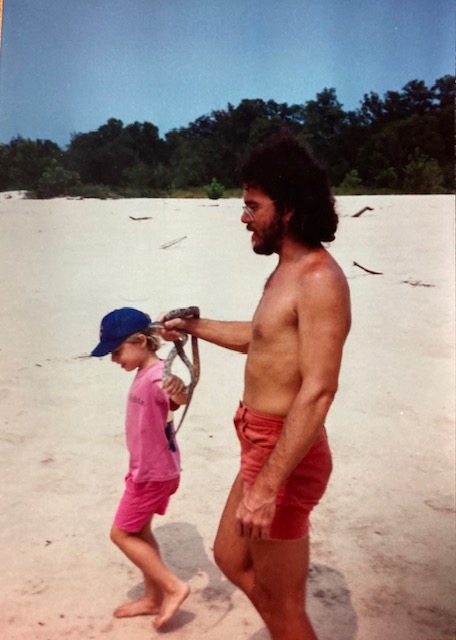
4 August 1991
 an Art Farm