Wisdom Is…
Posted: July 11, 2025 Filed under: Chronicles of a First Time Parent, consciousness, What is an Art Farm | Tags: Axial Age, Diotima of Mantinea, Goddess of Heaven, Jeremiah 7:18, White Goddess 4 Comments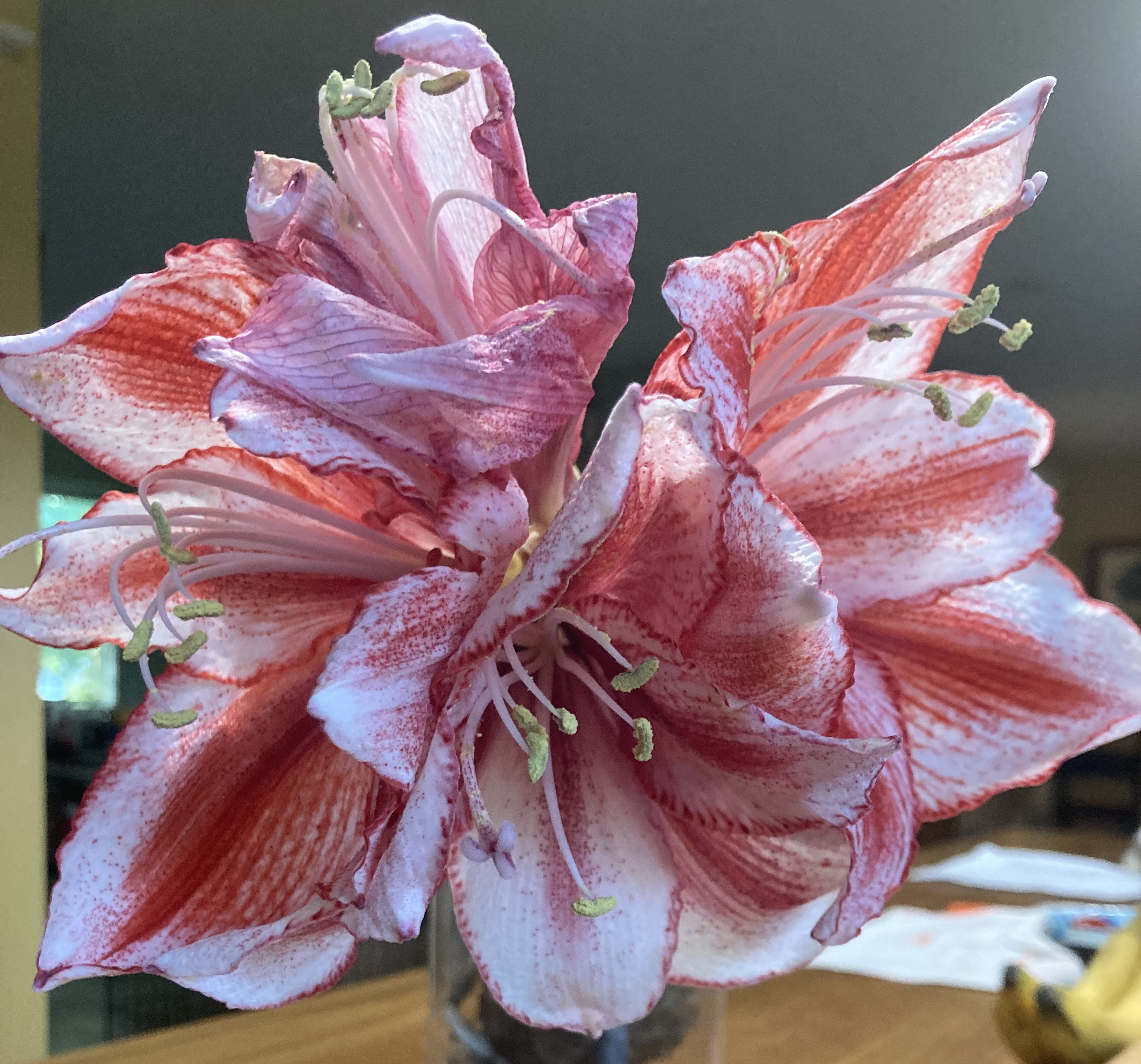
By coincidence, I happened last Monday to go into our dark dingy basement and was struck by an amaryllis bulb in full bloom. The bulb has a long history: we gave it as a gift to a friend years ago, but when she moved to NOLA, she gave it back. It bloomed for us last autumn, then in December was put into storage where it was forgotten. With neither soil, nor water, nor light it pushed up again into its full gorgeous flower.
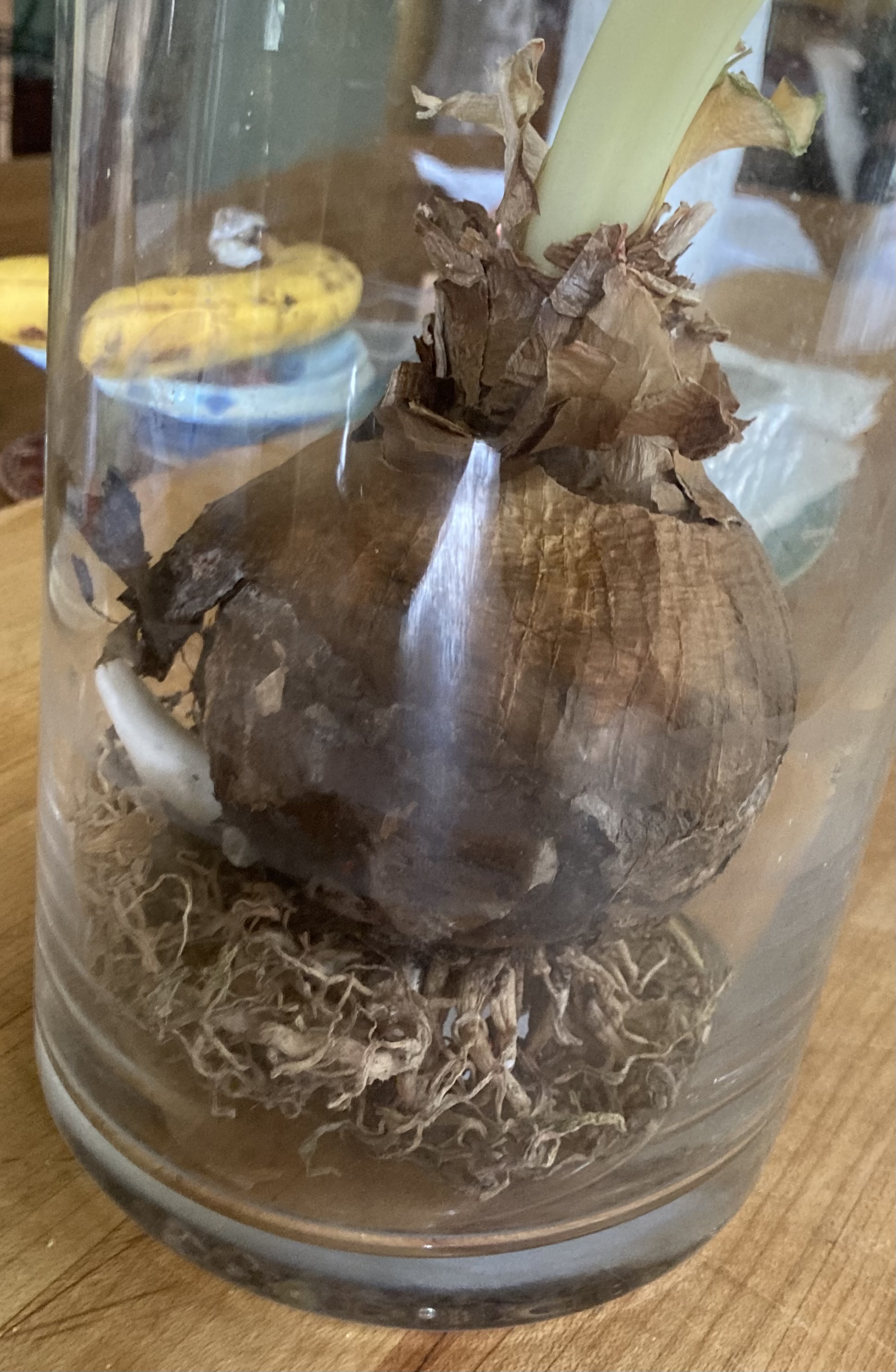
Ralph Waldo Emerson once said, “The invariable mark of wisdom is to see the miraculous in the common.” With the flowering amaryllis as a miraculous symbol, we now search for seven wise women, and shall begin with Wisdom, itself.
In the beginning is the question, “Whence, wherefore and whither Wisdom?” “Whence” is an archaic word meaning “from where” which leads us to the “Goddess of Heaven.” At the beginning of civilization, throughout the Fertile Crescent – the Near Middle East – the Goddess of Heaven embodied themes of love, war, fertility and motherhood. Circa 4,000 BCE she was “Inanna” to the Sumerians, “Ishtar” in Akkadian, Babylonian and Assyrian cultures, “Astarte/Ashtoreth” to the Canaanites, later she was “Hera/Juno” to the Greek and Romans, “Nut” to the Egyptians. A Babylonian cunieform circa 1850 BCE references Venus as the “bright Queen of Heaven.”
Robert Graves, in his oracular masterpiece, “The White Goddess” writes, “…the language of poetic myth anciently current in the Mediterranean and Northern Europe was a magical language bound up with popular religious ceremonies in honor of the Moon-goddess, or Muse, some of them dating from the Old Stone Age, and that this remains the language of true poetry – ‘true’ in the nostalgic modern sense of ’the unimprovable original, not a synthetic substitute.”
Taking the form of the Goddess of Heaven in the Near Middle East or the Moon Goddess in the Mediterranean and Northern Europe, Wisdom was a celestial woman, worshipped. But then Abraham appeared circa 2100 to 1900 BCE and brought transformational change, slowly over millennia.
Karen Armstrong, the scholar of comparative religion, calls this “the Great Transformation” so that by the 9th century BCE the religious and philosophical traditions of our present day were laid down: Confucianism and Daoism in China, Hinduism and Buddhism in India, monotheism in Israel, and philosophical rationalism in Greece.
Robert Graves had this to say, “The [poetic] language was tampered with in late Minoan times when invaders from Central Asia began to substitute patrilineal of matrilineal institutions and remodel or falsify the myths to justify the social changes. Then came the early Greek philosophers who were strongly opposed to magical poetry as threatening their new religion of logic, and under their influence a rational poetic language (now called Classical) was elaborated in honor of their patron Apollo….”
The Old Testament, Book of Jeremiah 7:18 condemns the Goddess of Heaven: “The children gather wood, and the fathers kindle the fire, and the women knead their dough, to make cakes to the queen of heaven, and to pour out drink offerings unto other gods, that they may provoke me to anger” (KJV). Hellfire and brimstone has had it in for women since the beginning. Armstrong describes the epochal change as the Axial Age, when the monotheistic male deity arose and the Queen of Heaven and Moon Goddess recede.
Wisdom is not gender specific, so let us consider “wherefore” which means “an explanation.” What then is wisdom? Webster’s Dictionary, Second Edition, (c) 1947 provides this definition, n, 1. quality of being wise; ability to judge soundly and deal sagaciously with facts, esp. as they relate to life and conduct; knowledge, with the capacity to make due use of it; perception to the best ends and the best means; discernment and judgement; discretion, sagacity. 2. scientific or philosophical knowledge; erudition; learning; as, the wisdom of the Egyptians, 5. a person embodying wisdom; — used as a title of honor or respect. Archaic.
Wisdom is insight, not knowledge; understanding, not facts; nuanced, not either/or. Albert Einstein said, “Any fool can know. The point is to understand.” Bertrand Russell said “To conquer fear is the beginning of wisdom.” Socrates said, “Knowing yourself is the beginning of all wisdom.”
Socrates, the paragon of Greek rational thought, was taught by a woman. Aspasia of Miletus taught him rhetoric and the art of dialectic, and her intellectual salons, frequented by Plato, Socrates and Pericles, are believed to have shaped his thinking. In Plato’s Symposium Socrates says that he was taught the “philosophy of love” by a woman.
Diotima of Mantinea taught that love drives the individual to seek beauty, first in beautiful bodies – earthly beauty – then as one grows in wisdom, to seek spiritual beauty. Diotima taught that the correct use of physical love is to direct one’s mind to the love of wisdom, which is philosophy.
The path to wisdom seems shaped by women. And so we come to “whither,” which is “to where” does the path of wisdom lead? Ralph Waldo Emerson said simply, “The purpose of life is not to be happy. It is to be useful, to be honorable, to be compassionate, to have it make some difference that you have lived and lived well.” Rumi was simpler still: “Yesterday I was clever, so I wanted to change the world. Today I am wise, so I am changing myself.”
In the coming weeks we will tell stories of wise women. An ambitious goal, a list of 7, but more likely 7 times 7, or even 77 wise women. They are more numerous than the stars in the sky. The queens of heaven, indeed.
____________________________________
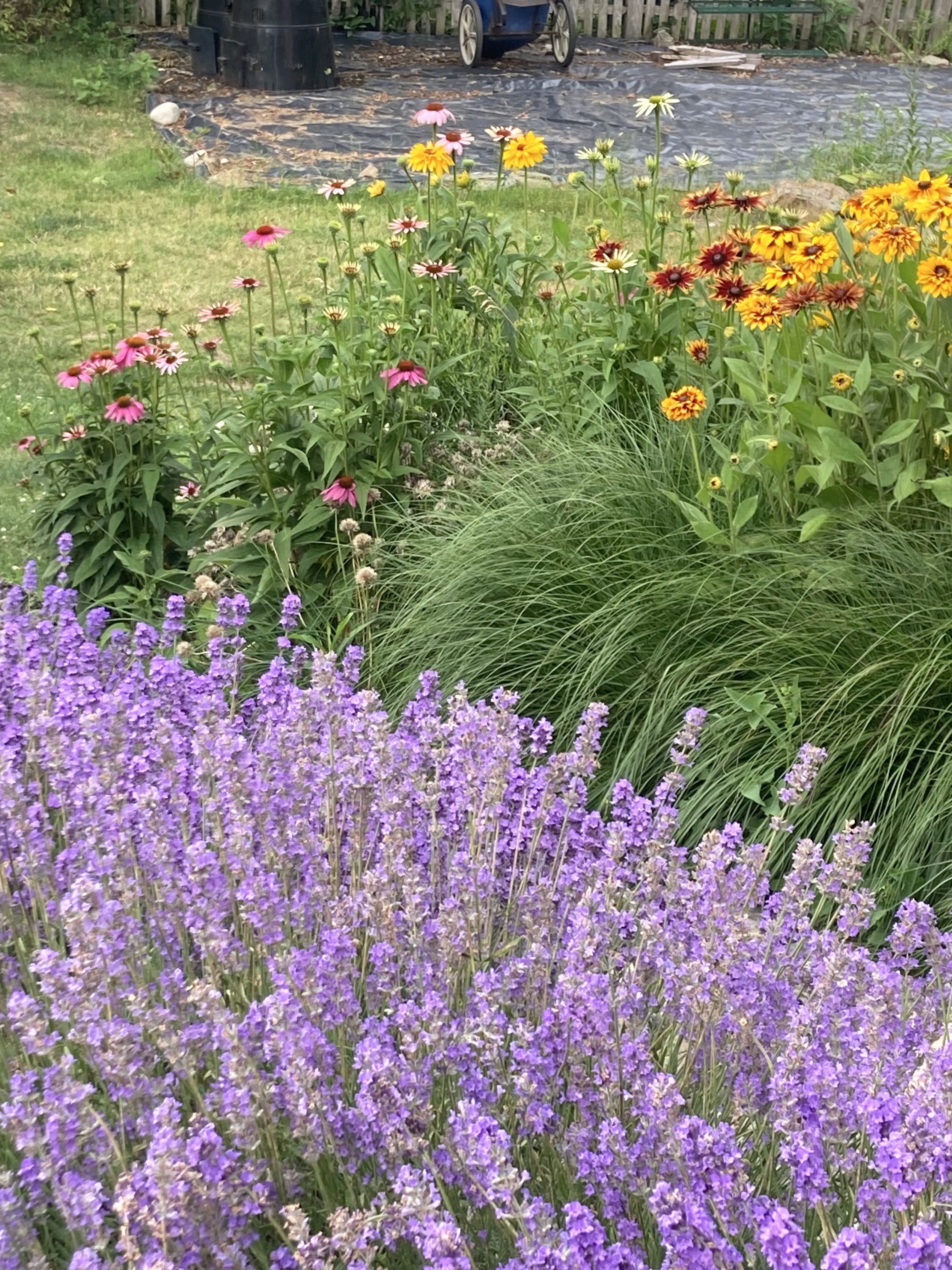
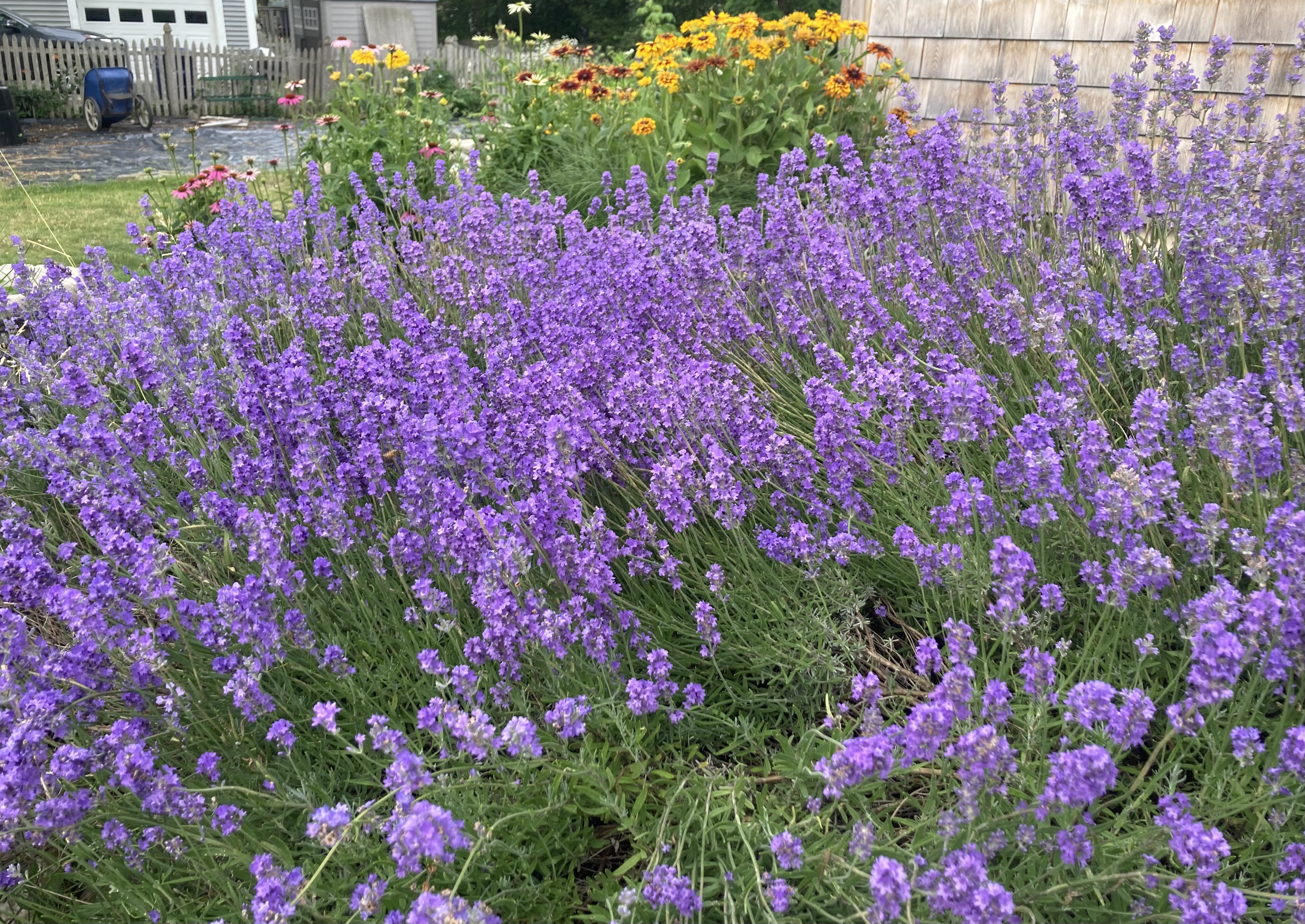
At our Art Farm, the lavender, coneflower and echinacea exclaim, a celestial harmony our eyes behold.



 an Art Farm