Aloft in the Loft
Posted: January 24, 2025 Filed under: Art & Healing, Chronicles of a First Time Parent, Gallery - Visual, Portfolio - David's work, What is an Art Farm | Tags: kimchi, Martin Luther King 4 Comments
Working on this Greek Revival New England farmhouse I have learned important lessons, especially the frugality of the Yankee makers. When everything was hand hewn, nothing was wasted.
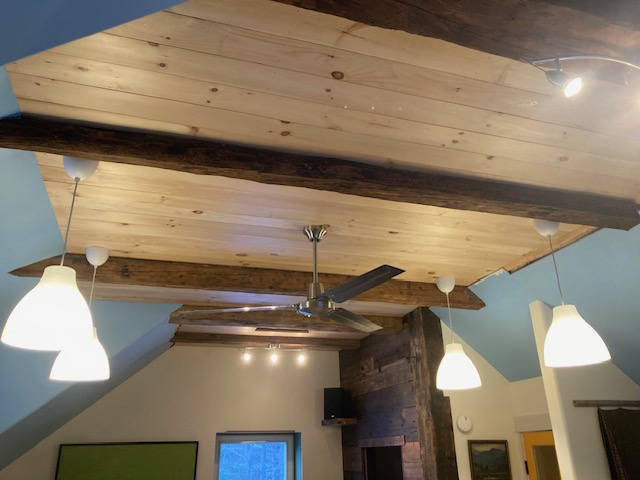
The knee wall is a paragon of thrift; by adding 4’ to the exterior walls, the roof is raised enough to gain a room that otherwise would be a dark attic. In 2018 we rebuilt the barn and I used this trick to gain – for the price of some 2×4 studs – 529 square feet of additional space. I call this the loft, and built it with no specific use in mind. Intuitively it made sense, and then covid came, the sheetrock having just been hung, so the loft became an office for my wife’s therapeutic counseling work. It was unfinished but providential.
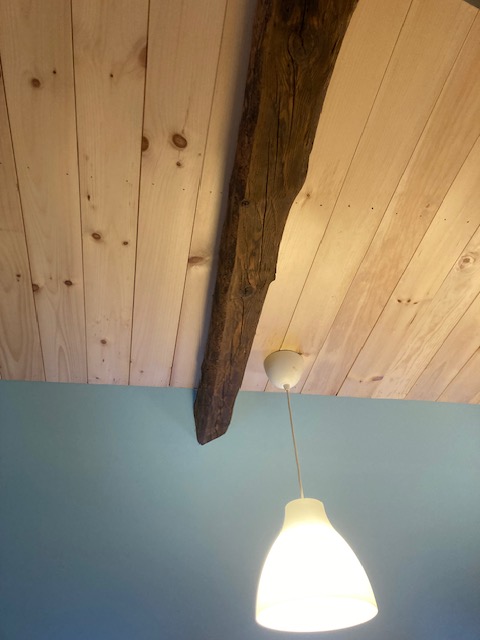
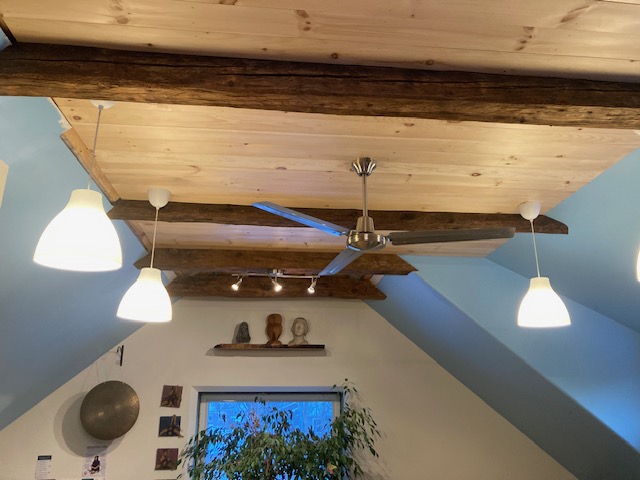
Lately I have pursued the finish work and the loft has been transformed. I put pine boarding on the ceiling, which required custom cuts around some of the original barn beams. Using old boards triples my labor but it seems worth the effort.
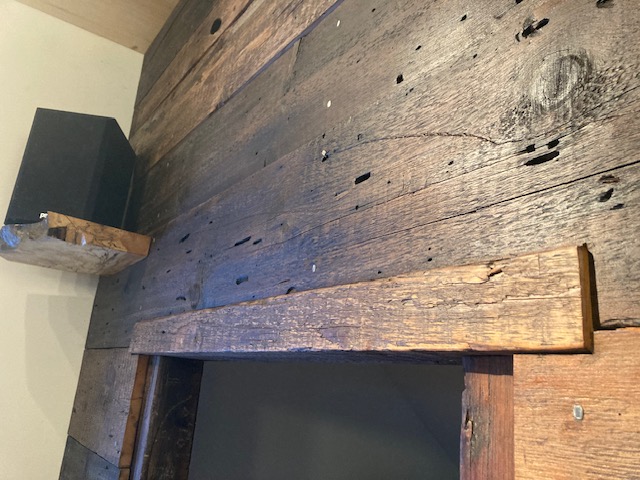
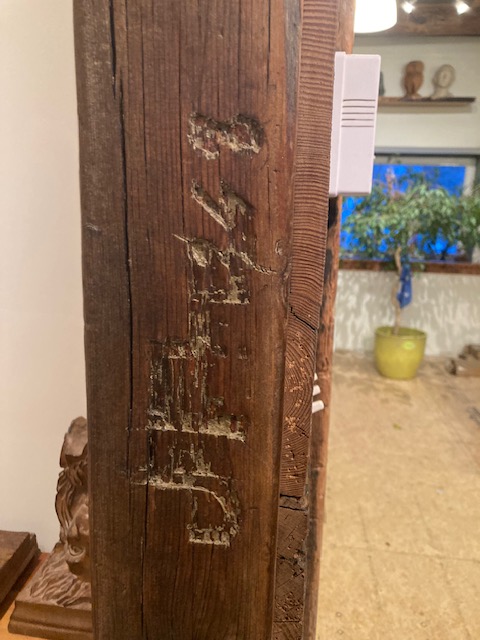
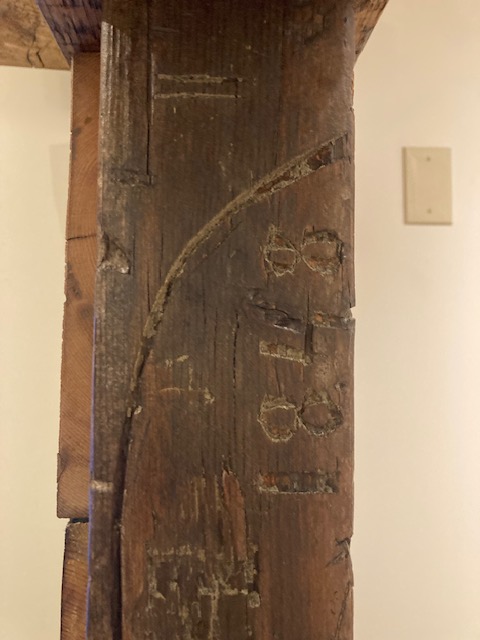
To create a storage nook, I built a wall with its door framed using a barn beam carved by the makers and dated 1848. The barn boards on that wall come from trees cut down then, which means those trees sprouted from seed circa 1700. George Washington was not yet born when our barn had taken root!
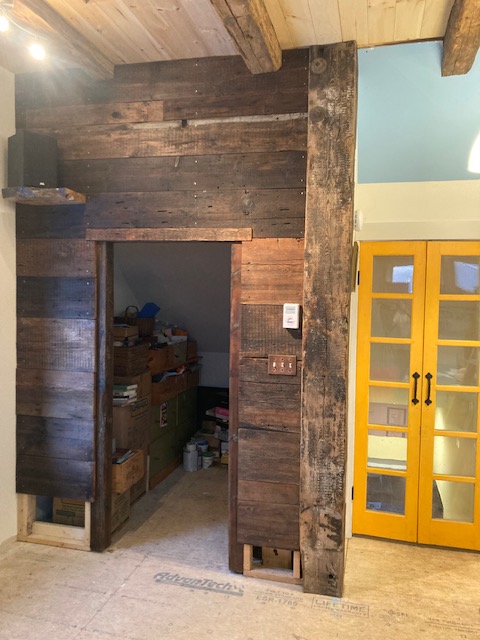
The barn boards are weathered and rough, with knots and worm holes; a poetry of the material. Several years ago I built furniture for Thos Moser, whose solid black cherry tables and chairs are American classics. Tom uses the heartwood only and rejects any sap wood, thus throwing 40% of his material away. An extravagant waste and testimony to the vanity of the buyer who seeks an unblemished life. If only that were possible, but as a colleague often said to me, “How do you know you’ve been alive if you don’t have scars to show for it?!!!”
I bought odd lot leftovers of prefinished flooring, a random mixture of five species – Ash, Cherry, White Oak, Maple, Douglas Fir – with varying stains and sheen. The floor will not be typically uniform but more like a smorgasbord charcuterie. I paid about $0.15 on the $1.00 so the savings are substantial. That is the next task.

For a window sill I made end-grain parquet, cutting a stout old beam – 12″ x 6″ – into thin slices, reglued them like a checkerboard, then planed down and used epoxy to fill the aged cracks, until finally I had a board that I could cut to fit the sill opening. It is aged and rough and wildly elegant. May I age so, too.
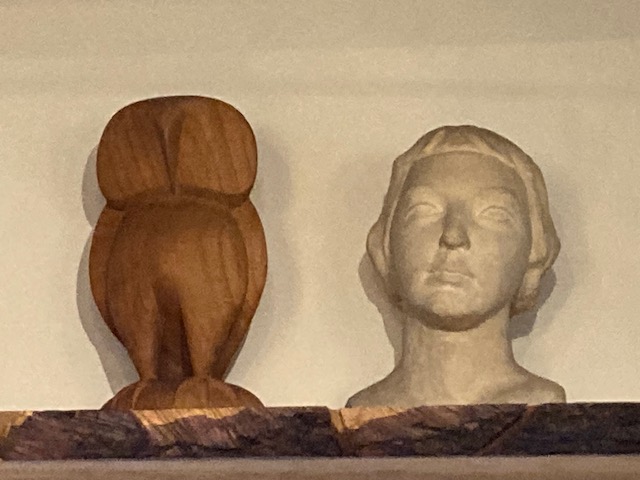
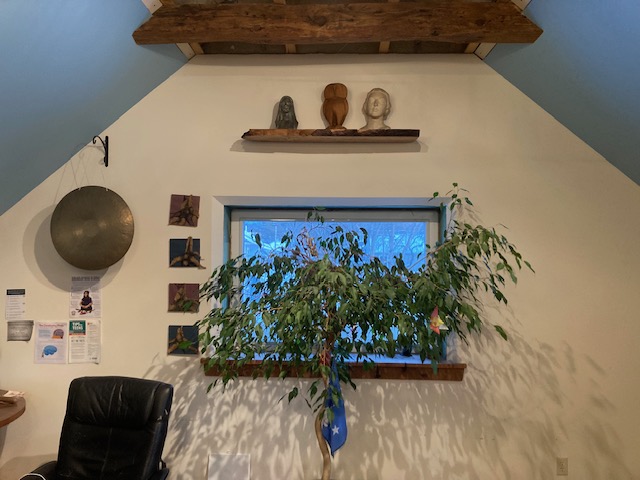
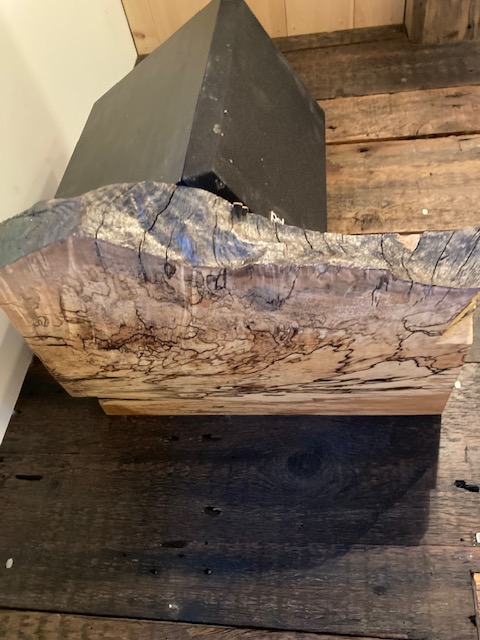
High overhead, in pride of place, is the pièce de résistance, a floating shelf of a burled Alder slab that I hauled East when we moved from Chicago decades ago. Sitting upon the shelf is the self portrait of an artist made when she was 19-years old, and a second bust that she made as well. That artist has long nurtured my own interest, encouraged me along this very winding path of making. I saved her pieces when the family home was sold last autumn, and now they – she, symbolically – watches from high overhead, a sentry to our making in the loft art studio of our Art Farm.




_______________________________
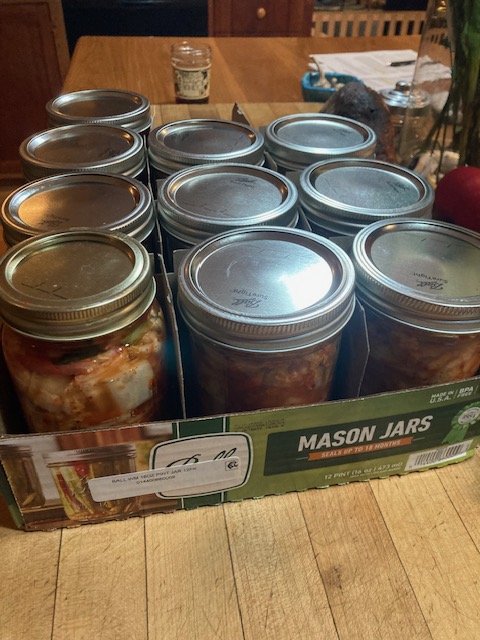
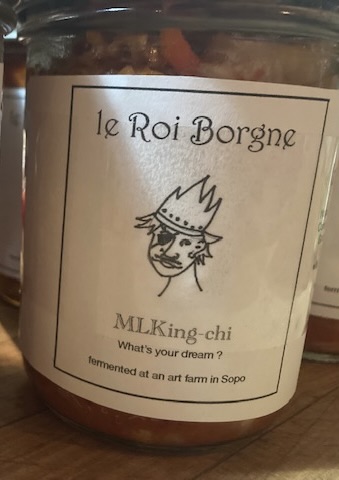
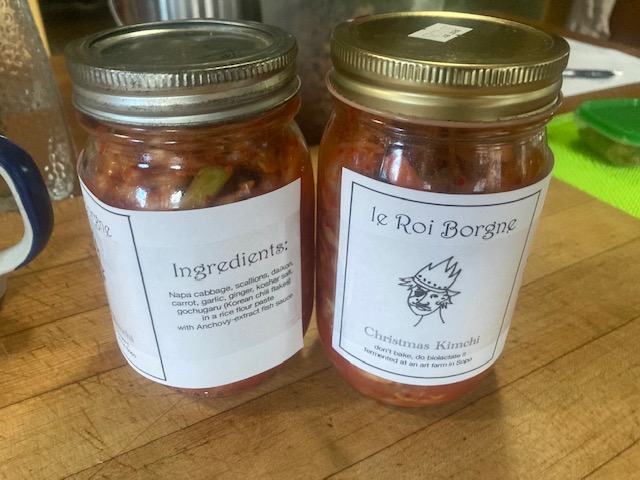
In other news, this week we did more fermenting to make a le Roi Borgne special batch “MLKing-chi.” My son and I delivered them as night fell, a random act of kindness in times of darkness. Indeed, “What’s your dream?”



“Trust Your Gut!”
Posted: December 20, 2024 Filed under: Chronicles of a First Time Parent, Farming off the Farm, In the Kitchen | Tags: bio-lactate fermentation, fermentation, food, kimchi, locavore, recipe, recipes, vegan Leave a comment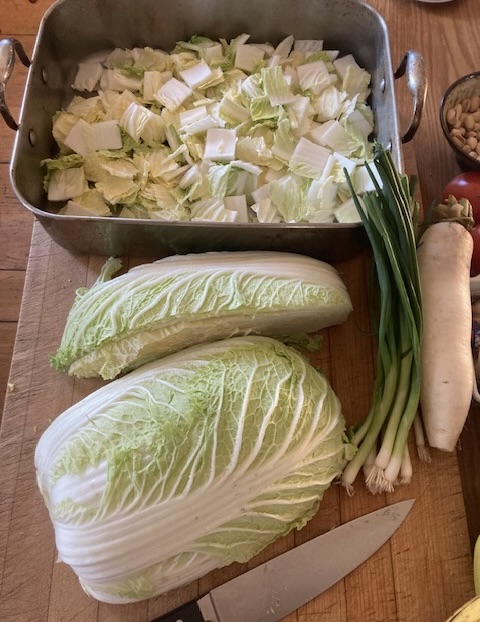
Shiva’s cosmic dance of destruction-creation is active in our kitchen this week. With the holidays here, we chose not to bake but to bio-lactate and the results have been well received. More importantly, our efforts provide healthy probiotics as compared to sugar-laden baked goods.
My daughter and I recently took a Kimchi making class at Frinklepod Farm in Arundel. It was a delightful Father-Daughter outing, and the mysteries of fermentation became clear; the fascinating chemistry whereby glucose, or six-carbon sugars, are converted into cellular energy and lactic acid. The anaerobic process results in an abundance of live microorganisms, probiotics that are highly beneficial for our digestive and immune systems. Trust your gut, indeed!
Fermentation is as old as the hills, has been practiced by everyone, everywhere, longer than memory serves. Good bread ferments; good cheese ferments; yogurt, pickles, sauerkraut…endless is the list. Milk fermentation predates the historical period, which puts the beginning somewhere in the Neolithic Revolution. Recipes for cheese production have been found in Babylonian and Egyptian texts, while Genghis Khan celebrated the Mongolian lunar new year with “white food” – fermented milk – as part of a shamanistic cleansing ritual. Louis Pasteur, active 1850s France, was late to the game.
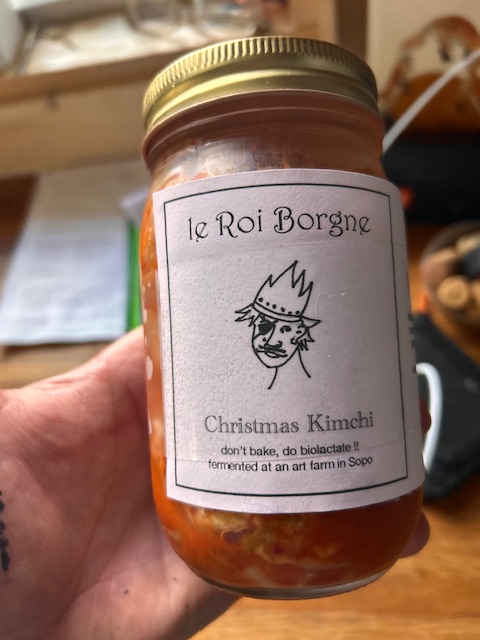
Our “Christmas Kimchi” is named “le Roi Borgne” which hails from the French proverb “Au pays des aveugles, le borgne est roi,” which was popularized by the Dutch humanist Erasmus, who quoted the Latin “in regione caecorum rex est luscus,” to wit: “In the blind world, the one-eyed man is king.” Such truth has informed much of my life’s experience.
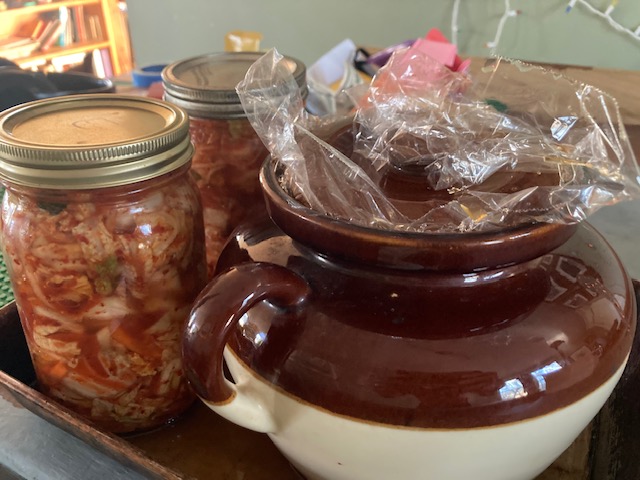
We use Napa Cabbage salted 2.5% by weight, then brined for an hour or two. A rice flour slurry is made with gochugaru (chili pepper flakes), sugar and fish sauce (our “le Roi Borgne” is not vegan), into which “matchstick” carrots, daikon, onion and scallion are tossed. The brine is rinsed from the cabbage and then all is mixed together and sits on the counter – but out of direct sunlight – for about three days.
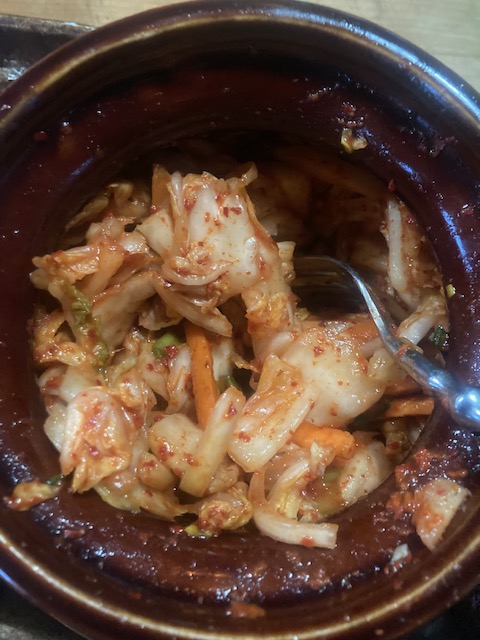
The result is a delightfully tangy slightly sour kimchi, known as “Tongbaechu,” a Korean traditional style. Here is the recipe we used, viewed 29 Million times.
Serendipity has graced us. The ceramic pot in which we ferment came to us from Corea, Maine. By convention, it is an official Boston Baked Bean pot, which belonged to my wife’s maternal grandfather, but at our art farm it is now a cherished “onggi.”
“Know your food, know your farmer”…well, at Frinklepod Farm, Flora Brown and Noah Wentworth do amazing work, and their class was a godsend. http://frinklepodfarm.com/
Ger, who taught us, is a maker from the mid-coast. Her teaching was clear and cogent, fact-filled while fun. Robust is the wisdom of the locavore culture on this rocky coast. We are the better for it. https://redkettlekimchi.com/

 an Art Farm