God of the Vine
Posted: September 19, 2025 Filed under: Art & Healing, consciousness, In the Kitchen, Little Green Thumbs, What is an Art Farm | Tags: ancient-greece, Dionysus, feminism, Lou Salome, Neitzsche, Rodin 1 Comment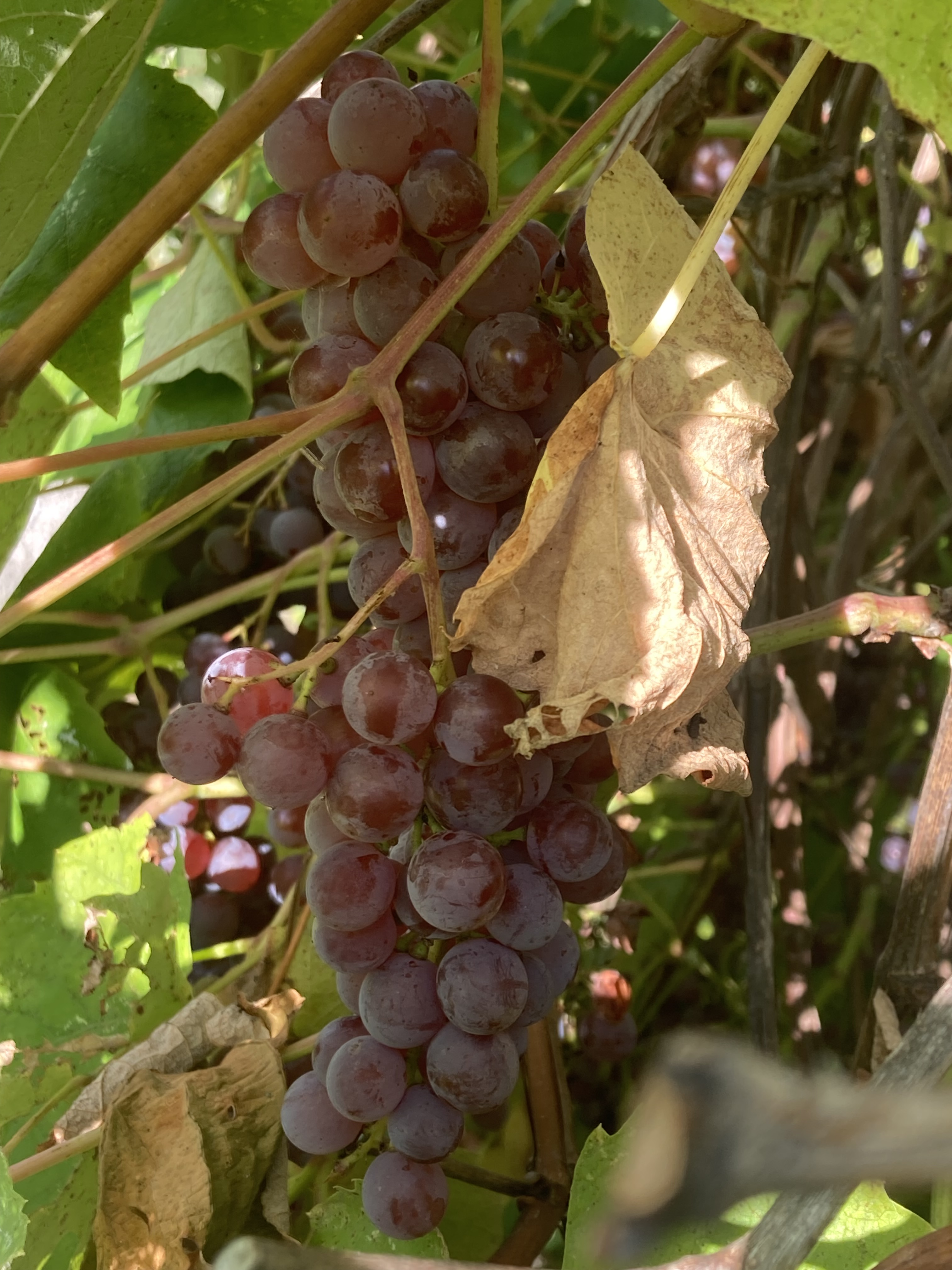
In the annals of wise women, Lou Andreas-Salomé’s name is writ large. Born February 1861 in St. Petersburg, Russia to parents of French Huguenot and Northern German descent, she was the youngest of six children, the only girl. She attended her brothers’ classes learning Russian, German and French, rejected the orthodoxy of her family’s Protestant faith but embraced philosophy, literature and religion. She attended the University of Zurich – one of the few schools then accepting women – and studied logic, history of philosophy, ancient philosophy, psychology and theology.
At the age of 21 she met Friedrich Nietzsche, who immediately fell in love with her. But she rejected his advance, instead wanting to live and study as “brother and sister” and form an academic commune along with Paul Ree, a German author. Nietzsche accepted and they toured Italy with Salomé’s Mother.
One of the titans of German Philosophy, at the age of 24 Nietzsche had been named the Chair of the Department of Classical Philology at the University of Basel. He remains among the youngest tenured professors of Classics in the history of academia. His brilliance was to an extreme.
Walter Kaufmann, in his classic work “The Portable Nietzsche” wrote, “There are philosophers who can write and those who cannot. Most of the great philosophers belong to the first group. There are also, much more rarely, philosophers who can write too well for their own good – as philosophers.” Plato, he says is one example while “Nietzsche furnishes a more recent and no less striking example.”
Lou Salomé was his muse, which she later became to Rainer Maria Rilke – the great German poet – when he was the Personal Secretary to Auguste Rodin, one of the greatest stone carvers of all times, easily a peer of Phidias and the Ancient Greeks. In rarified artistic and intellectual circles, Lou Salomé was at the top of the game.
Dionysus is our subject, Salomé is our guide, but Nietzsche holds the key. Kaufmann wrote, “…few writers in any age were so full of ideas – fruitful, if not acceptable – and it is clear why [Nietzsche] has steadily exerted a unique fascination on the most diverse minds and why he is still so eminently worth reading.”
At the age of 25, Nietzsche wrote “The Birth of Tragedy” which is considered foundational, a revolutionary work of philosophy, aesthetics, and cultural criticism. His groundbreaking thesis argued that the greatest works of art – which define a society – combine the Apollonian (order, reason and form) with the Dionysian (chaos, ecstasy and raw emotion) into one complimentary whole. An example of the Apollonian would be Johann Sebastian Bach’s “Well Tempered Clavier” while Jimi Hendrix’s “Voodoo Chile” is Dionysian. The Burning Man festival is pure Dionysian.
Classical Greek Tragedy, he reasoned, reached the apex of artistic expression by using an ordered beautiful form to give voice to the primal, universal unity. Nietzsche wrote, “The two creative tendencies [Apollo and Dionysus] developed alongside one another, usually in fierce opposition, each by its taunts forcing the other to more energetic production, both perpetuating in a discordant concord that agon which the term art but feebly denominates: until at last, by the thaumaturgy of an Hellenic act of will, the pair accepted the yoke of marriage and, in this condition, begot Attic tragedy, which exhibits the salient features of both parents.”
The result was cathartic; life’s meaninglessness overcome through art. Aesthetics became more central than rationalism, with art and psychology moved to the core pushing metaphysics and science to the side. Nietzsche forged a new paradigm, and his writing influenced Sigmund Freud, who also happened to be a close friend of Lou Salomé.
Greek tragedy came to my mind when a young friend, she herself on the path to wisdom, recently brought fresh home-pressed grape juice to our house. Grapes are the symbol of Dionysus and the connection was clear: her grape juice was the elixir of the God.
Having picked Concord grapes by the bushel with our other friends Rebekah, Peter and Mason, she explained, “We picked the grapes individually, sent them through a masher, then Peter heated them up before sending them through the juicing machine. He tried in the press but it kept sending the juice everywhere so he switched to a tomato juicer. That seemed to operate more like a standard juicer.” In other words the must was strained into juice rich, dark and sublime. With our children, we all broke bread and drank of the vine, the form of the Last Supper transformed as testimony to the raw and primal essence which is the end of summer; a new tradition born.
Truths held self-evident at our Art Farm include “art predates agriculture” and “the purpose of life is healing.” The Dionysian speaks to that, which simple truth the grape juice made manifest.
Fecundity abounds and we are blessed.
 an Art Farm