Isaac in Isolation
Posted: April 18, 2025 Filed under: Child Centered Activities | Tags: alchemy, books, consciousness, history, Isaac Newton, philosophy, rational mind, science 1 Comment
In 1665 the plague descended upon London, forcing all the residents to go into isolation. The COVID-19 of its day, in an age before plumbing or electricity, before iPhones and apps, the isolation was complete to a degree that we can barely fathom today.
A 22-year old named Isaac used his solitude well, conceiving the laws of infinitesimal calculus. Leibniz is credited with developing Calculus but young Isaac was 8 years ahead of him. Einstein has hailed the insights as “perhaps the greatest advance in thought.”
At the age of 44 Isaac walked in the gardens of Cambridge University and observed an apple falling straight down to the earth. So he surmised and proceeded to publish, in 1687, Principia which established the foundation for classical mechanics. A manuscript from the Royal Society retells this conversation of 15 April 1726, when Isaac told a colleague how the idea came to him:
“we went into the garden, & drank thea under the shade of some appletrees, only he, & myself. amidst other discourse, he told me, he was just in the same situation, as when formerly, the notion of gravitation came into his mind. “why should that apple always descend perpendicularly to the ground,” thought he to him self: occasion’d by the fall of an apple, as he sat in a comtemplative mood: “why should it not go sideways, or upwards? but constantly to the earths centre? assuredly, the reason is, that the earth draws it. there must be a drawing power in matter. & the sum of the drawing power in the matter of the earth must be in the earths center, not in any side of the earth. therefore dos this apple fall perpendicularly, or toward the center. if matter thus draws matter; it must be in proportion of its quantity. therefore the apple draws the earth, as well as the earth draws the apple.”
By the age of 55 Isaac had been named, by the British Crown, the Warden of the Mint, and then served as the Master of the Mint for 30-years. In contemporary terms, the Master was essentially the Chairman of the Federal Reserve, responsible to ensure the value and to assay the gold content of the King’s coins.
At the age of 62 the King bestowed upon him Knighthood, which is why we universally refer to him as Sir Isaac Newton, one of the towering figures in history, a paragon of rational thought.
What is less well known of Sir Isaac is that he was a leading alchemist of his day. The irony is almost mind-boggling: when alchemy was a crime punishable by death by public hanging the Master of the Mint was busy trying to turn base metals into gold. It is said of more than 10 million words of notes taken by Newton, 1 million at least pertained to alchemy. His interest was more than just a passing curiosity. By any conventional thought, that is an idea laughably hard to grasp.
What if alchemy is not about base metals turned into gold, but rather a symbolic language for the pursuit of higher consciousness? In the three-dimensional realm of conventional thought, where the laws of physics and Darwinian materialism reign supreme, what better symbolism could there be than “base metals” and “gold” referring to the path to wisdom of a greater whole.
Carl Jung in his Alchemy and Psychology and Fabricius in Alchemy: The Medieval Alchemists and Their Royal Art suggest that this is, in fact, the more accurate understanding. In The Foundations of Newton’s Alchemy, B.J.T. Dobbs argues that “Newton’s primary goal was not the study of nature for its own sake but rather an attempt to establish a unified system that would have included both natural and divine principles.” Newton was a critical link between the Renaissance Hermeticism and the rational chemistry and mechanics of the scientific revolution; in moving the scientific world forward, he looked back upon Neoplatonism, which in turn drew upon the writings of Hermes Trismegistus, the towering Hellenistic sage.
History teaches that higher consciousness threatens conventional thought. In 33 AD the self-righteous Pharisees had the radical street preacher put to death by public hanging. Martin Luther King had an FBI file and was assassinated for arguing that “all people are created equal.” In the year 2025, the pious among us ban books from libraries that challenge their narrow minded sense of self. The orthodox, it seems, are not expansive but restrictive and limiting.
Newton was wise never to publish his alchemical writings. In fact, many of them were burned by a fire; the story told that a dog knocked over a candle in his study, but one wonders what was the risk to his reputation for that intellectual pursuit. He remained, in a sense, in isolation throughout his life for his pursuit of alchemy.
The record shows that when Newton stepped down from the 2nd Lucasian Professorship of Mathematics – considered the single most prestigious professorship in the world – his replacement, William Whiston excoriated Newton publicly for his highly unorthodox views. No doubt Professor Whiston was smug in his self righteous words and considered the case closed. But in fact, it may be that he had simply locked himself, and his peers, inside the box of self limiting, rational thought.
The world is more vast than we tend to conceive. It would seem the challenge of our times now is to expand our collective higher consciousness, to awaken and more fully hear and embrace those “mystic chords…of our better angels.”
________________________________





God and Caesar at Middle School
Posted: January 10, 2025 Filed under: Child Centered Activities, Chronicles of a First Time Parent | Tags: education, homeschool, homeschooling, mental health, mythology, parenting, rational mind 1 Comment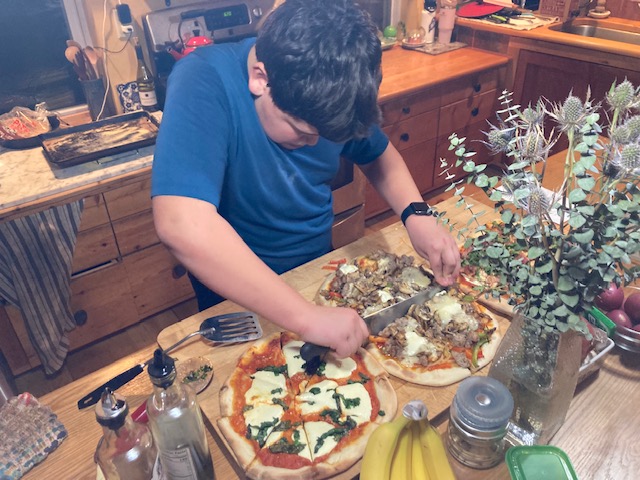
John Stuart Mill has been much on my mind, of late. This 19th century English philosopher – called the most influential thinker in the history of liberalism – advocated proportional representation, the emancipation of women, and the development of labor organizations and farm cooperatives. More importantly, he was home schooled by his Father.
During the midwinter holidays, I pondered home schooling my son. We talked, I read the Maine statute on home schooling and wrote a “Letter of Intent to Home School” for submission to the local Superintendent. In the end, we deferred to our Son, who decided NOT to homeschool now, but to remain in the Middle School. I stood down but my thoughts once written stand as a manifesto of my son’s education, at his time coming of age.
William F. Buckley then came to mind. The Yale educated public intellectual, considered the founder of the modern conservative movement, he – of my Father’s generation – criticized Yale for “forcing collectivist, Keynesian, and secularist ideology on students…denying any sense of individualism by teaching them to embrace the ideas of liberalism.” Buckley’s “God and Man at Yale: The Superstitions of ‘Academic Freedom’” has endured and became a central pillar of the American conservative movement.
I am no Yale man. At Northwestern, I read the Classics and advocate not individualism but that all life is one; neither Caesar nor religious dogma are my Master; consciousness in the whole of the divine feminine grounded in the compassionate masculine, be that my polestar.
Here then is my manifesto on the education of the young man who must need find his own path, while following my footsteps. Lacking any formal title, I call this “God and Caesar at Middle School.”
Dear Sir,
Respectfully, I write to inform you that [my son], age 12, shall be withdrawn from SoPo Middle School effective 4 January 2025. Pursuant to M.R.S. 20-A §5001-A(3)(A)(4) this is my written notice of intent to provide home instruction.
My approach to pedagogy combines the intellectual rigor of John Stuart Mill’s education grounded in the emotional intelligence of a 21st century global citizen. The classical tradition shall be paramount as we look to the future.
Geometry and physics shall be taught in the applied sense. Our Greek Revival Farmhouse requires extensive renovations, and working with me, [he] shall learn both the practical skills of building and the mathematical truth that Pythagorus resides in every corner. “Measure twice, cut once” goes the maxim; the 3-4-5 triangle every carpenter’s adage. Thus he will learn.
There is a tradition of a carpenter’s son becoming a leader. As I teach the practical, so too the mystical; Pythagorus also taught of celestial harmony – the Music of the Spheres – and so [he] shall learn the broad plain of Athenian philosophy.
We shall ponder both God and Caesar, the twin domains of the Western Intellectual tradition. “Ad Maiorem Dei Gloriam” may be our motto, and we would begin with John “Ἐν ἀρχῇ ἦν ὁ Λόγος” but translate “Λόγος” in all languages, all cultures: Allah, YHWH, Elohim, Bhagavan, Iraivan, Gitche Manitou, Xu, Unkulunkulu, to name but a few. There is no monopoly on the truth and in the comparison he shall learn critical thinking, and respect for other points of view.
If we read “Percy Jackson” then also Ovid’s “Metamorphosis.” To my mind mythology is not mere childish fiction but the symbolic language of archetypal truth. Carl Jung, a man of science who studied the mind – the “logos” of the psyche – wrote that religions perfectly coopted the archetypes onto their narrative. “Percy Jackson” may be an engaging fiction but also something deeper. So shall I teach literature.
When Persephone returns, come spring, [he] shall labor in the gardens of our Art Farm in Sopo, and at Frinklepod Farm in Arundel, and also the Cold Brook Farm in Sherman, Maine. [He] shall drive and maintain heavy equipment and work with his hands, in the dirt. I shall teach connections, that all life is one.
We have taken classes in welding, and shall now learn wood turning, and [he] will learn the practical art – literally “art” in Latin means “skill” – both of Hephaestus, of Prometheus and of Daedalus. Art making predates agriculture, which is to say it predates civilization. It is a priori. It is hard-wired in our DNA. So then shall we build skills, both practical and conceptual.
Life itself will be [his] classroom. He will both be schooled at least 175 days per annum but educated full time; I vouchsafe that your metrics will be met, which I shall report annually, in arrears on 1 September, in writing as required by law.
My full time job is parenting and my bread labor is maintaining – part time – the physical plant and property of the Friends School of Portland. Through that school I intend to hire a certified State of Maine teacher to oversee my pedagogy.
Finally, for his socialization I expect [he] will continue to participate in extracurricular activities at the Sopo schools. I understand this is permitted under Title 20-A, Section 5021.
We have crossed the Rubicon. Let the new year begin!
Please confirm acceptance of this missive. I shall be happy to discuss this at your convenience, but our decision has been made.
A copy of this written notice has been hand delivered to the Middle School Principal.
Best regards,
David
The Curve of Consciousness
Posted: September 27, 2024 Filed under: consciousness | Tags: consciousness, philosophy, quantum-physics, rational mind, science, space time continuum, spirituality 2 Comments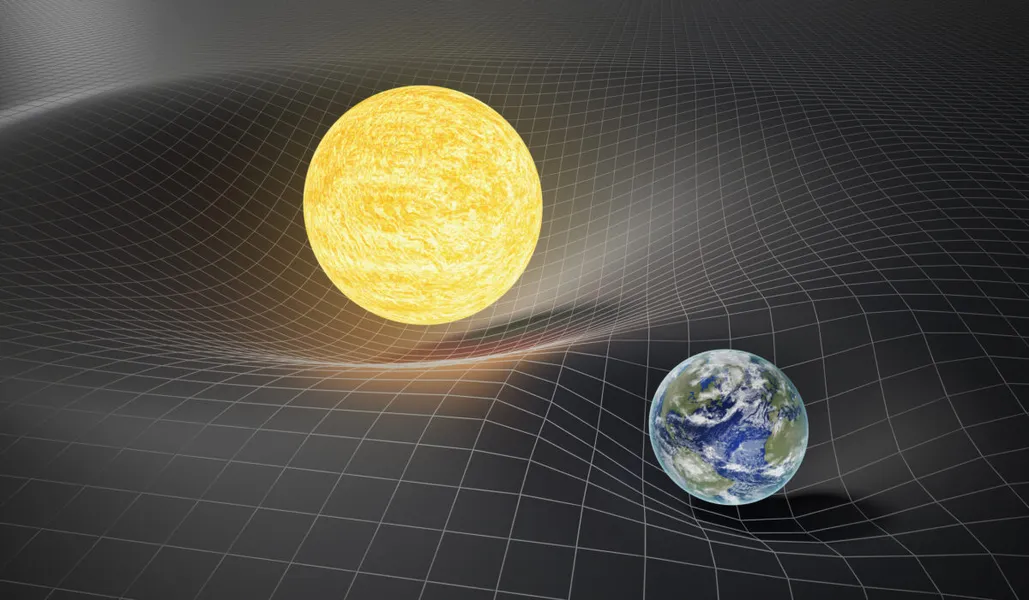
Carlo Rovelli is an Italian theoretical physicist with a sterling gift for writing, in English, clear sentences on complex ideas. In “Seven Brief Lessons on Physics” he traces the arc of modern physics from Isaac Newton’s 1687 straight mechanical worldview where bodies move through space and time passes uniformly to the now confirmed existence of quarks and, in 2013, the discovery of the Higgs boson, a fundamental sub-atomic particle; the most basic building blocks of a curvilinear universe.
Einstein’s milestone 1919 insight was that “the gravitational field is not diffused through space; the gravitational field is that space itself….Space is no longer something distinct from matter – it is one of the “material” components of the world. An entity that undulates, flexes, curves, twists. The whole of space can expand and contract.”
Max Planck had a radical idea that energy was not a continuous flow, but instead was “quanta,” or packets, a/k/a small building blocks. Einstein, again, cracked the code, in his 1905 annus mirabilis papers when he wrote, “…the energy of a light ray spreading out from a point source is not continuously distributed over an increasing space but consists of a finite number of “energy quanta” which are localized at points of space, which move without dividing, and which can only be produced and absorbed as complete units.”
Einstein’s idea was rejected as sheer nonsense, until 1925 when a group of physicists in Copenhagen, lead by Niels Bohr, worked out the mathematical equations behind the theory.
The world of quantum mechanics is not predictable, can only be spoken of in terms of probabilities. Roselli describes this as “…very far from the mechanical world of Newton…the world [of quantum mechanics] is a continuous, restless swarming of things, a continuous coming to light and disappearance of ephemeral entities. A set of vibrations, as in the switched-on hippie world of the 1960s. A world of happenings, not of things.”
In the year of our Lord 2024, physics teaches us that, “There is no longer space that “contains” the world, and there is no longer time “in which” events occur. There are only elementary processes wherein quanta of space and matter continually interact with one another. The illusion of space and time that continues around us is a blurred vision of this swarming of elementary processes.”
I present this as background to an idea that just as space time is a curved dynamic field, so too, by analogy, is human consciousness; in the years going forward our ideas of relationships and fundamental rights may flower in unforeseen dimensions. The “straight and narrow” ethics of Augustine, Calvin and Cotton Mather – to name just a few – may become antiquated just as Greek myth now is seen as mere child’s play.
Whether history repeats or rhymes, the fact is that we have been here before. Augustine of Hippo, the towering Church Father, wrote circa 400, “…it is not necessary to probe into the nature of things, as was done by those whom the Greeks called physici…It is enough for the Christian to believe that the only cause of all created things, whether heavenly or earthly, whether visible or invisible, is the goodness of the Creator, the one true God; and that nothing exists but Himself that does not derive its existence from Him.” The Dark Ages followed when the Western Roman Empire fell, trade became stagnant, the Black Plague ravaged the land, scientific thought was discouraged.
Come the sixteenth century, a Polish mathematician calculated the rotations of the planets, and confirmed that the Sun, in fact, is the center of our galaxy. The mathematician, also a Catholic Canon, was savvy and prefaced his work “To The Most Holy Lord, Pope Paul III” begging indulgence, “How I came to dare to conceive such motion of the Earth, contrary to the received opinion of the Mathematicians and indeed contrary to the impression of the senses, is what your Holiness will rather expect to hear. So I should like your Holiness to know that I was induced to think of a method of computing the motions of the spheres by nothing else than the knowledge of the Mathematicians are inconsistent in these investigations.” Copernicus endeavored only to check the mathematics but his “Book of Revolutions” changed the course of history.
Galileo, equally brilliant, more bold and less savvy, championed and then scientifically proved the Copernican heliocentrism, for which he was tried by the Roman Inquisition and found “vehemently suspect of heresy.” Galileo is called the father of observational astronomy, classical physics, the scientific method and modern science. Popes Paul III and V are mere footnotes in history.
The flowering of Renaissance humanism was in full swing in those times, and consider the intellectual and cultural advances concurrent with the scientific revolution: Leonardo da Vinci, Michelangelo, Raphael were active in their studios; Erasmus and Descartes were thinking; Shakespeare and John Milton wrote epic poems and plays; Johannes Kepler and Isaac Newton advanced scientific thought. Whether science was the cause or effect, the fact is that the breadth of thought – what I call consciousness – expanded wildly during this period.
So what then might our “curve of consciousness” bring? Consider these contemporary facts:
- Science has proven that trees communicate and share rescources among themselves via the underground “mycorrhizal network” transferring water, nitrogen, carbon and other minerals; the stronger helping the weaker to survive. Peter Wohlleben has called this network “the woodwide web” allowing trees to communicate.
- Researchers at MIT and other universities are beginning to use Artificial Intelligence to decode the language of humpback whales “with a confidence level of 96 percent.”
- In 2008 the Republic of Ecuador drafted and approved a new constitution recognizing the rights of nature and ecosystems, making them legally enforceable. The preamble states: “RECOGNIZING our age-old roots, wrought by women and men from various peoples, CELEBRATING nature, the Pacha Mama (Mother Earth), of which we are a part and which is vital to our existence, INVOKING the name of God and recognizing our diverse forms of religion and spirituality, CALLING UPON the wisdom of all the cultures that enrich us as a society, AS HEIRS to social liberation struggles against all forms of domination and colonialism AND with a profound commitment to the present and to the future, Hereby decide to build…”
To my mind the coming flowering of consciousness will celebrate unity in diversity. Anthropocentrism may give way to an acceptance that all life is one. Genesis 1:26 where “…God said, Let us make man in our image, after our likeness: and let them have dominion over the fish of the sea, and over the fowl of the air, and over the cattle, and over all the earth, and over every creeping thing that creepeth upon the earth” would seem a shibboleth soon to fall, perhaps replaced and finally embraced by Romans 13:10 “Love your neighbor as yourself. Love does no harm to a neighbor. Therefore love is the fulfillment of the law.”
To all of this, I quote Martin Luther King, “…Free at last, free at last, thank God almighty we are free at last.”
_____________________________________________________________________________
The radiant reds and orange of summer subside, while brown and sienna now dominate the garden. Beans are ripening. We move closer to the Solstice.






Greater Things
Posted: July 26, 2024 Filed under: Art & Healing, consciousness | Tags: consciousness, rational mind, spirituality 2 CommentsAs a child, raised Roman Catholic, I went to church every Sunday, and to confession on the Holy Week high holidays, plus a few times each year. My sins at most then were venial, not mortal, certainly never cardinal, and, as I stammered for words to describe my offense, at my earthly Father’s instruction, I would take to my knee and ask forgiveness for my sins.
As a University student, I read the New Testament in Koine Greek. My interest in the bible is as literature, not as dogma; I do not read the Bible, but it is important to know, if only as the lingua franca among the 2.4 billion Christians of this world.
My Mother quoted Matthew 22:37-38 as the pillar of the faith, which she paraphrased as “Love and you have fulfilled the law.” A fine path, indeed, and I am thankful for that guidance. To my mind, and in my experience, however, John 14:12 speaks to the core:
“Verily, verily, I say unto you, He that believeth on me, the works that I do shall he do also; and greater works than these shall he do; because I go unto my Father.”
Greater works than these?
As a Federalist approaches the law, let us read this sentence literally, as the Founding Father (sic) meant by his own words. Given that the Gospel of John opens “In the beginning was the word…” we do well to begin with the grammar.
Yeshua, the street preacher, spoke either koine (marketplace Greek) or Aramaic; his name is a late form of the Biblical Hebrew “Joshua,” which is spelled Iesous in Greek and Jesus in Latin. The gospels were written in the Koine because that was more popular than Aramaic, thus reaching a wider audience and so approximately 100-years after his death Matthew, Mark, Luke and John wrote Yeshua’s story in Greek, later translated into Latin, known as The Vulgate; in 1522 William Tyndale translated the work into English (for which in 1536 he was strangled and then burned at the stake) but his work informed the translators of the King James Bible, a masterpiece of writing, published in 1611. It is this version from which I here quote.
The street preacher begins with the hortative clause “Verily, verily, I say unto you,” a teacher’s exclamation, for emphasis, to his listeners.
The subject is “he,” the object is “the works,” and “do” is the verb, in the subjunctive mood. Rarely used in contemporary English, the subjunctive is critical here; the indicative mood states facts, certainty, while the subjunctive mood – “shall do” – expresses potential. In other words, the avatar has opened the prospect of free will, the freedom to choose, challenging the listener to what we could do, rather than what we will do.
The sentence has three subordinate clauses, the first of which – “that believeth on me” – expands the subject phrase. “That I do” refines the direct object, while the third – “because I go” – is causative. Grammatical subordination is not necessarily logical subordination; were his going to the Father the sole cause of our salvation, then our acts would be secondary, almost like a “get out of jail free” card. Faith must be active, not passive, and emphasis here is upon doing; the fact of the matter remains the cause is subordinate to the acts, the doings, to the potential of the believer.
“Greater works than these” is an independent clause expanding that which is done – the miracles, from the Latin word miraculum, meaning “object of wonder” – which every parochial school child knows to include (but are not limited to) walking on water, feeding the 5,000, raising Lazarus from the dead.
The sentence is complex, written in hyperbaton, a rhetorical figure that inverts the normal order of words for added emphasis. But if we focus upon the subject, verb and object – like bowling pins lined up for a strike – it makes plain “He that believeth…shall do…the works, and greater works than these.”
Judge next, as an activist might rule from the bench, interpreting the text in a contemporary context. Carl Jung pertains here, and the subordinate clause of causation “because I go unto my Father” must then refer not to an anthropomorphic God, but to the wise old man, the archetypal male of the collective unconscious, a universal archetype of wisdom and insight. Jung believed every male psyche has a female aspect (anima) and every female psyche a male aspect (animus); so then “go unto my Father” is a personification of the wise masculine spirit within the balanced whole of higher consciousness, which is, to my mind, the “Christ” consciousness, the “anointed” one.
As children we learned English grammar. As adults can we learn to expand our consciousness? Who among us shall be so meek as to act upon, rather than merely to believe in, the miracles?
To speak of walking on water, of healing the sick, or raising the dead is to confront the laws of classical physics, to confound the rational mind, to go beyond the prosaic, to enter the realm of poetry.
Hard pressed to imagine such a state of enlightened being, we do well to ponder the words of the God-intoxicated Persian, the poet Hafiz, who wrote, circa 1350, “I Have Learned So Much”:
I
Have
Learned
So much from God
That I can no longer
Call Myself
A Christian, a Hindu, a Muslim,
A Buddhist, a Jew.
The Truth has shared so much of Itself
With me
That I can no longer call myself
A man, a woman, an angel
Or even pure
Soul.
Love has
Befriended Hafiz so completely
It has turned to ash
And freed
Me
Of every concept and image
My mind has ever known.
[NOTE: My grammatical exegesis here has been refined with the help of my dear friend, Bob Ultimo. A classmate in Latin, we read together in the dark dinghy basement of Kresge Hall, Northwestern University 1983-85. He stayed the course, gained a Masters in Latin, taught for many years the Trivium (grammar, dialectic, rhetoric), currently teaches and writes on grammar and writing. A man in his prime, Magister Ultimo is a master of his craft. Given there is “a mysterious link between grammar and the mind” his clarity of verbal construction, keenness of thought, and deft wording are well worth following at writingsmartly.com. Thank you, Bob. Thank you, very much.]
* * * * * * * *
In late July, the fruits ripen and the harvest has begun.










The Underworld and its Archetypes
Posted: June 28, 2024 Filed under: Art & Healing, consciousness | Tags: consciousness, mythology, rational mind 1 Comment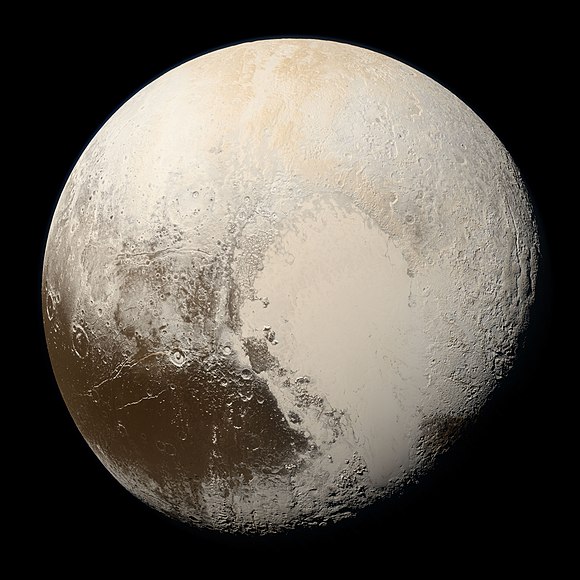
Science began, many say, with the Copernican Revolution, 1543, when a Polish astronomer put forth that the earth revolves around the sun, rather than the Earth at the center. And so began the broader Scientific Revolution, whereupon the foundations were set, and modern science flourished as an autonomous discipline.
But science can be argued to have begun with Aristotle circa 350 BCE, or the heliocentric theories of Philolaus in 5th Century BCE, or even Thales of Miletus, born 626 BCE, one of the seven sages, who broke from mythology to explain the world through deductive reasoning. Science is based upon facts, and the Western Intellectual tradition is rational.
But all cultures have gazed up at the heavens, and tried to decipher meaning. The scientific astronomers – in the West – used Greek mythological figures to christen the constellations of stars, and so mythology towers overhead, still to this day. Stop and consider: science at best is 2,400 years old, while celestial divination is millenia older, common to all cultures, on all continents. We are wise to consider the archetypes in the sky above us, and what we can learn from them.
Pluto, the planet furthest from the sun, was discovered in 1930 and named for the God of the Underworld, of the dead, also known as the Great Destroyer, Transformer and Redeemer.
Pluto, the planet, was present above the United States on July 4, 1776 “When in the course of human events…” fifty-six founding fathers on that date set pen to paper, to sign and to state that, “We hold these truths to be self-evident, that all men are created equal, that they are endowed by their Creator with certain unalienable Rights, that among these are Life, Liberty and the pursuit of Happiness.” So our sovereign nation was declared.
Pluto has a very long arc – specifically 247 years to circumnavigate the sun – and it has now completed one full return, precisely exact on February 2022 through 2024. The Great Destroyer, Transformer and Redeemer is at high noon, dead overhead again, and who among us cannot say that the United States of America is being wrestled to its core, over “truths held self evident”?
What I say here is not scientific fact, but may be an archetypal truth and the question before us, what we the people must decide, is who we are, and who shall we be going forward? Scientific fact does little to help us here. The archetypes seem predominate, and we are wise to pay heed, to seek answers not in the political but at our deeper, more expansive realms.
Fear not. As Pluto is the God of the dead, so too he is the God of wealth and agriculture; the Destroyer, he is also the Redeemer. Persephone, his mistress, would bring back from the underworld new seeds to be planted each spring, to spawn a harvest come fall.
And so as we move through this dark season, may we also see at hand the seeds of an abundant future. Rather than fighting to the bottom, we the people can sow seeds of unity in diversity, we can move past an “either/or” mindset, to a “both/and” embracing and accepting a greater wholeness.
The choice, and its consequences, are ours.

Be like a cat
Posted: May 25, 2024 Filed under: Chronicles of a First Time Parent, consciousness, What is an Art Farm | Tags: consciousness, rational mind, spirituality Leave a comment
Back in the aughts, when I lived in Chicago, I studied Qigong with Dr. Paul Hannah. In Chinese, Qi means “air” or “breath” but in a metaphysical sense it is “vital energy.” Gong means cultivation. Qigong is the cultivation of that vital energy, as a non-martial art.
Dr. Hannah had grown up in the inner city projects in Chicago, and learned Tai Chi – the Chinese martial art – in order to defend himself, and thus avoid joining a gang; his ability to defeat the gang members in combat was his protection and way out of the projects. He became a board-certified psychiatrist, as well as a Tai Chi Master, with additional studies in acupuncture, Qigong and energy healing. https://www.hannahsholistichealing.com/
During my sessions he would have me stand in a half-crouched position, arms outstretched at shoulder-height in a circle, my finger tips almost touching, for an unbearably long time. He would leave the room, and later return with hot herbal tea. I believe he was training me to empty my mind and become aware of something else.
On the wall of the studio was a poster of a black panther, gazing forward, directly into the camera. He explained the concept of observing without becoming engaged, of being present with neither future nor past, neither time nor space. Dr. Hannah told me that poster had gotten him through college.
I did not then know the idea of mindfulness, but would now understand his instructions as my introduction. Thich Nhat Hanh has written, “When I eat an orange, I can eat the orange as an act of meditation. Holding the orange in the palm of my hand, I look at it mindfully. I take a long time to look at the orange with mindfulness. Breathing in, there is an orange in my hand. Breathing out, I smile at the orange.”
During that same period, I practiced Qigong with a practitioner of Chinese medicine, including acupuncture. During one session at his office, he introduced me to a colleague from China, who was considered a Master of Qigong. I was told this man had not eaten solid food for many years; he drank liquids, but metastasized the inner chi for his sustenance. Such a concept is beyond both my comprehension and experience, however, I was and remain willing to suspend disbelief. Perhaps such is possible, and I should not cut myself off from such a possibility. We have entered the realm of the suprarational.
Here in South Portland, Ryan Nitz is an acupuncturist with a community clinic. He treats many patients onsite at his clinic and, quite interestingly, has begun treating patients via remote. I do not mean by a tele-health zoom session, but rather, from his office in South Portland, Maine he treats patients in, say, Kansas or California. He does not use needles, but instead the “subtle energies” to manifest healing in the patient. https://www.mainecenterforacupuncture.com/
Essentially this is a form of Reiki, the Japanese form of energy healing; “rei” means universal and “ki” means life energy. Clearly now, we are beyond the bounds of western allopathic medicine. As Dr. Paul Hannah taught me, “be like a cat,” suspend disbelief and calm the mind while focusing on the energy present.
At the vanguard of energy, one meets some mighty cool cats!

The Alpha and the irrational
Posted: May 11, 2024 Filed under: Art & Healing, Farming off the Farm, What is an Art Farm | Tags: consciousness, rational mind, spirituality 1 CommentIf one subscribes to the Great Man Theory, then history is defined by the deeds of great men; highly unique individuals whose attributes – intellect, courage, leadership or divine inspiration – have a decisive historical effect. Thomas Carlyle developed the theory, and wrote:
“Universal History, the history of what man has accomplished in this world, is at bottom the History of the Great Men who have worked here. They were the leaders of men, these great ones; the modelers, patterns, and in a wide sense creators, of whatsoever the general mass of men contrived to do or to attain; all things that we see standing accomplished in the world are properly the outer material result, the practical realization and embodiment, of Thoughts that dwelt in the Great Men sent into the world: the soul of the whole world’s history, it may justly be considered, were the history of these.”
Pythagorus of Samos, the ancient Ionian Greek philosopher and polymath, certainly ranks among these alpha males. He has been credited with mathematical and scientific discoveries, including the Pythagorean theorem, Pythagorean tuning, the five regular solids, the Theory of Proportions, the sphericity of the Earth and the identity of the morning and evening stars as the planet Venus. His ideas are ubiquitous: Plato’s dialogues exhibit his teachings, every high school student memorizes his theorem, and every carpenter or engineer uses the 3-4-5 triangle to square a room.

He saw beyond the material realm, and further developed ideas of mysticism. His “metempsychosis” – which means the “transmigration of souls” – holds that every soul is immortal and, upon death, enters a new body. He also devised the doctrine of musica universalis– literally universal music, also called music of the spheres or harmony of the spheres – which holds that the planets move according to mathematical equations and thus resonate to produce an inaudible symphony of music. The 16th century astronomer Johannes Kepler further developed this idea, although he felt the music was not audible but could be heard by the soul.
Aristotle characterized the musica universalis as follows:
“…since on our earth the motion of bodies far inferior in size and in speed of movement [produce a noise]. Also, when the sun and the moon, they say, and all the stars, so great in number and in size, are moving with so rapid a motion, how should they not produce a sound immensely great? Starting from this argument and from the observation that their speeds, as measured by their distances, are in the same ratios as musical concordances, they assert that the sound given forth by the circular movement of the stars is a harmony.”
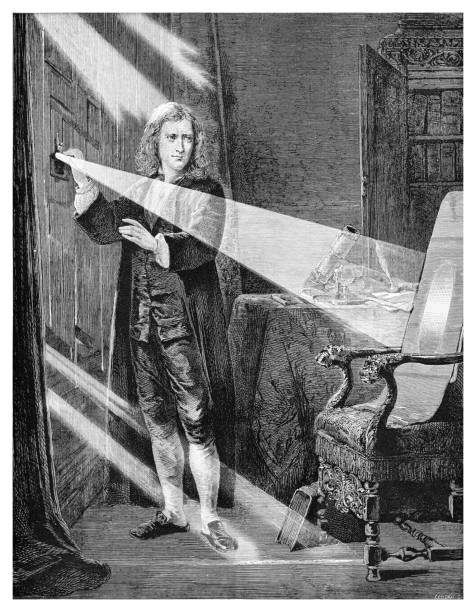
Clearly, Pythagorus was a big thinker, and his ideas influenced Isaac Newton, another of the alpha males. Newton – who established classical mechanics, invented calculus, formulated the laws of motion and universal gravitation – was a paragon of the rational scientific mind. Newton was a Great Man, by definition. He also was a leading alchemist.
In its purest form, alchemy is concerned not with turning base metals into gold, but as a symbolic language guiding the transmutation of the physical self into the ascendent consciousness of the anointed. Of an estimated ten million words of writing in Newton’s papers, approximately one million – 10% – deal with alchemy. This was more than a passing interest.
John Maynard Keynes, the Cambridge economist who restructured the post-WW2 global financial system – easily ranking him among the Great Men – had this to say about Newton:
“Newton was not the first of the age of reason. He was the last of the magicians, the last of the Babylonians and Sumerians, the last great mind which looked out on the visible and intellectual world with the same eyes as those who began to build our intellectual inheritance rather less than 10,000 years ago. Isaac Newton, a posthumous child born with no father on Christmas Day, 1642, was the last wonderchild to whom the Magi could do sincere and appropriate homage.”
Let us pause and consider: just as Pythagorus explained the physical realm he also saw celestial harmony beyond the physical; Newton mastered not only scientific thought but was a leading alchemist of his day. Two of the paragons of the rational alpha mind had secret lives as mystics.
The Western intellectual tradition is based entirely on the rational, and anything beyond the rational is defined by the negative form – “irrational” – which is decidedly pejorative. As wrote Carl Jung, ““Everything that the modern mind cannot define it regards as insane.” Pythagorus was denigrated as a cult leader. During Newton’s life, the English Crown considered alchemy to be a heresy, punishable by death. The burning of his alchemical writings perhaps was not an accident.
What if we expand our concepts and consider connections not defined by measurable facts? What if we begin to use the term “supra-rational”? No less than Albert Einstein – the modern paragon of rational thought – was compelled in this regard. In 1930 he published an essay “Religion and Science” which described the sense of awe and mystery which he termed a “cosmic religion” of “superpersonal content.” Einstein counseled to move beyond the anthropomorphic concept of god to “the sublimity and marvelous order which reveal themselves in nature … to experience the universe as a single significant whole.”

For Einstein, “science without religion is lame, religion without science is blind.” He said “God is a mystery. But a comprehensible mystery. I have nothing but awe when I observe the laws of nature. There are not laws without a lawgiver, but how does this lawgiver look? Certainly not like a man magnified. …some centuries ago I would have been burned or hanged. Nonetheless, I would have been in good company.”
The “Great Man Theory” was advanced in the 19th century Victorian era. In the 21st century we need to move forward, and expand the scope, even beyond gender, to all life, beyond the “either/or” and toward the “both/and” mindset.
I should like to propose that the “Great Man” be replaced by the “Great Soul,” and that we look beyond the rational, the material, the physical, and embrace the whole cloth, the harmony and music of “our higher angels,” the music of the spheres, “to experience the universe as a single significant whole.”
In fact, this “Great Soul” is in use; in the Hindu language, “Mahatma” from the Sanskrit word “mahātman,” literally means “great-souled.” Mahatma Ghandi is but one exemplar of this path.
The seeds of a new future surround us. We can be hopeful.
 an Art Farm