Red Cabbage Ph
Posted: March 6, 2026 Filed under: Child Centered Activities, Chronicles of a First Time Parent, What is an Art Farm | Tags: Social ecologies 1 Comment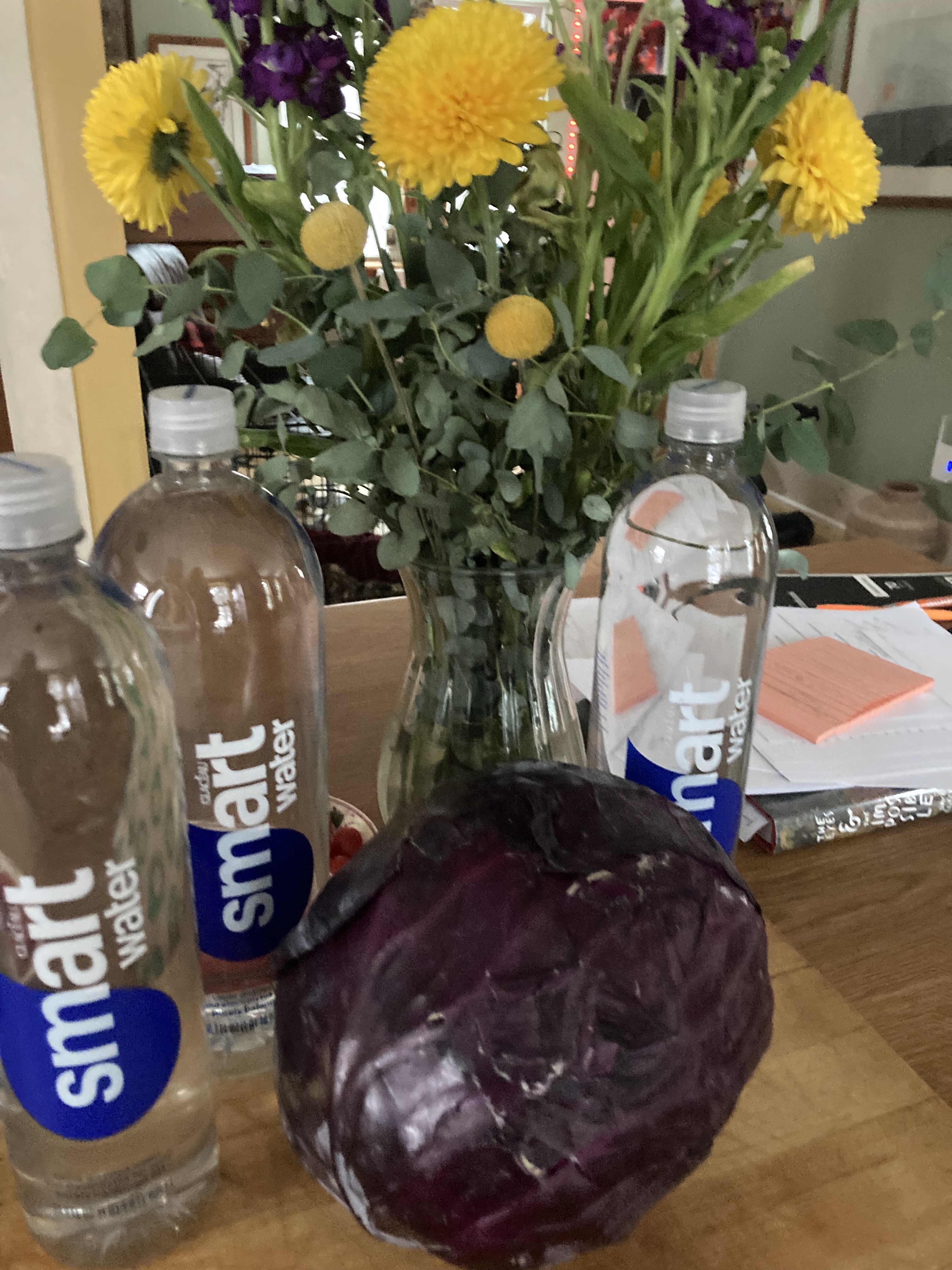
Nettlesting is a Mother Tree, whom I met, almost 30-years ago, in the Fulton Market District on Chicago’s near west-side. When that city was the “Hog Butcher to the World” that neighborhood was home to its meatpacking warehouses, but circa 1998, gentrification spread, and we each occasioned to be there for a Childrens’ art exhibit. She walked up, we started talking.
In 2000, our paths crossed again, in Chicago’s Financial District canyons, on LaSalle Street, outside the once venerable Harris Bank, which now has been merged into the global behemoth BMO. I was preparing to depart for the Philippines – a land of smoke and mirrors – on my oxymoronic quest for “Humanitarian Finance” while she was preparing to WWOOF (Worldwide Opportunities on Organic Farms) in the full sunlight of Southern Australia.
Being a Mother Tree, she is a steward of Gaia who thrives at the vanguard of soil and soul. Like a zen koan, she is not an artist, but one might say she is an eARTheart-ist.
In 2004, she planted six kernels of “Golden Bantam” organic heirloom 1902 sweet corn in a shopping cart and then proceeded to push it around Chicago’s dense urban core. People were confronted by food growing, rather than food as a commodity purchased in a store. “Know your food, know your farmer” came alive on street corners. [Search You Tube for “Field Trip. A cart full of Corn Hit’s the Road.”]
In 2006, Sandor Katz, the NY Times best selling author, profiled her guerrilla gardening in his book “The Revolution Will Not Be Microwaved.” By 2012 she was named as one of Utne Reader’s “Twelve Visionaries Who Are Changing Your World.” That now ancient history was prologue, however, to the work she has gone on to pursue.
In 2020 she travelled in the Ecuadorian Amazon basin and worked with Indigenous peoples as well as local growers, developing classes on soil and remediation. The BBC reported this, quoting her, “The ultimate goal is to create an ecosystem of native plants and crops that can be farmed sustainably while also cleaning up the oil. I’m trying to have people re-engage with certain subtle complexities of nature…”. https://www.bbc.com/future/article/20200316-cleaning-up-the-oil-spills-of-the-amazon-rainforest.
Her “Soil Keepers” program grew out of this effort, and has now been taught to more than 250 students around the United States, as well as in Qatar, Finland, Poland, and Ecuador. https://socialecologies.net/
Over the years we have kept in touch and she recently came east to soak in the rocky coast of Maine. Our oceanic expanse served as counterbalance to the Great Lakes’ prairie. She and my son M got along quite comfortably and an idea was hatched.
Science is not my strong suit. In high school Chemistry, the concept of a mole as “a unit of measurement to quantify the amount of a substance, representing exactly 6.022 × 10²³ elementary entities (atoms, molecules, ions, or particles)” was bewildering. I dropped out post haste to study ceramics. I never looked back.
Necessity, though, is the mother of homeschool innovation. Between M’s needs and my lack of science training, when the Mother Tree offered to teach him soil science I accepted post haste; what I call soil science is, more precisely, applied biogeochemistry, starting with applied chemistry through field work and kitchen-based experiments. It is amazing what red cabbage can teach about Ph.
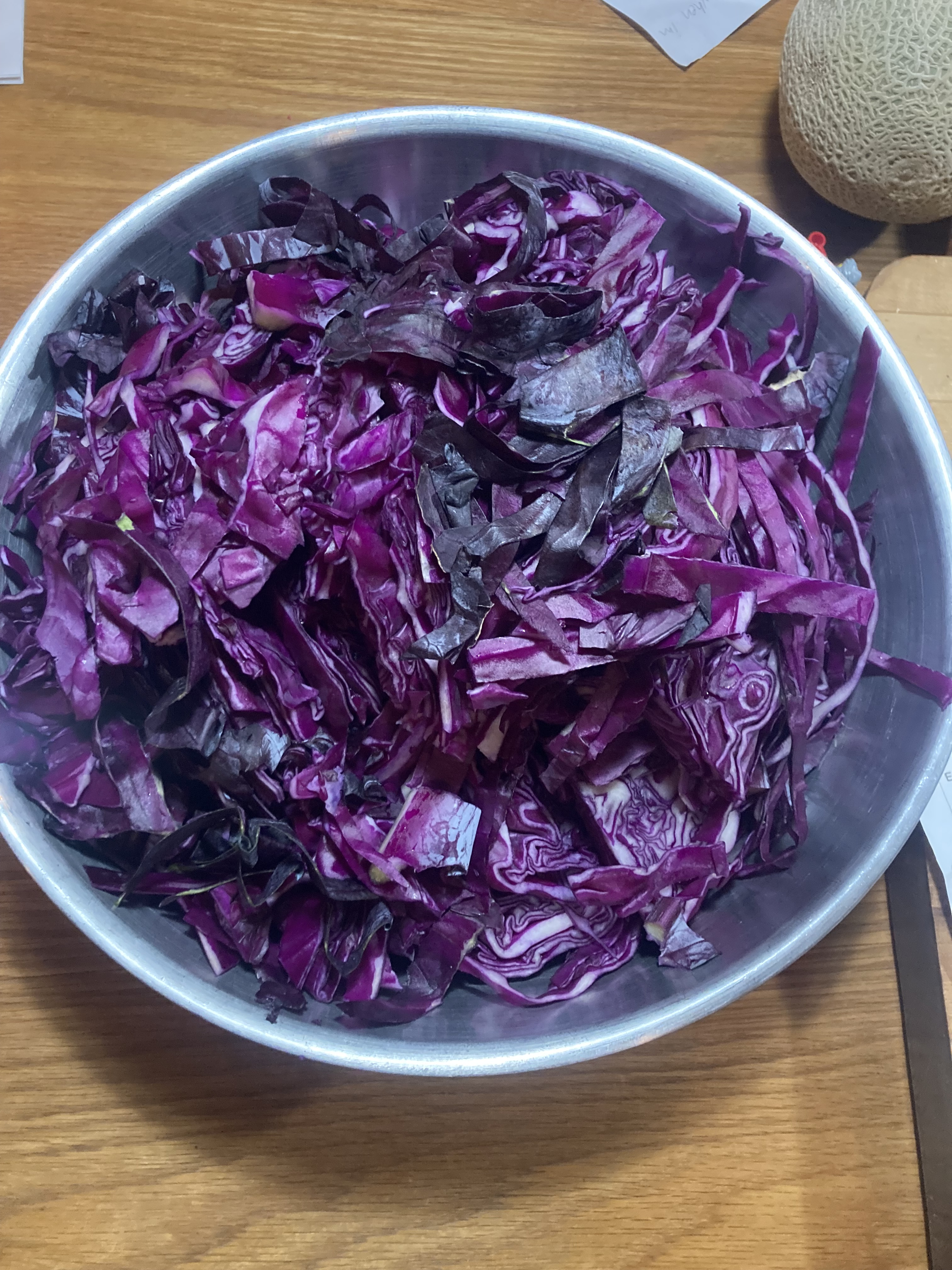
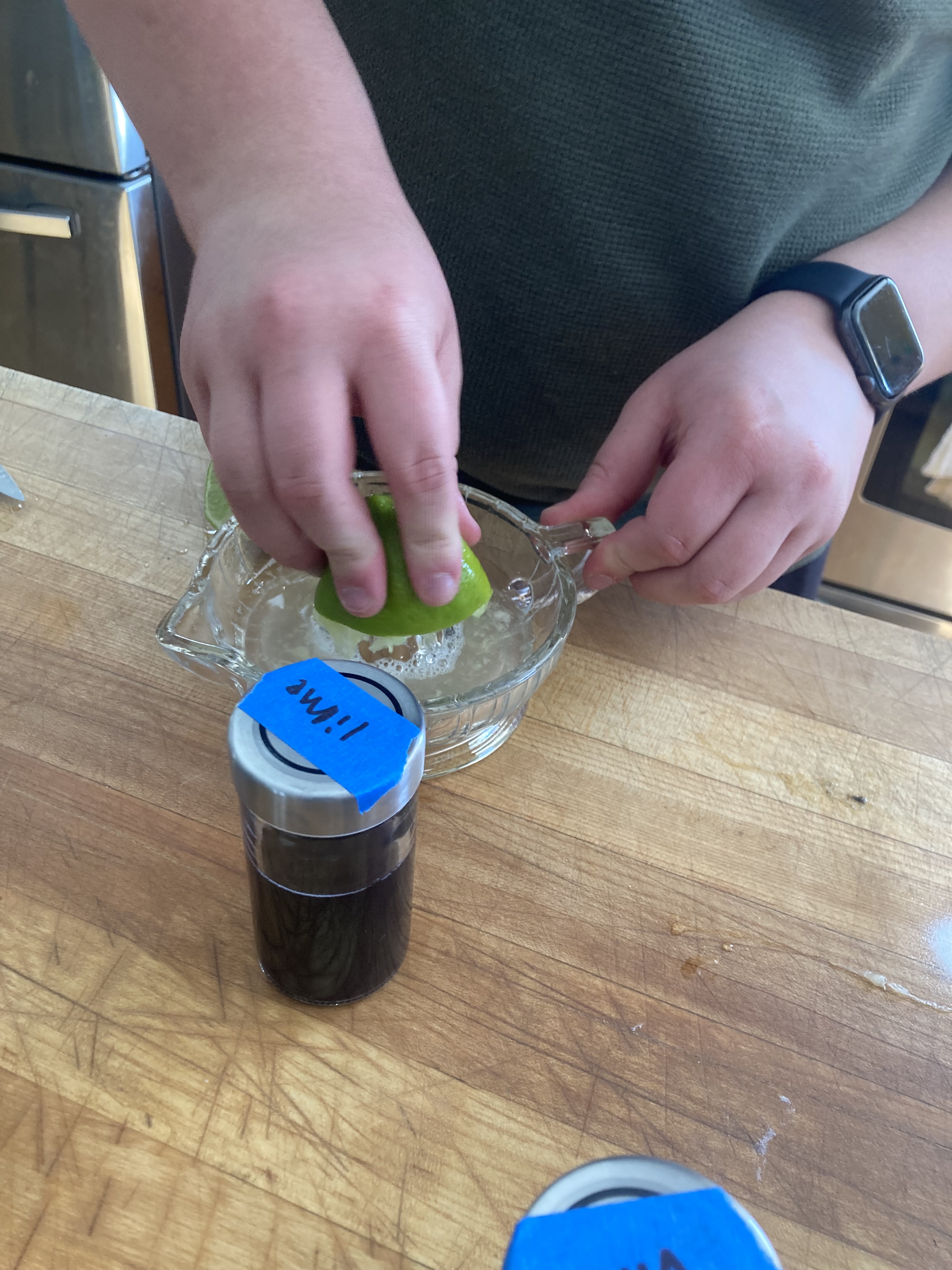
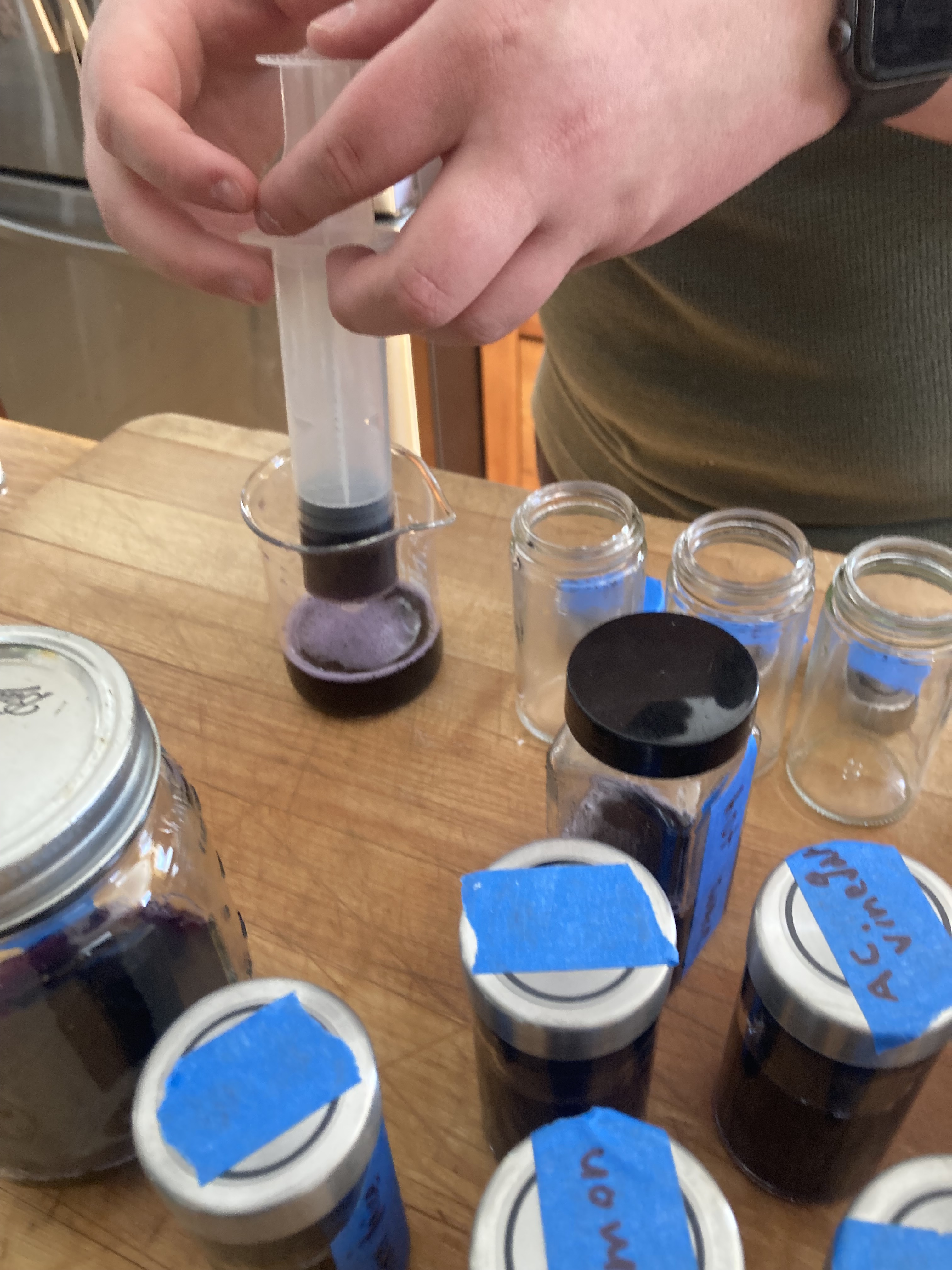
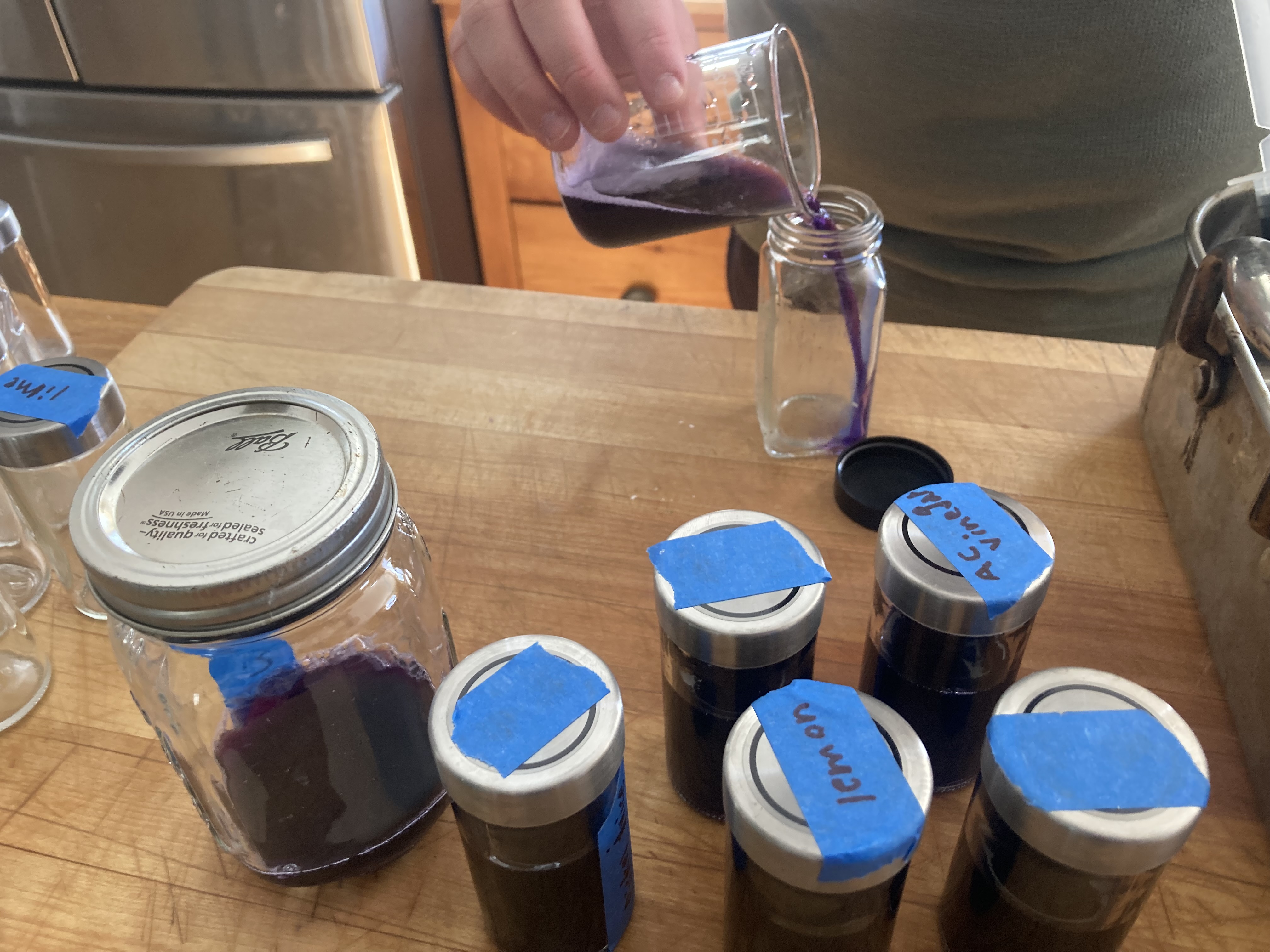
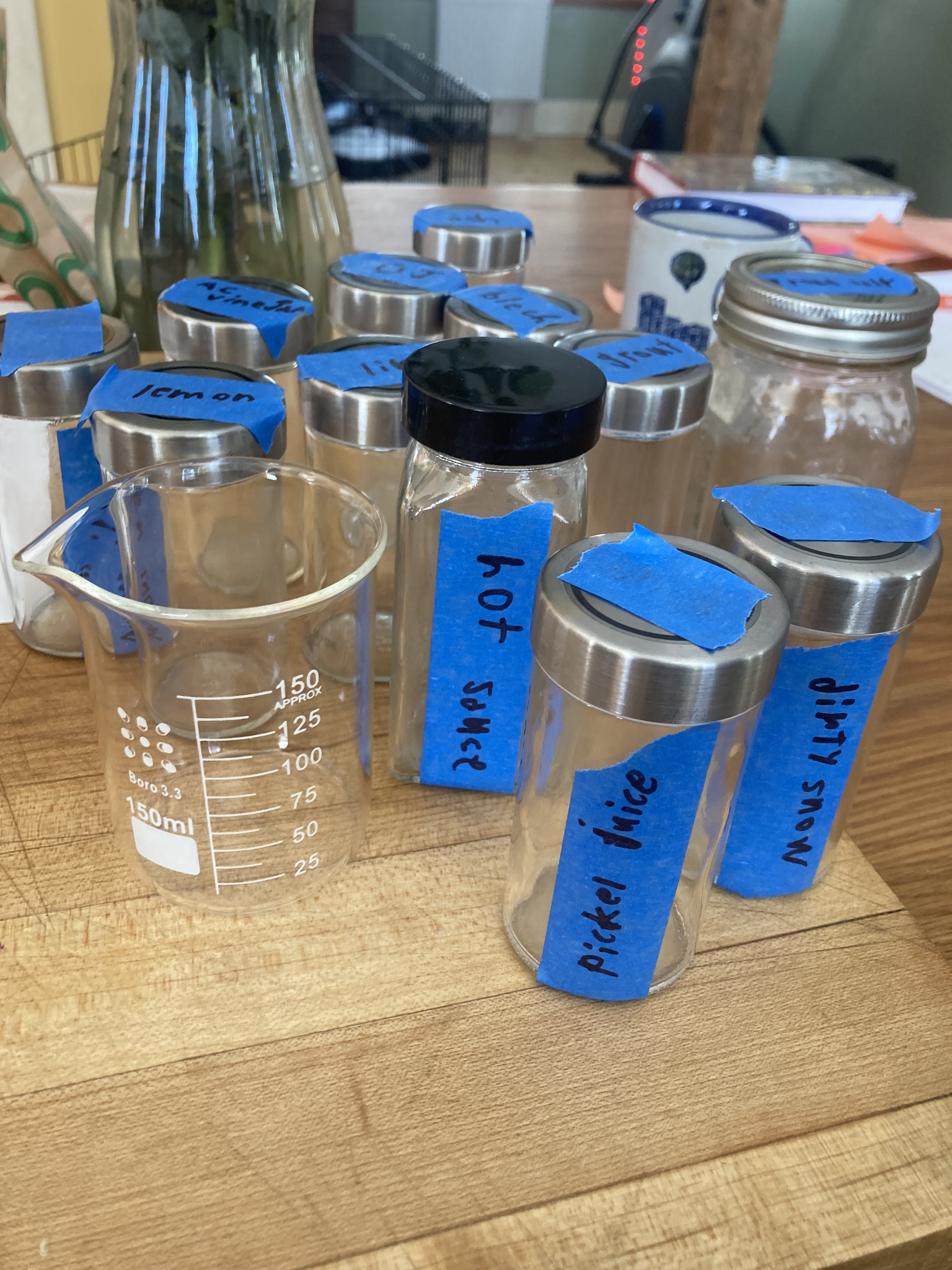
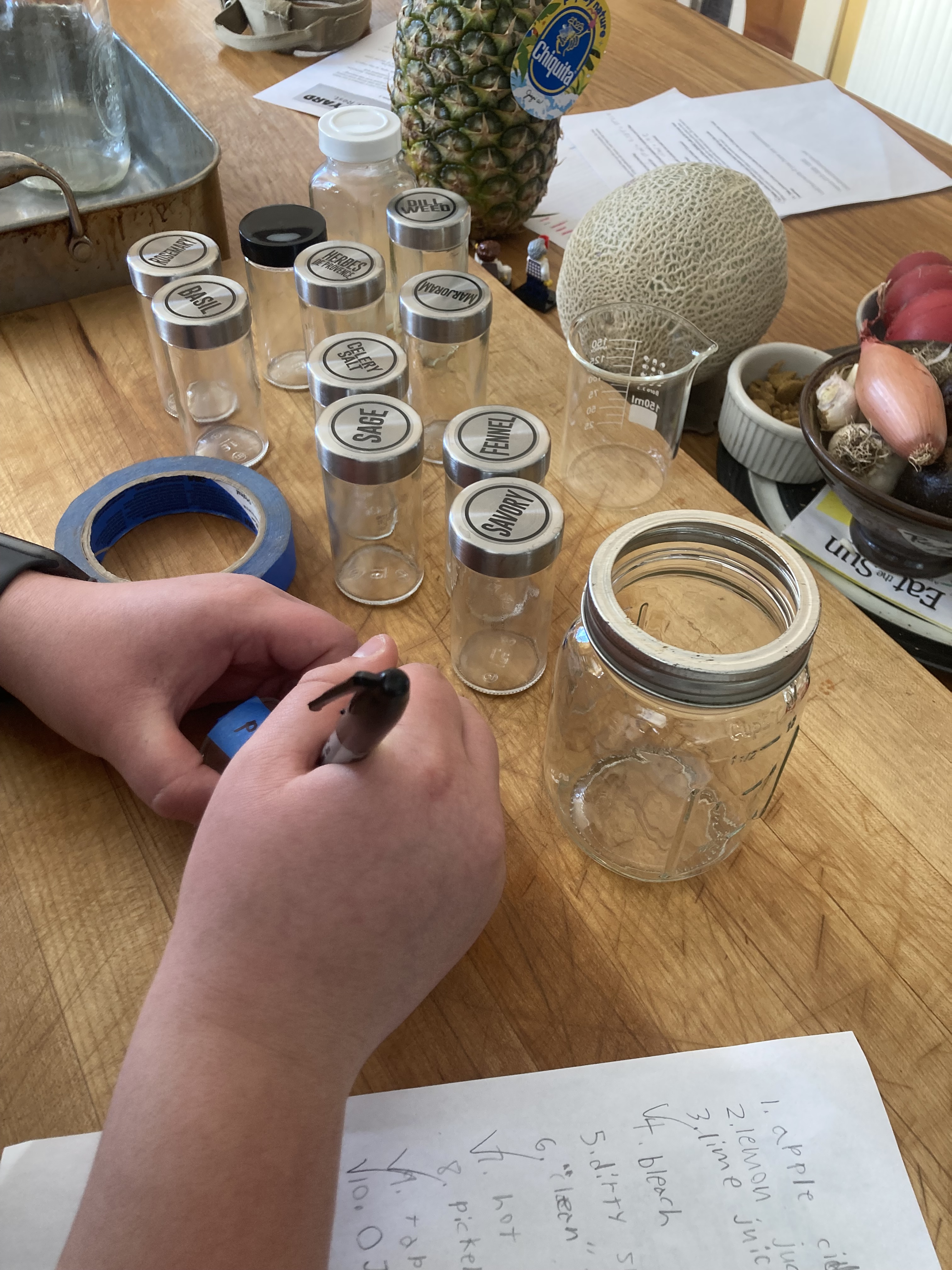
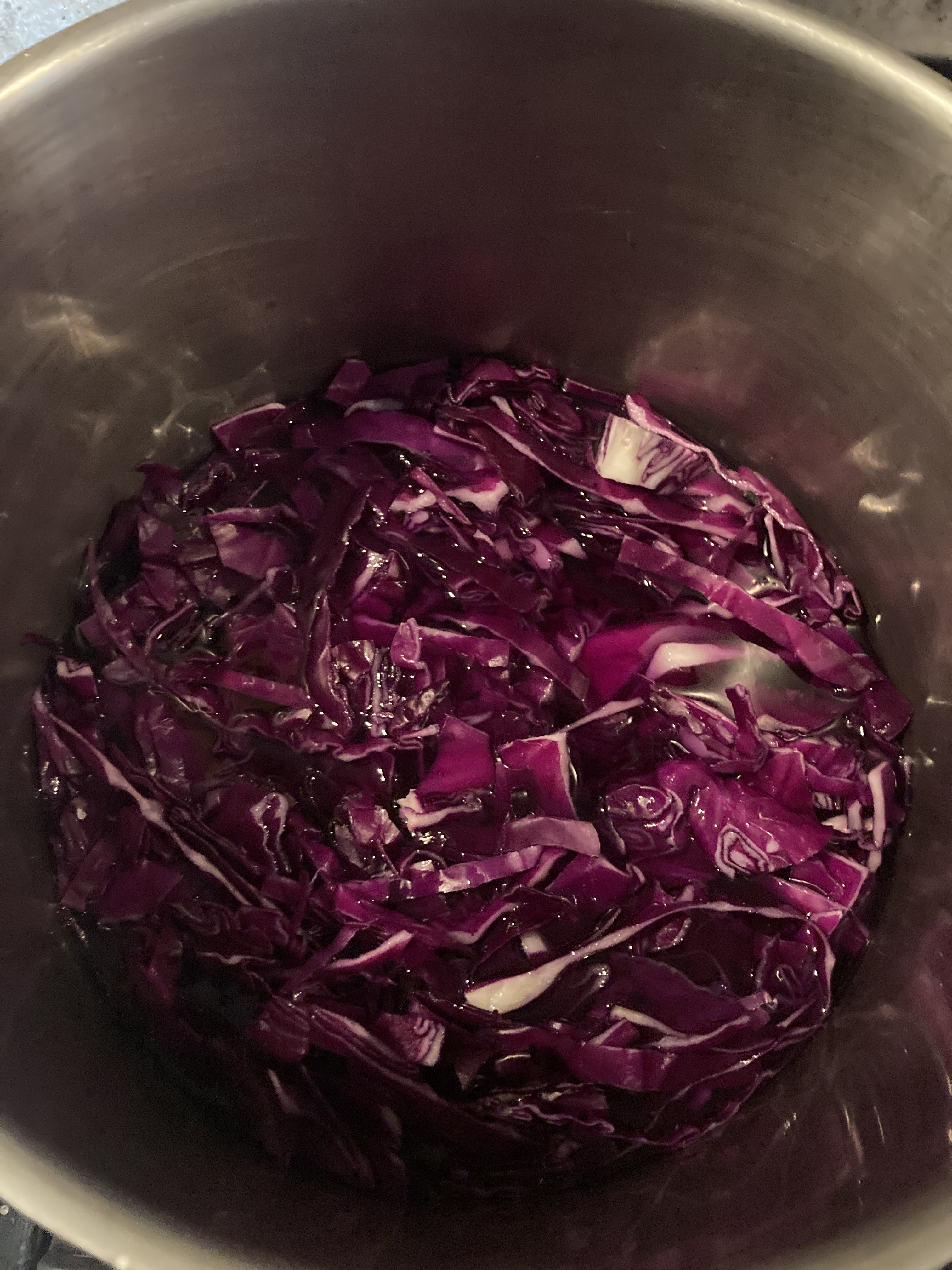
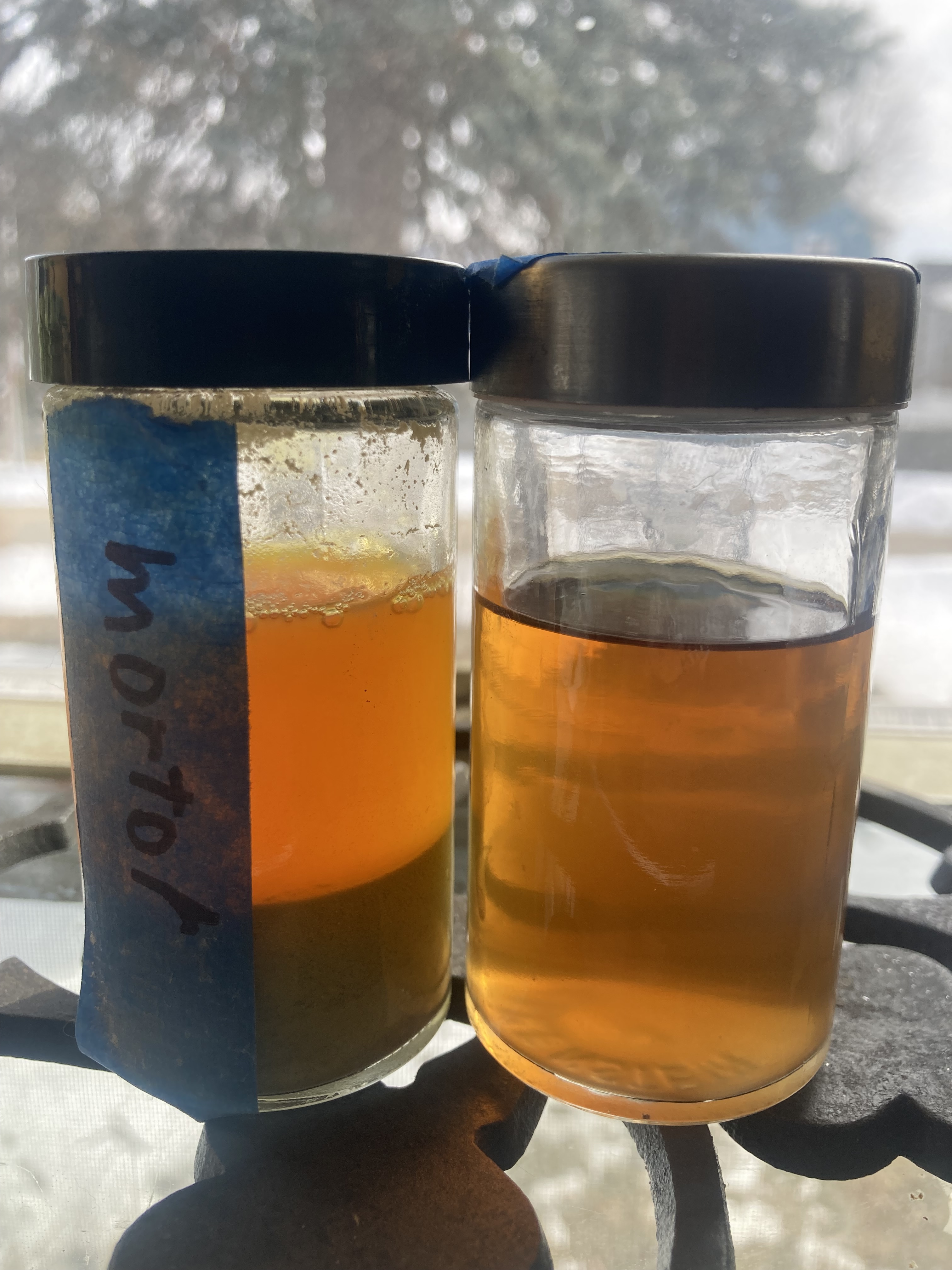
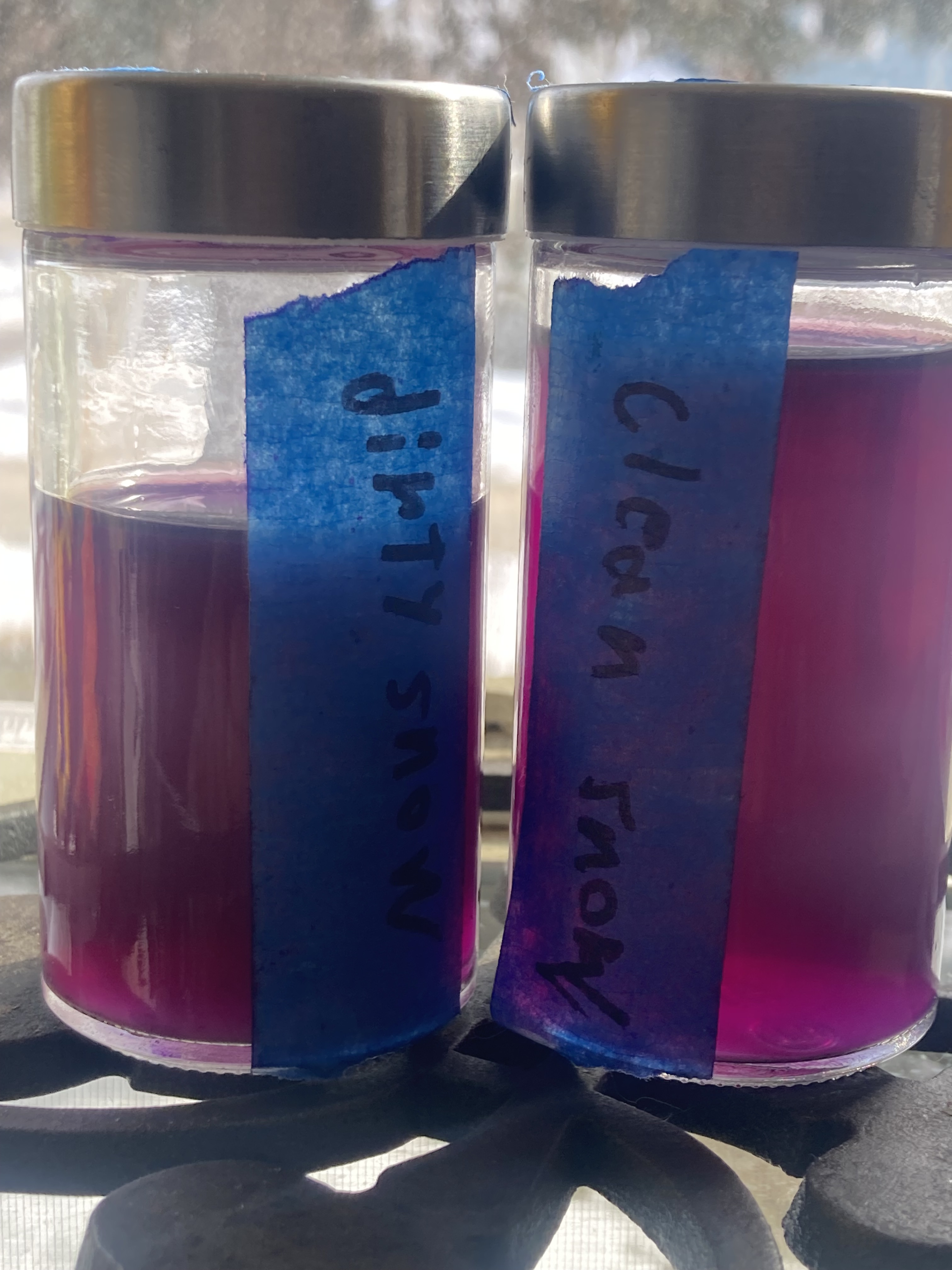
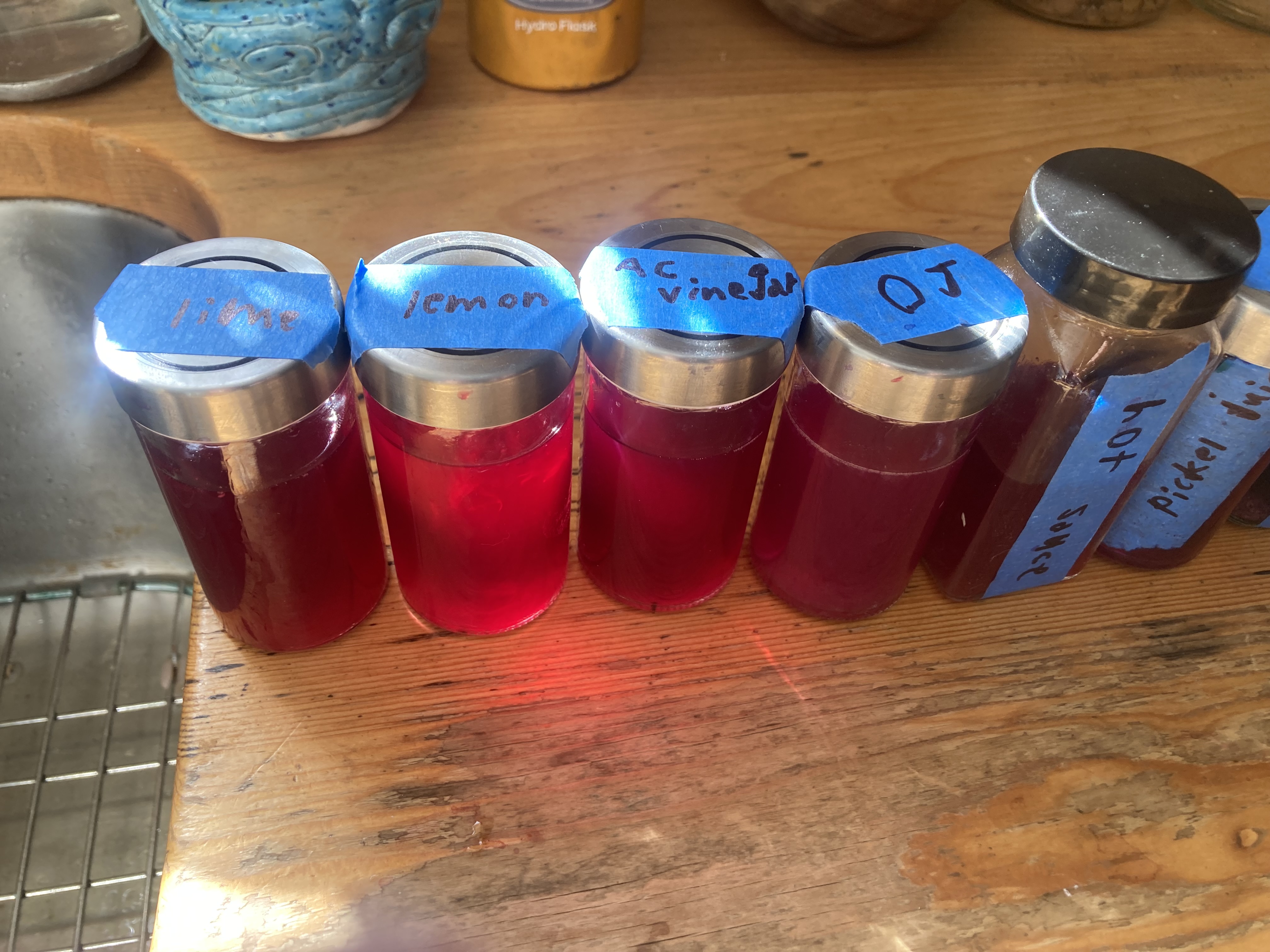
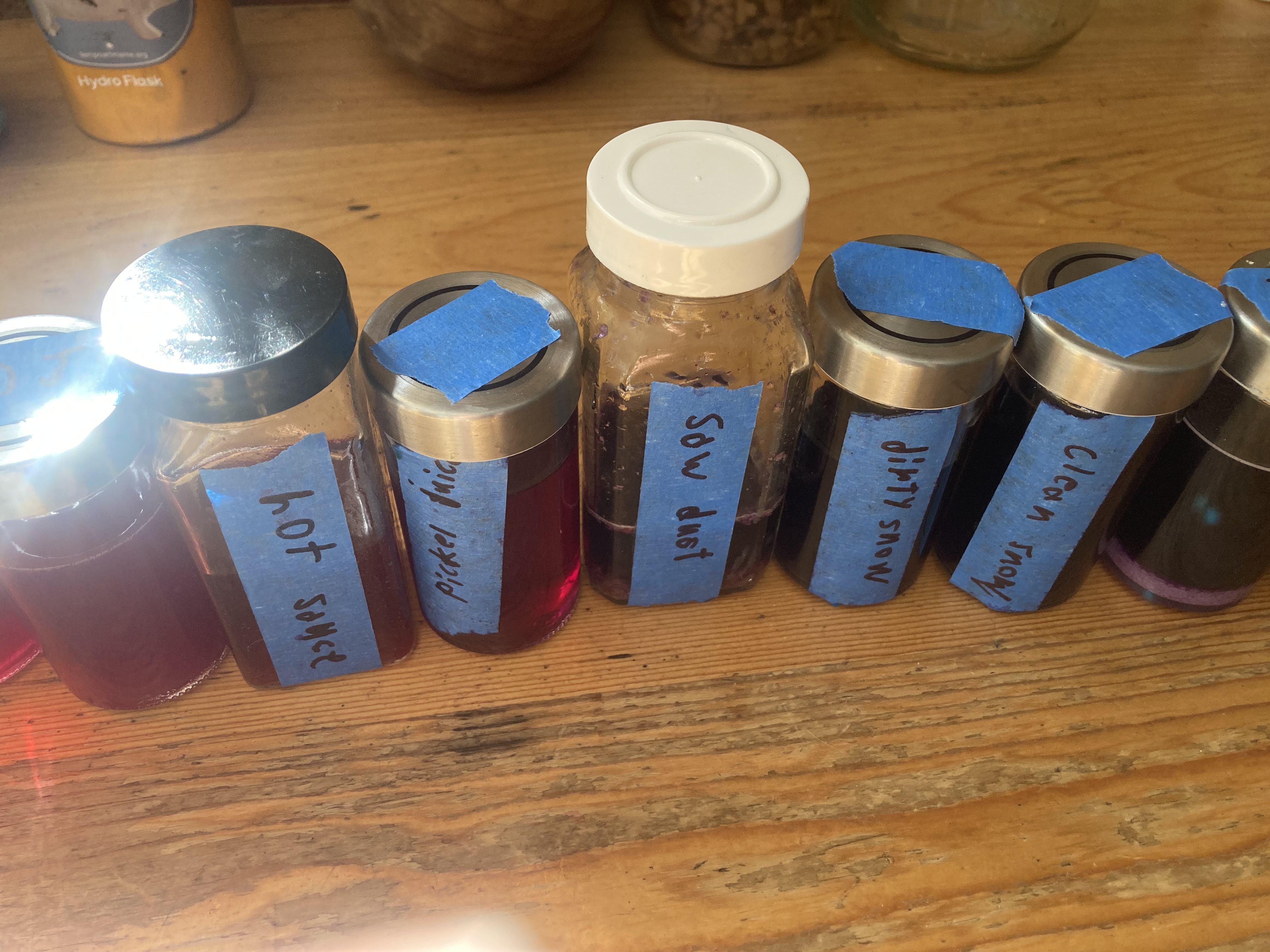
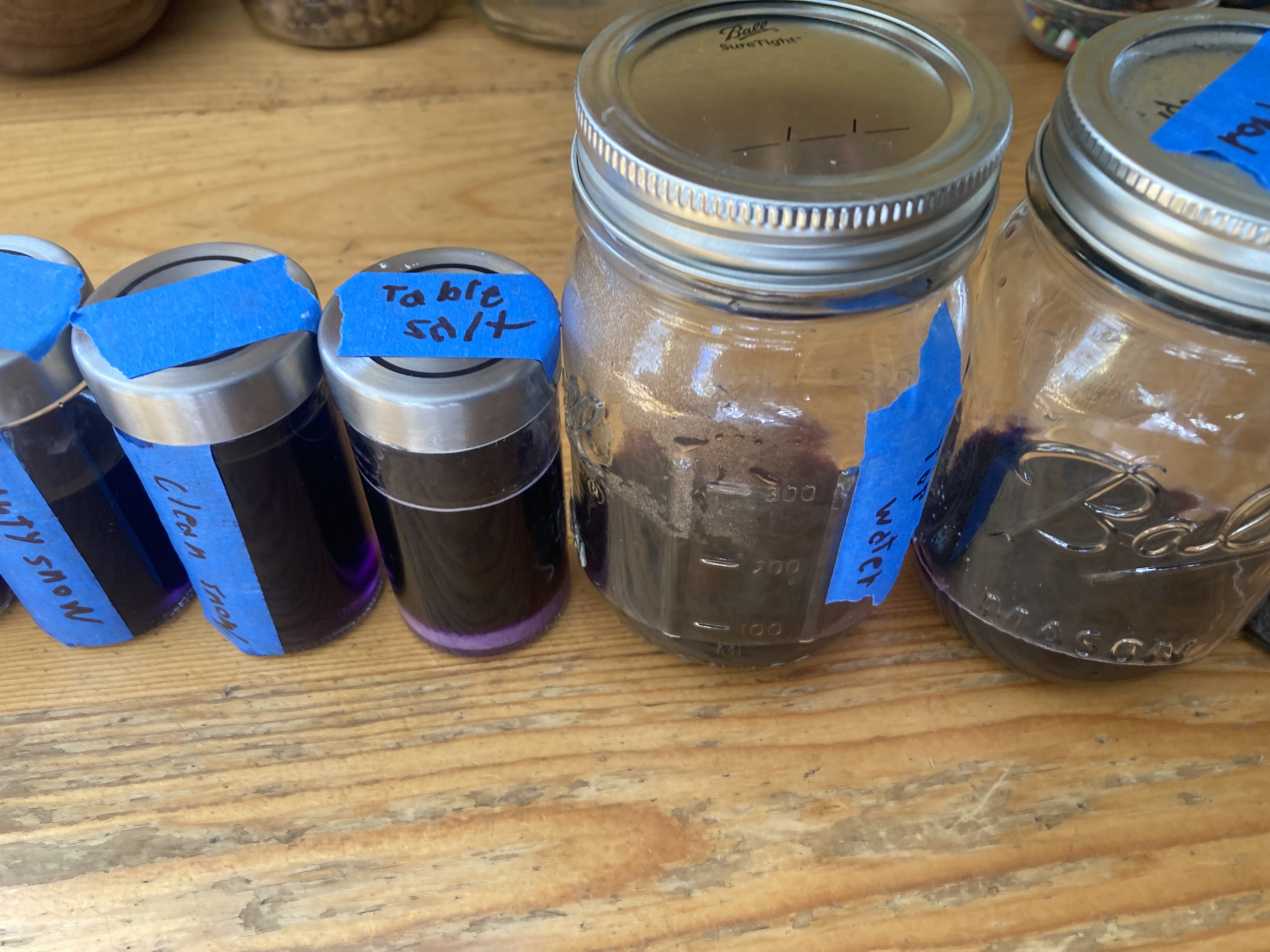
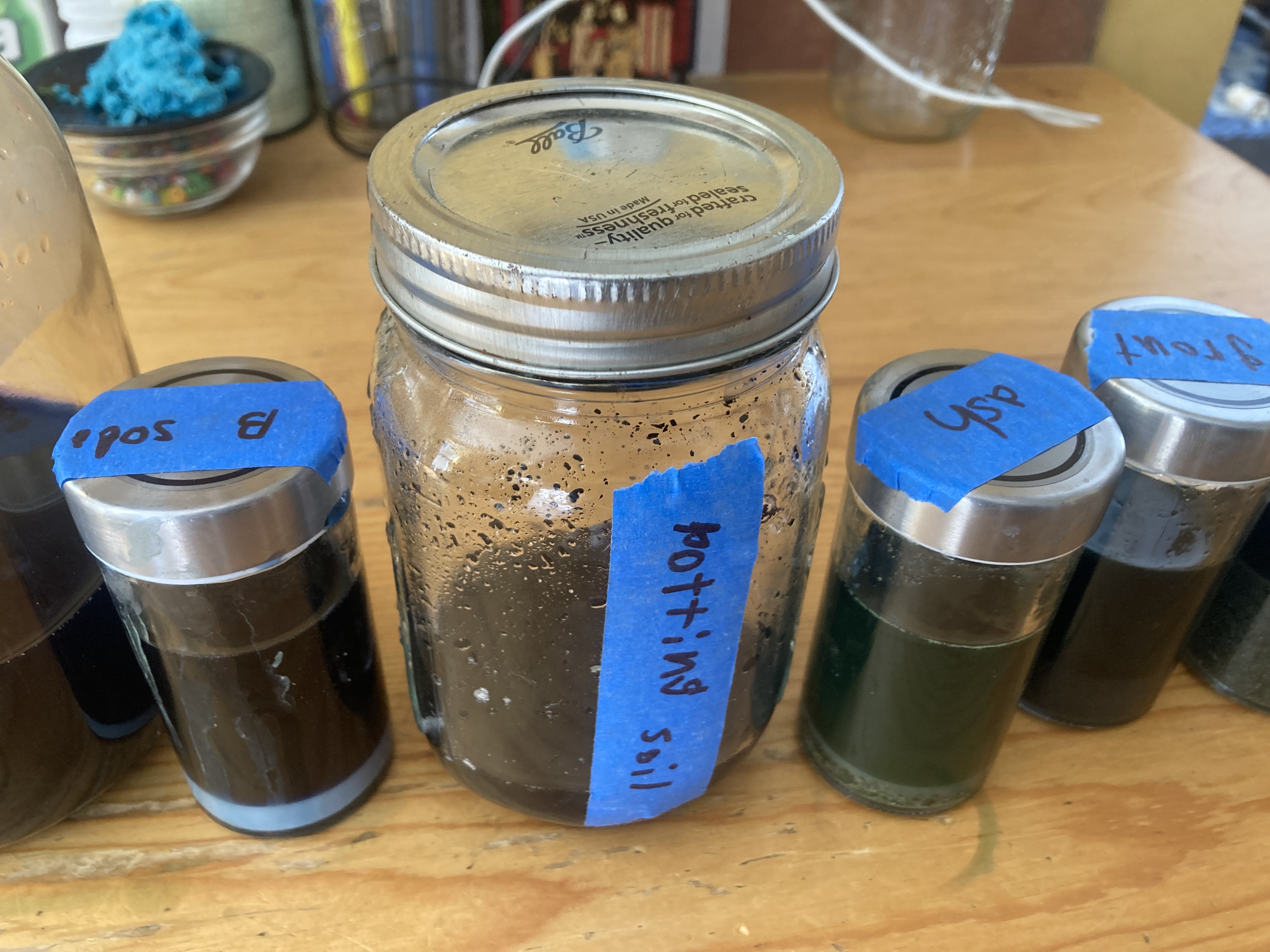
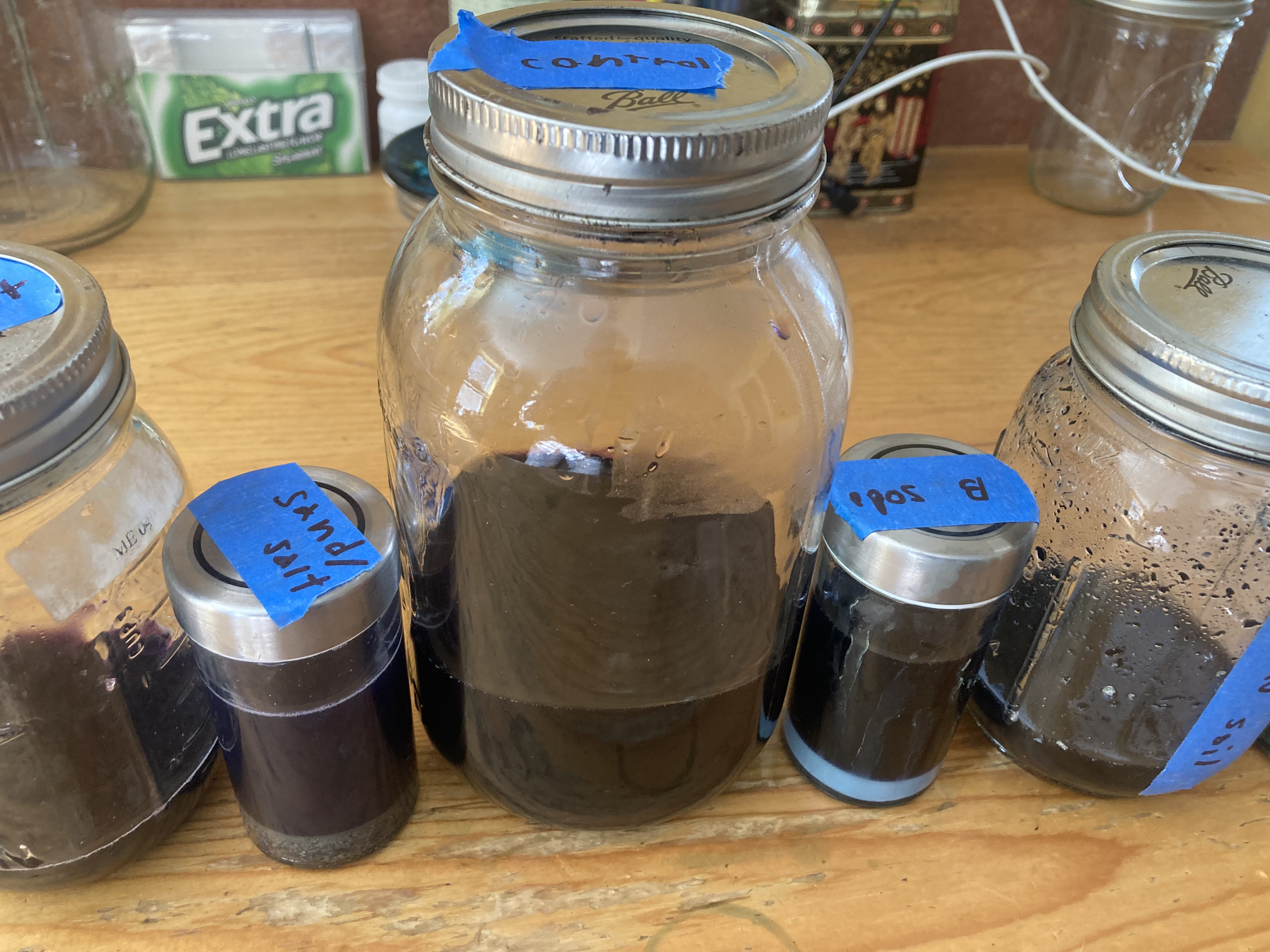
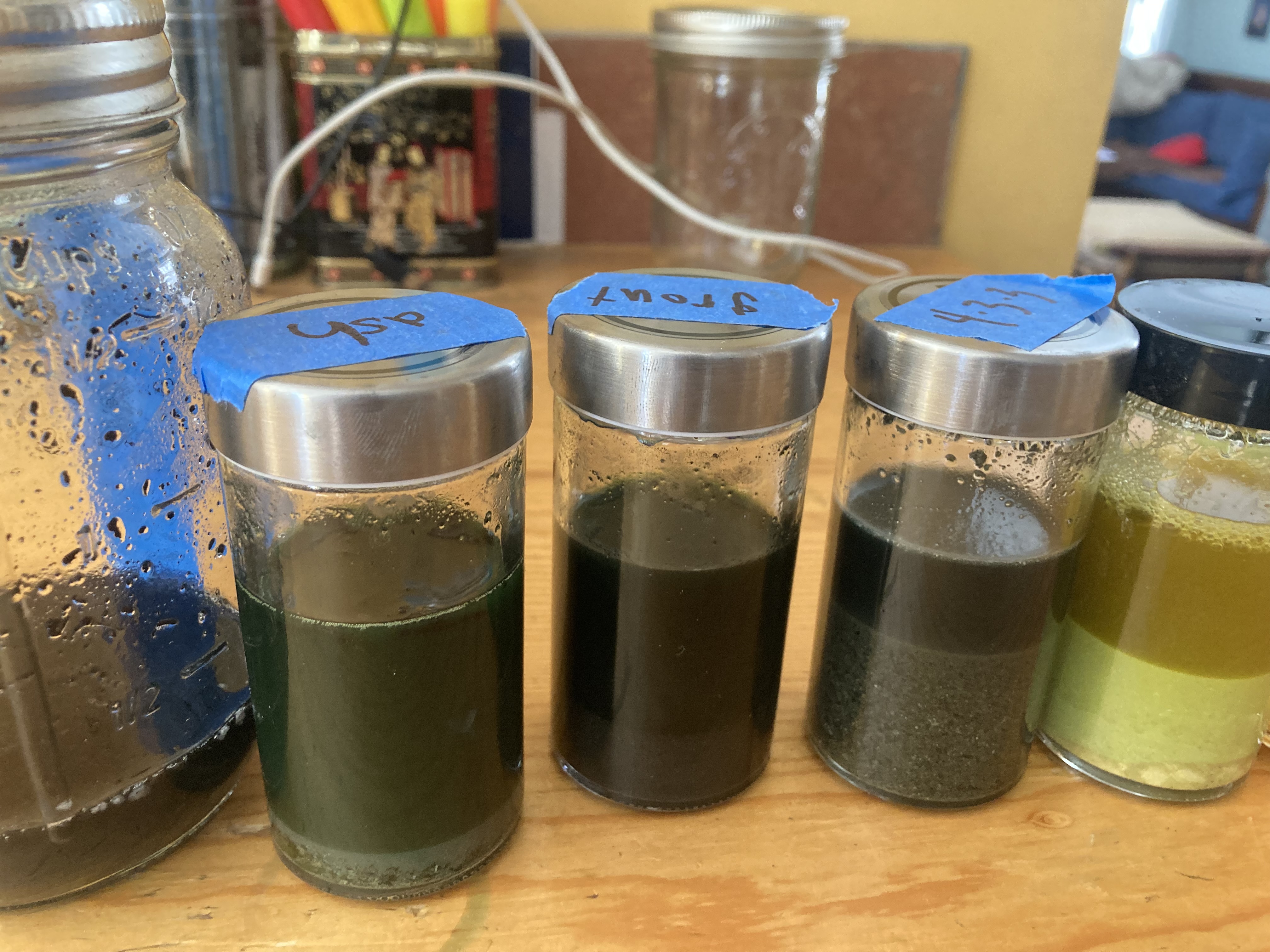
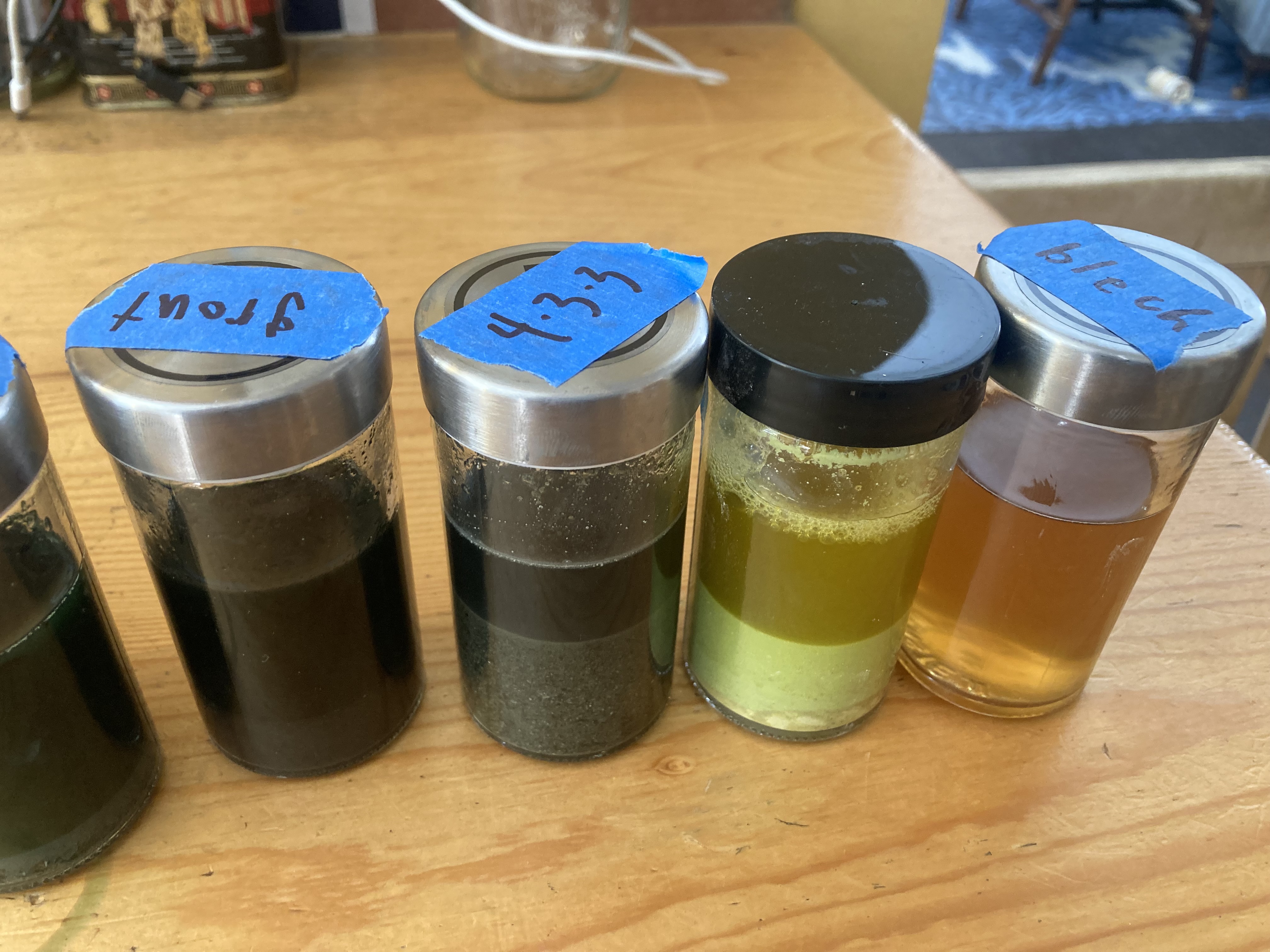
This week we rolled up our sleeves. Following the Soil Keeper’s lesson plan, we finely chopped 5.4 pounds of red cabbage and then boiled it in one gallon of neutral Ph water. M selected 20 household items, then put 15ml of each into a small jar with 50ml of the deep purple cabbage water. The materials included lime and lemon juice, apple cider vinegar, pickle juice and hot sauce; clean snow, dirty snow, calcium chloride salt, and a salt/sand blend; wood ash and sawdust, an organic 4-3-3 fertilizer, mortar and grout (from the tiling); bleach, baking soda and table salt.
With the certainty that is science, before our very eyes the cabbage water changed color depending upon the acidity or alkalinity of the materials. The acids turned pink, while the alkaline moved to green or even yellow.
By day three, we made notes about the experiment; more precisely, my son wrote out sentences. As we began, he commented, “I remember Science class in 5th or 6th grade always taking notes. I find it hard to take notes.”
He began with simple sentences, but as his excitement grew, they became compound and complex: “Lime was the most acidic. The most alkaline was bleach. The “Midnight Black” grout went from black to light green, and slowly became a darker green in the layers; the grout mix fell to the bottom because it was heavier. The 4-3-3 mix was next to the mortar….”
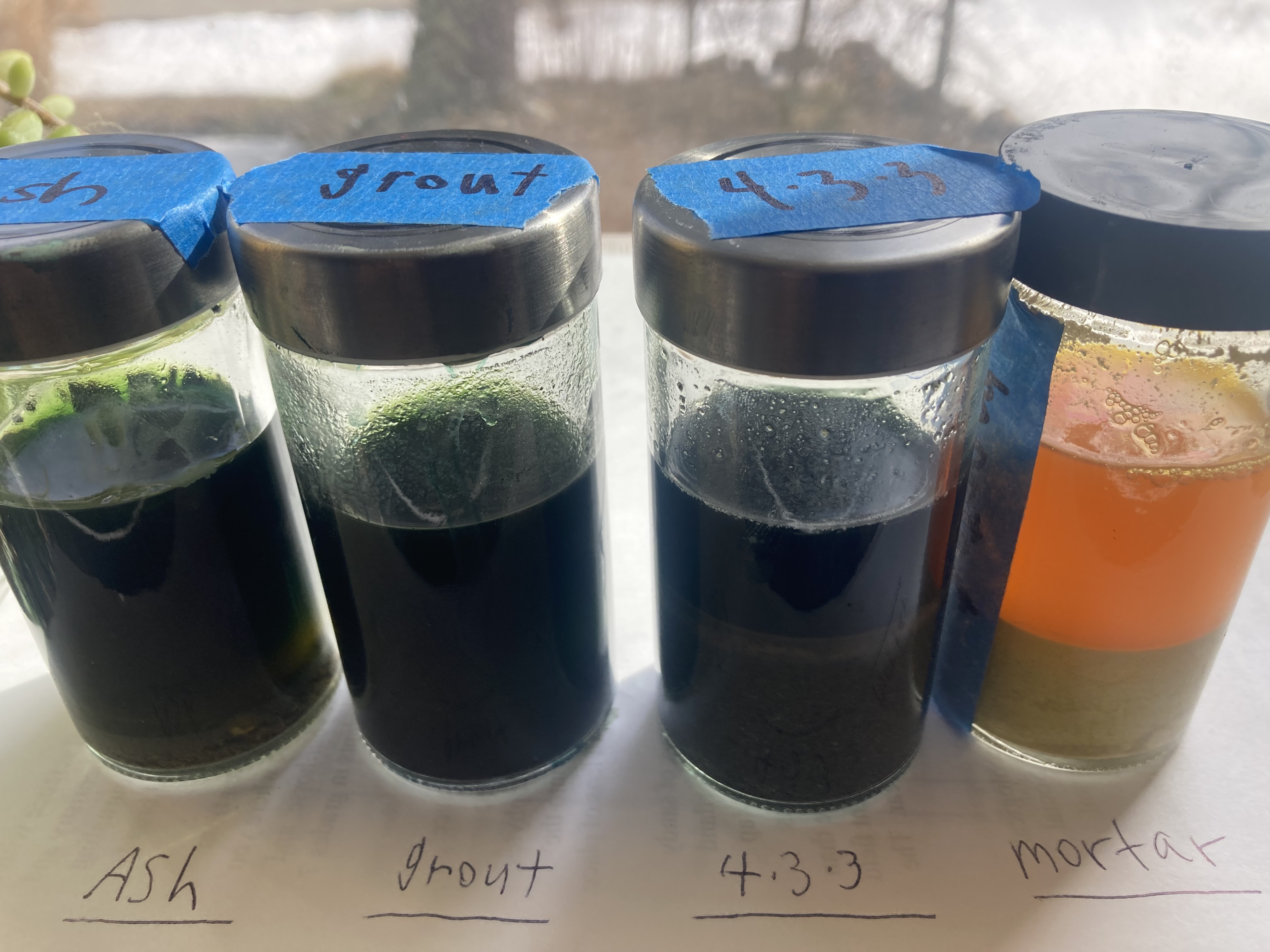
We talked and drilled deeper. While tiling, the Professor had mentioned that Lime was an ingredient in mortar. M researched and discovered (a) mortar contains lime from dolomitic limestone, (b) lime comes from rocks that contain 80% or more of calcium or magnesium carbonate, (c) Espoma Bio-Tone 4-3-3 contains calcium (at 5%) and magnesium (at 1%), and (d) he concluded, “Therefore, it makes sense that 4-3-3 mix and mortar are next to each other on my Ph scale because they both contain the main ingredients in lime.”
Excitedly, he reasoned, “What lime is doing to the soil is technically the same thing as calcium supplements do to humans.” He paused, then said, “Wait, it is not the same thing…” and so he corrected his sentence to [emphasis added], “What lime is doing to the soil is related to what calcium supplements do to humans. Calcium, to humans, supplements human bones. Calcium, in soil, supplements the cell walls.”
He then asked, “what is dirt made of?” Soil, he learned, contains minerals 45%, air 25%, water 25% and organic matter is 5%, while its texture is the ratio of sand, silt and clay particles.
He exclaimed, “I have never been so invested in a science lesson! This is fun…this is genuinely fun!!!”
About the circle of life, he discovered, “nutrient transfer: plants take up essential elements from the soil and convert them to organic matter consumed by humans.” Did someone say, “know your food, know your farmer” ?
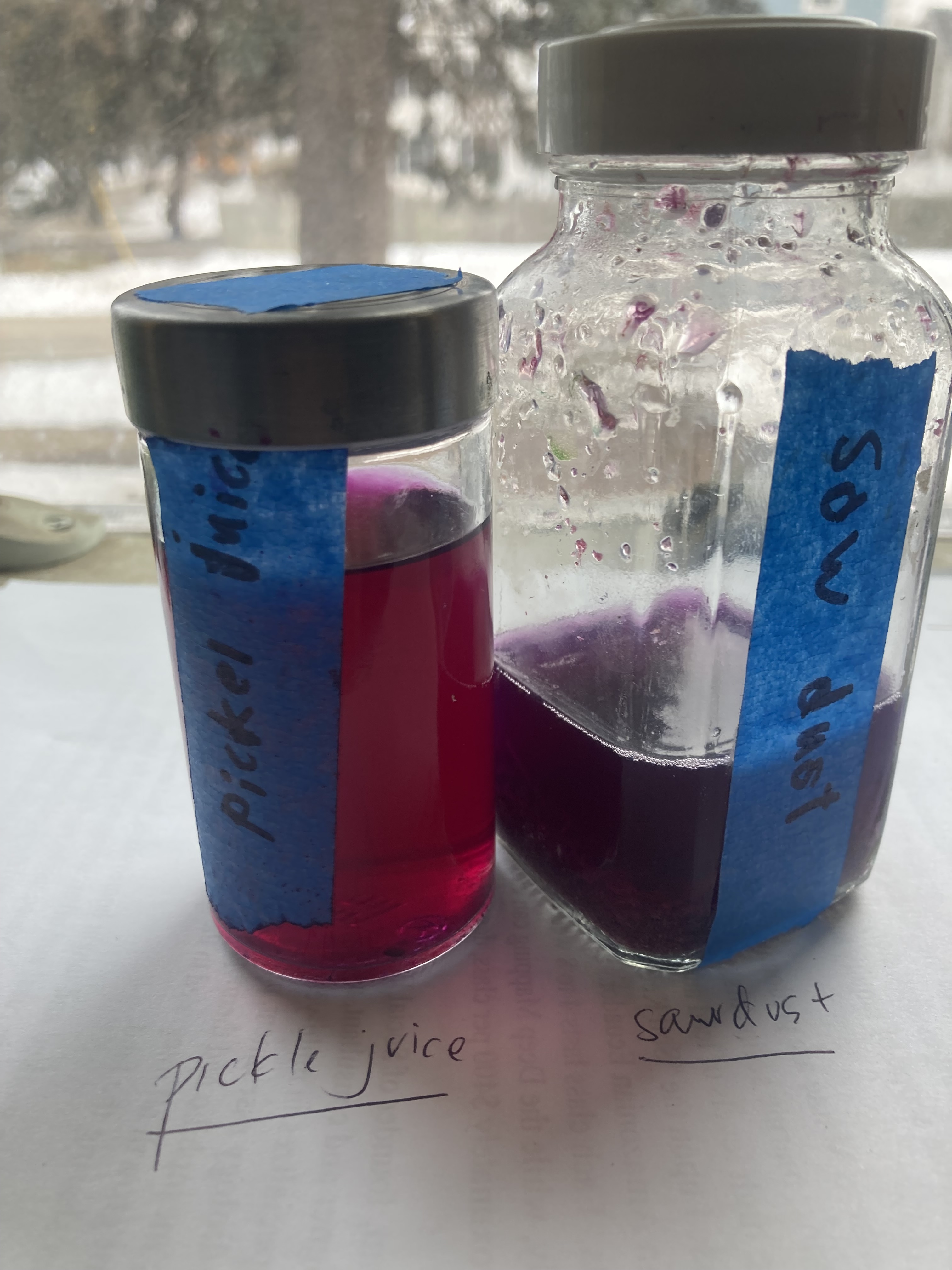
Having only just begun, he pondered why pickle juice and sawdust were beside each other on his Ph scale. His research lead to this conclusion: “The reason pickle juice and sawdust were next to each other was because pine and spruce are softwoods, and more acidic than hardwoods. We got the sawdust from the table saw, and have been cutting pine and spruce for the tiling work. That makes sense.”
“Just two more questions?” he pleaded. He chased down that softwoods are more acidic than hardwoods due to acidic resins, while oak is a hardwood that can be more acidic. Pickle juice is highly acidic, typically 2.5 to 3.9. In contrast, sawdust from pine, spruce, fir is neutral to slightly acidic; pine = 4.1 to 5.3, spruce = 4.7 to 5.8, fir = 5.2 to 5.9. “So, pine is more acidic while fir is more neutral,” he concluded.
“What if we try this again in the summer? We can test the soil when the plants are growing!”
And so our Red Cabbage Ph experiment came to an end. His bristling excitement a testimony to what happens when a student sits beside a Mother Tree, pondering soil and soul.
_______________________
NB: The astute reader may have noticed that here at an Art Farm we use no proper nouns. That is intentional, to underscore the mythopoetic, more than the rational. For example, whatever Ultimate Truth may be, it has more than 1,000 names, which is to say proper nouns, none of which capture the grandeur or sublimity of that whole, many of which lead only to wars.
Humans give names to bring order and cognitive structure to a complex world; naming divides subject from object, while “being” remains intransitive, a verb which takes no object. “Divide and conquer” is a tool of would-be authoritarians and Emperors which leads us to fight to the bottom. In these challenging times, then, let us be together, undivided, to rise to new heights and an expansion of consciousness. And to that end, my pronoun is “We.”
__________________________
Alma Mater’s Daily Bread
Posted: September 5, 2025 Filed under: Child Centered Activities, Farming off the Farm, Little Green Thumbs, Portfolio - Elena's work, What is an Art Farm | Tags: Social ecologies 1 Comment
The often repeated phrase, “Give us this day, our daily bread” must be about soil fertility as much as about hope. The common collegiate phrase “alma mater” is Latin for “nourishing Mother” and so we turn our attention to Gaia, one wise soul herself, the Earth as our nourishing Mother, whose fertile soil gifts freely an abundance beyond compare.
Many soulful stewards of Gaia have I crossed paths with, one of whom was the “Corn Cart Queen.” The common cliche is “know your food, know your farmer,” but the Corn Cart Queen brought that to the fore in Chicago, during the summer season 2003, when she planted Golden Bantam in a shopping cart, then organized people to push the corn cart around the town: Meet your food, meet your farmer.
The Chicago Tribune wrote, “A woman of quiet dedication and passion, she initially planned to push the corn around the city by herself…. However, as word spread about the project, she happily surrendered the cart to a growing community of corn stewards, some of them artists or gardeners themselves. They water it, push it and distribute, if they choose, the small packets of blue corn seeds (three each)… taped to the cart. The seeds are pre-Depression-era corn, which she bought directly from a farmer when she visited Cuernavaca, Mexico.”
The Tribune quoted her, “When people talk about the environment in the city, they always see it as outside themselves. They talk about the lake or whatever. . . . I really want people to see how we consume nature, how we consume corn, how we eat, how we do things — it all has an effect on homelessness, on loss of farms, on history. There’s a 10,000-year history of the domestication of this grass called corn.”
Sandor Katz, the New York Times best selling author, in “The Revolution Will Not Be Microwaved,” wrote about this, “Cornography…was a sort of performance art installation featuring a few stalks of this corn growing in a shopping cart and many different people taking turns, walking it across Chicago.” Katz quoted the Queen, “The corn cart has visited community gardens, toured supermarkets, politicized a street fair, gone out for coffee, and rested in many backyards. When you give someone a seed, it’s such a small gift, but it entails a responsibility to interact with the land.”
Nance Klehm is the “Corn Cart Queen.” As art predates agriculture, her work unfolds at those fertile crossroads; she teaches of our connection, our utter reliance upon, the earth, the sacred ground beneath us. She is a muse among us, having lectured and taught at Chicago’s Museum of Contemporary Art, the Hammer Museum in Los Angeles, the University of Cincinnati, and the Canadian Centre for Architecture in Montreal. She has taught at the University of California – Los Angeles, Northwestern University in Evanston, Illinois, and Dartington College in the United Kingdom, as well as for countless community groups worldwide. This Queen was honored in 2012 as one of Utne Reader’s “Twelve Visionaries Who Are Changing Your World.”

It can be lonely at the vanguard, but Nance always works in community, teaching others the art and science of the soil. Along her path she worked with Flordemayo, a Mayan Elder, who founded The Seed Temple in Estancia, New Mexico. Nance helped assemble the “sacred heritage seeds for future generations.” My family was asked to grow heirloom beans and then give some back to help keep the Temple’s stock alive. For many years now we have grown those seven varieties annually, whereby my children learn first hand that food does not come from a grocery store, that harvesting is harder than consuming but the wild abundance of a fresh grown tomato or peach picked in late August is a joy beyond compare.
Flordemayo herself is one of the 13 Indigenous Grandmothers, all of whom are “committed to supporting all people in reclaiming their relationship with Mother Earth, advocating for a shift toward a more conscious and harmonious connection with nature and all living beings.” The International Council of Thirteen Indigenous Grandmothers come from around the world – Nepal, Brazil, South Dakota, Gabon, Montana, Mexico, Japan, France – as “a collective of women devoted to restoring and uplifting the sacred feminine wisdom that nurtures balance and harmony in the world. [They] stand for peace, justice, human rights, environmental protection, food sovereignty, and the health and welfare of children and the elderly, for today and generations to come.”
Nance and I crossed paths almost 30-years ago, both on Chicago’s west side, and in the LaSalle Street canyons of the financial district; she was outbound to WWOOF in Australia (Worldwide Opportunities on Organic Farms), while I was headed to Manila, the Philippines on a humanitarian finance quest to establish a currency based upon humans’ ability to communicate. Nance’s path always has been more rooted, more practical.
Among her challenges has been pursuing community-based work during the 50-year period – 1975 to 2025 – when American culture shifted dramatically towards rampant consumerism, free market ideology, and unchecked individualism. Talking about my generation – the Baby Boomers – Bill McKibben wrote, “So what the hell happened? How did we go from an America where that kind of modest [suburban] paradise seemed destined to spread to more and more of the country to the doubtful nation we inhabit fifty years later: a society strained by bleak racial and economic inequality, where life expectancy was falling even before a pandemic that deepened our divisions, on a heating planet whose physical future is dangerously in question?”
How did the forward thinking Civil Rights Act of 1964 and the Voting Rights Act of 1965 give way to the radical gerrymandering of our era? Money, banking, free markets and power politics are the domain of mankind, human invention, while the Grandmothers and Queens of Gaia speak of the ground beneath our feet, the soil, everywhere beneath everyone all of the time.
Nance’s 2019 tome, “The Soil Keepers,” makes plain, in her preface, our path forward: “To the entire menagerie of animal, fungal, and plant beings, both the seen and unseen, thank you for your unflinching love and core teachings. I am forever your student.”
All life is one. Life calls to us. We are wise to heed her call.
_____________________________________
A Corn Cart video is here: https://youtu.be/iTKbrO7ZTzk?si=5wnScRsxE3OZmlSo
Nance Klehm’s “Social Ecologies” is here: https://socialecologies.net
Grandmothers’ Wisdom is here: https://www.grandmotherswisdom.org
Grandmother Floredemayo is here: https://www.grandmotherflordemayo.com
_____________________________________
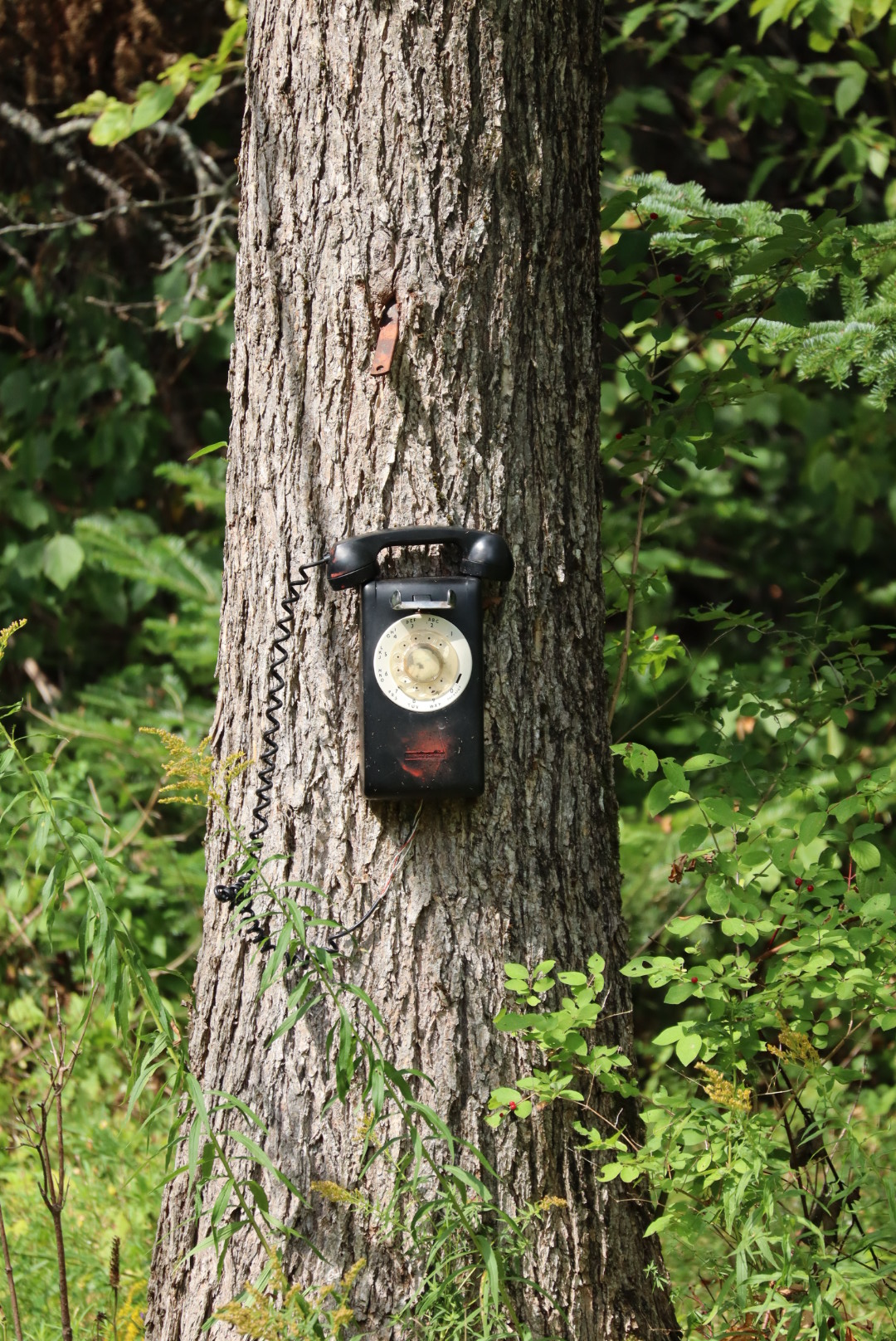
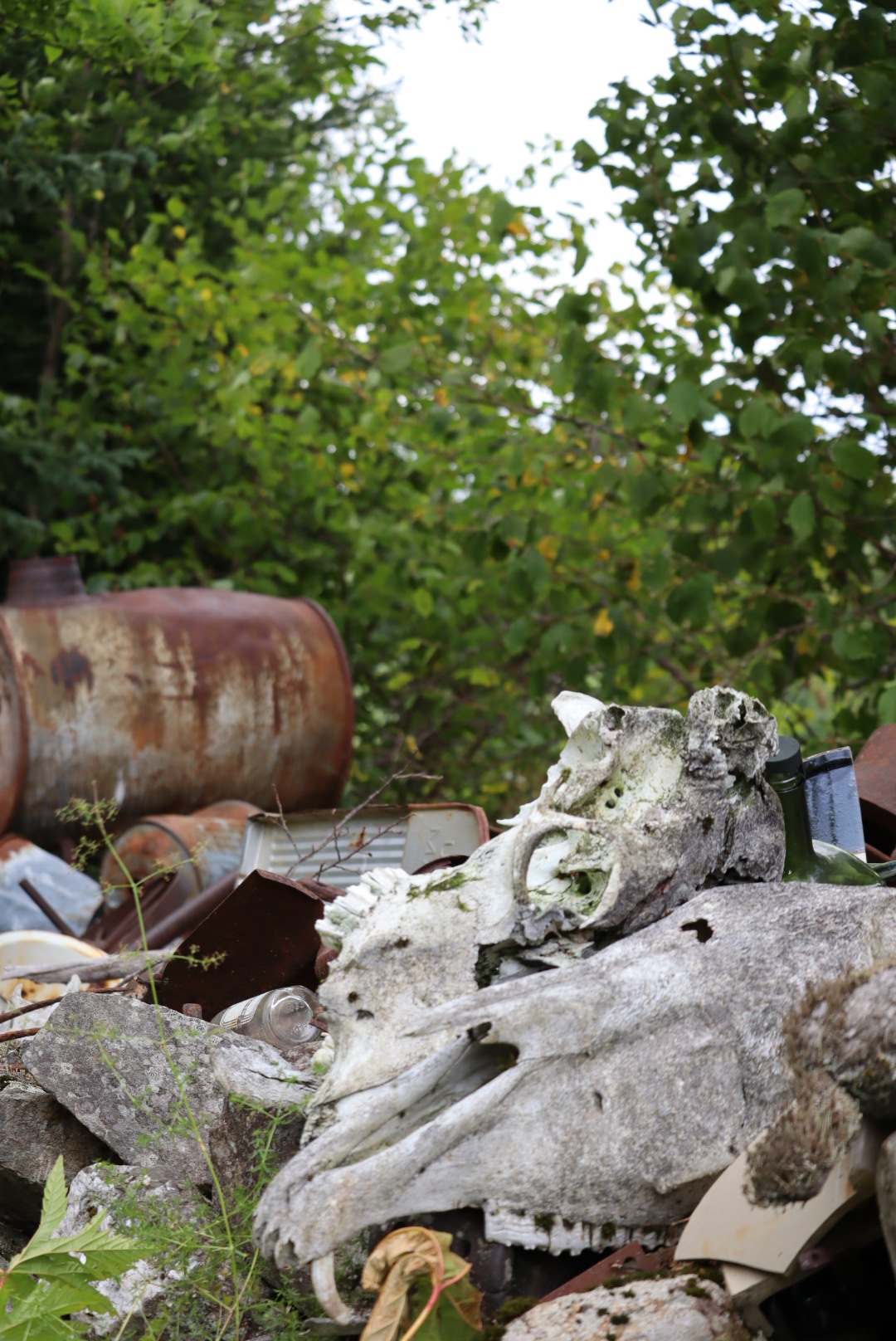
Credit where credit is due, Elena’s photographs appear here.
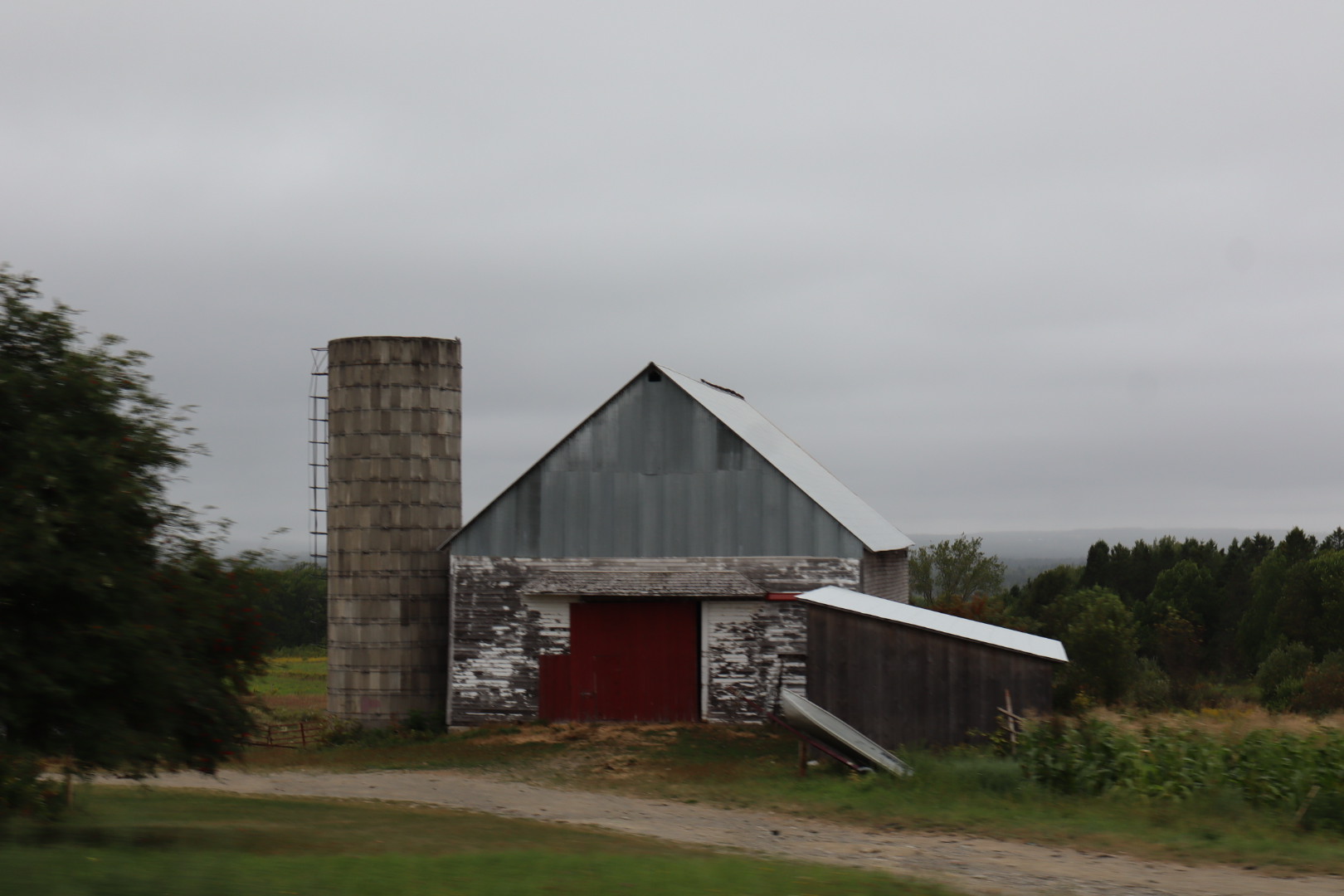
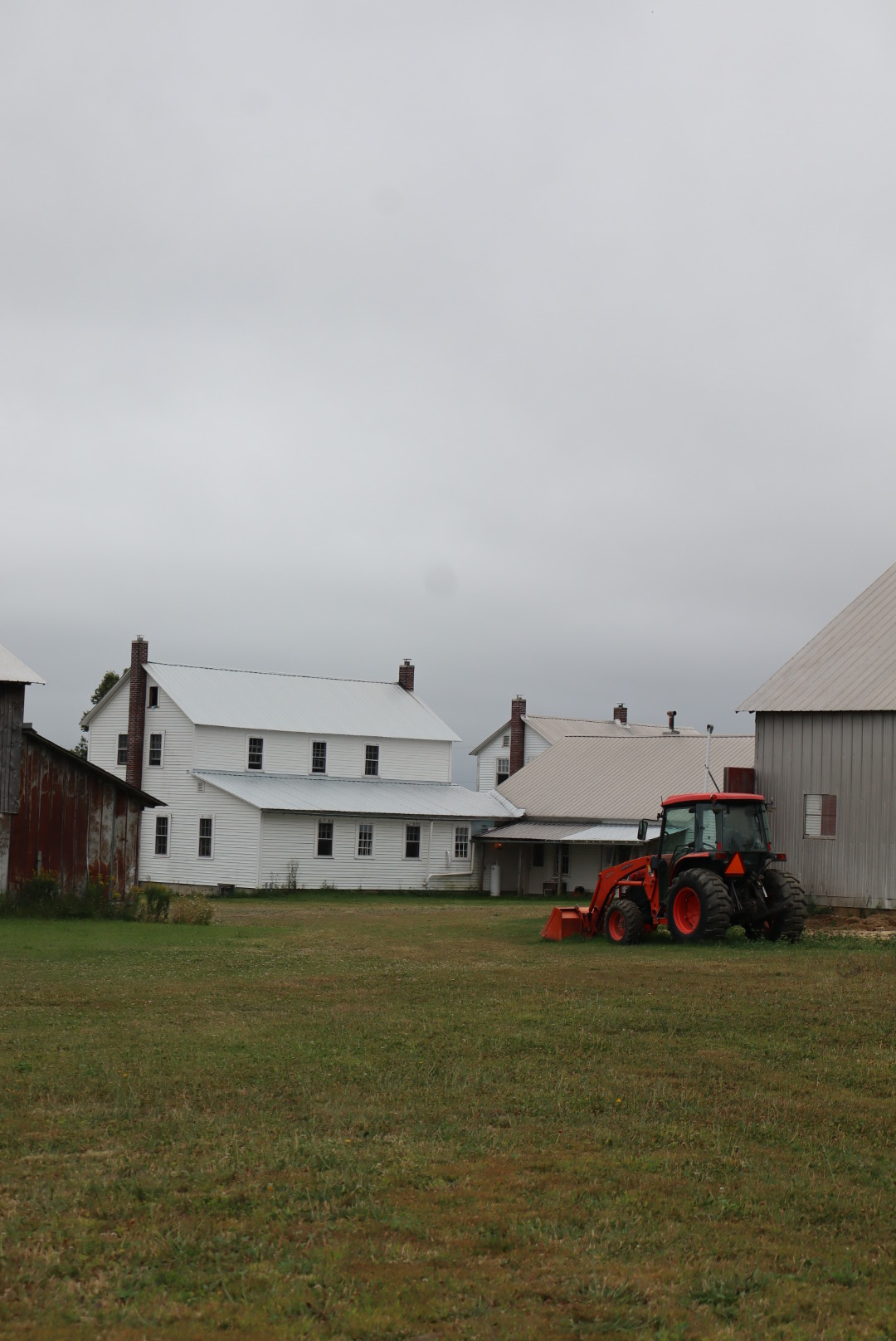
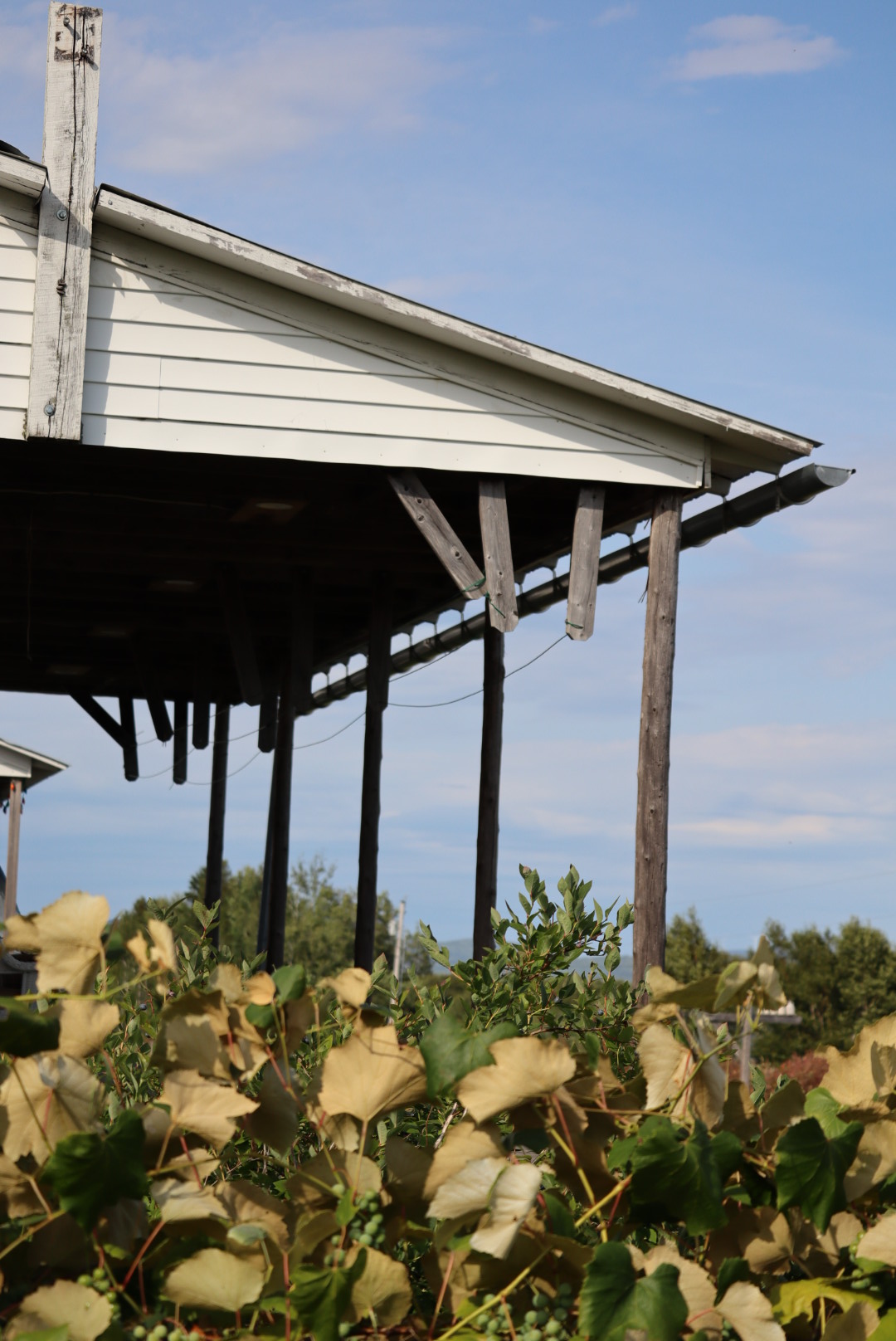
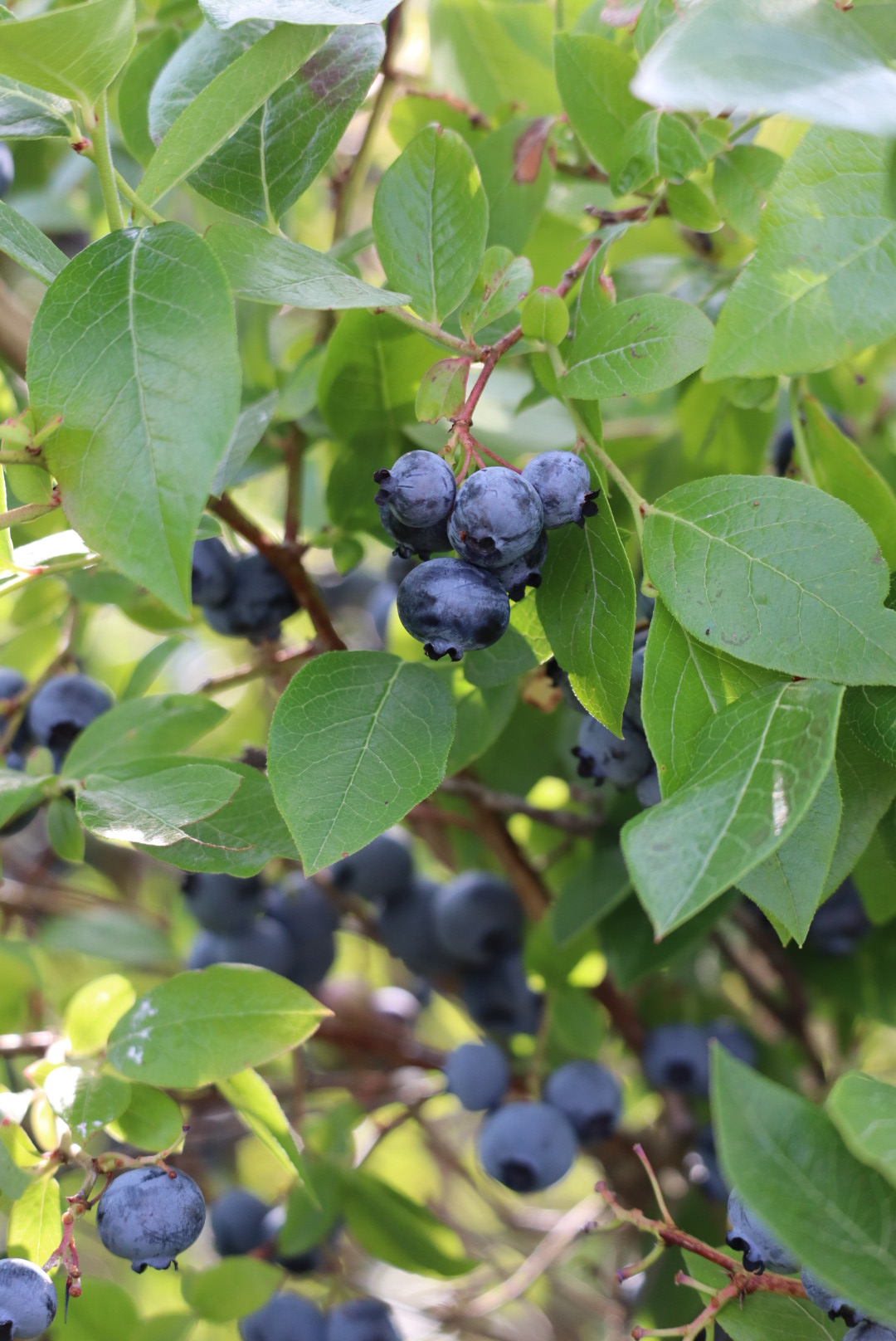
Recently we drove north to nowhere, Cold Brook Road in Southern Aroostook County, Maine. Between 1793 and 1815 Northern Maine was a major producer of wheat, known as “the breadbasket of New England.” In the 1940s and 1950s Aroostook County was the top producer of potatoes in America. Big skies, open vistas, quiet abounds there. Our friend Kirk, a Master Electrician, Master Cabinetmaker, Builder and Humble Farmer welcomed us to his 157 acre-farm in Amish country.









 an Art Farm