Rogue Hollywood; from the Library of Alexandria to Carnegie Libraries
Posted: March 7, 2025 Filed under: Chronicles of a First Time Parent, consciousness, Portfolio - David's work, What is an Art Farm | Tags: books, carnegie libraries, cosimo de'medici, Dreamworks SKG, education, history, library of alexandria, technology, travel 1 Comment
Douglas was attending classes in History and Theology at Loyola University but his most serious work was done at the RMG office. He and I were joined at the hip, constant conversation, swapping ideas at a fever pitch.
RMG formed the Information Alliance among leaders in library automation:
- Robert F. Asleson, Esq, had decades of experience as President of five library and information industry companies: University Microfilms International, R.R. Bowker, Information Handling Services, International Thomson Information, Inc., and The Library Corporation. He was thoroughly versed in all issues of copyright clearance.
- Brower Murphy, a self-described “information egalitarian” had pioneered the use of CD-ROM technology for data storage. He then developed NlightN®, a hypermedia universal network allowing a single search across the entire world of published electronic information. This was google before Google, except, created in 1991, it was not designed for the internet.
- Vinod Chachra, President and sole owner of VTLS, Inc. oversaw a staff of 70 with customers in 18 countries, requiring 16 difference languages and multiple character sets and scripts. His software provided a turn-key solution to all library functions.
- Rob McGee and Howard Harris, another RMG Consultant, formed the alliance and Rob acted as editor of the “Concept & Vision” and the business plan.
Our approach to the Worlds Digital Library was direct: “Empowering the individual by access through libraries to the world’s information, ‘anyplace, anytime.’” The philosophy was broad and inclusive, the battle plan was specific and precise. A holding company, the DLC would operate through subsidiaries, each business creating a component of the whole. The first subsidiary was The Index Company, which would:
- digitize book images from collections of widely-used library materials
- compile collections of machine-readable tables-of-contents and back-of-the-book-indexes for subject oriented sets and collections of books
- create and distribute merged collections of the indexed records to provide access to Digital Libraries.
The DLC was the economic engine driving GDC. On paper, the DLC projected a Year 1 loss of ($4.08 M) but turned positive in Year 3 and by Year 5 was in the black at a profit of $6.3 Million USD. At the end of the 20th century, “hockey stick” projections were not uncommon, but questioned by conservative bankers.
On 7 May 1994 the “Concept & Vision” paper was finished, and letters of support were received from:
- Chair of the Virginia State Library Board
- Librarian of Harvard College
- Executive Director of CAVAL (Co-operative Action by Victorian Academic Libraries [Australia])
- President Council on Library Resources
- Deputy Director General, National Library of Australia
- President of the Council of the European Information Industry Association
- Executive Director off the United States National Commission on Libraries and Information Science
It is worth noting some of their comments:
- The Librarian of Harvard College wrote, “There are going to be a number of modest efforts to build the digital library. Yours could be the one most likely to succeed on a large scale.”
- Deputy Director-General of the National Library of Australia wrote, “The approach envisaged in this paper is sensible and shows the appropriate understanding of the current state of the industry which is needed for success to be likely.”
- The President of the Council, European Information Industry Association, “…we shall have no hesitation in bringing this proposal to the attention of our members and examining ways in which we can lay a supportive role in Europe.”
While writing the “Global Data” plan, the landscape in Hollywood was changing. Steven Spielberg, Jeffrey Katzenberg, and David Geffen announced they were going rogue, to create their own live-action and animation film studio. This meant Hollywood’s studio model was being revolutionized, and the financier with whom I was hoping to meet had deep roots – I was told – in that old model. If the paradigm was changing, then I needed to write my own version.
One spring evening at the Chase Street house, Douglas and I sat down at the kitchen table to write “Top-Down meets Bottom-Up” which compared Paramount Communications and Global Dakota Corporation, a $10 Billion colossus versus our $38 Million start up. I was David out to slay Goliath. Working deep into the night, we laid out the categories and filled in the blanks, referencing medieval history through the Internet. Laurie, who is quite savvy in the C-suite, told us it was sheer hubris.
Libraries have been central to all civilizations, throughout recorded time, our collective repository of knowledge, a storehouse of the written word – cuneiform or bound – a place where scholars gather to share knowledge, to push the vanguard. The earliest libraries have been discovered in present-day Syria, and in temple rooms in Sumer (present day Iraq), each in the Cradle of Civilization. The Library of Alexandria, in Cleopatra’s Ptolemaic Egypt reigned among the most significant libraries of the Ancient World, the corpus of Greece and Egypt in one repository, until Julius Caesar’s boys came to town, on military conquest, they burned the library. Dust to dust, ashes to ashes.
30,000 clay tablets from the Library of Ashurbanipal have been discovered at Nineveh – the recorded wealth of Mesopotamia – while the University of Chicago holds baked clay tablets, the administrative backbone of the vast territory of Persia, written in Old Persian, Elamite, and Babylonian languages. The Imperial Library of Constantinople is worthy of mention, authors such as Plato, Aristotle, Demosthenes, Socrates, Thucydides, Homer and Zeno stored and sought. Themeistius, a pagan philosopher and teacher, hired calligraphers and craftsman to produce the actual codices then created a university-like school centered around the library. Lao Tzu, author of the Tao Te Ching, was the keeper of books in the earliest library in China. Into this majestic idea Rob McGee stepped as a young boy, his bike’s basket filled, riding home to 1505 Grace Street with “talking books” for his Grandmother, an armful for himself.
The Free Public Library is not free financially – it is paid for by taxes – so what is free is the access to information. Traditionally libraries had been the private domain of Princes and Kings, Bankers or Clergy. The Renaissance brought an awakening when, in 1444, Cosimo de’Medici created the San Marcos Library, one of the earliest public libraries. Cosimo combined his own extensive collection with the 800 manuscripts of Niccolo de Niccoli, a humanist who worked as a copyist and collator of ancient manuscripts, and was the creator of cursive script, known today as “italics.” Niccolo’s humanist vision was inclusive: “…to the common good, to the public service, to a place open to all, so that all eager for education might be able to harvest from it as from a fertile field the rich fruit of learning.”
Pierpont Morgan’s Library, in the grand style of the Italian Renaissance, was opened to scholars and the public in 1924, the gift of J.P. Morgan, the banker of legend, who indirectly was behind the greatest public library building program in history. In 1901, J.P. Morgan bought the Carnegie Steel Company for $18 Billion (in 2025 dollars), which allowed Andrew Carnegie to vastly expand his brick and mortar ambitions. Between 1883 and 1929 2,509 Carnegie Libraries were built around the world, free to the public. By 1929 almost half of the public libraries in the United States were Carnegie Libraries.
At the end of the 20th Century, many saw change on the horizon, bricks and mortar becoming digital, access universal, which seemed like Archimedes’ fulcrum, upon which we could move the world. Rational self-interest held no motivation for me; e-commerce and social media pale in comparison to the humanist tradition. Douglas, though, had that capitalist urge, and his enthusiasm was grounding for me. He and Rob delivered the Information Alliance which undoubtedly could make the products to drive revenues. The Digital Library Corporation was the core asset, while the Turtle News Network and the community retail outlets expanded our reach.
I played the hand I was dealt. “Top Down Meets Bottom Up” became page 41 of the Global Dakota Business Plan. On 1 July 1994 the Business Plan, with consolidating Pro-Forma Financial Statements, was complete, weighing in at 12 pounds, almost 1,000 pages printed on 100% post consumer recycled paper. Having finished the first task, I tackled the second challenge: a meeting with the Senior Chairman of the Board of McDonald’s Corporation.

Kennebunkport Patrician, Red-Neck Riveria, Skull Valley
Posted: February 21, 2025 Filed under: Art & Healing, Chronicles of a First Time Parent, consciousness, Portfolio - David's work, What is an Art Farm | Tags: history, nature, photography, travel 2 Comments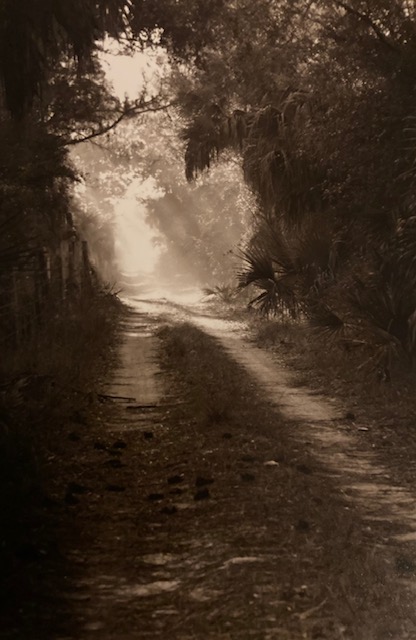
RMG Consultants, Inc. was mission driven, not pursuing rational self interest as conventionally defined. Rob’s mantra was to remain “ruthlessly objective” and have no conflicts of interest. We served the library as civic institution of learning and education.
Douglas became a corporate officer, with increasing responsibilities, was named Vice President of Operations and Treasurer of RMG Consultants, Inc. He encouraged Rob to pursue the for-profit sector and so they launched Infostrat, Inc., then formed an Australian-based company, RMG/CAVAL to pursue the Austral-Asian market. Douglas became an officer of those entities.
On the home front, I had left the barrio, moved north to Rogers Park, on the lakefront. Brian had graduated from Cornell College with a Bachelors of Arts in Economics and Political Science, moved back to Chicago, full-time at RMG, and lived with me. Douglas also moved to Rogers Park, but found a studio apartment off Howard Avenue, at the El terminus. I believe there was a crack house across the hall, and once he heard gunshots while walking on Howard Avenue. We were on very opposite sides of Sheridan Road.
In January 1991, the first patrician from Kennebunkport, Maine announced that Operation Desert Storm – the First Iraq War – would be televised live; we all pulled up chairs around the TV. Tal Lekberg, my carpenter friend, was in the Coast Guard and had been called to active duty in the Persian Gulf. Not knowing if he would return home alive, he brought his entire collection of single malt Scotch Whiskey to our apartment – at least two dozen bottles – asking me to safeguard it. “It’s okay if you drink it. Maybe some will remain if I return.” Like a fox guarding the hen house, we heartily imbibed while watching the destruction of the cradle of civilization, in pursuit of the quest for oil.
December 1991, Douglas and Laurie had decided to get married, and Douglas pined to be wed in Paris, at the Cathedral of Notre Dame, I as their witness. It made great sense and we all bought tickets, flew across the pond; I arrived first, Douglas and Laurie a day or two later. A friend arranged an apartment for me, and Laurie knew someone from the U of C who had a flat there. We met and celebrated love in Paris, when we were young and all life easily opened before us. But Notre Dame was not so easily scheduled and the wedding did not take place. We took the train south to Chartres, and beside the Cathedral I ran the table at a bakery beside the nave doors. I bought one of everything and together we ate pastries, at the foot of Chartres Cathedral. It was grand. Essentially they were married then, but officially it took two months more.
In February 1992 Douglas and Laurie got married. In April I moved off-grid, to Holmes County, Florida’s “red-neck riviera,” to a swamp along the Choctawhatchee River. Such was the synchronicity of the times, that even the swamp had a role in library automation.
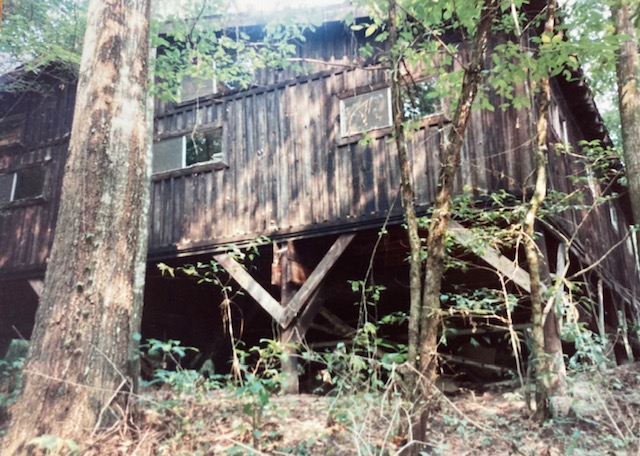
In the tradition of eccentric booksellers, Bob Allenson seems worthy of mention. He is a third-generation bookseller of religious literature but his passion is making bibliographies of rare antiquarian books; his “John Henry Newman, 1801 – 1890: A Preliminary Register of Editions from 1818 to 1890, Together with Original Editions Published Posthumously” is the definitive catalog of Newman’s work. Sometime in the 1980s he was hired by the American Theological Library Association to select the texts that would be digitized for their online corpus of theological literature. Bob was still working on that when I moved there.
Alec R. Allenson, Inc., was launched in London, then relocated to Baltimore, Maryland and eventually to Naperville, Illinois. Bob’s father was a businessman who created a successful company selling textbooks and research materials to Christian seminarians. Bob is a Quaker, committed to social justice who joined the March to Selma and has little interest in business. By 1979, he had decided to remove himself from the mainstream culture and purchased acreage along the Choctawhatchee River in rural Westville, Florida, population 261. Wanting to get away, he found his spot. A friend and I packed the Naperville bookstore – a most remarkable experience – and shipped five semi-trailers of books to the swamp, where Bob’s son-in-law Caleb had built two pole-barn houses where the books would be stored, for sale.
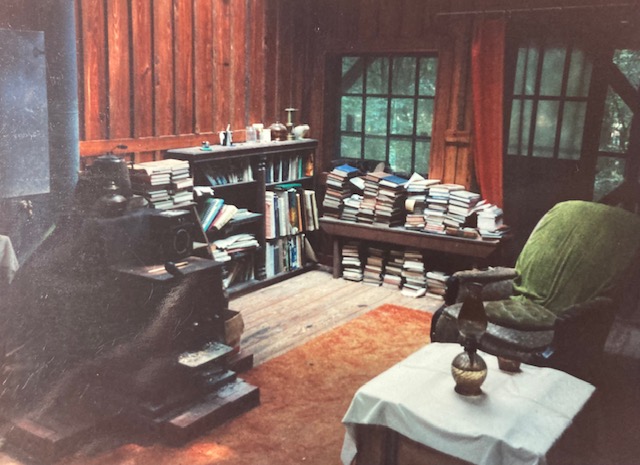
I had kept in touch with Bob, and he asked me to help him with the business. To my mind, at the age of 31, moving off-grid seemed a most sensible thing to do. In April of 1992, Brian and Douglas drove me to Union Station in Chicago, we said goodbye, then I climbed aboard Amtrak’s “City of New Orleans” southbound, down the Mississippi River to New Orleans. I spent the night at a hostel, then boarded a Greyhound Bus east, along the Mississippi and Alabama coast. Somewhere along Florida State Route 20 I got off the bus, then rode my bike north. The Sheriff and his men stopped and questioned me – I stood out like a sore thumb – but let me continue and eventually Bob and his wife Dorothy Ann drove down to pick me up.
Bob embodied his Quaker ideals by visiting prisoners in the State Penitentiary, and, for honesty and transparency, by wearing no clothes. I recall Bob in his kitchen, holding a glass of white wine, cooking ratatouille and lamb chops, discussing the Christian mystics Swedenborg and Meister Eckhart, all while standing buck naked in his birthday suit. To the question, “what’s the recent weather like over there Bob? I’m trying to figure out what to wear?” he replied “Well as far as I’m concerned, you don’t need to wear anything at all.” My guess is he wore clothes to the State Penitentiary.
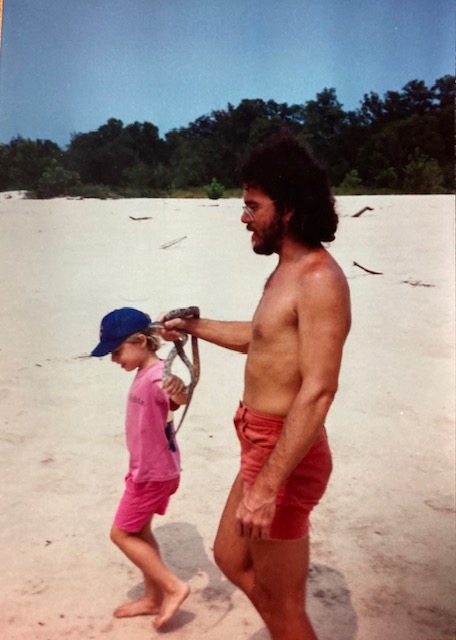
There was no work to be done, and neither electricity nor running water, so in the swamp – which was, in fact, an oxygen factory – I mostly sat, listened and read. Storm clouds would amass over the Gulf of Mexico, then by afternoon would float north overhead. Almost daily, rain like a typhoon fell, massive amounts of water, relieving the humidity. Caleb and his family also lived in the swamp and at night we would paddle on the river, I in front with a flashlight, scanning for the green eyes of alligators at the water’s level. Once found, they would drop beneath the water and silently swim away, even beneath our canoe. Caleb laughed at his unseasoned passenger from the North.
Eventually it became clear that life there was not sustainable and so I returned to Deerfield, and then unexpectedly, moved out west to Prescott, Arizona. I settled into a trailer, at the foot of a butte, near Skull Valley. By coincidence I had been introduced to an older gentleman, who was active in trading agricultural commodities. Given my background, he was curious of my interests and offered to introduce me to a financier he knew, who purportedly had helped launch McDonald’s Corporation. He had two conditions: I needed to write a Business Plan and get the approval of the Senior Chairman of the Board of McDonald’s Corporation. No small task, although the writing seemed more daunting than the approval, so willing to shovel coal, I was willing to get to work.
The Chicago Tribune had announced an architecture competition for public housing, to redesign the Cabrini-Green projects. I entered. I had met Paolo Soleri, the architect and urban planner – a visionary, widely overlooked – who had built Cosanti and Arcosanti based upon the design of medieval cities of the Italian countryside; he advocated a hyper-dense city surrounded by open space and the natural environment. Living on the high desert, in a trailer with no phone or TV, I began to ponder the social contract, how design manifests those ideas, and the coming impact of unlimited access to information.


 an Art Farm