Making Banana Bread for Grandpa
Posted: January 8, 2012 Filed under: Child Centered Activities, In the Kitchen 3 CommentsWe’re going to see Grandpa and decided to make some banana bread. I go the ole Joy of Cooking route with a couple of tweaks:
Preheat oven to 350
1 3/4 C all-purpose flour (I use half whole wheat, half all-purpose)
2 1/4 tsp double-acting baking powder
1/2 tsp salt (I skip)
Sift above ingredients together (anyway you choose to sift!)

Blend together:
1/3 C shortening
2/3 C sugar (I use 1/4 C)
3/4 tsp grated lemon rind (I use 1 tsp)
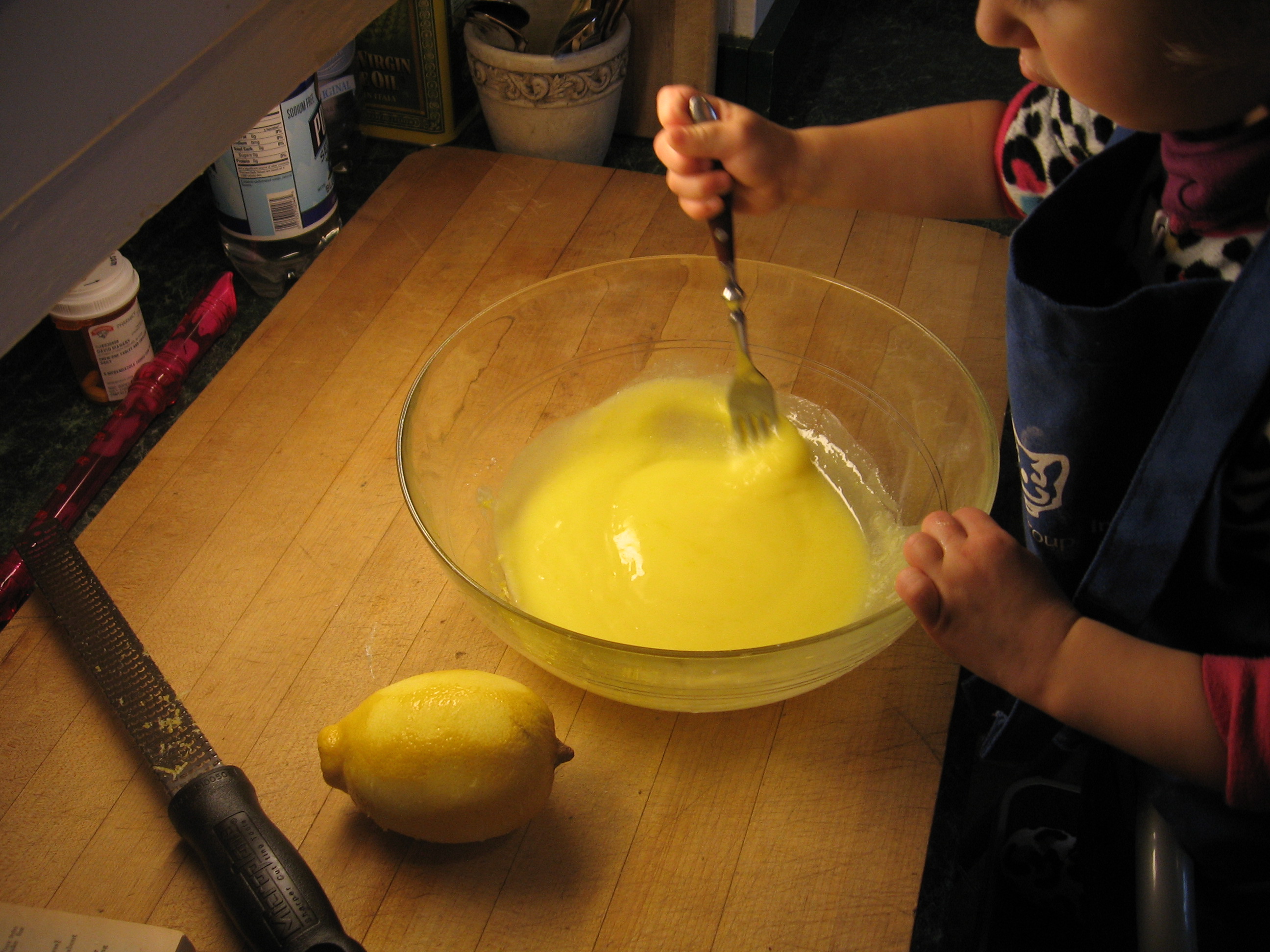
Beat in 1-2 eggs and 1- 1 1/4 C ripe, mashed banana (mashing the banana is the BEST part)
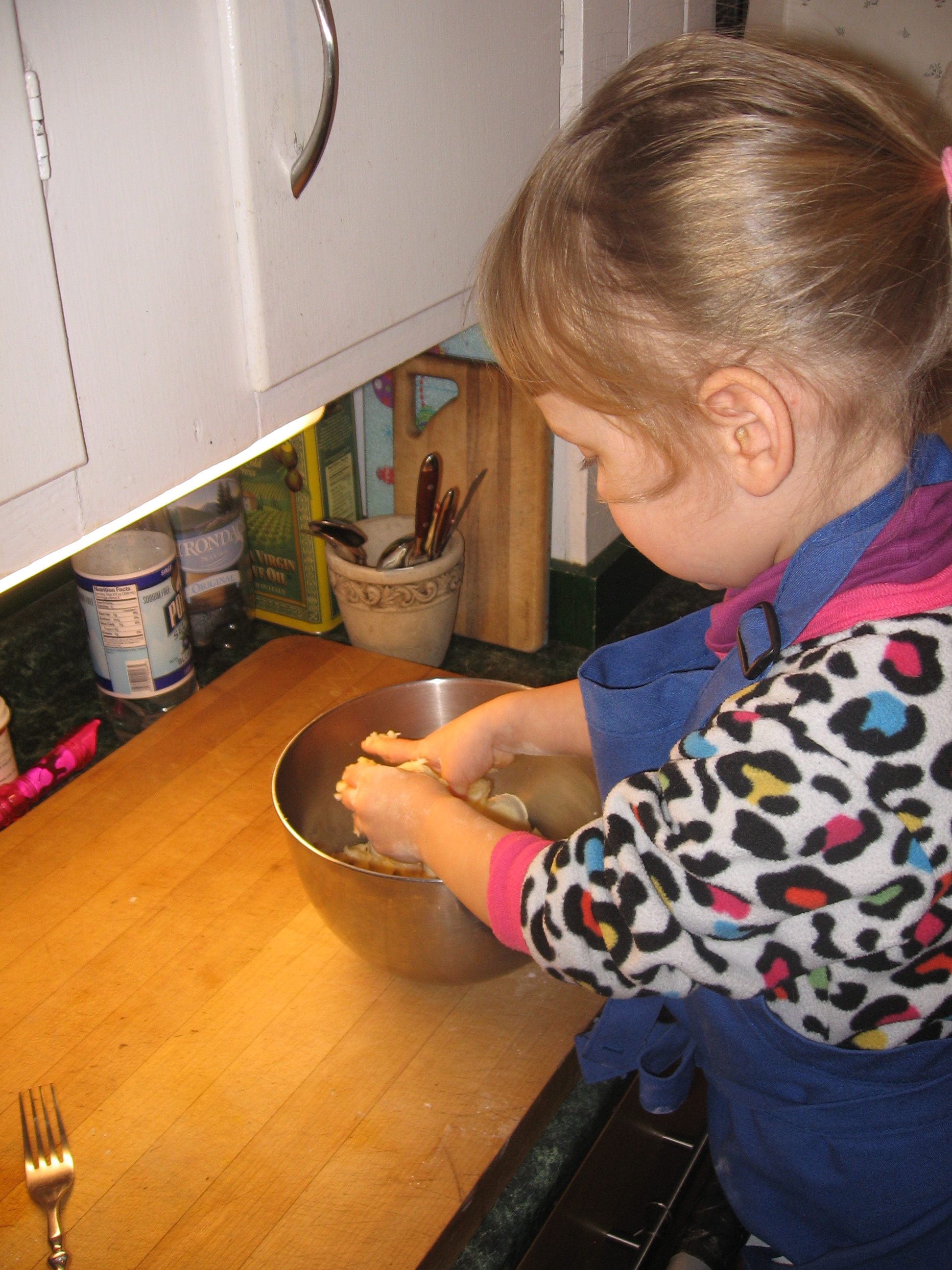
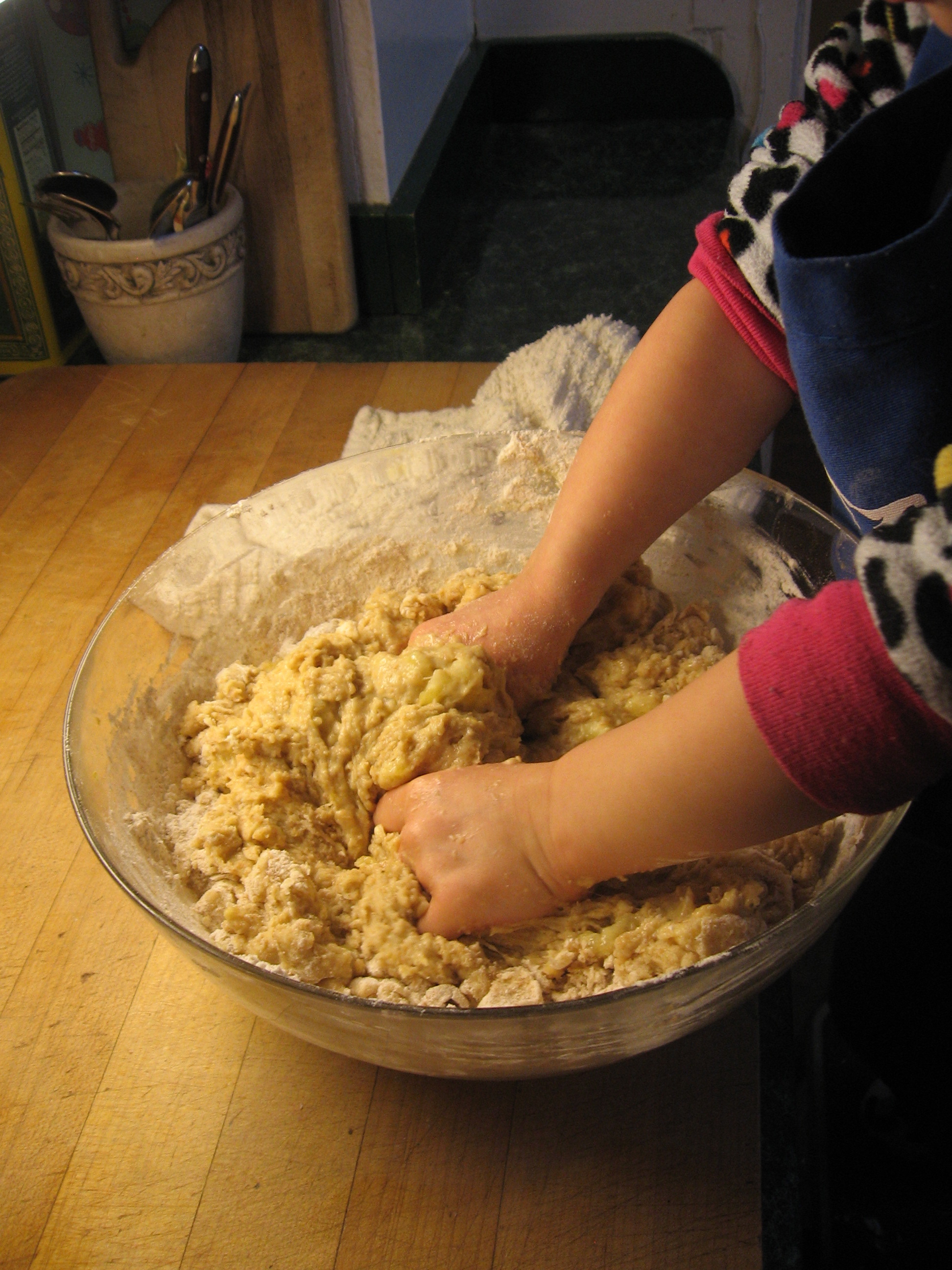
Add sifted ingredients to the egg mixture in increments and stir (or smoosh) until smooth.
Put batter in greased bread pan and bake about 1 hour. 

Top with cream cheese and enjoy!!

Planning Playful Learning Spaces for Children
Posted: January 6, 2012 Filed under: Art & Healing, Child Centered Activities 3 Commentsfrom Mariah Bruehl’s Playful Learning
“While engaging in learning experiences provides great opportunities for you and your child to learn and grow together, there is nothing that fosters independence and inspires creativity within children more than a thoughtfully prepared environment. While working as both a teacher and an administrator, I was profoundly aware of how the physical environment shapes children’s behavior. In my own experience with designing classrooms, I have witnessed firsthand how thoughtful design can influence children’s ability to learn. Every decision about presentation, organization, and selection of materials will have an impact on how children interact with their surroundings. The same principles hold true for the home. I am sure that many of you have observed how your children engage with different toys in different ways after their play areas have been cleaned up or organized. By applying the principles of good classroom design to your home, you can open up new avenues of exploration for your children, foster independence, and nurture self-esteem – and maybe even gain some precious time for yourself in the process.”
I really learned the importance of organizing and preparing spaces while working with youth in school settings in several public housing developments in Chicago. So often these youth would come to me (for either individual or group art therapy sessions) filled with anxieties which either manifested as acting out or withdrawn behaviors. The arrangement and presentation of the private space we used was a powerful, non-verbal message to them stating that all things are respected here – including you; everything has a place here – including you; and everything you will need to have a successful experience is here – starting with you.
Bruehl offers some questions to ask when designing a space for your own child:
- Can your child access the materials in the play space independently? Are they organized in baskets or bins that are clearly labeled so your child knows how and where to put things away when finished with them?
- Are the materials presented in an attractive manner that invites your child to use them?
- Do the materials, toys, and games represent a balance between your child’s and your own preferences? Do they represent what you value and thus encourage your child to engage in activities that you feel good about?
- What is your child currently interested in? If your child no longer plays with dinosaurs, but has been talking a lot about birds, make sure that the play space reflects this current passion. Rotating toys is a great way to keep your child interested in play space activities and ultimately prolongs the life of your child’s playthings. It never ceases to amaze me how excited my girls get about a toy that comes back into rotation. The nostalgia they feel toward a toy they have not seen in a while is almost more than their delight over a brand-new toy.
- Is the play space a calming environment that allows one to focus on the task at hand without distracting colors, decorations, or objects?
- Are you seeing things from you child’s perspective? Put yourself in your child’s shoes to determine the right height for displaying and storing materials and hanging art.
- Is this a space that makes you want to make art, explore science, write stories, and more? If so, would you have everything you need to do what you want to do? What else would you add to enrich and deepen your child’s learning experience in the play space?
Leave it to a Child
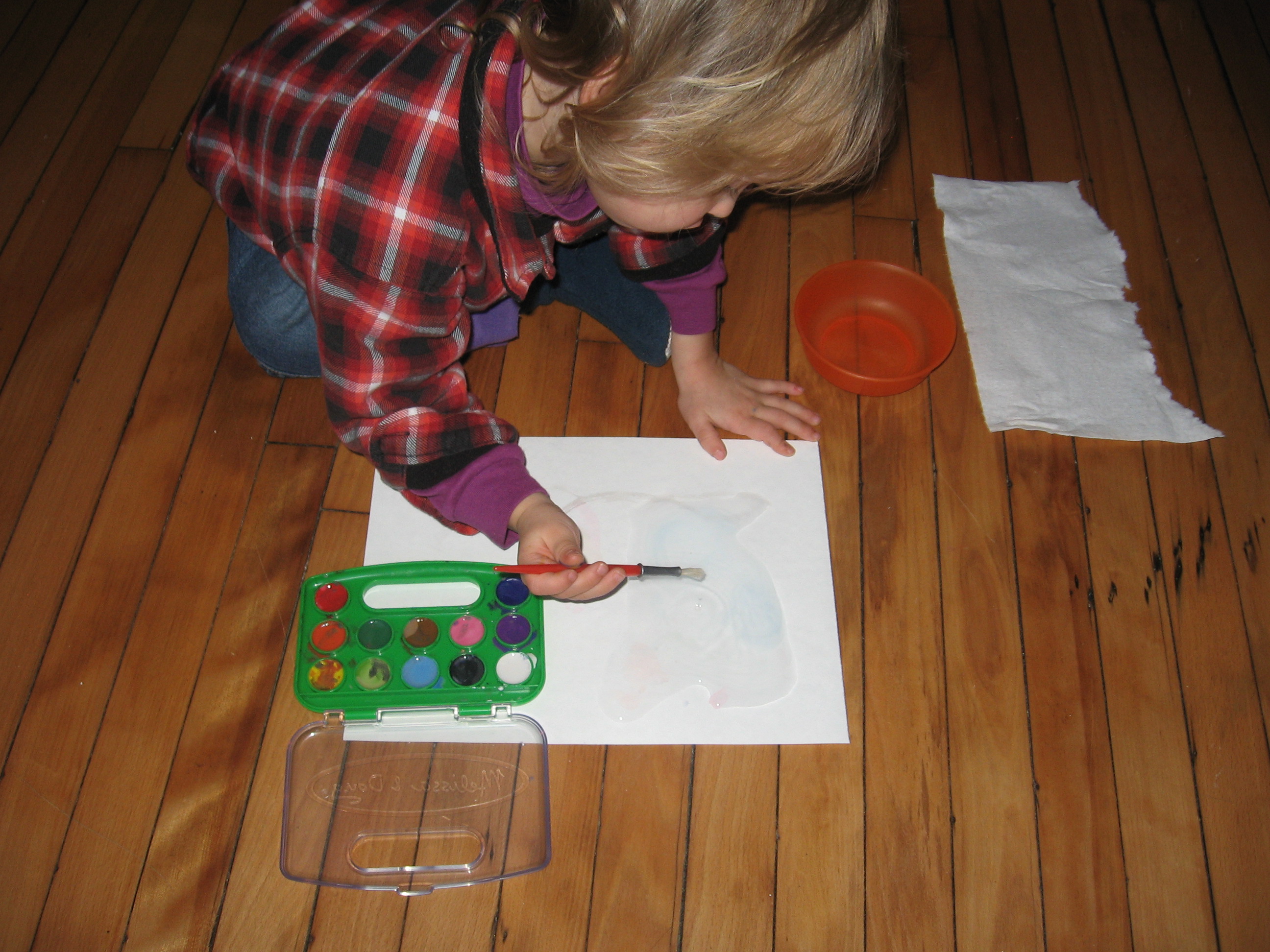
Posted: January 4, 2012 Filed under: Child Centered Activities, Chronicles of a First Time Parent | Tags: painting with watercolors 3 Comments…to come up with new ways of doing things. That’s one of the cool things about making art – the possibilities for solving problems are endless. It should not have surprised me when my 2 1/2 year old decided that she could get BETTER results from painting with watercolors if she first poured the entire bowl of water onto the paper. She dabbed colors into the pool with her brush and then watched the swirls of color move throughout the puddle. Totally fascinated her and reminded me to keep an open mind…and a roll of paper towels. 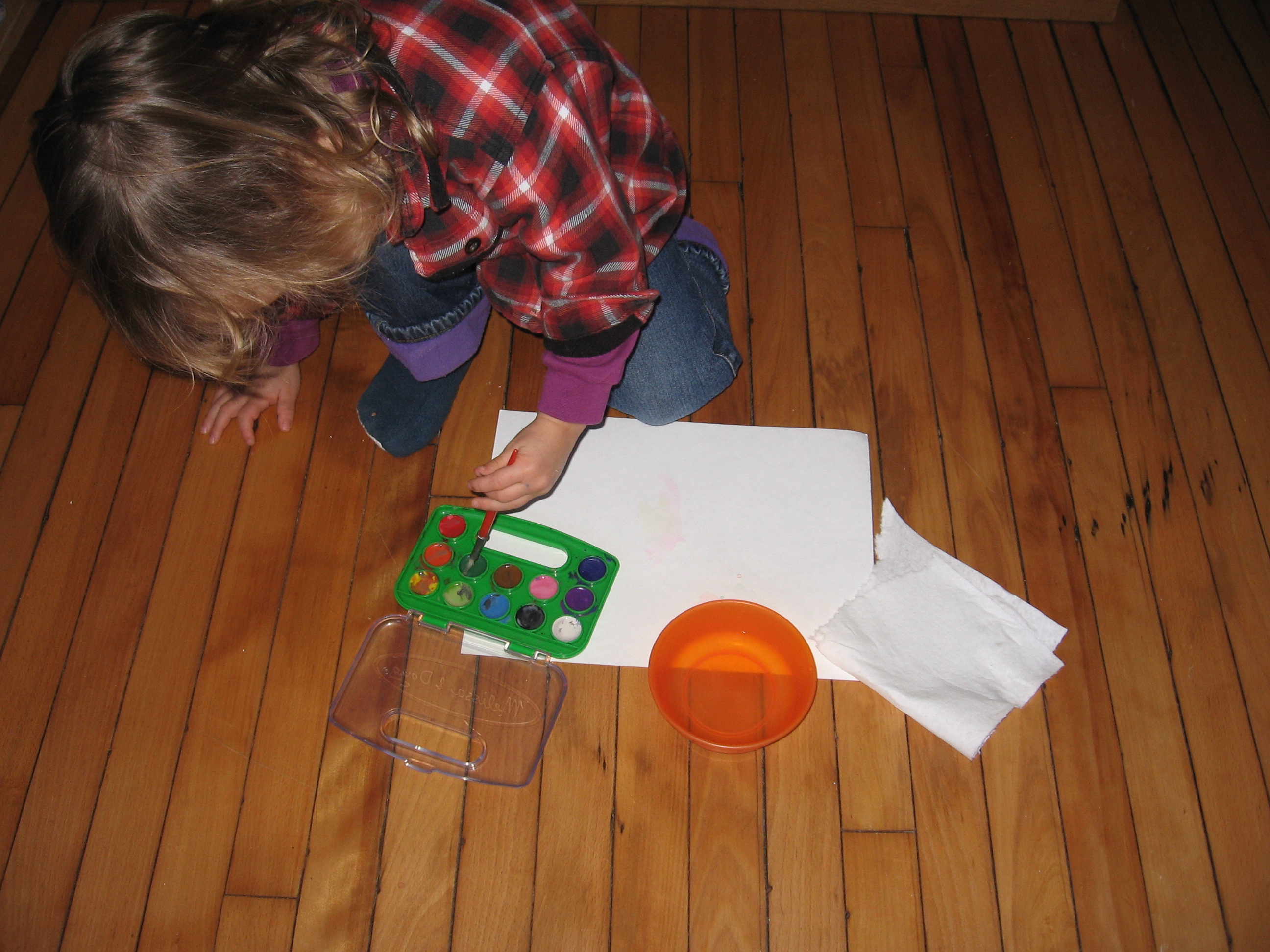

Foundation of Love
Posted: January 2, 2012 Filed under: Chronicles of a First Time Parent, Gallery - Quotes 4 Comments“If we do not know how to take care of ourselves and to love ourselves, we cannot take care of the people we love. Loving oneself is the foundation for loving another person.” from Thich Nhat Hanh’s Your True Home
As a parent, I’m role modeling self-care to my daughter. I cannot expect her to learn from just my words alone. I must show her how it is done – or not done. The behavior must match the words. This is not a simple task.
Happy New Year
Posted: January 1, 2012 Filed under: Gallery - Visual 3 CommentsSouth Portland, Maine

 an Art Farm