Monad and a Margin of Safety
Posted: October 16, 2026 Filed under: Child Centered Activities, consciousness 1 Comment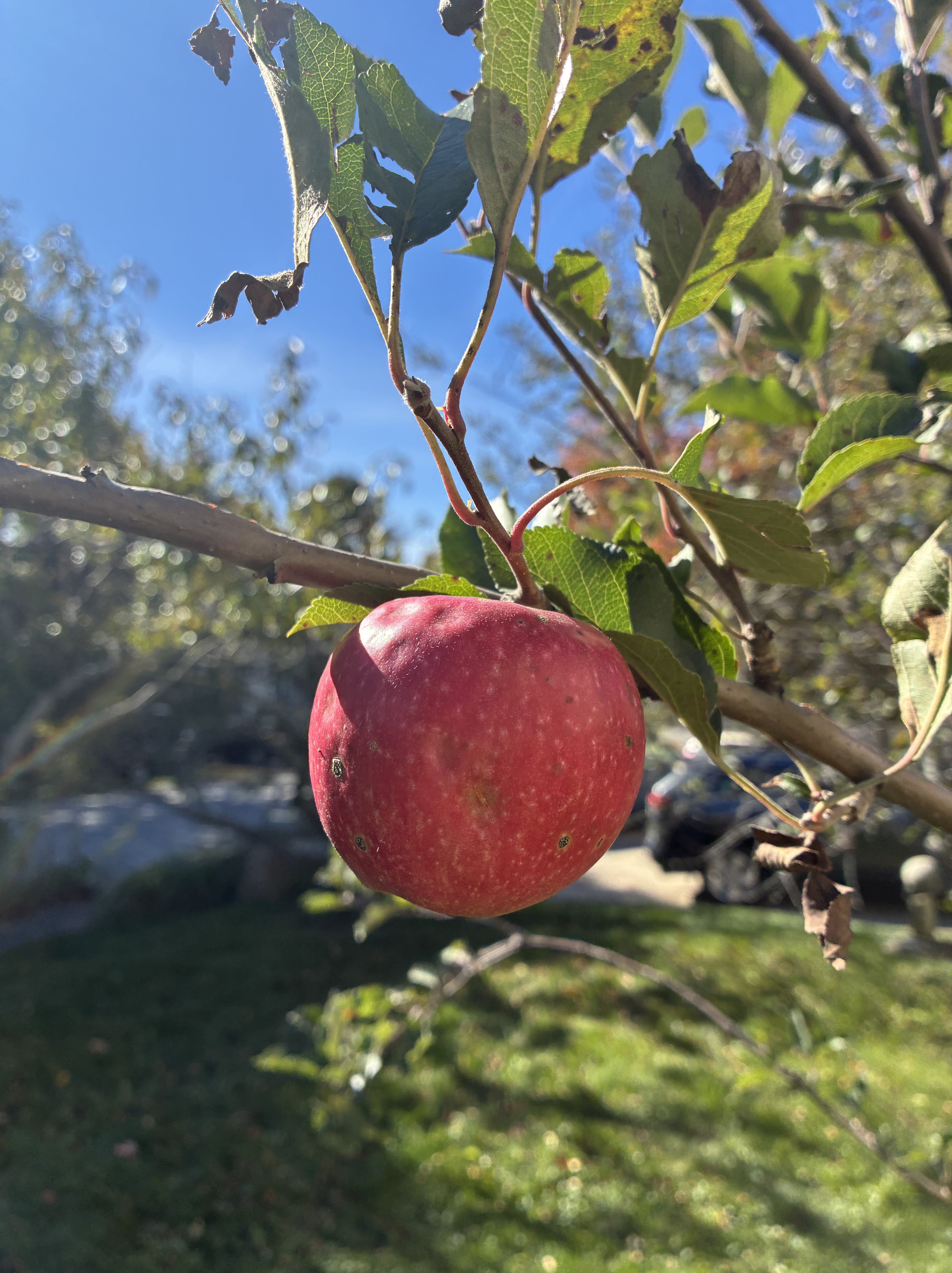
Sacred Geometry notwithstanding, my son wants to learn to invest money. Our applied learning approach can accommodate both Sacred Numbers and investing; financial literacy is important while the Platonic solids are essential.
“Scoop,” my son’s Uncle, is a market maven in disguise. Licensed as a Certified Financial Advisor, he may or may not have clients but does manage money. In the finest fiduciary tradition, he says nothing about his work. His discretion is absolute. He could be managing tens of millions of United States Dollars, but you would never know. More than likely he is just the guy ahead of you at the butcher’s, buying bacon or bratwurst, or in a bookstore, browsing quietly.
He has never set foot on Wall Street, but has logged hundreds of miles hiking in the wilderness. A long term value investor, his preferred risk management is the wild place where predators roam. Doug Peacock, the Vietnam Green Beret medic turned wildlife activist is one of his heroes, best captured in this quote, “It ain’t wilderness unless there’s a critter out there that can kill you and eat you.” Scoop, more than likely is outside, beside some alpine stream, listening to bird song, breathing in the pure air. He is remarkably gentle, thoughtful, considerate.
I called Scoop, and with alacrity he made handouts on investing terms and principles. He mailed a copy of “How a Second Grader Beats Wall Street” by the financial planner Allan S. Roth. That simplicity wins is the book’s premise. Adults get lost in the hype of hope and fear, while the child ignores the noise. Behold then that ancient wisdom of practical virtue: “Verily I say unto you, Except you change and become like little children, you will never enter the kingdom…”
Into the kingdom of investing our journey began, armed with our textbook, our tutor, probability and statistics, we learned vocabulary. “Book value” is the net worth of a company, its assets minus liabilities. “Market value” is the total capitalization, the stock price multiplied by the total shares owned. The difference between the Book and Market value can be significant.
In practical terms, I told my son, “Think of my tool bag with saws, chisels, clamps, and wrenches. Add up their cost and that is the book value of my tool bag.” My son opines, “We really should buy a cordless Sawz-all, a battery circular saw, and a torque wrench but ya, I get your point.” I continue, “Say I go to a client. They think I am really skilled, and agree to pay a premium rate. Or they think I am a moron and won’t pay much. That is market value.” He catches on, “So they want to pay more because they like it. Or pay less because they don’t like it. What happens when a business goes bankrupt? What happens to the stock price then?” My son was absorbed in our lesson.
Having already talked about Phi, the Golden Ratio, I continue, “The ratio of book value to market value tells you if a stock is overpriced. You need to understand the business. What do they do? Do they make money? Do profits increase? What is their debt? Does the business have a famous brand, unmatched technology, loyal customers? All of this factors into the price : value ratio. If the value is more than the price, then it is worth buying. If the business fails, you will only get book value, or less.”
We talk about stock picking, market timing, and asset allocation. Stock picking needs luck and skill, it rarely works. Market timing is even harder, trying to buy and sell at the perfect time, when missing the 10 best days can cut your returns nearly in half.
Asset allocation is Scoop’s approach. He diversifies risk, capturing long term growth using risk management. By analogy, Doug Peacock’s “critter out there that can kill you” is an absolute risk, a permanent loss “of capital.” The 2nd Grader approach is low-risk, broad market asset allocation. The 2nd Grader, in fact, outperformed both “call of the wild” day trading and the S&P 500 by 4% annually.
My 8th grade son has something to learn from the 2nd grader. My task is to show how investing relates to Sacred Numbers.
Sacred Numbers – the Quadrivium – are about observing natural cycles, patterns, ratios, and cosmic order. Pythagoras reportedly said, “Number rules the universe.” Euclid mentioned the Golden Ratio in his Elements, written around 300 BCE. Ἀγεωμέτρητος μηδεὶς εἰσίτω – “Let no one untrained in geometry enter” – was written over the door to Plato’s Academy. The Golden Ratio (Φ≈1.618) and the Fibonacci Sequence (discovered centuries later) are models of those patterns.
In the investment world, analysts use the Fibonacci numbers (23.6%, 38.2%, 50%, 61.8%, 78.6%) to trace market highs and lows to gauge support and resistance. The number 3, which represents balance, completeness, and structure – the past, present and future; birth, life, and death – is used to mark “triple tops and bottoms,” a theory known as the Elliott Wave Principle that divines mathematical patterns underlying market psychology. The concept has both critics and believers.
The 2nd Grader’s portfolio was based upon allocation in thirds: US stocks for domestic growth, international stocks for global diversification, the Bond market for low-risk yields. W.D. Gann developed an entire trading system based upon the relationship between price, time and pattern. His system is based upon recurring cyclical and geometric patterns, that when aligned with time cycles can demonstrate strength or weakness. His ideas are controversial, with critics arguing that followers highlight the rare successful calls while ignoring failed predictions. The glassy eyed banker almost certainly rejects sacred notions, but metaphysics does seem to influence the world, if not the market.
Scoop advocates a buy and hold strategy focused on index funds, also known as ETFs (Exchange Traded Funds). In sacred terms the ETF is the Monad, the one; a fund that owns the market as an ecosystem, rather than individual trees. My son responds, “So buying individual stocks is more like gambling, it’s all or none, but the index fund is safer, buying shares in the entire market.”
The Dyad, which is 2, is duality which in the market is gain or loss, hope or fear, market value or book value. Managing that relationship is the key, which means ratios – such as Phi – come into play. Benjamin Graham and Warren Buffett are legendary masters of value investing. Scoop explains their concept of the “Margin of Safety,” which is the ratio between intrinsic value and market price. When the price is less than the value, you are buying at a discount, which gives protection when the market is volatile. Phi does not directly pertain to the Margin of Safety, but both describe a relationship between two quantities, a recurring pattern in nature, which is a way to manage risk.
The quadrivium includes astronomy, which is based upon the regularity of orbits, seasons, and rhythms. Winter always follows the harvest. In finance, this is the “Reversion to the Mean.” Market expansion (a bull market) is followed by contraction (bear markets). Historical averages bear out, so there is wisdom building a portfolio designed to endure all four seasons.
My son’s interest in financial literacy opens a wide array of topics. Algebra, probability, and statistics readily pertain, so too risk management and the cost of money. Our homeschooling has a practical application.
Our approach to life is “both/and,” our objective in teaching is not only applied; money is not the measure of the man and financial literacy is necessary but not sufficient. Sacred numbers afford a chance to connect a life skill to fundamental laws of harmony, truths of the very long term.
Mysticism runs counter to the modern world’s embrace of empirical science. But 483 years since Copernicus launched the scientific revolution is a mere fraction to the 2412 years since Plato launched his Academy. We navigate that 1:5 ratio at our homeschool.
A 2nd grader can teach an 8th grader long term investing, while this Boomer does teach a Zoomer about the long term tradition.
We are well beyond any standardized test.
______________________________
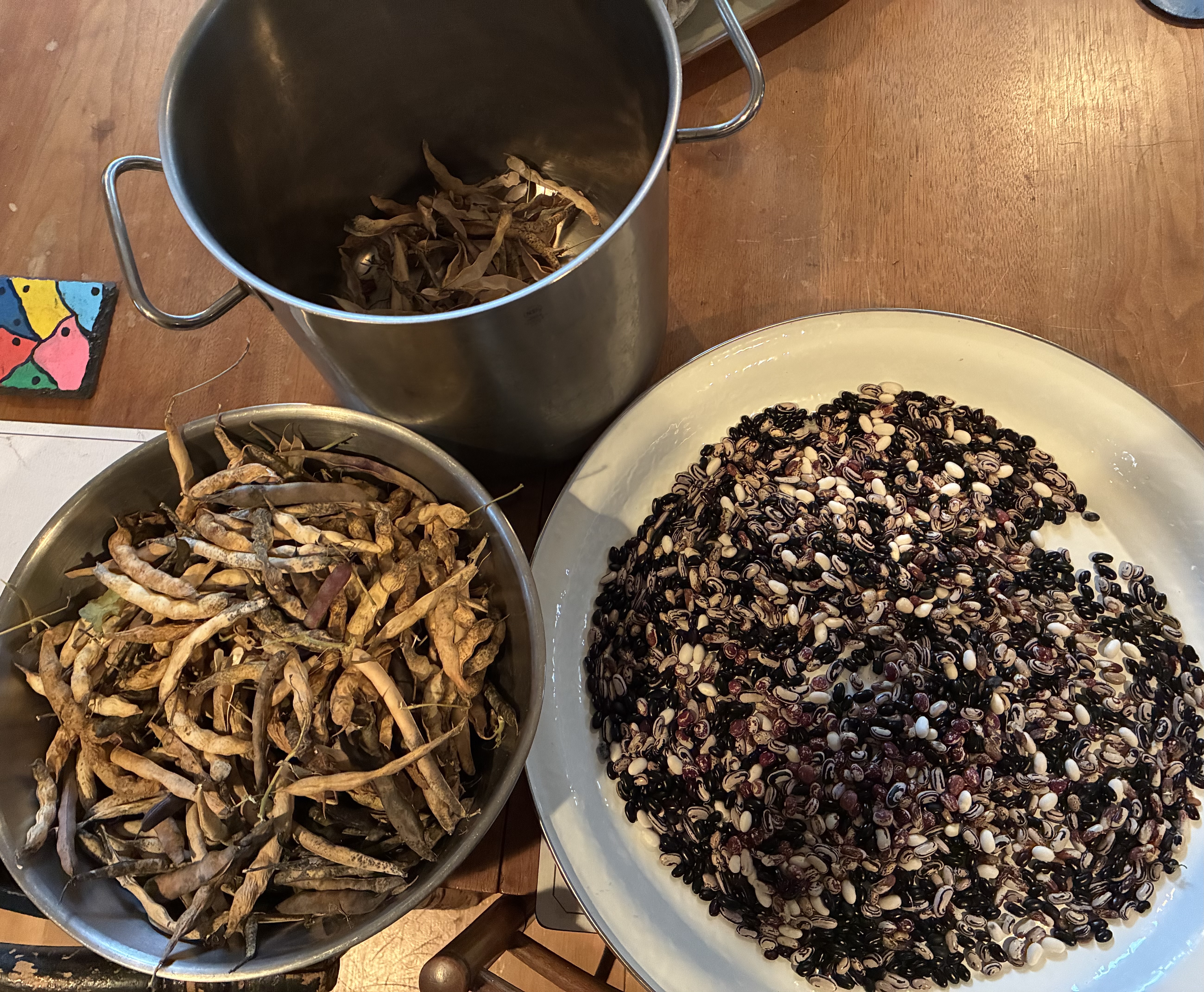
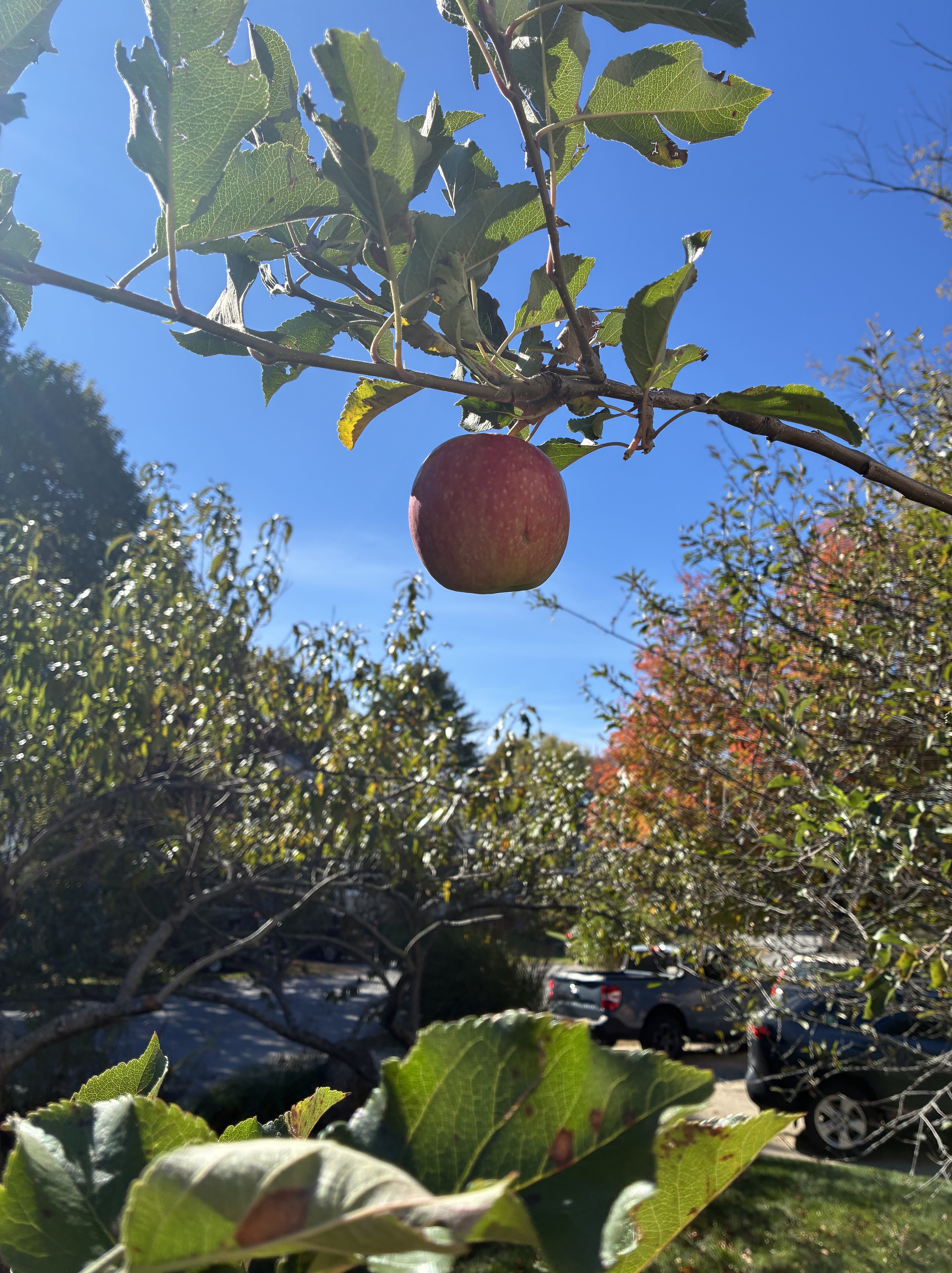
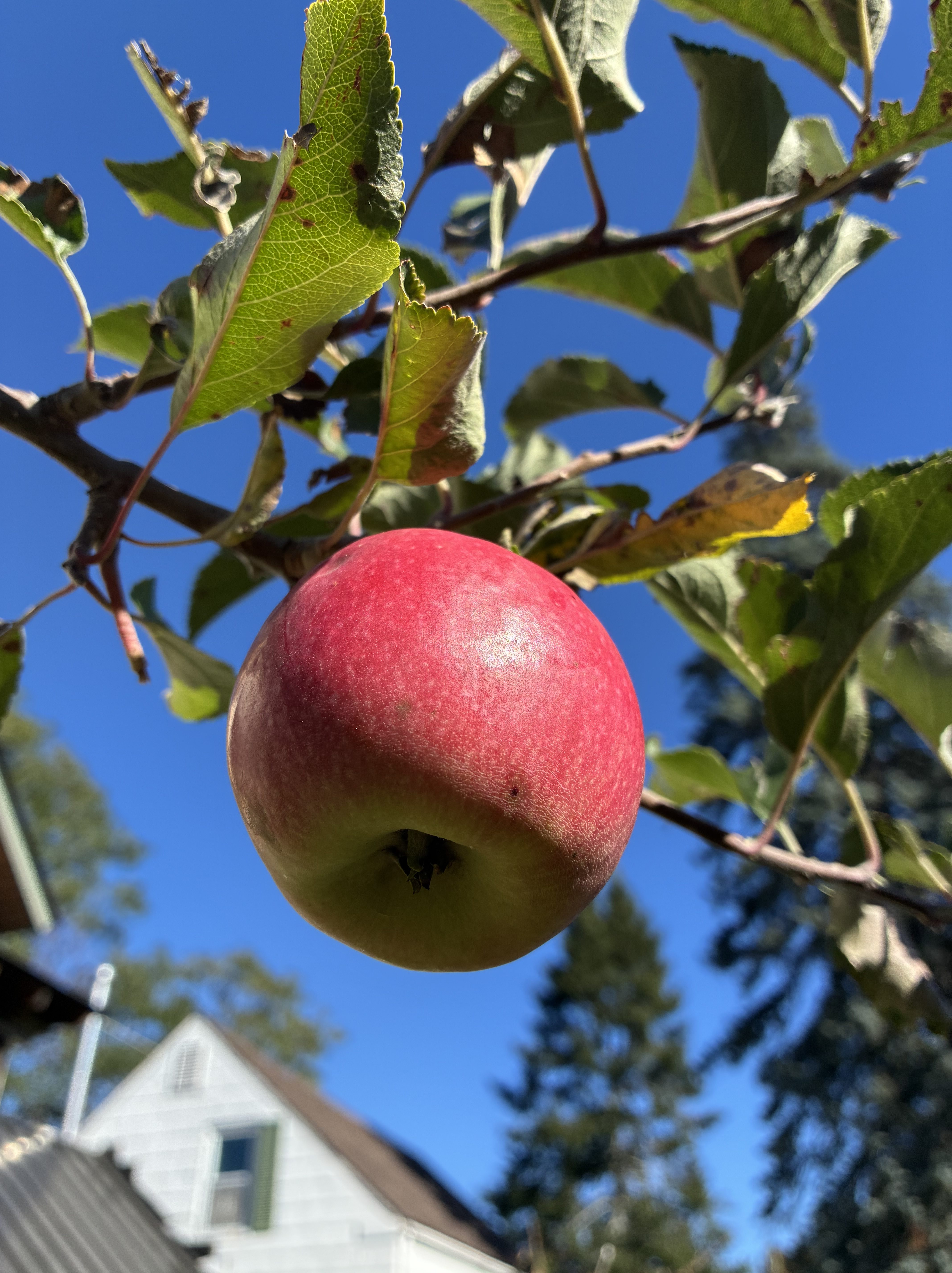
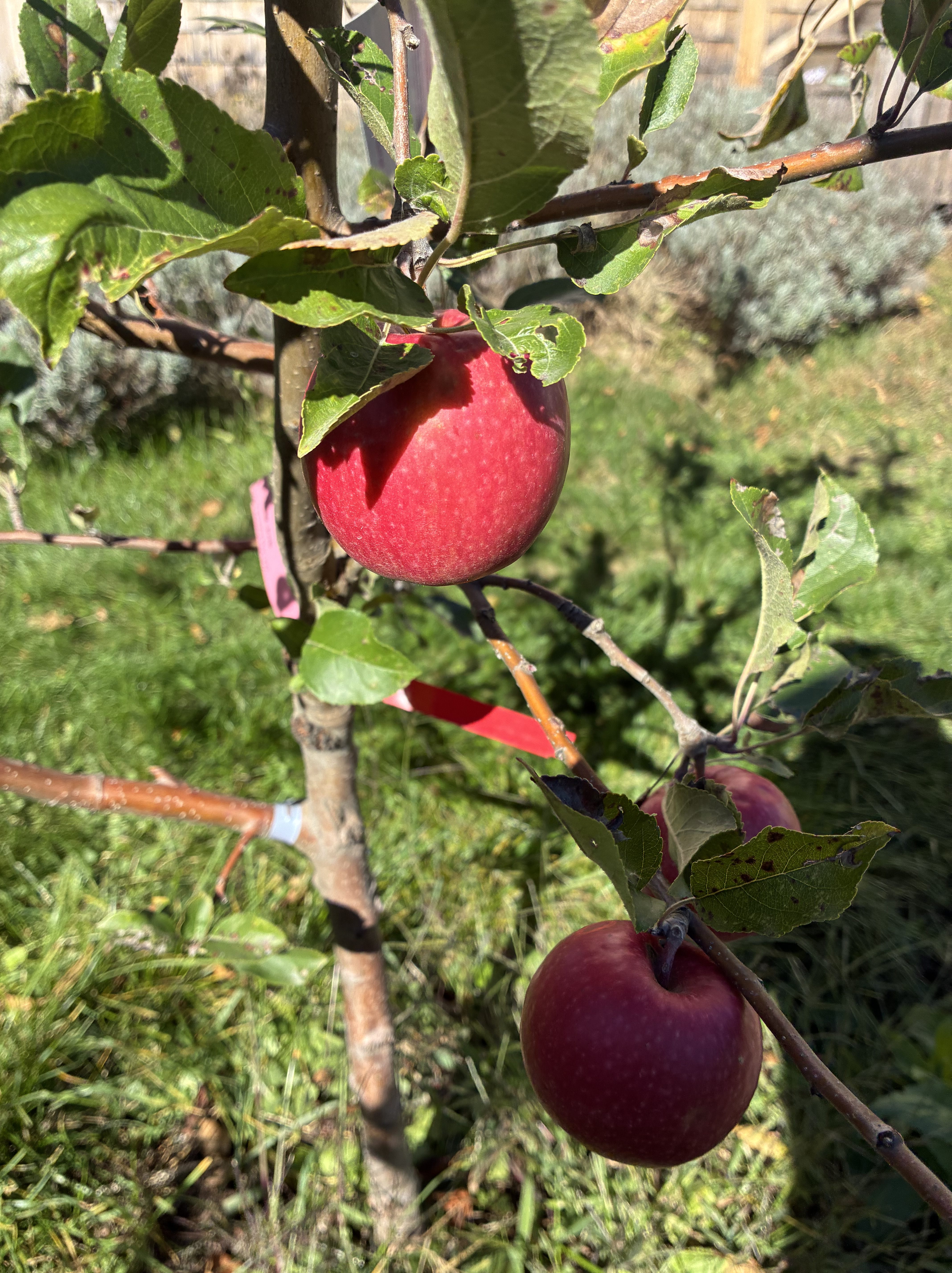
Our heirloom pole bean harvest continues. The Pink Lady apples ripen on our tree.


pure delight. i happen to love all the players.
>