Eckhart Tolle: The Power of Now – A Guide to Spiritual Enlightenment
Posted: August 7, 2011 Filed under: Gallery - Quotes Leave a commentAccessing the Power of the Now
Be present as the watcher of your mind – of your thoughts and emotions as well as your reactions in various situations. Be at least as interested in your reactions as in the situation or person that causes you to react. Notice also how often your attention is in the past or future. Don’t judge or analyze what you observe. Watch the thought, feel the emotion, observe the reaction. Don’t make a personal problem out of them. You will then feel something more powerful than any of those things that you observe: the still, observing presence itself behind the content of your mind, the silent watcher.
Ann Lewin-Benham: Infants & Toddlers at Work – Using Reggio-Inspired Materials to Support Brain Development
Posted: July 29, 2011 Filed under: Art & Healing, Child Centered Activities, Gallery - Quotes 2 CommentsMark-Making
Mark-making triggers brain functions that merge eye, hand, and other networks of neurons, enlarging the ability to focus, sustain attention, plan, analyze, and other high-level cognitive functions that are important components of critical thinking. Often fat markers and crayons are the only tools provided for infants and toddlers. Yet, mark-making is an imperative as strong as movement and language. Therefore it warrants an equal abundance of materials that are varied, provocative, and challenging. It merits the same emphasis as blocks, paint, clay, and other staples of infant/toddler programs. And mark-making exemplifies the trove of ideas that can be sparked and skill that can be acquired when a fertile context nurtures an innate human imperative.
Rope Embellished Trash Can – Peaks Island, Maine
Posted: July 28, 2011 Filed under: Gallery - Visual 2 Comments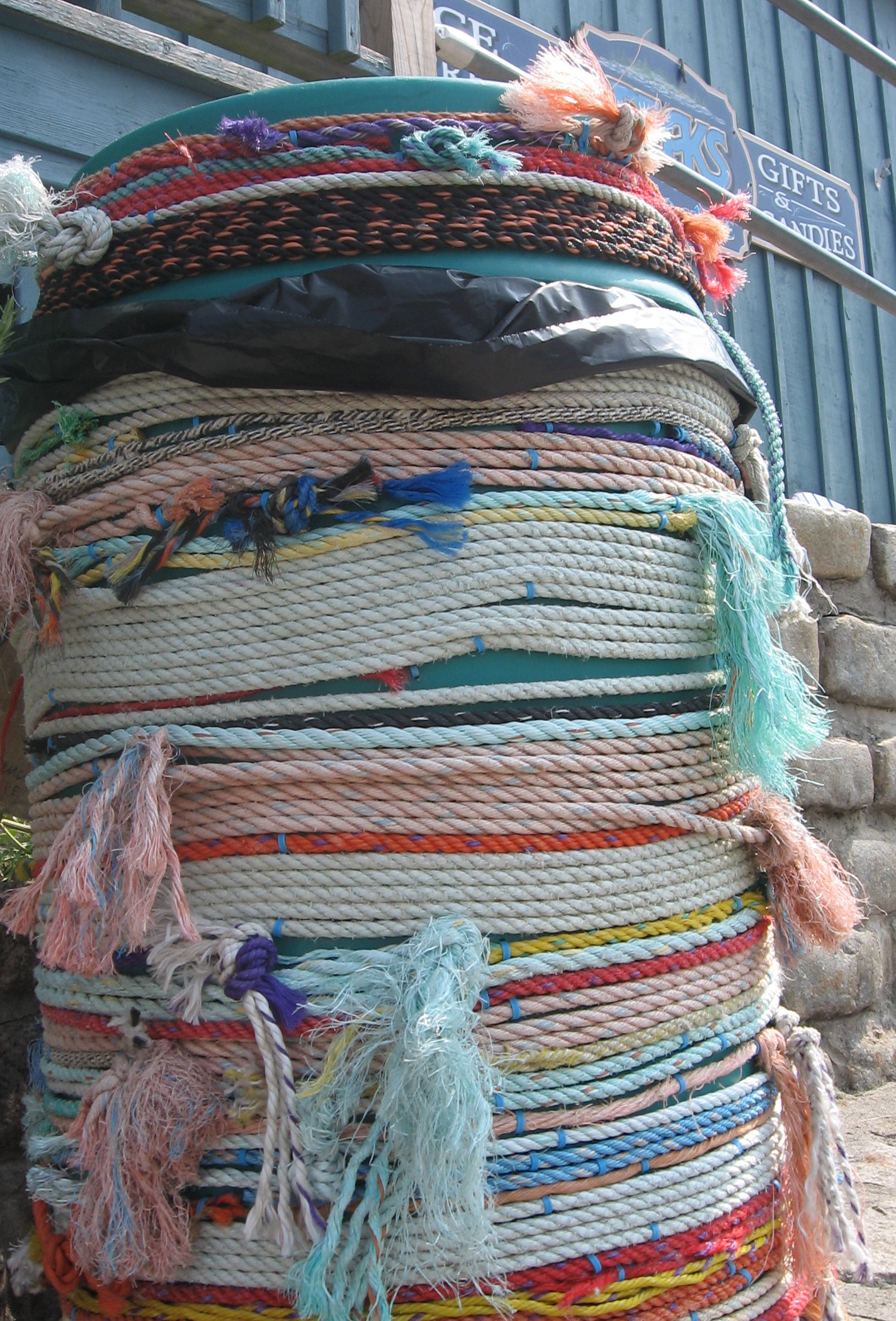
Tis the Season
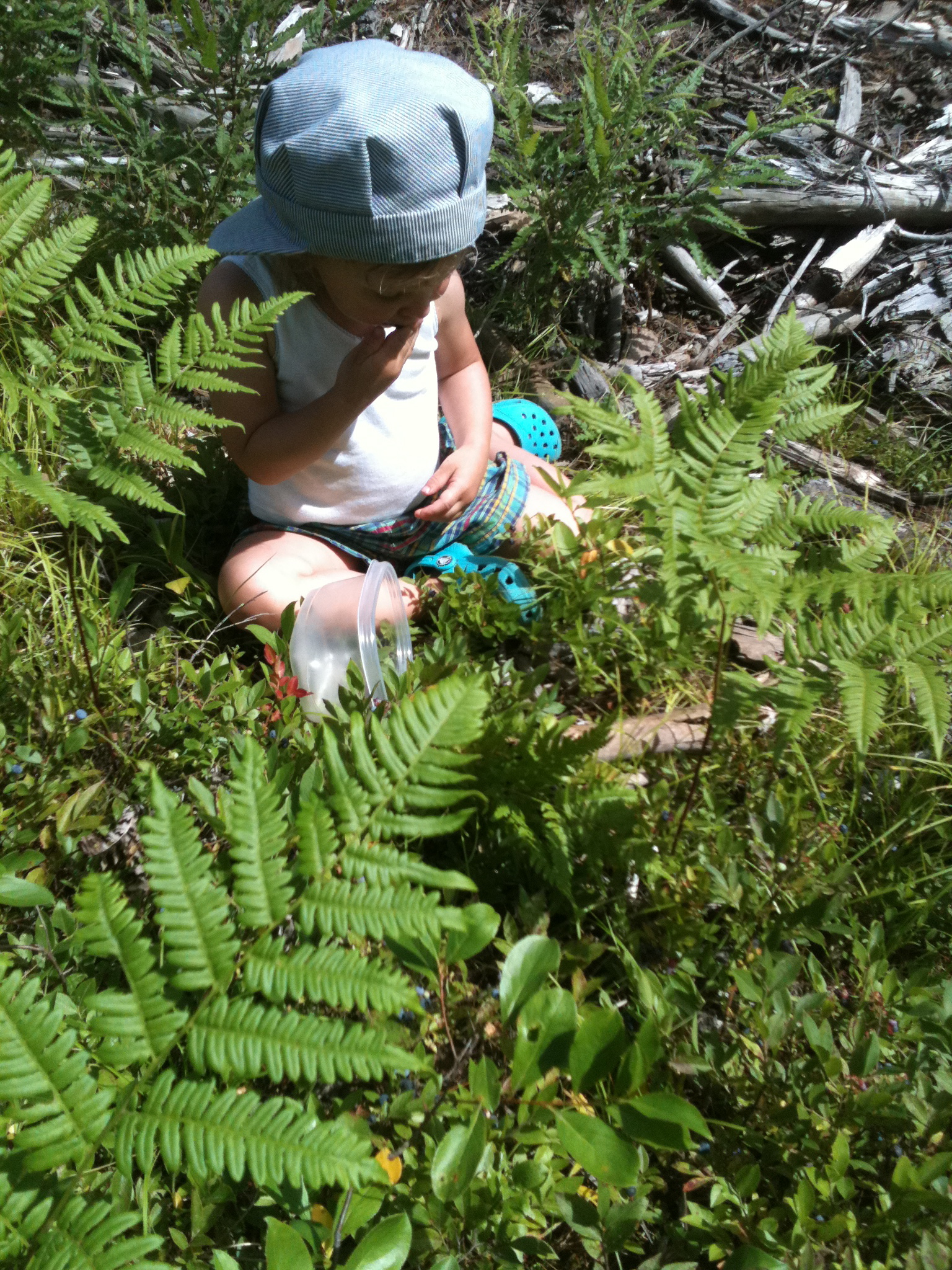
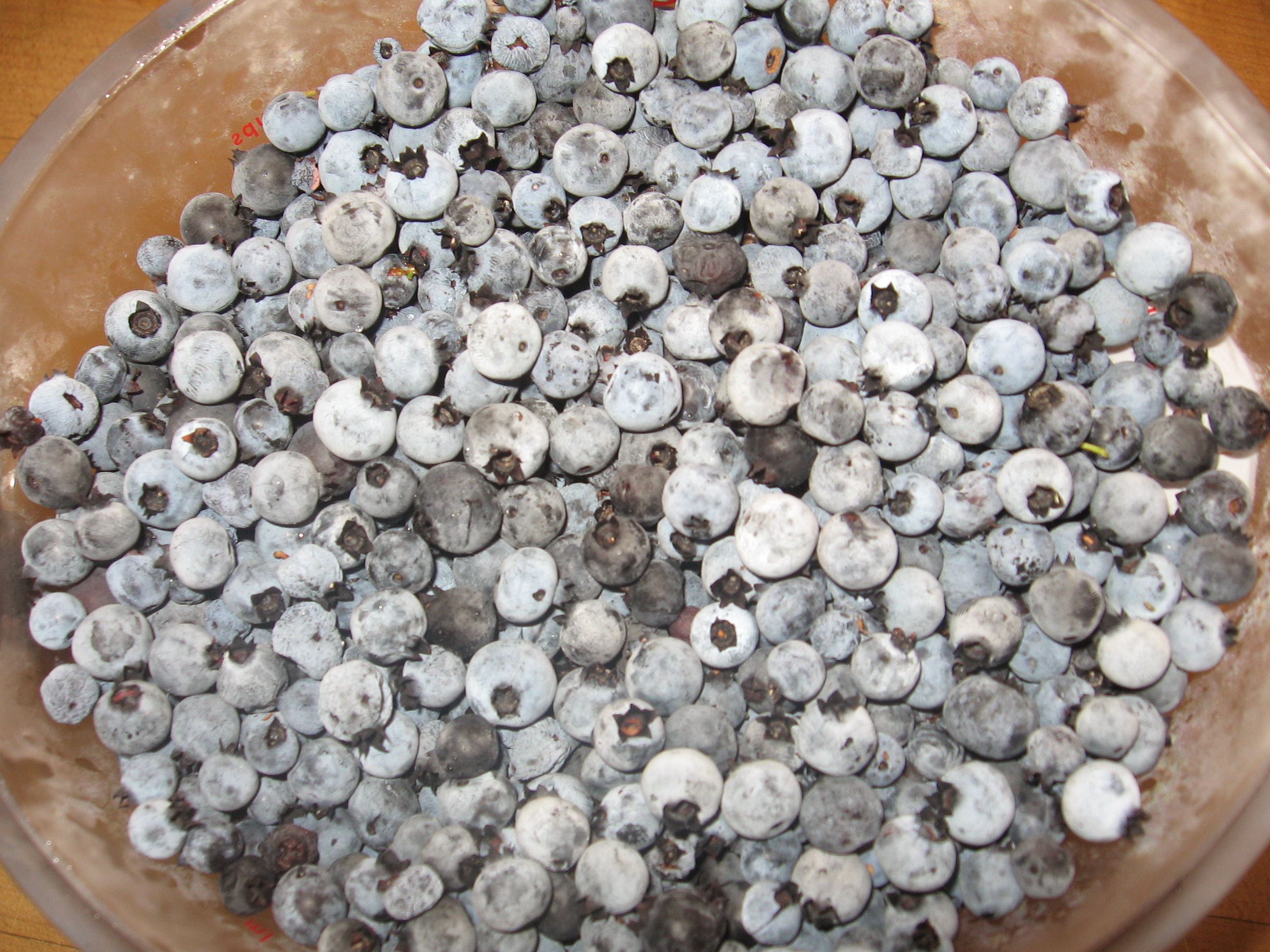
Posted: July 25, 2011 Filed under: Child Centered Activities 2 CommentsYesterday a friend took us to a beautiful spot in Naples, Maine where we picked wild blueberries. We picked about 5 cups worth which will top our yogurts and cereals for a bit. My daughter who usually doesn’t sit still, was so quiet at times I had to keep checking on her. She loved the freedom of picking the berries and eating them. A beautiful day and a beautiful experience together.

Music: John Medina’s “Brain Rules for Baby”
Posted: July 24, 2011 Filed under: Chronicles of a First Time Parent, Gallery - Quotes 1 Comment10 years of music lessons
There’s another powerful way to fine-tune a child’s hearing for the emotional aspects of speech: musical training. Researchers in the Chicago area showed that musically experienced kids – those who studied any instrument for at least 10 years, starting before age 7- responded with greased-lightning speed to subtle variations in emotion-laden cues, such as a baby’s cry. The scientists tracked changes in the timing, pitch, and timbre of the baby’s cry, all the while eavesdropping on the musician’s brainstem (the most ancient part of the brain) to see what happened.
Kids with rigorous musical training didn’t show much discrimination at all. They didn’t pick up on the fine-grained information embedded in the signal and were, so to speak, more emotionally tone deaf. Dana Strait, first author of the study, wrote: “That their brains respond more quickly and accurately than the brains of non-musicians is something we’d expect to translate into the perception of emotion in other settings.”
This finding is remarkable clear, beautifully practical, and a bit unexpected. It suggests that if you want happy kids later in life, get them started on a musical journey early in life. Then make sure they stick with it until they are old enough to start filling out their applications to Harvard, probably humming all the way.
Greens!
Posted: July 23, 2011 Filed under: Child Centered Activities, Farming off the Farm, Gallery - Visual, Little Green Thumbs Leave a comment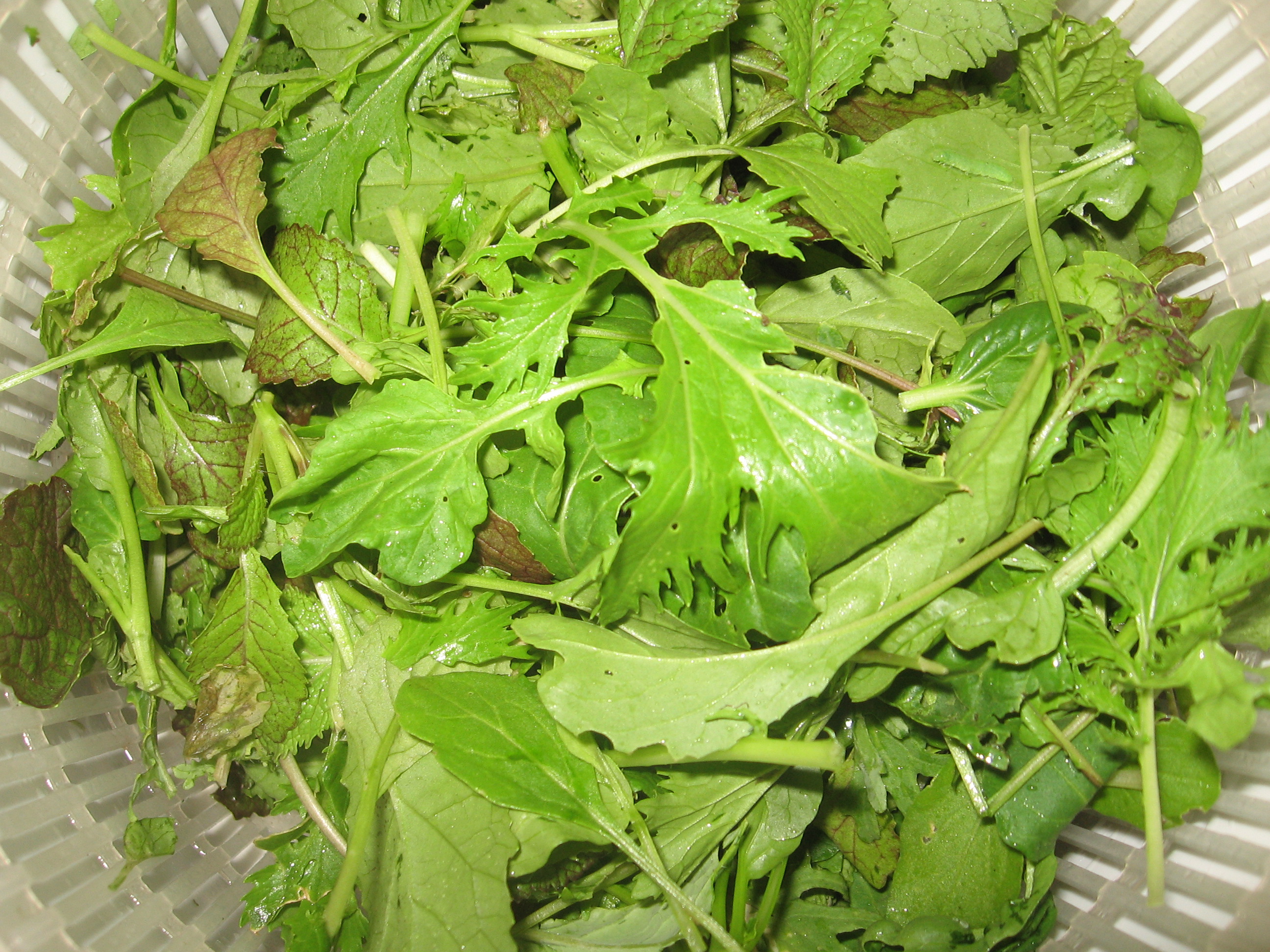
Labeling Emotions: John Medina’s “Brain Rules for Baby”
Posted: July 22, 2011 Filed under: Chronicles of a First Time Parent, Gallery - Quotes 1 CommentLabeling emotions is neurologically calming
Here’s what we think is going on in the brain. Verbal and non-verbal communication are like two interlocking neurological systems. Infants’ brains haven’t yet connected these systems very well. Their bodies can feel fear, disgust, and joy way before their brains can talk about them. This means that children will experience the physiological characteristics of emotional responses before they know what those responses are. That’s why large feelings are often scary for little people (tantrums often self-feed because of this fear). That’s not a sustainable gap. Kids will need to find out what’s going on with their big feelings, however scary they seem at first. They need to connect these two neurological systems. Researchers believe that learning to label emotions provides the linkage. The earlier this bridge gets constructed, the more likely you are to see self-soothing behaviors, along with a large raft of other benefits. Researcher Carroll Izard has shown that in households that do not provide such instruction, these nonverbal and verbal systems remain somewhat disconnected or integrate in unhealthy ways. Without labels to describe the feelings they have, a child’s emotional life can remain a confusing cacophony of physiological experiences.
Mid July
Posted: July 21, 2011 Filed under: Child Centered Activities, Farming off the Farm, Little Green Thumbs 2 Comments TOMATOES
 ONIONS
 PATTY PAN SQUASH
 MORE TOMATOES
 CARROT GREENS TO THE RIGHT and NEW BRUSSEL SPROUTS IN CENTER
This Week’s Menu and Affirmations
Posted: July 18, 2011 Filed under: Gallery - Visual, In the Kitchen 1 Comment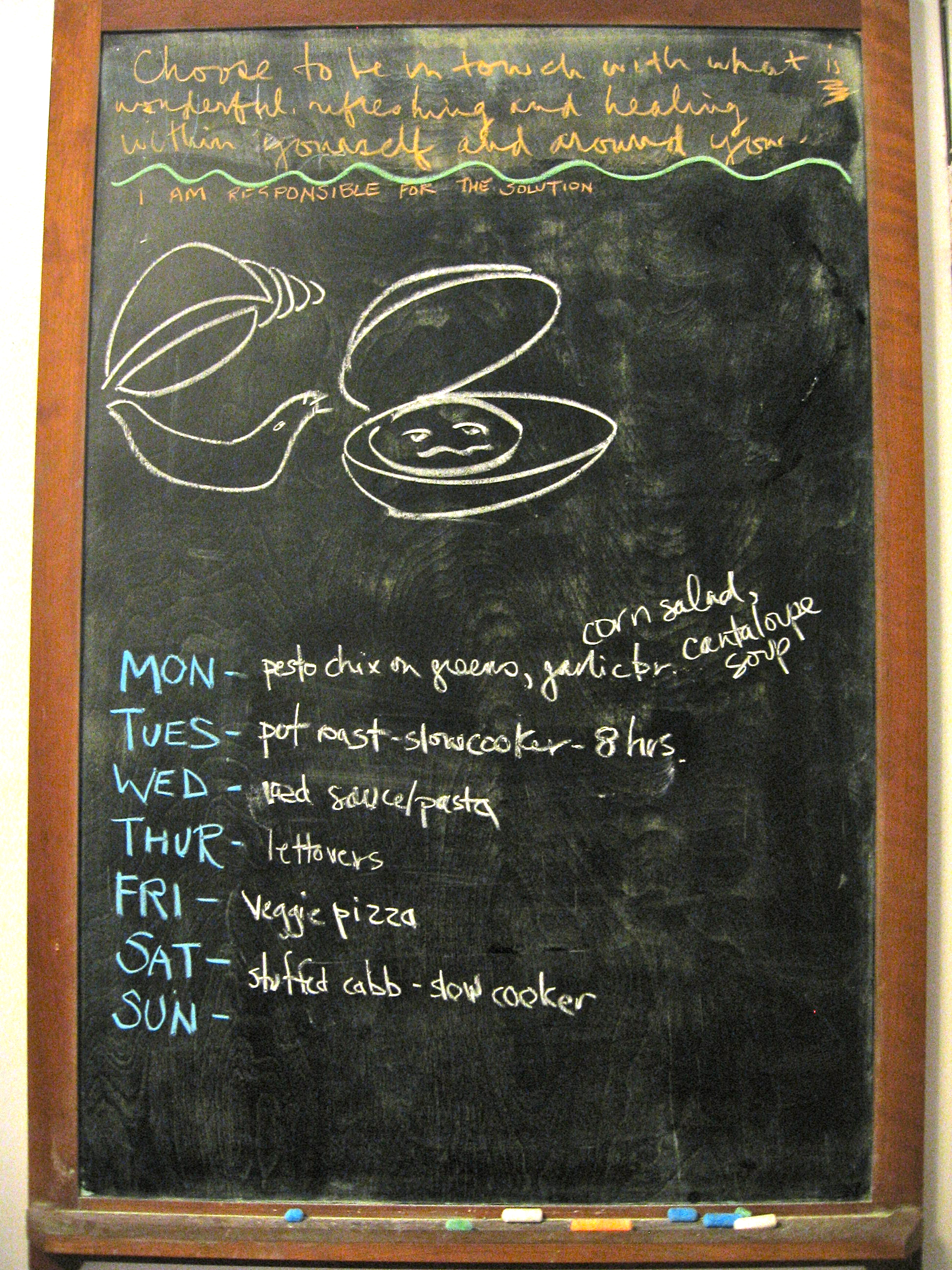
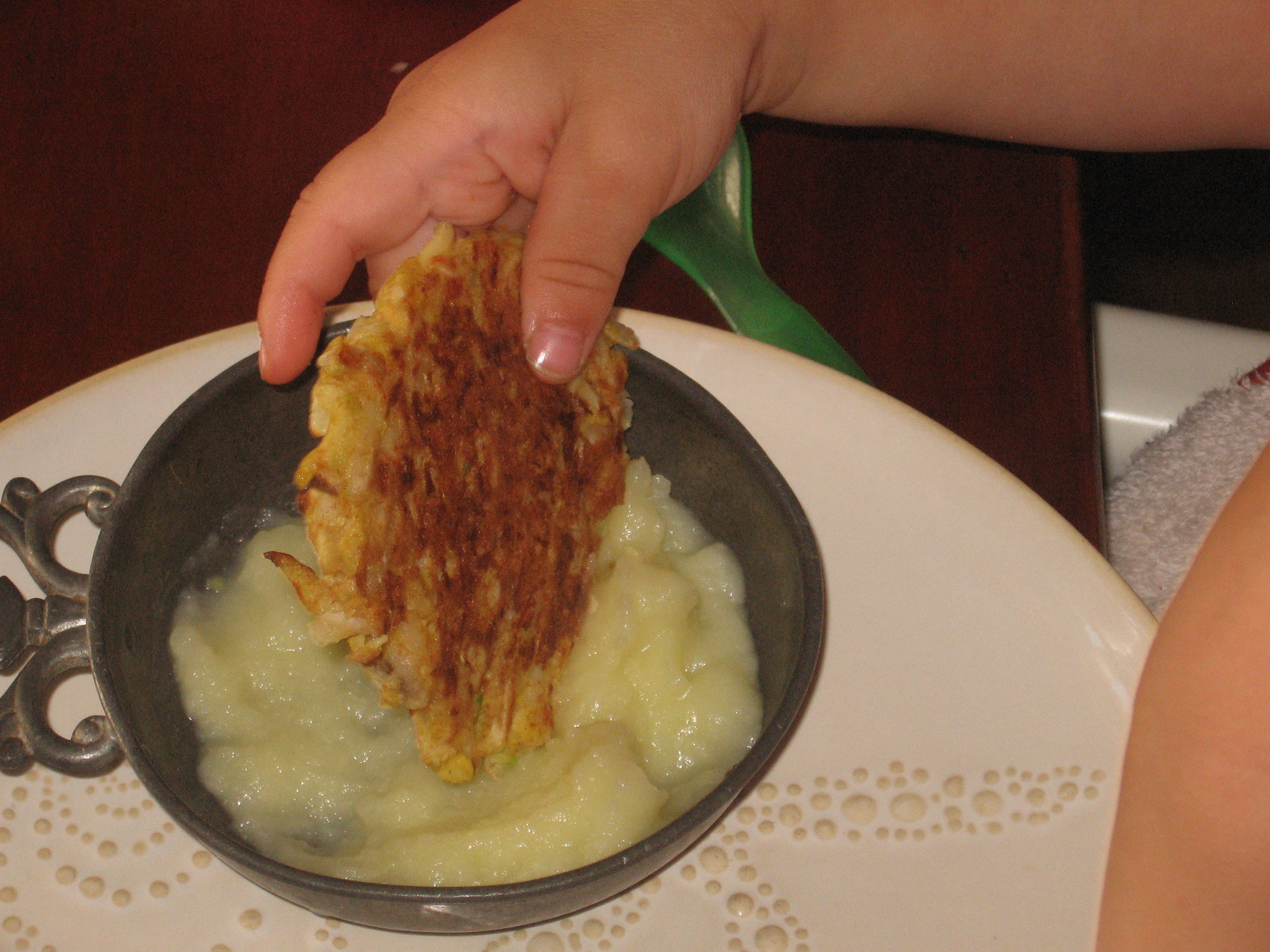
Squash & Potato Pancakes With Homemade Applesauce
Posted: July 14, 2011 Filed under: In the Kitchen 2 Comments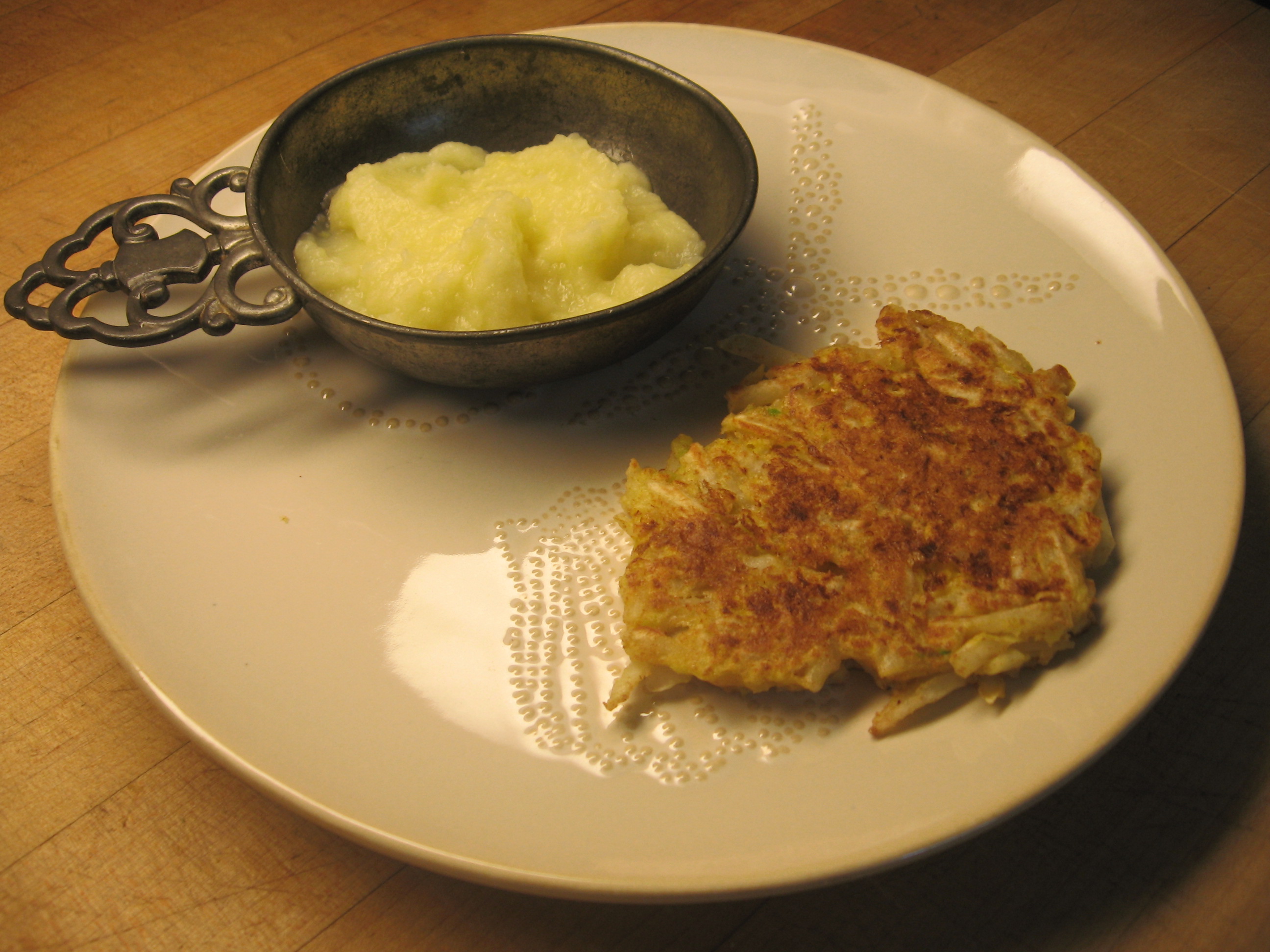
I found this yummy recipe in Jennifer Carden’s The Toddler Cafe – fast, healthy, and fun ways to feed even the pickiest eater. My beautiful sister (in law) gifted this book to us for fun ideas even though our daughter is a pretty adventurous eater – she’ll try just about anything. I made a few adjustments to the recipe and will indicate where.
One 10-ounce box frozen squash, thawed (I used peeled and shredded small yellow summer squash and small zucchini – sauteed until soft, strained and liquid reserved).
 1 beaten egg
1/4 C all-purpose flour (I used whole wheat)
1 tsp kosher salt
1 tsp sugar (I didn’t use)
1 tsp baking powder
8 ounces frozen hash-brown potatoes, semi-thawed (about 10 minutes out of freezer – next time I will try shredded sweet potatoes)
vegetable oil for frying
applesauce for serving (I made quickly while squash was sauting – just 3 tart apples – organic Pink Lady and Granny Smith, steamed then blended in food processor. I added some of the squash liquid to thin the applesauce.
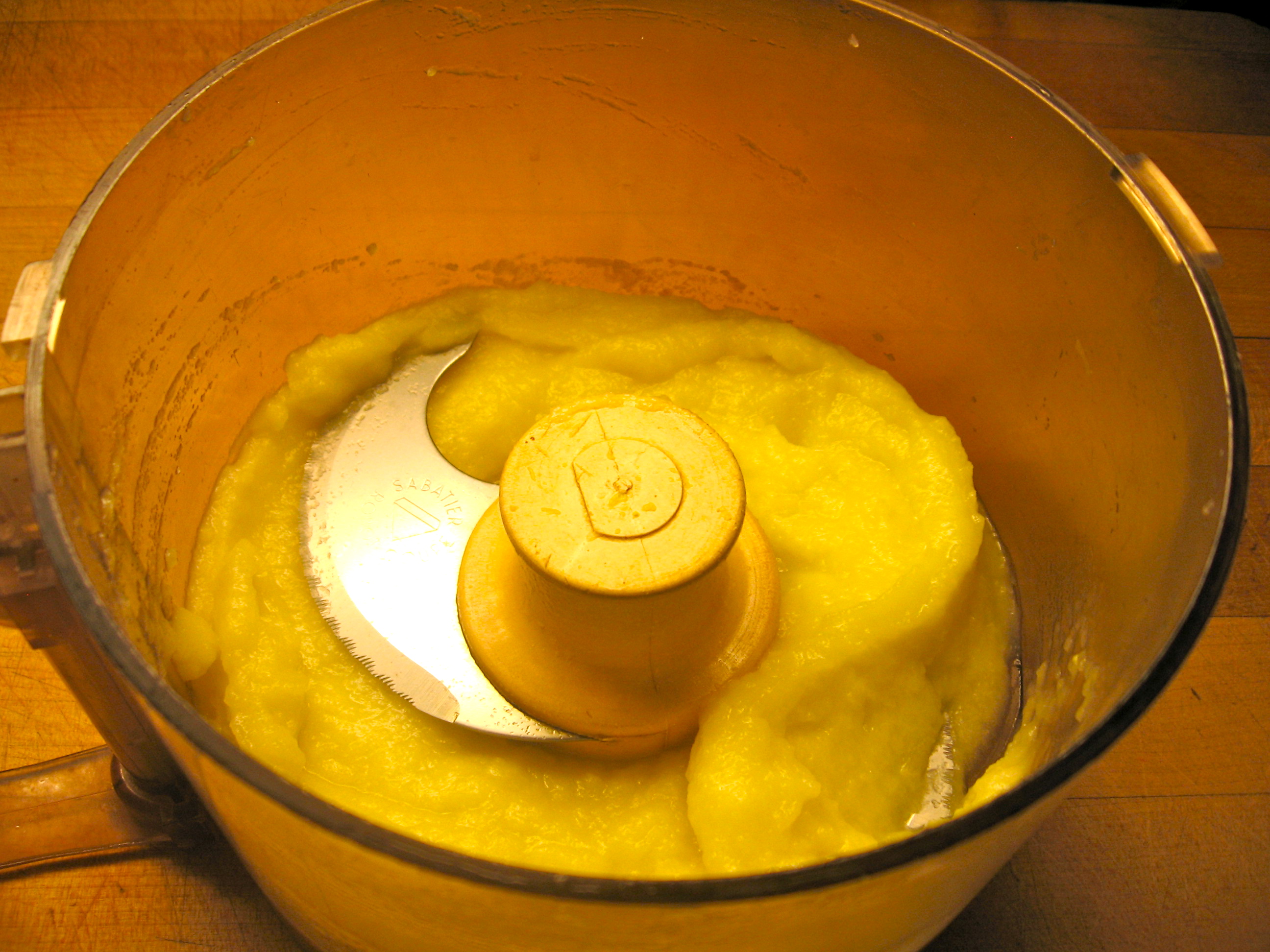
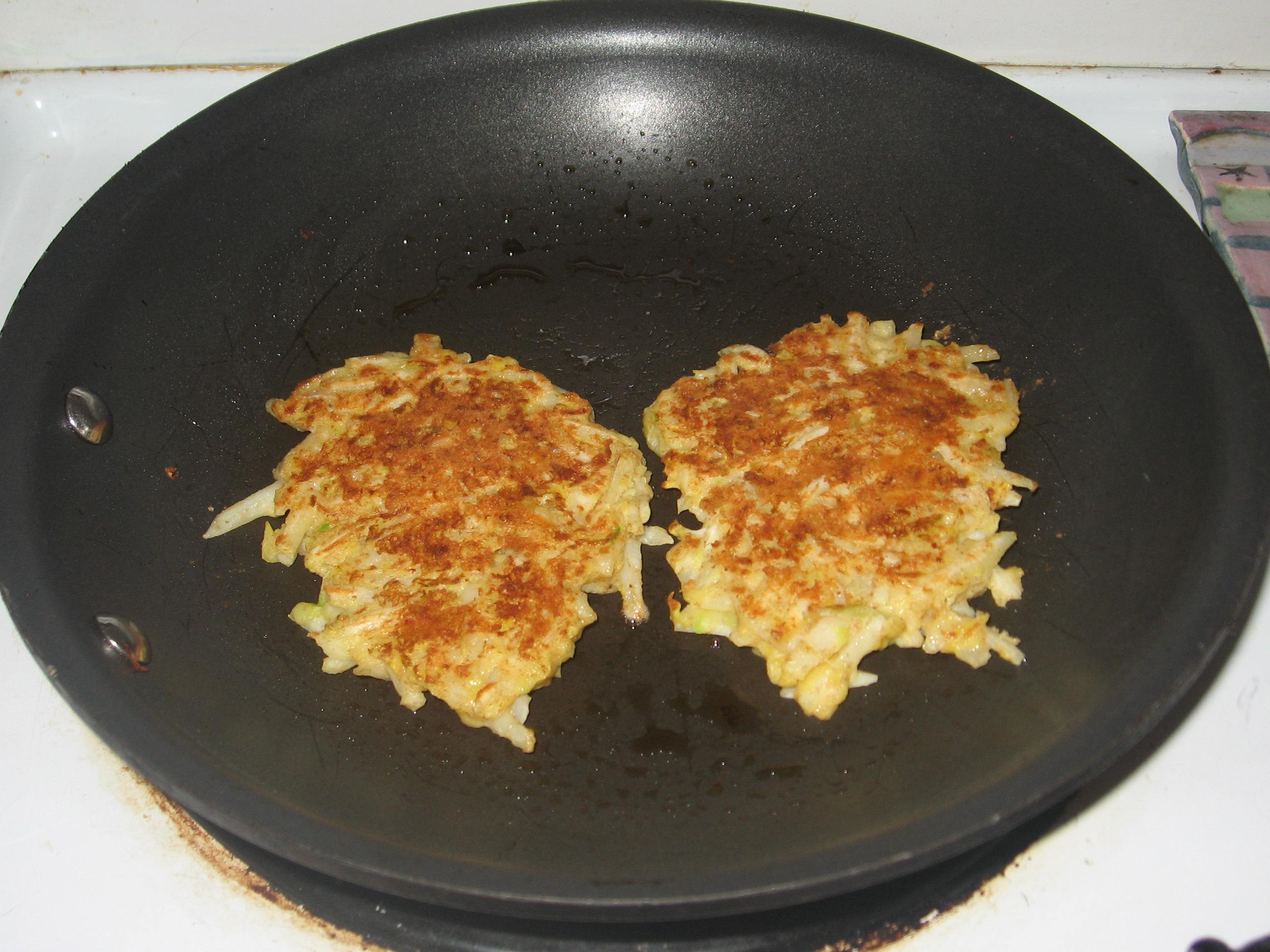
In a large bowl, mix cooled squash with beaten egg. Next add in flour, salt, sugar, baking powder. Add shredded potatoes and stir. Heat nonstick pan over medium heat and add just enough oil to to cover bottom of pan (I used sparingly and worked fine). Jennifer suggests portioning out about 2 Tb mixture into pan and fry on each side until browned (it’s a good idea to press mixture with spatula to thin out). Remove and drain on paper towel.
 an Art Farm