The Alpha and the irrational
Posted: May 11, 2024 Filed under: Art & Healing, Farming off the Farm, What is an Art Farm | Tags: consciousness, rational mind, spirituality 1 CommentIf one subscribes to the Great Man Theory, then history is defined by the deeds of great men; highly unique individuals whose attributes – intellect, courage, leadership or divine inspiration – have a decisive historical effect. Thomas Carlyle developed the theory, and wrote:
“Universal History, the history of what man has accomplished in this world, is at bottom the History of the Great Men who have worked here. They were the leaders of men, these great ones; the modelers, patterns, and in a wide sense creators, of whatsoever the general mass of men contrived to do or to attain; all things that we see standing accomplished in the world are properly the outer material result, the practical realization and embodiment, of Thoughts that dwelt in the Great Men sent into the world: the soul of the whole world’s history, it may justly be considered, were the history of these.”
Pythagorus of Samos, the ancient Ionian Greek philosopher and polymath, certainly ranks among these alpha males. He has been credited with mathematical and scientific discoveries, including the Pythagorean theorem, Pythagorean tuning, the five regular solids, the Theory of Proportions, the sphericity of the Earth and the identity of the morning and evening stars as the planet Venus. His ideas are ubiquitous: Plato’s dialogues exhibit his teachings, every high school student memorizes his theorem, and every carpenter or engineer uses the 3-4-5 triangle to square a room.

He saw beyond the material realm, and further developed ideas of mysticism. His “metempsychosis” – which means the “transmigration of souls” – holds that every soul is immortal and, upon death, enters a new body. He also devised the doctrine of musica universalis– literally universal music, also called music of the spheres or harmony of the spheres – which holds that the planets move according to mathematical equations and thus resonate to produce an inaudible symphony of music. The 16th century astronomer Johannes Kepler further developed this idea, although he felt the music was not audible but could be heard by the soul.
Aristotle characterized the musica universalis as follows:
“…since on our earth the motion of bodies far inferior in size and in speed of movement [produce a noise]. Also, when the sun and the moon, they say, and all the stars, so great in number and in size, are moving with so rapid a motion, how should they not produce a sound immensely great? Starting from this argument and from the observation that their speeds, as measured by their distances, are in the same ratios as musical concordances, they assert that the sound given forth by the circular movement of the stars is a harmony.”
Clearly, Pythagorus was a big thinker, and his ideas influenced Isaac Newton, another of the alpha males. Newton – who established classical mechanics, invented calculus, formulated the laws of motion and universal gravitation – was a paragon of the rational scientific mind. Newton was a Great Man, by definition. He also was a leading alchemist.
In its purest form, alchemy is concerned not with turning base metals into gold, but as a symbolic language guiding the transmutation of the physical self into the ascendent consciousness of the anointed. Of an estimated ten million words of writing in Newton’s papers, approximately one million – 10% – deal with alchemy. This was more than a passing interest.
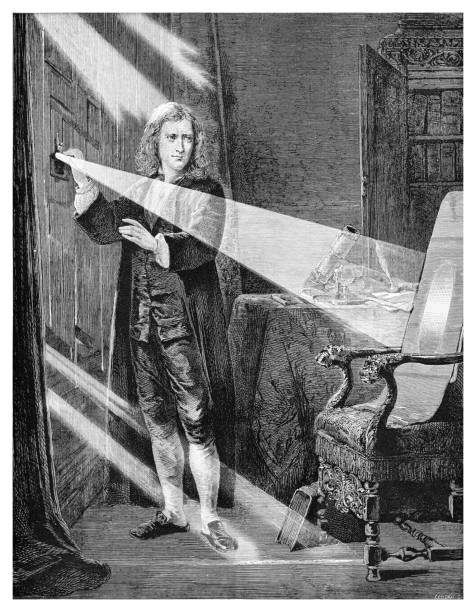
John Maynard Keynes, the Cambridge economist who restructured the post-WW2 global financial system – easily ranking him among the Great Men – had this to say about Newton:
“Newton was not the first of the age of reason. He was the last of the magicians, the last of the Babylonians and Sumerians, the last great mind which looked out on the visible and intellectual world with the same eyes as those who began to build our intellectual inheritance rather less than 10,000 years ago. Isaac Newton, a posthumous child born with no father on Christmas Day, 1642, was the last wonderchild to whom the Magi could do sincere and appropriate homage.”
Let us pause and consider: just as Pythagorus explained the physical realm he also saw celestial harmony beyond the physical; Newton mastered not only scientific thought but was a leading alchemist of his day. Two of the paragons of the rational alpha mind had secret lives as mystics.
The Western intellectual tradition is based entirely on the rational, and anything beyond the rational is defined by the negative form – “irrational” – which is decidedly pejorative. As wrote Carl Jung, ““Everything that the modern mind cannot define it regards as insane.” Pythagorus was denigrated as a cult leader. During Newton’s life, the English Crown considered alchemy to be a heresy, punishable by death. The burning of his alchemical writings perhaps was not an accident.
What if we expand our concepts and consider connections not defined by measurable facts? What if we begin to use the term “supra-rational”? No less than Albert Einstein – the modern paragon of rational thought – was compelled in this regard. In 1930 he published an essay “Religion and Science” which described the sense of awe and mystery which he termed a “cosmic religion” of “superpersonal content.” Einstein counseled to move beyond the anthropomorphic concept of god to “the sublimity and marvelous order which reveal themselves in nature … to experience the universe as a single significant whole.”

For Einstein, “science without religion is lame, religion without science is blind.” He said “God is a mystery. But a comprehensible mystery. I have nothing but awe when I observe the laws of nature. There are not laws without a lawgiver, but how does this lawgiver look? Certainly not like a man magnified. …some centuries ago I would have been burned or hanged. Nonetheless, I would have been in good company.”
The “Great Man Theory” was advanced in the 19th century Victorian era. In the 21st century we need to move forward, and expand the scope, even beyond gender, to all life, beyond the “either/or” and toward the “both/and” mindset.
I should like to propose that the “Great Man” be replaced by the “Great Soul,” and that we look beyond the rational, the material, the physical, and embrace the whole cloth, the harmony and music of “our higher angels,” the music of the spheres, “to experience the universe as a single significant whole.”
In fact, this “Great Soul” is in use; in the Hindu language, “Mahatma” from the Sanskrit word “mahātman,” literally means “great-souled.” Mahatma Ghandi is but one exemplar of this path.
The seeds of a new future surround us. We can be hopeful.
Hope springs eternal…
Posted: May 5, 2024 Filed under: Farming off the Farm, Little Green Thumbs 1 CommentHere at 43.6415° North, 70.2409° West, on 5 May, spring is in full bloom..


Last year a late overnight freeze killed all the buds on the stone fruit trees. For the first time in nine years we had neither peaches, nor sour cherries. This year’s temperatures are warmer, and the prospects seem fine.

Our strawberry patch has been weeded and flowers bloom.


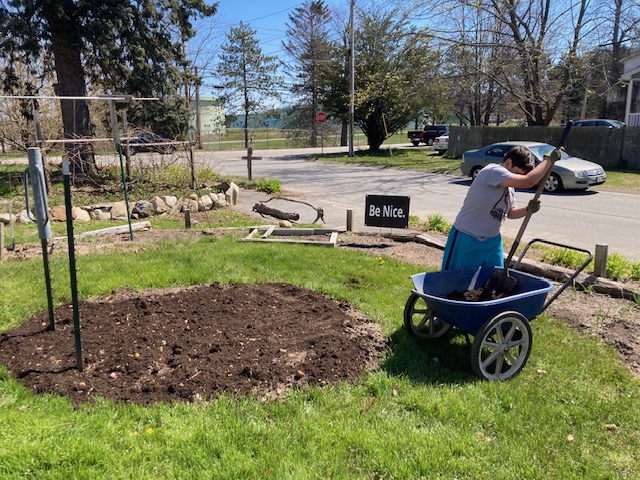
Garlic planted last fall is pushing up. Compost has been spread on the vegy beds. Lettuce and sweet peas have been planted.


My pronoun is “We”
Posted: April 25, 2024 Filed under: Art & Healing, Chronicles of a First Time Parent, What is an Art Farm 1 CommentDuring my student days, reading Greek and Latin literature, the heavy hitters – grammatically speaking – were the nouns and verbs; adjectives and adverbs lived the fancy life, drove fast cars, added sparkle and pizazz to any sentence. Pronouns were back bench utility players.
In recent years pronouns have gained a place of prominence, which intrigues me. I first heard about the increasing awareness of pronouns when a friend, serving on the Board of the Friends School of Portland, described this new phenomenon. My children’s teachers now list their pronouns in emails. I am increasingly aware of this social trend.
In my work as a carpenter no one ever asks my pronoun; this topic is never discussed on the job site. And so I should like to announce here, that my pronoun is “We.” I have chosen the first person plural with specific intent, to message my commitment to collaborate, co-create, communicate and cooperate in building community.
I observe people use the third person: he, she, it, they, them. First and second person pronouns do not denote gender, while third person specifically denotes and identifies gender. While I affirm and embrace gender equality, fluidity, and transgender my deeper concerns lie with the increasing fragmentation and divide within our culture. Third person pronouns denote “other” which underscores separation.
The concept of “other” has been a central question of philosophy for centuries, for millenia. Within the European tradition everyone from Hegel to Husserl from Sartre to Simone de Beauvoir has opined upon “other.” In the main, “other” has been used to define “self” but I argue this falls within an “us versus them” mindset. What will it take for us to come together?
We do well to look further back to Plotinus, the Greek founder of Neoplatonism. He taught there is a supreme, totally transcendent “One,” containing no division, multiplicity, or distinction; the “One” was identified with the concept of “Good” and the principle of “Beauty.” Among his quotes is: “When we look outside of that on which we depend we ignore our unity; looking outward we see many faces; look inward and all is one head. If a man could but be turned about, he would see at once God and himself and the All.” First person plural, indeed.
Among the ironies of history is that a slave-holding patrician wrote that sterling sentence which begins “We the people of the United States, in order to form a more perfect Union….” How bold to set down those words, such pioneering thought, while Europeans were focused upon “other.” But slavery, treating some people not only as other but as property, bought and sold, would come to define the central challenge of the United States.
And so it was on 4 March in 1861 that an axe wielding brawny frontiersman, elected the 16th President of the young United States, stood upon the Capital steps, charged with the responsibility of holding together the Union. Abraham Lincoln’s First Inaugural Address outlined his thinking, a constitutional lawyer, on the civil discord simmering among the states. He closed out his speech with an appeal to unity, using the first person plural: “We are not enemies, but friends. We must not be enemies. Though passion may have strained, it must not break our bonds of affection. The mystic chords of memory, stretching from every battle-field, and patriot grave, to every living heart and hearth-stone, all over this broad land, will yet swell the chorus of the Union, when again touched, as surely they will be, by the better angels of our nature.”
If pronouns are to continue to gain in prominence, when the collective id has been let loose, when dark anger rages like a sharp knife in a street fight, in these times now going forward may we the people pursue the blessing of unity, accepting diversity in collaboration and a renewed commitment to community.
May “We” become the vogue, in these times, and going forward.
15 driving debt
Posted: April 20, 2024 Filed under: Child Centered Activities, Money & Banking 2 Comments
My daughter turned 15 last Sunday. On Tuesday she began Drivers Ed. On Wednesday we opened a checking account for her. She has asked about buying a car.
A few years ago, she and her friends bestowed upon me the title, “Funky Youth Pastor” which she assured me was a high honor. Given that, I hereinbelow give my sermon about turning 15, driving, and debt.
The word “mortgage” is derived from the Old French word “morgage”, which directly translates to “dead pledge”. This is not entirely morbid. In the early 1600s Sir Edward Coke, a barrister in England explained, “And it seemeth, that the cause why it is called mortgage is, for that it is doubtful whether the feoffor will pay at the day limited such sum or not: and if he doth not pay, then the land which is put in pledge upon condition for the payment of the money, is taken from him for ever, and so dead to him upon condition. And if he doth pay the money, then the pledge is dead as to the tenant.” In other words, a mortgage is “dead” when either the debt is paid or the payment fails.
Debt is not a death sentence but it carries a high cost. In fact, each of the monotheistic religions – Judaism, Christianity, and Muslim – have scripture which forbade interest.
The Quran, verse 275, says that interest – the payment upon debt – is forbidden:
“Those who consume interest cannot stand [on the Day of Resurrection] except as one stands who is being beaten by Satan into insanity. That is because they say, “Trade is [just] like interest.” But Allāh has permitted trade and has forbidden interest. So whoever has received an admonition from his Lord and desists may have what is past, and his affair rests with Allāh. But whoever returns [to dealing in interest or usury] – those are the companions of the Fire; they will abide eternally therein.”
In the Hebraic tradition, Deuteronomy 23:19-20, says that interest is not forbidden but it is restricted:
“Do not charge a fellow Israelite interest, whether on money or food or anything else that may earn interest. You may charge a foreigner interest, but not a fellow Israelite, so that the Lord your God may bless you in everything you put your hand to in the land you are entering to possess.”
Within the Christian tradition, in the early Middle Ages, it seems this scripture was taken to mean that Christians could not handle money but those of the Jewish faith could. And given that the Jewish people could neither own land, nor join a Guild to learn a trade, they became facile at handling money. But money was of Caesar’s realm, not God’s, and a schism was laid, then codified into law in 1745 when Pope Benedict issued his Vix Pervenit that condemned the practice of charging interest on loans as usury.
The words of the prophets have fallen on deaf ears. In January 2024 U.S. consumer debt – credit cards, students loans, auto loans, mortgages and payday loans – totaled $17.37 trillion dollars, and the median credit card interest rate is currently 24.37%. The gross federal debt of the United States has surpassed $34 trillion dollars. We are intoxicated with credit.
It was not always this way. In July of 1979 USA President Jimmy Carter gave his “Malaise” speech, speaking to the nation “…about a fundamental threat to American democracy…to worship self-indulgence and consumption.”
“It is a crisis that strikes at the very heart and soul and spirit of our national will. We can see this crisis in the growing doubt about the meaning of our own lives and in the loss of a unity of purpose for our nation. In a nation that was proud of hard work, strong families, close-knit communities, and our faith in God, too many of us now tend to worship self-indulgence and consumption. Human identity is no longer defined by what one does, but by what one owns. But we’ve discovered that owning things and consuming things does not satisfy our longing for meaning. We’ve learned that piling up material goods cannot fill the emptiness of lives which have no confidence or purpose.”
He had the decency to admit, “This is not a message of happiness or reassurance, but it is the truth and it is a warning.” No one wanted to hear that message. Jimmy Carter consistently ranks among the least respected of US Presidents and he lost in a landslide in the 1980 election.
Carter’s prophecy went ignored and twenty-one years later, the man from Kennebunkport, President George W. Bush would address the nation in September 2001 and encourage continued consumption.
Following the devastation of 9-11 he said, “And one of the great goals of this nation’s war is…to tell the traveling public: Get on board. Do your business around the country. Fly and enjoy America’s great destination spots. Get down to Disney World in Florida. Take your families and enjoy life, the way we want it to be enjoyed.”
My child, at the age of 18 you will be legally able to enter a contract and borrow money. We will then advise but no longer control your decisions. Certainly there is a car in your future and my goal now is to give you clarity to guide your decisions.
The auto website Edmunds reported in October 2023 that the average new car payment had reached an all-time high of $736 per month. The average cost of used cars was $29,328. As options and panache increase so too does the cost; always consider whether your purchase and obligations are sustainable. There is a wisdom in frugal simplicity.
And keep in mind what Ghandi said, “Live simply so that others may simply live.” This quote is available on a bumper sticker. Maybe put that on your first car?

Tall trees and high winds
Posted: April 12, 2024 Filed under: Farming off the Farm, Permaculture & Home Renovation 1 CommentThe Blue Spruce that towers over our farm house is at least 100 feet tall with a circumference of 92″. The tree is very likely 100 years old, a stately mature Picea pungens Englum.

According to the USDA, “…the root system of blue spruce is relatively shallow, even in mature trees. In spite of the shallow root system, blue spruce is decidedly windfirm.” “Windfirm” is not a defined term – as far as I can tell – and so that is a question of significance to our Art Farm.
The backyard of our 200-year old farm house was traditionally the dump for all waste, and having been overlooked, the invasive Norway Maple thrived. Because the Norway Maple is very fast growing its wood grain is long, not tight, and so it easily splinters in high winds. Several maples have sheared and fallen. Two years ago a smaller, 8” caliper maple, fell onto our above-ground pool. Luckily the pool survived.
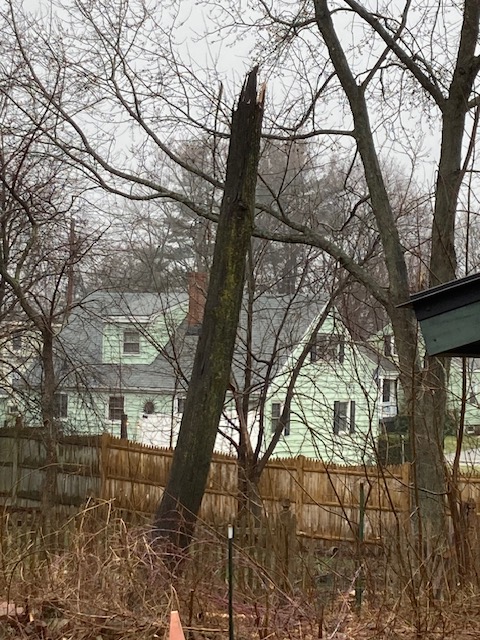
This year a very large 14” caliper maple sheared and fell into our neighbor’s yard. Thankfully there was no damage. We gained firewood but the trend is clear.

The 2023-24 winter was one of the warmest, with the least snow, since 1940. What snow we did have came in late March and early April and those storms brought wet heavy snow with gusts up to 50 mph. The damage was considerable. More than 200,000 Mainers lost power in the first storm, and 350,000 in the latter.
The Portland Press Herald published these graphs, from the Climate Change Institute at the University of Maine, which clearly show an established trend over 80 years: winters are warmer and the snowpack is much less.

The data show facts that we already know from our own experience. As Bob Dylan sang, “You don’t need a weatherman to tell you which way the wind blows.” During these heavy snow storms, pine and spruce trees are especially at risk because the wet snow clumps on the needles and become like sails against the wind.
And so the USDA statement that “blue spruce is decidedly windfirm” is of particular concern here. On the one hand, the stately tree is healthy and vigorous. On the other hand, it is only 25′ from our house. It would be very painful to cut it down, but even harder if it fell onto our home. Hard decisions lie ahead.
Persephone returns
Posted: April 7, 2024 Filed under: Farming off the Farm, Little Green Thumbs 2 CommentsPersephone returns, and thoughts turn to Gaia and the garden.
For many years, we have grown several varieties of heirloom beans (none of which seem to be locally available). This is our beans’ story.
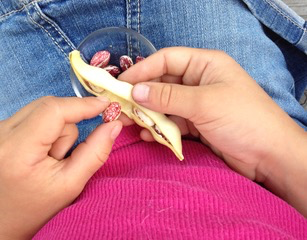
A few years back, during the spring term, I had the opportunity to teach English to refugees and immigrants. There was neither a curriculum nor textbook. I was given a classroom at the SoPo High School and told to figure it out. After a few classes I decided to focus on food – something universal – using children’s stories as a reader.
I brought our beans to the class and chose to read “Jack and the Bean Stalk.” Even though they did not speak English, they recognized the story; the single Mother from Venezuela nodded, smiled and whispered “Si, Juan y frijoles!” Another student, a young man from Angola – who walked 5 miles to and from each class, having walked north from Brazil, across the Darien Gap, to reach the USA southern border – this young man, not to be denied, nodded earnestly in recognition. Of note, the children’s story did not insult them; they craved the chance to learn.

Wikipedia contains an entry titled “Jack (hero)…Jack is an English hero and archetypal stock character appearing in multiple legends, fairy tales, and Nursery rhymes.” Fairy tales proved an effective cross cultural learning tool with pole beans central to one of the most famous of Jack stories.
Considering how nutrient-dense are beans it seems not coincidental they are central to an archetypal story. And beyond the archetype, they can manifest as daily nutrition in our diet. Frances Moore Lappe proselytized the protein-rich nutritional value of beans and her 1971 seminal book Diet for a Small Planet has been called, by the Smithsonian’s National Museum of American History, “one of the most influential political tracts of the times.”
As a protein source, beans are beneficial to the environment, whereas production of red meat generates substantial carbon dioxide, methane and nitrous oxide. Beans require minimal water and lower greenhouse gas emissions because they “fix nitrogen” by converting nitrogen from its molecular form (N2) in the atmosphere then converting into nitrogen compounds useful for other biochemical processes; the NH3 they produce is absorbed by the plant. The nitrogen fixing enriches the soil, decreasing the amount of fertilizer needed by the crop planted after them in the rotation. Soil fertility is increased as a result of having grown the beans.
The beans we grow came to us through Nance Klehm, a steward of the Earth working at the vanguard of art and the Earth. She has lectured at the Museum of Contemporary Art, the Hammer Museum in Los Angeles, the University of Cincinnati, and the Canadian Centre for Architecture in Montreal. She has taught at the University of California – Los Angeles, Northwestern University in Evanston, Illinois, and Dartington College in the United Kingdom, as well as for countless community groups worldwide. Her web site is: https://socialecologies.net/spontaneous-vegetation/.
As part of her work, Nance helped organize the Seed Temple, a seed bank located in Estancia, New Mexico, founded by Flordemayo, a Curandera Espiritu, or a healer of divine spirit. Flordemayo is one of the 13 Indigenous Grandmothers. https://www.grandmotherswisdom.org/ The grandmothers “…are committed to supporting all people reclaiming their relationship to Mother Earth, calling for a profound transformation in the heart, mind, and spirit. The Grandmothers Wisdom Project is an Earth-based community actively building a bridge to support the living legacy of ancient traditions that gives us deeper insight into the mystery of life and the importance of honoring the connection that exists among all beings, nature and the cosmos.”
Know your food
Know your farmer
Know your seeds’ provenance
About ten years sago, Nance asked us to grow the beans and then return a portion back to the seed bank; a seed bank need be a living library, and we were happy to help.
We currently grow eight varieties:
- Wild Goose
- Rwanda
- Appaloosa
- Deseronto Potato
- Beauty’s Way
- Good Mother Stollard
- Turkey Craw
- Corn Planter

2023 was a challenging year in our garden. From Georgia north to Maine there were virtually no stone fruits, a late deep freeze having killed the blossoms. We had no peaches, a mainstay from our orchard. Many gardeners commented on the challenges. In our garden a varmint devoured all of the sprouts, including our bean crop. I was slow to replant, and watched with growing fascination as many of the beans sprouted a second time. Having planted less than one cup, we still harvested several quarts – in the most challenging season on record.
On Wall Street the Masters of the Universe, the glassy-eyed bankers, Homo Economicus and the Prudent Person battle for yields of 1/10th of a percent. In our garden just outside the kitchen, Gaia – in her majestic repose – provided an annual yield of breathtaking proportions, which continues to feed my family and our friends. There is something profound here.
Great Mother, indeed !!
Crossing the Rubicon, crossing a cultural divide
Posted: March 31, 2024 Filed under: Art & Healing, Portfolio - David's work | Tags: art, exhibition, myth, mythology, spirituality 3 Comments
In 2000 I built, with Andy Rosen, a 25′ sculpture of a North Atlantic Right Whale. The sculpture was part of a collaborative exhibit, about our relationship to the rapidly warming Gulf of Maine, on display in two locations since then. The second exhibit recently came to an end, but as fortune blessed us, we have been able to donate the entire exhibit to the Wabanaki Public Health & Wellness Center in Bangor, Maine.
On the leap day, 29 February, I delivered the whale et al to the Wabanaki Public Health & Wellness Center. I was greeted by enthusiastic people, who welcomed our gift, and all of whom bore a similar resemblance. These were “people of the first light” members among the First Nations, and I powerfully realized that in crossing the Penobscot River I also crossed a cultural divide.
“Sea Change” within my/our culture was “other,” a puzzle, an odd fit. It had been well reviewed in the Sunday Press Herald and approximately 60,000 people experienced the exhibit. But we had a hard time getting people to embrace it, institutions especially. A robust PR campaign was promised, but in the end little was done to promote the exhibit. The board seemed to hold it at arms length while the administration neither recognized our donors, nor even acknowledged our “in kind donations.” One of our artists summed it up, “Our exhibit pushed some buttons that the museum was uncomfortable with….” One has to wonder.
We were invited to meet with a local ocean research institute to move the exhibit there, including an educational outreach, but their leaders rejected it, in part because of political issues; they directly said they could not take the whale because it touched upon the fisheries issue. Their major supporter is the fisheries industry. So our exhibit had run its course, its welcome worn out, and would have been hauled to the landfill.
To the Wabanaki it is a cherished asset, which they will use to help teach future generations (emphasis plural) about their link to the land. They welcomed my delivery not as plywood and tree trunk, not as wire and fabric, but a component of health and wellness. Their community has serious issues of addiction and mental health; in fact, alcohol, substance use and mental health disorders, suicide, violence, and behavior-related morbidity and mortality in American Indian and Alaska Native communities are disproportionately higher than the rest of the U.S. population. Our exhibit will be expanded into an immersive permanent exhibit in the Cafe of their Bangor center, showing the integration of life, the sustaining power of the Penobscot River, the grand web from Katahadin to Cashes Ledge, that all life is one.
What to my/our culture had become detritus is, to the Wabanaki, a most obvious opportunity. This has come to challenge me in a way reminiscent of paradox to Kierkegaard.
In the Oxford English Dictionary myth has two definitions. The first being “a traditional story, especially one concerning the early history of a people or explaining some natural or social phenomenon, and typically involving supernatural beings or events” with the second “a widely held but false belief or idea.” To my mind, in common parlance myth has become a pejorative term.
Carl Jung wrote, ““Everything that the modern mind cannot define it regards as insane.” Within our Western tradition of rationalism, dominated by monotheism, it is striking to note that one of our Great Men, the maven of rational insight and the material world, Sir Isaac Newton, led a secret life as a leading alchemist. He refused to publish his alchemical work – indeed, it was burned in a fire – perhaps for fear of scorn and rejection. The English Crown issued severe penalties for alchemy, including public hangings. Within our culture heretics have been burned at the stake, and witches sentenced to death.
Art-making predates agriculture, and thus predates civilization. Archetypes would seem to predate religion. Jung thought so, observing that organized religions had perfectly adapted the archetypes to their ritual stories. He wrote this not to denigrate religion, but, as a man of science, to pursue his “study of the soul.” The word archetype is derived from the Greek ἀρχῇ which is also, interestingly, the first noun [Ἐν ἀρχῇ ἦν ὁ Λόγος] of the “Book of Books,” the dominant sacred text within our Western tradition.
The word “archetype” first appeared in the English language during the 1500s, and conceptually relates to the Platonic forms, so I feel on solid ground considering them a priori and the religious narrative secondary. I am growing in certainty that archetypes may be the keyhole through which the light of consciousness shines, with myth providing the keys to unlock the “many rooms in my Father’s house.”
The act of making, to my mind, then is one means to manifest these truths.
Allow me to close with this story from the First Nations:
Whale witnessed the events that led to the settling of Turtle Island (North America) and has kept the records and knowledge of the Motherland alive. It is said that Mu (the Motherland) will rise again when the fire comes from the sky and lands in another ocean on Mother Earth. All of Earth’s children will have to unite and honor all ways and all races in order to survive.

Getting the Lead Out (phytoremediation)
Posted: November 6, 2015 Filed under: Farming off the Farm, Permaculture & Home Renovation 1 CommentWhen we purchased our home, it was the land I valued as the key asset. Our first soil test brought the stunning news that lead in the soil averaged 480 parts per million, a level classified as “move garden to uncontaminated soil.” We got busy researching, and learned that Helianthus annus, the common sunflower, will draw the lead out of the soil.

With that shot of enthusiasm we got to work amending our land. In the autumn of 2013 we sheet mulched a large space in our sun-drenched front yard; we call this the mandala garden. On top of a thick layer of cardboard, we piled rock dust, aged manure, chopped leaves and perennials, and clean top soil: the pile was about 14″ high.

By the spring of 2014 we tested the soil again and this area – far enough away from our house to be out of reach of lead paint chips – showed a level of 280; better but still too high to grow leafy or root vegetables.
We sowed many seeds of Titan, Russian, and Red Pilsen sunflowers and let nature run its course. When we cut down all the sunflowers we disposed of them; you don’t want to compost those!

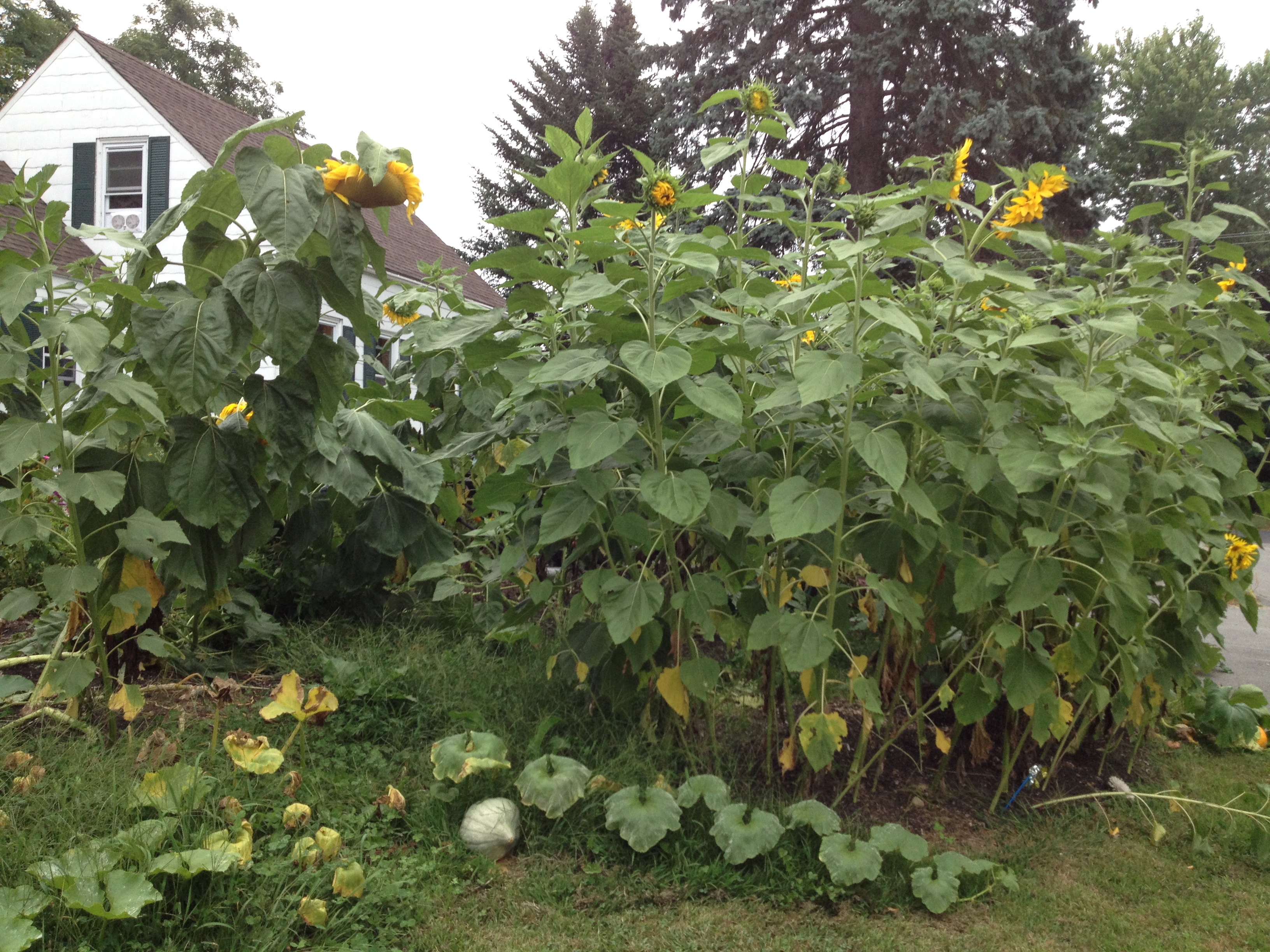
This spring our soil test showed 215 ppm, which is classified as a “slight” contamination but still is a major step forward. We continue to add compost, but we grew fruiting vegetables this summer.
And some sunflowers just for good measure.
Seed Saving
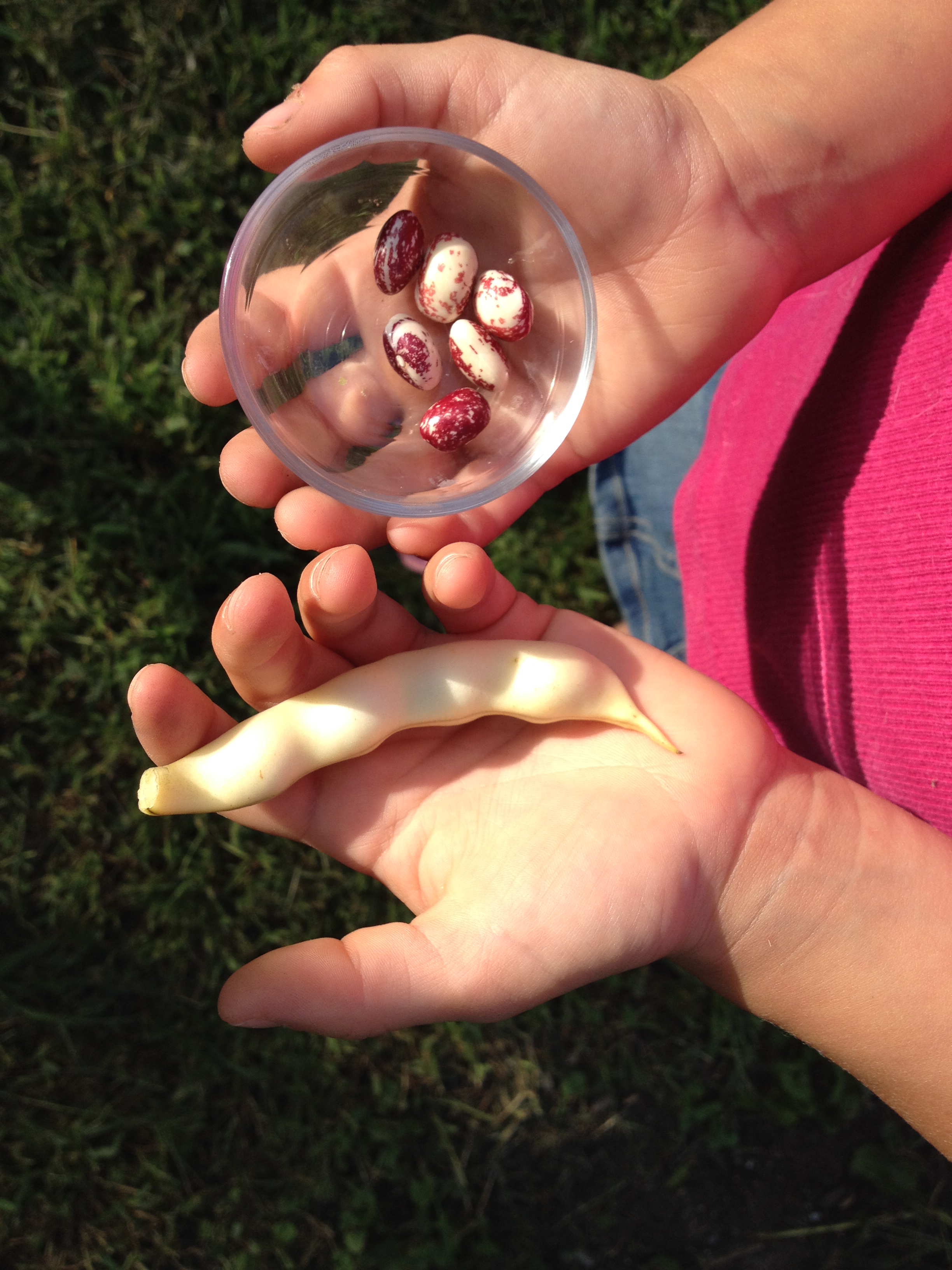
Posted: October 17, 2015 Filed under: Child Centered Activities, Farming off the Farm, In the Kitchen 3 CommentsThis year we grew Good Mother Stallard pole beans for the Seed Temple in Estancia, New Mexico <followthegoldenpath.org>. Our first time growing pole beans, I wasn’t sure how to dry them. While I researched, Ella walked into the garden, plucked from the vine one dried pod, pulled it apart, and…VOILA!…green beans had turned a gorgeous mottled red. Exquisite, fascinating, and a great shared lesson in seed saving.
We planted ten seeds and now have ten x ten x…an abundant cache to send back, to share with friends, and to sow next season.

Chef’s Garden at the Inn
Posted: July 18, 2015 Filed under: Farming off the Farm, In the Kitchen 6 Comments
A concise 6-month history of the Chef’s Garden: in January, on the cold grey day of my first visit to Chebeague Island, I stood on a lawn at the Inn and was asked there to create a Chef’s Garden.

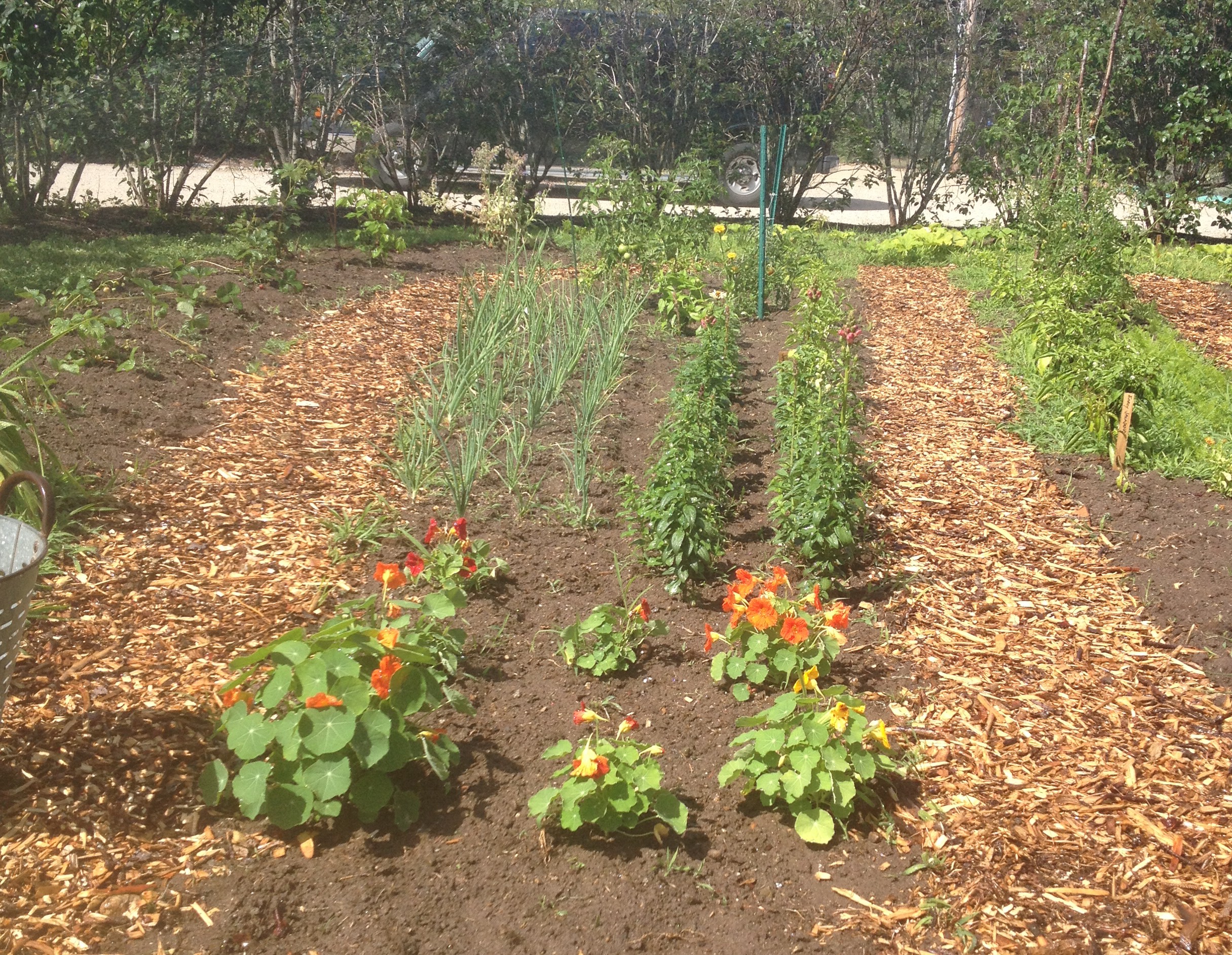 In March, enthusiasm was high. The chef offered his list of desired plants and my friends at Frinklepod Farm, Noah Wentworth and Flora Brown, started the vegy, herb and flower seedings; David Buchanan, of Portersfield Cider, shared advice on berries and stone fruits; Nance Klehm, from the Seed Temple in Estancia, New Mexico, sent seeds of the 4 sisters: Corn, Pole Beans, Winter Squash and Sunflowers.
In April, Chuck Varney, of Second Wind Farm on Chebeague Island, plowed and turned the sod, we amended the soil, and then tilled to break the clumps. We had neither time nor materials to sheet mulch; on the island, bulk compost and mulch are available only if barged over in a dump truck, so we have worked with the soil at hand. The ground laid fallow a few weeks and then we worked our way across the field picking out roots and clumps of dried grass.
In late-May, on a rain-drenched day, Noah and I hauled across the bay crates filled with the starts and seeds: japanese eggplants, red and white onions, varieties of tomatoes, peppers, butternut and buttercup squash, bush beans, radishes, carrots, beets, slicing cucumbers, and a potager’s array of herbs and flowers. Some seeds failed to germinate. Some plants have been slow to take root. Overall, the garden is flowering and fruits are forming on the vines.

 The chef has said that he walks through the garden to relax during long days in the kitchen. Today, he harvested eggplants, peppers, squash blossoms, herbs and edible flowers for this evening’s menu.
How wonderful to see an idea coming to fruition, and to know that customers have been fed from our shared efforts.
 an Art Farm