Building Models to a T
Posted: March 13, 2026 Filed under: Chronicles of a First Time Parent 4 Comments
The son of a carpenter, he had an 8th grade education. Then he took night school classes for business and stenography, until at age 17, began work as stenographer for the Pocachontas Fuel Company in Cincinnati, Ohio. He described his boss as “the dean among smokeless coal producers and the local distributors never took decisive action without first consulting him.”
With the Dean’s approval, he moved to the Queen City Coal Company as stenographer and part-time salesman, riding the electric rail lines to make his sales calls. On his first day, he boarded the 6:00 am train and, at the Mers Coal Yard, sold a carload of New River Mine coal on his very first call.
In 1914, at age 19, he paid $675 to buy his first car, a Ford Model T. Ohio had license plates then but no drivers licenses until 1918. His sales territory expanded to southern Indiana towns along the Baltimore & Ohio railroad, and as far east as Columbus, Ohio. Roads were occasionally paved with bricks, but the vast majority of intercity roads were made of gravel, crushed stone or dirt. With a cruising speed of 20 miles per hour, sales calls were an all day odyssey beyond the reach of any telephones.
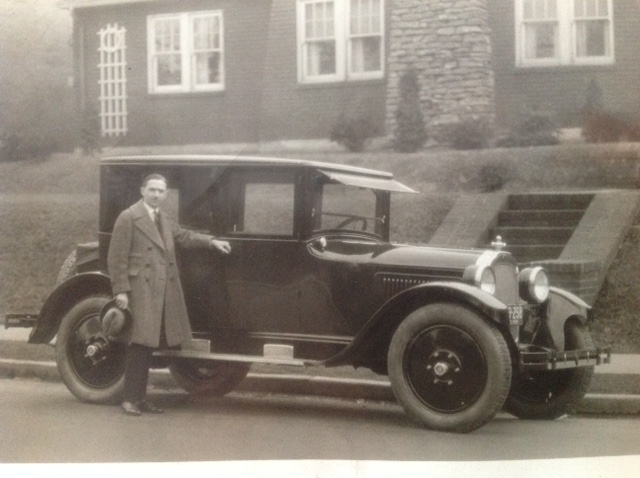
In June 1914, Archduke Ferdinand was assassinated and the “War to end all wars” began. Our 19-year old hero drove 140 miles – which took more than 7 hours – to Camp Sherman to enlist in the US Army. While at Camp Sherman, Edwin Forbes Glenn, Chief of Staff of the Department of the East, asked, “Can anyone write shorthand?” Our hero, named John, rose his hand and was put to work. Upon completing the task, General Glenn dictated a letter to Newton D. Baker, Secretary of the War in Washington DC whereby he appointed John as his personal secretary with the title of “Army Field Clerk.”
Edwin Forbes Glenn was soon promoted to rank of Brigadier General, and subsequently a two-star Major General as commander of the 83rd Infantry Division. John was stationed in Le Mans, France and became Chief Clerk for the American Military Training Center with duties of entertainment and shipment of troops to the Western front line. During the War, the 83rd Infantry Division supplied over 195,000 officers and enlisted men as replacements in France without seeing action as a complete formation.
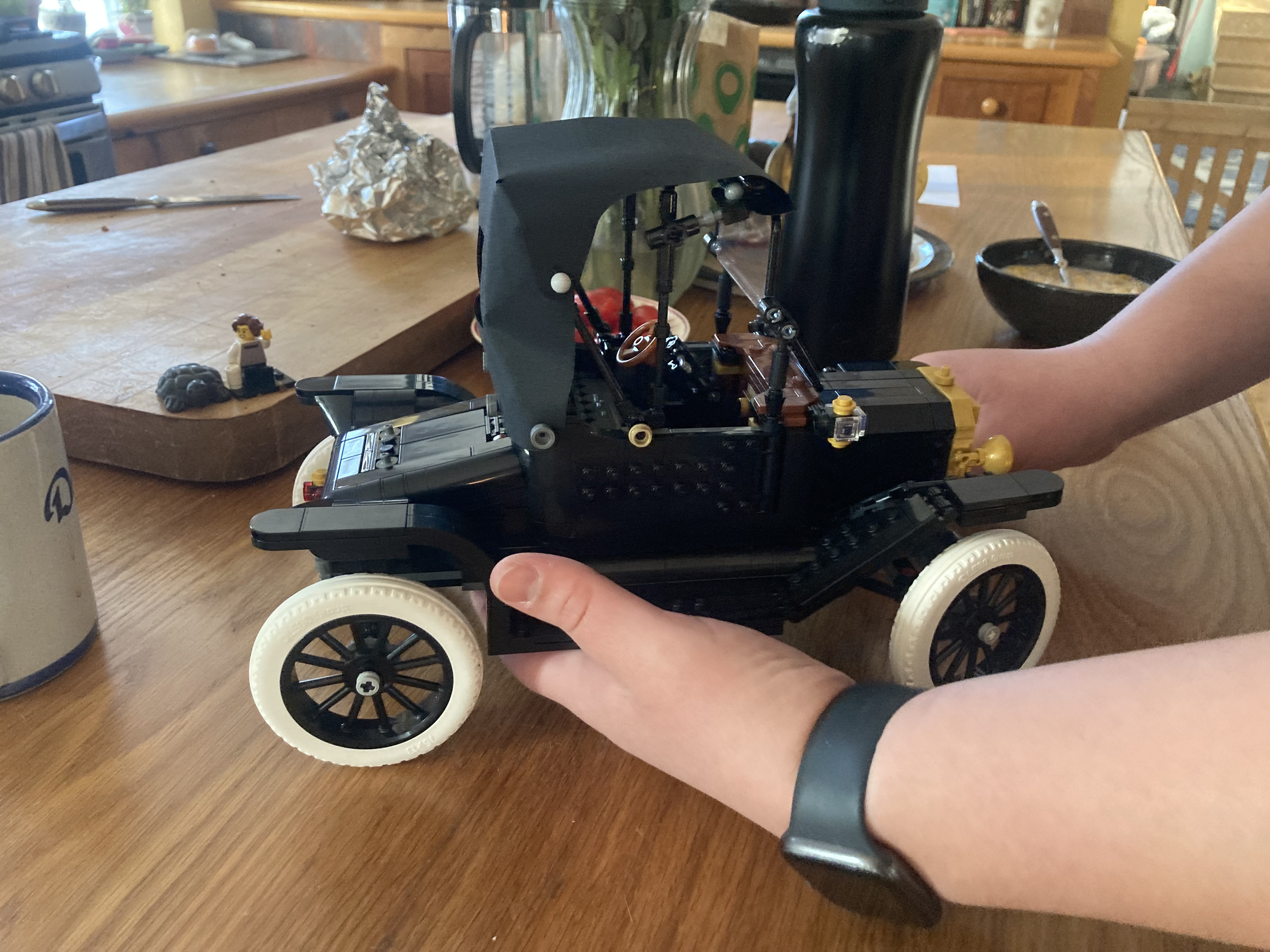
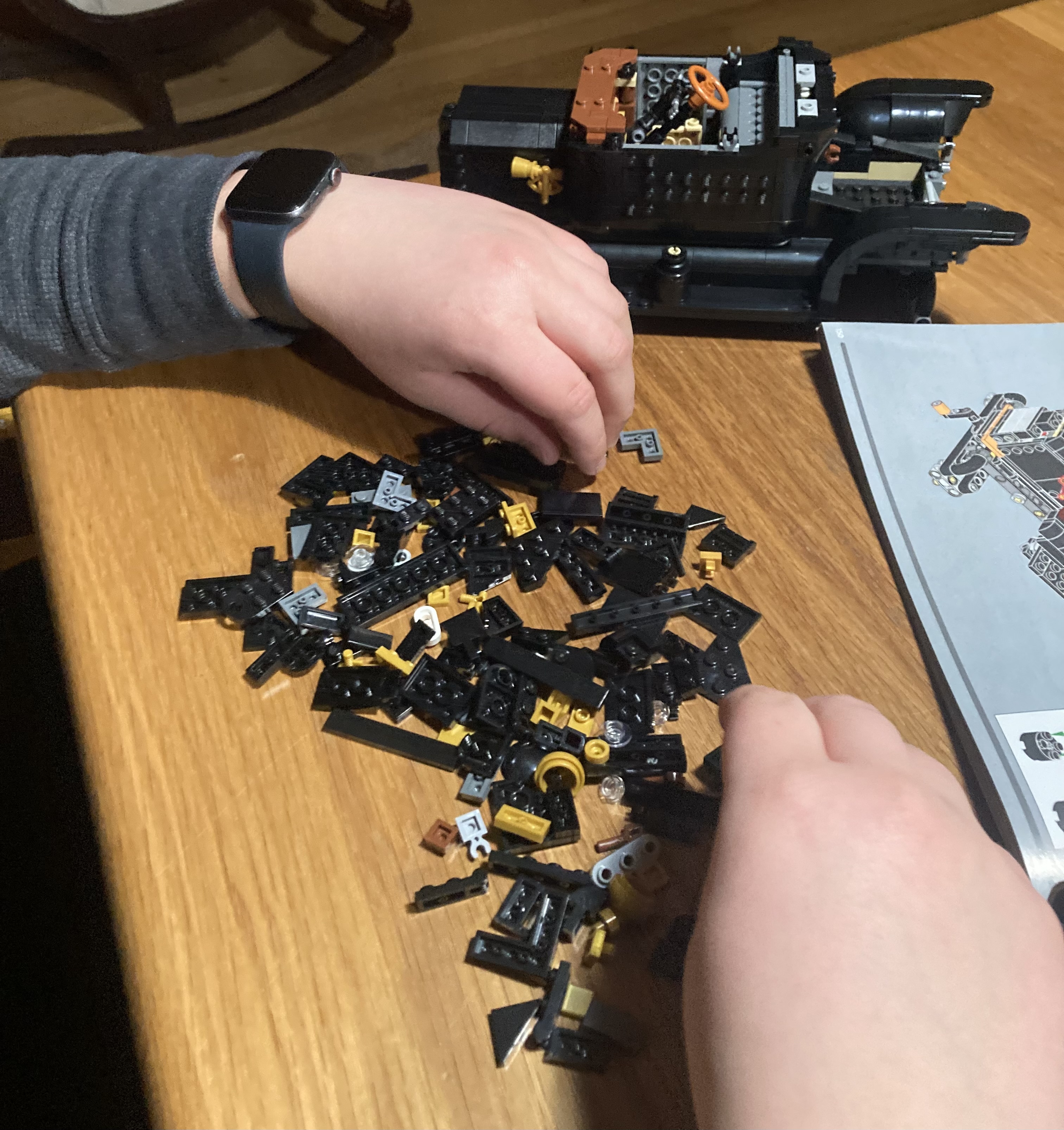
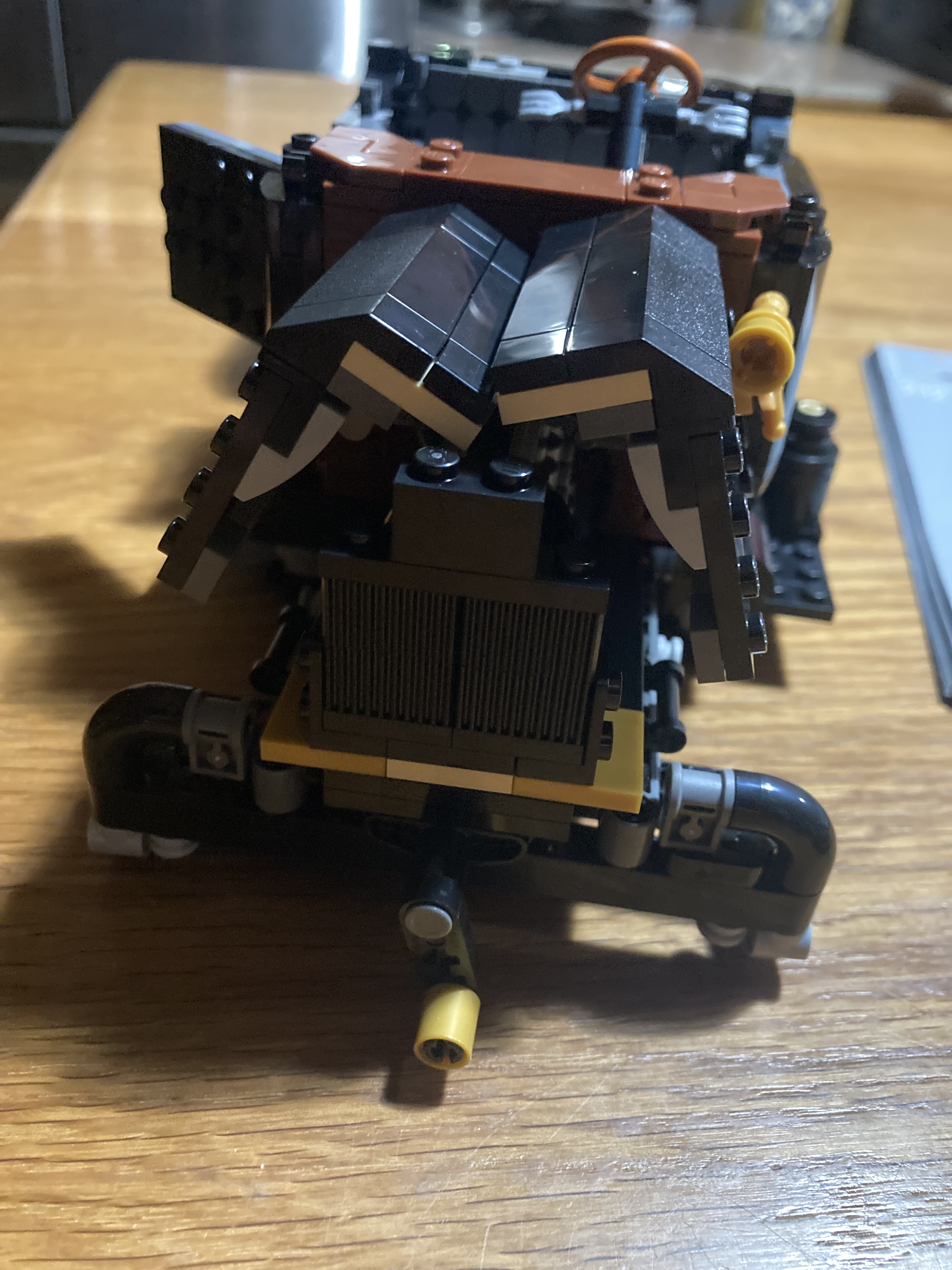
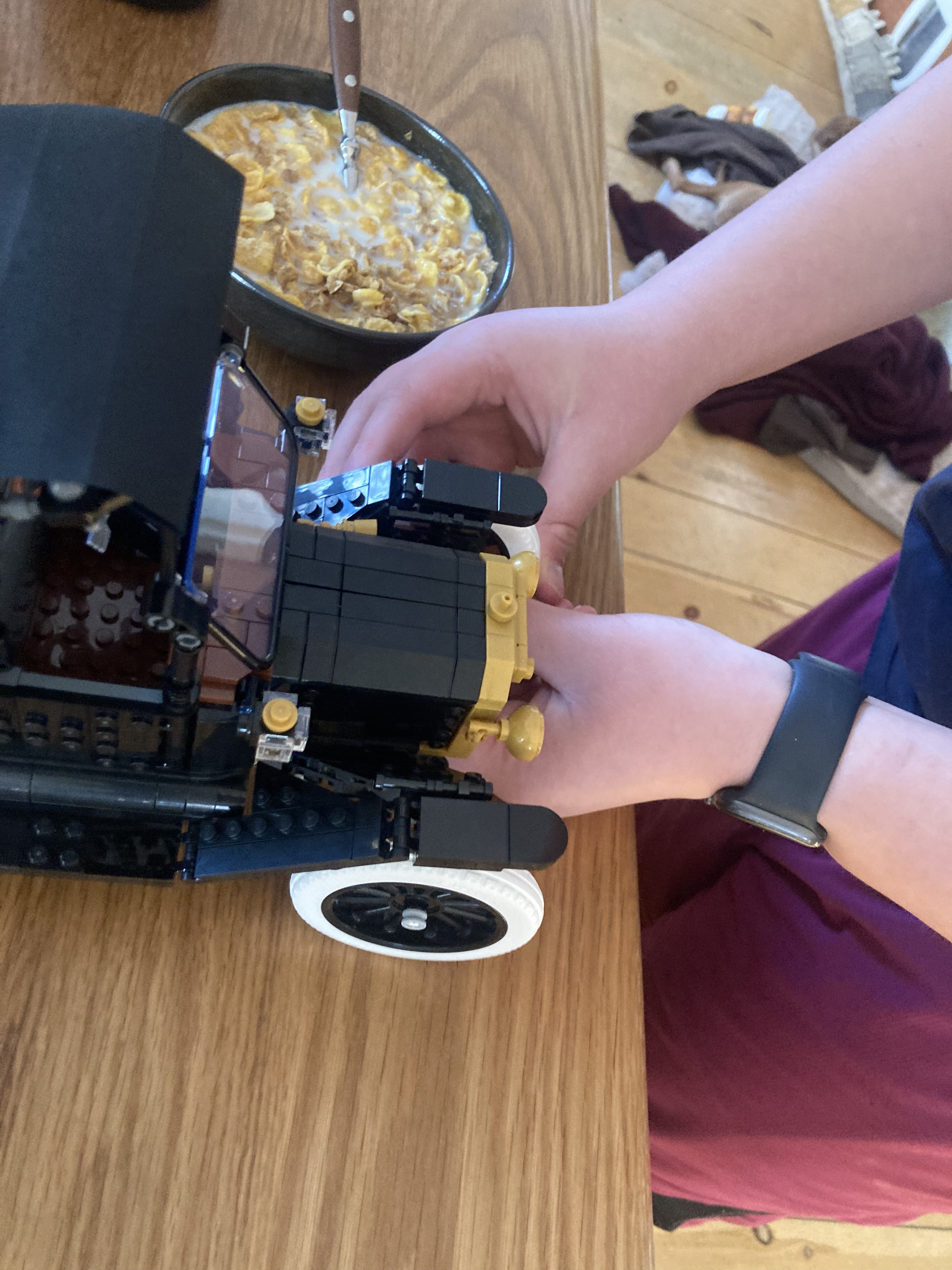
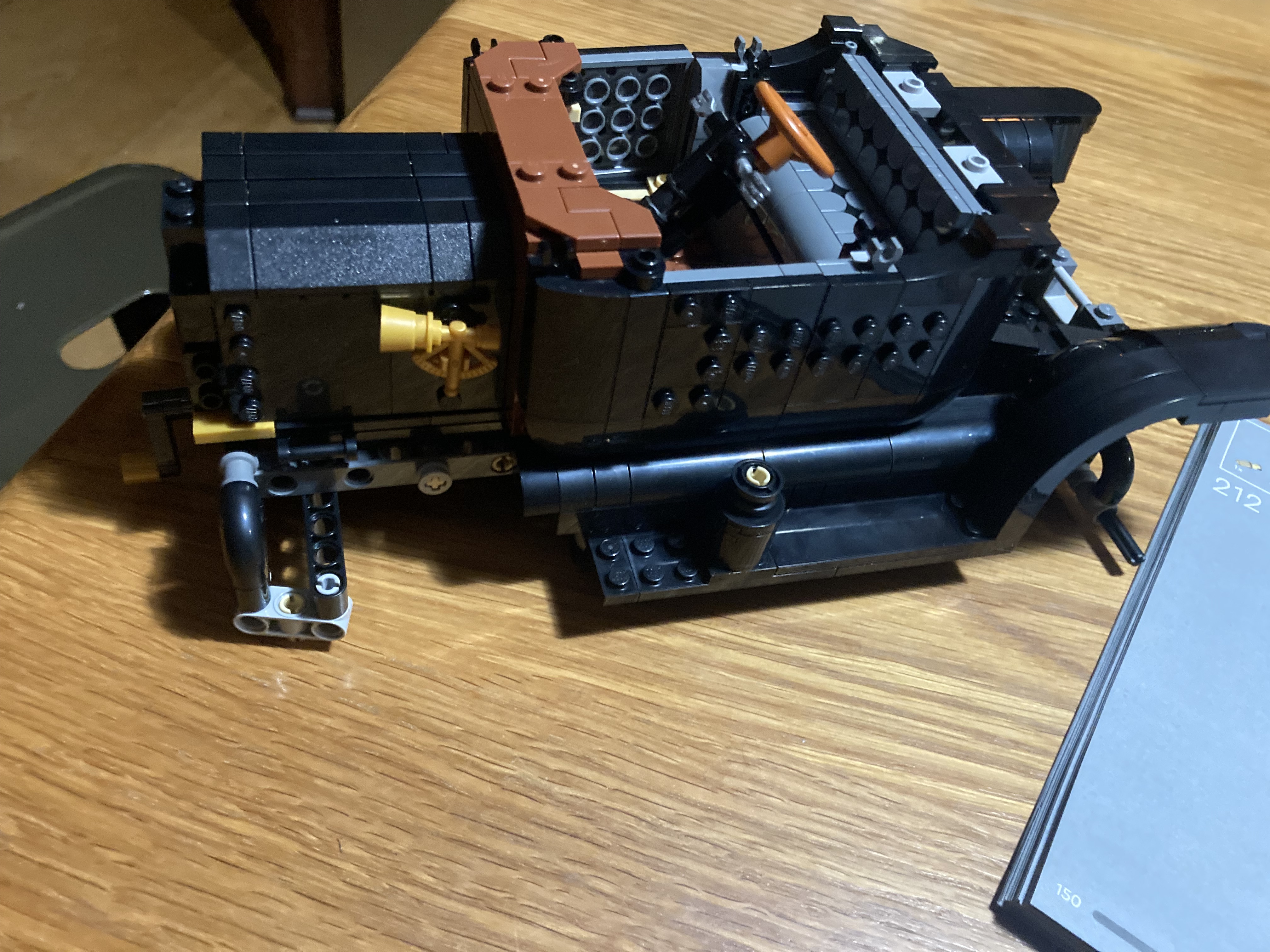
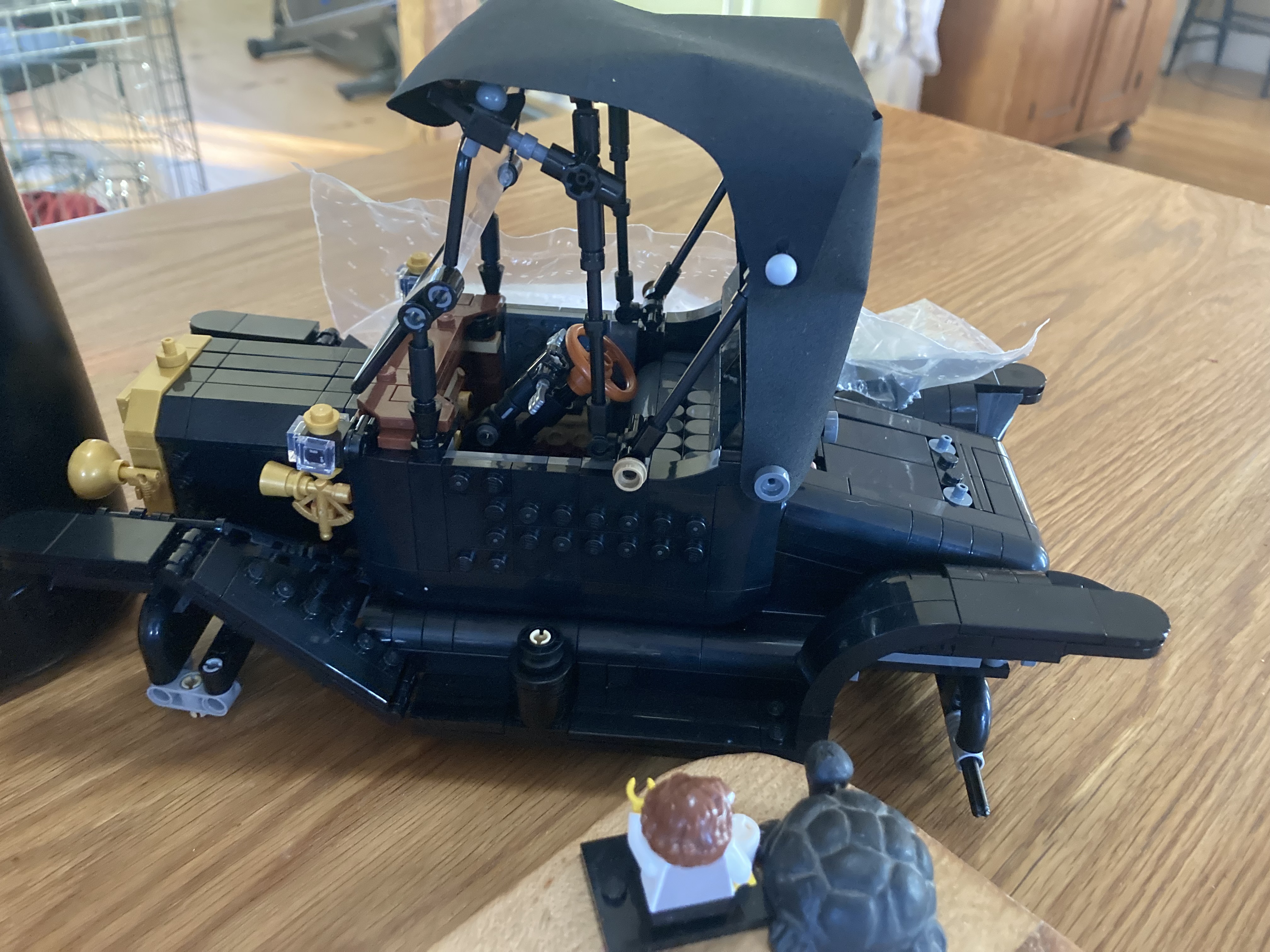
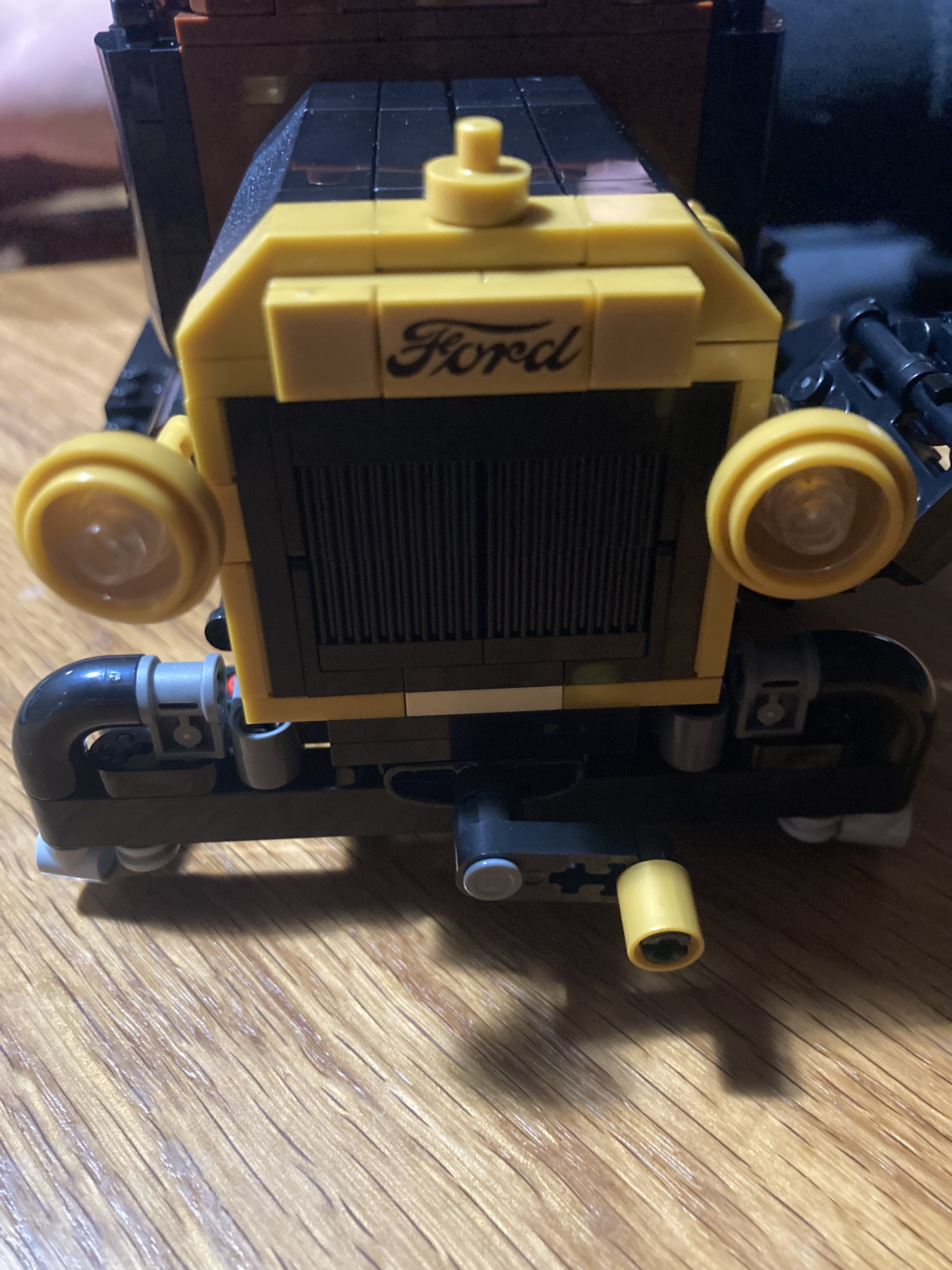
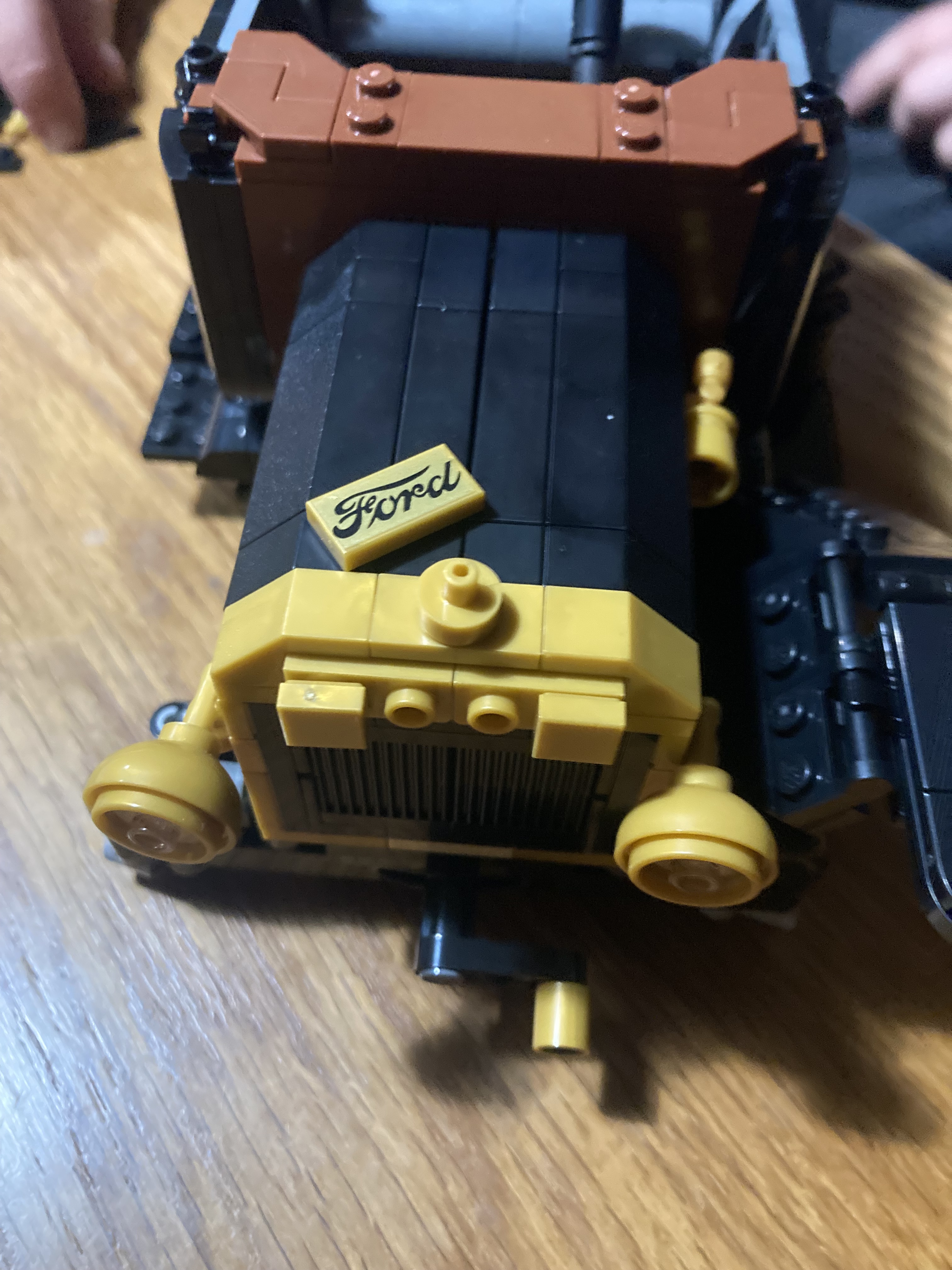
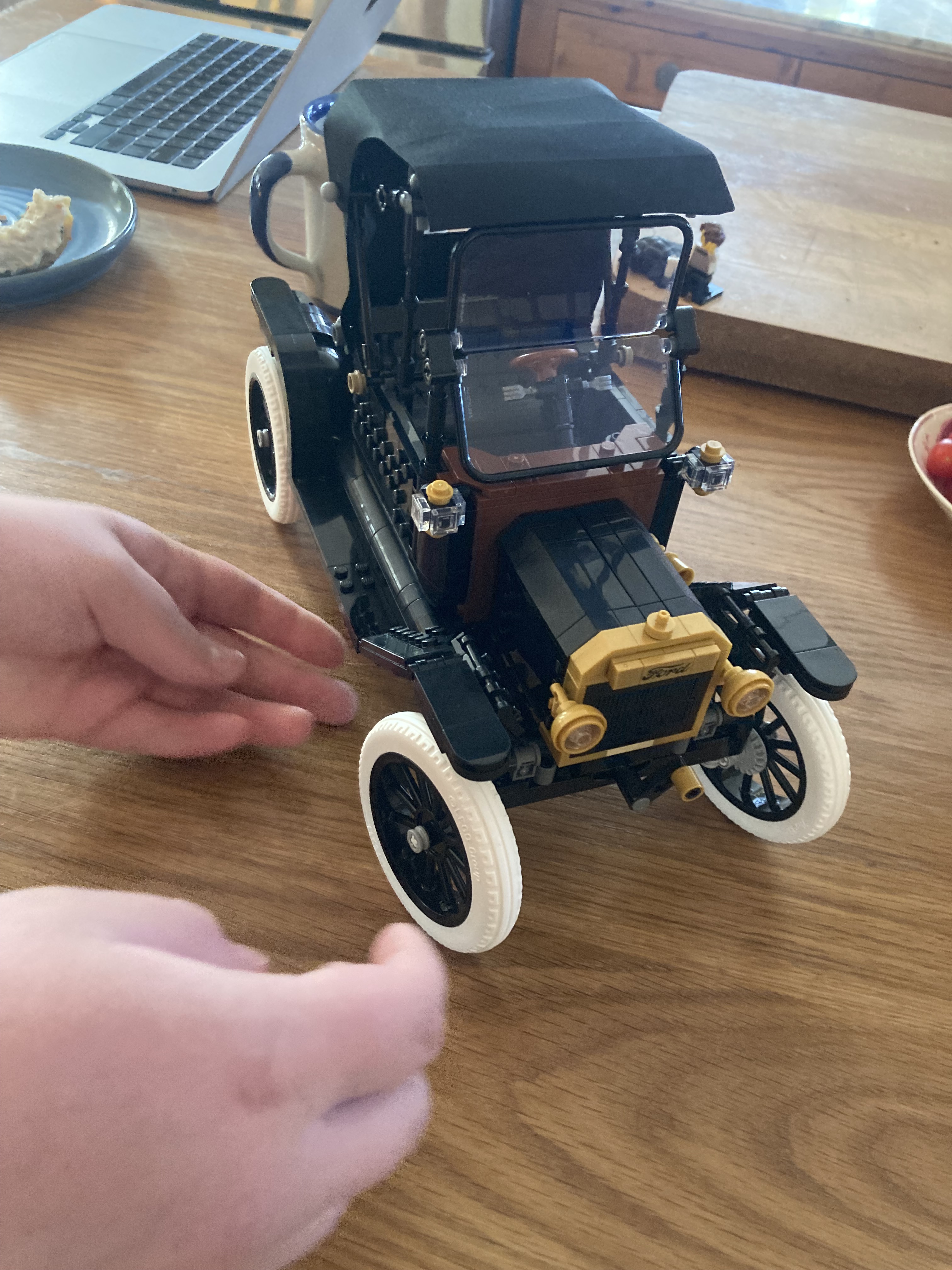
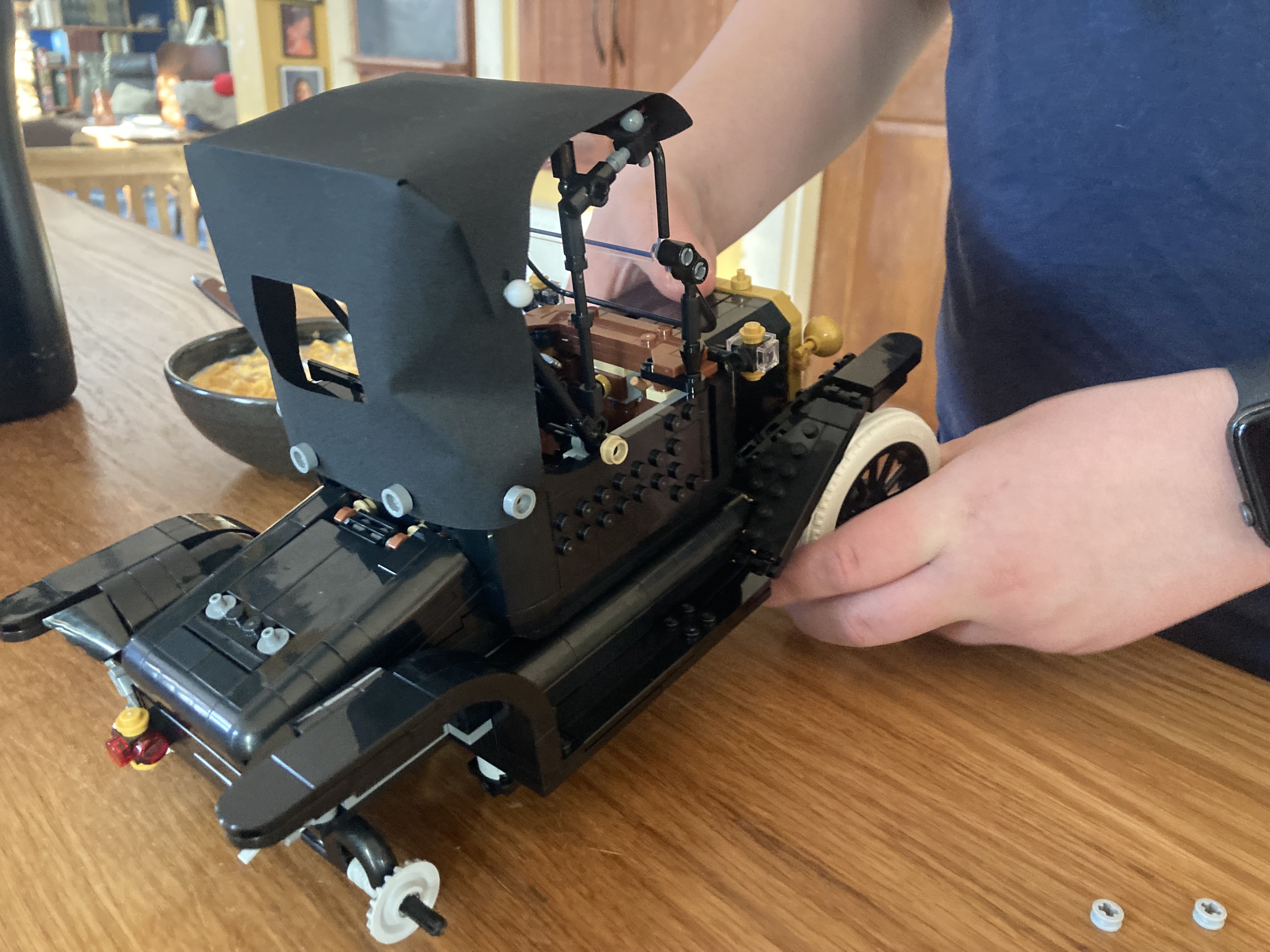
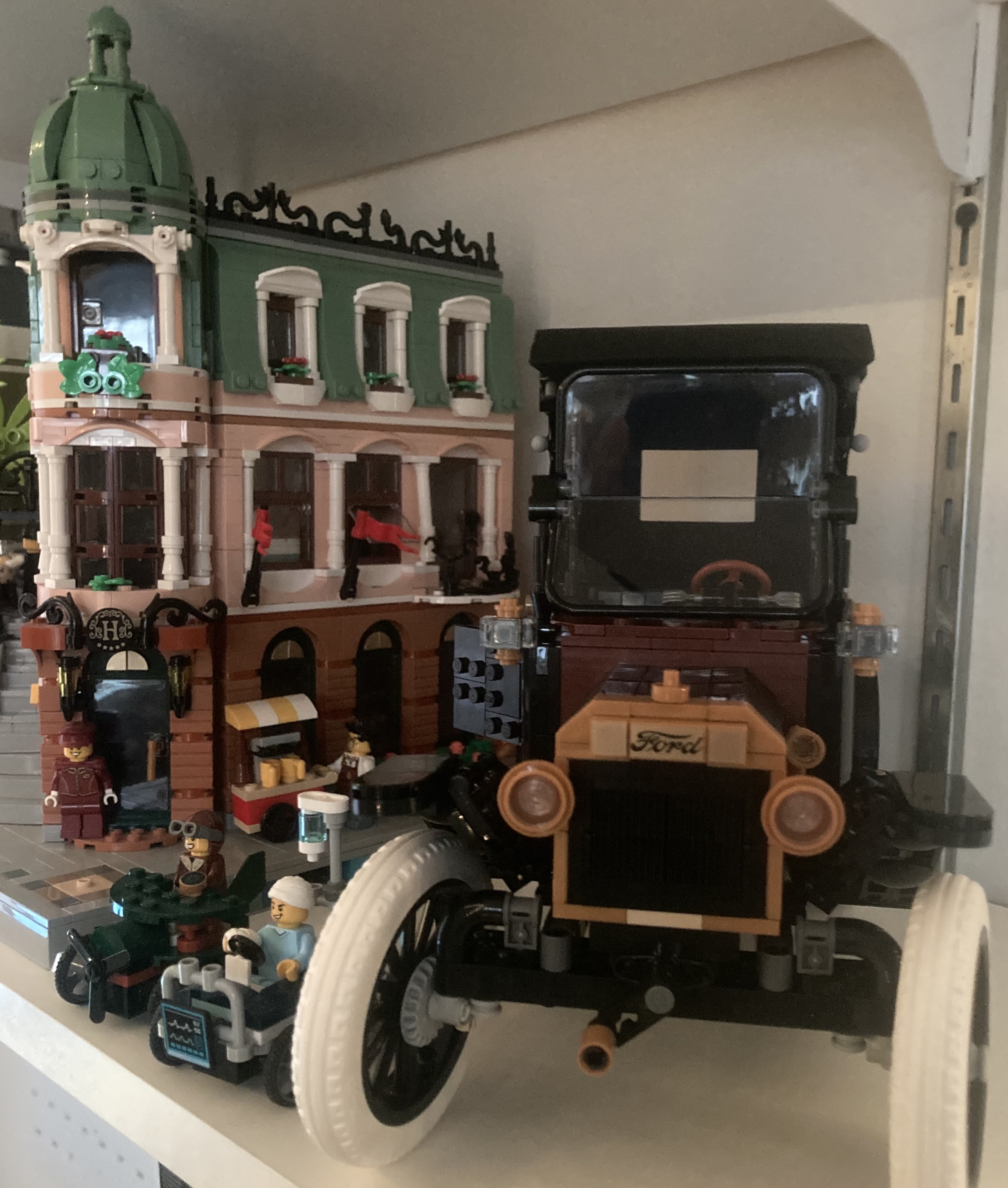
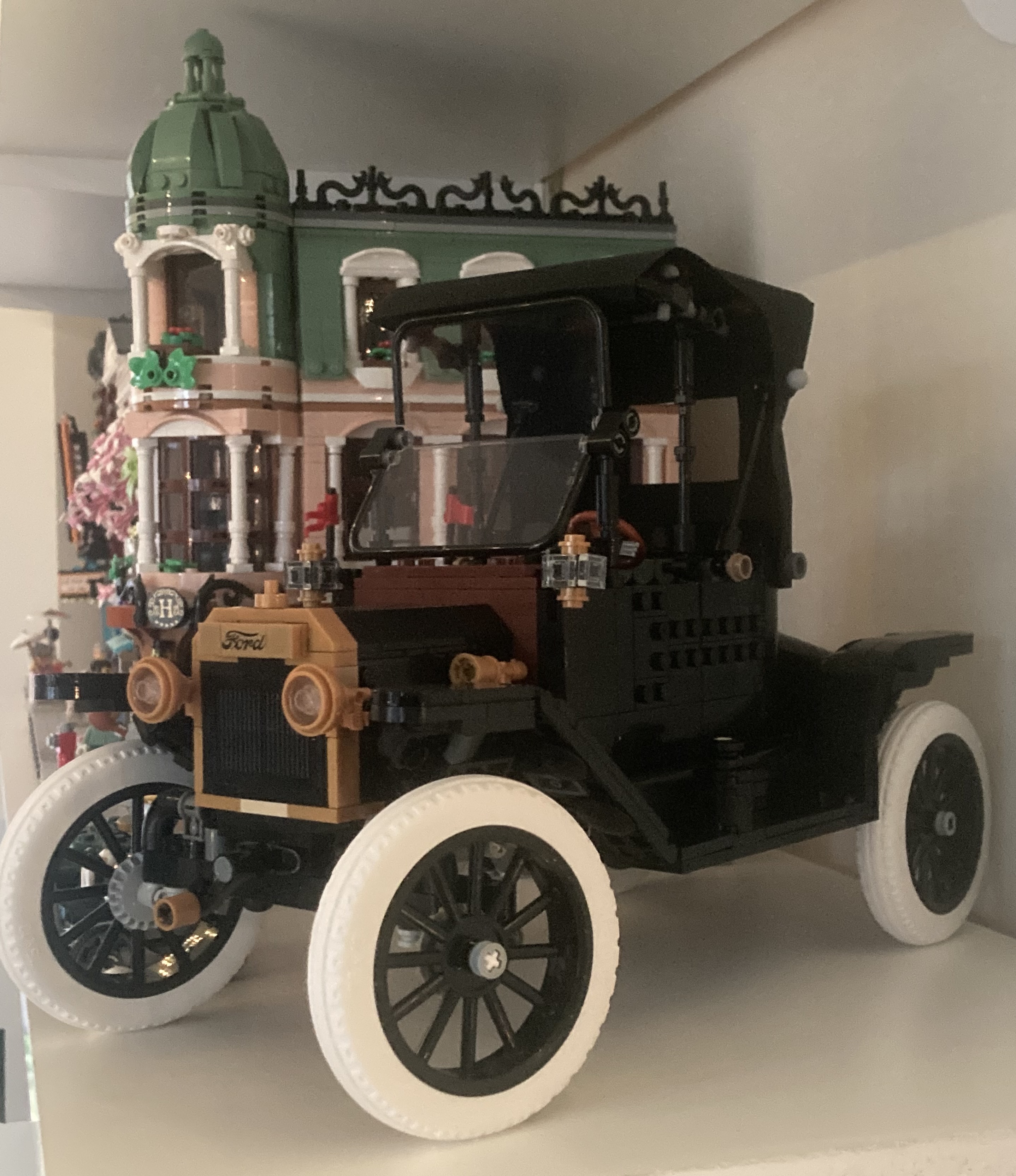
John is my son’s Great Grandfather, and this week’s homeschool history topic is coal, automobiles and Detroit. LEGO released, last week, a 1,060 piece kit for a Ford Model T measuring 7.5” high by 11” long by 5” wide, with a fold back fabric roof, split windshield, spoked rim wheels with white rubber tires. The rear trunk opens, the driver’s cab has working steering, the hood panels open to reveal the engine, while the front crank spins the fan. My son pined for that model, which he easily earned laying the tiles. This history lesson became part of the deal.
World War 1 ended with the Armistice of 11 November 1918. John returned from the war and was offered a job with the Atlas Coal Company, his territory Ohio and Indiana. The company’s “Red Comet” coal was mined in Harlan, Kentucky, a center of labor strife between coal mine owners and union workers, especially during the Harlan County War of the 1930s. Harlan County would become the poorest county in the USA.
491 miles north, in Detroit, Henry Ford – also with only an 8th grade education – had been busy during the “War to End All Wars.” The River Rouge Complex was built in 1917 and became the world’s largest vertically integrated factory. During the war it produced 42 Eagle-class antisubmarine patrol boats, more than 38,000 Model T cars, ambulances, and one-ton trucks, 7,000 Fordson tractors, two types of armored tanks, and 4,000 Liberty airplane engines for the Allies.
Henry Ford did not need John’s coal – Henry sourced his own – but John knew that Detroit would need vast amounts of Kentucky coal to boil the water to create the steam, to spin the turbine to activate the generator, to create electromagnetism to drive the industrial machine. John would become known as “The King of Coal” in the Ohio River Valley region. By the late 1940s he was buying the entire output of mines, shipping trainloads of coal north to fire the turbines of Detroit Edison. When held “as goes GM, so goes the US economy,” the King of Coal of the Ohio River Valley was among legions of salesmen shipping upwards of 3.2 Million metric tons per year to Detroit.
Both the King of Coal and Henry Ford had only an 8th grade education. That is pretty much where my son is now. Henry Ford famously “learned by doing” which increasingly seems the direction of our homeschooling. When my son learned small engine repair, the Professor taught electromagnetism. Welding as chemistry has been one facet of our teaching, while even Language Arts teaches that grammar is a construction of thought, a process of assembling words, phrases, sentences to map form to meaning. While “hands on” is a key here, this week’s lesson taught that history has sharp edges.
Cadiz, Ohio, in far eastern Harrison County, is the Appalachian town where Clark Gable was born. For our lesson about coal, Harrison County was a top producing county in Ohio, driven heavily by massive strip mining operations, with total production reaching 55 million tons per year by 1970. Cravat Coal was founded in Cadiz in 1951 by a Yugoslavian immigrant, whom John helped launch, co-signing a $100,000 note to underwrite the business. Over the years John sold their coal, and the company passed to his sons, pistol-packing union-busting coal operators.
John was old school, born in 1895, and always did business on a handshake. But the Puskarich boys used contracts, aggressive tactics, and were less than forthright. By the 1970s they were moving to push John out, and they tricked him to sign away his rights.
My now-deceased Cousin told the story, “I called grandpa in either 1975/76 and asked if I could go with him [to Cadiz]. He said he didn’t think it was such a good idea (probably because he was in the process of being let go, as I understand, they didn’t want to pay him anymore).… We stayed at a little motel. “Big” Mike Puskarich, the President, was larger than life…De Niro in Casino…8 of us sat down for dinner and he ordered “steaks for the table”…let’s just say he wasn’t Opa’s cup of tea…actually more like Rodney Dangerfield…the bill came and Mike pulled out a hundred or two and said “keep the change.” Next morning we went to the coalfields. After lunch Gramps hired the receptionist to check in on me while I watched TV. I remember Gramps coming home rather despondent. We were supposed to stay another day, but late that afternoon we checked out and returned to Cincinnati in his Grand Prix.”
In June of 1980 John wrote to Big Mike and his brothers: “Your $600,000.00 profit on this order alone was five (5) times my total salary for the 10 years I was Vice President, Sales. Your greed in taking $9,000.00 from my salary in 1977 and 1978 and rewarding me with a pension of $4.00 per day was incredible, ungrateful and dishonest. May I remind you it was I who co-signed your $100,000.00 note starting you on the road from rags to riches, and my dedicated services to a net worth of $7,000,000.00 as of December 31, 1976. Shame on you!”
John had been cut out. Five days after sending the letter, he suffered a stroke, from which he never recovered.
This week’s history lesson has many aspects, but at its most basic teaches how complex history can be. Henry Ford was an iconic industrialist, as well as committed to racist and anti-semitic views, including supporting the Ku Klux Klan.
The surface mining in Harrison County, and throughout Appalachia, has caused profound degradation, with barren un-reclaimed land and severe air and water contamination leading to higher risks of lung, respiratory, digestive, and kidney cancers due to exposure to toxins. Harrison County has higher mortality rates compared to both the Ohio state average and the United States national average.
The coal industry was dominant in the Ohio River Valley and Appalachian region from the late 19th century through the 1980s, which is exactly John’s life. At its peak, in 1923, 863,000 were employed in the mines, so more than four generations found steady employment, but at great cost. It is no surprise that an enterprising 8th grade drop out could leverage shorthand into a significant career selling coal. But to his great grandson, of the Zoomer generation, that way of life seems incredibly outdated and dangerous.
Cravat Coal, in fact, has gone out of business. John’s searing experience there brings to mind the proverb “gentle as a dove and wise as a serpent.” Both are needed.
Perhaps the ultimate lesson is that life is not a black and white story, but grey; not simple like the old western cowboy movies, where the good guy, in the white hat, rides into town and wins. Coal powered a war time industrial machine that battled and defeated fascism. America was dominant. That legacy now fades, and the Zoomers come of age in an increasingly complex, deeply interconnected, possibly anti-democratic future.

Red Cabbage Ph
Posted: March 6, 2026 Filed under: Child Centered Activities, Chronicles of a First Time Parent, What is an Art Farm | Tags: Social ecologies 1 Comment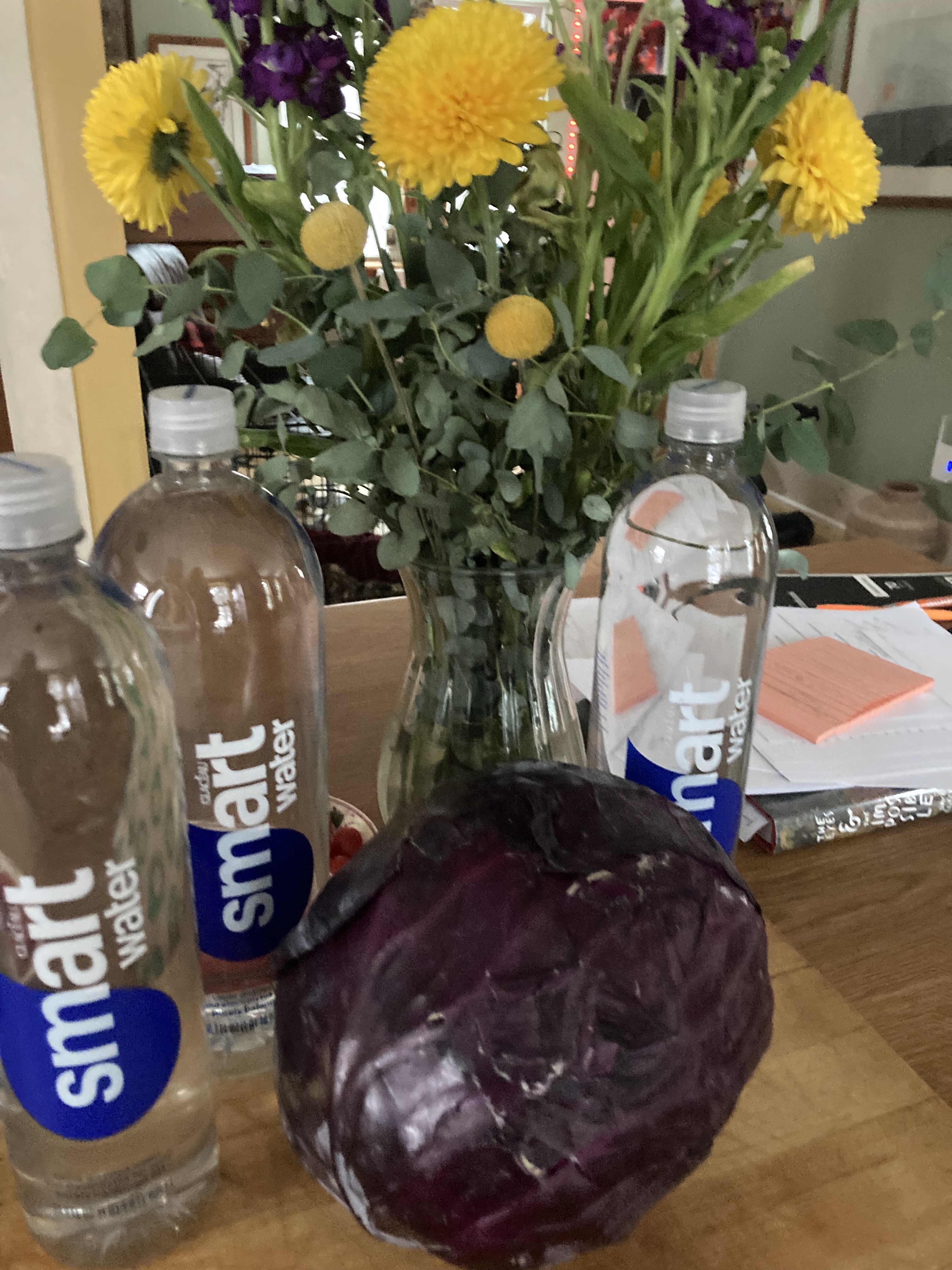
Nettlesting is a Mother Tree, whom I met, almost 30-years ago, in the Fulton Market District on Chicago’s near west-side. When that city was the “Hog Butcher to the World” that neighborhood was home to its meatpacking warehouses, but circa 1998, gentrification spread, and we each occasioned to be there for a Childrens’ art exhibit. She walked up, we started talking.
In 2000, our paths crossed again, in Chicago’s Financial District canyons, on LaSalle Street, outside the once venerable Harris Bank, which now has been merged into the global behemoth BMO. I was preparing to depart for the Philippines – a land of smoke and mirrors – on my oxymoronic quest for “Humanitarian Finance” while she was preparing to WWOOF (Worldwide Opportunities on Organic Farms) in the full sunlight of Southern Australia.
Being a Mother Tree, she is a steward of Gaia who thrives at the vanguard of soil and soul. Like a zen koan, she is not an artist, but one might say she is an eARTheart-ist.
In 2004, she planted six kernels of “Golden Bantam” organic heirloom 1902 sweet corn in a shopping cart and then proceeded to push it around Chicago’s dense urban core. People were confronted by food growing, rather than food as a commodity purchased in a store. “Know your food, know your farmer” came alive on street corners. [Search You Tube for “Field Trip. A cart full of Corn Hit’s the Road.”]
In 2006, Sandor Katz, the NY Times best selling author, profiled her guerrilla gardening in his book “The Revolution Will Not Be Microwaved.” By 2012 she was named as one of Utne Reader’s “Twelve Visionaries Who Are Changing Your World.” That now ancient history was prologue, however, to the work she has gone on to pursue.
In 2020 she travelled in the Ecuadorian Amazon basin and worked with Indigenous peoples as well as local growers, developing classes on soil and remediation. The BBC reported this, quoting her, “The ultimate goal is to create an ecosystem of native plants and crops that can be farmed sustainably while also cleaning up the oil. I’m trying to have people re-engage with certain subtle complexities of nature…”. https://www.bbc.com/future/article/20200316-cleaning-up-the-oil-spills-of-the-amazon-rainforest.
Her “Soil Keepers” program grew out of this effort, and has now been taught to more than 250 students around the United States, as well as in Qatar, Finland, Poland, and Ecuador. https://socialecologies.net/
Over the years we have kept in touch and she recently came east to soak in the rocky coast of Maine. Our oceanic expanse served as counterbalance to the Great Lakes’ prairie. She and my son M got along quite comfortably and an idea was hatched.
Science is not my strong suit. In high school Chemistry, the concept of a mole as “a unit of measurement to quantify the amount of a substance, representing exactly 6.022 × 10²³ elementary entities (atoms, molecules, ions, or particles)” was bewildering. I dropped out post haste to study ceramics. I never looked back.
Necessity, though, is the mother of homeschool innovation. Between M’s needs and my lack of science training, when the Mother Tree offered to teach him soil science I accepted post haste; what I call soil science is, more precisely, applied biogeochemistry, starting with applied chemistry through field work and kitchen-based experiments. It is amazing what red cabbage can teach about Ph.
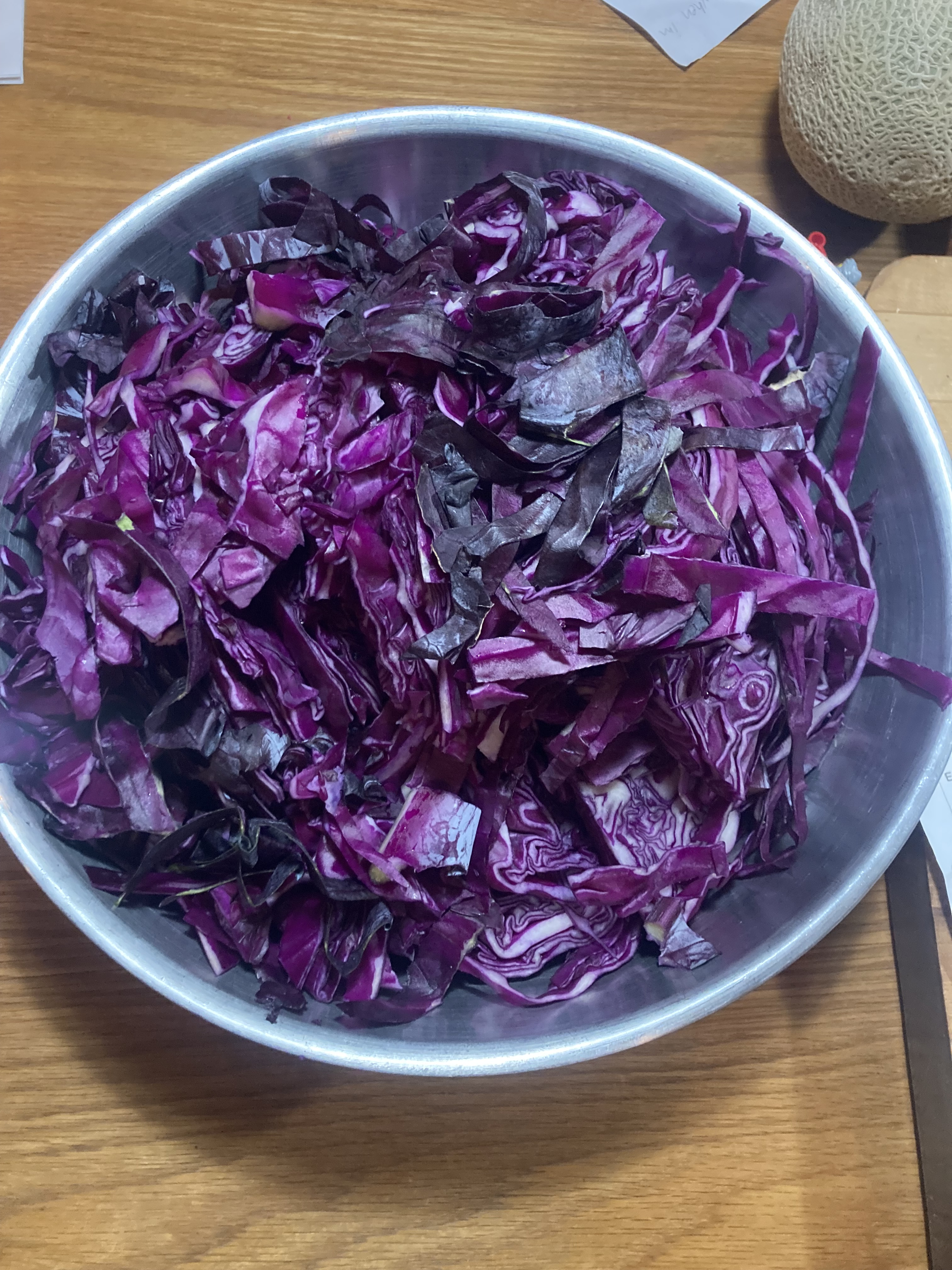
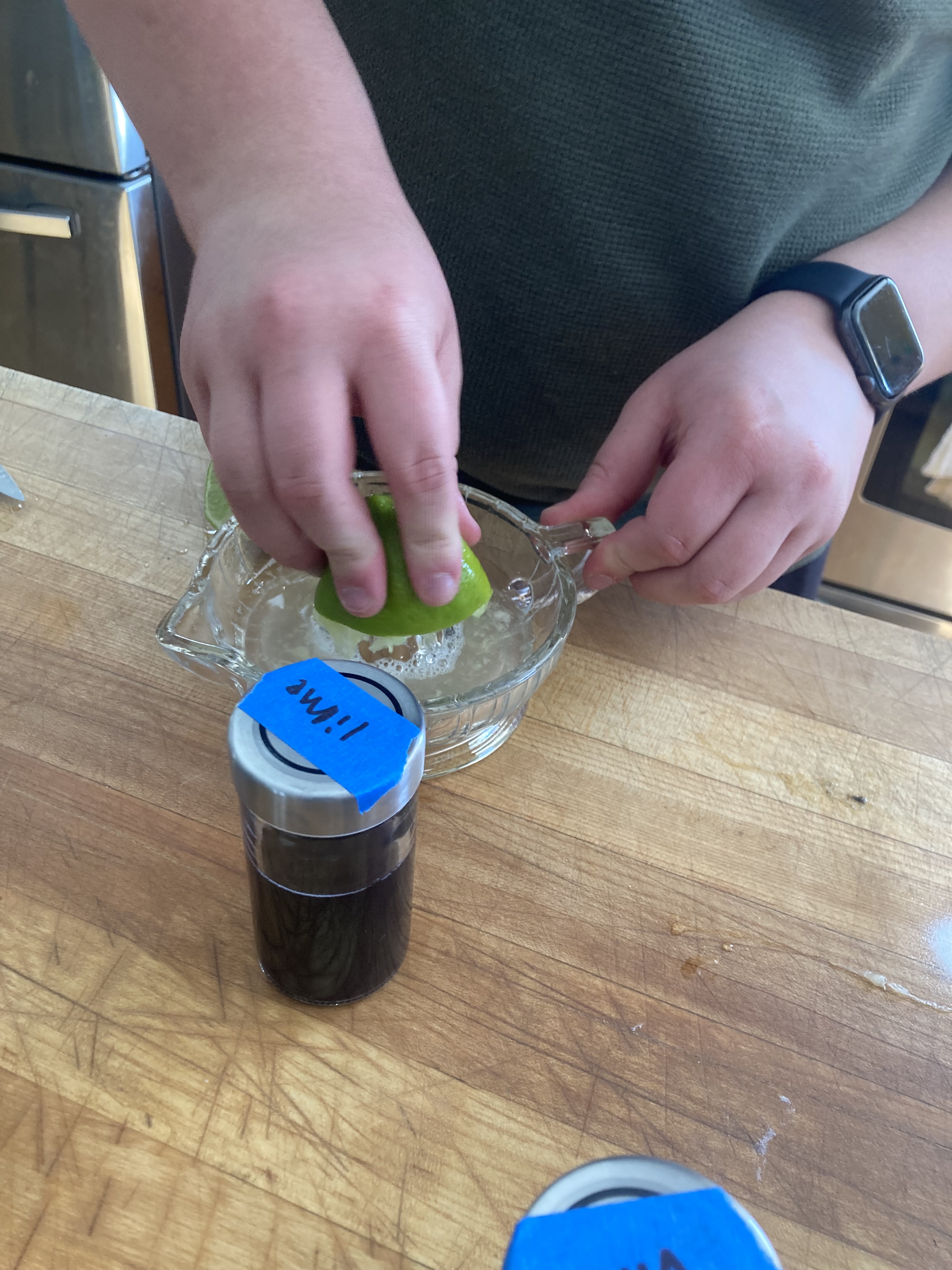
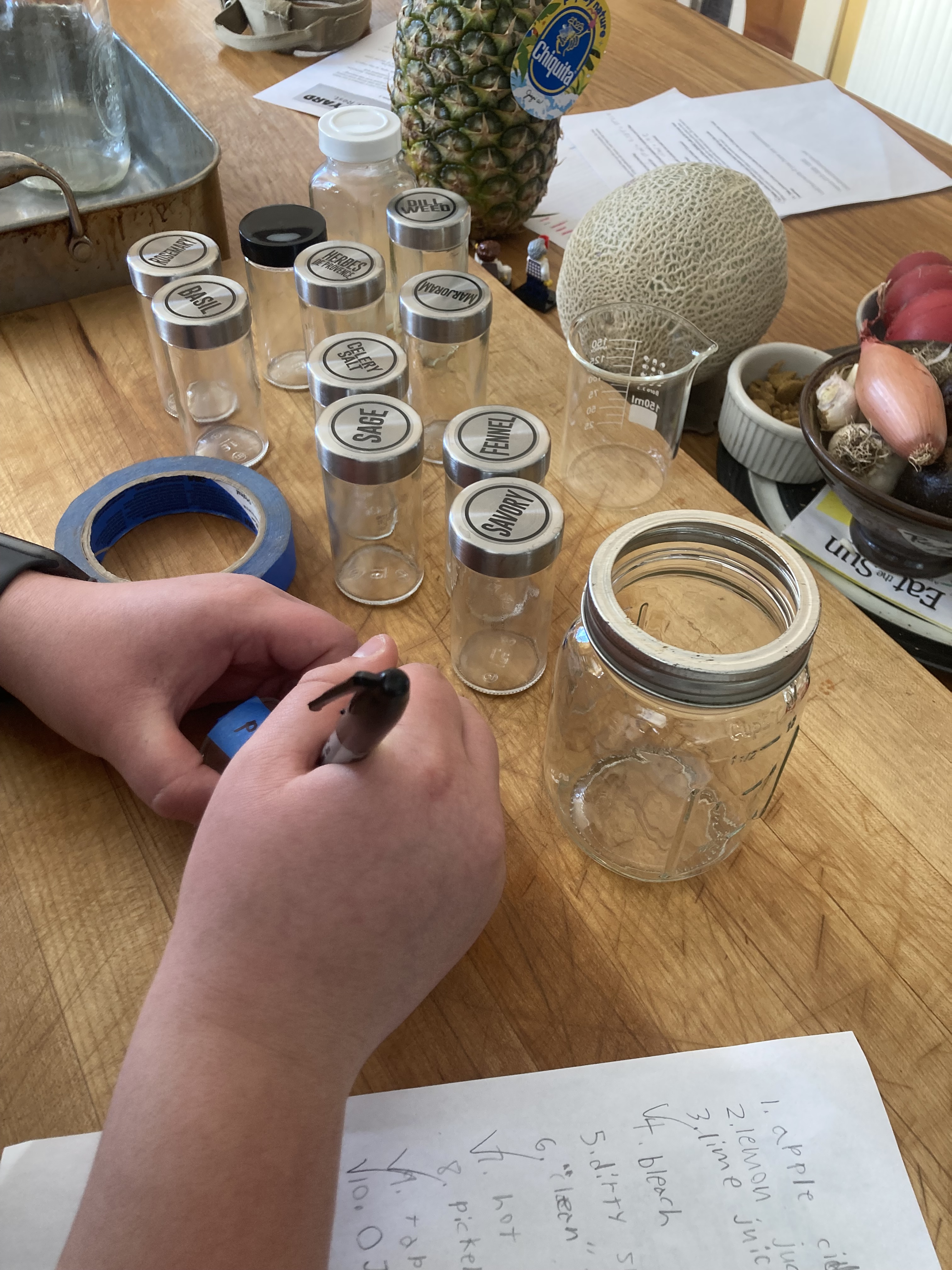
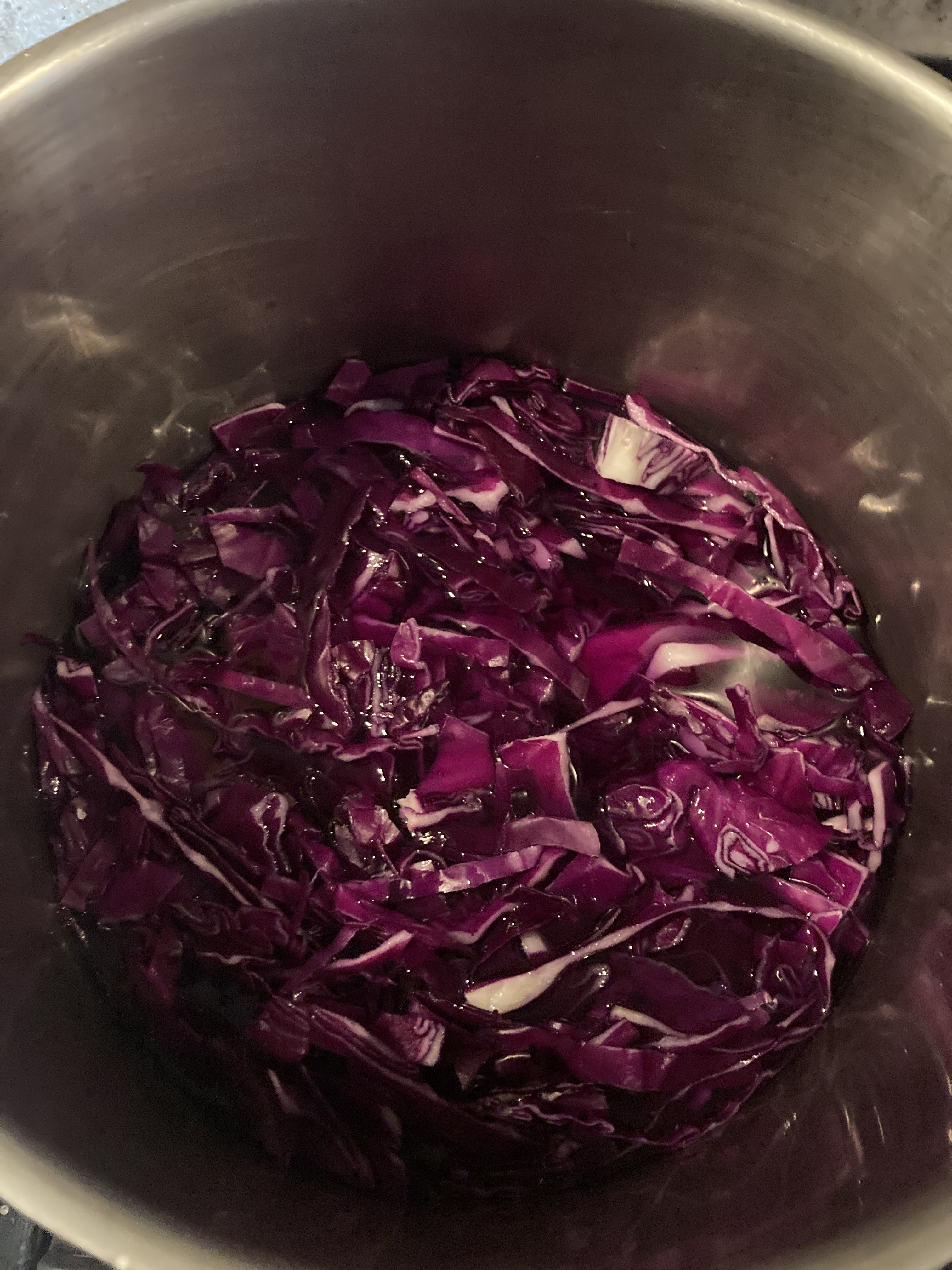
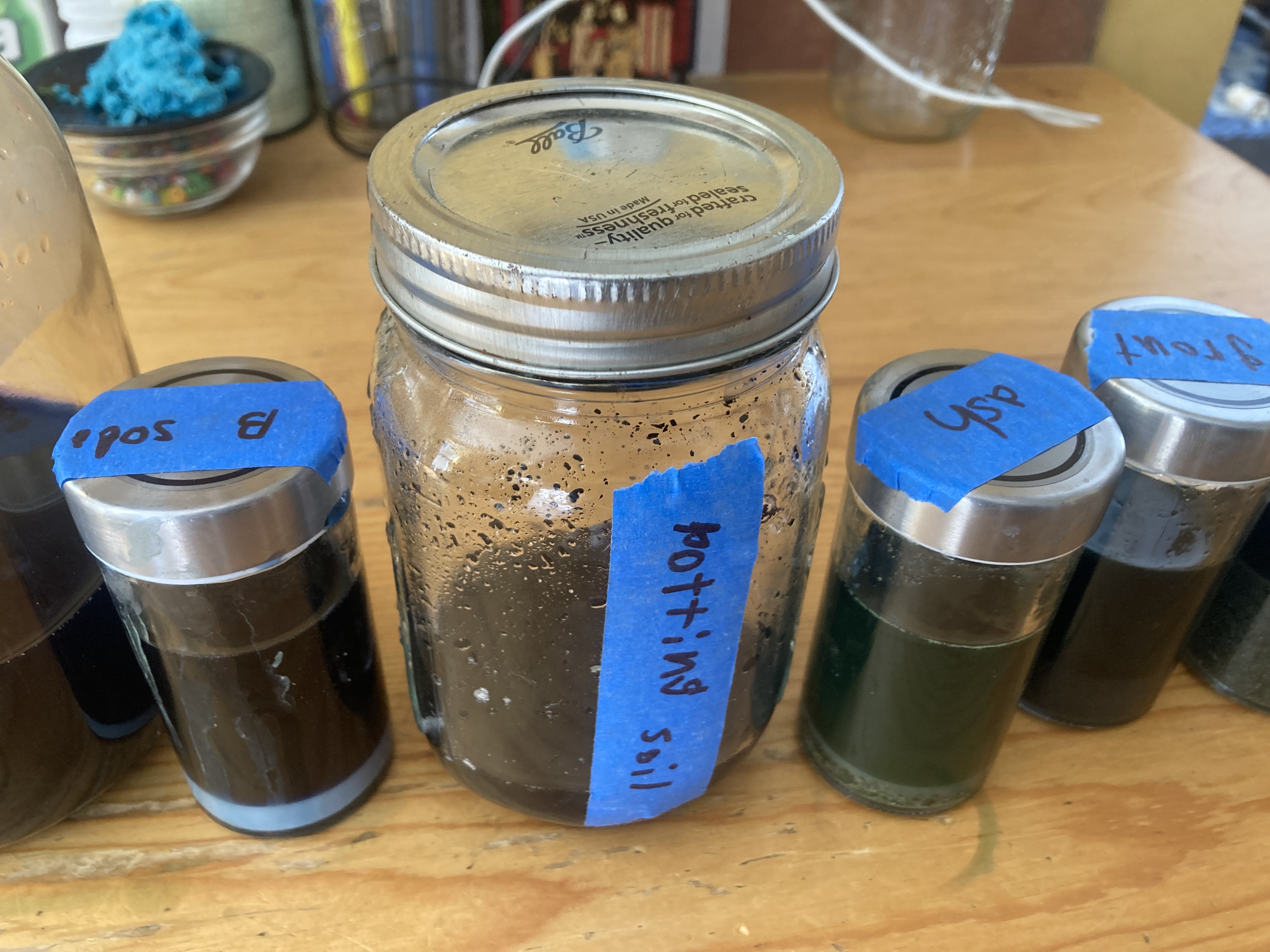
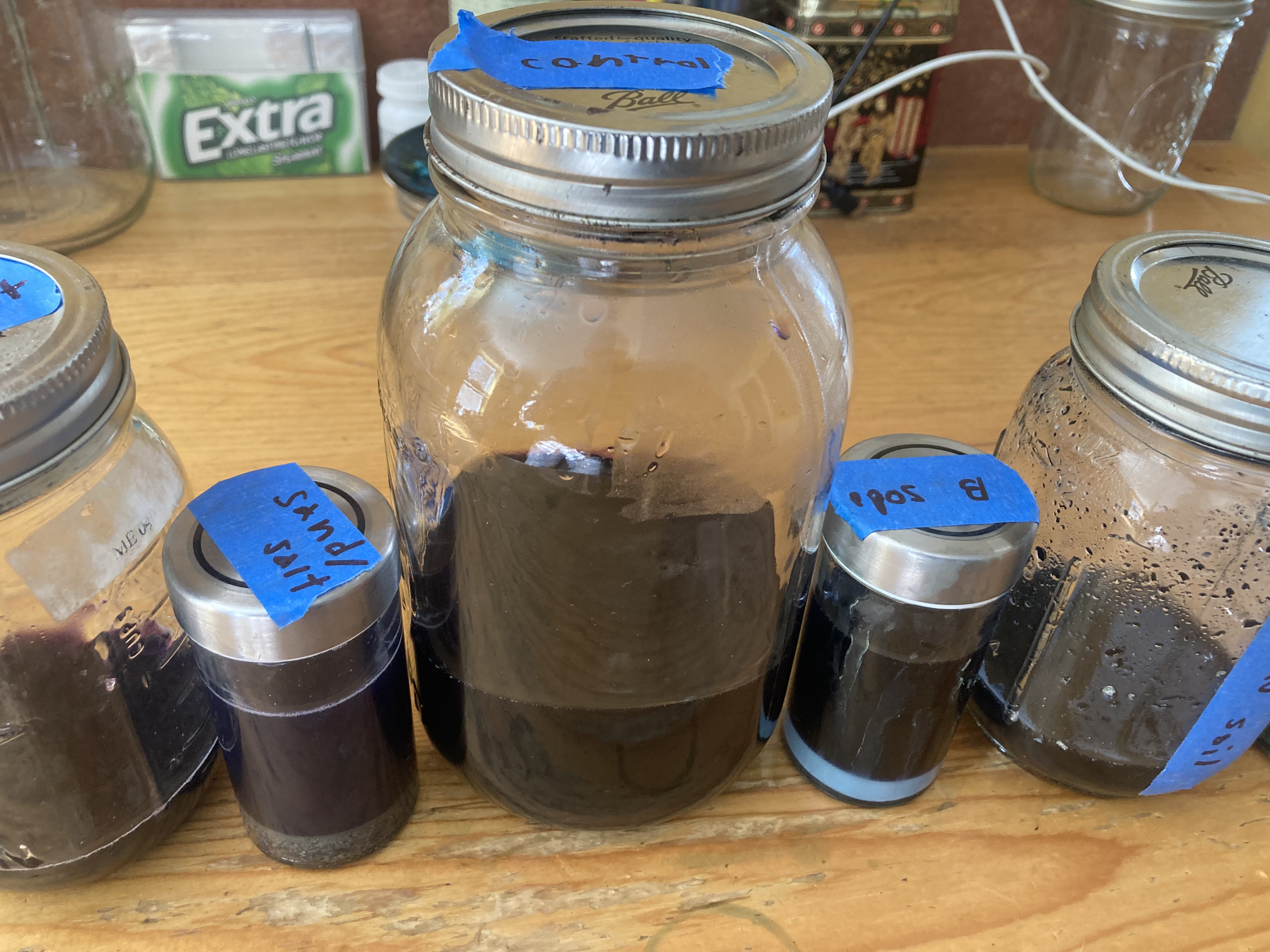
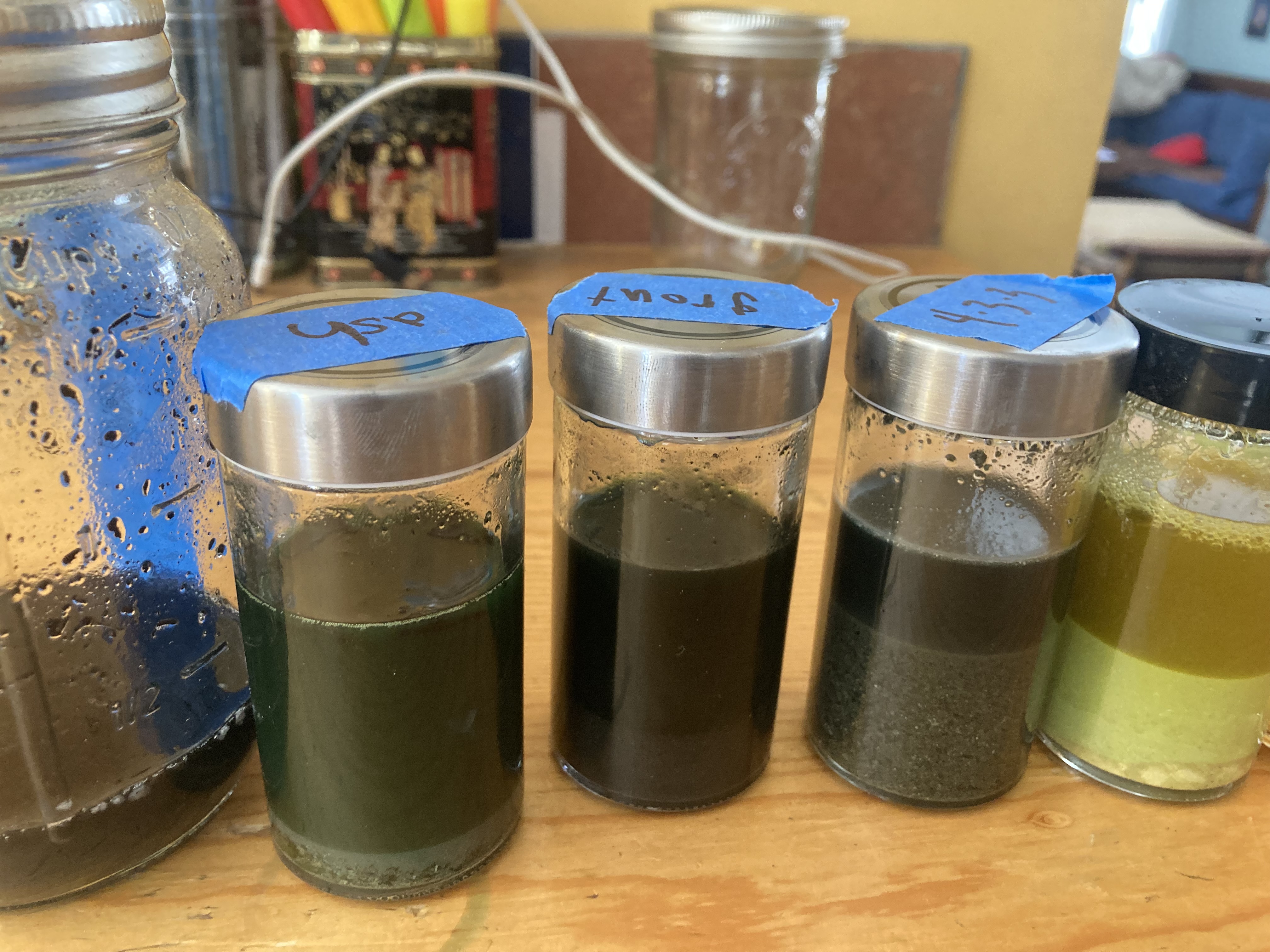
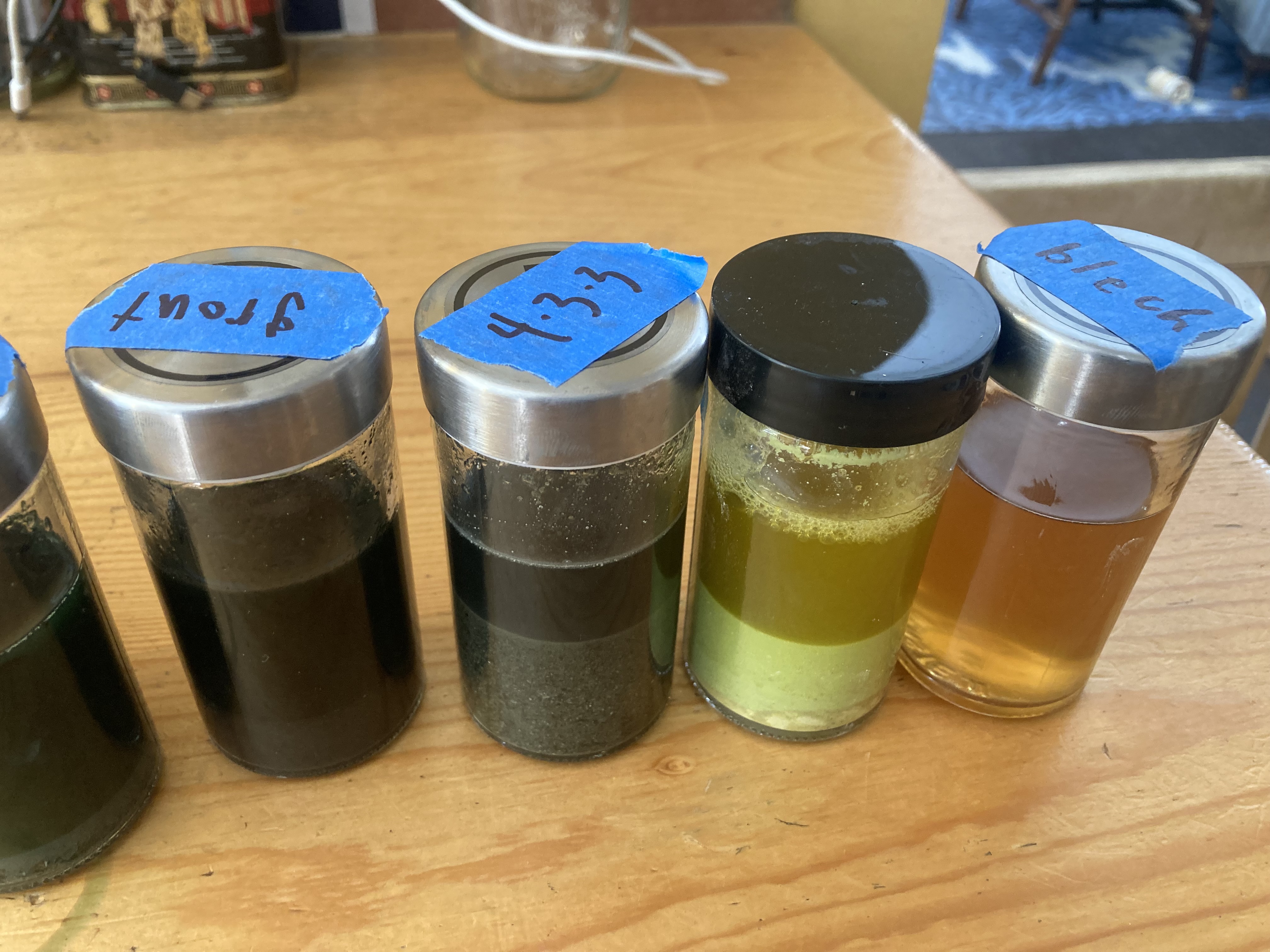
This week we rolled up our sleeves. Following the Soil Keeper’s lesson plan, we finely chopped 5.4 pounds of red cabbage and then boiled it in one gallon of neutral Ph water. M selected 20 household items, then put 15ml of each into a small jar with 50ml of the deep purple cabbage water. The materials included lime and lemon juice, apple cider vinegar, pickle juice and hot sauce; clean snow, dirty snow, calcium chloride salt, and a salt/sand blend; wood ash and sawdust, an organic 4-3-3 fertilizer, mortar and grout (from the tiling); bleach, baking soda and table salt.
With the certainty that is science, before our very eyes the cabbage water changed color depending upon the acidity or alkalinity of the materials. The acids turned pink, while the alkaline moved to green or even yellow.
By day three, we made notes about the experiment; more precisely, my son wrote out sentences. As we began, he commented, “I remember Science class in 5th or 6th grade always taking notes. I find it hard to take notes.”
He began with simple sentences, but as his excitement grew, they became compound and complex: “Lime was the most acidic. The most alkaline was bleach. The “Midnight Black” grout went from black to light green, and slowly became a darker green in the layers; the grout mix fell to the bottom because it was heavier. The 4-3-3 mix was next to the mortar….”
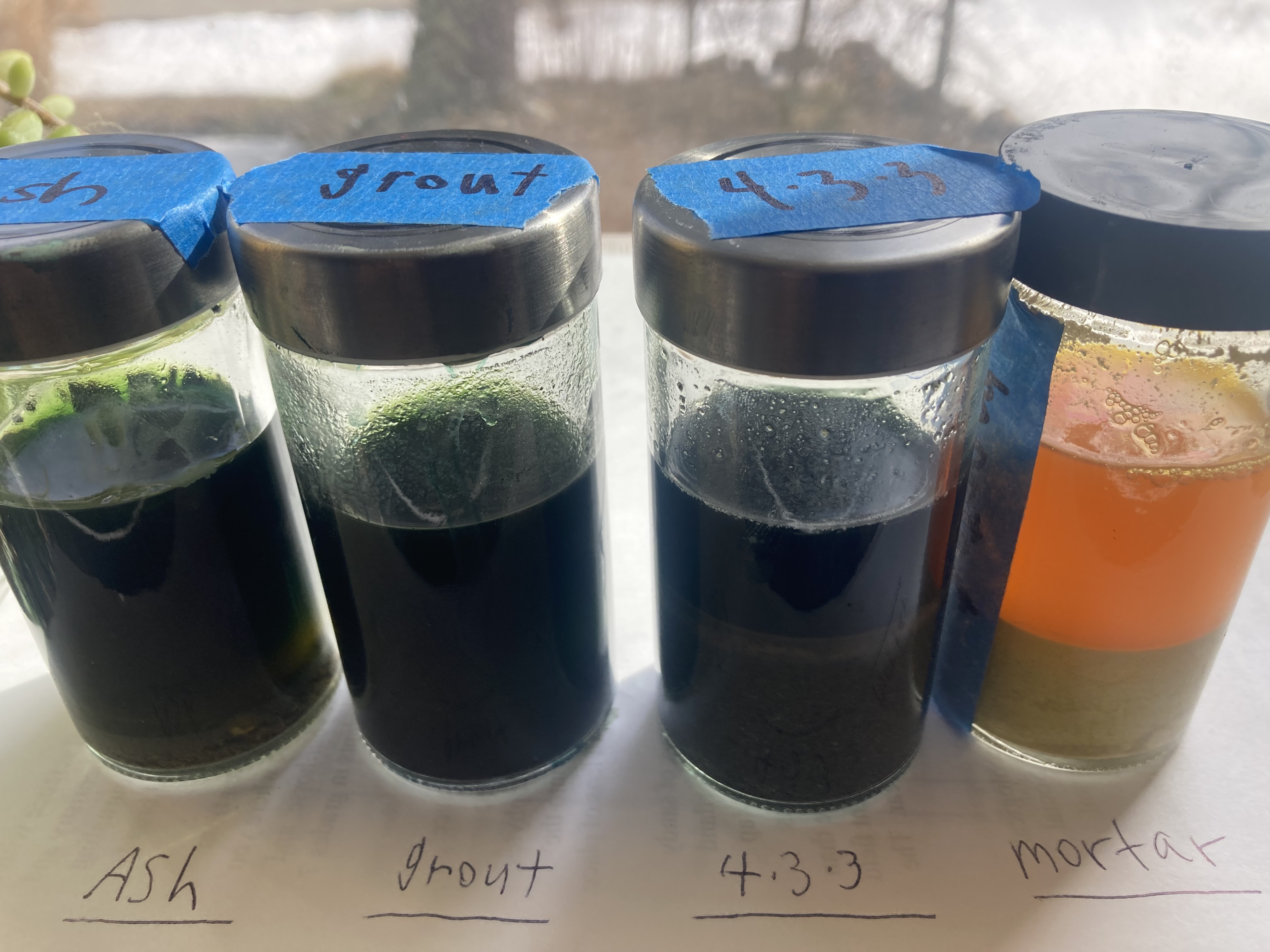
We talked and drilled deeper. While tiling, the Professor had mentioned that Lime was an ingredient in mortar. M researched and discovered (a) mortar contains lime from dolomitic limestone, (b) lime comes from rocks that contain 80% or more of calcium or magnesium carbonate, (c) Espoma Bio-Tone 4-3-3 contains calcium (at 5%) and magnesium (at 1%), and (d) he concluded, “Therefore, it makes sense that 4-3-3 mix and mortar are next to each other on my Ph scale because they both contain the main ingredients in lime.”
Excitedly, he reasoned, “What lime is doing to the soil is technically the same thing as calcium supplements do to humans.” He paused, then said, “Wait, it is not the same thing…” and so he corrected his sentence to [emphasis added], “What lime is doing to the soil is related to what calcium supplements do to humans. Calcium, to humans, supplements human bones. Calcium, in soil, supplements the cell walls.”
He then asked, “what is dirt made of?” Soil, he learned, contains minerals 45%, air 25%, water 25% and organic matter is 5%, while its texture is the ratio of sand, silt and clay particles.
He exclaimed, “I have never been so invested in a science lesson! This is fun…this is genuinely fun!!!”
About the circle of life, he discovered, “nutrient transfer: plants take up essential elements from the soil and convert them to organic matter consumed by humans.” Did someone say, “know your food, know your farmer” ?

Having only just begun, he pondered why pickle juice and sawdust were beside each other on his Ph scale. His research lead to this conclusion: “The reason pickle juice and sawdust were next to each other was because pine and spruce are softwoods, and more acidic than hardwoods. We got the sawdust from the table saw, and have been cutting pine and spruce for the tiling work. That makes sense.”
“Just two more questions?” he pleaded. He chased down that softwoods are more acidic than hardwoods due to acidic resins, while oak is a hardwood that can be more acidic. Pickle juice is highly acidic, typically 2.5 to 3.9. In contrast, sawdust from pine, spruce, fir is neutral to slightly acidic; pine = 4.1 to 5.3, spruce = 4.7 to 5.8, fir = 5.2 to 5.9. “So, pine is more acidic while fir is more neutral,” he concluded.
“What if we try this again in the summer? We can test the soil when the plants are growing!”
And so our Red Cabbage Ph experiment came to an end. His bristling excitement a testimony to what happens when a student sits beside a Mother Tree, pondering soil and soul.
_______________________
NB: The astute reader may have noticed that here at an Art Farm we use no proper nouns. That is intentional, to underscore the mythopoetic, more than the rational. For example, whatever Ultimate Truth may be, it has more than 1,000 names, which is to say proper nouns, none of which capture the grandeur or sublimity of that whole, many of which lead only to wars.
Humans give names to bring order and cognitive structure to a complex world; naming divides subject from object, while “being” remains intransitive, a verb which takes no object. “Divide and conquer” is a tool of would-be authoritarians and Emperors which leads us to fight to the bottom. In these challenging times, then, let us be together, undivided, to rise to new heights and an expansion of consciousness. And to that end, my pronoun is “We.”
__________________________








Number Rules the Universe
Posted: February 13, 2026 Filed under: Child Centered Activities, Chronicles of a First Time Parent 1 Comment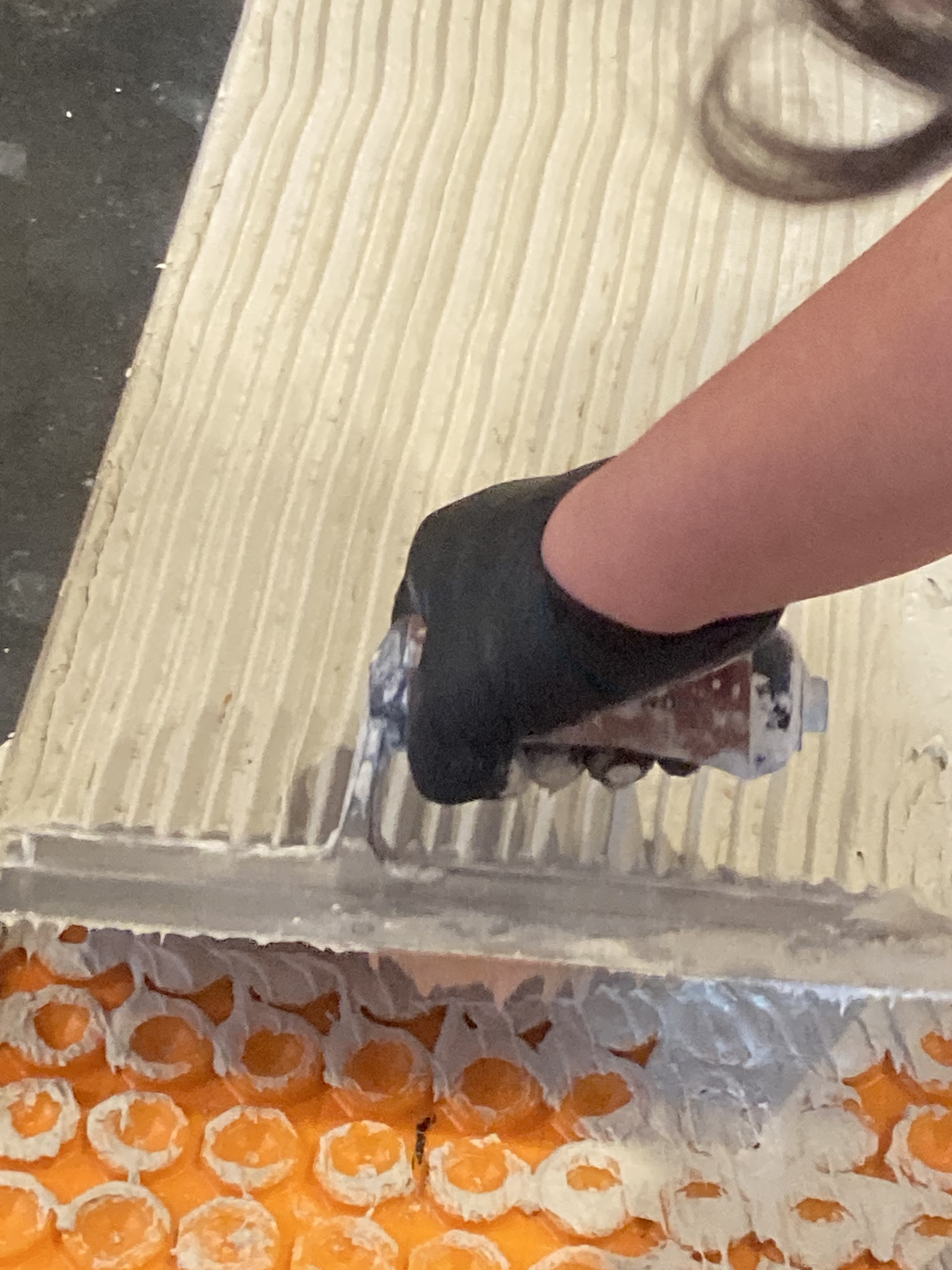
“Geometry is knowledge of the eternally existent,” said the Greek sage. So fundamental is this truth that every middle school includes geometry in its curricula.
Coming of age, children, enter into the exquisite beauty of geometric truth. Regardless of language spoken, color of your skin, which church, temple or forest you worship in, the eternal truths – πr2 (area of a circle) or 2πr (circumference of a circle) or πr(r+l) = πr[r+√(h2+r2)] (total surface of a cone), et cetera – pertain. Greek letters are used to label these eternal truths.
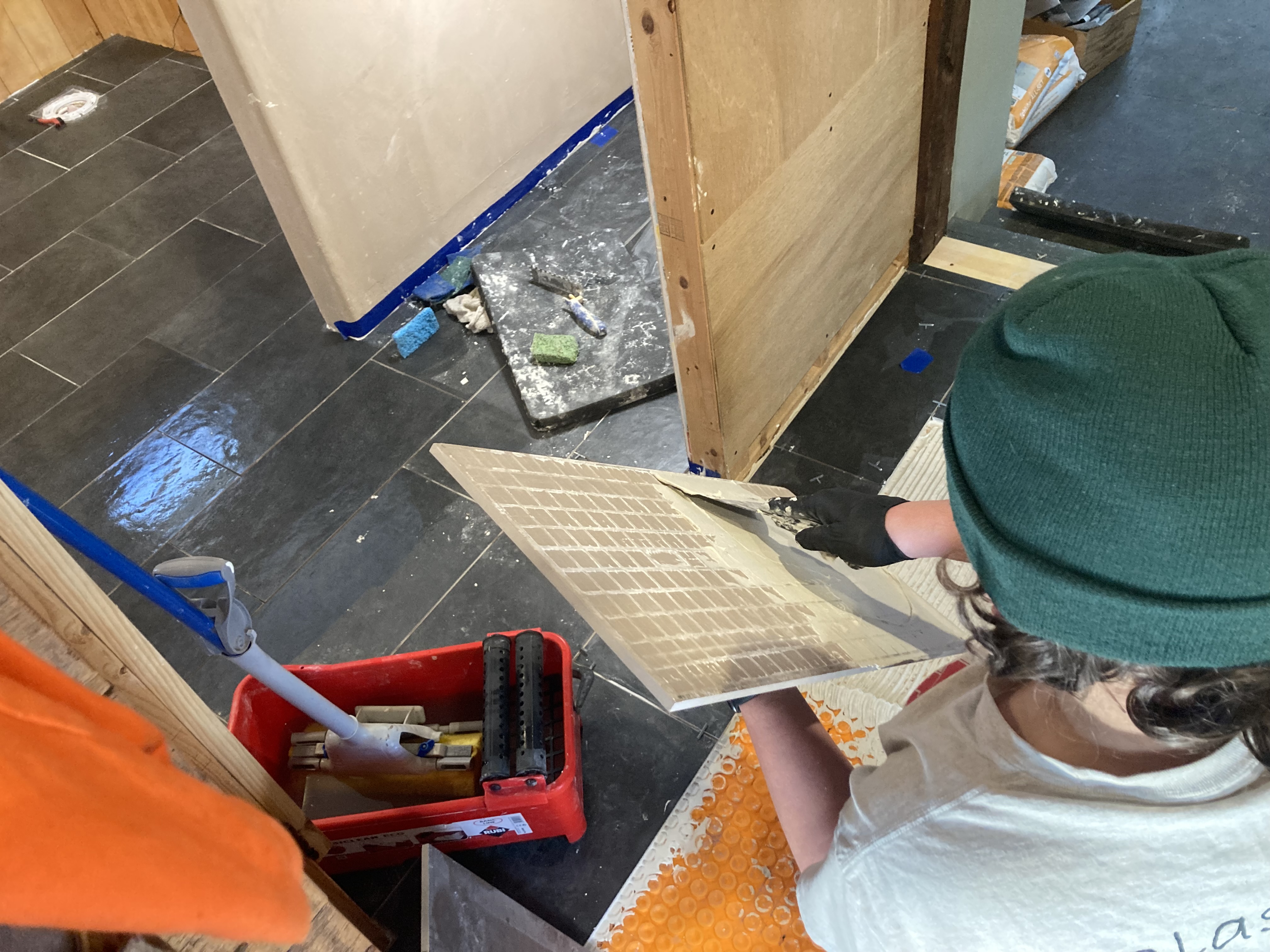
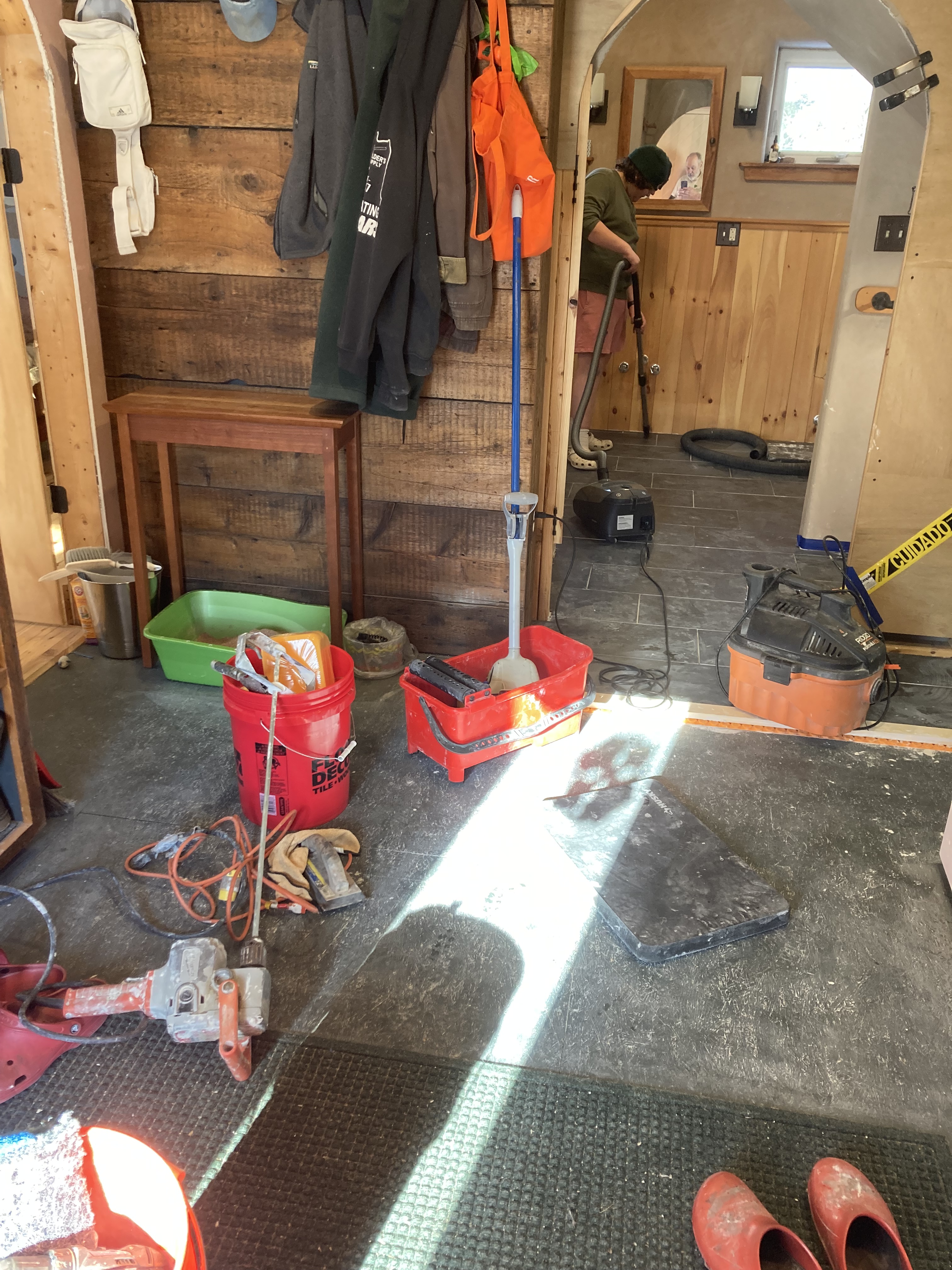
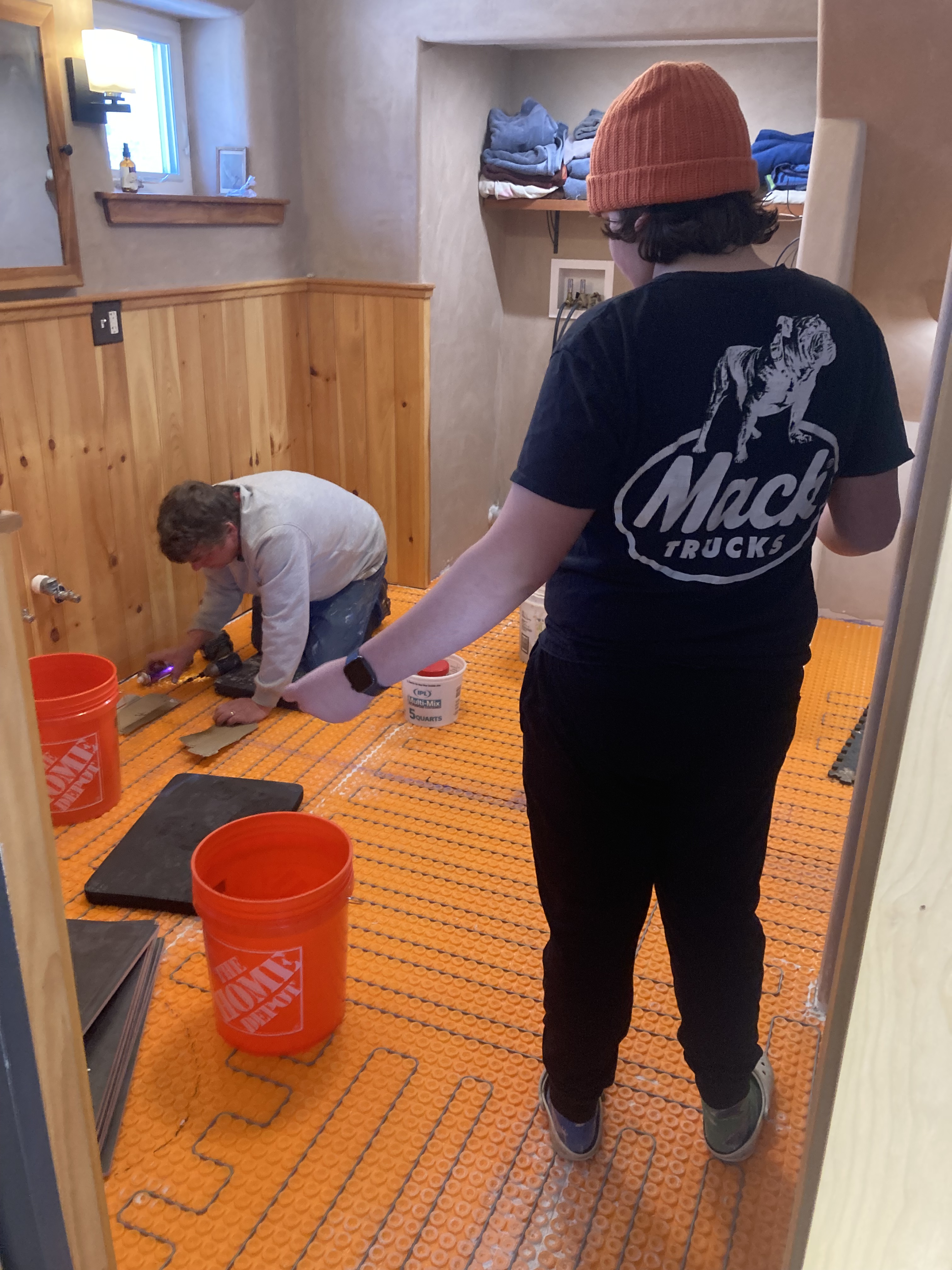
At our Art Farm Homeschool Academy we study surface area in the conventional way, using worksheets and word problems. But, on hands and knees, we examine the floor closely, teaching math as tactile, not just conceptual. Last week we discussed electric currents and Ohms. This week we turn to tiling, which is a form of applied geometry and chemistry, using hand tools to spread mortar and setting tiles to create one continuous surface.
We began with Pythagorus. To establish the layout, we needed to determine the exact right angle to the exterior wall, so the warhorse a2 + b2 = c2 was used. After marking the right angle, the center line was snapped and the layout became clear. We used tiles 12” x 24” (2 square feet each) and my son quickly calculated the bathroom surface area was 136 square feet.
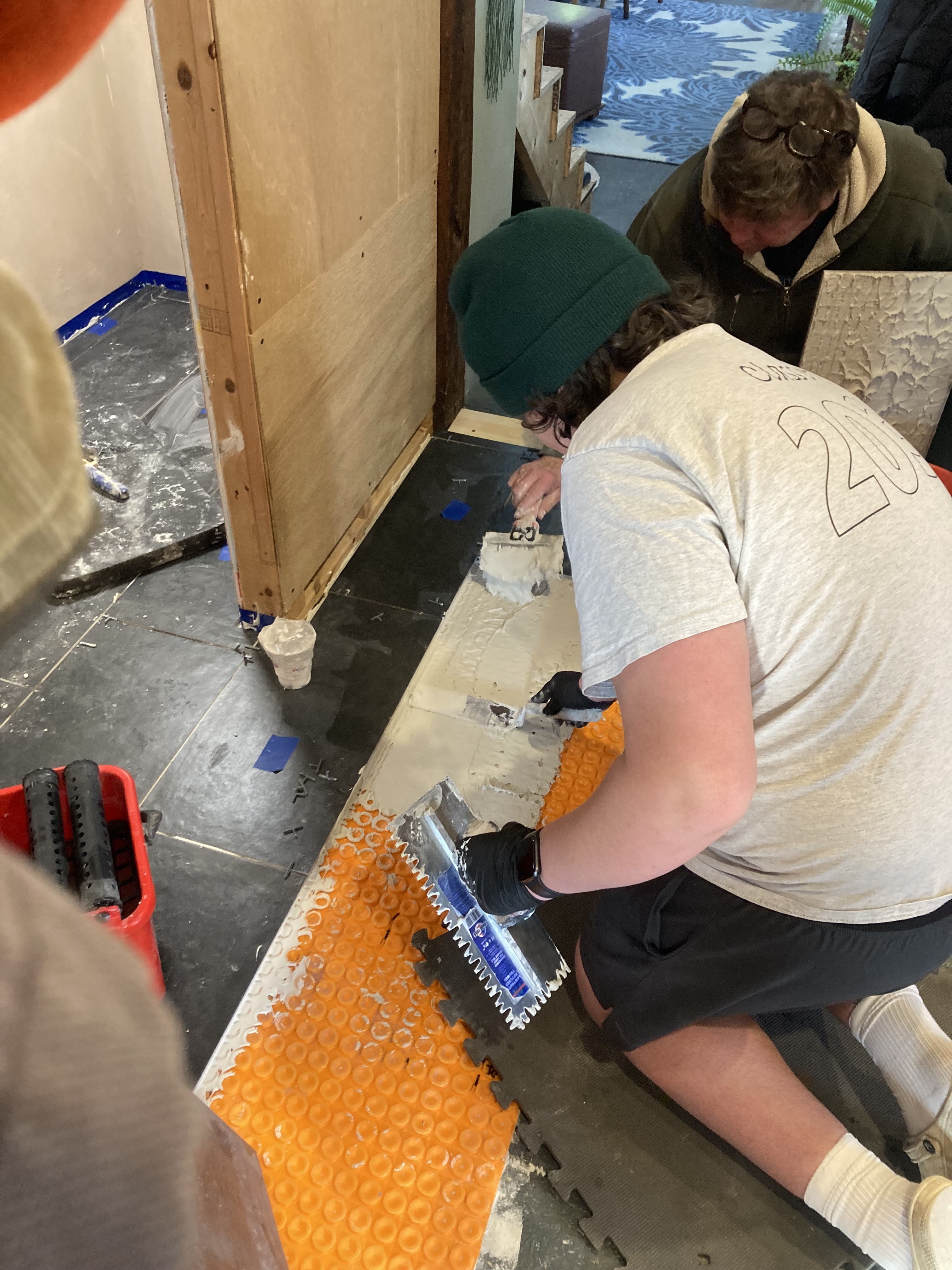
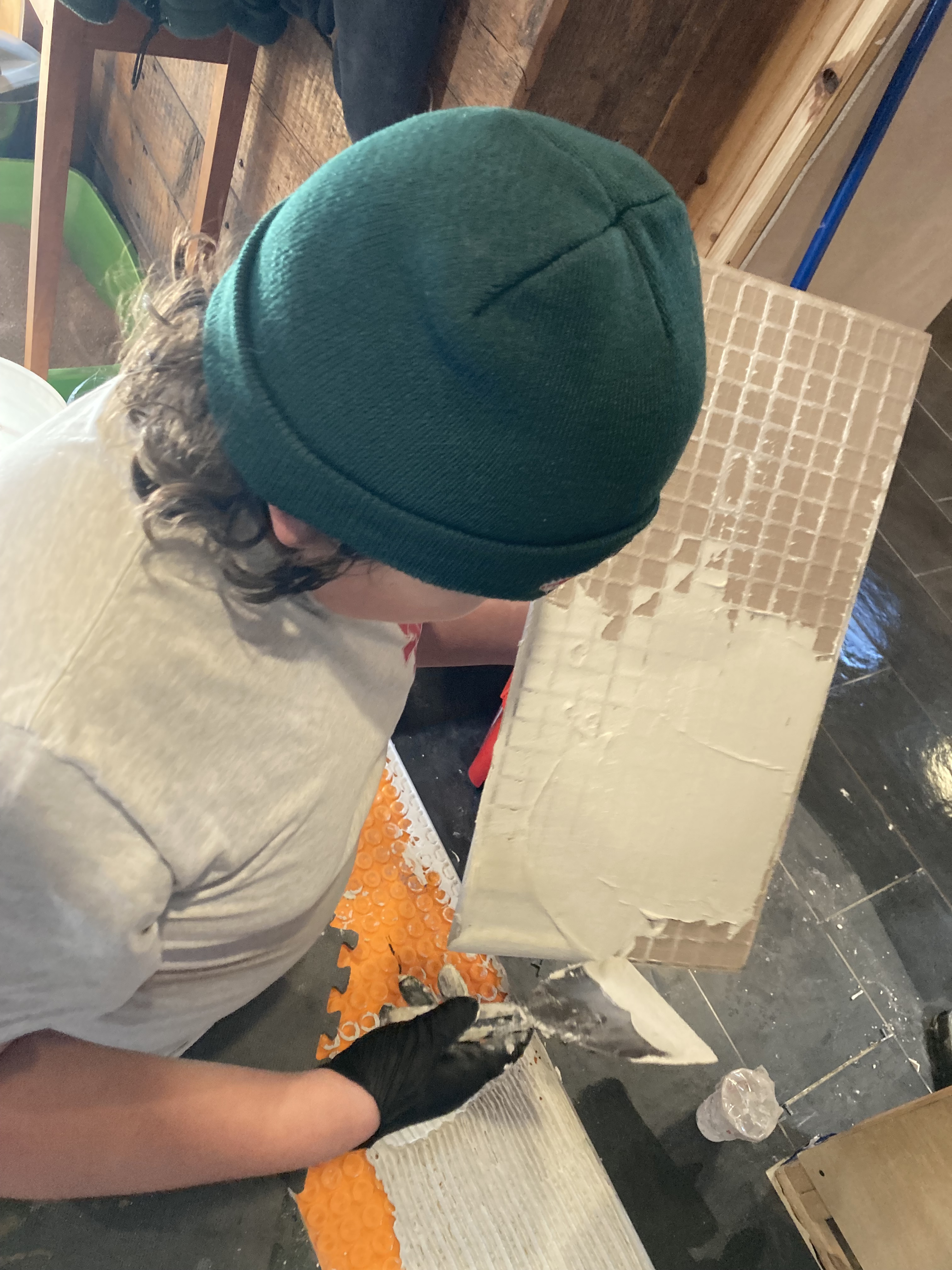
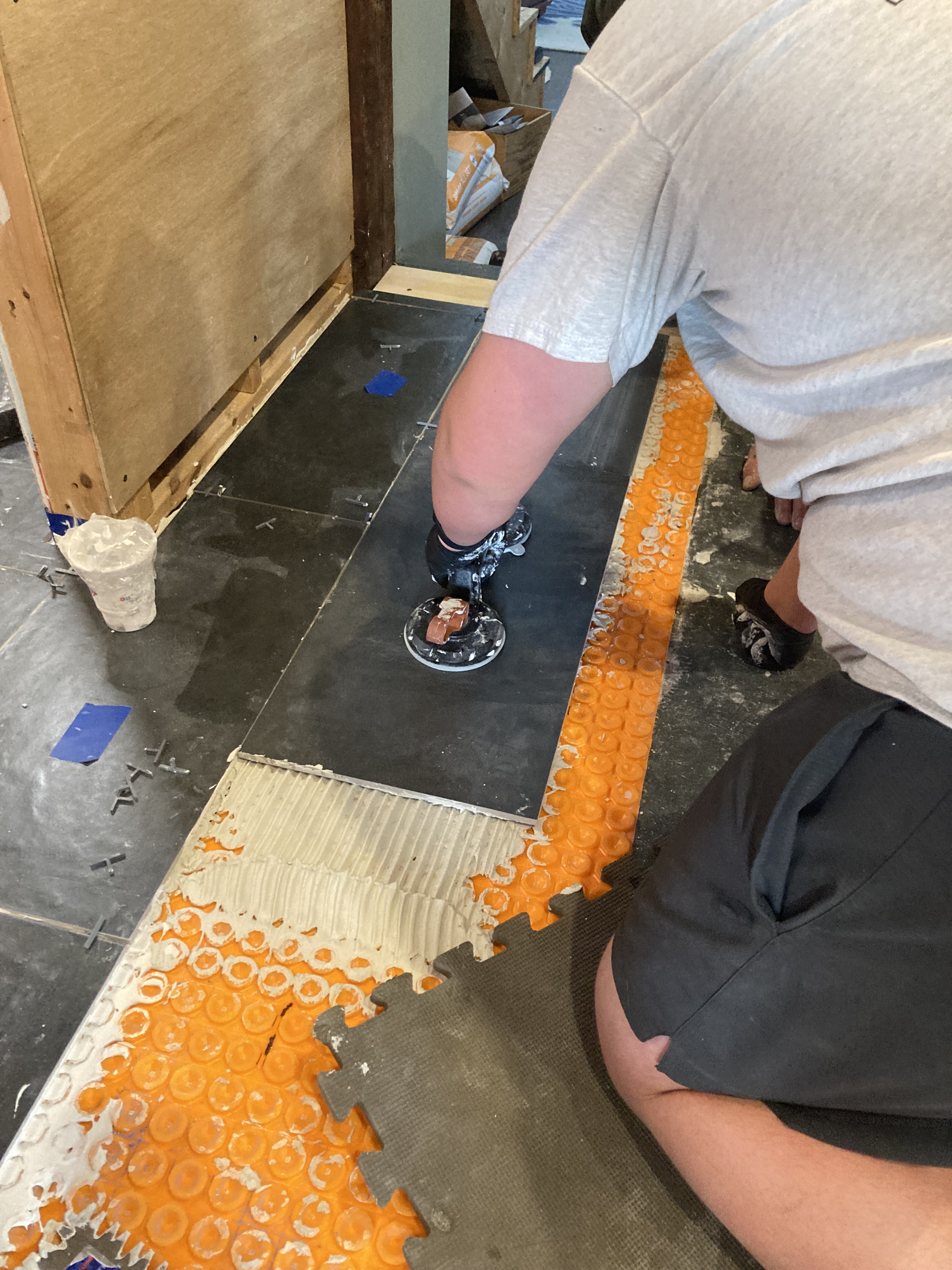
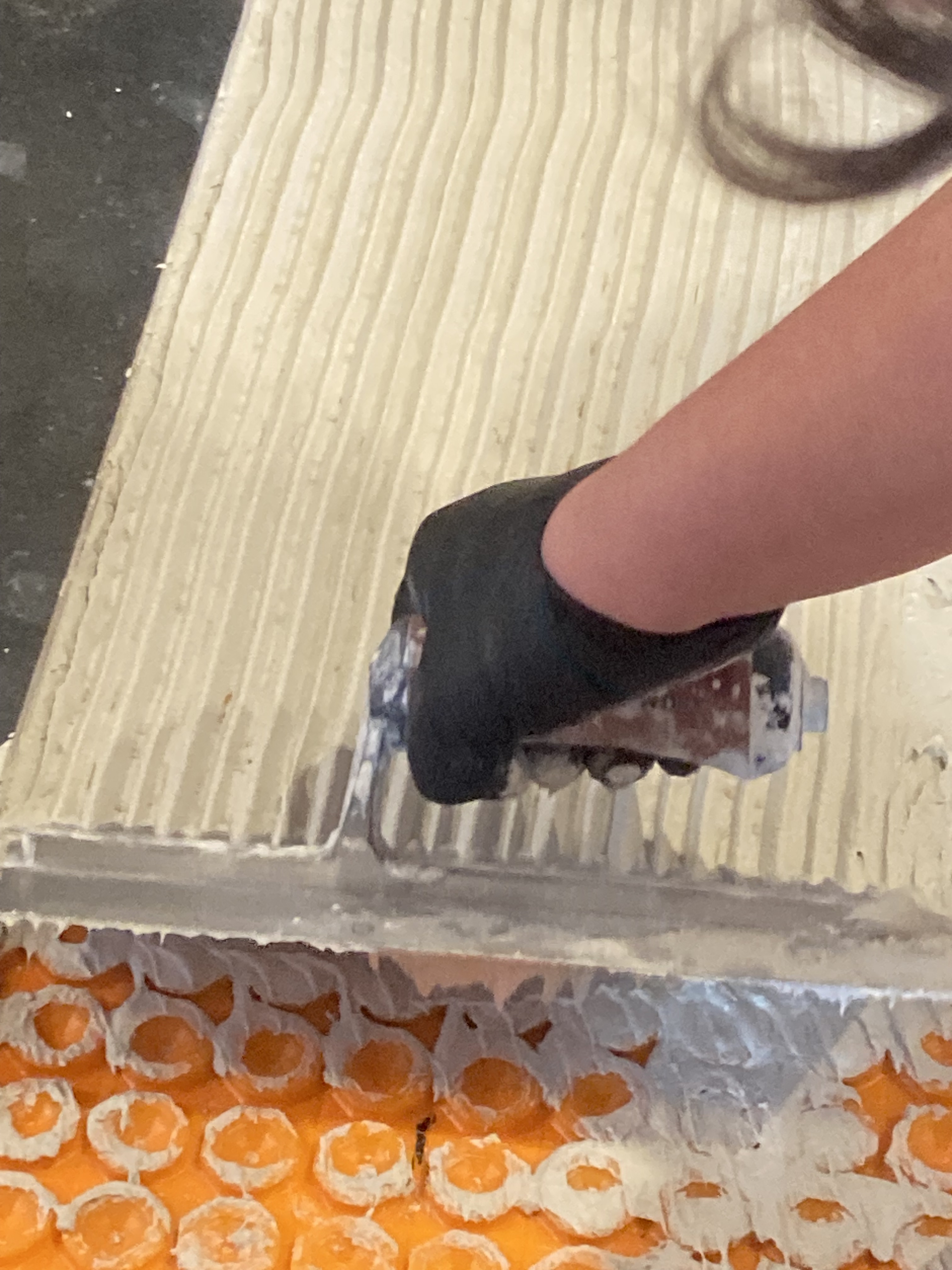
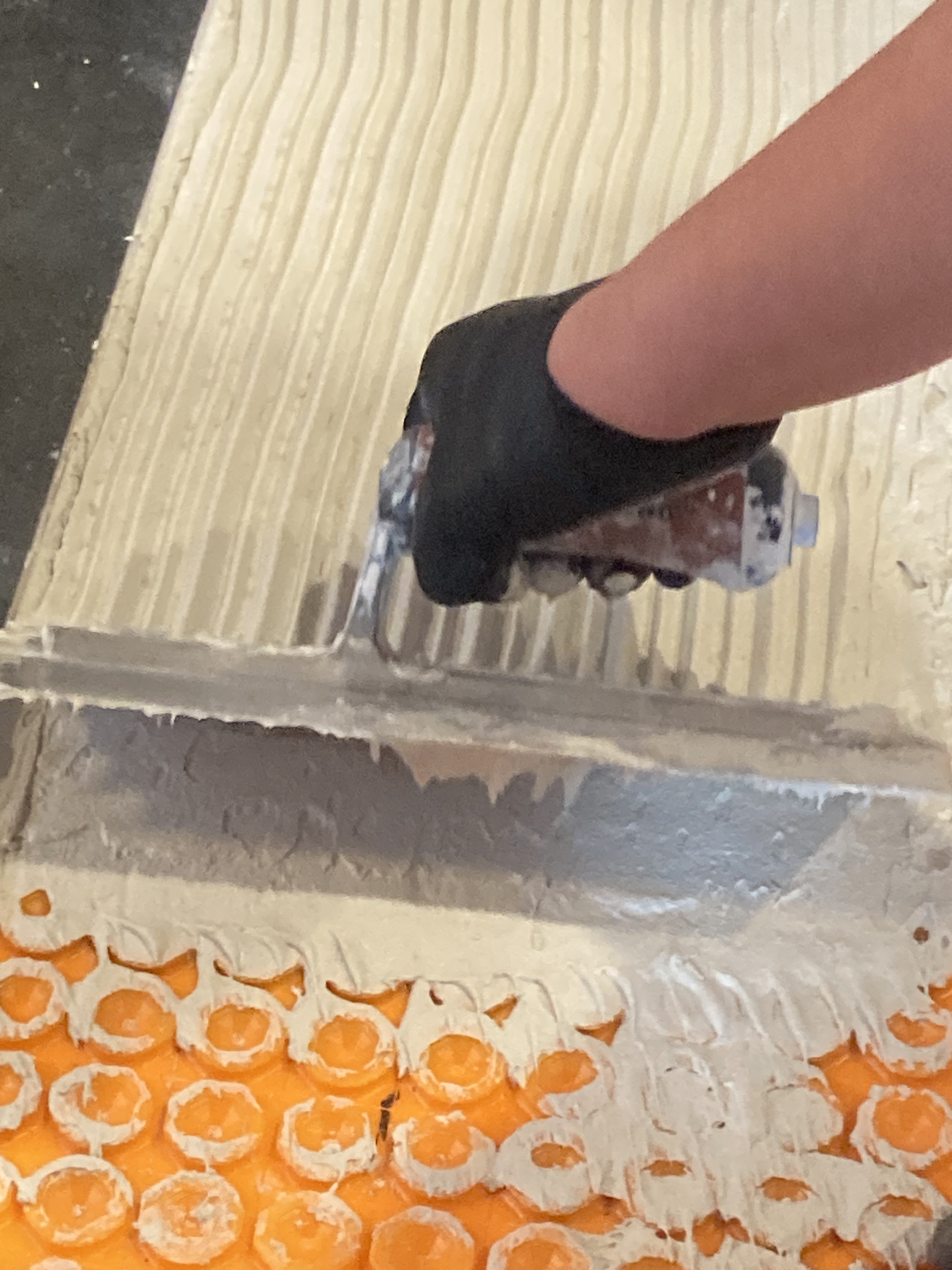
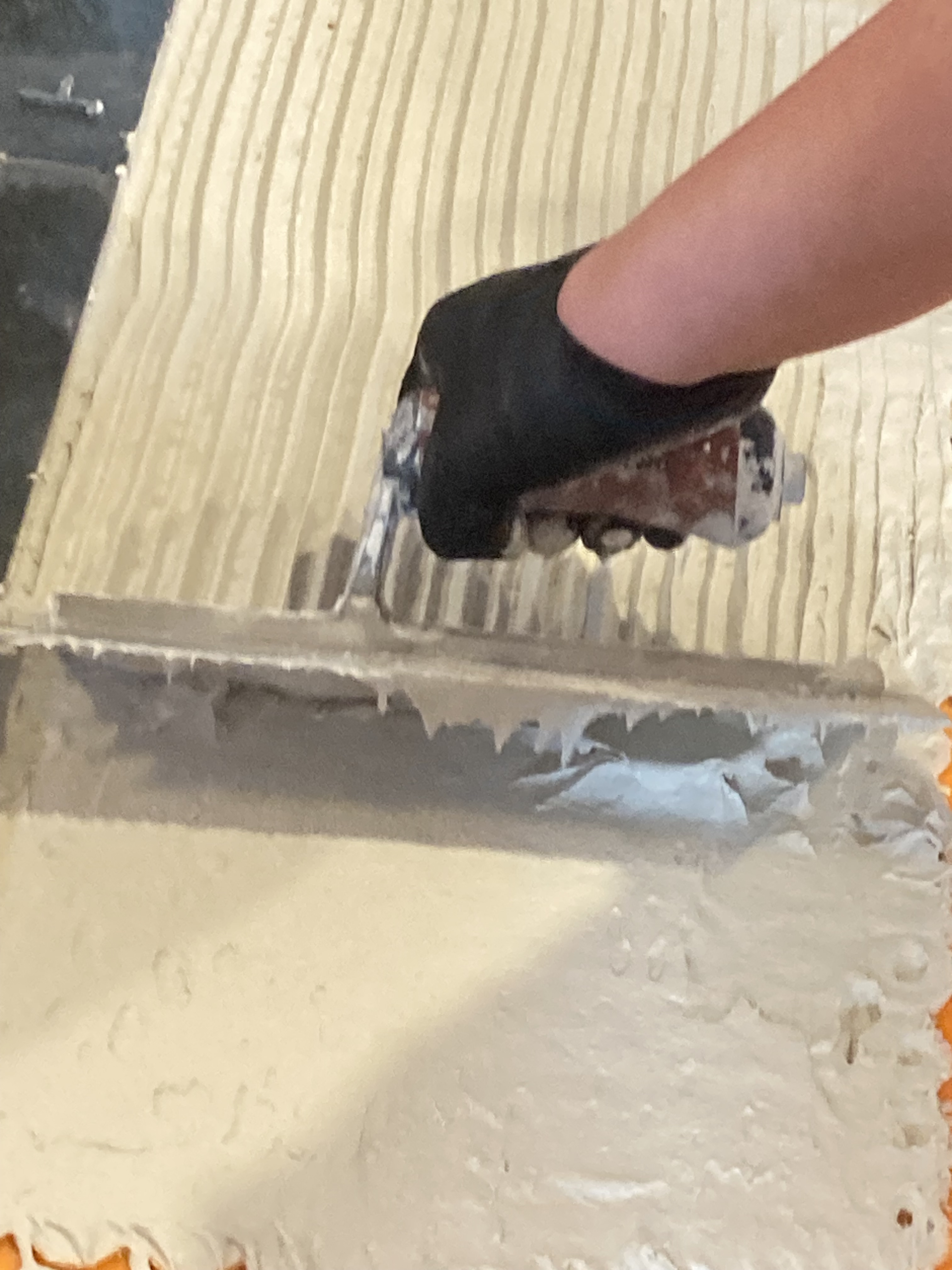
Tiling is about surface, not volume; each tile must be flush at all four corners. My son learned how to spread mortar, which again is about geometry. A notched trowel is the tool, and depending on the size of the notch – 1/8” or 1/4” or 1/2” – the amount of mortar spread will vary greatly. More importantly, the angle of the trowel impacts the thickness of the mortar, which is to say the volume. The Professor used a sawtooth trowel and he taught that the proper angle was just below 45 degrees.
To spread mortar is “to butter the tile.” We “double buttered,” applying mortar both to the floor, as well as to the back of the tile, in order to create a stronger bond. The tile is then set in place and gently pushed back and forth, to eliminate any gaps from the sawtooth troweled mortar, and to set the tile firmly and evenly in place.
Tiling a bathroom floor is immensely disruptive. We had to pull the toilet and bathtub, there was no laundry for more than a week, showers were intermittent. When an object fell down the drain line we had to vacuum it out. For anyone with obsessive tendencies, the process is like chasing, or being chased by, the dragon. It was a long hard week.
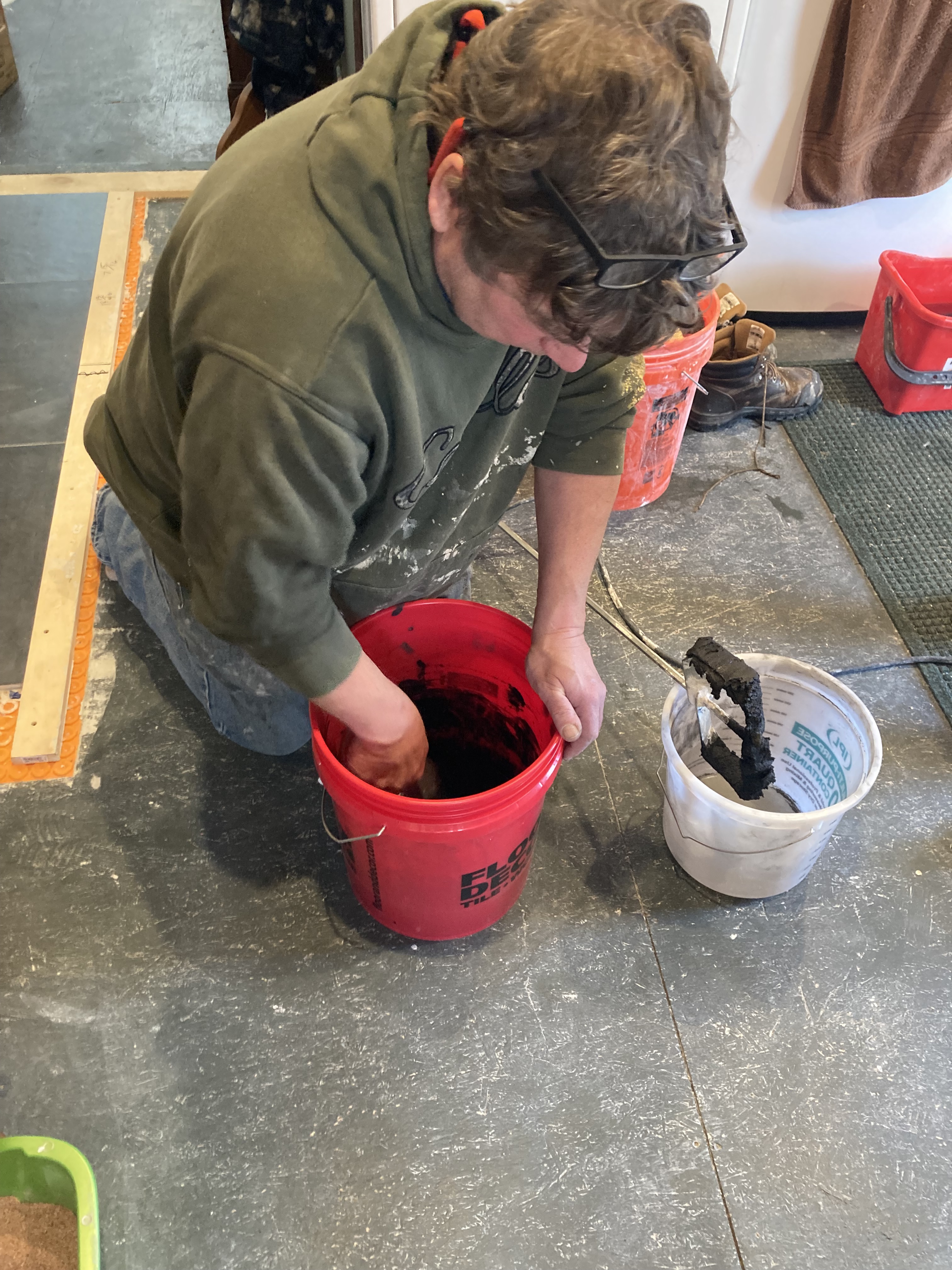
On the final day we set the grout, but the instructions wildly under stated the area covered by one bag. Mid-way through we had to mix a second bag – which meant cleaning the tools and the bucket, getting fresh water, mixing more – but the working time was a factor for the grout already set. If the grout cures before it is all set then you have a major problem. We were racing the clock. What we thought would be smooth teamwork became a gauntlet. Like a farm boy, my son hustled, taking orders in real time.
The marathon was grueling. Our teamwork was successful, the timing worked out, the end result wonderful, the washer and dryer in place and operating again. The radiant heat is working, programmed to 74 degrees at 5:30am, cooler to 62 during the day, and then reheat for the evening, back to 60 for the night hours. Verily, verily, I say unto thee, our blessings abound!
Through this gauntlet of fire my son is learning what the Greek sage said, so long ago, “Number rules the universe.”






Ohm, not om
Posted: February 6, 2026 Filed under: Child Centered Activities, Chronicles of a First Time Parent, Portfolio - David's work 3 Comments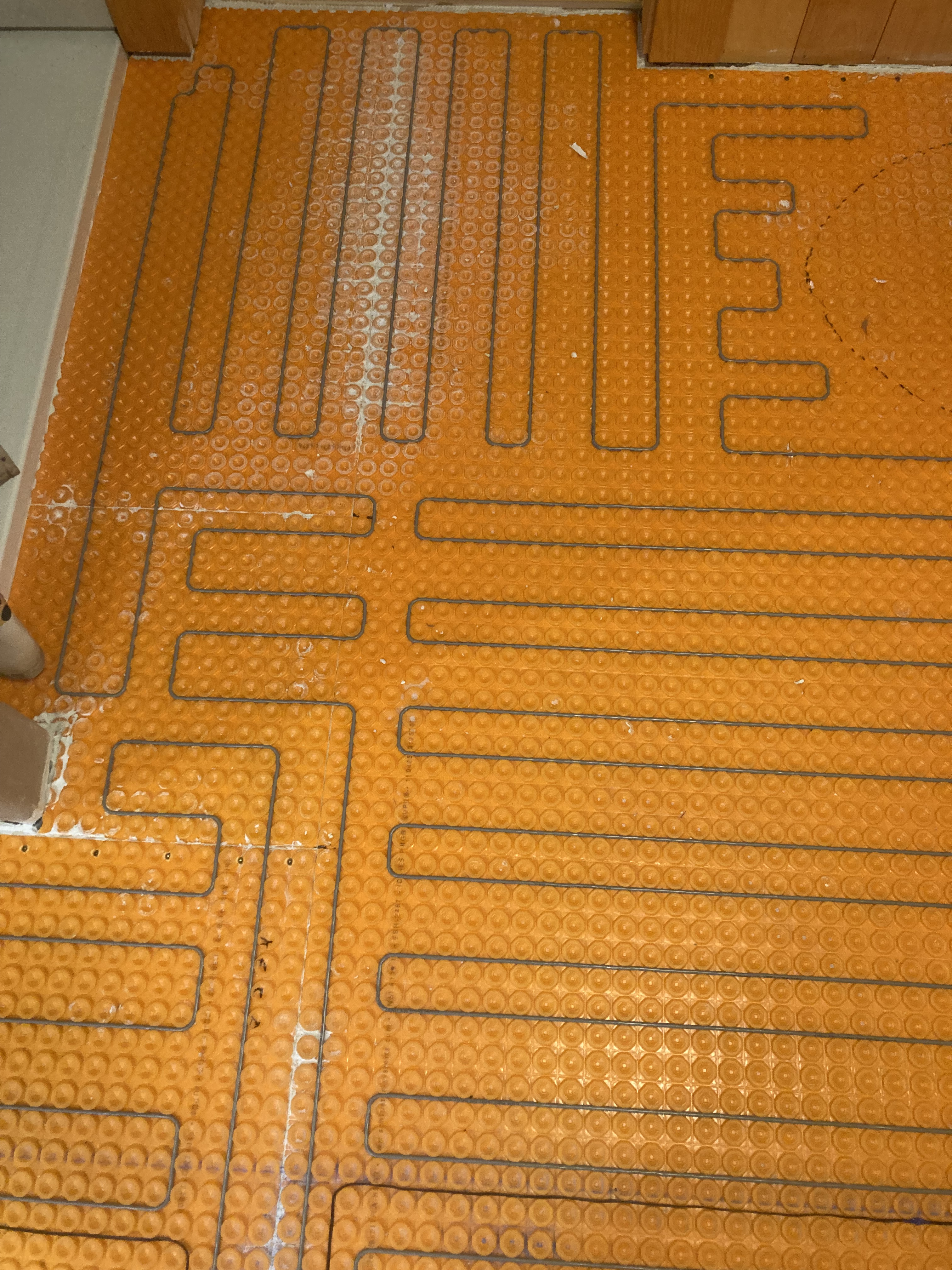
The Professor makes house calls.
His full title is the “Pema Professor,” to honor Pema Chödrön, the American-born Tibetan Buddhist. The Professor came to our house and held class in the bathroom, not about Om – the sacred syllable – but about Ohms, the measurement of electrical resistance in circuits or conductors.
We are doing the finish work, finally, in the bathroom we added onto our house back in 2017. For nine years that room has had the basic plumbing but no heat, and a subfloor painted grey. Immense is our blessing to be able to do this finish work now, when masked jackels rampage our community, when our brown skinned neighbors stay indoors afraid to leave their house, more than 200 people having been arrested and absconded during “Operation Catch of the Day,” while so many homeless still live on street corners begging for coins; that we are able to afford such luxury now is a privilege not lost upon us. But still, our addition needs to be finished.
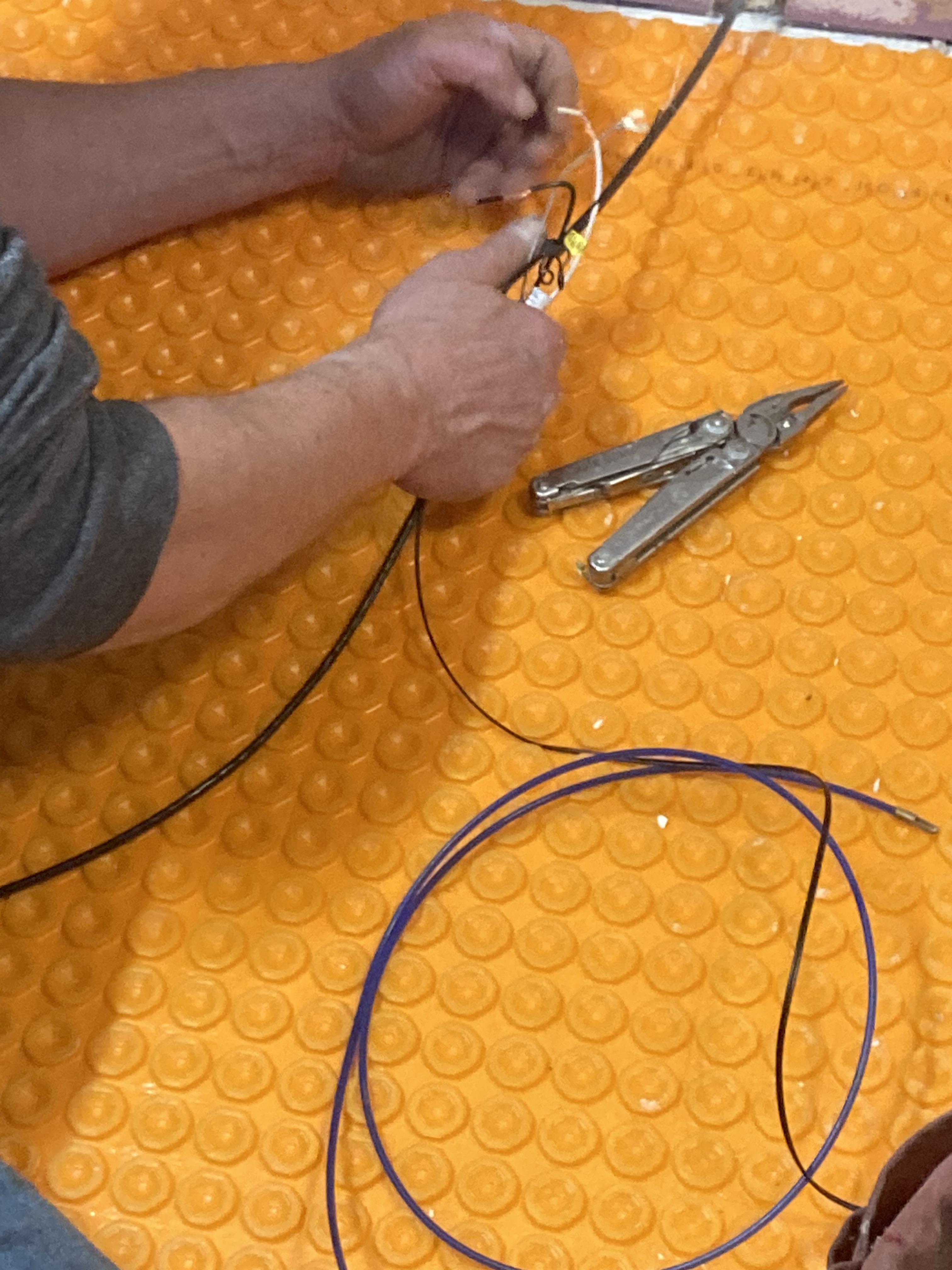
We are laying electric radiant heat on the bathroom floor, and then tiling. The Cadillac approach. The process begins by laying a waterproof uncoupling membrane which prevents tiles from cracking if the wooden subfloor moves. Into the membrane’s grid, we snapped in place 84 square feet of heating cable. That wire connects to a 15 amp Ground Fault Circuit Interrupter circuit breaker. Before laying tile, we needed to test both the Ohm resistance in the cable and its ground fault continuity, to ensure the integrity of the cable and circuit.
An Ohm is the measure of resistance, an object’s opposition to a flow of electric current. That resistance to flow creates friction, which friction creates heat, which is what we desire in the floor of the bathroom. We need to test this before laying tile.
Ohm’s formula is R = V/I, where V is voltage – the push driving the flow of electric charge – and I is current – the electric charge that flows past a specific point in a complete electric circuit. The formula for resistance was discovered by George Ohm, a high school teacher in Cologne, Germany, who published his theory and formula in 1827. The academics rejected his idea, but in 1841 Ohm was recognized and received the Royal Society’s Copley Medal. The unit of electrical resistance, the Ohm, is named in his honor.
In Language Arts my son has been learning the Greek alphabet. By happy coincidence, the Greek letter omega (Ω) is the symbol for ohms, chosen because its sound is similar to Ohm’s last name. Everything seems concordant here at the art farm.
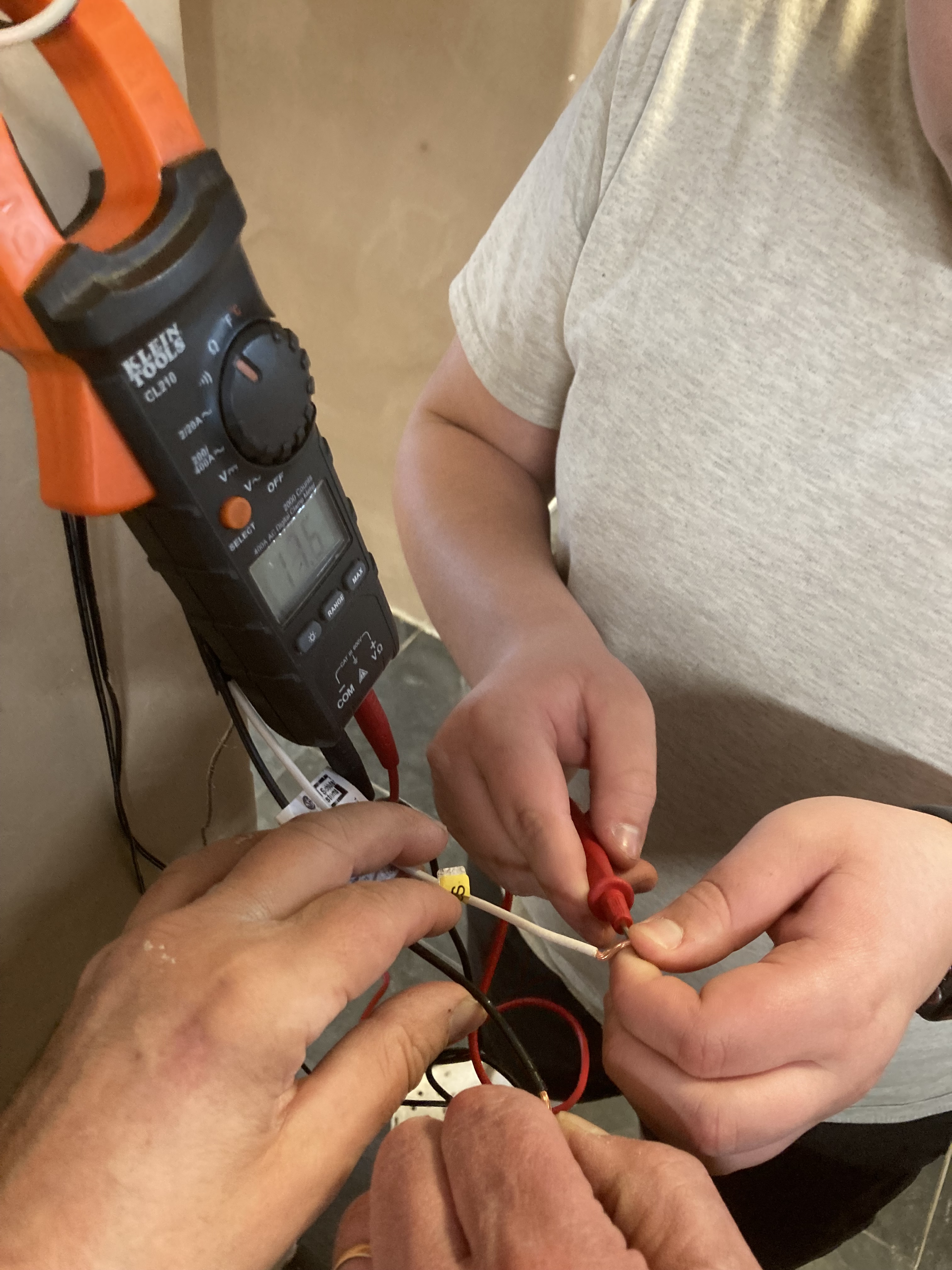
To install the radiant floor heating cable, we made multiple tests of “conductor resistance” to ensure the circuit was functional. We used the Professor’s megohmmeter to take an ohms reading between the two power leads. At the factory the cable tested 14.8 ohms, but our test before installation was 14.1, after cable installation was 14.2, and after tile installation was 13.4. The manufacturer allows a 10% variance, so we remain within that range. Our test was positive and we proceed.
Of note, if the tester uses his fingers to press the megohmmeter leads against the copper lines, then the resistance reading shows the resistance through his body; he has become a part of the circuit. As a homeschool experiential, my son tested the resistance that way and got a reading of 4.3 ohms. The Professor did same and had a 4.7 ohm reading. The lower the ohms the easier electricity flows through a circuit. The circuit breaker was off so he was not at risk. Salt and magnesium in my son’s body can account for the difference because they are conductive electrolytes which increase the flow of electricity. My son does take a magnesium supplement so there is a line of reasoning here.
And so life goes here at an art farm. Ohms not om, our homeschool tutorial was one step the toward tiling the new bathroom. Updates to follow, as this journey continues.

Oneness
Posted: January 1, 2026 Filed under: Art & Healing, Chronicles of a First Time Parent, consciousness, What is an Art Farm | Tags: anagarika govinda, consciousness, philosophy, science, spirituality, Thomas berry 2 Comments
Having built a whale, we decided to make a movie on the topic “all life is one.”
Having finished the short film, I sought funds from the Maine Arts Commission.
Having to substantiate my body of work as an artist, I referenced “An Art Farm.”
Whereupon, I realized our art farm had been mostly inactive since 2015 and so on 31 March 2024 I wrote “Crossing the Rubicon” about delivering the Whale north to the Wabanaki nation. I did not win the grant, but I did continue to write, and for 94 continuous weeks now I have posted short essays.
In a sense these are weekly postcards to my Mother, a chance to share thoughts that otherwise would not come up in our occasional phone conversations. More importantly, they allow me to mine thoughts that arise at 2am, to chase down loose threads and weave them, as if into tapestries, at best like those of the Renaissance rich in detail and color, telling stories of this strange and troubling moment in time.
An overarching theme seems to be Spiritual Ecology, a field of inquiry of which I only recently became aware. Rudolf Steiner is considered a visionary, having described a “co-evolution of spirituality and nature.” I learned of Steiner back in my Chicago days from a Gaia-centric friend at the vanguard. Pierre Teilhard de Chardin, also considered a founder, almost one century ago, wrote of a ”consciousness of the divinity within every particle of life, even the most dense material.” In “The Phenomenon of Man” he foresaw that “Science, philosophy and religion are bound to converge as they draw nearer to the whole.”
My Mother actively discussed de Chardin in her college days, and within the social circle of her childhood in Clifton of the Queen City, Cincinnati, Ohio, as well as at our dinner table. Father Sullivan, elder of Holy Cross Parish, once described my Mother as a “pantheist;” I suspect he meant that as a criticism but which she rightly took as a compliment! Perhaps, what the Father actually meant was panentheist (God in all things) not pantheist (God is all things), but regardless, since my childhood the tenets of Spiritual Ecology have been laid down as plain common sense.
On a family road trip west to the Grand Tetons, my Mother handed me a copy of John Muir’s biography. I was enthralled, in the backseat, while crossing the endless great plains. Decades ago I read Thomas Berry, also considered at the vanguard, who emphasized “returning to a sense of wonder and reverence for the natural world.” More than my share of Thoreau and Wendell Berry have I read, as well as David Abrams’ “The Spell of the Sensuous.” Joanna Macy has been celebrated among the Wise Women here at the art farm, while Emergence magazine is on my subscription list, the product of Emmanuel Vaughan-Lee, a Sufi trained multi-media maven on topics of a collective evolutionary expansion toward oneness.
But what would be this consciousness of oneness? The Renaissance is an historic example of a shift in consciousness, the “awakening” or “rebirth” of Europe, away from the Church-dominated Medieval era to embrace humanism, scientific inquiry, individualism, a flourishing of arts and culture. Rene Descartes, living at the end of the Renaissance, is considered foundational to modernity, his “cogito, ergo sum” defining the thinking rational self. But “cogito” is only one part of the whole self, and it can easily fall into the binary, mono-dimensional thinking of either-or, rather than both-and.
Newton’s Laws of Physics state an object is either at rest or in motion, but quantum mechanics allows an object to inhabit two states at once. Our logic has lead to AI which is a massive accomplishment, but it might either destroy us or bring far-reaching benefits. The “us versus them” is endlessly argued by politicians, the strongman’s lever using fear to divide and conquer. A spiritual ecology pursued only through the rational seems destined to failure. An expansive and inclusive approach is needed to embrace the breadth, depth and interconnectedness of both the natural world and ourselves.
“Creative Meditation and Multi-Dimensional Consciousness,” by Lama Anagarika Govinda, is insightful toward this life-affirming goal. He describes the “one-dimensional logic which…cuts the world apart with the knife of its ‘Either-Or,’” and then introduces “…a new way of thinking, an extended multi-dimensional logic which is as different from the classical Aristotelian logic as Euclidian geometry is from Einstein’s theory of relativity.” He presents this using the coordinates of an x-y axis. “If we regard the horizontal as the direction of our time-space development (unfolding), then the vertical is the direction of our going within, toward the universal center of our being and thus the realization of the timeless presence of all potentialities of existence in the organic structure of the whole of the living universe. This is what the poets call the ‘eternity of the moment’ which can be experienced in the state of complete inwardness…such as happens during meditation and creative inspiration.”
It is no small undertaking, a 21st century renaissance awakening to multi-dimensional consciousness not among the few, but ultimately we, the people, of the planet. Small-minded politicians and capitalists will pursue their goals of domination, and so this seems a necessary path out of the madness, deeper within. It is beyond the scope of one short essay to speak to such fullness, but this seems a direction for our art farm to pursue in the new year.
…and here is a link to the short film on the topic that we are part of the ecosystem, that all life is one, which set this ship – which is an art farm – to sail on this oceanic odyssey:
https://www.picdrop.com/claytonsimoncic/C39UK57ncx
The short film was produced with Anna Dibble. Clayton Simoncic was the photographer and editor.
_________________________________
Since it is written “the last shall be first,” I shall end this post and honor the Benham Family tradition, that good things come to those who begin a new month, on the first day with the first words: “Rabbit, Rabbit.”
May good things come to all people in the new year.
Mr. Sneed and His Eggs
Posted: November 21, 2025 Filed under: Chronicles of a First Time Parent, Money & Banking, Portfolio - Elena's work, What is an Art Farm 2 Comments
The soundtrack of my childhood is best captured in the screech of sneakers on a parquet floor, the sharp, clear trill of a referee’s whistle, its echo down an empty gymnasium. On saturday mornings my father would drive my older brother and me to the Walden School for intramural basketball games. My brother is a gifted natural athlete who thrived there, while I found the game incredibly dull, the challenge of throwing a ball through a hoop entirely lost on me.
From my parent’s perspective it was a brilliant set-up; the house emptied for an entire morning, my Mother had quiet, my Father had no distractions and we returned home exhausted, which ensured a peaceful afternoon. My enduring intramural memory is that Mr. Sneed, who ran the program and was its referee, made his living trading eggs on the floor of the former Chicago Butter & Egg Board.
Eggs, to Mr. Sneed, were a fungible commodity, bought and sold in bulk. Eggs, in our house, were a thing scrambled, served with bacon, raspberry jam and English Muffins, for Sunday Brunch in our Dining Room after the 10:30am guitar mass at Holy Cross Church.
My Father’s day job was food merchandising. Known as the “Grocery Guru,” he wrote and lectured on three continents on how to market food at the retail grocery level. He was a stock and bond man so Mr. Sneed’s world of commodity futures contracts seemed an abstraction; foreign, opaque and mysterious. But there must have been some spark. I followed that path.
During college, I met people who worked in the markets and I visited the floor, experiencing the open outcry pits in action. Sheer bedlam, it was capitalism at its most raw and rapacious: I win, you lose, a buyer for every seller. Eventually I got a job at the Chicago Board of Trade’s Financial Futures floor, where more than $350 Billion in US Treasury bond future contracts change hands daily. It was the pits, an awful place to work, but fascinating all the same.
Eventually I became the “squawker,” reporting the 30-year Treasury bond pit action to a trading desk in Lower Manhattan, giving them an edge on market timing. The Broker for whom I worked had a superstition and would allow me to use black ink only, never red ink, which marks a loss in accounting, which he could not allow under his stead.
Following the pits I ended up managing the food service in a residence for women artists. From my office desk I traded stock options on the S&P 500. While working at a wholesale flower market I traded corn futures. Eventually I ended up trading the 30-year Treasury bond futures not on the floor but from an office. I never did well enough to quit the day job, but I never washed up, either. It was an odd fascination.
And so I came to meet the Wizard, a CPA active in off shore banking who was born in the 1920s in Nemaha County, Kansas. He had been named in honor of the traveling banker who visited the town, “an old Kansas man, born and bred in the heart of the Western Wilderness.” Close to the 100th meridian, it is hard to fathom how remote Nemaha County would have been in that age before electricity, running water and phones. It was Dorothy’s Kansas.

By conventional terms he was the Father of a college classmate, but in truth he was the Wizard of Oz trading the futures markets. He was curious about my experience and we began talking. Eventually he told me about the sanctus sanctorum, the Golden Fleece, the goose that lays the golden egg, which was the “cash forward discounting of 108% bank debentures.” And so into the land of smoke and mirrors I went.
He introduced me to a financier who had helped launch McDonalds and whose Uncle had financed the Hollywood mavens: Marcus Lowe, Samuel Goldwyn and Cecil B. DeMille. I found myself managing discussions with Sheik Mohammed Had, an Emissary and Confidante to the Royal House of Saud. I flew to Manila to meet with a mild-mannered man named Jun, possessor of 100 Metric Tons of Gold Bullion stored in the underground vaults at Kloten, Switzerland. Whether or not he was the illegitimate son of Ferdinand Marcos, the Dictator of the Philippines, was an open question, which is about the way things go in the land of smoke and mirrors. I worked with Abraham, a Christian from the South of India, who possessed a 1 kilogram rough cut emerald, the largest in the world. He was trying to leverage the asset to fund development programs for his community but when the planes struck the Twin Towers, it became all but impossible to work with rare and unusual assets.
I spent hours reading at Northwestern University’s Law Library and stumbled upon Public Law 104-62. Known as the Philanthropy Protection Act of 1995, this exempts certain charitable organizations from federal securities laws. Signed into law by the 2nd Patrician of Kennebunkport, 104-62 is a loophole large enough to drive a Brink’s truck through. I contacted McDermott Will and Emery, the world’s largest tax law firm, but was declined as a client because, “Having checked our entire roster of Associates, no one has ever heard of this law and we feel it would be unethical to learn on your dime.” Although arcane, humanitarian finance is an official law. In the land of smoke and mirrors I found the path less travelled, which proved to be almost impossibly difficult to follow.
While in London, I worked with a CPA from Toronto who had helped Kuwait finance reconstruction after the 1st Patrician’s Iraq-Kuwait War. Following the liberation, the Central Bank of Kuwait revived the Dinar at an exchange rate of USD 3.47 to 1 new Kuwaiti Dinar, making it the strongest currency in the world. That the power to organize, finance and fund can change an entire country has always struck me as fascinating.
At this season of life, these experiences are long in my past. On a recent trip back to Chicago, I took my children to the Board of Trade, but the open outcry markets are gone, replaced by electronic trading. Since 9-11 the Board allows no visitors into the Exchange. This chapter has entirely vanished.
The eggs I buy to feed my family now come unwashed at room temperature, from a local school teacher. Buying as close to the source is as far as imaginable from the fungible commodities of the Chicago markets.
That the power of capitalism can be used at scale to fund the common good remains a compelling idea, which runs counter to rational self-interest. And so I keep one line in the water still, just waiting for when the Great White Whale swims into the Casco Bay.
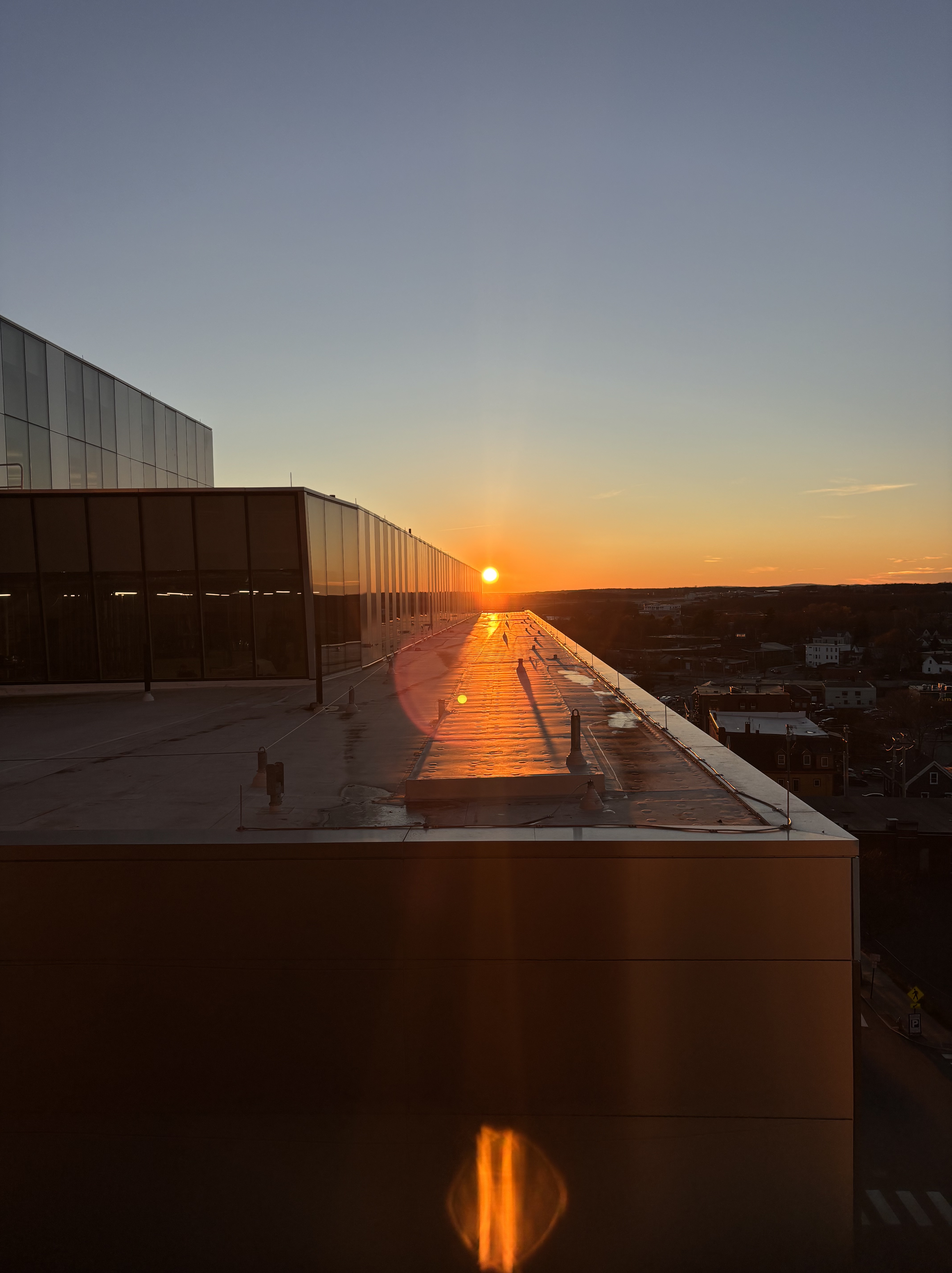
credit where credit is due: photos by Elena
The Serpent of Caesar
Posted: November 7, 2025 Filed under: Chronicles of a First Time Parent, consciousness, What is an Art Farm | Tags: George Fox, Leviathan 1 Comment
I am the “Serpent of Caesar” acting for and on behalf of the Religious Society of Friends local school. I chose this role willingly, in my position as the Facility Director of the physical plant and property. The roof leaks. Even after its repair. And so I lead the Quakers into battle.
Prior to January the terms “construction litigation” and “Forensic Engineer” were not in my vocabulary but now they dominate my thought and action. Some hoped to approach this problem amicably, asking for the help of the Architect and Builders. I turned to the Agreements signed in 2014 when the School’s building project began. Contracts are, by their nature, adversarial; they define the course to cure problems when things go wrong. And a repeatedly leaking roof, clearly, is something gone wrong.
Only an Expert can opine in construction litigation; it takes one licensed Architect to argue against another licensed Architect. As a mere carpenter my opinion is moot. Within the trades, the Plumbers and Electricians are “Masters,” because they are licensed and trained to have and to hold special knowledge. Carpenters, at best, become Journeymen, but none of us dare come to a job site claiming the mantle of “Expert.”

The first Expert retained was indeed a licensed Architect, who showed up on the job site wearing the wrong shoes. He was a cowboy, “all hat, no cattle” and “all sizzle, no steak.” He gladly criticized another Architect’s work, but when asked to design the solution he deferred, saying, “I will have to think about that. My liability insurance might not cover that.” Off into the sunset he rode. I did not look back.
The second Expert retained was a licensed Architect and member of an engineering firm founded by three MIT professors. He, and they, are the Brahmins of Boston. Meticulous and thorough, at an exorbitantly high cost, on one hot day in July they opened up the roof and did find 80% moisture content, 3” down into the insulation. By the nature of the design, to replace any of the insulation you must remove all of the roof.
And so knives were sharpened, a lawsuit was filed. When the investigations were ended, I wrote the Demand Packet to establish the damages sought. The opposing counsel’s counter arguments were brutal, a challenge not to take personally the barbs thrown my way. But they are only doing their job. This fight is about money, and they are its sentries.
The pace of a lawsuit, and its forensic investigation, is slow and ponderous, and this week all of the parties finally gathered in mediation. Dressed in business casual, all parties came bearing sword, saber or pocket stiletto. The opposing counsel – all men – were abrasive in their prevarications and circular reasoning, doing everything possible to point the other way, to avoid the central fact that the roof has failed. It was trench warfare, fought to a draw in the opening round of the long battle ahead.

The origin of our story lies centuries ago in England during the Civil War, also known as “The Great Rebellion.” The Royalists fought the Parliamentarians in a winner take all battle. Life for the Nobles was grand and sumptuous while the tenant farmers struggled, long before electricity or indoor plumbing, working from 6am until 6pm, children beginning to work as young as age 7.
In 1651 “Leviathan” was published with the infamous sentence that “Life is nasty, brutish and short.” This work is foundational for political realism, defining the authority of the State over the individual to avoid the “war of all against all” that results from the pursuit of rational self-interest amidst the absurdity of death.
Also in 1651, a Dissenting Preacher was imprisoned for challenging the orthodoxy of the King’s Church, and his sentence then doubled for refusing to take up arms in Cromwell’s army fighting against the Royalists. That preacher’s core tenet was that the “inward Light” belongs to every man, woman and child; no intermediary is needed to receive divine guidance because the sovereign is not the King but God, itself. And so George Fox formed the Religious Society of Friends.
In 1681 William Penn, one of Fox’s adherents, was granted by King Charles II 45,000 square miles along the North Atlantic Coast of North America. Such then did the Quakers settle on virgin soil, acreage which today constitutes Pennsylvania and Delaware, and a different form of political realism was practiced, which became foundational to the American experience. Colin Woodard, a local historian and author who lives in Freeport, Maine, described Penn’s social experiment:
“Penn envisioned a country where people of different creeds and ethnic backgrounds could live together in harmony. Since his faith led him to believe in inherent goodness of humans, his colony would have no armed forces and would exist in peace with local Indians, paying them for their land and respecting their interests. While all the other American colonies severely restricted the political power of ordinary people, Pennsylvania would extend the vote to almost everyone. The Quaker religion would have no special status within the colony’s government, the Friends wishing to inspire by example, not by coercion.”
Penn’s “Holy Experiment” became the sine qua non as Philadelphia emerged as the largest and most influential city in the Thirteen Colonies. Thomas Jefferson wrote there, in a rented home at 700 Market Street, the most radical progressive sentence in the history of politics: “We the people of the United States, in Order to form a more perfect Union…do ordain and establish this Constitution for the United States of America.”
Friends Schools have been central to this “social contract” and “holy experiment,” in the belief that spiritual, social, and intellectual growth are intertwined. Since 1656, when Quakers first arrived in Maryland, the schools have always taught both boys and girls.
And so 368 years later I arrived at the Quaker school bearing a Transcendentalist message from Ralph Waldo Emerson: “Your goodness must have an edge, else it is none.” Kindness alone is not enough.
Circa 30 AD the street preacher taught in Aramaic: “ܗܐ ܐܢܐ ܡܫܕܪ ܐܢܐ ܠܟܘܢ ܐܝܟ ܐܡܪ̈ܐ ܒܝܬ ܕܐܒܐ؛ ܗܘܘ ܗܟܝ” which circa 120 AD was translated into the Koine Greek – the lingua franca – as “…γίνεσθε οὖν φρόνιμοι ὡς οἱ ὄφεις καὶ ἀκέραιοι ὡς αἱ περιστεραί,” but when the Italians settled the Holy See where Nero’s Circus had been, circa 382 AD, the Latin Vulgate was translated, “Estote ergo prudentes sicut serpentes, et simplices sicut columbae” until 1611 when all the King’s scholars and all the King’s scribes wrote the masterpiece which is the King James Bible: “Behold, I send you forth as sheep in the midst of wolves: be ye therefore wise as serpents, and harmless as doves.”
For two millennia this wisdom’s fulcrum, its hinge, is the humble conjunction and: “wise as serpents, and harmless as doves.” Life’s complexity does not reduce to either/or but more often is both/and, which is especially challenging when waging war over a leaking roof.

A sharp knife, a spotlight
Posted: October 31, 2025 Filed under: Chronicles of a First Time Parent, consciousness, Portfolio - Elena's work | Tags: david-mamet, sophocles 1 Comment
“All the world is a stage” is repeated so often it has become a cliche. Shakespeare’s monologue from “As You Like It” opens with this:
All the world’s a stage,
And all the men and women merely players;
They have their exits and their entrances;
And one man in his time plays many parts,
His acts being seven ages.
Concerning that stage, Nietzsche argued the apex of artistic achievement and high point of civilization was achieved on stage in Classical Athens by the tragic dramatists, particularly Aeschylus and Sophocles. When their Apollonian and Dionysian met in balance – order, form, reason commingling with chaos, passion, ecstasy – the citizens of Athens confronted both the suffering of life and the majesty of its beauty, experiencing an integrated whole comprising the breadth of the human condition.
But how, precisely, does the stage work?
Who better than a playwright from Chicago’s south side to make plain the inner workings of the stage? David Mamet, winner of the Pulitzer Prize, playwright on Broadway and member of the American Theatre Hall of Fame, screenwriter for Hollywood, author of 223 books, published in 1998 “Three Uses of the Knife: on the nature and purpose of drama.”
He wrote, “It is in our nature to dramatize. At least once a day we reinterpret the weather – an essentially impersonal phenomenon – into an expression of our current view of the universe: ‘Great. It’s raining. Just when I’m blue. Isn’t that just like life?’ The weather is impersonal, and we both understand it and exploit it as dramatic, i.e., having a plot, in order to understand its meaning, for the hero, which is to say for ourselves.”
Drama’s structure plays out in three acts. “In act 1 Our Team takes the field and, indeed, prevails over its opponents, and we, its partisans, feel pride. But before that pride can mature into arrogance this new thing occurs: Our Team makes an error, the other side is inspired and pushes forth with previously unsuspected strength and imagination. Our Team weakens and retreats.”
And so begins act 2, the play’s midlife crisis. Conflict is present, a new set of problems arise. Our attention narrows toward climax, denouement and conclusion, but a challenge must be overcome while the playwright holds the audience’s attention. Again Mamet, “Joseph Campbell calls this period in the belly of the beast – the time in which the artist and the protagonist doubt themselves and wish the journey had never begun.” The ease of act 1 becomes complex.
On rarified occasions, in an auditorium, drama achieves that pinnacle of insight and cultural healing. But more often the drama is bawdy and common, played out on the street, a vaudeville stage or in the daily news.
“The stoics wrote that the excellent king can walk through the streets unguarded. Our contemporary Secret Service spends tens of millions of dollars every time the president and his retinue venture forth.
“Mythologically, the money and the effort are spent not to protect the president’s fragile life – all our lives are fragile but to protect the body politic against the perception that his job is ceremonial, and that for all our attempts to invest it with real power – the Monroe Doctrine, the war powers act, the “button” – there’s no one there but us.
“Our Defense Department (sic) exists neither to ‘maintain our place in the world’ nor to ‘provide security against external threats.’ It exists because we are willing to squander all – wealth, youth, life, peace, honor, everything – to defend ourselves against feelings of our own worthlessness, our own powerlessness.”
What to the Christian mystics is the Trinity, to the German philosophers was thesis, antithesis, synthesis and to playwrights and poets from the dawn of time has been the 3-act structure; the “Rule of Three” as an axiom of psychology and communications provides clarity and order to simplify decision making, to navigate life.
Given conflict, act 3 moves us into climax and resolution. The hero finds within themself the will and strength to continue. What Sophocles called the tragic flaw, Shakespeare termed “this mortal coil,” Nietzsche saw an absurd void, while Mamet writes of “our own worthlessness, our own powerlessness.” Such is our conflict. But reason cannot resolve this.
“The purpose of theatre, like magic, like religion…is to inspire a cleansing awe….Most great drama is about betrayal of one sort or another. A play is about rather terrible things happening to people who are as nice or not as nice as we ourselves are.
“But reason, as we see in our lives, is employed one thousand times as rationale for the one time it may be used to further understanding. And the cleansing lesson of the drama is, at its highest, the worthlessness of reason. In great drama we see this lesson learned by the hero. More important, we undergo the lesson ourselves, as we have our expectations raised only to be dashed, as we find that we have suggested to ourselves the wrong conclusion and that, stripped of our intellectual arrogance, we must acknowledge our sinful, weak, impotent state – and that, having acknowledged it, we may find peace.”
If reason wants to reduce life to an either/or, the dramatist knows that life is a both/and proposition: the apex was reached in the perfect balance between Apollonian order and Dionysian ecstasy. Nietzsche argued that it was art that allowed humans to overcome the absurdity, and so too Mamet:
“It is our nature to elaborate perception into hypotheses and then reduce those hypotheses to information upon which we can act. It is our special adaptive device, equivalent to the bird’s flight – our unique survival tool. And drama, music, and art are our celebration of that tool, exactly like the woodcock’s manic courting flight, the whale’s breaching leap. The excess of ability/energy/skill/ strength/love is expressed in species-specific ways. In goats it is leaping, in humans it is making art.”
_______________________________________
Photo credit goes to Elena.
The Parallax of Perception
Posted: October 17, 2025 Filed under: Chronicles of a First Time Parent, consciousness 1 Comment
As a wee young boy, my parents occasionally on Friday night had cocktail parties. My siblings and I were told to clear out, to go upstairs to our bedrooms so the adults could play. But we would crawl down, then crouch upon the stairway in order to espy the party going on in the Living Room down below.
The men wore blazers and ties, the women skirts and high heels. Booming laughter abounded, cigarette smoke filled the air, until the next morning – like Forensic Detectives – we would examine the ash trays. We could tell who smoked each cigarette by the lipstick. Sharp-edged Aunt Ruth always came dressed with lips scarlet red. I was certain then that the adults had everything figured out. Life seemed just a series of choices, easily navigated, victory preordained.
As a young man, in my 30s and 40s, I came to realize how foolish I had been. Adults, by and large, had no grand understanding, life was but a battle of inches, decisions made at best with partial understanding. The simplicity of my childhood gave way to a bewilderingly broad vista, across which my peers pursued their sense of self. Careers being launched, some moved with bravado and found early success, others less certain struggled to get by, some dropped out all together. I moved off grid, then battled for social justice, flew too close to the sun and crashed, ending up working with my hands. I chose to live close to the ground.
Now in my 60s, life changes yet again, and I adjust, best as I can. Almost certainly I am finished framing houses (never say never). My peers – who pursued a more conventional path – are likely approaching retirement, many as grandparents. My children still live at home; there is much work yet to be done, which I tackle not with the vigor of mid-life, but seeking a more balanced sustainable approach.
And then I consider my Mother, she in her 90s, how different must life become, yet again, 30-years hence. The family house has been sold, she has moved into an assisted living facility. She seems happy and content, the food is quite good, she is respected, life’s complexity pared to a contemplative calm.
I become aware of a parallax of perception, which must be the subjectivity of how we understand our life, which perception seems far different from life itself. Parallax is an abstract noun, defined as “the apparent displacement or the difference in apparent direction of an object as seen from two different points not on a straight line with the object. especially : the angular difference in direction of a celestial body as measured from two points on the earth’s orbit.” The simplest example, which everyone has experienced, is the effect of objects viewed from a speeding car. The closer objects seem to quickly pass by, while objects in the distance appear to move slowly. But the objects are stationary while it is the viewer who is moving.
In this age of alternative facts, we are bombarded by the constant noise and babel of social media. In an age when might makes right, the sheer onslaught of images and news is overwhelming. We seem to thrive on arguing, rather than simply co-existing. “Rational self interest” is our central logic, but might that be self-limiting, in fact? What if the underlying cultural assumptions are ill-founded? What if, to use an analogy, we are looking through the binoculars from the wrong end, making what is easily near at hand seem impossibly far away? Which only would amplify the parallax of our perception.
Few are my answers but many my questions. Increasingly it feels like a cultural re-examination is just over the horizon. So it may be wise to pause and consider the Roman Stoic Lucius Annaeus Seneca, who counseled, “All life is a preparation for the moment of death.”
Whether death be near or far, it seems time to settle our emotional accounts, to let calm the ripples on the pond of our collective consciousness.
_________________________________
Persephone soon departs, the dark season is just weeks away. The Milkweed blows. Mary Oliver comes to mind.
The milkweed now with their many pods are standing
like a country of dry women.
The wind lifts their flat leaves and drops them.
This is not kind, but they retain a certain crisp glamour;
moreover, it’s easy to believe
each one was once young and delicate, also
frightened; also capable
of a certain amount of rough joy.
I wish you would walk with me out into the world.
I wish you could see what has to happen, how
each one crackles like a blessing
over its thin children as they rush away.








The Queen Bee
Posted: July 18, 2025 Filed under: Chronicles of a First Time Parent, consciousness, What is an Art Farm | Tags: beekeeping, bees, honeybees, Mother of All Living, nature, pollinators, royal jelly, the Shimmy, White Goddess Leave a comment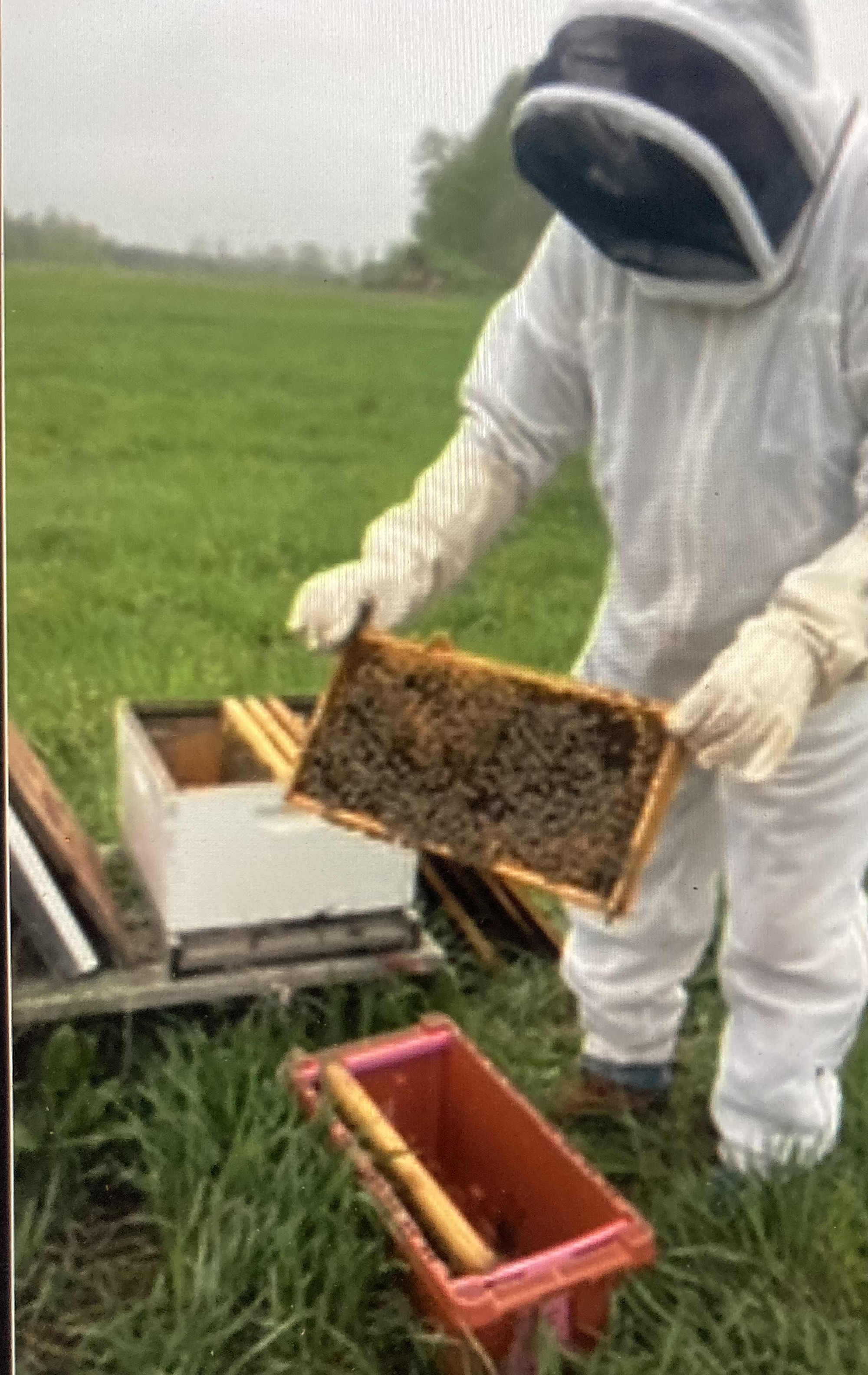
Honoring a good friend, who has a good friend passing; the ripples which cannot be denied that reinforce the web of our community, I write here of The Queen Bee.
The “bees knees” as slang means something excellent, of the highest quality. It arose during the “Roaring Twenties,” when flappers danced the Charleston, the Black Bottom and the Shimmy, their knees and elbows flailing wildly to the back beat of the jazzmans’ rhythms. It might be a corruption of “The Business,” 1920s street slang for something excellent, or perhaps it refers to pollen baskets on bees’ legs, the “good stuff” that worker bees carry back to their Queen.
In our quest for seven wise women, let us follow that “good stuff” back to the Queen Bee. In a colony of 20,000 to 80,000 bees she alone lays more than 1,500 eggs per day, an amount greater than her body weight. Coming of age at day 23 of life, her egg laying begins.
During incubation the Queens are fed protein rich royal jelly, secreted from the glands on the heads of young worker bees. Worker bees are fed a mixture of nectar and pollen – bee bread – but the Queen alone is fed the royal jelly, and as a result develops into the sexually mature female, the propagator of the colony. The colony’s future rests upon the fruit of her loins.
The Queen was selected by the worker bees, not through a democratic process, but through luck of the draw plus natural selection. The worker bees randomly choose a few larvae just days old, and begin feeding them the royal jelly. If multiple Queens emerge at the same time then they will fight to the death.
By genetics her stinger is not barbed, and so she is able to sting repeatedly. Sting she does, seeking out virgin queen rivals in her quest to kill. The Queen as nurturing mother sets firm limits; dominance is her key to control the colony. The Queen, to whom the worker bees bring “the good stuff” is the one and only; nature knows its rules and the colony falls in line behind its Queen.

The Queen’s hive is a model of efficiency and output. She weighs about 0.007 ounces, twice the weight of the worker bees, but their combined efforts produce 30-60 pounds of honey, or even upwards of 100 pounds or more, per year. Honey is half of the proverbial “land of milk and honey” which is an ancient symbol of abundance and prosperity. “Bread and honey” is slang for money, the coin of the realm. The Queen controls the honey, which is to say “the money” because she produces the abundance.
All things come to pass, and the Queen eventually matures into dominance. Some virgins escape the hive to avoid being killed, to seek out a new hive whereupon another fight to the death begins. If the prime swarm has both a virgin queen and an old queen, the old queen will continue laying eggs, until within a couple of weeks, she will die a natural death and the former virgin, mated, will assume the throne.
Natural selection is a biological imperative, but wisdom is an insight, something metaphysical, the source, perhaps, of that biological imperative. Our quest then leads back to the creator, God the Father in the current era, but the Queen of Heaven in older times. In the ancient Near Middle East, the Queen of Heaven embodied themes of love, war, fertility and motherhood, of which all the Queen Bee is a master.
About the Queen Bee, her celestial connectedness and her poetry, the Irish poet Robert Graves wrote, “…a true poem is necessarily an invocation of the White Goddess, or Muse, the Mother of All Living, the ancient power of fright and lust – the female spider or the queen-bee whose embrace is death.”
The Queen Bee, it seems, is one key to the wise woman.

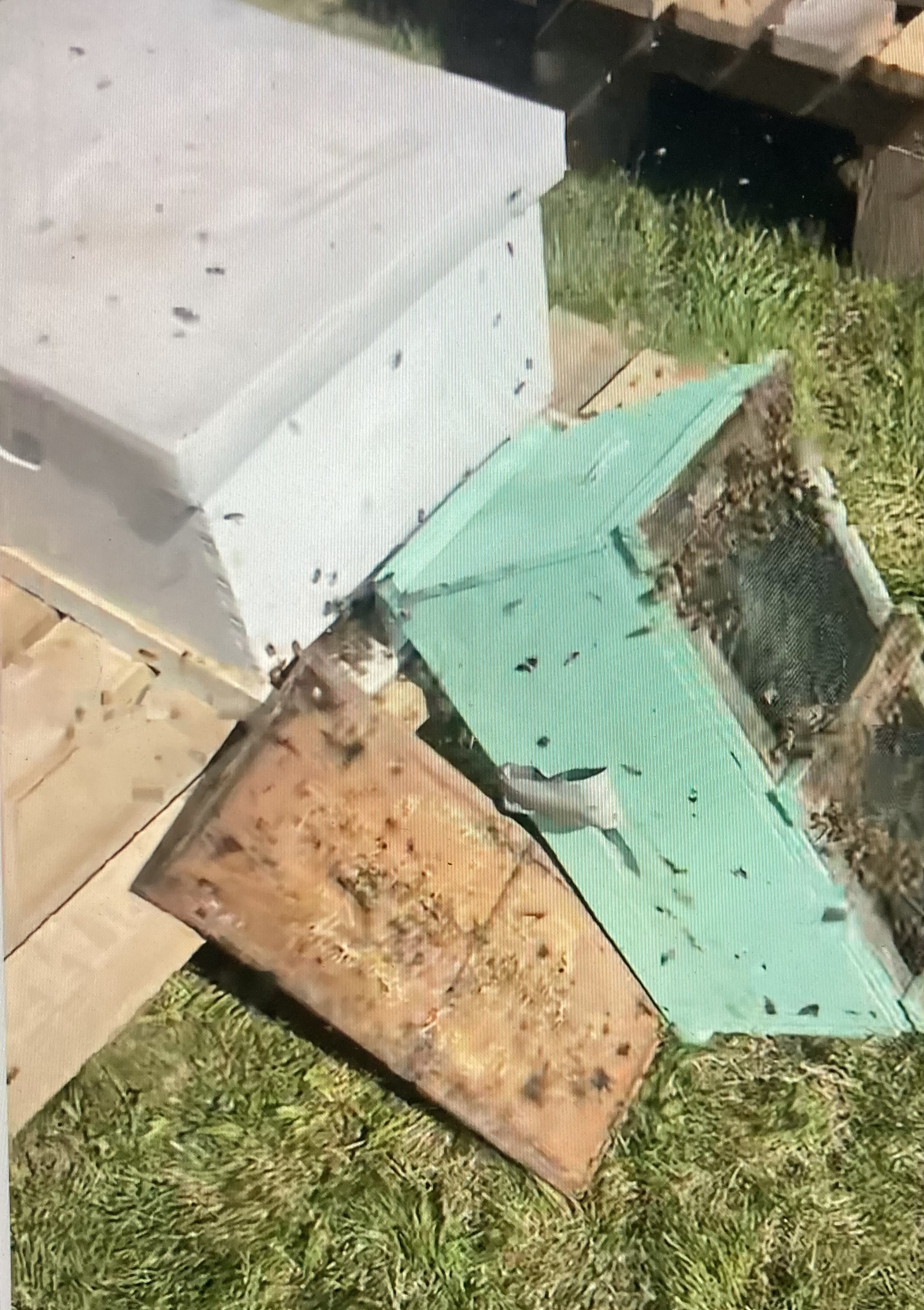
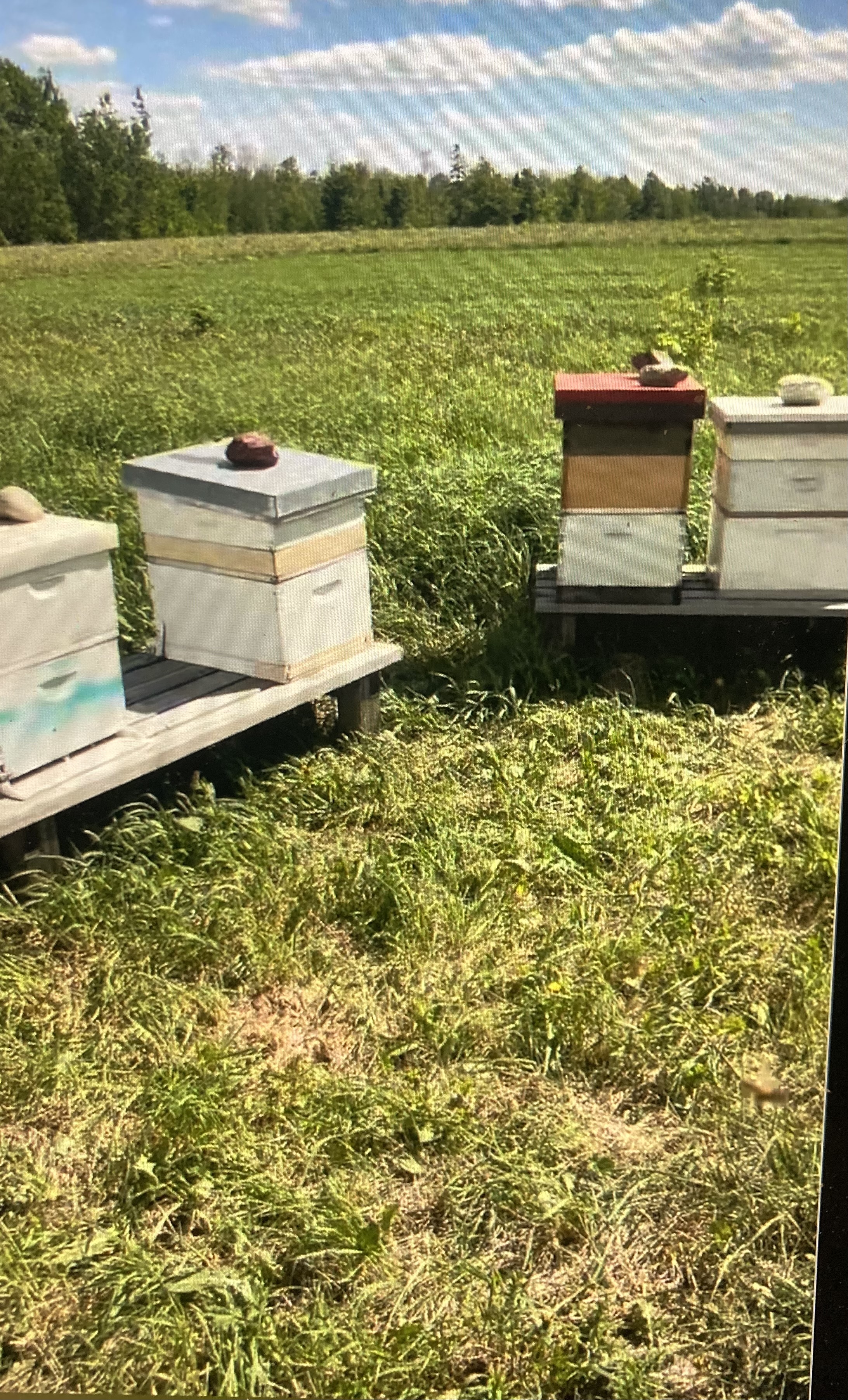
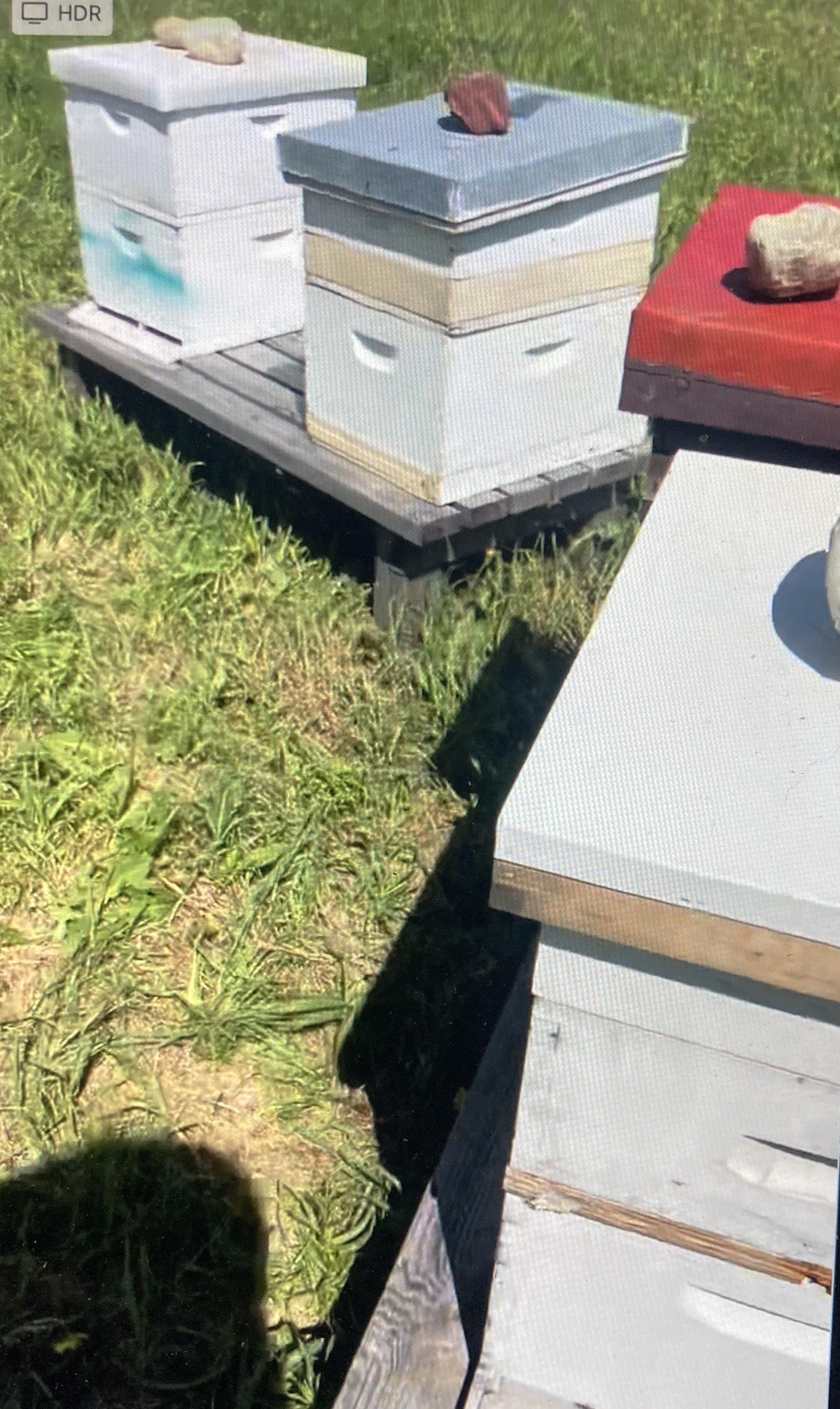

Credit where credit is due: one wise woman suggested this topic; Master Electrician, Master Cabinetmaker & Humble Farmer Kirk provided the beekeeping photos and inspiration; the curly-haired Goddess with whom I live asked sage questions about natural selection.
It takes a village.
_____________________________
In the garden now – thanks to pollinators – fruits form, vines reach ever higher; mid-summer is past and the dog days descend.









 an Art Farm