Walking
Posted: October 10, 2024 Filed under: Chronicles of a First Time Parent, Farming off the Farm, What is an Art Farm | Tags: AFSP, anxiety, depression, mental health, NAMI, suicide, suicide prevention 1 Comment
5 October was day 279 of 2024. Year-to-date, 274 lives have been taken by suicide in Maine.
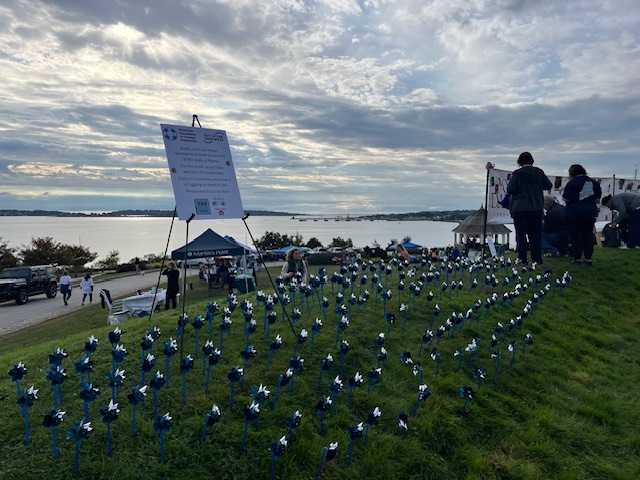
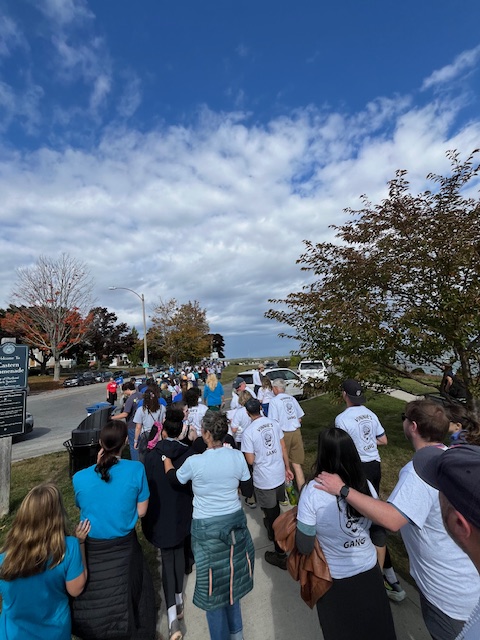
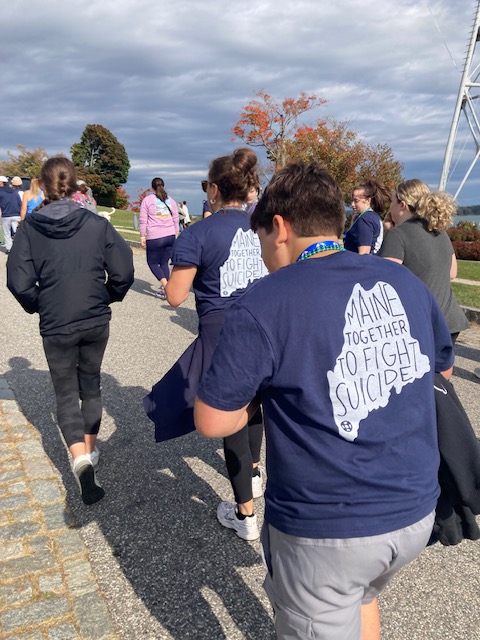
Last Saturday, on the Eastern Prom, “we the people,” deplorables and elite gathered to meet, to give voice, to bear witness, and to walk in support of Suicide Prevention. 800 people walked 2.2 miles with the majestic Casco Bay stretched out around us.
More than $120,000 was raised. Under the name “Healing Life” our family raised $820. We are eternally grateful for the support of our family and friends. We all went the distance. We all came together. Actions speak louder than words and as a family we shall do this again, a repetitive routine exemplifying our commitment to community.
In the early hours it rained, but the sun broke through. Beads of many colors were passed out: White for loss of a child, Red for loss of a partner, Gold for loss of a parent, every color of the spectrum, every reason to support suicide prevention, even rainbow beads in support of LGBTQ. One older man wore a rainbow shirt, that read, “Be a Good Human.” So simple, yet so hard.

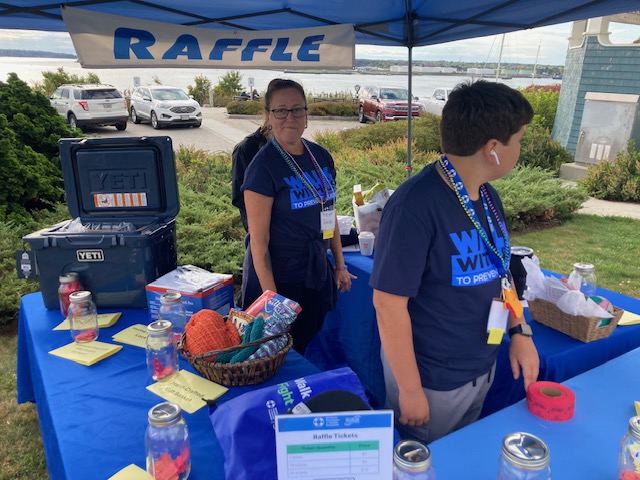
We worked the raffle table, which was a chance to engage with many people. One young child, age 6 perhaps, wore gold beads and a placard around their neck, bearing the single word, all caps, “DAD.” The Mother, now a widow, struggled to pay, and we helped her through the digital payment. As it turned out she won two raffle prizes.
She was one among many, all touched by the dark sceptre of death by suicide. Emotions were raw, so very hard to look life straight in the eye. But we did. We all did. And we walked in support of a cause.
The American Foundation for Suicide Prevention (AFSP) funds scientific research and public policy advocacy on a national level. AFSP Maine is one of a nationwide network of chapters, doing the grass roots work focusing on eliminating the loss of life from suicide. Members of our community were recognized, stood up, each story of loss told. It was gruesome, and yet, in our bearing witness hope was present.
In the South Portland Public Schools a Director of Mental and Behavioral Health has been hired, and people from the National Alliance of Mental Health, the CDC and AFSP are lending a hand. A team has been assembled and a community response is taking root. Our task now is that such hope is nurtured and blossoms.
I spoke to my daughter about my childhood, when shame reigned supreme, when no one would dare speak of suicide or mental health. To put this in context, I spoke of my Grandmother, whose first born child, in 1923, died of SIDS at 21 days then was told by her Doctors, “just go home and forget about it.”
As if.
Long is the road to greater acceptance, to understanding, but on 5 October, along the eastern Promenade of Maine, 800 people walked 2.2 miles.
Chairman Mao famously quoted the Taoist Master Lao Tzu, who said, in the 6th century BC, “the journey of a thousand miles begins beneath one’s feet.” Let us now stand together, let us walk and go forward, let us heal, we the people. Our childrens’ lives depend upon this simple truth.



_______________________________________________________
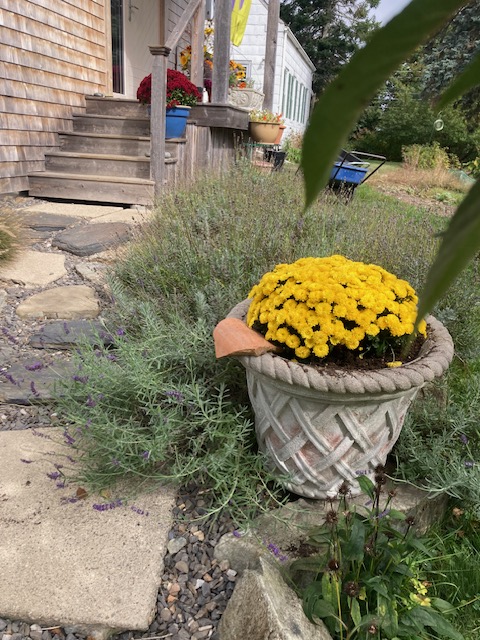
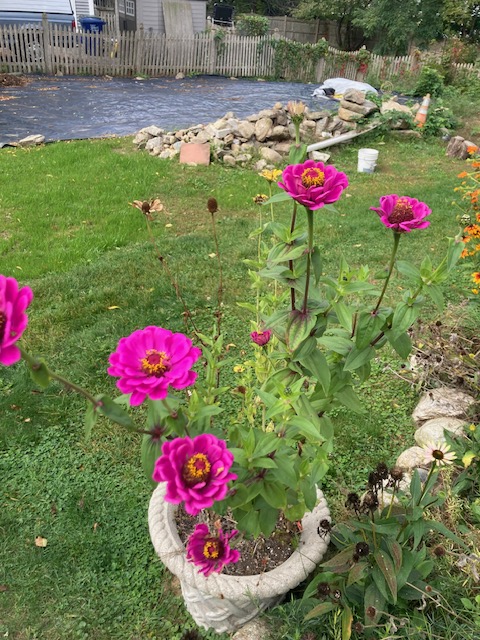
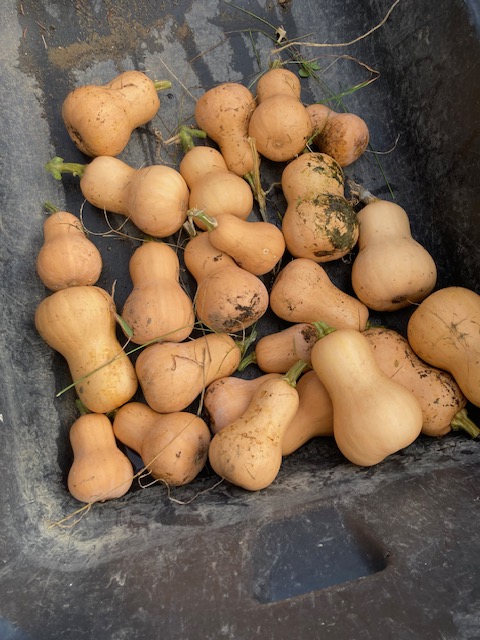
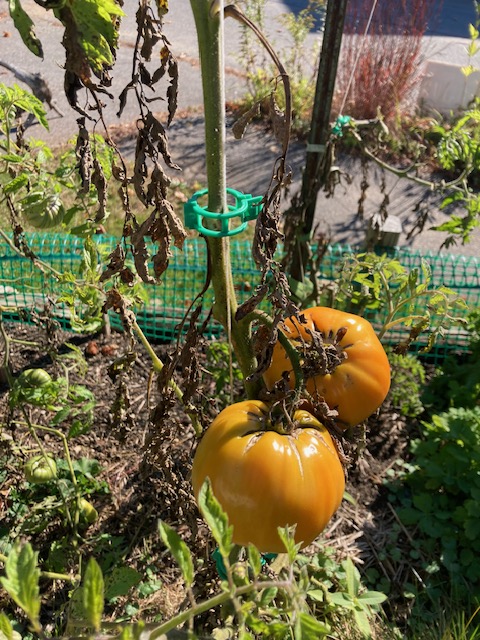
In our gardens, our variety of Butternut Squash has been harvested; Tomatoes produce their last; Pole Beans come in this week; Cosmos finally sings aloud in chorus; Mums reside on the entry porch.






___________________________________________________
And tonight, in the sky overhead, the Northern Lights showered above, a heart, it seems, in the first photo. Enjoy…










Unabridged
Posted: October 4, 2024 Filed under: Chronicles of a First Time Parent, Farming off the Farm, What is an Art Farm | Tags: books, dictionary, language, unabridged dictionary, words, writing 2 Comments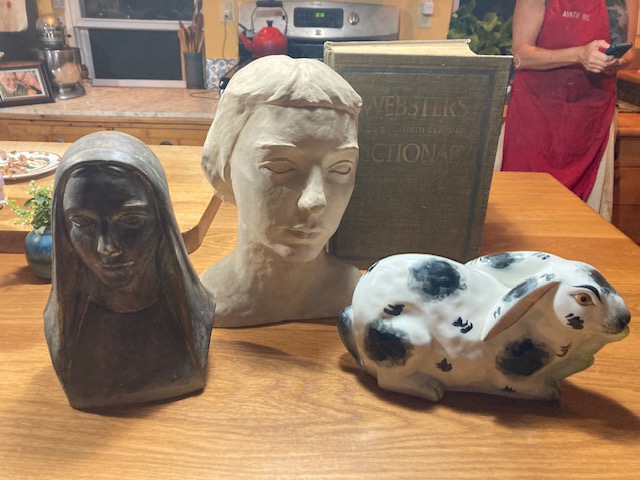
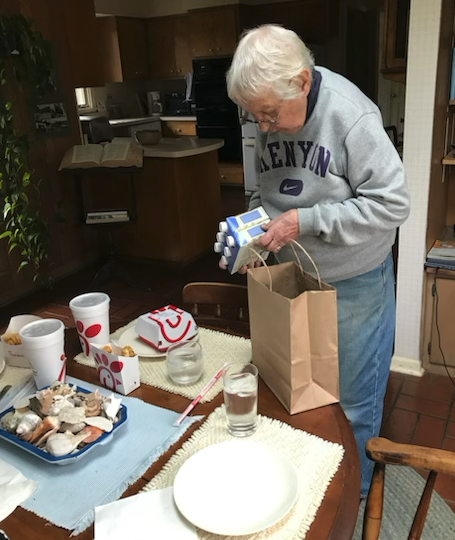
In my childhood, pride of place was given to a Webster’s New Twentieth Century Dictionary of the English Language, Unabridged, second edition (c) 1966. The massive book laid open, upon a bookstand that my Mother built, in the family room always beside the dinner table. Quick and easy reference was close at hand.
At 2,129 pages, plus addenda, the Webster’s weighs in at approximately 13 pounds, begins with “a” (first letter of the Roman and English alphabet: from the Greek alpha, a borrowing from the Phoenician) and ends with “zythum” (a malt beverage brewed by ancient Egyptians). The masterpiece is “based upon the broad foundations laid down by Noah Webster.” Such informed my childhood.
My frugal Mother, born in the Depression, bought groceries strictly on a budget, and received S&H Green Stamps for every purchase. We saved those stamps, compiled them into books, then drove to Glenview, Illinois to redeem same. The dictionary was purchased with Green Stamps, a day of victory, that I recall vividly, still.
Of the Silent Generation, she and millions of her peers diligently saved the Green Stamps. The Sperry & Hutchinson Company was founded in 1896 and operated until the 1980s, when consumerism became the vogue and frugality faded. But over 90 years the Beinecke family made a fortune, and funded the Beinecke Rare Book & Manuscript Library at Yale. In Greenwich, Connecticut, their 66-acre estate is now for sale for the first time, at an asking price of $35 Million, after more than four generations in the family. https://www.nytimes.com/2024/09/16/realestate/beinecke-estate-greenwich.html?smid=nytcore-ios-share&referringSource=articleShare
In my childhood home, words reigned supreme. My Father was a wordsmith, an Irish extrovert, who knew not the difference between a hammer or a screwdriver, but most certainly knew his nouns and verbs; subjects and objects; gerundives, gerunds, and participles; how to compose a sentence, how to frame his thoughts. When advertising came of age he worked as a Mad Man; known as the “Grocery Guru” his specialty was food merchandising. His gift of words allowed him to travel the world, holding meetings in Munich, giving speeches in Sydney; he commuted to his Manhattan office for lunch then flew home for dinner. He was published in multiple periodicals, and monthly in “Advertising Age,” then an upstart, which has become the standard bearer of the trade. After his death, my Mother continued the column for two years, writing “Consumer’s Viewpoint” telling the “Big Boys and Fat Cats” what she thought of their products.
And always, in our home, the Webster’s stood as stanchion, a ready reference, near at hand.
Last year my Mother sold the family home, and we emptied its rooms. Saving the dictionary was high on my list. I stored it at my sister’s, and then in August hauled it back home to Maine, along with sculptures my Mother had made. It was something of a cruel and unusual ask to have my children carry the tome through TSA at O’Hare Airport, but that I did. To my mind that task sealed their fate to the written word. Such is their origin story.
Growing up in the digital age of Google, my children may disregard the heavy analog hard copy book, a dull relic from the distant past. But long may it last on their bookshelves, and my hope is that it will endure as a reminder of their lineage. Languages change over time, such is their nature, but the story of the English language, derived from the German and Latin, and our ability to use words to frame our thoughts is an enduring aspect of our mind’s capacity to understand. I remain steadfast that there is a mysterious link between grammar and the mind.
A hard copy dictionary, then, is a bastion of that tradition. And for my children to understand same, is to know of their past. And so this Unabridged Dictionary is an heirloom of the highest regard here in our home. Purchased through frugality, cherished over many years.
______________________________________
Note: Kudos and thanks to Babs, of whom I say the apple fell not far from the tree. By kind permission of, I borrowed her phrase “…meetings in Munich, speeches in Sydney…”. And she provided the family room photo with dictionary and stand ever the sentry, the rear guard. Many thanks! 🥰
Seedless Champagne Grapes and Suicide
Posted: August 30, 2024 Filed under: Chronicles of a First Time Parent | Tags: mental health, Teen suicide 2 CommentsRecently a friend left home grown blackberries on our porch. To another neighbor, that day, I delivered home grown peaches and wild seedless champagne grapes. Life in South Portland would seem idyllic.
Year-to-date in Sopo there have been zero murders but there have been, to my knowledge, 5 suicides and 1 attempted suicide: 3 were school-aged youths; 2 were parents of children, whom my daughter oversaw as a Rec Camp Counselor; 1 was my daughter’s age-group peer, whose suicide attempt failed.
February: a 19-year old, recent graduate of the local high school, a counselor in the elementary afterschool program, worked his Friday shift, then drove south to Portsmouth, New Hampshire. As Aurora pulled dusk across the sky, in his truck he sat, sent a final text to his family, then reached for his newly purchased shotgun.
April: a boy named Angel, age 16, a straight-A student at the high school, “an independent young man who enjoyed his job at Burger King” rode his bike into the woods. His phone was left on the ground, but kept transmitting via Snapchat’s location app. My daughter, his classmate, was aware of this, as were all her peers, and told us that he had gone missing. A dark night followed, when come morning we learned this young boy had left his bike and phone and taken a rope deeper into the woods.
June: Two children, both age 8, campers at the South Portland Summer Rec Camp had lives ripped by suicide. One girl’s mother committed suicide while another’s uncle took his life.
July: A young boy, age 18, who worked as a Summer Rec Camp Counselor, attempted but failed, to take his life. For one week he was in Maine Medical Hospital.
August: A 14-year old eighth-grade graduate, with “striking blue-green eyes and charming grin [that] made everyone melt,” #6 on the South Portland Little League Majors team, MVP of our All Stars, he took his life. His brothers’, Mother and Father’s lives ripped now asunder.
We gathered this evening at his “celebration of life” where our collective grief and despair mocked the word “celebration.” Social conventions keep not up-to-date with the epidemic in these times.
His classmates, young boys, were well dressed, as though waiting for school pictures, some wore their athletic jerseys. The photos on display were those of a toddler and elementary school student, so brief was his life.
The line was long and snaked around the Funeral Home, hundred’s having turned out in his memory, all of us stunned, grasping for air. Like Dante’s “9 Circles of Hell” we wound closer into the building, then entered the parlor where the pine casket was closed. Deepest into the void, we stood in a cratering emptiness.
We are bereft. There are no words, no answers, so many unanswered questions. Repeatedly now we have come together in these most searing of “celebrations.”
In talking with neighbors, the usual suspects of cause are technology and social media. Statistics support that, but pandora’s box having been opened, we cannot go back again to an earlier easier time. My wife and I, instead, have been talking about emotional intelligence and mental health.
Mental Health America defines Emotional Intelligence as “…the ability to manage both your own emotions and understand the emotions of people around you. There are five key elements to EI: self-awareness, self-regulation, motivation, empathy, and social skills.” This definition seems clear and cogent.
To the CDC, “Mental health includes our emotional, psychological, and social well-being. It affects how we think, feel, and act. It also helps determine how we handle stress, relate to others, and make healthy choices.” To my mind, this definition is vague and leaves me wanting.
The Superintendent of South Portland Schools wrote to me, “in short order we must pivot to broader community work. On the district side, these efforts will be led by our new Director of Mental and Behavioral Health who will start on September 9.”
While standing in line at the celebration, we spoke with Lee Anne Dodge, the soul-affirming Director of SOPO Unite, a high-school based “coalition bringing together all sectors of the community–parents, school staff, police, healthcare, businesses, youth serving organizations, civic organizations and faith based organizations….and promote resilience in our community.” Lee Anne told us that she will meet this week with the CDC to discuss how to broaden their response to community needs.
Andrew Forsthoefel, the Restorative Practices Systems Specialist of Cumberland County, leads a circle of parents meeting to listen and give voice, coming together to navigate these challenging times. I have reached out to him and our dialogue will deepen into the fall.
We the people. For better or worse. Until death do us part.
It is my hope that we can weave a new narrative of outreach and empathy, forming circles of hope, to support and save our children, while this black plague of suicide ravages our communities.
Indeed, now the only way out is through.
Quercus Virginianus
Posted: August 28, 2024 Filed under: Art & Healing, Chronicles of a First Time Parent 1 Comment
Quercus Virginianus, the Live Oak tree, is synonymous to the Deep South’s mystique as are Faulkner’s gothic novels. Gothic, indeed, is the architecture of the trees: a circumference up to 35 feet, height up to 70 feet, limbs stretching outward more than 100 feet from the trunk, Spanish Moss tendrils hang to gather nutrients from the wind, rain and sunlight.
A woodworker once told me that in South Carolina a law remains on the books that if two lovers stand beneath a Live Oak tree and exchange vows of their love, then the tree as their witness legally binds the marriage. I cannot prove the fact, but certainly believe its core truth.
Live Oak trees live up to one thousand years. The story is told that in 1771, Étienne de Boré, on his estate which became Audubon Park in New Orleans, planted a Live Oak tree in honor of his bride. At 35 feet in circumference the tree arguably could be closer to 300-years old, known as the “Tree of Life” although officially registered as the Etienne de Boré Oak. Etienne de Boré became the first mayor of New Orleans in 1803.
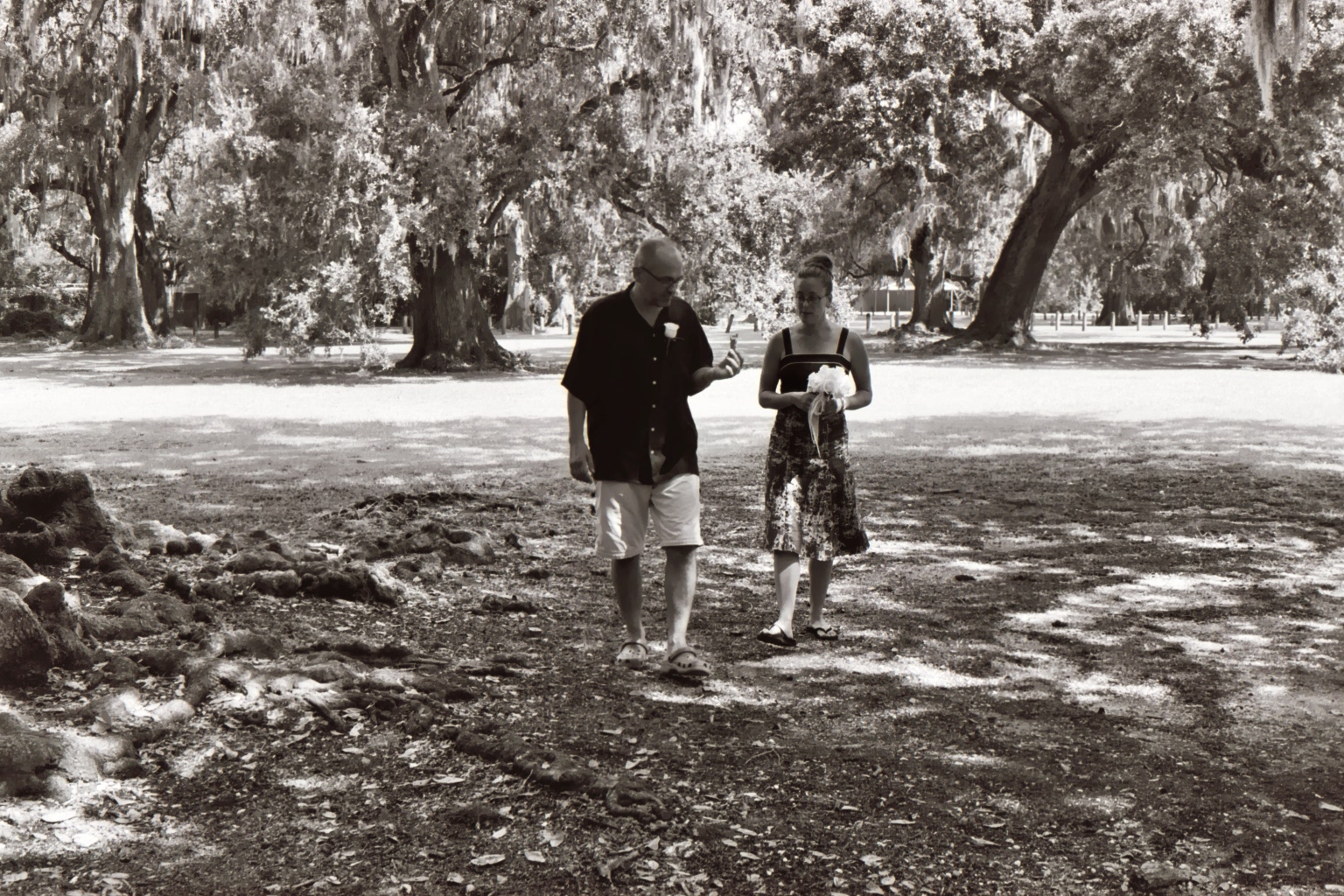
On 28 August 2004 I travelled to Audubon Park to stand beneath the Tree of Life with a soulful strong woman. In true DIY fashion, we wrote our own vows. A Notary Public friend officiated, his wife served as witness (Louisiana is less liberal than South Carolina, at least in terms of trees’ legal standing). We were short one witness, technically, but a woman in black, a total stranger, silently walked up and touched the tree during our exchange of vows, so legally wed we were 28 August in the Tree of Life cathedral.
My vows spoke of “alchemy and the daily renewal.” The traditional “for better or worse” was a given, as I was then a co-defendant in a lawsuit concerning Trust Asset Management and fiduciary duty in United States Federal Court, Northern District of Illinois. My betrothed stood beside me then, she stands beside me now.
2004: on 30 July I was haled into Federal court, where District Judge Matthew Kennelley “granted in part and denied in part” a Summary Judgment on my behalf. My back was against the wall. On 28 August with backs against the Tree of Life, my fiancé and I exchanged vows, and then rings. Next we went to the drive-through daiquiri stand. Later that night we marched in the Second Line of a mid-season Mardi Gras parade. Viva la life of New Orleans!!
Back in Chicago, by autumn of 2004, the lawsuit was settled. The banker from Lichtenstein went to prison. Our union endures. That alone matters.
Twenty years later, we remain together in the light. We raise two bright beautiful children; our life’s work, to be sure. Ours is a remarkable home amidst a wildly creative community, in a place of exquisite beauty, the rocky coast of Maine, on Gaia, circling the sun. My wife holds our family’s center and some day our childrens’ children may say “My Grandfather married one strong soulful woman.”

When Tears Become Bullets
Posted: August 22, 2024 Filed under: Chronicles of a First Time Parent, consciousness, Permaculture & Home Renovation, What is an Art Farm | Tags: hypermasculinity, jackson katz, the boy code, william pollock 2 Comments
In 2001, I met and soon moved in with a remarkable young woman, an art therapist, who had worked with young children at Byrd Elementary School at Chicago’s Cabrini Green housing project, as well as in the Robert Taylor Homes and Cook County Hospital. Working with inner-city boys, she was driven to thread the emotional needle, to help them move forward.
In that studio apartment, on her bookshelf, was ”Real Boys” written by William Pollock, PhD about “the myths of boyhood,” how our society shapes boys to become men. I tried repeatedly to crack that cover but could not. It cut too close to my core.
I quote now the four core tenets of what Pollock called “the Boy Code”:
“The sturdy oak: Men should be stoic, stable, and independent. A man never never shows weakness…boys are not to share pain or grieve openly.
Give ‘em hell: This is the stance of some of our sports coaches, of roles played by John Wayne, Clint Eastwood, and Bruce Lee, a stance based on a false self, of extreme daring, bravado, and attraction to violence.
The “big wheel”: This is the imperative men and boys feel to achieve status, dominance, and power. Or, understood another way, the “big wheel refers to the way in which boys and men are taught to avoid shame at all costs, to wear the mask of coolness, to act as though everything is under control….
“No sissy stuff:” Perhaps the most traumatizing and dangerous injunction thrust on boys and men is the literal gender straight jacket that prohibits boys from expressing feelings or urges seen as “feminine” – dependence, warmth, empathy.”
In short, big boys don’t cry. When I was young, my father – who lived to seize the brass ring, to slay the dragon, to climb the mountain, then died young – he repeatedly told me, “David, you can get used to hanging if you have to.” My football coaches always rhymed “no pain, no gain!” I fault neither my Father nor the coaches, as they only passed on what they had been taught. About all this, Pollock cautioned, “when boys cannot cry, their tears become bullets.”
Bullets, of course, can be metaphorical, and but one example would be the Wall Street “Masters of the Universe” among whom “might is right” with finance a zero sum game of domination, power and control. Consider hedge funds buying up the foreclosed housing stock and then raising rents, in the midst of a housing shortage. Or private equity buying medical practices, to maximize profits at the expense of patient care.
The first rule of the Boy Code is that we don’t talk about the Boy Code. I violate masculinity in writing this meditation upon raising a daughter and son in a culture where hypermasculinity is the norm. I speak here not of the male gender but the masculine traits, as taught.
Jackson Katz, a male pioneer in women’s studies, has written a book titled “Man Enough?” about the “Politics of Presidential Masculinity.” Presidential campaigns are described “…as the center stage of an ongoing national debate about manhood, a kind of quadrennial referendum on what type of man—or one day, woman—embodies not only our ideological beliefs, but our very identity as a nation….how fears of appearing weak and vulnerable end up shaping candidates’ actual policy positions…”
I write here neither to praise nor denigrate any candidate. My concern is our culture of dominance. In this time of hypermasculinity, where we demonize “other,” be they immigrants, the extreme right, the “marxist” left, Neo-nazis, ad infinitum, I am compelled to ask what if the problem is not “them” but us? It is so easy to point and blame “them” but infinitely more challenging to say it is our system of beliefs, self-reinforcing, which perpetuate cycles of violence, a culture of dominance rather than compassion.
Jackson Katz gave a TED Talk titled “Violence against women – it’s a men’s issue.” He makes the subtly persuasive point that rational self interest in a patriarchal society becomes a self-reinforcing system of belief; there is no conspiracy but a self interest in maintaining the status quo rather than embracing change. By analogy, Newton’s First Law of Motion here pertains, that a system of domination will persist until it is acted upon by an external force strong enough to bring change. https://www.ted.com/talks/jackson_katz_violence_against_women_it_s_a_men_s_issue?subtitle=en
“It takes a village” becomes my curse. In our home we raise children to value empathy, compassion and emotional intelligence, but the world into which they go – are schooled, coached and policed – there predominates the hypermasculine. How do we raise our children to be compassionate when their peers practice dominance? “Gentle as a dove, wise as a serpent,” comes to mind.
As a child, I would read the Sunday comics seated below my Father, while he devoured the business news. Pogo, the political satire, ran in those comics, with its theme “We have met the enemy, and He is us.” More than fifty years have passed and some demonize the “Deep State” or “them” but I ask, what if Pogo really was right? What then, if we ourselves are the problem?
An honest awareness seems a necessary starting point in a new dialogue.
* * * * * * * * *
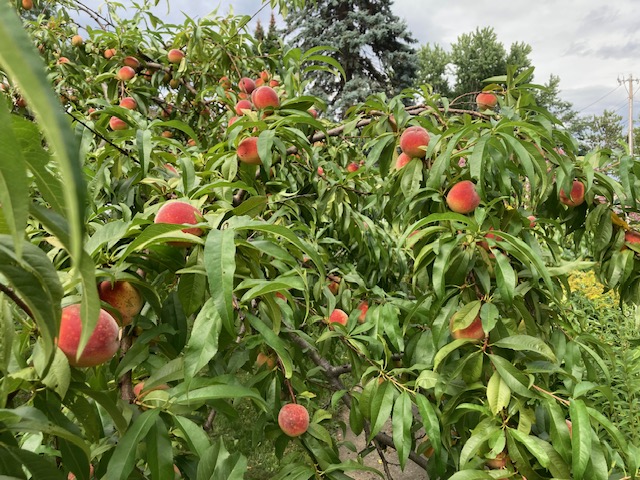
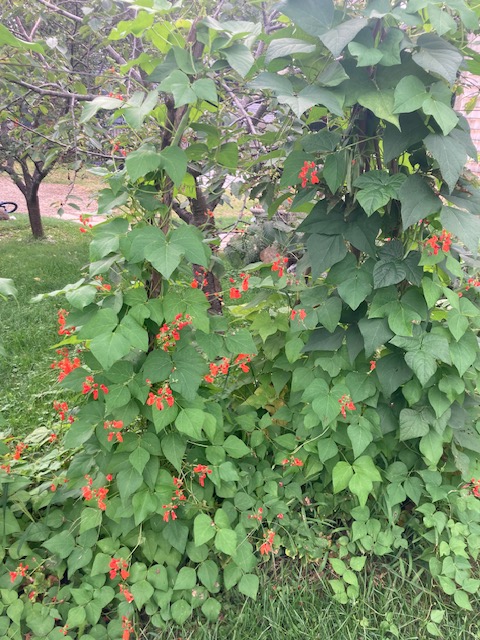
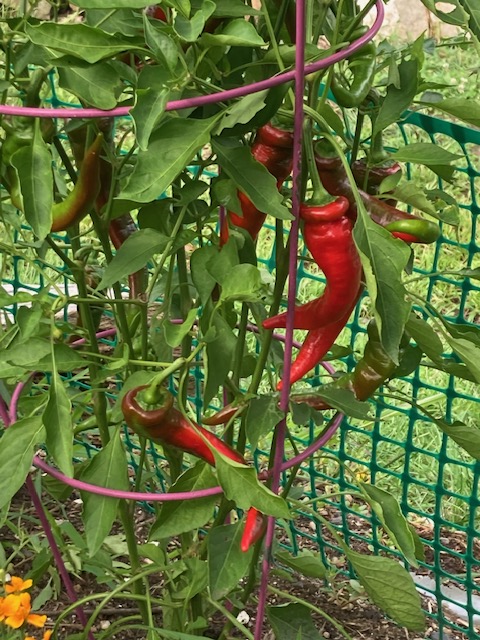
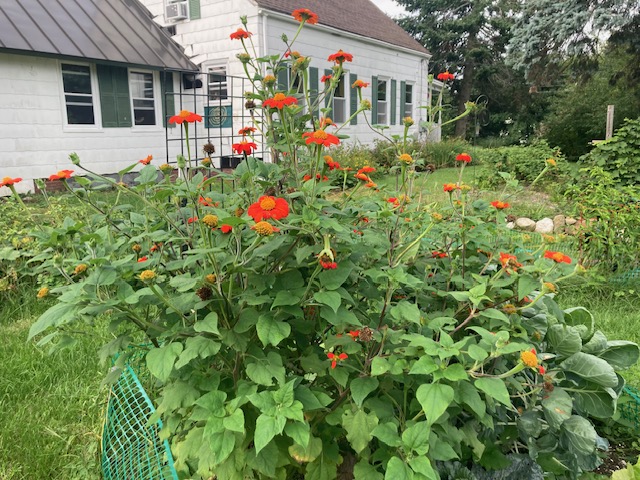
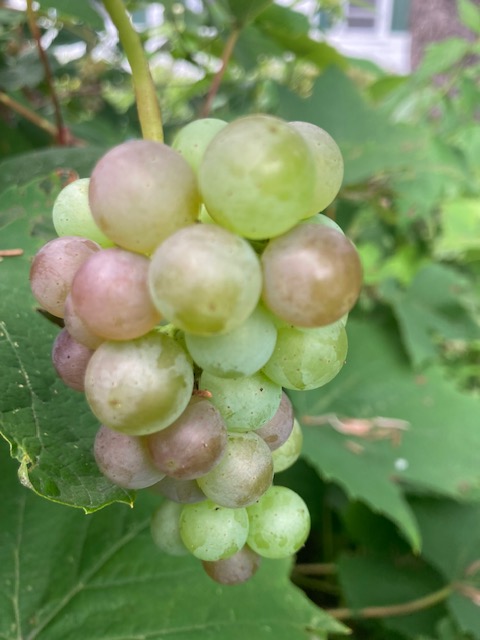
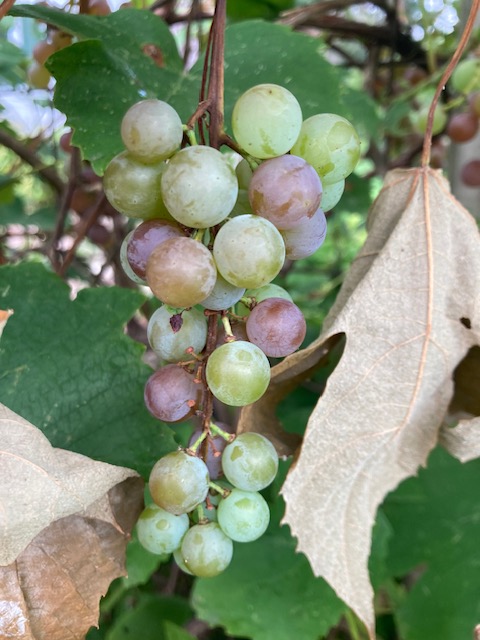
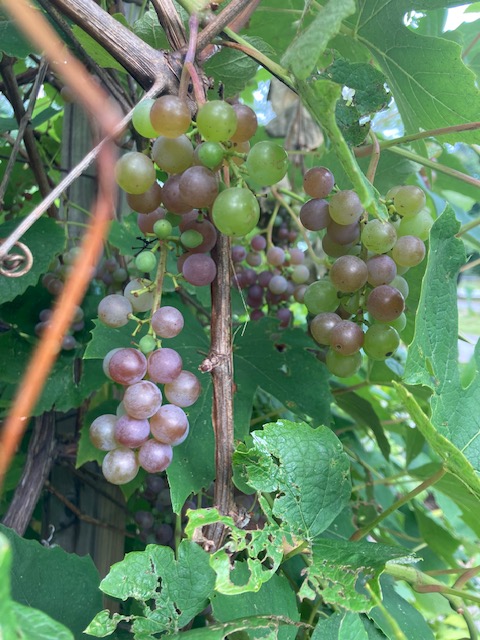
Here at an art farm Bacchus has arrived bearing wild seedless Champagne grapes. Jimmy Nardello Italian Frying Peppers are abundant. Tomatoes exceed our capacity to use. Pole beans flower, to attract hummingbirds. Butternut squash grow on the vine. Peaches are ripe for the picking. We bring bushels of produce to the Food Cupboard.



Orwellian
Posted: July 19, 2024 Filed under: Chronicles of a First Time Parent, Farming off the Farm, Permaculture & Home Renovation, What is an Art Farm | Tags: george orwell, homeowners insurance 2 Comments
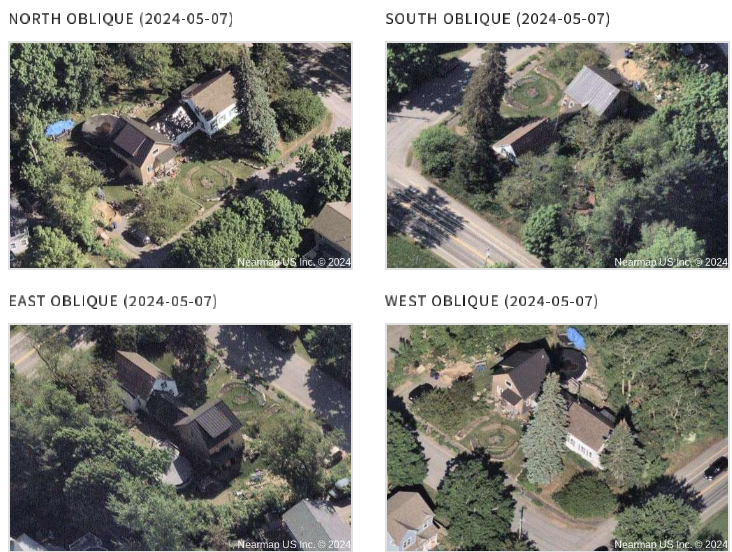
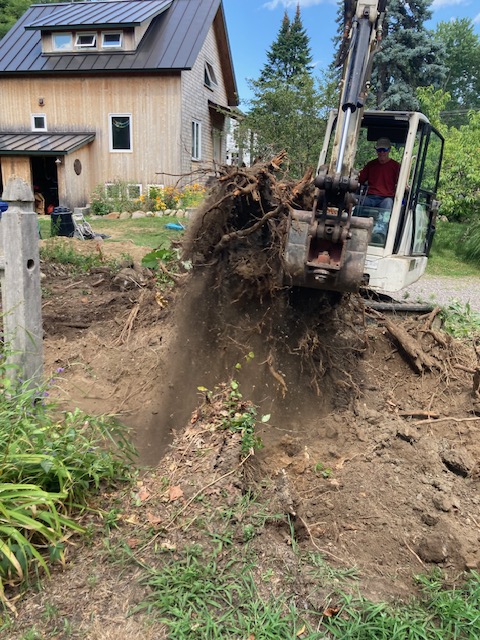
In May a satellite flew over our house and took photos. On 11 June we received a notice – with photos above and below – that our homeowners insurance would be cancelled, due to a “safety hazard on your property…[which] increases the chance for injury or damage to your property.” I contacted our broker and inquired whether some “Desk Sergeant” had scanned the photos and made such a call?

The Broker wrote back, “As for a live officer in the back, I would assume it’s more akin to a machine learning/AI algorithm scanning pictures and flagging unusual things, although that is pure speculation on my part. To the best of my knowledge, the only issue is the gravel at the end of the driveway, confirmed. I had to speak with an underwriter at Nationwide yesterday to even ascertain what the problem was.”
We were told we had until 30 August to cure the problem, but in late June we received notice, and were given 22 July as a cease and desist date.
We recently visited family in Western Massachusetts, and standing upon their driveway, we talked about the asphalt. One section is newer, another older, with swales and cracks. “My Homeowner’s Policy has been cancelled” she said, “because of . . . picky stuff like these cracks. The company cited a number of issues, but all of them were picky…” An agent had walked the property looking for issues, which found, then moved her into the high-risk pool, at a substantial cost increase.
In the 10-year period from 2014 to 2023 extreme weather has caused disaster events at a cost of $183 Billion Dollars. The underwriters’ rational self-interest – unlike a good neighbor – argues they cut losses by moving homeowners out of their coverage into the high-risk pool. Gravel at the end of our driveway put us in that category. Caveat emptor.
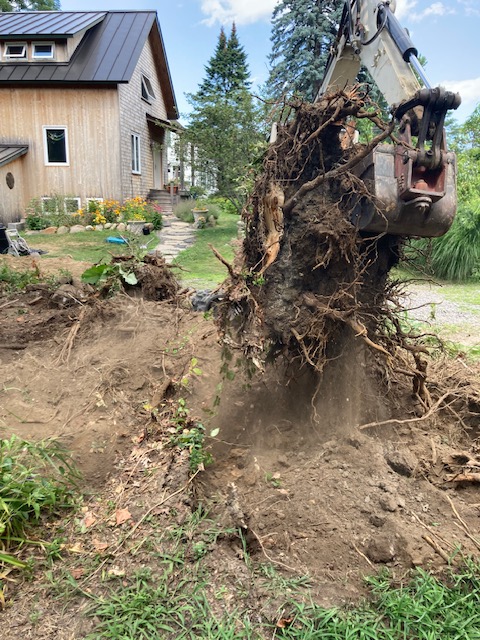
Thankfully I work in the trades, and our friend Jim has spent decades doing site work, building roads deep in the Maine Woods for loggers. In fact, Jim is both the solution and cause of our problem, having dumped – at my request – the gravel here in our yard, left overs from a tiny house job we did together. We need to expand our driveway, and free material helps.

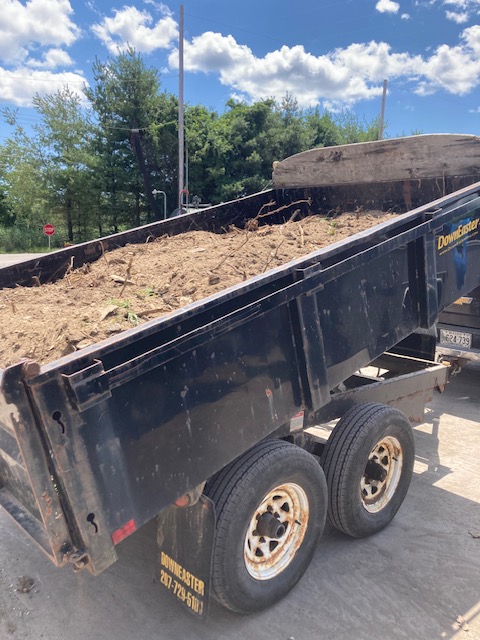
Time now is of the essence, and given the heavy equipment this is a mere trifle. Jim has arrived and we have removed 9 cubic yards of rubble, 3 cubic yards of tree stumps. We will remove approximately 15 tons of soil, and then move the gravel into that space.
Our soil is infested with knotweed, the highly invasive plant, and very few dumps will take soil with knotweed. I found one yard which will incinerate it, at a very high cost of $145 per ton. I will not be sneaky and lie. So we hauled 4 tons off, and will spread the rest in our side yard, then plant grass seed. A compromise lower cost solution.
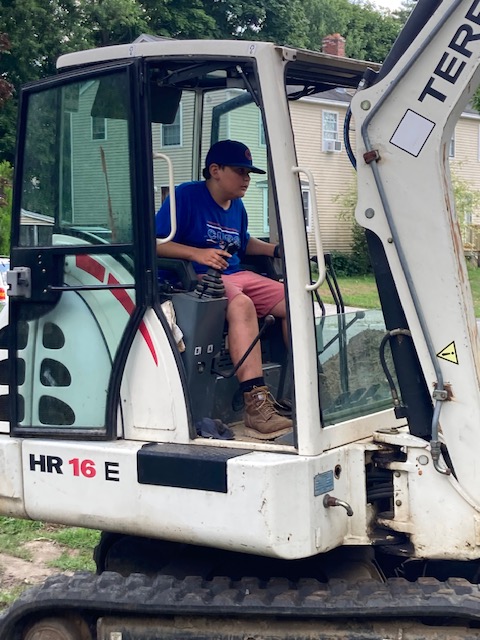
We will meet the deadline. We will then give notice we are changing carriers, having improved our coverage at no additional cost. A larger parking area makes sense as my daughter will soon get her driver’s license. My son this week had a summer camp of site work with heavy equipment. So life goes restoring a 200-year old New England farmhouse





Abundance and Need
Posted: July 12, 2024 Filed under: Chronicles of a First Time Parent 4 Comments“Is that your Grandson?” he asked. “No,” I replied, proudly, “my Son. I have followed my own path in this life.” “Are you retired?” he continued. “No. My full time job is parenting. I do carpentry to pay the bills.”
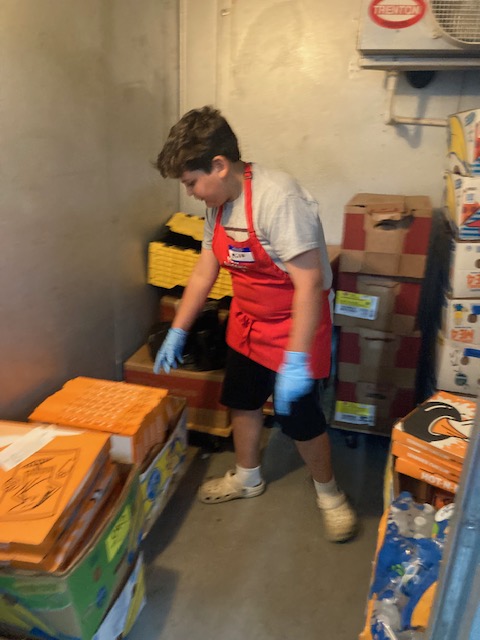
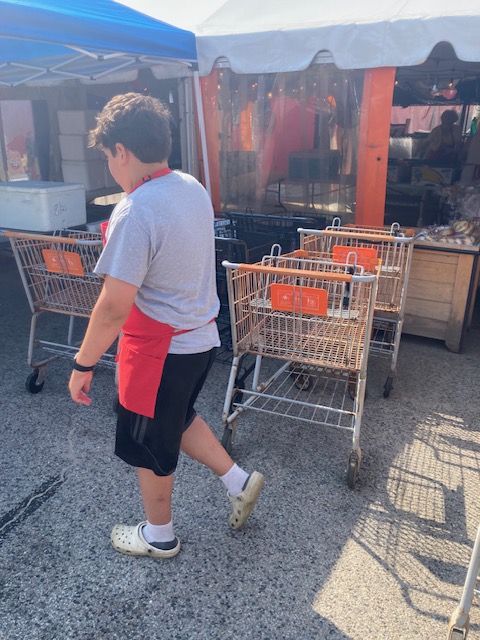
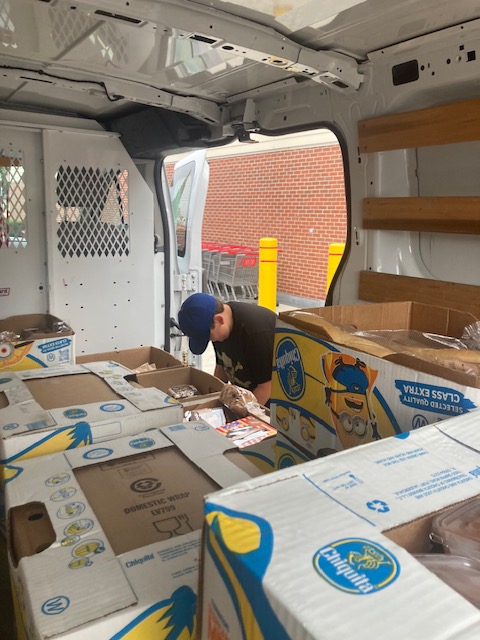
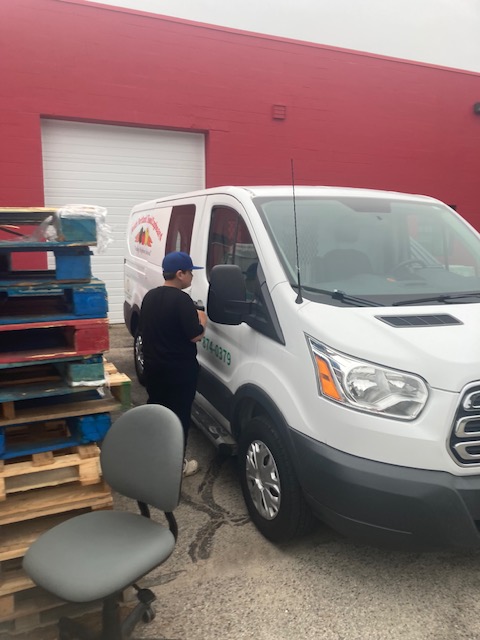
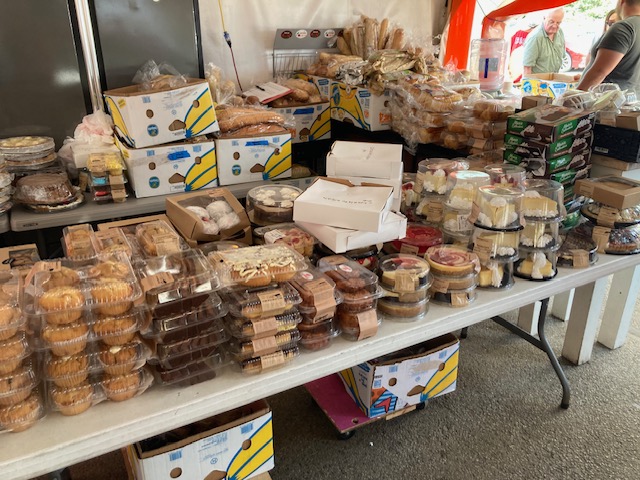
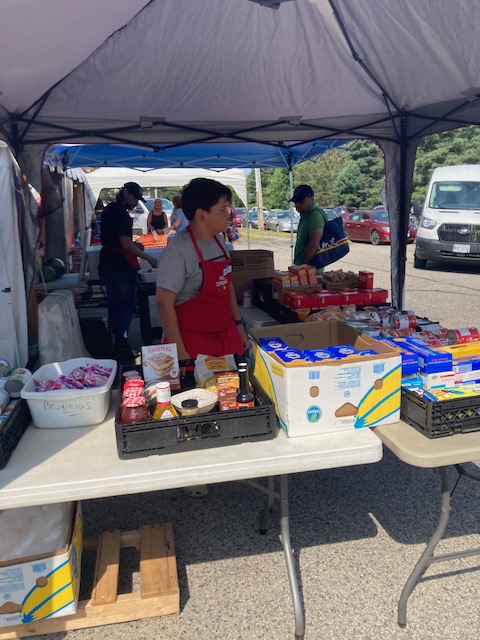
My son and I volunteered this week at the South Portland Food Cupboard. We pulled two shifts: one in “Food Distribution” (handing out food) and one in “Food Rescue” (driving the van to pick up out-of-date items). The Food Cupboard operates seven days per week, serving 800 families per week, which equals about 3,200 or 4,000 people, every week.
In the world’s richest country, the most consumptive society ever on the planet, food insecurity is a very real problem. According to the USDA, 12.8 percent of U.S. households – one in eight households – are food insecure at least some time during the year. That means: 44 million people, 13 million children, 100% of counties in America experience food insecurity.
Peter, the Warehouse Manager, told me, “There is no shortage of food. It is a problem of logistics.” Such, then, is the mission of the Food Cupboard, with its two vans, to scour our County to gather, sort, then distribute the food. The abundance is mind boggling. The need is humbling.
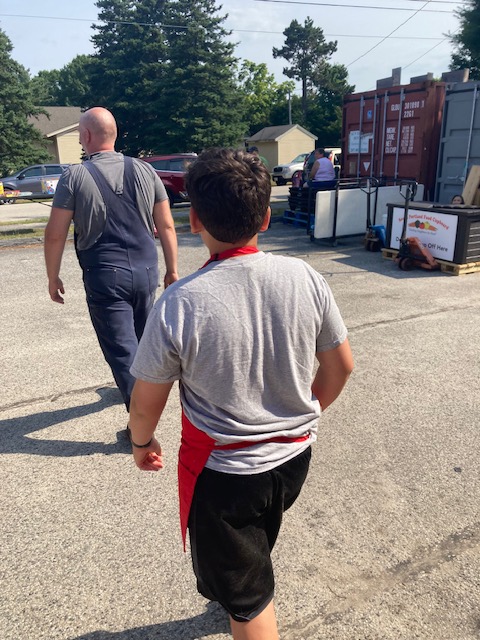
In another time and place, say, along the Sea of Galilee, this was the loaves and fishes, 5,000 fed – lepers, prostitutes, the unwashed – the “deplorables” some would say, but on that day they were healed and then fed.
Here in South Portland, on the second Tuesday of July, many supplicants were old and infirm but others were young and hip, fashionably dressed, manicured nails, dyed hair. The only question asked is “What do you want?” Proof of income is not required.
My son has an aptitude and logic for logistics and he found the work – the sorting and packing, the order of sequence – compelling. The apple does not fall far from the tree. During the 1990s, while I lived at home with my Mother, we volunteered weekly with other women of her parish. We would drive north, then cook and prepare food to serve the many food insecure in Waukegan, Illinois. My son and I here can ride our bike to the South Portland Food Cupboard.
Adamantly opposed to any summer camp, he found the volunteer work engrossing, and we will continue to sign up and volunteer. Among a sea of retirees, at age 11 he substantially lowered the median age of the volunteers. My work-for-hire may take a back seat to my role now riding shotgun, as he learns the path of compassion, with food as the means to the end of helping his brethren.
Wonders never cease.



Impeccable
Posted: June 21, 2024 Filed under: Chronicles of a First Time Parent, consciousness, Farming off the Farm | Tags: consciousness 2 Comments
When I was a child, the popular saying was “a man’s word is his bond.” I haven’t heard that expression now in decades.
King Solomon, David’s son, long ago commented “In all thy getting, get understanding.” For the better part of 40-years, the getting, it seems, has been primarily – for the few – immense material wealth. The 10 Commandments now seem laughably old fashioned.
Among ancient civilizations wisdom was rich, and we do well to revisit our past. The Toltec, a Meso-American culture that predates the Aztec, held four precepts to be key. Don Miquel Ruiz, a descendent of the Toltec, wrote “The Four Agreements” about “self-limiting beliefs.” The book, copyright 1997, has been published in 52 languages worldwide, and spent one decade as a New York Times bestseller.
The first precept, which he calls an “Agreement” is deceptively simple: “Be impeccable in your word.” He writes, “Your word is the power that you have to create. It is through the word that you manifest everything. Regardless what language you speak, your intent manifests through the word. What you dream, what you feel, and what you really are, will all be manifested through the word.”
“In the beginning was the Word, and the word was God” is the opening statement of the Christian Gospel of John. Ruiz explains and expands, “The word is not just a sound or a written symbol. The word is a force; it is the power you have to express and communicate, to think, and thereby to create events in your life. But like a sword with two edges, your word can create the most beautiful dream, or your word can destroy everything around you. One edge is the misuse of the word, which creates a living hell. The other edge is the impeccability of the word, which will only create beauty, love, and heaven on earth.”
As there is light, so there is darkness, which principle was embodied in the brilliant German orator whose message of fear and hatred manipulated a country of highly intelligent people. Again Ruiz, “He led them into a world war with just the power of his word. He convinced others to commit the most atrocious acts of violence. He activated people’s fears with the word, and like a big explosion, there was killing and war all around the world. …He sent out all those seeds of fear, and they grew very strong and beautifully achieved massive destruction.”
It is worth remembering that Hitler rose to power through a democratic election, via the German Workers Party, in 1932. Having campaigned as a populist, he consolidated power as a demon.
The Agreement’s verb is “impeccable,” which is derived from the Latin prefix in-, meaning “not,” and the verb peccare, meaning “to sin;” to be impeccable is to be without sin, but to the Toltec sin was different from the Christian meaning. Ruiz explains, “A sin is anything that you do which goes against yourself. Everything you feel or believe or say that goes against yourself is a sin. When you are impeccable, you take responsibility for your actions, but you do not judge or blame yourself. Being impeccable with your word is the correct use of your energy; it means to use your energy in the direction of truth and love for yourself.”
Simple truths are easily understood. Or are they? While driving on errands with my son, we talk about these. Again and again, to help guide his future, I draw from the past.
The Toltec had four agreements:
- Be impeccable with your word
- Don’t take anything personally
- Don’t make assumptions
- Always do your best
To this I would add two more:
- Let integrity be your bank account
- Let compassion, more than logic, guide your path
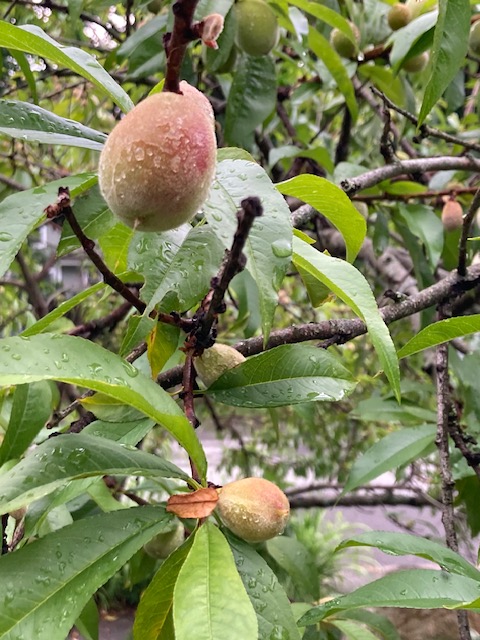
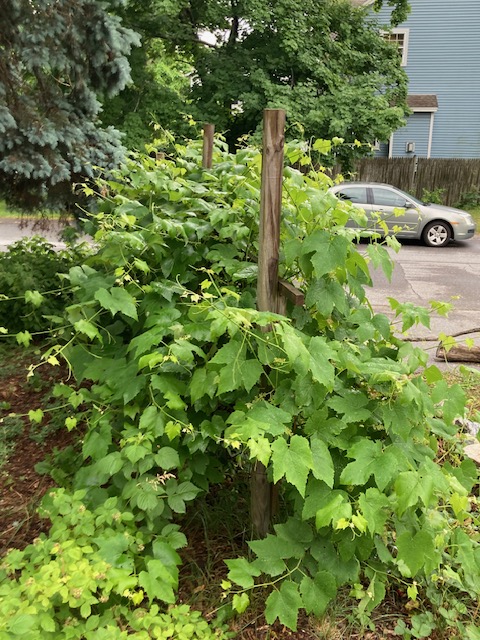
At this sun drenched solstice, fruits ripen and vines reach ever higher…


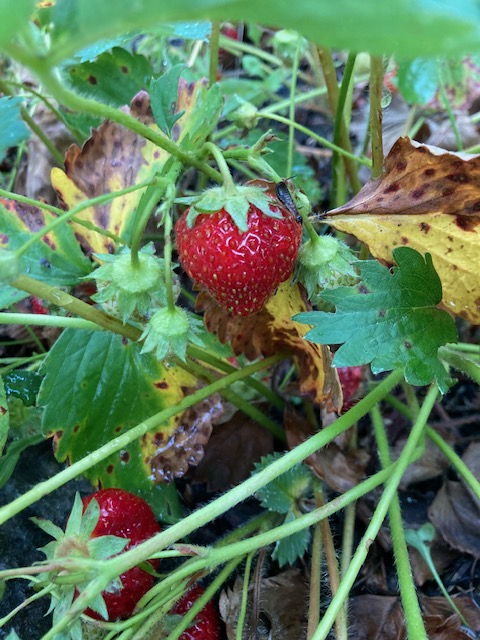


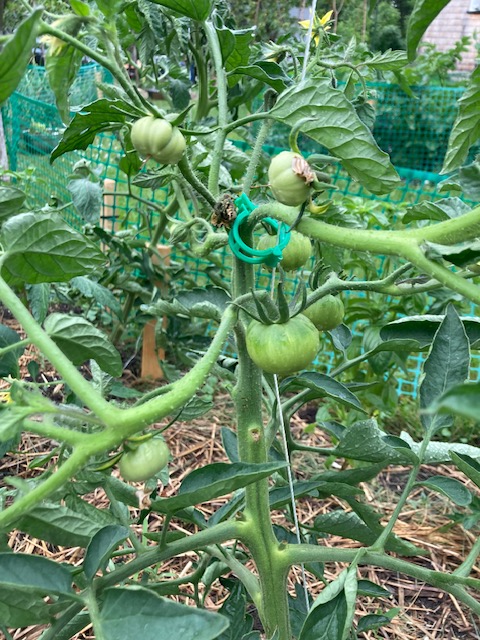



Garlic Scapes and Landscapes
Posted: June 15, 2024 Filed under: Child Centered Activities, Chronicles of a First Time Parent, Farming off the Farm, What is an Art Farm 2 CommentsBy the stars, it is late spring. By the warm temperatures and school having ended, it is summer. In our garden, it is the time when garlic stretches the curlicue scapes wildly upwards to the sun.

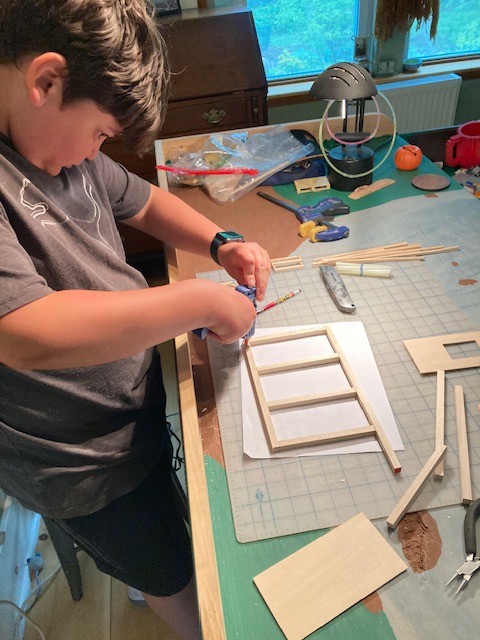
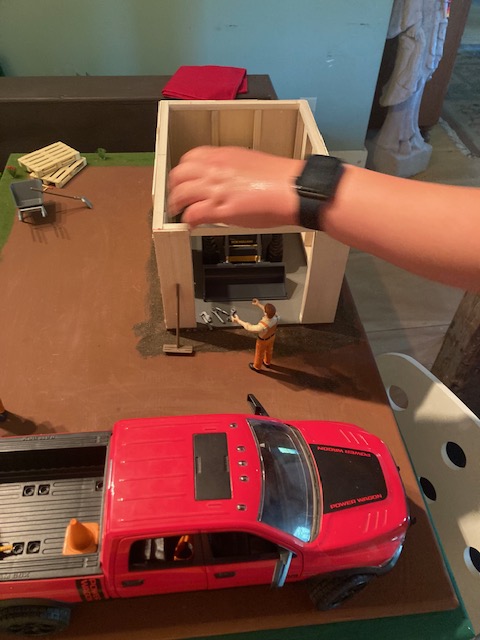
Summer brings heavy equipment to the farm, and equipment requires outbuildings, so we have been building, albeit in 1/16th scale.


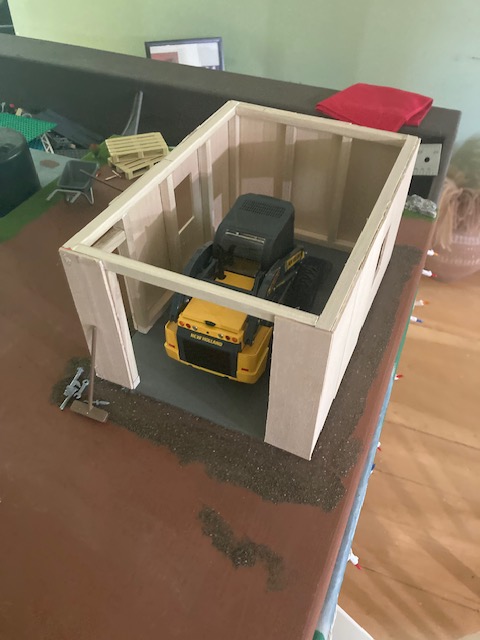

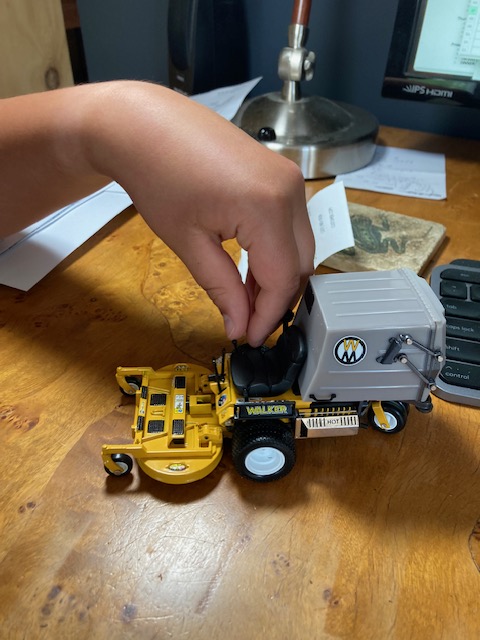
And finally, a new lawnmower, for a field of dreams, also in 1/16th scale.
Be like a cat
Posted: May 25, 2024 Filed under: Chronicles of a First Time Parent, consciousness, What is an Art Farm | Tags: consciousness, rational mind, spirituality Leave a comment
Back in the aughts, when I lived in Chicago, I studied Qigong with Dr. Paul Hannah. In Chinese, Qi means “air” or “breath” but in a metaphysical sense it is “vital energy.” Gong means cultivation. Qigong is the cultivation of that vital energy, as a non-martial art.
Dr. Hannah had grown up in the inner city projects in Chicago, and learned Tai Chi – the Chinese martial art – in order to defend himself, and thus avoid joining a gang; his ability to defeat the gang members in combat was his protection and way out of the projects. He became a board-certified psychiatrist, as well as a Tai Chi Master, with additional studies in acupuncture, Qigong and energy healing. https://www.hannahsholistichealing.com/
During my sessions he would have me stand in a half-crouched position, arms outstretched at shoulder-height in a circle, my finger tips almost touching, for an unbearably long time. He would leave the room, and later return with hot herbal tea. I believe he was training me to empty my mind and become aware of something else.
On the wall of the studio was a poster of a black panther, gazing forward, directly into the camera. He explained the concept of observing without becoming engaged, of being present with neither future nor past, neither time nor space. Dr. Hannah told me that poster had gotten him through college.
I did not then know the idea of mindfulness, but would now understand his instructions as my introduction. Thich Nhat Hanh has written, “When I eat an orange, I can eat the orange as an act of meditation. Holding the orange in the palm of my hand, I look at it mindfully. I take a long time to look at the orange with mindfulness. Breathing in, there is an orange in my hand. Breathing out, I smile at the orange.”
During that same period, I practiced Qigong with a practitioner of Chinese medicine, including acupuncture. During one session at his office, he introduced me to a colleague from China, who was considered a Master of Qigong. I was told this man had not eaten solid food for many years; he drank liquids, but metastasized the inner chi for his sustenance. Such a concept is beyond both my comprehension and experience, however, I was and remain willing to suspend disbelief. Perhaps such is possible, and I should not cut myself off from such a possibility. We have entered the realm of the suprarational.
Here in South Portland, Ryan Nitz is an acupuncturist with a community clinic. He treats many patients onsite at his clinic and, quite interestingly, has begun treating patients via remote. I do not mean by a tele-health zoom session, but rather, from his office in South Portland, Maine he treats patients in, say, Kansas or California. He does not use needles, but instead the “subtle energies” to manifest healing in the patient. https://www.mainecenterforacupuncture.com/
Essentially this is a form of Reiki, the Japanese form of energy healing; “rei” means universal and “ki” means life energy. Clearly now, we are beyond the bounds of western allopathic medicine. As Dr. Paul Hannah taught me, “be like a cat,” suspend disbelief and calm the mind while focusing on the energy present.
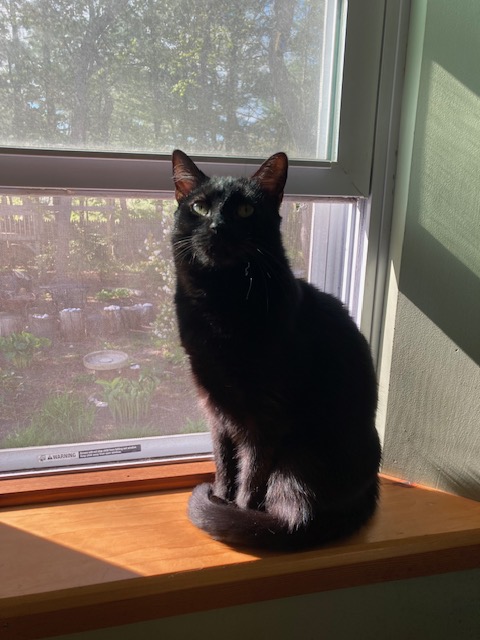
At the vanguard of energy, one meets some mighty cool cats!
 an Art Farm