Love Languages
Posted: February 20, 2026 Filed under: Art & Healing, Child Centered Activities, consciousness | Tags: mental health 1 Comment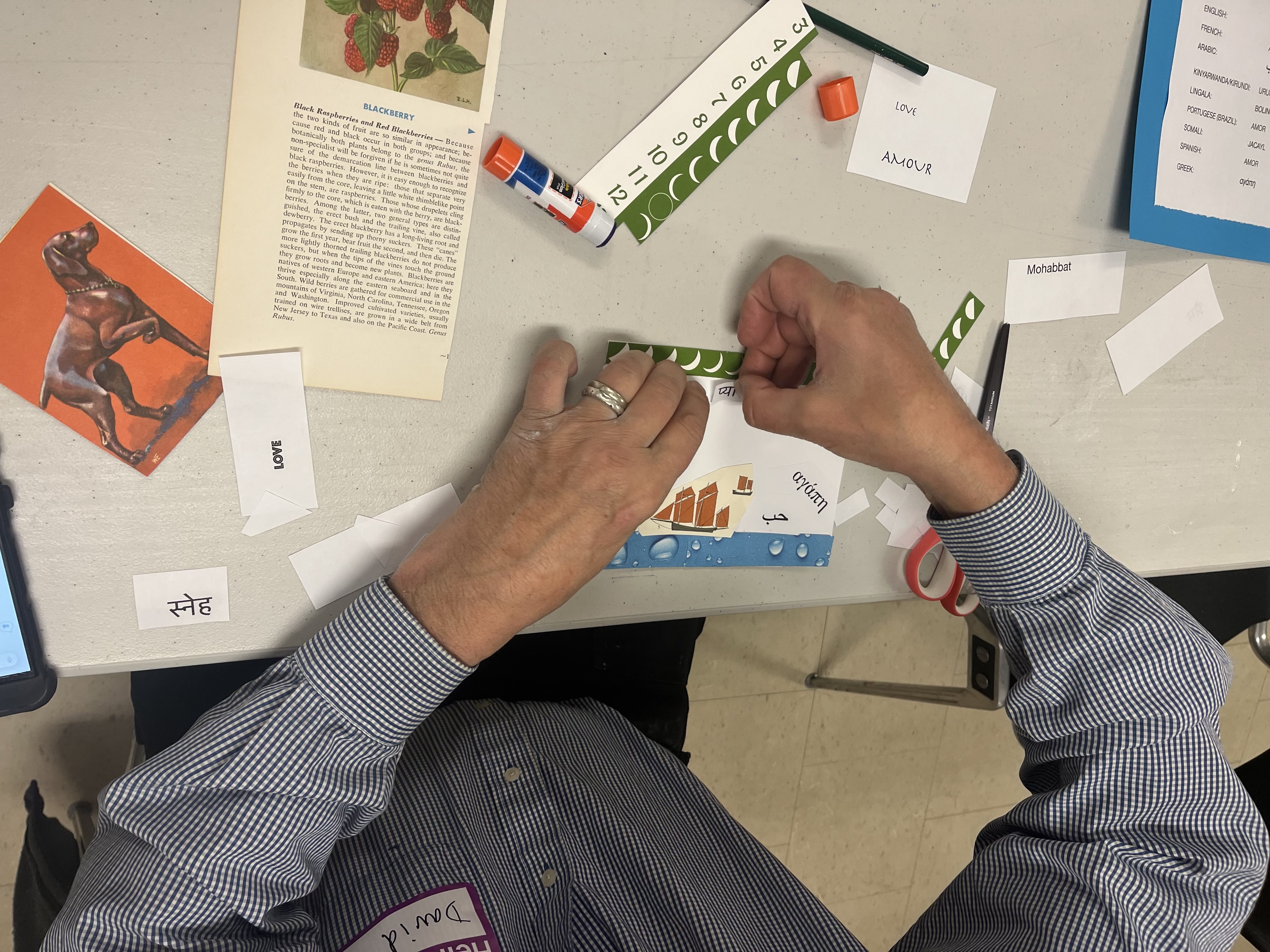
Greek has 8 distinct words for love. Sanskrit has 96. English, 1.
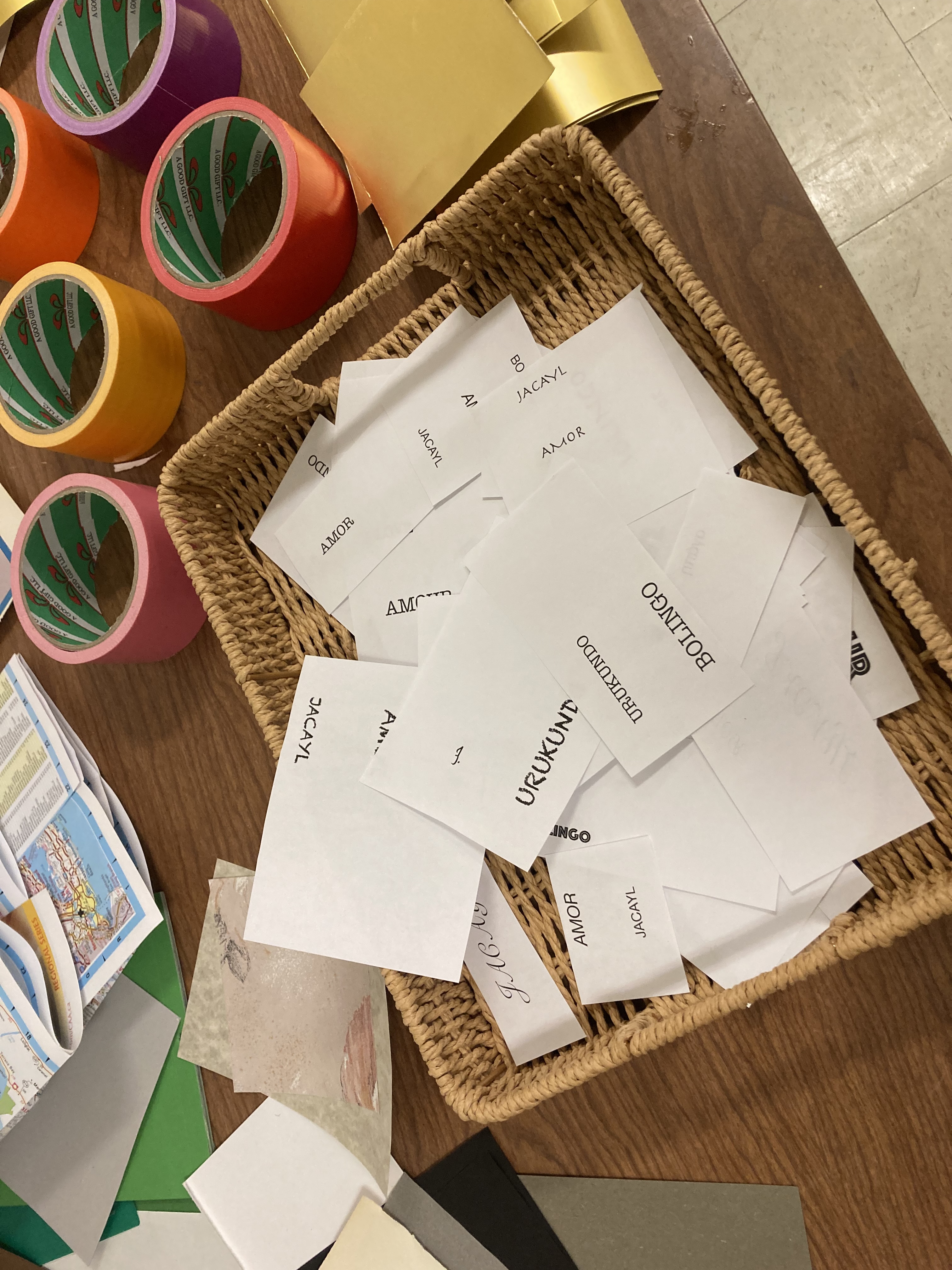
In South Portland Public Schools over 35 different languages are spoken, with the primary languages being Arabic, French, Kinyarwanda/Kirundi, Lingala, Portuguese, Somali, Spanish and English. Love here is most frequently spoken as Amour, حب, Urukundo, Bolingo, Amor, Jacayl, Amor and αγάπη. Adding in Sanskrit and Hindi we have प्रेम, प्यार, Mohabbat, and स्नेह. All saying the same, merely different vowels and consonants.
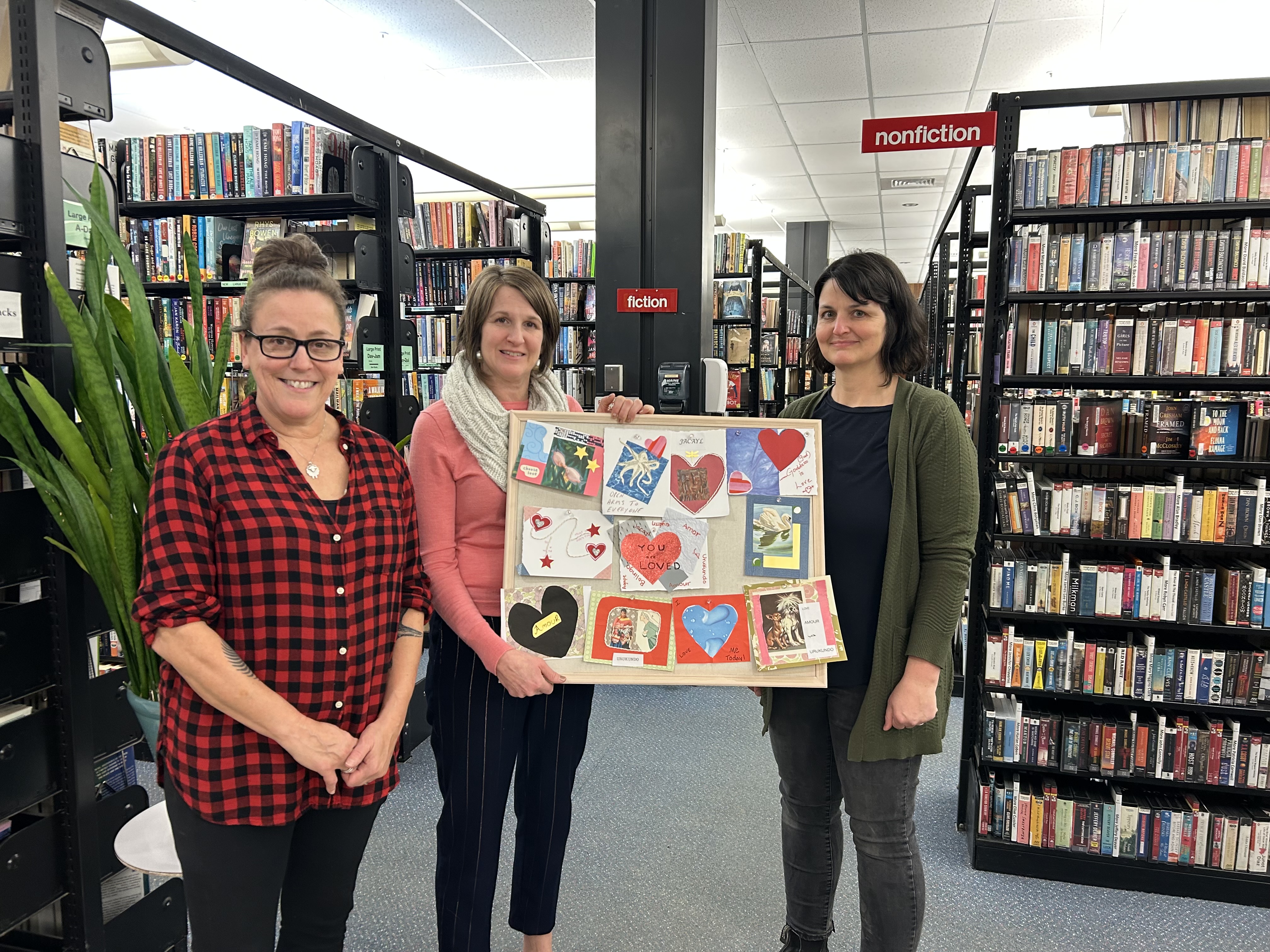
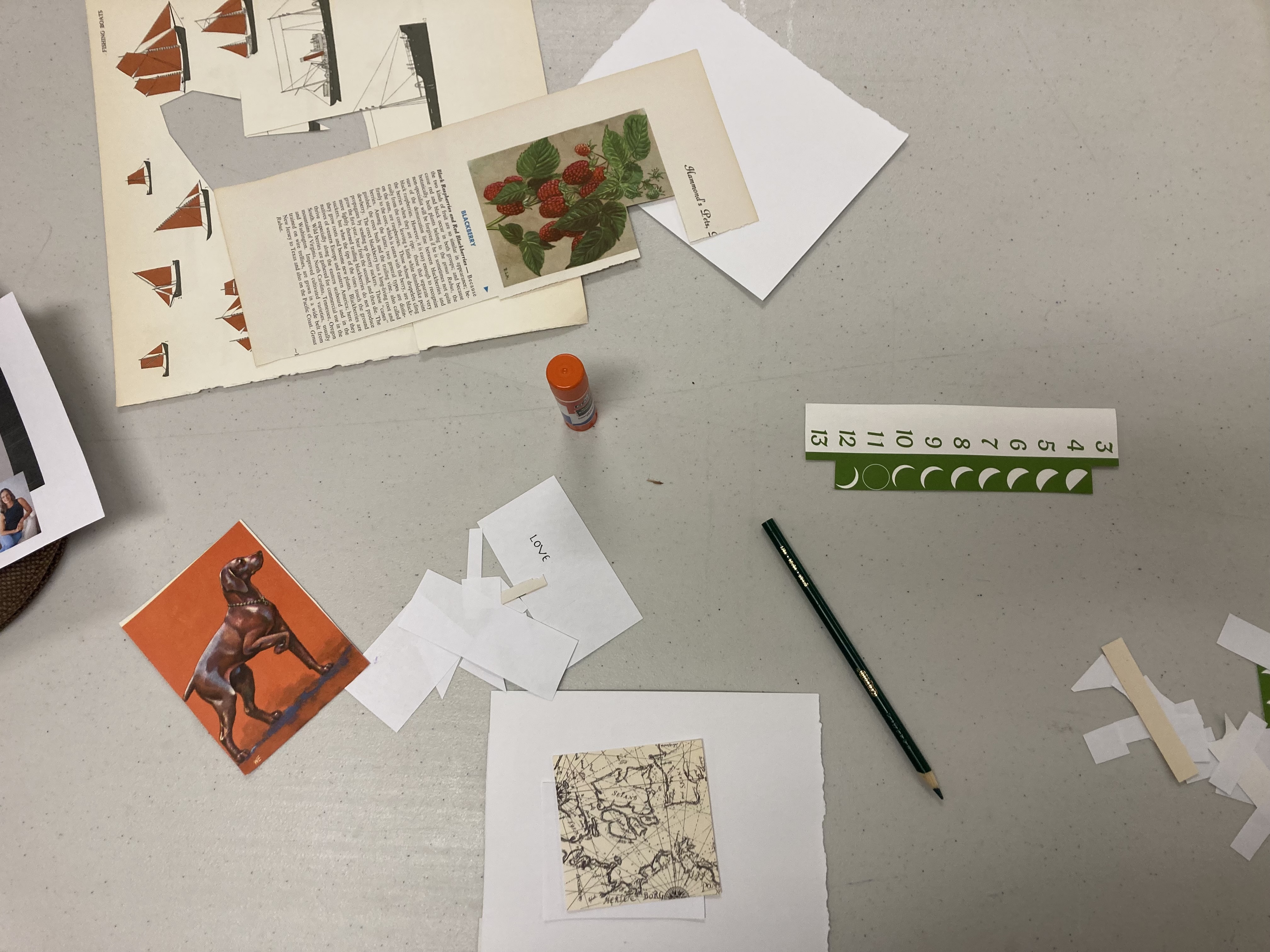
Valentines Day presented an opportunity to underscore the many languages of love through a “Postcards from the Heart” art-making experiential held at the South Portland Public Library. The curly haired Goddess with whom I live developed the idea with colleagues and then served as the leader for this life-affirming response to the masked jackals rampaging our communities locally and nationally. Love is an antidote to fear, or as the Governor of Illinois said this week, “love is the light that gets you through a long night.”
The small minded Christian Nationalists argue that English is the one and only “pure” language of these United States. But we “the tired, the poor, the huddled masses, yearning to breathe free” know the truth is far more varied, nuanced and beautifully complex. The Postcards quietly acknowledged this, and gave people a chance to express themselves in a non-violent and compassionate way.
When authoritarian anger rips our communities asunder, when protests rightfully organize, and food drives bring meals to those unable to go to work or school, art-making might seem a trivial pursuit, but its healing power is unquestioned and clinically proven. The process of non-verbal expression creates a safe space to explore feelings, especially for trauma survivors. The act of creation triggers the release of “feel good” chemical messengers – dopamine and serotonin – which are uplifting and promote resilience. Externalizing our emotions offers perspective and empowers the maker.
Open to the public, 27 people participated with ages ranging from elementary school age children to elderly. One group of 15 from a women’s shelter wanted to attend but that would have overwhelmed the space.
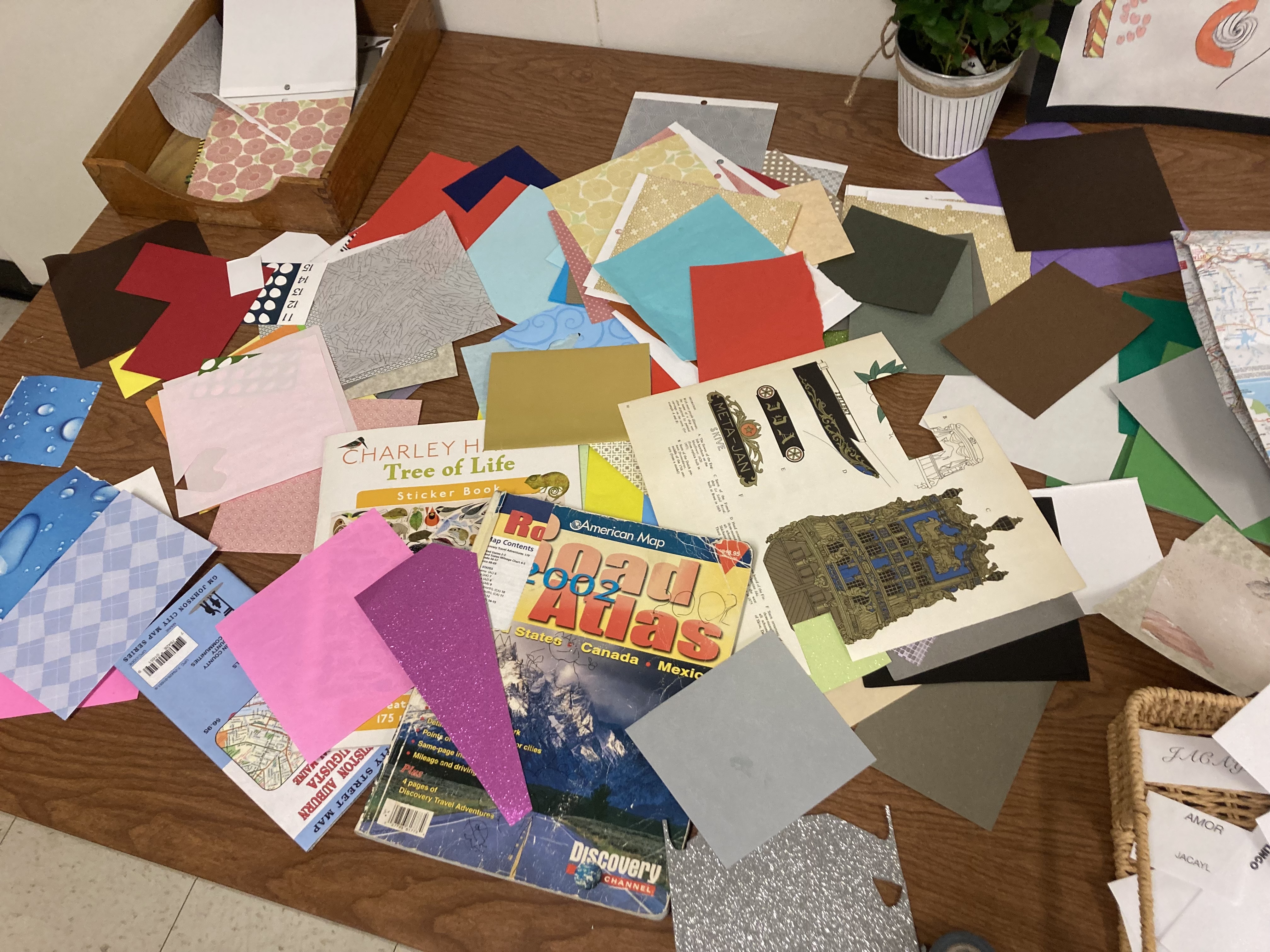
I participated in one 45-minute session, gluing images of the Moon cycle, cutouts from old picture books, and “love” from 10 different languages. 7 other women participated, one of whom was older and wore delightfully eccentric glasses, while the other 6 were young women from a “sober house.” Everyone was engaged, focused silently on their work. At the end we walked about looking at each others’ creations, all of which were as varied and diverse as the forms and expressions of love. There was a deep sense of connection in a non-verbal form.
A friend, who works with immigrant women, strongly wanted to invite those women but feared they would not want to risk coming out in public. The idea has been raised about creating art-making kits that can be delivered to homebound people so that they also might give voice to their love, in any language. A local group, Maine Needs, appears to be doing something along these lines.
The City of South Portland has a wellness program for its staff, and a librarian pondered whether art-therapy could be engaged for them. The idea is scalable and replicable, and the need for healing only grows in these times of Mammon and the cult of personality.
Manifesto #1
Posted: January 16, 2026 Filed under: Art & Healing, consciousness | Tags: McSweeneys, Zoe Leonard 1 Comment
The history of the 20th century was declared largely by manifesto: The Manifesto of Futurism 1909; Dada Manifesto 1918; Manifesto of Surrealism 1924; John Cage’s Manifesto 1952; The Russell-Einstein Manifesto 1955; Second Declaration of Havana by Fidel Castro 1962; The Ten-Point Program of Huey Newton (Black Panthers) 1966; The Gay Manifesto 1970.
Derived from the Latin manifestus which means “plainly apprehensible, clear, evident” by the 1640s in the Italian it had come to mean “public declaration explaining reasons or motives.” At its root it is derived from manus which means “hand” and a manifesto arguably is a physical object – words on paper – easily grasped or held, say, nailed upon the doors of a 16th century church or plastered on store fronts or tenement homes of 20th century inner cities.
McSweeney is a nonprofit publishing house founded in 1998 by Dave Eggers. To honor its 25th anniversary, the house published Manifesto, a hard bound compendium of the 20th century as declared by bold forward-thinking authors. The book was given to me over the holidays, a cherished gift, which I am devouring slowly.
The Introduction states, “[Manifestos] are often strange, ill-considered, and regrettable. They are just as often brilliant and pivotal in changing government, art, and the direction of the human animal. But always manifestos are passionate, always they command attention and use language for perhaps its most urgent purpose – the rattling of complacent minds.”
The books presents twenty-five manifestos. “I want a president,” written in 1992 by Zoe Leonard, is strikingly powerful and refreshing, especially in these times where power is exercised as domination, in a culture increasingly split between the Have Much and the Have Nots.
“I want a dyke for president. I want a person with aids for president and I want a fag for vice president and I want someone with no health insurance and I want someone who grew up in a place where the earth is so saturated with toxic waste that they didn’t have a choice about getting leukemia. I want a president that had an abortion at sixteen and I want a candidate who isn’t the lesser of two evils and I want a president who lost their last lover to aids, who still sees that in their eyes every time they lay down to rest, who held their lover in their arms and knew they were dying. I want a president with no air conditioning, a president who has stood on line at the clinic, at the dmv, at the welfare office and has been unemployed and laid off and sexually harrassed and gaybashed and deported. I want someone who spent the night in the tombs and had a cross burned on their lawn and survived rape. I want someone who has been in love and been hurt, who respects sex, who has made mistakes and learned from them. I want a Black woman for president. I want someone with bad teeth and an attitude, someone who has eaten that nasty hospital food, someone who crossdresses and has done drugs and been in therapy. I want someone who has committed civil disobedience. And I want to know why this isn’t possible. I want to know why we started learning somewhere down the line that a president is always a clown: always a John and never a hooker. Always a boss and never a worker, always a liar, always a thief and never caught.”
In Memoriam
Posted: January 9, 2026 Filed under: Art & Healing, consciousness 3 Comments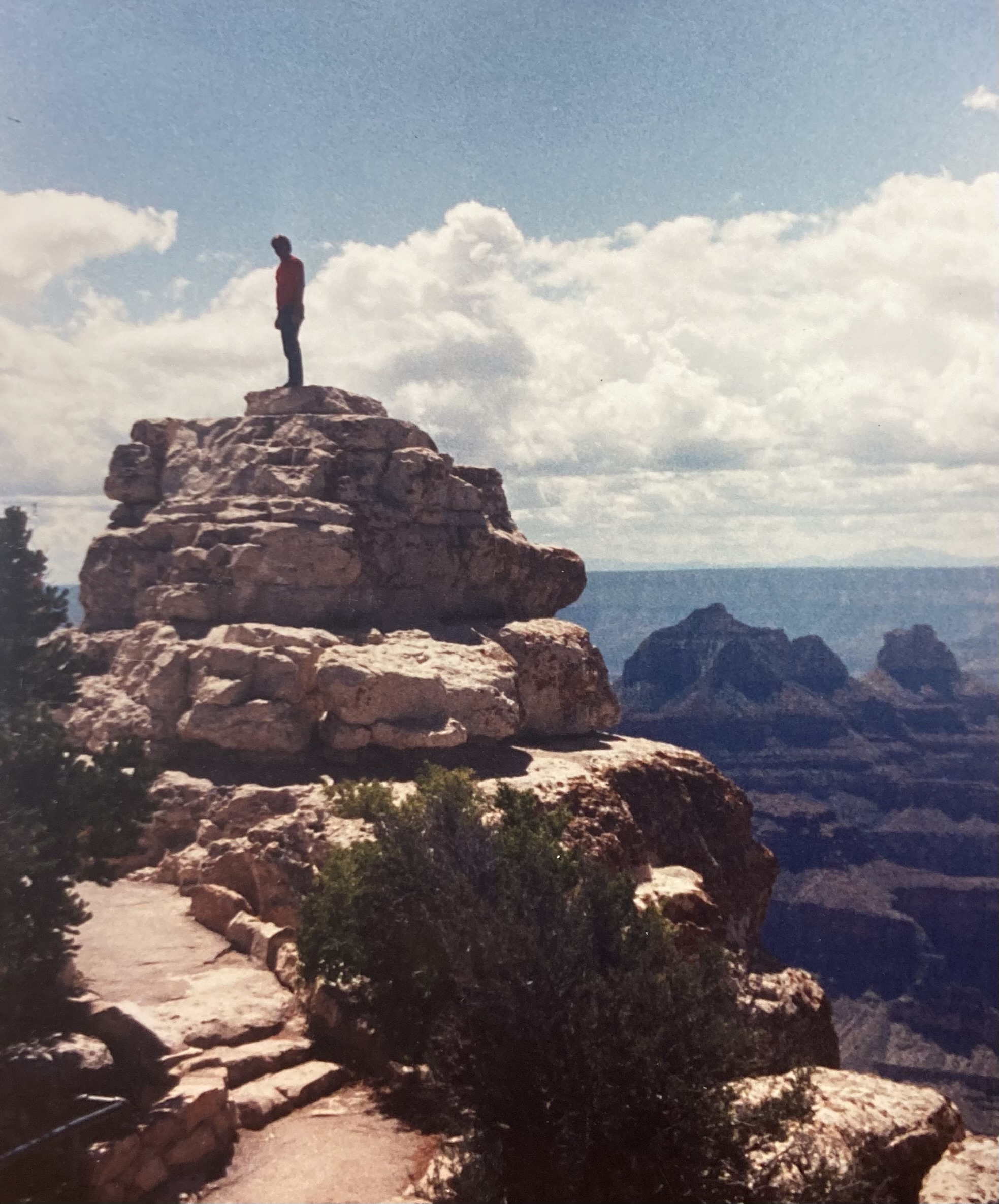
Remembering and honoring Douglas Lee Woodhouse
July 9, 1964 born, died January 6, 2025
rest in peace, Brother.
Oneness
Posted: January 1, 2026 Filed under: Art & Healing, Chronicles of a First Time Parent, consciousness, What is an Art Farm | Tags: anagarika govinda, consciousness, philosophy, science, spirituality, Thomas berry 2 Comments
Having built a whale, we decided to make a movie on the topic “all life is one.”
Having finished the short film, I sought funds from the Maine Arts Commission.
Having to substantiate my body of work as an artist, I referenced “An Art Farm.”
Whereupon, I realized our art farm had been mostly inactive since 2015 and so on 31 March 2024 I wrote “Crossing the Rubicon” about delivering the Whale north to the Wabanaki nation. I did not win the grant, but I did continue to write, and for 94 continuous weeks now I have posted short essays.
In a sense these are weekly postcards to my Mother, a chance to share thoughts that otherwise would not come up in our occasional phone conversations. More importantly, they allow me to mine thoughts that arise at 2am, to chase down loose threads and weave them, as if into tapestries, at best like those of the Renaissance rich in detail and color, telling stories of this strange and troubling moment in time.
An overarching theme seems to be Spiritual Ecology, a field of inquiry of which I only recently became aware. Rudolf Steiner is considered a visionary, having described a “co-evolution of spirituality and nature.” I learned of Steiner back in my Chicago days from a Gaia-centric friend at the vanguard. Pierre Teilhard de Chardin, also considered a founder, almost one century ago, wrote of a ”consciousness of the divinity within every particle of life, even the most dense material.” In “The Phenomenon of Man” he foresaw that “Science, philosophy and religion are bound to converge as they draw nearer to the whole.”
My Mother actively discussed de Chardin in her college days, and within the social circle of her childhood in Clifton of the Queen City, Cincinnati, Ohio, as well as at our dinner table. Father Sullivan, elder of Holy Cross Parish, once described my Mother as a “pantheist;” I suspect he meant that as a criticism but which she rightly took as a compliment! Perhaps, what the Father actually meant was panentheist (God in all things) not pantheist (God is all things), but regardless, since my childhood the tenets of Spiritual Ecology have been laid down as plain common sense.
On a family road trip west to the Grand Tetons, my Mother handed me a copy of John Muir’s biography. I was enthralled, in the backseat, while crossing the endless great plains. Decades ago I read Thomas Berry, also considered at the vanguard, who emphasized “returning to a sense of wonder and reverence for the natural world.” More than my share of Thoreau and Wendell Berry have I read, as well as David Abrams’ “The Spell of the Sensuous.” Joanna Macy has been celebrated among the Wise Women here at the art farm, while Emergence magazine is on my subscription list, the product of Emmanuel Vaughan-Lee, a Sufi trained multi-media maven on topics of a collective evolutionary expansion toward oneness.
But what would be this consciousness of oneness? The Renaissance is an historic example of a shift in consciousness, the “awakening” or “rebirth” of Europe, away from the Church-dominated Medieval era to embrace humanism, scientific inquiry, individualism, a flourishing of arts and culture. Rene Descartes, living at the end of the Renaissance, is considered foundational to modernity, his “cogito, ergo sum” defining the thinking rational self. But “cogito” is only one part of the whole self, and it can easily fall into the binary, mono-dimensional thinking of either-or, rather than both-and.
Newton’s Laws of Physics state an object is either at rest or in motion, but quantum mechanics allows an object to inhabit two states at once. Our logic has lead to AI which is a massive accomplishment, but it might either destroy us or bring far-reaching benefits. The “us versus them” is endlessly argued by politicians, the strongman’s lever using fear to divide and conquer. A spiritual ecology pursued only through the rational seems destined to failure. An expansive and inclusive approach is needed to embrace the breadth, depth and interconnectedness of both the natural world and ourselves.
“Creative Meditation and Multi-Dimensional Consciousness,” by Lama Anagarika Govinda, is insightful toward this life-affirming goal. He describes the “one-dimensional logic which…cuts the world apart with the knife of its ‘Either-Or,’” and then introduces “…a new way of thinking, an extended multi-dimensional logic which is as different from the classical Aristotelian logic as Euclidian geometry is from Einstein’s theory of relativity.” He presents this using the coordinates of an x-y axis. “If we regard the horizontal as the direction of our time-space development (unfolding), then the vertical is the direction of our going within, toward the universal center of our being and thus the realization of the timeless presence of all potentialities of existence in the organic structure of the whole of the living universe. This is what the poets call the ‘eternity of the moment’ which can be experienced in the state of complete inwardness…such as happens during meditation and creative inspiration.”
It is no small undertaking, a 21st century renaissance awakening to multi-dimensional consciousness not among the few, but ultimately we, the people, of the planet. Small-minded politicians and capitalists will pursue their goals of domination, and so this seems a necessary path out of the madness, deeper within. It is beyond the scope of one short essay to speak to such fullness, but this seems a direction for our art farm to pursue in the new year.
…and here is a link to the short film on the topic that we are part of the ecosystem, that all life is one, which set this ship – which is an art farm – to sail on this oceanic odyssey:
https://www.picdrop.com/claytonsimoncic/C39UK57ncx
The short film was produced with Anna Dibble. Clayton Simoncic was the photographer and editor.
_________________________________
Since it is written “the last shall be first,” I shall end this post and honor the Benham Family tradition, that good things come to those who begin a new month, on the first day with the first words: “Rabbit, Rabbit.”
May good things come to all people in the new year.
As Above, So Below
Posted: December 26, 2025 Filed under: consciousness, Little Green Thumbs, Portfolio - Elena's work | Tags: hildegard-von-bingen, mother-trees 1 Comment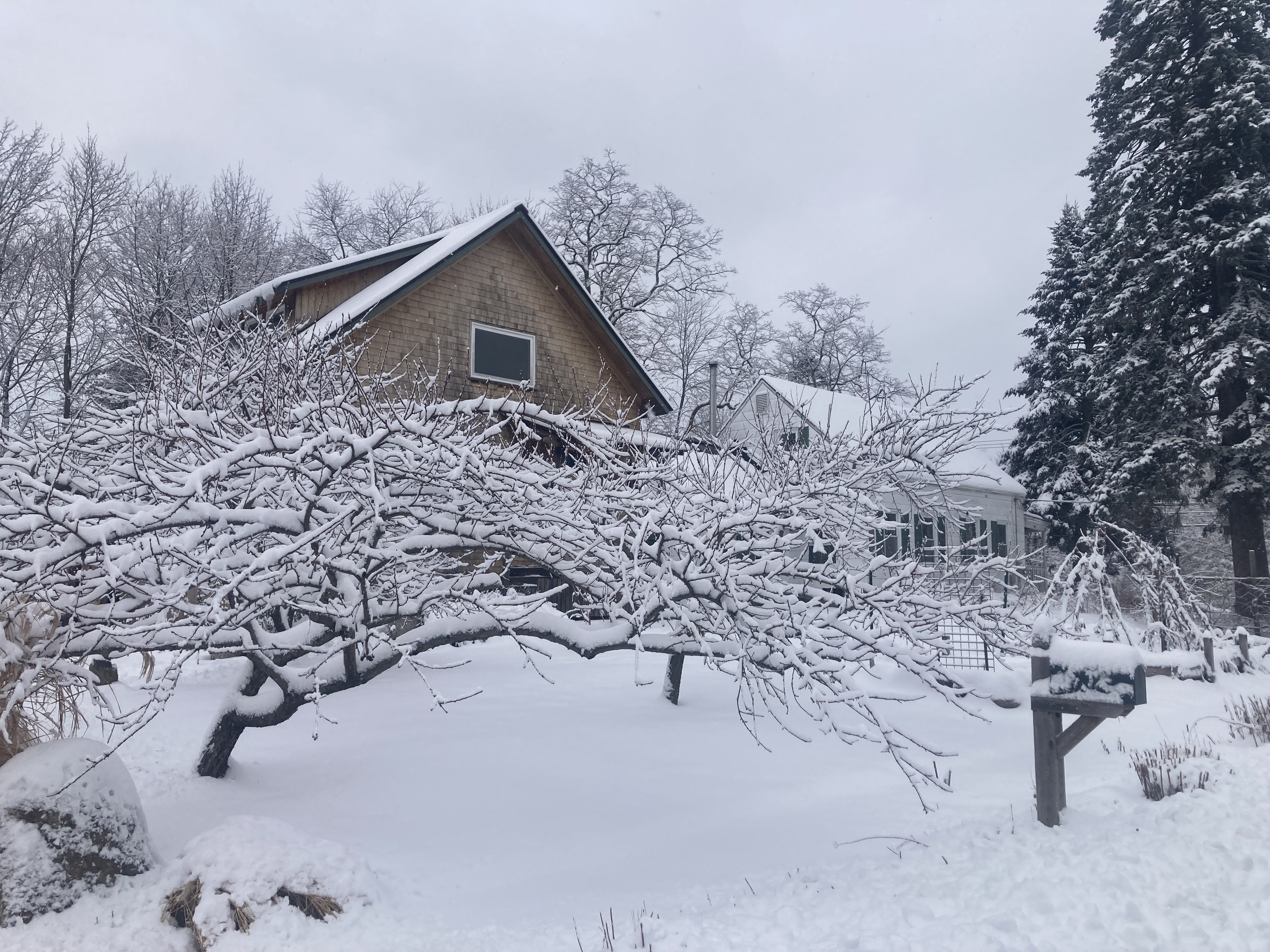
Two wise women demonstrate the ancient wisdom, passed down millennia, of the Emerald Tablet: “That which is above is from that which is below, and that which is below is from that which is above,”
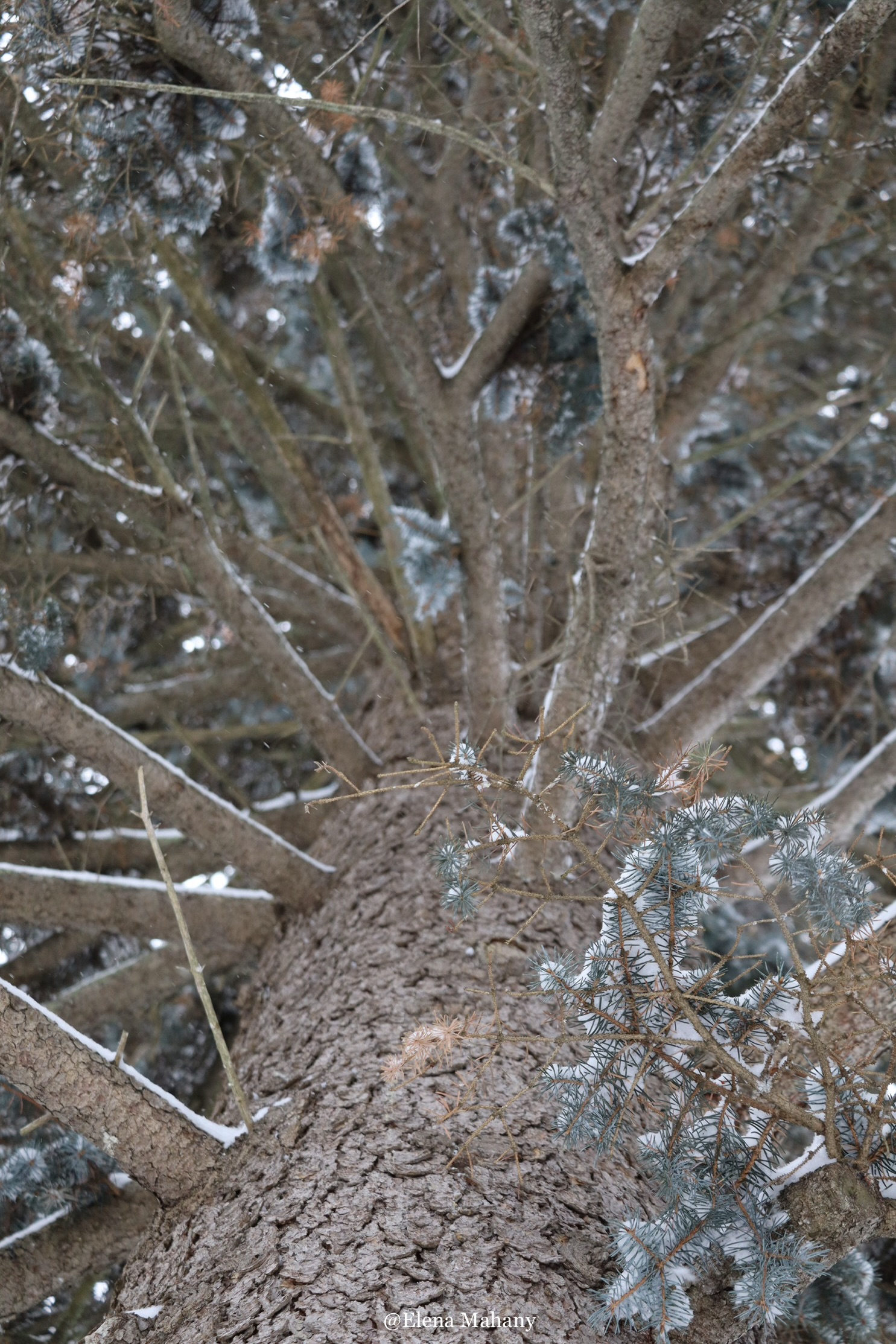
The “Sibyl of the Rhine” is our first wise woman, the polymath writer, composer, philosopher, mystic and visionary of the High Middle Ages. The Abbess of several Benedictine monasteries, the breadth of her intellect included being a founder of scientific natural history in Germany. A truly remarkable and wise woman was Hildegard van Bingen.
Hildegard’s central theme was Vriditas, a Latin term meaning “greenness” but with added nuance of vitality, growth and lushness; the creative life-giving force of nature and spirit. Simply stated, physical well-being is the “greening power” of Gaia, that relates both to the physical and to the spiritual. As above, so below; all life is one, all is connected.
Her scientific master work is the Book of the Subtleties of the Diverse Nature of Creatures. Divided into two sections, the Physica is a comprehensive treatise and medicinal catalog of plants, fish, birds, insects and minerals, while the Causae et Curae emphasized the causes of disease and their corresponding natural treatments.
Hildegard closely observed the plants in her monastery’s garden and how – as Babs Mahany wrote – “stem and bud absorbed the sunlight [which] brought the fronds’ unfurling.” Her closely observed empirical observations combined with mystical visions detailed that which is above ground.
The “wood wide web” scientist, the forest ecologist and professor of the underground, is our second wise woman. Dr. Suzanne Simard is a titan among modern scientists, who challenged the conventional view that ecosystems are competitive and forests are simply the source of timber or pulp. Over decades she researched and discovered the cooperative nature of forests through roots and fungal networks, the mycorrhizal, that facilitate nutrient, water, sugar and carbon exchange; a chemical signaling between trees communicating stress and providing a network for communal support.
Dr. Simard identified century old “Mother Trees” that nurture younger seedlings, sending nutrients outward to feed and sustain the weaker, baby trees. Her Mother Tree Project is rooted in the idea that forests are deeply interconnected ecosystems, social creatures demonstrating traits of cooperative civil society.
Soil is not “dirt,” but a vital and complex life source of sharing and exchange, the basis upon which life unfurls. The soil maven Nance Klehm in her book, “The Soil Keepers,” described it: “When we stand on land, we stand on the ones who have come before us. We stand on our ancestors. We realize we have inherited their legacy, the way they perceived land, the way they lived with the ground, the way their hands worked the soil, or didn’t.”
As above there is light, so below there is darkness;
As above vriditas unfurling, so below nutrients and sugars flow;
As above oxygen creation, so below communication and exchange;
As above the lotus flower, so below the mud.
All is interconnected, the cosmic dance of Gaia.
The Emerald Tablet is a foundational text, attributed to the Hellenistic figure Hermes Trismegistus, who integrated Greek and Egyptian wisdom into a body of knowledge on the interrelationship between the material and the divine. The teachings influenced both Pythagorus and Plato, formed the basis of Gnosticism and Neoplatonism, were key to Renaissance humanists.
The Emerald Tablet was most likely written in the Syriac language of the Fertile Crescent, but the first extant text appeared in the Arabic, during the Islamic Golden Age, written by Jābir ibn Ḥayyān, the “Father of Chemistry.” From the 12th century onward multiple Latin translations followed, introducing the text to Europe and then in 1680, seven years before publishing his magnum opus The Principia, Isaac Newton made an English translation. More recently, it significantly influenced the work of Madame Blavatsky, William Butler Yeats, and Carl Jung.
And two wise women, 900 years apart, exemplify the enduring truth of “as above, so below,” the essence of the Emerald Tablet. Here is the full text in English from the Arabic of Jābir ibn Ḥayyān:
Truth! Certainty! That in which there is no doubt!
That which is above is from that which is below, and that which is below is from that which is above,
working the miracles of one [thing]. As all things were from One.
Its father is the Sun and its mother the Moon.
The Earth carried it in her belly, and the Wind nourished it in her belly,
as Earth which shall become Fire.
Feed the Earth from that which is subtle,
with the greatest power. It ascends from the earth to the heaven
and becomes ruler over that which is above and that which is below.
حقا يقينا لا شك فيه
إن الأعلى من الأسفل والأسفل من الأعلى
عمل العجائب من واحد كما كانت الأشياء كلها من واحد
وأبوه الشمس وأمه القمر
حملته الأرض في بطنها وغذته الريح في بطنها
نار صارت أرضا
اغذوا الأرض من اللطيف
بقوة القوى يصعد من الأرض إلى السماء
فيكون مسلطا على الأعلى والأسفل
________________________________________
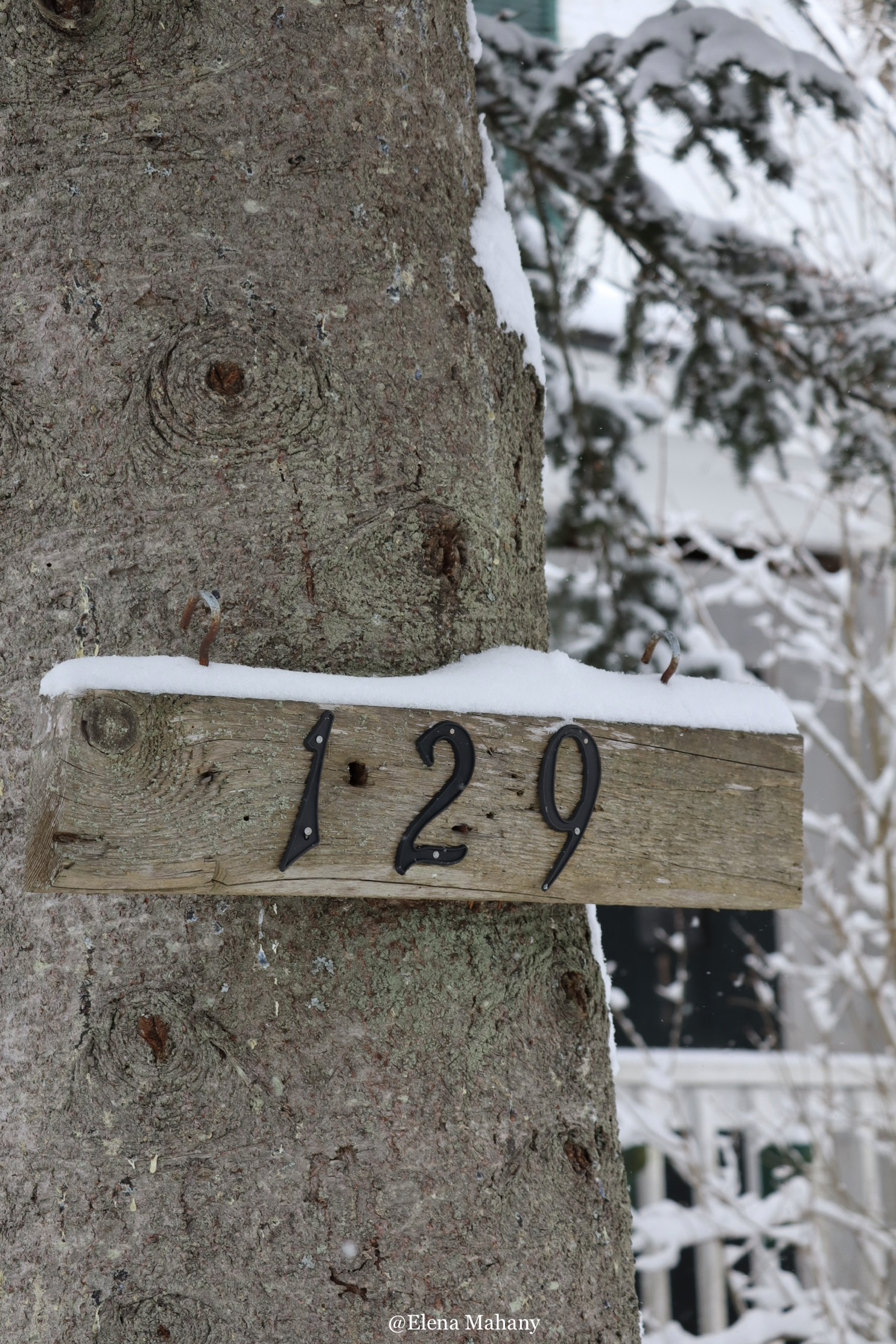
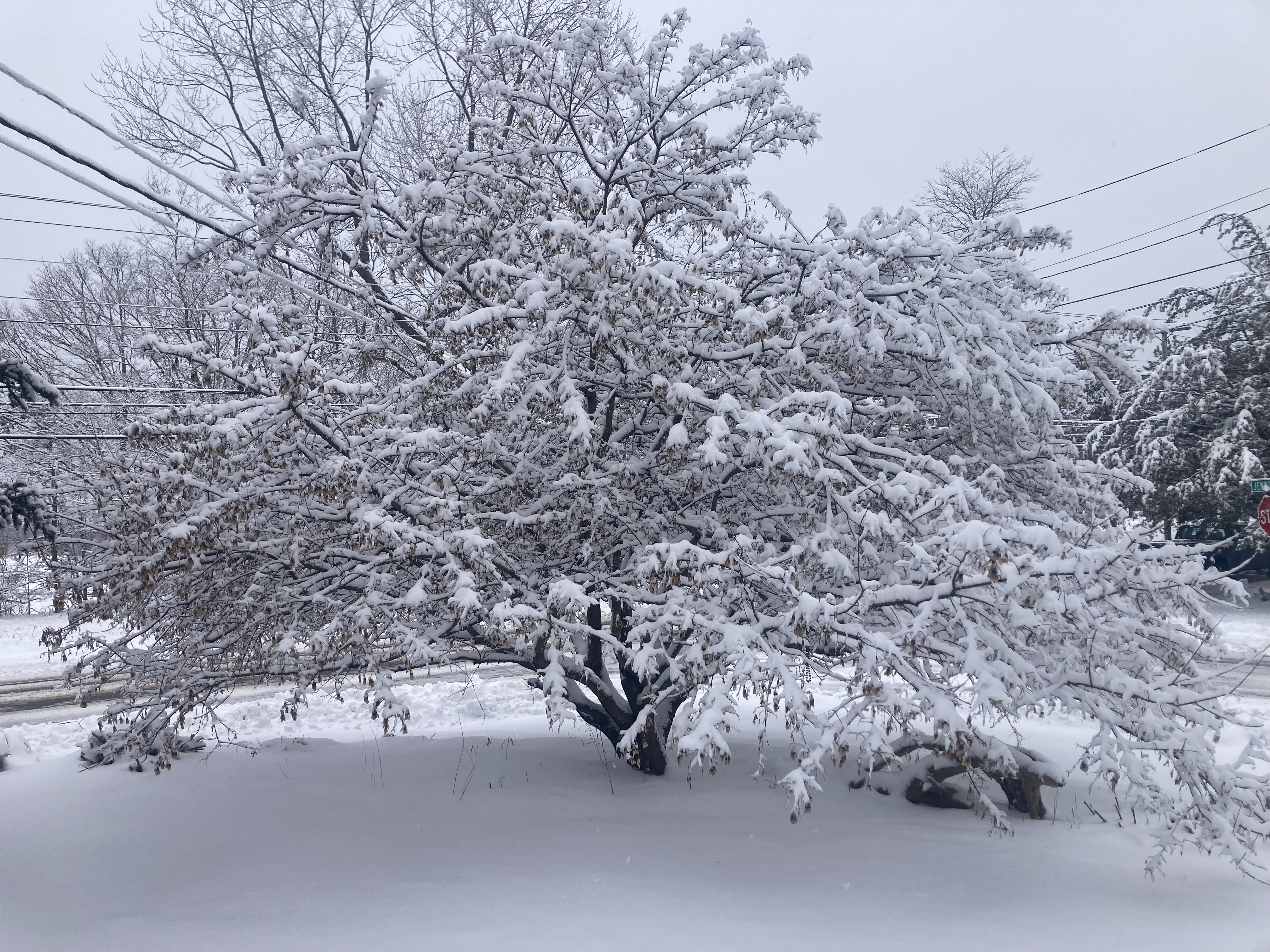
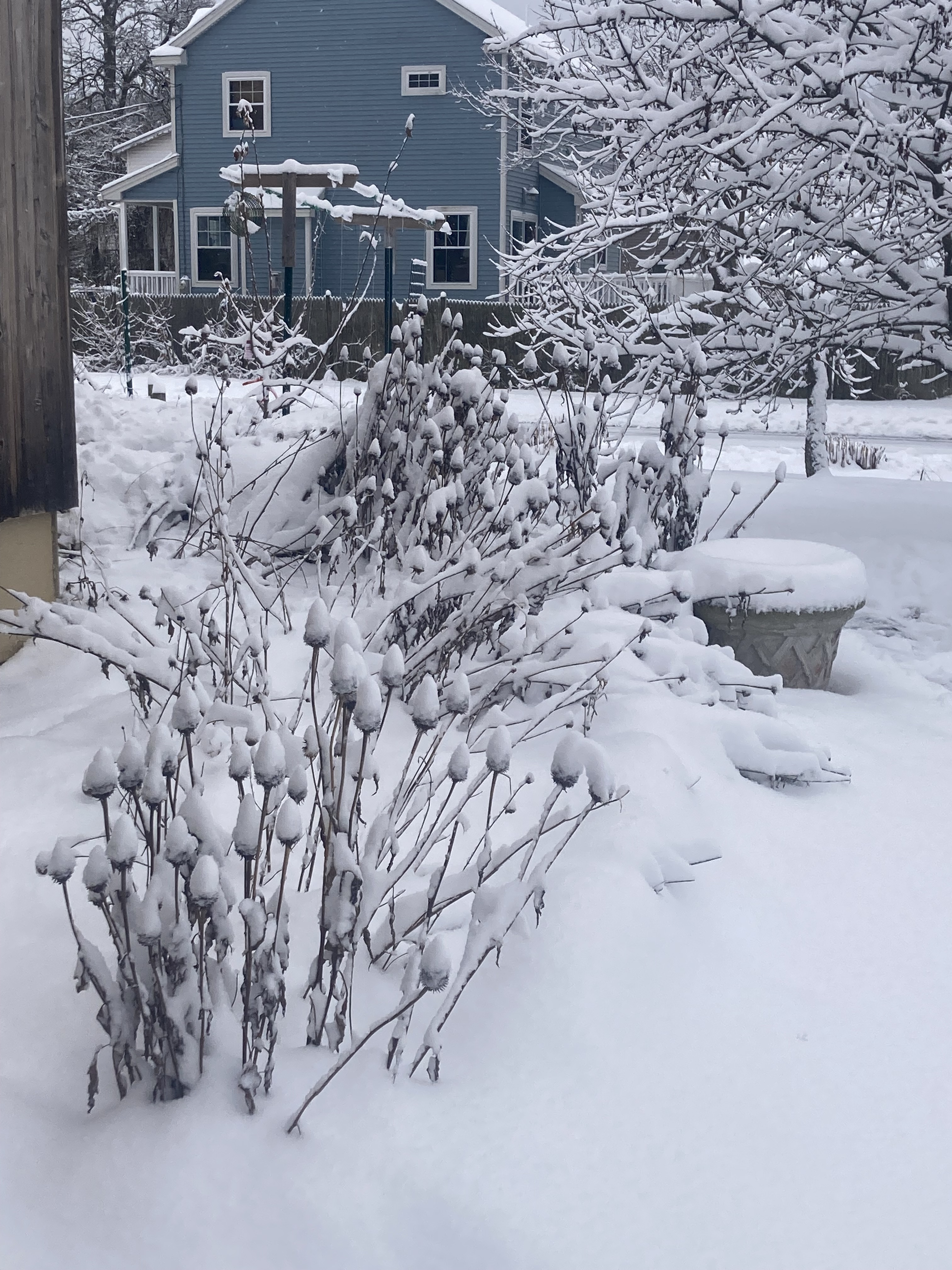
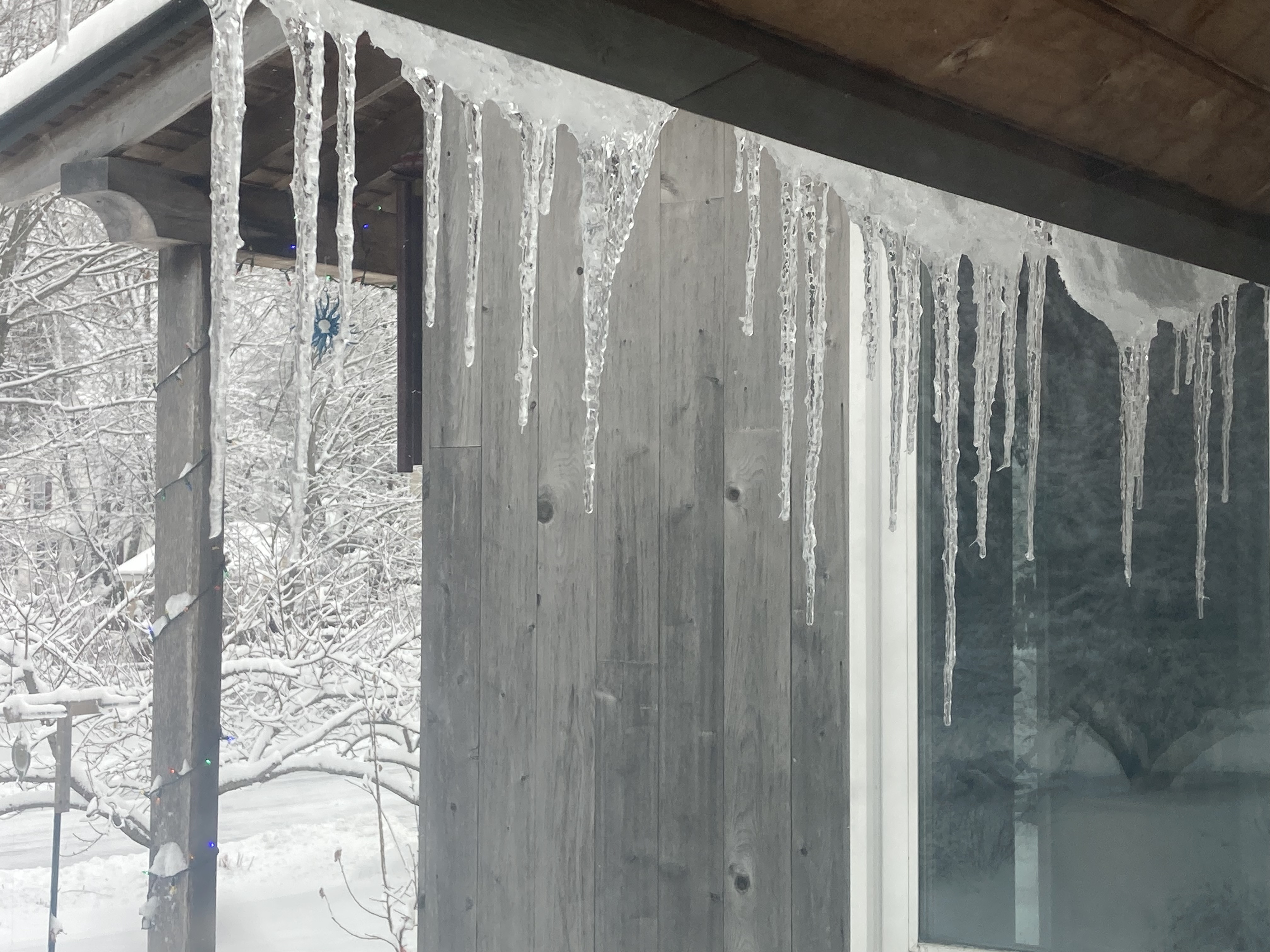
Snow here, photos by Elena where marked.


















Internal Alchemy
Posted: December 19, 2025 Filed under: consciousness | Tags: consciousness, meditation, mindfulness 1 Comment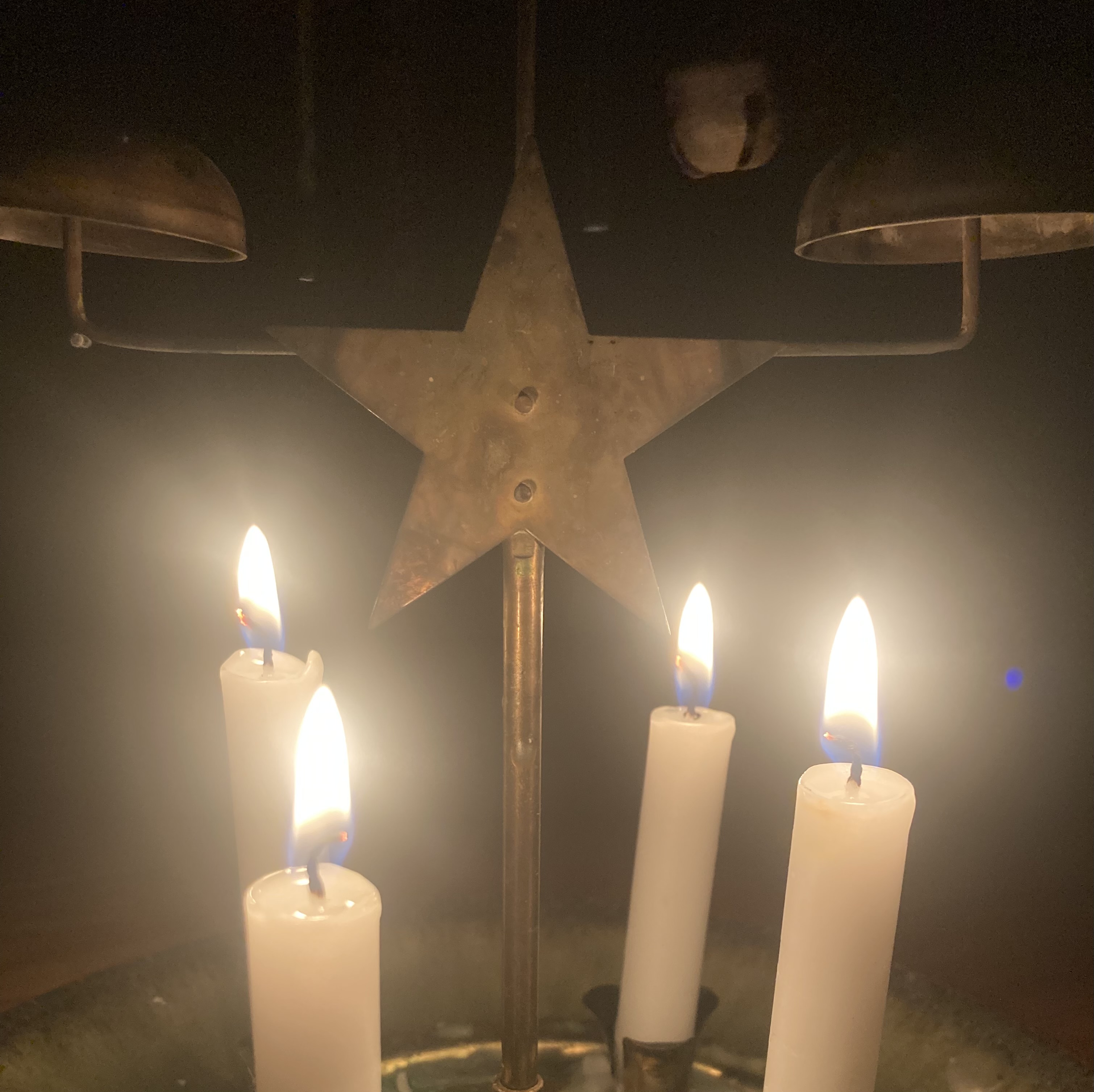
Article 36 of the Ecuadorian Constitution states, “Those persons who have reached sixty-five years of age shall be considered to be elderly.” And the elderly shall receive free health care, paid work, universal retirement, tax exemptions and access to housing that ensures a decent life.
The United States has no such declaration. The Centers for Disease Control defines an “older adult” as 60 years of age, but age 65 marks eligibility for Medicare. The Age Discrimination in Employment Act of 1978 ended mandatory retirement and currently it is illegal to force anyone to retire.
In Europe, the average retirement age is 65 to 67, although the Nordic countries tend upwards to age 70. It seems entirely possible that Western civilization has radically understated human potential.
Ching-Yuen was a Chinese herbalist, born maybe circa 1677, who died in 1933. He retired from his military career at age 78, and received from the imperial government birthday cards on his 100th, 150th and 200th birthdays. Time Magazine reported on this in May 2012. Ching-Yuen’s advice on longevity was simply: “Keep a quiet heart, sit like a tortoise, walk sprightly like a pigeon and sleep like a dog.”
Baird T. Spaulding’s “Life and Teaching of the Masters of the Far East” tells of his trek to Persia and the Orient in 1894 where he made contact with “the Great Masters of the Himalayas,” people living 600 or more years. Spaulding explains the central teaching as, “The Masters accept that Buddha represents the Way to Enlightenment, but they clearly set forth that the Christ Consciousness is Enlightenment, or a state of consciousness for which we are all seeking – the Christ light of every individual; therefore, the light of every child born into the world.” He describes acts of higher consciousness, such as walking on water or manifesting food to feed the masses.
Cuie Wenze is a legendary Chinese physician from the Qin Dynasty who reportedly lived to be 300 years old through holistic life nourishment, balancing the physical, mental and spiritual. Gee Yule, another Taoist alchemist, lived a reported 280 years by cultivating the Three Treasures: Jing (essence) Qi (vital energy) and Shen (spirit) through practices like meditation, breathing and alchemy. There are many records of such lives, if one seeks out these stories.
Years ago, while I was learning Qi Gong I was introduced to a practitioner of Chinese medicine whom, I was told, had not eaten food in years, instead existing on the inner Qi he had cultivated. Whether fact or fiction, it was hubris of me to make any rational decision about this. Wisdom, it seemed, was in suspending disbelief and simply observing this man.
From Epicurus through the enlightenment up to our present day, Western rationalism has been materialist. “Food, clothing and shelter” define the basic needs, and given an “us versus them” mindset in competition for limited resources, is it any surprise the 20th century was history’s bloodiest with massive atrocities of human-caused slaughter. Rational self interest is, ultimately, self limiting.
“An eye for an eye only ends up making the whole world blind,” Gandhi said. “The unmentionable odor of death” the poet Auden wrote, on the night when World War II broke out. And now, late in 2025 authoritarian strongmen become dominant, consciousness seems curated by algorithms and increasingly by artificial intelligence. This is our choice, not a fait accompli, and so could “beauty and truth” be added to humans’ basic needs? Can we expand our sense of self?
To the materialist rational mind this seems wildly unrealistic, while to the Taoist this is internal alchemy. Sir Isaac Newton, paragon of the rational scientific mind, was also – coincidentally – a leading alchemist of his day. The laws of physics do pertain, while the metaphysics of consciousness – much like quantum mechanics – can broaden our scope, open our minds to new possibilities, an awareness of the subtle energies.
The average U.S. life expectancy has increased to 78.4 years. The trend is positive and allows much room for an expansion of consciousness. What if 65 were viewed not as aged, but as an opening, an opportunity to move inward away from the external pressures of daily life? 10,000 Boomers per day are now turning 65, with nearly 1 billion people over 65 world wide by 2030, and more than 1.5 billion by 2050. An unparalleled force for good could be unleashed if we transform consciousness.
The solstice brings a return of light. May this year’s return be both literal and figurative.
Closest to the Sun
Posted: December 12, 2025 Filed under: consciousness, Permaculture & Home Renovation, Portfolio - David's work | Tags: ecuador 1 Comment
Chimborazo is a snow covered inactive volcano, the highest mountain in Ecuador and the 39th highest peak in the Andes mountains. Located at the equator, its summit is the farthest point on Earth’s surface from the Earth’s center. To the locals it is “the closest volcano to the sun.”
Ecuador’s biodiversity is nearly unparalleled with diverse habitats and a high concentration of species. The Galapagos Islands, a province of Ecuador, inspired Charles Darwin’s theory of evolution. The Republic of Ecuador’s vast richness was acknowledged in 2008 when the country rewrote its constitution granting citizenship rights to natural habitats, embracing ecological balance, recognizing ecosystems as living entities and allowing citizens to sue on their behalf.
The Constitution’s Preamble states: “We women and men, the sovereign people of Ecuador; RECOGNIZING our age-old roots, wrought by women and men from various peoples, CELEBRATING nature, the Pacha Mama (Mother Earth), of which we are a part and which is vital to our existence, INVOKING the name of God and recognizing our diverse forms of religion and spirituality, CALLING UPON the wisdom of all the cultures that enrich us as a society, AS HEIRS to social liberation struggles against all forms of domination and colonialism AND with a profound commitment to the present and to the future, Hereby decide to build: A new form of public coexistence, in diversity and in harmony with nature, to achieve the good way of living, the sumak kawsay; A society that respects, in all its dimensions, the dignity of individuals and community groups, A democratic country, committed to Latin American integration—the dream of Simón Bolívar and Eloy Alfaro—, peace and solidarity with all peoples of the Earth….”
The basic principles include:
- Sovereignty lies with the people…with national unity in diversity
- Ecuador is a territory of peace
- The human right to water is essential and cannot be waived
- The Ecuadorian State shall promote food sovereignty
- The right…to live in a healthy and ecologically balanced environment that guarantees sustainability and the good way of living (sumac Kawsay), is recognized.
- The right to aesthetic freedom; the right to learn about the historical past of their cultures and to gain access to diverse cultural expressions.
- Education…shall guarantee holistic human development, in the framework of respect for human rights, a sustainable environment, and democracy.
- The State shall guarantee elderly persons…Specialized health care free of charge, as well as free access to medicines
- The State shall guarantee the rights of pregnant and breast-feeding women with free maternal healthcare services
- The right to migrate of persons is recognized. No human being shall be identified or considered as illegal because of his/her migratory status.
There is trouble in paradise, though, as corruption is endemic. Ecuador ranked 121st among 180 countries on the 2024 Corruption Perceptions Index. That put it among the most corrupt public sectors, and below average among countries of the Americas. By comparison, the USA was tied at 28th out of 180 countries, its lowest score since 2012, and its trend has been negative since 2015.
Ecuador is a hub for smuggling drugs produced in neighboring Columbia and Peru. The police, judiciary and executive branches are linked to crime, drug-trafficking and extortion. The World Justice Project’s 2022 report “The Rule of Law in Ecuador” found that “Ecuador saw the largest increases in the percentage of respondents who believe that some or all of the actors across [law enforcement, the executive branch, and the judiciary] are involved in corrupt practices. Among respondents in the Andean region, on average, Ecuadorians most often [three-quarters of all respondents] felt that top government officials engage in authoritarian behavior.…” The constitution speaks of noble ideals while the government is rife with graft.
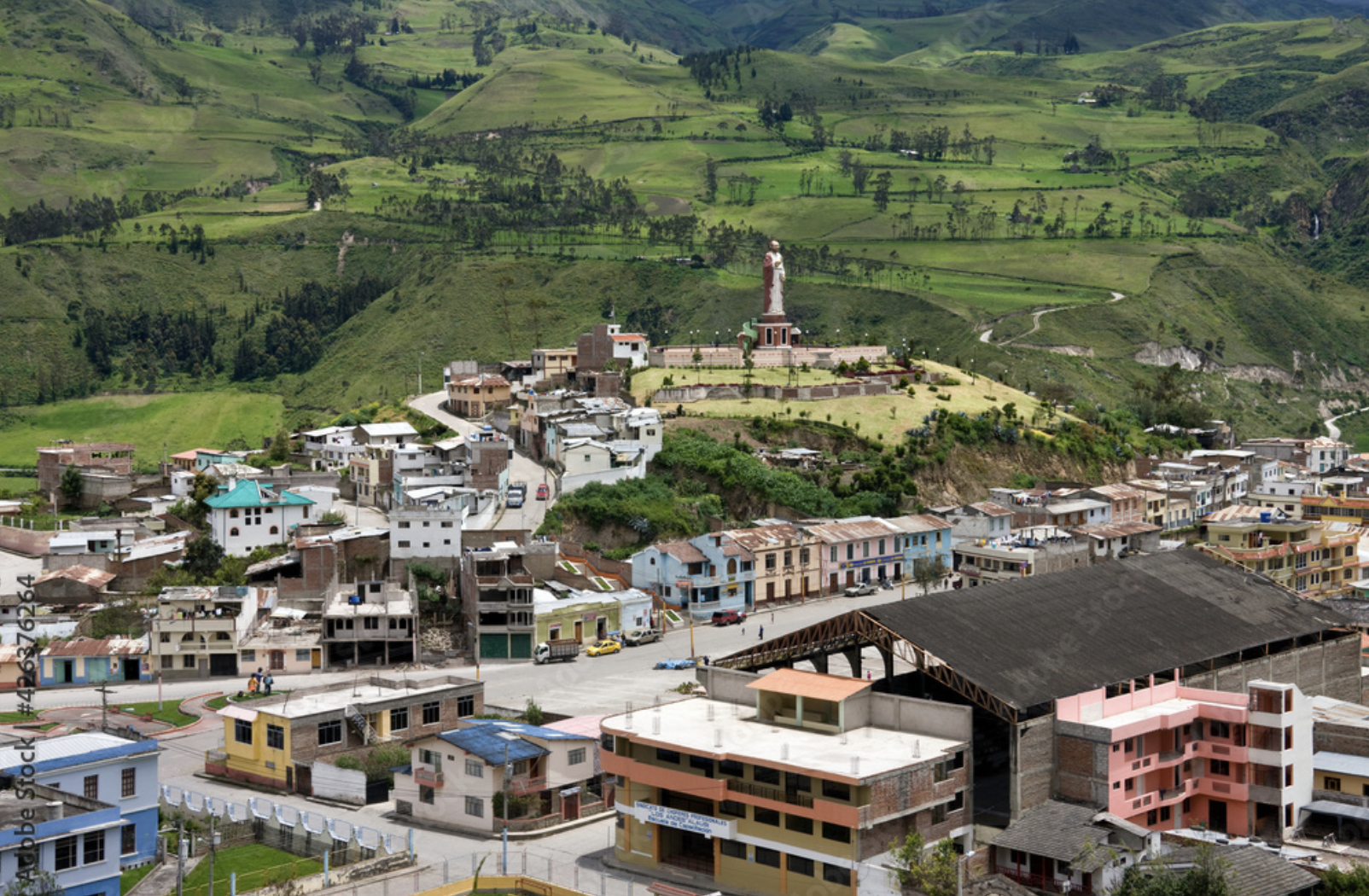
Anthony is a young man who grew up on Chimborazo. He is a father of children growing up in the Andes mountains, but because of the gangs and corruption he lives now in Massachusetts. A roofer, he works all around New England, traveling south to Rhode Island or Connecticut or as far north into Maine and Vermont.
Most all of the roofing crews in Southern Maine now are Hispanic. I see them driving their vans, loaded high with ladders and wheel barrows, doing all of the roofing jobs. For one job on the coast, I needed to remove a chimney on a very steep pitch. I asked the home owner to hire that out, and a Spanish speaking crew arrived. They had no safety equipment but climbed up without hesitation. Growing up in the Andes gives them a natural ease on heights.
The crew did not have the correct equipment and so I called the roofing contractor. Not surprisingly he showed up in his big truck, emblazoned with decals advertising his business. Dressed in sandals and shorts, it seemed we had interrupted him from working on his boat. He stood on the ground, looked up, doing nothing. The crew worked quickly and finished in about 3 hours. Most certainly the $1,500 paid to the boss did not include profit sharing. Every carpenter I know has similar stories to share.
We hired Anthony for the Tiny Cathedral, and by-passed the big-truck contractor. He and his cousin arrived, having driven two and a half hours north from Massachusetts. They did the job quickly and well and were paid cash for a full days wage, travel time included. The home owner still came out ahead, we avoided back-breaking labor, Anthony got a good break.
We shared pizza and beer over lunch. Between his broken English, and my pidgin Spanish, Anthony spoke about his roots, growing up in a small town closest to the sun. He described the exquisite beauty and how the ecotourism industry offers only a sanitized view while avoiding the gang and crime-ridden areas. Opportunity drew him north and he had not seen his son for seven years, nor did he expect to return home for another four years. He misses his son’s childhood but sends home money monthly.
That lunch was more than a year ago, and the self-righteous today likely would regard our act of civility as aiding and abetting. Ours is a transactional age where might makes right, where greed governs the strongmen, where earth is rare only in its industrial and financial value, but history is littered with the names of fallen despots, empires that came to pass. King Xerxes held such commanding power that after a storm destroyed his pontoon bridge, he had the sea whipped 300 times with chains, the engineers beheaded, to punish the sea for its disobedience preventing his Persian Army from conquering Greece. Long forgotten he is while daily still the tides rise and fall.
Wisdom endures on the side of “our age-old roots…the Pacha Mama of which we are a part and which is vital to our existence… diverse forms of religion and spirituality, …of all the cultures that enrich us [in] struggles against all forms of domination and colonialism.”
Closest to the Sun is closest to the light of truth.
Well dressed, on the Porch
Posted: November 28, 2025 Filed under: Art & Healing, consciousness, What is an Art Farm 1 Comment
In early September, during our Language Arts class, two young Christian women came to the door, dressed in their “Sunday-go-to-meeting clothes.” To avoid disruption, I hopped up to answer the door.
They politely asked, “We are doing volunteer work and wonder if you would like to hear some good news from the Bible?” I replied, “That is worthy but I am not interested now. I am homeschooling my son. But I ask you this question: what is the true understanding, the meaning of John 14:12?” They thoughtfully began to open their Bibles and I stopped them, saying “Do not answer this now but consider this as you go.”
Two months passed and recently one of the women returned with her father (younger than me), again dressed in their best clothes. The daughter wore the fashionable full length “Little House on the Prairie” style dress with burgundy flats. The father wore a tad-too-bright blue suit, crisply starched white shirt and a natty woven – not silk – tie. They were radiant in their wholesome goodness.
Standing on the front porch, we discussed grammar of the Bible passage: “Verily, verily, I say unto you, He that believeth on me, the works that I do shall he do also; and greater works than these shall he do; because I go unto my Father.”
I explained that “…because I go unto my Father…” is a subordinate clause. They did not see it that way. But grammatically it simply is subordinate to the independent clause, “…the works that I do he shall do also; and greater works than these shall he do…”. I focused on the verb “do” which they exhaustively counseled meant “to preach.” I countered that it referred to actions such as “raise the dead, walk on water, multiply loaves and fishes.” Flabbergasted, he laughed. Who ever heard of such a thing?!!
He opened his tablet and read from the prepared script that missionaries having gone to the ends of the earth – traveling farther than that street preacher ever could – and having reached countless millions of people means the “preaching” is “greater than.” I respectfully averred that the inverted sentence structure is complex; the object “greater works than these” comes first while the subject “he” comes last. But both the demonstrative pronoun “these” and its antecedent “works” are plural so more than just preaching is going on here.
I discussed Isaac Newton – paragon of the rational scientific mind – who also was an alchemist. He (the father) had never heard of alchemy. His daughter remained silent. We were heading into uncharted territory but my point was the deeper insight is needed, not the narrow rational. In fact, alchemy arguably is a symbolic language of higher consciousness, “base metals” turned into gold a perfect metaphor during the time when alchemy was considered heresy, punishable by death. Higher consciousness clearly does threaten the orthodox, and the street preacher – who was an avatar of consciousness – is revered not because he preached but because of what he did, which includes – as the story is told – raising the dead, walking on water, feeding the masses. Later that evening I asked my Daughter her thoughts and she readily said “works means accomplishments.” Preaching may be one of the accomplishments but “greater than” clearly speaks to something far more substantial.
We spoke about translations – from the Aramaic, to the Greek into Latin and now English; multiple languages over millennia – but he said “God guides all the translations” thus “the word is sacred.” An interesting point, but which renders the grammar moot. Even if the word is sacred, our understanding is not automatic. We need to think for ourselves, with grammar the means to insight; “these” is plural.
We briefly discussed Buddhism, which is to say alternate paths to wisdom. “All roads lead to Rome” is the saying but they held firm in their belief that the “King of kings and Lord of lords” reigns supreme.
Alas, our porch chat came to an end. They asked if they could return and I said, “Of course.”
The Serpent of Caesar
Posted: November 7, 2025 Filed under: Chronicles of a First Time Parent, consciousness, What is an Art Farm | Tags: George Fox, Leviathan 1 Comment
I am the “Serpent of Caesar” acting for and on behalf of the Religious Society of Friends local school. I chose this role willingly, in my position as the Facility Director of the physical plant and property. The roof leaks. Even after its repair. And so I lead the Quakers into battle.
Prior to January the terms “construction litigation” and “Forensic Engineer” were not in my vocabulary but now they dominate my thought and action. Some hoped to approach this problem amicably, asking for the help of the Architect and Builders. I turned to the Agreements signed in 2014 when the School’s building project began. Contracts are, by their nature, adversarial; they define the course to cure problems when things go wrong. And a repeatedly leaking roof, clearly, is something gone wrong.
Only an Expert can opine in construction litigation; it takes one licensed Architect to argue against another licensed Architect. As a mere carpenter my opinion is moot. Within the trades, the Plumbers and Electricians are “Masters,” because they are licensed and trained to have and to hold special knowledge. Carpenters, at best, become Journeymen, but none of us dare come to a job site claiming the mantle of “Expert.”
The first Expert retained was indeed a licensed Architect, who showed up on the job site wearing the wrong shoes. He was a cowboy, “all hat, no cattle” and “all sizzle, no steak.” He gladly criticized another Architect’s work, but when asked to design the solution he deferred, saying, “I will have to think about that. My liability insurance might not cover that.” Off into the sunset he rode. I did not look back.
The second Expert retained was a licensed Architect and member of an engineering firm founded by three MIT professors. He, and they, are the Brahmins of Boston. Meticulous and thorough, at an exorbitantly high cost, on one hot day in July they opened up the roof and did find 80% moisture content, 3” down into the insulation. By the nature of the design, to replace any of the insulation you must remove all of the roof.
And so knives were sharpened, a lawsuit was filed. When the investigations were ended, I wrote the Demand Packet to establish the damages sought. The opposing counsel’s counter arguments were brutal, a challenge not to take personally the barbs thrown my way. But they are only doing their job. This fight is about money, and they are its sentries.
The pace of a lawsuit, and its forensic investigation, is slow and ponderous, and this week all of the parties finally gathered in mediation. Dressed in business casual, all parties came bearing sword, saber or pocket stiletto. The opposing counsel – all men – were abrasive in their prevarications and circular reasoning, doing everything possible to point the other way, to avoid the central fact that the roof has failed. It was trench warfare, fought to a draw in the opening round of the long battle ahead.

The origin of our story lies centuries ago in England during the Civil War, also known as “The Great Rebellion.” The Royalists fought the Parliamentarians in a winner take all battle. Life for the Nobles was grand and sumptuous while the tenant farmers struggled, long before electricity or indoor plumbing, working from 6am until 6pm, children beginning to work as young as age 7.
In 1651 “Leviathan” was published with the infamous sentence that “Life is nasty, brutish and short.” This work is foundational for political realism, defining the authority of the State over the individual to avoid the “war of all against all” that results from the pursuit of rational self-interest amidst the absurdity of death.
Also in 1651, a Dissenting Preacher was imprisoned for challenging the orthodoxy of the King’s Church, and his sentence then doubled for refusing to take up arms in Cromwell’s army fighting against the Royalists. That preacher’s core tenet was that the “inward Light” belongs to every man, woman and child; no intermediary is needed to receive divine guidance because the sovereign is not the King but God, itself. And so George Fox formed the Religious Society of Friends.
In 1681 William Penn, one of Fox’s adherents, was granted by King Charles II 45,000 square miles along the North Atlantic Coast of North America. Such then did the Quakers settle on virgin soil, acreage which today constitutes Pennsylvania and Delaware, and a different form of political realism was practiced, which became foundational to the American experience. Colin Woodard, a local historian and author who lives in Freeport, Maine, described Penn’s social experiment:
“Penn envisioned a country where people of different creeds and ethnic backgrounds could live together in harmony. Since his faith led him to believe in inherent goodness of humans, his colony would have no armed forces and would exist in peace with local Indians, paying them for their land and respecting their interests. While all the other American colonies severely restricted the political power of ordinary people, Pennsylvania would extend the vote to almost everyone. The Quaker religion would have no special status within the colony’s government, the Friends wishing to inspire by example, not by coercion.”
Penn’s “Holy Experiment” became the sine qua non as Philadelphia emerged as the largest and most influential city in the Thirteen Colonies. Thomas Jefferson wrote there, in a rented home at 700 Market Street, the most radical progressive sentence in the history of politics: “We the people of the United States, in Order to form a more perfect Union…do ordain and establish this Constitution for the United States of America.”
Friends Schools have been central to this “social contract” and “holy experiment,” in the belief that spiritual, social, and intellectual growth are intertwined. Since 1656, when Quakers first arrived in Maryland, the schools have always taught both boys and girls.
And so 368 years later I arrived at the Quaker school bearing a Transcendentalist message from Ralph Waldo Emerson: “Your goodness must have an edge, else it is none.” Kindness alone is not enough.
Circa 30 AD the street preacher taught in Aramaic: “ܗܐ ܐܢܐ ܡܫܕܪ ܐܢܐ ܠܟܘܢ ܐܝܟ ܐܡܪ̈ܐ ܒܝܬ ܕܐܒܐ؛ ܗܘܘ ܗܟܝ” which circa 120 AD was translated into the Koine Greek – the lingua franca – as “…γίνεσθε οὖν φρόνιμοι ὡς οἱ ὄφεις καὶ ἀκέραιοι ὡς αἱ περιστεραί,” but when the Italians settled the Holy See where Nero’s Circus had been, circa 382 AD, the Latin Vulgate was translated, “Estote ergo prudentes sicut serpentes, et simplices sicut columbae” until 1611 when all the King’s scholars and all the King’s scribes wrote the masterpiece which is the King James Bible: “Behold, I send you forth as sheep in the midst of wolves: be ye therefore wise as serpents, and harmless as doves.”
For two millennia this wisdom’s fulcrum, its hinge, is the humble conjunction and: “wise as serpents, and harmless as doves.” Life’s complexity does not reduce to either/or but more often is both/and, which is especially challenging when waging war over a leaking roof.
A sharp knife, a spotlight
Posted: October 31, 2025 Filed under: Chronicles of a First Time Parent, consciousness, Portfolio - Elena's work | Tags: david-mamet, sophocles 1 Comment
“All the world is a stage” is repeated so often it has become a cliche. Shakespeare’s monologue from “As You Like It” opens with this:
All the world’s a stage,
And all the men and women merely players;
They have their exits and their entrances;
And one man in his time plays many parts,
His acts being seven ages.
Concerning that stage, Nietzsche argued the apex of artistic achievement and high point of civilization was achieved on stage in Classical Athens by the tragic dramatists, particularly Aeschylus and Sophocles. When their Apollonian and Dionysian met in balance – order, form, reason commingling with chaos, passion, ecstasy – the citizens of Athens confronted both the suffering of life and the majesty of its beauty, experiencing an integrated whole comprising the breadth of the human condition.
But how, precisely, does the stage work?
Who better than a playwright from Chicago’s south side to make plain the inner workings of the stage? David Mamet, winner of the Pulitzer Prize, playwright on Broadway and member of the American Theatre Hall of Fame, screenwriter for Hollywood, author of 223 books, published in 1998 “Three Uses of the Knife: on the nature and purpose of drama.”
He wrote, “It is in our nature to dramatize. At least once a day we reinterpret the weather – an essentially impersonal phenomenon – into an expression of our current view of the universe: ‘Great. It’s raining. Just when I’m blue. Isn’t that just like life?’ The weather is impersonal, and we both understand it and exploit it as dramatic, i.e., having a plot, in order to understand its meaning, for the hero, which is to say for ourselves.”
Drama’s structure plays out in three acts. “In act 1 Our Team takes the field and, indeed, prevails over its opponents, and we, its partisans, feel pride. But before that pride can mature into arrogance this new thing occurs: Our Team makes an error, the other side is inspired and pushes forth with previously unsuspected strength and imagination. Our Team weakens and retreats.”
And so begins act 2, the play’s midlife crisis. Conflict is present, a new set of problems arise. Our attention narrows toward climax, denouement and conclusion, but a challenge must be overcome while the playwright holds the audience’s attention. Again Mamet, “Joseph Campbell calls this period in the belly of the beast – the time in which the artist and the protagonist doubt themselves and wish the journey had never begun.” The ease of act 1 becomes complex.
On rarified occasions, in an auditorium, drama achieves that pinnacle of insight and cultural healing. But more often the drama is bawdy and common, played out on the street, a vaudeville stage or in the daily news.
“The stoics wrote that the excellent king can walk through the streets unguarded. Our contemporary Secret Service spends tens of millions of dollars every time the president and his retinue venture forth.
“Mythologically, the money and the effort are spent not to protect the president’s fragile life – all our lives are fragile but to protect the body politic against the perception that his job is ceremonial, and that for all our attempts to invest it with real power – the Monroe Doctrine, the war powers act, the “button” – there’s no one there but us.
“Our Defense Department (sic) exists neither to ‘maintain our place in the world’ nor to ‘provide security against external threats.’ It exists because we are willing to squander all – wealth, youth, life, peace, honor, everything – to defend ourselves against feelings of our own worthlessness, our own powerlessness.”
What to the Christian mystics is the Trinity, to the German philosophers was thesis, antithesis, synthesis and to playwrights and poets from the dawn of time has been the 3-act structure; the “Rule of Three” as an axiom of psychology and communications provides clarity and order to simplify decision making, to navigate life.
Given conflict, act 3 moves us into climax and resolution. The hero finds within themself the will and strength to continue. What Sophocles called the tragic flaw, Shakespeare termed “this mortal coil,” Nietzsche saw an absurd void, while Mamet writes of “our own worthlessness, our own powerlessness.” Such is our conflict. But reason cannot resolve this.
“The purpose of theatre, like magic, like religion…is to inspire a cleansing awe….Most great drama is about betrayal of one sort or another. A play is about rather terrible things happening to people who are as nice or not as nice as we ourselves are.
“But reason, as we see in our lives, is employed one thousand times as rationale for the one time it may be used to further understanding. And the cleansing lesson of the drama is, at its highest, the worthlessness of reason. In great drama we see this lesson learned by the hero. More important, we undergo the lesson ourselves, as we have our expectations raised only to be dashed, as we find that we have suggested to ourselves the wrong conclusion and that, stripped of our intellectual arrogance, we must acknowledge our sinful, weak, impotent state – and that, having acknowledged it, we may find peace.”
If reason wants to reduce life to an either/or, the dramatist knows that life is a both/and proposition: the apex was reached in the perfect balance between Apollonian order and Dionysian ecstasy. Nietzsche argued that it was art that allowed humans to overcome the absurdity, and so too Mamet:
“It is our nature to elaborate perception into hypotheses and then reduce those hypotheses to information upon which we can act. It is our special adaptive device, equivalent to the bird’s flight – our unique survival tool. And drama, music, and art are our celebration of that tool, exactly like the woodcock’s manic courting flight, the whale’s breaching leap. The excess of ability/energy/skill/ strength/love is expressed in species-specific ways. In goats it is leaping, in humans it is making art.”
_______________________________________
Photo credit goes to Elena.
 an Art Farm