Samsara
Posted: August 1, 2025 Filed under: Art & Healing, consciousness | Tags: Bardo Thodol, buddhism, samsara, The Work That Reconnects 1 Comment
One bright light has passed, one wise woman who lived at the vanguard. “A wild love for the wild” she lived and saw this time as “a great unraveling toward a life-generating human society.”
An environmental activist, author and scholar of Buddhism, general systems theory and deep ecology, her husband was a Russian scholar and they worked with the CIA in post-war Cold War Germany and then moved to India, where her husband was leading the nascent Peace Corps at the time when the very young Dalai Lama arrived into exile. A life was lived!
As a practicing Buddhist, she understood that life inherently is filled with suffering, that suffering arises from attachment and desire, but suffering can be overcome. Her path to the end of suffering became her teaching, which she called, “the Work that Reconnects.”
She has passed, and in the Buddhist tradition, the Bardo Thodol is now her path: “liberation through hearing during the intermediate state.” Known as “The Tibetan Book of the Dead” this describes the experience of consciousness at the immediate moment of death and the stages to follow during the 49 days of samsara, the “wandering through” between death and rebirth.
She is now – as I write – at day 11, immersed in the light, while her words speak still to we who remain on planet Earth. In a recent interview she said:
“I’m 92 now. I am in this 10th decade of my life. When I follow with rapt attention what is happening with the climate catastrophe, and with the mass extinctions of our siblings of in the creation of this world. I feel that there is, within me a sense that read through Rilke, the translations, and also very much through the work that I have been blessed enough to do called The Work That Reconnects, and that has starts the spiral journey that it is with gratitude. So much gratitude that what’s in it is that we are never abandoned. There is something for us to behold and be part of.
“And to be there, a great moment is there for us to be present. To this incredible moment, we’ve got to realize, we will realize, that we belong to each other. That’s coming forward now. How could we not harvest that understanding in this moment?”
She continued…
“…this sense of opening to the reciprocity of life. It’s a living world. When we cannot be sure, or even have the trust, that complex life forms will endure beyond the next few decades, we’re seeing a huge shattering of life itself. And, and yet having been with Rilke, his trust in life is still with me. So I trust being with life, even though life, the web of life might crumble, but then I’m still with it. I’ll be with it anyway, even in the crumbling. The song is so deep in him.
“For one person to care for another, that is perhaps the most difficult thing required of us. The utmost and final test, the work for which all other work is but a preparation. With our whole being, with all the strength we have gathered, we must learn to love. …As bees gather honey, so do we reap the sweetness from everything and build God.
“Well, it seems clear that we who are alive now are here for something and witnessing something for our planet that has not happened at any time before. And so, we who are alive now and who are called to, who feel called, those of us who feel called to love our world, to love our world has been at the core of every faith tradition, to be grateful for it, to teach ourselves how to see beauty, how to treasure it, how to celebrate, how, if it must disappear, if there’s dying, how to be grateful. Every funeral, every memorial service, is one where you give thanks for the beauty of that life or the quality of what. And so, there’s a need, some of us feel, I know I do, to what is, looks like it must disappear to say, thanks, you’re beautiful. Thank you, mountains. Thank you, rivers.
“And we’re learning, how do you say goodbye to what is sacred and holy? And that goodbye has got to be in deep thanksgiving for having been here, for being part of it. I kind of sound like I’m crying, and I do cry, but I cry from gladness you know. I’m so glad to recognize each other. You can look in each other’s face. See how beautiful we are. It’s not too late to see that. We don’t want to die not knowing how beautiful this is.”
She translated Rilke, the German poet, who saw death as an integral part of the life cycle, as a transformative force that can lead to spiritual growth. Rilke said, “But we must accept our reality and all its immensity. Everything, even the unheard of, must be possible within it. This is, in the end, the only courage required of us. The courage to meet what is strangest and most awesome.”
The soul last known as Joanna Macy met life with an extraordinary courage, and encourages us to follow that path. She has moved onward, to the furthest yet.
Quiet friend who has come so far,
feel how your breathing makes more space around you.
Let this darkness be a bell tower
and you the bell. As you ring,
what batters you becomes your strength.
Move back and forth into the change.
What is it like, such intensity of pain?
If the drink is bitter, turn yourself to wine.
In this uncontainable night,
be the mystery at the crossroads of your senses,
the meaning discovered there.
And if the world has ceased to hear you,
say to the silent earth: I flow.
To the rushing water, speak: I am.
Sonnets to Orpheus II, 29 Rainer Marie Rilke, translated by Joanna Macy
_______________________________
Credit where credit is due: David Purpur opened the Tibetan Book of the Dead and the Egyptian Book of the Dead so many decades ago, and expanded the boundaries of my thought. An interview with Joanna Macy from the podcast On Being can be heard here:
https://podcasts.apple.com/us/podcast/on-being-with-krista-tippett/id150892556?i=1000661063451
___________________________________
Garlic now hangs to cure, onions and potatoes have been harvested and turned into German Potato Salad, cucumbers into Bread & Butter or Caraway pickles, tomatoes into a delicious balsamic relish. Abundance reigns.








The Sybil
Posted: July 25, 2025 Filed under: consciousness, What is an Art Farm | Tags: Cumaean Sibyl, Delphi, Heraclitus, Lucius Tarquinius, Shakespeare 1 Comment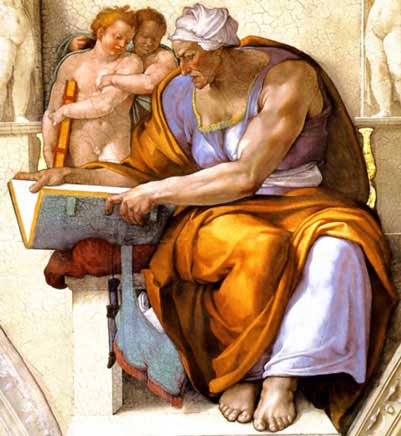
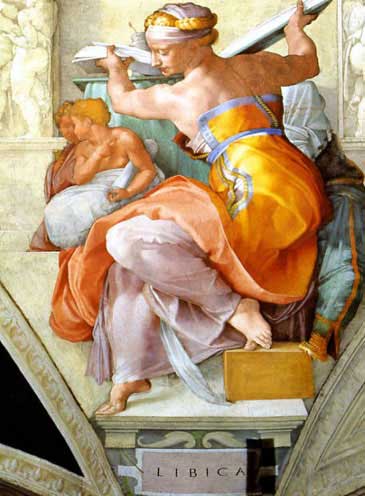
In the pantheon of wise women, the Sibyl – mysterious messenger of truth – ranks high, towering overhead on the ceiling of the Sistine Chapel. Who was she?
In the beginning, at Delphi, in the 11th Century BCE, there was but one, the Delphic Oracle herself. Heraclitus, the pre-Socratic philosopher, is the first known writer to comment, “The Sibyl, with frenzied mouth uttering things not to be laughed at, unadorned and unperformed, yet reaches to a thousand years with her voice bye aid of the god.” The Greeks eventually came to count ten women truth tellers located in Greece, Italy, the Levant and Asia Minor; they were known not by their name, but by the location of the shrine where they spoke.
Meanwhile, across the Adriatic Sea, Lucius Tarquinius Superbus reigned as the seventh and last King of Rome, 534 to 509 BCE. A man so corrupt and vile, he gained the throne through multiple murders of family, and his tyranny came to justify the abolition of the monarchy. Following his death the Republic arose and thereafter the Empire, which are the stuff of legend. The one enduring virtue of Tarquinius was his foresight to purchase the Sibylline Books. Even there, he almost failed.

The apocryphal story is told of an old woman, possibly a Cumaean Sybil, who offered nine books of prophecies to Tarquinius at an exorbitant price; he declined to purchase and so she burned three then offered the remaining six at the original price. Again he refused and so she burned three more then asked the original price for the remaining three. Tarquinius consulted the Augurs, who deplored the loss of the six and urged purchase of the remaining three even at the full original price. Tarquinius had them preserved in a sacred vault beneath the Capitoline temple of Jupiter.
After the fall of the Kings, the Roman Senate kept tight control over the Sibylline Books. The men who governed held the women’s prophecies under lock and key. They entrusted care to two patricians, until in 367 BC, when the custodians were increased to five patricians and five plebeians. These ten, as directed by the Senate, consulted the Sibylline Books not for predictions of definite future events but the religious observances necessary to avert extraordinary calamities and to expiate ominous prodigies (comets and earthquakes, showers of stones, plague, and the like). The rites of expiation were communicated to the public, and not the oracles themselves. In the 4th century CE, The Sibylline Books were burned by order of the Roman General Flavius Stilicho.
About that time the Roman Empire came to its end, replaced by the Judeo-Christian world. The Sibylline Books were replaced by the Sibylline Oracles, a blending of classical mythology, early Gnostic, Hellenistic Jewish and Christian beliefs. The prophecies became increasingly apocalyptic, with even the Book of Revelations foreshadowed. There is something for everyone, it seems, in the Sibylline Oracles, and they came to reach ever wider circles. Over several millennia they have become more, not less, studied.
Michelangelo painted five sibyls on the ceiling of the Sistine Chapel: the Delphic, Libyan, Persian, Cumaean and Erythraean, while Shakespeare mentions them in Othello, Titus Andronicus, The Merchant of Venice, and Troilus and Cressida. In contemporary culture, Sibyl was a 1976 film starring Sally Field and Joanne Woodward about a musician diagnosed with multiple personality disorder. What was prophecy to the ancients is a crisis today.
But why are women the Sybils? Science tells us that the corpus callosum – the connective white matter that connects our left and right brain hemispheres – is more robust in women. A woman’s brain seems hard-wired to more rapidly access each hemisphere, integrating emotions and feelings with the logical functions of the left hemisphere.
Culturally women are encouraged to be receptive to inner thoughts and feelings, while men have been raised to focus on the external physical and rational worlds. Be that as it may, throughout the ages it is women who have been the Sibyls, towering figures of art, literature and history – mysterious messengers of truth – who stand tall within the pantheon of sage women.
________________________________
Credit where credit is due: David Purpur brought to my attention The Sibylline Oracles, J. L. Lightfoot, Oxford University Press (c) 2007.
The Queen Bee
Posted: July 18, 2025 Filed under: Chronicles of a First Time Parent, consciousness, What is an Art Farm | Tags: beekeeping, bees, honeybees, Mother of All Living, nature, pollinators, royal jelly, the Shimmy, White Goddess Leave a comment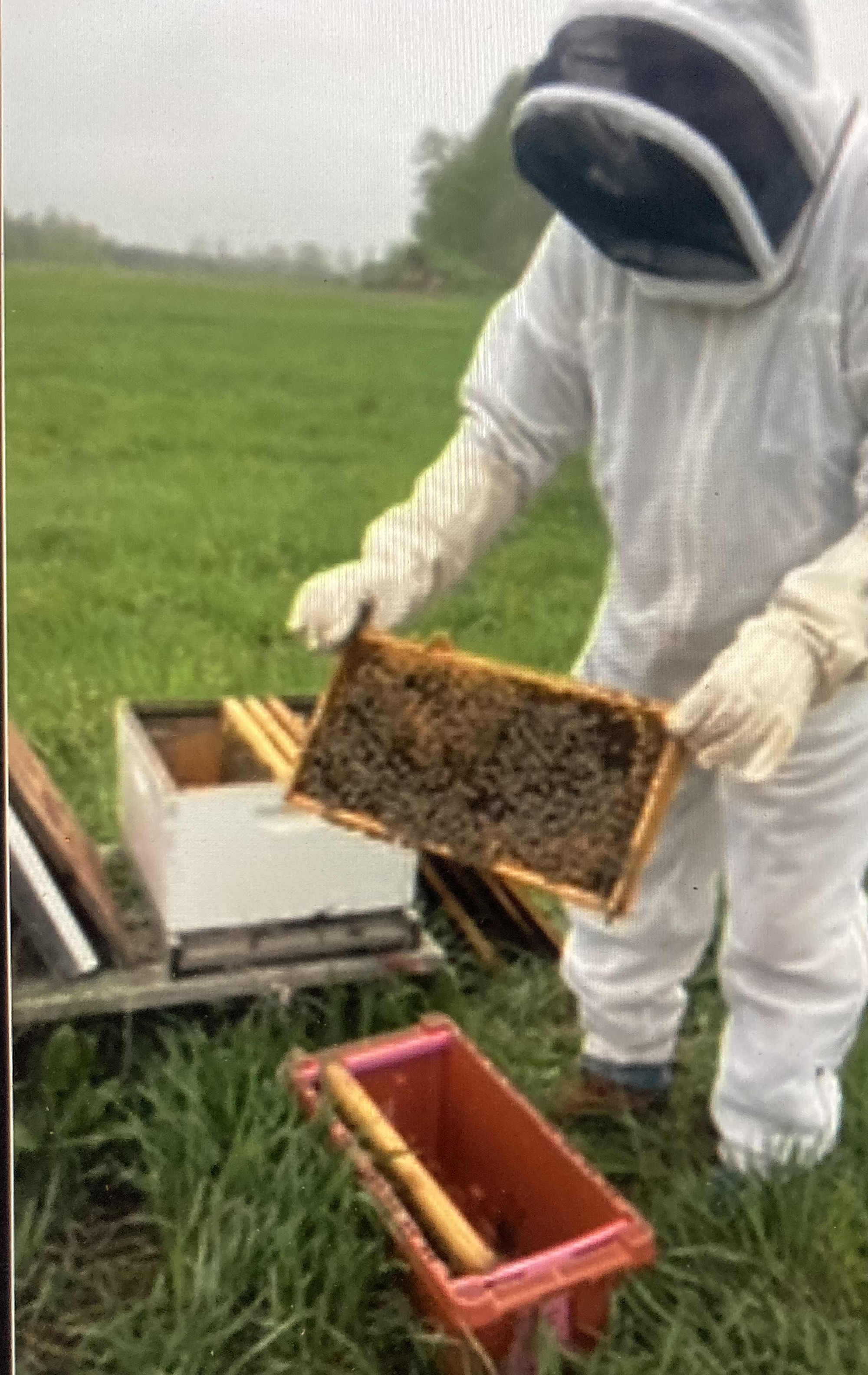
Honoring a good friend, who has a good friend passing; the ripples which cannot be denied that reinforce the web of our community, I write here of The Queen Bee.
The “bees knees” as slang means something excellent, of the highest quality. It arose during the “Roaring Twenties,” when flappers danced the Charleston, the Black Bottom and the Shimmy, their knees and elbows flailing wildly to the back beat of the jazzmans’ rhythms. It might be a corruption of “The Business,” 1920s street slang for something excellent, or perhaps it refers to pollen baskets on bees’ legs, the “good stuff” that worker bees carry back to their Queen.
In our quest for seven wise women, let us follow that “good stuff” back to the Queen Bee. In a colony of 20,000 to 80,000 bees she alone lays more than 1,500 eggs per day, an amount greater than her body weight. Coming of age at day 23 of life, her egg laying begins.
During incubation the Queens are fed protein rich royal jelly, secreted from the glands on the heads of young worker bees. Worker bees are fed a mixture of nectar and pollen – bee bread – but the Queen alone is fed the royal jelly, and as a result develops into the sexually mature female, the propagator of the colony. The colony’s future rests upon the fruit of her loins.
The Queen was selected by the worker bees, not through a democratic process, but through luck of the draw plus natural selection. The worker bees randomly choose a few larvae just days old, and begin feeding them the royal jelly. If multiple Queens emerge at the same time then they will fight to the death.
By genetics her stinger is not barbed, and so she is able to sting repeatedly. Sting she does, seeking out virgin queen rivals in her quest to kill. The Queen as nurturing mother sets firm limits; dominance is her key to control the colony. The Queen, to whom the worker bees bring “the good stuff” is the one and only; nature knows its rules and the colony falls in line behind its Queen.

The Queen’s hive is a model of efficiency and output. She weighs about 0.007 ounces, twice the weight of the worker bees, but their combined efforts produce 30-60 pounds of honey, or even upwards of 100 pounds or more, per year. Honey is half of the proverbial “land of milk and honey” which is an ancient symbol of abundance and prosperity. “Bread and honey” is slang for money, the coin of the realm. The Queen controls the honey, which is to say “the money” because she produces the abundance.
All things come to pass, and the Queen eventually matures into dominance. Some virgins escape the hive to avoid being killed, to seek out a new hive whereupon another fight to the death begins. If the prime swarm has both a virgin queen and an old queen, the old queen will continue laying eggs, until within a couple of weeks, she will die a natural death and the former virgin, mated, will assume the throne.
Natural selection is a biological imperative, but wisdom is an insight, something metaphysical, the source, perhaps, of that biological imperative. Our quest then leads back to the creator, God the Father in the current era, but the Queen of Heaven in older times. In the ancient Near Middle East, the Queen of Heaven embodied themes of love, war, fertility and motherhood, of which all the Queen Bee is a master.
About the Queen Bee, her celestial connectedness and her poetry, the Irish poet Robert Graves wrote, “…a true poem is necessarily an invocation of the White Goddess, or Muse, the Mother of All Living, the ancient power of fright and lust – the female spider or the queen-bee whose embrace is death.”
The Queen Bee, it seems, is one key to the wise woman.





Credit where credit is due: one wise woman suggested this topic; Master Electrician, Master Cabinetmaker & Humble Farmer Kirk provided the beekeeping photos and inspiration; the curly-haired Goddess with whom I live asked sage questions about natural selection.
It takes a village.
_____________________________
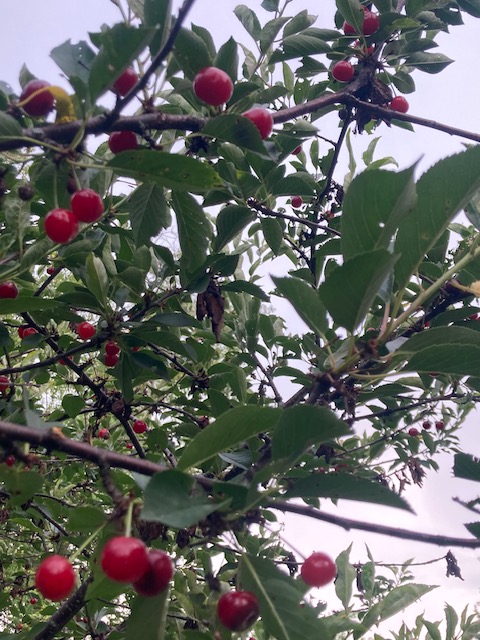
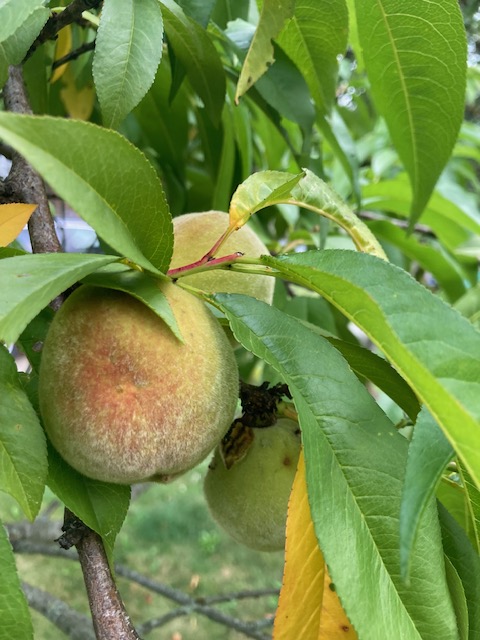
In the garden now – thanks to pollinators – fruits form, vines reach ever higher; mid-summer is past and the dog days descend.








Wisdom Is…
Posted: July 11, 2025 Filed under: Chronicles of a First Time Parent, consciousness, What is an Art Farm | Tags: Axial Age, Diotima of Mantinea, Goddess of Heaven, Jeremiah 7:18, White Goddess 4 Comments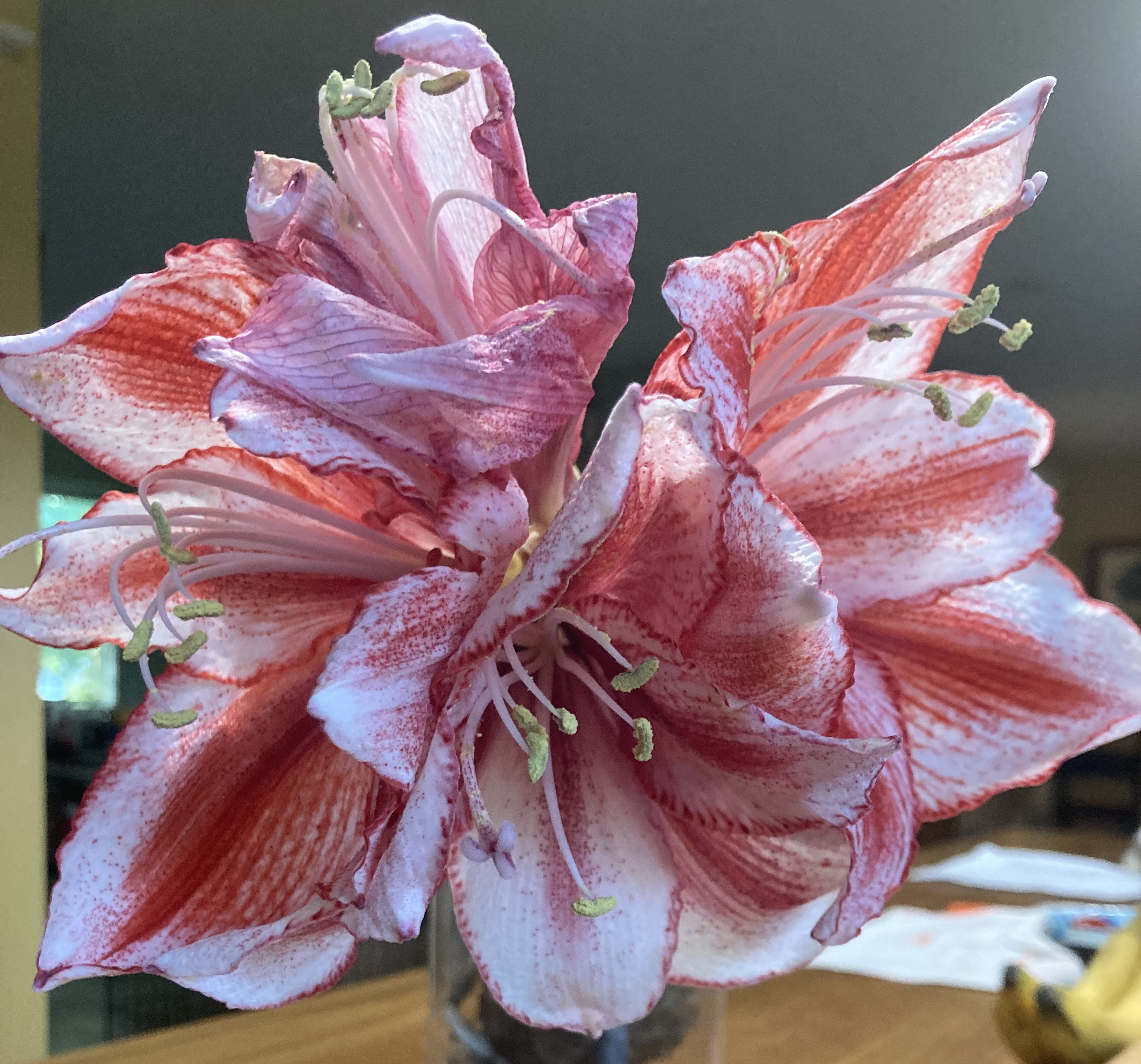
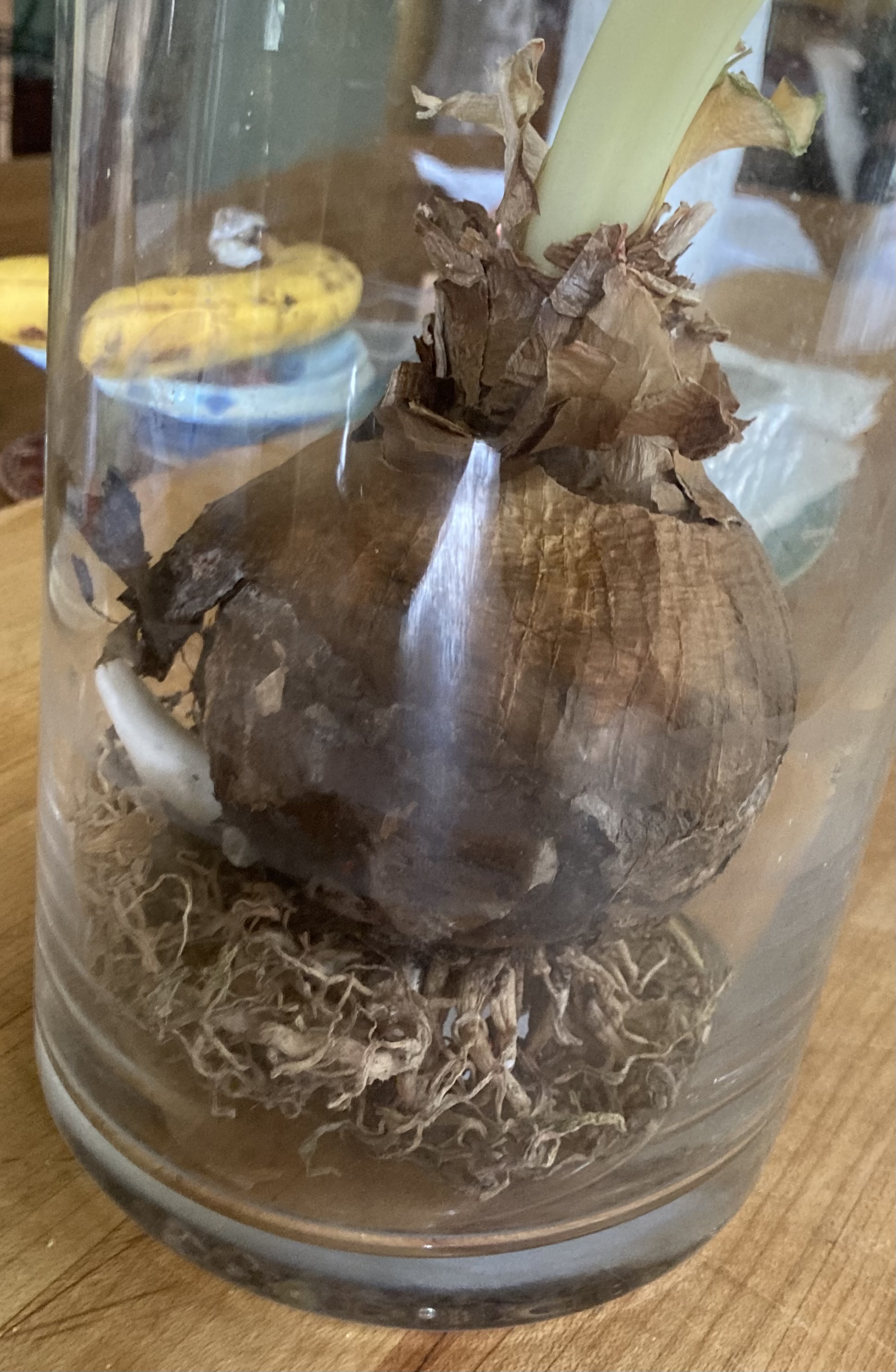
By coincidence, I happened last Monday to go into our dark dingy basement and was struck by an amaryllis bulb in full bloom. The bulb has a long history: we gave it as a gift to a friend years ago, but when she moved to NOLA, she gave it back. It bloomed for us last autumn, then in December was put into storage where it was forgotten. With neither soil, nor water, nor light it pushed up again into its full gorgeous flower.
Ralph Waldo Emerson once said, “The invariable mark of wisdom is to see the miraculous in the common.” With the flowering amaryllis as a miraculous symbol, we now search for seven wise women, and shall begin with Wisdom, itself.
In the beginning is the question, “Whence, wherefore and whither Wisdom?” “Whence” is an archaic word meaning “from where” which leads us to the “Goddess of Heaven.” At the beginning of civilization, throughout the Fertile Crescent – the Near Middle East – the Goddess of Heaven embodied themes of love, war, fertility and motherhood. Circa 4,000 BCE she was “Inanna” to the Sumerians, “Ishtar” in Akkadian, Babylonian and Assyrian cultures, “Astarte/Ashtoreth” to the Canaanites, later she was “Hera/Juno” to the Greek and Romans, “Nut” to the Egyptians. A Babylonian cunieform circa 1850 BCE references Venus as the “bright Queen of Heaven.”
Robert Graves, in his oracular masterpiece, “The White Goddess” writes, “…the language of poetic myth anciently current in the Mediterranean and Northern Europe was a magical language bound up with popular religious ceremonies in honor of the Moon-goddess, or Muse, some of them dating from the Old Stone Age, and that this remains the language of true poetry – ‘true’ in the nostalgic modern sense of ’the unimprovable original, not a synthetic substitute.”
Taking the form of the Goddess of Heaven in the Near Middle East or the Moon Goddess in the Mediterranean and Northern Europe, Wisdom was a celestial woman, worshipped. But then Abraham appeared circa 2100 to 1900 BCE and brought transformational change, slowly over millennia.
Karen Armstrong, the scholar of comparative religion, calls this “the Great Transformation” so that by the 9th century BCE the religious and philosophical traditions of our present day were laid down: Confucianism and Daoism in China, Hinduism and Buddhism in India, monotheism in Israel, and philosophical rationalism in Greece.
Robert Graves had this to say, “The [poetic] language was tampered with in late Minoan times when invaders from Central Asia began to substitute patrilineal of matrilineal institutions and remodel or falsify the myths to justify the social changes. Then came the early Greek philosophers who were strongly opposed to magical poetry as threatening their new religion of logic, and under their influence a rational poetic language (now called Classical) was elaborated in honor of their patron Apollo….”
The Old Testament, Book of Jeremiah 7:18 condemns the Goddess of Heaven: “The children gather wood, and the fathers kindle the fire, and the women knead their dough, to make cakes to the queen of heaven, and to pour out drink offerings unto other gods, that they may provoke me to anger” (KJV). Hellfire and brimstone has had it in for women since the beginning. Armstrong describes the epochal change as the Axial Age, when the monotheistic male deity arose and the Queen of Heaven and Moon Goddess recede.
Wisdom is not gender specific, so let us consider “wherefore” which means “an explanation.” What then is wisdom? Webster’s Dictionary, Second Edition, (c) 1947 provides this definition, n, 1. quality of being wise; ability to judge soundly and deal sagaciously with facts, esp. as they relate to life and conduct; knowledge, with the capacity to make due use of it; perception to the best ends and the best means; discernment and judgement; discretion, sagacity. 2. scientific or philosophical knowledge; erudition; learning; as, the wisdom of the Egyptians, 5. a person embodying wisdom; — used as a title of honor or respect. Archaic.
Wisdom is insight, not knowledge; understanding, not facts; nuanced, not either/or. Albert Einstein said, “Any fool can know. The point is to understand.” Bertrand Russell said “To conquer fear is the beginning of wisdom.” Socrates said, “Knowing yourself is the beginning of all wisdom.”
Socrates, the paragon of Greek rational thought, was taught by a woman. Aspasia of Miletus taught him rhetoric and the art of dialectic, and her intellectual salons, frequented by Plato, Socrates and Pericles, are believed to have shaped his thinking. In Plato’s Symposium Socrates says that he was taught the “philosophy of love” by a woman.
Diotima of Mantinea taught that love drives the individual to seek beauty, first in beautiful bodies – earthly beauty – then as one grows in wisdom, to seek spiritual beauty. Diotima taught that the correct use of physical love is to direct one’s mind to the love of wisdom, which is philosophy.
The path to wisdom seems shaped by women. And so we come to “whither,” which is “to where” does the path of wisdom lead? Ralph Waldo Emerson said simply, “The purpose of life is not to be happy. It is to be useful, to be honorable, to be compassionate, to have it make some difference that you have lived and lived well.” Rumi was simpler still: “Yesterday I was clever, so I wanted to change the world. Today I am wise, so I am changing myself.”
In the coming weeks we will tell stories of wise women. An ambitious goal, a list of 7, but more likely 7 times 7, or even 77 wise women. They are more numerous than the stars in the sky. The queens of heaven, indeed.
____________________________________
At our Art Farm, the lavender, coneflower and echinacea exclaim, a celestial harmony our eyes behold.





Seven Sages
Posted: June 27, 2025 Filed under: consciousness, Little Green Thumbs, What is an Art Farm | Tags: akpallu, Hammurabai, hokmah, kwan yin, saptarishi, Solon 1 Comment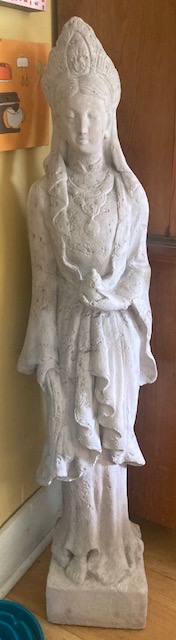
The tradition of the Seven Sages is common to ancient China, India, Persia, Mesopotamia, Greece and Rome. The sages, although different to each culture, always are the enlightened souls who brought wisdom.
To the Chinese, they were the “Seven Sages of the Bamboo Grove,” a group of scholars, writers and musicians of the 3rd century CE. In India, the “Saptarishi” are seven of semi-immortal status, the seers extolled in the Vedas, the sacred texts “not of a man, superhuman…authorless,” revelations of sacred sounds and texts heard by ancient sages after intense yogic meditation. To the Hindu, the seven stars of the Big Dipper represent these seven sages; the Dipper’s handle points to the North Star by which countless wise men have traveled the globe.
The “Apkallu” were the sages of Mesopotamia, the primordial beings, demigods, part man and part fish or bird, associated with human wisdom. In the 7th century BCE Greece, the seven were the philosophers, statesmen, poets and lawgivers renowned for their wisdom. Solon of Athens, a statesman and poet, is honored for his legal reforms, which shaped democracy. Pittacus of Mytilene governed Lesbos where he reduced the power of the nobility, to govern with the support of the common people. Thales of Miletus was a mathematician and astronomer, credited with predicting a solar eclipse, is said to have coined the aphorism “Know thyself,” which was engraved on the Temple of Apollo in Delphi.
The “Seven Wise Masters” is a cycle of stories of Sanskrit, Persian or Hebrew origins, which through the “Seven Sages of Rome” was passed down to German, English, French and Spanish in the form of popular street literature published throughout early modern Europe.
A modern version of this tradition resides above the doors of the House Chamber in the U.S. Capital, known as the “Relief Portrait Plaques of Lawgivers.” Seven (sic) sculptors carved bas relief plaques, using white Vermont marble, to honor 23 governing figures across world culture: Hammurabi, Justinian, Solon, Suleiman, Napoleon and Thomas Jefferson rank among these lawmakers, while Moses holds center court.
Of note, across all of these cultures, all of the sages are men.
In my experience, women rank among the sages who have helped shape my path. It is rather stunning to pause and consider the inherent bias, among world cultures, over millennia, that males alone are the sages. Wisdom, as an abstract concept, would be considered gender-neutral. But grammatically, the word “wisdom” – “hokmah” in Hebrew and “Sophia” in Greek – is feminine. Personified in literature, such as in the Book of Proverbs, wisdom is depicted as a female, referred to as “She” and “Lady Wisdom.
I should like to undertake a summer project to compile a list of the “Seven Women Sages.” It seems a Herculean task to select only seven, but such could be a worthy first pass at this project.
I should like to invite my readers to weigh in on this topic. Over coming weeks I shall endeavor to find stories of great women who have walked among us. Some may be a grandmother, or school nurse, others may be dominant figures of their times, but all shall be told as a counterpoint to the conventional wisdom of the Seven Sages.
In these chaotic times we do well to restore balance.
Note: Thanks go out to David Purpur who helped with information on the Vedic rishis.
______________________________
Our garden pushes ever higher: the Cuke climbs its trellis, fruit forms on the vine, pole beans push tendrils ever higher, greens come daily, grapes reach outward, lavendar is lush, potatoes have been hilled.








It Came to Pass
Posted: June 20, 2025 Filed under: Art & Healing, Chronicles of a First Time Parent, consciousness | Tags: CG Jung, hanged man, Isaac Newton, Ryder-Waite, saint paul of the cross, tarot 1 Comment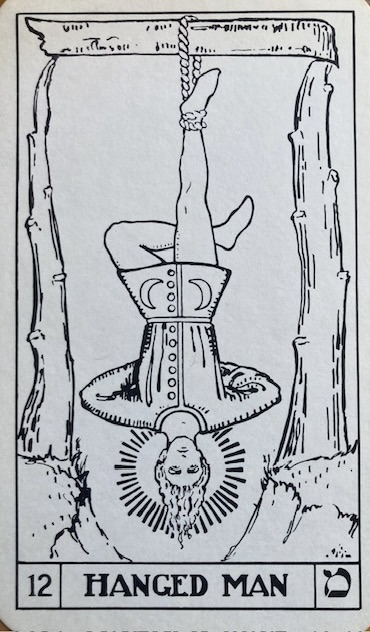
We ended our homeschool science class with the study of tarot. Some may say this is heresy, that tarot is not science, but I defy that line of reasoning. Consider these facts:
- The word “science” is derived from the Latin word “scio” which means “to know” or “to understand.” My son shall be raised to have broad, not narrow, understanding.
- Sir Isaac Newton, the paragon of the rational scientific method, was a lifelong alchemist. The Renaissance alchemists pursued rigorous empirical observation and experimentation; the notion of “active principles” that repel and attract arguably contributed to the theory of universal gravitation.
- Carl Jung, founder of “analytical psychology,” developed the concept of the collective unconscious, which resonates clearly with the tarot’s imagery. At the C.G. Jung Institute, he supervised research on the importance of tarot.
Such then, when I asked my son to pull one card from the Ryder-Waite deck, the “Hanged Man” emerged. At the age of 12, my son pulled card 12 from the deck. Jung referred to this as a synchronicity; events that coincide in time and appear meaningfully related, yet lack a discoverable causal connection. “Causal” speaks to the rational mind, but we were plumbing the subconscious.
At the age of 12 my son comes of age, which is a physical bodily experience as well as a deeply emotional and psychological transformation. Card #12 deals with beliefs that are stored in the subconscious mind, what is handed down. The Hanged Man represents a breaking away from that tradition. As my son comes of age, he becomes his own man.
Carl Jung believed that the archetypes are deeply embedded in the human psyche, and have emerged in the form of religious narratives. Saint Peter, the “Rock” upon which the Catholic church has been built, reportedly was hung upside down, by the Roman Emperor Nero. The hanging took place near the “Circus of Nero” close to the present day Saint Peter’s Basilica. The Cross of Saint Peter, an inverted cross, remains a central image in the arms of the Holy See and the Vatican City.
Let us consider this symbol more deeply. In “Tarot” Paul Foster Case writes, reversal in Hanged Man is “a reversal of thought, a point-of-view which is just the opposite to the accepted by most persons. In this scientific age we know that everything is an expression of the working of the law of cause and effect. …Practical psychology shows the potency of ideas. It demonstrates conclusively the truth that thoughts are the seeds of speech and action, that interpretations are the patterns for experience, that what happens to us is what we have selected, whether the selection be conscious and intentional, or unconscious and unpremeditated.
“The central theme of the hanged man…is that every human personality is completely dependent upon the All, here symbolized by the tree. As soon as this truth is realized, the only logical and sensible course of conduct is a complete surrender. This surrender begins in the mind. It is the submission of the personal consciousness to the direction of the Universal Mind. That submission is foreshadowed even in the picture of the Magician, who derives all his power from above. Until we know that of ourselves we can do nothing, we shall never attain the adeptship. The greater the adept, the more complete his personal self-surrender.”
Saint Peter of the Cross, in founding the Church during the Roman Empire, most definitely followed “a reversal of thought, a point-of-view which is just the opposite to the accepted by most persons.” To pursue this further we drove to Western Maine, to sit with a Reiki Energy Master, a White Witch, and talk about the tarot. This Master, as a child, lived in Morocco, Athens and Cairo; living now in the Lakes Region she is not provincial but broad in her understanding.
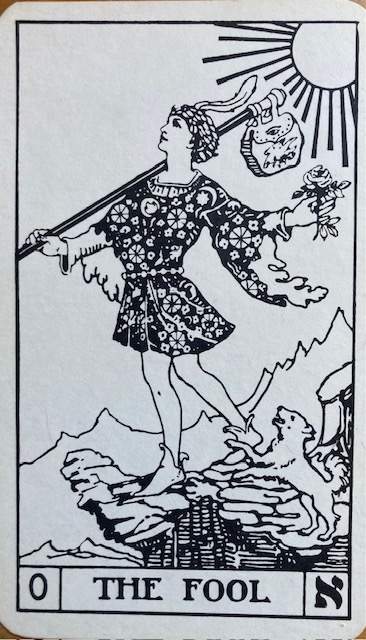
She explained that tarot is the journey to wisdom. The journey begins at 0, when you know nothing, and then you go through life. The Fool is ready to jump off the cliff. #1 the Magician has tools to become grounded, spiritual. #2 the High Priestess has intuition. #12 the Hanged Man is saying “take your time, there is no rush.”
She spoke of card #13 Death. She asked my son what he thought of death and he paused, then replied, “I think death is not good, it is bad.” She explained that death can be seen as a change, that all things must pass and transform. In that sense death is not bad, it is just change; it can be hard, very hard, but it is part of life. “The old self of the Hanged Man is changing. This is the death of the old way. Your Dad’s belief system will die off and you will choose your own.” She spoke about spirituality. My son explained that he had no religious practice. She encouraged a nature based approach. As my son comes of age, he will make many choices, his own.
Many cards had been lain on the table. As we cleaned up, the last card picked up was #13 Death. Again, synchronous, the Master commented, “You are all going through a transition.”
And so our season of homeschooling has ended.

Art Predates Agriculture
Posted: May 16, 2025 Filed under: Art & Healing, consciousness, What is an Art Farm | Tags: authors, ethics, history, philosophy 2 Comments
Civilization began, it is widely believed, with the advent of agriculture. The time was around 10,000 BC and the place was the Fertile Crescent, which is the present day Middle East. Sheep and pigs were first domesticated, followed by plants such as flax, wheat, barley and lentils. The nomadic hunter-gatherers settled into agricultural communities, developed irrigation systems and established permanent settlements.
It should be noted that this definition of “civilization” speaks to the cultures of the Abrahamic religions (Muslim, Judaism and Christianity). The Clovis culture, however, were precursors to the Indigenous peoples of the America’s, and between 15,000 to 20,000 years ago developed stone tools, as well as agriculture, engineering, astronomy, trade, civic and monumental architecture. Some established permanent or urban settlements, but all did not forsake their nomadic lifestyle. There is not one civilization, but many co-inhabiting this planet.
However civilization may be defined, the plain fact is long before we worked the soil to plant seeds, the hunter gatherers were digging to get clay and earth based pigments for painting the caves at Altamira and Lascaux; art making predates agriculture, which is to say it predates civilization, which speaks to its fundamental role in shaping human life. Mark making is meaning making, hard-wired in our DNA, the act of making is a core means of problem-solving, both utilitarian and ideational.
Ellen Dissanayake is an ethno-anthropologist whose writings synthesize disciplines ranging from evolutionary biology to cognitive and developmental psychology. She lived for fifteen years in non-Western countries (Sri Lanka, Papua New Guinea, India and Nigeria) among indigenous pre-literate peoples and found that all shared the trait of embellishing their tools in non-utilitarian ways; the act of “making pretty” is consistent across the globe. This lead her to develop “…a unique perspective that considers the arts to be normal, natural, and necessary components of our evolved nature as humans.”
Far more than practical, the act of making is healing. Art therapy is based upon this insight, which, since the 1940s, has been used in conjunction with traditional psychotherapy, to provide a non-verbal avenue for exploring emotions and experiences. The simple act of making can help treat a wide range of mental health issues and support emotional well-being, based upon the interconnectedness of mind, body, and spirit.
Works of art such as the Sistine Chapel, a human achievement of extraordinary scale, can be overwhelming and lead most of us to cower, and say “I can’t draw.” But that seems ego-driven, as we are schooled in a comparative and competitive paradigm, which blocks the fact that art making is biologically and psychologically at the core of everyone’s individual life. Art, and the act of making, become the great equalizer.
One of the lessons of carpentry – which is to say making in the practical sense – is that adverbs and adjectives do not pertain; the wall is plumb or it is not, the corner square or it is not, the house will long endure or it will not. There is something exquisitely liberating in that plain fact. More “sophisticated” professions do not fall under this simple truth, for example, politics and the law are based upon argumentation and persuasion rather than objective truth. The word “sophisticated” is derived from the Sophists, in Ancient Greece, who excelled in clever deception, using rhetoric to win arguments regardless of the truth.
In a world that is increasingly argumentative, clever and AI-interconnected, the simple act of making can become a grounding and centering force. Let us proclaim there are four necessities in life: food, clothing, shelter and beauty; “making pretty” creates beauty while making becomes the means to achieve all the former. And all of which become an act of healing.
___________________________
Plants push up, fruit trees blossom, and pollinators abound!




Ice Cream Revelations
Posted: May 2, 2025 Filed under: Child Centered Activities, Chronicles of a First Time Parent, consciousness, What is an Art Farm | Tags: Carl Jung, creativity, dreams, Mayan Long Count Calendar, Primate of Ireland, psychology, Revealtion 17, saint malachy, semi dwarf apple tree, spirituality, writing 1 Comment
I recently went driving at night with my children to go eat ice cream. Pope Francis having died, my daughter mentioned Tik Tok talk of the prophecy of Saint Malachy. As it were, I’m familiar with those prophecies, having heard about them almost 30 years ago.
Saint Malachy lived in Northern Ireland in the 1100s. Born Máel Máedóc, he served as Archbishop of Armagh and was the Primate of All Ireland – the highest ranking position in the Catholic and Episcopalian Church of Ireland. His predecessor was no less than Saint Patrick, known as the “Apostle of Ireland,” venerated as a saint in the Catholic Church, the Lutheran Church, the Church of Ireland, and in the Eastern Orthodox Church. ‘Tis no small role to be the Primate of All Ireland.
Malachy’s prophecy presaged 112 more popes before the Last Judgment. Pope Francis happens to be that 112th pope. The prophecy is widely debunked, but on social media it seems to be generating great interest.
My daughter explained the conventional view, that following the last Pope will come the rapture, when the dead and living believers will be lifted up in the air, ascending to heaven at the Second Coming of Christ. My son, a deep thinking Sagittarean, questioned, “what about the others?” I clarified, “…the Buddhist, the Muslim, the child of Indigenous parents…?”
My son questioned more deeply, “How can a God of love exclude half of the world’s population?” My daughter repeated the factual statement that the faithful believe theirs alone shall be redemption. When she spoke of the risen Christ, I queried about John 14:12 “These and greater deeds ye shall do” which means to raise the dead, to walk on water, to feed loaves and fishes to the masses…come one come all – he says – we the people all have that power. Who among us shall believe, and act?
And so we drove, into the dark night, eating our ice cream.
I reminded them that the world in fact came to an end on 12/12/12, just over 12 years ago. Such was the popular view, pre-Tik Tok. I spoke of the Mayan Long Count calendar, the end of a 5,126 year-long cycle. 250-950 AD was the Mayans’ Classic period, the peak of their large-scale construction, urbanism, monumental inscriptions, and significant intellectual and artistic development. Their flowering has been likened to that of Renaissance Italy or Classical Greece. Everyone reading this essay today knows that the world did not end on 12/12/12; the Mayan calendar’s end marked only a new beginning. In Hindu terms, this is Shiva’s cosmic dance, his never ending destruction creation cycle.
A friend has read the Book of Revelations and suggests that the current Commander in Chief is the 8th King of the Roman Empire, Revelation 17, “destined for destruction,” the Antichrist. Indeed we can read the “two beasts” as representing opposing forces of evil: one from the sea (Manhattan and Florida) is a political power that dominates the world, a healed gash to its head, seeking to establish himself as a pagan deity, while releasing scorpions. The beast from the earth (Africa), the False Prophet, helps the sea beast gain global control, sends fire from heaven and promotes the worship of the beast from the sea and works to deceive people through signs and wonder.
Carl Jung came to mind, in Psychology and Alchemy his observation that religions perfectly coopted the archetypes to their narrative. Scriptural writing to my mind seems symbolic more than a factual narrative. The end of one narrative is but the beginning of another.
Talk of the end of the world is not for the faint of heart. As we drove, as we ate our two scoops of ice cream in waffle cones, the popular song from 40 years ago by the band REM came to mind, “It’s the end of the world as we know it, and I feel fine.”
And so we ate our ice cream. We will figure it out in the light of day. The sun will rise, life will go on, world without end, amen.
__________________________________
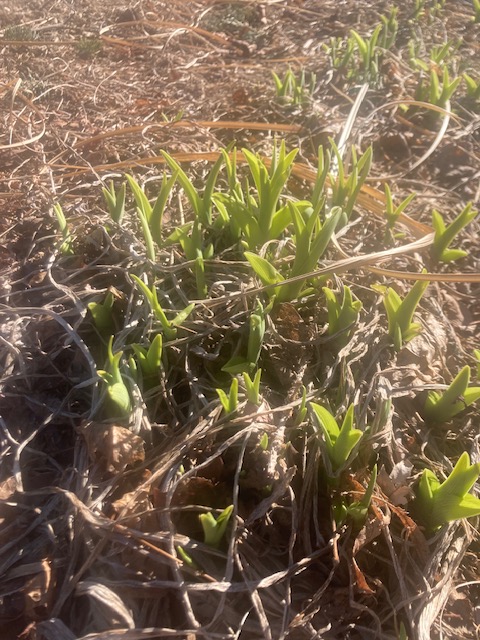
Gaia pushes up the Garlic while cold weather starts go into the ground: Kale, Chard, Lettuce, Pac Choy, Snap Peas, Fennel, Shallots, Scallions, Rosemary, Parsley and Thyme.


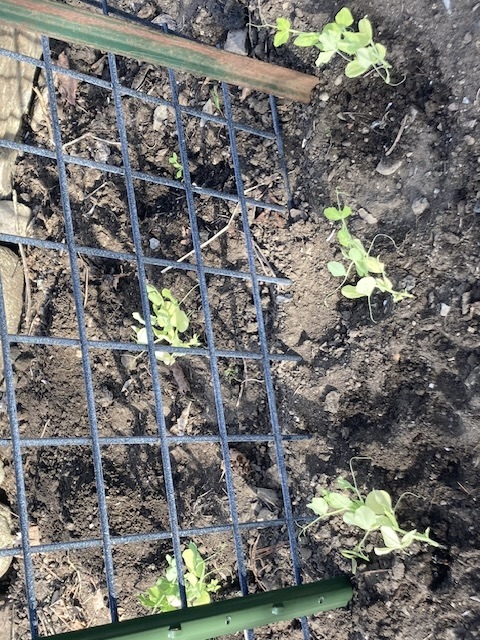
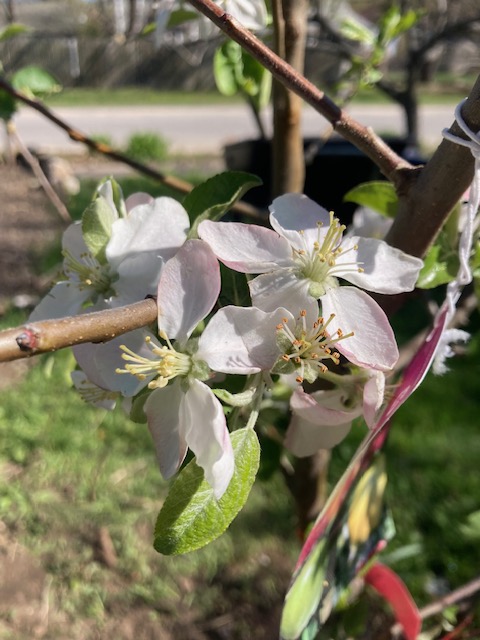
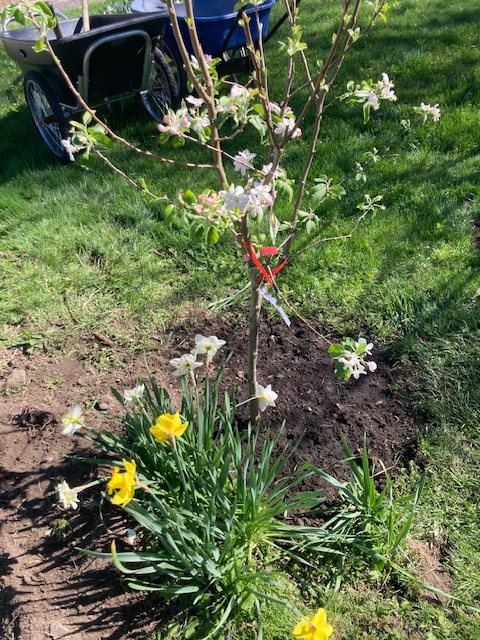
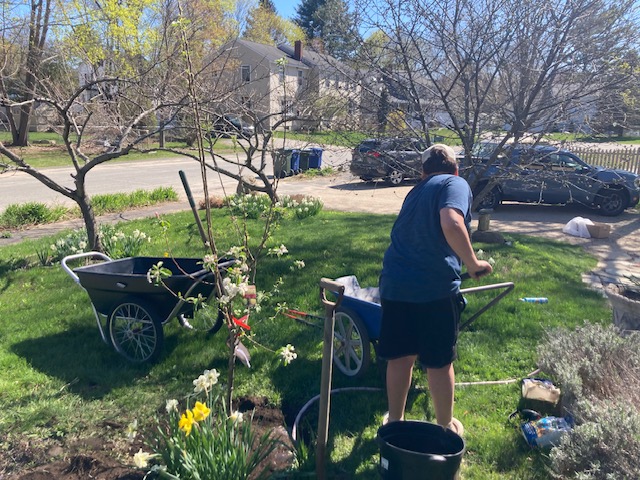
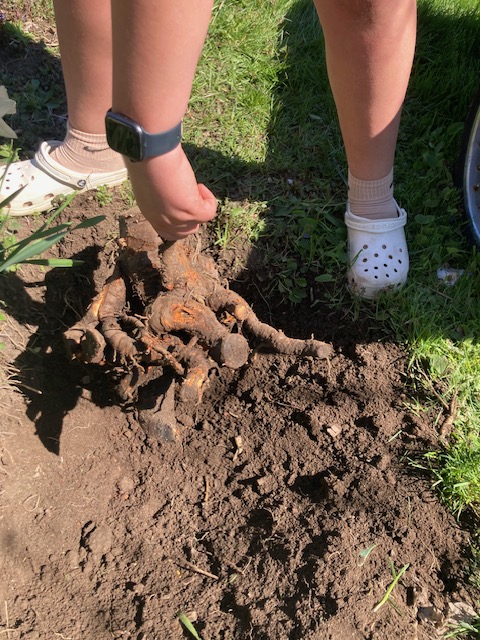
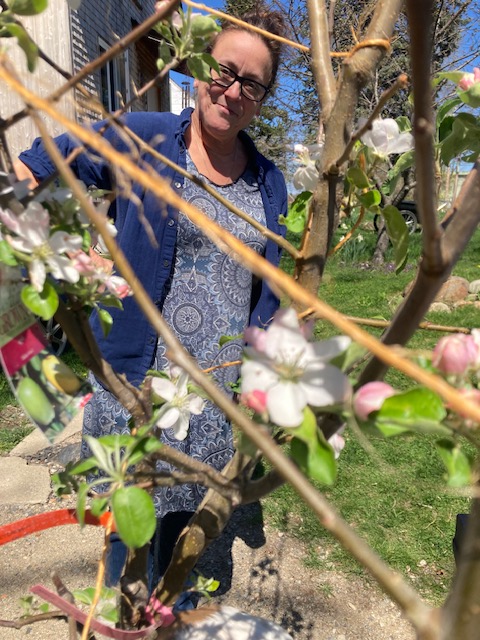
And most importantly, Eve has come to our garden! A 4-in-1 semi-dwarf apple tree, a gift from Grammy Moana to Becca, with four varieties grafted onto the root stock: Fuji, Pink Lady, Honeycrisp, and Ginger Gold. Something for everyone! She joins our two peach trees and a sour cherry tree. I cannot tell a lie, my son cut down our sweet cherry tree last summer, at my instruction. The trunk had a serious gash and its time was ended. Every end is a new beginning, the circle of life, and Eve has taken its place!



Habeas Corpus, Habeas Vox
Posted: April 11, 2025 Filed under: Child Centered Activities, Chronicles of a First Time Parent, consciousness | Tags: constitution, history, politics 2 Comments
One recent morning, my son stood in the kitchen, riveted, listening to the radio. Briskly he spoke, “Dad, how can the President deport citizens for what they say? Isn’t this a violation of their First Amendment rights? When someone enters the country legally, they gain the right of free speech!…upon entry, but they are being deported for saying things the President does not like! They have the right to speak! I don’t understand this!!?” My son’s concern for Free Speech coincides with the right of Due Process.
Knowing it takes a village, I reached out to his cousin WMMK – my nephew – a young law professor who, as it were, is an expert in habeas corpus, which is to say Due Process. WMMK has been published, arguing that habeas corpus is the “…Great Writ of Popular Sovereignty — a tool for We the People to insist that when our agents in government exercise our delegated penal powers, they remain faithful to our sovereign will.” WMMK argues “…the implications for the law of habeas are profound…Paradoxically, shifting from a libertarian to a popular-sovereigntist conception of the writ might yield habeas doctrine more capable of protecting individual liberty.”
My son having raised questions of individual liberty, and given his cousin’s strong clear voice, I decided to create a homeschool Humanities Seminar. Habeas corpus in Latin means “you should have the body.” And where there is a body, there is a voice. Thus we prepare to homeschool “Habeas Corpus, Habeas Vox: Due Process and the 1st Amendment.”
All roads do not lead to Rome. Plato and Aristotle taught that justice within the state held civic virtue (“arete”) as its key; they did not teach specific legal mechanisms to protect individual liberties.
It would take a peasant boy, born in Dardania (present day Balkans) to craft those mechanisms. Justinian – Emperor of the Byzantine Empire – not only built the Hagia Sophia but codified the great Roman jurists; his Corpus Juris Civilis (“Body of Civil Law”) (529-534 AD) endures as the basis of European and International law. But the heavy lifting came in medieval England.
King John was arbitrary and autocratic, and so his Barons spoke up and rebelled. They forced him, in 1215, to sign the Magna Carta which guaranteed “No freeman shall be taken or imprisoned or disseised or exiled or in any way destroyed…except upon the lawful judgement of his peers or the law of the land.” Given habeas vox, so then habeas corpus; the Habeas Corpus Act was codified in 1679 and remains on the statute book to this day: prisoners cannot be held indefinitely without a judicial review of their detention.
The origins of free speech – in the Western tradition – go back to Athenian democracy, in the late 6th or early 5th century BC. They had two concepts of free speech; isegoria was “equality of speech” where all freeborn males had a direct voice in debating and passing laws, while parrhesia was “uninhibited speech,” a culture of tolerance and the free exchange of ideas and criticisms. Erasmus (circa 1500) and Milton (1644) weighed in, but again it was the English Parliament, whose Bill of Rights in 1689 established the constitutional right of freedom of speech. On that recent weekday morning, my son honored that tradition, arguing on behalf of individual liberty.
What then shall our seminar entail? I have begun assembling a reading list to include:
- In Classical Greece justice was the proper functioning of the state as a whole, with community and mutual respect valued higher than individual liberties. The greatest punishment was for the intransigent to be exiled, which is to say to have their voice taken away.
- Justinian’s reign occurred at a hinge point of history. Considered among the greatest, and the last, of the Roman Emperors, his achievements marked the apex of Roman expansion, until a flea carrying the bubonic plague brought massive death: between 25 and 100 Million deaths and the downfall of the empire. The armies of Mohammad easily ransacked both Rome and Persia, and history moved from late antiquity to the medieval world.
- The Magna Carta was foundational to British Common Law, as developed through judicial decisions rather than written codes; “Stare Decisis” means that courts shall follow earlier rulings in similar cases, with precedent as the governing basis. Stability is a virtue. The British Bill of Rights built upon this tradition and became the basis for much of American law.
- The Judiciary Act of 1789 established the American judiciary – the mechanism of due process – and was followed by Amendment One to the USA Constitution, ratified on December 15, 1791: “Congress shall make no law respecting an establishment of religion, or prohibiting the free exercise thereof; or abridging the freedom of speech, or of the press; or the right of the people peaceably to assemble, and to petition the Government for a redress of grievances.”
- Abraham Lincoln suspended the right of habeas corpus at his sole discretion when he signed The Habeas Corpus Suspension Act of 1863. He argued the public safety required it, such as during rebellion or invasion of the Civil War.
- And finally, we will come to the present day, to discuss the fundamental meaning of freedom of speech with American habeas as the vindication not of individual physical liberty, but of popular sovereignty. How does the state protect the voice of “We the People”? WMMK will lead this discussion.
We need pay heed to the fact that for every minute we ponder such noble thoughts, in El Salvador, Kilmar Abrego Garcia is detained wrongfully, without due process, by an administration driven not by justice but reptilian id, anger and revenge for its own gratification; how frail is the law to those who shall not heed its calling. The Magna Carta is but words on paper in the face of any regime that abuses human rights, and these rights must belong not to the privileged few, but to all people created equal.
We study the past to inform our future; patterns of discrimination are the reality against which this philosophy need be understood, in order to raise my son with both an intellectual understanding and the emotional intelligence of a 21st Century global citizen.
______________________
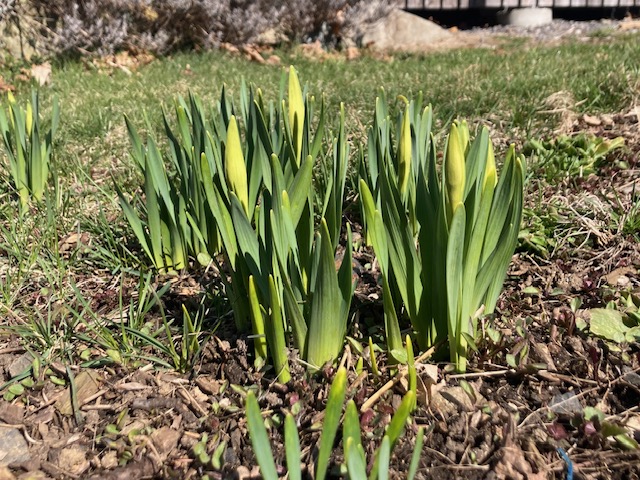
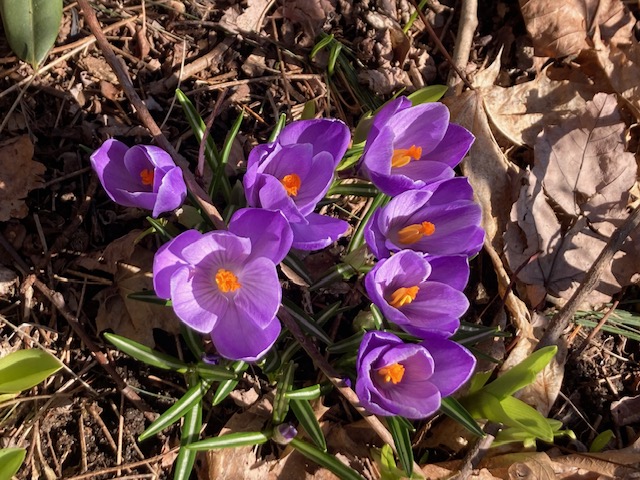
Persephone returns…





A Wily Problem Solver
Posted: March 28, 2025 Filed under: Art & Healing, Chronicles of a First Time Parent, consciousness | Tags: greek-mythology, Helen, Homer, MMA, mythology, Odysseus, odyssey, pankraton 1 Comment
The desire of the Tech Oligarchs to fight and break things is widely known, clearly displayed. Among this rogue band of Billionaires the intellectual appears to be Marc Andreessen, co-creator of the Mosaic web-browser and co-founder of a Silicon Valley venture capital fund.
On Substack, Mr. Andreessen has written, “I was asked what I think of Mark Zuckerberg’s recent Mixed Martial Arts (MMA) training, Elon Musk’s challenge to a cage fight, and public reports that a Zuckerberg/Musk MMA fight may well happen…perhaps in the actual Roman Colosseum. I said, “I think it’s all great. …it’s important to understand how important – how primal – MMA is in the story of our civilization.”
He proceeds to tell the origin of the sport, “…it was introduced to the actual Greek Olympic Games in 648 BC (!). The Greeks called it “pankration” (παγκράτιον), but it is the same thing – a combination of boxing and wrestling.” Trying to impress us by using the Greek letters – Google Translate is free – in fact Mr. Andreessen is showing his lack of understanding.
The rape and abduction of Helen is central to Greek culture; masculine strength and dominance were key, and the Iliad tells the story of the ten-year fight against the Trojans. Helen’s beauty was so great, her “face that launched one thousand ships” when Menelaus, her husband, the King of Sparta, rallied the Greeks to settle the score for her infidelity.
The Iliad sings the praise of manly heroes skilled in fighting and warfare. But the greatest among the heroes was Odysseus, whose skill was not warfare but resourcefulness, his wily, cunning ability to solve problems.
Of Homer’s two epic poems the Iliad is an ensemble story, while the Odyssey sings of Odysseus, alone, his ten-year homecoming after the Trojan War, his return to Penelope and their marriage bed.
During the War, Odysseus was one of the most trusted counselors and advisors. A voice of reason, renowned for self-restraint and diplomacy, he served as a counter balance to the pugilism among the heroes. His homecoming was filled with travail, the hero’s journey in the most archetypal sense. Consider the challenges he overcame:
- When Achilles’ beloved Patroclus was slain, Odysseus negotiated with Achilles to let the men eat and rest, rather than resume the fight. Funeral games were held and Odysseus wrestled with Ajax “The Greater” and raced with Ajax “The Lesser.” He drew the wrestling match, and with the help of Athena, won the foot race. His manliness well-equaled that of other heroes.
- Odysseus devised the Trojan Horse, and lead the siege within the walls of Troy. This brought the defeat of the Trojans, and the end of the war.
- Homebound from Troy, his ships were driven off course and captured by the Cyclops Polyphemus. He and the Cyclops drank much wine, which allowed Odysseus to blind him and then escape.
- Aeolus, the master of the winds, gifted a leather bag containing all of the winds except the west wind, to ensure his safe trip home. But his sailors opened the bag while Odysseus slept, releasing the winds to create a major storm, driving them off course, when his homeland was within sight.
- They re-embarked and encountered the Laestrygonians – man eating giants – which only Odysseus’ ship escaped. Circe the witch-goddess turned half of his men into swine, then Odysseus and his remaining crew spent one year with her enjoying feast and drink.
- He set sail to the western edge of the world, summoned the spirit of the prophet Tiresias and learned of Penelope threatened by suitors. He sailed onward, past the land of the Sirens, through the dire straits of the Scylla and Charybdis, after which his crew hunted down the sacred cattle of the sun god Helios. A shipwreck followed, in which everyone except Odysseus drowned. He washed ashore, whereupon Calypso, a sea nymph, compelled him to remain her lover for seven years.
- He escaped, set sail, shipwrecked again but befriended the Phaeacians, whose King agreed to deliver Odysseus home, to a hidden harbor on Ithaca, his home island.
- Home after 20-years, he sleuthed the island to learn the status quo. His son Telemachus, now a grown man, also returned from the Trojan War, theirs was a grand reunion, of secrecy.
- His wife Penelope, having held at bay her suitors for decades, announced that whoever could string Odysseus’ rigid bow and shoot an arrow through twelve axe shafts should have her hand in marriage. Dressed as a wandering beggar, Odysseus alone strung the bow and won Penelope’s hand, once again. He and Telemachus, his son, easily slayed the suitors.
- Penelope still could not believe her husband had returned, and so tested him with a ruse: she ordered her servant to move the bed in their wedding chamber. Odysseus protested, knowing this could not be done as he himself had built their wedding bed and knew that one of its legs was a living olive tree. Rooted deeply into the ground, such was the union of Penelope and Odysseus, which survived 20 years of separation.
- To avenge the killing of the Suitors, the citizens of Ithaca rose up, but Athena and Zeus intervened and both sides made peace; after 20 years’ destruction the Odyssey ends with peace and reunion.
In 431 BC, Sparta attacked and defeated Athens, with the justification that “might makes right.” And now, Mr. Andreessen praises the primal, “If it was good enough for Heracles and Theseus, it’s good enough for us. Fight!”
But the apex of Classical Greece – the birthplace of democracy – was the Athenians’ understanding of virtue. From Socrates, to Plato, to his student Aristotle, civic virtue – “arete” – emphasized justice, courage, and moderation for the benefit of the community, rather than the individual. To the Greeks, the most enduring heroic quality was not skill in warfare, but cunning command to solve problems for the civic good.
Elon Musk, called “the smartest 15-year old on the planet,” holds now the keys to the American kingdom. For better or worse, our House seems reduced to Animal House. The tech bros – the puer aeternus – shine in their moment to break and destroy with libertarian glee. But this moment of breaking shall pass – all things pass – and great then shall be our collective need to problem solve.
We the people must rise to the coming moment.
______________________________








 an Art Farm