Misery
Posted: February 27, 2026 Filed under: Child Centered Activities, Farming off the Farm, What is an Art Farm 1 Comment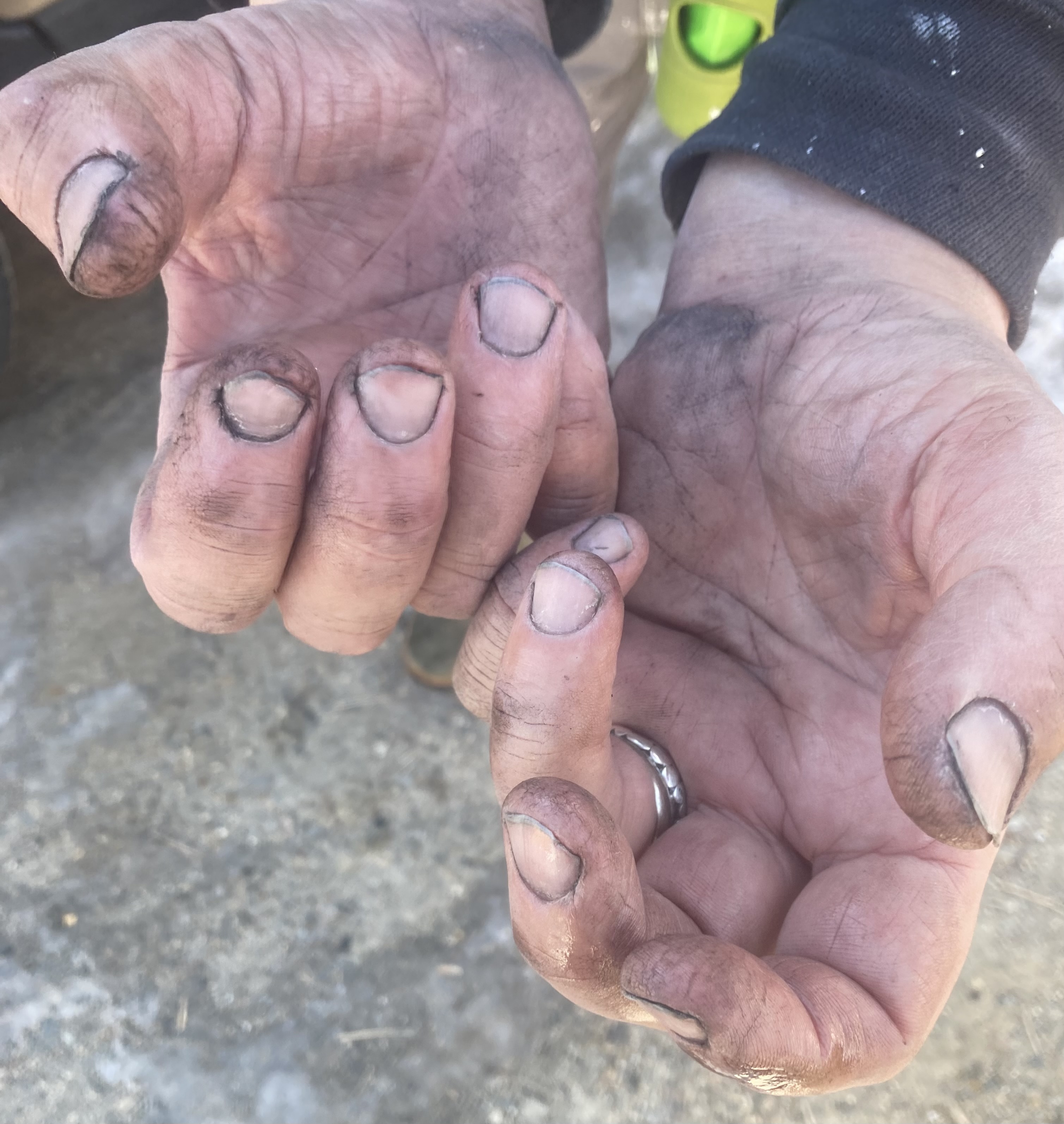
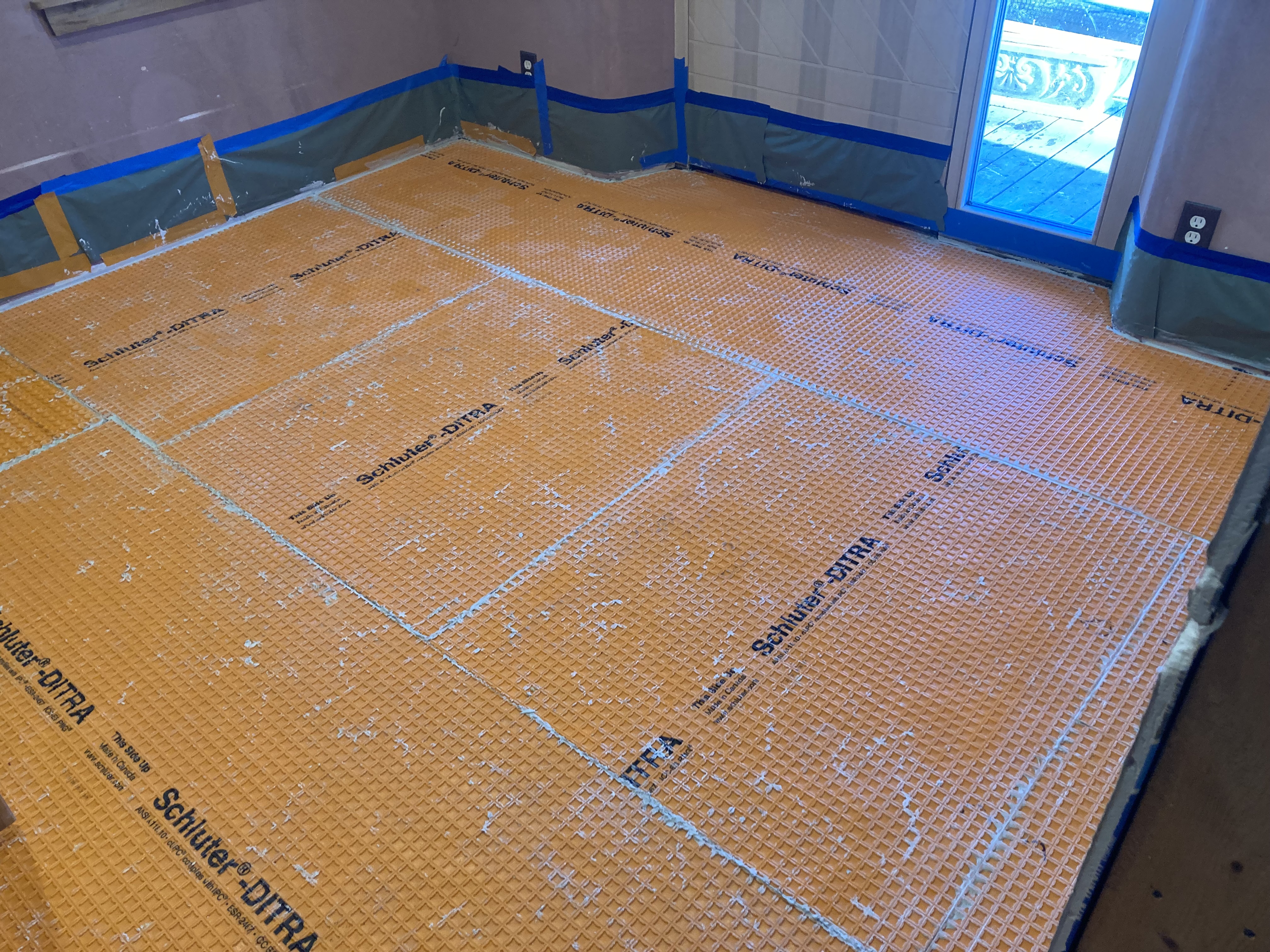
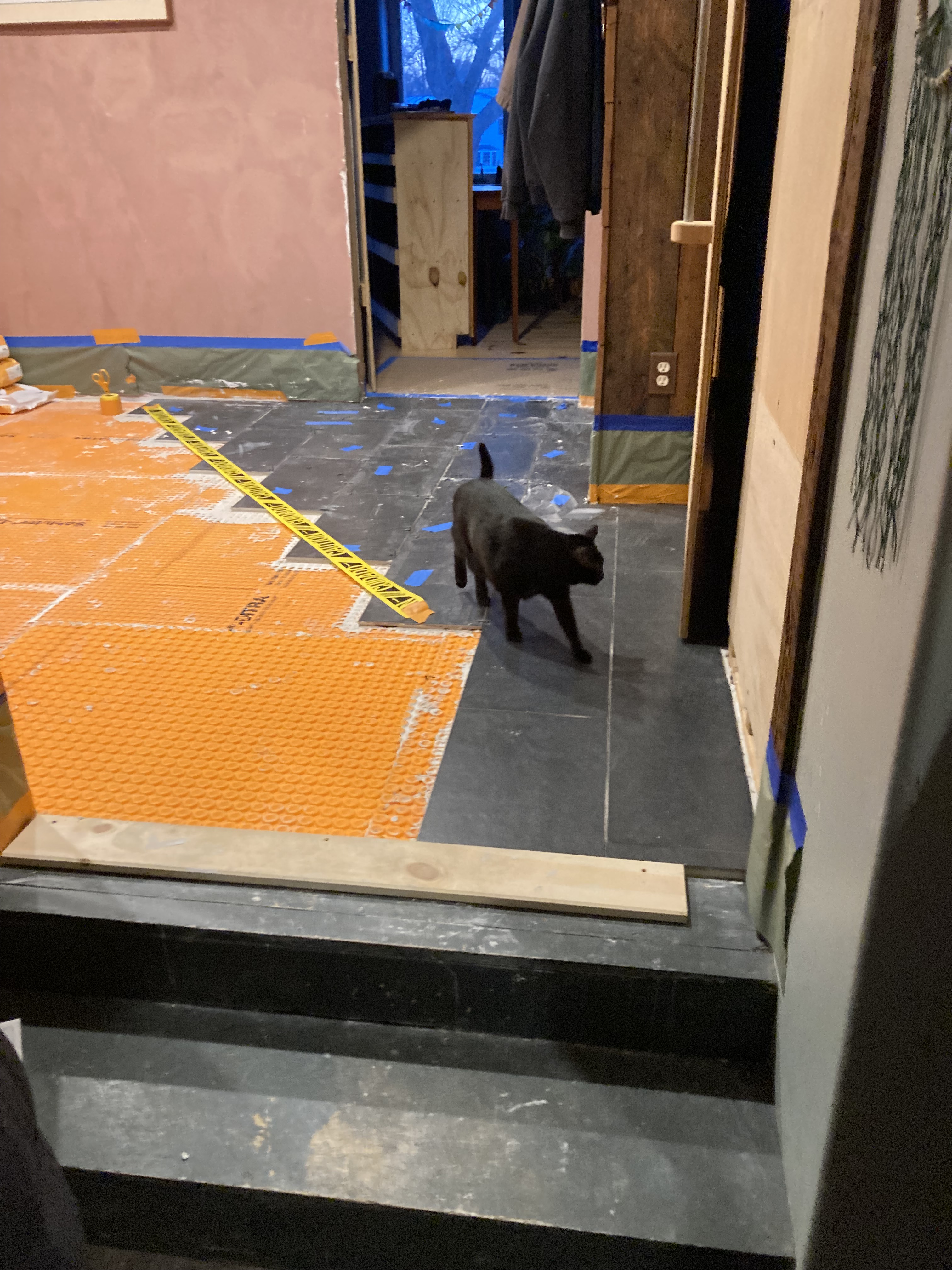
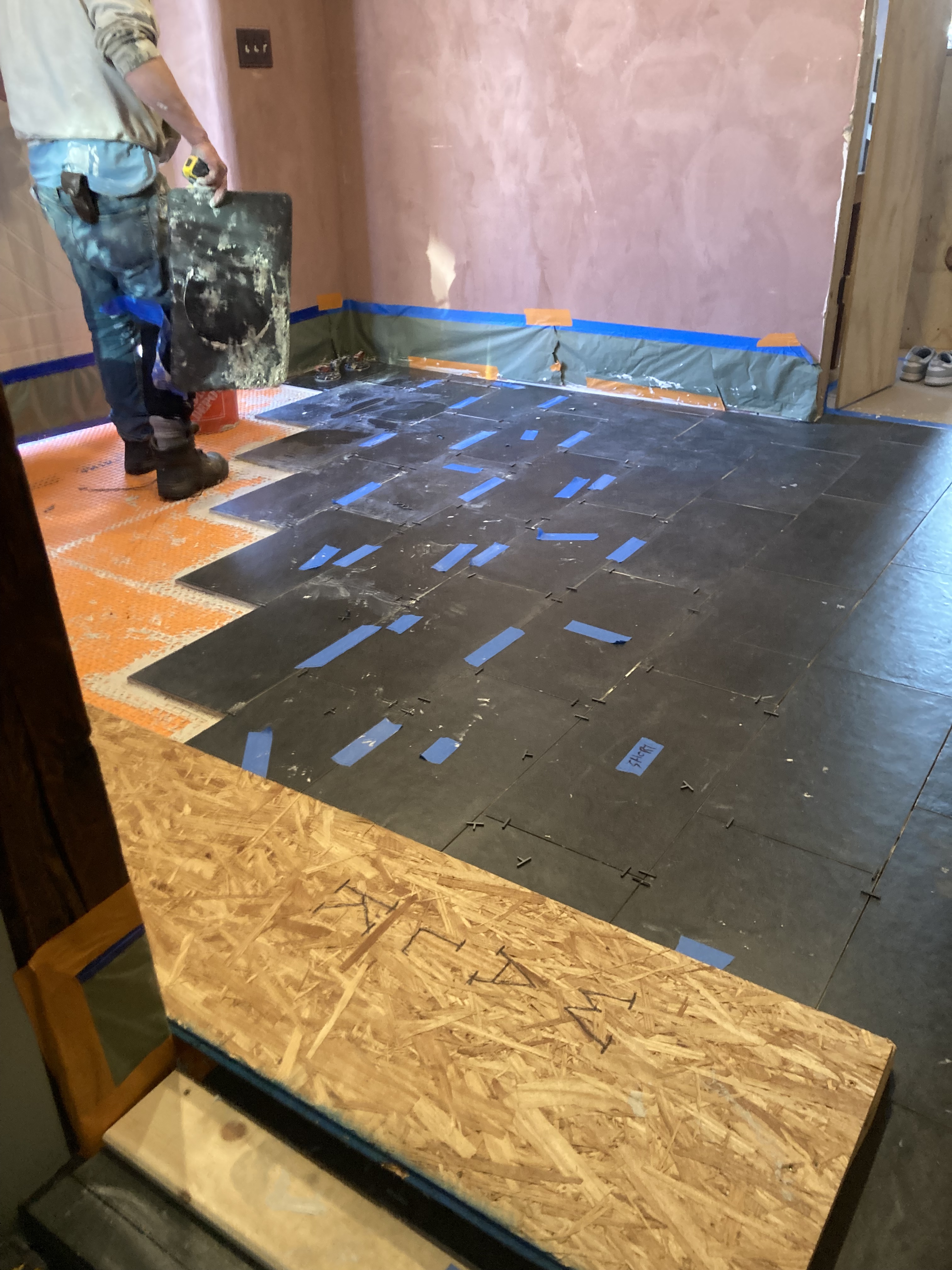
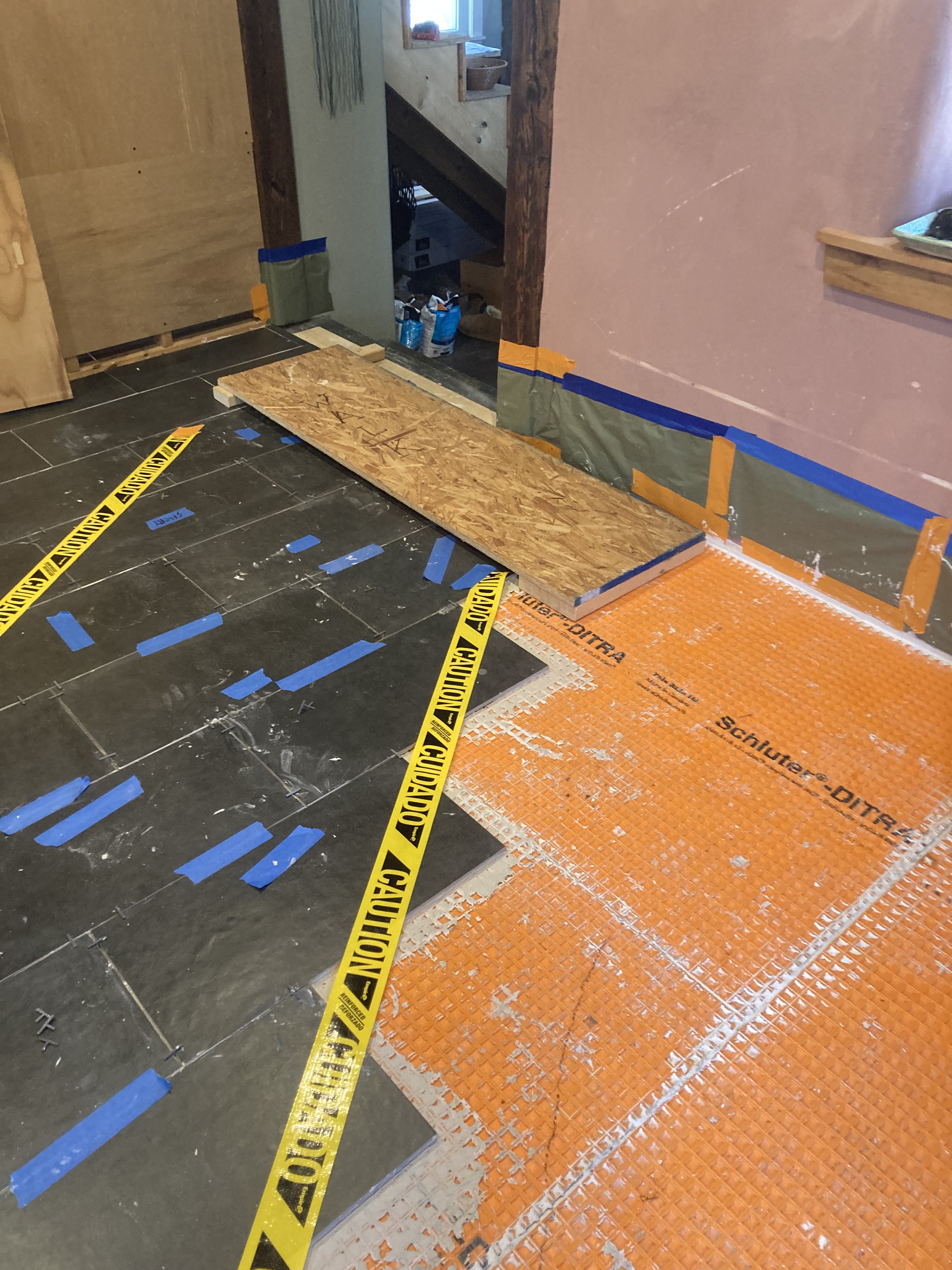
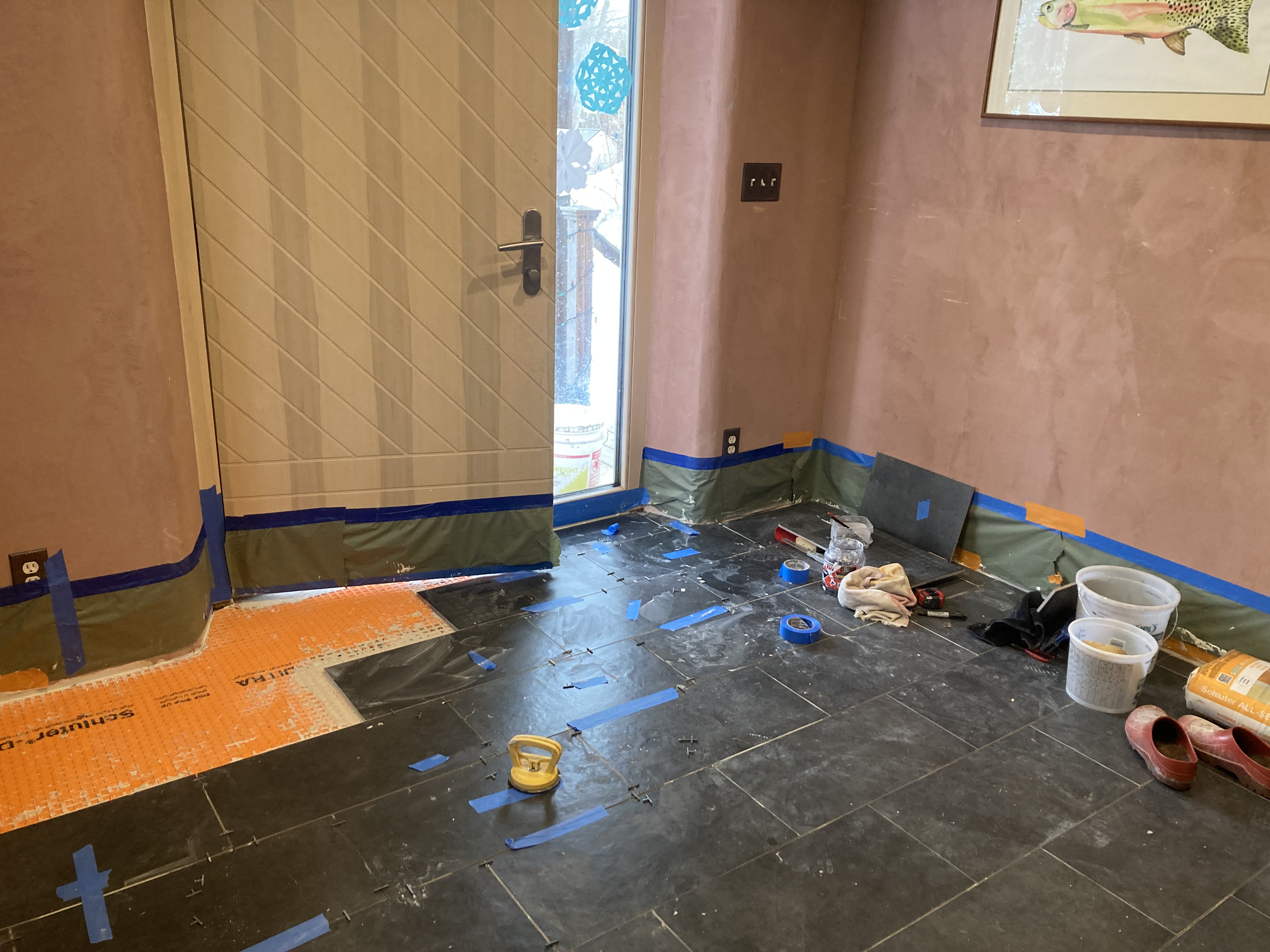
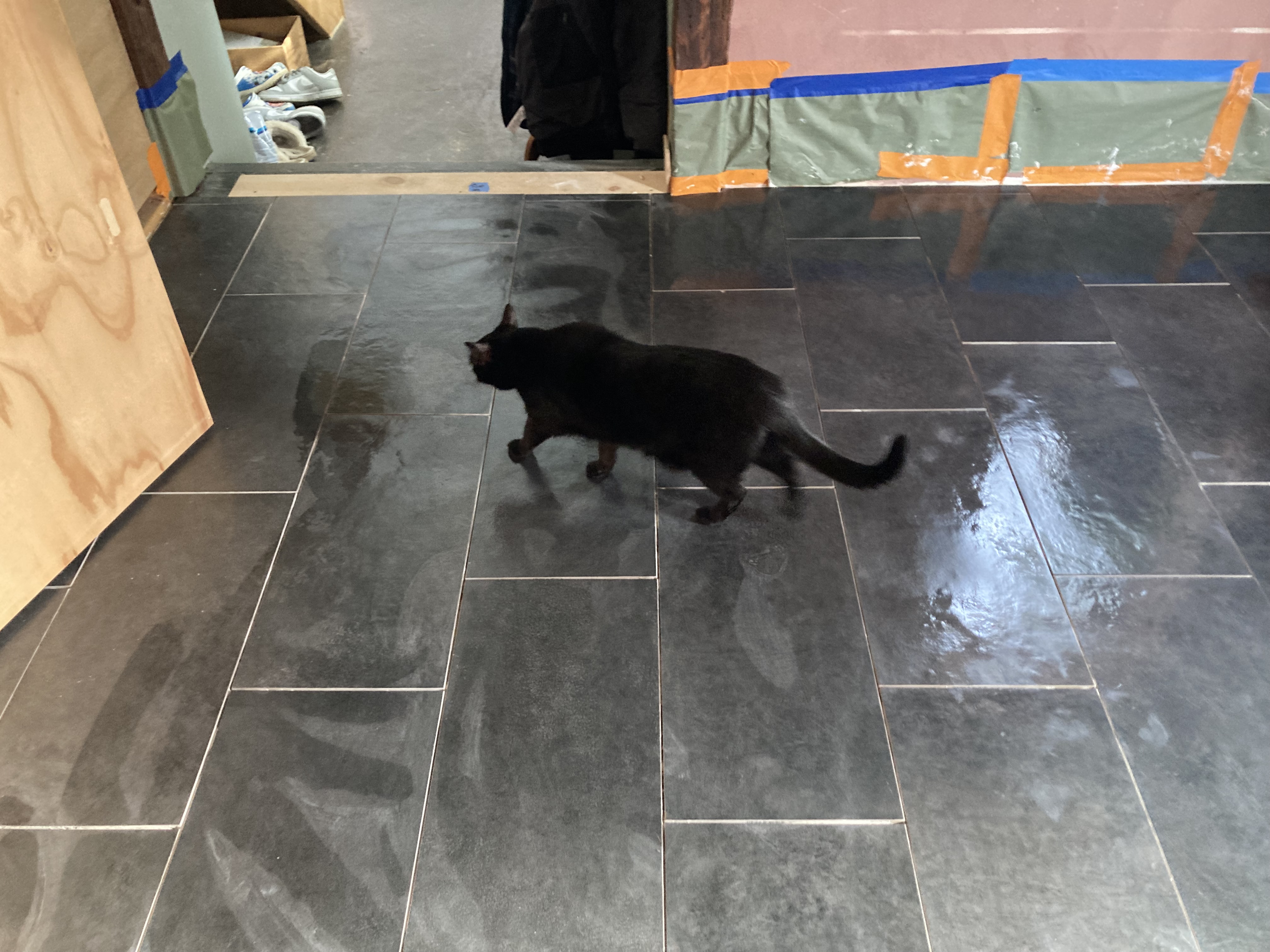
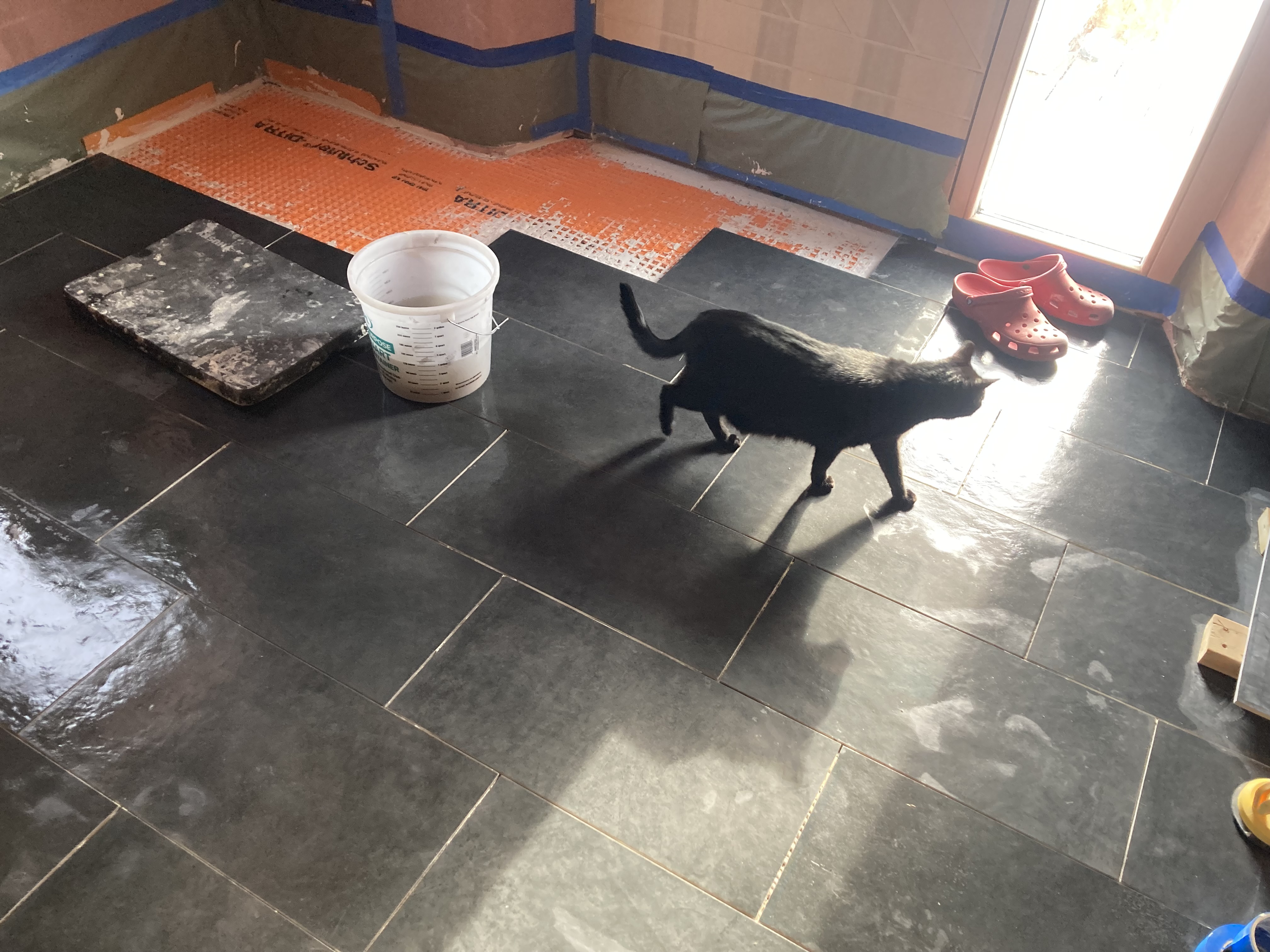
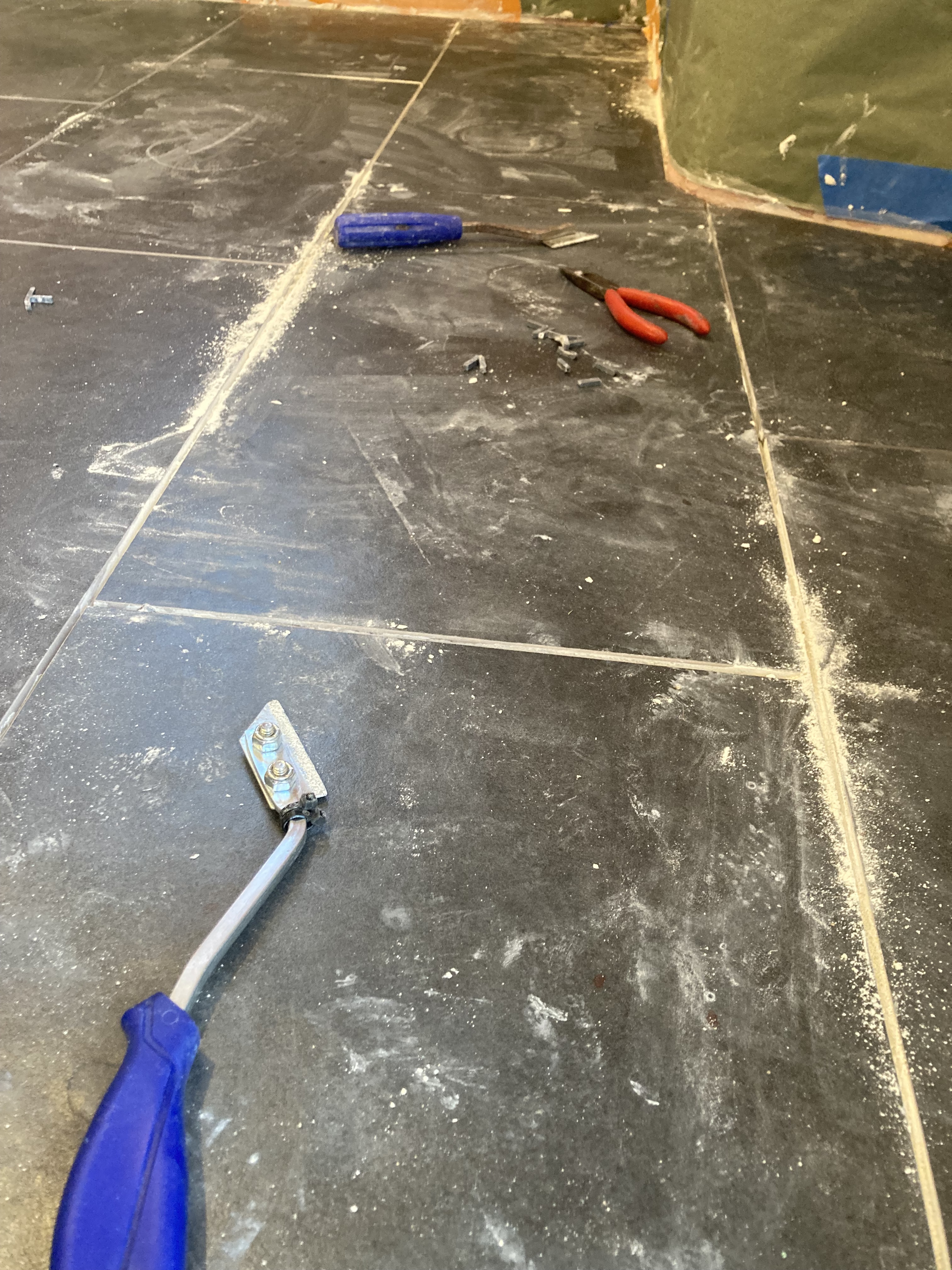
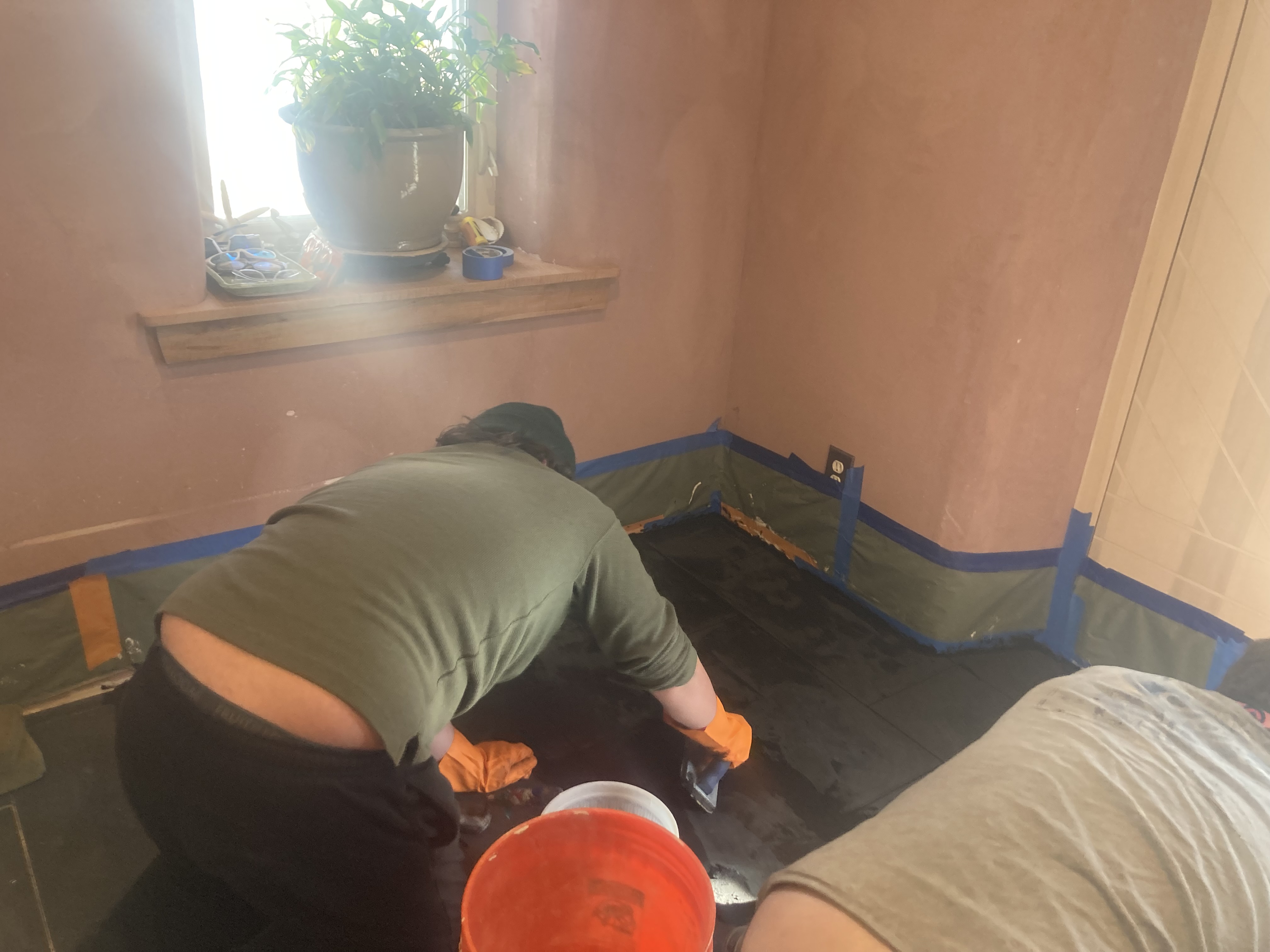
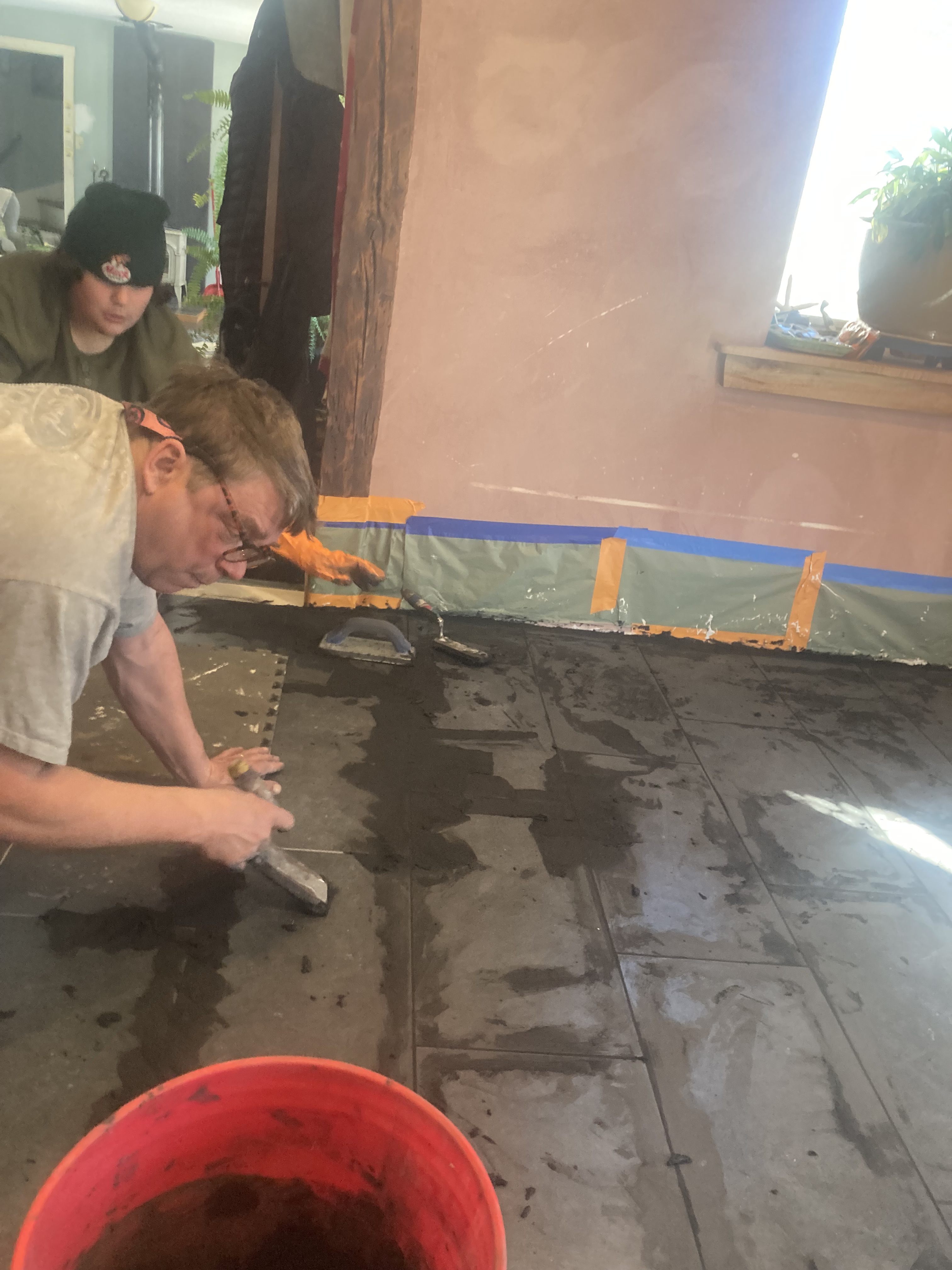
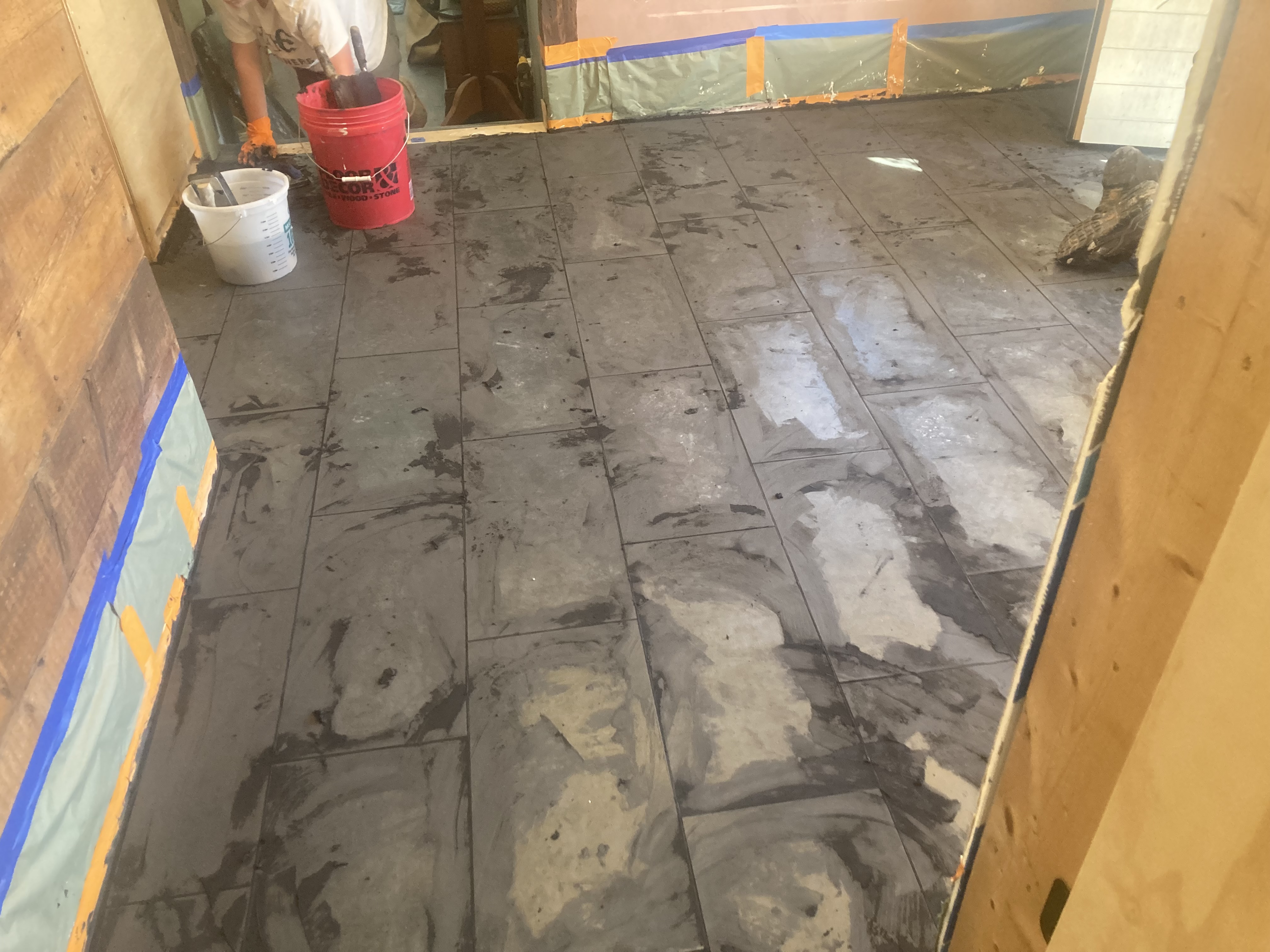
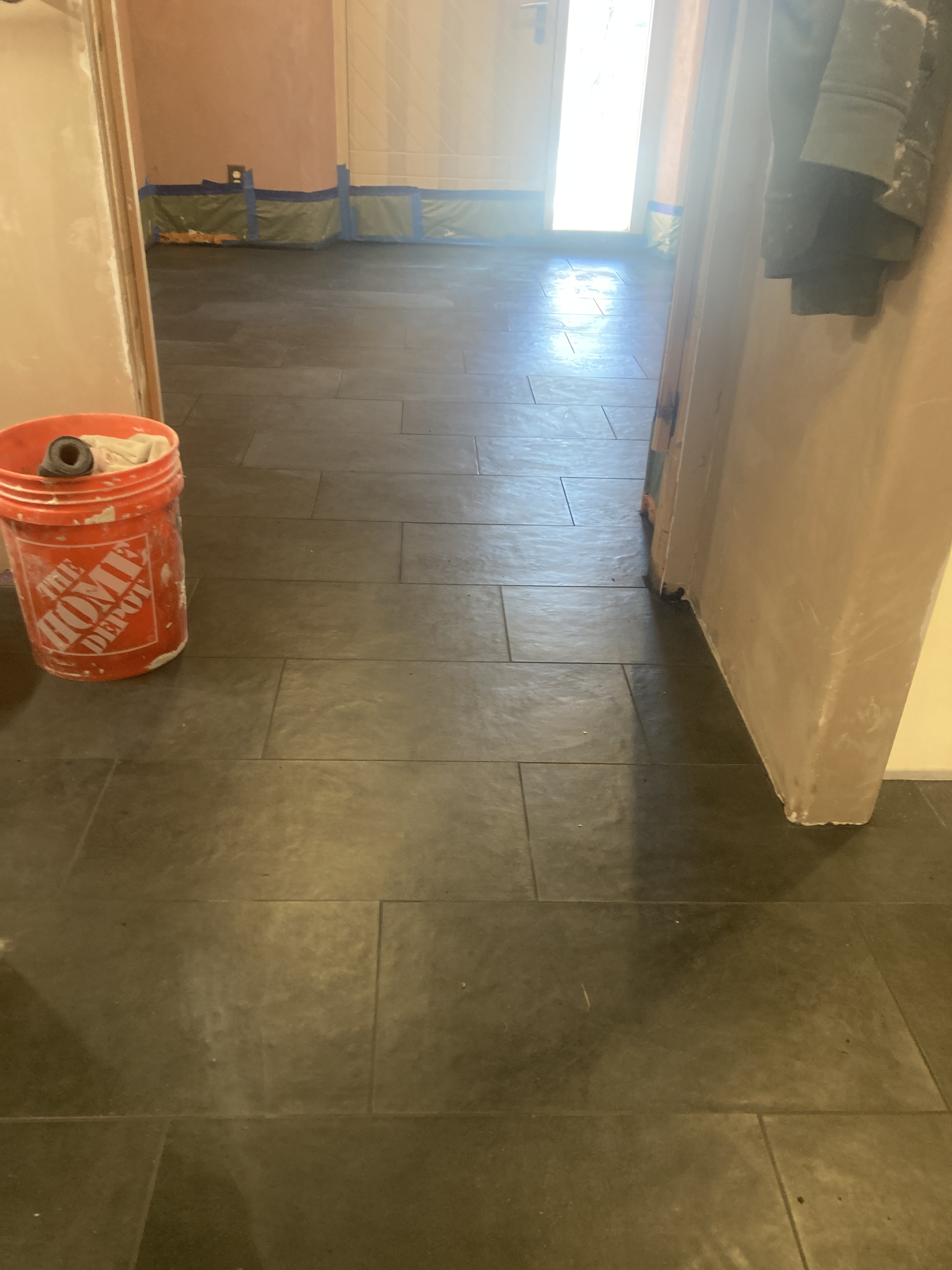
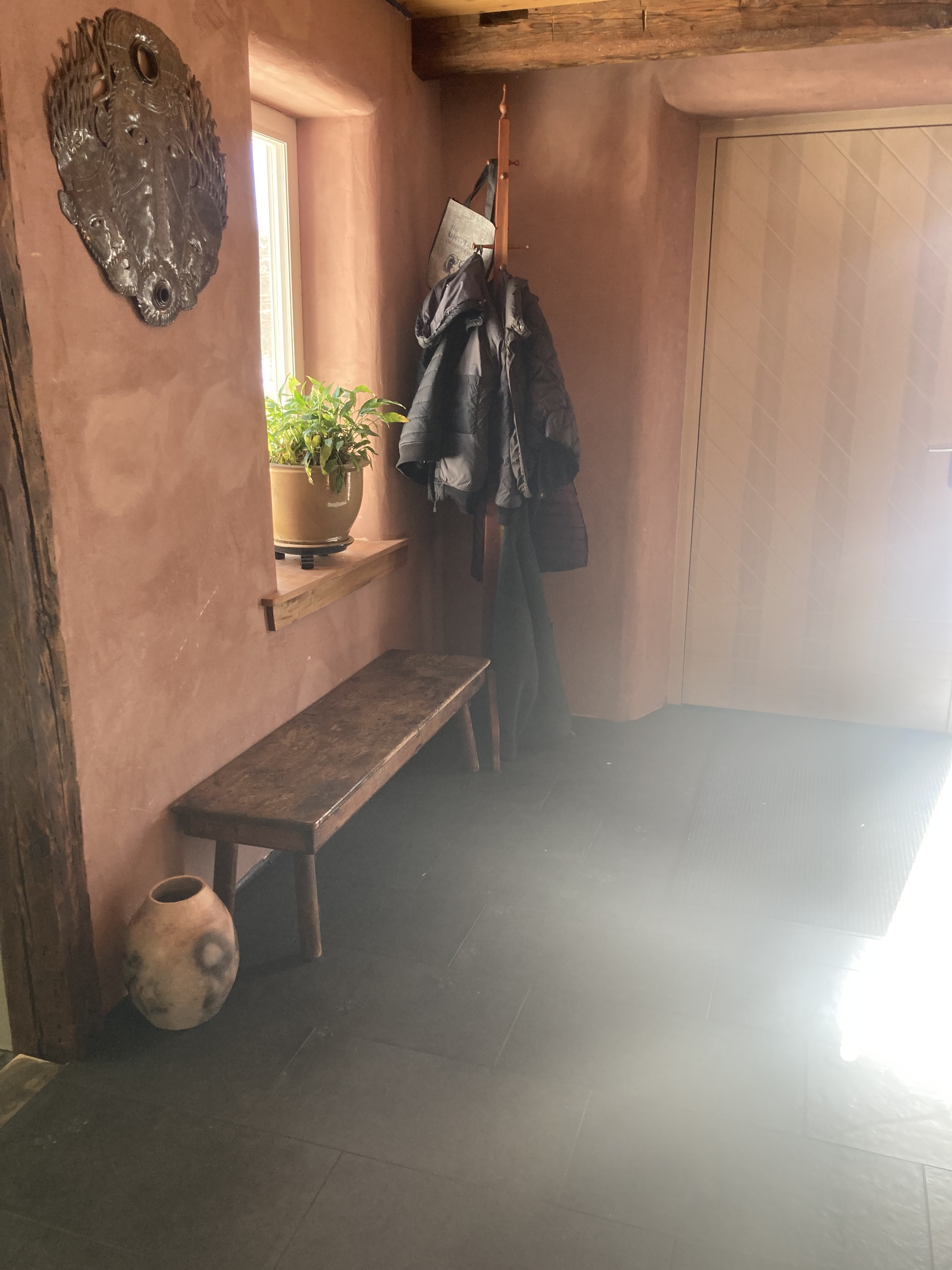
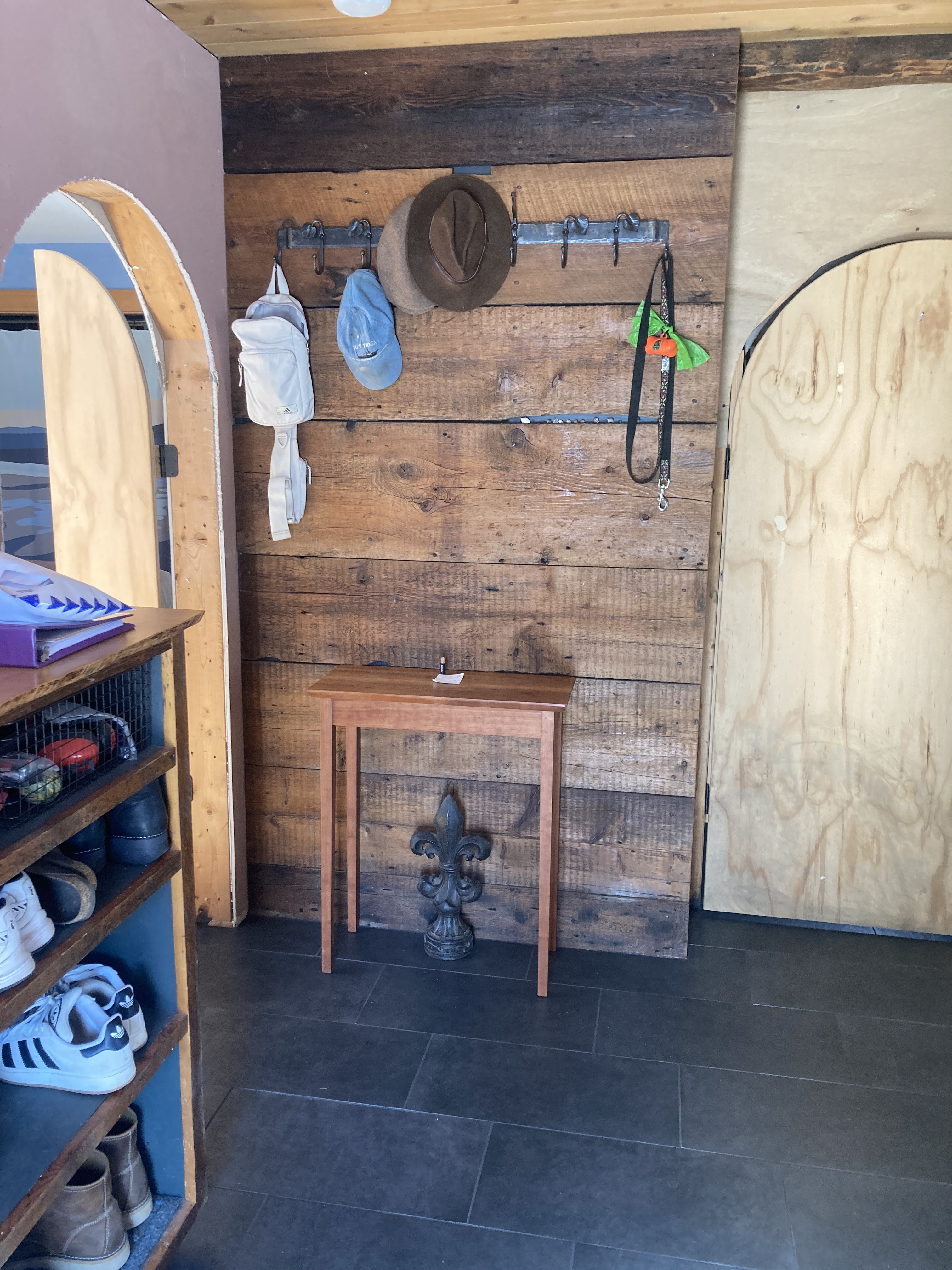
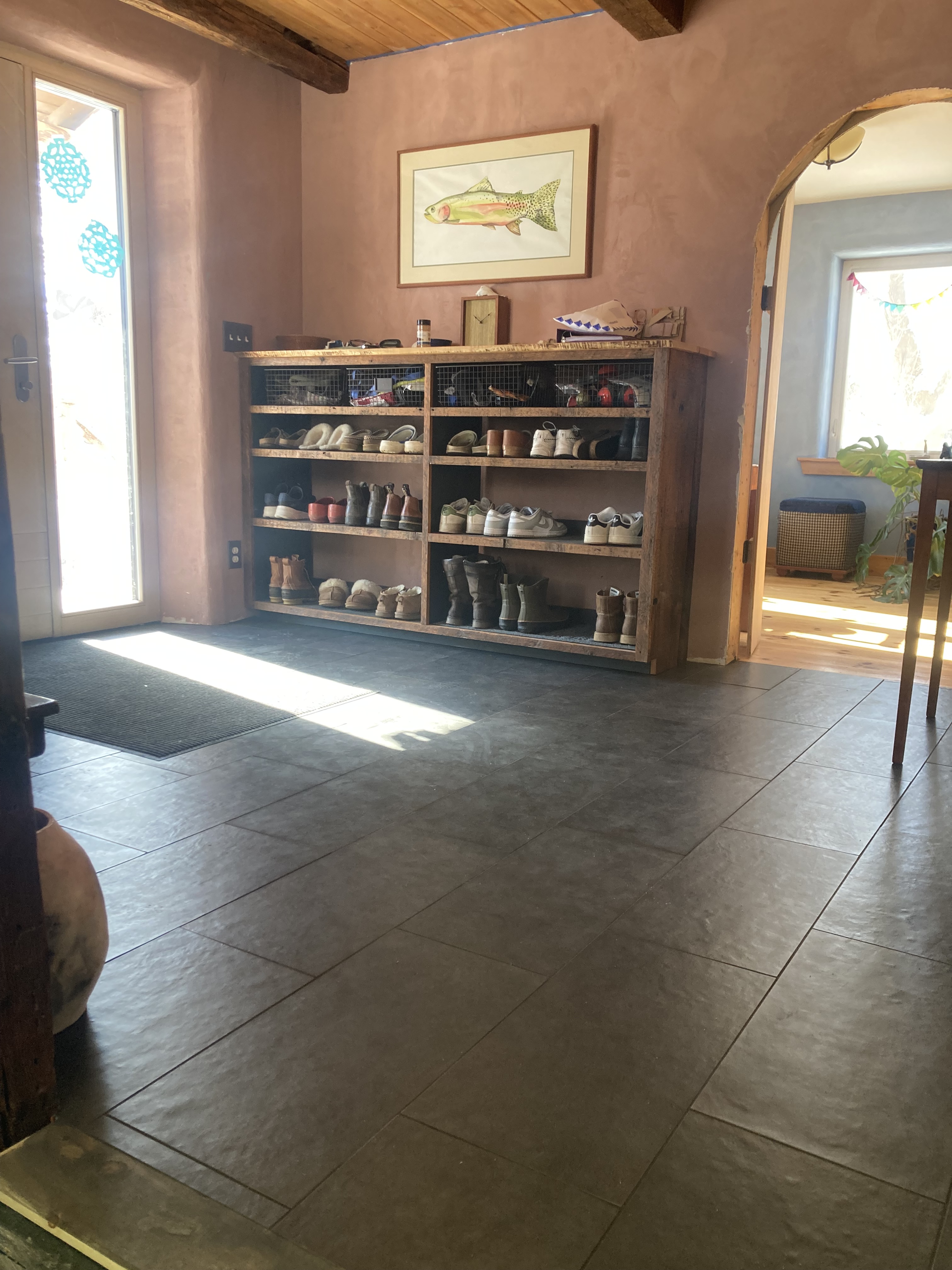
Misery loves company, which is why we did the tiling work as a team, laying 259 square feet of tiles on hands and knees. The work is finished now and indeed, “teamwork makes the dream work,” which saying the end result has proved.
To make a distraction from tiling, we played the “Greek Syllabification” game. In fact, this was a lesson in logical thinking and, even though the local schools were on February Break, our Art Farm Academy remained open for business.
My son’s Language Arts teacher, known as “The Magister,” created the game as, “…an excellent, brief object lesson in logical thinking…a fitting complement to his thinking about and then articulating how an English sentence can be composed one way or another to suit the purpose of the statement. …it’s time to slyly ratchet up his ability to think and express himself more critically–and at the same time build his pride and confidence, which the strangeness of the Greek can occasion.”
I dared not tell my son this was an assignment, but instead spoke of the “game,” with four basic rules:
- Every word is made up of syllables and consonants.
- Every syllable makes one sound.
- The sound of a syllable is made by a vowel, or by a consonant with a vowel.
- To syllabify means to divide a word into its syllables.
Seven letters are vowels in Greek: α, ε, η, ι, ο, ω, υ. The combinations of αι and οι make up one vowel, which combination is called a diphthong. A Greek word has as many syllables as it has vowels or diphthongs.
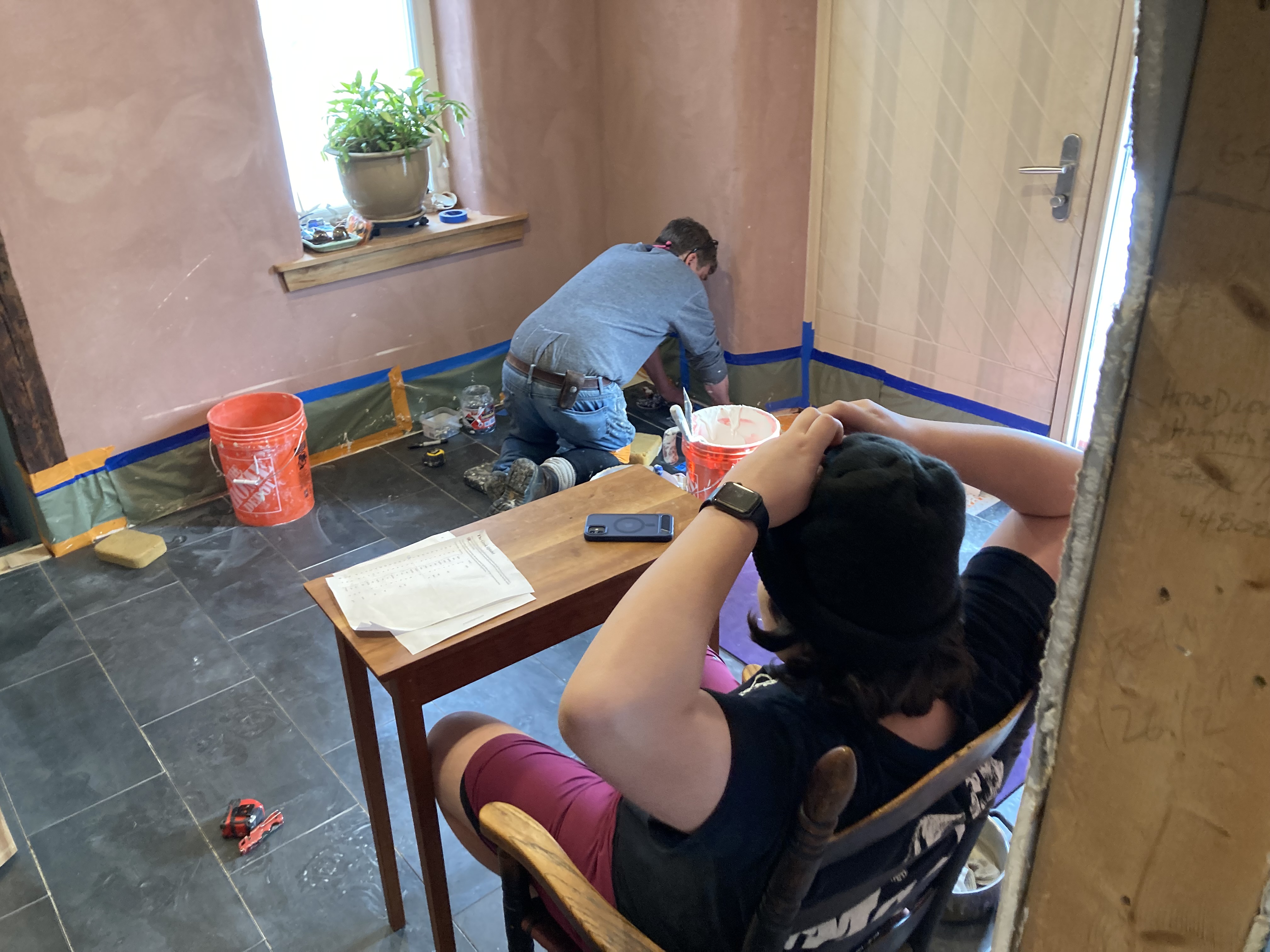
While the Professor and I worked on our hands and knees, my son set up a table and chair, and we began. The contrast in postures was as comical as playing the game was wildly impractical. But we pushed on enough to lay both the game’s ground rules as well as more tiles.
Another assignment during last week was to calculate the degrees of the triangle formed from our first day’s tiling work. My son knows that every triangle contains 180 degrees, and our day’s work was a right triangle, meaning a 90 degree angle at the base. Using a tape measure, we found the hypotenuse was 115″ but the sides were not equal – one was 71” while the other was 90” – and if not equal then the angles could not both be 45 degrees. We needed trigonometry, not geometry, to solve the ratio of the sides of a right-triangle to find a specific angle.
My daughter, who excels in high school, was amazed that we would tackle trigonometry but such was the task at hand. Conventional schooling regards trigonometry as a subject for Junior or Senior year of high school, but anyone in the trades learns that you use the tool when needed. My son has already studied ratios so this was a chance to apply that knowledge.
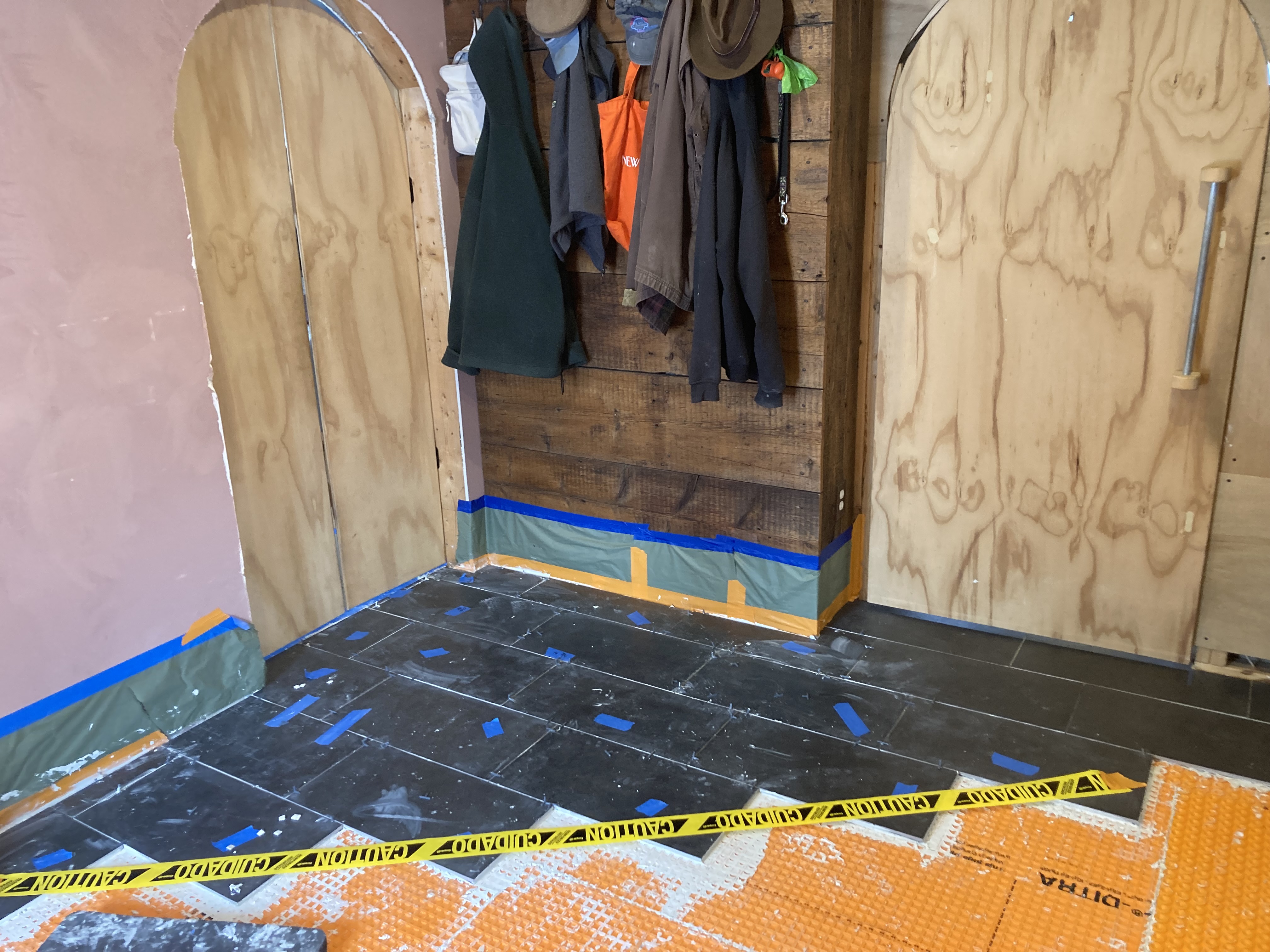
Our problem, it turns out, has been discussed as far back as the Babylonians and Egyptians; was refined by the Greek astronomers, but Aryabhata, an Indian mathematician, discovered the terms used today: sine and cosine.
The word “sine” is derived from the Latin “sinus” which means “fold in a garment,” but that was a mistranslation of the Sanskrit word “jya-ardha” which meant “half a bowstring;” the Sanskrit derived from Persian, which, in turn, came from the Greek “χορδή” which meant “a bow string made of gut.”
The Babylonian, Egyptian and Greek astronomers were trying to understand arcs in a circle, which is the shape of the cosmos. Trigonometry became their language to divide a circle in order to map the heavens, and thereby understand the movement of celestial bodies. Rich history lay behind the very tangible question of the triangle we laid on day one of our mudroom tiling.
“Sine” is simply the ratio between the right triangle’s hypotenuse and its opposite side; the 71″ Opposite divided by the 115″ Hypotenuse equals 0.617. Converting that ratio into an angle requires the inverse function known as the arcsin; given the known sides we want to know the angle they form, the space between. Because the math to calculate the arcsin is complex, we used a calculator, but the concept became clear: our tiling had angles of 90, 38, and 52 degrees (which add up to 180). Not surprisingly, the Greek letter theta θ is used to represent the unknown angle. The strangeness that Greek can occasion!
Our Art Farm, then, teaches a practical truth that life is about problem solving, not meeting the metrics of a school curriculum. And in the “there are no coincidences” department, the Goddess happened to read to us a passage written by Melody Beattie about solving problems:
When we spend more time reacting to a problem than we do solving it, we miss the point. We miss the lesson; we miss the gift. Problems are a part of life. So are solutions.
A problem doesn’t mean life is negative or horrible. Having a problem doesn’t mean a person is deficient. All people have problems.
Recovery does not mean immunity to or exemption from problems; recovery means learning to face and solve problems, knowing they will appear regularly. We can trust our ability to find solutions and know we’re not doing it alone. Having problems does not mean life is picking on us. Some problems are part of life; others are ours to solve, and we’ll grow in necessary ways in the process.
Face and solve today’s problems. Don’t worry needlessly about tomorrow’s. When they appear, we’ll have the resources necessary to solve them.
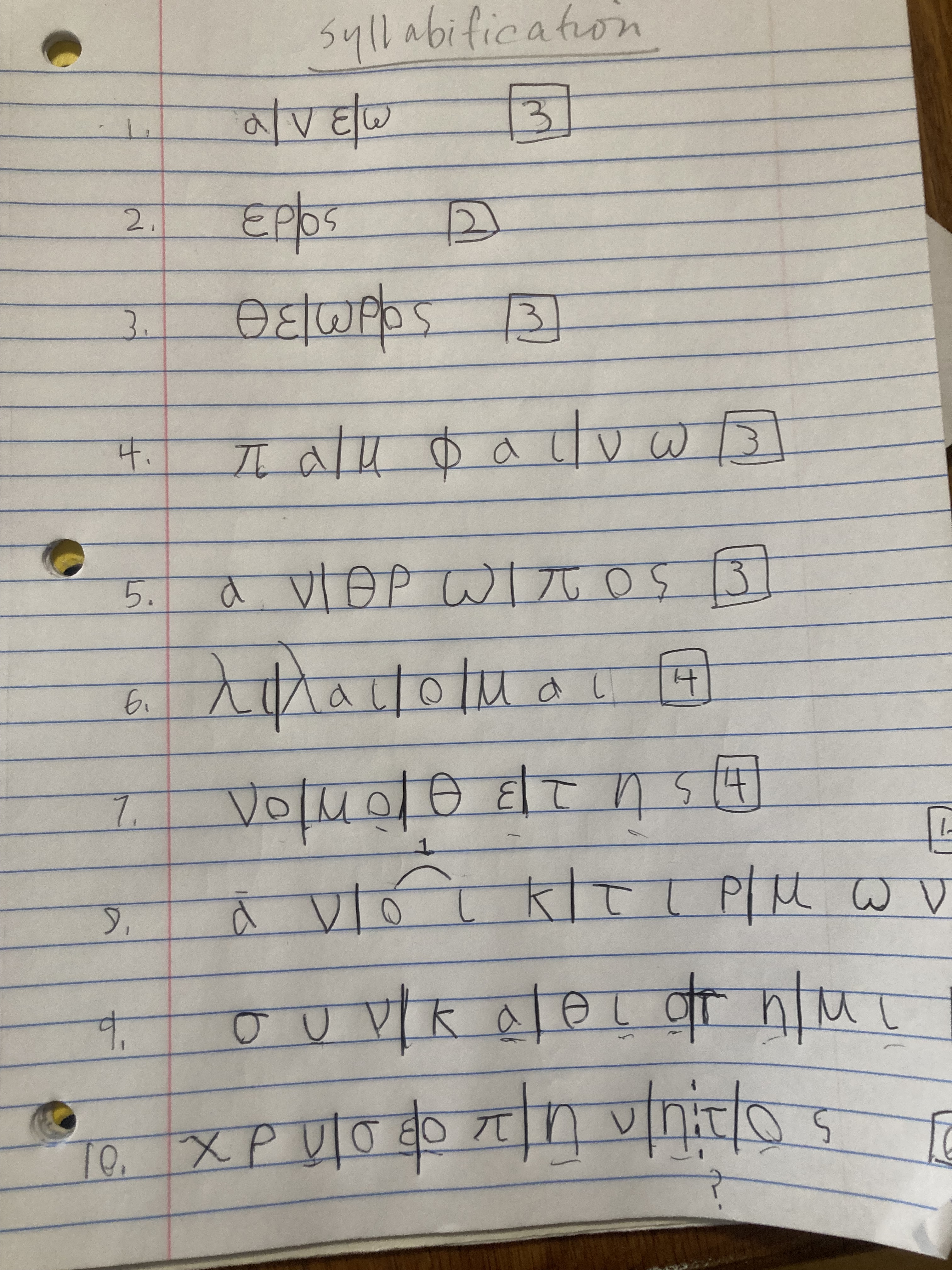
Indeed, our core curriculum increasingly is the very practical lesson of stepping up to life to solve problems. And about that game of Greek Syllabification? By Sunday my son had finished the task. Greek is the least of the lesson. The point is to play by the rules and gain confidence in approaching and working through the unknown. Some serious mental gymnastics ensued, as he worked this through, including pronouncing the words after breaking them into the syllables.
1) ανεω (silently) 3 syllables: α νε ω
2) ερος (love) 2 syllables: ε ρος
3) θεωρος (spectator) 3 syllables: θε ω ρος
4) παμφαινω (to shine) 3 syllables: παμ φαι νω
5) ανθρωπος (man) 3 syllables: αν θρω πος
6) λιλαιομαι (to desire) 4 syllables: λι λαι ο μαι
7) νομοθετης (lawgiver) 4 syllables: νο μο θε της
8) ανοικτιρμων (merciless) 4 syllables: αν οικ τιρ μων
9) συγκαθιστημι (to bring together) 5 syllables: συγ κα θισ τη μι
10) χρυσεοπηνητος (woven with gold) 6 syllables: χρυ σε ο πη νη τος

Realpolitik vs. Real People
Posted: October 24, 2025 Filed under: consciousness, Farming off the Farm, What is an Art Farm | Tags: egypt, vermont 2 Comments
Recent world events have brought remarkable promise, for the hope of peace, in a region where crushing violence has been the norm for centuries. It has been achieved by actors on the great stage, using common people as pawns, in their quest for domination. The signing of the Gaza peace plan was described by one publication as “a brutal lesson in realpolitik.”
Realpolitik is the pragmatic approach, valuing practical and material factors while ignoring ethical questions or abstract ideals. The term was first used in Germany in 1853. Niccolo Machiavelli and Henry Kissinger are its standard bearers, but the world today is rife with alpha strongmen practitioners.
“The Great Man Theory” was developed in the same era as realpolitik. The Scottish man of letters, Thomas Carlyle, developed the idea, in 1840, arguing that history is the impact of highly influential individuals – men – of superior intellect, heroic courage, strong leadership even divinely inspired:
“Universal History, the history of what man has accomplished in this world, is at bottom the History of the Great Men who have worked here. They were the leaders of men, these great ones; the modellers, patterns, and in a wide sense creators, of whatsoever the general mass of men contrived to do or to attain; all things that we see standing accomplished in the world are properly the outer material result, the practical realisation and embodiment, of Thoughts that dwelt in the Great Men sent into the world: the soul of the whole world’s history, it may justly be considered, were the history of these.“
Realpolitik is, essentially then, the effect and the Great Man the cause of much of world history. And so these alpha males build monuments to themselves – arches or obelisks or pyramids or ballrooms – to reassure us by the monuments’ material presence, of the superior level of their being, of their vast accomplishments. Immense is the energy and treasury spent to remind us (or actually to reassure themselves), but history teaches that the common people, in fact, can get the last laugh.
Barre, Vermont is known as the “Granite Center of the World.” In the early 1800s vast granite deposits were found, which brought immigrants flooding into the Capital Region of the Green Mountain State. “Barre Gray” granite is sought worldwide for its grain, texture and superior weather resistance. It is estimated that one-third of all monuments in the United States are made from granite quarried in Barre.
Italian stone masons emigrated en masse to Vermont and these dark hair, dark-skinned people were among the lowest of the social register, the Venezuelans of their day. But their work was of the highest quality, and so when John D. Rockefeller – an alpha of American industry – began making plans for his family’s burial sites, his mausoleums and obelisks were crafted by the Italians of Barre. John D was buried beneath a 70’ tall obelisk, the tallest in Lake View Cemetery in Cleveland, from the largest single piece of granite ever quarried in America, carved by the lowly Italian stone masons.
The locals tell the story of how those craftsmen tricked the old man, using superb granite on their work-for-hire while keeping the superior stone for themselves, their night job, handcrafting their own tombstones. Hope Cemetery – called the “Uffizi of Necropolises” – in Barre is famous for the quality of its tombstones, 75% of which were designed by the occupants of the graves.
One might find comfort that when John D. Rockefeller, and those of his social strata, lay upon their death bed, mighty proud of their own accomplishments, self-certain of their immortality, it was the unnamed stone masons of Barre who saw clearly the vanity and sham of their monumentality.
The world today seems to run on realpolitik but let us hold hope that it is we the real people who hold the key to a brighter future. A fact laid bare in Barre, Vermont.
__________________________________
Credit goes to Professor Nate of White River Junction, Vermont who shared the tale of Barre Italians. Thank you, Nate.



Alma Mater’s Daily Bread
Posted: September 5, 2025 Filed under: Child Centered Activities, Farming off the Farm, Little Green Thumbs, Portfolio - Elena's work, What is an Art Farm | Tags: Social ecologies 1 Comment
The often repeated phrase, “Give us this day, our daily bread” must be about soil fertility as much as about hope. The common collegiate phrase “alma mater” is Latin for “nourishing Mother” and so we turn our attention to Gaia, one wise soul herself, the Earth as our nourishing Mother, whose fertile soil gifts freely an abundance beyond compare.
Many soulful stewards of Gaia have I crossed paths with, one of whom was the “Corn Cart Queen.” The common cliche is “know your food, know your farmer,” but the Corn Cart Queen brought that to the fore in Chicago, during the summer season 2003, when she planted Golden Bantam in a shopping cart, then organized people to push the corn cart around the town: Meet your food, meet your farmer.
The Chicago Tribune wrote, “A woman of quiet dedication and passion, she initially planned to push the corn around the city by herself…. However, as word spread about the project, she happily surrendered the cart to a growing community of corn stewards, some of them artists or gardeners themselves. They water it, push it and distribute, if they choose, the small packets of blue corn seeds (three each)… taped to the cart. The seeds are pre-Depression-era corn, which she bought directly from a farmer when she visited Cuernavaca, Mexico.”
The Tribune quoted her, “When people talk about the environment in the city, they always see it as outside themselves. They talk about the lake or whatever. . . . I really want people to see how we consume nature, how we consume corn, how we eat, how we do things — it all has an effect on homelessness, on loss of farms, on history. There’s a 10,000-year history of the domestication of this grass called corn.”
Sandor Katz, the New York Times best selling author, in “The Revolution Will Not Be Microwaved,” wrote about this, “Cornography…was a sort of performance art installation featuring a few stalks of this corn growing in a shopping cart and many different people taking turns, walking it across Chicago.” Katz quoted the Queen, “The corn cart has visited community gardens, toured supermarkets, politicized a street fair, gone out for coffee, and rested in many backyards. When you give someone a seed, it’s such a small gift, but it entails a responsibility to interact with the land.”
Nance Klehm is the “Corn Cart Queen.” As art predates agriculture, her work unfolds at those fertile crossroads; she teaches of our connection, our utter reliance upon, the earth, the sacred ground beneath us. She is a muse among us, having lectured and taught at Chicago’s Museum of Contemporary Art, the Hammer Museum in Los Angeles, the University of Cincinnati, and the Canadian Centre for Architecture in Montreal. She has taught at the University of California – Los Angeles, Northwestern University in Evanston, Illinois, and Dartington College in the United Kingdom, as well as for countless community groups worldwide. This Queen was honored in 2012 as one of Utne Reader’s “Twelve Visionaries Who Are Changing Your World.”

It can be lonely at the vanguard, but Nance always works in community, teaching others the art and science of the soil. Along her path she worked with Flordemayo, a Mayan Elder, who founded The Seed Temple in Estancia, New Mexico. Nance helped assemble the “sacred heritage seeds for future generations.” My family was asked to grow heirloom beans and then give some back to help keep the Temple’s stock alive. For many years now we have grown those seven varieties annually, whereby my children learn first hand that food does not come from a grocery store, that harvesting is harder than consuming but the wild abundance of a fresh grown tomato or peach picked in late August is a joy beyond compare.
Flordemayo herself is one of the 13 Indigenous Grandmothers, all of whom are “committed to supporting all people in reclaiming their relationship with Mother Earth, advocating for a shift toward a more conscious and harmonious connection with nature and all living beings.” The International Council of Thirteen Indigenous Grandmothers come from around the world – Nepal, Brazil, South Dakota, Gabon, Montana, Mexico, Japan, France – as “a collective of women devoted to restoring and uplifting the sacred feminine wisdom that nurtures balance and harmony in the world. [They] stand for peace, justice, human rights, environmental protection, food sovereignty, and the health and welfare of children and the elderly, for today and generations to come.”
Nance and I crossed paths almost 30-years ago, both on Chicago’s west side, and in the LaSalle Street canyons of the financial district; she was outbound to WWOOF in Australia (Worldwide Opportunities on Organic Farms), while I was headed to Manila, the Philippines on a humanitarian finance quest to establish a currency based upon humans’ ability to communicate. Nance’s path always has been more rooted, more practical.
Among her challenges has been pursuing community-based work during the 50-year period – 1975 to 2025 – when American culture shifted dramatically towards rampant consumerism, free market ideology, and unchecked individualism. Talking about my generation – the Baby Boomers – Bill McKibben wrote, “So what the hell happened? How did we go from an America where that kind of modest [suburban] paradise seemed destined to spread to more and more of the country to the doubtful nation we inhabit fifty years later: a society strained by bleak racial and economic inequality, where life expectancy was falling even before a pandemic that deepened our divisions, on a heating planet whose physical future is dangerously in question?”
How did the forward thinking Civil Rights Act of 1964 and the Voting Rights Act of 1965 give way to the radical gerrymandering of our era? Money, banking, free markets and power politics are the domain of mankind, human invention, while the Grandmothers and Queens of Gaia speak of the ground beneath our feet, the soil, everywhere beneath everyone all of the time.
Nance’s 2019 tome, “The Soil Keepers,” makes plain, in her preface, our path forward: “To the entire menagerie of animal, fungal, and plant beings, both the seen and unseen, thank you for your unflinching love and core teachings. I am forever your student.”
All life is one. Life calls to us. We are wise to heed her call.
_____________________________________
A Corn Cart video is here: https://youtu.be/iTKbrO7ZTzk?si=5wnScRsxE3OZmlSo
Nance Klehm’s “Social Ecologies” is here: https://socialecologies.net
Grandmothers’ Wisdom is here: https://www.grandmotherswisdom.org
Grandmother Floredemayo is here: https://www.grandmotherflordemayo.com
_____________________________________
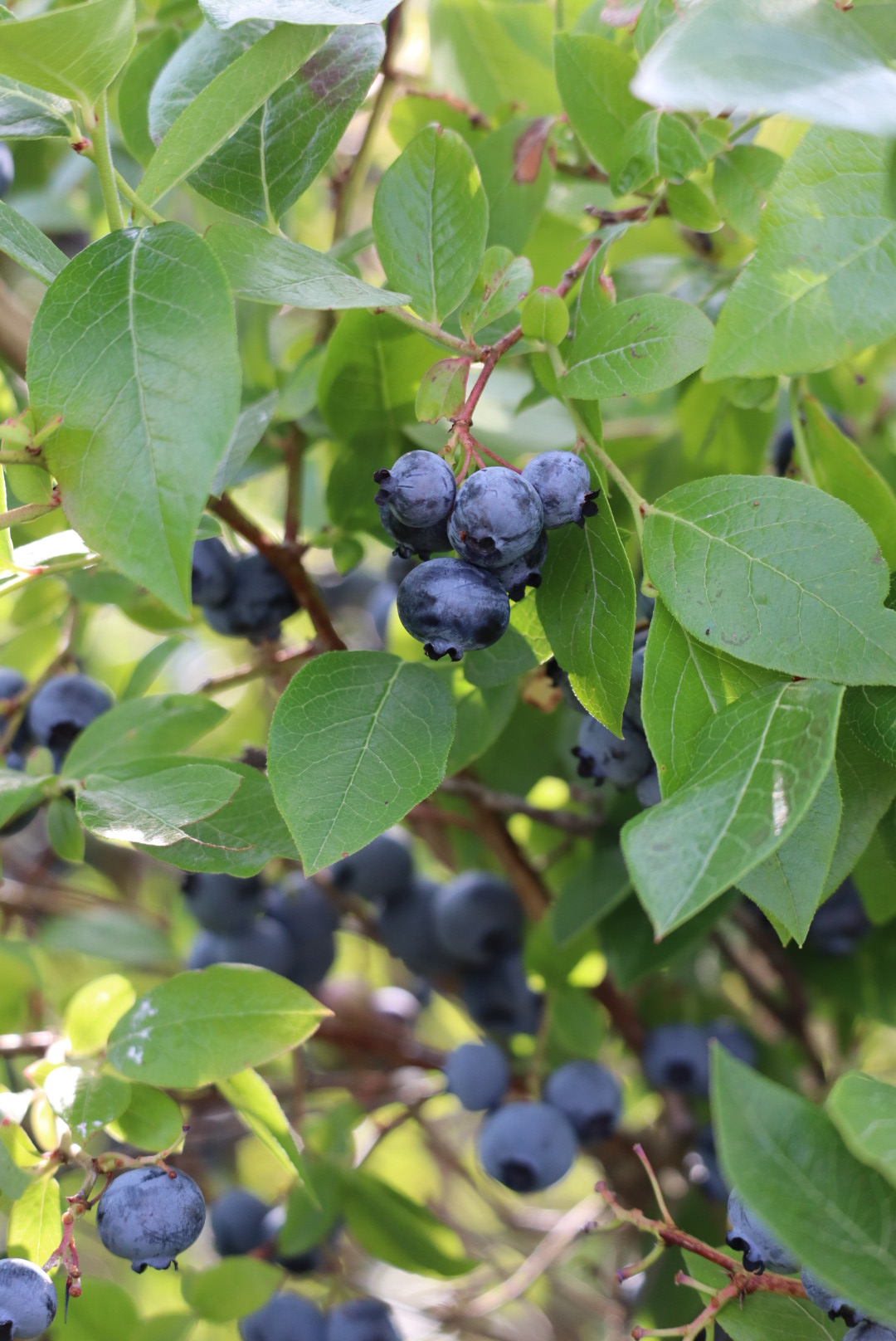
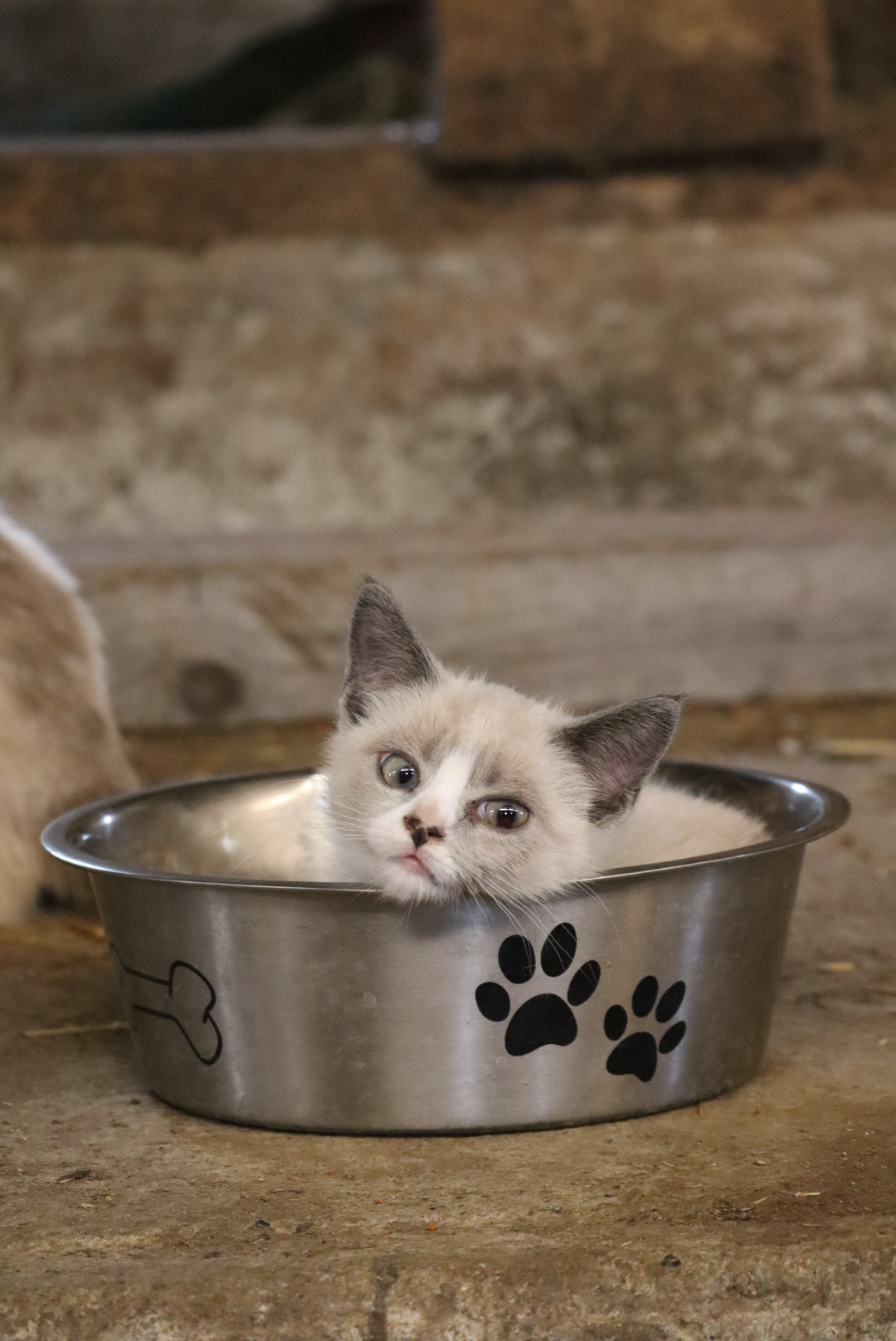
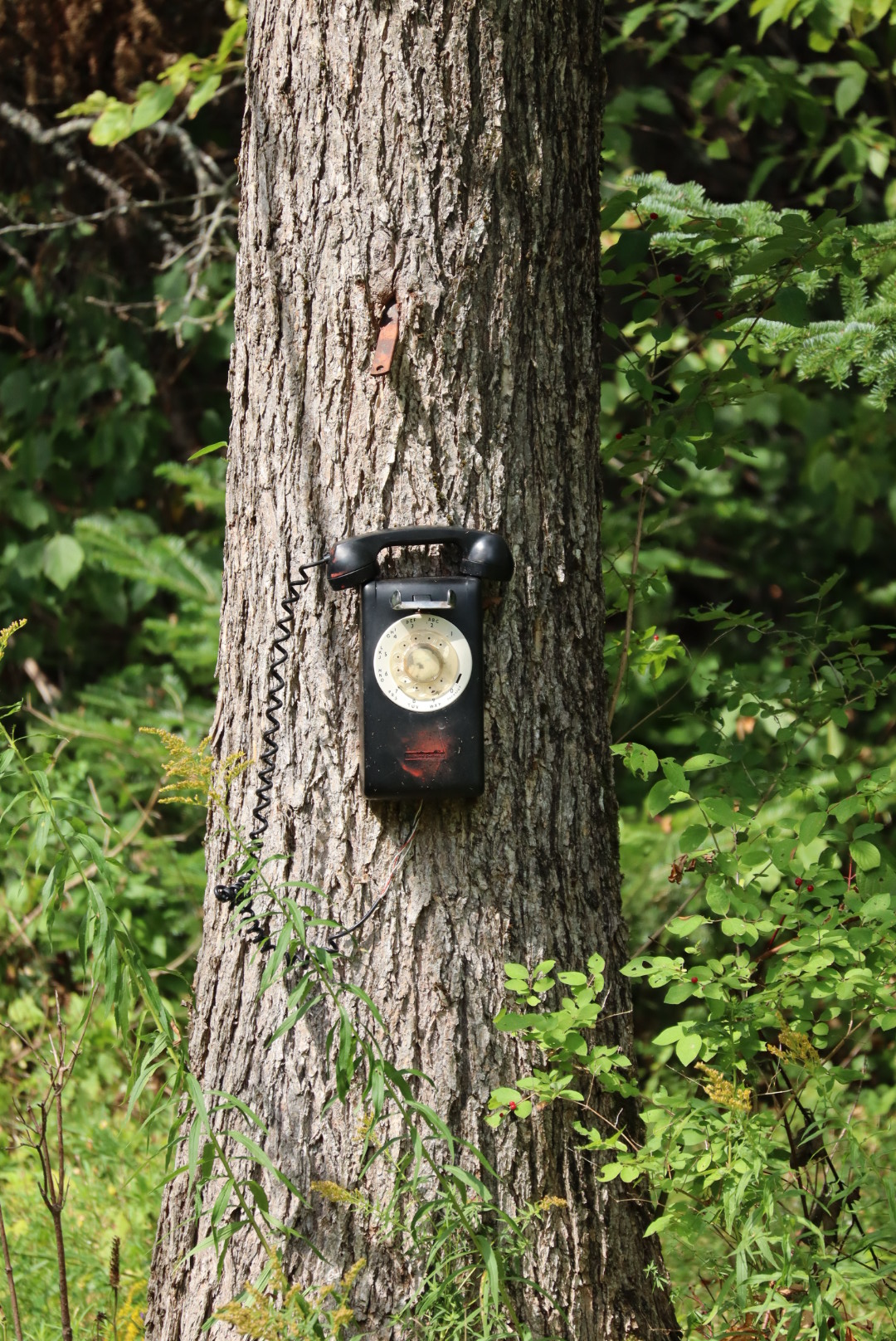
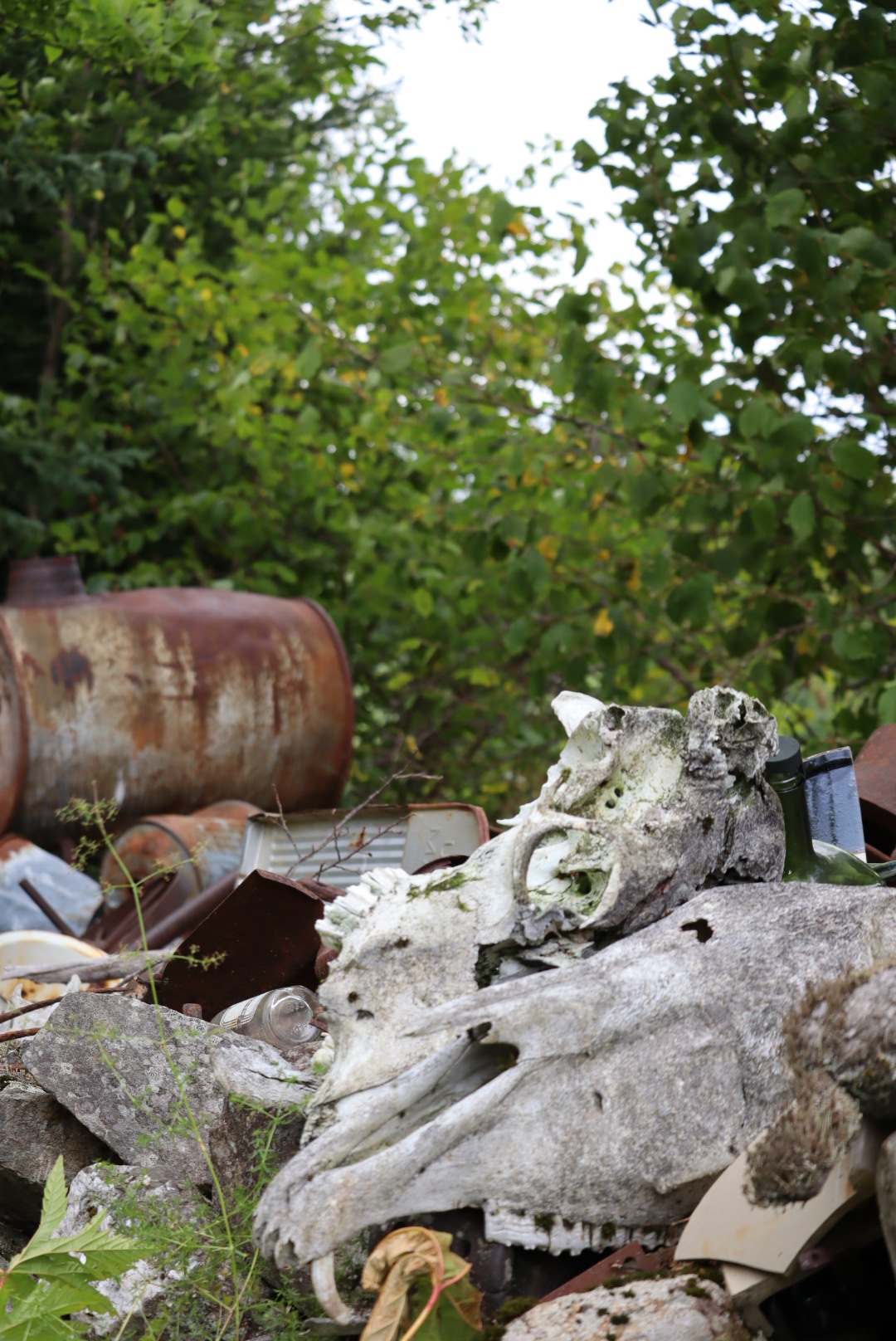
Credit where credit is due, Elena’s photographs appear here.
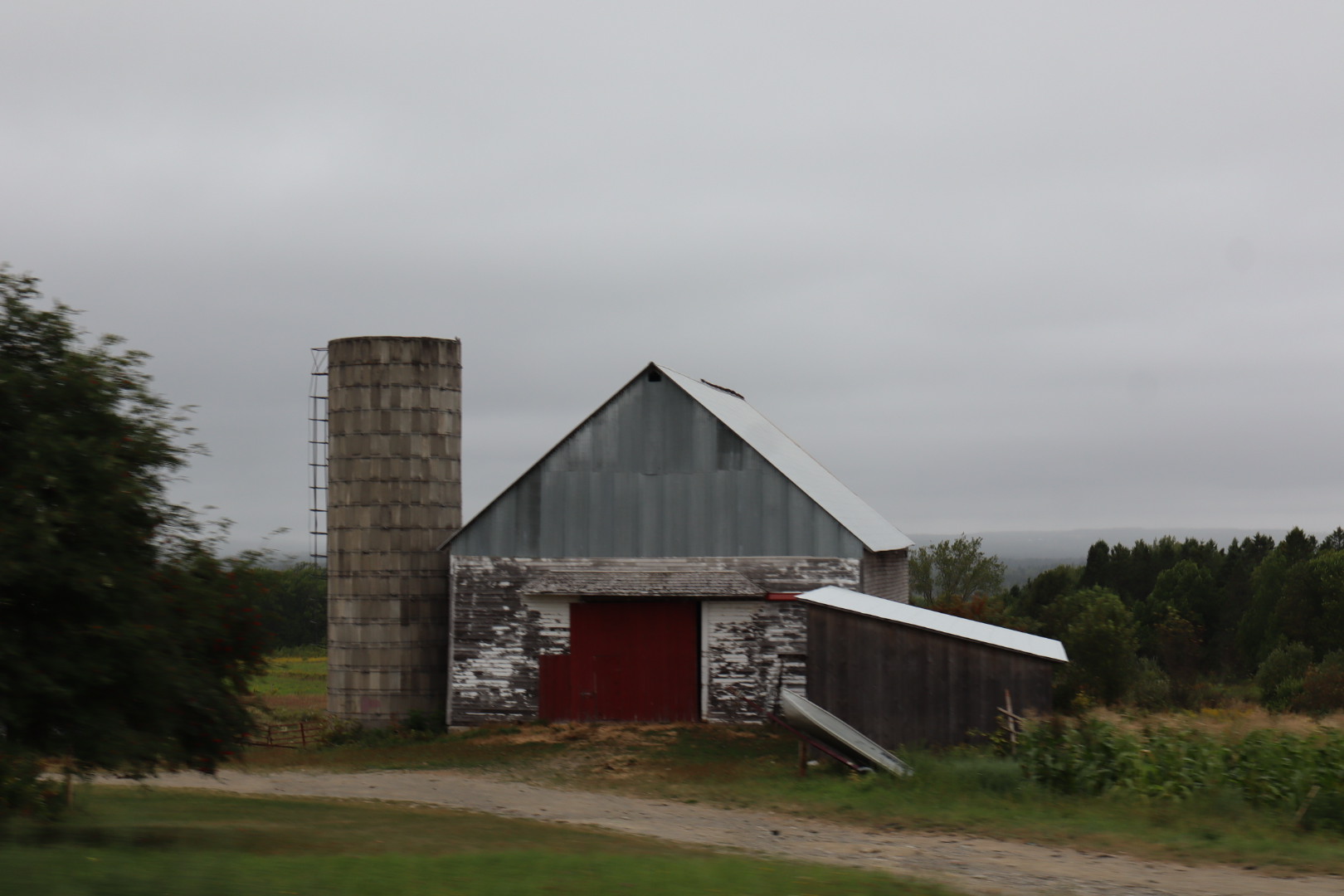
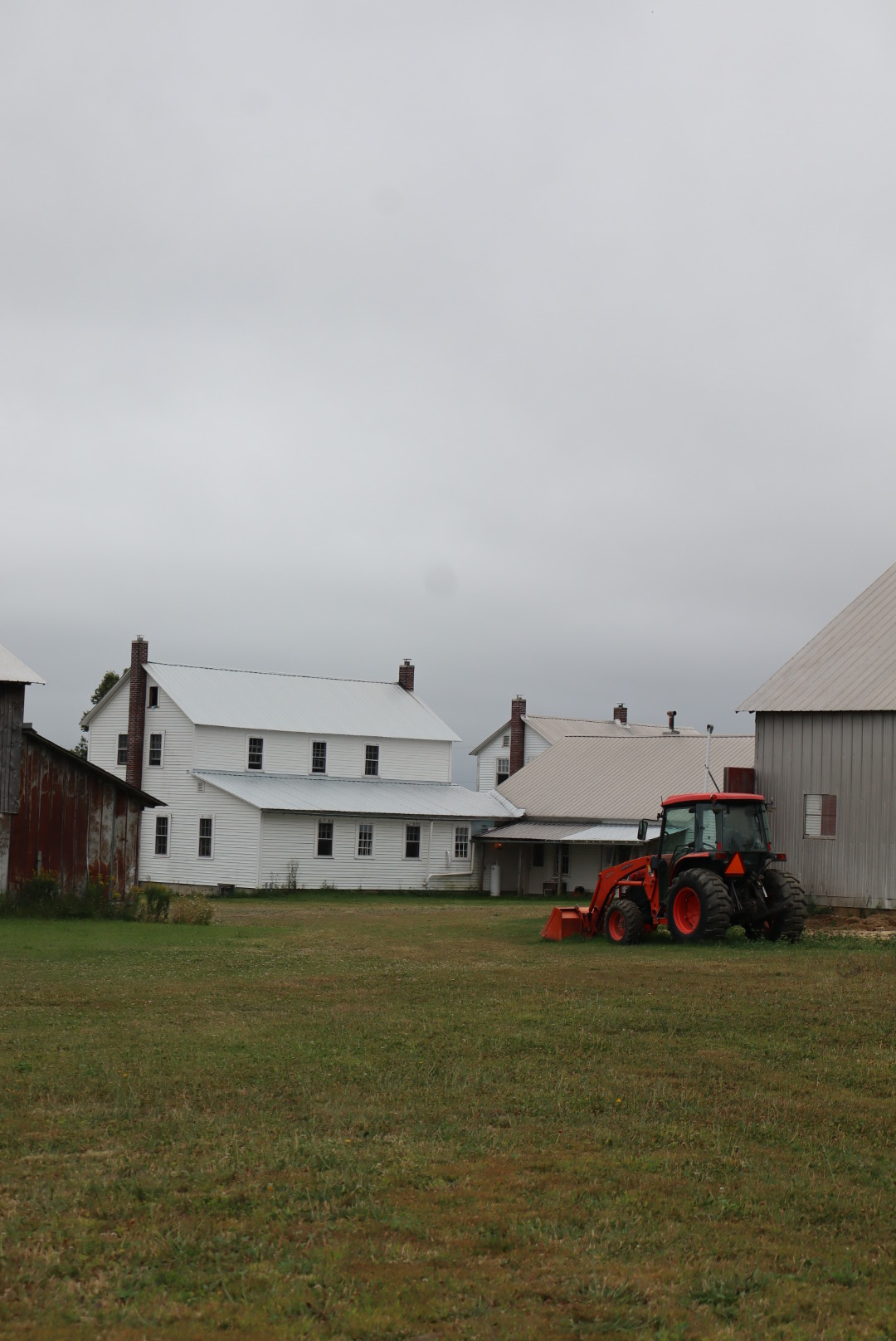
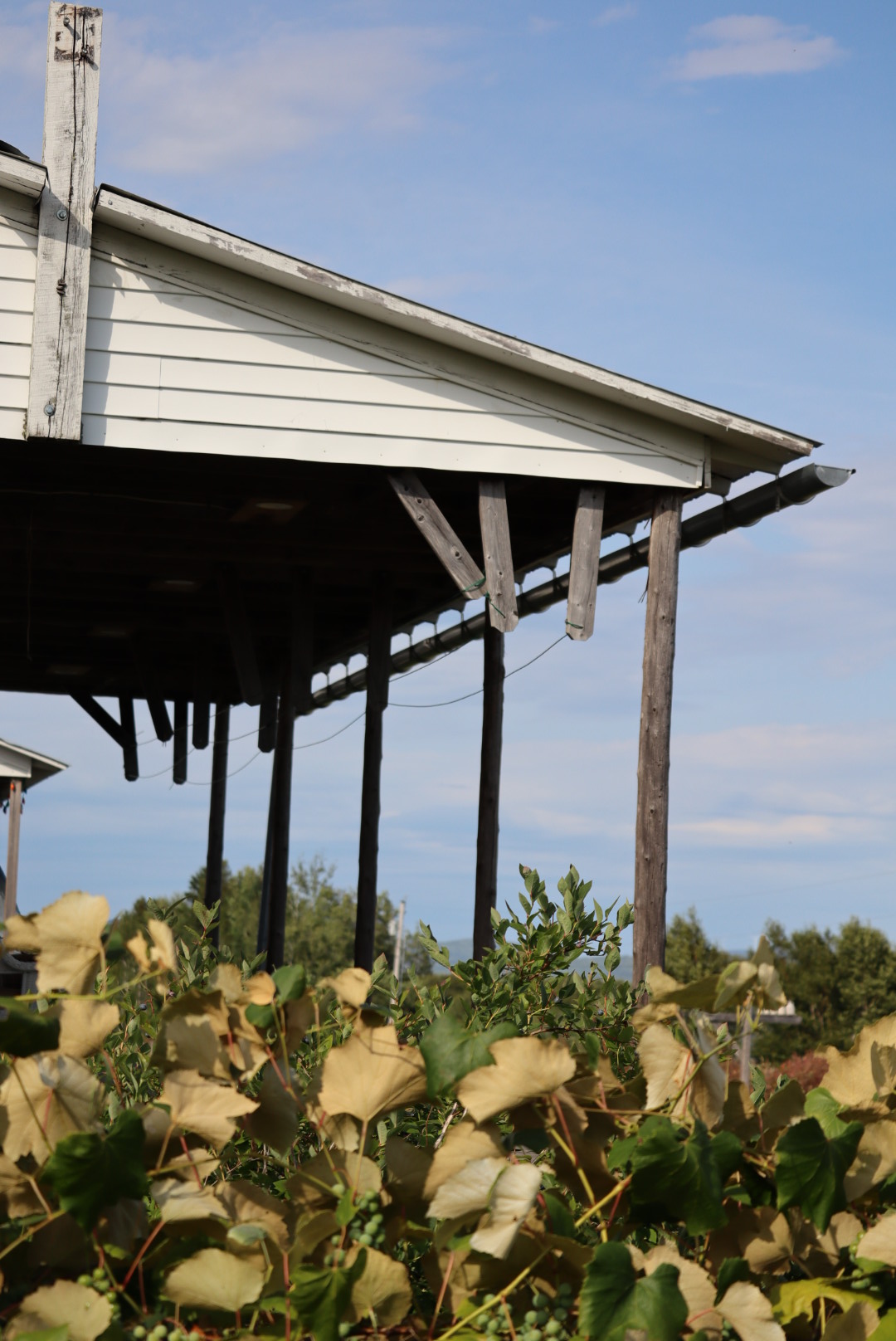
Recently we drove north to nowhere, Cold Brook Road in Southern Aroostook County, Maine. Between 1793 and 1815 Northern Maine was a major producer of wheat, known as “the breadbasket of New England.” In the 1940s and 1950s Aroostook County was the top producer of potatoes in America. Big skies, open vistas, quiet abounds there. Our friend Kirk, a Master Electrician, Master Cabinetmaker, Builder and Humble Farmer welcomed us to his 157 acre-farm in Amish country.









No Room at the Inn
Posted: June 13, 2025 Filed under: Chronicles of a First Time Parent, Farming off the Farm, What is an Art Farm | Tags: Epirus, Greco-Roman, molloxssian hounds, pitbulls 3 Comments
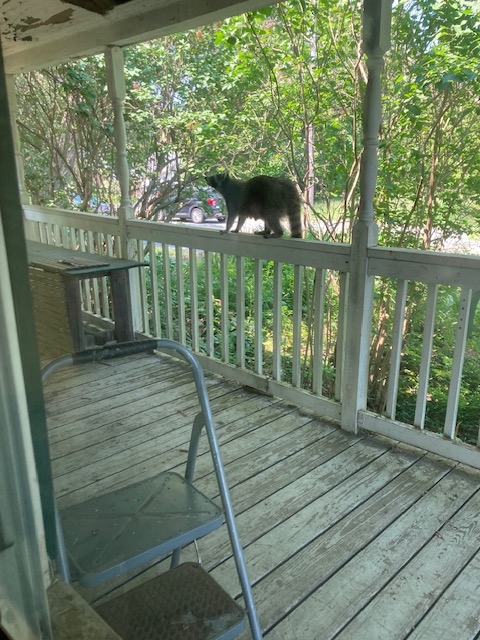
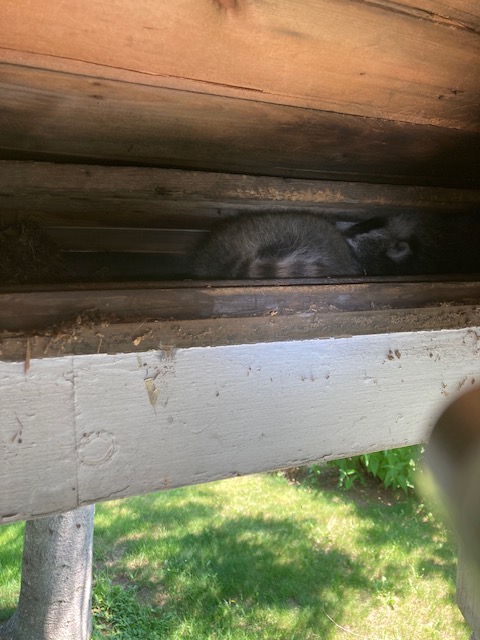
Our Art Farm resembles Noah’s Ark: two adults, two children, two rescue cats, and two rescue dogs all live here. Recently a Mother Raccoon moved into the ceiling above our porch, and with four kits, that became too much.
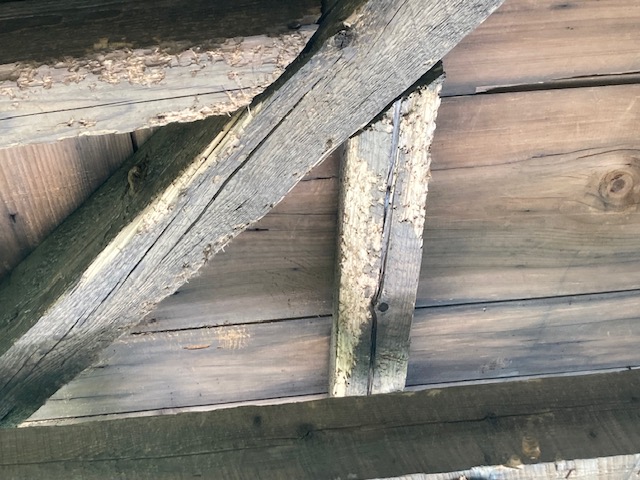
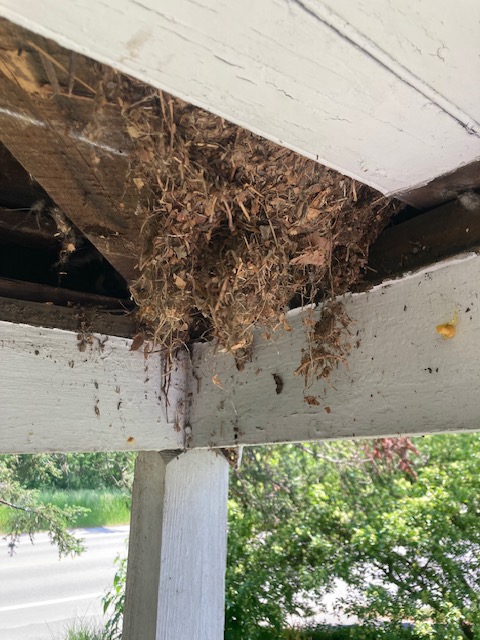
Her tenacity was remarkable. To gain access she gnawed through the fascia boards and the asphalt shingles. Last autumn I tried to discourage her by covering the access points with lead flashing, but she persisted and then chewed through the ceiling boards and more shingles. Neighbors stopped to tell me about our four-footed squatter. She would lean against the asphalt shingles, stare at my son through his bedroom window, like Mae West daring him to come and get her. I knew we had a problem but it rose to a climax when, at 3:30am last Thursday, our pitbull puppy needed to go out and, given the commotion above, refused to come back inside.
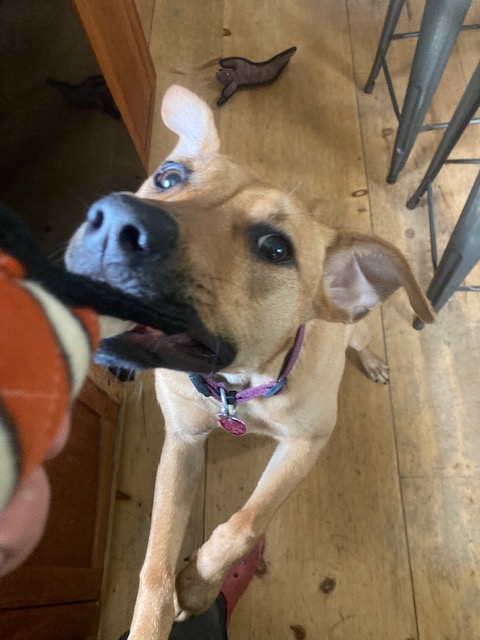
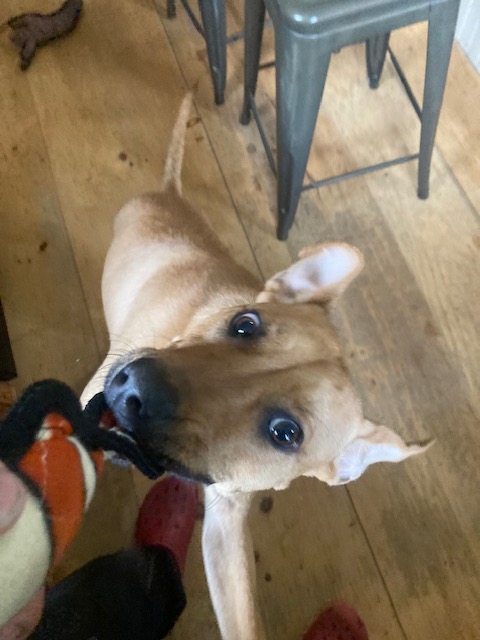
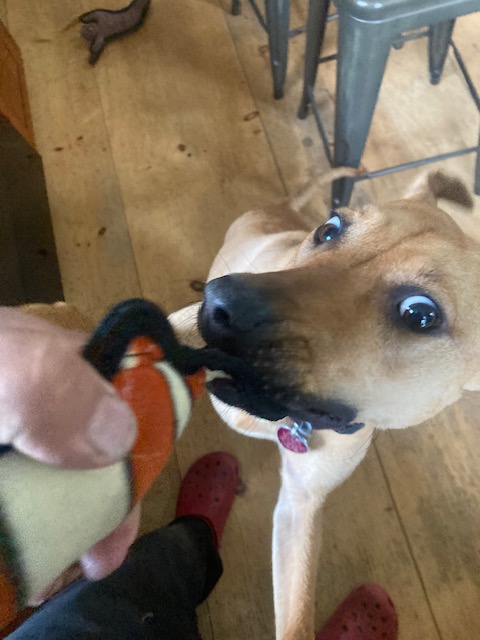
Our pitbull puppy is an animal of the most remarkable agility and athleticism. To see her on the prowl is to marvel at the animal kingdom. Pitbulls get a bad rap, but intensely loyal and loving to their owner, they are descended from the Mollossian hounds, the ancient dogs of war. The Greek kingdom of Epirus trained the hounds for war and herding. Shakespeare’s “Julius Caesar,” Marc Anthony’s line, “Cry havoc, let slip the dogs of war” is historically accurate. In Greek mythology, the goddess Artemis gave to Procris a dog that never failed to catch its prey. In the predawn light our puppy exhibited her heritage, racing across our front porch and back yard in search of her prey.
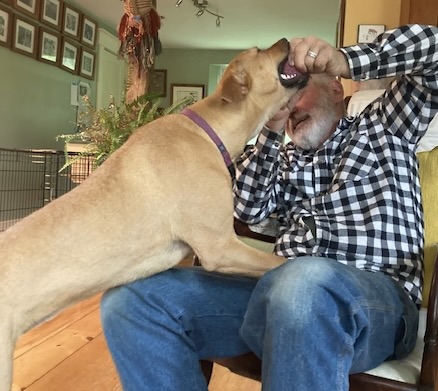
Our puppy was rescued from the streets of Webster Parish in Louisiana, and is 60% Pitbull, 27% Rottweiler, and 13% “Supermutt.” The Rottweiler breed evolved when the German barbarians bred sheep dogs with the mastiff-type dogs used by the Roman army on its military campaign through ancient Europe in the 1st century AD. Our loyal puppy is of Greco-Roman descent, proud to protect us at all hours of the day and night.
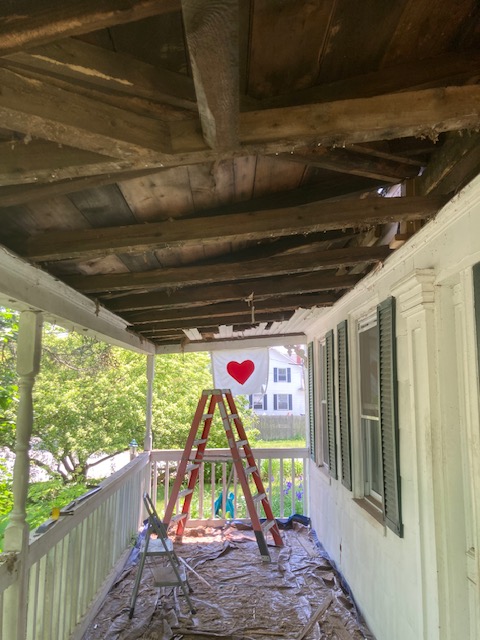
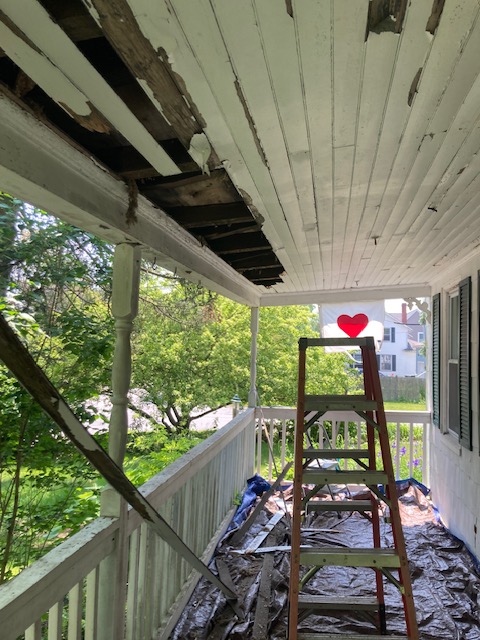
By mid-morning I began to rip out the ceiling boards. They were in quite bad shape and needed either to be repainted or removed. In fact, we plan to remove the entire front porch – it is not original to the house – so my task was both a step in that direction as well as a means to encourage the raccoons to move out.
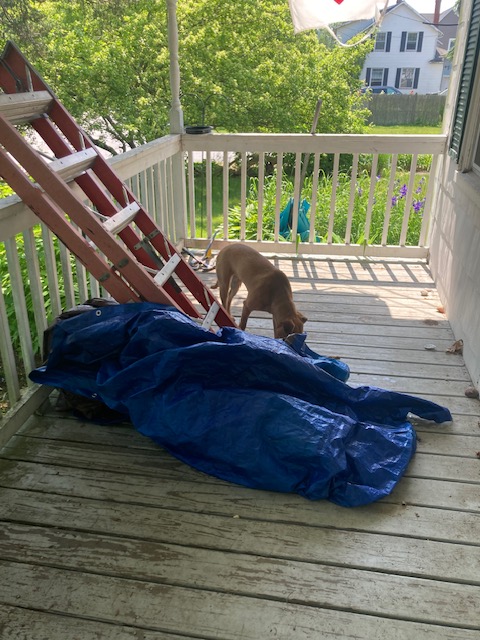
The job was messy. Our puppy stayed inside while I laid out a tarp to catch the debris and the paint chips, which most likely were lead paint. I wore a mask and detritus rained down upon me. Animals have been living in that space for many years. Decades ago, word must have gotten around the town. Pre-covid, House Sparrows made their home there. It was awful. There in the corner cowered a raccoon. I stayed clear, and continued removing other boards. I needed to open up the entire front section of the porch ceiling.
I reached out to an animal rescue service, and the news became bad. Raccoons carry several parasites, including roundworm. A cornered mother can be vicious. No one was available to come trap and remove them, so the plan was to let them make their exit on their own time. Eventually the kits scurried about on the beams overhead. While their Mother went off in search of a new home, our puppy could hear the kits crying on the porch and stirred up great havoc, inside our house. Our puppy’s true nature was on full display. She could not be let out into the yard.
Throughout the afternoon the Mother worked her magic, carrying the kits – no longer so small – one-at-a-time by the scruff of their necks down our lilac bushes. We do not know where she went. One kit remained, and wailed for mama, but eventually Mama returned and then quiet filled the air. Later that evening, I took our puppy on a leash out into the backyard. She sniffed the air, and looked all around, even overhead, but nothing was turned up.
Quiet has returned to our front porch. My 4:00 am outings are less agitated. The Mother and kits have moved on. We wish them well and meant no harm, but there simply was no room at our inn.



The Anti-Readymade
Posted: May 30, 2025 Filed under: Chronicles of a First Time Parent, Farming off the Farm, Gallery - Visual, Portfolio - David's work | Tags: Baroness Elsa von Freytag-Loringhoven, brancusi, dada, duchamp 2 Comments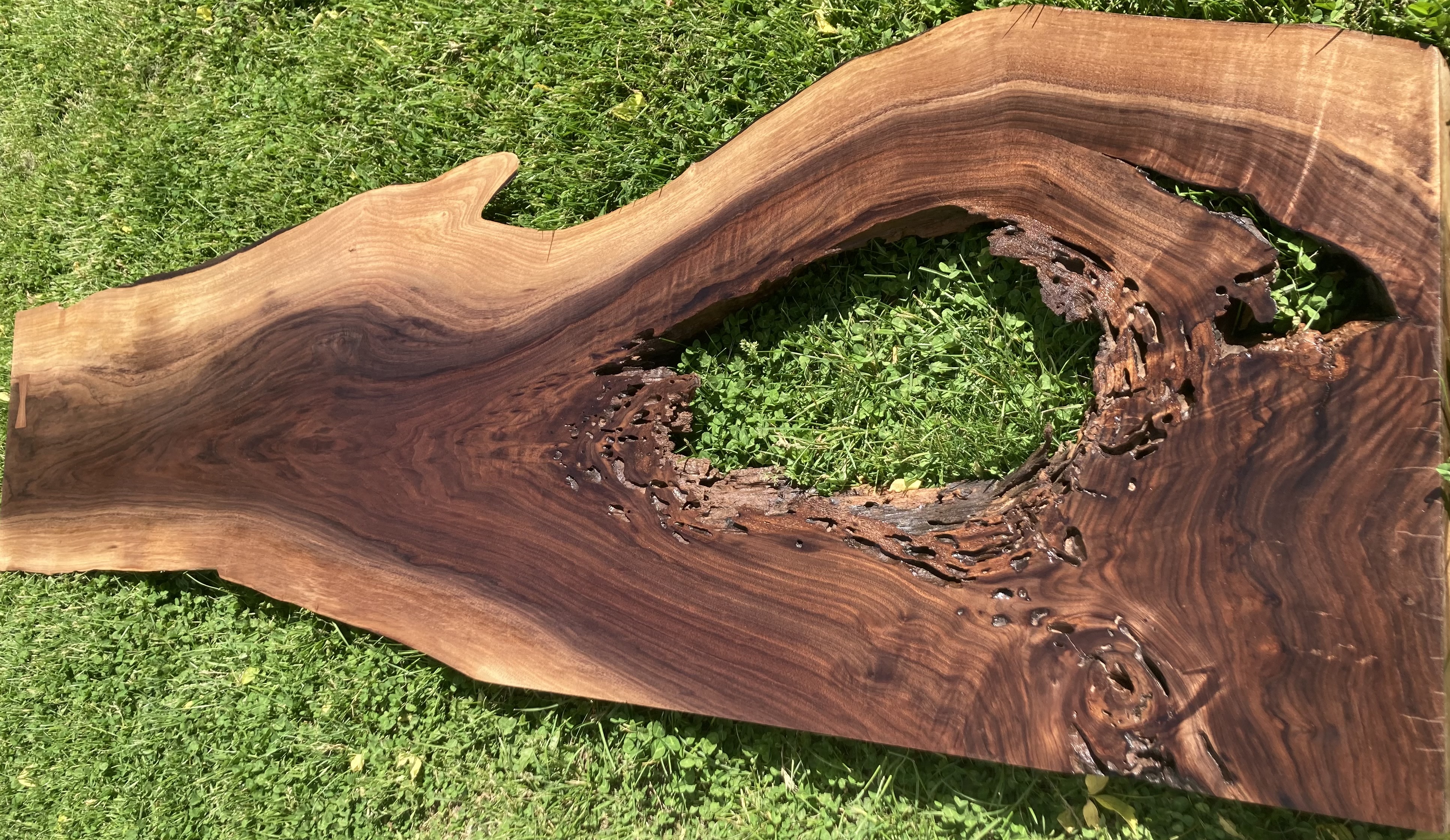
Marcel Duchamp, arguably the most influential artist of the 20th century, turned the art world upside down, in 1917, when he submitted a porcelain urinal as art for the inaugural Independent Artists’ exhibition in the Grand Central Palace of New York City. “Fountain” signed by R Mutt was rejected, which only drove that readymade sculpture to define the dada movement.
But wait…the Baroness Elsa von Freytag-Loringhoven more likely was its actual creator. R Mutt, a/k/a Duchamp elbowed her out. The Baroness embodied Dada, fought at the vanguard of the avant-garde to expose the irrationality of conformity and capitalism. Jane Heap, a publisher active in the development of modernism, described the Baroness as “the only one living anywhere who dresses Dada, loves Dada, lives Dada.” The Baroness Elsa appears to have been R Mutt.
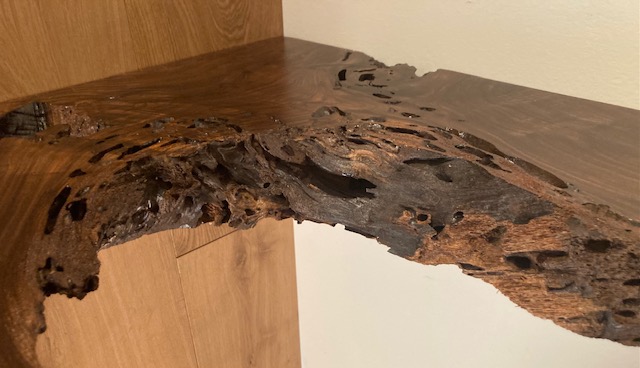
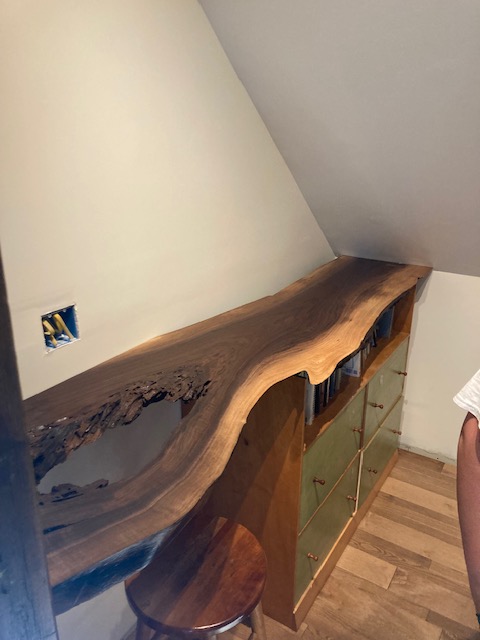
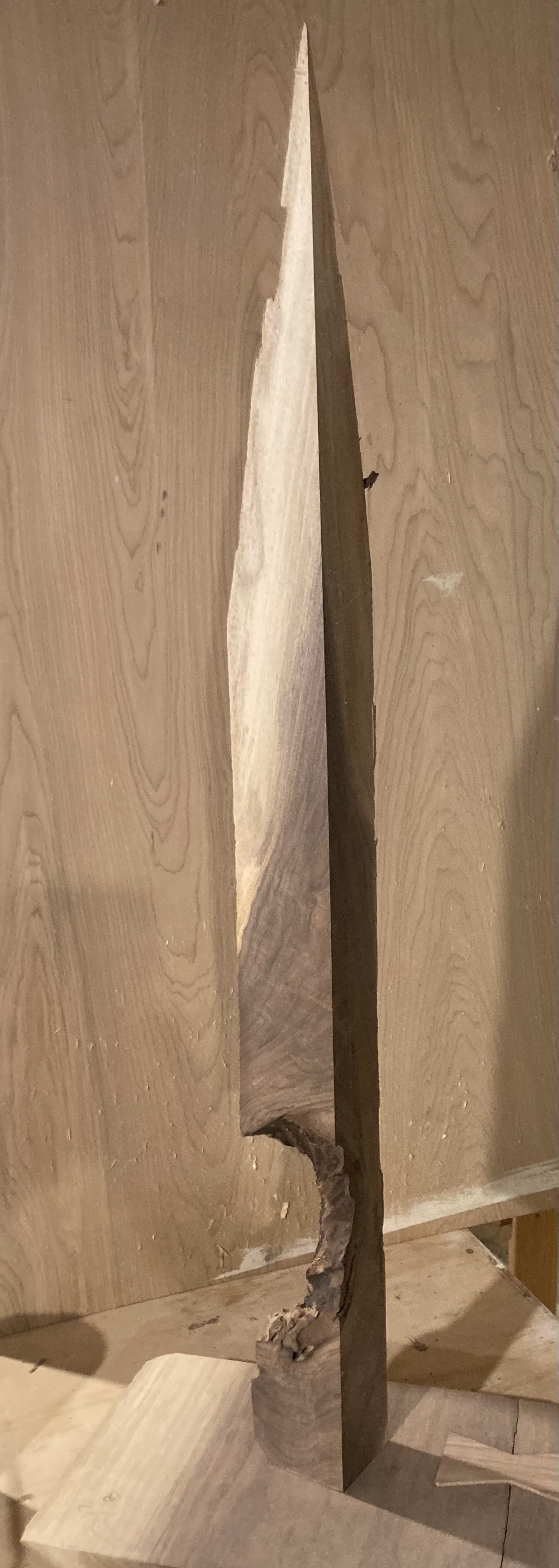
108 years later, when social media breeds conformity and capitalism reigns supreme, we are proud to present the Anti-Readymade: an object of exquisite natural beauty rendered into a utilitarian object of limited practical use. A countertop in my new office.
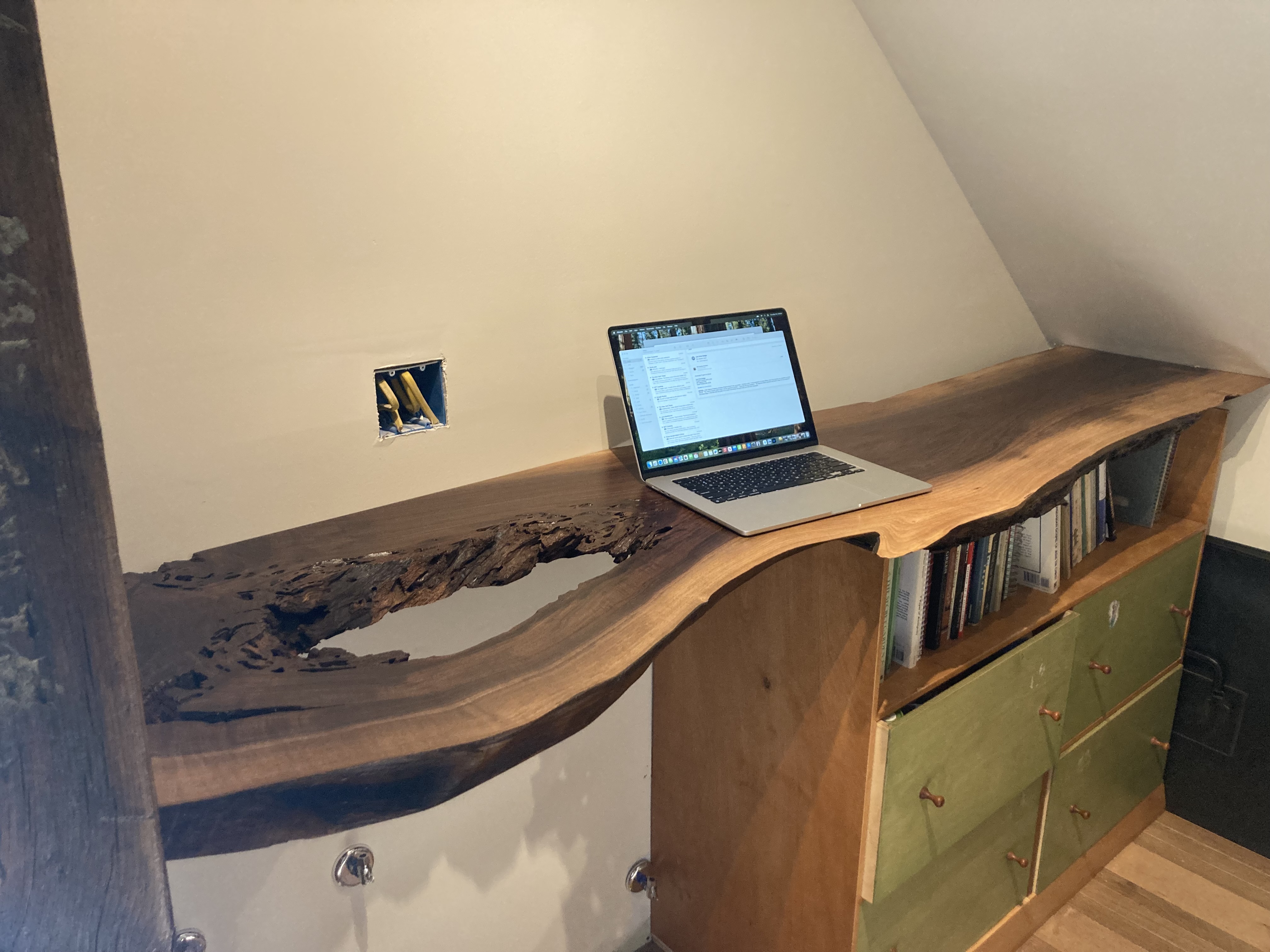
The slab is 2.25” thick American black walnut, which I happened to espie last December while at a lumberyard buying odd-lot flooring for our loft’s “charcuterie board” floor. I was seized by its commanding poetry, and given that my corporate bank account had excess capital, a tax write off was available. In our loft I had framed a wall using original boards from our 1840 barn, torn down when we first renovated the house. Boards cut and milled in 1840 would have sprouted circa 1700, so the history here equals the poetry. I sit here now as I write.
If beauty is in the eye of the beholder, then consider this from my childrens’ eyes. They remember when our loft was being framed, my son shoveled snow out the empty window openings. Just before COVID a friend helped me hang sheetrock, so when the shutdown began my wife had a home office. The nook wall is built of 325 year old boards, given a new life. Friends have loaned tools, John Hart built a bookcase then helped inlay the bowtie joint, my son helped clean out the many divots and found a walnut! The wild wood grain shouts out, and the hole speaks of the unknown where the “unusable” has been made beautiful in a community effort.
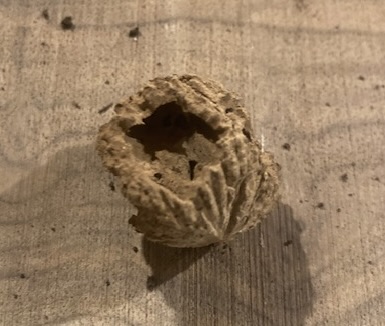
And what about that hole at the center? It screams of the void. Our zeitgeist, it seems, is a call to leap into the void. Musashi, the 16th century Samurai Master and strategist, considered a “sword saint” in Japan, taught that one must “strike from the void.” This means to strike using a calm, natural, intuitive approach, free of tension and over analysis. When stillness and clarity coincide, the body and spirit are in harmony.
And so our Anti-Readymade now stands ever ready, willing and able to remind us that stillness and clarity are keys to navigating these turbulent times.



___________________________________
Even the slab cutoffs are sculptural. When squaring the slab’s end, this piece was cut off, which sings of Brancusi. It will become yet another piece in our mix-it-up loft.

“Trust Your Gut!”
Posted: December 20, 2024 Filed under: Chronicles of a First Time Parent, Farming off the Farm, In the Kitchen | Tags: bio-lactate fermentation, fermentation, food, kimchi, locavore, recipe, recipes, vegan Leave a comment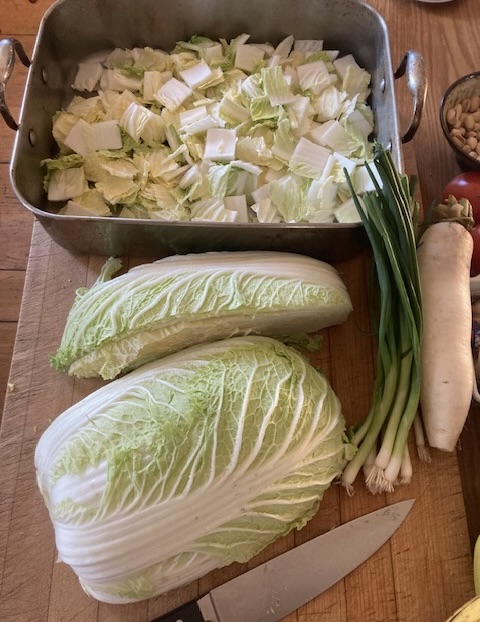
Shiva’s cosmic dance of destruction-creation is active in our kitchen this week. With the holidays here, we chose not to bake but to bio-lactate and the results have been well received. More importantly, our efforts provide healthy probiotics as compared to sugar-laden baked goods.
My daughter and I recently took a Kimchi making class at Frinklepod Farm in Arundel. It was a delightful Father-Daughter outing, and the mysteries of fermentation became clear; the fascinating chemistry whereby glucose, or six-carbon sugars, are converted into cellular energy and lactic acid. The anaerobic process results in an abundance of live microorganisms, probiotics that are highly beneficial for our digestive and immune systems. Trust your gut, indeed!
Fermentation is as old as the hills, has been practiced by everyone, everywhere, longer than memory serves. Good bread ferments; good cheese ferments; yogurt, pickles, sauerkraut…endless is the list. Milk fermentation predates the historical period, which puts the beginning somewhere in the Neolithic Revolution. Recipes for cheese production have been found in Babylonian and Egyptian texts, while Genghis Khan celebrated the Mongolian lunar new year with “white food” – fermented milk – as part of a shamanistic cleansing ritual. Louis Pasteur, active 1850s France, was late to the game.
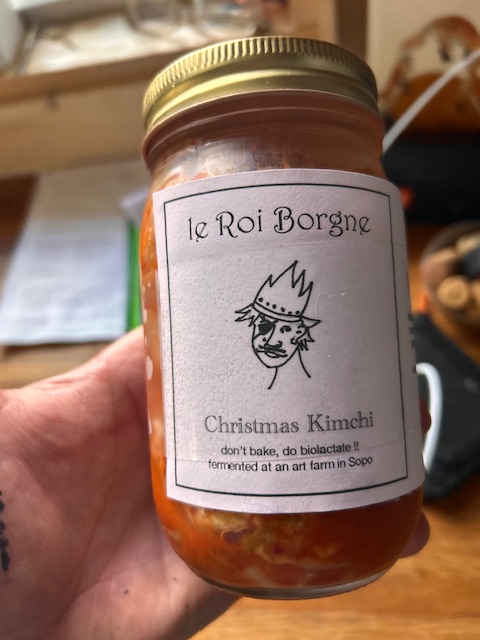
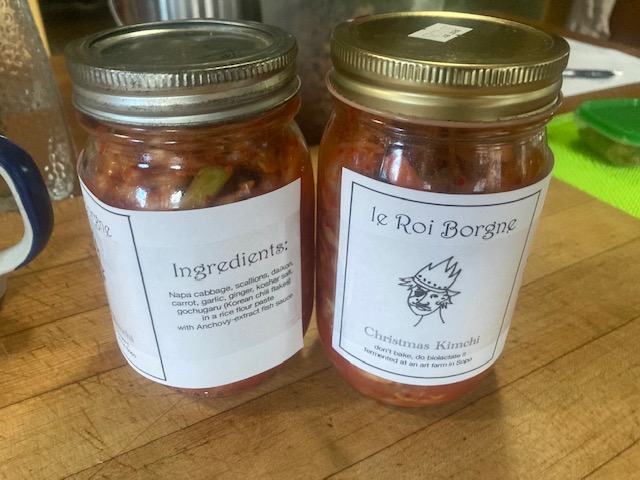
Our “Christmas Kimchi” is named “le Roi Borgne” which hails from the French proverb “Au pays des aveugles, le borgne est roi,” which was popularized by the Dutch humanist Erasmus, who quoted the Latin “in regione caecorum rex est luscus,” to wit: “In the blind world, the one-eyed man is king.” Such truth has informed much of my life’s experience.
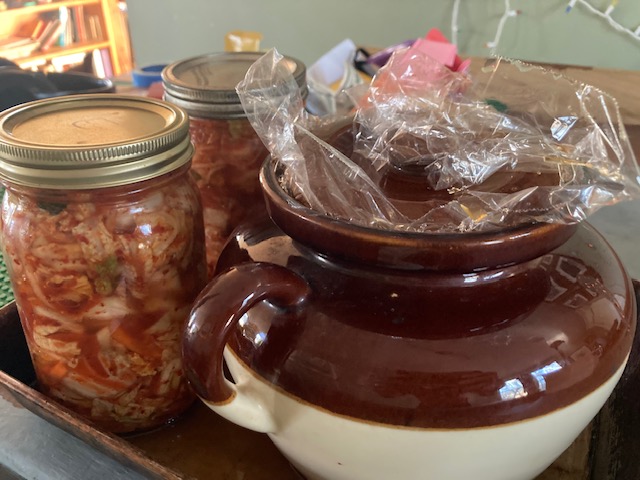
We use Napa Cabbage salted 2.5% by weight, then brined for an hour or two. A rice flour slurry is made with gochugaru (chili pepper flakes), sugar and fish sauce (our “le Roi Borgne” is not vegan), into which “matchstick” carrots, daikon, onion and scallion are tossed. The brine is rinsed from the cabbage and then all is mixed together and sits on the counter – but out of direct sunlight – for about three days.
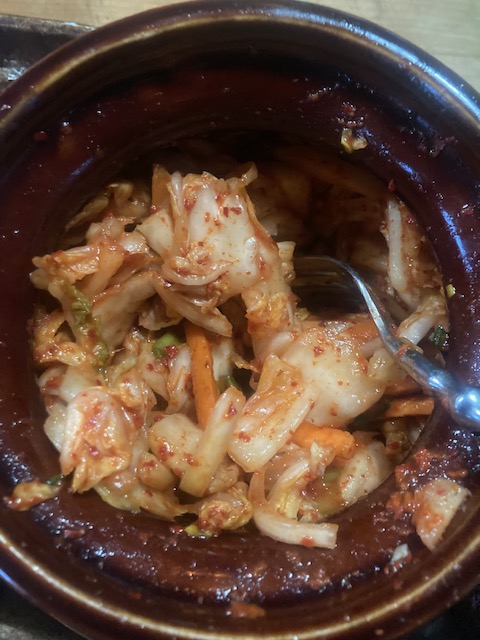
The result is a delightfully tangy slightly sour kimchi, known as “Tongbaechu,” a Korean traditional style. Here is the recipe we used, viewed 29 Million times.
Serendipity has graced us. The ceramic pot in which we ferment came to us from Corea, Maine. By convention, it is an official Boston Baked Bean pot, which belonged to my wife’s maternal grandfather, but at our art farm it is now a cherished “onggi.”
“Know your food, know your farmer”…well, at Frinklepod Farm, Flora Brown and Noah Wentworth do amazing work, and their class was a godsend. http://frinklepodfarm.com/
Ger, who taught us, is a maker from the mid-coast. Her teaching was clear and cogent, fact-filled while fun. Robust is the wisdom of the locavore culture on this rocky coast. We are the better for it. https://redkettlekimchi.com/

Volts and Arc
Posted: November 22, 2024 Filed under: Chronicles of a First Time Parent, Farming off the Farm, Little Green Thumbs, Permaculture & Home Renovation | Tags: Factory 3, line welds, MIG welding, tap welds, weld pool, welding 1 Comment
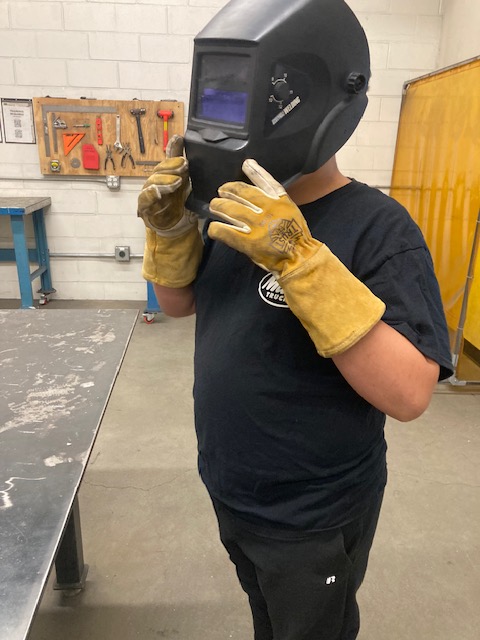
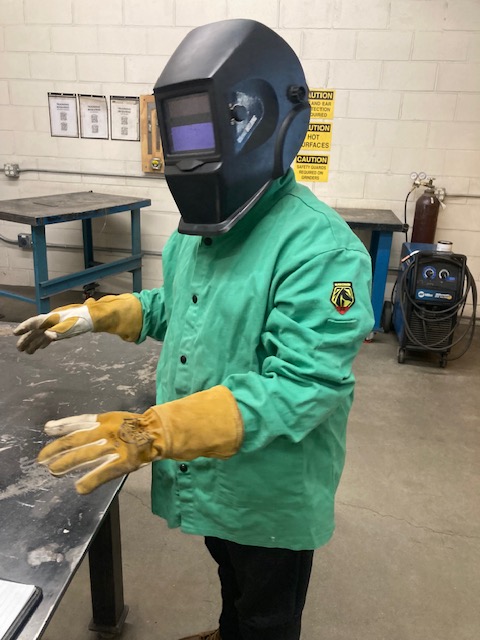
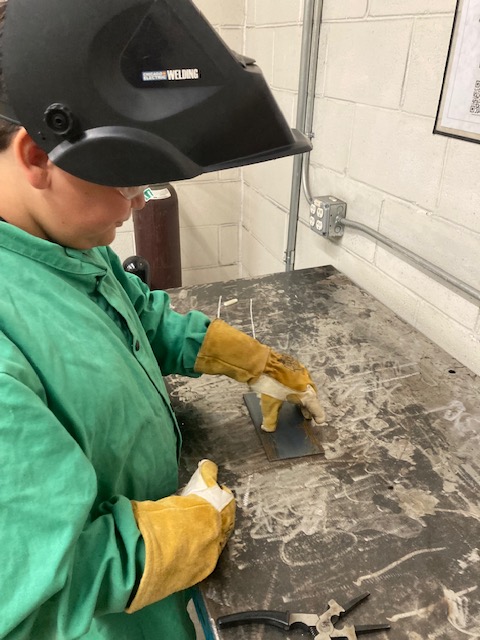
Recently my son and I took a MIG Welding class. Having no experience with welding we were absolute novices, eager to go.
We took the class at Factory 3, a local makerspace that provides work studios for artists, classes for the general public, a community to local makers. A vast open space, exceptionally well appointed with tools and equipment. Beau, the teacher, was superb, answering my many questions. Quickly arcing light was in our hands! There is no looking back.
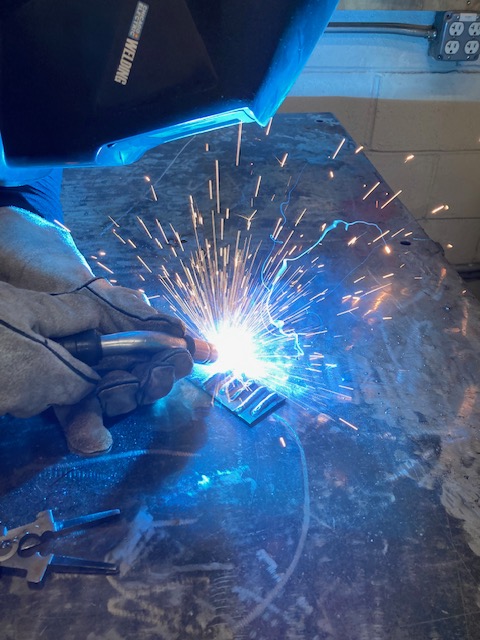
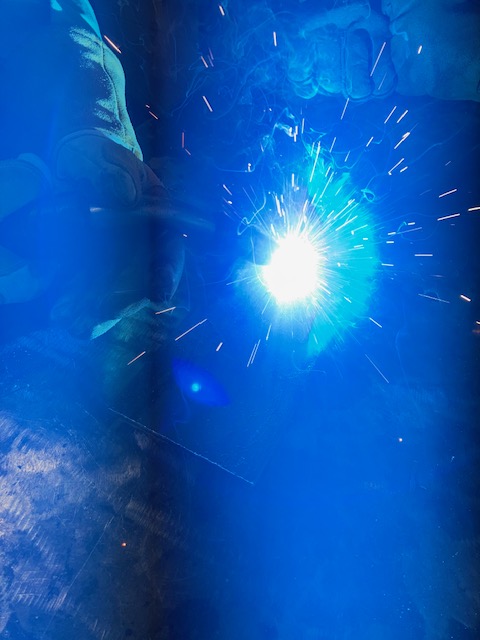
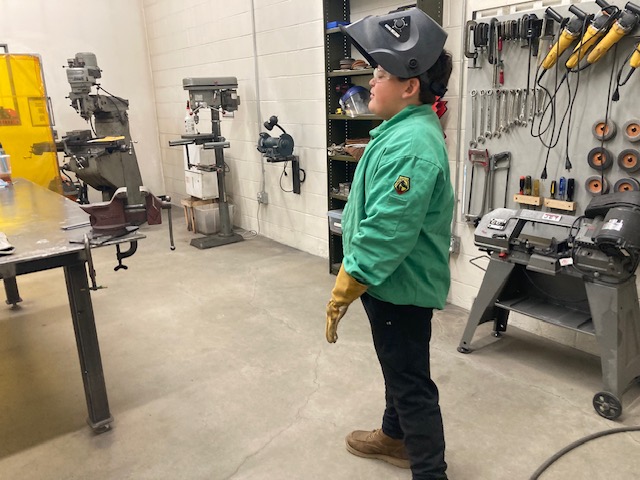
MIG welding uses an electric arc, not fire. The arc is intense, so intense that it could cause sunburn or severe damage to the eyes; to protect our skin we wore a welding jacket and long pants, to protect our eyes an auto darkening helmet.
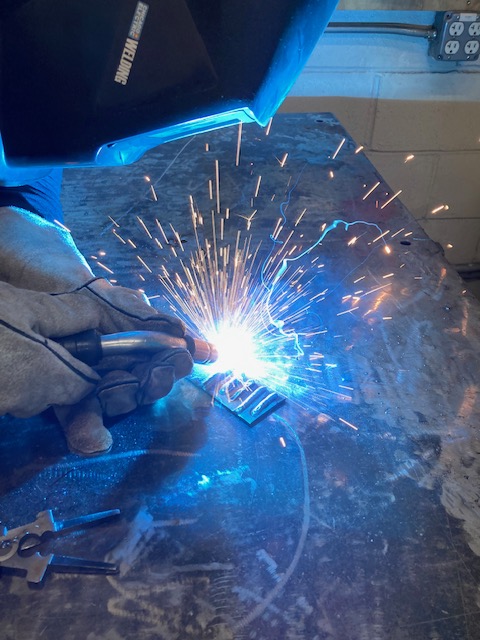
MIG stands for Metal Inert Gas, which is a process that fuses two pieces of metal together using 240 volt electricity and a steel alloy wire with copper coating. A constant voltage power supply creates an electric arc between the base metal and a wire electrode that is continuously fed through the welding gun, into the weld pool. A ground cable was clamped to the metal work table, and then positive electricity flows from the welding gun through the table.
The metal inert gas was 75% argon and 25% C02. The gas is non-flammable and serves to create a shield around the arc, preventing oxygen and water vapor from getting into the weld pool. Water would cause rust, which would make the weld fail over time.
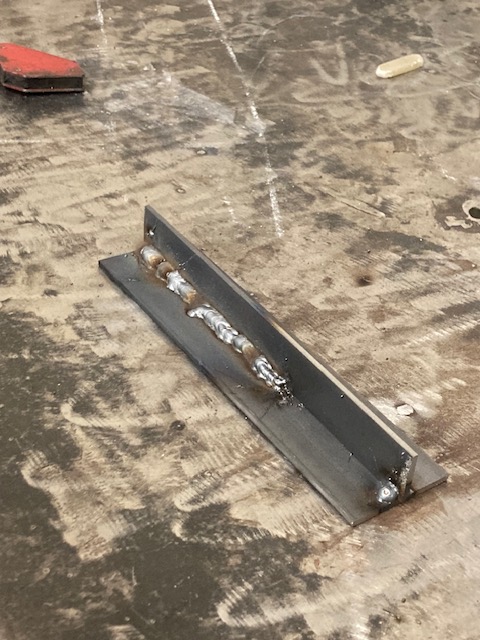
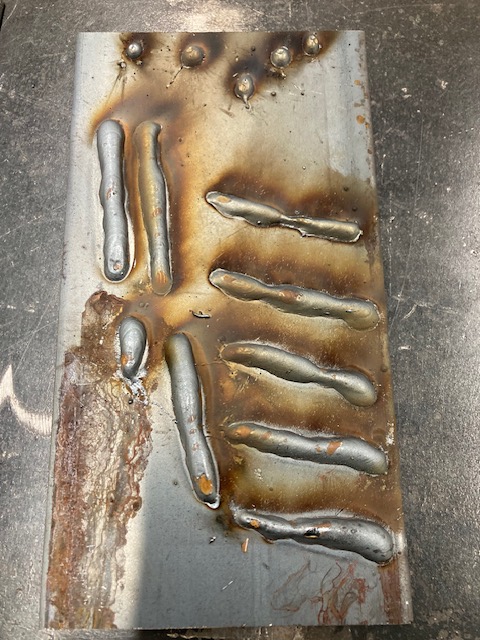
Our tasks were basic, a series of “tap welds,” a temporary weld to hold the two pieces in place and a “line weld” which is the continuous weld along a joint, permanently fusing the two pieces of metal together.
The one hour class opened a new world of material and technique. Project ideas came flooding in. We have two staircases that need railings. Another class seems in the offing. A local friend who welds has offered to teach us more.
New materials. New techniques. Much to be made.



_________________________________
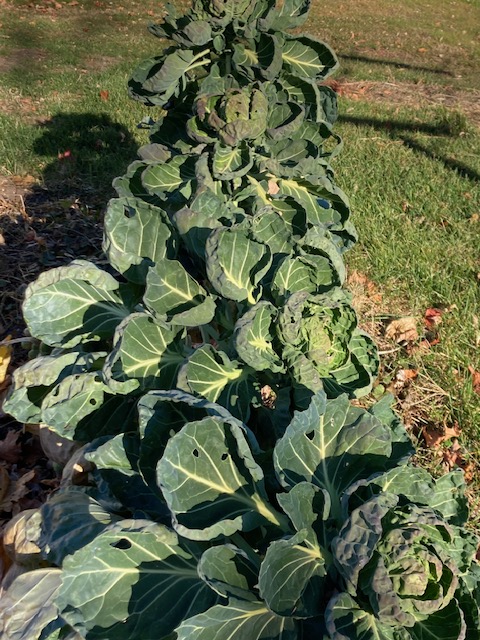
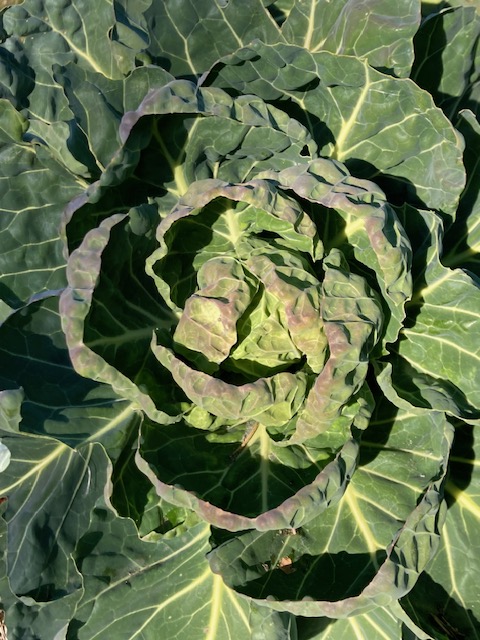
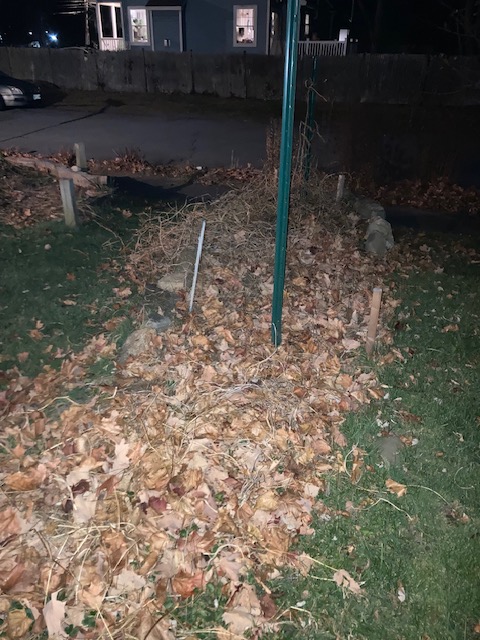
Gardens are gleaned, emptied, final cabbage harvested, Brussel Sprouts alone remain. Soon we plant garlic, for a late spring harvest. A season of abundance has come to its end. We pause now for winter.



Like a Pearl
Posted: November 1, 2024 Filed under: Child Centered Activities, Chronicles of a First Time Parent, Farming off the Farm, What is an Art Farm | Tags: animal rescue, animals, dog, dogs, Grammy Rose Dog Rescue, pets 4 Comments
During the Great Plague of London, in 1655, a 22-year old named Isaac was sequestered. He used his isolation to invent “infinitesimal calculus,” the study of continual change. A remarkable achievement, hinting at great things to come from Sir Isaac Newton.
During the Covid lock down, our time of isolation, the Wentworths of Acton, Maine were sequestered and similarly productive, in an entirely different way. They used their time to construct six residential-style dog cabins, a welcome center with offices, a conference center and retail gift shop plus an Ice Cream Parlor and 18-hole Mini-Golf course.
The family has owned the land for generations, as far back as the American Revolution – their forebears served beside George Washington – and they wanted to honor the memory of their Grandmother “Grammy” Rose Kessler Wentworth. The buildings were completed over 18-months and in 2022 the Grammy Rose Dog Rescue & Sanctuary began operations. The Ice Cream and Mini-Golf generate revenues making it a self-supporting rescue center. https://grammyrose.org/
They entered adoption agreements with “kill shelters” around the country, primarily in the Deep South. There are so many stray dogs down there that the Sheriffs routinely pick them up from the side of roads and, rather than euthanize them, ship the dogs north to New England for adoption. Think of it as a modern day abolitionist above-ground railway.

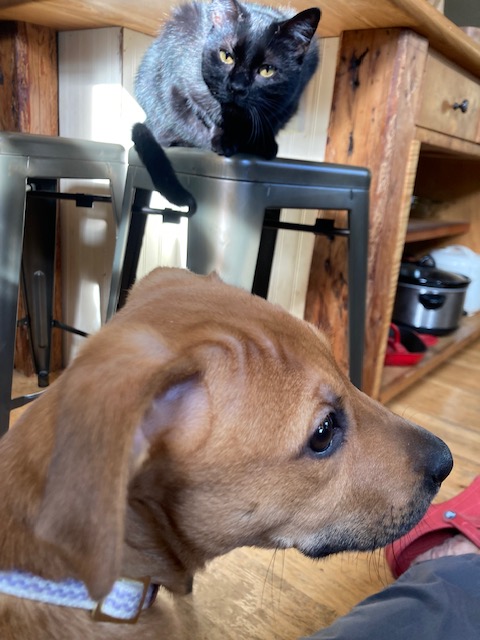
We drove to Acton last Friday ostensibly “to look” at a puppy. But no one drives one hour one-way just “to look” so it was no surprise that we returned home with a 9-week old female puppy, recently arrived from Webster Parish in northwest Louisiana. The Mother was a lab-mix while the Father is unknown. She appears to have some Rhodesian Ridgeback in her.
Her adopted name was “Jayne Mansfield” honoring the 1950s “bomb shell” movie star and Playboy Playmate, whose IQ reportedly was 149, at the genius level. Hopefully our puppy was named for that trait.

We mused over names. My daughter offered Maisie, and I chimed in Mae, both of which, it turns out are derived from a Scottish Gaelic word, derived from the Ancient Greek “margarites” meaning pearl. Luminous indeed, and given her high energy, we are calling her “Crazy Maisie Mae.” She is a handful, 24/7.
Our art farm is home now to two adults, two children, two rescue dogs from the South and two rescue cats, one from Puerto Rico and the other from Oklahoma. Meanwhile, back in Acton, Grammy Rose keeps rescuing dogs, 35 having been adopted during the month of October.




Fairy Museum of Natural Wonder
Posted: October 18, 2024 Filed under: Art & Healing, Farming off the Farm, Portfolio - David's work, What is an Art Farm | Tags: art, Farmington 1 Comment
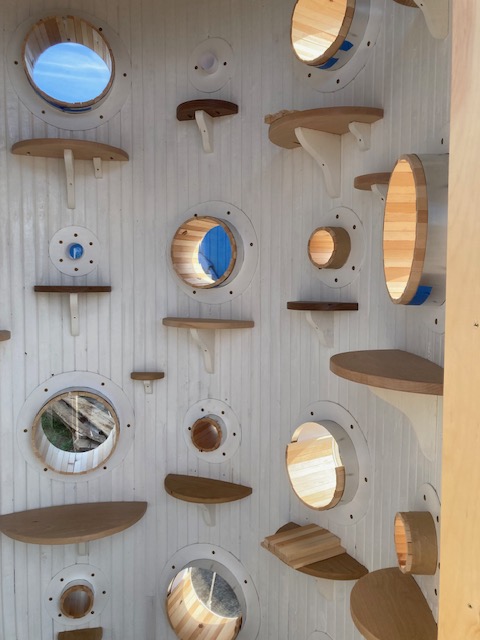
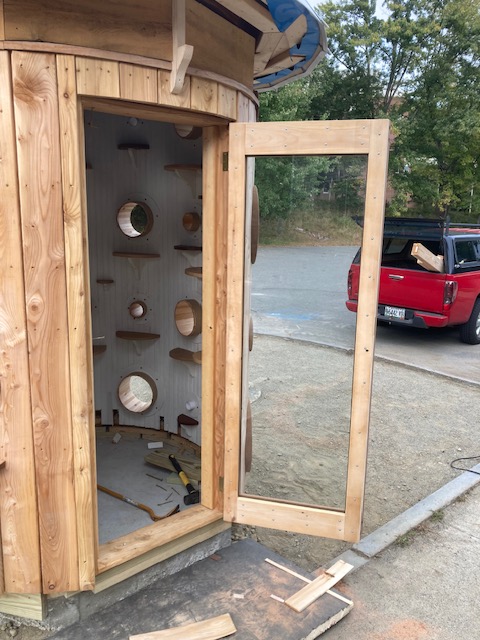
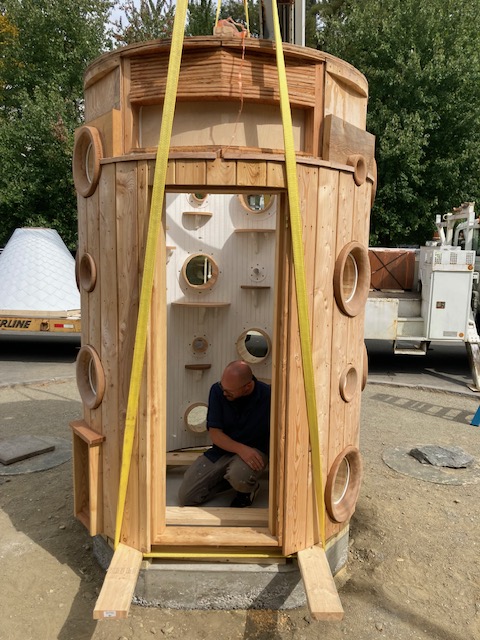
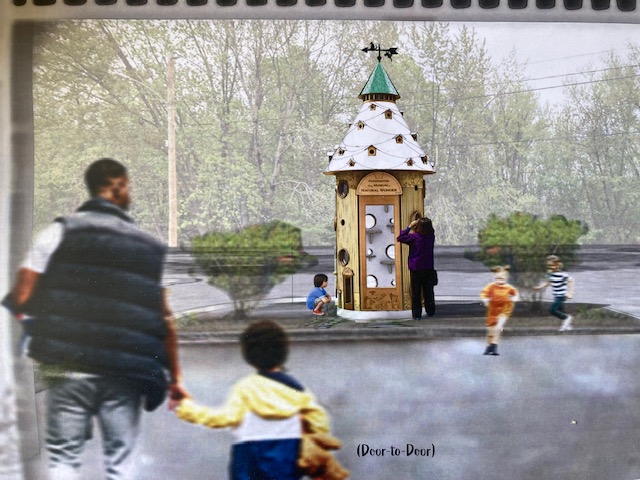
The “Farmington Fairy Museum of Natural Wonder” is a building of magical wonder and whimsy, built to the scale of a 5- or 6-year old child, coming to be, in a world of exquisite beauty and grace.
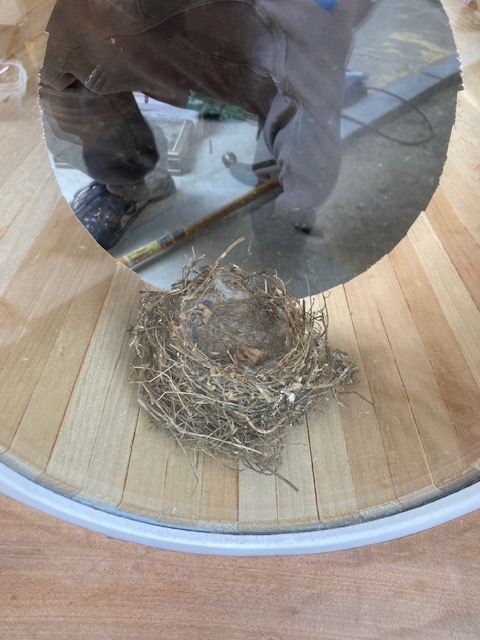
Funded by the University of Maine at Farmington’s School of Education, Early Childhood Development, the Museum will be used as part of their pre-school teacher training program. Enrolled children will curate rotating exhibits, displaying natural wonders gathered on sojourns into nature. Found items – a stick, a stone, a shell, a leaf or feather – will be placed by the children on display upon shelves nestled beside porthole windows.
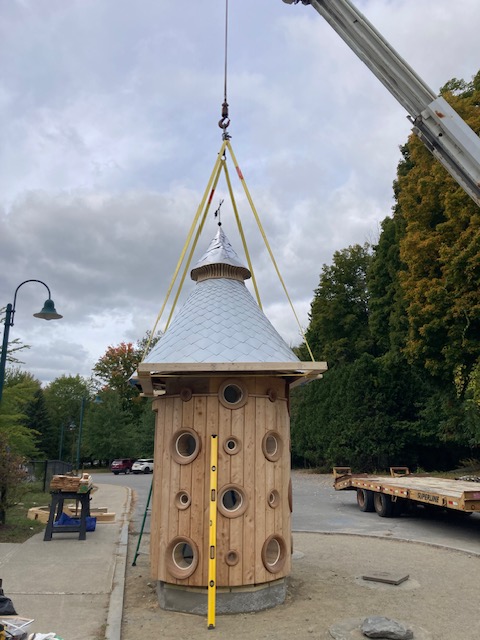
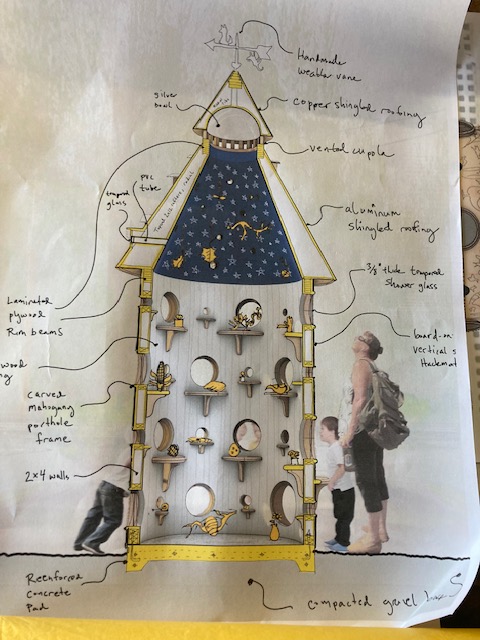
The design is as complex as it is compelling. Consider these facts:
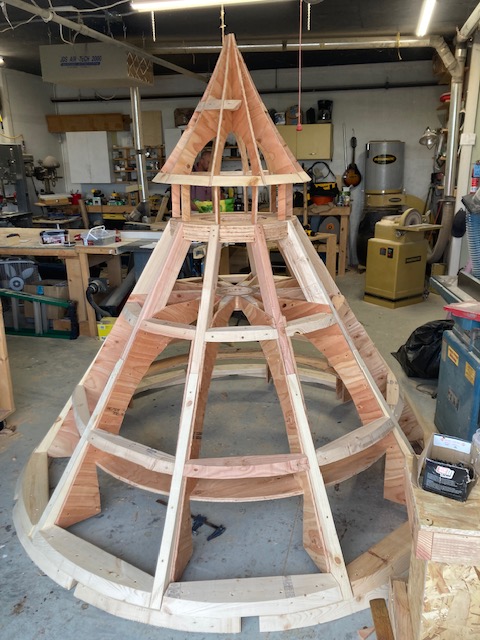
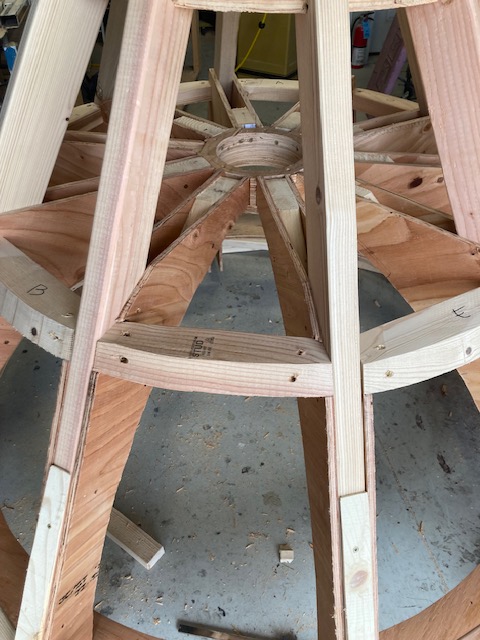
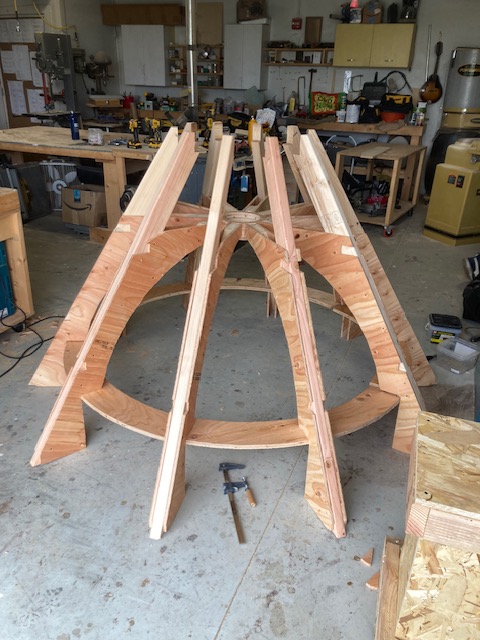
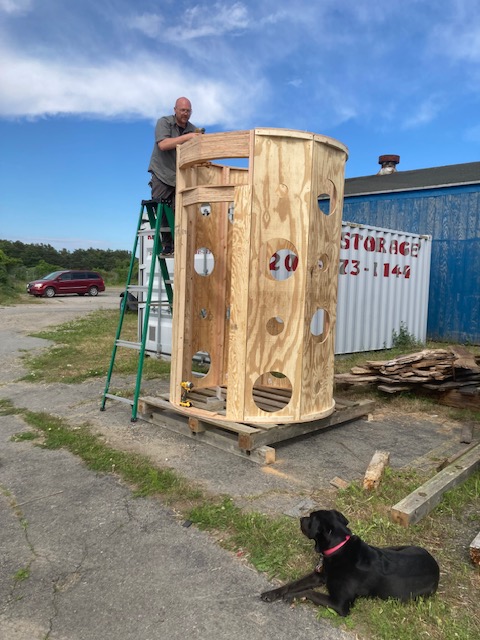
- framed as a dodecahedron, with 1/2” plywood sheathed to 2×4 studs cut at 18.5 degree angles;
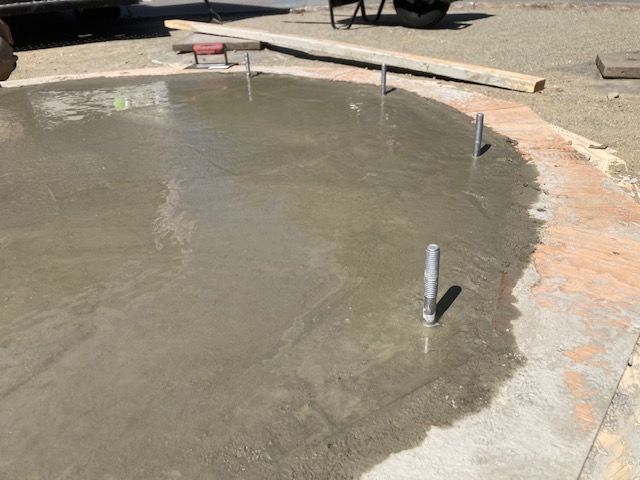
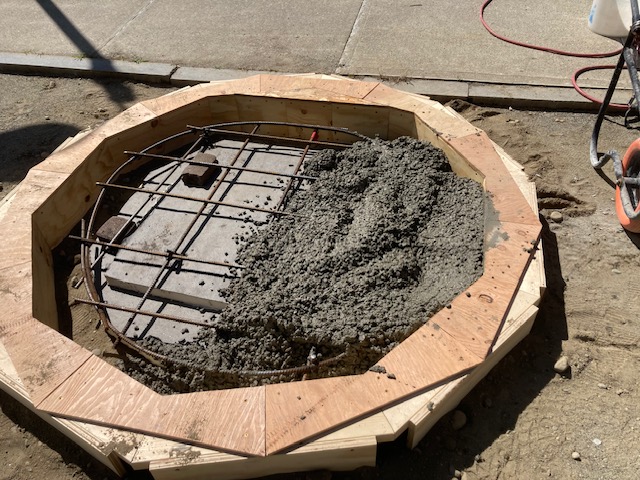
- the 6″ slab foundation used 14.4 cubic feet of concrete, with rebar mesh reinforcement;
- sheathed in native-Maine Tamarack, using board on batten style;
- 31 circular windows of 5 sizes, all parts custom built; 1/2” plate glass sandwiched in “Kuwaiti plywood,” with a rubber gasket air seal then faced with 2” ribbon mahogany exterior trim, cut on the bias, grain running horizontally, so water flows away from the structure;
- a Squirrel gargoyle stands guard over the custom made, ribbon mahogany entry door
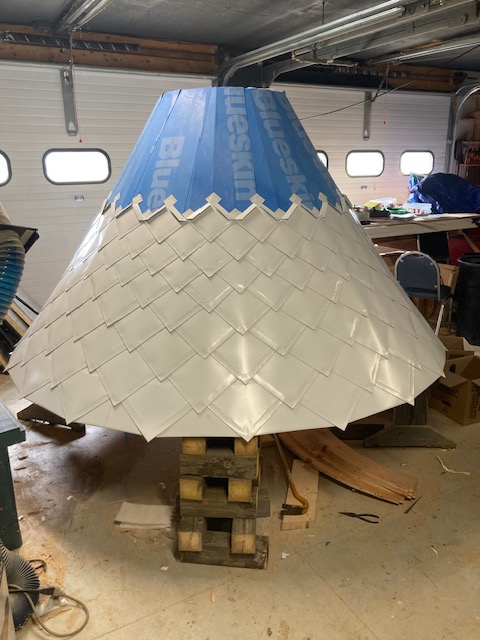
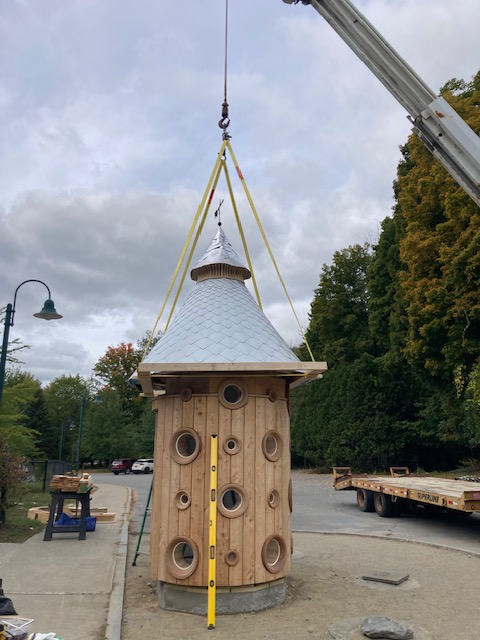
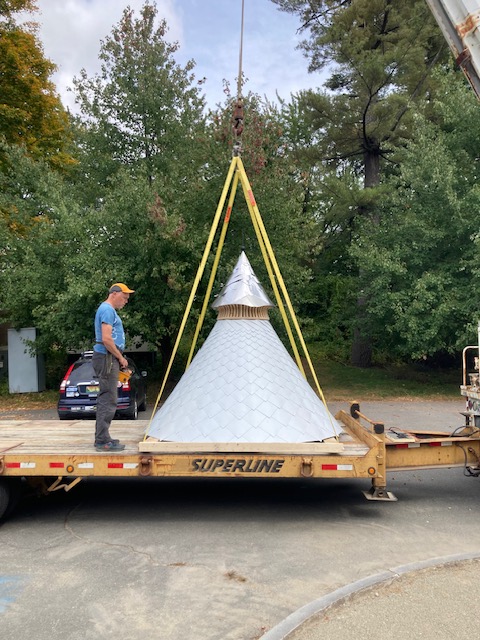
- a Basilica dome, framed by laminated plywood, covered with 480 aluminum shingles, all custom cut, bent to shape, then hand nailed into place;
- “purple martin” mini birdhouses nestled in, for good measure, among the metal shingles;
- a Cupola towers over all, covered in 31 galvanized shingles, cut from aluminum flashing;
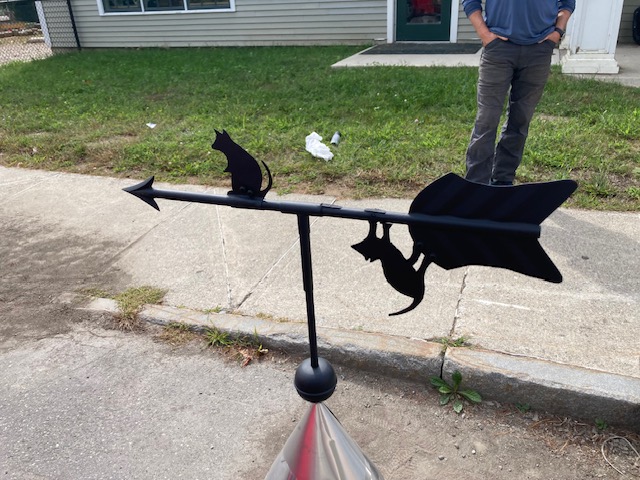
- upon which, like a cherry on top, sets the weather vane, with mice running to and fro.
In Southern Maine, everyone, it seems is a carpenter, or a DIY warrior at the least; but few, if any, could build such a structure, let alone conceive, design, and draw same. The Museum is the brain child of Chris Miller. It has been my highest honor to assist as his mere carpenter.
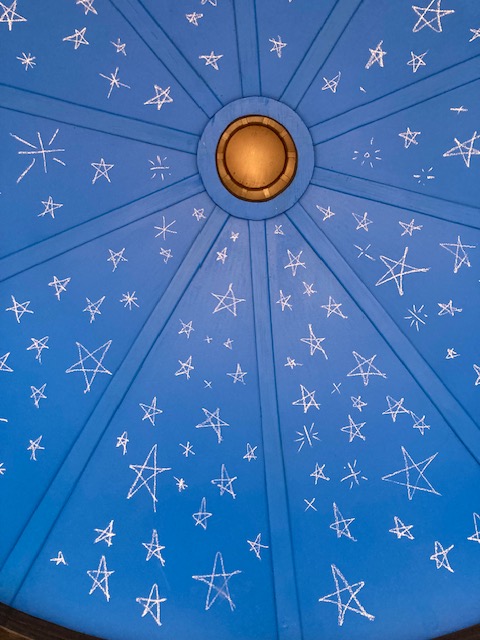
Inside the Basilica dome, Chris has painted the starry night sky, and through a keyhole oculus, the golden glow of the sun lies beyond. The Vatican may have Saint Peter’s Basilica and the Sistine Chapel ceiling, but Farmington has the Fairy Museum; Bernini and Michelangelo could do no better than Miller has done.

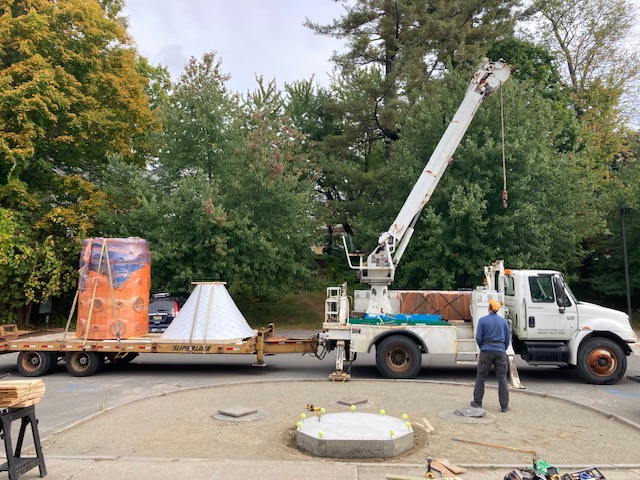
We built the Museum at Chris’ studio in South Portland, then moved the structure 72 miles north to Farmington. Jesse Salisbury, a sculptor of large granite and hard stones, graciously helped on this task. An artist friend once said to me, “The coolest people on Earth live in Maine,” and Jesse is exhibit A of same. Jesse’s story is almost fantastical, and I speak from personal experience as my daughter and I visited his studio, when she was 5 years old.
Jesse was born Downeast, a fisherman’s son. He began carving wood while in grammar school, but then his father became the Founding Director of the Portland Fish Exchange, America’s first all-display fresh seafood auction that opened in 1986. This lead to his Father becoming the Attache for Asian Fisheries, at the USA Embassy in Tokyo, Japan. In Tokyo, Jesse attended high school and began his formal artistic training, including with traditional ceramic artists. https://www.jessesalisbury.com/
His path lead back to Steuben, Maine where he and his father built his studio by felling trees, milling them into beams, to create a 32’ x 64’ post & beam workshop with design room, stone cutting, metal forging, fabricating and equipment repair shops. As a young man he foraged rocks from the fields Downeast, hauling them in his pick-up truck, but when the scale of his work increased, he purchased used heavy equipment from Bangor Hydro, the utility generating hydroelectric power on the Penobscot River.
Jesse and his Father laid 70 feet of train tracks, so that granite slabs weighing 10-tons or more easily move through the studio, from the wire saw to its indoor and outdoor fabrication areas. Jesse has carved and transported major installations throughout Maine, the Atlantic Seacoast, and maritime Canada. His work has also been displayed in Japan, China, South Korea, Egypt, and New Zealand. In his spare time, he founded the Schoodic International Sculpture Symposium, a ten-year project which resulted in a world class collection of large granite works that make up the Maine Sculpture Trail. https://www.schoodicsculpture.org/
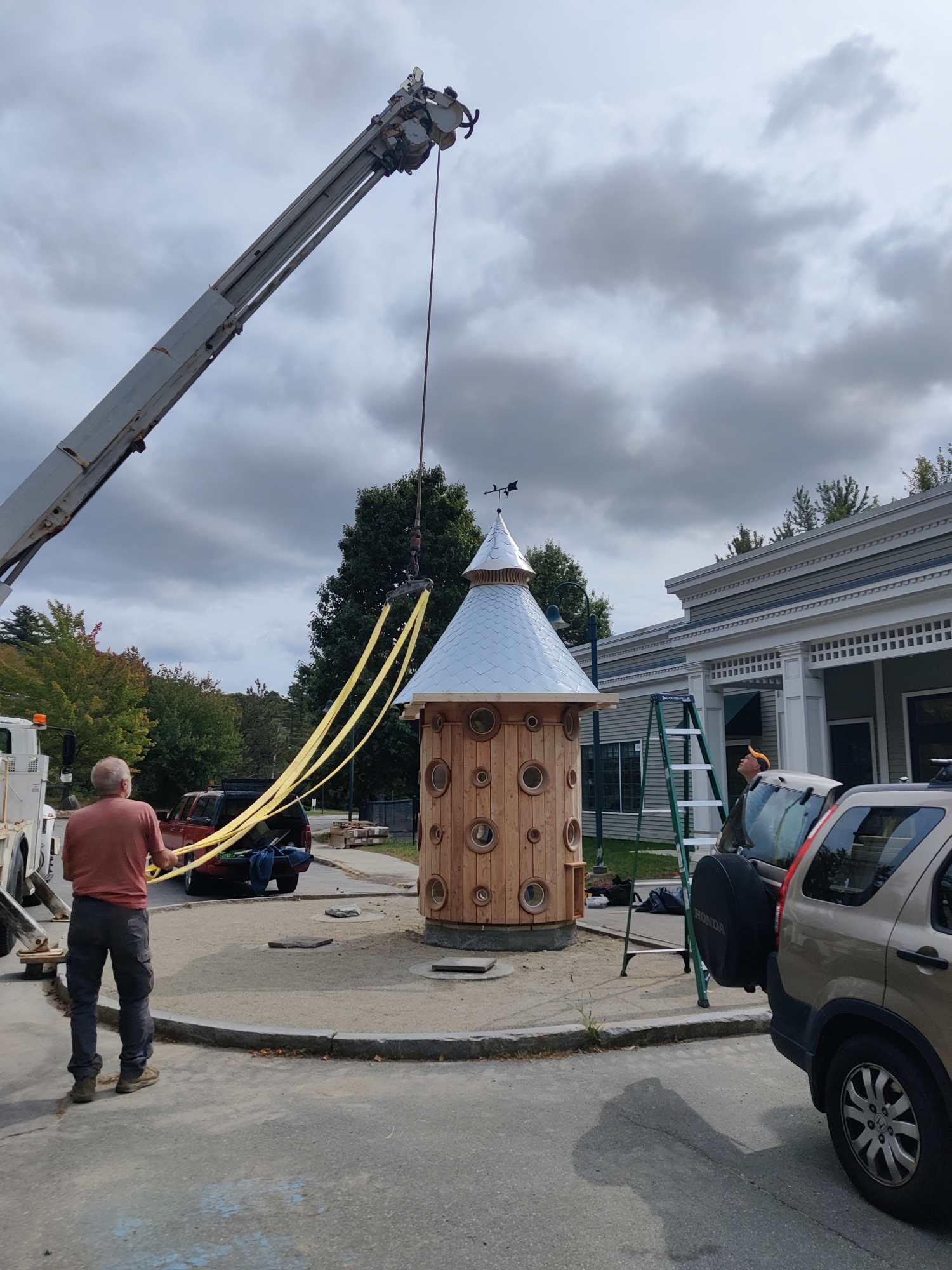
We made two trips north. First, Chris and I poured the dodecahedron concrete foundation, a 6” slab reinforced with rebar and anchor bolts set in the concrete. The forms, of course, were custom built. For the second trip, Jesse arrived at Chris’ studio on a Friday. His boom truck hoisted the structures easily onto his trailer. We strapped them down, then early on a Saturday morning convoyed North as misty fog hung upon the Casco Bay.
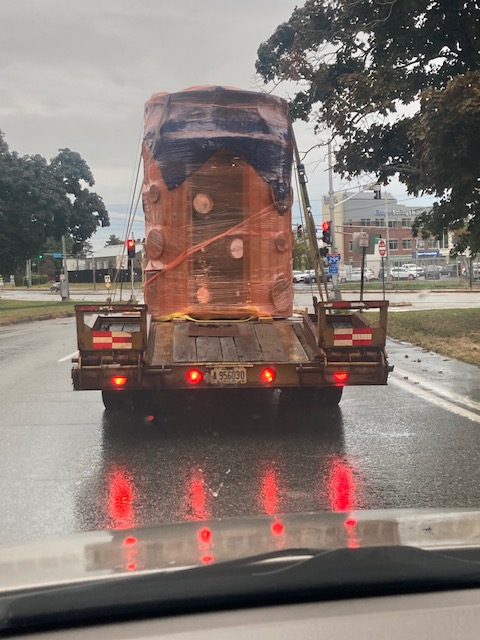
In Farmington, the sun was shining. On that idyllic September day, as crimson and golden leaves fluttered down, the installation went easily, each section stacked up, each upon the one below. A deus ex machina, indeed. The “silo” was anchored to the slab’s sill plate and the weather vane set atop the cupola.
By dusk we were gone. Chris returned later to apply finishing details.
And then, one Monday morning, children arrived at their daycare astonished to behold this creation. Like the “Night Before Christmas” I imagine they uttered, “When what to my wondering eyes should appear/But a Fairy Museum overnight landed here!!”













Walking
Posted: October 10, 2024 Filed under: Chronicles of a First Time Parent, Farming off the Farm, What is an Art Farm | Tags: AFSP, anxiety, depression, mental health, NAMI, suicide, suicide prevention 1 Comment
5 October was day 279 of 2024. Year-to-date, 274 lives have been taken by suicide in Maine.
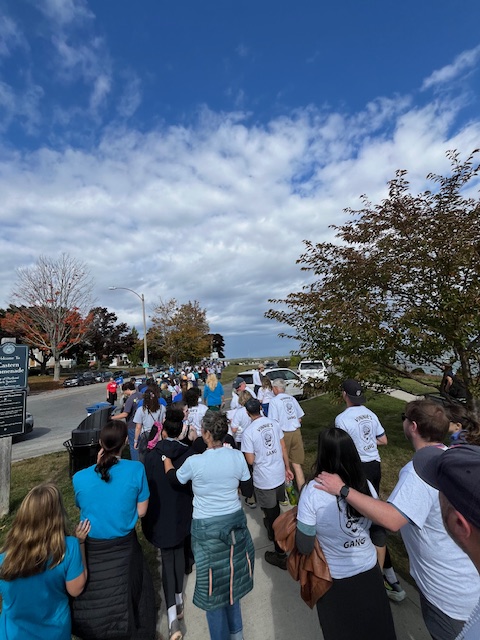
Last Saturday, on the Eastern Prom, “we the people,” deplorables and elite gathered to meet, to give voice, to bear witness, and to walk in support of Suicide Prevention. 800 people walked 2.2 miles with the majestic Casco Bay stretched out around us.
More than $120,000 was raised. Under the name “Healing Life” our family raised $820. We are eternally grateful for the support of our family and friends. We all went the distance. We all came together. Actions speak louder than words and as a family we shall do this again, a repetitive routine exemplifying our commitment to community.
In the early hours it rained, but the sun broke through. Beads of many colors were passed out: White for loss of a child, Red for loss of a partner, Gold for loss of a parent, every color of the spectrum, every reason to support suicide prevention, even rainbow beads in support of LGBTQ. One older man wore a rainbow shirt, that read, “Be a Good Human.” So simple, yet so hard.

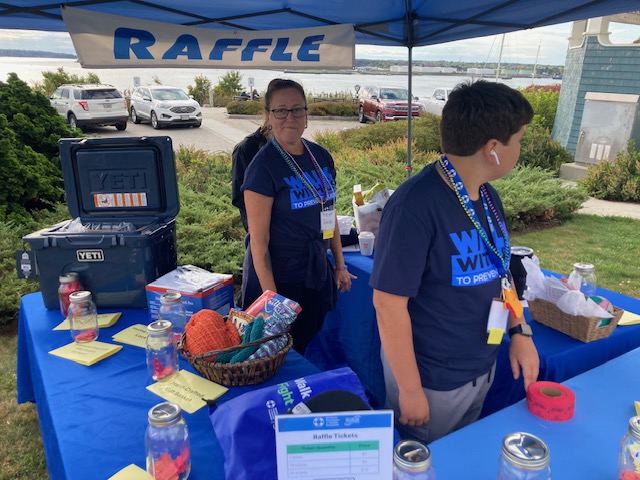
We worked the raffle table, which was a chance to engage with many people. One young child, age 6 perhaps, wore gold beads and a placard around their neck, bearing the single word, all caps, “DAD.” The Mother, now a widow, struggled to pay, and we helped her through the digital payment. As it turned out she won two raffle prizes.
She was one among many, all touched by the dark sceptre of death by suicide. Emotions were raw, so very hard to look life straight in the eye. But we did. We all did. And we walked in support of a cause.
The American Foundation for Suicide Prevention (AFSP) funds scientific research and public policy advocacy on a national level. AFSP Maine is one of a nationwide network of chapters, doing the grass roots work focusing on eliminating the loss of life from suicide. Members of our community were recognized, stood up, each story of loss told. It was gruesome, and yet, in our bearing witness hope was present.
In the South Portland Public Schools a Director of Mental and Behavioral Health has been hired, and people from the National Alliance of Mental Health, the CDC and AFSP are lending a hand. A team has been assembled and a community response is taking root. Our task now is that such hope is nurtured and blossoms.
I spoke to my daughter about my childhood, when shame reigned supreme, when no one would dare speak of suicide or mental health. To put this in context, I spoke of my Grandmother, whose first born child, in 1923, died of SIDS at 21 days then was told by her Doctors, “just go home and forget about it.”
As if.
Long is the road to greater acceptance, to understanding, but on 5 October, along the eastern Promenade of Maine, 800 people walked 2.2 miles.
Chairman Mao famously quoted the Taoist Master Lao Tzu, who said, in the 6th century BC, “the journey of a thousand miles begins beneath one’s feet.” Let us now stand together, let us walk and go forward, let us heal, we the people. Our childrens’ lives depend upon this simple truth.





_______________________________________________________
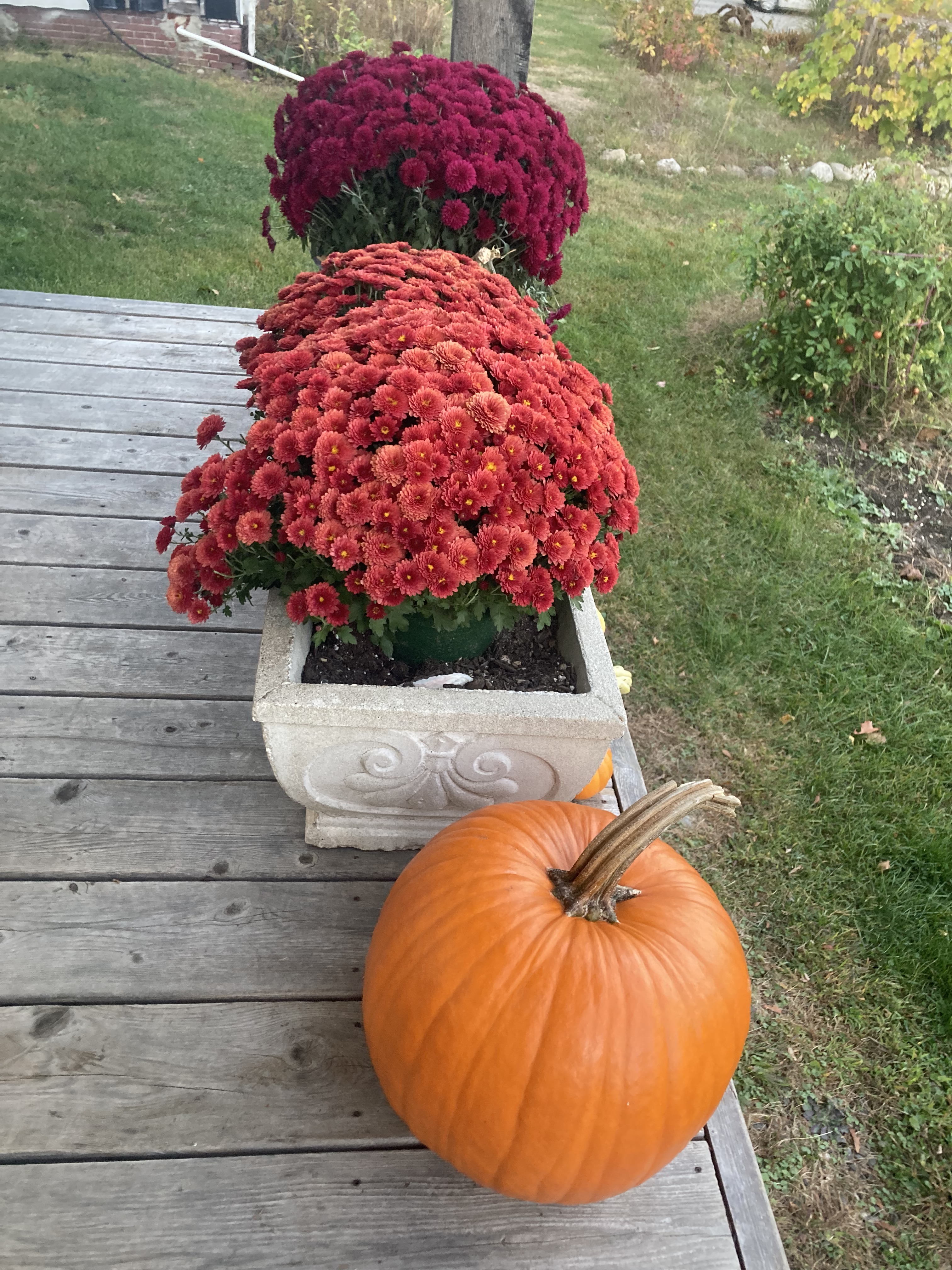
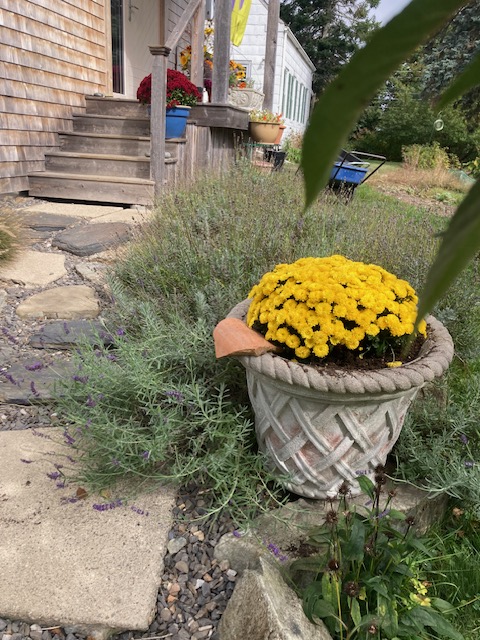
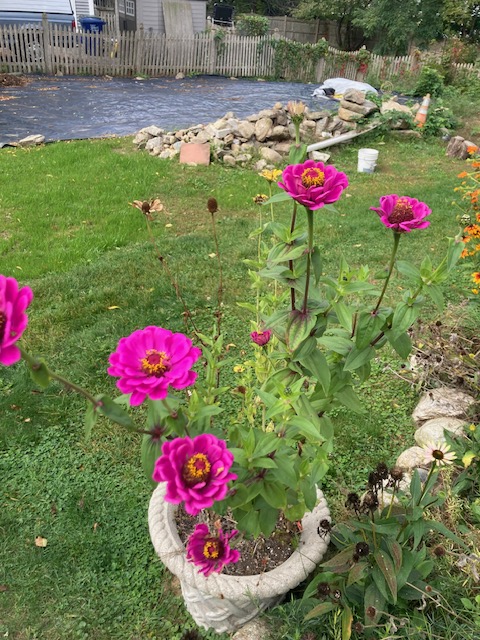
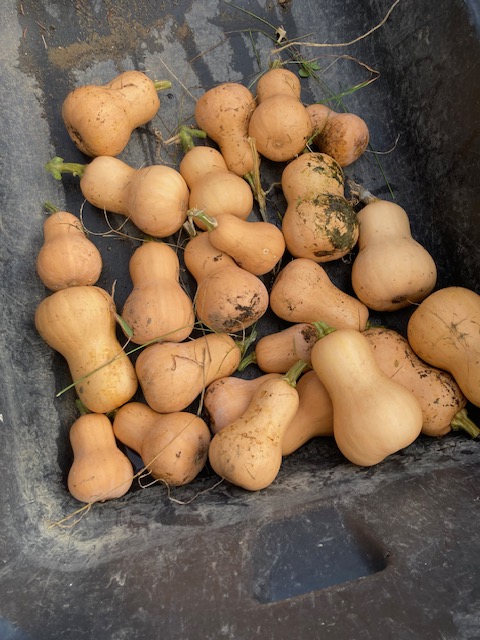
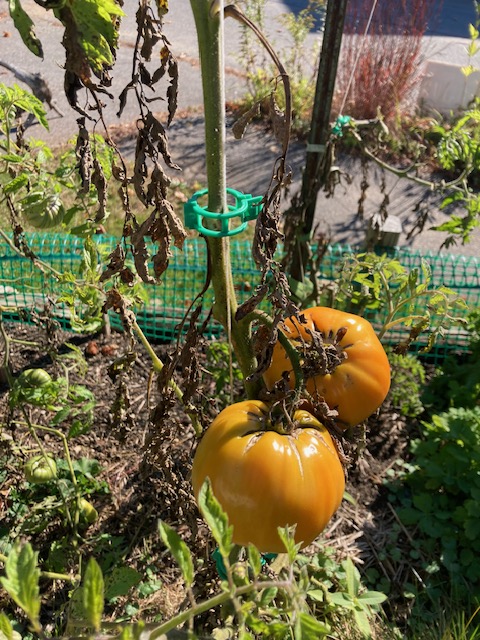
In our gardens, our variety of Butternut Squash has been harvested; Tomatoes produce their last; Pole Beans come in this week; Cosmos finally sings aloud in chorus; Mums reside on the entry porch.






___________________________________________________
And tonight, in the sky overhead, the Northern Lights showered above, a heart, it seems, in the first photo. Enjoy…










 an Art Farm