William Coperthwaite: “A Handmade Life”
Posted: July 10, 2011 Filed under: Art & Healing, Gallery - Quotes, What is an Art Farm Leave a comment“I want to live in a society where people are intoxicated with the joy of making things.”
John Medina’s “Brain Rules for Baby”
Posted: July 6, 2011 Filed under: Chronicles of a First Time Parent, Gallery - Quotes 2 CommentsThe brain’s day job is not for learning
First, I need to correct a misconception. Many well-meaning moms and dads think their child’s brain is interested in learning. That is not accurate. The brain is not interested in learning. The brain is interested in surviving. Every ability in our intellectual tool kit was engineered to escape extinction. Learning only exists to serve the requirements of this primal goal. It is a happy coincidence that our intellectual tools can do double duty in the classroom, conferring on us the ability to create spreadsheets and speak French. But that’s not the brain’s day job. That is an incidental byproduct of a much deeper force: the gnawing, clawing desire to live to the next day. We do not survive so that we can learn. We learn so that we can survive.
This overarching goal predicts many things, and here’s the most important: If you want a well-educated child, you must create an environment of safety. When the brain’s safety needs are met, it will allow its neurons to moonlight in algebra classes. When safety needs are not met, algebra goes out the window.
Ananda K. Coomaraswamy: “A Figure of Speech or a Figure of Thought?”
Posted: June 27, 2011 Filed under: Gallery - Quotes, What is an Art Farm Leave a comment“Plato, for example, remarks that ‘the expert, who is intent upon the best when he speaks, will surely not speak at random, but with an end in view; he is just like all those other artists, the painters, builders, ship-wrights, etc.’ and again, ‘the productions of all arts are kinds of poetry, and their craftsmen are all poets,’ in the broad sense of the word. ‘Demiurge’ (demiourgos) and ‘technician’ (technitnes) are the ordinary Greek words for ‘artist’ (artifex), and under these headings Plato includes not only poets, painters, and musicians, but also archers, weavers, embroiderers, potters, carpenters, sculptors, farmers, doctors, hunters, and above all those whose art is government, only making a distinction between creation (demiourgia) and mere labor (cheirourgia), art (techne) and artless industry (atechnos tribe). All these artists, insofar as they are musical and therefore wise and good, and insofar as they are in possession of the art (evtechnos, cf. entheos) and governed by it, are infallible. The primary meaning of the word sophia, ‘wisdom’ is that of ‘skill,’ just as Sanskrit kausalam is ‘skill’ of any kind, whether in making, doing, or knowing.”
Ellen Dissanayake: “What Is Art For?”
Posted: June 19, 2011 Filed under: Art & Healing, Gallery - Quotes, What is an Art Farm Leave a commentMy own notion of art as a behavior…rests on the recognition of a fundamental behavioral tendency that I claim lies behind the arts in all their diverse and dissimilar manifestations from their remotest beginnings to the present day. It can result in artifacts and activities in people without expressed ‘aesthetic’ motivations as well as the most highly self-conscious creations of contemporary art. I call this tendency making special and claim that it is as distinguishing and universal in humankind as speech or the skillful manufacture and use of tools.
Making special implies intent or deliberateness. When shaping or giving artistic expression to an idea, or embellishing an object, or recognizing that an idea or object is artistic, one gives (or acknowledges) a specialness that without one’s activity or regard would not exist.
…From very early times it seems evident that humans were able to recognize and respond to specialness – at least this would seem to be the explanation for Acheulean people of 100,000 years ago selecting a piece of patterned fossil chert and flaking from it an implement that utilized the pattern, or carrying about with them an unusual but “useless” piece of fossil coral.
…Perhaps the proclivity to make special existed even a quarter of a million years ago in the use of shaped pieces of yellow, brown, red, and purple ocher found among the human remains in a sea-cliff cave in southern France. It might be supposed that these were chosen for the “special” color, and thus suitable for “special” purposes (Oakley, 1981). Red haematite was brought from a source twenty-five distant toan Acheulean dwelling site in India, probably for use as a coloring material (Paddayya, 1977). The presumably very ancient practice by humans of applying ornamental designs to their bodies can be interpreted as a way of adding or imparting refinement to what is by nature plain and uncultivated, of imposing human civilizing order upon nature – that is, making special.
Recognizing the ubiquity of making special, and its apparently effortless integration into the day-to-day life of many unmodernized societies (so that the sacred and profane coexist, the spiritual suffuses the secular), points out to us the degree to which art is divorced from life in our own society. It helps us to understand why art, which according to the modern notion is autonomous and “for its own sake,” is still conceptually stained with the residues of essential activities and predilections.
From an ethological perspective, art, like making special, will embrace a domain extending from the greatest to the most prosaic results. Still, mere making or creating is neither making special nor art. A chipped stone tool is simply that, unless it is somehow made special in some way, worked longer than necessary, or worked so that an embedded fossil is displayed to advantage. A purely functional bowl may be beautiful, to our eyes, but not having been made special it is not the product of a behavior of art. As soon as the bowl is fluted, or painted, or otherwise handled using considerations apart from its utility, its maker is displaying artistic behavior…. The housewife who puts down cups and plates any which way is not exercising artistic behavior; as soon as she consciously arranges the table with an eye to color and neatness, she is doing so. The functional, empty, unremarkable wall may be enlivened by a mural, or bas relief, or even graffito.
NB: These passages are taken from Ellen’s book, “What Is Art For?”, Chapter 4, “Making Special: Toward a Behavior of Art”, pages 92 – 101, published by the University of Washington Press, Seattle, (c) 1988.
Wendell Berry: “The Gift of Good Land”
Posted: June 18, 2011 Filed under: Gallery - Quotes Leave a comment“Speaking for myself, I acknowledge that the world, the weather, and the life cycle have caused me no end of trouble, and yet I look forward to putting in another forty or so years with them because they have also given me no end of pleasure and instruction. They interest me. I want to see them thrive on their own terms.”
David Abram, “Becoming Animal”
Posted: June 16, 2011 Filed under: Gallery - Quotes Leave a comment“The claim that we live “on earth’s surface” implies that those clouds overhead are not themselves earthly powers, that the invisible depth in which they swim is an emptiness, a void continuous with the space between the planets. If we dwell “on the earth,” then those clouds are merely part of the flotsam and jetsam of space, with only a tenuous neighborly link to the surface on which we stand.
…Unless of course, the clouds themselves are a part of the turning earth. In which case I am not really standing on the surface of this world, but am submerged within a transparent layer of this planet, an invisible stratum of the earth that extends far above those clouds….
Which indeed it is. The air is not a random bunch of gases simply drawn to the earth by the earth’s gravity, but an elixir generated by the soils, the oceans, and the numberless organisms that inhabit this world, each creature exchanging certain ingredients for others as it inhales and exhales, drinking the sunlight with our leaves or filtering the water with our gills, all of us contributing to the composition of this phantasmagoric brew, circulating it steadily between us from its substance. It is endemic to the earth as the sandstone beneath my boots. Perhaps we should add the letter i to our planet’s name and call it “Eairth,” in order to remind ourselves that the “air” is entirely a part of the eairth, and the i, the I or self, is wholly immersed in that fluid element.
The gilt-edged clouds overhead are not plunging westward as the planet rolls beneath them because they themselves are a part of the rolling Eairth. Creatures of the embracing air, of an invisible but nonetheless material layer of this planet, the clouds accompany the Eairth as it turns, their shapeshifting bodies drifting this way and that with the winds. And we, imbibing and strolling through the same air, do not then live on the eairth but in it. We are enfolded within it, permeated, carnally immersed in the depths of this breathing planet.”
Thomas Berry and The Tree of Life
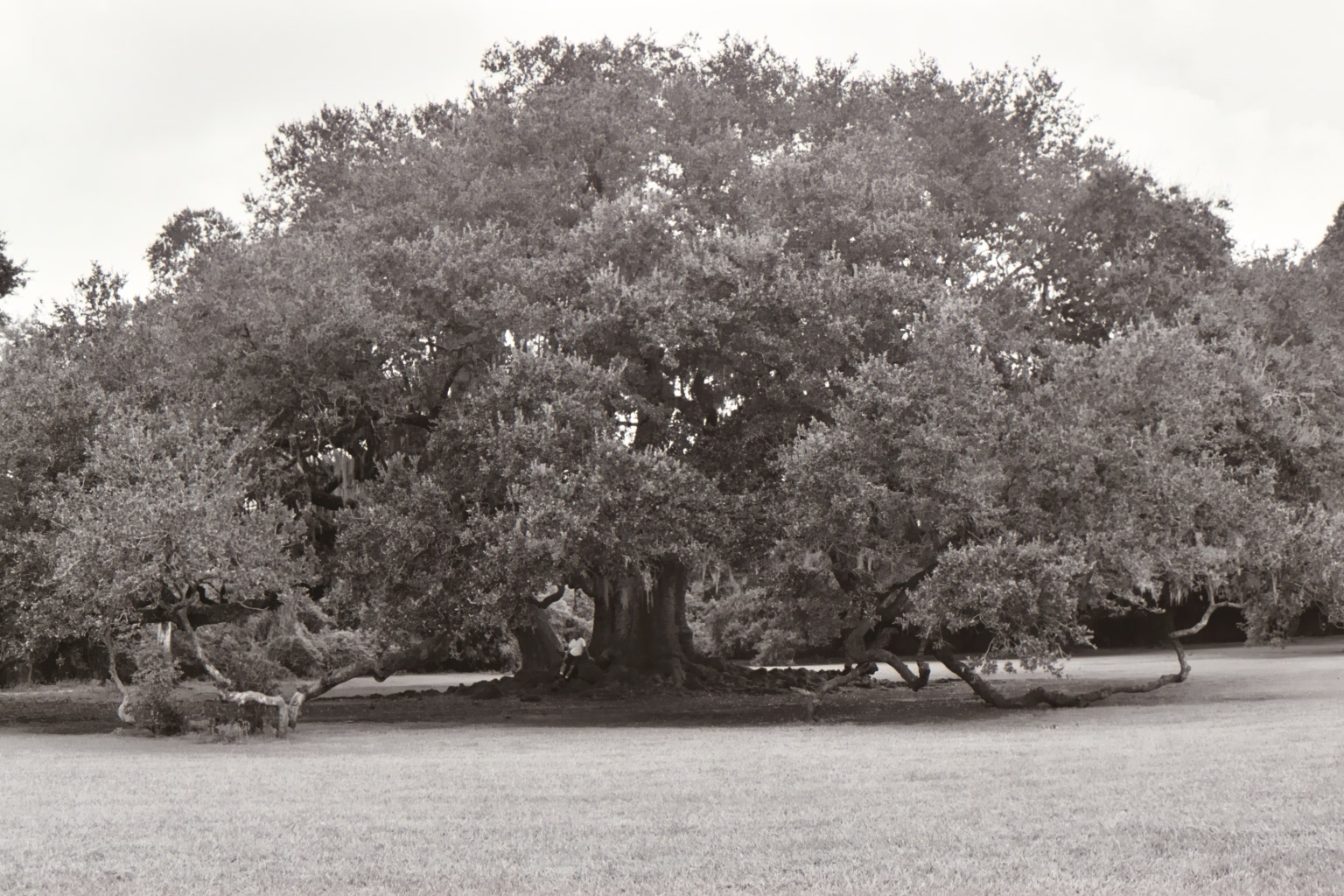
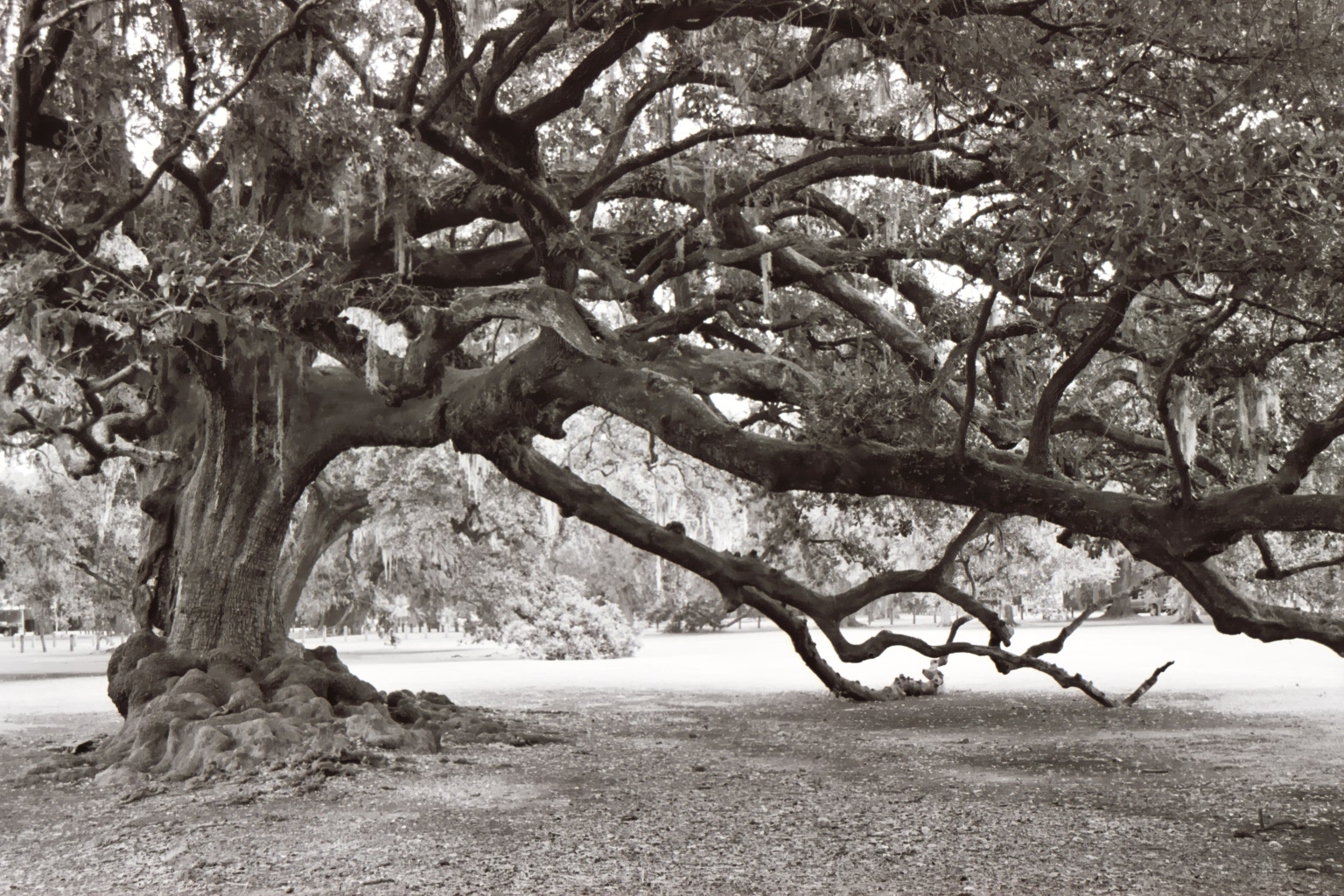
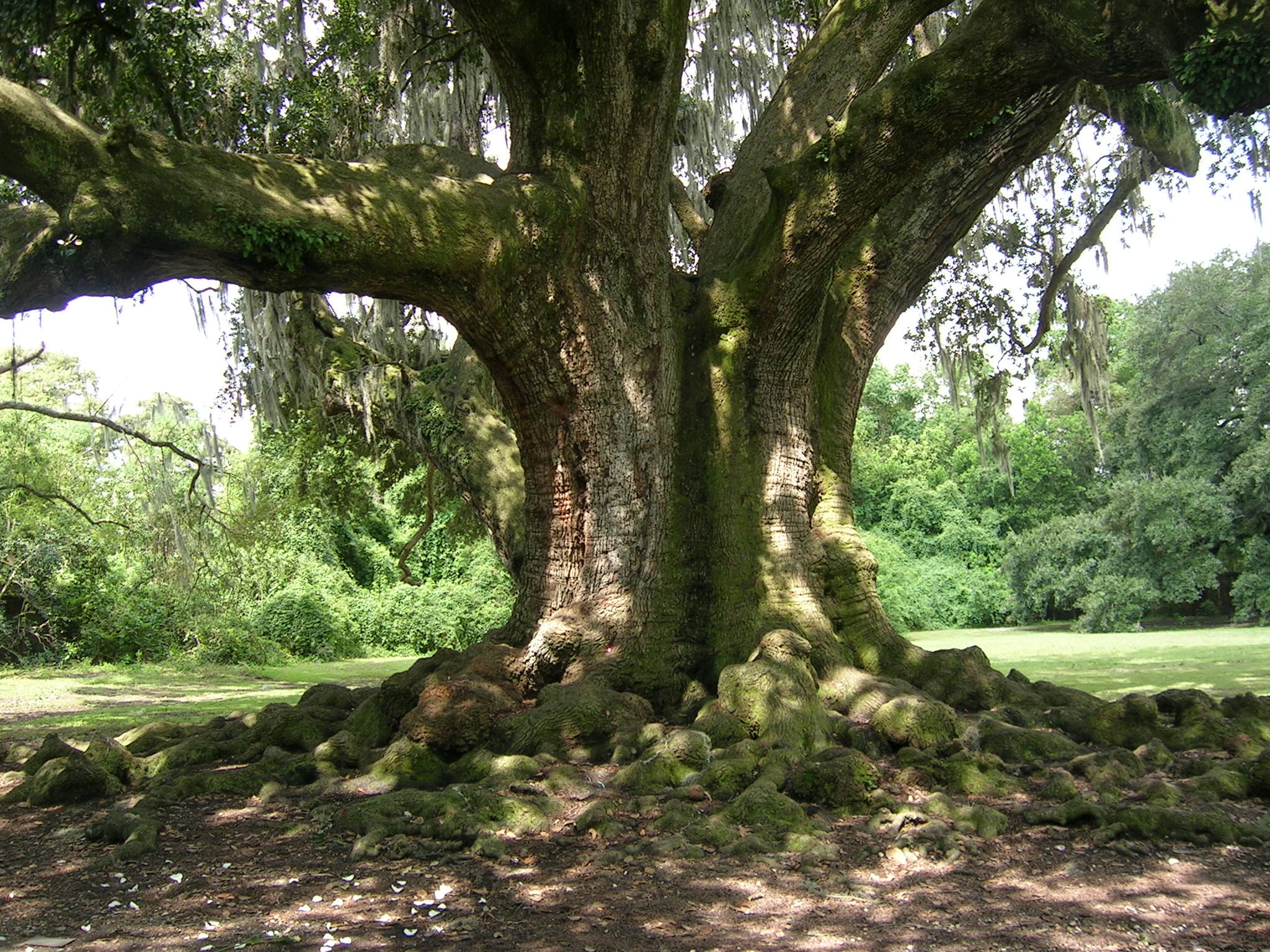
Posted: June 16, 2011 Filed under: Art & Healing, Gallery - Quotes, Gallery - Visual 2 CommentsThomas Berry, in “The Dream of the Earth” wrote about “…the organic unity and creative power of the planet Earth as they are expressed in the symbol of the Great Mother, the evolutionary process through which every living form achieves its identity and its proper role in the universal drama as it is expressed in the symbol of the Great Journey; the relatedness of things in an omnicentered universe as expressed by the mandala; the sequence of moments whereby each reality fulfills its role of sacrificial disintegration in order that new and more highly differentiated forms might appear as expressed by the transformational symbols; and, finally, the symbols of a complex organism with roots, trunk, branches, and leaves, which indicate the coherence and functional efficacy of the entire organism, as expressed by the Cosmic Tree and the Tree of Life.”
A worthy example of the cosmic tree is the southern live oak, Quercus virginiana; known to live more than 1,000 years, they have a trunk circumference of 40 feet or more, and a crown spread of 90 feet or more. The Angel Oak on Johns Island, South Carolina is estimated at 1400 years of age.
A woodworker friend once told me that, by law in the State of South Carolina, when two people stand beneath a live oak and speak their love to each other, they are legally wed. The tree alone serves as their witness. Now, I cannot vouch that to be a fact, but I love the story surely as I love the trees.
These photos were taken in 2004 of the “Tree of Life” in the Audubon Park, New Orleans. The tree survived Katrina and remains strong and stout.

Richard Manning: “Against The Grain”
Posted: June 12, 2011 Filed under: Gallery - Quotes Leave a comment“Archer Daniels Midland, conduit of food and images of food, with fifteen thousand owned railcars, two thousand barges, a hundred oceangoing vessels, and a leased network of five million trucks and five hundred thousand railcars moving wheat, corn and soybeans to 269 processing plants. Woven amid the rails and pipes is an integral web of effectively owned and leased politicians and news organizations.
Archer Daniels is not alone in this picture; it is just the standard-bearer. Still, the list of food processors is not terribly long. Five companies – Cargill, Incorporated; Continental Grain Co. (recently renamed ContiGroup Companies); Louis Dreyfus; Andre & Cie; and the Bunge & Born Group – control about 75 percent of the corn market. Four companies – Archer Daniels; Cargill; Bunge ; and Continental Grain – control about 80 percent of soybean processing, both in the United States and globally. A single co-op, Ag Processing Inc., accounts for another 5 to 10 percent in the United States.”
Tom Philpott: “It’s The McEconomy Stupid”
Posted: June 12, 2011 Filed under: Gallery - Quotes Leave a commentWell, I just discovered Tom Philpott blogging about food and politics over at Mother Jones.
It’s the McEconomy, Stupid — By Tom Philpott| Thu Jun. 9, 2011 10:40 AM PDT
I alluded to it in my intro post, but this is worth highlighting:
Up to 30,000 of the 54,000 jobs created in May were the result of a hiring spree by the hamburger chain, analysts at Morgan Stanley told Market Watch on Friday.
So hiring at McDonald’s accounted for about half of the nation’s job growth in May. What lessons can we draw from this? One, obviously, is that the economy is anemic and lurching toward a “double dip”—which isn’t some new dessert concoction at McDonald’s. While unemployment hovers at 9 percent, job creation has slowed to a trickle—and what jobs are on offer tend to be of the burger-flipping, minimum-wage variety. As CBS Market Watch Washington Bureau Chief Steve Goldstein put it, “There’s a case to be made for the benefit of fast-food restaurant employment, but it’s obviously not the foundation for sustained economic growth.
The second lesson is that McDonald’s itself obviously sees opportunity in this crisis. It made 25,000-30,000 net hires in just one month. That’s a pretty big bet that its “dollar menus” and other cheap calorie blasts will remain popular among a cash-strapped populace having to work ever harder to stary in place. That’s good news for Mikky D’s shareholders—and bad news for public health in a nation besieged by chronic maladies caused by an excess of low-quality calories.
Charles Darwin
Posted: June 5, 2011 Filed under: Gallery - Quotes Leave a comment“Man in his arrogance thinks himself a great work, worthy the interposition of a diety. More humble and, I believe, true to consider him created from animals.”
 an Art Farm