Closest to the Sun
Posted: December 12, 2025 Filed under: consciousness, Permaculture & Home Renovation, Portfolio - David's work | Tags: ecuador 1 Comment
Chimborazo is a snow covered inactive volcano, the highest mountain in Ecuador and the 39th highest peak in the Andes mountains. Located at the equator, its summit is the farthest point on Earth’s surface from the Earth’s center. To the locals it is “the closest volcano to the sun.”
Ecuador’s biodiversity is nearly unparalleled with diverse habitats and a high concentration of species. The Galapagos Islands, a province of Ecuador, inspired Charles Darwin’s theory of evolution. The Republic of Ecuador’s vast richness was acknowledged in 2008 when the country rewrote its constitution granting citizenship rights to natural habitats, embracing ecological balance, recognizing ecosystems as living entities and allowing citizens to sue on their behalf.
The Constitution’s Preamble states: “We women and men, the sovereign people of Ecuador; RECOGNIZING our age-old roots, wrought by women and men from various peoples, CELEBRATING nature, the Pacha Mama (Mother Earth), of which we are a part and which is vital to our existence, INVOKING the name of God and recognizing our diverse forms of religion and spirituality, CALLING UPON the wisdom of all the cultures that enrich us as a society, AS HEIRS to social liberation struggles against all forms of domination and colonialism AND with a profound commitment to the present and to the future, Hereby decide to build: A new form of public coexistence, in diversity and in harmony with nature, to achieve the good way of living, the sumak kawsay; A society that respects, in all its dimensions, the dignity of individuals and community groups, A democratic country, committed to Latin American integration—the dream of Simón Bolívar and Eloy Alfaro—, peace and solidarity with all peoples of the Earth….”
The basic principles include:
- Sovereignty lies with the people…with national unity in diversity
- Ecuador is a territory of peace
- The human right to water is essential and cannot be waived
- The Ecuadorian State shall promote food sovereignty
- The right…to live in a healthy and ecologically balanced environment that guarantees sustainability and the good way of living (sumac Kawsay), is recognized.
- The right to aesthetic freedom; the right to learn about the historical past of their cultures and to gain access to diverse cultural expressions.
- Education…shall guarantee holistic human development, in the framework of respect for human rights, a sustainable environment, and democracy.
- The State shall guarantee elderly persons…Specialized health care free of charge, as well as free access to medicines
- The State shall guarantee the rights of pregnant and breast-feeding women with free maternal healthcare services
- The right to migrate of persons is recognized. No human being shall be identified or considered as illegal because of his/her migratory status.
There is trouble in paradise, though, as corruption is endemic. Ecuador ranked 121st among 180 countries on the 2024 Corruption Perceptions Index. That put it among the most corrupt public sectors, and below average among countries of the Americas. By comparison, the USA was tied at 28th out of 180 countries, its lowest score since 2012, and its trend has been negative since 2015.
Ecuador is a hub for smuggling drugs produced in neighboring Columbia and Peru. The police, judiciary and executive branches are linked to crime, drug-trafficking and extortion. The World Justice Project’s 2022 report “The Rule of Law in Ecuador” found that “Ecuador saw the largest increases in the percentage of respondents who believe that some or all of the actors across [law enforcement, the executive branch, and the judiciary] are involved in corrupt practices. Among respondents in the Andean region, on average, Ecuadorians most often [three-quarters of all respondents] felt that top government officials engage in authoritarian behavior.…” The constitution speaks of noble ideals while the government is rife with graft.
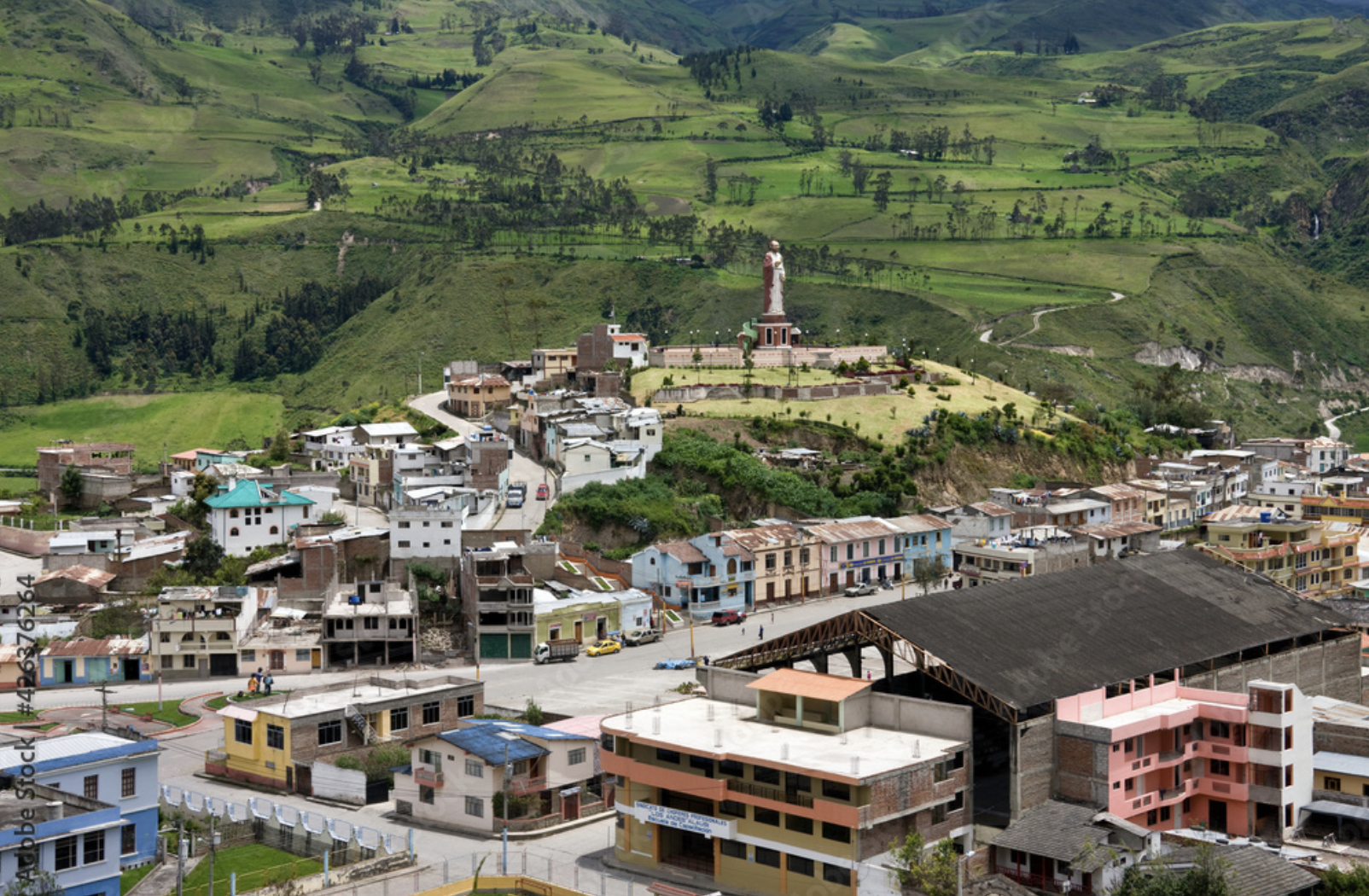
Anthony is a young man who grew up on Chimborazo. He is a father of children growing up in the Andes mountains, but because of the gangs and corruption he lives now in Massachusetts. A roofer, he works all around New England, traveling south to Rhode Island or Connecticut or as far north into Maine and Vermont.
Most all of the roofing crews in Southern Maine now are Hispanic. I see them driving their vans, loaded high with ladders and wheel barrows, doing all of the roofing jobs. For one job on the coast, I needed to remove a chimney on a very steep pitch. I asked the home owner to hire that out, and a Spanish speaking crew arrived. They had no safety equipment but climbed up without hesitation. Growing up in the Andes gives them a natural ease on heights.
The crew did not have the correct equipment and so I called the roofing contractor. Not surprisingly he showed up in his big truck, emblazoned with decals advertising his business. Dressed in sandals and shorts, it seemed we had interrupted him from working on his boat. He stood on the ground, looked up, doing nothing. The crew worked quickly and finished in about 3 hours. Most certainly the $1,500 paid to the boss did not include profit sharing. Every carpenter I know has similar stories to share.
We hired Anthony for the Tiny Cathedral, and by-passed the big-truck contractor. He and his cousin arrived, having driven two and a half hours north from Massachusetts. They did the job quickly and well and were paid cash for a full days wage, travel time included. The home owner still came out ahead, we avoided back-breaking labor, Anthony got a good break.
We shared pizza and beer over lunch. Between his broken English, and my pidgin Spanish, Anthony spoke about his roots, growing up in a small town closest to the sun. He described the exquisite beauty and how the ecotourism industry offers only a sanitized view while avoiding the gang and crime-ridden areas. Opportunity drew him north and he had not seen his son for seven years, nor did he expect to return home for another four years. He misses his son’s childhood but sends home money monthly.
That lunch was more than a year ago, and the self-righteous today likely would regard our act of civility as aiding and abetting. Ours is a transactional age where might makes right, where greed governs the strongmen, where earth is rare only in its industrial and financial value, but history is littered with the names of fallen despots, empires that came to pass. King Xerxes held such commanding power that after a storm destroyed his pontoon bridge, he had the sea whipped 300 times with chains, the engineers beheaded, to punish the sea for its disobedience preventing his Persian Army from conquering Greece. Long forgotten he is while daily still the tides rise and fall.
Wisdom endures on the side of “our age-old roots…the Pacha Mama of which we are a part and which is vital to our existence… diverse forms of religion and spirituality, …of all the cultures that enrich us [in] struggles against all forms of domination and colonialism.”
Closest to the Sun is closest to the light of truth.
Tiny Cathedral
Posted: December 5, 2025 Filed under: Permaculture & Home Renovation, Portfolio - David's work 1 Comment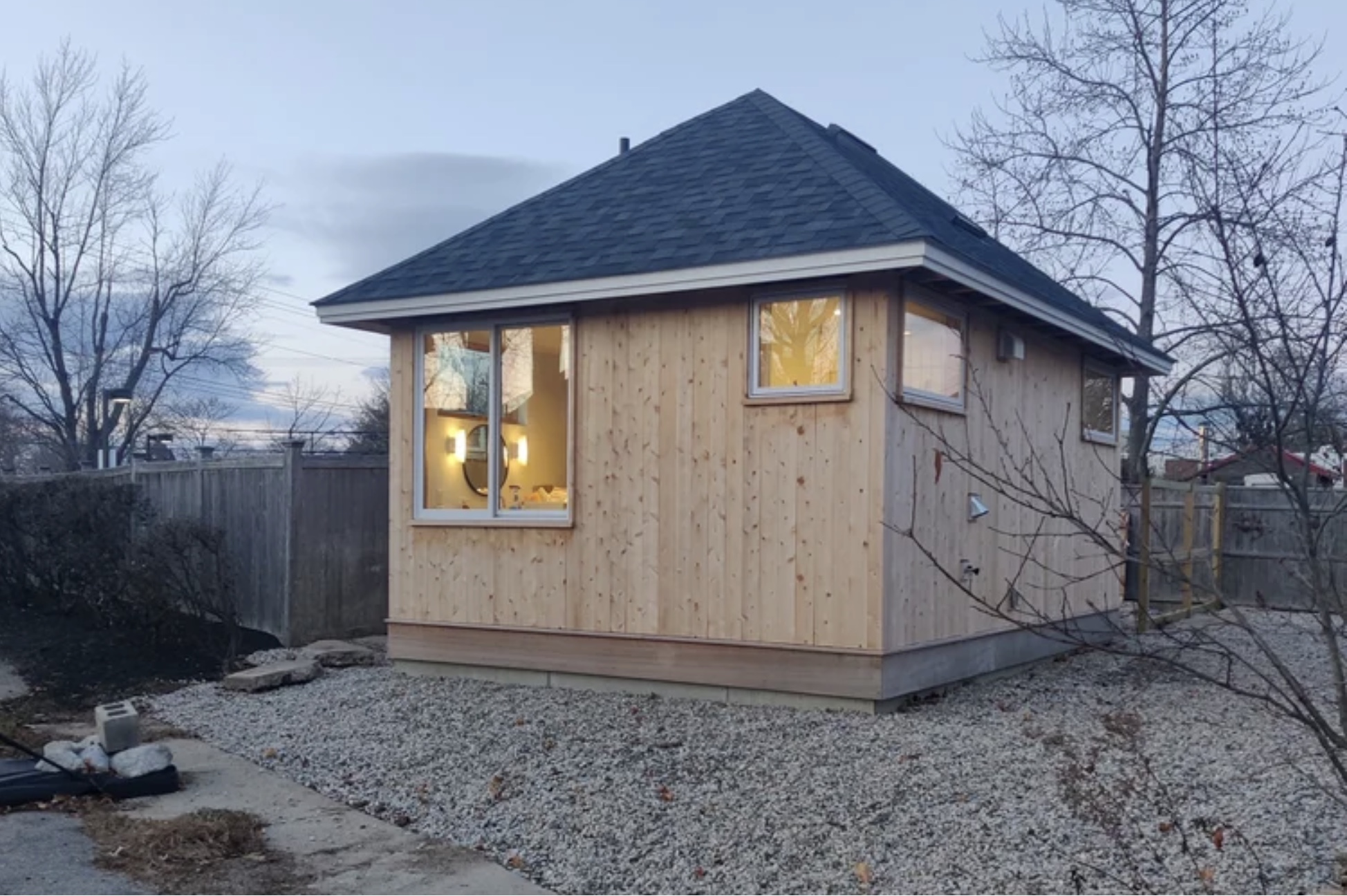
Not long ago we built a tiny cathedral at the top of Meetinghouse Hill. The hill was so named back in 1733 when the Purpooduck meeting house was built. “The old Meeting House was a large, square, two-storied, unpainted building, without a tower, with a porch on the front end which served as an entry. There were two outside doors, reached by two steps which ran the entire length of the porch. It was a great barn-like looking structure. The pulpit was an elaborate affair. It stood on one post elevated about eight or ten feet above the floor. It was reached by a flight of winding stairs.”
Our tiny cathedral was, in prosaic terms, the conversion of a non-conforming 106-year old garage into an apartment for a Mother-In-Law who lives in Switzerland. “Non-conforming” is a term of art of the Code Enforcement Office for a legally established building that no longer meets the current zoning laws. You can renovate but can neither expand nor replace those structures. There was not an inch to spare.

The 106-year old garage had serious issues but exactly one positive: it could provide the Mother-In-Law with the privacy of a 220 square foot bedroom “suite.” We had a chance to make something majestic. In order to effect this transformation we jacked up and moved the building off its existing slab, dug down to excavate and pour new stem walls with footings then used a crane to lift the garage back into place, exactly where it had been.
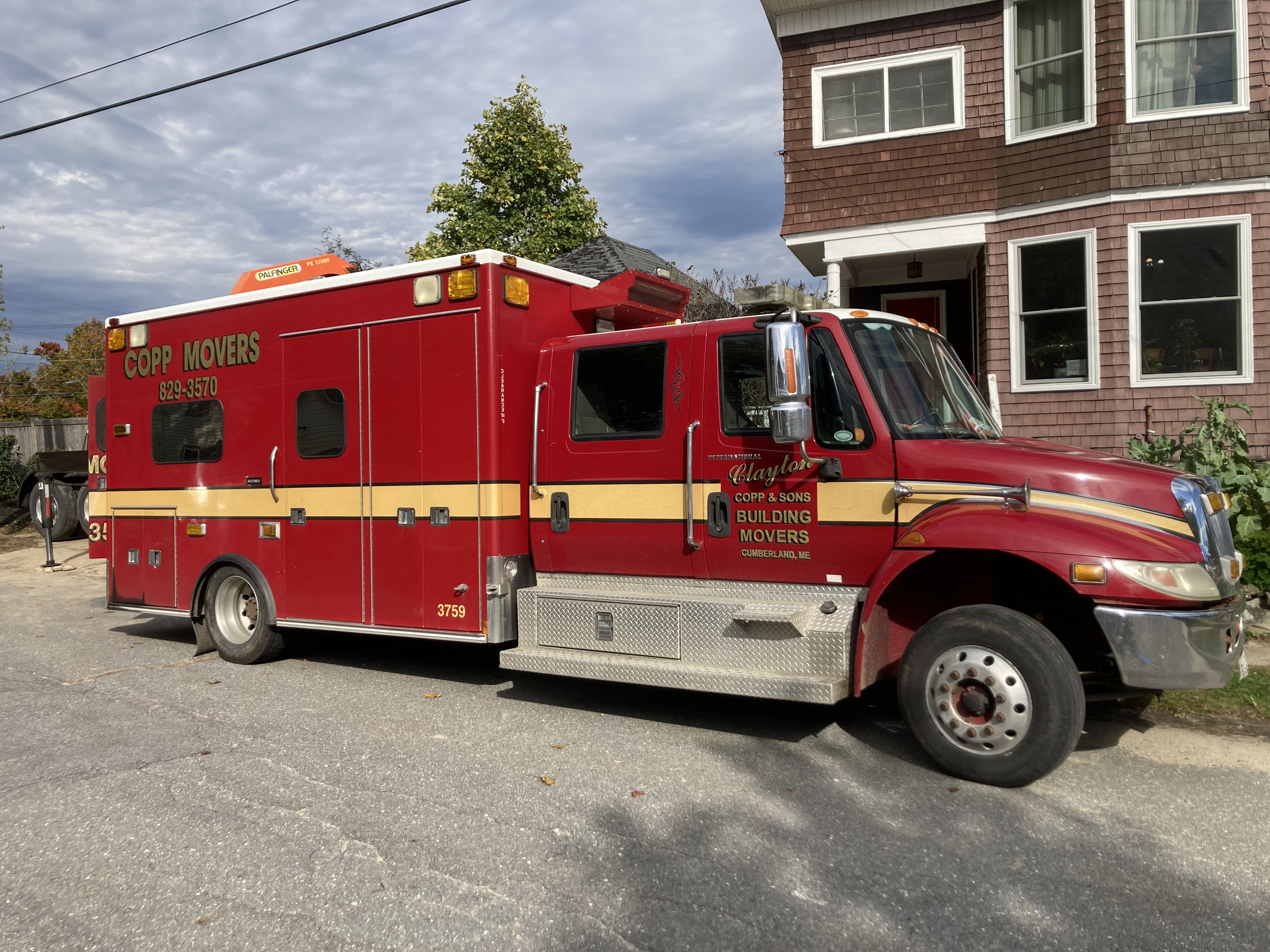
The Copp Brothers from Cumberland accomplished this Herculean task. For three generations they have been jacking and moving buildings and, like the “Ghostbusters,” the Uncles and Nephews arrived in a converted ambulance filled with tools of their trade. In less than 90 minutes they rolled the structure onto the street and onto the side yard. The crane lift back took less time.
The Professor – who currently teaches my son science by means of welding and small engine repair – was the mastermind of the project. When he showed up we got to work on the carpentry, plumbing, insulation, heating, roofing and siding. The electric work was straightforward, but the plumbing and bringing water to the garage was a challenge. Thankfully, the professor owns every tool known to mankind and has consummate skill using them all. No problem was insurmountable.
Because the space was limited, we added insulation to the outside of the building. The building remained exactly on its original footprint, and we expanded outward and upward, adding recycled foam insulation – 3” to the walls and 6” on the roof – to create a weathertight envelope that exceeded the new energy efficient Code requirements.
The homeowner, a trained architect who makes sculpture, designed the suite to maximize light, by means of windows, sliding glass doors and skylights. More than 20% of the wall space is windows, and that is how the garage became cathedral-like. Titus Burckhardt, a Swiss artist and art historian, has written, “When a Byzantine poet says, of the fullness of light in the vast inner space of the church, that it seems that ’the space is not illumined by the sun from without, but rather the illumination originates within,’ he is expressing an artistic ideal which Gothic architecture also sought to realize in its own way, by the introduction of transparent walls of stained glass.”
We did not use stained glass, but the amount of light filling that tiny suite is simply majestic. The story is told in detail here: https://npdworkshop.com/the-mother-in-law
The tiny cathedral represents one solution to the housing crisis. In 1850 the average American home was 888 square feet for 5.5 people. By 2015 homes had ballooned to 2,496 square feet for 2.5 people, on average. McMansions average 4,000 square feet, can grow upwards of 6,000 square feet, housing an average of 2.5 people. The trend shows a culture drunk in our profligacy.
The State of Maine needs 84,000 new housing units by 2030 to meet demand and to support the workforce. Maine’s median household income is approximately $90,730, while the median home price is $355,000. Affordability clearly is a major issue. The “supersize me” culture needs to wake up, and rather than build larger, we need to build smaller and smarter.
In Maine H.P. 1224 – L.D. 1829 was recently passed as “An Act to Build Housing for Maine Families and Attract Workers to Maine Businesses.” The law both increases housing density by 2 1/2 times while decreasing the lot size to 5,000 square feet per unit in areas with public water and sewer. This means smaller homes on much smaller lots, which makes the Tiny Cathedral a herald of things to come.

Cupboards in Cumberland
Posted: November 29, 2024 Filed under: Permaculture & Home Renovation, Portfolio - David's work | Tags: diy, home, Home renovation, home-improvement, interior-design, kitchen 3 Comments
Cumberland, Maine is bucolic, an idyll of pastoral open lands with Gothic farmhouses atop rolling hills across the horizon. The Levittown mass-produced suburbs circa 1950 passed by Cumberland, but in 2024, on the fringe of the Portland metro-area, it is a highly desirable place.
More than 21 Million people live within a half-day’s drive of Cumberland, and with Zoom telecommuting, the desire to live on the rocky coast of Maine has dramatically grown. Maine has a housing shortage: 80,000 new homes are needed by 2030 but the median income is $63,200 while the median home price is $414,000. The way of life known for generations seems no longer sustainable.
Couples from away buy homes for $3 Million and then gut and renovate at a cost upwards of $2.5 Million. Castles by the sea, monuments to themselves, grand is the vanity, employment all but guaranteed for the trades. I speak from direct personal experience.
Kitchens are the hearth of their home, and people spend upward of $3,000 per linear foot, easily more than $100,000 in total on a kitchen. I have been told of couples gutting and redoing their kitchen every four years.
Recently I was contacted by a Cumberland resident whose family has lived there for generations. The kitchen cabinets were built of pine, by his Uncle, sometime in the 1950s. They were in sturdy enough condition, and only the drawer slides were the issue. I drove north to take a look.
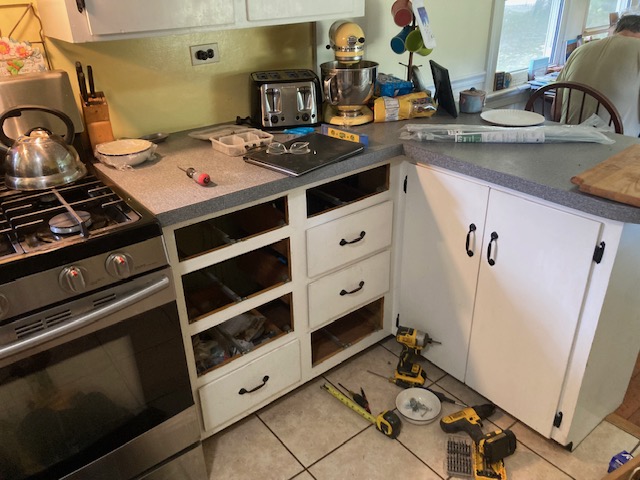
Arguably the cabinet repair’s cost – at 6 feet in length – was upwards of $6,000; I could have stood firm that the entire cabinet needed replacement. But I admired my Client’s frugality, which reminded me of the home where I grew up, built with cabinets of chip board and 1/2” plywood door and drawer faces; 1960-built cabinets that served seven people for 63 years. As any New England Quaker well knows, simplicity, frugality and common sense are principles to live by. So I agreed to solve the problem, rather than demolish and rebuild.

At a specialty hardware store I was able to find a replacement slide and when I returned was pleasantly surprised that the new slide was an exact match in all aspects. The entire job took 45 minutes to repair eight drawers. More importantly only 8.5 ounces of recyclable metal entered the waste stream.
If I pursued rational self interest I would have charged at least one half-day, or more; I had taken the time to drive north twice for a repair that ultimately amounted to little work. But “rational self interest” seems just a euphemism for “selfish greed” and just because the market will bear a cost does not make it right that I should charge same.
My invoice amounted to $118, parts and labor included, an almost laughable sum. Thus was saved $5,882 and I established a long-term client, a decent kind man. Fair is fair. All is well that ends well.
Volts and Arc
Posted: November 22, 2024 Filed under: Chronicles of a First Time Parent, Farming off the Farm, Little Green Thumbs, Permaculture & Home Renovation | Tags: Factory 3, line welds, MIG welding, tap welds, weld pool, welding 1 Comment
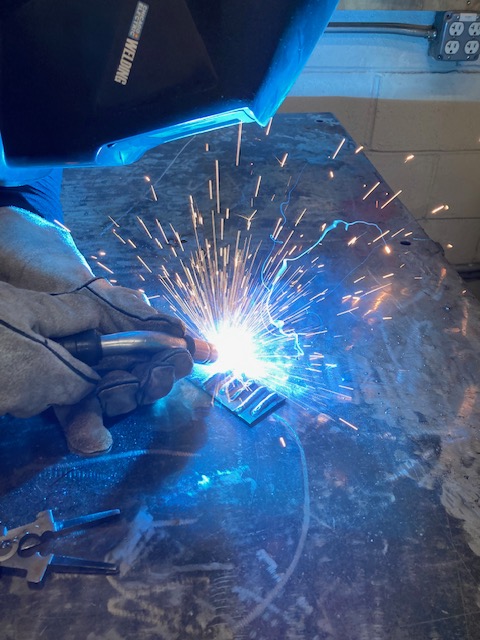
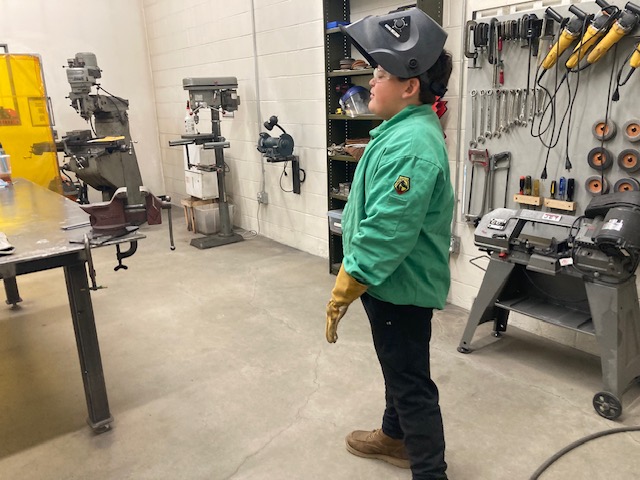
Recently my son and I took a MIG Welding class. Having no experience with welding we were absolute novices, eager to go.
We took the class at Factory 3, a local makerspace that provides work studios for artists, classes for the general public, a community to local makers. A vast open space, exceptionally well appointed with tools and equipment. Beau, the teacher, was superb, answering my many questions. Quickly arcing light was in our hands! There is no looking back.
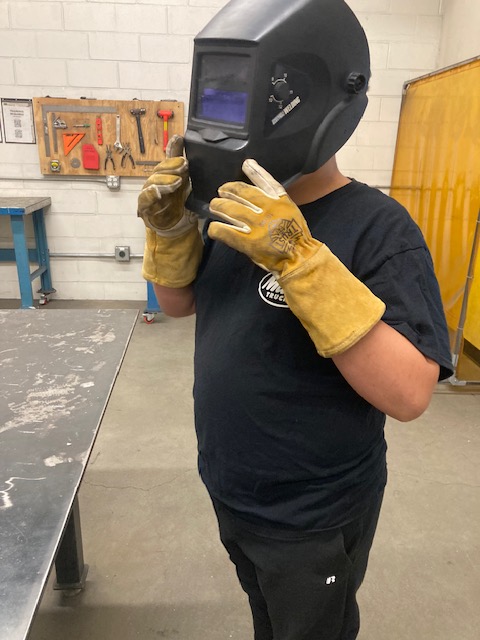
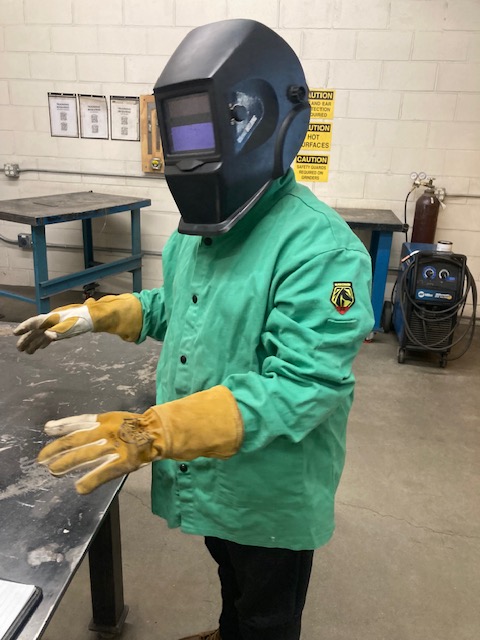
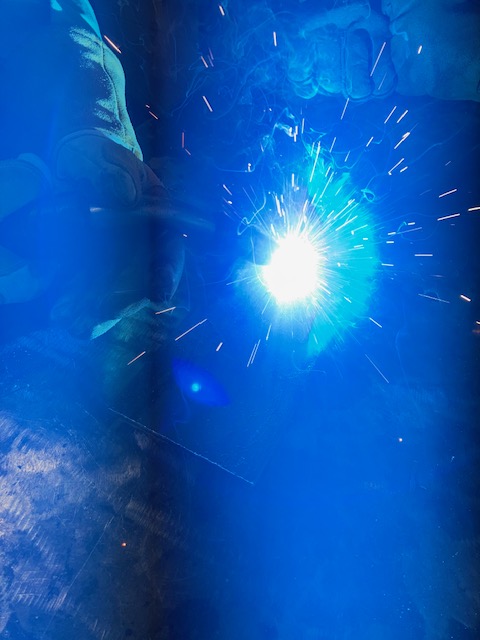
MIG welding uses an electric arc, not fire. The arc is intense, so intense that it could cause sunburn or severe damage to the eyes; to protect our skin we wore a welding jacket and long pants, to protect our eyes an auto darkening helmet.
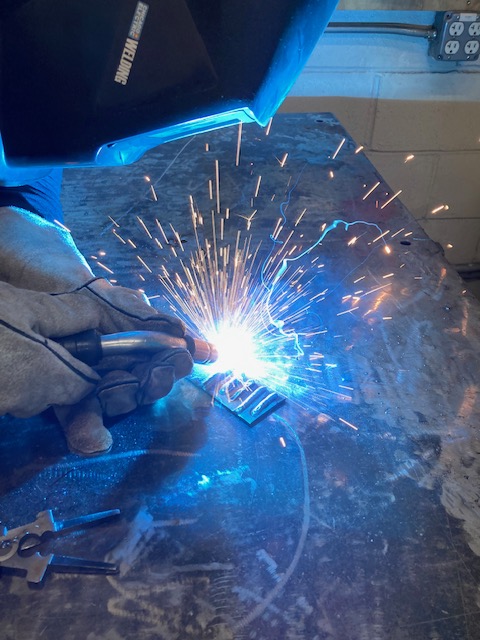
MIG stands for Metal Inert Gas, which is a process that fuses two pieces of metal together using 240 volt electricity and a steel alloy wire with copper coating. A constant voltage power supply creates an electric arc between the base metal and a wire electrode that is continuously fed through the welding gun, into the weld pool. A ground cable was clamped to the metal work table, and then positive electricity flows from the welding gun through the table.
The metal inert gas was 75% argon and 25% C02. The gas is non-flammable and serves to create a shield around the arc, preventing oxygen and water vapor from getting into the weld pool. Water would cause rust, which would make the weld fail over time.
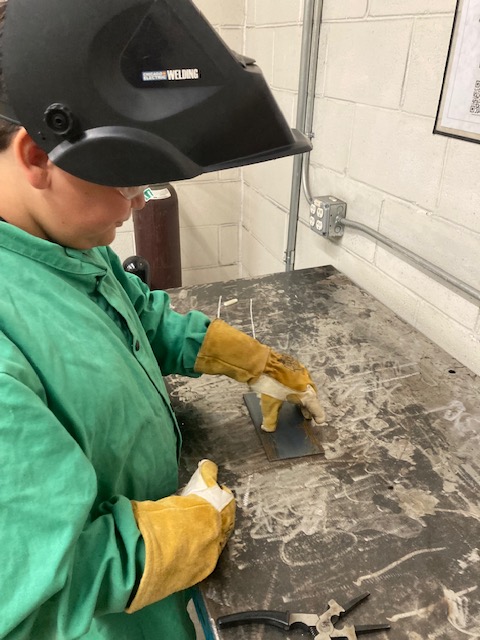
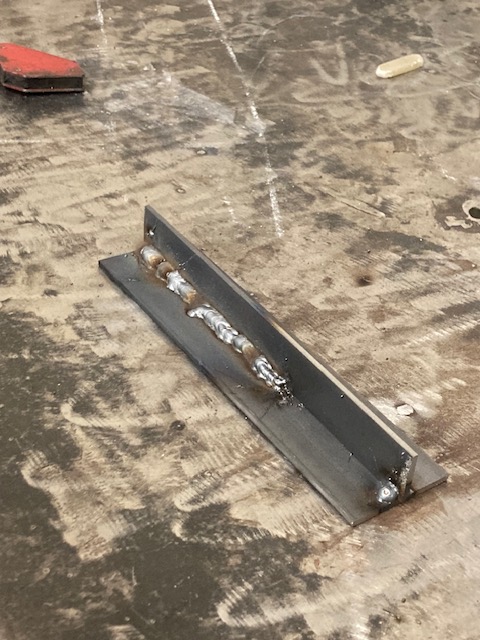
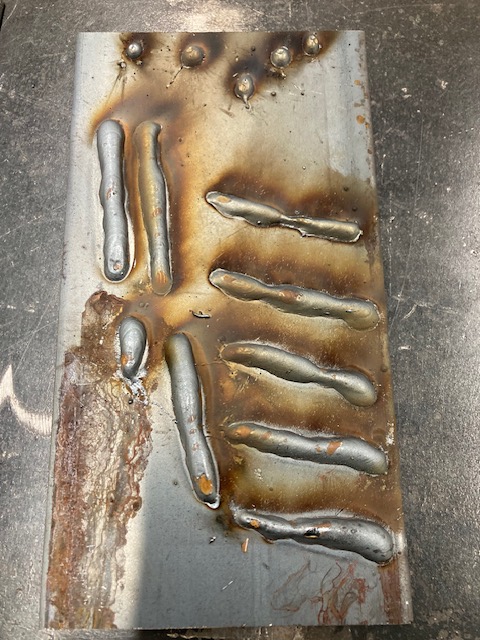
Our tasks were basic, a series of “tap welds,” a temporary weld to hold the two pieces in place and a “line weld” which is the continuous weld along a joint, permanently fusing the two pieces of metal together.
The one hour class opened a new world of material and technique. Project ideas came flooding in. We have two staircases that need railings. Another class seems in the offing. A local friend who welds has offered to teach us more.
New materials. New techniques. Much to be made.



_________________________________
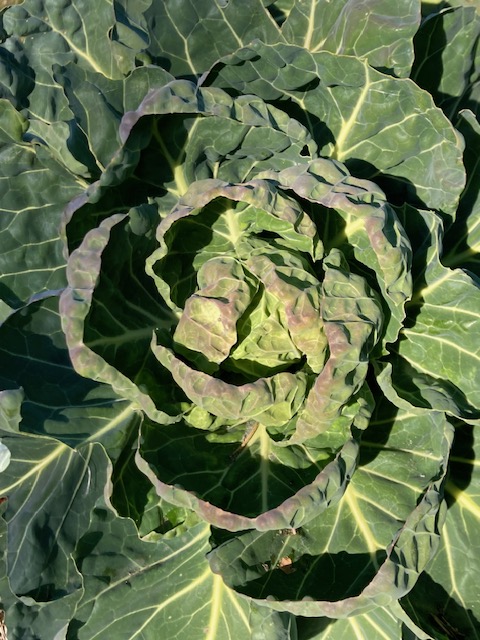
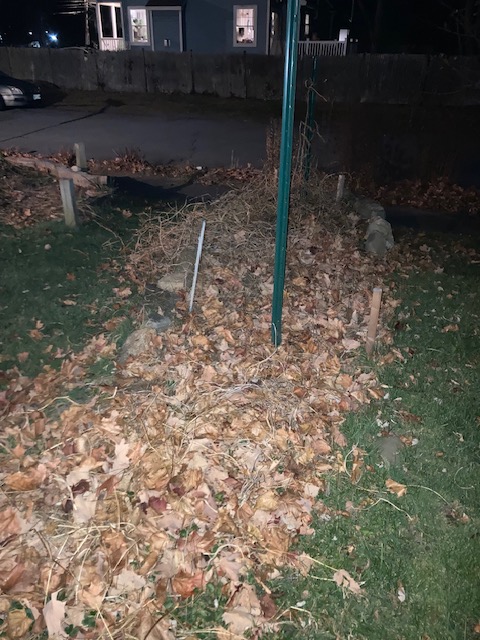
Gardens are gleaned, emptied, final cabbage harvested, Brussel Sprouts alone remain. Soon we plant garlic, for a late spring harvest. A season of abundance has come to its end. We pause now for winter.




Solitary Confinement
Posted: October 25, 2024 Filed under: Chronicles of a First Time Parent, Permaculture & Home Renovation, Portfolio - David's work, What is an Art Farm | Tags: american-history, Andrew Jackson, medicated worm syrup, presidents, Trail of Tears 1 Comment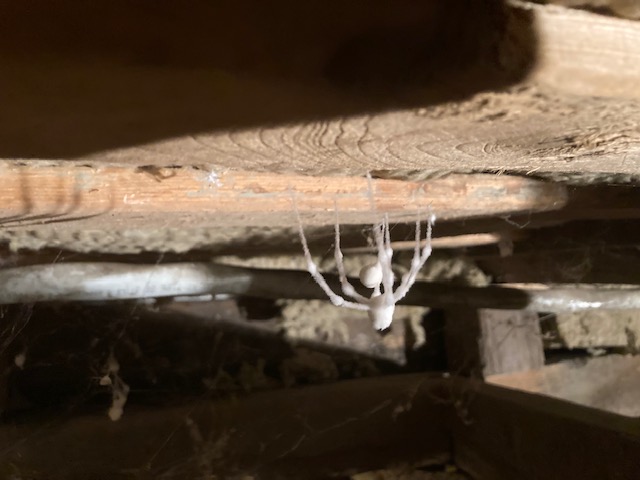
The 7th and 11th Presidents of the United States were titans from Tennessee, Andrew Jackson and James Polk. Polk was a disciple of Jackson, and both fought bitterly against the Second Bank of the United States arguing that it was a capitalist monopoly favoring the Eastern states. Jackson paid off the national debt, but also instigated the “Trail of Tears” ethnic cleansing, the relocation of tens of thousands of Native Americans, forced to walk from their ancestral homelands to lands “west of the river Mississippi.” A polarizing figure, Jackson advocated for ordinary Americans and preserved the union of states, but was denigrated for his racial policies.

1830 through 1848, in South Portland, Maine, C.D.W., a carpenter, built a farmhouse with a crew of thirteen. By day, they labored cutting trees and hauling rocks, to lay the rubble foundation and hew the timbers for the post and beam home. At day’s end, they had no hot showers (indoor plumbing began in Boston 1829, only for the rich) and their food was harvested or hunted from their gardens or woods (green grocers did not become common until circa 1916). Hard were the conditions under which those workers labored.
On Labor Day 2012, we bought the house and barn that C.D.W. built, then began an energy efficient upgrade. My wife was in her third trimester, so time was of the essence. Money was tight. A permacultural builder and crew helped gut and super insulate the main house, converting from kerosene to natural gas. Short on funds, we had to tear down the barn. On Thanksgiving day we moved in, when two weeks later our son arrived into our Greek Revival New England Farmhouse. In 2017 we were fortunate to rebuild the barn, adding a second bathroom, a loft and workshop. Which left the Ell as the last remaining unfinished section.
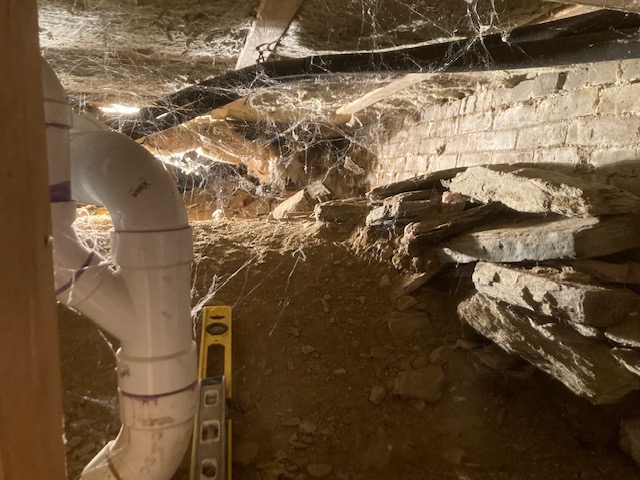
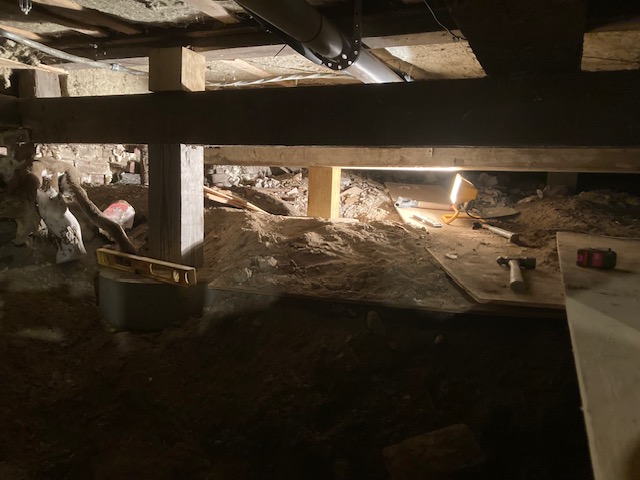
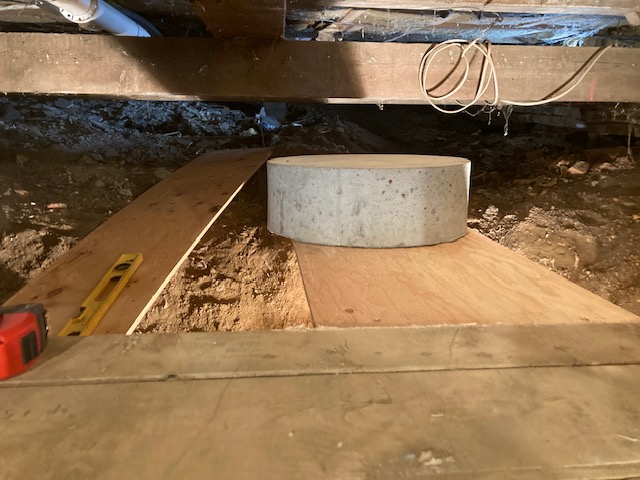
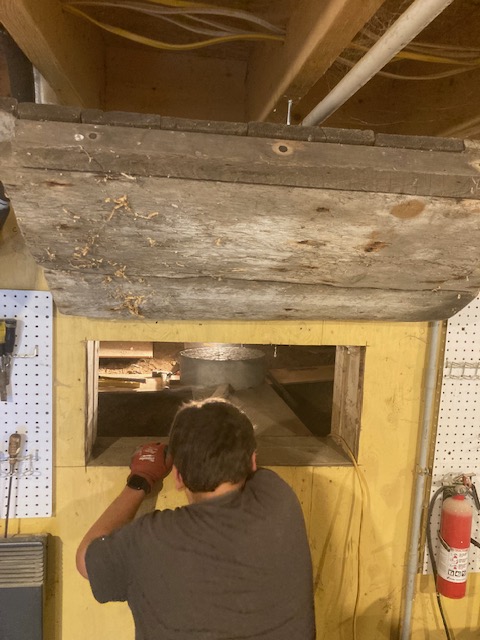
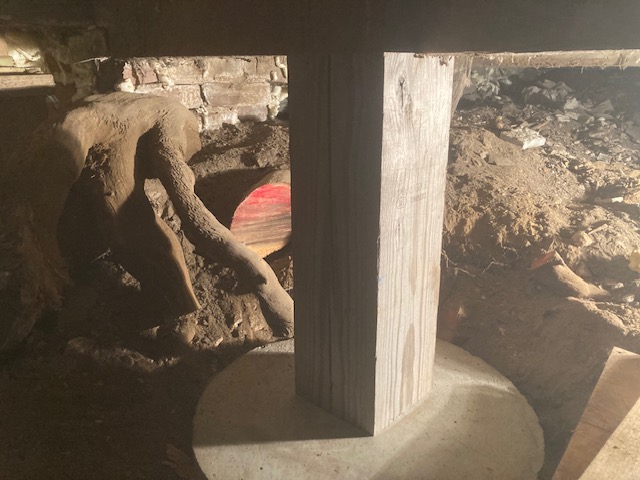
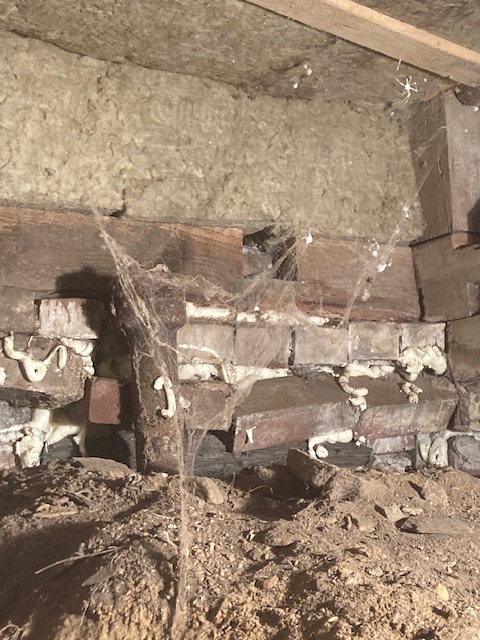
A prudent man would have passed on the home. A rich man would have torn down the Ell. But I was short on cash and long on hope, so I bought the farm in “as-is” condition, at a foreclosure price plus 20-years’ hard labor. I have begun now, finally, restoring the Ell. Before I can do the finish work, I need to rebuild the foundation, and before that, to stabilize the floor system. This work is done in the crawlspace, which means my hard labor now is essentially solitary confinement.

To secure the floor system I need to set ten concrete pads, upon each of which a post is hammered into place to stabilize the existing 1830 floor joists, with a gusset to lock the posts and prevent movement. Building standards were vastly different then, so I have to bring all of this up to code, with 36” to 16” of working space. Each concrete pad is difficult, while several are incredibly challenging. I had two choices: either mix concrete in the crawlspace and then bucket it into location OR pull a pre-cast block, weighing 130 pounds, into a pre-dug hole. Given “pick your poison,” I chose the latter, the pre-cast.
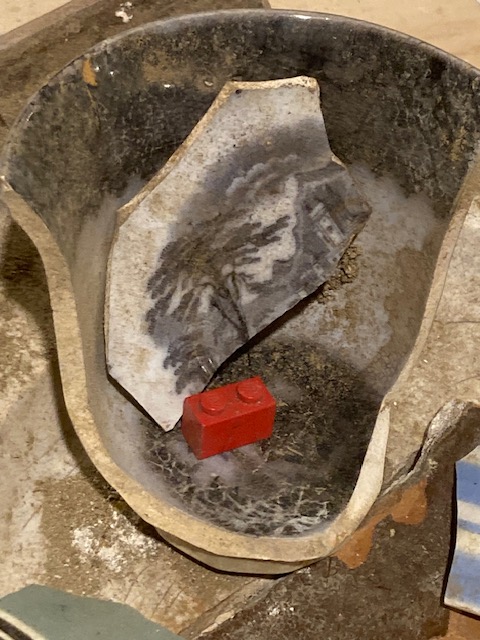
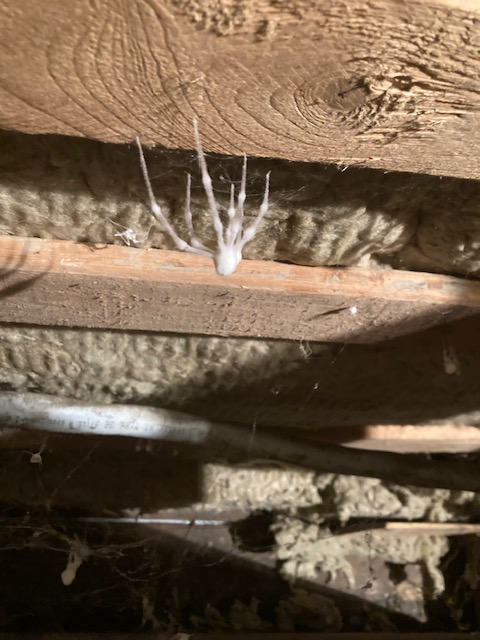
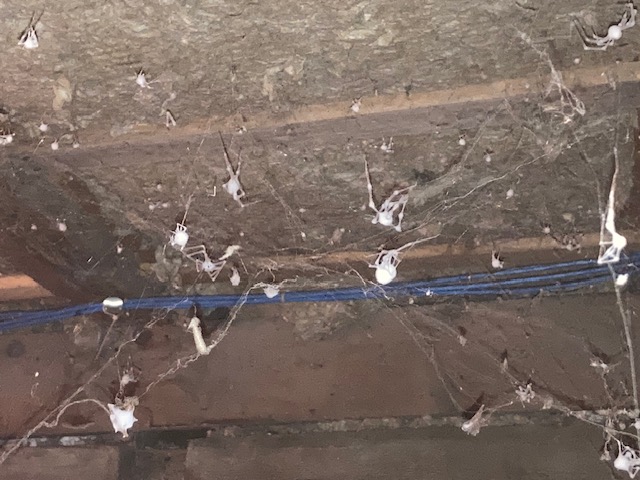
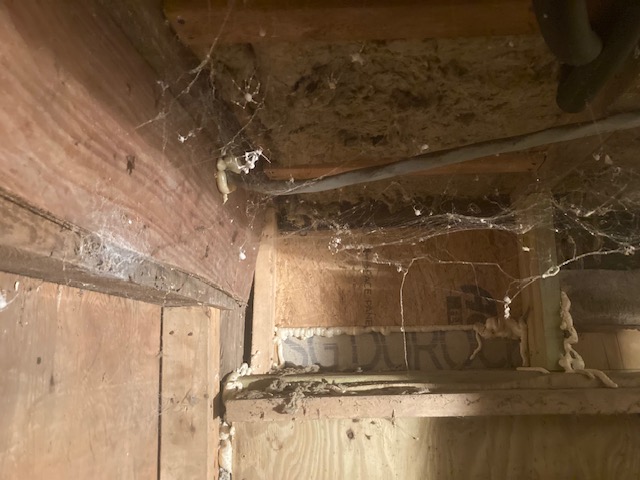
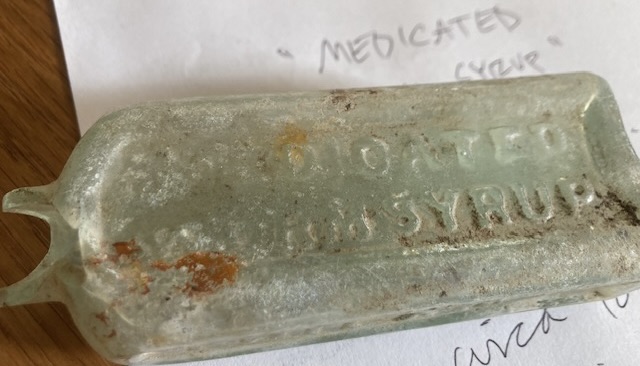
The crawlspace is macabre and surreal. Everywhere overhead abound spider webs and carcasses, covered in a white mold/fungus on the exoskeleton. Rats have lived in that crawlspace and in the dirt lay remnants of former lives in this house: chards of broken china with pastoral scenes, an oyster shell, shoe leather, a glass bottle of “Medicated Worm Syrup” made by Hobensack’s in Philadelphia circa 1845, and two lego pieces. In 1850 the Dyer family purchased this home, where their son John was born in one of the bedrooms. If someone was born here, how many have died here, over the past 200 years?
As a boy, I watched “The Great Escape,” Steve McQueen’s 1963 action film telling the story of World War II prisoners of war, digging a tunnel to escape from Stalag Luft III, a Nazi concentration camp. In one scene, the tunnel collapses, burying the character played by Charles Bronson. Many times I have thought on that during my crawling.
Let me be clear: never would I do this as paid work-for-hire. But for my wife and children I will and I have crawled on my back and my belly, with minimal leverage, to move concrete pads into place, hammering posts, affixing gussets to make stable the floor system.
My Father, dead now 43 years, has the last laugh. So many times he said to me, “David, you can get used to hanging if you have to.” I heard that, then, as a boy, in terms of my own life. But now, as a Father, I understand that for your children you go out of your way even when that means laboring in a crawlspace among desiccated spiders, remnants of rats.
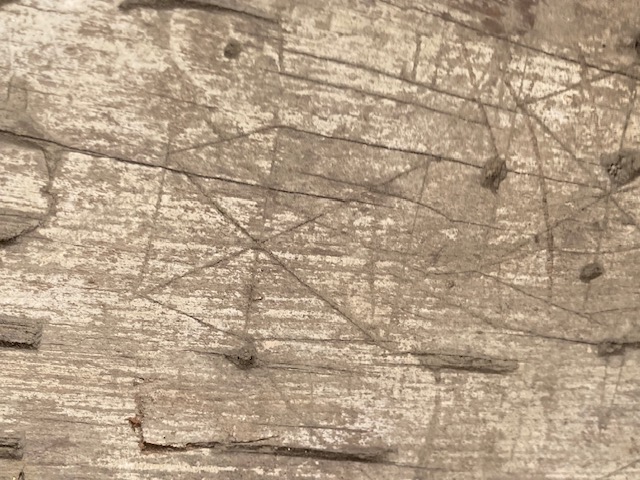
In the end, the work has been done, and I left my mark, on a beam – as did C.D.W. and crew – showing for the record that, Autumn 2024, DPM labored here, to make stable the world in which his children grow, and from which they will go forward, into the world.





Professor Kristy Feldhousen-Giles has been most helpful with insights into the Indian Removal Act of 1830. The Nations were relocated “west of the river Mississippi” but no tribes were relocated west of the 100th meridian as that was under control of Mexico in 1830, and later under the Republic of Texas. The Battle of the Alamo was fought February through March 1836. The nationalist faction of Texans sought the expulsion of the Native Americans and the expansion of Texas to the Pacific Ocean.
Here is a map of the Indian resettlement 1830-1855 from the Historical Atlas of Oklahoma.
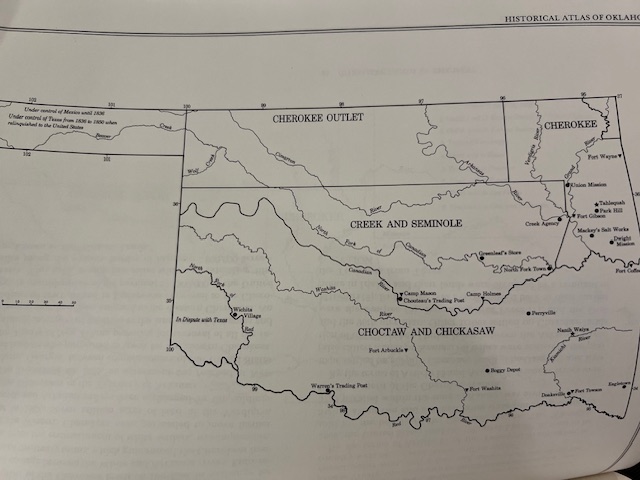
Here is the text of the Indian Removal Act, as authorized by the United States Congress, May 28, 1830.
Joy of Aging
Posted: September 20, 2024 Filed under: Farming off the Farm, Permaculture & Home Renovation, What is an Art Farm | Tags: cranky uncle, silver tsunami 1 Comment
In my limited experience, there is a joy in aging. Certainly not the aching joints or onset of arthritis, but in the relaxed confidence, an acceptance of self. Well beyond the age of peer pressure, I have concern neither about my haircut, nor the shoes that I wear, all of which are quite liberating.
The cliche of the “Cranky Uncle” is but one example. At the Thanksgiving table, he lets loose in too blunt a manner which may be simply that he has achieved, at last, a “devil may care” attitude, a sense that time is of the essence. The accuracy of his information tends to be of little concern, to himself at least. The “Cranky Uncle,” in fact, is so ubiquitous that it has become the name of an app that “builds resilience against misinformation.” https://crankyuncle.com/
If the “Cranky Uncle” is the dark side of anger, then the uplift of mirth was expressed by Jenny Jones, the British poet, in her famous work, “Warning: when I am an old woman I shall wear purple.” Her poem was twice voted Britain’s best-loved poem, and she was described as “one of Britain’s best loved poets.” Her words were proof that we can age with grace and wit, a singular independence. We would do well to follow her lead.
These thoughts come to mind because the “silver tsunami” has begun with over 10,000 people per day now turning age 65. By 2030 more than 73 million Baby Boomers will be over age 65, a demographic shift of unparalleled scale.
I am a Baby Boomer, born at its tail end. I therefore feel eligible to opine that we have skimmed the cream, and the world we leave to our children’s children, is, I fear, darkened by the shadow of our deeds.
Early in the Boomer era, an active idealism rose: civil rights, voting rights, environmental protections, the Clean Water Act, a woman’s right to choose, and protests against endless wars of the Empire.
As a young boy, I went one night to my long-haired neighbors, to help paint cars for a convoy to a Vietnam War/anti-Nixon protest. I loved it, all of it, the idealism and sense of community (among some but certainly not all).
By 1980, when the Boomers’ careers had begun the zeitgeist changed; capitalism roared into vogue, taxes were cut, deregulation began. The success of the Boomers seems unparalleled:
- In 1967 the movie “The Graduate” contained the prophetic line, “Plastics…there is a great future in plastics.” Fifty-seven years later every person on the planet ingests about 5 grams of microplastic every week – the equivalent of a credit card – eaten every week, every year by every person, all 8.1 billion of us, with no end in sight. More than likely, the quantity will increase.
- In our insatiable quest for red meat, more than 185 million acres of the Amazon River basin have been clear cut since 1978; food production accounts for one-quarter of the world’s greenhouse gas emissions and takes up half of the planet’s habitable surface. A diet that includes beef has 10 times the climate impact of a plant-based diet.
- The “fast fashion” industry is responsible for over 20% of global water pollution while producing 100 billion garments per year, of which 92 million tons end up in landfills, the equivalent of one semi truck of waste every second, every day. The average consumer throws away 81.5 pounds of clothes every year.
- The richest one-fifth of the world’s population possess 80 times the income of the poorest one-fifth, and the richest one-fifth uses over 86% of the world’s resources. In America, the top 0.1% average wealth is $1.52 billion USD per household.
- From 1979 to 2022 wages grew 32.9% for the bottom 90%, 171.7% for the top 1%, and 344.4% for the top 0.1% of the USA population.
- More than 99 million people now face emergency levels of hunger, while more than 1.1 million people are in the grips of catastrophic hunger.
- Baby boomers will bequest a total of $72.6 trillion in assets through 2045.
The transfer of assets is defined in financial terms but represents essentially a set of values which will govern how those funds will be used. If we think of $72 trillion as a lever, with values as its fulcrum, then Archimedes comes to mind: “Give me a lever long enough and a fulcrum on which to place it, and I shall move the world.” Change is still possible.
Another poet wrote “This is the way the world ends/Not with a bang but a whimper.” We might replace “bang” with “boom” while “whimper” could yet become “win.” This is a matter of some urgency as the silver tsunami rolls on.
I am a parent now, raising children coming of age. My approach here is to be forthright about what we have done and with what they must deal; I value honesty more than politeness, and future generations should be clear sighted, to act with compassion and a commitment to social justice. A certain non-conformance may be required, and to that end the “Warning” of Jenny Jones, indeed pertains:
When I am an old woman I shall wear purple
With a red hat which doesn’t go, and doesn’t suit me.
And I shall spend my pension on brandy and summer gloves
And satin sandals, and say we’ve no money for butter.
I shall sit down on the pavement when I’m tired
And gobble up samples in shops and press alarm bells
And run my stick along the public railings
And make up for the sobriety of my youth.
I shall go out in my slippers in the rain
And pick flowers in other people’s gardens
And learn to spit.
You can wear terrible shirts and grow more fat
And eat three pounds of sausages at a go
Or only bread and pickle for a week
And hoard pens and pencils and beermats and things in boxes.
But now we must have clothes that keep us dry
And pay our rent and not swear in the street
And set a good example for the children.
We must have friends to dinner and read the papers.
But maybe I ought to practise a little now?
So people who know me are not too shocked and surprised
When suddenly I am old, and start to wear purple.
_________________________________________________________________________________________
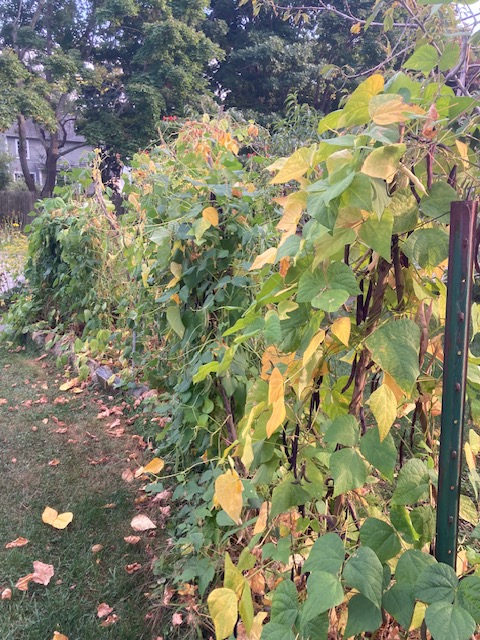
The thrum of summer has quieted, the Supermoon Full Moon Lunar Eclipse passed on Tuesday, cool nights of autumn descend: Pole beans ripen, Winter squash come to its full, Brussel Sprouts fatten, Poblanos produce still, Tomatoes remain abundant, the Cucumbers are spent, while Tithonia still shouts “look at me!!!” We will plant garlic come November.








When Tears Become Bullets
Posted: August 22, 2024 Filed under: Chronicles of a First Time Parent, consciousness, Permaculture & Home Renovation, What is an Art Farm | Tags: hypermasculinity, jackson katz, the boy code, william pollock 2 Comments
In 2001, I met and soon moved in with a remarkable young woman, an art therapist, who had worked with young children at Byrd Elementary School at Chicago’s Cabrini Green housing project, as well as in the Robert Taylor Homes and Cook County Hospital. Working with inner-city boys, she was driven to thread the emotional needle, to help them move forward.
In that studio apartment, on her bookshelf, was ”Real Boys” written by William Pollock, PhD about “the myths of boyhood,” how our society shapes boys to become men. I tried repeatedly to crack that cover but could not. It cut too close to my core.
I quote now the four core tenets of what Pollock called “the Boy Code”:
“The sturdy oak: Men should be stoic, stable, and independent. A man never never shows weakness…boys are not to share pain or grieve openly.
Give ‘em hell: This is the stance of some of our sports coaches, of roles played by John Wayne, Clint Eastwood, and Bruce Lee, a stance based on a false self, of extreme daring, bravado, and attraction to violence.
The “big wheel”: This is the imperative men and boys feel to achieve status, dominance, and power. Or, understood another way, the “big wheel refers to the way in which boys and men are taught to avoid shame at all costs, to wear the mask of coolness, to act as though everything is under control….
“No sissy stuff:” Perhaps the most traumatizing and dangerous injunction thrust on boys and men is the literal gender straight jacket that prohibits boys from expressing feelings or urges seen as “feminine” – dependence, warmth, empathy.”
In short, big boys don’t cry. When I was young, my father – who lived to seize the brass ring, to slay the dragon, to climb the mountain, then died young – he repeatedly told me, “David, you can get used to hanging if you have to.” My football coaches always rhymed “no pain, no gain!” I fault neither my Father nor the coaches, as they only passed on what they had been taught. About all this, Pollock cautioned, “when boys cannot cry, their tears become bullets.”
Bullets, of course, can be metaphorical, and but one example would be the Wall Street “Masters of the Universe” among whom “might is right” with finance a zero sum game of domination, power and control. Consider hedge funds buying up the foreclosed housing stock and then raising rents, in the midst of a housing shortage. Or private equity buying medical practices, to maximize profits at the expense of patient care.
The first rule of the Boy Code is that we don’t talk about the Boy Code. I violate masculinity in writing this meditation upon raising a daughter and son in a culture where hypermasculinity is the norm. I speak here not of the male gender but the masculine traits, as taught.
Jackson Katz, a male pioneer in women’s studies, has written a book titled “Man Enough?” about the “Politics of Presidential Masculinity.” Presidential campaigns are described “…as the center stage of an ongoing national debate about manhood, a kind of quadrennial referendum on what type of man—or one day, woman—embodies not only our ideological beliefs, but our very identity as a nation….how fears of appearing weak and vulnerable end up shaping candidates’ actual policy positions…”
I write here neither to praise nor denigrate any candidate. My concern is our culture of dominance. In this time of hypermasculinity, where we demonize “other,” be they immigrants, the extreme right, the “marxist” left, Neo-nazis, ad infinitum, I am compelled to ask what if the problem is not “them” but us? It is so easy to point and blame “them” but infinitely more challenging to say it is our system of beliefs, self-reinforcing, which perpetuate cycles of violence, a culture of dominance rather than compassion.
Jackson Katz gave a TED Talk titled “Violence against women – it’s a men’s issue.” He makes the subtly persuasive point that rational self interest in a patriarchal society becomes a self-reinforcing system of belief; there is no conspiracy but a self interest in maintaining the status quo rather than embracing change. By analogy, Newton’s First Law of Motion here pertains, that a system of domination will persist until it is acted upon by an external force strong enough to bring change. https://www.ted.com/talks/jackson_katz_violence_against_women_it_s_a_men_s_issue?subtitle=en
“It takes a village” becomes my curse. In our home we raise children to value empathy, compassion and emotional intelligence, but the world into which they go – are schooled, coached and policed – there predominates the hypermasculine. How do we raise our children to be compassionate when their peers practice dominance? “Gentle as a dove, wise as a serpent,” comes to mind.
As a child, I would read the Sunday comics seated below my Father, while he devoured the business news. Pogo, the political satire, ran in those comics, with its theme “We have met the enemy, and He is us.” More than fifty years have passed and some demonize the “Deep State” or “them” but I ask, what if Pogo really was right? What then, if we ourselves are the problem?
An honest awareness seems a necessary starting point in a new dialogue.
* * * * * * * * *
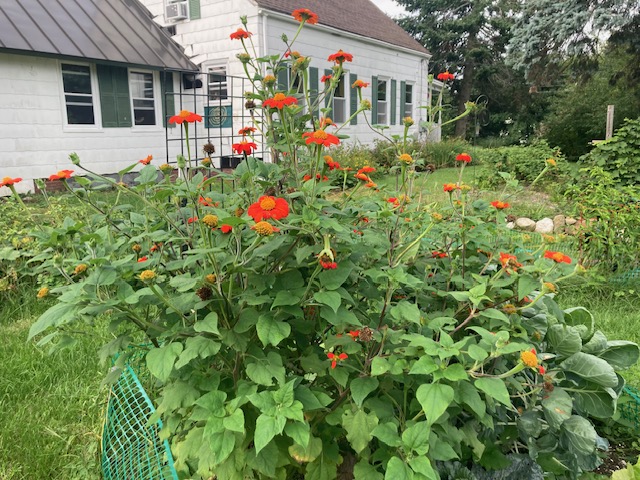
Here at an art farm Bacchus has arrived bearing wild seedless Champagne grapes. Jimmy Nardello Italian Frying Peppers are abundant. Tomatoes exceed our capacity to use. Pole beans flower, to attract hummingbirds. Butternut squash grow on the vine. Peaches are ripe for the picking. We bring bushels of produce to the Food Cupboard.









Saturday on the Street
Posted: August 9, 2024 Filed under: Art & Healing, Farming off the Farm, Permaculture & Home Renovation, What is an Art Farm | Tags: Norway maples, tree work 3 Comments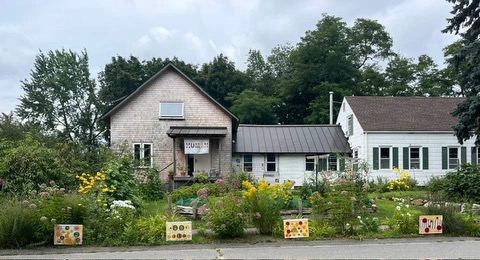
In 1830, in South Portland (known then as Cape Elizabeth) a New England farmhouse was built and its barn completed by 1848. The town’s population was 1,696 people and only six families lived on the street where the farm was located. The farm most certainly had significant acreage.
In 1999, South Portland’s population had grown to 23,324, and the last remaining farmland surrounding this farmhouse was sold off to make a development of six homes. In modern times developers put their road wherever best suits their plan but in 1830 the builders sited the home thoughtfully, based upon the sun’s path; they needed to maximize the solar gain as a heat source. The home’s location then determined where went the developer’s road and the old front yard was paved to put in a street named in honor of the developer’s daughter. The home, which we purchased in 2012, was left with a smaller, but still full sun front yard, enough space to garden and grow food and fruits.
We have felt guided here in creating a healing space. Neighbors have brought wounded birds into our garden, tucking them under the plants, as a place to heal. Young Mothers bring their infants to gaze and we gift them vine ripened tomatoes. We grow less as a matter of sustenance and more as a gift to be given, to be shared.

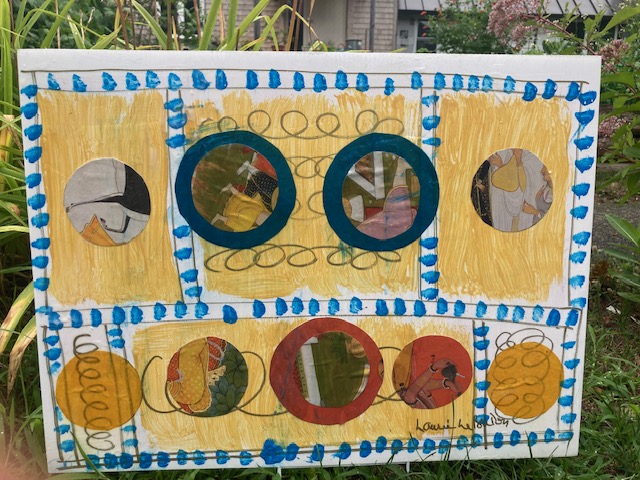
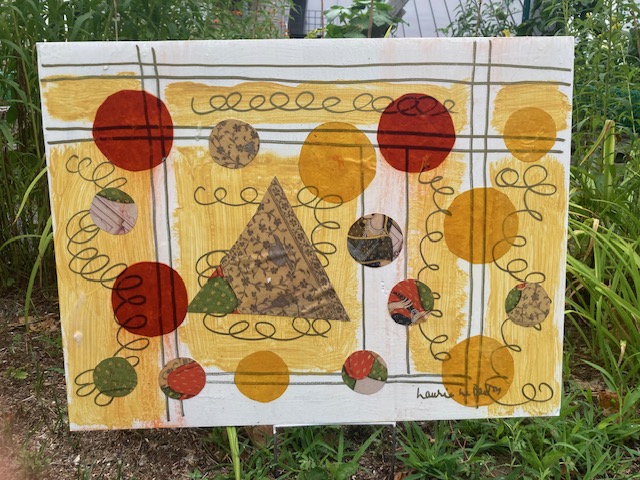
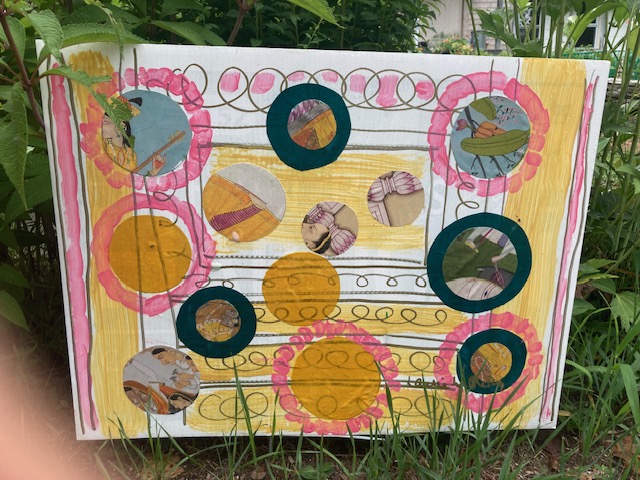
Saturday on our street was very active. Art work arrived from Chicago, from our dear friend Laurie LeBreton, a sculptor whose work combines handmade paper and mixed media. She explains, “I work to access something beyond our concrete world and to find meaning and comfort as I do so. Recent themes have included healing, refuge and ritual.” If yard placards tend to promote politics, Laurie’s speak to art and healing. We embraced Laurie’s generosity and eagerly put them on our side of the street. https://www.laurielebreton.net/

Also on Saturday, very large gooseneck trailers arrived to unload massive paving equipment, parked on the other side of the street. A dialectic began between the mechanized and the natural. If our “Orwellian” week was a “heavy equipment summer camp,” then this week has been about “massive paving equipment and road grinding at night.” My son was over-the-moon delighted. On Sunday night the City began grinding streets here, and the equipment has moved to several other jobs in town. Nightly we have driven to see them work.
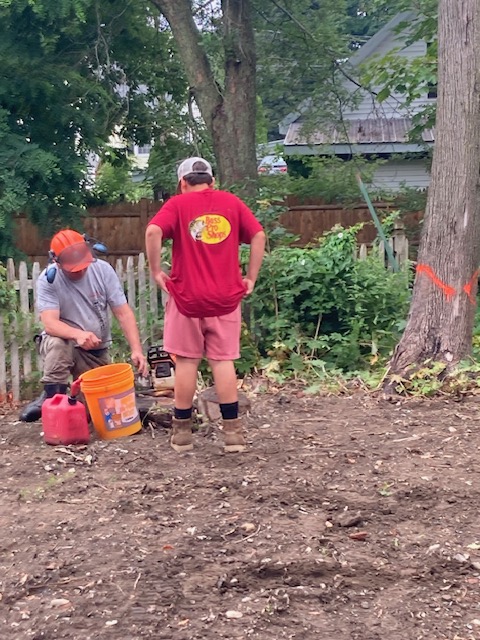
Also on Saturday our work on the invasive Norway Maples continued. Our friend Nate arrived, a journeyman carpenter, master of many trades, and he brought tools for tree work. Nate taught my son how to use a come along, how to sharpen a chain saw, and to use the Phythagorean Theorem to calculate where the tree would fall. My son put on his work boots and got busy.
Norway Maples are not native to America. They were brought here first in 1756, by a nurseryman in Philadelphia, and became popular as an ideal street tree. During the 1970s when the Dutch Elm Disease decimated the urban canopy, the Norway Maples became ever more prominent, but the trees promote a monoculture and grow rapidly, spreading seeds by the wind. They shade out competition. Because they grow fast, their wood grain is long, not tight, and they easily sheer and crack in heavy weather, which has become increasingly more prominent here in Southern Maine.

Two years ago, during a late autumn wind storm, a Norway Maple, with 8” trunk, split and fell onto our swimming pool. Thankfully we were able to repair the pool. Last winter, a much larger Maple, 18” diameter, splintered and fell into the neighbors yard. It leaned precipitously, and my intuition told me not to DIY but to get help.
Nate used the “come along” – a sort of ratchet winch – to direct the tree away from the neighbors yard and to his designated spot. My son worked the come along, tightening the line by cranking to pull the tree down, as Nate cut into the trunk.


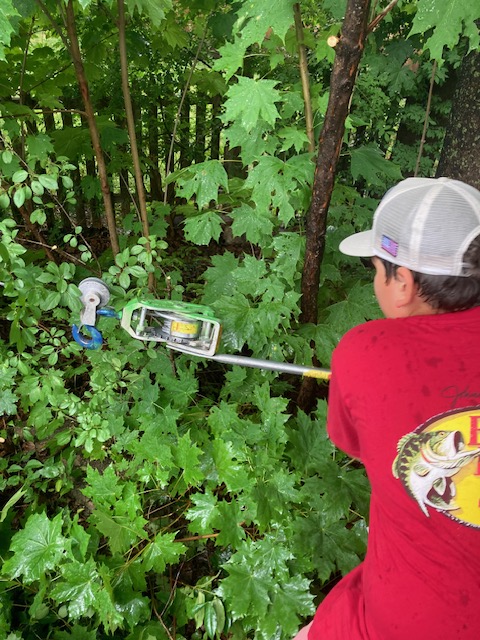
It took a village but the tree is felled, and we have firewood for our winter.

All Is Well Again
Posted: August 2, 2024 Filed under: Farming off the Farm, Permaculture & Home Renovation, What is an Art Farm | Tags: embedded energy, renovation 2 Comments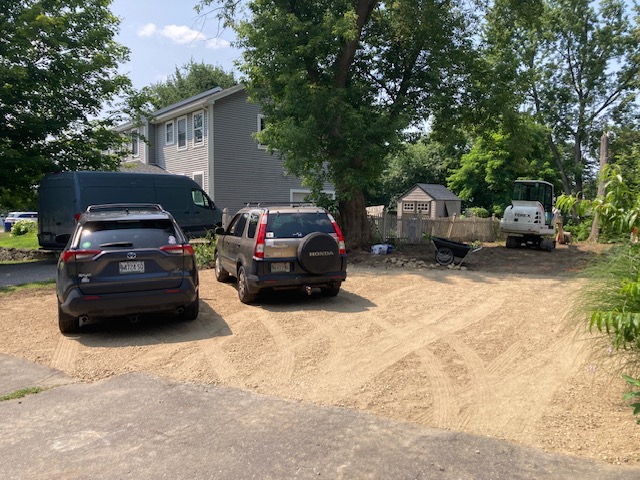
On 22 July I wrote about circumstances “Orwellian,” but on 2 August I can report that “all is well again.” We have cured the problem: gone is the gravel pile, our insurance will not be terminated, and we have made arrangements to switch to another carrier at end of this month.
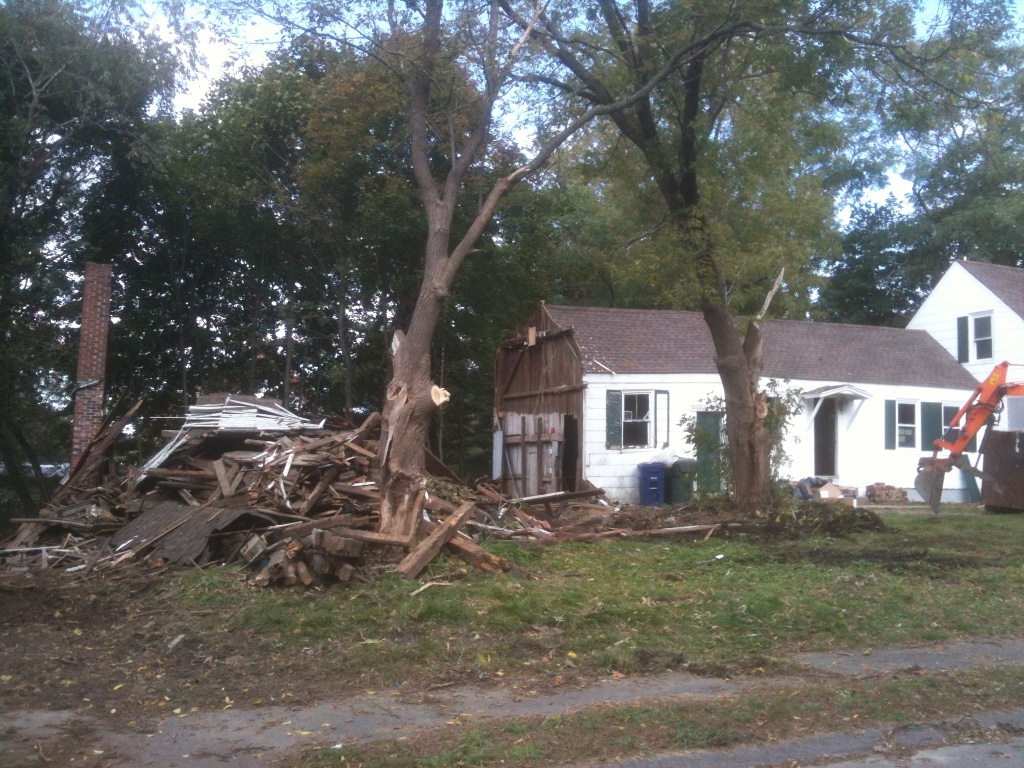
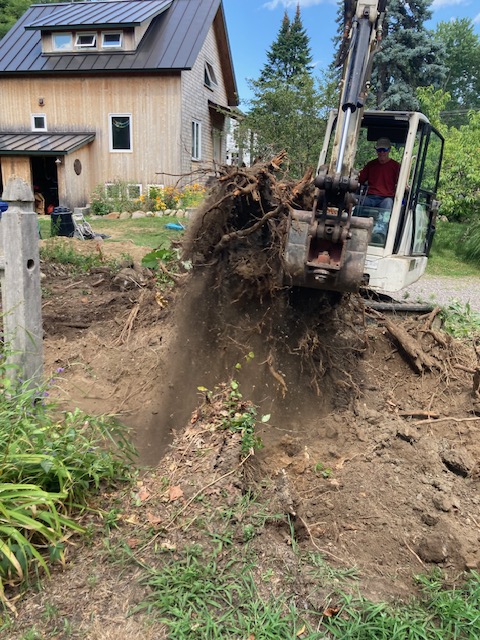
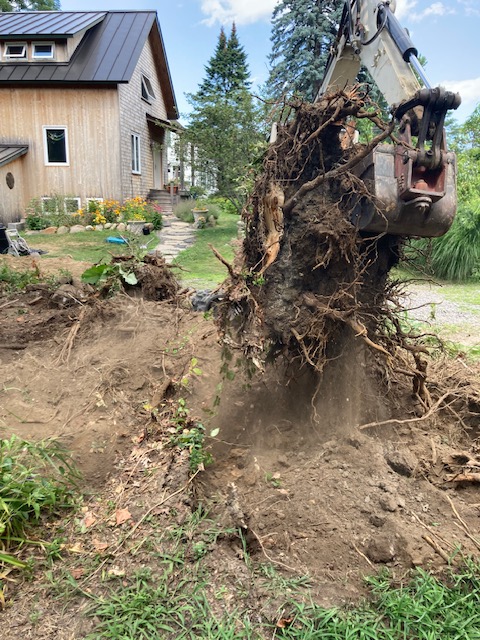
The project was twelve years in the making. When we bought the farm, Labor Day 2012, our son was in utero and my wife in her third-trimester. We had but little money, and less time to make any renovations. The barn was beyond repair – beyond our budget, more precisely – so we tore that down. I saved as many beams and sheathing boards as I could but the rest was hauled away. Nine yards of rubble, from two brick chimneys and concrete sidewalks remained, overgrown by invasive plants. Last week, having moved the gravel and made the driveway larger, we continued north to grub out more than 50 stumps – along 50 linear feet of fence line – of the rapidly growing, invasive Norway Maple.
Our farmhouse, in the classic New England style of “big house, little house, back house, barn,” is 200 years old, built when Andrew Jackson was the 7th President of the United States. The barn was completed in 1840, which I know for a fact, having saved one beam with that date proudly carved by the makers into the wood. All materials used in this house were sourced locally, within a mile or two, trees felled, then moved and milled by hand.
Some of the barn sheathing boards are 26” wide, and given the growth rate of pine trees, we can deduce that the tree from which that wood came sprouted circa 1681, which is five years before the English King James established the “Dominion of New England” which covered all of New England and the Mid-Atlantic colonies. The Charter of Pennsylvania, sovereign and independent from the Dominion, was signed by King Charles in 1681 granting the Quakers land for religious freedom.
Restoring this home is a yeoman’s task. We bought the home at a foreclosure price, plus 20-years of hard labor. We are only halfway toward our goal. In doing this work we are not making this home great again; “never better” is my goal. The home never had insulation and was cold and drafty. We have super-insulated more than half, but work remains. I will need to rebuild the foundation of the Ell, while we live in the house. The invasive Maples are an ongoing nuisance.
The charm of the hand built home seems to be its simplicity, its economy of purpose. I have neither the income nor interest in anything opulent. I seek not a monument to myself. For the driveway project I chose gravel, which is underwhelming to many, but to my mind the better choice because it is both less expensive and fully functional. I have learned that I am happier living on a dirt road, and on my half-acre I have chosen same.
More importantly, in terms of environmental impact, gravel has a minimal carbon footprint compared to the very high embedded energy – the petroleum consumed both in manufacturing and applying – of asphalt pavement. Hard though it may be for my children to grasp this point, it is my responsibility to model sustainability, to the extent possible.
My curse is the adage “a carpenter’s home is never finished.” And so life goes, but in the meantime all is well again, never better.
* * * * * * * * *
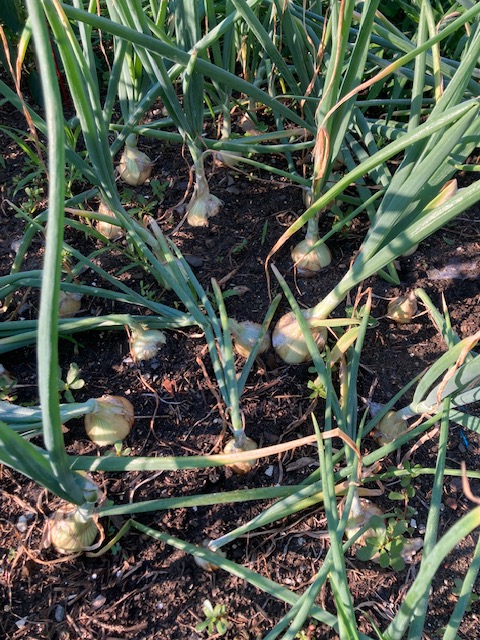
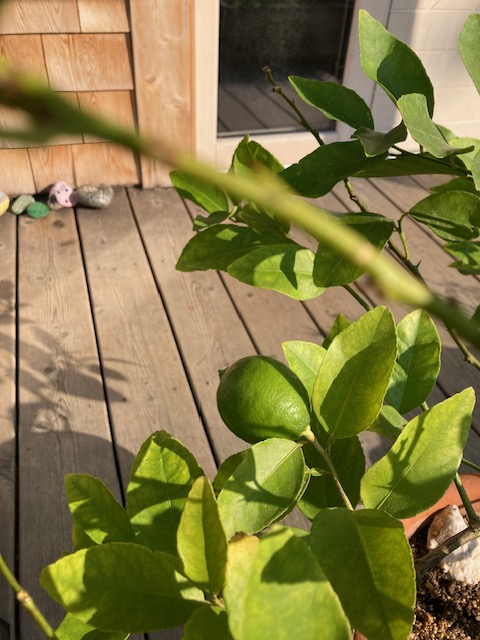
The abundance of August has arrived. Onions and potatoes need be harvested, Italian Frying peppers await us, we pickle cucumbers then give armfuls away, fruits – tomatoes, grapes, peaches – tower overhead, our lime tree provides the citrus for a Gin & Tonic.




Orwellian
Posted: July 19, 2024 Filed under: Chronicles of a First Time Parent, Farming off the Farm, Permaculture & Home Renovation, What is an Art Farm | Tags: george orwell, homeowners insurance 2 Comments
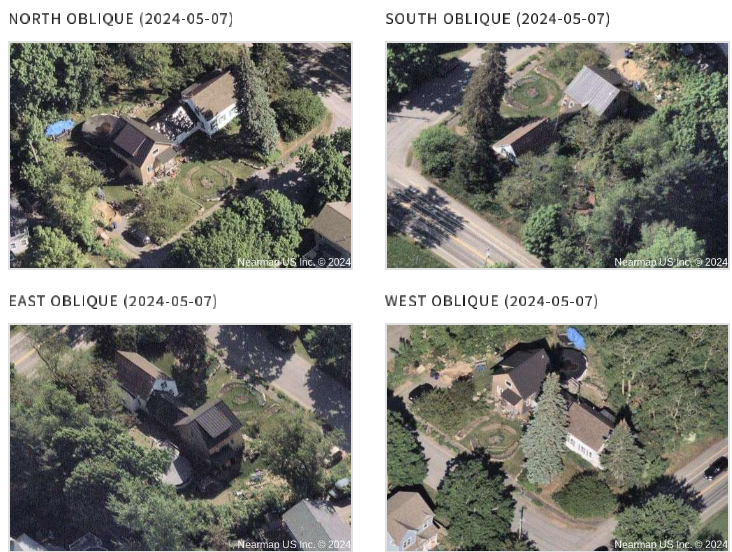
In May a satellite flew over our house and took photos. On 11 June we received a notice – with photos above and below – that our homeowners insurance would be cancelled, due to a “safety hazard on your property…[which] increases the chance for injury or damage to your property.” I contacted our broker and inquired whether some “Desk Sergeant” had scanned the photos and made such a call?

The Broker wrote back, “As for a live officer in the back, I would assume it’s more akin to a machine learning/AI algorithm scanning pictures and flagging unusual things, although that is pure speculation on my part. To the best of my knowledge, the only issue is the gravel at the end of the driveway, confirmed. I had to speak with an underwriter at Nationwide yesterday to even ascertain what the problem was.”
We were told we had until 30 August to cure the problem, but in late June we received notice, and were given 22 July as a cease and desist date.
We recently visited family in Western Massachusetts, and standing upon their driveway, we talked about the asphalt. One section is newer, another older, with swales and cracks. “My Homeowner’s Policy has been cancelled” she said, “because of . . . picky stuff like these cracks. The company cited a number of issues, but all of them were picky…” An agent had walked the property looking for issues, which found, then moved her into the high-risk pool, at a substantial cost increase.
In the 10-year period from 2014 to 2023 extreme weather has caused disaster events at a cost of $183 Billion Dollars. The underwriters’ rational self-interest – unlike a good neighbor – argues they cut losses by moving homeowners out of their coverage into the high-risk pool. Gravel at the end of our driveway put us in that category. Caveat emptor.
Thankfully I work in the trades, and our friend Jim has spent decades doing site work, building roads deep in the Maine Woods for loggers. In fact, Jim is both the solution and cause of our problem, having dumped – at my request – the gravel here in our yard, left overs from a tiny house job we did together. We need to expand our driveway, and free material helps.
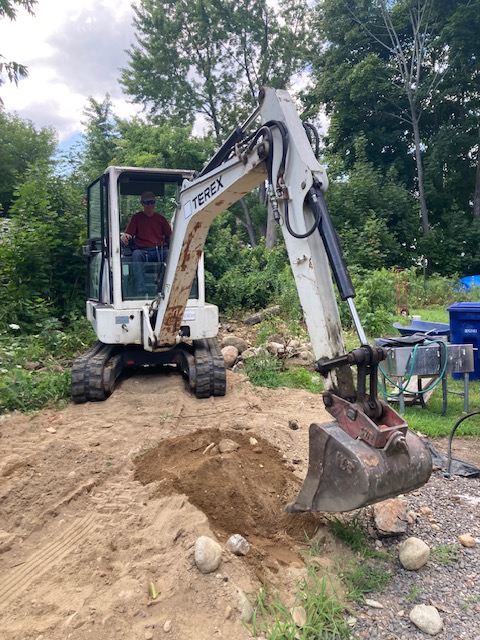
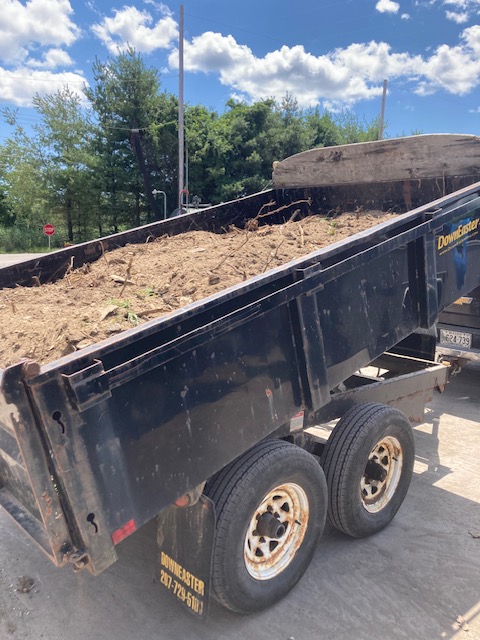
Time now is of the essence, and given the heavy equipment this is a mere trifle. Jim has arrived and we have removed 9 cubic yards of rubble, 3 cubic yards of tree stumps. We will remove approximately 15 tons of soil, and then move the gravel into that space.
Our soil is infested with knotweed, the highly invasive plant, and very few dumps will take soil with knotweed. I found one yard which will incinerate it, at a very high cost of $145 per ton. I will not be sneaky and lie. So we hauled 4 tons off, and will spread the rest in our side yard, then plant grass seed. A compromise lower cost solution.
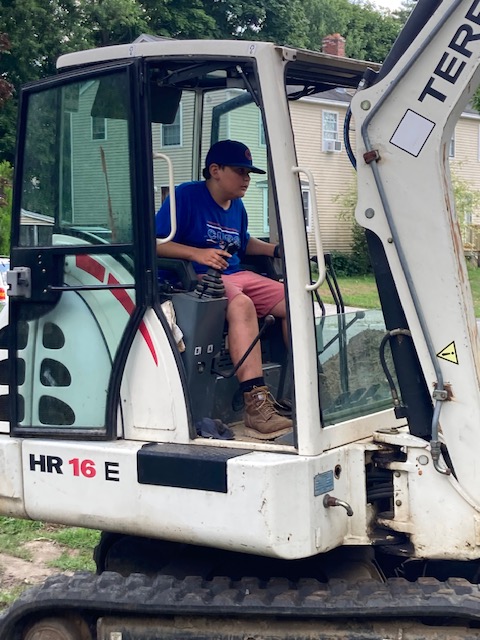
We will meet the deadline. We will then give notice we are changing carriers, having improved our coverage at no additional cost. A larger parking area makes sense as my daughter will soon get her driver’s license. My son this week had a summer camp of site work with heavy equipment. So life goes restoring a 200-year old New England farmhouse





 an Art Farm