Rogue Hollywood; from the Library of Alexandria to Carnegie Libraries
Posted: March 7, 2025 Filed under: Chronicles of a First Time Parent, consciousness, Portfolio - David's work, What is an Art Farm | Tags: books, carnegie libraries, cosimo de'medici, Dreamworks SKG, education, history, library of alexandria, technology, travel 1 Comment
Douglas was attending classes in History and Theology at Loyola University but his most serious work was done at the RMG office. He and I were joined at the hip, constant conversation, swapping ideas at a fever pitch.
RMG formed the Information Alliance among leaders in library automation:
- Robert F. Asleson, Esq, had decades of experience as President of five library and information industry companies: University Microfilms International, R.R. Bowker, Information Handling Services, International Thomson Information, Inc., and The Library Corporation. He was thoroughly versed in all issues of copyright clearance.
- Brower Murphy, a self-described “information egalitarian” had pioneered the use of CD-ROM technology for data storage. He then developed NlightN®, a hypermedia universal network allowing a single search across the entire world of published electronic information. This was google before Google, except, created in 1991, it was not designed for the internet.
- Vinod Chachra, President and sole owner of VTLS, Inc. oversaw a staff of 70 with customers in 18 countries, requiring 16 difference languages and multiple character sets and scripts. His software provided a turn-key solution to all library functions.
- Rob McGee and Howard Harris, another RMG Consultant, formed the alliance and Rob acted as editor of the “Concept & Vision” and the business plan.
Our approach to the Worlds Digital Library was direct: “Empowering the individual by access through libraries to the world’s information, ‘anyplace, anytime.’” The philosophy was broad and inclusive, the battle plan was specific and precise. A holding company, the DLC would operate through subsidiaries, each business creating a component of the whole. The first subsidiary was The Index Company, which would:
- digitize book images from collections of widely-used library materials
- compile collections of machine-readable tables-of-contents and back-of-the-book-indexes for subject oriented sets and collections of books
- create and distribute merged collections of the indexed records to provide access to Digital Libraries.
The DLC was the economic engine driving GDC. On paper, the DLC projected a Year 1 loss of ($4.08 M) but turned positive in Year 3 and by Year 5 was in the black at a profit of $6.3 Million USD. At the end of the 20th century, “hockey stick” projections were not uncommon, but questioned by conservative bankers.
On 7 May 1994 the “Concept & Vision” paper was finished, and letters of support were received from:
- Chair of the Virginia State Library Board
- Librarian of Harvard College
- Executive Director of CAVAL (Co-operative Action by Victorian Academic Libraries [Australia])
- President Council on Library Resources
- Deputy Director General, National Library of Australia
- President of the Council of the European Information Industry Association
- Executive Director off the United States National Commission on Libraries and Information Science
It is worth noting some of their comments:
- The Librarian of Harvard College wrote, “There are going to be a number of modest efforts to build the digital library. Yours could be the one most likely to succeed on a large scale.”
- Deputy Director-General of the National Library of Australia wrote, “The approach envisaged in this paper is sensible and shows the appropriate understanding of the current state of the industry which is needed for success to be likely.”
- The President of the Council, European Information Industry Association, “…we shall have no hesitation in bringing this proposal to the attention of our members and examining ways in which we can lay a supportive role in Europe.”
While writing the “Global Data” plan, the landscape in Hollywood was changing. Steven Spielberg, Jeffrey Katzenberg, and David Geffen announced they were going rogue, to create their own live-action and animation film studio. This meant Hollywood’s studio model was being revolutionized, and the financier with whom I was hoping to meet had deep roots – I was told – in that old model. If the paradigm was changing, then I needed to write my own version.
One spring evening at the Chase Street house, Douglas and I sat down at the kitchen table to write “Top-Down meets Bottom-Up” which compared Paramount Communications and Global Dakota Corporation, a $10 Billion colossus versus our $38 Million start up. I was David out to slay Goliath. Working deep into the night, we laid out the categories and filled in the blanks, referencing medieval history through the Internet. Laurie, who is quite savvy in the C-suite, told us it was sheer hubris.
Libraries have been central to all civilizations, throughout recorded time, our collective repository of knowledge, a storehouse of the written word – cuneiform or bound – a place where scholars gather to share knowledge, to push the vanguard. The earliest libraries have been discovered in present-day Syria, and in temple rooms in Sumer (present day Iraq), each in the Cradle of Civilization. The Library of Alexandria, in Cleopatra’s Ptolemaic Egypt reigned among the most significant libraries of the Ancient World, the corpus of Greece and Egypt in one repository, until Julius Caesar’s boys came to town, on military conquest, they burned the library. Dust to dust, ashes to ashes.
30,000 clay tablets from the Library of Ashurbanipal have been discovered at Nineveh – the recorded wealth of Mesopotamia – while the University of Chicago holds baked clay tablets, the administrative backbone of the vast territory of Persia, written in Old Persian, Elamite, and Babylonian languages. The Imperial Library of Constantinople is worthy of mention, authors such as Plato, Aristotle, Demosthenes, Socrates, Thucydides, Homer and Zeno stored and sought. Themeistius, a pagan philosopher and teacher, hired calligraphers and craftsman to produce the actual codices then created a university-like school centered around the library. Lao Tzu, author of the Tao Te Ching, was the keeper of books in the earliest library in China. Into this majestic idea Rob McGee stepped as a young boy, his bike’s basket filled, riding home to 1505 Grace Street with “talking books” for his Grandmother, an armful for himself.
The Free Public Library is not free financially – it is paid for by taxes – so what is free is the access to information. Traditionally libraries had been the private domain of Princes and Kings, Bankers or Clergy. The Renaissance brought an awakening when, in 1444, Cosimo de’Medici created the San Marcos Library, one of the earliest public libraries. Cosimo combined his own extensive collection with the 800 manuscripts of Niccolo de Niccoli, a humanist who worked as a copyist and collator of ancient manuscripts, and was the creator of cursive script, known today as “italics.” Niccolo’s humanist vision was inclusive: “…to the common good, to the public service, to a place open to all, so that all eager for education might be able to harvest from it as from a fertile field the rich fruit of learning.”
Pierpont Morgan’s Library, in the grand style of the Italian Renaissance, was opened to scholars and the public in 1924, the gift of J.P. Morgan, the banker of legend, who indirectly was behind the greatest public library building program in history. In 1901, J.P. Morgan bought the Carnegie Steel Company for $18 Billion (in 2025 dollars), which allowed Andrew Carnegie to vastly expand his brick and mortar ambitions. Between 1883 and 1929 2,509 Carnegie Libraries were built around the world, free to the public. By 1929 almost half of the public libraries in the United States were Carnegie Libraries.
At the end of the 20th Century, many saw change on the horizon, bricks and mortar becoming digital, access universal, which seemed like Archimedes’ fulcrum, upon which we could move the world. Rational self-interest held no motivation for me; e-commerce and social media pale in comparison to the humanist tradition. Douglas, though, had that capitalist urge, and his enthusiasm was grounding for me. He and Rob delivered the Information Alliance which undoubtedly could make the products to drive revenues. The Digital Library Corporation was the core asset, while the Turtle News Network and the community retail outlets expanded our reach.
I played the hand I was dealt. “Top Down Meets Bottom Up” became page 41 of the Global Dakota Business Plan. On 1 July 1994 the Business Plan, with consolidating Pro-Forma Financial Statements, was complete, weighing in at 12 pounds, almost 1,000 pages printed on 100% post consumer recycled paper. Having finished the first task, I tackled the second challenge: a meeting with the Senior Chairman of the Board of McDonald’s Corporation.

Kennebunkport Patrician, Red-Neck Riveria, Skull Valley
Posted: February 21, 2025 Filed under: Art & Healing, Chronicles of a First Time Parent, consciousness, Portfolio - David's work, What is an Art Farm | Tags: history, nature, photography, travel 2 Comments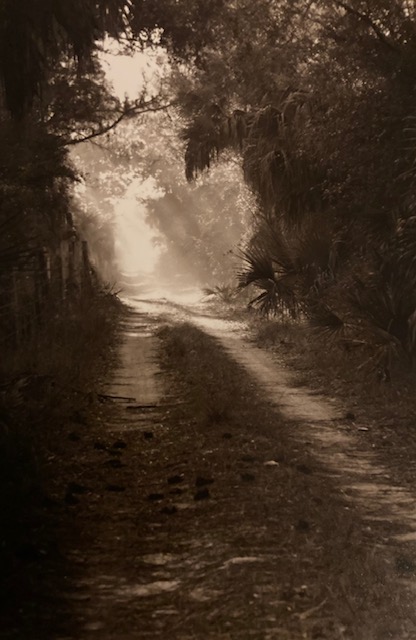
RMG Consultants, Inc. was mission driven, not pursuing rational self interest as conventionally defined. Rob’s mantra was to remain “ruthlessly objective” and have no conflicts of interest. We served the library as civic institution of learning and education.
Douglas became a corporate officer, with increasing responsibilities, was named Vice President of Operations and Treasurer of RMG Consultants, Inc. He encouraged Rob to pursue the for-profit sector and so they launched Infostrat, Inc., then formed an Australian-based company, RMG/CAVAL to pursue the Austral-Asian market. Douglas became an officer of those entities.
On the home front, I had left the barrio, moved north to Rogers Park, on the lakefront. Brian had graduated from Cornell College with a Bachelors of Arts in Economics and Political Science, moved back to Chicago, full-time at RMG, and lived with me. Douglas also moved to Rogers Park, but found a studio apartment off Howard Avenue, at the El terminus. I believe there was a crack house across the hall, and once he heard gunshots while walking on Howard Avenue. We were on very opposite sides of Sheridan Road.
In January 1991, the first patrician from Kennebunkport, Maine announced that Operation Desert Storm – the First Iraq War – would be televised live; we all pulled up chairs around the TV. Tal Lekberg, my carpenter friend, was in the Coast Guard and had been called to active duty in the Persian Gulf. Not knowing if he would return home alive, he brought his entire collection of single malt Scotch Whiskey to our apartment – at least two dozen bottles – asking me to safeguard it. “It’s okay if you drink it. Maybe some will remain if I return.” Like a fox guarding the hen house, we heartily imbibed while watching the destruction of the cradle of civilization, in pursuit of the quest for oil.
December 1991, Douglas and Laurie had decided to get married, and Douglas pined to be wed in Paris, at the Cathedral of Notre Dame, I as their witness. It made great sense and we all bought tickets, flew across the pond; I arrived first, Douglas and Laurie a day or two later. A friend arranged an apartment for me, and Laurie knew someone from the U of C who had a flat there. We met and celebrated love in Paris, when we were young and all life easily opened before us. But Notre Dame was not so easily scheduled and the wedding did not take place. We took the train south to Chartres, and beside the Cathedral I ran the table at a bakery beside the nave doors. I bought one of everything and together we ate pastries, at the foot of Chartres Cathedral. It was grand. Essentially they were married then, but officially it took two months more.
In February 1992 Douglas and Laurie got married. In April I moved off-grid, to Holmes County, Florida’s “red-neck riviera,” to a swamp along the Choctawhatchee River. Such was the synchronicity of the times, that even the swamp had a role in library automation.
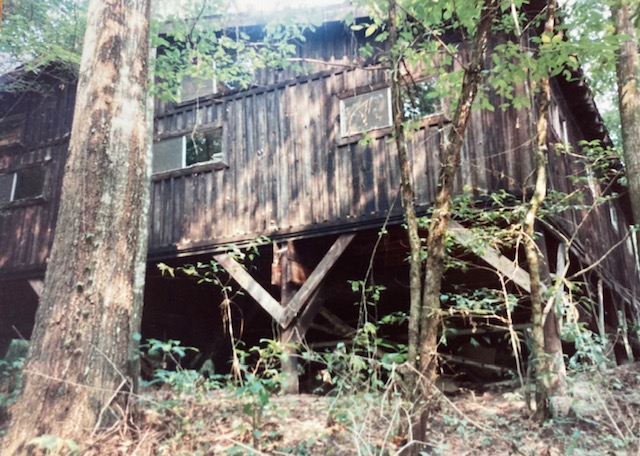
In the tradition of eccentric booksellers, Bob Allenson seems worthy of mention. He is a third-generation bookseller of religious literature but his passion is making bibliographies of rare antiquarian books; his “John Henry Newman, 1801 – 1890: A Preliminary Register of Editions from 1818 to 1890, Together with Original Editions Published Posthumously” is the definitive catalog of Newman’s work. Sometime in the 1980s he was hired by the American Theological Library Association to select the texts that would be digitized for their online corpus of theological literature. Bob was still working on that when I moved there.
Alec R. Allenson, Inc., was launched in London, then relocated to Baltimore, Maryland and eventually to Naperville, Illinois. Bob’s father was a businessman who created a successful company selling textbooks and research materials to Christian seminarians. Bob is a Quaker, committed to social justice who joined the March to Selma and has little interest in business. By 1979, he had decided to remove himself from the mainstream culture and purchased acreage along the Choctawhatchee River in rural Westville, Florida, population 261. Wanting to get away, he found his spot. A friend and I packed the Naperville bookstore – a most remarkable experience – and shipped five semi-trailers of books to the swamp, where Bob’s son-in-law Caleb had built two pole-barn houses where the books would be stored, for sale.
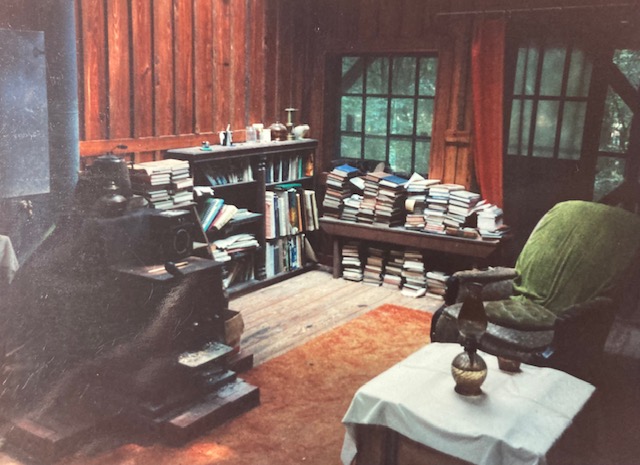
I had kept in touch with Bob, and he asked me to help him with the business. To my mind, at the age of 31, moving off-grid seemed a most sensible thing to do. In April of 1992, Brian and Douglas drove me to Union Station in Chicago, we said goodbye, then I climbed aboard Amtrak’s “City of New Orleans” southbound, down the Mississippi River to New Orleans. I spent the night at a hostel, then boarded a Greyhound Bus east, along the Mississippi and Alabama coast. Somewhere along Florida State Route 20 I got off the bus, then rode my bike north. The Sheriff and his men stopped and questioned me – I stood out like a sore thumb – but let me continue and eventually Bob and his wife Dorothy Ann drove down to pick me up.
Bob embodied his Quaker ideals by visiting prisoners in the State Penitentiary, and, for honesty and transparency, by wearing no clothes. I recall Bob in his kitchen, holding a glass of white wine, cooking ratatouille and lamb chops, discussing the Christian mystics Swedenborg and Meister Eckhart, all while standing buck naked in his birthday suit. To the question, “what’s the recent weather like over there Bob? I’m trying to figure out what to wear?” he replied “Well as far as I’m concerned, you don’t need to wear anything at all.” My guess is he wore clothes to the State Penitentiary.
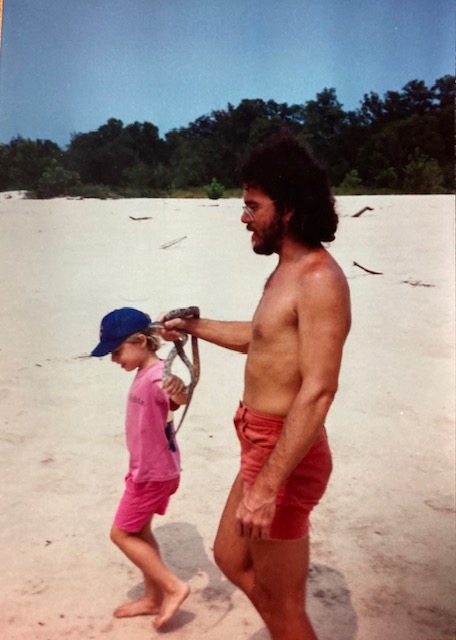
There was no work to be done, and neither electricity nor running water, so in the swamp – which was, in fact, an oxygen factory – I mostly sat, listened and read. Storm clouds would amass over the Gulf of Mexico, then by afternoon would float north overhead. Almost daily, rain like a typhoon fell, massive amounts of water, relieving the humidity. Caleb and his family also lived in the swamp and at night we would paddle on the river, I in front with a flashlight, scanning for the green eyes of alligators at the water’s level. Once found, they would drop beneath the water and silently swim away, even beneath our canoe. Caleb laughed at his unseasoned passenger from the North.
Eventually it became clear that life there was not sustainable and so I returned to Deerfield, and then unexpectedly, moved out west to Prescott, Arizona. I settled into a trailer, at the foot of a butte, near Skull Valley. By coincidence I had been introduced to an older gentleman, who was active in trading agricultural commodities. Given my background, he was curious of my interests and offered to introduce me to a financier he knew, who purportedly had helped launch McDonald’s Corporation. He had two conditions: I needed to write a Business Plan and get the approval of the Senior Chairman of the Board of McDonald’s Corporation. No small task, although the writing seemed more daunting than the approval, so willing to shovel coal, I was willing to get to work.
The Chicago Tribune had announced an architecture competition for public housing, to redesign the Cabrini-Green projects. I entered. I had met Paolo Soleri, the architect and urban planner – a visionary, widely overlooked – who had built Cosanti and Arcosanti based upon the design of medieval cities of the Italian countryside; he advocated a hyper-dense city surrounded by open space and the natural environment. Living on the high desert, in a trailer with no phone or TV, I began to ponder the social contract, how design manifests those ideas, and the coming impact of unlimited access to information.


New Orleans, The Library of Congress, the pits
Posted: February 14, 2025 Filed under: Chronicles of a First Time Parent, Money & Banking, Portfolio - David's work, What is an Art Farm | Tags: australia, history, libraries, library automation, news, RMG Consultants, technology 1 Comment
In the summer of 1988 we traveled to New Orleans, another food-rich destination, for the ALA Annual Conference. What I experienced changed the direction of my life: Thos Moser Cabinetmakers, from Auburn, Maine, had a vast display of its solid Cherry tables and study carrels, Ash-spindled chairs and rockers. I stopped in my tracks, in awe that people built this…by hand! Douglas thrived in the virtual world of IT but I was drawn to the tactile, the tangible, the act of making.
RMG continued to grow, more people hired to word process the documents until we outgrew our office in a two-bedroom condominium in a residential high-rise. The condo-building did not allow an office but we were on a mission so we expanded into the condominium next door. Pat McClintock, a librarian from Kentucky joined the team. RMG already had an office on the East Coast – inside the DC Beltway – and would soon add one in Southern California.
RMG Consultants ran the table during that era, its client list grew to more than 1,000 libraries internationally:
- The Library of Congress & national libraries of Australia, New Zealand, South Africa.
- Academic and research libraries throughout the U.S., Australia, New Zealand and South Africa, and in Abu Dhabi, Canada, Egypt, Kuwait
- State library agencies and public libraries throughout the U.S. – small, medium, large, very large
- Urban public libraries, including, e.g.: NYPL, Brooklyn, Queens, Miami-Dade, Cincinnati, Cleveland, Cuyahoga County, Dallas, Dayton, DC Public, Fort Worth, LA County, Hong Kong Public Libraries, Shanghai Library
- Many library automation consortia, of all types and sizes – including the largest public, academic, and multi-type ones — in the U.S., Australia, South Africa
- Public sector library jurisdictions: e.g., city, county, province, school, state, regional libraries.
Our work days began slowly, then built to a crescendo when deadlines loomed. The Consultants pushed deadlines to the last, which meant we lived or died by overnight delivery. FedEx is commonplace today, but in the 1980s it was revolutionary. FedEx began as a college term paper idea in 1965 – when Douglas was 1 – but officially took flight in April 1973 when 14 aircraft delivered 186 packages to 26 US cities. The “Overnight Letter” was not offered until 1981 which is just about when Rob launched RMG Consultants. RMG relied on the “Overnight Letter;” it allowed extra time, which ensured deadlines were pressed harder, later. We would work until the very last minute, then I would run to my car, beeline to the near west side, to make the 9pm deadline. I knew the FedEx staff on a first name basis.
Where I am a dreamer, Douglas was street smart and resourceful. More than once, after meeting the deadline we would let loose and head deeper into the barrio, to Humboldt Park. A neighborhood not for an Anglo after dark, Douglas knew just where to go, what to say, how to buy on the street. It is all legal now, so we were just ahead of our time, but it was edgy, the very sharp edge of danger which Douglas knew how to navigate.
In the summer of 1989, Rob was offered a corporate consultancy with Sears Roebuck & Company the consumer goods behemoth. It was not a typical RMG assignment but the job paid well and growth requires cash flow. Rob reached out to Howard Dillon for help, an action that would forever change Douglas’ life and generations going forward.
Howard knew of a young librarian, a single mother, in the Business Library at the University of Chicago. Interested in new opportunities, she agreed to take on the job. Her first day on site went well. Erik Lekberg, a part-timer on our team, went along as her assistant. Afterwards he spoke admiringly of her acumen, praised her humor, “She was a lot of fun to work with!”
And so Laurie Nelson met Douglas. They worked well together. Laurie felt that spark and Douglas fanned that flame. Laurie, and her daughter Emily, became a part of our pod; Laurie and I were in our thirties, Douglas and Brian in their twenties, Emily not even ten, we had great fun together, endlessly.
RMG moved that year into a new office – a legitimate office space – with a conference room, word processing area, private office for Pat and room for Rob anywhere. We added more staff. We continued to grow. Erik Lekberg’s brother Tal was a skilled carpenter who helped me finish the space and then I painted the walls. We moved in and RMG moved forward. Then I was offered a job at the Chicago Board of Trade on the financial futures floor. As I told Rob and Pat that I was leaving, I felt I was breaking a bond but they were gracious and understood.
My Father and Grandfather were stock and bond men, but I was drawn – for an unknown reason – to financial futures and options and so I worked on the floor of the Chicago Board of Trade’s 30-Year U.S. Treasury Bond futures. The “open outcry” auction is long gone, but in those days brokers and traders stood jammed into “pits” where they would scream at each other, waving their arms in bright colored jackets, buying or selling more than $645 billion dollars worth – per day – of US Treasury bond futures. Capitalism in its most raw pure form. I began as a lowly runner then was promoted to “squawker” providing the “play-by-play” commentary via the telephone to the Prudential Bache trading desk in lower Manhattan. It was a macabre and unappealing place to work, but the experience would prove providential.
Enterprising computer scientists could make a fortune through library automation and as the new decade dawned the marketplace began to mature. Mergers and acquisitions began and Data Research Associates, one of the legacy automation firms, went public with an IPO in 1992.
Data Research Associates was the brainchild of Mike Mellinger, a larger-than-life software engineer, who studied Applied Math & Computer Science at Washington University, class of 1971, then wrote the ATLAS software for the St Louis Public Library and Cleveland Public Library. In the tradition of the authoritarian tech entrepreneur, Mellinger created the product and remained the most technically astute person in the company. Rob describes him as among the two most brilliant software engineers in the industry; Vinod Chachra, the other member of that pantheon enters our story three years later, in 1995.
When Mellinger took DRA public, the installed user base had grown to 1,584 libraries, and its revenues were the 4th largest in the industry. Rob McGee’s influence was through contract negotiations, on behalf of libraries that purchased the ATLAS system. Rob’s breadth of knowledge and ruthless objectivity were brought fully to bear at the negotiating table. Mellinger and McGee would tenaciously have at it, the vendor driven by the profit motive, while the consultant served as advocate to the library. Rob’s strategic advantage was that he knew how Mike was thinking, and thus – like a chess match – anticipated his moves. Rob was able to win, which drove performance standards higher, ensuring greater access to information for the library end-user. Rob’s approach was win-win: DRA gained the windfall of a signed contract, while the library enjoyed heightened user service. Having been present at the creation, Rob matured his leadership through contract negotiations.
Like battlefield attorneys who litigate by day, then share a cocktail after hours, nothing was ad hominem. McGee and Mellinger shared the highest respect for each other. DRA used the IPO proceeds to acquire two other vendors, increasing their annual revenues to $38.6 Million. Many vendors, though, chose to remain private, pocketing the robust cash flows from subscription revenues.

4 August 1991
The Vatican, Civil Rights, Hyde Park, San Francisco
Posted: February 7, 2025 Filed under: Chronicles of a First Time Parent, Portfolio - David's work, What is an Art Farm | Tags: ALA Annual Conference, Eugene Gabriel Tisserant, existential-dread, existentialism, FDR, humanity, Inc., integrated library systems, Library Quarterly, RMG Consultants, RMG’s Annual Presidents’ Seminars, suffering, the Civil Rights Act, the-only-thing-we-have-to-fear-is-fear-itself, vatican library, William Madison Randall 2 Comments
William Madison Randall was born 1899 in the Detroit suburb of Belleville. He graduated Central High School at age 16 but due to his young age, completed another year of post-graduate study. He went on to pursue a Bachelor’s and Master’s degree in linguistics at the University of Michigan and worked in the university library helping to reclassify the book collection.
In 1924, Randall enrolled at the Hartford Theological Seminary to begin work on a Ph.D. in Islamic Philosophy, when he was invited by the Carnegie Endowment for International Peace to reorganize and catalog the Vatican Library. There he befriended Eugene Gabriel Tisserant: scholar, librarian and archivist of the Holy Roman Church with whom he became lifelong friends.
Tisserant served as the Vatican Librarian; was Dean of the Sacred College of Cardinals in 1951; presided over the board of presidents at Vatican Council II (1962-1965); accompanied Pope Paul VI on his major voyages to the five continents. In testimony to their friendship, Cardinal Tisserant’s archives are housed with Randall’s at the University of North Carolina Wilmington.
In 1929, William Randall graduated from the Hartford Theological Seminary summa cum laude and became Associate Professor of Library Science at the University of Chicago. He authored several books on Library Science and founded Library Quarterly, a scholarly journal still published today. Twice he traveled to the Middle East on fellowships to research Arabic manuscripts. He spoke 30 languages.
During World War II, Randall was commissioned a Major in the U.S. Army Air Force, sent to Cairo, Egypt as a liaison officer for the British Air Transport Command and then to Accra to assist in the organization of the African branch of the Command. He became an intelligence agent with the Office of Strategic Services in 1943, reporting to the Pentagon and President Roosevelt concerning the Middle East. He spoke Arabic and stories are told that dressed as a waiter he served dinner to Erwin Rommel, the German “Desert Fox,” while gleaning intel for FDR.
In September of 1951, Randall and his first wife were involved in a car accident about ten miles outside of Wilmington, North Carolina. News of the accident spread and Randall was offered, then appointed Dean of Wilmington College. In 1954, Randall married Mary Johnson McGee, who had a son, Robert McGee, from a previous marriage.
Rob McGee had grown up in the segregated South, the world of separate and unequal, then came of age during the era of Emmitt Till’s murder; Rosa Park’s refusal to get out of her seat; the “Southern Manifesto” of Senators and congressmen declaring as unconstitutional the Brown v Board of Education Supreme Court decision; and, in 1957, the Civil Rights Act. The world was changing and William Madison Randall, a “Renaissance Man” of rare breadth infused in Rob a global perspective, inspired him to think beyond the present, to go forward to the future.
When Rob landed in Chicago’s Hyde Park his vision was broad, his work ethic deep, he developed three successive nationally-funded state-of-the art integrated library systems (ILS). Rob served as deputy to Charles T. Payne, Systems Development Librarian, and produced the proposals, systems requirements, systems designs, technical plans, and library automation planning processes that continually advanced the state-of-the-art of library automation. The proof of concept of an integrated library system was developed by Charles Payne at the University of Chicago. Rob was present at the creation.
Hyde Park always attracts stellar talent. Howard Dillon had left OSU and become the Librarian of the Graduate School of Education at Harvard University but in 1975 he joined the U of C Library as Associate Director for Public Services. Howard became part of a strategic thinking group, four librarians – including Rob and Charles Payne – and he recalls, “I remember lunch times when the four of us would head off campus to the cafeteria of one of the nearby theological seminaries for blue-sky thinking or the summer days when we gathered on benches in Harper Quadrangle to eat sack lunches and mull over our ideas and challenges.” Of note, Charles Payne’s nephew is “that skinny kid with the funny name,” former Professor of Law at the University of Chicago: Barack Hussein Obama II. But that is not my story to tell. Mine is the story of library automation and how it changed the life of Douglas Lee Woodhouse.
At the vanguard of library automation Rob McGee saw the need to educate librarians, trustees, and administrators in issues and solutions. Early in 1987 he asked me to organize, promote and manage the first RMG seminar series at the ALA Annual Conference in San Francisco in July. There were multiple offerings, each requiring detailed documents, copied onto different colored paper to easily identify the offerings. Still in the hard copy era and given the cost and time of shipping, I had to make, collate, staple and sort all of it after we arrived in San Francisco. I also had to manage the registration as more than 200 librarians had signed up.
The RMG Seminars became a staple of the ALA Conferences, for 31 years. At the Summer Annual conference, RMG spoke to the librarians. At the Mid-Winter, RMG’s Annual Presidents’ Seminars (The View from the Top) would invite global ILS company executives to focus on industry initiatives and trends. Rob McGee developed the topics and themes, and lead the seminars, which consistently identified trends and predicted the future of library automation. Driven to teach and to lead, Rob worked both sides of the aisle, education always the goal. On a personal note, in San Francisco, 1987, I discovered the joy of an expense account in an extraordinary food town. Rob’s trust in me was absolute.
In August, Douglas pulled into town and, on the strength of the seminar program things really picked up. Douglas began as a filing clerk and helped on word processing. He had an aptitude for technology, a moxie about business, the work load was increasing: his timing was ideal.
There was a spark between Douglas and me, and given my temperament – ready, willing and able to shovel coal – and Douglas’ unique capacity to fan the flame, our spark ignited combustion which we converted into growth. Brian, my brother, provided ballast, through his rigorously keen mind and a willingness to wrestle ideas with Douglas and me, both in the office or while throwing darts or drinking beer after work. We three formed an easy and effective team.
Rob’s value proposition was simple: if we kept up with his pace, he gave us carte blanche. He trusted Douglas, Brian and me to make the right decisions, and looking back says, “I got the good part of the deal…all that we were able to accomplish as a team, all on the fly.” His demands were intense: driven, tenacious, unyielding, unconditionally committed to access to information, libraries as a civic space, a learning opportunity. His negotiating style was to dominate the vendor on behalf of his client, even correcting, during negotiations, the grammar of vendors’ contracts. His breadth of knowledge was vast, his attention to detail a laser focus, and we three kept the operation steady, stable and growing.
To be continued…
…next week…Thos Moser in NOLA; going global; love at the threshold; life in the pits, open outcry 30-Year U.S. Treasury Bond futures…
Aloft in the Loft
Posted: January 24, 2025 Filed under: Art & Healing, Chronicles of a First Time Parent, Gallery - Visual, Portfolio - David's work, What is an Art Farm | Tags: kimchi, Martin Luther King 4 Comments
Working on this Greek Revival New England farmhouse I have learned important lessons, especially the frugality of the Yankee makers. When everything was hand hewn, nothing was wasted.
The knee wall is a paragon of thrift; by adding 4’ to the exterior walls, the roof is raised enough to gain a room that otherwise would be a dark attic. In 2018 we rebuilt the barn and I used this trick to gain – for the price of some 2×4 studs – 529 square feet of additional space. I call this the loft, and built it with no specific use in mind. Intuitively it made sense, and then covid came, the sheetrock having just been hung, so the loft became an office for my wife’s therapeutic counseling work. It was unfinished but providential.
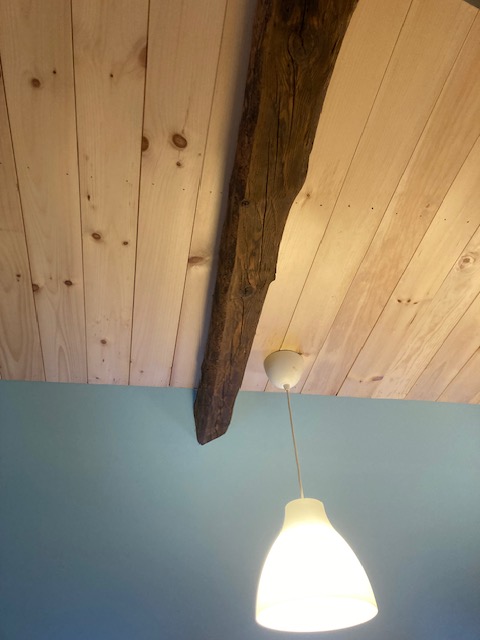
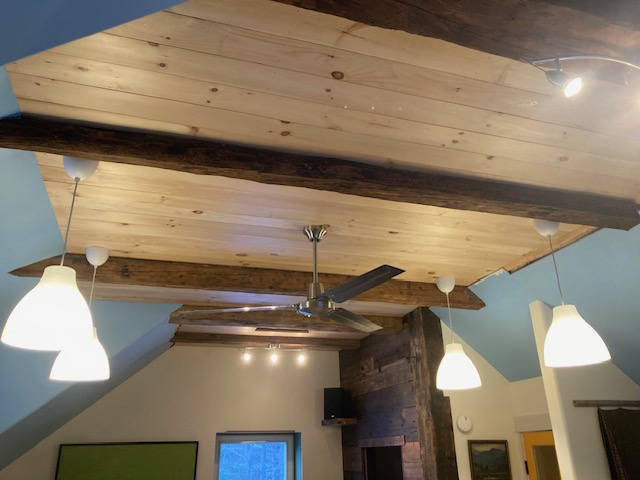
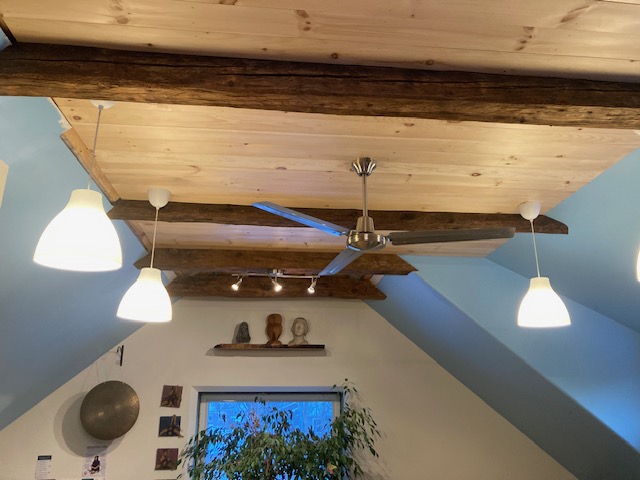
Lately I have pursued the finish work and the loft has been transformed. I put pine boarding on the ceiling, which required custom cuts around some of the original barn beams. Using old boards triples my labor but it seems worth the effort.
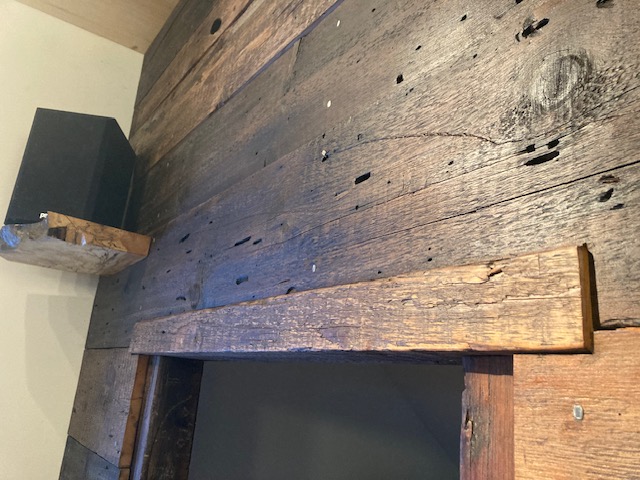
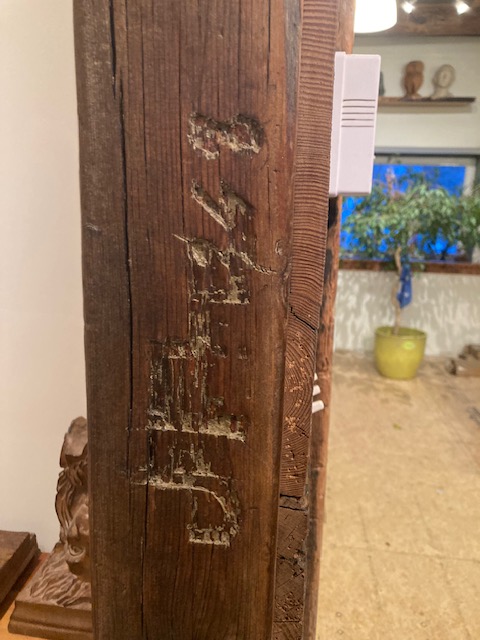
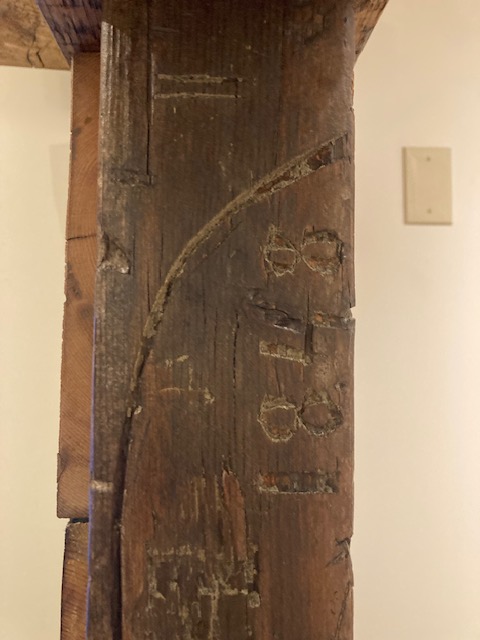
To create a storage nook, I built a wall with its door framed using a barn beam carved by the makers and dated 1848. The barn boards on that wall come from trees cut down then, which means those trees sprouted from seed circa 1700. George Washington was not yet born when our barn had taken root!
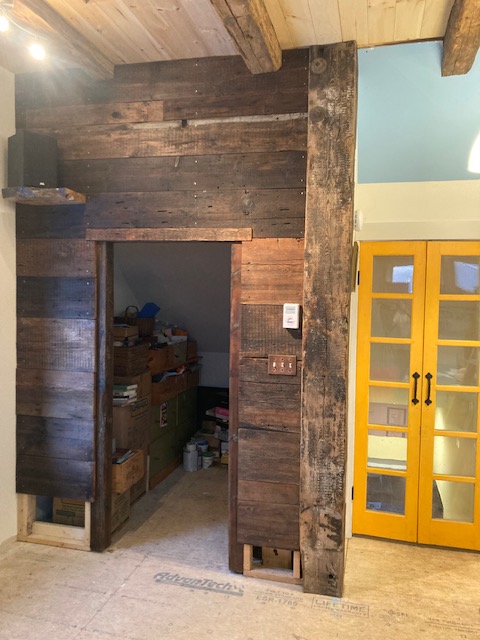
The barn boards are weathered and rough, with knots and worm holes; a poetry of the material. Several years ago I built furniture for Thos Moser, whose solid black cherry tables and chairs are American classics. Tom uses the heartwood only and rejects any sap wood, thus throwing 40% of his material away. An extravagant waste and testimony to the vanity of the buyer who seeks an unblemished life. If only that were possible, but as a colleague often said to me, “How do you know you’ve been alive if you don’t have scars to show for it?!!!”
I bought odd lot leftovers of prefinished flooring, a random mixture of five species – Ash, Cherry, White Oak, Maple, Douglas Fir – with varying stains and sheen. The floor will not be typically uniform but more like a smorgasbord charcuterie. I paid about $0.15 on the $1.00 so the savings are substantial. That is the next task.

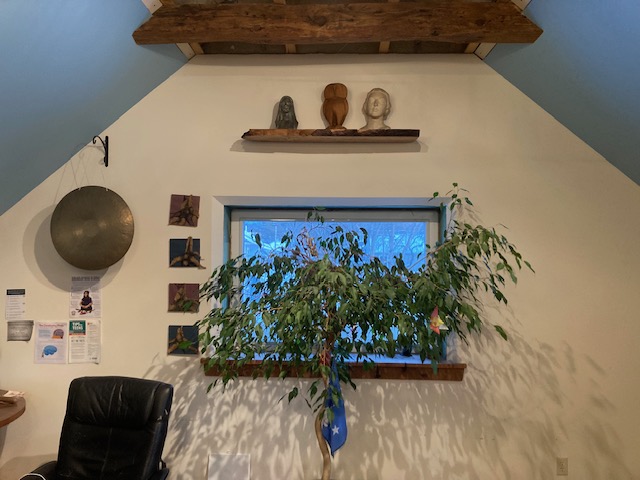
For a window sill I made end-grain parquet, cutting a stout old beam – 12″ x 6″ – into thin slices, reglued them like a checkerboard, then planed down and used epoxy to fill the aged cracks, until finally I had a board that I could cut to fit the sill opening. It is aged and rough and wildly elegant. May I age so, too.
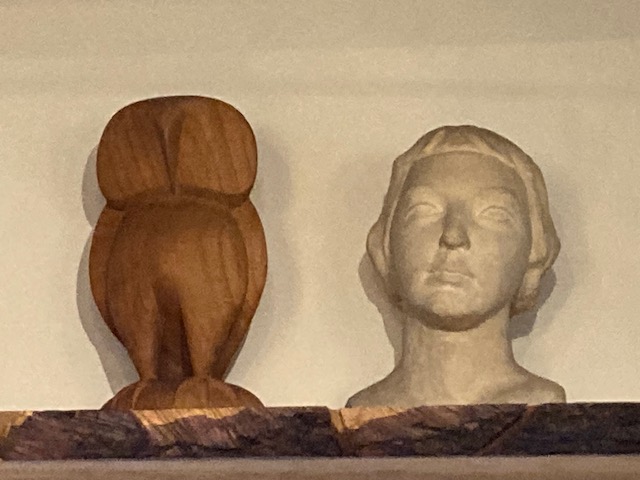
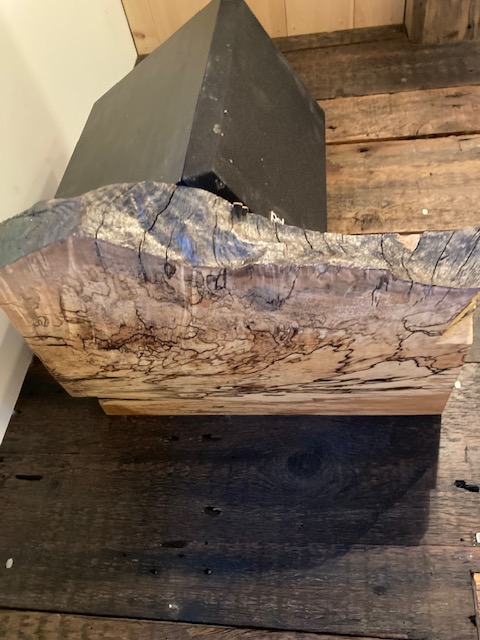
High overhead, in pride of place, is the pièce de résistance, a floating shelf of a burled Alder slab that I hauled East when we moved from Chicago decades ago. Sitting upon the shelf is the self portrait of an artist made when she was 19-years old, and a second bust that she made as well. That artist has long nurtured my own interest, encouraged me along this very winding path of making. I saved her pieces when the family home was sold last autumn, and now they – she, symbolically – watches from high overhead, a sentry to our making in the loft art studio of our Art Farm.




_______________________________
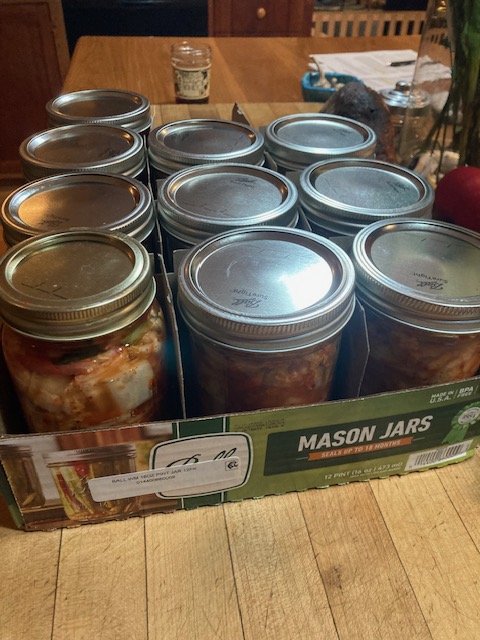
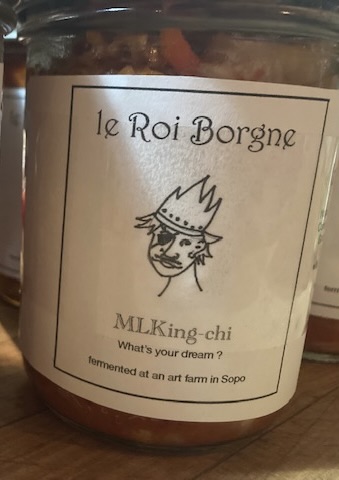
In other news, this week we did more fermenting to make a le Roi Borgne special batch “MLKing-chi.” My son and I delivered them as night fell, a random act of kindness in times of darkness. Indeed, “What’s your dream?”



Big Ideas in Miniature
Posted: January 17, 2025 Filed under: Child Centered Activities, Chronicles of a First Time Parent, Portfolio - David's work, What is an Art Farm | Tags: art, books, making, photography, woodturning 2 Comments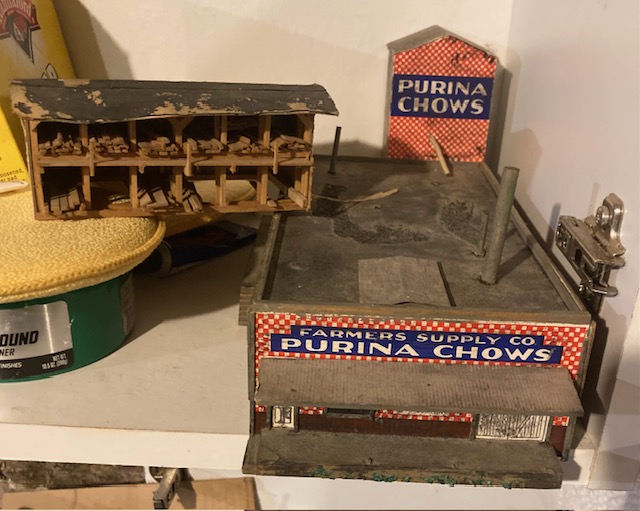
During my junior high school years – grades 6 thru 8 – I became enchanted by model trains and built an HO-scale train table in the basement. There was a mountain and tunnel; a small town with roads; a rail siding with buildings and sheds.
As my skills grew, so too the complexity of the layout. Tools were foreign to my father so I did it all on my own. Frustrated at times for no input I learned to be resourceful. Long before google and you tube, I subscribed to “Model Railroading” magazine to see what other people were doing.
There are no photos of the layout, nor do I remember any ever taken. I was in my own world, away in the basement, which brought great contentment. A few of the buildings remain, now stored in a box in our basement.
My son, of his own urging, has taken up a similar hobby, although his interest is heavy equipment and road construction. He began at age 8 – in the 2nd grade – so I handled the carpentry, but at his design. The first table was a 4×8 plywood sheet, cut to have to drop wings, which he painted. The table was placed just off our kitchen, a remarkably central location.
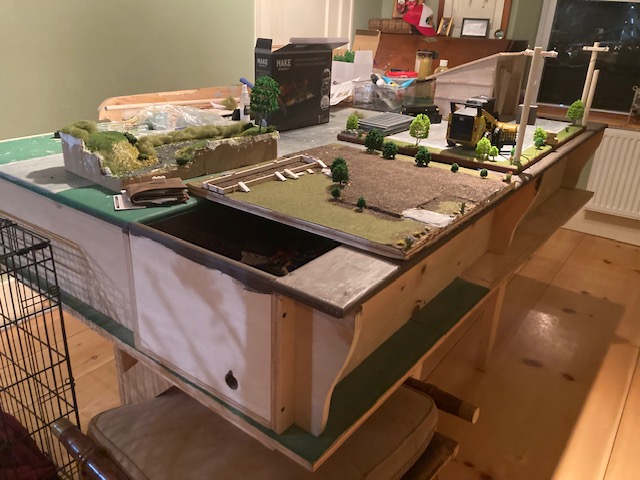
During COVID to break the monotony he and I would drive around town looking for road construction. Delays were desired. By chance there was a major project at that time, replacing sewers along the main artery.
Thus, a major renovation occurred on his table, the wings made permanently upright, a trench “cut” along the length, with the table raised 10” to create a space where he could lay down pipe in his imaginary world.
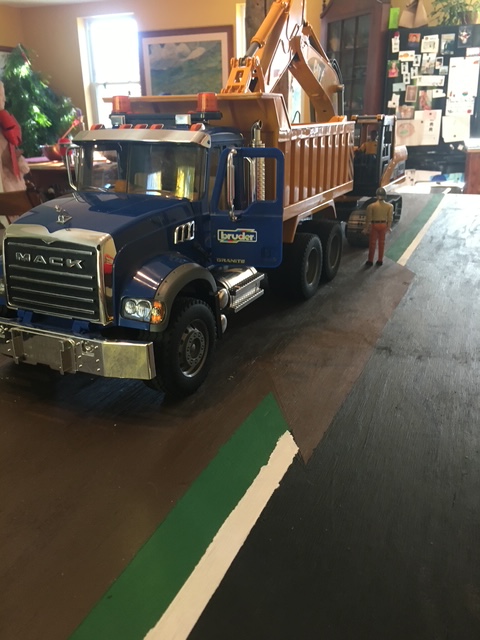
The table has gone through many iterations and now he builds dioramas, small stages displaying workers building roads or the yard where tools and equipment are stored.
The evolution of the table has been fascinating to watch, as he remains fully engaged building his dreams at his table in the hearth of our home.


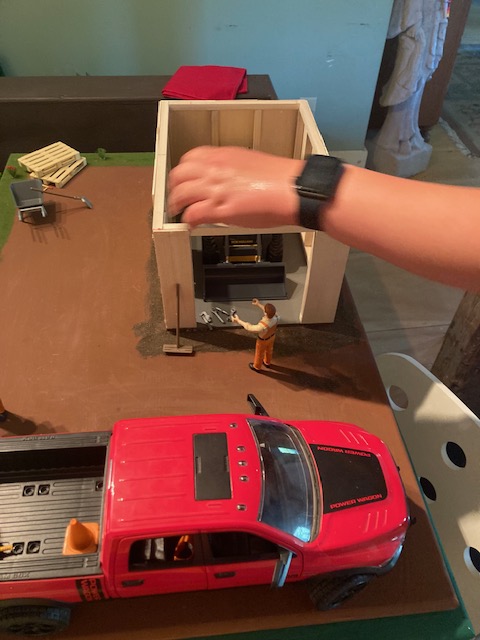
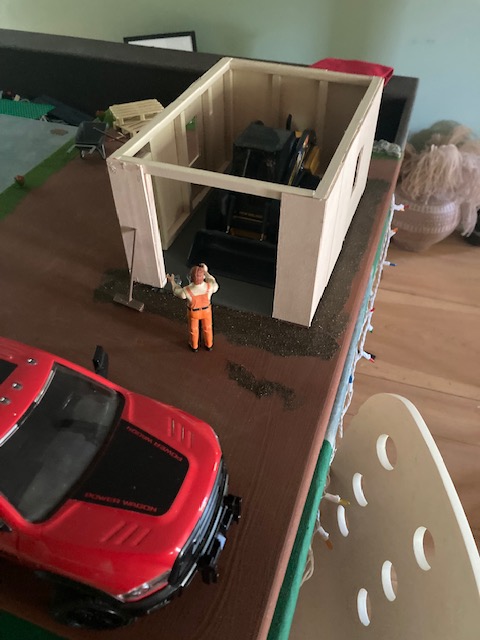
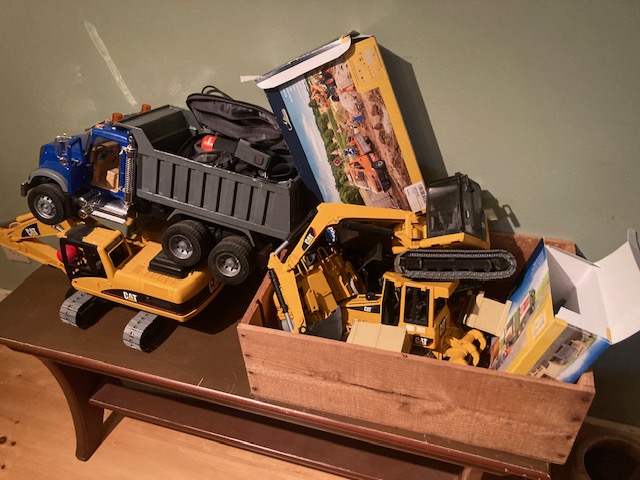

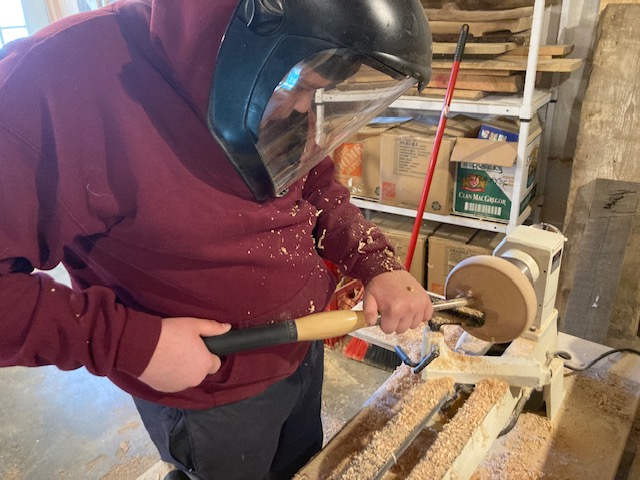
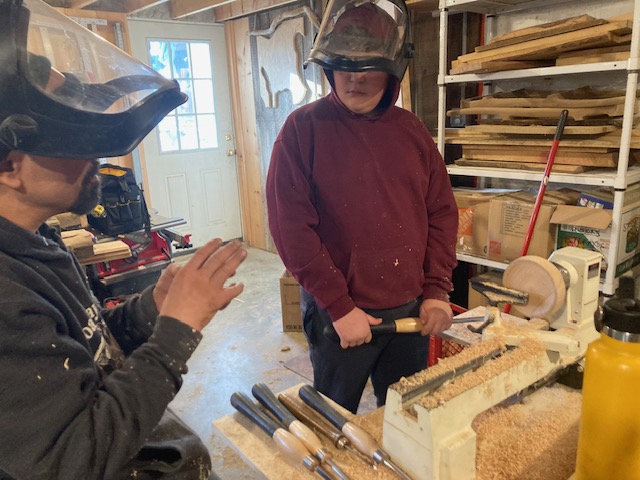
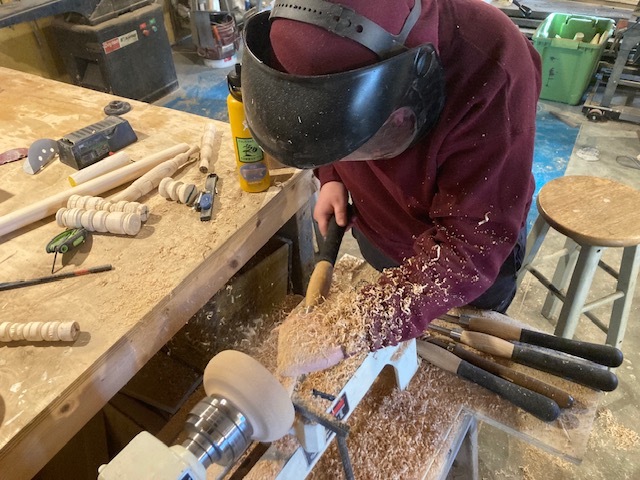
In other news, this week we had our first lesson in woodturning. Jose, a local woodworker, came to our workshop. A friend has loaned us a small lathe on which we turned a bowl made out of quilted maple, which I oiled and he presented to Mama. In two hours, he experienced the mystery of making, the satisfaction of completion and the joy of gifting an object hand made.
Dreams made manifest is an empowering experience.




Outlaw Light Bulbs
Posted: December 27, 2024 Filed under: Portfolio - David's work, What is an Art Farm | Tags: 179d tax credit, electrical, energy efficiency, Fluorescent bulbs, led, light, lighting, Oberon Initiatives, sustainability Leave a comment
My bread labor these days is tending the buildings and grounds of the Friends School of Portland, a Quaker school of decency, thoughtfulness and kindness. A remarkable place to take shelter from the storm.
In October I went to change a light bulb, but learned that all fluorescent bulbs will soon be outlawed in the State of Maine. That got me thinking and I came up with a plan. I share below the announcement I sent to all faculty and staff.
Hear Ye, Hear Ye:
- in order to produce more light, consume less energy, and eliminate annual maintenance,
- every light fixture will be replaced in the original building: every closet, bathroom, hallway, office, Meeting & Big Room, Lobby and classrooms.
- this will be done the week of 29 December during the year-end holidays.
These are the headlines.
If curious to learn more, then read on below….
Dear Friends, all:
We regret to inform you that all the light bulbs in the 2015 building will be illegal in 12 months. We cite Maine Statute 1672, Title 38; Chapter 16-B, subsection 4-A: “Beginning January 1, 2026, a person may not offer for sale, sell or distribute as a new manufactured product a compact fluorescent mercury-added lamp or a linear fluorescent mercury-added lamp.”
The classic joke of the “Borscht Belt” comedians began, “how many men does it take to change a light bulb…?” Being smarter than that, we shall NOT change bulbs but replace every fixture. 222 to be exact.
Fear not, this will be done over the Holiday break, even late at night, so your New Years return will be like nothing ever happened, everything “back to normal.”
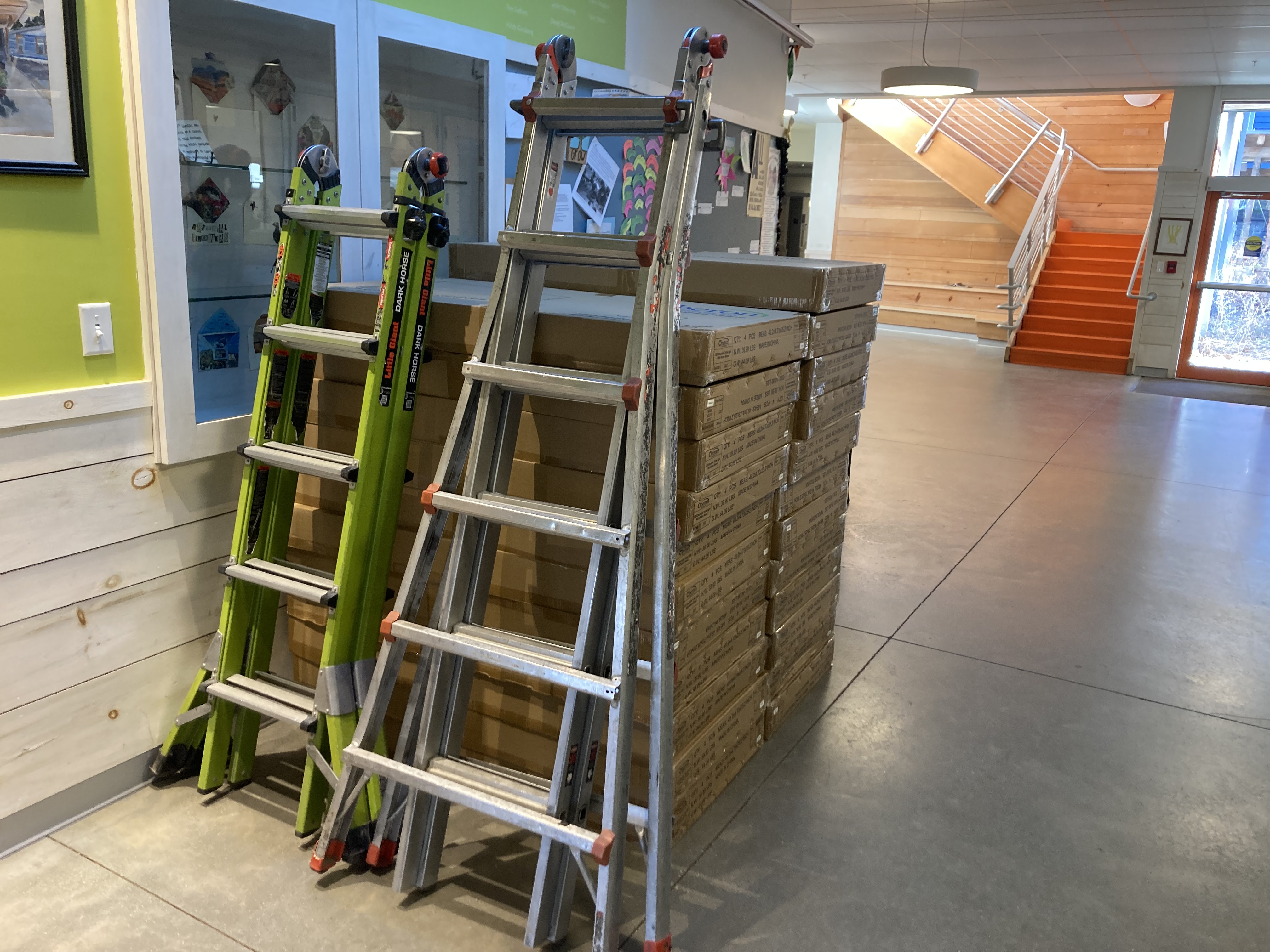
We have hired Oberon Initiatives, a turn-key contractor from south of the border – Massachusetts, that is. Our due diligence confirmed that their every client whom we contacted gave glowing 5-star reviews.
The pendant style classroom lights will be replaced with flush mount LEDs. The new fixtures will produce more light, consume fewer watts, thus increase our energy efficiency. More importantly, they will require no annual maintenance. Blessings, and savings, abound.
Money most certainly is the creation of humans, not of the divine, and as any clever, kosher CPA knows, numbers can be made to work any of several ways. Technically money is a “fungible commodity” and thus tradable, which allows us significantly to reduce the cost of the project.
Our project will benefit from both Efficiency Maine rebates for saving energy plus a 179d tax credit assigned to Oberon Initiatives, as project contractor. Friends School is tax-exempt and does not pay taxes but we have had substantial repairs – $55,252 specifically – related to energy efficiency and the building envelope.
The repairs include roofing and carpentry but those nouns do not qualify. Those skills have, however, improved our “building envelope” and that term falls both within the Passive House criteria and the definitions of section 179d of the IRS code.
Using the “building envelope” phrase to define our project will allow us to maximize the credit, for an estimated total of $15,970. Oberon will take a fee for arranging the credit and Friends School of Portland will receive a check from Oberon in the amount of $9,582. Our net cost for the LED upgrade project will be $5,283.
Allow me to state for clarity: to replace 222 outlawed light fixtures, our out-of-pocket cost will be $5,283 which equals $24 per fixture, parts AND labor. The 179d tax credit is the result of the Inflation Reduction Act of 2022 and we state for the record:
- the outgoing administration has materially benefitted Friends School of Portland
- the incoming administration almost certainly will reduce energy Efficiency Maine rebates
- carpe diem, and so we proceed without delay.
The great German writer Goethe, on his death bed, famously said, “Mehr Licht! Mehr Licht!” (“More light, more light!!). Friends School shall in fact have more light, just after the solstice, which is to say just as the light returns.
Legal in the New Year! May this be a harbinger of many more good things to come.
Respectfully,
dpm
The Art Ark
Posted: December 13, 2024 Filed under: Child Centered Activities, Chronicles of a First Time Parent, Portfolio - David's work, What is an Art Farm | Tags: animals, arctic, climate-change, consciousness, Friends School of Portland, poetry, polar bears, spirituality 1 Comment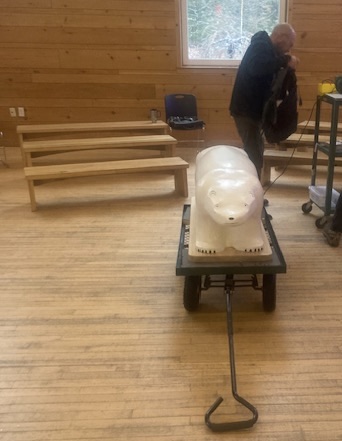
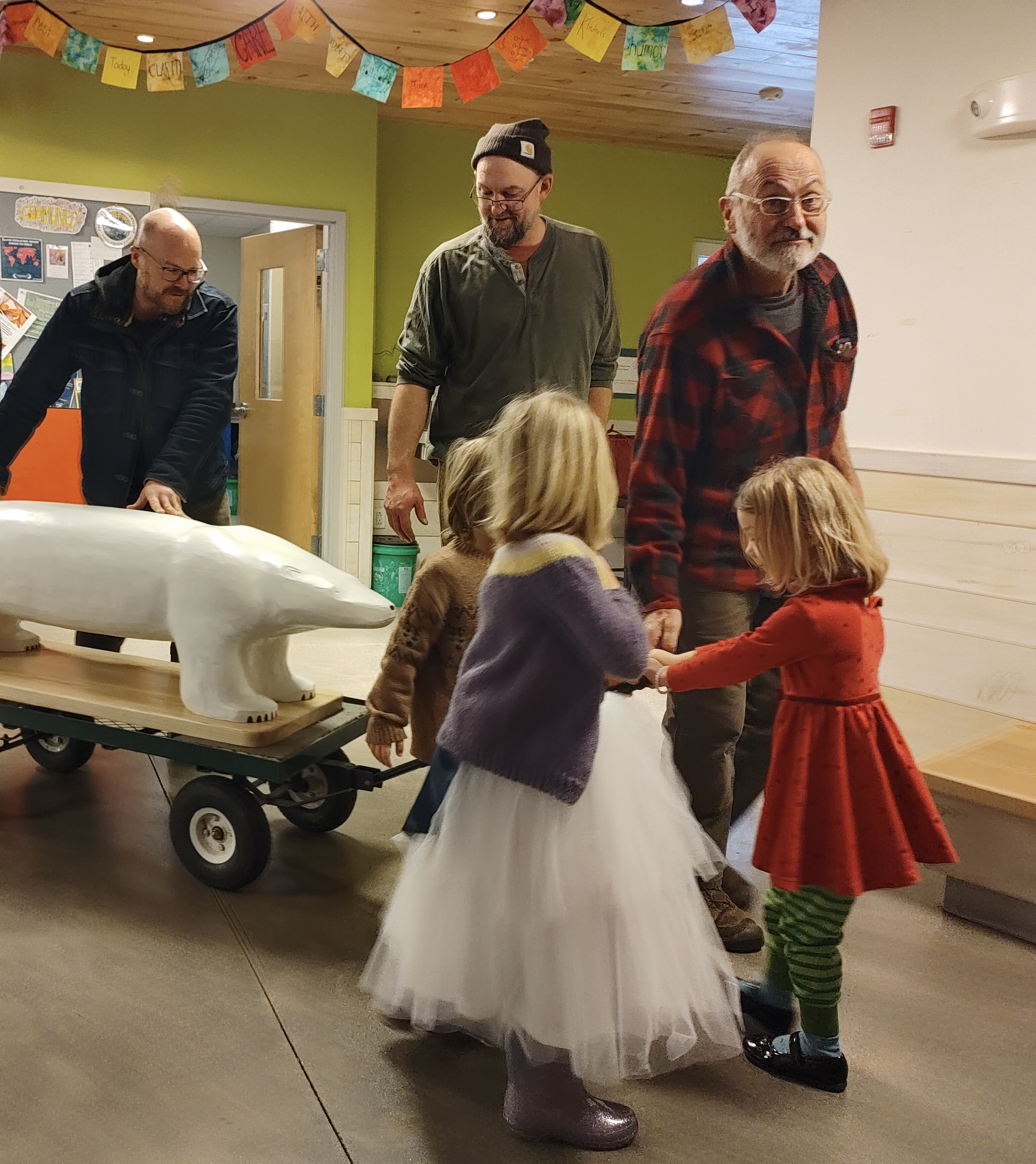
Previously I have told the story of the Sea Monsters, which exhibit came to its end. The monsters were put up for adoption, and then a Friend, a lifelong artist who volunteered for decades in inner city schools, exclaimed, “You need to save the Sea Monsters!!!” She donated funds to cover the costs, which became the catalyst and the adoptions have begun. We delivered Peter the Polar Bear on Wednesday to a full school assembly at the Friends School of Portland.
Historians say Cleopatra’s arrival at the port city of Tarsus to meet Mark Antony, 41 BC, was the most splendid entrance in history. Plutarch described it as “Aphrodite had come to make merry with Dionysus for the good of Asia.” William Shakespeare used a translation of Plutarch to write his tragedy Antony and Cleopatra. Hollywood, 1963, created its blockbuster “Cleopatra,” forever casting Elizabeth Taylor in everyman’s memories. But in the eyes of a Pre-K cherub at the Friends School, the arrival of Peter the Polar Bear must have been every bit as grand. I share here the text of our presentation.
DAVID: I am pleased to introduce Peter the Polar Bear, one of seven Sea Monsters from the Carousel Cosmos, a public art exhibit that had been on display on Portland’s Western Promenade. The exhibit came to an end, and the monsters are now being adopted all around the state. Peter has come to live in the Pre-K room.
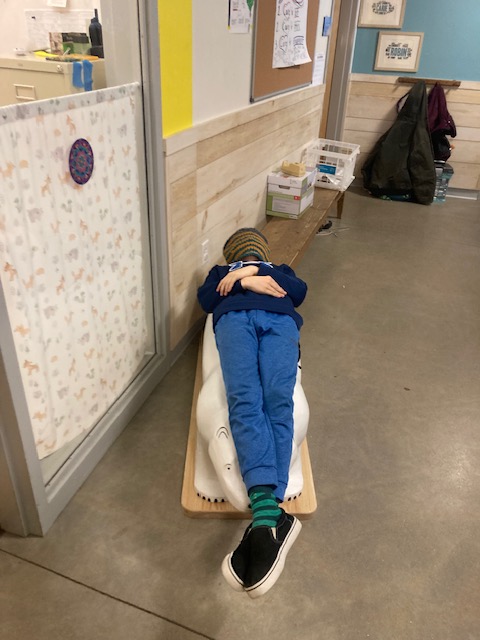
Dear Pre-K children, I want you to know that Peter is sturdy and stout. He is a bench.
- You can sit on his back and eat a snack
- You could lie down and take a nap
- If your teacher allowed, you could do a handstand on his head
- Or on your hands and knees, crawl and say “thank you and please…”
- listen carefully, perhaps he will reply…
- Peter is a gentle old Bear.

DAVID: Chris Miller is the polymath maker, the creator of the Carousel Cosmos. He will give a short presentation. But first, everyone please take out your bumblebee thinking caps…tie them on tightly…we will cross pollinate ideas, and with the help of the 8th grade students we will tell a story about circles and sharing.
How does a carousel turn?
STUDENTS: IN A CIRCLE
DAVID: How do planets in outer space move?
STUDENTS: IN A CIRCLE
DAVID: When Quakers gather to meet, how do we sit?
STUDENTS: IN A CIRCLE
DAVID: Peter is made of the wood of ash trees, locally grown. Ash trees grow in the woods here at the Friends School property. The forest teaches us of the circle of life:
STUDENT #1: “Biodiversity” teaches us that the greater the number of species, the more healthy is the ecosystem. Our property is on the border between Eastern Deciduous Forest to the south and Boreal Forest to the north; White Pines and Eastern Hemlocks are dominant on our property’s southern edge, while Hemlocks, Pine, Oak, and Maples surround the building.
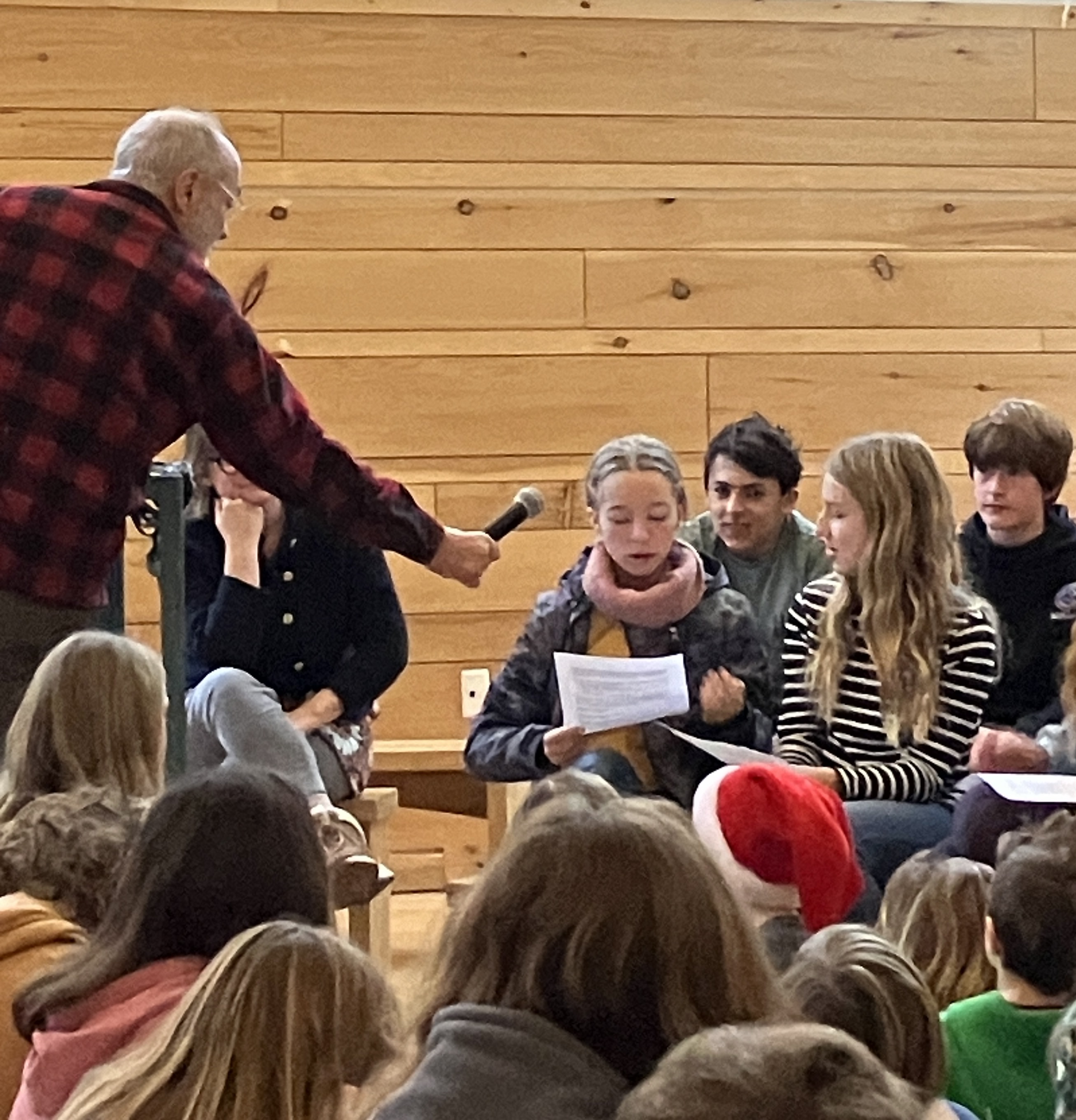
STUDENT #2: American Chestnuts grow in our woods. Although devastated by a blight and almost completely wiped out in America, our Chestnut trees likely are sprouting from the roots of ancient trees that predate the trees currently growing on the land.
STUDENT #3: The white ash and black ash trees grow in the wetland corner of the School property. The emerald ash borer, a jewel beetle native to north-eastern Asia is an invasive insect that feeds on the ash species, decimating these trees. We continue to study this problem.
STUDENT #4: The mycellium network is spread throughout the entire forest, and allows the trees to communicate to each other. Mycelium breaks down organic matter to feed the fungi, plants, and other organisms and connects plants to transfer water, nitrogen, carbon, and other minerals. The strong trees share enzymes with the weaker trees, making the forest healthier.
STUDENT #5: In the circle of life, we can say
- The greater the diversity the healthier the community
- The strong help the weak
- And everyone prospers
- Chris Miller will now speak about more circles and sharing
Chris Miller then stood and spoke about circles and Polar Bears, shared images of his Sea Monsters, how they were designed, and stories of their past. He explained that Polar Bears may have lived where Maine is, but long long ago. A child spoke up and explained pangaea. Chris answered all the children’s questions. The room was silent, in awe as he spoke:
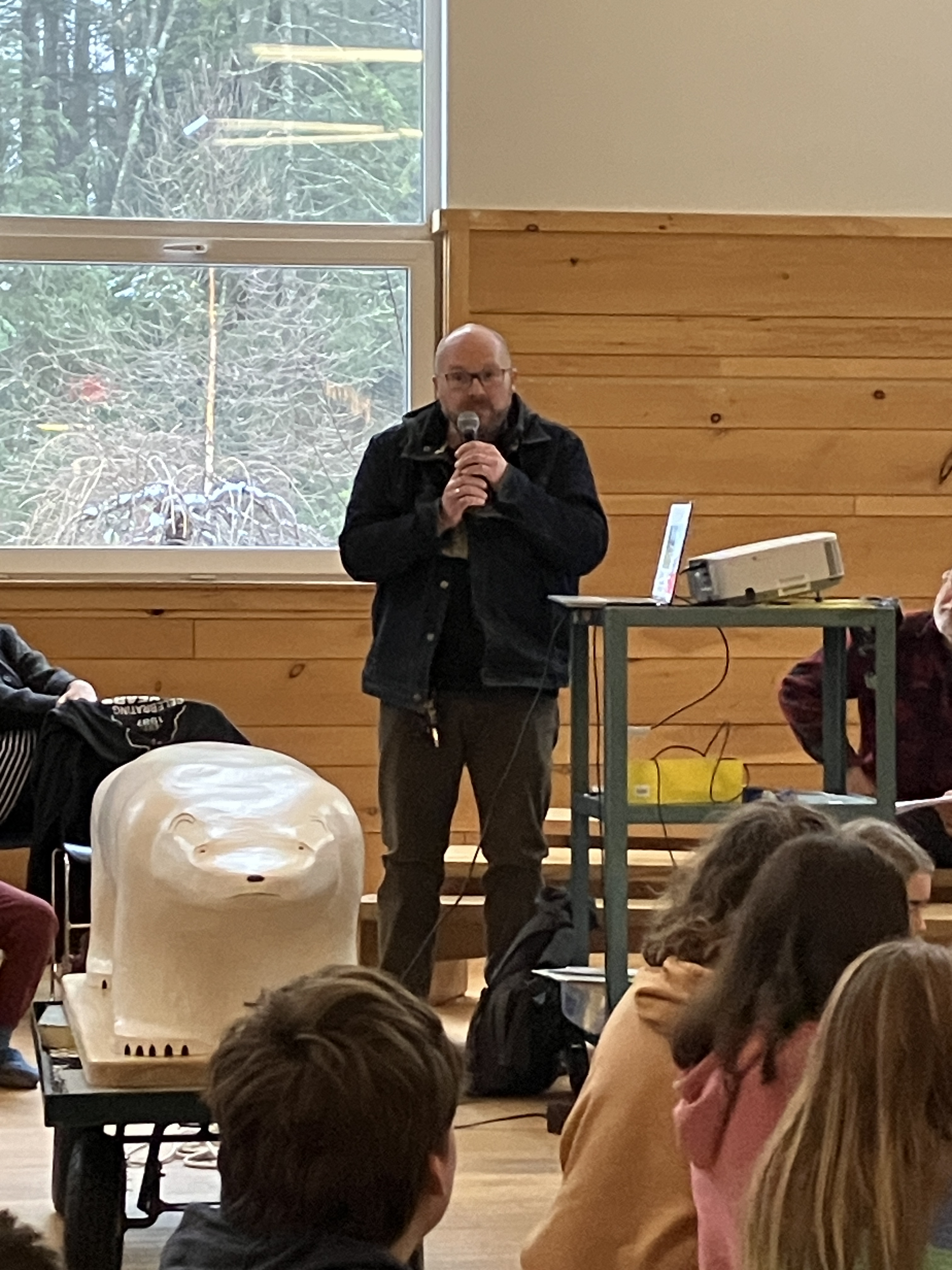
“Gather round. We are all made of the same atoms that the stars are made of too. We are parts of the universe that observe the universe. We are all living, sentient and curious together, here of all places and now of all times. What are the odds? How does it make you feel?
“This carousel is inspired by kindness, adventure, outer space, bedtime stories, dinosaurs and ice cream. It’s inspired by the Western Promenade’s endless views, spectacular sunsets and contemplative atmosphere. It spins the way that the earth spins when the sun sets, in a place where trolleys used to stop, in a small picturesque city with a school community that speaks more than sixty different languages.”
Chris shared images of circles from around the world, over hundreds of years, many people gathered together…




The Pre-K children unveiled a banner they had made:

…and then lead Peter out of the room, down the hall to his new home:

Cupboards in Cumberland
Posted: November 29, 2024 Filed under: Permaculture & Home Renovation, Portfolio - David's work | Tags: diy, home, Home renovation, home-improvement, interior-design, kitchen 3 Comments
Cumberland, Maine is bucolic, an idyll of pastoral open lands with Gothic farmhouses atop rolling hills across the horizon. The Levittown mass-produced suburbs circa 1950 passed by Cumberland, but in 2024, on the fringe of the Portland metro-area, it is a highly desirable place.
More than 21 Million people live within a half-day’s drive of Cumberland, and with Zoom telecommuting, the desire to live on the rocky coast of Maine has dramatically grown. Maine has a housing shortage: 80,000 new homes are needed by 2030 but the median income is $63,200 while the median home price is $414,000. The way of life known for generations seems no longer sustainable.
Couples from away buy homes for $3 Million and then gut and renovate at a cost upwards of $2.5 Million. Castles by the sea, monuments to themselves, grand is the vanity, employment all but guaranteed for the trades. I speak from direct personal experience.
Kitchens are the hearth of their home, and people spend upward of $3,000 per linear foot, easily more than $100,000 in total on a kitchen. I have been told of couples gutting and redoing their kitchen every four years.
Recently I was contacted by a Cumberland resident whose family has lived there for generations. The kitchen cabinets were built of pine, by his Uncle, sometime in the 1950s. They were in sturdy enough condition, and only the drawer slides were the issue. I drove north to take a look.
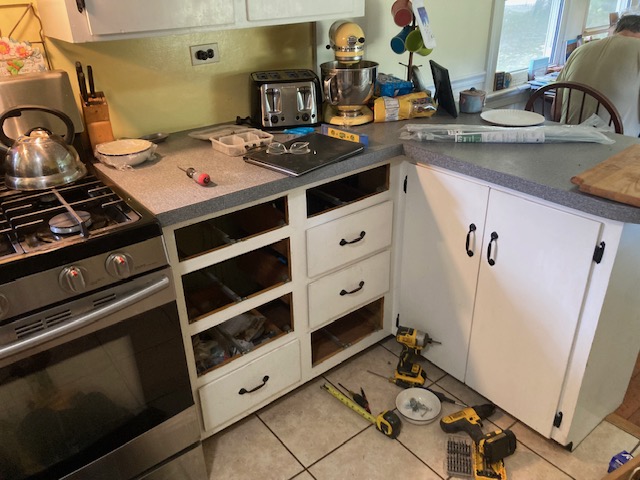
Arguably the cabinet repair’s cost – at 6 feet in length – was upwards of $6,000; I could have stood firm that the entire cabinet needed replacement. But I admired my Client’s frugality, which reminded me of the home where I grew up, built with cabinets of chip board and 1/2” plywood door and drawer faces; 1960-built cabinets that served seven people for 63 years. As any New England Quaker well knows, simplicity, frugality and common sense are principles to live by. So I agreed to solve the problem, rather than demolish and rebuild.

At a specialty hardware store I was able to find a replacement slide and when I returned was pleasantly surprised that the new slide was an exact match in all aspects. The entire job took 45 minutes to repair eight drawers. More importantly only 8.5 ounces of recyclable metal entered the waste stream.
If I pursued rational self interest I would have charged at least one half-day, or more; I had taken the time to drive north twice for a repair that ultimately amounted to little work. But “rational self interest” seems just a euphemism for “selfish greed” and just because the market will bear a cost does not make it right that I should charge same.
My invoice amounted to $118, parts and labor included, an almost laughable sum. Thus was saved $5,882 and I established a long-term client, a decent kind man. Fair is fair. All is well that ends well.
Solitary Confinement
Posted: October 25, 2024 Filed under: Chronicles of a First Time Parent, Permaculture & Home Renovation, Portfolio - David's work, What is an Art Farm | Tags: american-history, Andrew Jackson, medicated worm syrup, presidents, Trail of Tears 1 Comment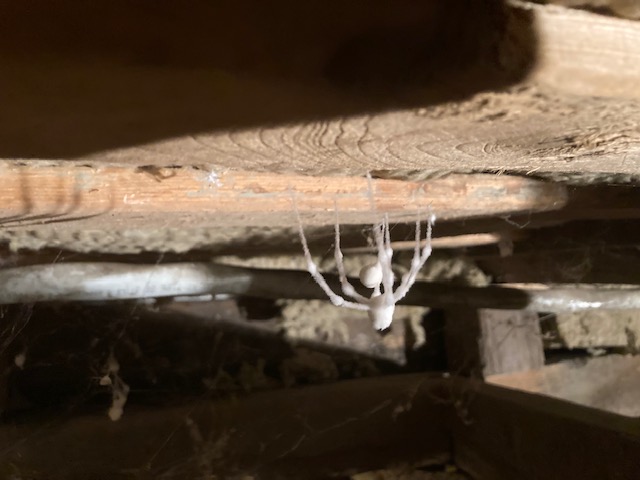
The 7th and 11th Presidents of the United States were titans from Tennessee, Andrew Jackson and James Polk. Polk was a disciple of Jackson, and both fought bitterly against the Second Bank of the United States arguing that it was a capitalist monopoly favoring the Eastern states. Jackson paid off the national debt, but also instigated the “Trail of Tears” ethnic cleansing, the relocation of tens of thousands of Native Americans, forced to walk from their ancestral homelands to lands “west of the river Mississippi.” A polarizing figure, Jackson advocated for ordinary Americans and preserved the union of states, but was denigrated for his racial policies.

1830 through 1848, in South Portland, Maine, C.D.W., a carpenter, built a farmhouse with a crew of thirteen. By day, they labored cutting trees and hauling rocks, to lay the rubble foundation and hew the timbers for the post and beam home. At day’s end, they had no hot showers (indoor plumbing began in Boston 1829, only for the rich) and their food was harvested or hunted from their gardens or woods (green grocers did not become common until circa 1916). Hard were the conditions under which those workers labored.
On Labor Day 2012, we bought the house and barn that C.D.W. built, then began an energy efficient upgrade. My wife was in her third trimester, so time was of the essence. Money was tight. A permacultural builder and crew helped gut and super insulate the main house, converting from kerosene to natural gas. Short on funds, we had to tear down the barn. On Thanksgiving day we moved in, when two weeks later our son arrived into our Greek Revival New England Farmhouse. In 2017 we were fortunate to rebuild the barn, adding a second bathroom, a loft and workshop. Which left the Ell as the last remaining unfinished section.
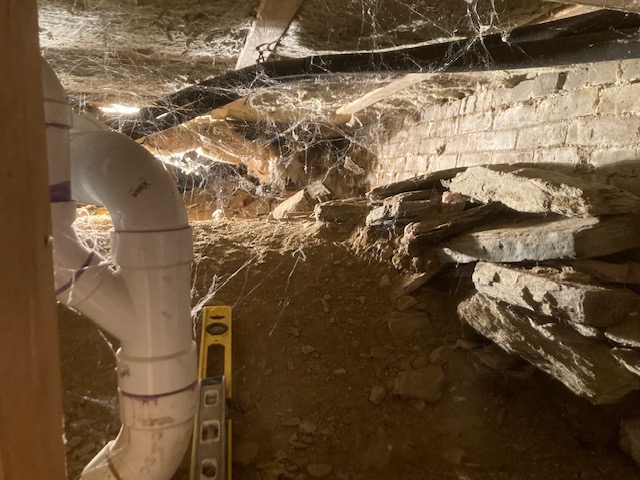
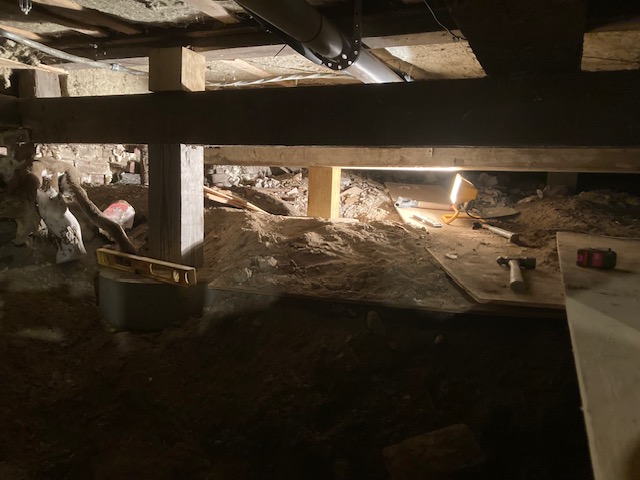
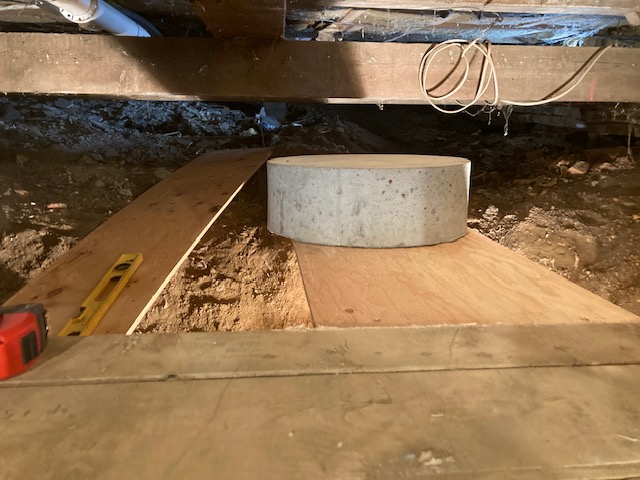
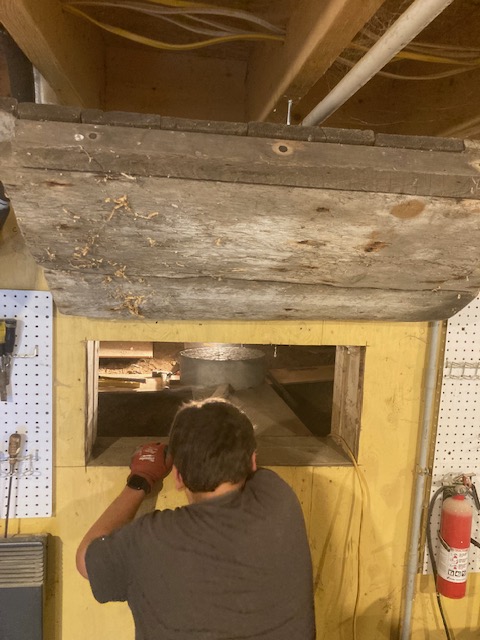
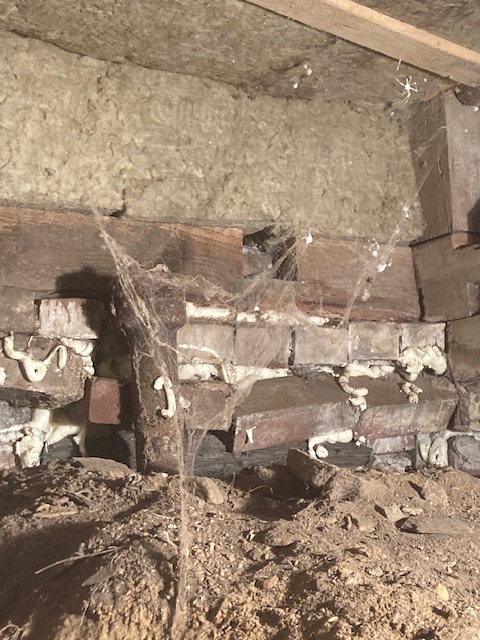
A prudent man would have passed on the home. A rich man would have torn down the Ell. But I was short on cash and long on hope, so I bought the farm in “as-is” condition, at a foreclosure price plus 20-years’ hard labor. I have begun now, finally, restoring the Ell. Before I can do the finish work, I need to rebuild the foundation, and before that, to stabilize the floor system. This work is done in the crawlspace, which means my hard labor now is essentially solitary confinement.

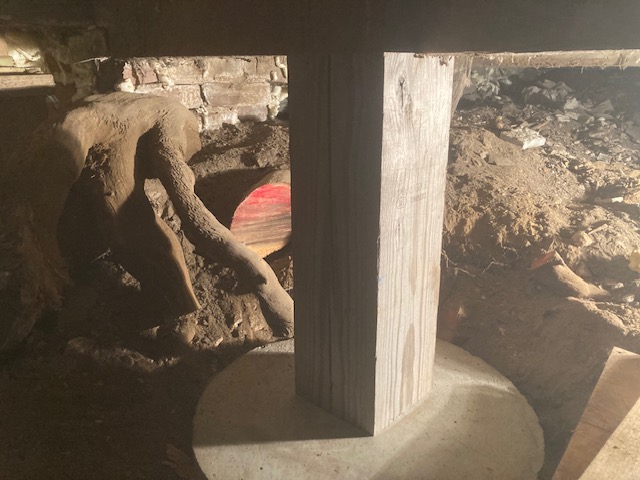
To secure the floor system I need to set ten concrete pads, upon each of which a post is hammered into place to stabilize the existing 1830 floor joists, with a gusset to lock the posts and prevent movement. Building standards were vastly different then, so I have to bring all of this up to code, with 36” to 16” of working space. Each concrete pad is difficult, while several are incredibly challenging. I had two choices: either mix concrete in the crawlspace and then bucket it into location OR pull a pre-cast block, weighing 130 pounds, into a pre-dug hole. Given “pick your poison,” I chose the latter, the pre-cast.
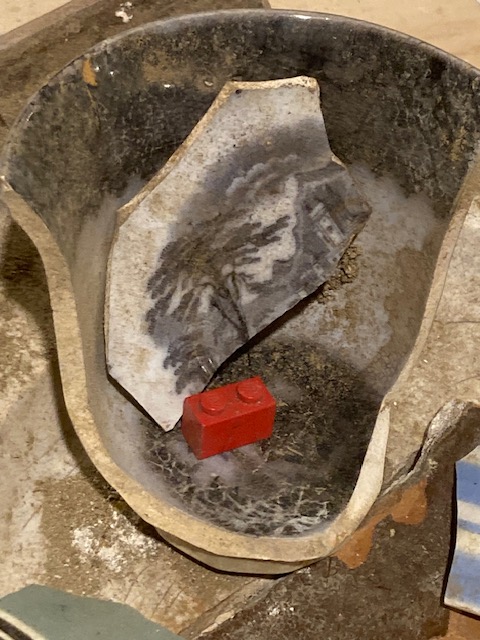
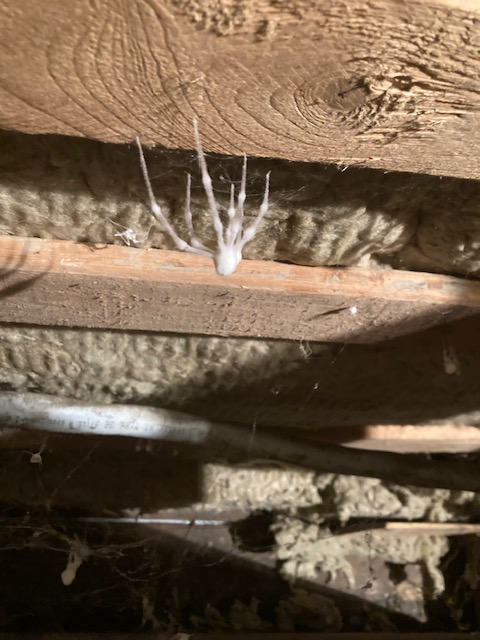
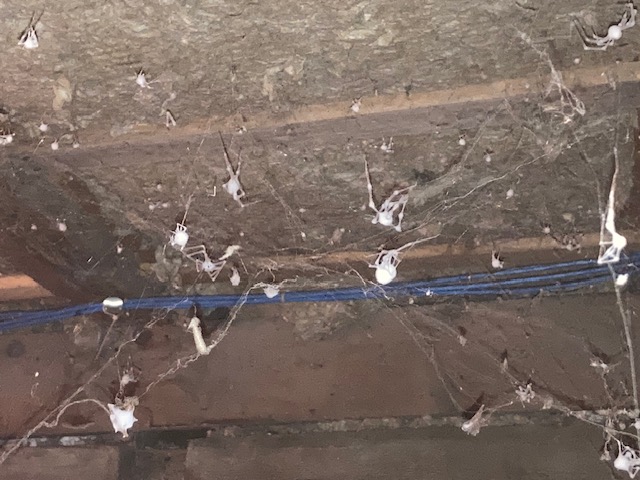
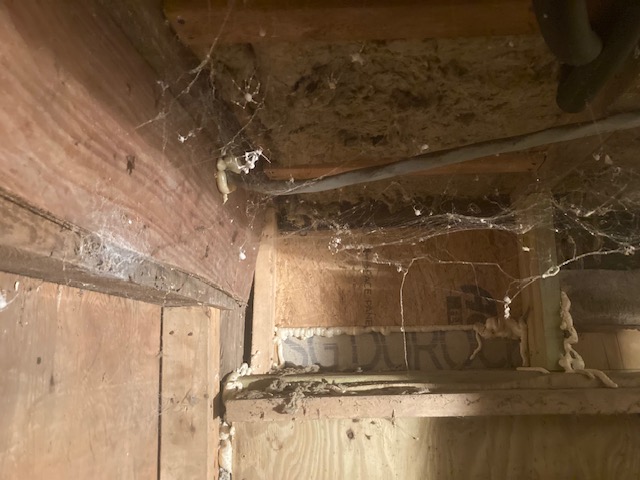
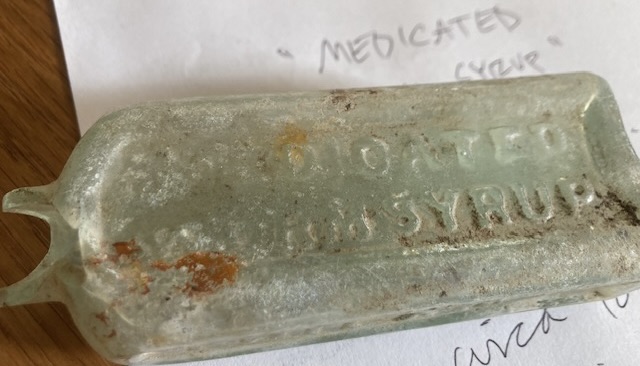
The crawlspace is macabre and surreal. Everywhere overhead abound spider webs and carcasses, covered in a white mold/fungus on the exoskeleton. Rats have lived in that crawlspace and in the dirt lay remnants of former lives in this house: chards of broken china with pastoral scenes, an oyster shell, shoe leather, a glass bottle of “Medicated Worm Syrup” made by Hobensack’s in Philadelphia circa 1845, and two lego pieces. In 1850 the Dyer family purchased this home, where their son John was born in one of the bedrooms. If someone was born here, how many have died here, over the past 200 years?
As a boy, I watched “The Great Escape,” Steve McQueen’s 1963 action film telling the story of World War II prisoners of war, digging a tunnel to escape from Stalag Luft III, a Nazi concentration camp. In one scene, the tunnel collapses, burying the character played by Charles Bronson. Many times I have thought on that during my crawling.
Let me be clear: never would I do this as paid work-for-hire. But for my wife and children I will and I have crawled on my back and my belly, with minimal leverage, to move concrete pads into place, hammering posts, affixing gussets to make stable the floor system.
My Father, dead now 43 years, has the last laugh. So many times he said to me, “David, you can get used to hanging if you have to.” I heard that, then, as a boy, in terms of my own life. But now, as a Father, I understand that for your children you go out of your way even when that means laboring in a crawlspace among desiccated spiders, remnants of rats.
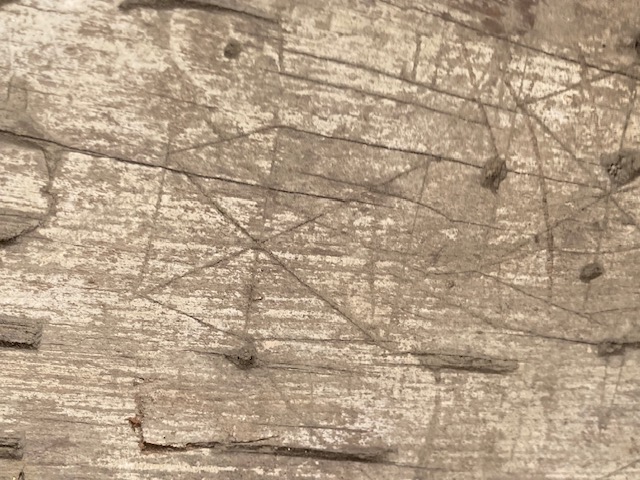
In the end, the work has been done, and I left my mark, on a beam – as did C.D.W. and crew – showing for the record that, Autumn 2024, DPM labored here, to make stable the world in which his children grow, and from which they will go forward, into the world.





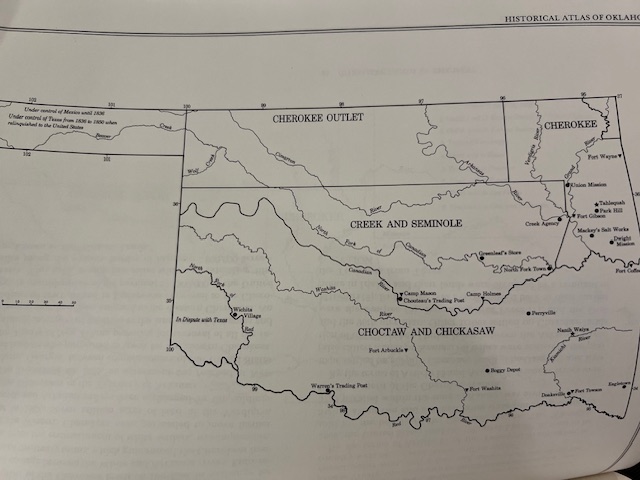
Professor Kristy Feldhousen-Giles has been most helpful with insights into the Indian Removal Act of 1830. The Nations were relocated “west of the river Mississippi” but no tribes were relocated west of the 100th meridian as that was under control of Mexico in 1830, and later under the Republic of Texas. The Battle of the Alamo was fought February through March 1836. The nationalist faction of Texans sought the expulsion of the Native Americans and the expansion of Texas to the Pacific Ocean.
Here is a map of the Indian resettlement 1830-1855 from the Historical Atlas of Oklahoma.
Here is the text of the Indian Removal Act, as authorized by the United States Congress, May 28, 1830.

