Two score and three years ago, to discipline my young mind I enrolled to study Latin. Nothing in my past forecast that choice; it was a decision wholly without precedent. My father having just died, I was given the gift of education – anywhere on any topic – and Classical Languages & Literatures was the choice that I made.
Because it was close to my childhood home, I enrolled at Northwestern University. I studied there beside wizened and wise men of letters. Stuart Small taught me Greek and Latin literature, while Erich Heller – a lion among the European literary cognoscenti – and I broke bread, and discussed German literature. Erich made a comment once that is marked indelibly upon my mind, “There is a mysterious link between grammar and the mind.”
In this year 2025, at our Art Farm Academy, my son explores this link as he learns to parse sentences, grammar’s deep structure, whereby thoughts are made manifest. This week’s topic was “The Verbs of Action and the Predicate” wherein my son thought deeply upon verbs transitive or intransitive; objects direct or of prepositions; simple versus complete predicates; adverbs and adverbial phrases. He marked a line dividing the subject from the predicate, determined whether a verb was transitive or intransitive, identified the direct object – when applicable – and demarcated the prepositional phrase. Intellectual heavy lifting, he stayed the course.
In homeschooling, a student cannot hide in a classroom of 20 fidgeting students. This is one-on-one, face-to-face, question and answer. For a young man coming of age, who feels anxious in social settings, his Language Arts class presses buttons. His teacher, the Magister, is firm but fair and it is probable that nothing could benefit him more.
The mysterious link between grammar and the mind is like a yoke, focusing the mind, as it frames our thoughts. For millennia yogis have regarded the yoke as a symbol of union, of body, mind and spirit, which is the “being” at grammar’s root, an inlet to consciousness.
In this age when AI will override STEM, at the dawn of a post-literate society shaped by videos and memes on a screen more than words on a page, nothing could be more salient. The power to focus the mind and to frame thoughts is the power to articulate and to question authority.
Let us parse from among the greatest speeches in American history:
“Four score and seven years ago…” is but a phrase, not even a clause, but has a poetry that most every American can repeat from memory;
“We have nothing to fear, but fear itself” wherein “fear” is both verb and noun;
“I have a dream…” uses subject verb and object to drive the essence of simplicity, clarity and hope;
“Ain’t I a Woman?” changes the syntax to verb and subject but no object, using the vernacular, for emphasis;
“Give me liberty or give me death!” is an impassioned hortative, in binary form: two independent clauses of verb, subject, object using a coordinating conjunction as fulcrum;
“…stay hungry, stay foolish.” repeats an imperative verb, with contrasting adjectives, using parallelism to form an inspirational slogan [delivered by Steven Jobs, 2005, to graduates of Stanford University (but which slogan he lifted from the Whole Earth Catalog)].
At this art farm, our core curriculum centers upon “the grammar of being.” We go forward, building confidence, into the future.
____________________________________
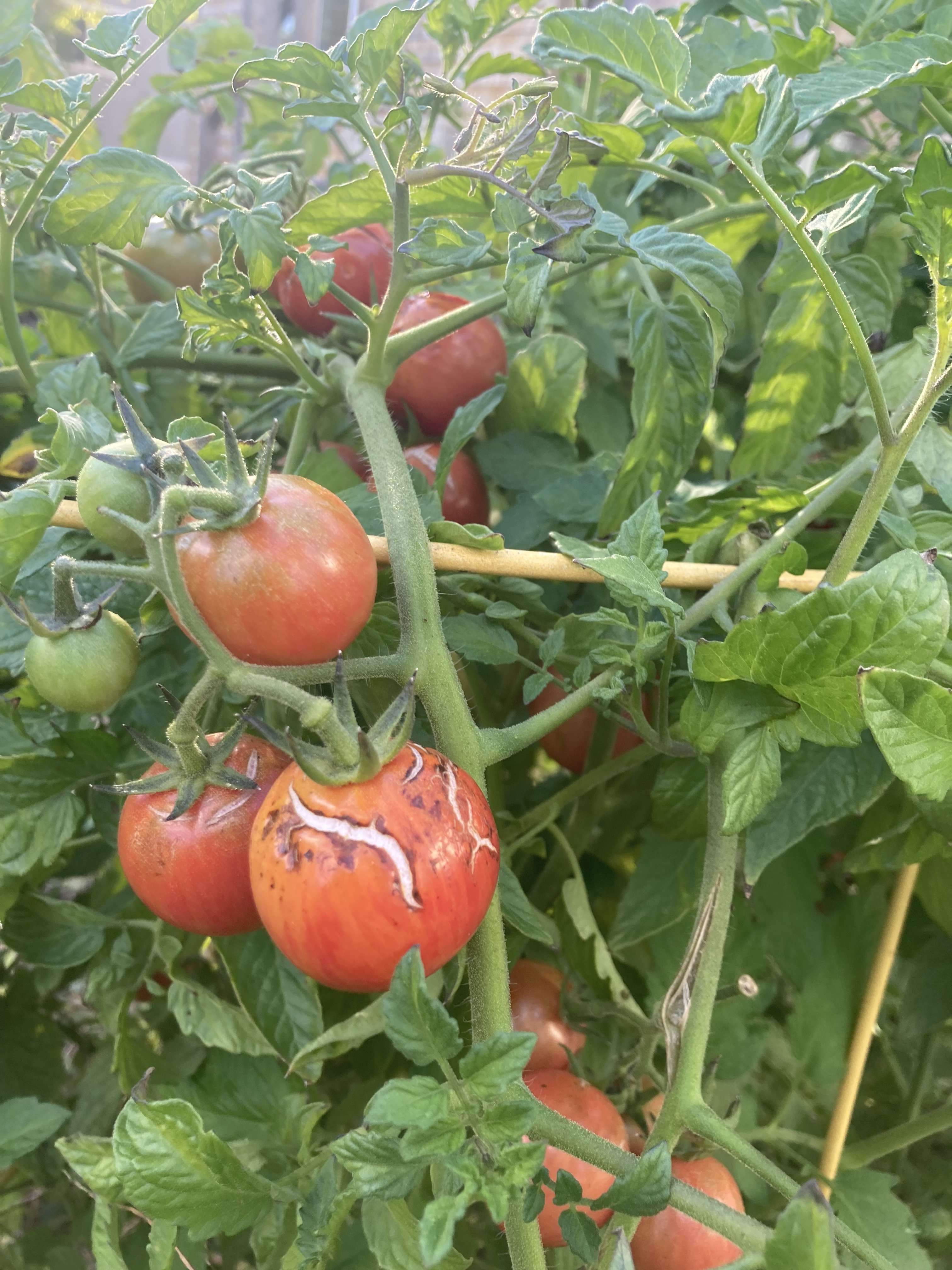
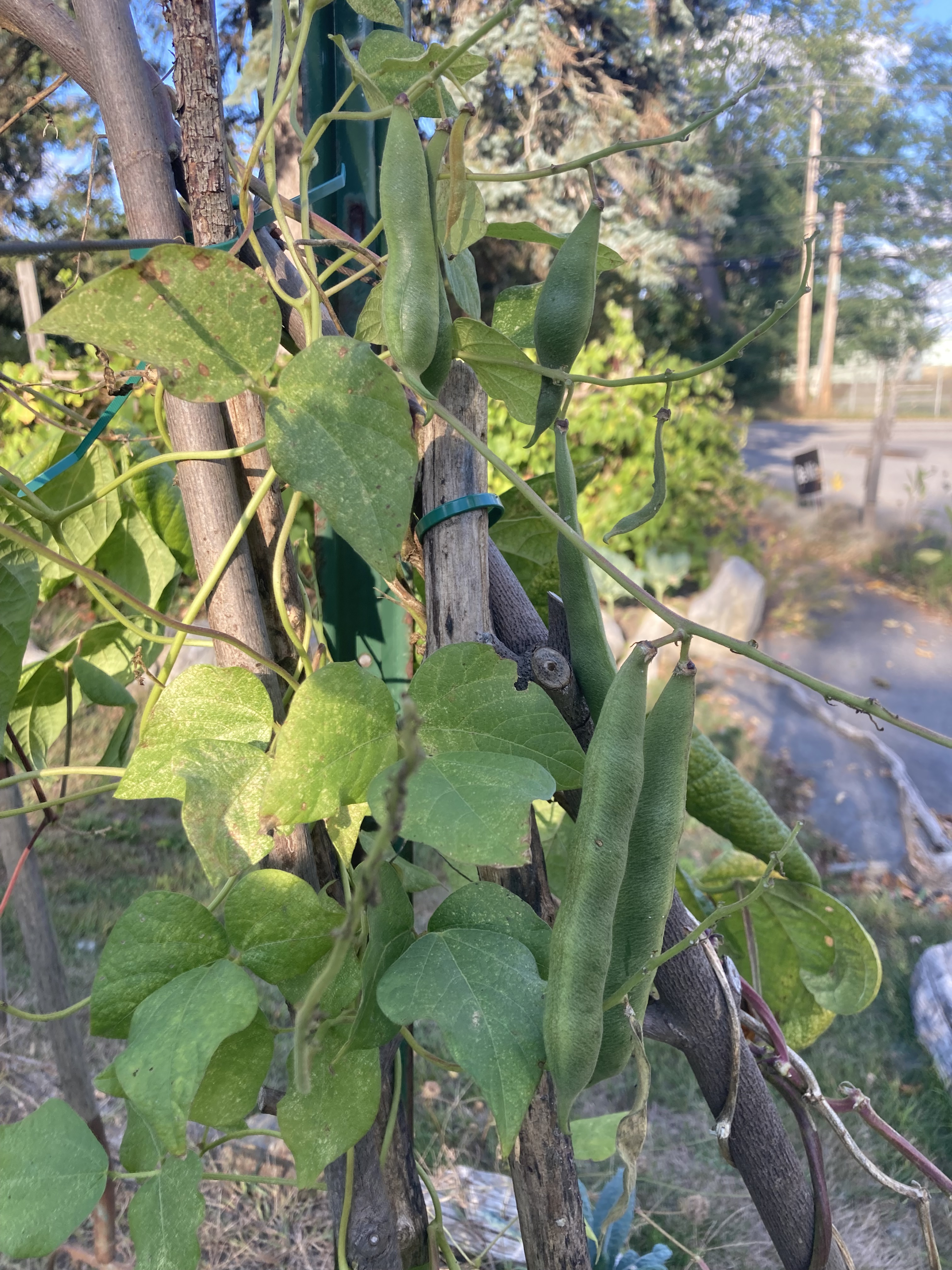
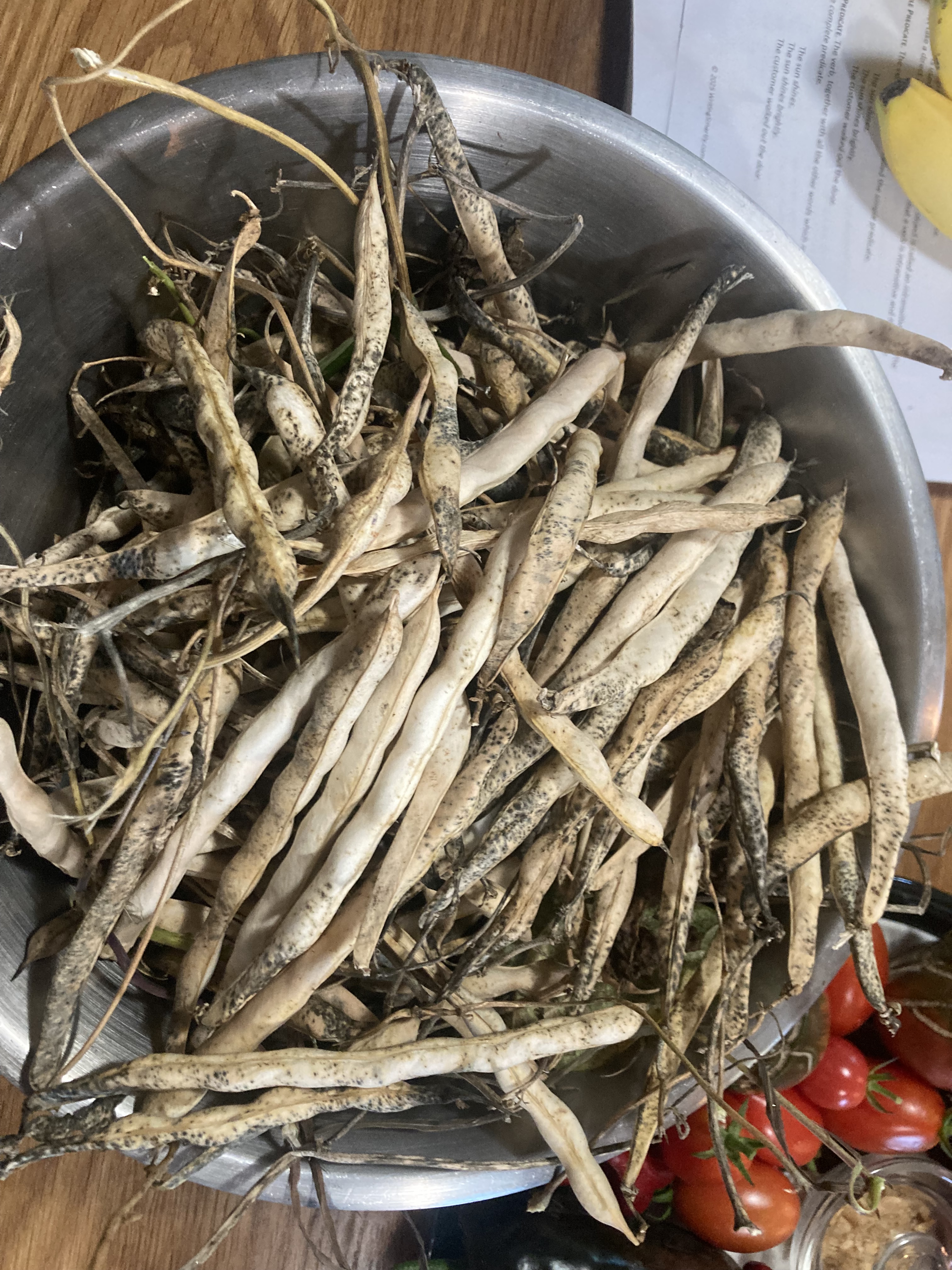
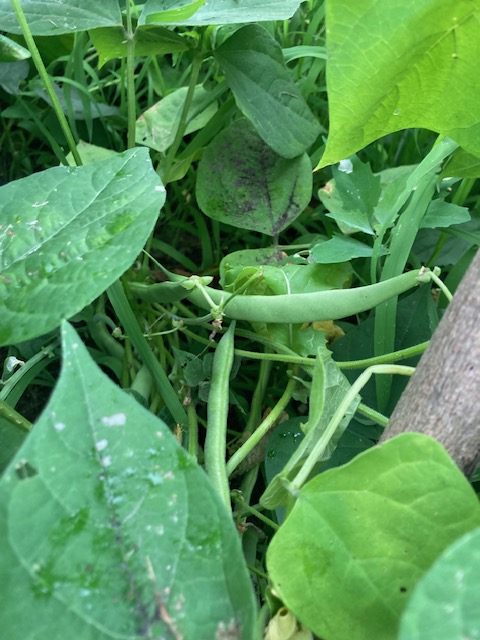
It is October and we glean the garden. Beans harvested, are shelled, put up for winter.
Henry Ford’s broad vision for business success included that his vendors and subcontractors should make a reasonable profit from doing business with the Ford Motor Company. Wholistic, he understood that everyone in the supply chain should be treated fairly for the system to thrive. He famously said, “A business absolutely devoted to service will have only one worry about profits. They will be embarrassingly large.”
My son and I talked about this during the summer, when he took a job seal-coating a 5,004 square foot parking lot. It was his job – I, his crew and driver – but I advised that he should issue a quote in advance, so the client knew what to expect. With great confidence he named his price including a modest profit. The client understood the final invoice would be on a time and materials basis.
The job went well, but in fact was more demanding that expected. The crew pulled it through, but when it came time to submit the final bill my son realized that what had seemed – in advance – like a windfall, felt too small after the fact. He learned what hard labor meant and wanted to charge more. And so we talked about Henry Ford and what a “reasonable profit” meant. In the end, he settled on a 20% profit which equalled $52.50. The client was pleased and paid the bill gladly.
About Henry Ford we have kept talking, and our history curriculum is built around the farm boy from Dearborn who quit school with a 6th grade education. Encouraged by Thomas Edison, in 1903 he founded the Ford Motor Company. Models N, T and A followed and his River Rouge Complex would become the world’s largest, iconic and most efficient integrated factory. Detroit has a rich history, and Mo-Town adds a phenomenal soundtrack.
To make history tangible, we drove to the Professor’s house in Lyman, Maine to work on a small internal combustion engine. The Professor is a journeyman carpenter/philosopher, who not only has every tool known to mankind, but knows how to use them all! Pedagogy unfolded under a shade tree at the Lyman town center.
The Professor sagely required my son to write a summary of the experience. Given the complexity, my son dictated while I was his scribe, and we then parsed the grammar – nouns, common or proper and concrete or abstract; verbs and adverbs; prepositional phrases and their objects; subordinate clauses – and ended up with his summation:
“With Professor Nate, I worked on a Toro Recycler lawn mower with a 22” deck. The first thing we did was try to start it. It would not start. We realized that it did not have an air filter.
“We put it up on a table and looked at the spark plug. The spark plug had a lot of carbon, so we tested the plug to see if it had a spark. It did, but it was orange. The color of the spark can determine how much voltage is being generated from the engine. Red is poor, orange means power but weak, a blue spark is a strong: voltage follows the rainbow spectrum. Our plug had an orange spark. Nate had a new plug that we tested, but it had no spark at all.
“So then we tried using some 1,000 grit sand paper to sand off some of the carbon from the tip. After trying that we tested the original plug again and it had improved. We put it back into the motor, tightened it first by hand and then used a torque wrench, with approximately 30 foot-pounds of torque.
“We checked the oil and gas. We drained the gas bowl, which is under the engine on the left, to see if there was dirt in the fuel. There were specks of dirt and rust, and the fuel was green from the stabilizer. After we drained it, the fuel looked good.
“The Toro Recycler is supposed to have front wheel drive but it wasn’t working. We took the cover off and one of the belts was completely snapped. There was a stick lodged in the belt and a lot of grass had built up inside the housing of the belt. We put the belt cover back on. That should be the problem for the drive.
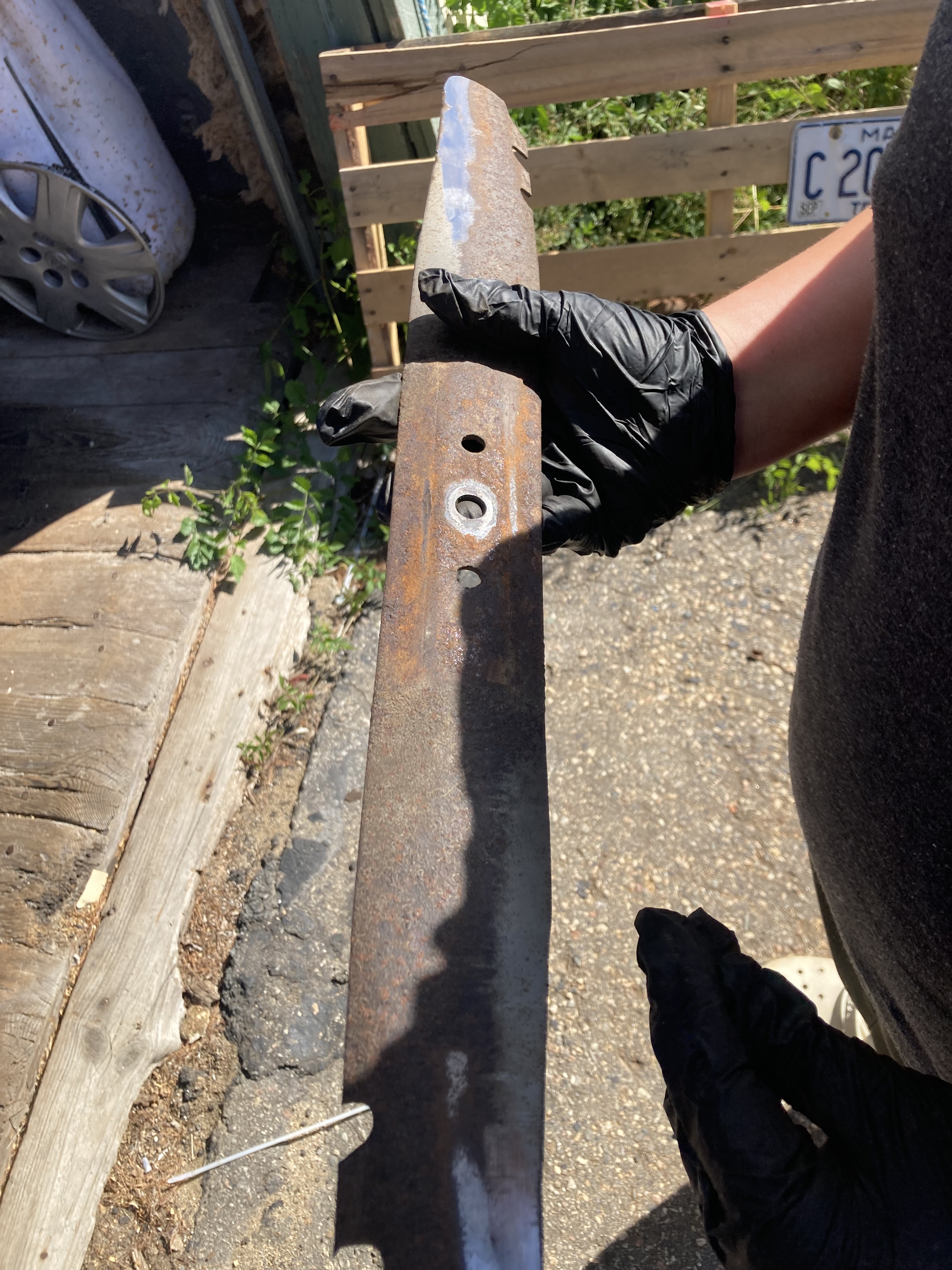
“We took the blade off using a pneumatic impact driver. We sharpened the blade, simply grinding the edge down. We put the blade back on using the torque wrench.
“We put the mower back on the ground and it started. It did not sound great at first, but slowly the sound improved as the motor circulated the new gas through the engine. It mowed well.
“Next we will get a new air filter, new drive belts and a blade. We need to clean the mower. We are also studying Volts, Amps, Ohms and Watts as part of our science class.”
While the Professor teaches the “how-to,” my son’s cousin, the Lizard-whisperer, is teaching him the pure science of electricity and magnetism; voltage and current; protons, neutrons and electrostatic fields. From all angles we are unpacking the mystery and majesty of an internal combustion engine.
The lead photo above is my son’s Great Grandfather John, standing proudly beside his Ford Model A touring car, circa 1928. John was a coal salesman in the Ohio River Valley, who made frequent trips throughout the coal rich hills of Appalachia. His car was for work more than pleasure.
John’s customers included Detroit Edison; he would purchase the entire output of mines in Eastern Kentucky and Ohio and then ship the coal north by the train load. But John’s coal did not fire Henry’s furnaces.
Henry’s revolutionary self-sufficiency controlled costs by owning the entire production process: 16 coal mines powering the electric plants that generated the voltage to run the steel mills producing the parts for the cars ever rolling down that assembly line at the Ford Motor Company’s River Rouge Complex.
A 6th grade drop out has much to teach our 7th grade home schooler.
In the annals of wise women, Lou Andreas-Salomé’s name is writ large. Born February 1861 in St. Petersburg, Russia to parents of French Huguenot and Northern German descent, she was the youngest of six children, the only girl. She attended her brothers’ classes learning Russian, German and French, rejected the orthodoxy of her family’s Protestant faith but embraced philosophy, literature and religion. She attended the University of Zurich – one of the few schools then accepting women – and studied logic, history of philosophy, ancient philosophy, psychology and theology.
At the age of 21 she met Friedrich Nietzsche, who immediately fell in love with her. But she rejected his advance, instead wanting to live and study as “brother and sister” and form an academic commune along with Paul Ree, a German author. Nietzsche accepted and they toured Italy with Salomé’s Mother.
One of the titans of German Philosophy, at the age of 24 Nietzsche had been named the Chair of the Department of Classical Philology at the University of Basel. He remains among the youngest tenured professors of Classics in the history of academia. His brilliance was to an extreme.
Walter Kaufmann, in his classic work “The Portable Nietzsche” wrote, “There are philosophers who can write and those who cannot. Most of the great philosophers belong to the first group. There are also, much more rarely, philosophers who can write too well for their own good – as philosophers.” Plato, he says is one example while “Nietzsche furnishes a more recent and no less striking example.”
Lou Salomé was his muse, which she later became to Rainer Maria Rilke – the great German poet – when he was the Personal Secretary to Auguste Rodin, one of the greatest stone carvers of all times, easily a peer of Phidias and the Ancient Greeks. In rarified artistic and intellectual circles, Lou Salomé was at the top of the game.
Dionysus is our subject, Salomé is our guide, but Nietzsche holds the key. Kaufmann wrote, “…few writers in any age were so full of ideas – fruitful, if not acceptable – and it is clear why [Nietzsche] has steadily exerted a unique fascination on the most diverse minds and why he is still so eminently worth reading.”
At the age of 25, Nietzsche wrote “The Birth of Tragedy” which is considered foundational, a revolutionary work of philosophy, aesthetics, and cultural criticism. His groundbreaking thesis argued that the greatest works of art – which define a society – combine the Apollonian (order, reason and form) with the Dionysian (chaos, ecstasy and raw emotion) into one complimentary whole. An example of the Apollonian would be Johann Sebastian Bach’s “Well Tempered Clavier” while Jimi Hendrix’s “Voodoo Chile” is Dionysian. The Burning Man festival is pure Dionysian.
Classical Greek Tragedy, he reasoned, reached the apex of artistic expression by using an ordered beautiful form to give voice to the primal, universal unity. Nietzsche wrote, “The two creative tendencies [Apollo and Dionysus] developed alongside one another, usually in fierce opposition, each by its taunts forcing the other to more energetic production, both perpetuating in a discordant concord that agon which the term art but feebly denominates: until at last, by the thaumaturgy of an Hellenic act of will, the pair accepted the yoke of marriage and, in this condition, begot Attic tragedy, which exhibits the salient features of both parents.”
The result was cathartic; life’s meaninglessness overcome through art. Aesthetics became more central than rationalism, with art and psychology moved to the core pushing metaphysics and science to the side. Nietzsche forged a new paradigm, and his writing influenced Sigmund Freud, who also happened to be a close friend of Lou Salomé.
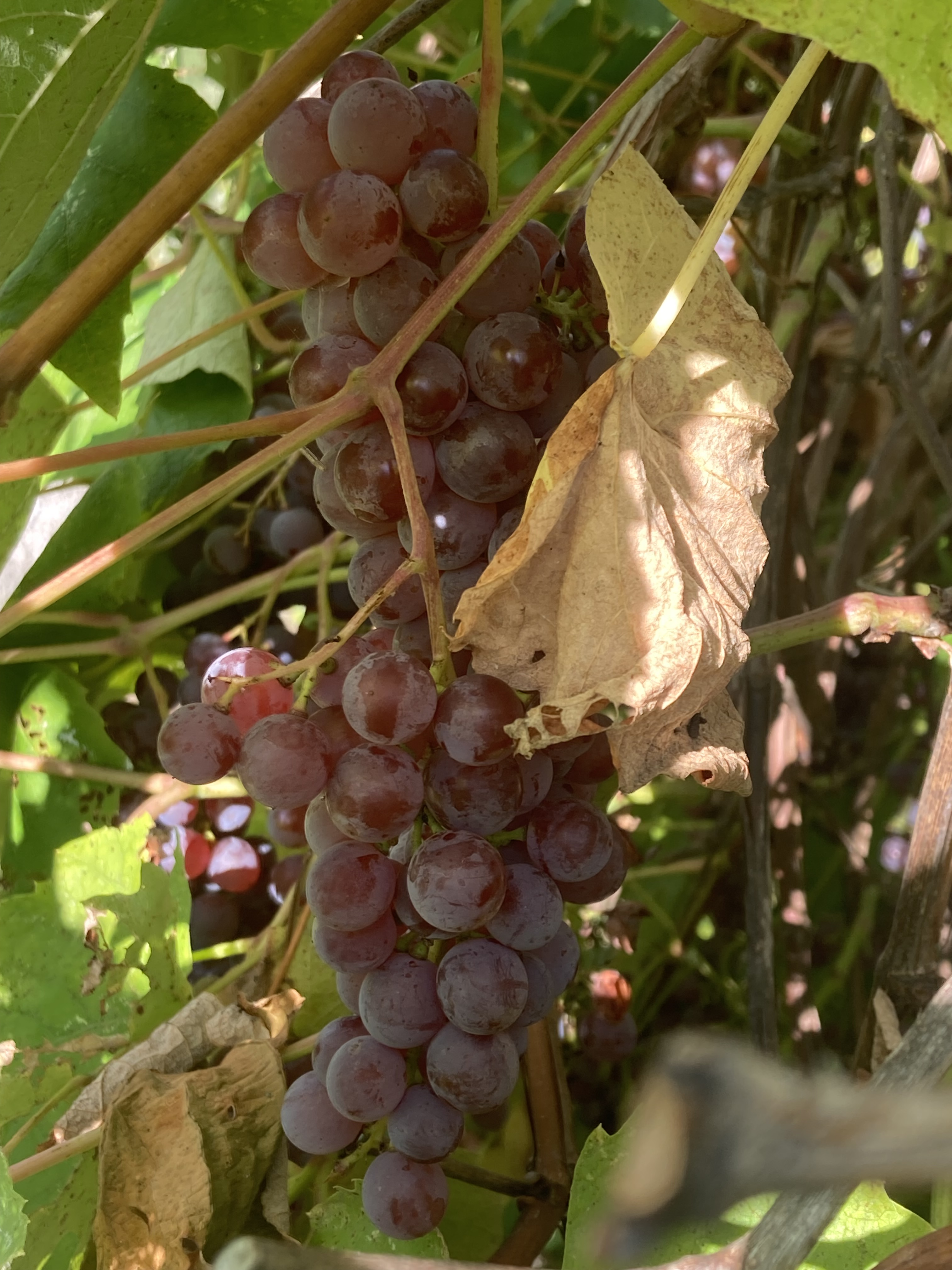
Greek tragedy came to my mind when a young friend, she herself on the path to wisdom, recently brought fresh home-pressed grape juice to our house. Grapes are the symbol of Dionysus and the connection was clear: her grape juice was the elixir of the God.
Having picked Concord grapes by the bushel with our other friends Rebekah, Peter and Mason, she explained, “We picked the grapes individually, sent them through a masher, then Peter heated them up before sending them through the juicing machine. He tried in the press but it kept sending the juice everywhere so he switched to a tomato juicer. That seemed to operate more like a standard juicer.” In other words the must was strained into juice rich, dark and sublime. With our children, we all broke bread and drank of the vine, the form of the Last Supper transformed as testimony to the raw and primal essence which is the end of summer; a new tradition born.
Truths held self-evident at our Art Farm include “art predates agriculture” and “the purpose of life is healing.” The Dionysian speaks to that, which simple truth the grape juice made manifest.
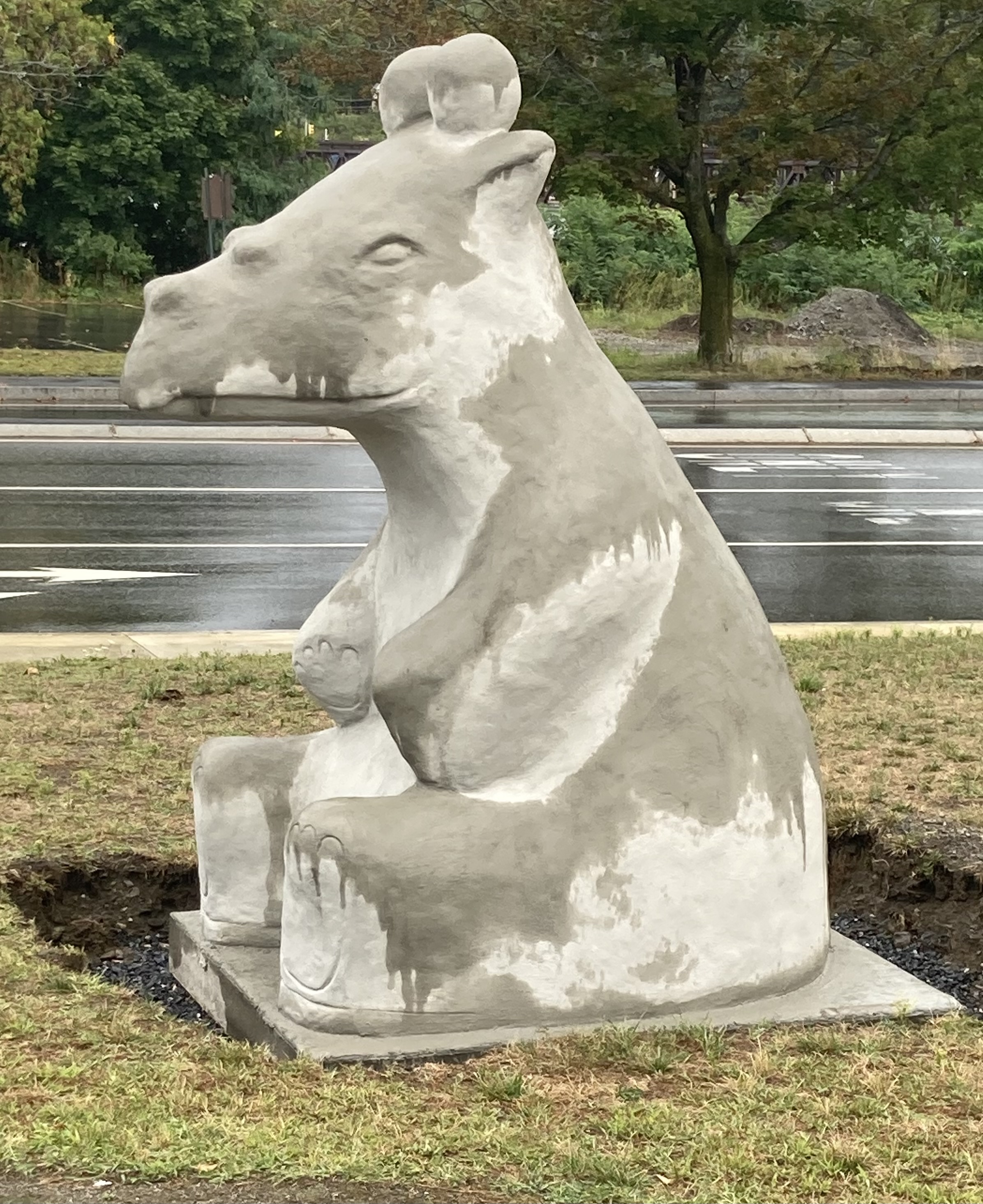
We interrupt our regular “Wise Women” programming to bring this special report of the “Wild Maybes of the Long Green Between.” The polymath maker, Chris Miller, has struck again, siting “visitors from an ancient Earth, as unknowable as the far future,” on the grassy knoll of Levine Park, in Waterville, Maine.
The Wild Maybes are “honorary crossing guards where the deep past and far future meet.” The public welcomed to roam “…in the richness and vastness of time beyond reckoning.” The four Maybes face the cardinal directions of North, East, South and West proudly beside the mighty Kennebec River as it flows ever to the Gulf of Maine.
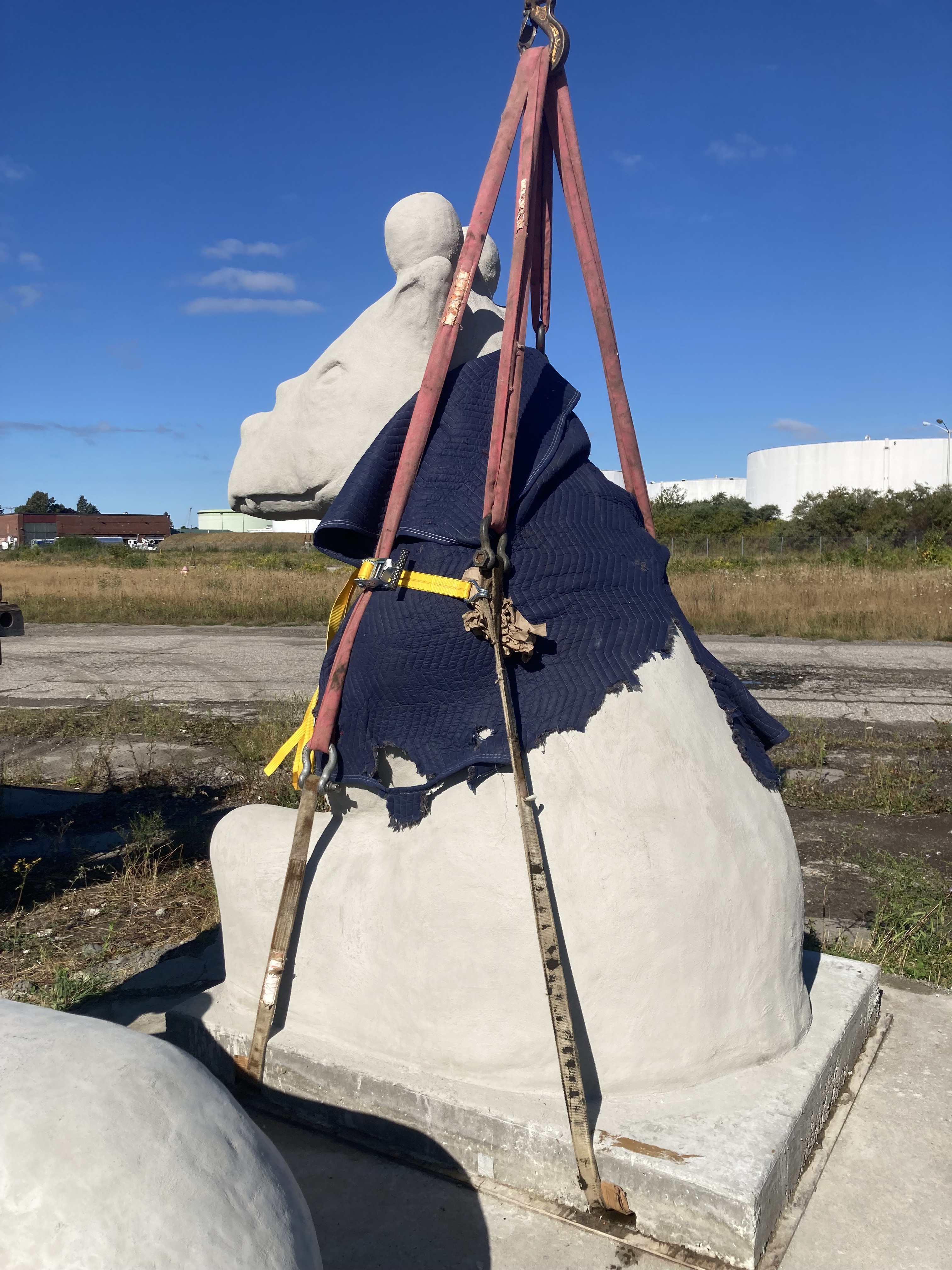
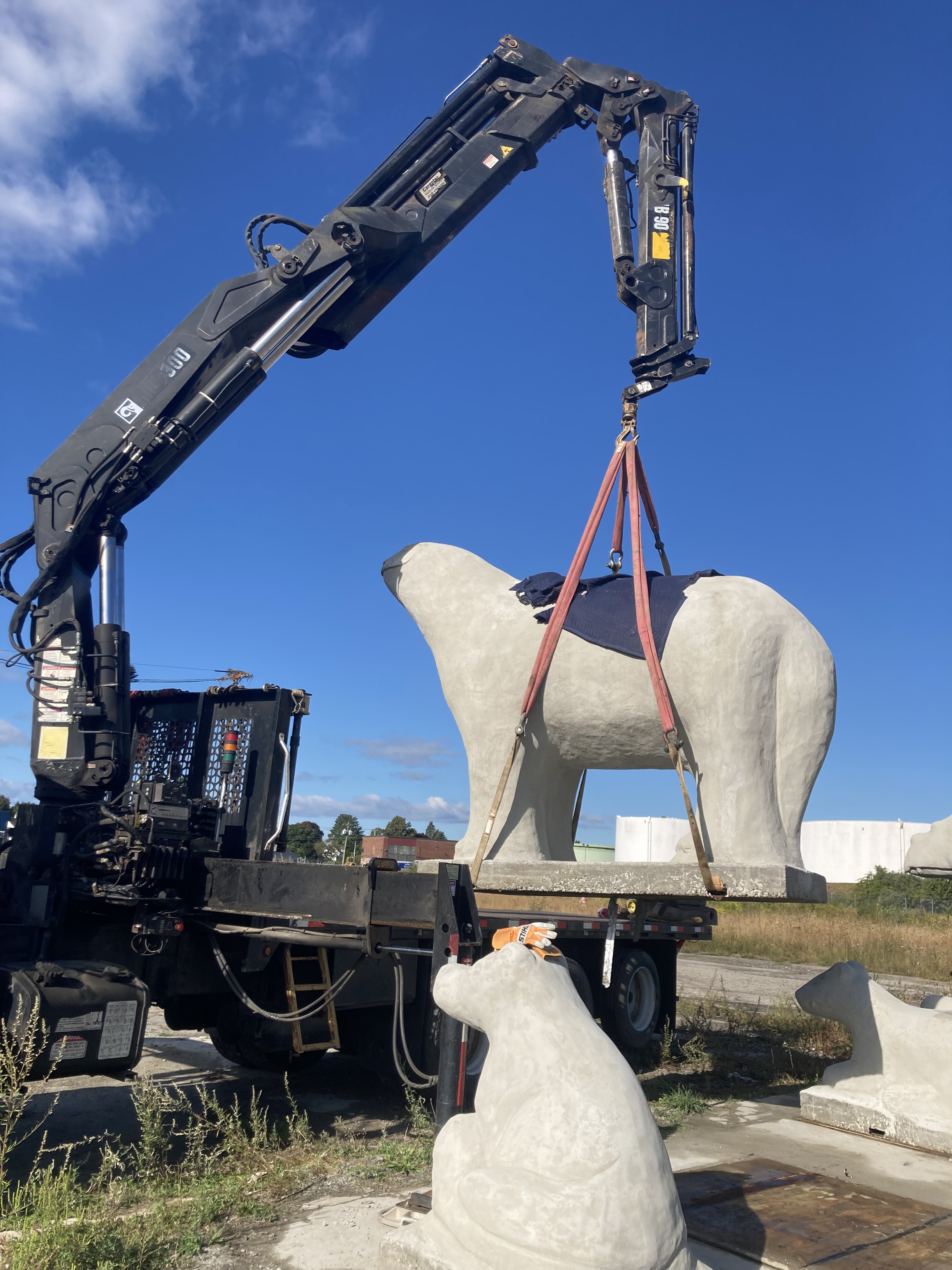
Modeled upon the earliest mammals, just post the dinosaur age, Chris conceived this public art installation as “a puzzle…based on shaky assumptions about dusty old bones.” They were made using a welded steel armature, foam, and structural concrete. I am honored to have been mere fabricator: building forms, cutting and stacking foam, mixing mud, troweling concrete, helping to load and then install: 15,000 pounds hauled 96 miles north.
There are four Maybes:
Uni, the Uintatherium, a beast of the herbivorous Dinocerata mammal that lived in the now United States during the Eocene period;
Eo, the Eocondon, of the triisodontid mesonychian genus that existed in the early Paleocene of Turtle Island (North America);
Cory, a Coryphodon, named from the Greek “peaked tooth” an extinct genus of pantodont mammals, also local, speaking in terms of continents;
Barry, a towering Barylambda, also of the pantodonts, from the middle to Late Paleocene era.
Tick-tock clock time is of man’s making, while Natura moves in other orbits. Chris wrote, “When 2.8 billion seconds ago (in 1934), historian Lewis Mumford pronounced that ‘…the clock, not the steam engine, is the key-machine of the modern industrial age,’ he went on to point out that there are still many other ways to mark time, and surely better ways to experience it. This long, narrow strip of grass, for instance, is a between place. It is the perfect kind of place to escape from the kind of time that is measured in seconds and minutes. Here in this long green between, time flows in seasons and eons, in eras and generations.”
And so Waterville is transformed, and kudos to them for stepping up, underwriting the permanent installation. What a marvelous life unfolds along the rocky coast, Northern terminus of the lower 48.
The often repeated phrase, “Give us this day, our daily bread” must be about soil fertility as much as about hope. The common collegiate phrase “alma mater” is Latin for “nourishing Mother” and so we turn our attention to Gaia, one wise soul herself, the Earth as our nourishing Mother, whose fertile soil gifts freely an abundance beyond compare.
Many soulful stewards of Gaia have I crossed paths with, one of whom was the “Corn Cart Queen.” The common cliche is “know your food, know your farmer,” but the Corn Cart Queen brought that to the fore in Chicago, during the summer season 2003, when she planted Golden Bantam in a shopping cart, then organized people to push the corn cart around the town: Meet your food, meet your farmer.
The Chicago Tribune wrote, “A woman of quiet dedication and passion, she initially planned to push the corn around the city by herself…. However, as word spread about the project, she happily surrendered the cart to a growing community of corn stewards, some of them artists or gardeners themselves. They water it, push it and distribute, if they choose, the small packets of blue corn seeds (three each)… taped to the cart. The seeds are pre-Depression-era corn, which she bought directly from a farmer when she visited Cuernavaca, Mexico.”
The Tribune quoted her, “When people talk about the environment in the city, they always see it as outside themselves. They talk about the lake or whatever. . . . I really want people to see how we consume nature, how we consume corn, how we eat, how we do things — it all has an effect on homelessness, on loss of farms, on history. There’s a 10,000-year history of the domestication of this grass called corn.”
Sandor Katz, the New York Times best selling author, in “The Revolution Will Not Be Microwaved,” wrote about this, “Cornography…was a sort of performance art installation featuring a few stalks of this corn growing in a shopping cart and many different people taking turns, walking it across Chicago.” Katz quoted the Queen, “The corn cart has visited community gardens, toured supermarkets, politicized a street fair, gone out for coffee, and rested in many backyards. When you give someone a seed, it’s such a small gift, but it entails a responsibility to interact with the land.”
Nance Klehm is the “Corn Cart Queen.” As art predates agriculture, her work unfolds at those fertile crossroads; she teaches of our connection, our utter reliance upon, the earth, the sacred ground beneath us. She is a muse among us, having lectured and taught at Chicago’s Museum of Contemporary Art, the Hammer Museum in Los Angeles, the University of Cincinnati, and the Canadian Centre for Architecture in Montreal. She has taught at the University of California – Los Angeles, Northwestern University in Evanston, Illinois, and Dartington College in the United Kingdom, as well as for countless community groups worldwide. This Queen was honored in 2012 as one of Utne Reader’s “Twelve Visionaries Who Are Changing Your World.”
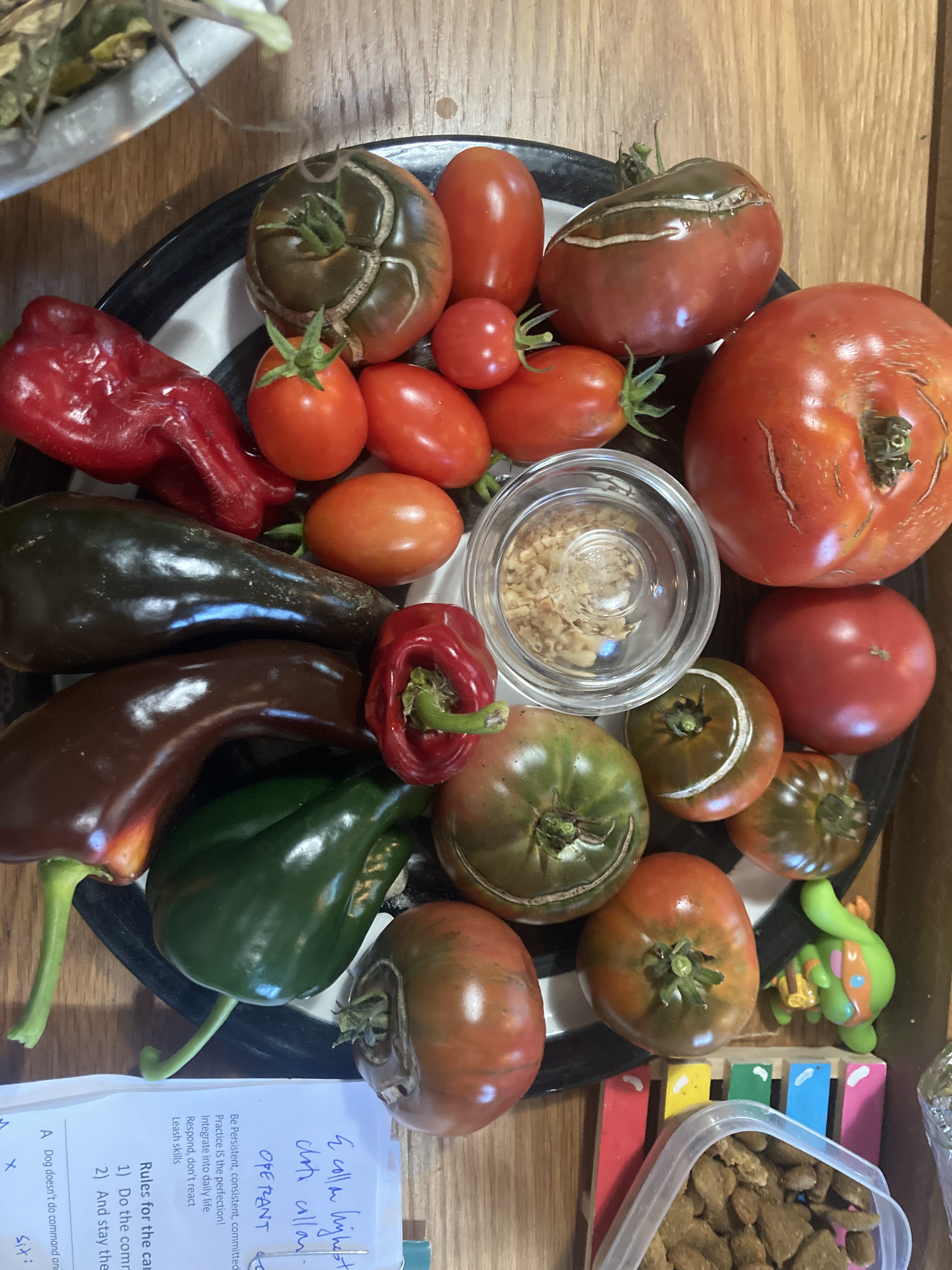
It can be lonely at the vanguard, but Nance always works in community, teaching others the art and science of the soil. Along her path she worked with Flordemayo, a Mayan Elder, who founded The Seed Temple in Estancia, New Mexico. Nance helped assemble the “sacred heritage seeds for future generations.” My family was asked to grow heirloom beans and then give some back to help keep the Temple’s stock alive. For many years now we have grown those seven varieties annually, whereby my children learn first hand that food does not come from a grocery store, that harvesting is harder than consuming but the wild abundance of a fresh grown tomato or peach picked in late August is a joy beyond compare.
Flordemayo herself is one of the 13 Indigenous Grandmothers, all of whom are “committed to supporting all people in reclaiming their relationship with Mother Earth, advocating for a shift toward a more conscious and harmonious connection with nature and all living beings.” The International Council of Thirteen Indigenous Grandmothers come from around the world – Nepal, Brazil, South Dakota, Gabon, Montana, Mexico, Japan, France – as “a collective of women devoted to restoring and uplifting the sacred feminine wisdom that nurtures balance and harmony in the world. [They] stand for peace, justice, human rights, environmental protection, food sovereignty, and the health and welfare of children and the elderly, for today and generations to come.”
Nance and I crossed paths almost 30-years ago, both on Chicago’s west side, and in the LaSalle Street canyons of the financial district; she was outbound to WWOOF in Australia (Worldwide Opportunities on Organic Farms), while I was headed to Manila, the Philippines on a humanitarian finance quest to establish a currency based upon humans’ ability to communicate. Nance’s path always has been more rooted, more practical.
Among her challenges has been pursuing community-based work during the 50-year period – 1975 to 2025 – when American culture shifted dramatically towards rampant consumerism, free market ideology, and unchecked individualism. Talking about my generation – the Baby Boomers – Bill McKibben wrote, “So what the hell happened? How did we go from an America where that kind of modest [suburban] paradise seemed destined to spread to more and more of the country to the doubtful nation we inhabit fifty years later: a society strained by bleak racial and economic inequality, where life expectancy was falling even before a pandemic that deepened our divisions, on a heating planet whose physical future is dangerously in question?”
How did the forward thinking Civil Rights Act of 1964 and the Voting Rights Act of 1965 give way to the radical gerrymandering of our era? Money, banking, free markets and power politics are the domain of mankind, human invention, while the Grandmothers and Queens of Gaia speak of the ground beneath our feet, the soil, everywhere beneath everyone all of the time.
Nance’s 2019 tome, “The Soil Keepers,” makes plain, in her preface, our path forward: “To the entire menagerie of animal, fungal, and plant beings, both the seen and unseen, thank you for your unflinching love and core teachings. I am forever your student.”
All life is one. Life calls to us. We are wise to heed her call.
Credit where credit is due, Elena’s photographs appear here.
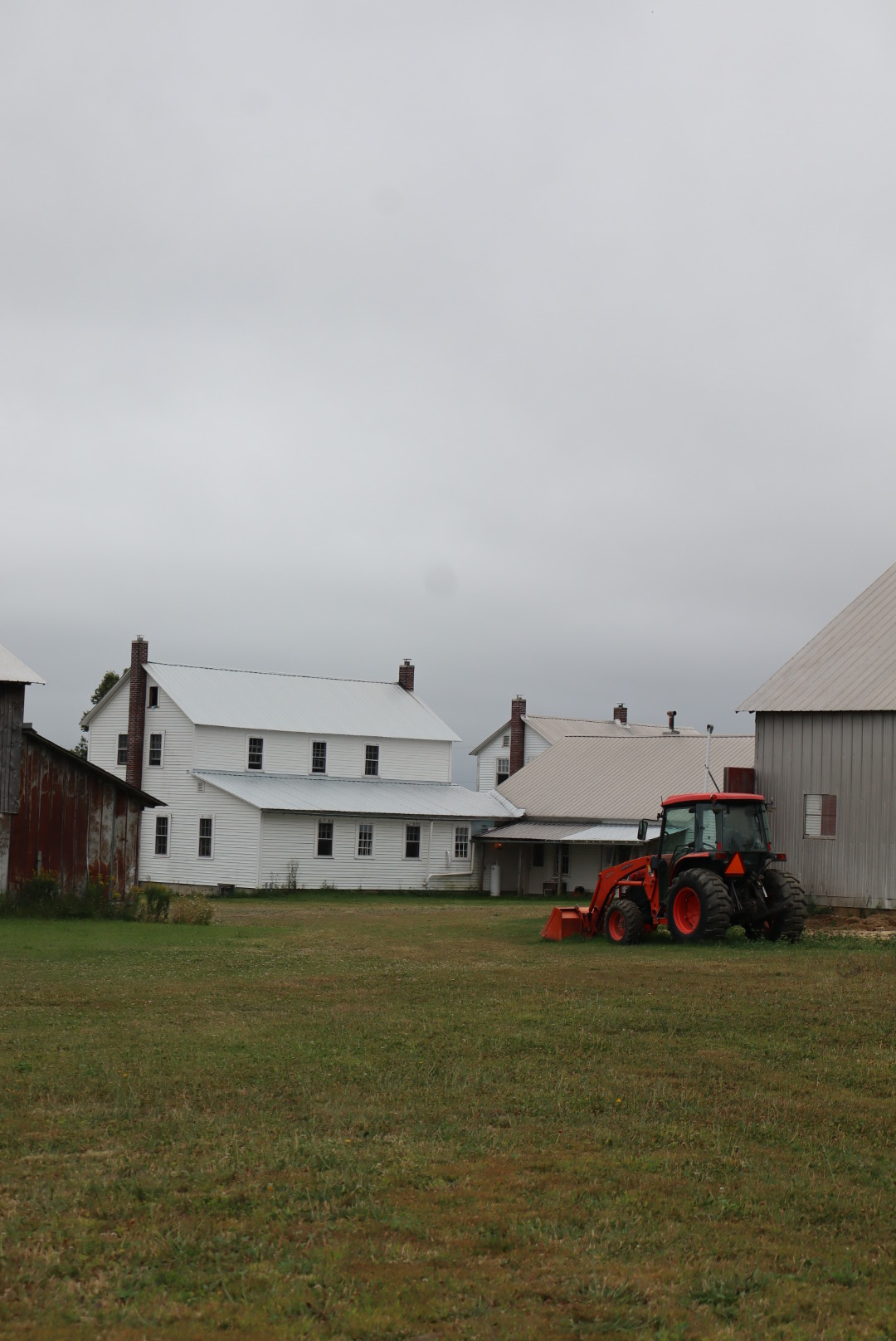
Recently we drove north to nowhere, Cold Brook Road in Southern Aroostook County, Maine. Between 1793 and 1815 Northern Maine was a major producer of wheat, known as “the breadbasket of New England.” In the 1940s and 1950s Aroostook County was the top producer of potatoes in America. Big skies, open vistas, quiet abounds there. Our friend Kirk, a Master Electrician, Master Cabinetmaker, Builder and Humble Farmer welcomed us to his 157 acre-farm in Amish country.
In the 1st century CE, when Roman polytheism reigned supreme, the Jews were persecuted for their monotheism. In that age of male heroes, women were relegated to a second class. An alchemist would have been further still from conventional thought, but it was a trailblazing Jewish woman alchemist who began the intellectual tradition that Sir Isaac Newton would follow 15 centuries later.
Sir Isaac Newton, the paragon of the rational scientific male, in his day was a leading alchemist, when same was considered heresy, punishable by death by public hanging. Compelling then was this Jewish woman’s tradition. Newton transcribed more than 10 million words of notes, consisting of 16 folios, on the subjects of alchemy, religious and historical studies. And they were burned. So who was Mary the Jewess, also known as Maria Prophetissima and Maria the Copt and what did she know?
The Jewish Women’s Archive explains Maria “…was the first non-mythical Jewish woman to write and publish works under her own name. Maria is generally regarded as the first actual alchemist who is not a mythical figure. According to Zosimos of Panoplis, she started an alchemical academy in Alexandria, Egypt, and reportedly excelled at the process of transmutation of base metals into gold. Zosimos wrote a brief account of Maria’s philosophy, called The Four Bodies Are the Aliment of the Tinctures. Maria the Jewess invented several important pieces of chemical apparatus and was also known for a variety of mystical and alchemical sayings.”
Highly inventive, she used ovens made of clay, metal and glass, and formed gaskets using wax, fat, paste made of starch, and clay mixed with fat to seal the joints. Glass allowed the viewer to see the reactions, and allowed work to be done with mercury and sulfurous compounds. She may have been the first person to mention hydrochloric acid, and invented the double-boiler, known even today as the Bain-Marie, as well as the tribikos, a distillation still with three spouts, and the kerotakis, an extractor with a metallic palette inside a vacuum container holding vapors. According to Zosimos, she ground cinnabar [mercury (II) oxide] with mortars and pestles or lead and tin. Her fame endured in both Arab and European alchemy. The Kitāb al-Fihrist (Book Catalogue), by Ibn Al-Nadim in the late 10th century listed her among the 52 most important alchemists.
Her inventive spirit was surpassed by her writings. The “Axiom of Maria” states, “One becomes two, two becomes three, and out of the third comes the one as the fourth.” Carl Jung used this as a metaphor for the principium individuationis, the means by which one thing becomes distinct from other things. From Aristotle through Schopenhauer to Nietzsche this has been a fundamental concept in philosophy.
Concerning the union of opposites, Maria wrote: “Join the male and the female, and you will find what is sought.” As yin and yang define the whole, Maria was ahead of her time. Zosimos of Panopolis, the alchemist and Gnostic mystic, claims that Maria was a peer of Hermes Trismegistus who famously wrote, “As above, so below.” It is said that Maria taught Democritus, the Pre-Socratic philosopher, renowned for formulating an atomic theory of the universe. Reportedly they met in Memphis, Egypt, during the time of Pericles.
For the Greek alchemists ὕδωρ θεῖον, was both divine water and sulphurous water with the alchemical vessel imagined as a baptismal font, and the tincturing vapours of mercury and sulphur likened to the purifying waters of baptism, which perfected and redeemed the initiate. It would seem that the Christian rite of baptism bears alchemical roots.
All rivers lead to the sea, so too the River Jordan, where a woman Jewess holds a baptismal place at the delta basin, whereto wisdom flows down like the rain: as above, so below, indeed. Peace to all.
___________________________________
Credit where credit is due: David Purpur, again. Elena Benham, again. While Gaia gifts us, abundantly…
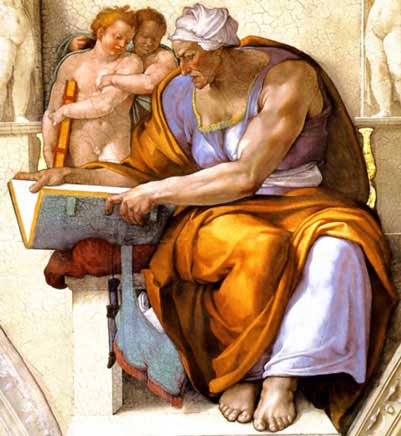
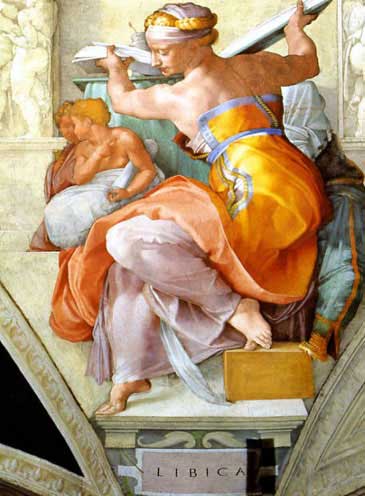
In the pantheon of wise women, the Sibyl – mysterious messenger of truth – ranks high, towering overhead on the ceiling of the Sistine Chapel. Who was she?
In the beginning, at Delphi, in the 11th Century BCE, there was but one, the Delphic Oracle herself. Heraclitus, the pre-Socratic philosopher, is the first known writer to comment, “The Sibyl, with frenzied mouth uttering things not to be laughed at, unadorned and unperformed, yet reaches to a thousand years with her voice bye aid of the god.” The Greeks eventually came to count ten women truth tellers located in Greece, Italy, the Levant and Asia Minor; they were known not by their name, but by the location of the shrine where they spoke.
Meanwhile, across the Adriatic Sea, Lucius Tarquinius Superbus reigned as the seventh and last King of Rome, 534 to 509 BCE. A man so corrupt and vile, he gained the throne through multiple murders of family, and his tyranny came to justify the abolition of the monarchy. Following his death the Republic arose and thereafter the Empire, which are the stuff of legend. The one enduring virtue of Tarquinius was his foresight to purchase the Sibylline Books. Even there, he almost failed.
The apocryphal story is told of an old woman, possibly a Cumaean Sybil, who offered nine books of prophecies to Tarquinius at an exorbitant price; he declined to purchase and so she burned three then offered the remaining six at the original price. Again he refused and so she burned three more then asked the original price for the remaining three. Tarquinius consulted the Augurs, who deplored the loss of the six and urged purchase of the remaining three even at the full original price. Tarquinius had them preserved in a sacred vault beneath the Capitoline temple of Jupiter.
After the fall of the Kings, the Roman Senate kept tight control over the Sibylline Books. The men who governed held the women’s prophecies under lock and key. They entrusted care to two patricians, until in 367 BC, when the custodians were increased to five patricians and five plebeians. These ten, as directed by the Senate, consulted the Sibylline Books not for predictions of definite future events but the religious observances necessary to avert extraordinary calamities and to expiate ominous prodigies (comets and earthquakes, showers of stones, plague, and the like). The rites of expiation were communicated to the public, and not the oracles themselves. In the 4th century CE, The Sibylline Books were burned by order of the Roman General Flavius Stilicho.
About that time the Roman Empire came to its end, replaced by the Judeo-Christian world. The Sibylline Books were replaced by the Sibylline Oracles, a blending of classical mythology, early Gnostic, Hellenistic Jewish and Christian beliefs. The prophecies became increasingly apocalyptic, with even the Book of Revelations foreshadowed. There is something for everyone, it seems, in the Sibylline Oracles, and they came to reach ever wider circles. Over several millennia they have become more, not less, studied.
Michelangelo painted five sibyls on the ceiling of the Sistine Chapel: the Delphic, Libyan, Persian, Cumaean and Erythraean, while Shakespeare mentions them in Othello, Titus Andronicus, The Merchant of Venice, and Troilus and Cressida. In contemporary culture, Sibyl was a 1976 film starring Sally Field and Joanne Woodward about a musician diagnosed with multiple personality disorder. What was prophecy to the ancients is a crisis today.
But why are women the Sybils? Science tells us that the corpus callosum – the connective white matter that connects our left and right brain hemispheres – is more robust in women. A woman’s brain seems hard-wired to more rapidly access each hemisphere, integrating emotions and feelings with the logical functions of the left hemisphere.
Culturally women are encouraged to be receptive to inner thoughts and feelings, while men have been raised to focus on the external physical and rational worlds. Be that as it may, throughout the ages it is women who have been the Sibyls, towering figures of art, literature and history – mysterious messengers of truth – who stand tall within the pantheon of sage women.
________________________________
Credit where credit is due: David Purpur brought to my attention The Sibylline Oracles, J. L. Lightfoot, Oxford University Press (c) 2007.
Honoring a good friend, who has a good friend passing; the ripples which cannot be denied that reinforce the web of our community, I write here of The Queen Bee.
The “bees knees” as slang means something excellent, of the highest quality. It arose during the “Roaring Twenties,” when flappers danced the Charleston, the Black Bottom and the Shimmy, their knees and elbows flailing wildly to the back beat of the jazzmans’ rhythms. It might be a corruption of “The Business,” 1920s street slang for something excellent, or perhaps it refers to pollen baskets on bees’ legs, the “good stuff” that worker bees carry back to their Queen.
In our quest for seven wise women, let us follow that “good stuff” back to the Queen Bee. In a colony of 20,000 to 80,000 bees she alone lays more than 1,500 eggs per day, an amount greater than her body weight. Coming of age at day 23 of life, her egg laying begins.
During incubation the Queens are fed protein rich royal jelly, secreted from the glands on the heads of young worker bees. Worker bees are fed a mixture of nectar and pollen – bee bread – but the Queen alone is fed the royal jelly, and as a result develops into the sexually mature female, the propagator of the colony. The colony’s future rests upon the fruit of her loins.
The Queen was selected by the worker bees, not through a democratic process, but through luck of the draw plus natural selection. The worker bees randomly choose a few larvae just days old, and begin feeding them the royal jelly. If multiple Queens emerge at the same time then they will fight to the death.
By genetics her stinger is not barbed, and so she is able to sting repeatedly. Sting she does, seeking out virgin queen rivals in her quest to kill. The Queen as nurturing mother sets firm limits; dominance is her key to control the colony. The Queen, to whom the worker bees bring “the good stuff” is the one and only; nature knows its rules and the colony falls in line behind its Queen.
The Queen’s hive is a model of efficiency and output. She weighs about 0.007 ounces, twice the weight of the worker bees, but their combined efforts produce 30-60 pounds of honey, or even upwards of 100 pounds or more, per year. Honey is half of the proverbial “land of milk and honey” which is an ancient symbol of abundance and prosperity. “Bread and honey” is slang for money, the coin of the realm. The Queen controls the honey, which is to say “the money” because she produces the abundance.
All things come to pass, and the Queen eventually matures into dominance. Some virgins escape the hive to avoid being killed, to seek out a new hive whereupon another fight to the death begins. If the prime swarm has both a virgin queen and an old queen, the old queen will continue laying eggs, until within a couple of weeks, she will die a natural death and the former virgin, mated, will assume the throne.
Natural selection is a biological imperative, but wisdom is an insight, something metaphysical, the source, perhaps, of that biological imperative. Our quest then leads back to the creator, God the Father in the current era, but the Queen of Heaven in older times. In the ancient Near Middle East, the Queen of Heaven embodied themes of love, war, fertility and motherhood, of which all the Queen Bee is a master.
About the Queen Bee, her celestial connectedness and her poetry, the Irish poet Robert Graves wrote, “…a true poem is necessarily an invocation of the White Goddess, or Muse, the Mother of All Living, the ancient power of fright and lust – the female spider or the queen-bee whose embrace is death.”
The Queen Bee, it seems, is one key to the wise woman.
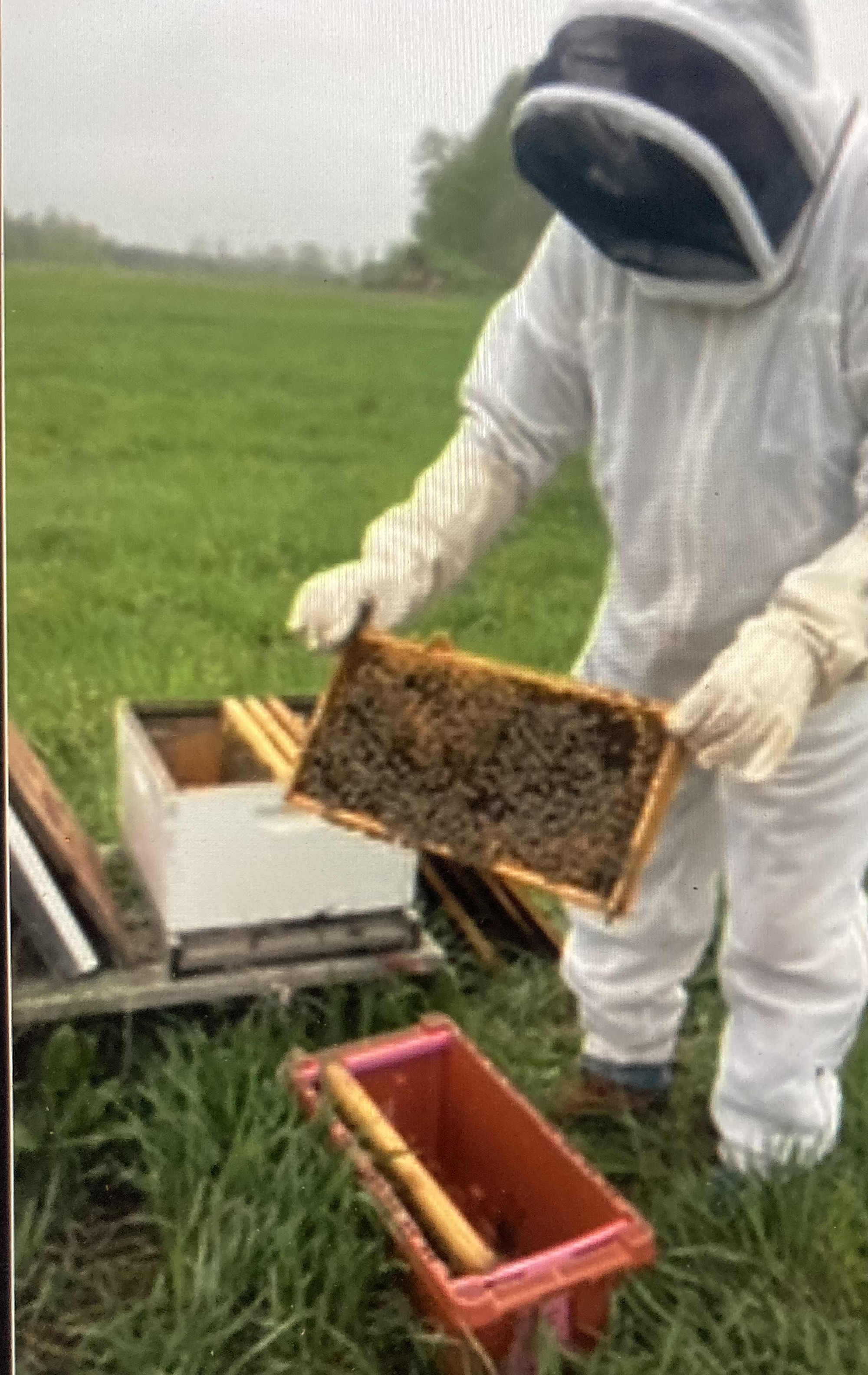
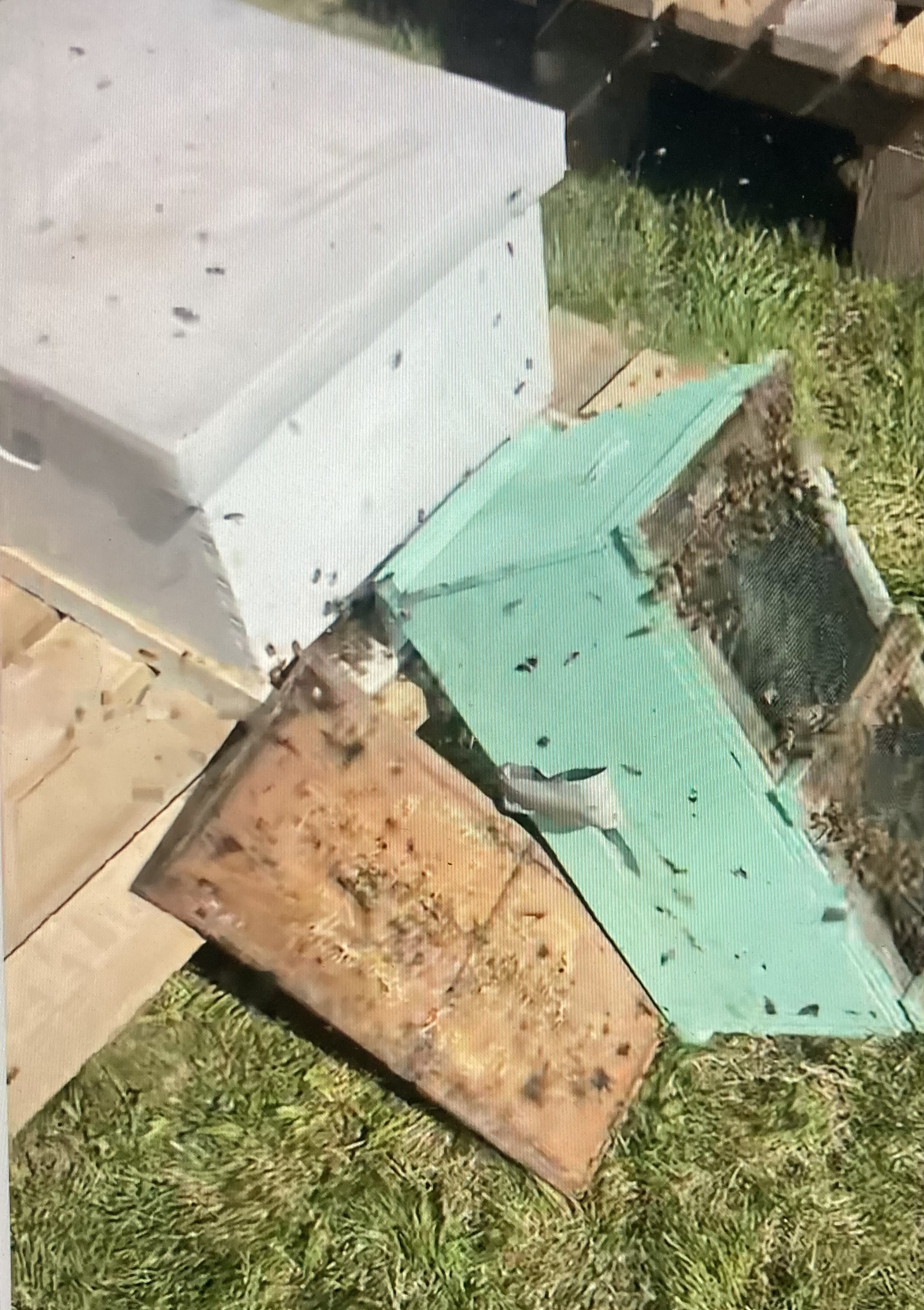
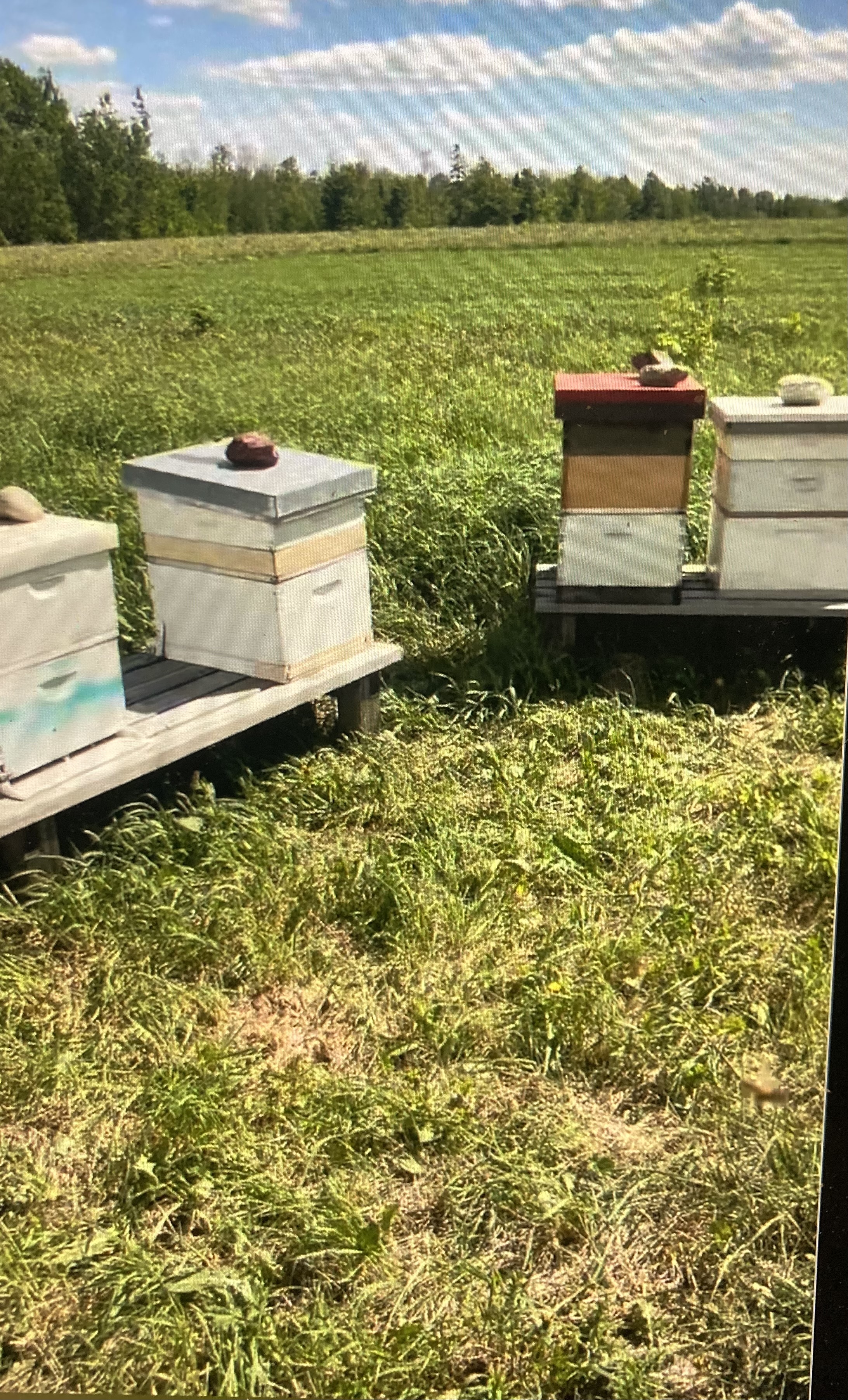
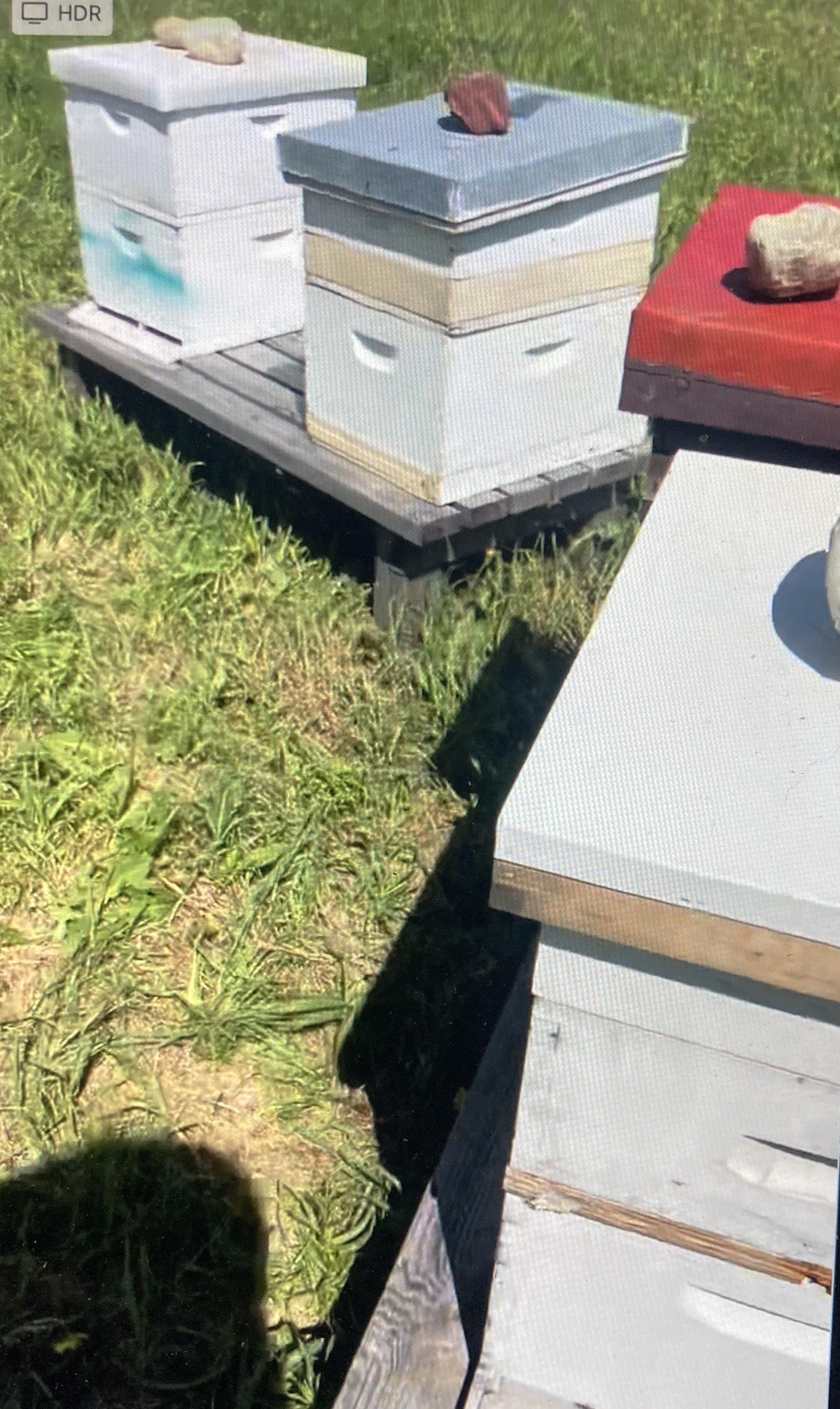
Credit where credit is due: one wise woman suggested this topic; Master Electrician, Master Cabinetmaker & Humble Farmer Kirk provided the beekeeping photos and inspiration; the curly-haired Goddess with whom I live asked sage questions about natural selection.
It takes a village.
_____________________________
In the garden now – thanks to pollinators – fruits form, vines reach ever higher; mid-summer is past and the dog days descend.
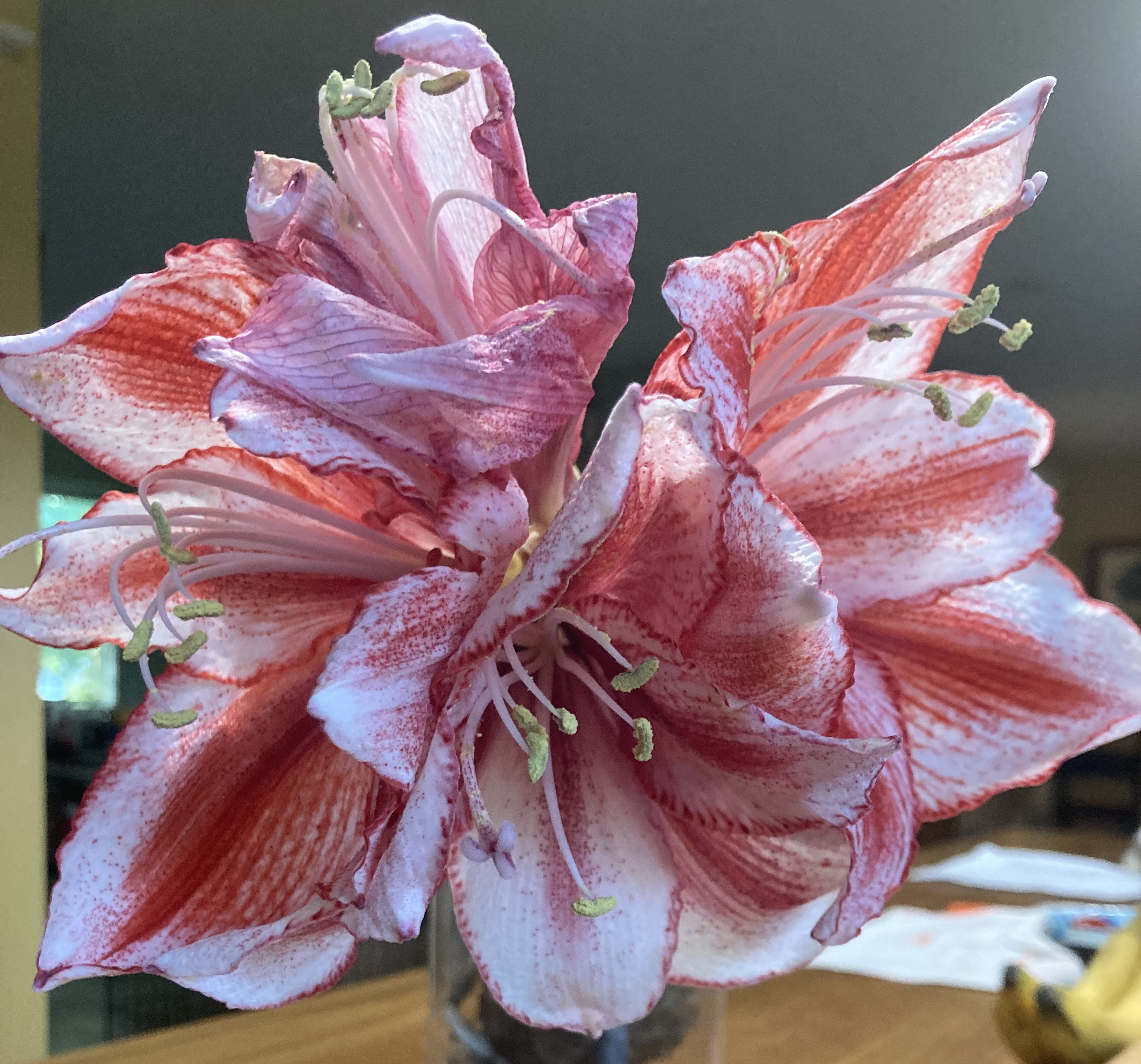
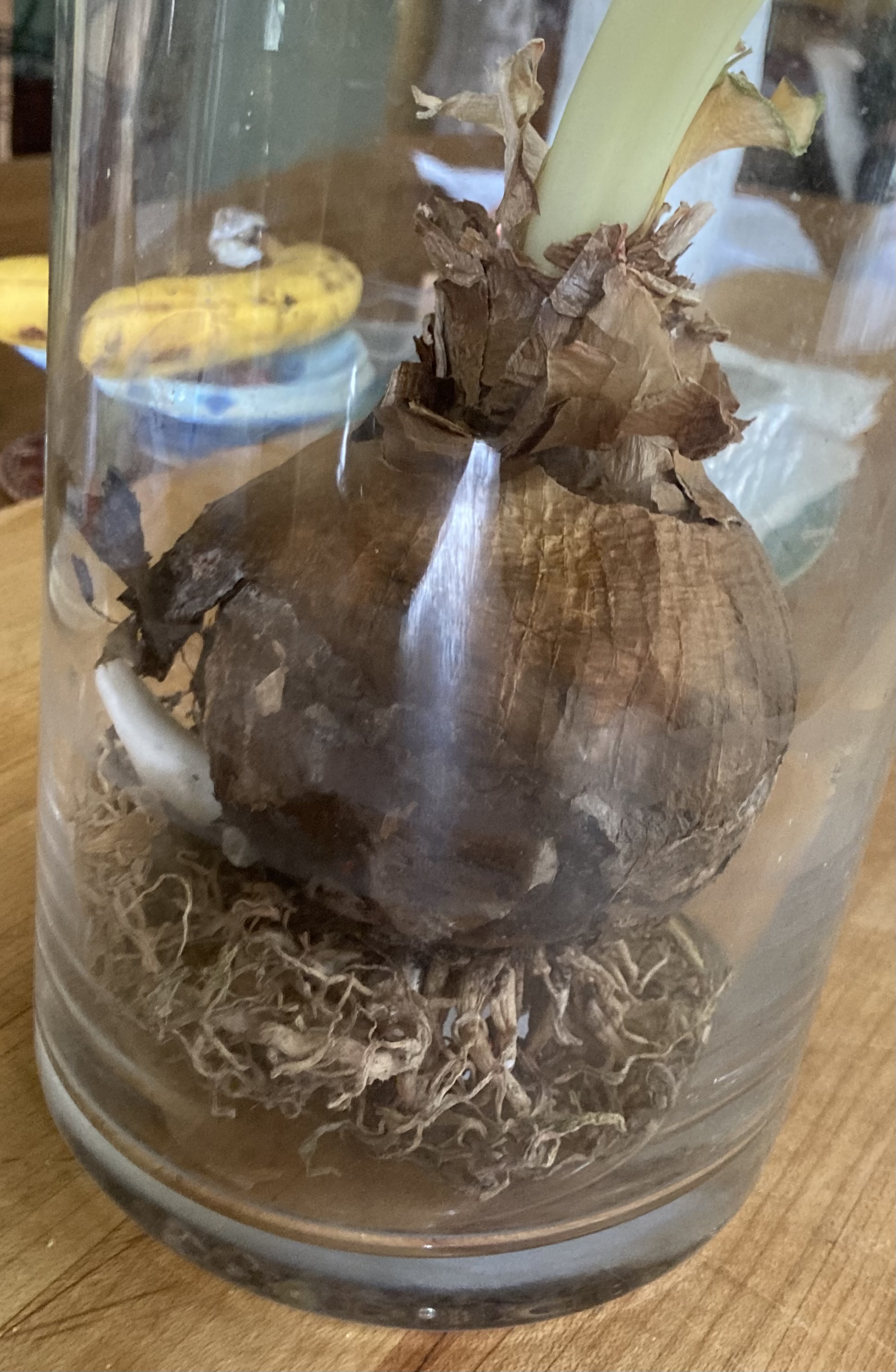
By coincidence, I happened last Monday to go into our dark dingy basement and was struck by an amaryllis bulb in full bloom. The bulb has a long history: we gave it as a gift to a friend years ago, but when she moved to NOLA, she gave it back. It bloomed for us last autumn, then in December was put into storage where it was forgotten. With neither soil, nor water, nor light it pushed up again into its full gorgeous flower.
Ralph Waldo Emerson once said, “The invariable mark of wisdom is to see the miraculous in the common.” With the flowering amaryllis as a miraculous symbol, we now search for seven wise women, and shall begin with Wisdom, itself.
In the beginning is the question, “Whence, wherefore and whither Wisdom?” “Whence” is an archaic word meaning “from where” which leads us to the “Goddess of Heaven.” At the beginning of civilization, throughout the Fertile Crescent – the Near Middle East – the Goddess of Heaven embodied themes of love, war, fertility and motherhood. Circa 4,000 BCE she was “Inanna” to the Sumerians, “Ishtar” in Akkadian, Babylonian and Assyrian cultures, “Astarte/Ashtoreth” to the Canaanites, later she was “Hera/Juno” to the Greek and Romans, “Nut” to the Egyptians. A Babylonian cunieform circa 1850 BCE references Venus as the “bright Queen of Heaven.”
Robert Graves, in his oracular masterpiece, “The White Goddess” writes, “…the language of poetic myth anciently current in the Mediterranean and Northern Europe was a magical language bound up with popular religious ceremonies in honor of the Moon-goddess, or Muse, some of them dating from the Old Stone Age, and that this remains the language of true poetry – ‘true’ in the nostalgic modern sense of ’the unimprovable original, not a synthetic substitute.”
Taking the form of the Goddess of Heaven in the Near Middle East or the Moon Goddess in the Mediterranean and Northern Europe, Wisdom was a celestial woman, worshipped. But then Abraham appeared circa 2100 to 1900 BCE and brought transformational change, slowly over millennia.
Karen Armstrong, the scholar of comparative religion, calls this “the Great Transformation” so that by the 9th century BCE the religious and philosophical traditions of our present day were laid down: Confucianism and Daoism in China, Hinduism and Buddhism in India, monotheism in Israel, and philosophical rationalism in Greece.
Robert Graves had this to say, “The [poetic] language was tampered with in late Minoan times when invaders from Central Asia began to substitute patrilineal of matrilineal institutions and remodel or falsify the myths to justify the social changes. Then came the early Greek philosophers who were strongly opposed to magical poetry as threatening their new religion of logic, and under their influence a rational poetic language (now called Classical) was elaborated in honor of their patron Apollo….”
The Old Testament, Book of Jeremiah 7:18 condemns the Goddess of Heaven: “The children gather wood, and the fathers kindle the fire, and the women knead their dough, to make cakes to the queen of heaven, and to pour out drink offerings unto other gods, that they may provoke me to anger” (KJV). Hellfire and brimstone has had it in for women since the beginning. Armstrong describes the epochal change as the Axial Age, when the monotheistic male deity arose and the Queen of Heaven and Moon Goddess recede.
Wisdom is not gender specific, so let us consider “wherefore” which means “an explanation.” What then is wisdom? Webster’s Dictionary, Second Edition, (c) 1947 provides this definition, n, 1. quality of being wise; ability to judge soundly and deal sagaciously with facts, esp. as they relate to life and conduct; knowledge, with the capacity to make due use of it; perception to the best ends and the best means; discernment and judgement; discretion, sagacity. 2. scientific or philosophical knowledge; erudition; learning; as, the wisdom of the Egyptians, 5. a person embodying wisdom; — used as a title of honor or respect. Archaic.
Wisdom is insight, not knowledge; understanding, not facts; nuanced, not either/or. Albert Einstein said, “Any fool can know. The point is to understand.” Bertrand Russell said “To conquer fear is the beginning of wisdom.” Socrates said, “Knowing yourself is the beginning of all wisdom.”
Socrates, the paragon of Greek rational thought, was taught by a woman. Aspasia of Miletus taught him rhetoric and the art of dialectic, and her intellectual salons, frequented by Plato, Socrates and Pericles, are believed to have shaped his thinking. In Plato’s Symposium Socrates says that he was taught the “philosophy of love” by a woman.
Diotima of Mantinea taught that love drives the individual to seek beauty, first in beautiful bodies – earthly beauty – then as one grows in wisdom, to seek spiritual beauty. Diotima taught that the correct use of physical love is to direct one’s mind to the love of wisdom, which is philosophy.
The path to wisdom seems shaped by women. And so we come to “whither,” which is “to where” does the path of wisdom lead? Ralph Waldo Emerson said simply, “The purpose of life is not to be happy. It is to be useful, to be honorable, to be compassionate, to have it make some difference that you have lived and lived well.” Rumi was simpler still: “Yesterday I was clever, so I wanted to change the world. Today I am wise, so I am changing myself.”
In the coming weeks we will tell stories of wise women. An ambitious goal, a list of 7, but more likely 7 times 7, or even 77 wise women. They are more numerous than the stars in the sky. The queens of heaven, indeed.
____________________________________
At our Art Farm, the lavender, coneflower and echinacea exclaim, a celestial harmony our eyes behold.

















































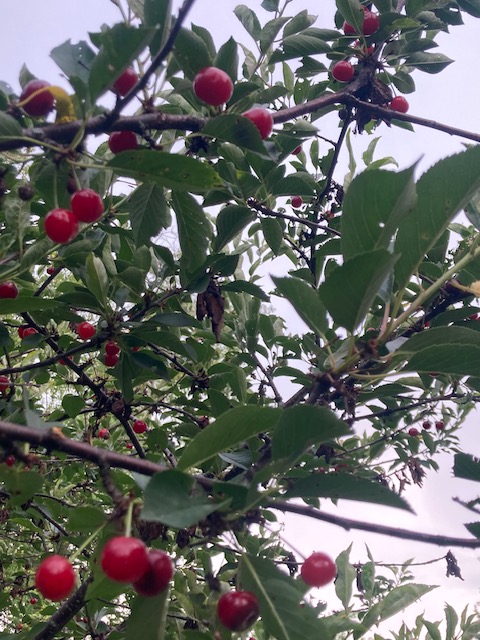


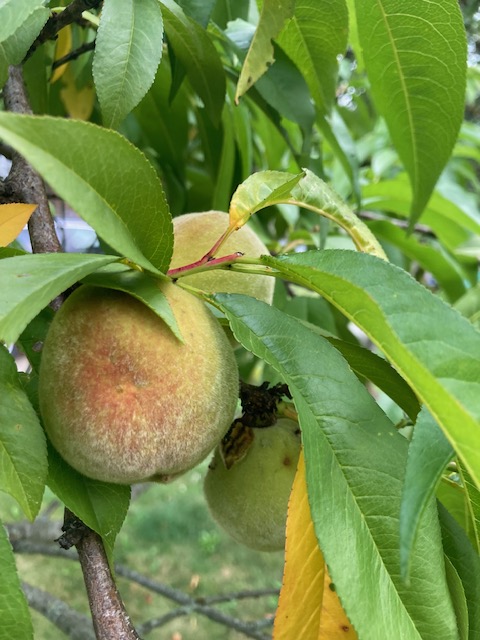
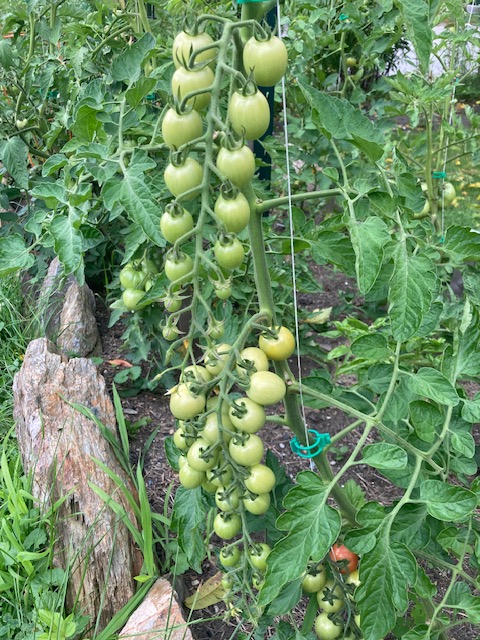


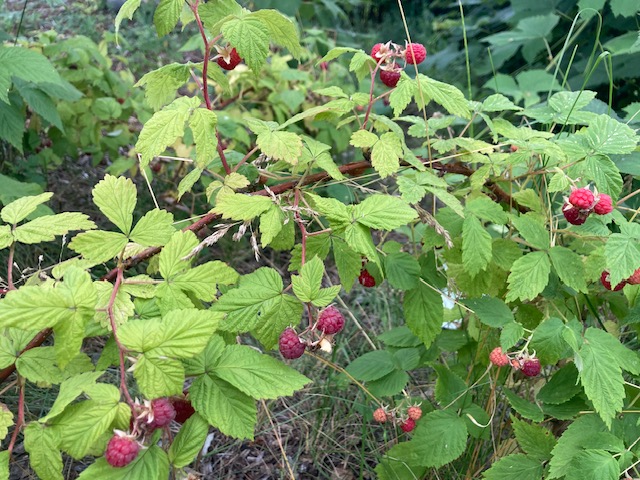






 an Art Farm