Charles Darwin
Posted: June 5, 2011 Filed under: Gallery - Quotes Leave a comment“Man in his arrogance thinks himself a great work, worthy the interposition of a diety. More humble and, I believe, true to consider him created from animals.”
David Abram: “Becoming Animal”
Posted: June 4, 2011 Filed under: Gallery - Quotes Leave a comment“Darwin had rediscovered the deep truth of totemism – the animistic assumption, common to countless indigenous cultures but long banished from polite society, that human beings are closely kindred to other creatures, and indeed have various other animals as our direct ancestors. Here was a form of totemism transposed into the modern world – the totemic insight now translated into the language of “descent by natural selection from a common ancestor.” This modern version no longer saw different persons as descendants of different totemic animals, but recognized all humankind as derived from a common lineage of creatures. In the wake of Darwin’s bold insights, we have learned to consider all humans as members of a common family. But the wild, animistic implication of Darwin’s insight has taken much longer to surface in our collective awareness, no doubt because it greatly threatens our cherished belief in human transcendence. Nonetheless, it is an inescapable implication of the evolutionary insight: we humans are corporeally related, by direct and indirect webs of evolutionary affiliation, to every other organism that we encounter.“
Richard Manning: “Against The Grain”
Posted: June 4, 2011 Filed under: Gallery - Quotes Leave a comment“America’s Northeast was once U.S. agriculture’s major force, with farms supplying the country’s densest clusters of population. The Northeast now does very little farming, and most of the agricultural lands have gone back to forest or suburbs, an odd transition in that these are in some ways the nation’s best agricultural lands. Unlike the western grasslands, the Northeast gets enough rain to grow crops. The decline came as a result of a particular form of subsidy: federal irrigation projects. Beginning at the height of the progressive era, the nation set to work on making the western deserts bloom, investing billions in dams, canals, tunnels, and drains to bring nine million additional acres under cultivation. The historian Donald Worster has shown that this figure exactly parallels the acreage of abandoned farms in the Northeast – land that already had water – during the same period. What industrial agriculture abandons is opportunity.”


Work in Progress, 36″ x 42″, acrylic
Posted: May 27, 2011 Filed under: Art & Healing, Gallery - Visual 6 CommentsI started this tree painting almost 10 years ago and haven’t touched the canvas in nearly 5. For many reasons I have been moved to complete it.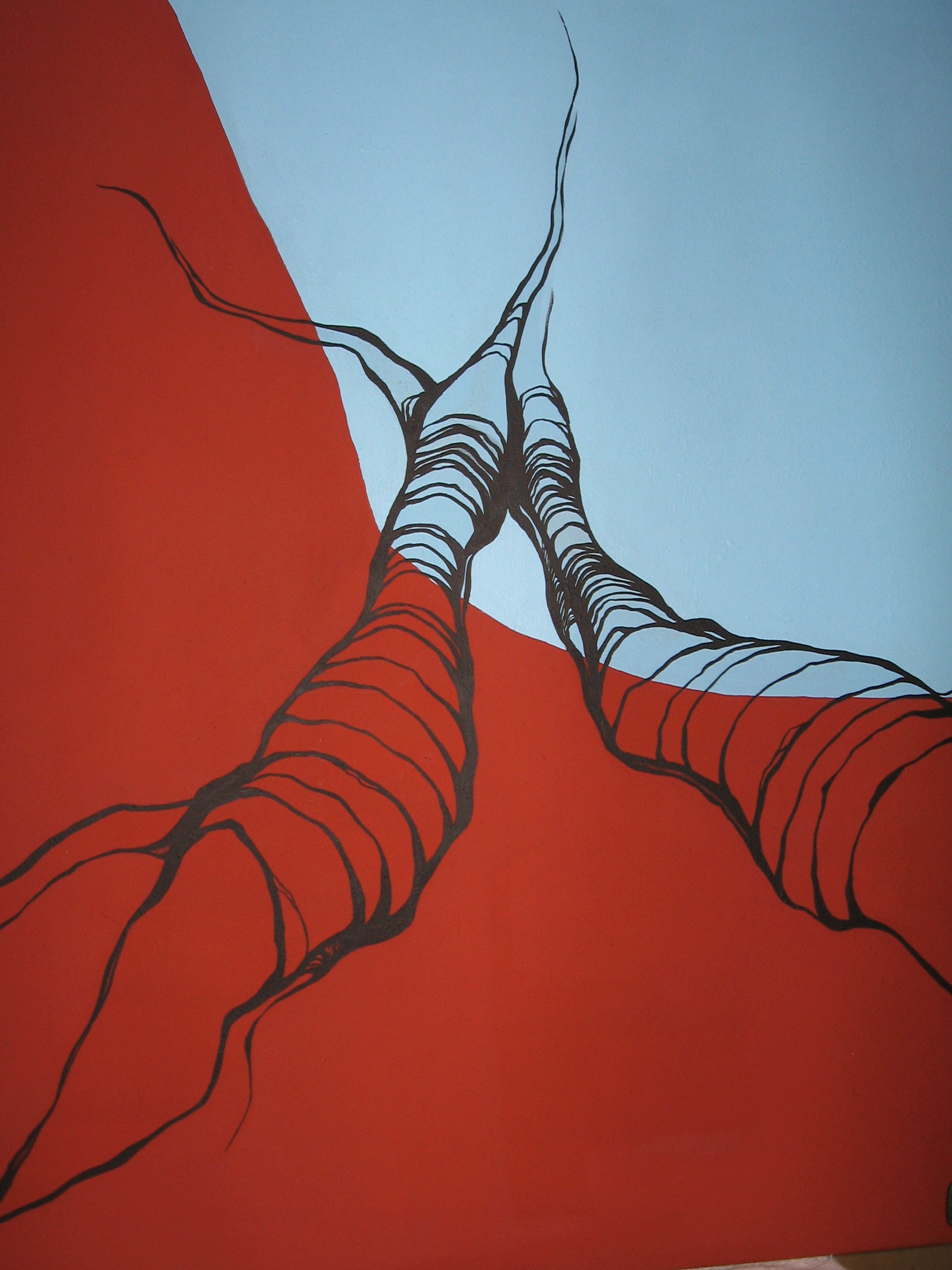
Our Garden is Growing
Posted: May 24, 2011 Filed under: Child Centered Activities, Farming off the Farm, Little Green Thumbs 1 CommentOnion starters in foreground, snap peas mid-way and mixed greens and arugula at far end!


Nursery Furniture
Posted: May 21, 2011 Filed under: Chronicles of a First Time Parent, Gallery - Visual 1 CommentIn January of 2009, during Becca’s third trimester, I was laid off from my job as a cabinetmaker. Whoa! Well, as fortune would have it, the layoff gave lots of free time to complete the furniture I was building for the nursery. And the approaching deadline kept me plenty busy.
I converted an old bookcase into a changing table, adding four storage drawers.


Using all scrap wood, I built a pair of chests, with cherry for the cases and maple for the top.


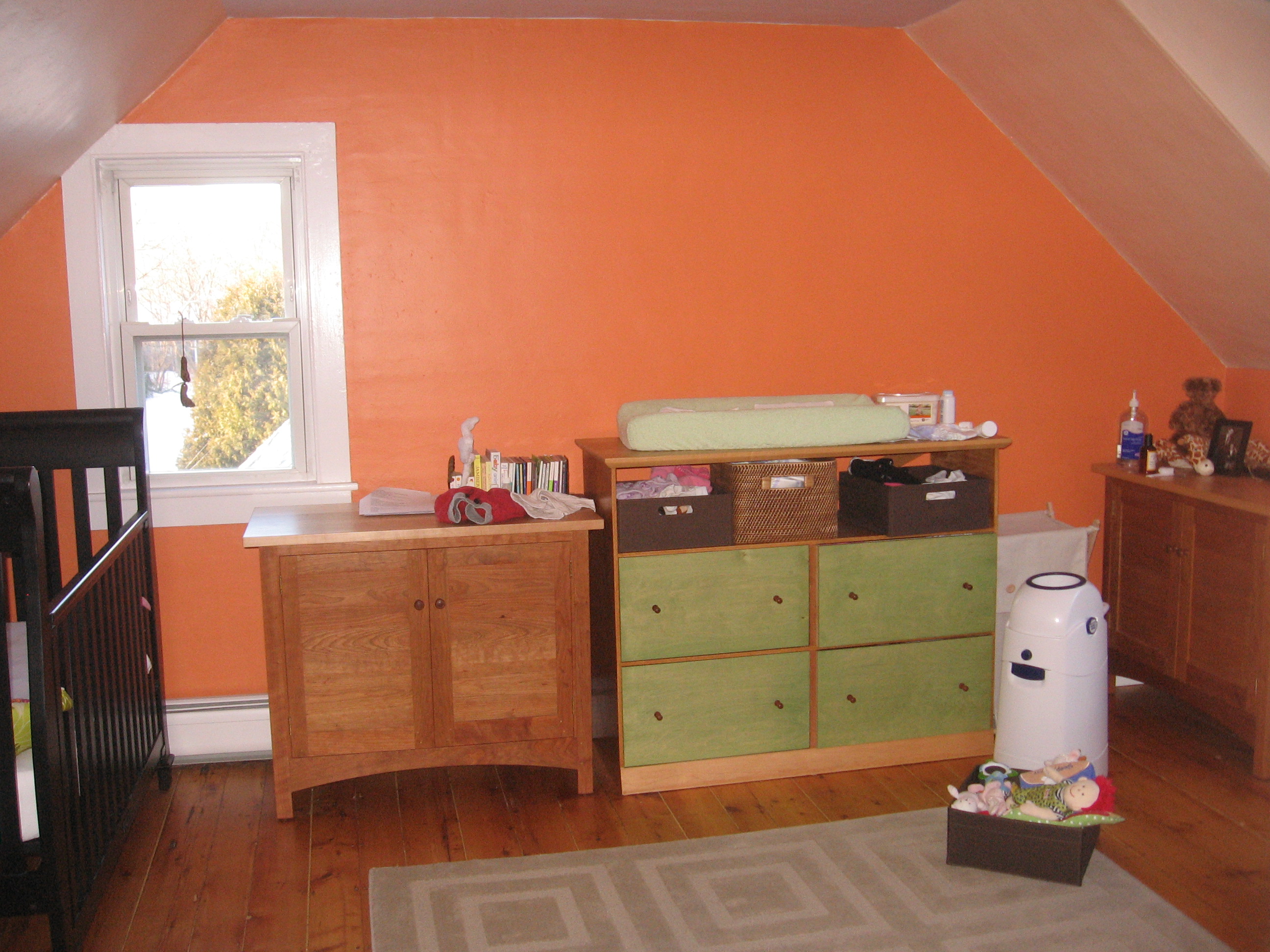
This is my friend Bill’s house and shop where the furniture was built.

“the ‘WHY CHEAP ART?’ manifesto”
Posted: May 19, 2011 Filed under: Gallery - Quotes 1 CommentPEOPLE have been THINKING too long that
ART is a PRIVILEGE of the MUSEUMS & the
RICH. ART IS NOT BUSINESS !
It does not belong to banks & fancy investors
ART IS FOOD . You cant EAT it BUT it FEEDS
You. ART has to be CHEAP & available to
EVERYBODY. It needs to be EVERYWHERE
Because it is the INSIDE of the
WORLD .
ART SOOTHES PAIN !
ART WAKES UP SLEEPERS !
ART FIGHTS AGAINST WAR & STUPIDITY !
ART SINGS HALLELUJA !
ART IS FOR KITCHENS !
ART IS LIKE GOOD BREAD !
ART IS LIKE GREEN TREES !
ART IS LIKE WHITE CLOUDS IN THE BLUE SKY !
ART IS CHEAP !
HURRAH !
– Bread & Puppet, Glover, Vermont 1984

Black Alder Coffee Table
Posted: May 17, 2011 Filed under: Gallery - Visual 2 Comments Coffee table made of black alder, with a satinwood base and dovetail keys of padauk. This was made in January 2006.


 this the source tree, planted circa 1920 in Winnetka, Illinois.

