Volts and Arc
Posted: November 22, 2024 Filed under: Chronicles of a First Time Parent, Farming off the Farm, Little Green Thumbs, Permaculture & Home Renovation | Tags: Factory 3, line welds, MIG welding, tap welds, weld pool, welding 1 Comment
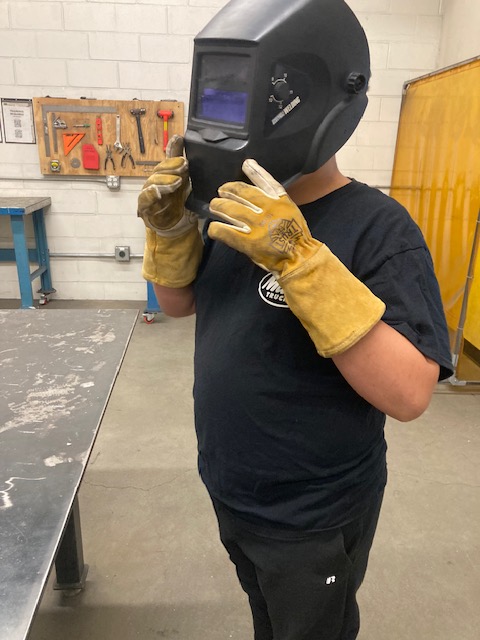
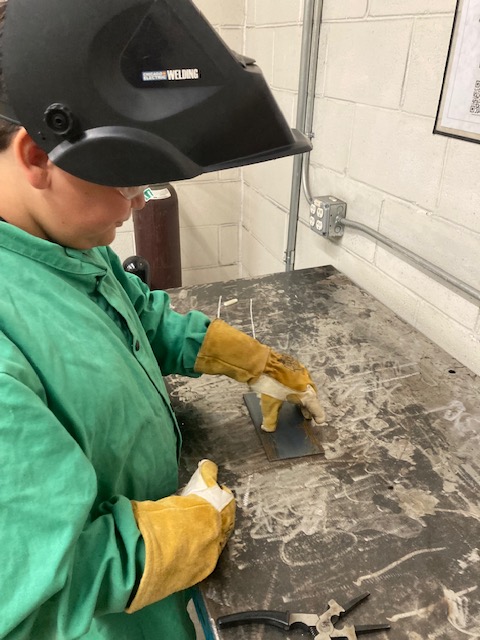
Recently my son and I took a MIG Welding class. Having no experience with welding we were absolute novices, eager to go.
We took the class at Factory 3, a local makerspace that provides work studios for artists, classes for the general public, a community to local makers. A vast open space, exceptionally well appointed with tools and equipment. Beau, the teacher, was superb, answering my many questions. Quickly arcing light was in our hands! There is no looking back.
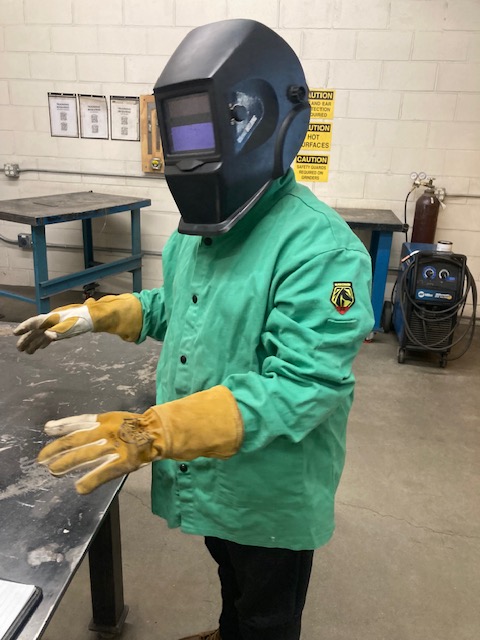
MIG welding uses an electric arc, not fire. The arc is intense, so intense that it could cause sunburn or severe damage to the eyes; to protect our skin we wore a welding jacket and long pants, to protect our eyes an auto darkening helmet.

MIG stands for Metal Inert Gas, which is a process that fuses two pieces of metal together using 240 volt electricity and a steel alloy wire with copper coating. A constant voltage power supply creates an electric arc between the base metal and a wire electrode that is continuously fed through the welding gun, into the weld pool. A ground cable was clamped to the metal work table, and then positive electricity flows from the welding gun through the table.
The metal inert gas was 75% argon and 25% C02. The gas is non-flammable and serves to create a shield around the arc, preventing oxygen and water vapor from getting into the weld pool. Water would cause rust, which would make the weld fail over time.
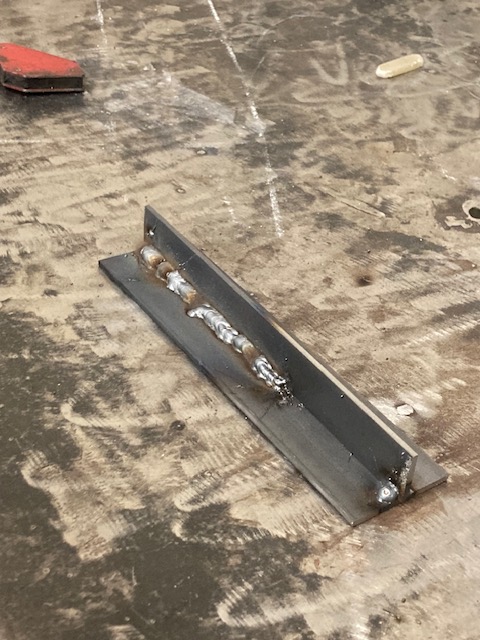
Our tasks were basic, a series of “tap welds,” a temporary weld to hold the two pieces in place and a “line weld” which is the continuous weld along a joint, permanently fusing the two pieces of metal together.
The one hour class opened a new world of material and technique. Project ideas came flooding in. We have two staircases that need railings. Another class seems in the offing. A local friend who welds has offered to teach us more.
New materials. New techniques. Much to be made.


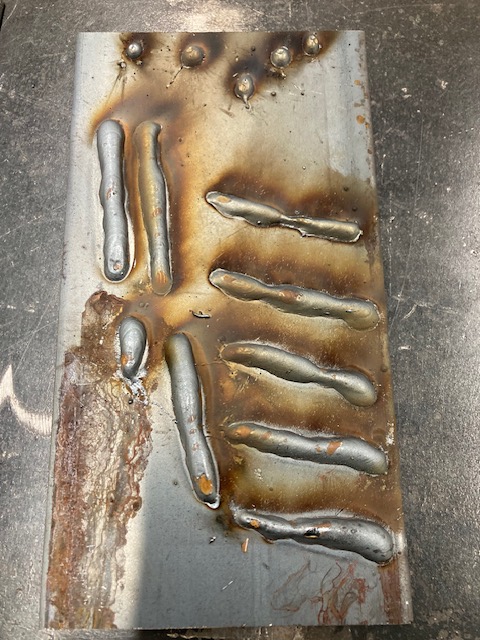
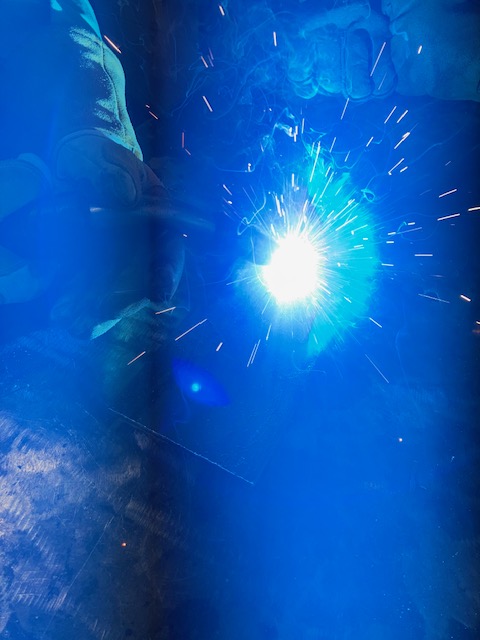

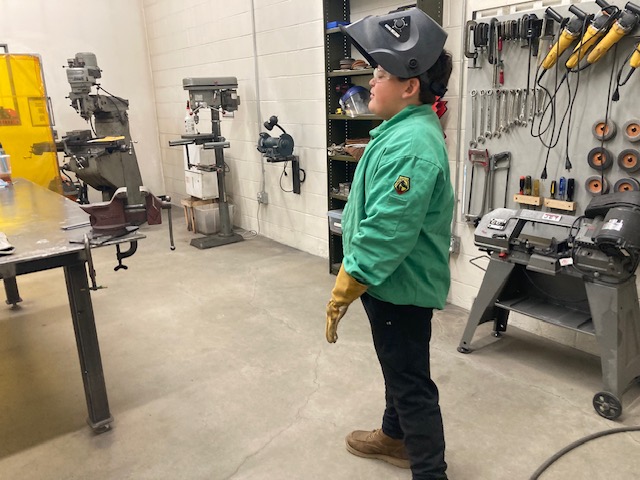

_________________________________
Gardens are gleaned, emptied, final cabbage harvested, Brussel Sprouts alone remain. Soon we plant garlic, for a late spring harvest. A season of abundance has come to its end. We pause now for winter.






Failure and Forgiveness
Posted: November 15, 2024 Filed under: Art & Healing, Chronicles of a First Time Parent, consciousness, Money & Banking, What is an Art Farm | Tags: authoritarian, bankruptcy, contemplation, failure, faith, forgiveness, jurisprudence, naivete, redemption, sufi 2 Comments
In my life the most meaningful lessons were learned from my failures more than any success. Would that it were different, but such, in my experience, has been the lesson learned. I suspect I am not alone here.
The consumer marketing machine, it seems, plays on everyone’s hopes for the good life: the getaway cruise, the flashy new car, the land of milk and honey, lifestyles of the rich and famous. To my mind these are diversions, distractions, from the hard work of honest integrity.
Among my failures was being held in contempt of court, United States Federal Court, Northern District of Illinois. It dragged on for months, and one day into the courtroom United States Marshalls entered, guns holstered, locked and loaded. My counsel nervously waited to petition on my behalf, but surprisingly, they had come not for me. I did not go to jail.

A banker from Lichtenstein did go to prison to serve a three-year term. I was a co-defendant in a lawsuit concerning off-shore Trust Asset Management, guilty not of fraud but of naïveté. The case eventually was settled. The experience gave me reason deeply to reconsider.
Following that settlement I filed a Chapter 7 bankruptcy, which taught me the remarkable experience of forgiveness. It is extraordinary to learn – in the first person – that forgiveness lies at the core of American civil jurisprudence.
Our system of justice is fundamentally about redemption and resolution. In practice often such may seem not the case – for profit prisons, for example – but forgiveness, in fact, does seem to lie at the core. Is not the hope for a better future the American dream? Such, at least, has been my personal experience.
In beginning that new chapter I further learned to let integrity be my bank account. Our culture deifies money. We are drunk in the belief that wealth must equal intelligence and character. We could be no further from the truth.
When I was a boy the popular phrase was “A man’s word is his bond.” Long out of date that is now. Our delusions are different from the truth, which remains that our character is key, that integrity is – in the end – all that matters.
I am not alone in feeling a seismic shift unfolding. This week I received a missive from a Franciscan monk, the founder of the Center for Action and Contemplation, who wrote:
“I have been increasingly convinced that we need a worldwide paradigm shift…(which) becomes necessary when the previous paradigm becomes so full of holes and patchwork “fixes” that a complete overhaul – which once looked utterly threatening – now appears as a lifeline. [We must] move beyond the reward/punishment paradigm.”

He told the Sufi-inspired story “The Angel with the Torch and the Pail”
“An angel was walking down the streets of the world carrying a torch in one hand and a pail of water in the other. A person asked the angel, “What are you doing with that torch and pail? The angel said, “With the torch I am burning down the mansions of heaven, and with the pail I am putting out the fires of hell. Then, and only then, will we see who truly loves God.”
The monk concluded by saying, “The most loving people I have met across the world in my lifetime of teaching and traveling all seemed to know that if love is the goal, it must be love for everybody.”
The bromance playing out on social media and in the halls of government is not about love for everybody. The situation in America is child’s play to the global trend toward authoritarian strongmen. To my mind most certainly this will result in a humanitarian failure, which would force we the people, on this small planet, deep into reevaluation.
We must own our failures before we can be reborn. Once we do that, what if redemption and love become the result of these uncertain times?

Redemption and Return
Posted: November 8, 2024 Filed under: Art & Healing, consciousness, What is an Art Farm | Tags: alpha males, books, divine feminine, greek-mythology, Homer, hypermasculinity, Iliad, mythology, Plato, the Republic, thucydides, trojan-war 1 Comment
Recently, at the Friends School of Portland, I watched a performance of the Iliad that was remarkable; horrid and harrowing, vast and engaging, a testimony to the power of theatre.
The Fig Tree Committee, a group of Quakers from Portland, Oregon presents “An Iliad” to correctional facilities and the communities that surround them. Over 3,500 people, most of whom were incarcerated, have seen the production. In the Quaker vernacular, their work is a “leading” as it “…knits together audiences on both sides of the prison walls by using one of the world’s oldest stories to examine the cycles of violence, trauma, displacement, and hope for healing that unite us all.” https://www.figtreecommittee.org/
The Iliad, central to Classical literature, stands at the apex of Epic Poetry. Homer, the bard, is said to have written the poem circa 800 BC, retelling stories from the late Bronze Age circa 1,000 BC. The story revolves around Paris, a Trojan Prince, who abducted Helen, the wife of Meneleus, the Greek King. Extraordinary was Helen’s beauty, her’s “the face that launched 1,000 ships.” The poet sagely never describes her face, leaving that to the reader’s imagination.
For 10 long years the Greeks battled the Trojans, always to a standstill, which test of endurance is indeed the stuff of legend. The story – hypermasculinity and the alpha males’ dominance – is remarkably relevant to the world today. The Access Hollywood tapes seem but a modern day retelling of Paris abducting Helen.
The Fig Tree’s production used metadrama to connect the classic to the contemporary through the epic catalog of the 1,000 ships. The bard made plain such breadth by listing the many young men killed, but from American, rather than Greek towns, including Evanston, Illinois where long ago I read the Iliad in the Greek. That catalog foreshadowed what was to come, and what is playing out in America today.
Building to the play’s climax, the bard recited a brutally long catalog of wars – Ancient Greece through Europe to modern day Middle East and Gaza – 3,000 years summarized that took us ever deeper into the maze, to face the Minotaur; not half man half beast, but rather the vain beastial side of Aristotle’s “political animal.”
The Peloponnesian War – Sparta versus Athens, 431-404 BC – centered on the issue that “might makes right.” Thucydides, the Greek Historian, in 410BC wrote, “… right, as the world goes, is only in question between equals in power, while the strong do what they can and the weak suffer what they must.” “Might makes right” is the moral antithesis of the path to compassion.
Plato, the Athenian philosopher, wrote the Republic, 375 BC, arguing that democracy was unworkable, “Until philosophers are kings, or the kings and princes of this world have the spirit and power of philosophy … cities will never have rest from their evils,—no, nor the human race, as I believe,—and then only will this our State have a possibility of life and behold the light of day.”
The polite phrase is “Philosopher King” but the literal translation is “Benevolent Dictator.” The authoritarian strongman does seem ascendant now. Many say Victor Orbán is a modern day exemplar of the Philosopher King but his is an illiberal democracy, rule by the minority not “we the people.” Might makes right remains the macho battle cry and let’s be honest: hypermasculine alpha males have run the table for more than 3,000 years.
To my mind, the deeper long-term trend is that the Divine Feminine is ascendant, while the alphas, like dinosaurs, will fight to the bottom to preserve their long enjoyed patriarchy. I speak of masculine traits, not gender, and write this not to condemn but with compassion to decry so many generations of boys raised to be men who fight more than forgive, for whom “making a killing in the market” is a red badge of courage. Radical, indeed, was the street preacher, 2000 years ago, who dared say, “the meek shall inherit the earth.”
At the end of the March from Selma, Martin Luther King stood on the steps of the Alabama State Capital, and said, “The arc of the moral universe is long, but it tends toward justice.” The Iliad tells the same story. This masterpiece of literature is ultimately a story of redemption, the release of anger and hubristic pride.
At the Iliad’s end, Achilles speaks to Priam, the last King of the Trojans, and releases to him the body of Hektor, his son, whom Achilles had slain in battle. Each having lost everything, Achilles – the greatest among the Greek heroes, which is to say the paragon of the alpha male – found within himself redemption and gave back to Priam the body of his son, to be buried, returned to his native soil.
If the greatest of Greek heroes could find forgiveness and compassion, then certainly, so too, can we the people.
Work is to be done.
Let us be about it.
Now.
_______________________________________________________
I quote here from the Richmond Lattimore translation, Prius supplicating Achilles, the response of Achilles, the anointing of Hektor’s body, and the slaying of the “gleaming sheep” for a shared meal of Thanksgiving:
“Achilleus like the gods, remember your father, one who
is of years like mine, and on the door-sill of sorrowful old age.
And they who dwell nearby encompass him and afflict him,
nor is there any to defend him against the wrath, the destruction.
Yet surely he, when he hears of you and that you are still living,
is gladdened within his heart and all his days he is hopeful
that he will see his beloved son come home from the Troad.
But for me, my destiny was evil. I have had the noblest
of sons in Troy, but I say not one of them is left to me. (24.486-94)
“So he spoke, and stirred in the other a passion of grieving
for his own father. He took the old man’s hand and pushed him
gently away, and the two remembered, as Priam sat huddled
at the feet of Achilleus and wept close for manslaughtering Hektor
and Achilleus wept now for his own father, now again
for Patroklos. The sound of their mourning moved in the house. Then
when great Achilleus had taken full satisfaction in sorrow
and the passion for it had gone from his mind and body, thereafter
he rose from his chair, and took the old man by the hand, and set him
on his feet again, in pity for the grey head and the grey beard,
and spoke to him and addressed him in winged words: ‘Ah, unlucky,
surely you have had much evil to endure in your spirit.
How could you dare to come alone to the ships of the Achaians
and before my eyes when I am one who have killed in such numbers
such brave sons of yours? The heart in you is iron. Come, then,
and sit down upon this chair, and you and I will even let
our sorrows lie still in the heart for all our grieving. There is not
any advantage to be won from grim lamentation. (24.507-24)
“Then when the serving-maids had washed the corpse and anointed it
with olive oil, they threw a fair great cloak and a tunic
about him, and Achilleus himself lifted him and laid him
on a litter, and his friends helped him lift it to the smooth-polished
mule wagon. He groaned then, and called by name on his beloved
companion: ‘Be not angry with me, Patroklos, if you discover,
though you be in the house of Hades, that I gave back great Hektor
to his loved father, for the ransom he gave me was not unworthy.
I will give you yourshare of the spoils, as much as is fitting.’
“So spoke great Achilleus and went back into the shelter
and sat down on the elaborate couch from which he had risen,
against the inward wall, and now spoke his word to Priam:
‘Your son is given back to you, aged sir, as you asked it.
He lies on a bier. When dawn shows you yourself shall see him
as you take him away. Now you and I must remember our supper. (24.587-602)
“So spoke fleet Achilleus and sprang to his feet and slaughtered
a gleaming sheep, and his friends skinned it and butchered it fairly,
and cut up the meat expertly into small pieces, and spitted them,
and roasted all carefully and took off the pieces.
Automedon took the bread and set it out on the table
in fair baskets, while Achilleus served the meats. And thereon
they put their hands to the good things that lay ready before them.
But when they had put aside their desire for eating and drinking,
Priam, son of Dardanos, gazed upon Achilleus, wondering
at his size and beauty, for he seemed like an outright vision
of gods. Achilleus in turn gazed on Dardanian Priam
and wondered, as he saw his brave looks and listened to him talking.
But when they had taken their fill of gazing one on the other,
first of the two to speak was the aged man, Priam the godlike:
‘Give me, beloved of Zeus, a place to sleep presently, so that
we may even go to bed and take the pleasure of sweet sleep.
For my eyes have not closed underneath my lids since that time
when my son lost his life beneath your hands, but always
I have been grieving and brooding over my numberless sorrows
and wallowed in the muck about my courtyard’s enclosure.
Now I have tasted food again and have let the gleaming
wine go down my throat. Before, I had tasted nothing.’
He spoke, and Achilleus ordered his serving-maids and companions
to make a bed in the porch’s shelter and to lay upon it
fine underbedding of purple, and spread blankets above it
and fleecy robes to be an over-all covering.” (24.620-646)
Like a Pearl
Posted: November 1, 2024 Filed under: Child Centered Activities, Chronicles of a First Time Parent, Farming off the Farm, What is an Art Farm | Tags: animal rescue, animals, dog, dogs, Grammy Rose Dog Rescue, pets 4 Comments
During the Great Plague of London, in 1655, a 22-year old named Isaac was sequestered. He used his isolation to invent “infinitesimal calculus,” the study of continual change. A remarkable achievement, hinting at great things to come from Sir Isaac Newton.
During the Covid lock down, our time of isolation, the Wentworths of Acton, Maine were sequestered and similarly productive, in an entirely different way. They used their time to construct six residential-style dog cabins, a welcome center with offices, a conference center and retail gift shop plus an Ice Cream Parlor and 18-hole Mini-Golf course.
The family has owned the land for generations, as far back as the American Revolution – their forebears served beside George Washington – and they wanted to honor the memory of their Grandmother “Grammy” Rose Kessler Wentworth. The buildings were completed over 18-months and in 2022 the Grammy Rose Dog Rescue & Sanctuary began operations. The Ice Cream and Mini-Golf generate revenues making it a self-supporting rescue center. https://grammyrose.org/
They entered adoption agreements with “kill shelters” around the country, primarily in the Deep South. There are so many stray dogs down there that the Sheriffs routinely pick them up from the side of roads and, rather than euthanize them, ship the dogs north to New England for adoption. Think of it as a modern day abolitionist above-ground railway.

We drove to Acton last Friday ostensibly “to look” at a puppy. But no one drives one hour one-way just “to look” so it was no surprise that we returned home with a 9-week old female puppy, recently arrived from Webster Parish in northwest Louisiana. The Mother was a lab-mix while the Father is unknown. She appears to have some Rhodesian Ridgeback in her.
Her adopted name was “Jayne Mansfield” honoring the 1950s “bomb shell” movie star and Playboy Playmate, whose IQ reportedly was 149, at the genius level. Hopefully our puppy was named for that trait.

We mused over names. My daughter offered Maisie, and I chimed in Mae, both of which, it turns out are derived from a Scottish Gaelic word, derived from the Ancient Greek “margarites” meaning pearl. Luminous indeed, and given her high energy, we are calling her “Crazy Maisie Mae.” She is a handful, 24/7.
Our art farm is home now to two adults, two children, two rescue dogs from the South and two rescue cats, one from Puerto Rico and the other from Oklahoma. Meanwhile, back in Acton, Grammy Rose keeps rescuing dogs, 35 having been adopted during the month of October.





Solitary Confinement
Posted: October 25, 2024 Filed under: Chronicles of a First Time Parent, Permaculture & Home Renovation, Portfolio - David's work, What is an Art Farm | Tags: american-history, Andrew Jackson, medicated worm syrup, presidents, Trail of Tears 1 Comment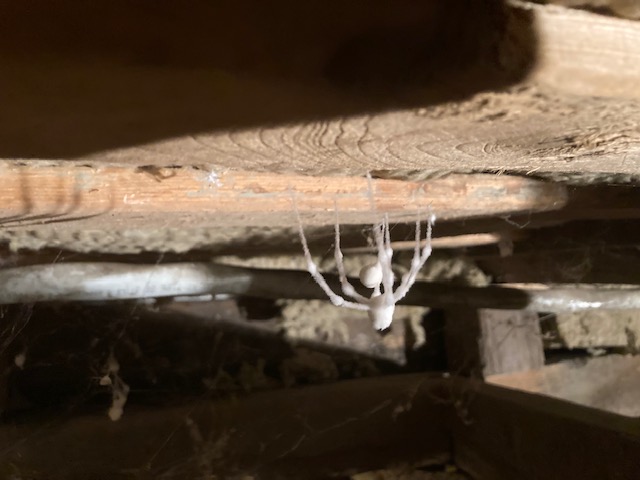
The 7th and 11th Presidents of the United States were titans from Tennessee, Andrew Jackson and James Polk. Polk was a disciple of Jackson, and both fought bitterly against the Second Bank of the United States arguing that it was a capitalist monopoly favoring the Eastern states. Jackson paid off the national debt, but also instigated the “Trail of Tears” ethnic cleansing, the relocation of tens of thousands of Native Americans, forced to walk from their ancestral homelands to lands “west of the river Mississippi.” A polarizing figure, Jackson advocated for ordinary Americans and preserved the union of states, but was denigrated for his racial policies.

1830 through 1848, in South Portland, Maine, C.D.W., a carpenter, built a farmhouse with a crew of thirteen. By day, they labored cutting trees and hauling rocks, to lay the rubble foundation and hew the timbers for the post and beam home. At day’s end, they had no hot showers (indoor plumbing began in Boston 1829, only for the rich) and their food was harvested or hunted from their gardens or woods (green grocers did not become common until circa 1916). Hard were the conditions under which those workers labored.
On Labor Day 2012, we bought the house and barn that C.D.W. built, then began an energy efficient upgrade. My wife was in her third trimester, so time was of the essence. Money was tight. A permacultural builder and crew helped gut and super insulate the main house, converting from kerosene to natural gas. Short on funds, we had to tear down the barn. On Thanksgiving day we moved in, when two weeks later our son arrived into our Greek Revival New England Farmhouse. In 2017 we were fortunate to rebuild the barn, adding a second bathroom, a loft and workshop. Which left the Ell as the last remaining unfinished section.
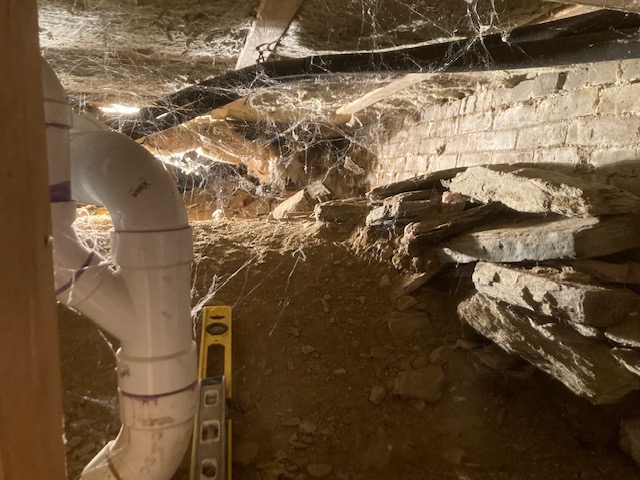
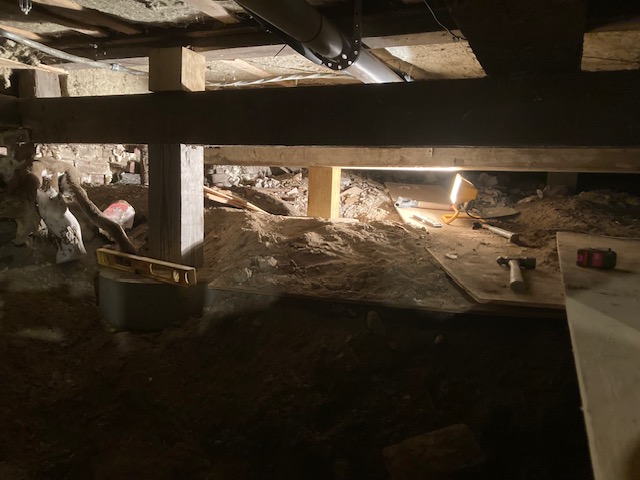
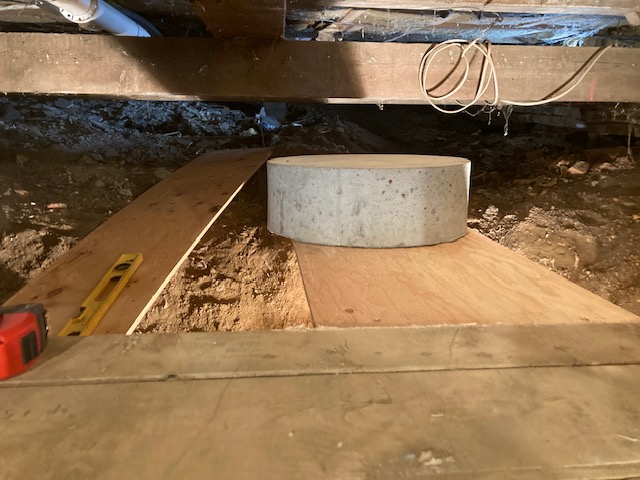
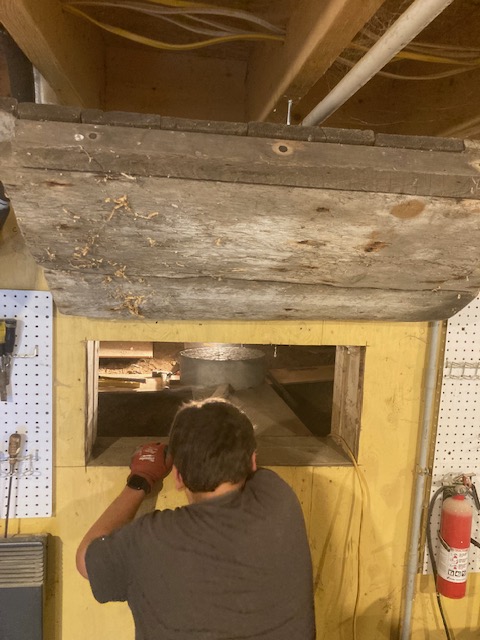
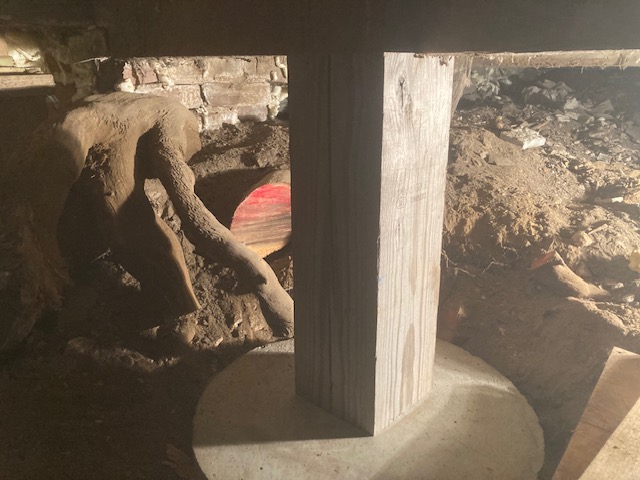
A prudent man would have passed on the home. A rich man would have torn down the Ell. But I was short on cash and long on hope, so I bought the farm in “as-is” condition, at a foreclosure price plus 20-years’ hard labor. I have begun now, finally, restoring the Ell. Before I can do the finish work, I need to rebuild the foundation, and before that, to stabilize the floor system. This work is done in the crawlspace, which means my hard labor now is essentially solitary confinement.

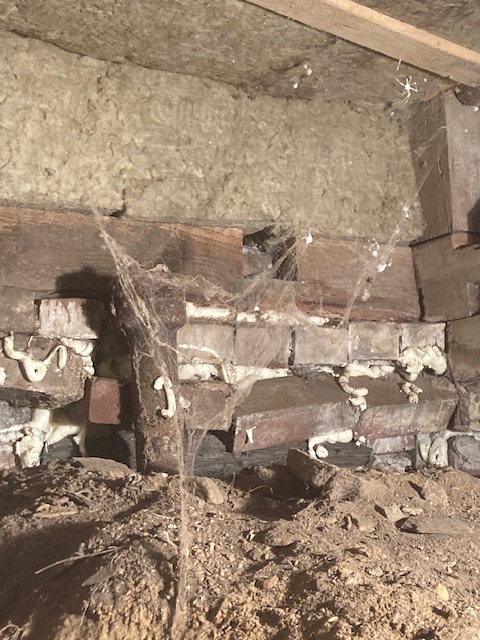
To secure the floor system I need to set ten concrete pads, upon each of which a post is hammered into place to stabilize the existing 1830 floor joists, with a gusset to lock the posts and prevent movement. Building standards were vastly different then, so I have to bring all of this up to code, with 36” to 16” of working space. Each concrete pad is difficult, while several are incredibly challenging. I had two choices: either mix concrete in the crawlspace and then bucket it into location OR pull a pre-cast block, weighing 130 pounds, into a pre-dug hole. Given “pick your poison,” I chose the latter, the pre-cast.
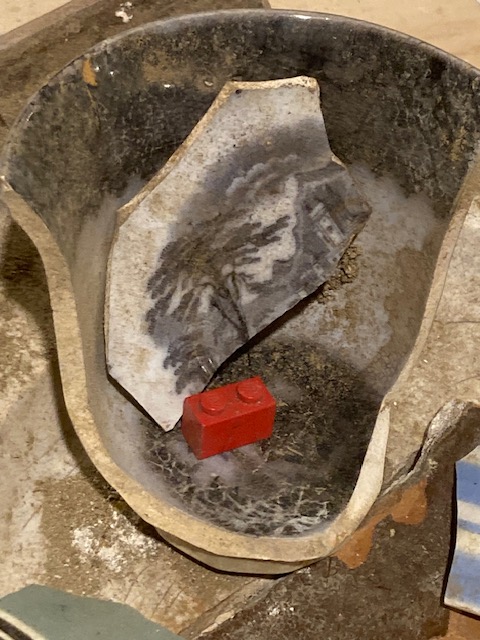
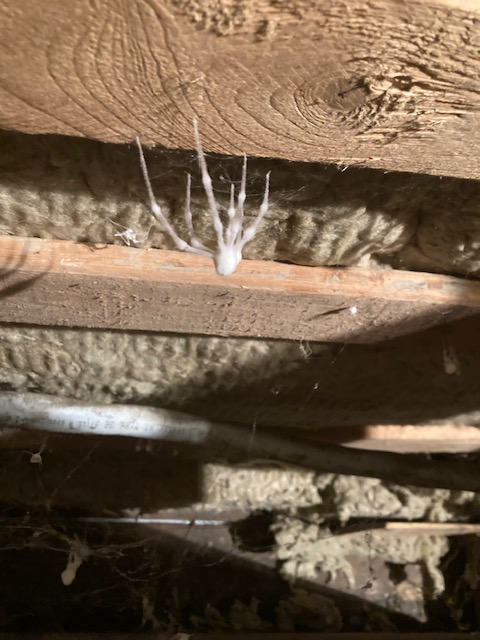
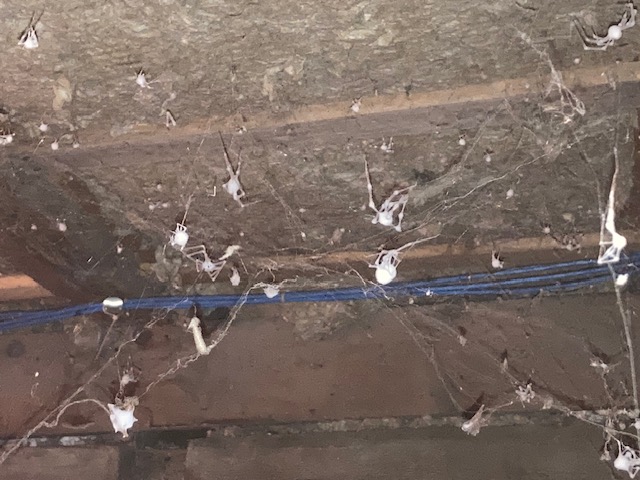
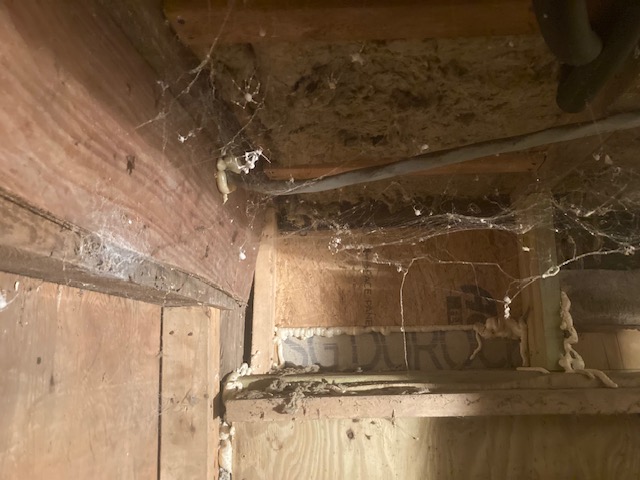
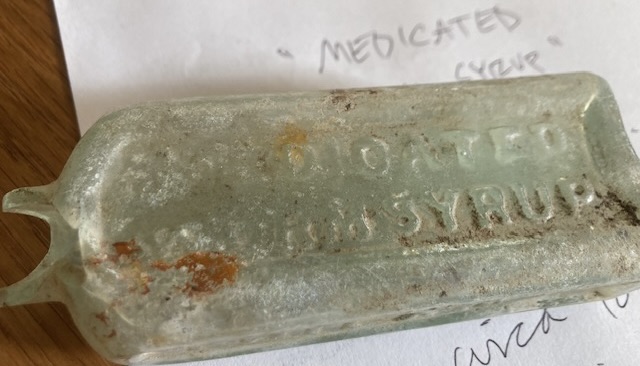
The crawlspace is macabre and surreal. Everywhere overhead abound spider webs and carcasses, covered in a white mold/fungus on the exoskeleton. Rats have lived in that crawlspace and in the dirt lay remnants of former lives in this house: chards of broken china with pastoral scenes, an oyster shell, shoe leather, a glass bottle of “Medicated Worm Syrup” made by Hobensack’s in Philadelphia circa 1845, and two lego pieces. In 1850 the Dyer family purchased this home, where their son John was born in one of the bedrooms. If someone was born here, how many have died here, over the past 200 years?
As a boy, I watched “The Great Escape,” Steve McQueen’s 1963 action film telling the story of World War II prisoners of war, digging a tunnel to escape from Stalag Luft III, a Nazi concentration camp. In one scene, the tunnel collapses, burying the character played by Charles Bronson. Many times I have thought on that during my crawling.
Let me be clear: never would I do this as paid work-for-hire. But for my wife and children I will and I have crawled on my back and my belly, with minimal leverage, to move concrete pads into place, hammering posts, affixing gussets to make stable the floor system.
My Father, dead now 43 years, has the last laugh. So many times he said to me, “David, you can get used to hanging if you have to.” I heard that, then, as a boy, in terms of my own life. But now, as a Father, I understand that for your children you go out of your way even when that means laboring in a crawlspace among desiccated spiders, remnants of rats.
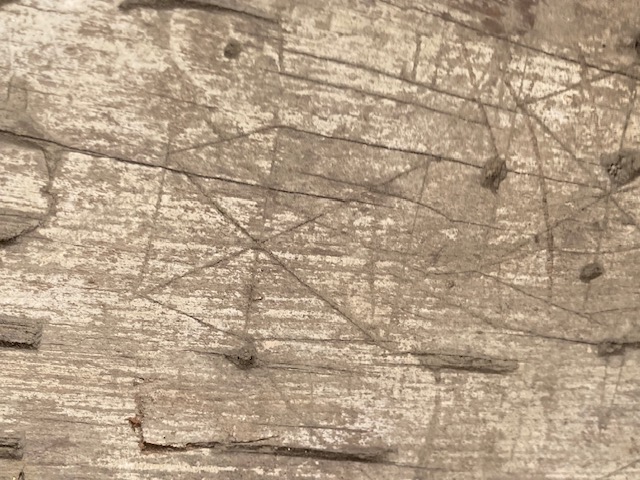
In the end, the work has been done, and I left my mark, on a beam – as did C.D.W. and crew – showing for the record that, Autumn 2024, DPM labored here, to make stable the world in which his children grow, and from which they will go forward, into the world.





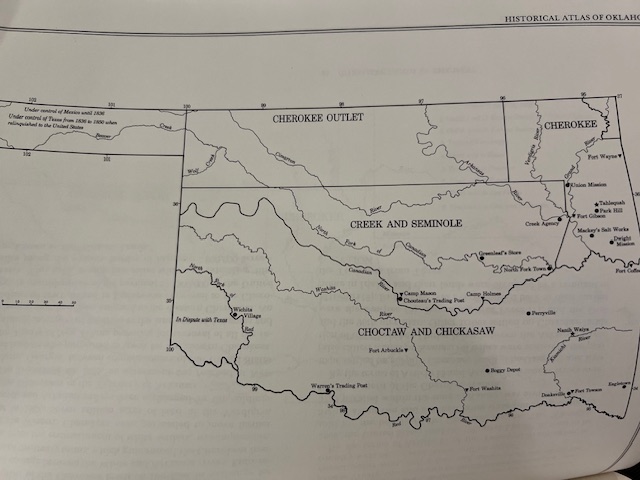
Professor Kristy Feldhousen-Giles has been most helpful with insights into the Indian Removal Act of 1830. The Nations were relocated “west of the river Mississippi” but no tribes were relocated west of the 100th meridian as that was under control of Mexico in 1830, and later under the Republic of Texas. The Battle of the Alamo was fought February through March 1836. The nationalist faction of Texans sought the expulsion of the Native Americans and the expansion of Texas to the Pacific Ocean.
Here is a map of the Indian resettlement 1830-1855 from the Historical Atlas of Oklahoma.
Here is the text of the Indian Removal Act, as authorized by the United States Congress, May 28, 1830.
Fairy Museum of Natural Wonder
Posted: October 18, 2024 Filed under: Art & Healing, Farming off the Farm, Portfolio - David's work, What is an Art Farm | Tags: art, Farmington 1 Comment
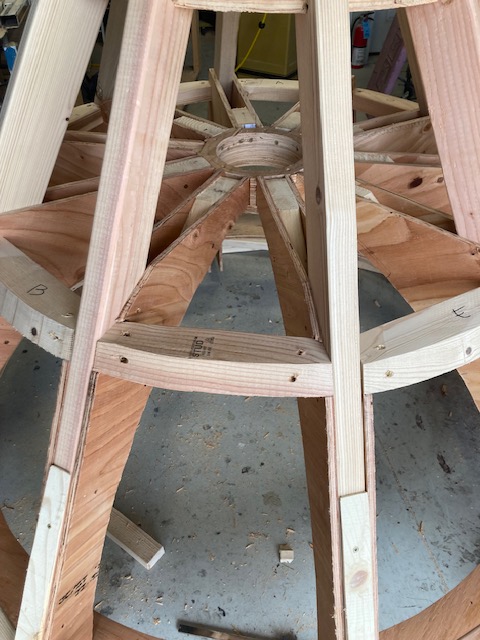
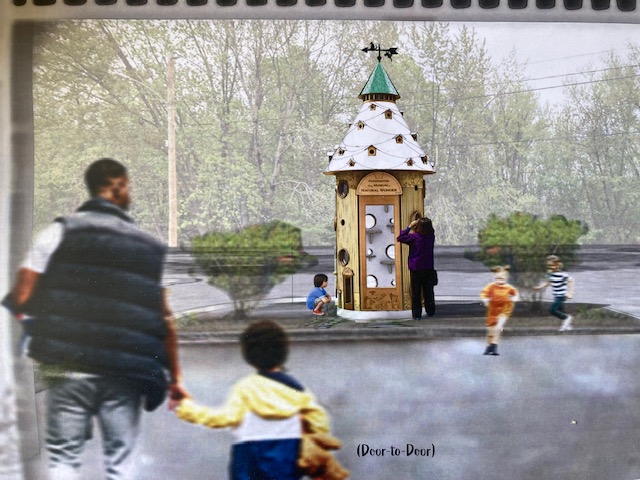
The “Farmington Fairy Museum of Natural Wonder” is a building of magical wonder and whimsy, built to the scale of a 5- or 6-year old child, coming to be, in a world of exquisite beauty and grace.
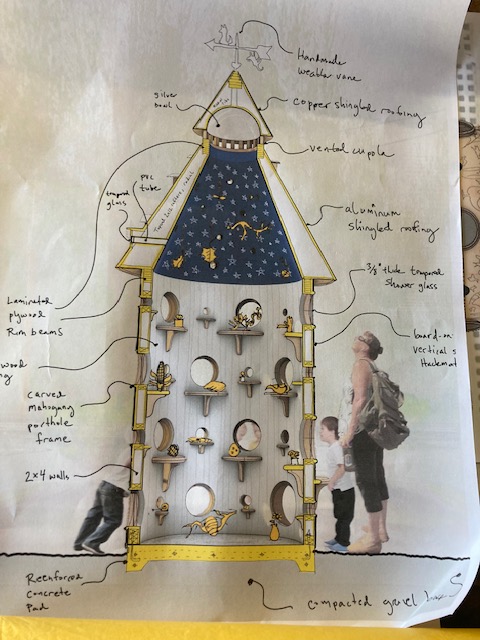
Funded by the University of Maine at Farmington’s School of Education, Early Childhood Development, the Museum will be used as part of their pre-school teacher training program. Enrolled children will curate rotating exhibits, displaying natural wonders gathered on sojourns into nature. Found items – a stick, a stone, a shell, a leaf or feather – will be placed by the children on display upon shelves nestled beside porthole windows.
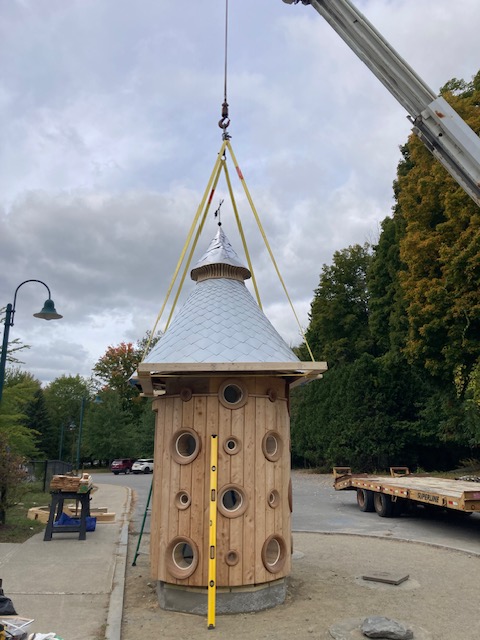
The design is as complex as it is compelling. Consider these facts:
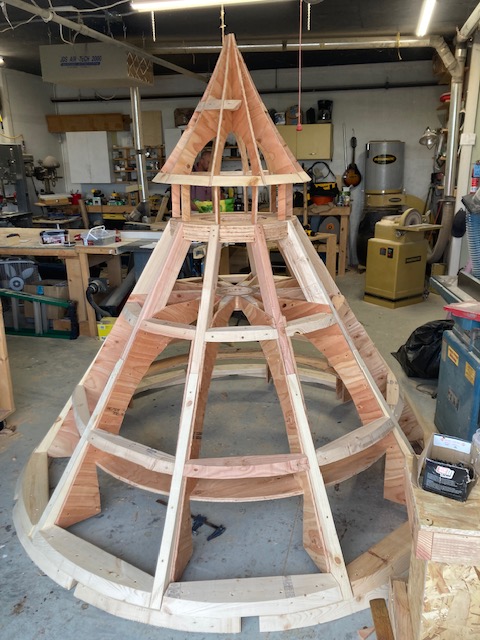
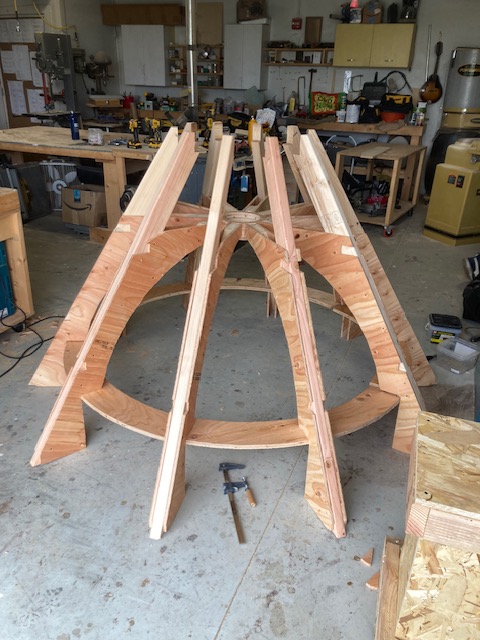
- framed as a dodecahedron, with 1/2” plywood sheathed to 2×4 studs cut at 18.5 degree angles;
- the 6″ slab foundation used 14.4 cubic feet of concrete, with rebar mesh reinforcement;
- sheathed in native-Maine Tamarack, using board on batten style;
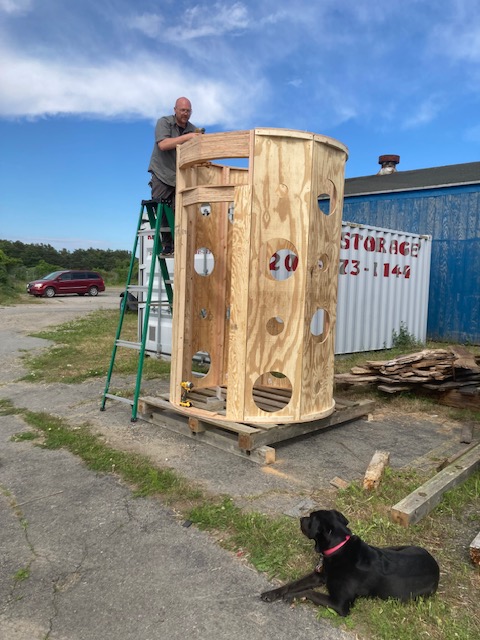
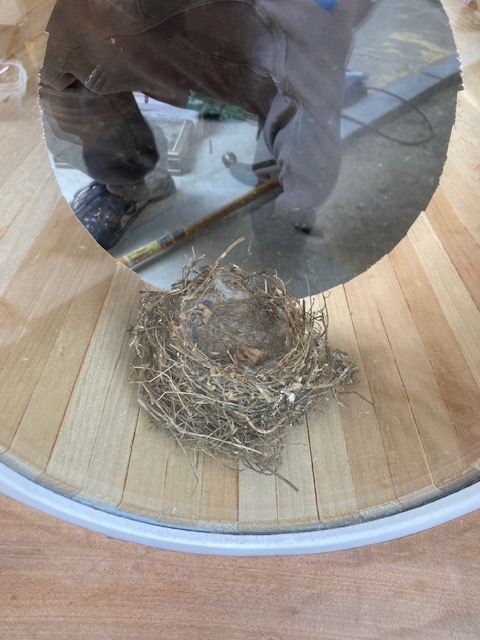
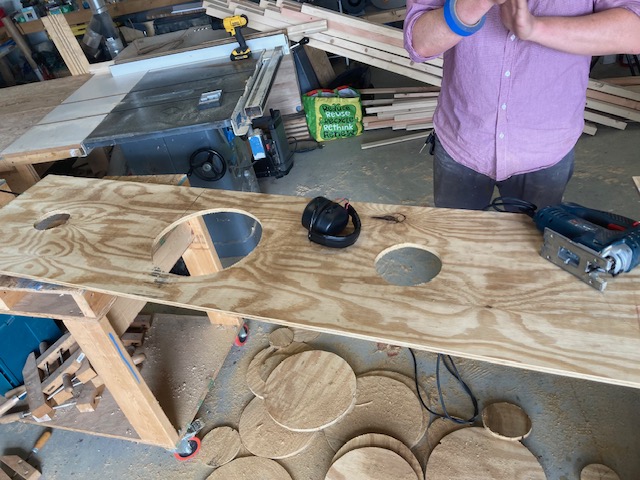
- 31 circular windows of 5 sizes, all parts custom built; 1/2” plate glass sandwiched in “Kuwaiti plywood,” with a rubber gasket air seal then faced with 2” ribbon mahogany exterior trim, cut on the bias, grain running horizontally, so water flows away from the structure;
- a Squirrel gargoyle stands guard over the custom made, ribbon mahogany entry door
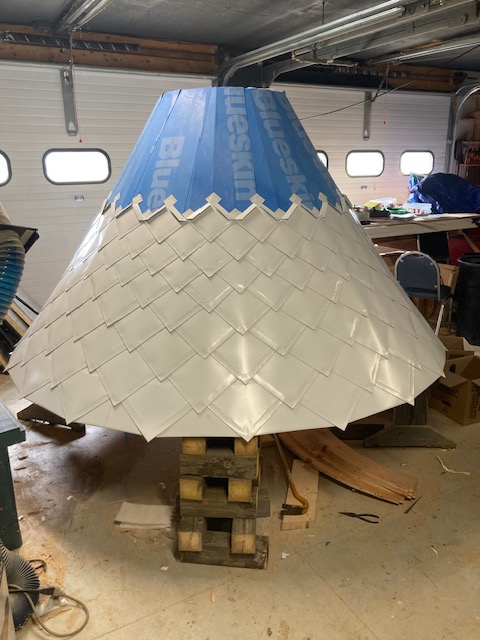
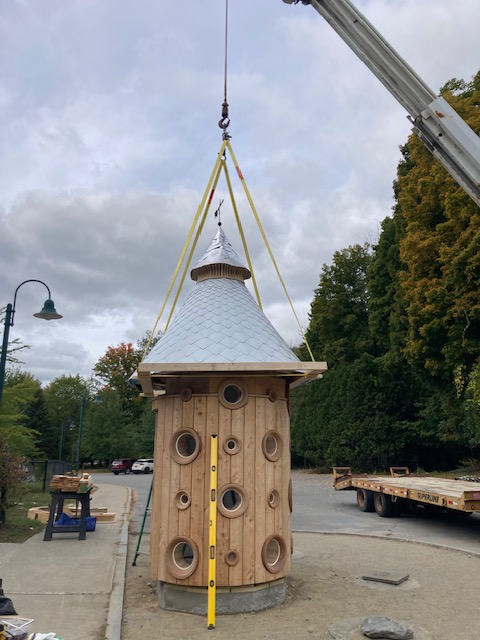
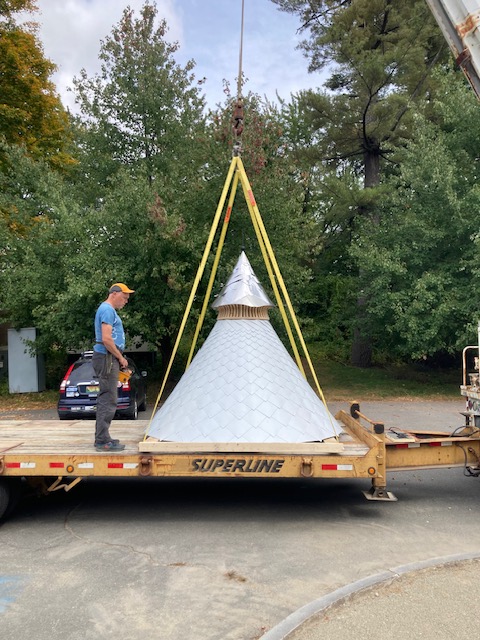
- a Basilica dome, framed by laminated plywood, covered with 480 aluminum shingles, all custom cut, bent to shape, then hand nailed into place;
- “purple martin” mini birdhouses nestled in, for good measure, among the metal shingles;
- a Cupola towers over all, covered in 31 galvanized shingles, cut from aluminum flashing;
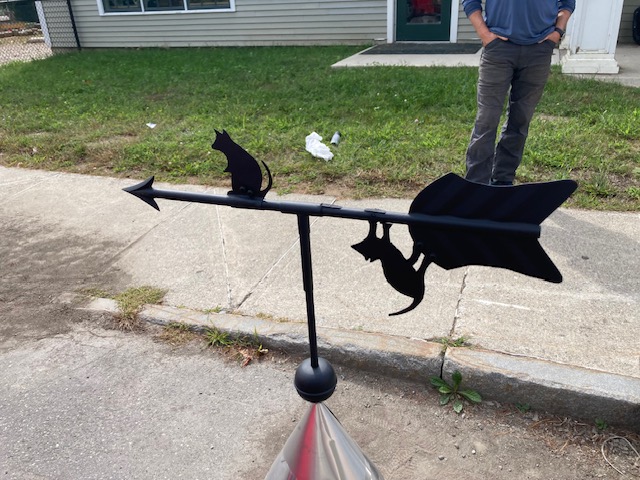
- upon which, like a cherry on top, sets the weather vane, with mice running to and fro.
In Southern Maine, everyone, it seems is a carpenter, or a DIY warrior at the least; but few, if any, could build such a structure, let alone conceive, design, and draw same. The Museum is the brain child of Chris Miller. It has been my highest honor to assist as his mere carpenter.
Inside the Basilica dome, Chris has painted the starry night sky, and through a keyhole oculus, the golden glow of the sun lies beyond. The Vatican may have Saint Peter’s Basilica and the Sistine Chapel ceiling, but Farmington has the Fairy Museum; Bernini and Michelangelo could do no better than Miller has done.

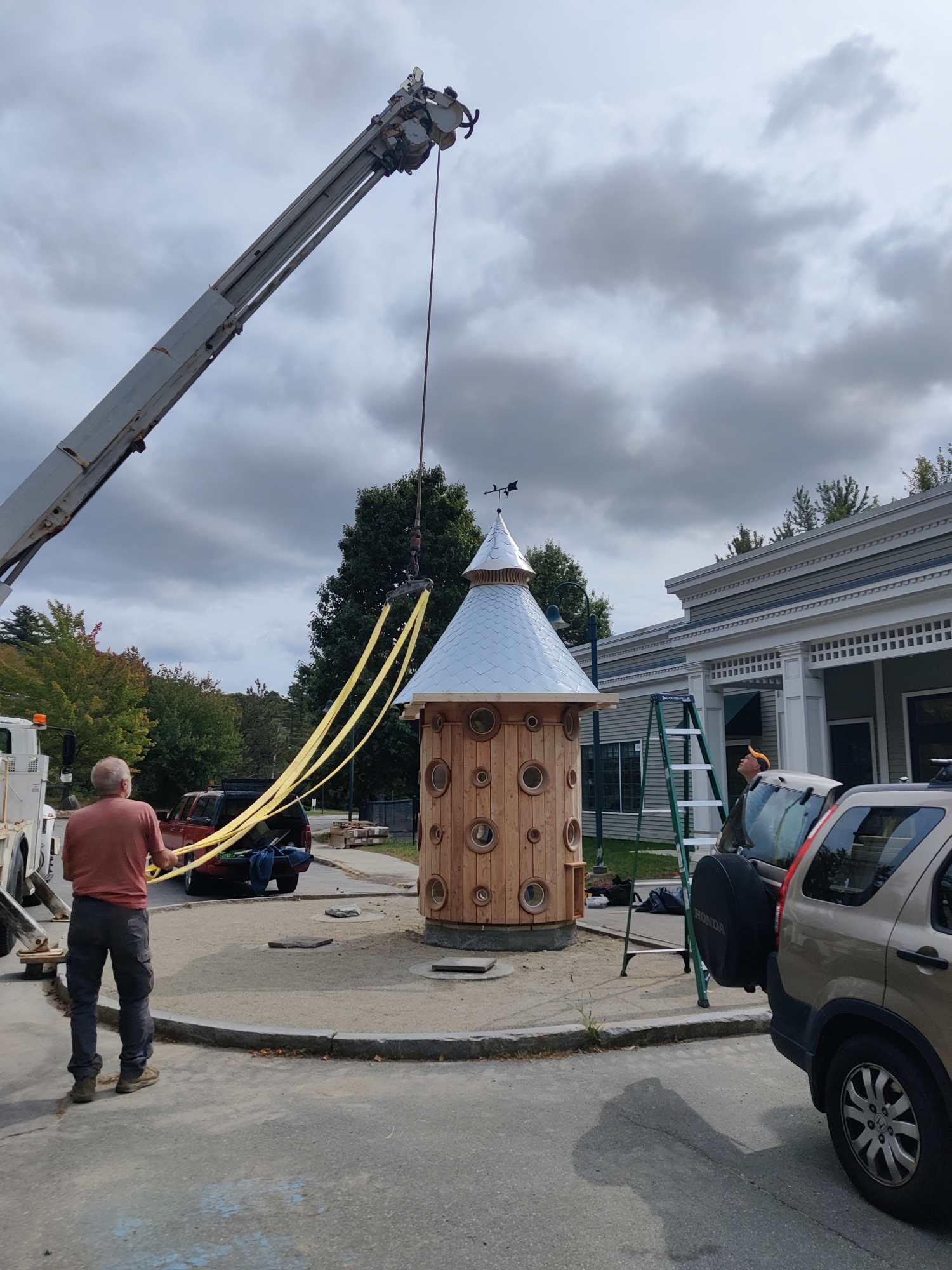
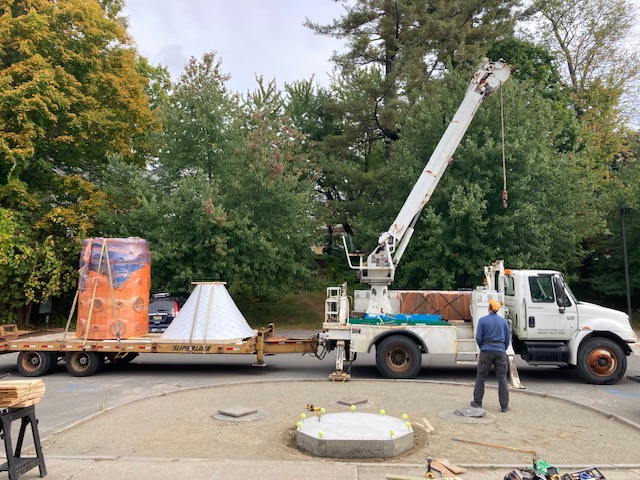
We built the Museum at Chris’ studio in South Portland, then moved the structure 72 miles north to Farmington. Jesse Salisbury, a sculptor of large granite and hard stones, graciously helped on this task. An artist friend once said to me, “The coolest people on Earth live in Maine,” and Jesse is exhibit A of same. Jesse’s story is almost fantastical, and I speak from personal experience as my daughter and I visited his studio, when she was 5 years old.
Jesse was born Downeast, a fisherman’s son. He began carving wood while in grammar school, but then his father became the Founding Director of the Portland Fish Exchange, America’s first all-display fresh seafood auction that opened in 1986. This lead to his Father becoming the Attache for Asian Fisheries, at the USA Embassy in Tokyo, Japan. In Tokyo, Jesse attended high school and began his formal artistic training, including with traditional ceramic artists. https://www.jessesalisbury.com/
His path lead back to Steuben, Maine where he and his father built his studio by felling trees, milling them into beams, to create a 32’ x 64’ post & beam workshop with design room, stone cutting, metal forging, fabricating and equipment repair shops. As a young man he foraged rocks from the fields Downeast, hauling them in his pick-up truck, but when the scale of his work increased, he purchased used heavy equipment from Bangor Hydro, the utility generating hydroelectric power on the Penobscot River.
Jesse and his Father laid 70 feet of train tracks, so that granite slabs weighing 10-tons or more easily move through the studio, from the wire saw to its indoor and outdoor fabrication areas. Jesse has carved and transported major installations throughout Maine, the Atlantic Seacoast, and maritime Canada. His work has also been displayed in Japan, China, South Korea, Egypt, and New Zealand. In his spare time, he founded the Schoodic International Sculpture Symposium, a ten-year project which resulted in a world class collection of large granite works that make up the Maine Sculpture Trail. https://www.schoodicsculpture.org/
We made two trips north. First, Chris and I poured the dodecahedron concrete foundation, a 6” slab reinforced with rebar and anchor bolts set in the concrete. The forms, of course, were custom built. For the second trip, Jesse arrived at Chris’ studio on a Friday. His boom truck hoisted the structures easily onto his trailer. We strapped them down, then early on a Saturday morning convoyed North as misty fog hung upon the Casco Bay.

In Farmington, the sun was shining. On that idyllic September day, as crimson and golden leaves fluttered down, the installation went easily, each section stacked up, each upon the one below. A deus ex machina, indeed. The “silo” was anchored to the slab’s sill plate and the weather vane set atop the cupola.
By dusk we were gone. Chris returned later to apply finishing details.
And then, one Monday morning, children arrived at their daycare astonished to behold this creation. Like the “Night Before Christmas” I imagine they uttered, “When what to my wondering eyes should appear/But a Fairy Museum overnight landed here!!”



















Walking
Posted: October 10, 2024 Filed under: Chronicles of a First Time Parent, Farming off the Farm, What is an Art Farm | Tags: AFSP, anxiety, depression, mental health, NAMI, suicide, suicide prevention 1 Comment
5 October was day 279 of 2024. Year-to-date, 274 lives have been taken by suicide in Maine.
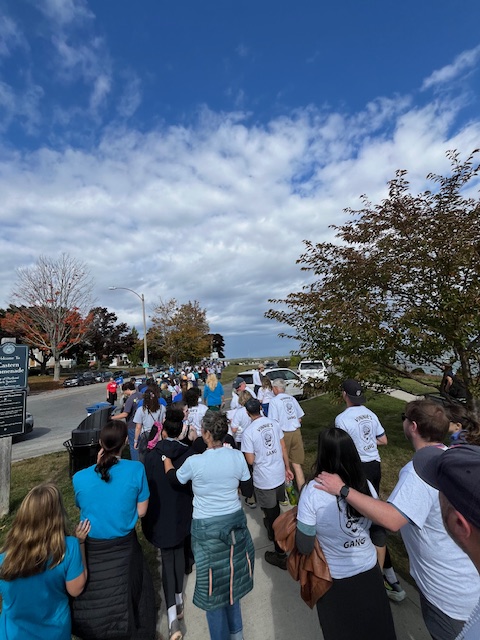
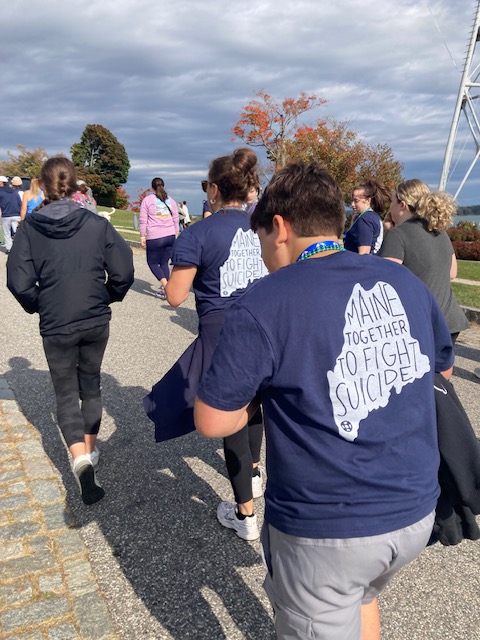
Last Saturday, on the Eastern Prom, “we the people,” deplorables and elite gathered to meet, to give voice, to bear witness, and to walk in support of Suicide Prevention. 800 people walked 2.2 miles with the majestic Casco Bay stretched out around us.
More than $120,000 was raised. Under the name “Healing Life” our family raised $820. We are eternally grateful for the support of our family and friends. We all went the distance. We all came together. Actions speak louder than words and as a family we shall do this again, a repetitive routine exemplifying our commitment to community.
In the early hours it rained, but the sun broke through. Beads of many colors were passed out: White for loss of a child, Red for loss of a partner, Gold for loss of a parent, every color of the spectrum, every reason to support suicide prevention, even rainbow beads in support of LGBTQ. One older man wore a rainbow shirt, that read, “Be a Good Human.” So simple, yet so hard.

We worked the raffle table, which was a chance to engage with many people. One young child, age 6 perhaps, wore gold beads and a placard around their neck, bearing the single word, all caps, “DAD.” The Mother, now a widow, struggled to pay, and we helped her through the digital payment. As it turned out she won two raffle prizes.
She was one among many, all touched by the dark sceptre of death by suicide. Emotions were raw, so very hard to look life straight in the eye. But we did. We all did. And we walked in support of a cause.
The American Foundation for Suicide Prevention (AFSP) funds scientific research and public policy advocacy on a national level. AFSP Maine is one of a nationwide network of chapters, doing the grass roots work focusing on eliminating the loss of life from suicide. Members of our community were recognized, stood up, each story of loss told. It was gruesome, and yet, in our bearing witness hope was present.
In the South Portland Public Schools a Director of Mental and Behavioral Health has been hired, and people from the National Alliance of Mental Health, the CDC and AFSP are lending a hand. A team has been assembled and a community response is taking root. Our task now is that such hope is nurtured and blossoms.
I spoke to my daughter about my childhood, when shame reigned supreme, when no one would dare speak of suicide or mental health. To put this in context, I spoke of my Grandmother, whose first born child, in 1923, died of SIDS at 21 days then was told by her Doctors, “just go home and forget about it.”
As if.
Long is the road to greater acceptance, to understanding, but on 5 October, along the eastern Promenade of Maine, 800 people walked 2.2 miles.
Chairman Mao famously quoted the Taoist Master Lao Tzu, who said, in the 6th century BC, “the journey of a thousand miles begins beneath one’s feet.” Let us now stand together, let us walk and go forward, let us heal, we the people. Our childrens’ lives depend upon this simple truth.





_______________________________________________________
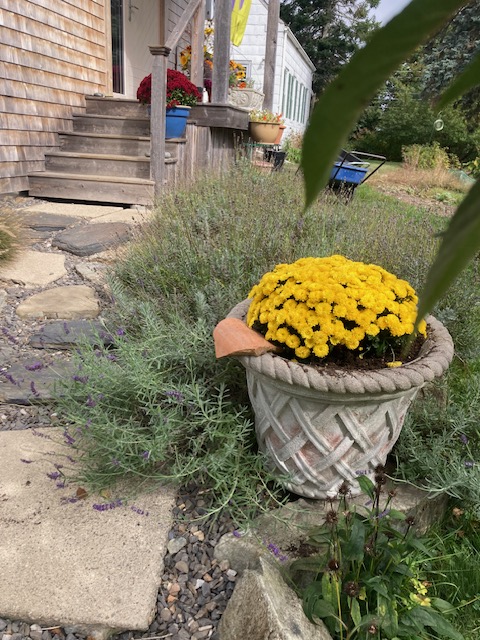
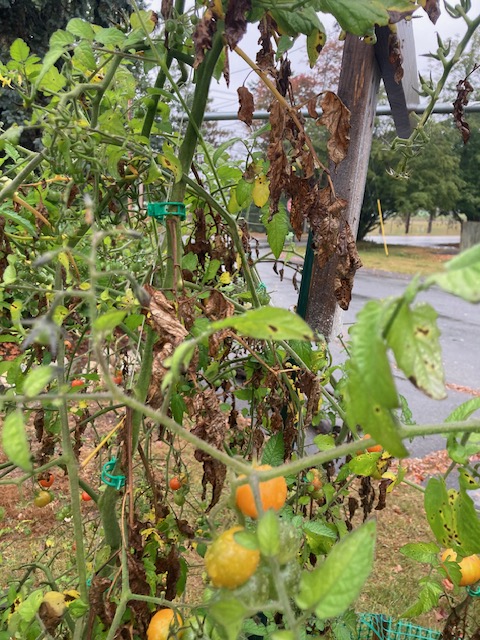
In our gardens, our variety of Butternut Squash has been harvested; Tomatoes produce their last; Pole Beans come in this week; Cosmos finally sings aloud in chorus; Mums reside on the entry porch.









___________________________________________________
And tonight, in the sky overhead, the Northern Lights showered above, a heart, it seems, in the first photo. Enjoy…










Unabridged
Posted: October 4, 2024 Filed under: Chronicles of a First Time Parent, Farming off the Farm, What is an Art Farm | Tags: books, dictionary, language, unabridged dictionary, words, writing 2 Comments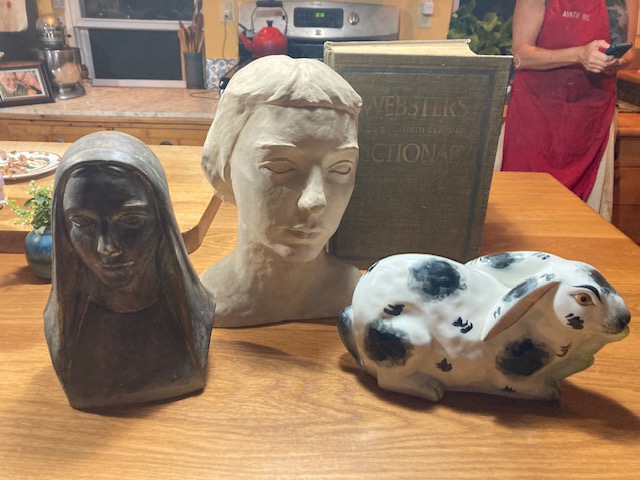
In my childhood, pride of place was given to a Webster’s New Twentieth Century Dictionary of the English Language, Unabridged, second edition (c) 1966. The massive book laid open, upon a bookstand that my Mother built, in the family room always beside the dinner table. Quick and easy reference was close at hand.
At 2,129 pages, plus addenda, the Webster’s weighs in at approximately 13 pounds, begins with “a” (first letter of the Roman and English alphabet: from the Greek alpha, a borrowing from the Phoenician) and ends with “zythum” (a malt beverage brewed by ancient Egyptians). The masterpiece is “based upon the broad foundations laid down by Noah Webster.” Such informed my childhood.
My frugal Mother, born in the Depression, bought groceries strictly on a budget, and received S&H Green Stamps for every purchase. We saved those stamps, compiled them into books, then drove to Glenview, Illinois to redeem same. The dictionary was purchased with Green Stamps, a day of victory, that I recall vividly, still.
Of the Silent Generation, she and millions of her peers diligently saved the Green Stamps. The Sperry & Hutchinson Company was founded in 1896 and operated until the 1980s, when consumerism became the vogue and frugality faded. But over 90 years the Beinecke family made a fortune, and funded the Beinecke Rare Book & Manuscript Library at Yale. In Greenwich, Connecticut, their 66-acre estate is now for sale for the first time, at an asking price of $35 Million, after more than four generations in the family. https://www.nytimes.com/2024/09/16/realestate/beinecke-estate-greenwich.html?smid=nytcore-ios-share&referringSource=articleShare
In my childhood home, words reigned supreme. My Father was a wordsmith, an Irish extrovert, who knew not the difference between a hammer or a screwdriver, but most certainly knew his nouns and verbs; subjects and objects; gerundives, gerunds, and participles; how to compose a sentence, how to frame his thoughts. When advertising came of age he worked as a Mad Man; known as the “Grocery Guru” his specialty was food merchandising. His gift of words allowed him to travel the world, holding meetings in Munich, giving speeches in Sydney; he commuted to his Manhattan office for lunch then flew home for dinner. He was published in multiple periodicals, and monthly in “Advertising Age,” then an upstart, which has become the standard bearer of the trade. After his death, my Mother continued the column for two years, writing “Consumer’s Viewpoint” telling the “Big Boys and Fat Cats” what she thought of their products.
And always, in our home, the Webster’s stood as stanchion, a ready reference, near at hand.
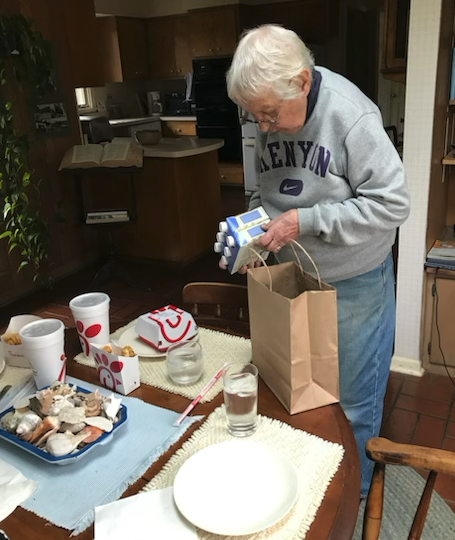
Last year my Mother sold the family home, and we emptied its rooms. Saving the dictionary was high on my list. I stored it at my sister’s, and then in August hauled it back home to Maine, along with sculptures my Mother had made. It was something of a cruel and unusual ask to have my children carry the tome through TSA at O’Hare Airport, but that I did. To my mind that task sealed their fate to the written word. Such is their origin story.
Growing up in the digital age of Google, my children may disregard the heavy analog hard copy book, a dull relic from the distant past. But long may it last on their bookshelves, and my hope is that it will endure as a reminder of their lineage. Languages change over time, such is their nature, but the story of the English language, derived from the German and Latin, and our ability to use words to frame our thoughts is an enduring aspect of our mind’s capacity to understand. I remain steadfast that there is a mysterious link between grammar and the mind.
A hard copy dictionary, then, is a bastion of that tradition. And for my children to understand same, is to know of their past. And so this Unabridged Dictionary is an heirloom of the highest regard here in our home. Purchased through frugality, cherished over many years.
______________________________________
Note: Kudos and thanks to Babs, of whom I say the apple fell not far from the tree. By kind permission of, I borrowed her phrase “…meetings in Munich, speeches in Sydney…”. And she provided the family room photo with dictionary and stand ever the sentry, the rear guard. Many thanks! 🥰
The Curve of Consciousness
Posted: September 27, 2024 Filed under: consciousness | Tags: consciousness, philosophy, quantum-physics, rational mind, science, space time continuum, spirituality 2 Comments
Carlo Rovelli is an Italian theoretical physicist with a sterling gift for writing, in English, clear sentences on complex ideas. In “Seven Brief Lessons on Physics” he traces the arc of modern physics from Isaac Newton’s 1687 straight mechanical worldview where bodies move through space and time passes uniformly to the now confirmed existence of quarks and, in 2013, the discovery of the Higgs boson, a fundamental sub-atomic particle; the most basic building blocks of a curvilinear universe.
Einstein’s milestone 1919 insight was that “the gravitational field is not diffused through space; the gravitational field is that space itself….Space is no longer something distinct from matter – it is one of the “material” components of the world. An entity that undulates, flexes, curves, twists. The whole of space can expand and contract.”
Max Planck had a radical idea that energy was not a continuous flow, but instead was “quanta,” or packets, a/k/a small building blocks. Einstein, again, cracked the code, in his 1905 annus mirabilis papers when he wrote, “…the energy of a light ray spreading out from a point source is not continuously distributed over an increasing space but consists of a finite number of “energy quanta” which are localized at points of space, which move without dividing, and which can only be produced and absorbed as complete units.”
Einstein’s idea was rejected as sheer nonsense, until 1925 when a group of physicists in Copenhagen, lead by Niels Bohr, worked out the mathematical equations behind the theory.
The world of quantum mechanics is not predictable, can only be spoken of in terms of probabilities. Roselli describes this as “…very far from the mechanical world of Newton…the world [of quantum mechanics] is a continuous, restless swarming of things, a continuous coming to light and disappearance of ephemeral entities. A set of vibrations, as in the switched-on hippie world of the 1960s. A world of happenings, not of things.”
In the year of our Lord 2024, physics teaches us that, “There is no longer space that “contains” the world, and there is no longer time “in which” events occur. There are only elementary processes wherein quanta of space and matter continually interact with one another. The illusion of space and time that continues around us is a blurred vision of this swarming of elementary processes.”
I present this as background to an idea that just as space time is a curved dynamic field, so too, by analogy, is human consciousness; in the years going forward our ideas of relationships and fundamental rights may flower in unforeseen dimensions. The “straight and narrow” ethics of Augustine, Calvin and Cotton Mather – to name just a few – may become antiquated just as Greek myth now is seen as mere child’s play.
Whether history repeats or rhymes, the fact is that we have been here before. Augustine of Hippo, the towering Church Father, wrote circa 400, “…it is not necessary to probe into the nature of things, as was done by those whom the Greeks called physici…It is enough for the Christian to believe that the only cause of all created things, whether heavenly or earthly, whether visible or invisible, is the goodness of the Creator, the one true God; and that nothing exists but Himself that does not derive its existence from Him.” The Dark Ages followed when the Western Roman Empire fell, trade became stagnant, the Black Plague ravaged the land, scientific thought was discouraged.
Come the sixteenth century, a Polish mathematician calculated the rotations of the planets, and confirmed that the Sun, in fact, is the center of our galaxy. The mathematician, also a Catholic Canon, was savvy and prefaced his work “To The Most Holy Lord, Pope Paul III” begging indulgence, “How I came to dare to conceive such motion of the Earth, contrary to the received opinion of the Mathematicians and indeed contrary to the impression of the senses, is what your Holiness will rather expect to hear. So I should like your Holiness to know that I was induced to think of a method of computing the motions of the spheres by nothing else than the knowledge of the Mathematicians are inconsistent in these investigations.” Copernicus endeavored only to check the mathematics but his “Book of Revolutions” changed the course of history.
Galileo, equally brilliant, more bold and less savvy, championed and then scientifically proved the Copernican heliocentrism, for which he was tried by the Roman Inquisition and found “vehemently suspect of heresy.” Galileo is called the father of observational astronomy, classical physics, the scientific method and modern science. Popes Paul III and V are mere footnotes in history.
The flowering of Renaissance humanism was in full swing in those times, and consider the intellectual and cultural advances concurrent with the scientific revolution: Leonardo da Vinci, Michelangelo, Raphael were active in their studios; Erasmus and Descartes were thinking; Shakespeare and John Milton wrote epic poems and plays; Johannes Kepler and Isaac Newton advanced scientific thought. Whether science was the cause or effect, the fact is that the breadth of thought – what I call consciousness – expanded wildly during this period.
So what then might our “curve of consciousness” bring? Consider these contemporary facts:
- Science has proven that trees communicate and share rescources among themselves via the underground “mycorrhizal network” transferring water, nitrogen, carbon and other minerals; the stronger helping the weaker to survive. Peter Wohlleben has called this network “the woodwide web” allowing trees to communicate.
- Researchers at MIT and other universities are beginning to use Artificial Intelligence to decode the language of humpback whales “with a confidence level of 96 percent.”
- In 2008 the Republic of Ecuador drafted and approved a new constitution recognizing the rights of nature and ecosystems, making them legally enforceable. The preamble states: “RECOGNIZING our age-old roots, wrought by women and men from various peoples, CELEBRATING nature, the Pacha Mama (Mother Earth), of which we are a part and which is vital to our existence, INVOKING the name of God and recognizing our diverse forms of religion and spirituality, CALLING UPON the wisdom of all the cultures that enrich us as a society, AS HEIRS to social liberation struggles against all forms of domination and colonialism AND with a profound commitment to the present and to the future, Hereby decide to build…”
To my mind the coming flowering of consciousness will celebrate unity in diversity. Anthropocentrism may give way to an acceptance that all life is one. Genesis 1:26 where “…God said, Let us make man in our image, after our likeness: and let them have dominion over the fish of the sea, and over the fowl of the air, and over the cattle, and over all the earth, and over every creeping thing that creepeth upon the earth” would seem a shibboleth soon to fall, perhaps replaced and finally embraced by Romans 13:10 “Love your neighbor as yourself. Love does no harm to a neighbor. Therefore love is the fulfillment of the law.”
To all of this, I quote Martin Luther King, “…Free at last, free at last, thank God almighty we are free at last.”
_____________________________________________________________________________
The radiant reds and orange of summer subside, while brown and sienna now dominate the garden. Beans are ripening. We move closer to the Solstice.





Joy of Aging
Posted: September 20, 2024 Filed under: Farming off the Farm, Permaculture & Home Renovation, What is an Art Farm | Tags: cranky uncle, silver tsunami 1 Comment
In my limited experience, there is a joy in aging. Certainly not the aching joints or onset of arthritis, but in the relaxed confidence, an acceptance of self. Well beyond the age of peer pressure, I have concern neither about my haircut, nor the shoes that I wear, all of which are quite liberating.
The cliche of the “Cranky Uncle” is but one example. At the Thanksgiving table, he lets loose in too blunt a manner which may be simply that he has achieved, at last, a “devil may care” attitude, a sense that time is of the essence. The accuracy of his information tends to be of little concern, to himself at least. The “Cranky Uncle,” in fact, is so ubiquitous that it has become the name of an app that “builds resilience against misinformation.” https://crankyuncle.com/
If the “Cranky Uncle” is the dark side of anger, then the uplift of mirth was expressed by Jenny Jones, the British poet, in her famous work, “Warning: when I am an old woman I shall wear purple.” Her poem was twice voted Britain’s best-loved poem, and she was described as “one of Britain’s best loved poets.” Her words were proof that we can age with grace and wit, a singular independence. We would do well to follow her lead.
These thoughts come to mind because the “silver tsunami” has begun with over 10,000 people per day now turning age 65. By 2030 more than 73 million Baby Boomers will be over age 65, a demographic shift of unparalleled scale.
I am a Baby Boomer, born at its tail end. I therefore feel eligible to opine that we have skimmed the cream, and the world we leave to our children’s children, is, I fear, darkened by the shadow of our deeds.
Early in the Boomer era, an active idealism rose: civil rights, voting rights, environmental protections, the Clean Water Act, a woman’s right to choose, and protests against endless wars of the Empire.
As a young boy, I went one night to my long-haired neighbors, to help paint cars for a convoy to a Vietnam War/anti-Nixon protest. I loved it, all of it, the idealism and sense of community (among some but certainly not all).
By 1980, when the Boomers’ careers had begun the zeitgeist changed; capitalism roared into vogue, taxes were cut, deregulation began. The success of the Boomers seems unparalleled:
- In 1967 the movie “The Graduate” contained the prophetic line, “Plastics…there is a great future in plastics.” Fifty-seven years later every person on the planet ingests about 5 grams of microplastic every week – the equivalent of a credit card – eaten every week, every year by every person, all 8.1 billion of us, with no end in sight. More than likely, the quantity will increase.
- In our insatiable quest for red meat, more than 185 million acres of the Amazon River basin have been clear cut since 1978; food production accounts for one-quarter of the world’s greenhouse gas emissions and takes up half of the planet’s habitable surface. A diet that includes beef has 10 times the climate impact of a plant-based diet.
- The “fast fashion” industry is responsible for over 20% of global water pollution while producing 100 billion garments per year, of which 92 million tons end up in landfills, the equivalent of one semi truck of waste every second, every day. The average consumer throws away 81.5 pounds of clothes every year.
- The richest one-fifth of the world’s population possess 80 times the income of the poorest one-fifth, and the richest one-fifth uses over 86% of the world’s resources. In America, the top 0.1% average wealth is $1.52 billion USD per household.
- From 1979 to 2022 wages grew 32.9% for the bottom 90%, 171.7% for the top 1%, and 344.4% for the top 0.1% of the USA population.
- More than 99 million people now face emergency levels of hunger, while more than 1.1 million people are in the grips of catastrophic hunger.
- Baby boomers will bequest a total of $72.6 trillion in assets through 2045.
The transfer of assets is defined in financial terms but represents essentially a set of values which will govern how those funds will be used. If we think of $72 trillion as a lever, with values as its fulcrum, then Archimedes comes to mind: “Give me a lever long enough and a fulcrum on which to place it, and I shall move the world.” Change is still possible.
Another poet wrote “This is the way the world ends/Not with a bang but a whimper.” We might replace “bang” with “boom” while “whimper” could yet become “win.” This is a matter of some urgency as the silver tsunami rolls on.
I am a parent now, raising children coming of age. My approach here is to be forthright about what we have done and with what they must deal; I value honesty more than politeness, and future generations should be clear sighted, to act with compassion and a commitment to social justice. A certain non-conformance may be required, and to that end the “Warning” of Jenny Jones, indeed pertains:
When I am an old woman I shall wear purple
With a red hat which doesn’t go, and doesn’t suit me.
And I shall spend my pension on brandy and summer gloves
And satin sandals, and say we’ve no money for butter.
I shall sit down on the pavement when I’m tired
And gobble up samples in shops and press alarm bells
And run my stick along the public railings
And make up for the sobriety of my youth.
I shall go out in my slippers in the rain
And pick flowers in other people’s gardens
And learn to spit.
You can wear terrible shirts and grow more fat
And eat three pounds of sausages at a go
Or only bread and pickle for a week
And hoard pens and pencils and beermats and things in boxes.
But now we must have clothes that keep us dry
And pay our rent and not swear in the street
And set a good example for the children.
We must have friends to dinner and read the papers.
But maybe I ought to practise a little now?
So people who know me are not too shocked and surprised
When suddenly I am old, and start to wear purple.
_________________________________________________________________________________________
The thrum of summer has quieted, the Supermoon Full Moon Lunar Eclipse passed on Tuesday, cool nights of autumn descend: Pole beans ripen, Winter squash come to its full, Brussel Sprouts fatten, Poblanos produce still, Tomatoes remain abundant, the Cucumbers are spent, while Tithonia still shouts “look at me!!!” We will plant garlic come November.









 an Art Farm