Oneness
Posted: January 1, 2026 Filed under: Art & Healing, Chronicles of a First Time Parent, consciousness, What is an Art Farm | Tags: anagarika govinda, consciousness, philosophy, science, spirituality, Thomas berry 2 Comments
Having built a whale, we decided to make a movie on the topic “all life is one.”
Having finished the short film, I sought funds from the Maine Arts Commission.
Having to substantiate my body of work as an artist, I referenced “An Art Farm.”
Whereupon, I realized our art farm had been mostly inactive since 2015 and so on 31 March 2024 I wrote “Crossing the Rubicon” about delivering the Whale north to the Wabanaki nation. I did not win the grant, but I did continue to write, and for 94 continuous weeks now I have posted short essays.
In a sense these are weekly postcards to my Mother, a chance to share thoughts that otherwise would not come up in our occasional phone conversations. More importantly, they allow me to mine thoughts that arise at 2am, to chase down loose threads and weave them, as if into tapestries, at best like those of the Renaissance rich in detail and color, telling stories of this strange and troubling moment in time.
An overarching theme seems to be Spiritual Ecology, a field of inquiry of which I only recently became aware. Rudolf Steiner is considered a visionary, having described a “co-evolution of spirituality and nature.” I learned of Steiner back in my Chicago days from a Gaia-centric friend at the vanguard. Pierre Teilhard de Chardin, also considered a founder, almost one century ago, wrote of a ”consciousness of the divinity within every particle of life, even the most dense material.” In “The Phenomenon of Man” he foresaw that “Science, philosophy and religion are bound to converge as they draw nearer to the whole.”
My Mother actively discussed de Chardin in her college days, and within the social circle of her childhood in Clifton of the Queen City, Cincinnati, Ohio, as well as at our dinner table. Father Sullivan, elder of Holy Cross Parish, once described my Mother as a “pantheist;” I suspect he meant that as a criticism but which she rightly took as a compliment! Perhaps, what the Father actually meant was panentheist (God in all things) not pantheist (God is all things), but regardless, since my childhood the tenets of Spiritual Ecology have been laid down as plain common sense.
On a family road trip west to the Grand Tetons, my Mother handed me a copy of John Muir’s biography. I was enthralled, in the backseat, while crossing the endless great plains. Decades ago I read Thomas Berry, also considered at the vanguard, who emphasized “returning to a sense of wonder and reverence for the natural world.” More than my share of Thoreau and Wendell Berry have I read, as well as David Abrams’ “The Spell of the Sensuous.” Joanna Macy has been celebrated among the Wise Women here at the art farm, while Emergence magazine is on my subscription list, the product of Emmanuel Vaughan-Lee, a Sufi trained multi-media maven on topics of a collective evolutionary expansion toward oneness.
But what would be this consciousness of oneness? The Renaissance is an historic example of a shift in consciousness, the “awakening” or “rebirth” of Europe, away from the Church-dominated Medieval era to embrace humanism, scientific inquiry, individualism, a flourishing of arts and culture. Rene Descartes, living at the end of the Renaissance, is considered foundational to modernity, his “cogito, ergo sum” defining the thinking rational self. But “cogito” is only one part of the whole self, and it can easily fall into the binary, mono-dimensional thinking of either-or, rather than both-and.
Newton’s Laws of Physics state an object is either at rest or in motion, but quantum mechanics allows an object to inhabit two states at once. Our logic has lead to AI which is a massive accomplishment, but it might either destroy us or bring far-reaching benefits. The “us versus them” is endlessly argued by politicians, the strongman’s lever using fear to divide and conquer. A spiritual ecology pursued only through the rational seems destined to failure. An expansive and inclusive approach is needed to embrace the breadth, depth and interconnectedness of both the natural world and ourselves.
“Creative Meditation and Multi-Dimensional Consciousness,” by Lama Anagarika Govinda, is insightful toward this life-affirming goal. He describes the “one-dimensional logic which…cuts the world apart with the knife of its ‘Either-Or,’” and then introduces “…a new way of thinking, an extended multi-dimensional logic which is as different from the classical Aristotelian logic as Euclidian geometry is from Einstein’s theory of relativity.” He presents this using the coordinates of an x-y axis. “If we regard the horizontal as the direction of our time-space development (unfolding), then the vertical is the direction of our going within, toward the universal center of our being and thus the realization of the timeless presence of all potentialities of existence in the organic structure of the whole of the living universe. This is what the poets call the ‘eternity of the moment’ which can be experienced in the state of complete inwardness…such as happens during meditation and creative inspiration.”
It is no small undertaking, a 21st century renaissance awakening to multi-dimensional consciousness not among the few, but ultimately we, the people, of the planet. Small-minded politicians and capitalists will pursue their goals of domination, and so this seems a necessary path out of the madness, deeper within. It is beyond the scope of one short essay to speak to such fullness, but this seems a direction for our art farm to pursue in the new year.
…and here is a link to the short film on the topic that we are part of the ecosystem, that all life is one, which set this ship – which is an art farm – to sail on this oceanic odyssey:
https://www.picdrop.com/claytonsimoncic/C39UK57ncx
The short film was produced with Anna Dibble. Clayton Simoncic was the photographer and editor.
_________________________________
Since it is written “the last shall be first,” I shall end this post and honor the Benham Family tradition, that good things come to those who begin a new month, on the first day with the first words: “Rabbit, Rabbit.”
May good things come to all people in the new year.
Internal Alchemy
Posted: December 19, 2025 Filed under: consciousness | Tags: consciousness, meditation, mindfulness 1 Comment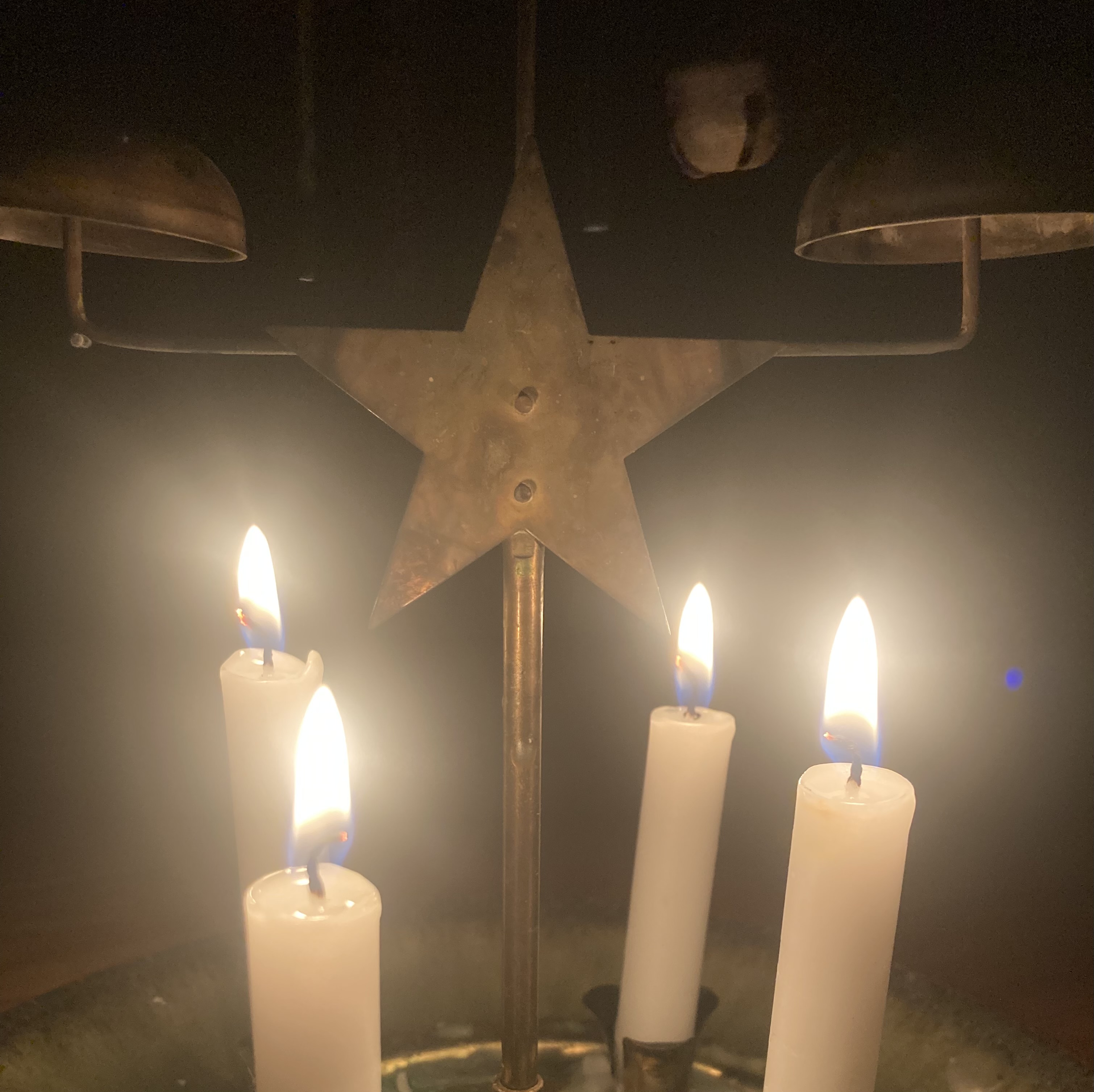
Article 36 of the Ecuadorian Constitution states, “Those persons who have reached sixty-five years of age shall be considered to be elderly.” And the elderly shall receive free health care, paid work, universal retirement, tax exemptions and access to housing that ensures a decent life.
The United States has no such declaration. The Centers for Disease Control defines an “older adult” as 60 years of age, but age 65 marks eligibility for Medicare. The Age Discrimination in Employment Act of 1978 ended mandatory retirement and currently it is illegal to force anyone to retire.
In Europe, the average retirement age is 65 to 67, although the Nordic countries tend upwards to age 70. It seems entirely possible that Western civilization has radically understated human potential.
Ching-Yuen was a Chinese herbalist, born maybe circa 1677, who died in 1933. He retired from his military career at age 78, and received from the imperial government birthday cards on his 100th, 150th and 200th birthdays. Time Magazine reported on this in May 2012. Ching-Yuen’s advice on longevity was simply: “Keep a quiet heart, sit like a tortoise, walk sprightly like a pigeon and sleep like a dog.”
Baird T. Spaulding’s “Life and Teaching of the Masters of the Far East” tells of his trek to Persia and the Orient in 1894 where he made contact with “the Great Masters of the Himalayas,” people living 600 or more years. Spaulding explains the central teaching as, “The Masters accept that Buddha represents the Way to Enlightenment, but they clearly set forth that the Christ Consciousness is Enlightenment, or a state of consciousness for which we are all seeking – the Christ light of every individual; therefore, the light of every child born into the world.” He describes acts of higher consciousness, such as walking on water or manifesting food to feed the masses.
Cuie Wenze is a legendary Chinese physician from the Qin Dynasty who reportedly lived to be 300 years old through holistic life nourishment, balancing the physical, mental and spiritual. Gee Yule, another Taoist alchemist, lived a reported 280 years by cultivating the Three Treasures: Jing (essence) Qi (vital energy) and Shen (spirit) through practices like meditation, breathing and alchemy. There are many records of such lives, if one seeks out these stories.
Years ago, while I was learning Qi Gong I was introduced to a practitioner of Chinese medicine whom, I was told, had not eaten food in years, instead existing on the inner Qi he had cultivated. Whether fact or fiction, it was hubris of me to make any rational decision about this. Wisdom, it seemed, was in suspending disbelief and simply observing this man.
From Epicurus through the enlightenment up to our present day, Western rationalism has been materialist. “Food, clothing and shelter” define the basic needs, and given an “us versus them” mindset in competition for limited resources, is it any surprise the 20th century was history’s bloodiest with massive atrocities of human-caused slaughter. Rational self interest is, ultimately, self limiting.
“An eye for an eye only ends up making the whole world blind,” Gandhi said. “The unmentionable odor of death” the poet Auden wrote, on the night when World War II broke out. And now, late in 2025 authoritarian strongmen become dominant, consciousness seems curated by algorithms and increasingly by artificial intelligence. This is our choice, not a fait accompli, and so could “beauty and truth” be added to humans’ basic needs? Can we expand our sense of self?
To the materialist rational mind this seems wildly unrealistic, while to the Taoist this is internal alchemy. Sir Isaac Newton, paragon of the rational scientific mind, was also – coincidentally – a leading alchemist of his day. The laws of physics do pertain, while the metaphysics of consciousness – much like quantum mechanics – can broaden our scope, open our minds to new possibilities, an awareness of the subtle energies.
The average U.S. life expectancy has increased to 78.4 years. The trend is positive and allows much room for an expansion of consciousness. What if 65 were viewed not as aged, but as an opening, an opportunity to move inward away from the external pressures of daily life? 10,000 Boomers per day are now turning 65, with nearly 1 billion people over 65 world wide by 2030, and more than 1.5 billion by 2050. An unparalleled force for good could be unleashed if we transform consciousness.
The solstice brings a return of light. May this year’s return be both literal and figurative.
Isaac in Isolation
Posted: April 18, 2025 Filed under: Child Centered Activities | Tags: alchemy, books, consciousness, history, Isaac Newton, philosophy, rational mind, science 1 Comment
In 1665 the plague descended upon London, forcing all the residents to go into isolation. The COVID-19 of its day, in an age before plumbing or electricity, before iPhones and apps, the isolation was complete to a degree that we can barely fathom today.
A 22-year old named Isaac used his solitude well, conceiving the laws of infinitesimal calculus. Leibniz is credited with developing Calculus but young Isaac was 8 years ahead of him. Einstein has hailed the insights as “perhaps the greatest advance in thought.”
At the age of 44 Isaac walked in the gardens of Cambridge University and observed an apple falling straight down to the earth. So he surmised and proceeded to publish, in 1687, Principia which established the foundation for classical mechanics. A manuscript from the Royal Society retells this conversation of 15 April 1726, when Isaac told a colleague how the idea came to him:
“we went into the garden, & drank thea under the shade of some appletrees, only he, & myself. amidst other discourse, he told me, he was just in the same situation, as when formerly, the notion of gravitation came into his mind. “why should that apple always descend perpendicularly to the ground,” thought he to him self: occasion’d by the fall of an apple, as he sat in a comtemplative mood: “why should it not go sideways, or upwards? but constantly to the earths centre? assuredly, the reason is, that the earth draws it. there must be a drawing power in matter. & the sum of the drawing power in the matter of the earth must be in the earths center, not in any side of the earth. therefore dos this apple fall perpendicularly, or toward the center. if matter thus draws matter; it must be in proportion of its quantity. therefore the apple draws the earth, as well as the earth draws the apple.”
By the age of 55 Isaac had been named, by the British Crown, the Warden of the Mint, and then served as the Master of the Mint for 30-years. In contemporary terms, the Master was essentially the Chairman of the Federal Reserve, responsible to ensure the value and to assay the gold content of the King’s coins.
At the age of 62 the King bestowed upon him Knighthood, which is why we universally refer to him as Sir Isaac Newton, one of the towering figures in history, a paragon of rational thought.
What is less well known of Sir Isaac is that he was a leading alchemist of his day. The irony is almost mind-boggling: when alchemy was a crime punishable by death by public hanging the Master of the Mint was busy trying to turn base metals into gold. It is said of more than 10 million words of notes taken by Newton, 1 million at least pertained to alchemy. His interest was more than just a passing curiosity. By any conventional thought, that is an idea laughably hard to grasp.
What if alchemy is not about base metals turned into gold, but rather a symbolic language for the pursuit of higher consciousness? In the three-dimensional realm of conventional thought, where the laws of physics and Darwinian materialism reign supreme, what better symbolism could there be than “base metals” and “gold” referring to the path to wisdom of a greater whole.
Carl Jung in his Alchemy and Psychology and Fabricius in Alchemy: The Medieval Alchemists and Their Royal Art suggest that this is, in fact, the more accurate understanding. In The Foundations of Newton’s Alchemy, B.J.T. Dobbs argues that “Newton’s primary goal was not the study of nature for its own sake but rather an attempt to establish a unified system that would have included both natural and divine principles.” Newton was a critical link between the Renaissance Hermeticism and the rational chemistry and mechanics of the scientific revolution; in moving the scientific world forward, he looked back upon Neoplatonism, which in turn drew upon the writings of Hermes Trismegistus, the towering Hellenistic sage.
History teaches that higher consciousness threatens conventional thought. In 33 AD the self-righteous Pharisees had the radical street preacher put to death by public hanging. Martin Luther King had an FBI file and was assassinated for arguing that “all people are created equal.” In the year 2025, the pious among us ban books from libraries that challenge their narrow minded sense of self. The orthodox, it seems, are not expansive but restrictive and limiting.
Newton was wise never to publish his alchemical writings. In fact, many of them were burned by a fire; the story told that a dog knocked over a candle in his study, but one wonders what was the risk to his reputation for that intellectual pursuit. He remained, in a sense, in isolation throughout his life for his pursuit of alchemy.
The record shows that when Newton stepped down from the 2nd Lucasian Professorship of Mathematics – considered the single most prestigious professorship in the world – his replacement, William Whiston excoriated Newton publicly for his highly unorthodox views. No doubt Professor Whiston was smug in his self righteous words and considered the case closed. But in fact, it may be that he had simply locked himself, and his peers, inside the box of self limiting, rational thought.
The world is more vast than we tend to conceive. It would seem the challenge of our times now is to expand our collective higher consciousness, to awaken and more fully hear and embrace those “mystic chords…of our better angels.”
________________________________



Truths Held Self Evident
Posted: January 3, 2025 Filed under: Child Centered Activities, Chronicles of a First Time Parent, consciousness, What is an Art Farm | Tags: consciousness, Great potato famine, healing, hypermasculinity, intergenerational trauma, mental health, trauma 1 Comment
Among truths held self evident, that healing is the purpose of life must be central. But this view challenges the conventional A-list: asset acquisition, accomplishment, accumulation of wealth, accolade, acclaim, awards, advancement…to name but a few.
“He who dies with the most toys wins” is the popular path, but life’s hard labors will come to our doorstep, at which time the question is whether we step up or cower. Our future hangs upon the response.
Easier it is to kick the can down the road. John Maynard Keynes, the economist of destiny, who structured the post-WW2 financial reconstruction, famously said, “In the long run, we are all dead.” But life’s grim reaper is one keen accountant, and even if we choose to ignore, intergenerational trauma will settle all accounts going forward.
“Intergenerational trauma” was a new concept to me until a few years ago when my wife, a Licensed Clinical Professional Counselor spoke of it. Since then the term keeps popping up and it seems to define something of our zeitgeist. Some among us may claim this is just “a hoax from China” but scientific fact argues against brazen disregard.
Epigenetics is the science of how environmental and behavioral factors alter gene activity without changing the DNA sequence. The term “epigenetics” comes from the Greek word epi- which means “on or above.” Originally introduced in 1942, the field has grown rapidly since 2004, when the genome was fully sequenced.
Among its findings are that environmental factors can influence the health and traits over three generations through epigenetic change passed down via sperm and egg cells; the “transgenerational” effect impacts grandchildren even though they were not directly exposed to the original environmental factor. In other words, even the untold family stories shape who we are, and become.
“Beneath every railroad tie there lies a dead Irishman” is an adage describing the struggles of the Irish emigres. My father’s ancestors immigrated to the United States circa 1850. We do not have records, but believe the Mahany clan were from the city of Cork, in the County of Munster where the Great Potato Famine raged. Between 1845 and 1855 more than 1.5 million adults and children – all enduring trauma – left Ireland seeking refuge in America.
The railroads were major employers of the Irish, and the Mahany family followed that path. Daniel M Mahany/Mahoney, my great-grandfather, was born in Kentucky in 1860, the era of the Civil War, the Confederate South; intense tension among the Catholics, immigrants and the Protestant natives; machine politics and its rogues’ gallery of gang violence. As a laborer on the L&N Railroad his work must have been extremely difficult, and how he dealt with those tensions, or even traumas, once home is left unspoken.
My Father said little, next to nothing, about his family of origin and I can only wonder what traumas lie buried, untold stories of a painful past, but which still shape our gene pool. I am the third generation of Daniel Mahany’s child D.J. Mahany
One of five siblings, I process this neither in a vacuum nor by committee. The path of healing is deeply personal, each of us bringing to bear the untold complexities of our own lived lives. But plain is the historical record, factual is the science, and now is my moment.
I wonder if the turbulence of our times is not, to some degree, a long overdue reckoning of intergenerational trauma. There seems a purging of the collective id; the hypermasculine posturing, saber rattling of geo-political Oligarchs, the comic pretensions of World Wrestling Entertainment, all of which seem a masking of unhealed traumas endured and too long accrued. Mass violence marked the 20th century – the “century of genocide” – and I wonder if now comes the time when accounts need be settled.
My children are the fourth generation. My parenting choices have the potential to be liberating. Nothing can be more important to me now, at this stage of my life, than healing as the only thing that matters, that the future may be made more clear, centered in the light.
The Art Ark
Posted: December 13, 2024 Filed under: Child Centered Activities, Chronicles of a First Time Parent, Portfolio - David's work, What is an Art Farm | Tags: animals, arctic, climate-change, consciousness, Friends School of Portland, poetry, polar bears, spirituality 1 Comment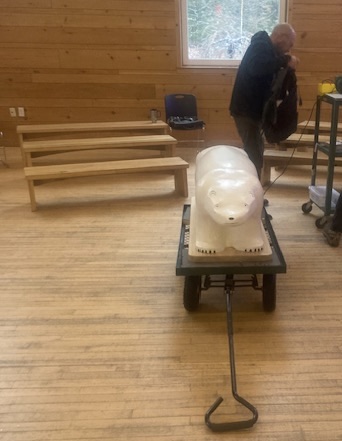
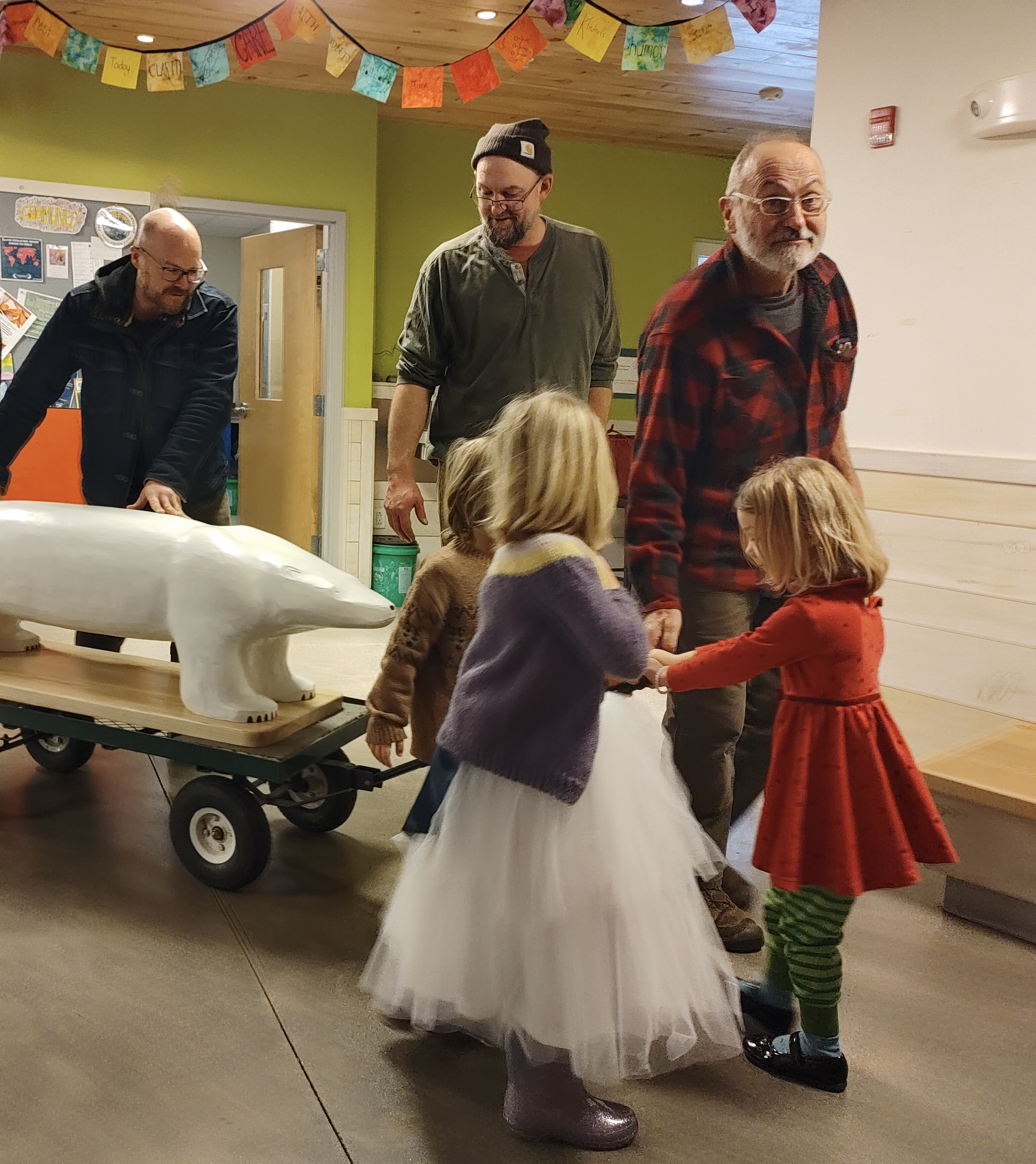
Previously I have told the story of the Sea Monsters, which exhibit came to its end. The monsters were put up for adoption, and then a Friend, a lifelong artist who volunteered for decades in inner city schools, exclaimed, “You need to save the Sea Monsters!!!” She donated funds to cover the costs, which became the catalyst and the adoptions have begun. We delivered Peter the Polar Bear on Wednesday to a full school assembly at the Friends School of Portland.
Historians say Cleopatra’s arrival at the port city of Tarsus to meet Mark Antony, 41 BC, was the most splendid entrance in history. Plutarch described it as “Aphrodite had come to make merry with Dionysus for the good of Asia.” William Shakespeare used a translation of Plutarch to write his tragedy Antony and Cleopatra. Hollywood, 1963, created its blockbuster “Cleopatra,” forever casting Elizabeth Taylor in everyman’s memories. But in the eyes of a Pre-K cherub at the Friends School, the arrival of Peter the Polar Bear must have been every bit as grand. I share here the text of our presentation.
DAVID: I am pleased to introduce Peter the Polar Bear, one of seven Sea Monsters from the Carousel Cosmos, a public art exhibit that had been on display on Portland’s Western Promenade. The exhibit came to an end, and the monsters are now being adopted all around the state. Peter has come to live in the Pre-K room.
Dear Pre-K children, I want you to know that Peter is sturdy and stout. He is a bench.
- You can sit on his back and eat a snack
- You could lie down and take a nap
- If your teacher allowed, you could do a handstand on his head
- Or on your hands and knees, crawl and say “thank you and please…”
- listen carefully, perhaps he will reply…
- Peter is a gentle old Bear.

DAVID: Chris Miller is the polymath maker, the creator of the Carousel Cosmos. He will give a short presentation. But first, everyone please take out your bumblebee thinking caps…tie them on tightly…we will cross pollinate ideas, and with the help of the 8th grade students we will tell a story about circles and sharing.
How does a carousel turn?
STUDENTS: IN A CIRCLE
DAVID: How do planets in outer space move?
STUDENTS: IN A CIRCLE
DAVID: When Quakers gather to meet, how do we sit?
STUDENTS: IN A CIRCLE
DAVID: Peter is made of the wood of ash trees, locally grown. Ash trees grow in the woods here at the Friends School property. The forest teaches us of the circle of life:
STUDENT #1: “Biodiversity” teaches us that the greater the number of species, the more healthy is the ecosystem. Our property is on the border between Eastern Deciduous Forest to the south and Boreal Forest to the north; White Pines and Eastern Hemlocks are dominant on our property’s southern edge, while Hemlocks, Pine, Oak, and Maples surround the building.
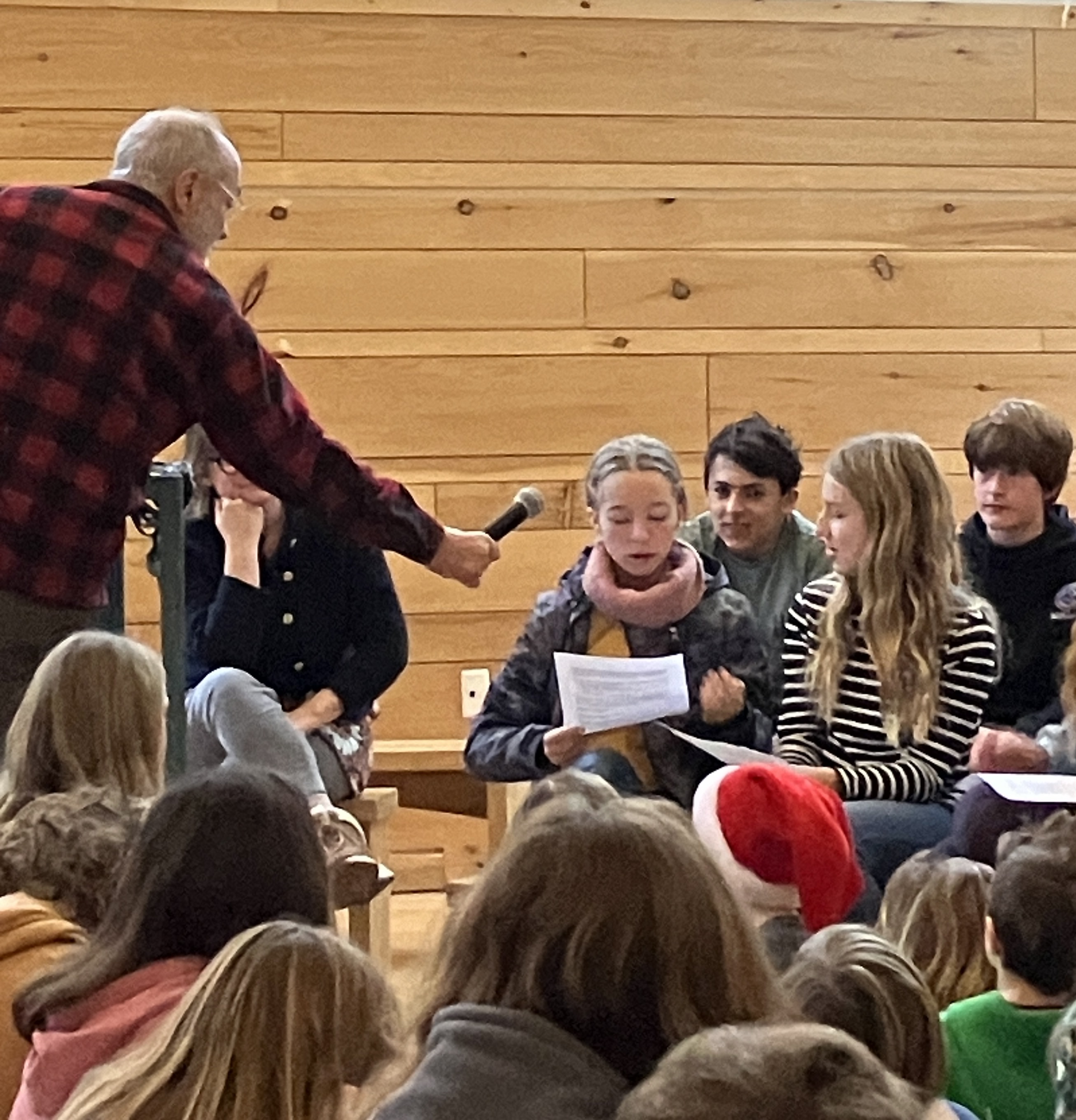
STUDENT #2: American Chestnuts grow in our woods. Although devastated by a blight and almost completely wiped out in America, our Chestnut trees likely are sprouting from the roots of ancient trees that predate the trees currently growing on the land.
STUDENT #3: The white ash and black ash trees grow in the wetland corner of the School property. The emerald ash borer, a jewel beetle native to north-eastern Asia is an invasive insect that feeds on the ash species, decimating these trees. We continue to study this problem.
STUDENT #4: The mycellium network is spread throughout the entire forest, and allows the trees to communicate to each other. Mycelium breaks down organic matter to feed the fungi, plants, and other organisms and connects plants to transfer water, nitrogen, carbon, and other minerals. The strong trees share enzymes with the weaker trees, making the forest healthier.
STUDENT #5: In the circle of life, we can say
- The greater the diversity the healthier the community
- The strong help the weak
- And everyone prospers
- Chris Miller will now speak about more circles and sharing
Chris Miller then stood and spoke about circles and Polar Bears, shared images of his Sea Monsters, how they were designed, and stories of their past. He explained that Polar Bears may have lived where Maine is, but long long ago. A child spoke up and explained pangaea. Chris answered all the children’s questions. The room was silent, in awe as he spoke:
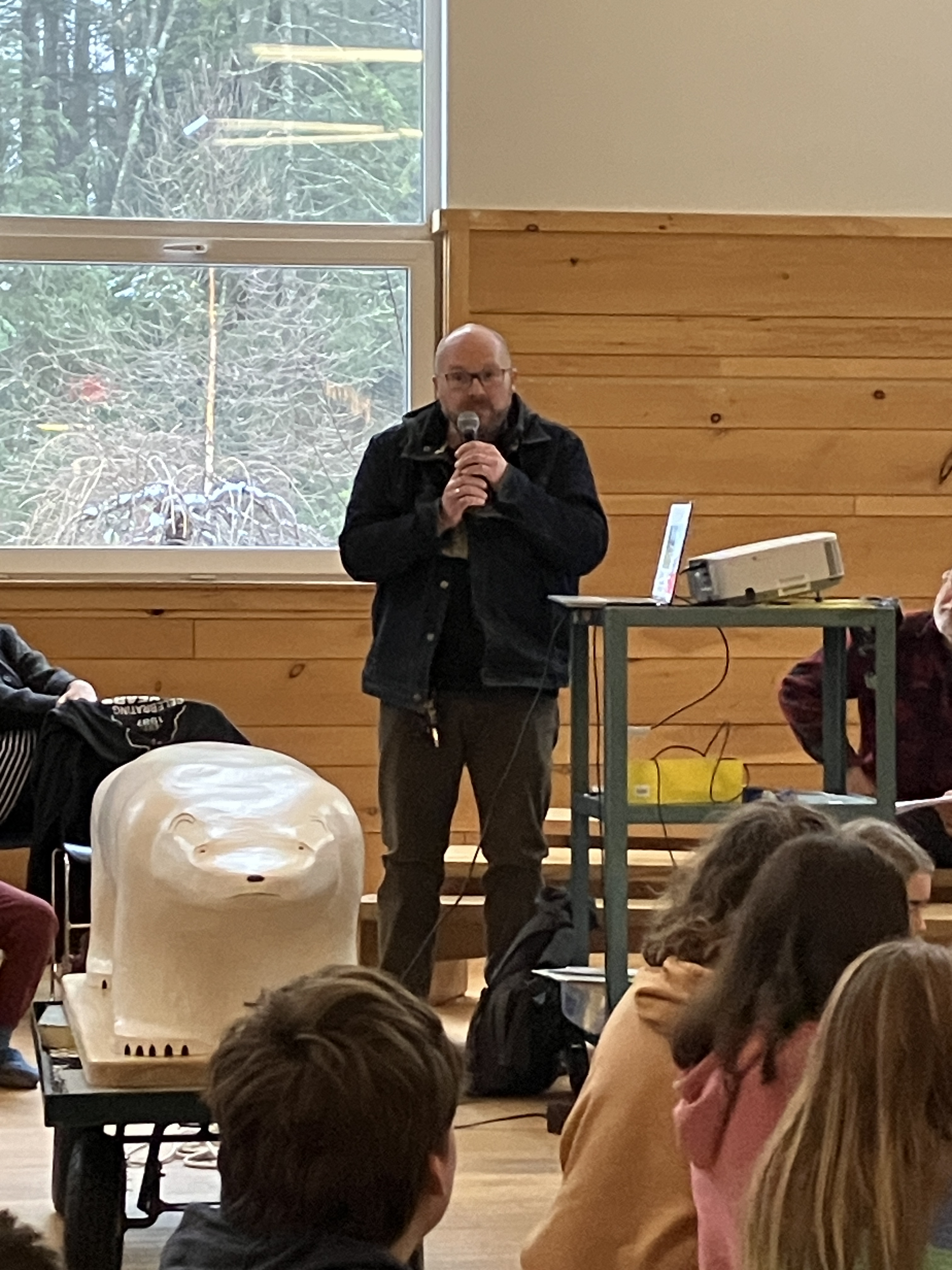
“Gather round. We are all made of the same atoms that the stars are made of too. We are parts of the universe that observe the universe. We are all living, sentient and curious together, here of all places and now of all times. What are the odds? How does it make you feel?
“This carousel is inspired by kindness, adventure, outer space, bedtime stories, dinosaurs and ice cream. It’s inspired by the Western Promenade’s endless views, spectacular sunsets and contemplative atmosphere. It spins the way that the earth spins when the sun sets, in a place where trolleys used to stop, in a small picturesque city with a school community that speaks more than sixty different languages.”
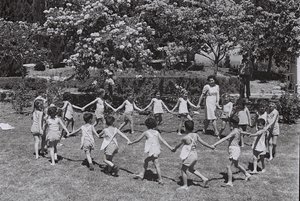
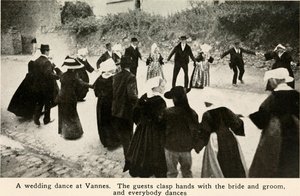
Chris shared images of circles from around the world, over hundreds of years, many people gathered together…




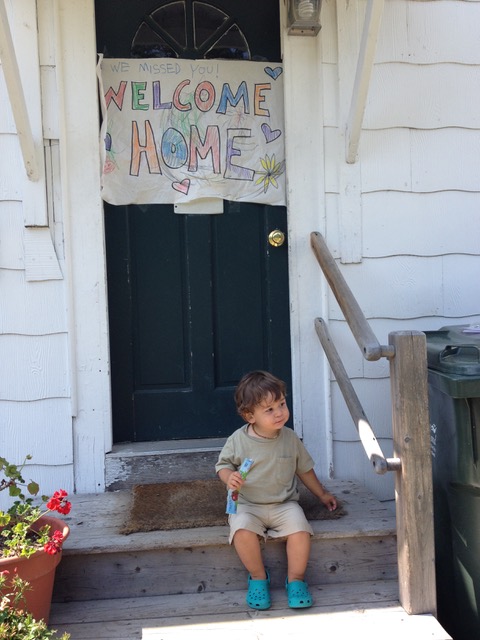
The Pre-K children unveiled a banner they had made:

…and then lead Peter out of the room, down the hall to his new home:


Turning 12
Posted: December 6, 2024 Filed under: Chronicles of a First Time Parent, consciousness, What is an Art Farm | Tags: coming of age rituals, consciousness, hypermasculinity, mental health, mindfulness, religion, spirituality 5 Comments
Our son turns 12 next week and I am mulling over rituals to mark this right of passage as our cherub becomes a young man.
I was raised in the Roman Catholic Church and its ritual would have been Confirmation. I have little memory of that, but it appears five hours of community service were required. I do remember wearing white, walking down the aisle and choosing Mark as my name. I chose that name to honor my best friend, who had just suffered a terrible accident in which both his arms were amputated. My choice was one of solidarity.

The Catholic tradition seems neither my nor my son’s path; I find Christian dogma limiting although Christ consciousness tremendously expansive. My faith is a work-in-progress while I am seeking alternatives for raising my son.
In the Amazon, the Satere-Mawe tribe have young men wear a glove filled with bullet ants for 10 minutes. Pushing the threshold of pain is not quite the path I seek. In Ethiopia boys jump over a cow, and in Vanuatu they jump from tall towers with vines tied to their ankles, but manliness, to my mind, is more than a measure of strength and courage.

In the Hebrew tradition the bar mitzvah marks a boy’s coming of age whereupon he begins to assume responsibility for his actions. Responsibility tied to manhood appeals to me. 13 is the age of Bar Mitzvah but to my mind, manhood is not just the number of years spent on the planet. It must be earned through understanding. This ritual, then, is about values and lessons learned.
During the summer my son and I volunteered frequently at the South Portland Food Cupboard. It was an enriching experience, and community service seems relevant in his coming of age. Construction work such as Habitat for Humanity comes to mind. I have heard of Church Youth Groups who undertake community service projects. I am looking for local possibilities.
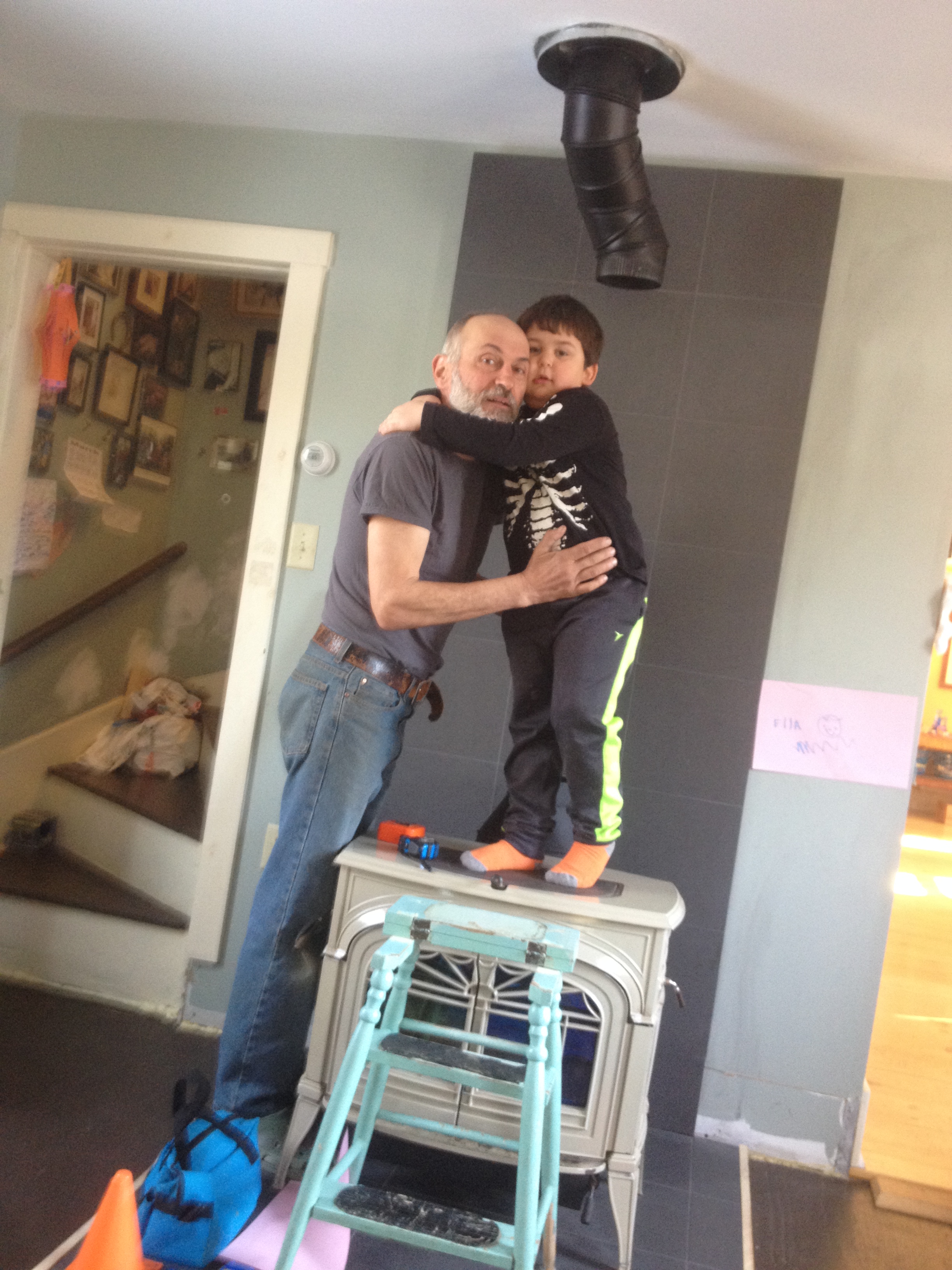
The insights of other men should be another aspect of this plan. My nephew, my son’s cousin, did have a Bar Mitzvah and has agreed to talk with him about the experience, and his own coming of age. A philosopher/carpenter friend has offered to teach more welding, and we may join with a classmate of my son and his father, for a shared experience; working with tools in the act of making. Another friend, whose son also is the same age, is loaning us a lathe for turning wood, and that may be another opportunity for input from other men in the community. My son will benefit from hearing more than my views.
And then there is the topic of sexuality. My Father’s coming-of-age speech to me was as comic as it was lacking. It was haltingly brief, when he simply asked, “Do you have any questions?” Feeling the tension, of course I replied, “No,” whereupon he handed me a paperback book on Catholic morals. I recall the author was aghast at a recent 6th grade school field trip, where the girls wore red lipstick and hosiery. Just blame it on the girls remains the dogmatic view. What I learned of sexuality came from my older Brother and the locker room, but my son deserves better than that.

The pious among us claim that traditional morality teaches the male as the leader, with male-female relationships the only acceptable norm. I regret to inform them that history teaches otherwise. The Christian era has been relatively brief, while Ancient Greece, Rome and China openly practiced homosexuality and pederasty. LGBTQ may arguably be the historical norm and reversion to the mean would seem natural. My son will benefit from thinking not in centuries but in millenia.
The process of writing this has become the means to outline a plan. Among the core values this DIY ritual should include are:
- compassion and cooperation are keys to a healthy masculinity
- no means no, and might does not make right.
- emotional intelligence has greater value than sheer intellectual horsepower
- listen to your heart, not just your head; be curious, ask questions, follow your passion
- practical problem-solving skills provide a grounded self-confidence
- making is hard-wired in our DNA; art predates agriculture, and therefore civilization itself
- Integrity presumes courage; let your word be your bond
- energy follows thought; actions have consequences


The Curve of Consciousness
Posted: September 27, 2024 Filed under: consciousness | Tags: consciousness, philosophy, quantum-physics, rational mind, science, space time continuum, spirituality 2 Comments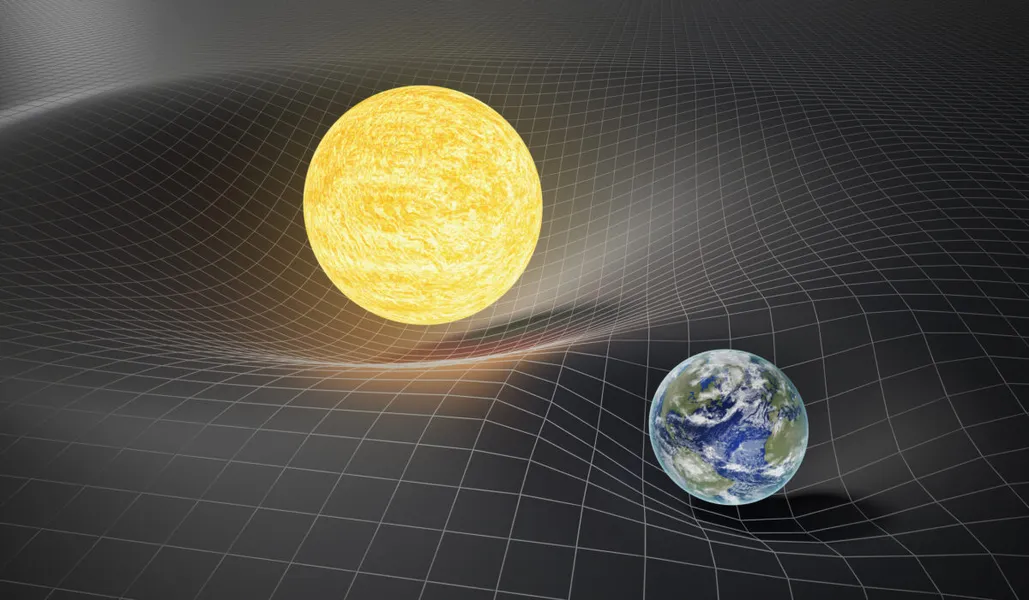
Carlo Rovelli is an Italian theoretical physicist with a sterling gift for writing, in English, clear sentences on complex ideas. In “Seven Brief Lessons on Physics” he traces the arc of modern physics from Isaac Newton’s 1687 straight mechanical worldview where bodies move through space and time passes uniformly to the now confirmed existence of quarks and, in 2013, the discovery of the Higgs boson, a fundamental sub-atomic particle; the most basic building blocks of a curvilinear universe.
Einstein’s milestone 1919 insight was that “the gravitational field is not diffused through space; the gravitational field is that space itself….Space is no longer something distinct from matter – it is one of the “material” components of the world. An entity that undulates, flexes, curves, twists. The whole of space can expand and contract.”
Max Planck had a radical idea that energy was not a continuous flow, but instead was “quanta,” or packets, a/k/a small building blocks. Einstein, again, cracked the code, in his 1905 annus mirabilis papers when he wrote, “…the energy of a light ray spreading out from a point source is not continuously distributed over an increasing space but consists of a finite number of “energy quanta” which are localized at points of space, which move without dividing, and which can only be produced and absorbed as complete units.”
Einstein’s idea was rejected as sheer nonsense, until 1925 when a group of physicists in Copenhagen, lead by Niels Bohr, worked out the mathematical equations behind the theory.
The world of quantum mechanics is not predictable, can only be spoken of in terms of probabilities. Roselli describes this as “…very far from the mechanical world of Newton…the world [of quantum mechanics] is a continuous, restless swarming of things, a continuous coming to light and disappearance of ephemeral entities. A set of vibrations, as in the switched-on hippie world of the 1960s. A world of happenings, not of things.”
In the year of our Lord 2024, physics teaches us that, “There is no longer space that “contains” the world, and there is no longer time “in which” events occur. There are only elementary processes wherein quanta of space and matter continually interact with one another. The illusion of space and time that continues around us is a blurred vision of this swarming of elementary processes.”
I present this as background to an idea that just as space time is a curved dynamic field, so too, by analogy, is human consciousness; in the years going forward our ideas of relationships and fundamental rights may flower in unforeseen dimensions. The “straight and narrow” ethics of Augustine, Calvin and Cotton Mather – to name just a few – may become antiquated just as Greek myth now is seen as mere child’s play.
Whether history repeats or rhymes, the fact is that we have been here before. Augustine of Hippo, the towering Church Father, wrote circa 400, “…it is not necessary to probe into the nature of things, as was done by those whom the Greeks called physici…It is enough for the Christian to believe that the only cause of all created things, whether heavenly or earthly, whether visible or invisible, is the goodness of the Creator, the one true God; and that nothing exists but Himself that does not derive its existence from Him.” The Dark Ages followed when the Western Roman Empire fell, trade became stagnant, the Black Plague ravaged the land, scientific thought was discouraged.
Come the sixteenth century, a Polish mathematician calculated the rotations of the planets, and confirmed that the Sun, in fact, is the center of our galaxy. The mathematician, also a Catholic Canon, was savvy and prefaced his work “To The Most Holy Lord, Pope Paul III” begging indulgence, “How I came to dare to conceive such motion of the Earth, contrary to the received opinion of the Mathematicians and indeed contrary to the impression of the senses, is what your Holiness will rather expect to hear. So I should like your Holiness to know that I was induced to think of a method of computing the motions of the spheres by nothing else than the knowledge of the Mathematicians are inconsistent in these investigations.” Copernicus endeavored only to check the mathematics but his “Book of Revolutions” changed the course of history.
Galileo, equally brilliant, more bold and less savvy, championed and then scientifically proved the Copernican heliocentrism, for which he was tried by the Roman Inquisition and found “vehemently suspect of heresy.” Galileo is called the father of observational astronomy, classical physics, the scientific method and modern science. Popes Paul III and V are mere footnotes in history.
The flowering of Renaissance humanism was in full swing in those times, and consider the intellectual and cultural advances concurrent with the scientific revolution: Leonardo da Vinci, Michelangelo, Raphael were active in their studios; Erasmus and Descartes were thinking; Shakespeare and John Milton wrote epic poems and plays; Johannes Kepler and Isaac Newton advanced scientific thought. Whether science was the cause or effect, the fact is that the breadth of thought – what I call consciousness – expanded wildly during this period.
So what then might our “curve of consciousness” bring? Consider these contemporary facts:
- Science has proven that trees communicate and share rescources among themselves via the underground “mycorrhizal network” transferring water, nitrogen, carbon and other minerals; the stronger helping the weaker to survive. Peter Wohlleben has called this network “the woodwide web” allowing trees to communicate.
- Researchers at MIT and other universities are beginning to use Artificial Intelligence to decode the language of humpback whales “with a confidence level of 96 percent.”
- In 2008 the Republic of Ecuador drafted and approved a new constitution recognizing the rights of nature and ecosystems, making them legally enforceable. The preamble states: “RECOGNIZING our age-old roots, wrought by women and men from various peoples, CELEBRATING nature, the Pacha Mama (Mother Earth), of which we are a part and which is vital to our existence, INVOKING the name of God and recognizing our diverse forms of religion and spirituality, CALLING UPON the wisdom of all the cultures that enrich us as a society, AS HEIRS to social liberation struggles against all forms of domination and colonialism AND with a profound commitment to the present and to the future, Hereby decide to build…”
To my mind the coming flowering of consciousness will celebrate unity in diversity. Anthropocentrism may give way to an acceptance that all life is one. Genesis 1:26 where “…God said, Let us make man in our image, after our likeness: and let them have dominion over the fish of the sea, and over the fowl of the air, and over the cattle, and over all the earth, and over every creeping thing that creepeth upon the earth” would seem a shibboleth soon to fall, perhaps replaced and finally embraced by Romans 13:10 “Love your neighbor as yourself. Love does no harm to a neighbor. Therefore love is the fulfillment of the law.”
To all of this, I quote Martin Luther King, “…Free at last, free at last, thank God almighty we are free at last.”
_____________________________________________________________________________
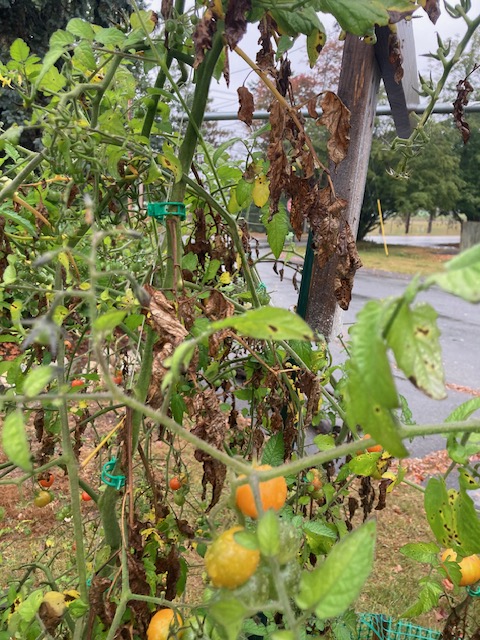
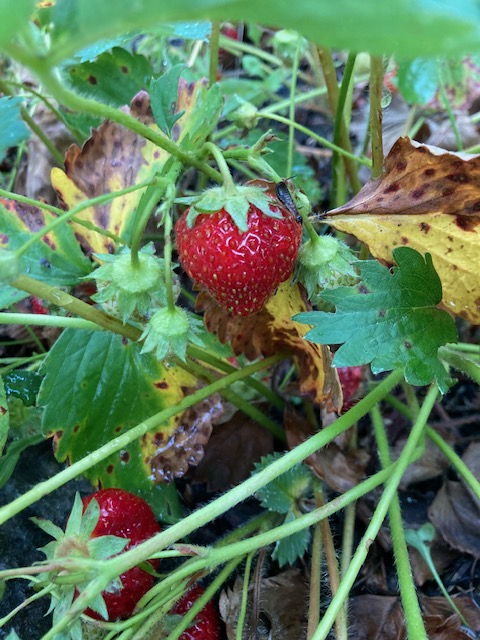
The radiant reds and orange of summer subside, while brown and sienna now dominate the garden. Beans are ripening. We move closer to the Solstice.





Greater Things
Posted: July 26, 2024 Filed under: Art & Healing, consciousness | Tags: consciousness, rational mind, spirituality 2 CommentsAs a child, raised Roman Catholic, I went to church every Sunday, and to confession on the Holy Week high holidays, plus a few times each year. My sins at most then were venial, not mortal, certainly never cardinal, and, as I stammered for words to describe my offense, at my earthly Father’s instruction, I would take to my knee and ask forgiveness for my sins.
As a University student, I read the New Testament in Koine Greek. My interest in the bible is as literature, not as dogma; I do not read the Bible, but it is important to know, if only as the lingua franca among the 2.4 billion Christians of this world.
My Mother quoted Matthew 22:37-38 as the pillar of the faith, which she paraphrased as “Love and you have fulfilled the law.” A fine path, indeed, and I am thankful for that guidance. To my mind, and in my experience, however, John 14:12 speaks to the core:
“Verily, verily, I say unto you, He that believeth on me, the works that I do shall he do also; and greater works than these shall he do; because I go unto my Father.”
Greater works than these?
As a Federalist approaches the law, let us read this sentence literally, as the Founding Father (sic) meant by his own words. Given that the Gospel of John opens “In the beginning was the word…” we do well to begin with the grammar.
Yeshua, the street preacher, spoke either koine (marketplace Greek) or Aramaic; his name is a late form of the Biblical Hebrew “Joshua,” which is spelled Iesous in Greek and Jesus in Latin. The gospels were written in the Koine because that was more popular than Aramaic, thus reaching a wider audience and so approximately 100-years after his death Matthew, Mark, Luke and John wrote Yeshua’s story in Greek, later translated into Latin, known as The Vulgate; in 1522 William Tyndale translated the work into English (for which in 1536 he was strangled and then burned at the stake) but his work informed the translators of the King James Bible, a masterpiece of writing, published in 1611. It is this version from which I here quote.
The street preacher begins with the hortative clause “Verily, verily, I say unto you,” a teacher’s exclamation, for emphasis, to his listeners.
The subject is “he,” the object is “the works,” and “do” is the verb, in the subjunctive mood. Rarely used in contemporary English, the subjunctive is critical here; the indicative mood states facts, certainty, while the subjunctive mood – “shall do” – expresses potential. In other words, the avatar has opened the prospect of free will, the freedom to choose, challenging the listener to what we could do, rather than what we will do.
The sentence has three subordinate clauses, the first of which – “that believeth on me” – expands the subject phrase. “That I do” refines the direct object, while the third – “because I go” – is causative. Grammatical subordination is not necessarily logical subordination; were his going to the Father the sole cause of our salvation, then our acts would be secondary, almost like a “get out of jail free” card. Faith must be active, not passive, and emphasis here is upon doing; the fact of the matter remains the cause is subordinate to the acts, the doings, to the potential of the believer.
“Greater works than these” is an independent clause expanding that which is done – the miracles, from the Latin word miraculum, meaning “object of wonder” – which every parochial school child knows to include (but are not limited to) walking on water, feeding the 5,000, raising Lazarus from the dead.
The sentence is complex, written in hyperbaton, a rhetorical figure that inverts the normal order of words for added emphasis. But if we focus upon the subject, verb and object – like bowling pins lined up for a strike – it makes plain “He that believeth…shall do…the works, and greater works than these.”
Judge next, as an activist might rule from the bench, interpreting the text in a contemporary context. Carl Jung pertains here, and the subordinate clause of causation “because I go unto my Father” must then refer not to an anthropomorphic God, but to the wise old man, the archetypal male of the collective unconscious, a universal archetype of wisdom and insight. Jung believed every male psyche has a female aspect (anima) and every female psyche a male aspect (animus); so then “go unto my Father” is a personification of the wise masculine spirit within the balanced whole of higher consciousness, which is, to my mind, the “Christ” consciousness, the “anointed” one.
As children we learned English grammar. As adults can we learn to expand our consciousness? Who among us shall be so meek as to act upon, rather than merely to believe in, the miracles?
To speak of walking on water, of healing the sick, or raising the dead is to confront the laws of classical physics, to confound the rational mind, to go beyond the prosaic, to enter the realm of poetry.
Hard pressed to imagine such a state of enlightened being, we do well to ponder the words of the God-intoxicated Persian, the poet Hafiz, who wrote, circa 1350, “I Have Learned So Much”:
I
Have
Learned
So much from God
That I can no longer
Call Myself
A Christian, a Hindu, a Muslim,
A Buddhist, a Jew.
The Truth has shared so much of Itself
With me
That I can no longer call myself
A man, a woman, an angel
Or even pure
Soul.
Love has
Befriended Hafiz so completely
It has turned to ash
And freed
Me
Of every concept and image
My mind has ever known.
[NOTE: My grammatical exegesis here has been refined with the help of my dear friend, Bob Ultimo. A classmate in Latin, we read together in the dark dinghy basement of Kresge Hall, Northwestern University 1983-85. He stayed the course, gained a Masters in Latin, taught for many years the Trivium (grammar, dialectic, rhetoric), currently teaches and writes on grammar and writing. A man in his prime, Magister Ultimo is a master of his craft. Given there is “a mysterious link between grammar and the mind” his clarity of verbal construction, keenness of thought, and deft wording are well worth following at writingsmartly.com. Thank you, Bob. Thank you, very much.]
* * * * * * * *
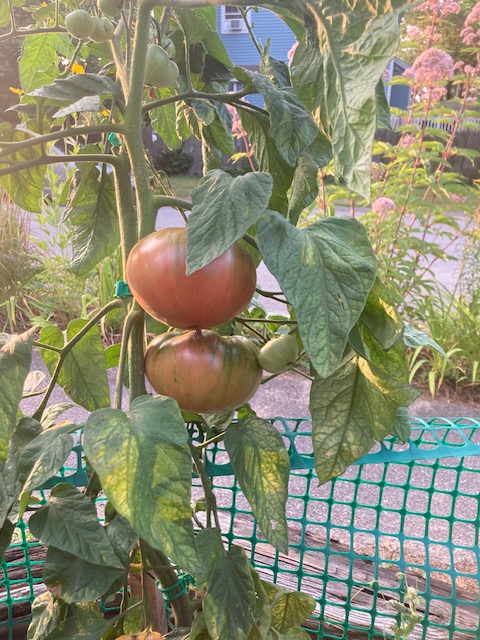
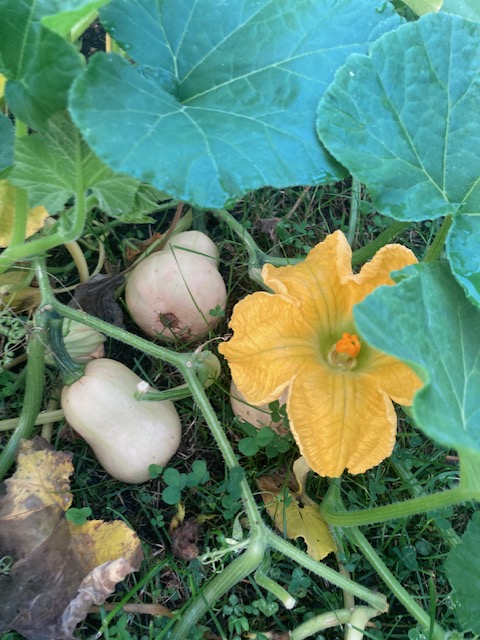
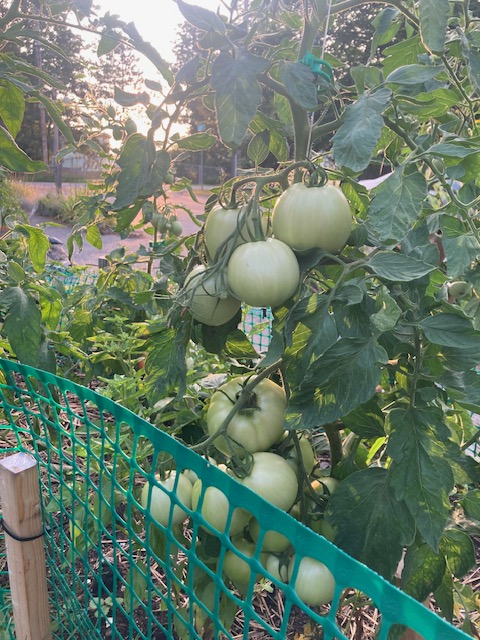
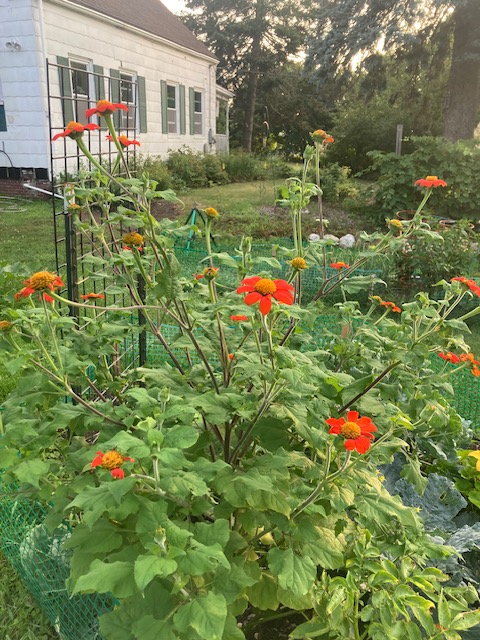
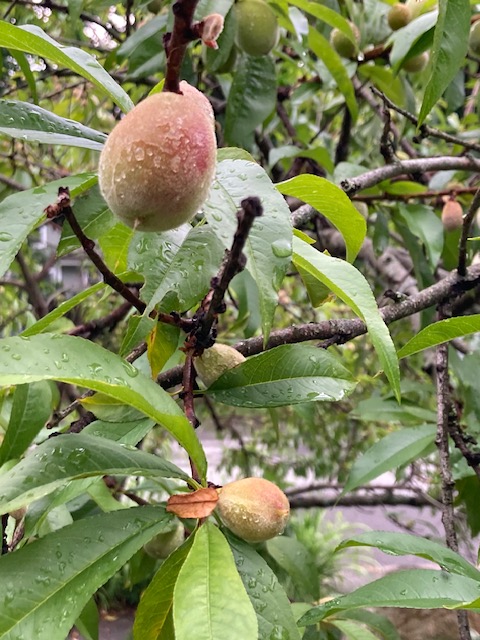
In late July, the fruits ripen and the harvest has begun.






The Underworld and its Archetypes
Posted: June 28, 2024 Filed under: Art & Healing, consciousness | Tags: consciousness, mythology, rational mind 1 Comment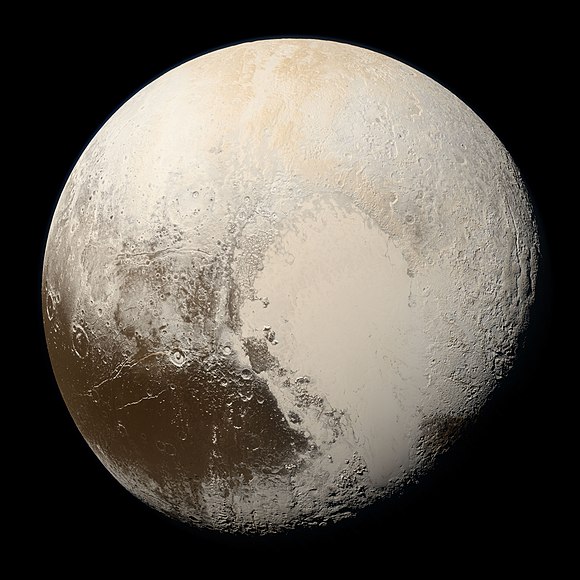
Science began, many say, with the Copernican Revolution, 1543, when a Polish astronomer put forth that the earth revolves around the sun, rather than the Earth at the center. And so began the broader Scientific Revolution, whereupon the foundations were set, and modern science flourished as an autonomous discipline.
But science can be argued to have begun with Aristotle circa 350 BCE, or the heliocentric theories of Philolaus in 5th Century BCE, or even Thales of Miletus, born 626 BCE, one of the seven sages, who broke from mythology to explain the world through deductive reasoning. Science is based upon facts, and the Western Intellectual tradition is rational.
But all cultures have gazed up at the heavens, and tried to decipher meaning. The scientific astronomers – in the West – used Greek mythological figures to christen the constellations of stars, and so mythology towers overhead, still to this day. Stop and consider: science at best is 2,400 years old, while celestial divination is millenia older, common to all cultures, on all continents. We are wise to consider the archetypes in the sky above us, and what we can learn from them.
Pluto, the planet furthest from the sun, was discovered in 1930 and named for the God of the Underworld, of the dead, also known as the Great Destroyer, Transformer and Redeemer.
Pluto, the planet, was present above the United States on July 4, 1776 “When in the course of human events…” fifty-six founding fathers on that date set pen to paper, to sign and to state that, “We hold these truths to be self-evident, that all men are created equal, that they are endowed by their Creator with certain unalienable Rights, that among these are Life, Liberty and the pursuit of Happiness.” So our sovereign nation was declared.
Pluto has a very long arc – specifically 247 years to circumnavigate the sun – and it has now completed one full return, precisely exact on February 2022 through 2024. The Great Destroyer, Transformer and Redeemer is at high noon, dead overhead again, and who among us cannot say that the United States of America is being wrestled to its core, over “truths held self evident”?
What I say here is not scientific fact, but may be an archetypal truth and the question before us, what we the people must decide, is who we are, and who shall we be going forward? Scientific fact does little to help us here. The archetypes seem predominate, and we are wise to pay heed, to seek answers not in the political but at our deeper, more expansive realms.
Fear not. As Pluto is the God of the dead, so too he is the God of wealth and agriculture; the Destroyer, he is also the Redeemer. Persephone, his mistress, would bring back from the underworld new seeds to be planted each spring, to spawn a harvest come fall.
And so as we move through this dark season, may we also see at hand the seeds of an abundant future. Rather than fighting to the bottom, we the people can sow seeds of unity in diversity, we can move past an “either/or” mindset, to a “both/and” embracing and accepting a greater wholeness.
The choice, and its consequences, are ours.

Impeccable
Posted: June 21, 2024 Filed under: Chronicles of a First Time Parent, consciousness, Farming off the Farm | Tags: consciousness 2 Comments
When I was a child, the popular saying was “a man’s word is his bond.” I haven’t heard that expression now in decades.
King Solomon, David’s son, long ago commented “In all thy getting, get understanding.” For the better part of 40-years, the getting, it seems, has been primarily – for the few – immense material wealth. The 10 Commandments now seem laughably old fashioned.
Among ancient civilizations wisdom was rich, and we do well to revisit our past. The Toltec, a Meso-American culture that predates the Aztec, held four precepts to be key. Don Miquel Ruiz, a descendent of the Toltec, wrote “The Four Agreements” about “self-limiting beliefs.” The book, copyright 1997, has been published in 52 languages worldwide, and spent one decade as a New York Times bestseller.
The first precept, which he calls an “Agreement” is deceptively simple: “Be impeccable in your word.” He writes, “Your word is the power that you have to create. It is through the word that you manifest everything. Regardless what language you speak, your intent manifests through the word. What you dream, what you feel, and what you really are, will all be manifested through the word.”
“In the beginning was the Word, and the word was God” is the opening statement of the Christian Gospel of John. Ruiz explains and expands, “The word is not just a sound or a written symbol. The word is a force; it is the power you have to express and communicate, to think, and thereby to create events in your life. But like a sword with two edges, your word can create the most beautiful dream, or your word can destroy everything around you. One edge is the misuse of the word, which creates a living hell. The other edge is the impeccability of the word, which will only create beauty, love, and heaven on earth.”
As there is light, so there is darkness, which principle was embodied in the brilliant German orator whose message of fear and hatred manipulated a country of highly intelligent people. Again Ruiz, “He led them into a world war with just the power of his word. He convinced others to commit the most atrocious acts of violence. He activated people’s fears with the word, and like a big explosion, there was killing and war all around the world. …He sent out all those seeds of fear, and they grew very strong and beautifully achieved massive destruction.”
It is worth remembering that Hitler rose to power through a democratic election, via the German Workers Party, in 1932. Having campaigned as a populist, he consolidated power as a demon.
The Agreement’s verb is “impeccable,” which is derived from the Latin prefix in-, meaning “not,” and the verb peccare, meaning “to sin;” to be impeccable is to be without sin, but to the Toltec sin was different from the Christian meaning. Ruiz explains, “A sin is anything that you do which goes against yourself. Everything you feel or believe or say that goes against yourself is a sin. When you are impeccable, you take responsibility for your actions, but you do not judge or blame yourself. Being impeccable with your word is the correct use of your energy; it means to use your energy in the direction of truth and love for yourself.”
Simple truths are easily understood. Or are they? While driving on errands with my son, we talk about these. Again and again, to help guide his future, I draw from the past.
The Toltec had four agreements:
- Be impeccable with your word
- Don’t take anything personally
- Don’t make assumptions
- Always do your best
To this I would add two more:
- Let integrity be your bank account
- Let compassion, more than logic, guide your path
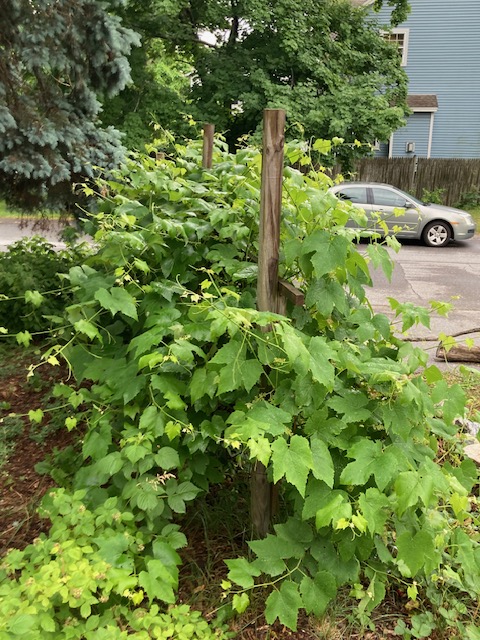
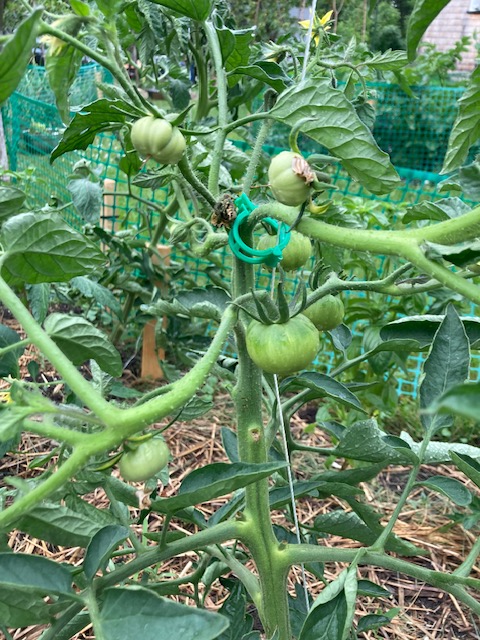
At this sun drenched solstice, fruits ripen and vines reach ever higher…






 an Art Farm