The Aggregate Yard
Posted: September 18, 2026 Filed under: Art & Healing, Portfolio - David's work 1 Comment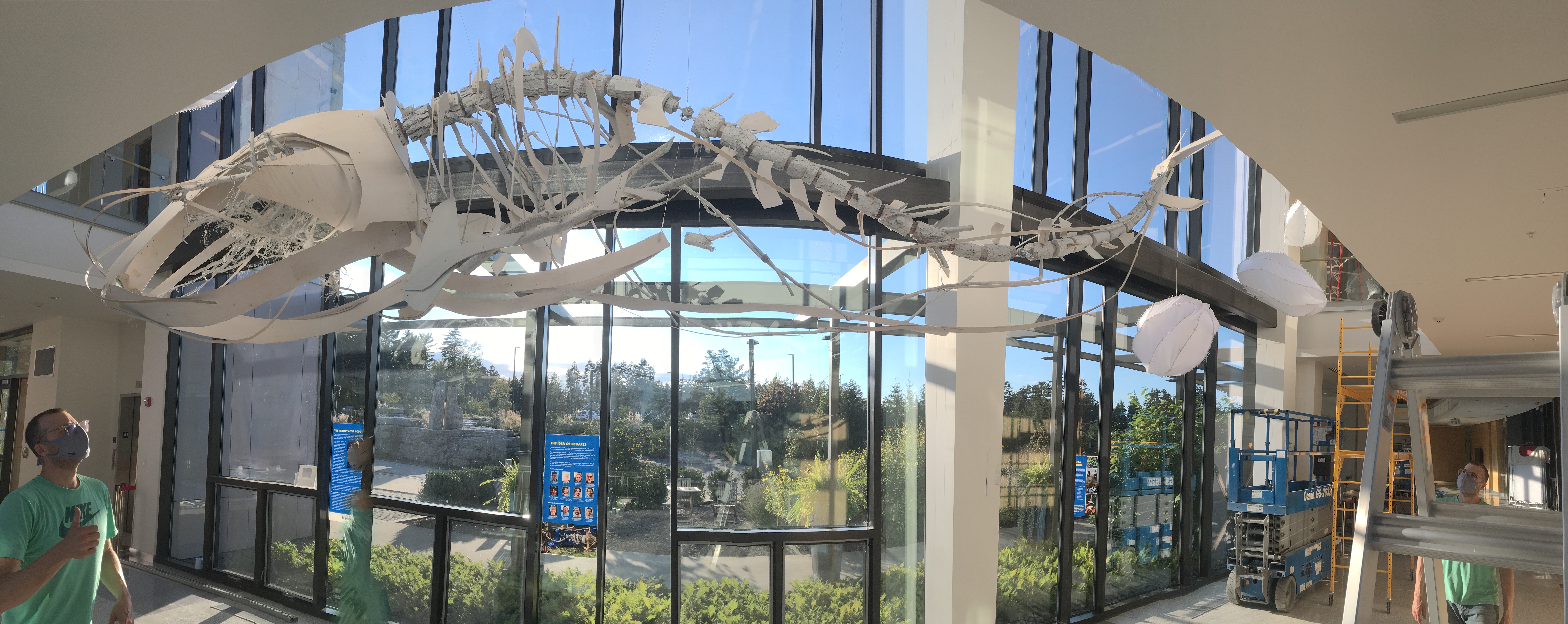
On a cool grey morning in April, my son and I are standing in an industrial aggregate yard, deep in the woods off Pleasant Hill Road. To get here we turned off the main road, followed the railroad tracks beyond where the pavement ends and the gravel begins. I have always been happier on a gravel road.
Just before the Rigby Yard we turned right and passed through a gate that is never locked. The Rigby Yard is the 245-acre shunting and switching terminal for rail freight of the greater Portland area and southern Maine. This aggregate yard is adjacent and immense, the sort of industrial zero pocket I tend to frequent.
When my daughter was learning to drive I would bring her here. Long gravel roads, towering piles to navigate around, no one anywhere near, what better place to hand her the keys and say, “go.”
My son and I are here to meet a client, to source wood for my next project. For other jobs I have scoured through wood lots, flitches of American hardwood or exotic species stickered and stacked, like dry aged beef, waiting in a locker. This aggregate yard is a world away, this project of an entirely different beast.
I am going to build a whale. Using a root ball and a tree trunk.
The commission comes during COVID, a strange and surreal time. I am unemployed and homeschooling my son. The chance to build a whale in my yard is a godsend, steady income I could really use. I can walk to work.
The client, a sculptor, is standing maybe 30 feet atop one of the piles, which is about the size of a football field, a heap of brush, stumps, the detritus of landscaping crews. My client could not be happier. His son is down below, sullen, waiting. We pull up and park our car, with trailer hitched behind.
We are looking not for a tree stump, but the tree stump that will be transformed into a 25-foot sculpture of a North Atlantic Right Whale. My client is a maven, I trust him completely. He has a vision. I am his fabricator.
We first crossed paths at a different dump, also off Pleasant Hill Road. He was making a sculpture of a standing black bear using foraged and found asphalt roofing shingles. The old made new, flotsam and jetsam transformed, the call of the wild chafing against the detritus of society – these seem to be elements of his life’s work.
I met the Maven because of my son. The Maven and I have boys the same age, who attended the same pre-school, we both live in South Portland, Maine and our boys are enrolled in the local public schools.
Fathers and sons, we walk. The boys make small talk, I stay silent, the Maven is like an owl. Lithe and athletic, occasionally he runs up a heap, moves brush about and then returns to the gravel road. He knows what he wants and it is best not to ask questions. But why, I wonder, a stump and trunk?
Across New England there are many complete articulated whale skeletons hanging in aquariums and natural history museums. The New Bedford Whaling Museum, the Maine State Museum, the Seacoast Science Center to name just a few. Eventually I would come to realize the Maven sees this not as a natural history model but as a way to reinterpret the whale. Does anyone really grasp all that a whale is? His goal is unexplainable decisions, a transformation that leads to the right frame of mind.
What is the real thing versus the symbol of the thing? Given he doesn’t really grasp all that is a whale in the first place, could another living system be used? A sort of commutative property? A tree that had been growing – the root ball, a thing of mystery, a subterranean life exposed, its tangle of roots and hidden networks – then hung overhead becomes a different perspective again. The right frame of mind.
Regardless, my job is to build the whale.
Specifically, to build the whale, then disassemble and load it onto a 25-foot box truck, drive 64 miles north, offload, hoist and install from the ceiling of the Bigelow Laboratory of Ocean Sciences. We are one part of “Majestic Fragility,” an ensemble exhibit on the Gulf of Maine ecosystem. Seven artists will participate, all using recycled and foraged materials: ghost gear – fishing nets, lines, traps, and pots – become kelp; cloth, wire, pipe cleaners with programmable LED lights become comb jellies; metal and dowels become sea terns.
I am optimistic, and expect the exhibit will tour the region, so I plan to build this robustly, to go the distance. As it would turn out, the exhibit will move three times over 200 miles across the state.
The Maven shouts out, “I have my stump!”
My son and I leap into action. We carry the root ball to the trailer; over some 30 feet it is transformed from brush into object. We carefully set it down. It shall not be damaged under my care. The trunk is chosen. We load that onto the trailer beside the root ball. We grab ratchet straps, tighten and secure everything in place.
Mission accomplished, we say our goodbyes and turn the car around. Out through the gate, down the gravel road, onto Pleasant Hill, then east toward my home workshop, where the cherry trees are beginning to blossom.
We are ready to build a whale.
…to be continued…


you tell a mighty tale mightily.