Thomas Berry and The Tree of Life
Posted: June 16, 2011 Filed under: Art & Healing, Gallery - Quotes, Gallery - Visual 2 CommentsThomas Berry, in “The Dream of the Earth” wrote about “…the organic unity and creative power of the planet Earth as they are expressed in the symbol of the Great Mother, the evolutionary process through which every living form achieves its identity and its proper role in the universal drama as it is expressed in the symbol of the Great Journey; the relatedness of things in an omnicentered universe as expressed by the mandala; the sequence of moments whereby each reality fulfills its role of sacrificial disintegration in order that new and more highly differentiated forms might appear as expressed by the transformational symbols; and, finally, the symbols of a complex organism with roots, trunk, branches, and leaves, which indicate the coherence and functional efficacy of the entire organism, as expressed by the Cosmic Tree and the Tree of Life.”
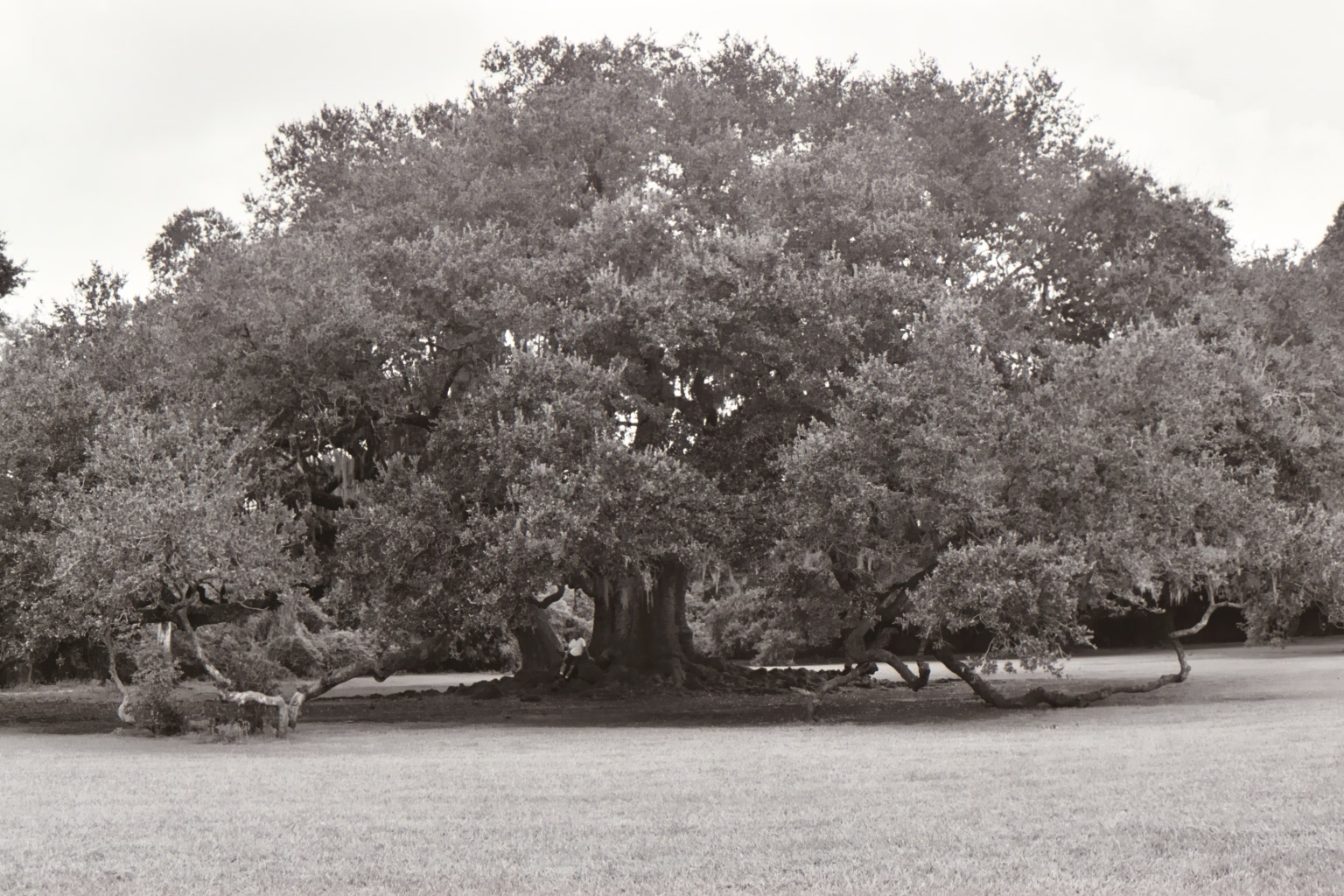
A worthy example of the cosmic tree is the southern live oak, Quercus virginiana; known to live more than 1,000 years, they have a trunk circumference of 40 feet or more, and a crown spread of 90 feet or more. The Angel Oak on Johns Island, South Carolina is estimated at 1400 years of age.
A woodworker friend once told me that, by law in the State of South Carolina, when two people stand beneath a live oak and speak their love to each other, they are legally wed. The tree alone serves as their witness. Now, I cannot vouch that to be a fact, but I love the story surely as I love the trees.
These photos were taken in 2004 of the “Tree of Life” in the Audubon Park, New Orleans. The tree survived Katrina and remains strong and stout.



Adobo Pepperoni Pizza
Posted: June 15, 2011 Filed under: Farming off the Farm, In the Kitchen 2 CommentsPizza night comes often, and we created this one with various items from around the kitchen, and fresh greens from our garden! We have heard about grinding the wheat berries for making the dough, but we don’t have a food mill yet so we buy our dough pre-made. Preheat the oven to a blazing 475 degrees.
Once the dough is stretched to size, we add some Chipotle Peppers in Adobo Sauce – finely dice one of the peppers and add a bit of the sauce. This has a great smoky flavor, not too hot, and you can get it in the mexican section of the grocer.
Next put a thin layer of grated white cheese. This will melt and help the toppings adhere to the crust. Then add a layer each of sliced pepperoni (we like uncured, but any kind will do), a handful of diced celery and some thinly sliced red onion, some mushrooms (we love shitake), and tonight we added a layer of arugula and bitter greens.

Then top it with some fresh mozzarella, a bit of dried basil and some smoked paprika. Maybe a crack or two of black pepper.

Pop it into the oven for about 15 minutes, then rotate the pizza, then let it go til golden brown, about another 10 minutes.

Richard Manning: “Against The Grain”
Posted: June 12, 2011 Filed under: Gallery - Quotes Leave a comment“Archer Daniels Midland, conduit of food and images of food, with fifteen thousand owned railcars, two thousand barges, a hundred oceangoing vessels, and a leased network of five million trucks and five hundred thousand railcars moving wheat, corn and soybeans to 269 processing plants. Woven amid the rails and pipes is an integral web of effectively owned and leased politicians and news organizations.
Archer Daniels is not alone in this picture; it is just the standard-bearer. Still, the list of food processors is not terribly long. Five companies – Cargill, Incorporated; Continental Grain Co. (recently renamed ContiGroup Companies); Louis Dreyfus; Andre & Cie; and the Bunge & Born Group – control about 75 percent of the corn market. Four companies – Archer Daniels; Cargill; Bunge ; and Continental Grain – control about 80 percent of soybean processing, both in the United States and globally. A single co-op, Ag Processing Inc., accounts for another 5 to 10 percent in the United States.”
Tom Philpott: “It’s The McEconomy Stupid”
Posted: June 12, 2011 Filed under: Gallery - Quotes Leave a commentWell, I just discovered Tom Philpott blogging about food and politics over at Mother Jones.
It’s the McEconomy, Stupid — By Tom Philpott| Thu Jun. 9, 2011 10:40 AM PDT
I alluded to it in my intro post, but this is worth highlighting:
Up to 30,000 of the 54,000 jobs created in May were the result of a hiring spree by the hamburger chain, analysts at Morgan Stanley told Market Watch on Friday.
So hiring at McDonald’s accounted for about half of the nation’s job growth in May. What lessons can we draw from this? One, obviously, is that the economy is anemic and lurching toward a “double dip”—which isn’t some new dessert concoction at McDonald’s. While unemployment hovers at 9 percent, job creation has slowed to a trickle—and what jobs are on offer tend to be of the burger-flipping, minimum-wage variety. As CBS Market Watch Washington Bureau Chief Steve Goldstein put it, “There’s a case to be made for the benefit of fast-food restaurant employment, but it’s obviously not the foundation for sustained economic growth.
The second lesson is that McDonald’s itself obviously sees opportunity in this crisis. It made 25,000-30,000 net hires in just one month. That’s a pretty big bet that its “dollar menus” and other cheap calorie blasts will remain popular among a cash-strapped populace having to work ever harder to stary in place. That’s good news for Mikky D’s shareholders—and bad news for public health in a nation besieged by chronic maladies caused by an excess of low-quality calories.
Chronos
Posted: June 11, 2011 Filed under: Gallery - Visual 1 CommentIn December 2008, as part of a competition at work, I built this clock using scrap parts. I gave it to a musician friend, who named it “Chronos.”



Kitchen Chalkboard
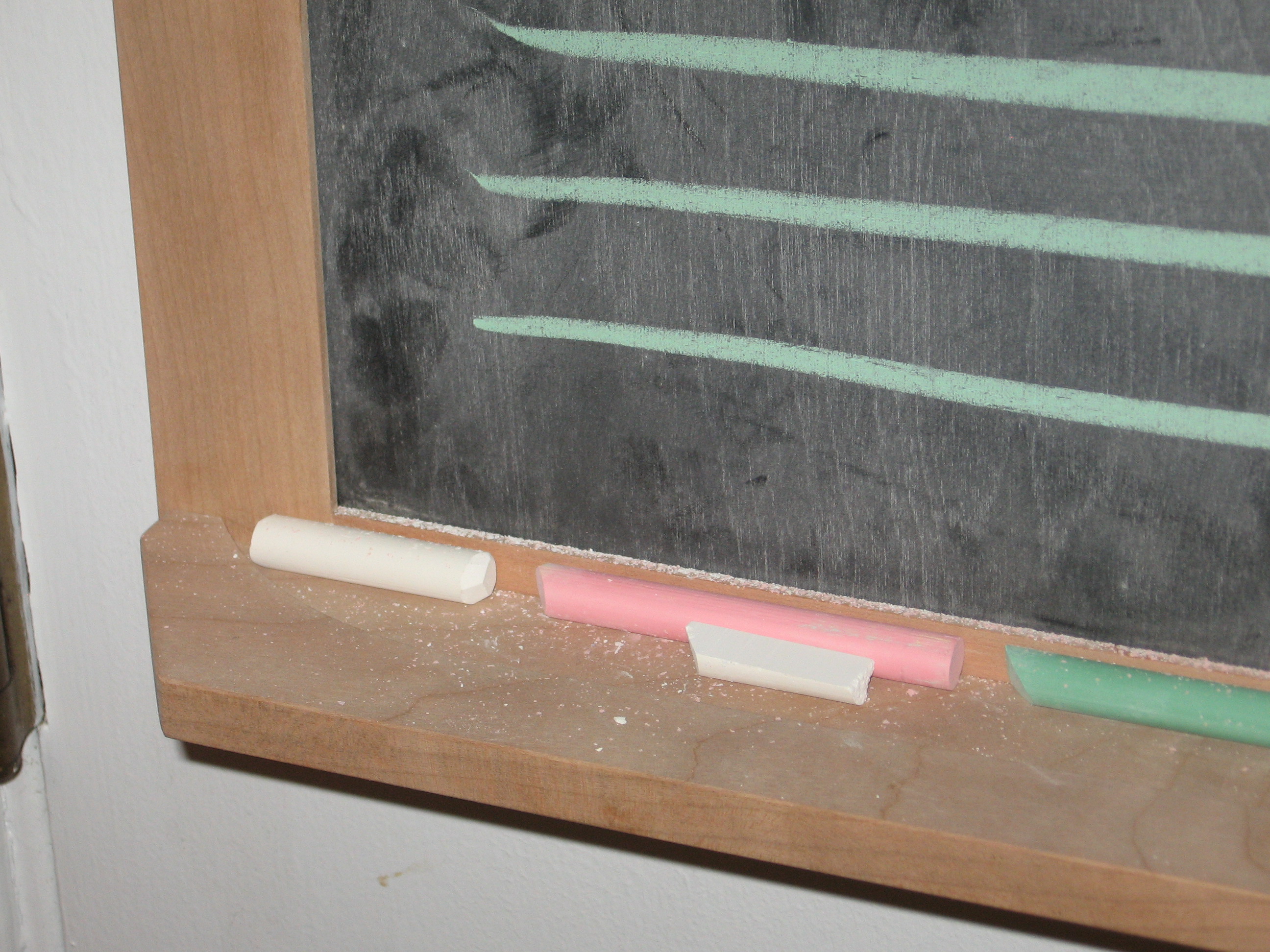
Posted: June 6, 2011 Filed under: Gallery - Visual Leave a commentSome scraps of cherry, a melamine board and one quart of chalkboard paint and we made this piece, which has become essential to our kitchen – both for practical things as well as mark making by our daughter!

Charles Darwin
Posted: June 5, 2011 Filed under: Gallery - Quotes Leave a comment“Man in his arrogance thinks himself a great work, worthy the interposition of a diety. More humble and, I believe, true to consider him created from animals.”
David Abram: “Becoming Animal”
Posted: June 4, 2011 Filed under: Gallery - Quotes Leave a comment“Darwin had rediscovered the deep truth of totemism – the animistic assumption, common to countless indigenous cultures but long banished from polite society, that human beings are closely kindred to other creatures, and indeed have various other animals as our direct ancestors. Here was a form of totemism transposed into the modern world – the totemic insight now translated into the language of “descent by natural selection from a common ancestor.” This modern version no longer saw different persons as descendants of different totemic animals, but recognized all humankind as derived from a common lineage of creatures. In the wake of Darwin’s bold insights, we have learned to consider all humans as members of a common family. But the wild, animistic implication of Darwin’s insight has taken much longer to surface in our collective awareness, no doubt because it greatly threatens our cherished belief in human transcendence. Nonetheless, it is an inescapable implication of the evolutionary insight: we humans are corporeally related, by direct and indirect webs of evolutionary affiliation, to every other organism that we encounter.“
Richard Manning: “Against The Grain”
Posted: June 4, 2011 Filed under: Gallery - Quotes Leave a comment“America’s Northeast was once U.S. agriculture’s major force, with farms supplying the country’s densest clusters of population. The Northeast now does very little farming, and most of the agricultural lands have gone back to forest or suburbs, an odd transition in that these are in some ways the nation’s best agricultural lands. Unlike the western grasslands, the Northeast gets enough rain to grow crops. The decline came as a result of a particular form of subsidy: federal irrigation projects. Beginning at the height of the progressive era, the nation set to work on making the western deserts bloom, investing billions in dams, canals, tunnels, and drains to bring nine million additional acres under cultivation. The historian Donald Worster has shown that this figure exactly parallels the acreage of abandoned farms in the Northeast – land that already had water – during the same period. What industrial agriculture abandons is opportunity.”
Nursery Furniture
Posted: May 21, 2011 Filed under: Chronicles of a First Time Parent, Gallery - Visual 1 CommentIn January of 2009, during Becca’s third trimester, I was laid off from my job as a cabinetmaker. Whoa! Well, as fortune would have it, the layoff gave lots of free time to complete the furniture I was building for the nursery. And the approaching deadline kept me plenty busy.
I converted an old bookcase into a changing table, adding four storage drawers.


Using all scrap wood, I built a pair of chests, with cherry for the cases and maple for the top.



This is my friend Bill’s house and shop where the furniture was built.

 an Art Farm