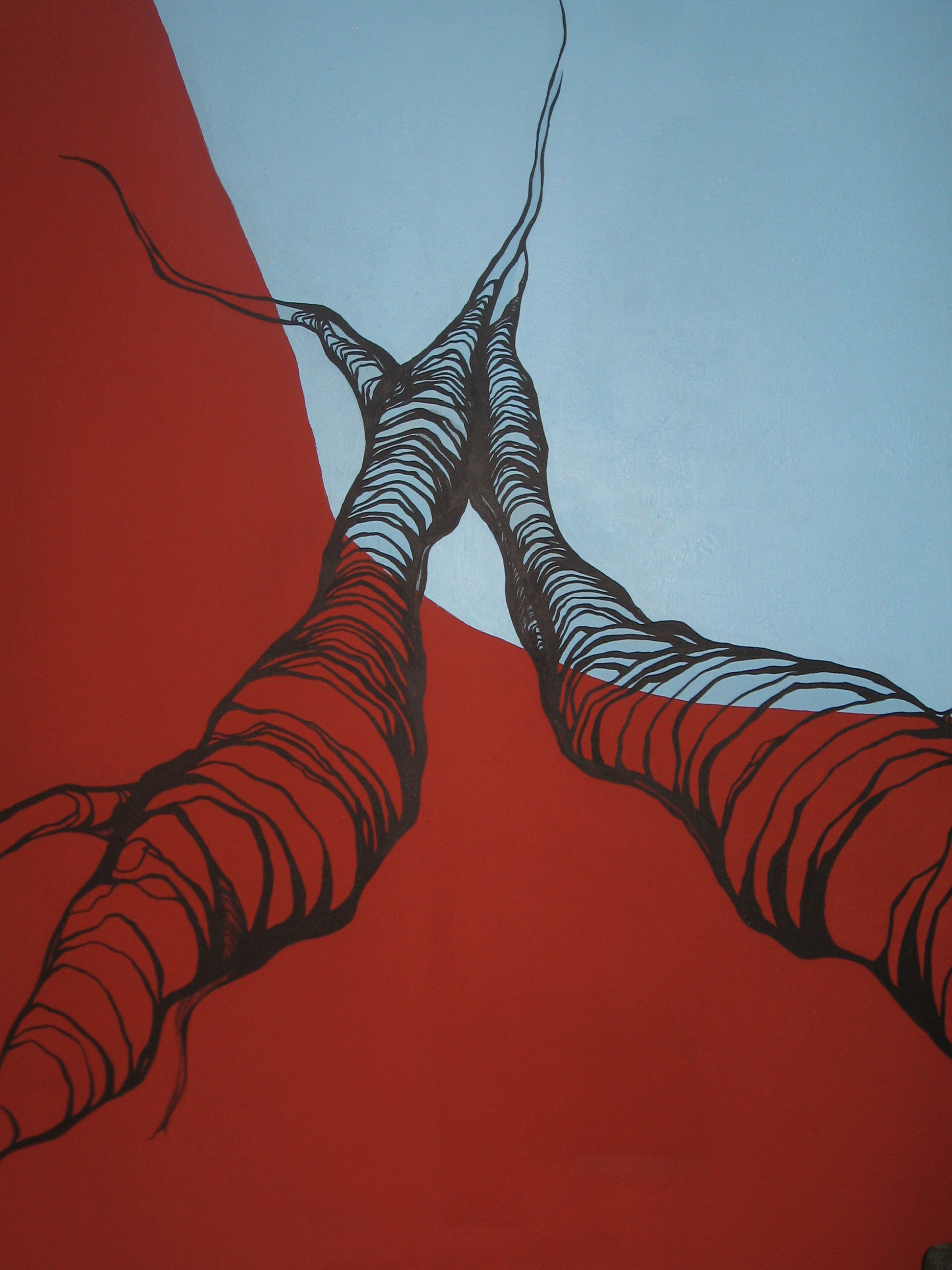
William Coperthwaite: “A Handmade Life”
Posted: July 10, 2011 Filed under: Art & Healing, Gallery - Quotes, What is an Art Farm Leave a comment“I want to live in a society where people are intoxicated with the joy of making things.”
“…the softly focused gaze of Pissarro…”
Posted: July 2, 2011 Filed under: Art & Healing, Farming off the Farm, What is an Art Farm 1 Comment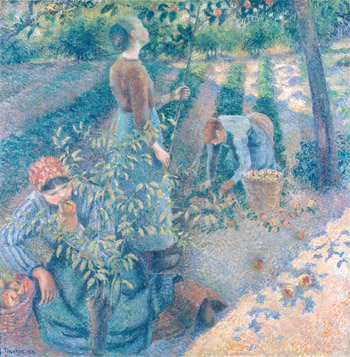
What is an Art Farm?
Posted: June 20, 2011 Filed under: Art & Healing, What is an Art Farm 2 CommentsThese days with lots of attention to localvore culture, “know your food, know your farmer,” food politics, etc, the link between art and agriculture seems less often explored, rarely celebrated. We began musing on this theme in ’01 while living on Chicago’s North Side (population density of >4,500 people per square mile) and later in ’06 when we settled in Maine (population density of 41 people per square mile). Big change in surroundings. No change in interest.
Along the way we heard about Farmer John at Angelic Organics, about the folks at the Wormfarm Institute (two sculptors who left Chicago to farm in southern Wisconsin), and the Bread & Puppet Theatre that ends each performance by sharing with the audience bread made by the cast and crew. Nance Klehm, a farmer, forager, social ecologist and good friend, in ‘08 taught a class at the UCLA School of Art on the topics of: “place and participation (or which of these bugs are edible?)/cultivating knowledge, participation, food in the age of monoculture/practical and critical processes for the hungry, lost and restless.” A Google search now brings up numerous sites under the term “art farm.”
Something is up. And still it is hard to wrap our mind around what is an art farm. More readily, we can say what it is not: neither a “get big or get out” USDA sanctioned operation, nor the world of Art as an insurable, bankable asset. But that doesn’t tell us much. Stating the affirmative, we could say this is equal parts “Cheap Art Manifesto” (see blog of 19 May) and a hands-in-the-dirt connection to the earth and ourselves.
Art-making is a behavior. Hard-wired into our DNA, it is a biological inclination. In a nutshell, this is the argument put forth by Ellen Dissanayake in her book What Is Art For?: “My own notion of art as a behavior…rests on the recognition of a fundamental behavioral tendency that I claim lies behind the arts in all their diverse and dissimilar manifestations from their remotest beginnings to the present day. It can result in artifacts and activities in people without expressed ‘aesthetic’ motivations as well as the most highly self-conscious creations of contemporary art. I call this tendency making special and claim that it is as distinguishing and universal in humankind as speech or the skillful manufacture and use of tools.”
What if art-making is not an attribute of society, but antecedent to society. Could it follow, then, that agriculture emerged as a “making special” adaptation? Are we putting the horse before the cart? These are questions we strive to grasp.
An art farm is about “place and participation” where obstacles become opportunities. We live in a rented house in South Portland, Maine. When our landlord said we could not have a garden, we made arrangements to plant a shared garden at the home where our daughter goes for day-care. And from that place we are now harvesting greens that feed our family. A few miles away, down by the Marsh, with Farmer Martha we are raising hens and, soon, broilers, and from the orchard, come autumn, again we will pick apples, press cider, make cobblers and applesauce. With a lot of sharing and creativity we are making do with what we have.
And as we go forward, we will tell the tales, share the stories and paint the pictures here at our blog, while the answers work themselves out. They always do.
Homemade Finger Paints
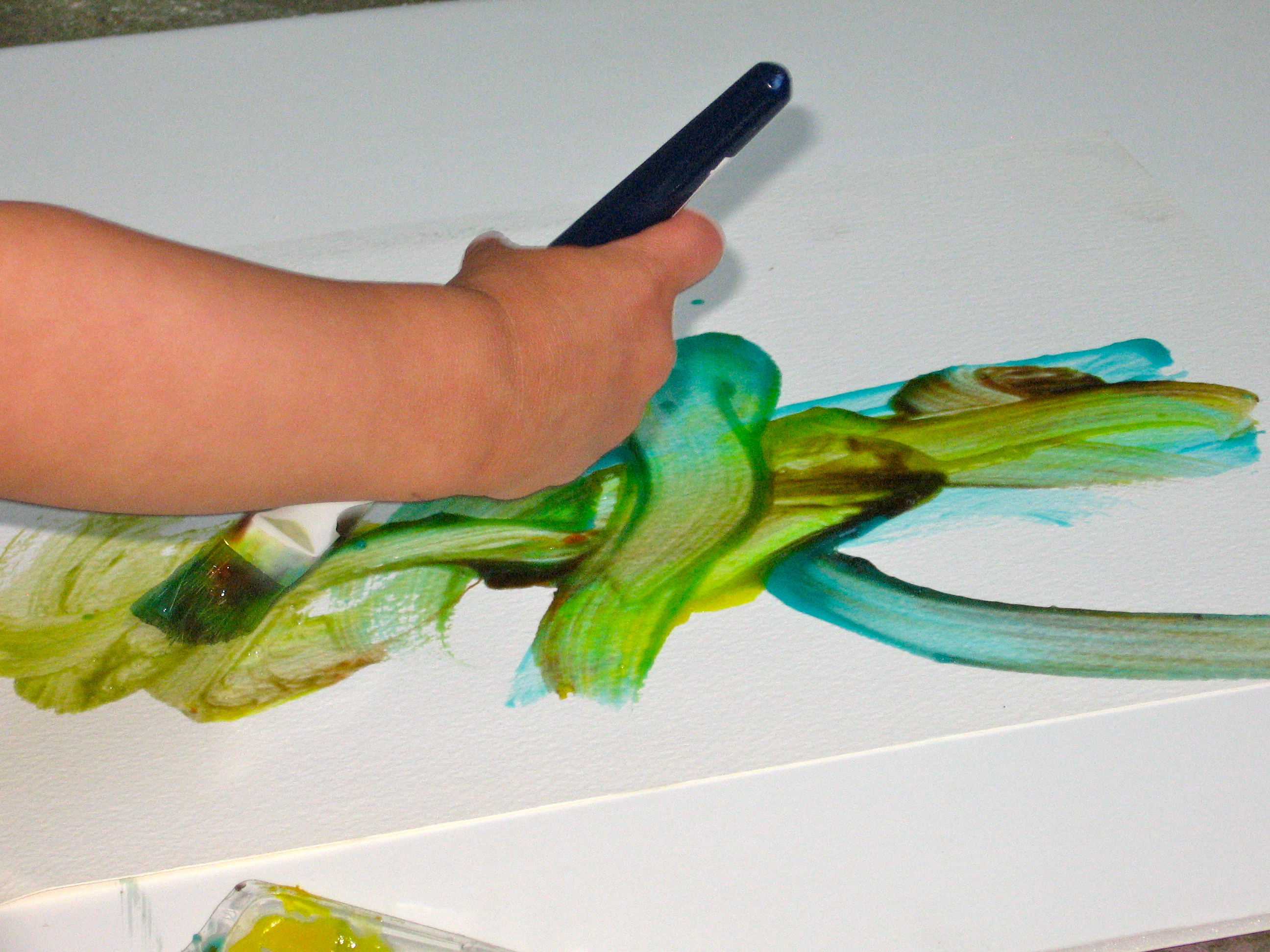
Posted: June 19, 2011 Filed under: Art & Healing, Child Centered Activities, In the Kitchen 1 CommentA great recipe I found online – with my own tweaks added in:
2 TB sugar
1/3 C cornstarch
2 C cold water
1/4 C clear liquid dish soap
food coloring or food gel
Mix sugar with cornstarch and slowly add water. Cook over medium heat for 15-20 minutes or until mixture thickens and becomes semi-translucent. Once cooled, add dish soap (helps keep colors from staining – though still take precautions with clothes, etc.), then portion into desired containers and mix in the colors. In addition to fingers and paintbrush, collect some non-traditional tools (feathers, sticks, Q-tips, etc.) for your little one to explore with.



Ellen Dissanayake: “What Is Art For?”
Posted: June 19, 2011 Filed under: Art & Healing, Gallery - Quotes, What is an Art Farm Leave a commentMy own notion of art as a behavior…rests on the recognition of a fundamental behavioral tendency that I claim lies behind the arts in all their diverse and dissimilar manifestations from their remotest beginnings to the present day. It can result in artifacts and activities in people without expressed ‘aesthetic’ motivations as well as the most highly self-conscious creations of contemporary art. I call this tendency making special and claim that it is as distinguishing and universal in humankind as speech or the skillful manufacture and use of tools.
Making special implies intent or deliberateness. When shaping or giving artistic expression to an idea, or embellishing an object, or recognizing that an idea or object is artistic, one gives (or acknowledges) a specialness that without one’s activity or regard would not exist.
…From very early times it seems evident that humans were able to recognize and respond to specialness – at least this would seem to be the explanation for Acheulean people of 100,000 years ago selecting a piece of patterned fossil chert and flaking from it an implement that utilized the pattern, or carrying about with them an unusual but “useless” piece of fossil coral.
…Perhaps the proclivity to make special existed even a quarter of a million years ago in the use of shaped pieces of yellow, brown, red, and purple ocher found among the human remains in a sea-cliff cave in southern France. It might be supposed that these were chosen for the “special” color, and thus suitable for “special” purposes (Oakley, 1981). Red haematite was brought from a source twenty-five distant toan Acheulean dwelling site in India, probably for use as a coloring material (Paddayya, 1977). The presumably very ancient practice by humans of applying ornamental designs to their bodies can be interpreted as a way of adding or imparting refinement to what is by nature plain and uncultivated, of imposing human civilizing order upon nature – that is, making special.
Recognizing the ubiquity of making special, and its apparently effortless integration into the day-to-day life of many unmodernized societies (so that the sacred and profane coexist, the spiritual suffuses the secular), points out to us the degree to which art is divorced from life in our own society. It helps us to understand why art, which according to the modern notion is autonomous and “for its own sake,” is still conceptually stained with the residues of essential activities and predilections.
From an ethological perspective, art, like making special, will embrace a domain extending from the greatest to the most prosaic results. Still, mere making or creating is neither making special nor art. A chipped stone tool is simply that, unless it is somehow made special in some way, worked longer than necessary, or worked so that an embedded fossil is displayed to advantage. A purely functional bowl may be beautiful, to our eyes, but not having been made special it is not the product of a behavior of art. As soon as the bowl is fluted, or painted, or otherwise handled using considerations apart from its utility, its maker is displaying artistic behavior…. The housewife who puts down cups and plates any which way is not exercising artistic behavior; as soon as she consciously arranges the table with an eye to color and neatness, she is doing so. The functional, empty, unremarkable wall may be enlivened by a mural, or bas relief, or even graffito.
NB: These passages are taken from Ellen’s book, “What Is Art For?”, Chapter 4, “Making Special: Toward a Behavior of Art”, pages 92 – 101, published by the University of Washington Press, Seattle, (c) 1988.
Thomas Berry and The Tree of Life
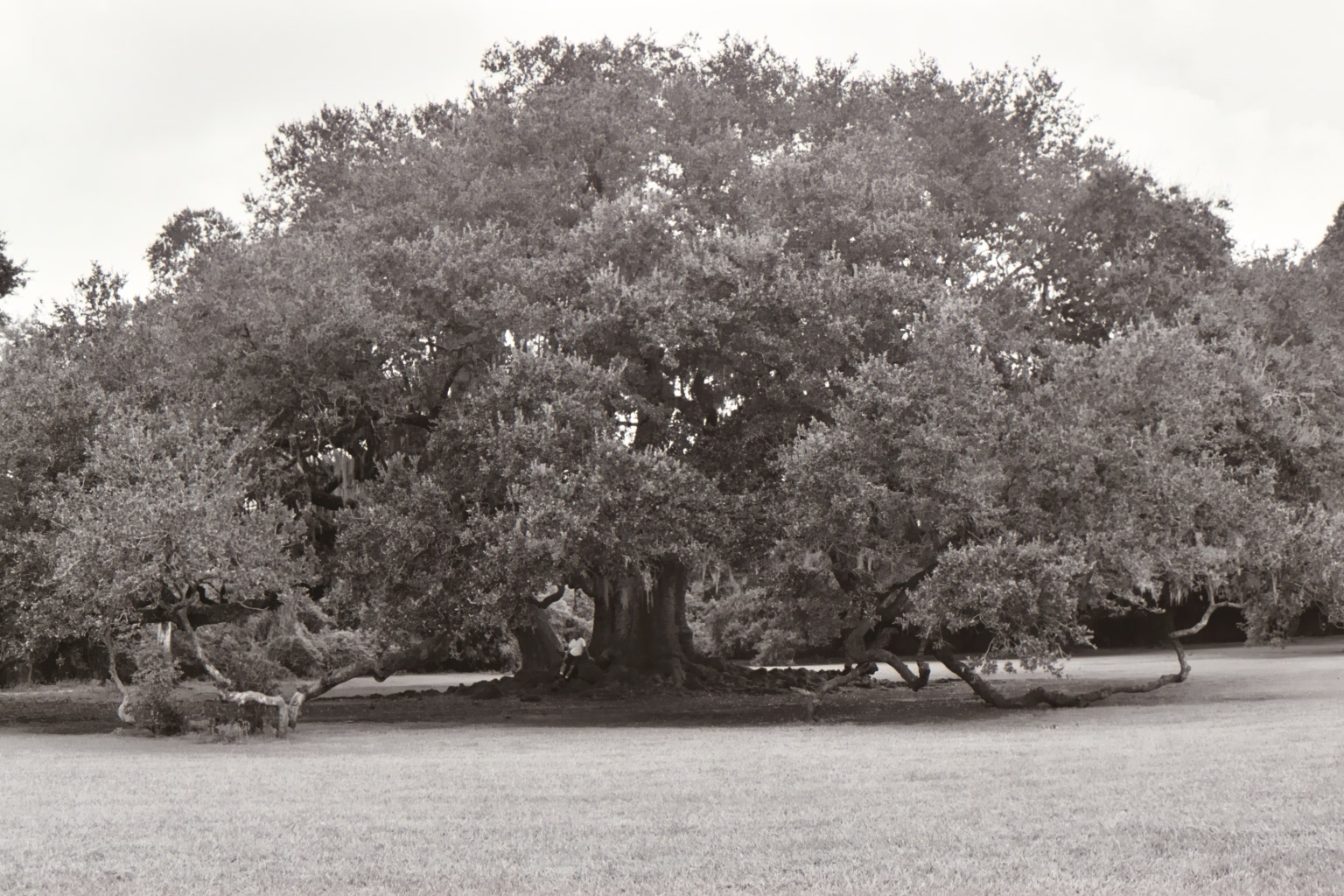
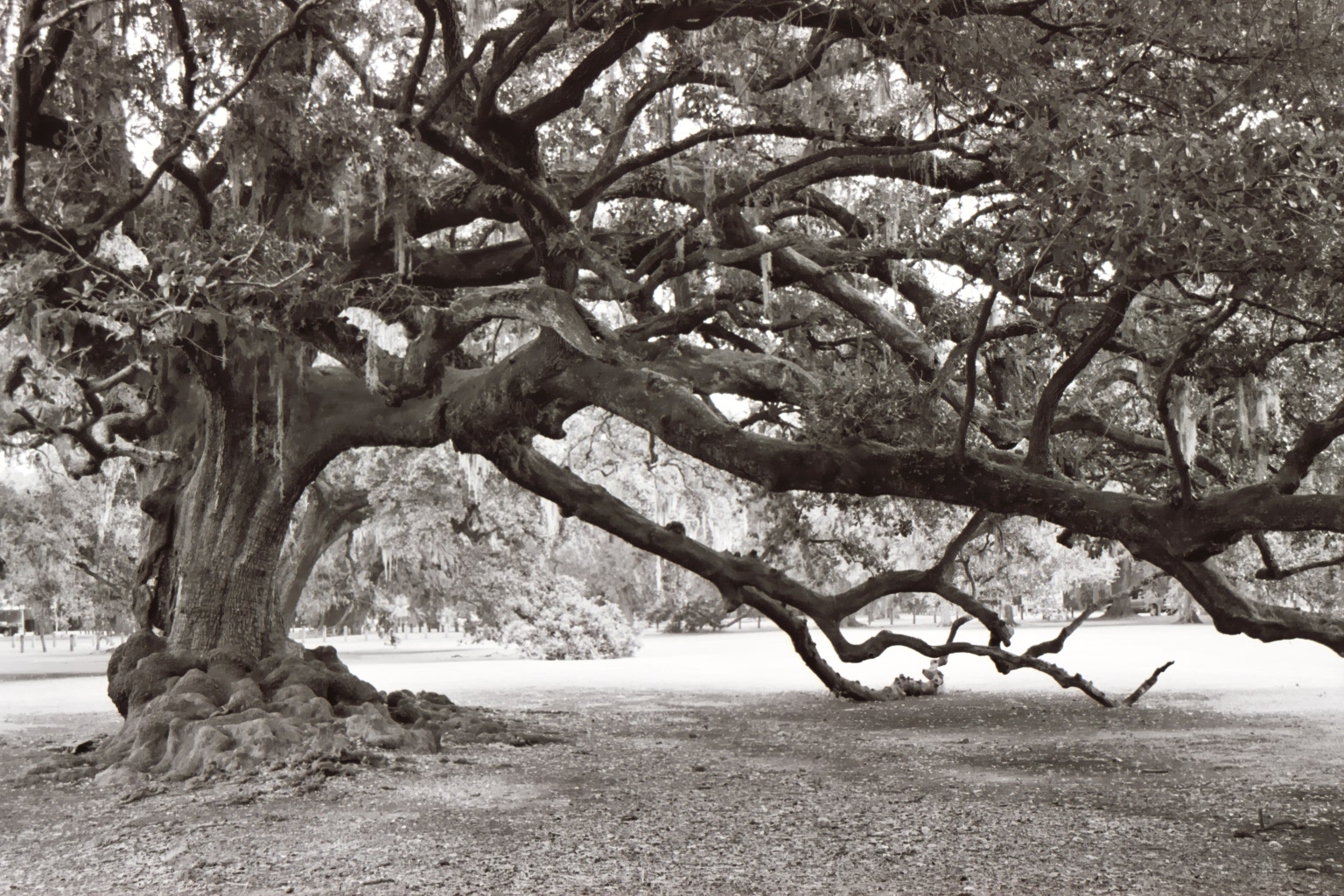
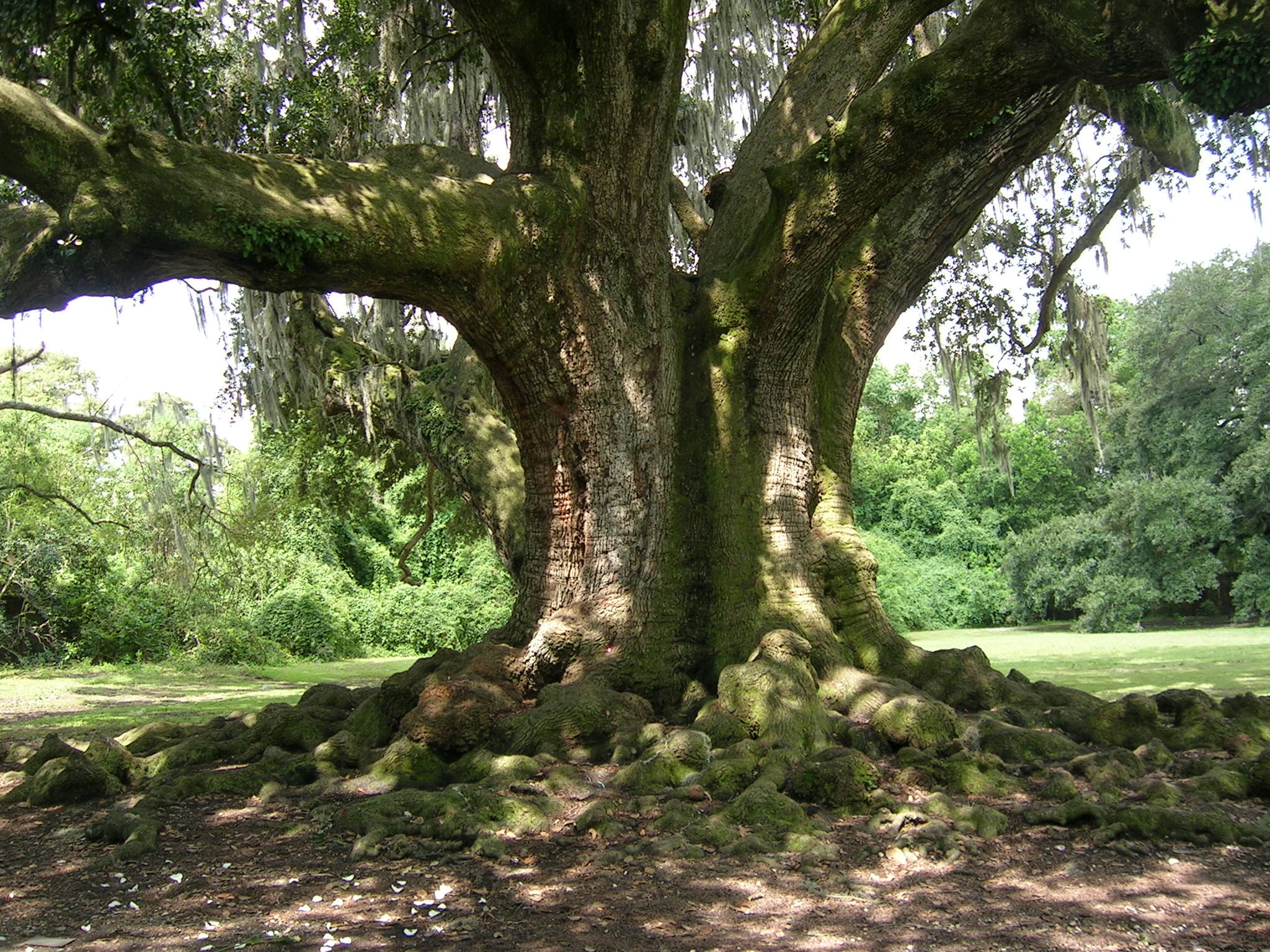
Posted: June 16, 2011 Filed under: Art & Healing, Gallery - Quotes, Gallery - Visual 2 CommentsThomas Berry, in “The Dream of the Earth” wrote about “…the organic unity and creative power of the planet Earth as they are expressed in the symbol of the Great Mother, the evolutionary process through which every living form achieves its identity and its proper role in the universal drama as it is expressed in the symbol of the Great Journey; the relatedness of things in an omnicentered universe as expressed by the mandala; the sequence of moments whereby each reality fulfills its role of sacrificial disintegration in order that new and more highly differentiated forms might appear as expressed by the transformational symbols; and, finally, the symbols of a complex organism with roots, trunk, branches, and leaves, which indicate the coherence and functional efficacy of the entire organism, as expressed by the Cosmic Tree and the Tree of Life.”
A worthy example of the cosmic tree is the southern live oak, Quercus virginiana; known to live more than 1,000 years, they have a trunk circumference of 40 feet or more, and a crown spread of 90 feet or more. The Angel Oak on Johns Island, South Carolina is estimated at 1400 years of age.
A woodworker friend once told me that, by law in the State of South Carolina, when two people stand beneath a live oak and speak their love to each other, they are legally wed. The tree alone serves as their witness. Now, I cannot vouch that to be a fact, but I love the story surely as I love the trees.
These photos were taken in 2004 of the “Tree of Life” in the Audubon Park, New Orleans. The tree survived Katrina and remains strong and stout.

Work in Progress, 36″ x 42″, acrylic
Posted: May 27, 2011 Filed under: Art & Healing, Gallery - Visual 6 CommentsI started this tree painting almost 10 years ago and haven’t touched the canvas in nearly 5. For many reasons I have been moved to complete it.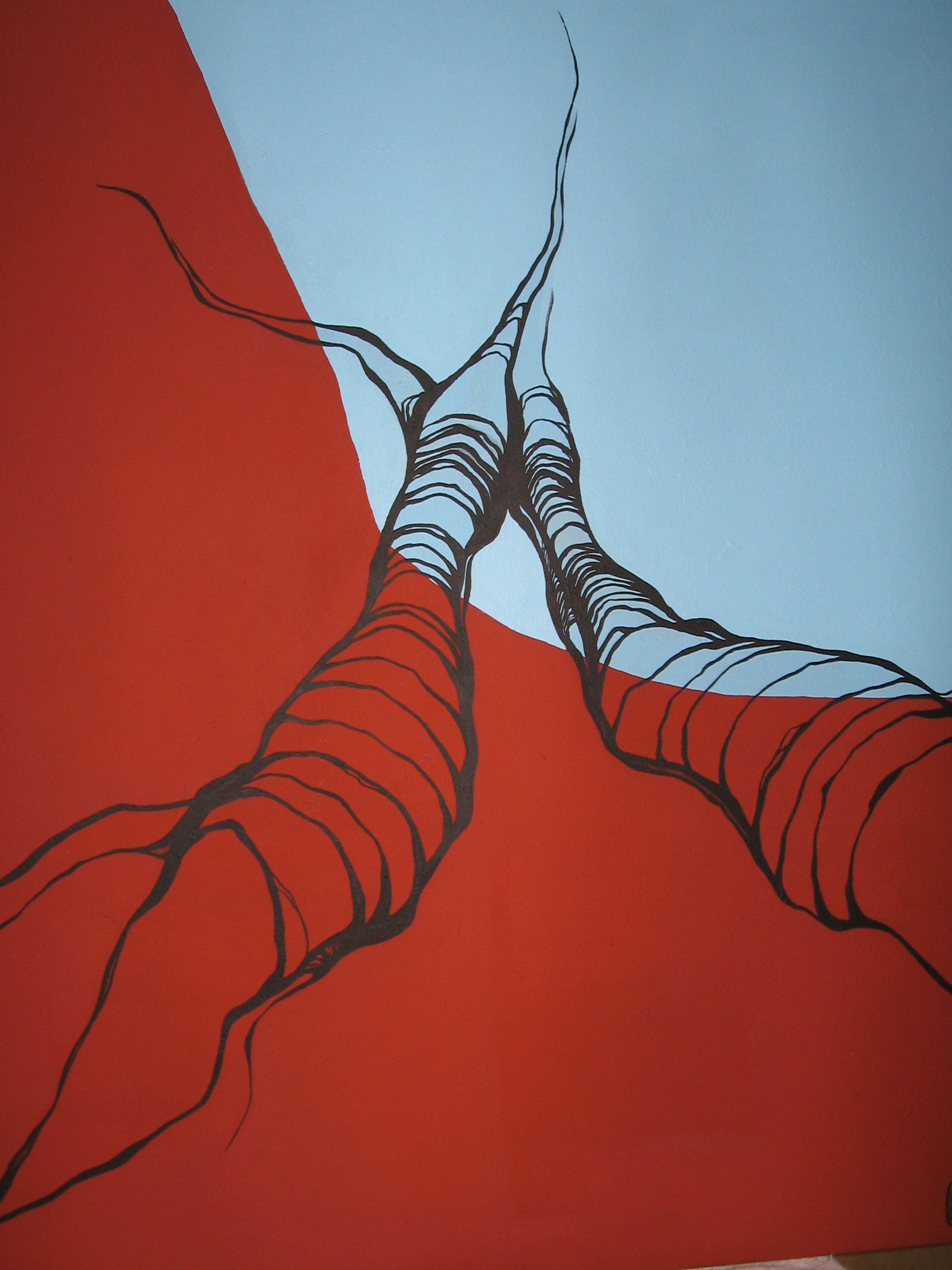
Untitled, 1997, 48″ x 38″, Acrylic
Posted: May 3, 2011 Filed under: Art & Healing, Gallery - Visual Leave a comment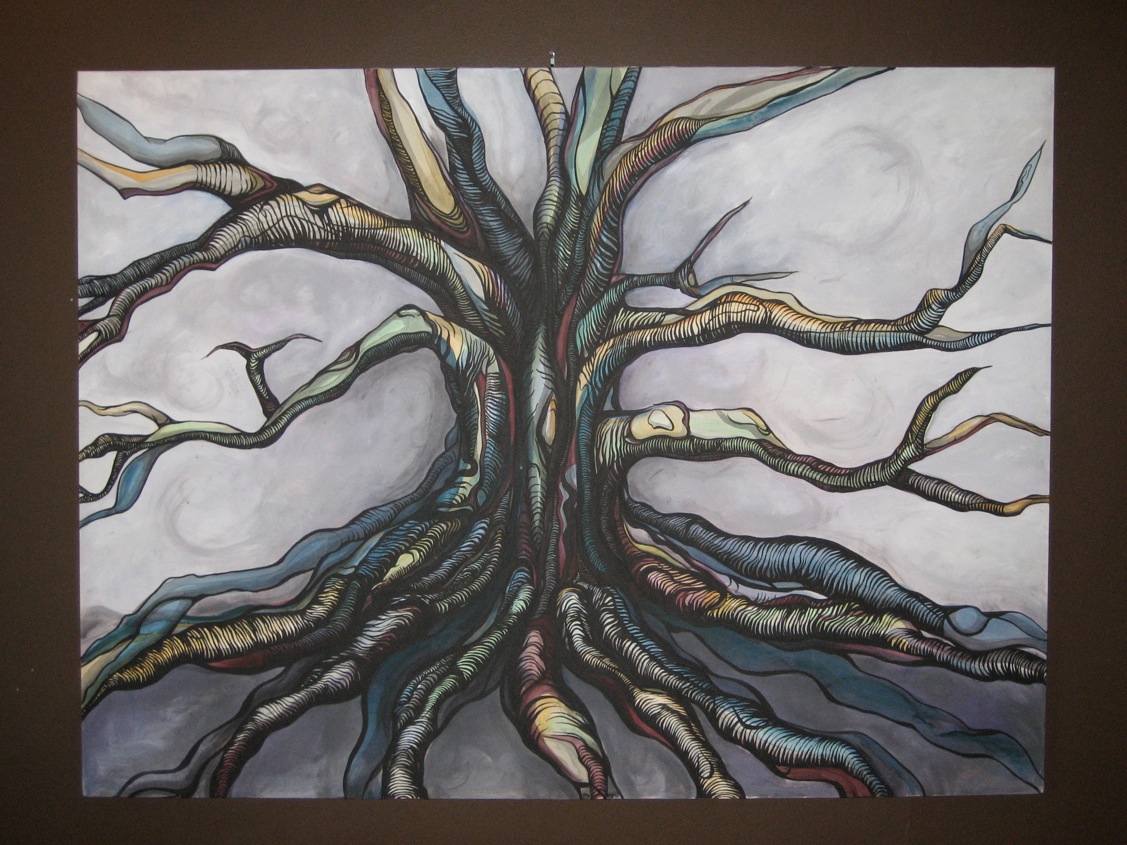
Homemade Playdough
Posted: April 21, 2011 Filed under: Art & Healing, Child Centered Activities, In the Kitchen 1 Comment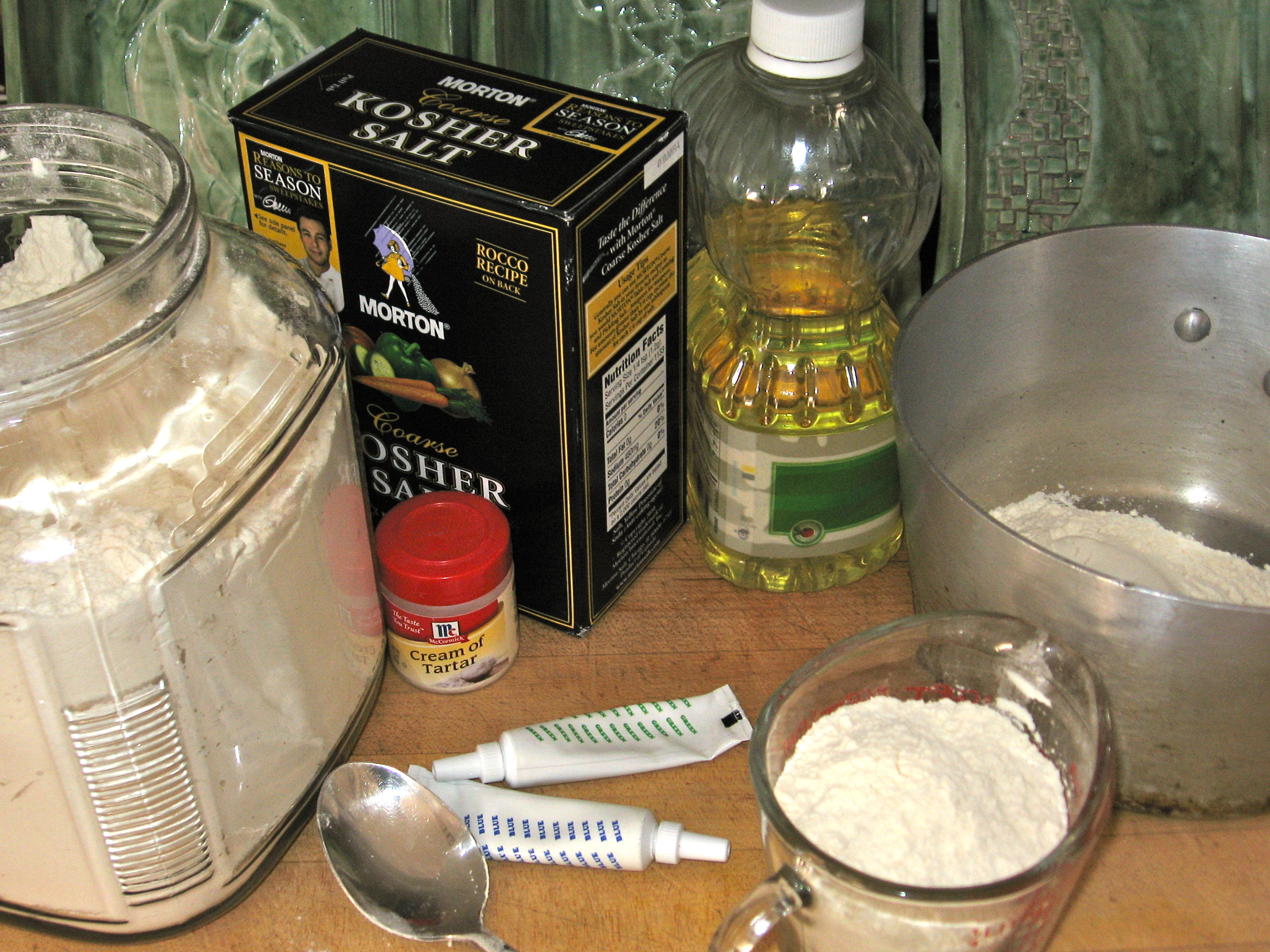
2 Cups plain flour
2 Cups colored water
1 Cup salt
1 Tb cooking oil
1 tsp cream of tartar
Put ingredients together in medium to large size pan and cook over medium heat until mixture thickens. 
Take out of pan and let cool slightly before working with hands.

Thinking about textures and shapes, find some fun and age appropriate (safe) objects around your home for little ones to explore with the playdough.
Store in ziplock or plastic container in refrigerator.
E woke up from her nap in a “funky mood” so I decided we’d give some playdough a try. I figured this would either send her over the edge with stimulation OR be a wonderful sensory experience. She watched me demonstrate several techniques, such as rolling out a coil, rolling a ball, and using a toothpick (I trimmed the points beforehand) to make faces on animals. Soon, she was using the tool to make her own faces, saying aloud each part as she carved it. It was exciting to watch her so curious and absorbed. After she’s had a number of experiences with a single color (learning how to manipulate with her hands and various tools) we’ll add some new colors and see where we go.

