Petrokus
Posted: December 15, 2012 Filed under: Chronicles of a First Time Parent, Farming off the Farm 2 CommentsPetrokus was our family’s pig. Well, half the pig was ours.
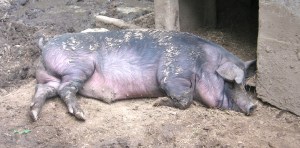
On a rainy saturday, one week ago, he was loaded into a trailer and I told my daughter E, “He is going to another farm.” That was true, by half. “Why?” she asked. “Well, he has gotten too big for Dan’s farm.” That was completely true. He had grown to almost 400 pounds.
He spent the weekend in that trailer, at the other farm, until Monday when he was taken to the slaughter-house. I wasn’t sure how to broach that topic with E so I had punted. But this morning, we made the long drive up to West Gardiner Beef. We loaded the car and headed back home. I felt it was time to talk about our payload.

Of all the “big” conversations I might have with my children, I would anticipate the topics of sex and drugs. The source of our family’s food, however, would hardly seem to belong on that list. But I was feeling pretty uneasy.
We are trying to live as close to the land as practical, and when friends offered to co-raise a grain-fed hog, that was a welcome opportunity. I love pork: braised, brined or roasted; pan seared or smoked “low & slow”; dry rub, salt cure, wet mop – whatever the manner, I love it all. My daughter does too. Becca is sure this gene was inherited from my side of the family.
We visited Petrokus during the summer. We talked about him when we purchased grain at the feed store. We touched upon the idea that Petrokus would provide our family with food. We want our children to know their food and its source. The issue of slaughtering may very well have been my own.
On the way to the slaughterhouse, I had told E that we were going to get some meat. Now I needed to add some details. I eased into the conversation.
“So, E…the meat that we are carrying is…from…Petrokus.”
I pondered that phrasing. Was it better, clearer to say “…is Petrokus” ? I distanced the animal and the act by inserting “from.” I continued, “He gave his life, gave us food.”
Silently, she looked out the window at the bare trees. I did not want to rush the conversation so I gave the silence plenty of time.
“Did the butcher…did the butcher…hurt him?”
The topic of “hurt” is commonplace in our conversations. She might ask if a pencil hurts paper when she makes marks, if it hurts a carrot when she takes a bite, if it hurts a tree when the winds blow. “Hurt” is her three-year-old variant of “Why?” So her question was not as loaded as it might seem.
I thought about Chuang Tzu’s zen tale of the butcher and the oxen. At first he “saw the Ox as one mass.” With experience comes insight and then “My whole being apprehends. My senses are idle. The spirit free to work without plan follows its own instinct, guided by natural line, by the secret opening, the hidden space, my cleaver finds its own way. I cut through no joint, chop no bone.”
What I said was, “The butcher did his job well. So it is okay.”
More silence.
“It is sacred,” I continued, “when an animal gives its life to feed us. We are thankful.”
Silence.
Her thoughts drifted to her new-born brother. “Will we be able to share this delicious meat with Milo?”
It must be in the genes! “Yes,” I said, not opening the question of how long before a newborn could be fed pork.
In silence, she looked out the car window.
Then finally, “Will we have another pig next year?”
So our conversation passed without trauma. Or perhaps this is just the first phase of a long ongoing conversation, with changing feelings, about the source of our food. Certainly she will have much to say on the topic.
For the record, here are some facts about the fattening of Petrokus:
– purchased the suckling pig on 1 May, approx 18 weeks old;
– consumed 1,100 pounds of Blue Seal “Pig & Sow” grain pellets and 650 pounds of Blue Seal “steamed flaked corn.”
pressing apples
Posted: October 28, 2012 Filed under: Farming off the Farm, Permaculture & Home Renovation 4 Comments
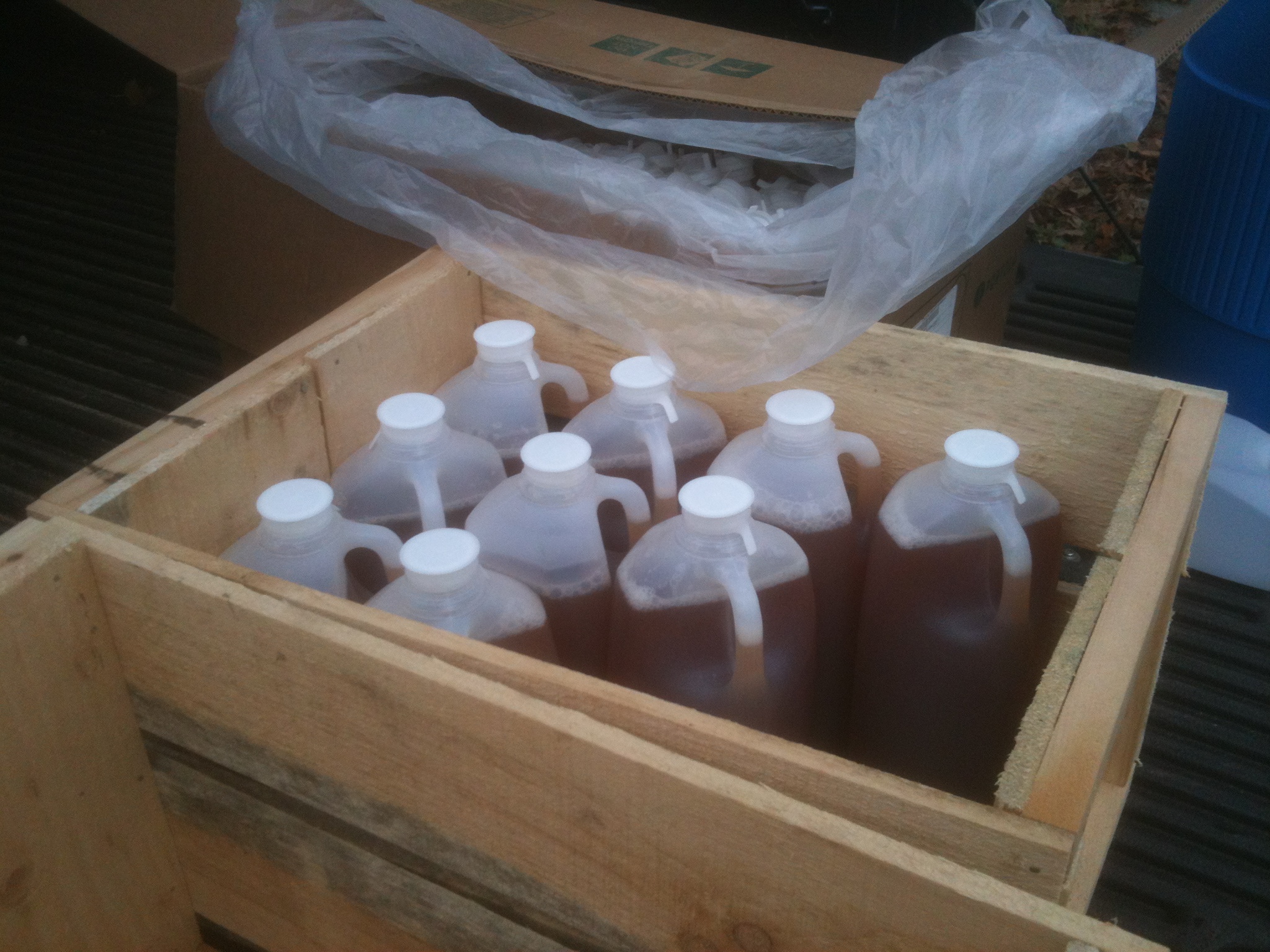
Apples are a staple of New England and I took this afternoon off from the house project to press apples for cider.
At my day job, I tend an orchard of 100-year old apple trees, a mixture of Cortland, Macintosh, Golden Delicious and some unidentified astringent varieties. While not good for eating, the astringent are excellent in cider, adding a complexity to the flavor.
I pressed the apples over at my friend David Buchanan’s farm in Pownal Maine. David has recently had a book ‘TASTE Memory: Forgotten Foods, Lost Flavors, and Why They Matter” published by Chelsea Green Publishing in Vermont.
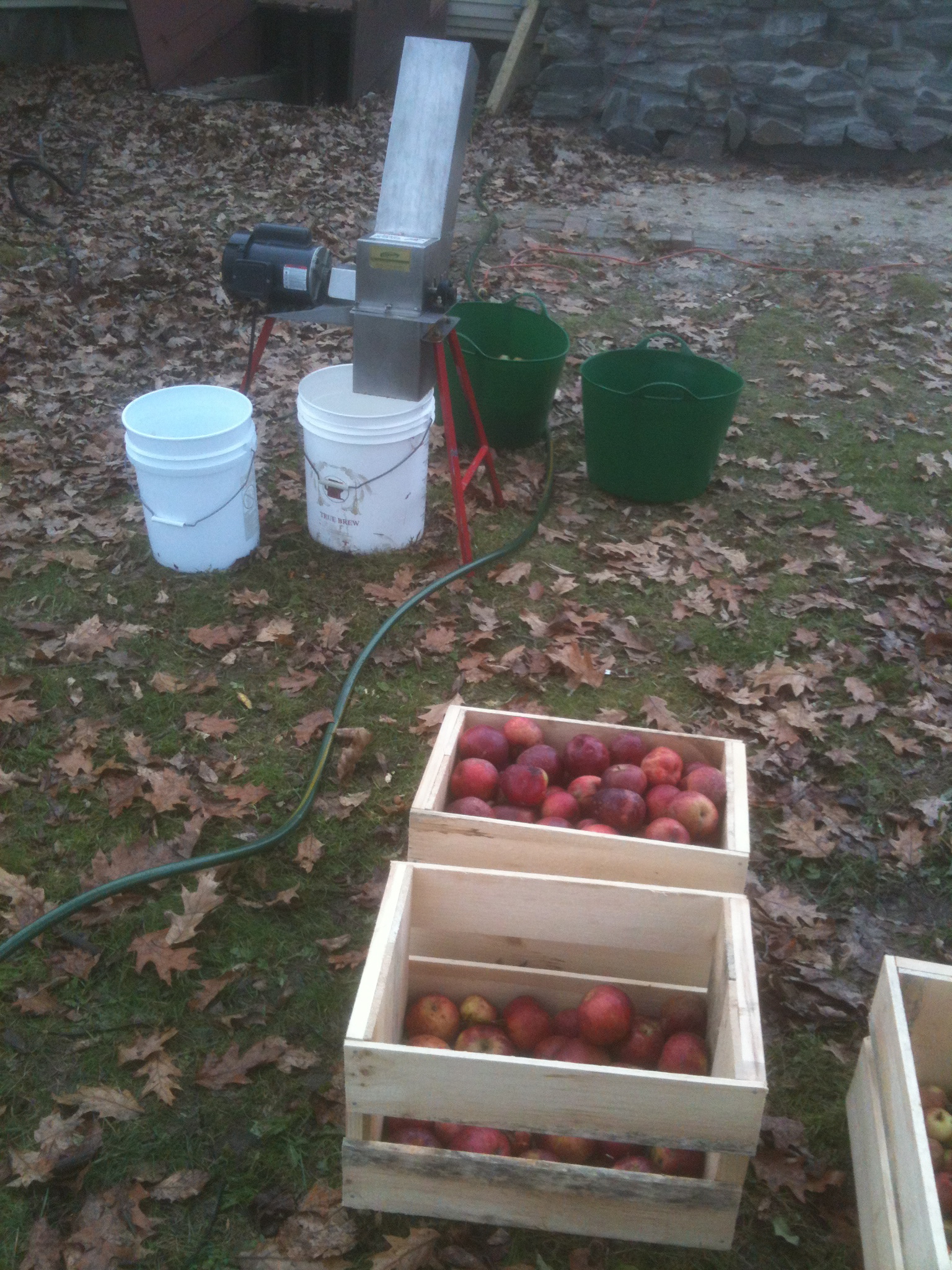
David is a serious cider enthusiast and has a first-rate operation. The first step is grinding the apples. In the photo below you can see the drop shoot, motor and receiving bucket of the grinder.
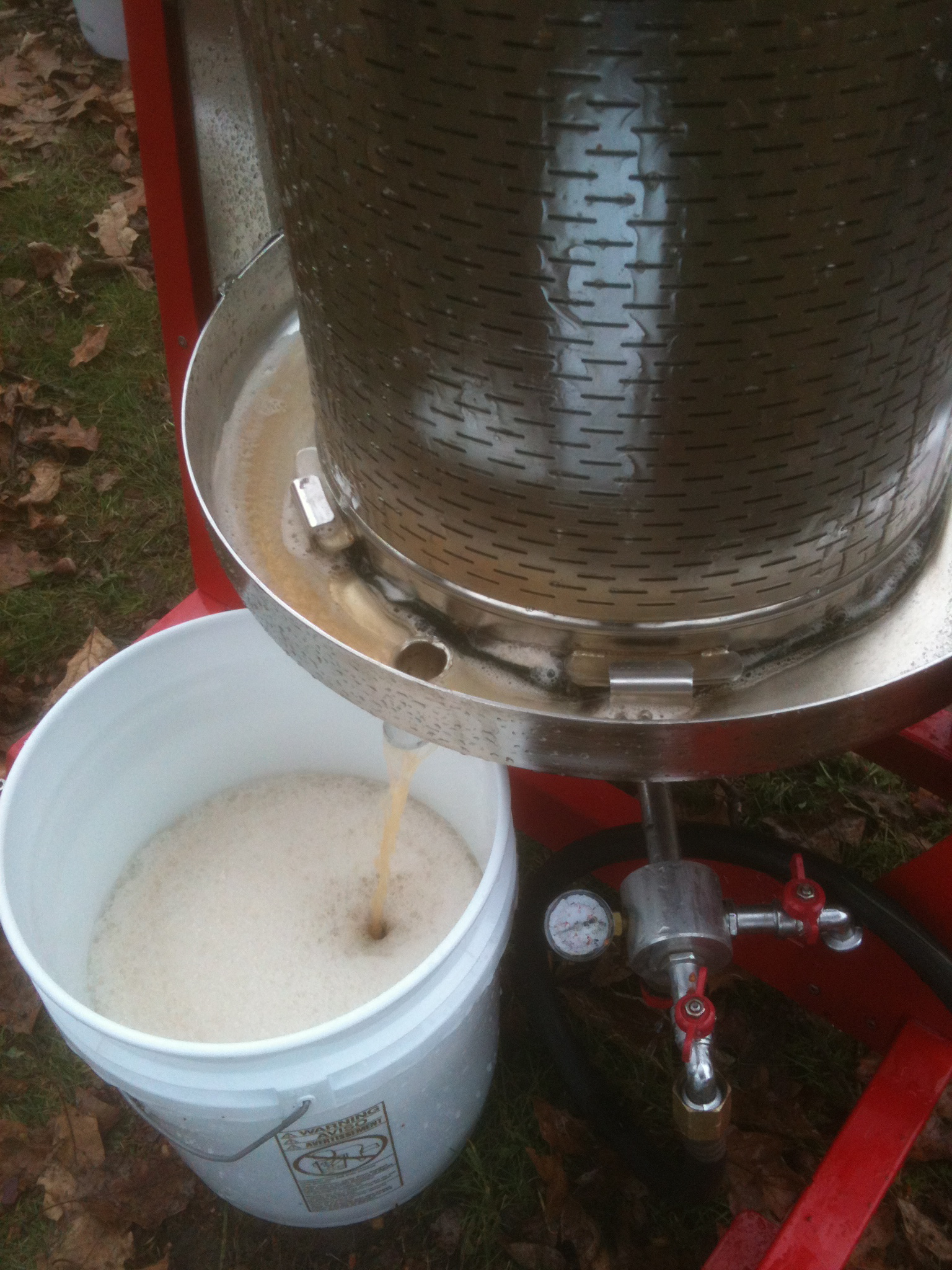
The mash is then placed into the water press. The press has a water bladder in the center of a round metal colander. The apple mash goes inside the colander and the valve is opened, filling the bladder with water. The pressure forces the apples against the metal colander, crushing them and extracting the juice.

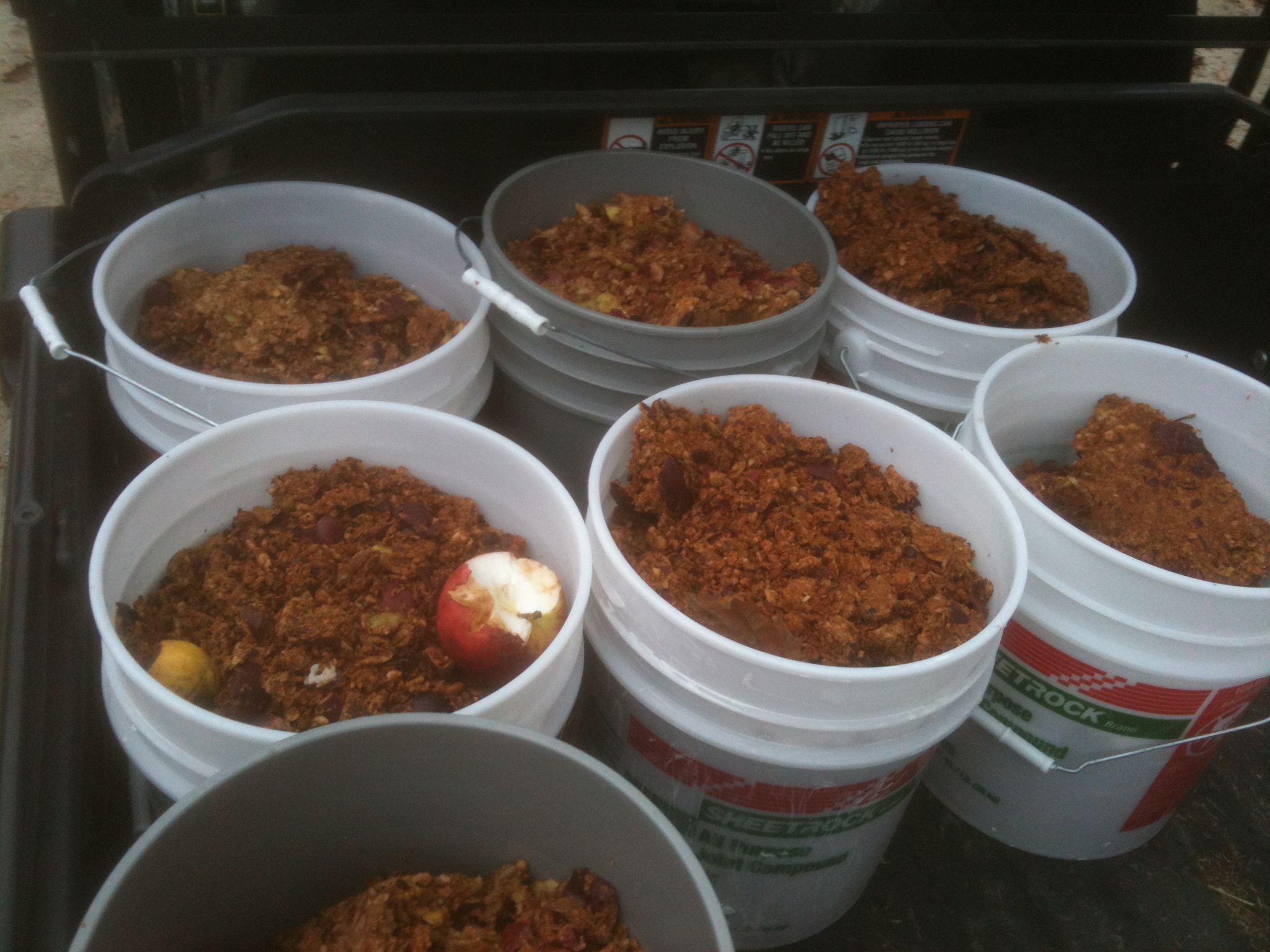
The pomace – the mass left over after the juice has been extracted – was cleaned out and scattered in the woods for the deer. Nothing was wasted. We pressed 8 bushels and got 18+ gallons of juice. It is absolutely delicious!
no blight this year
Posted: August 27, 2012 Filed under: Farming off the Farm 2 Comments
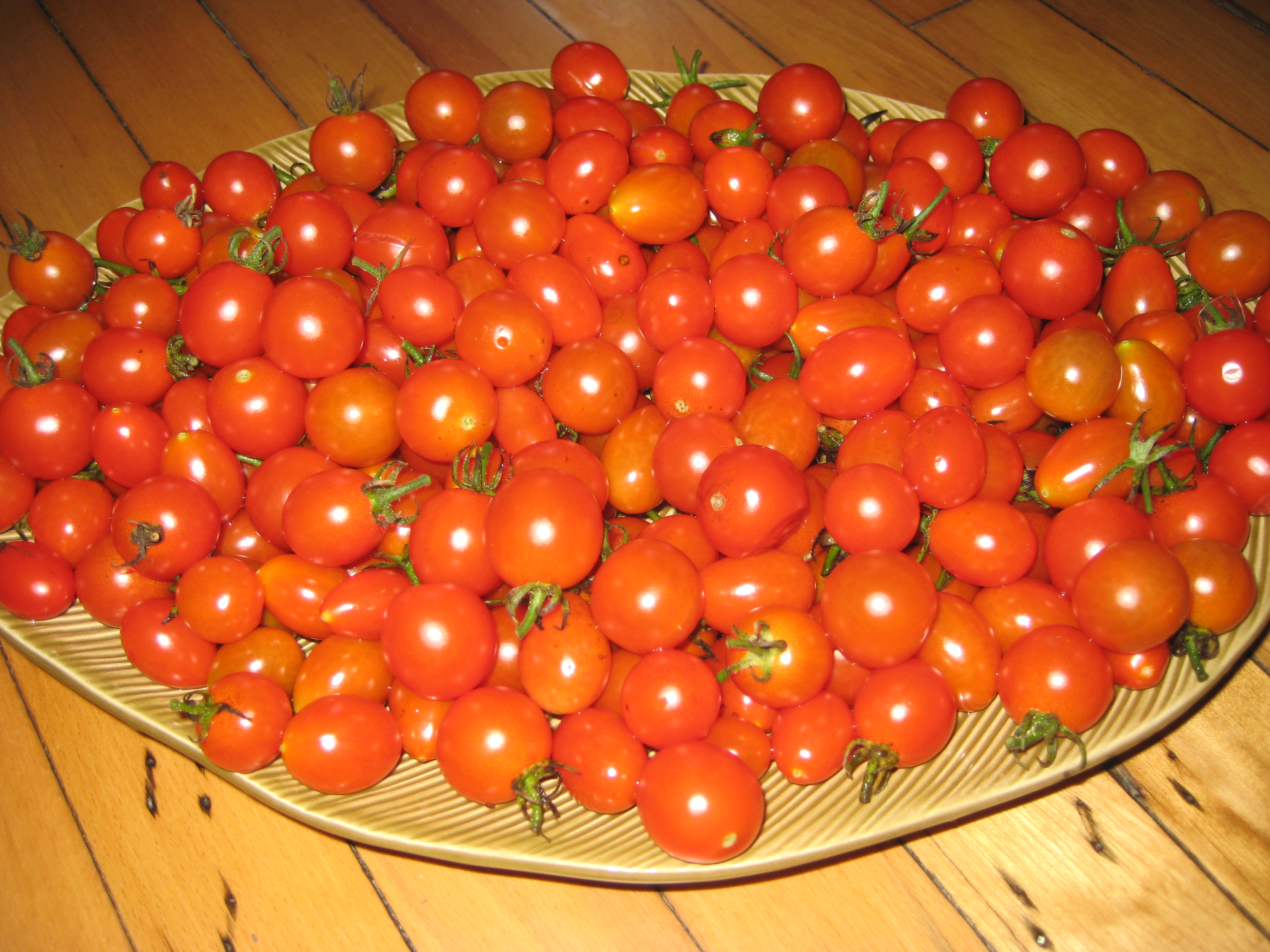
today’s harvest. a great tomato year in maine!
Ripening fruit
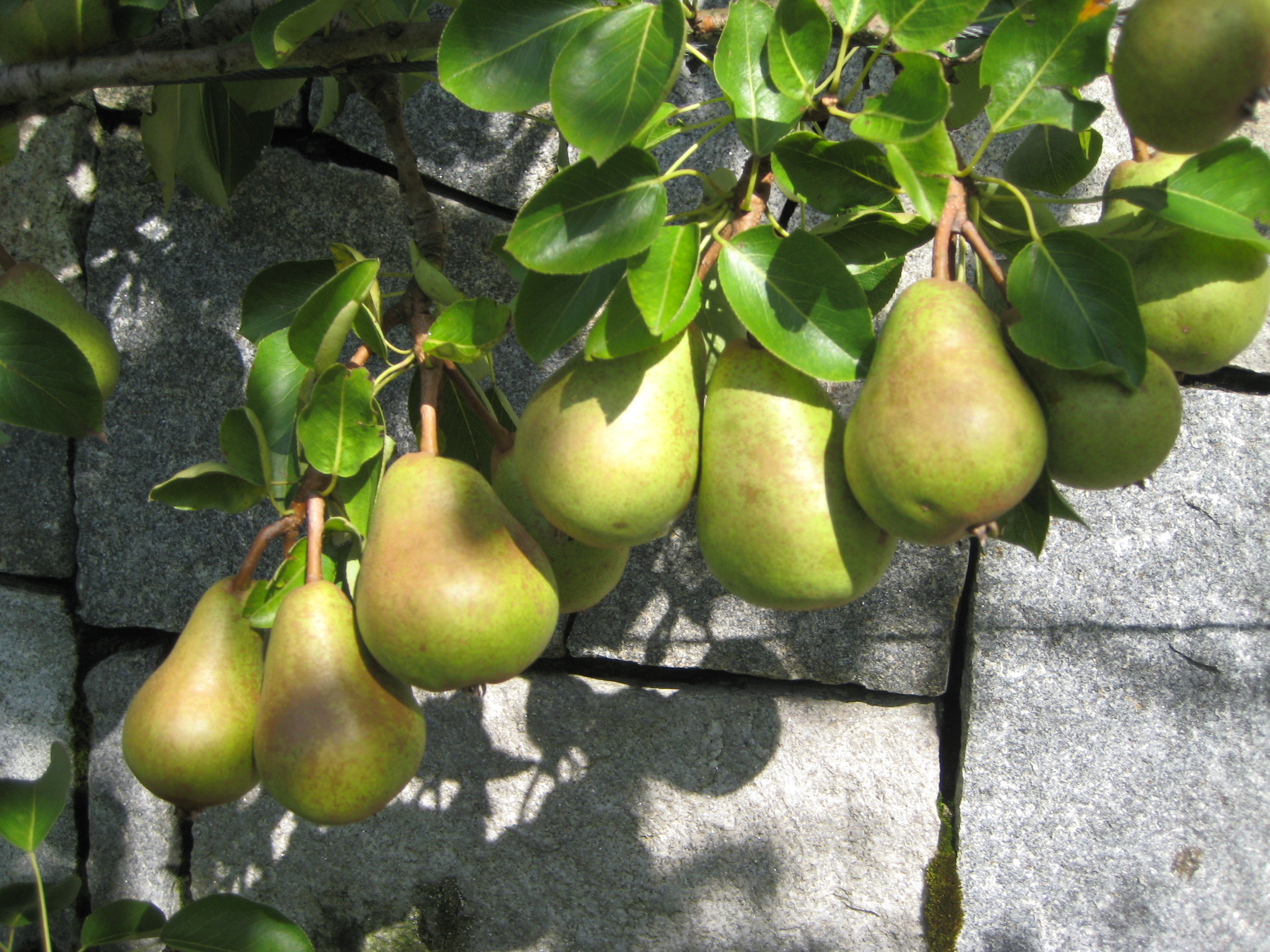
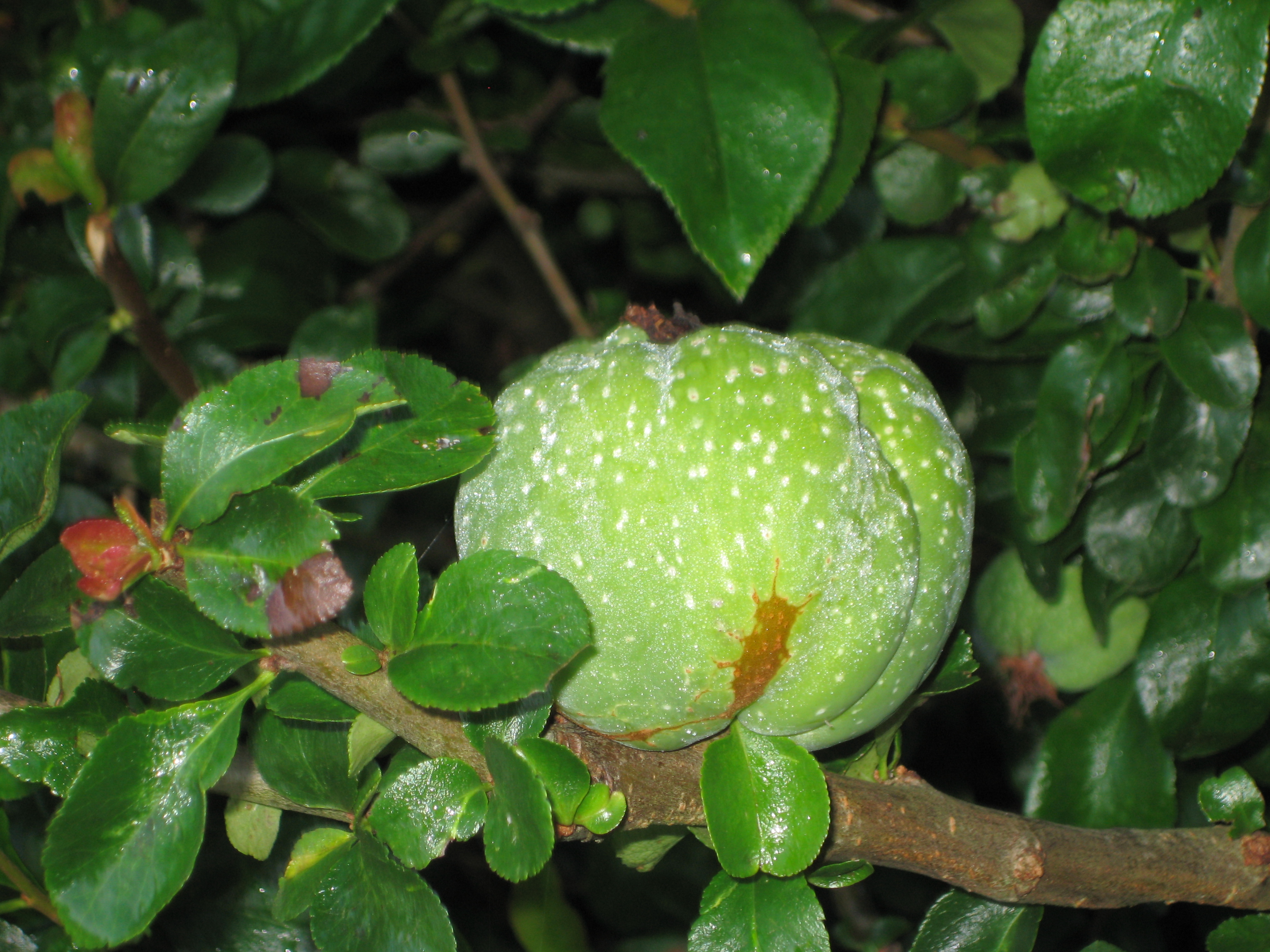
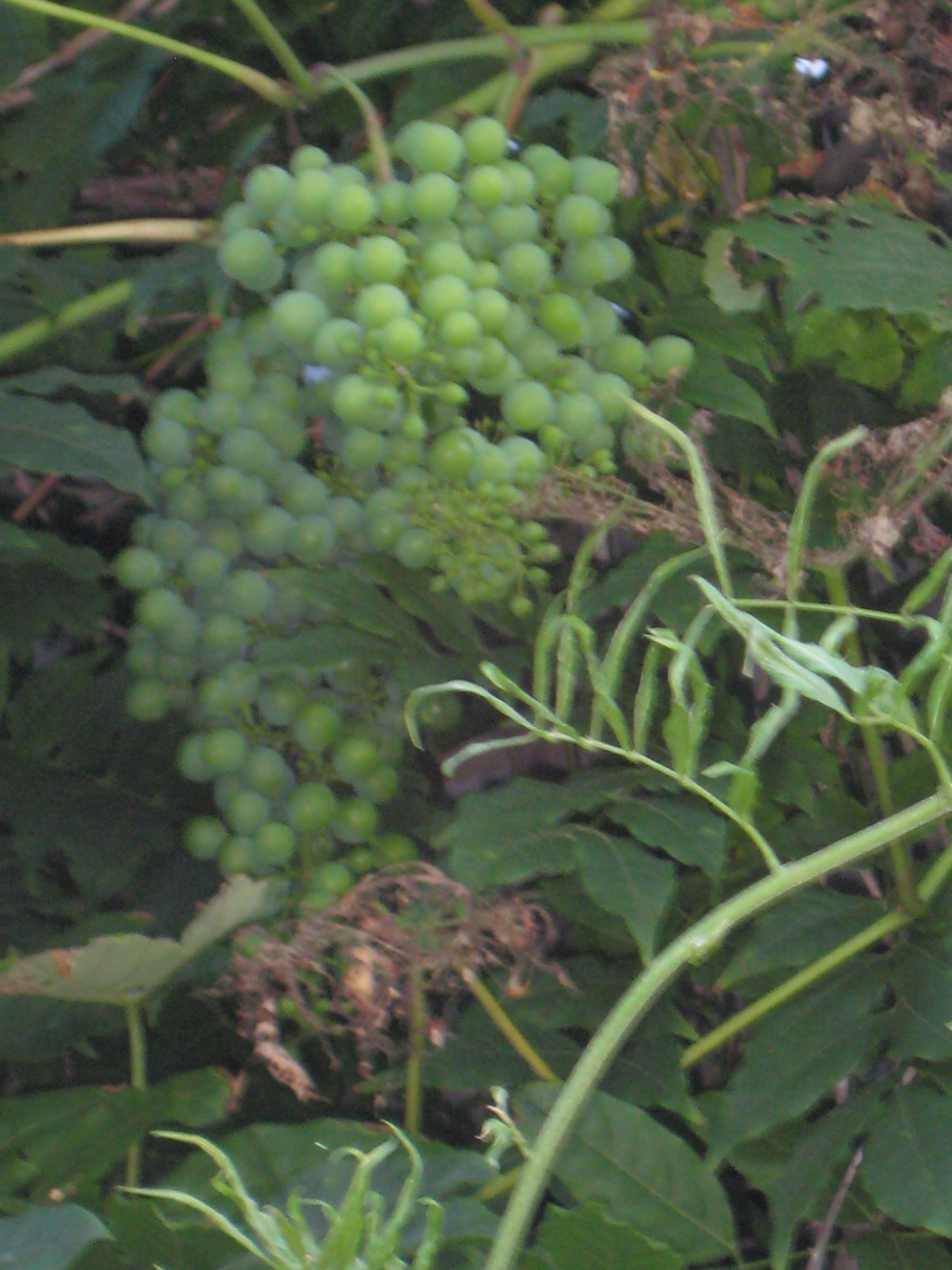
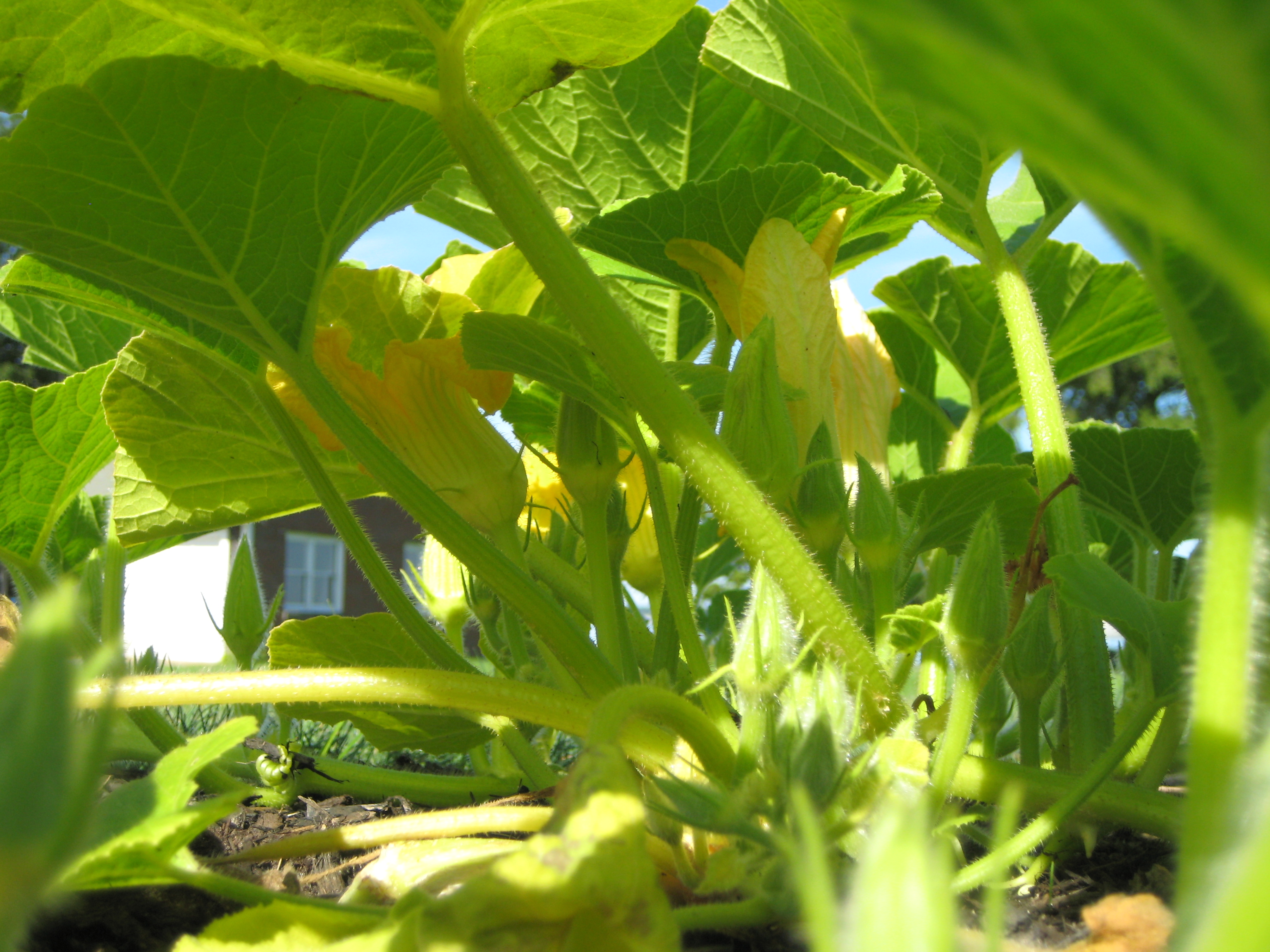
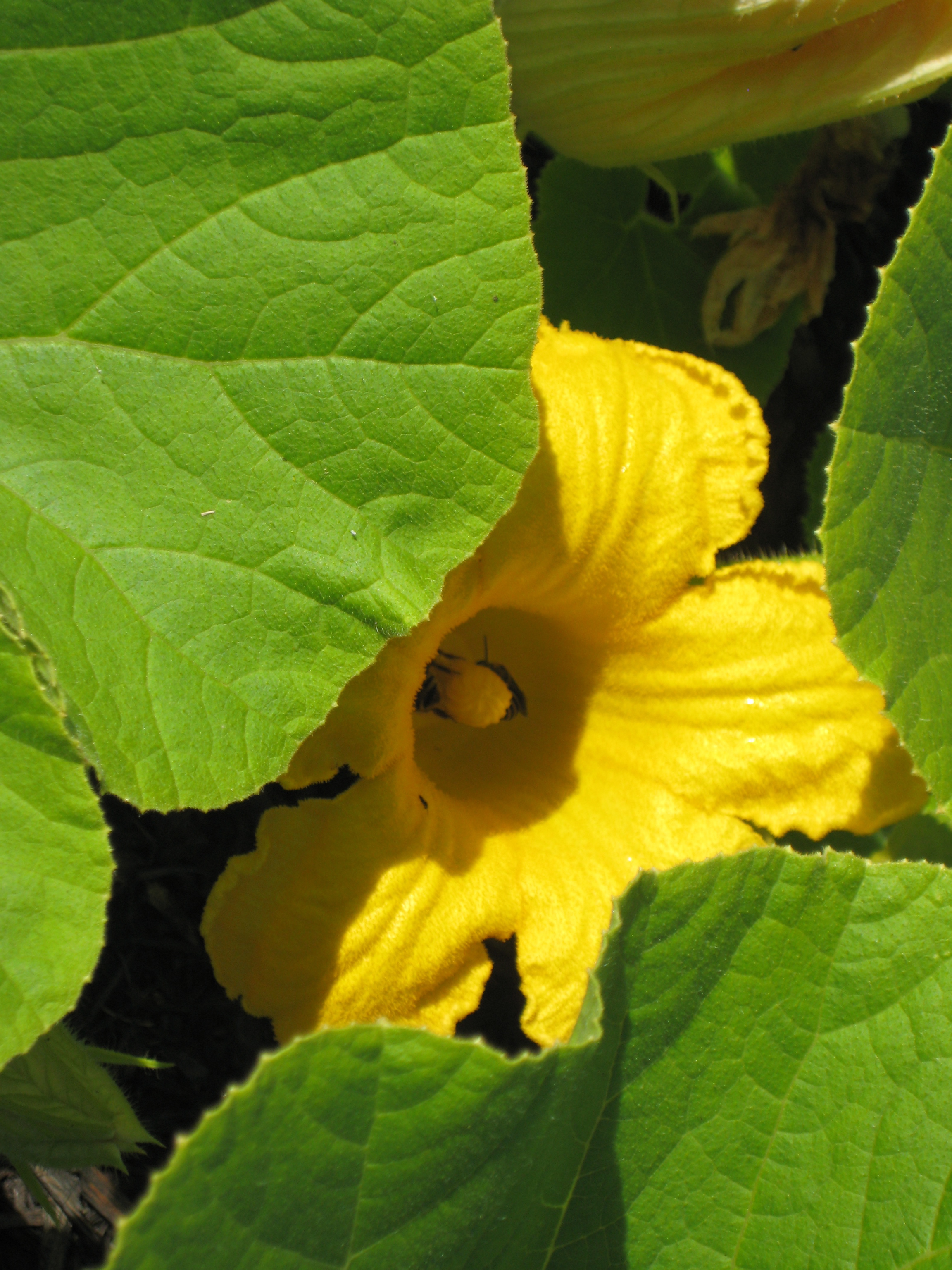
Posted: August 15, 2012 Filed under: Farming off the Farm 1 CommentHere are some photos taken at the estate. The various fruits are ripening nicely; the pears always come first, followed by the grapes, then the apples and quince. The pumpkin vines are robust but no fruits yet. I have never grown pumpkins so I am not sure what the timing should be.



Mid Summer Garden
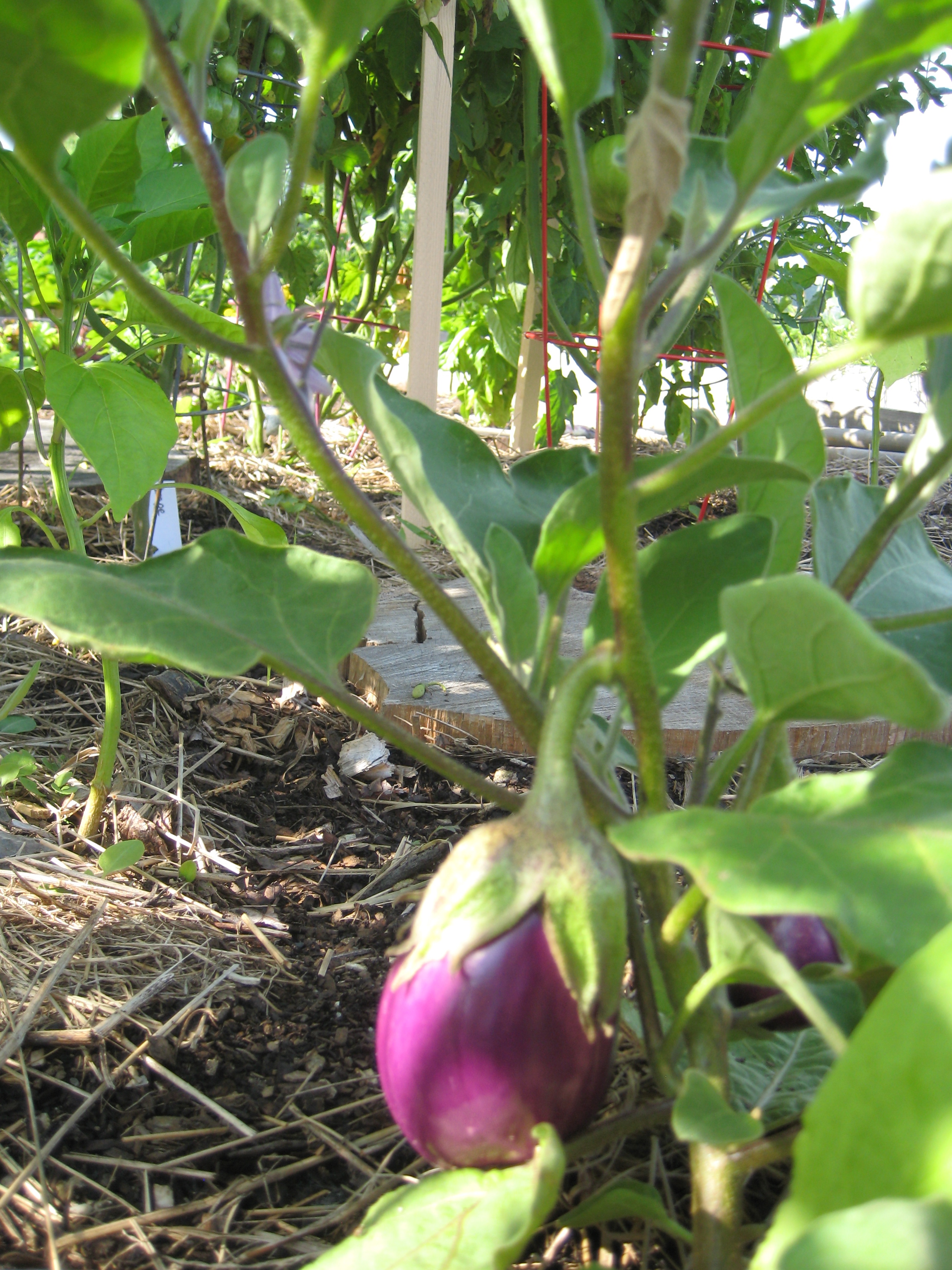
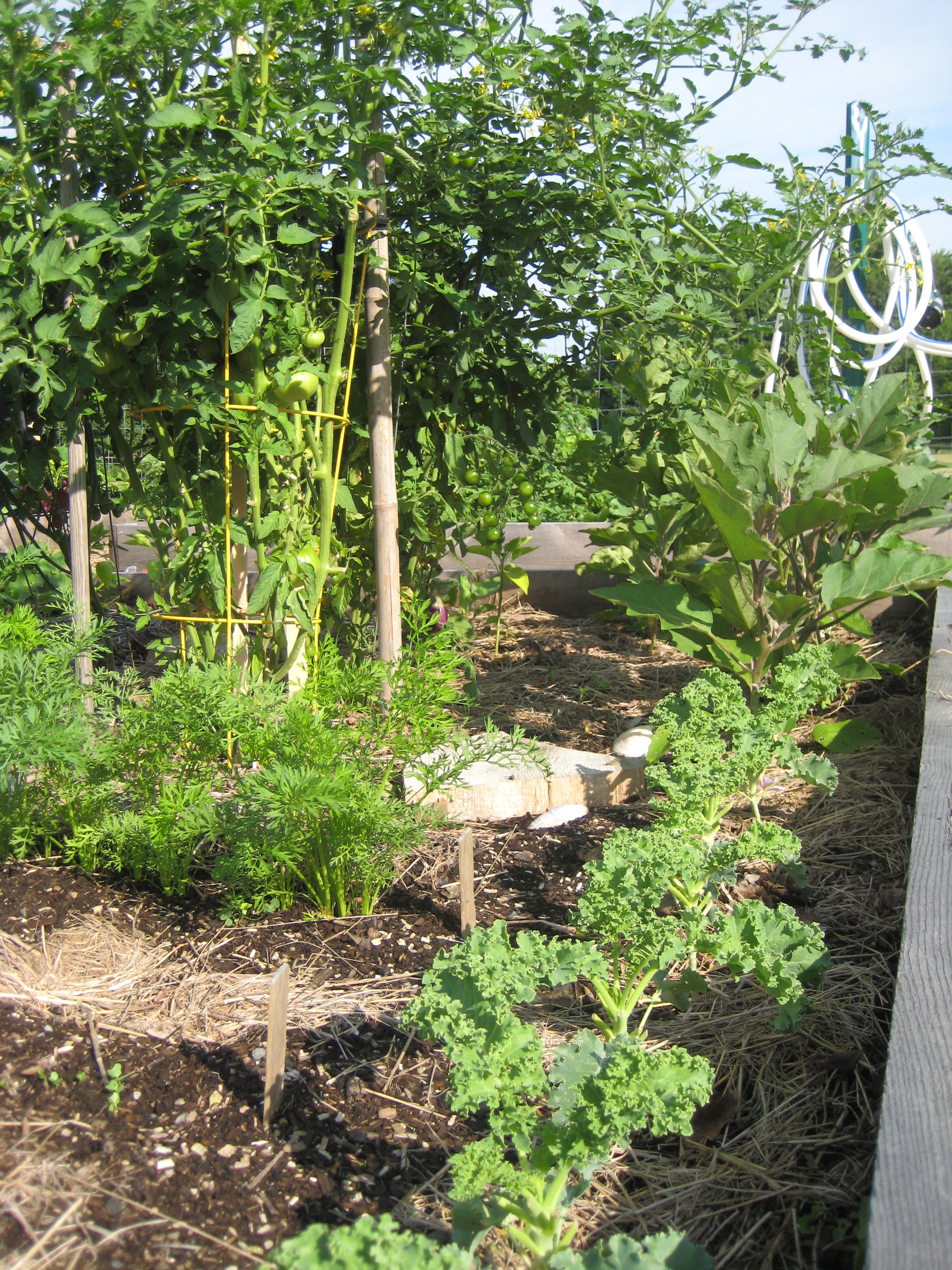
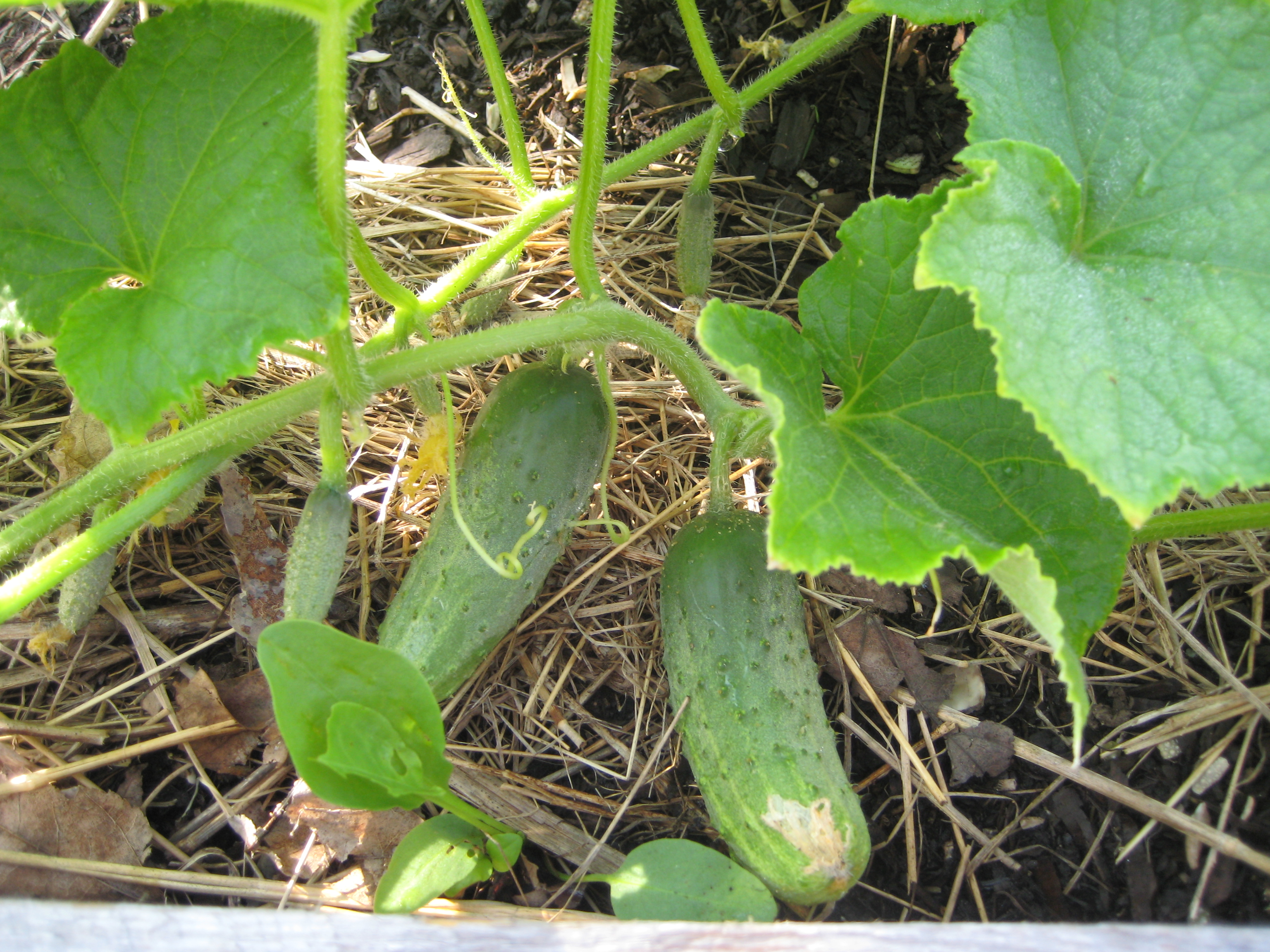
Posted: July 28, 2012 Filed under: Farming off the Farm, Little Green Thumbs 3 CommentsThe garden is nicely producing with not too much work on our part at this point. We’ve harvested probably close to 8 maybe 9, gallon size bags of mixed greens, arugula and kale. We’ve had 2 rounds of radishes and expect to plant another group soon. The tomatoes are coming along well and the eggplants and cucumbers are starting to take off. So much abundance to be thankful for!!!!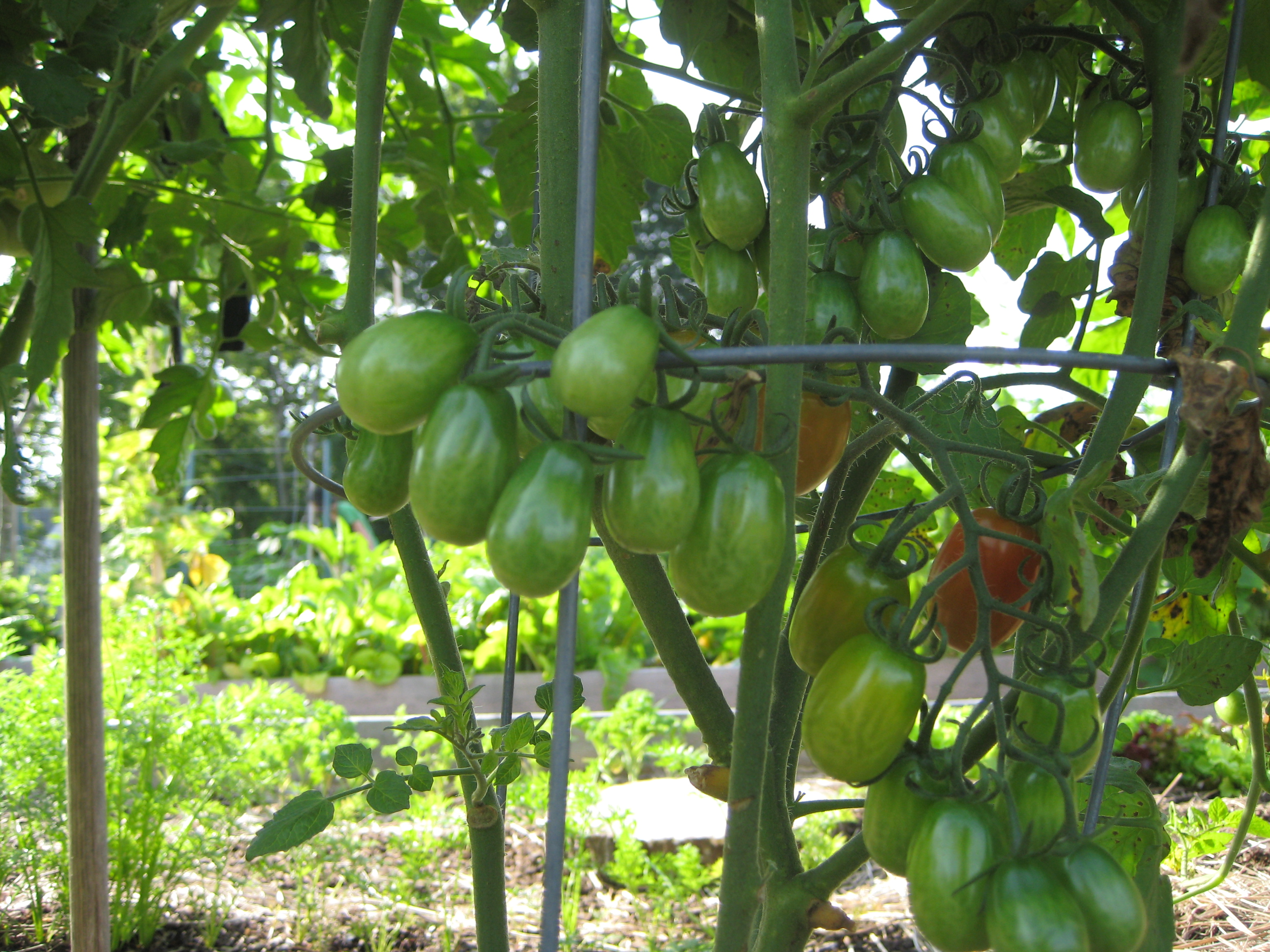
Summer = Strawberries
Posted: June 23, 2012 Filed under: Farming off the Farm, In the Kitchen 3 CommentsBy the calendar, summer came one day early (the leap year added one day to February). But in truth, summer arrives when the strawberries are ready for picking. 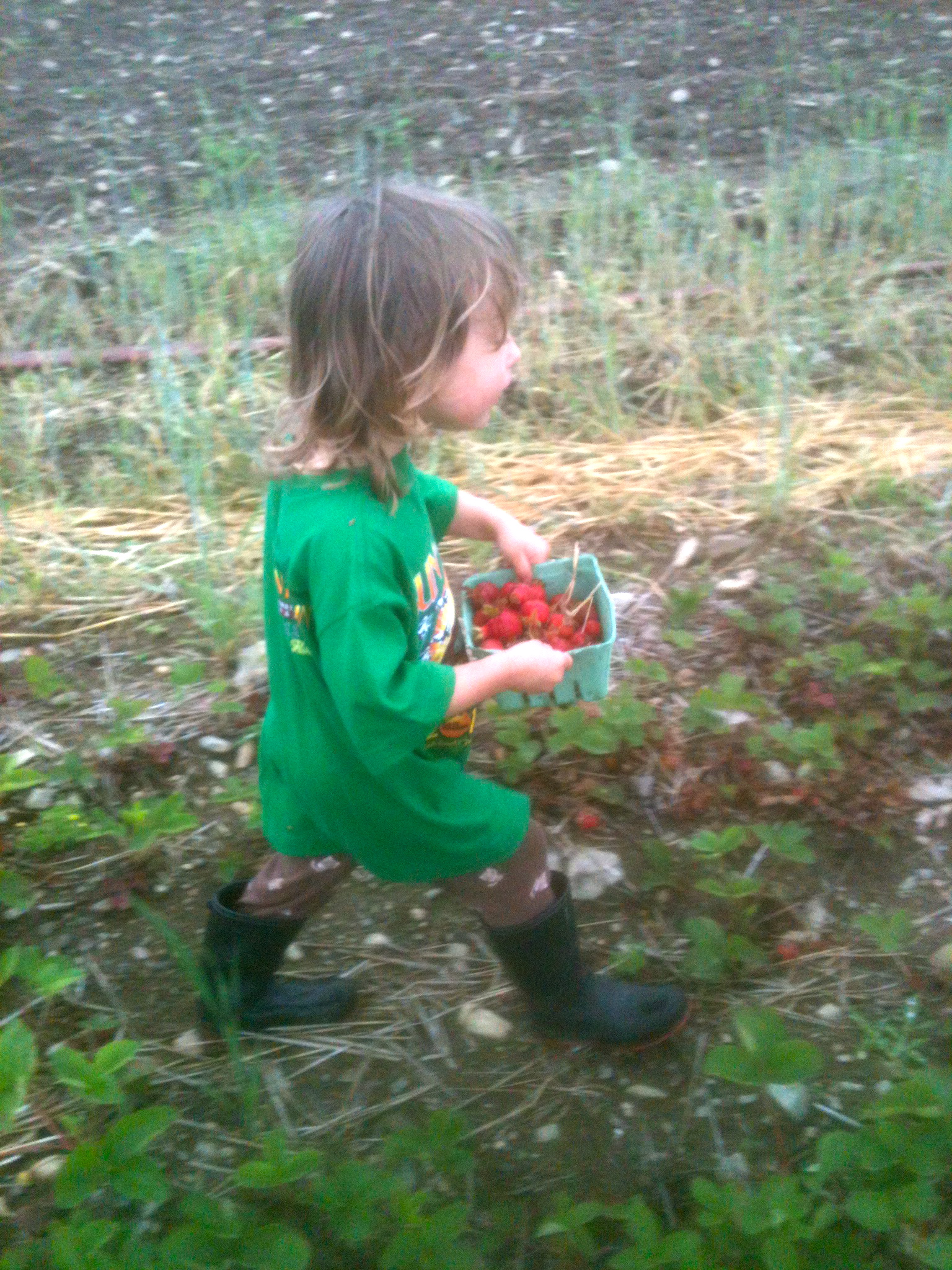
And go picking today we did!

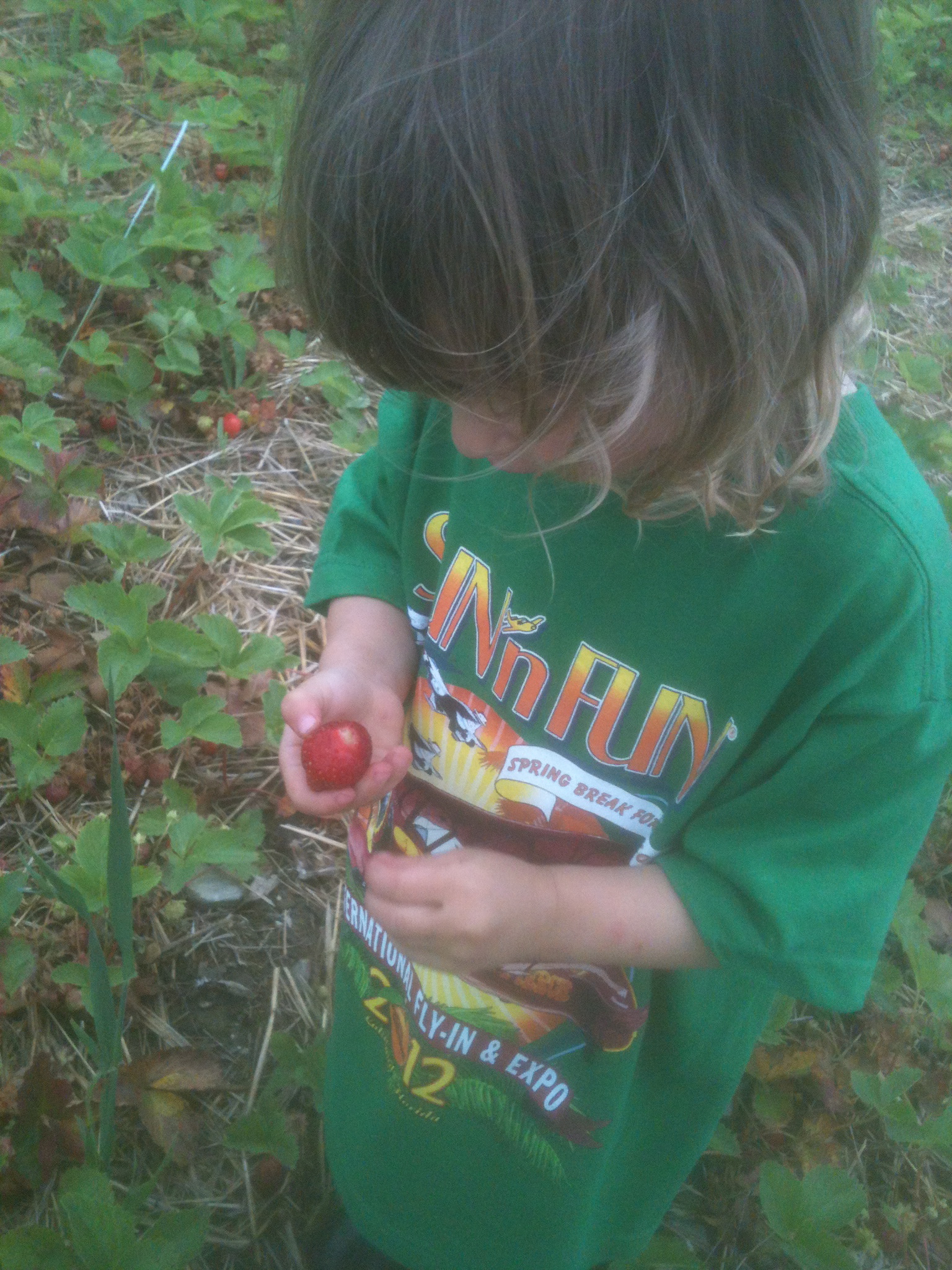
So now our household is all about whipped cream and shortcake and berries-a-plenty. Alice Waters’ “The Art of Simple Food” has this recipe for Cream Biscuits – a/k/a shortcake; just add strawberries and whipped cream!
Preheat oven to 400 degrees. Stir together in a large bowl: 1 1/2 cups all-purpose flour, 1/4 teaspoon salt, 4 teaspoons sugar (optional), 2 teaspoons baking powder.
Add 6 Tablespoons cold butter, cut into small pieces then add the butter into the flour using your fingers or a pastry blender until they are the size of small peas.
Measure 3/4 cup heavy cream then remove 1 tablespoon and set that tablespoon aside. Lightly stir into the flour the remainder of the cream with a fork until the mixture just comes together. Without overworking it, lightly knead the dough a couple of times in the bowl (this is pretty vague and not sure we hit the mark) turn it out onto a lightly floured board, and roll out about 3/4 inch thick (ours was about 1/4″ thick).
Cut into 1 1/2 inch circles or squares (we ended up with three or four times as many, but they worked fine all the same). Reroll the scraps if necessary. Place the biscuits on a baking sheet lined with parchment paper and lightly brush the tops with the reserved cream. Bake for 17 minutes, or until cooked through and golden. Let cool, then top with strawberries and whipped cream.
…and we hope you find a field to forage…

Little Green Thumbs 2012
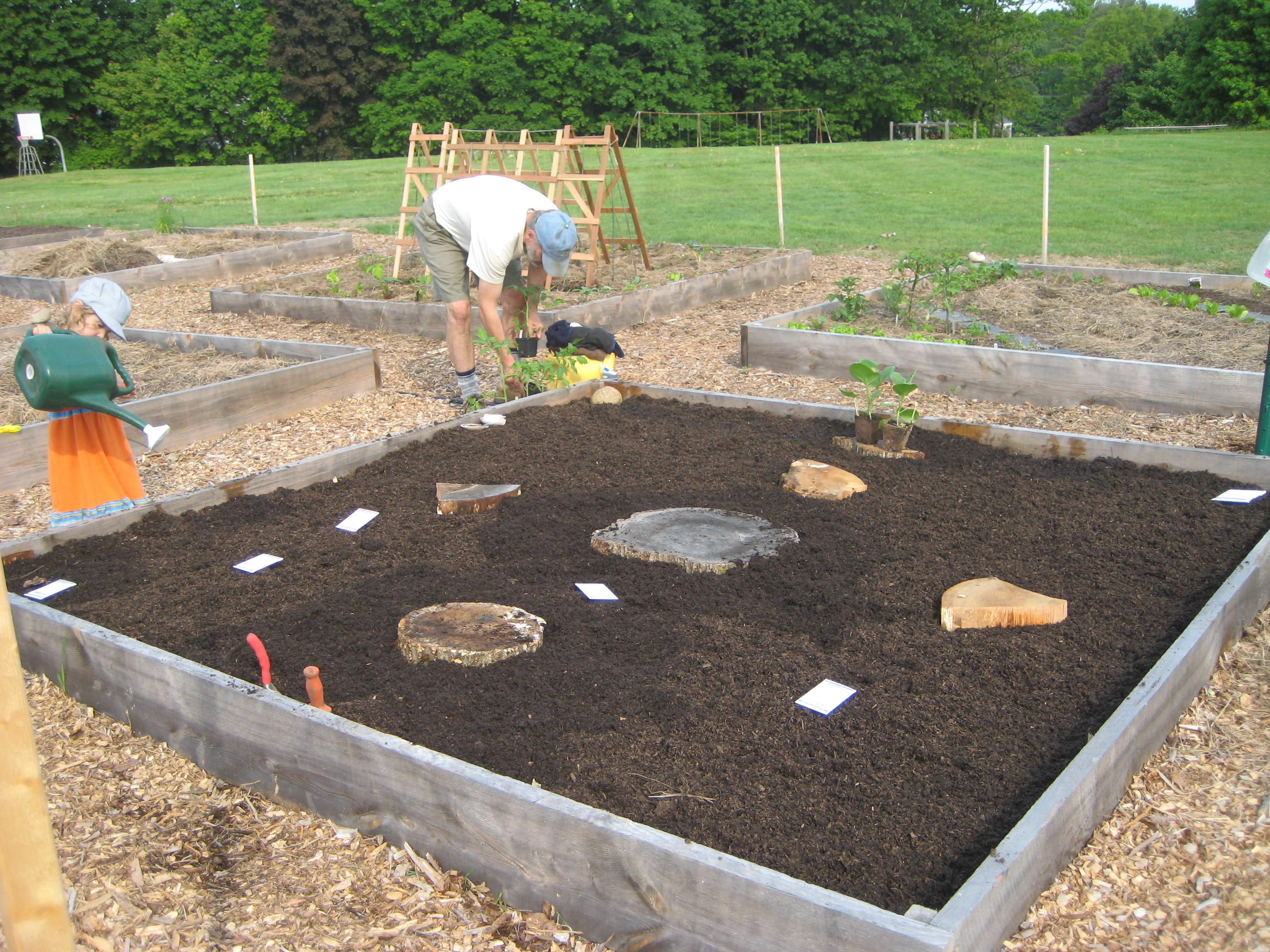
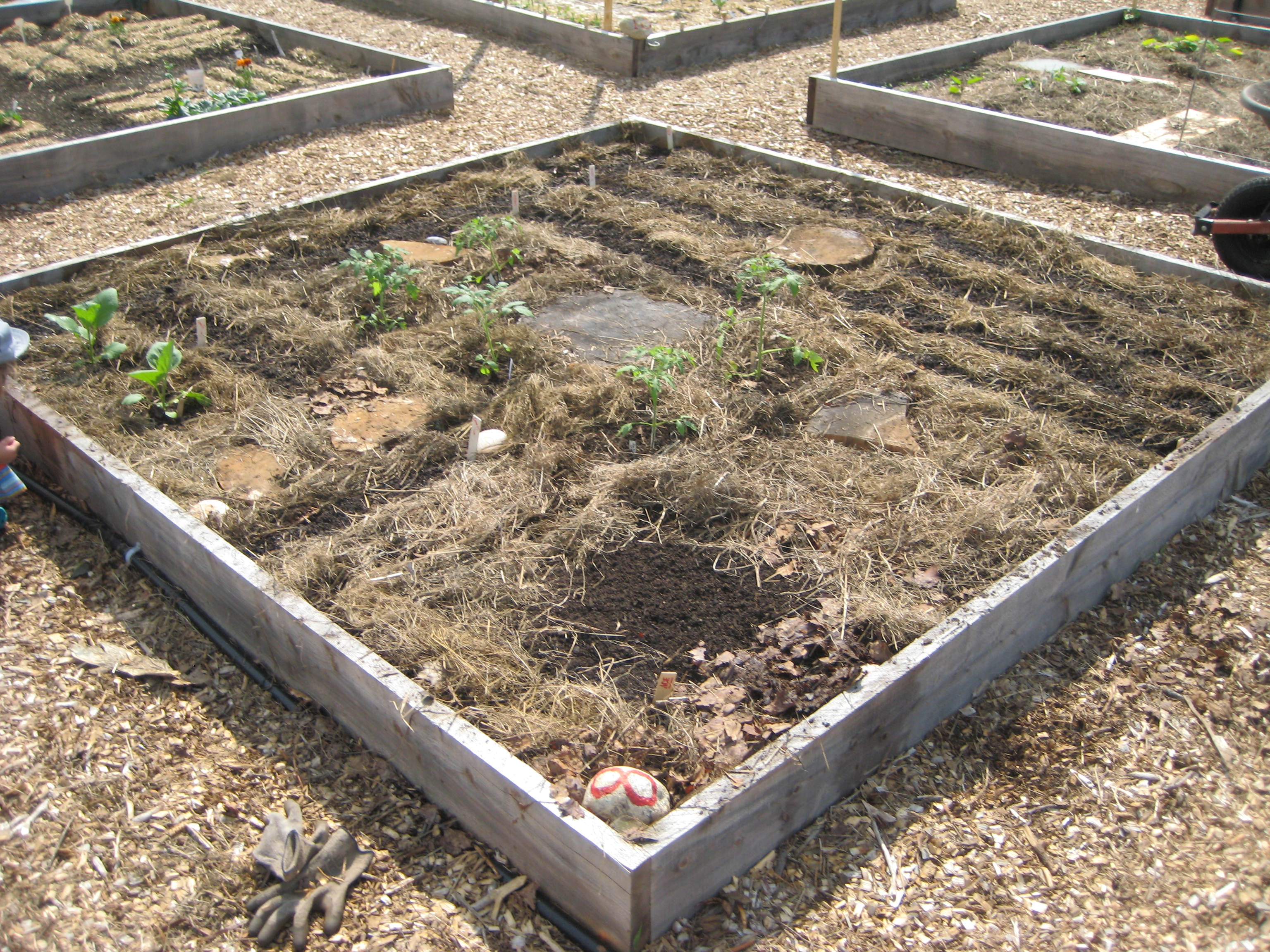
Posted: May 27, 2012 Filed under: Child Centered Activities, Farming off the Farm, Little Green Thumbs 3 CommentsWe made a late but serious dent in our community garden plot this weekend planting sugar snap peas, arugula, spinach, kale, radish, carrots, tomatoes, cucumbers and eggplants. Looking forward to a collective gardening experience this year! 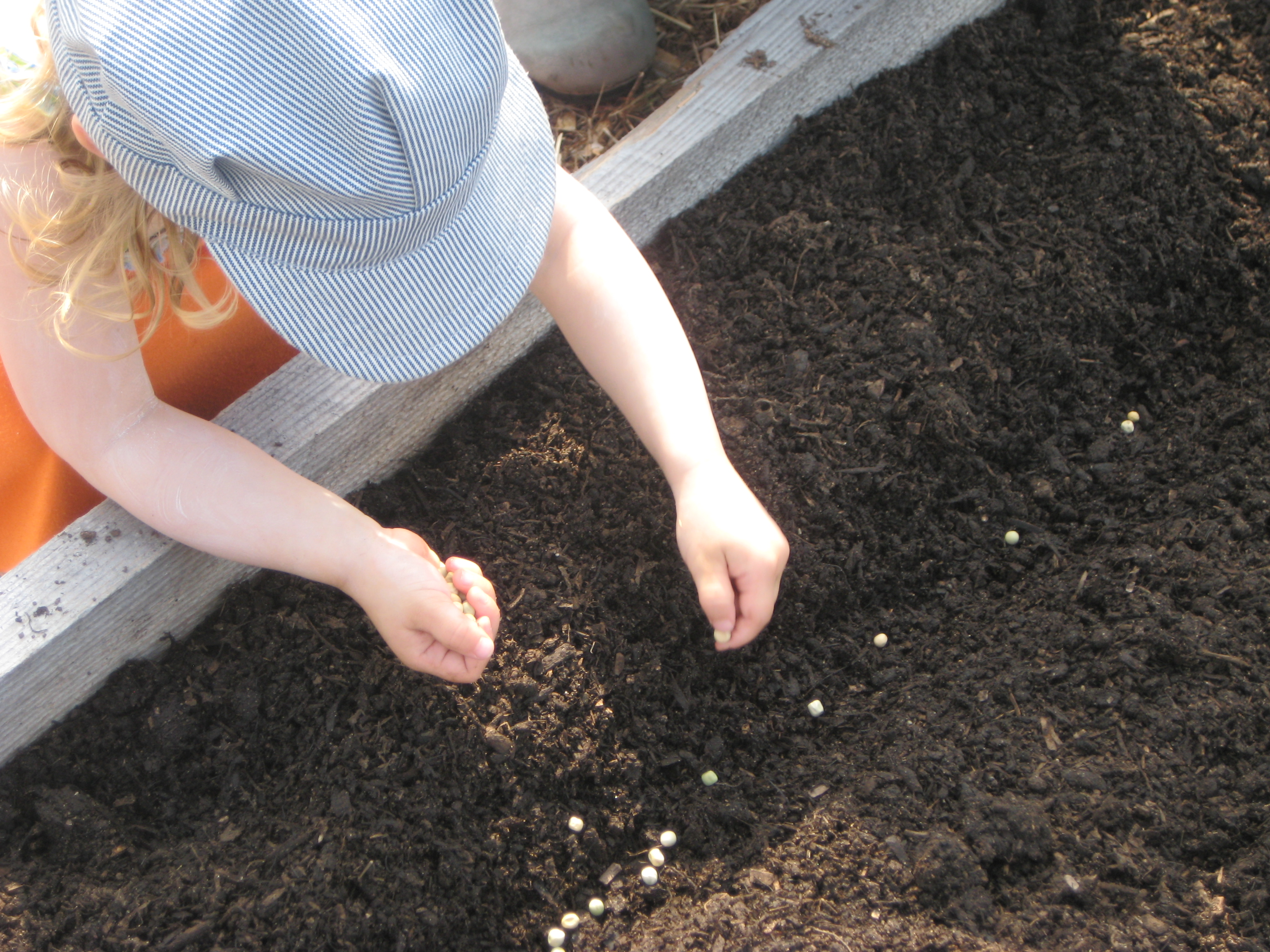
David found some great wood scraps for stepping stones
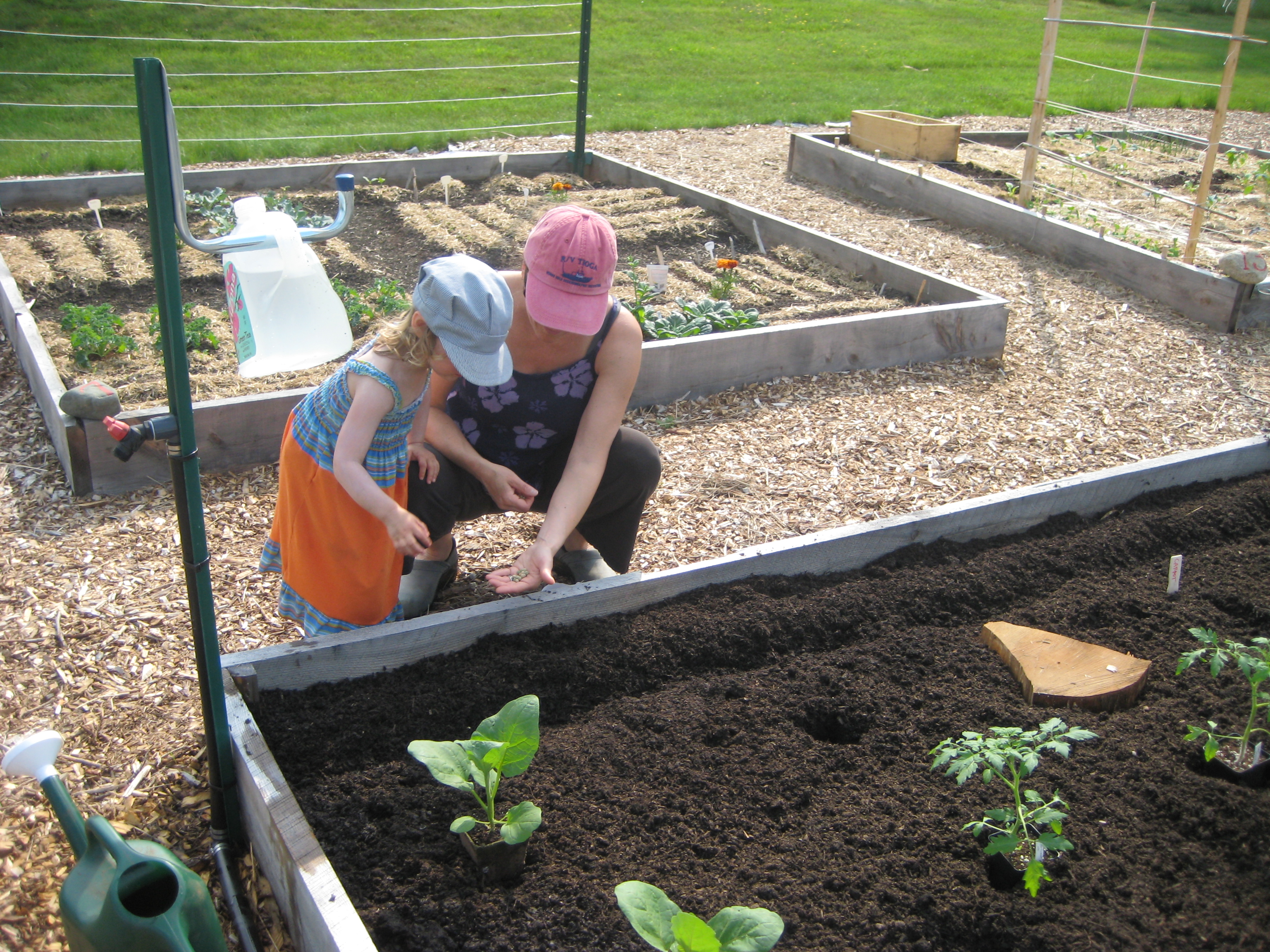
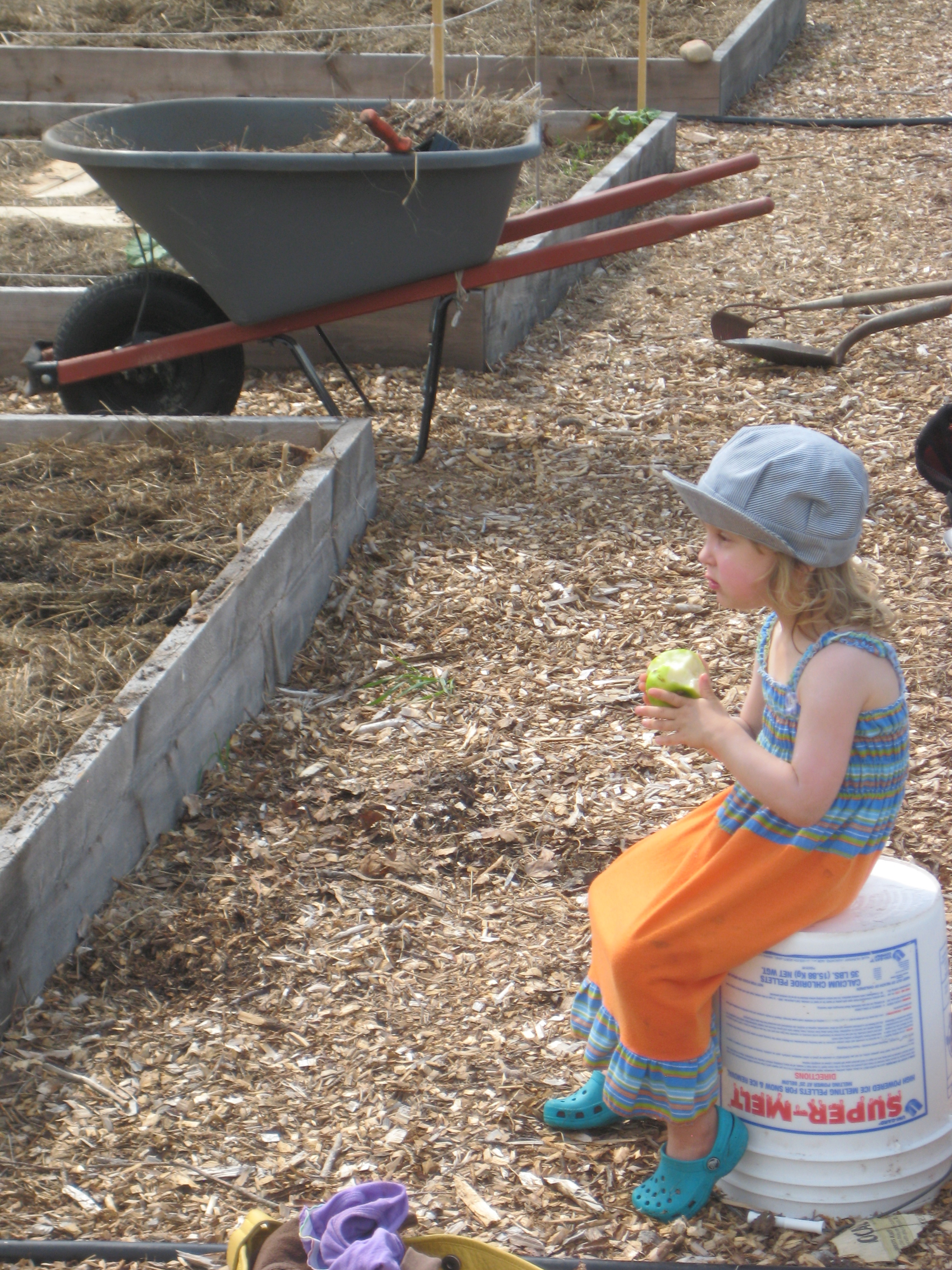
HARD WORK PAYS OFF!
Spring blossoms
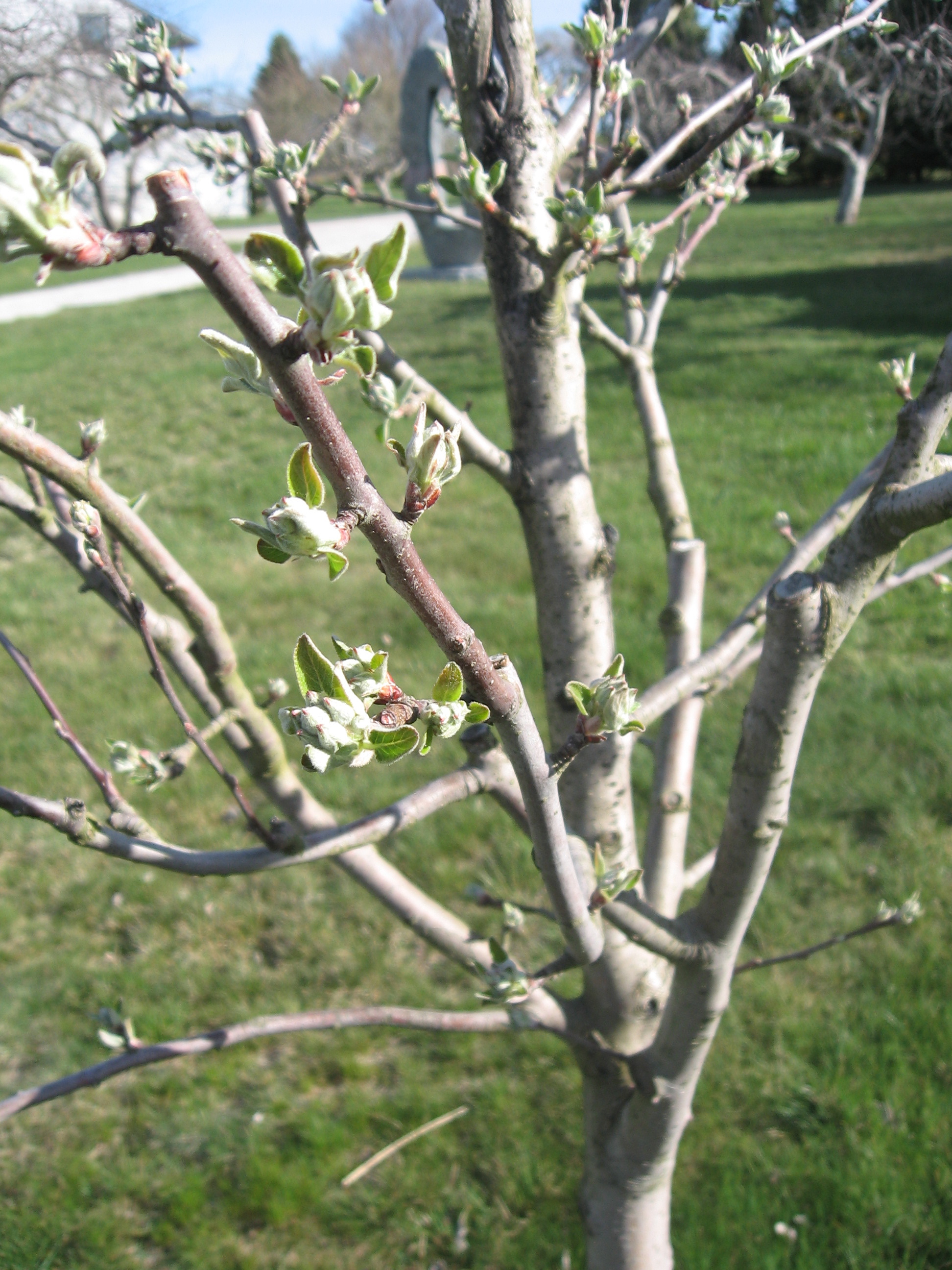
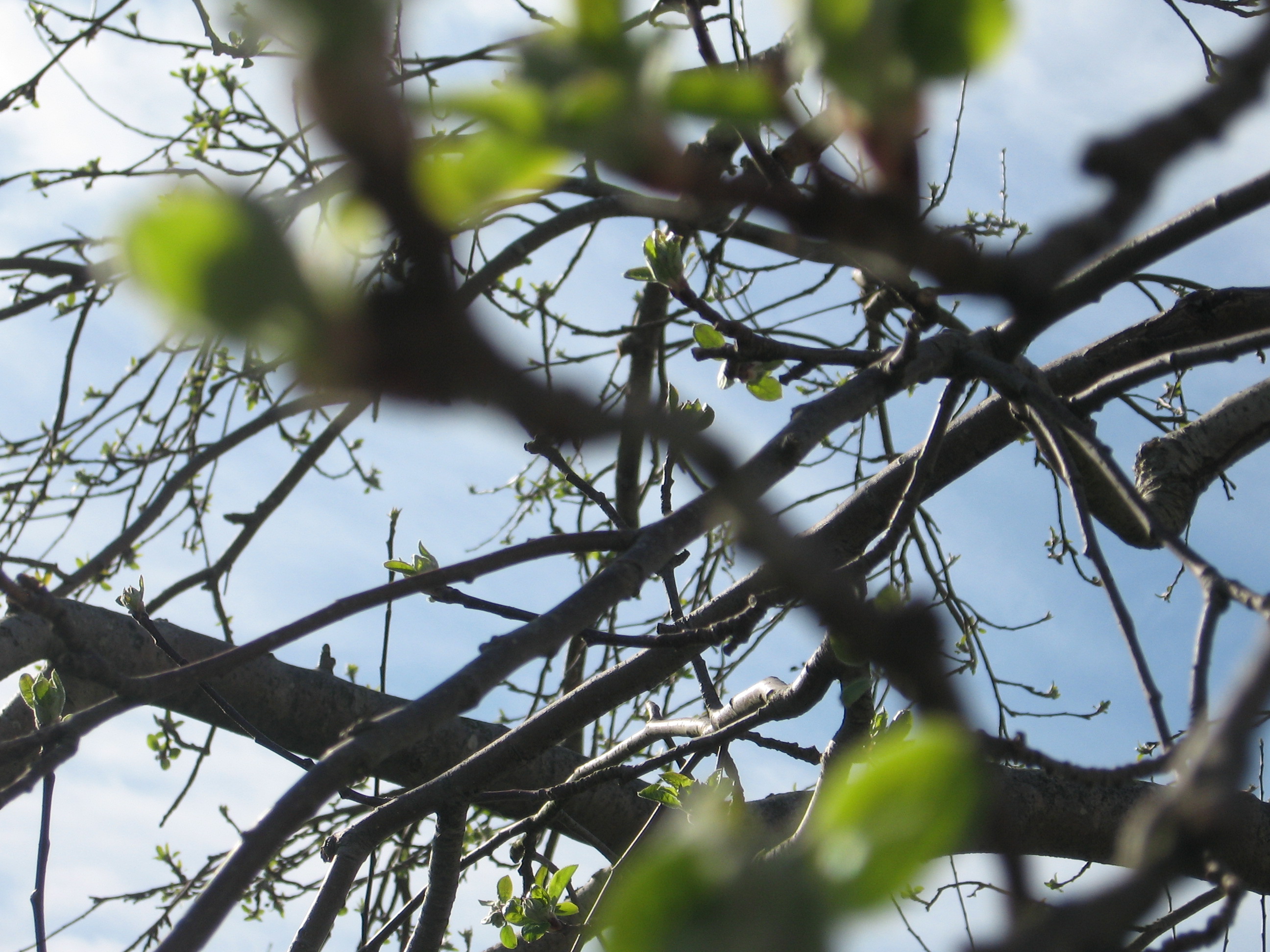
Posted: April 21, 2012 Filed under: Farming off the Farm, Gallery - Visual Leave a commentHere are photos of the apple orchard, taken April 18th. With the very warm March weather, we are about three weeks ahead of a “normal” spring. The buds are currently in the “half inch green” and “tight cluster” stages.

Blue Oysters
Posted: January 25, 2012 Filed under: Farming off the Farm, In the Kitchen 5 CommentsI went to a mushroom cultivation class today at the Urban Farm Fermentory and came home with a “log” of straw inoculated with spores of a Blue Oyster Mushroom.
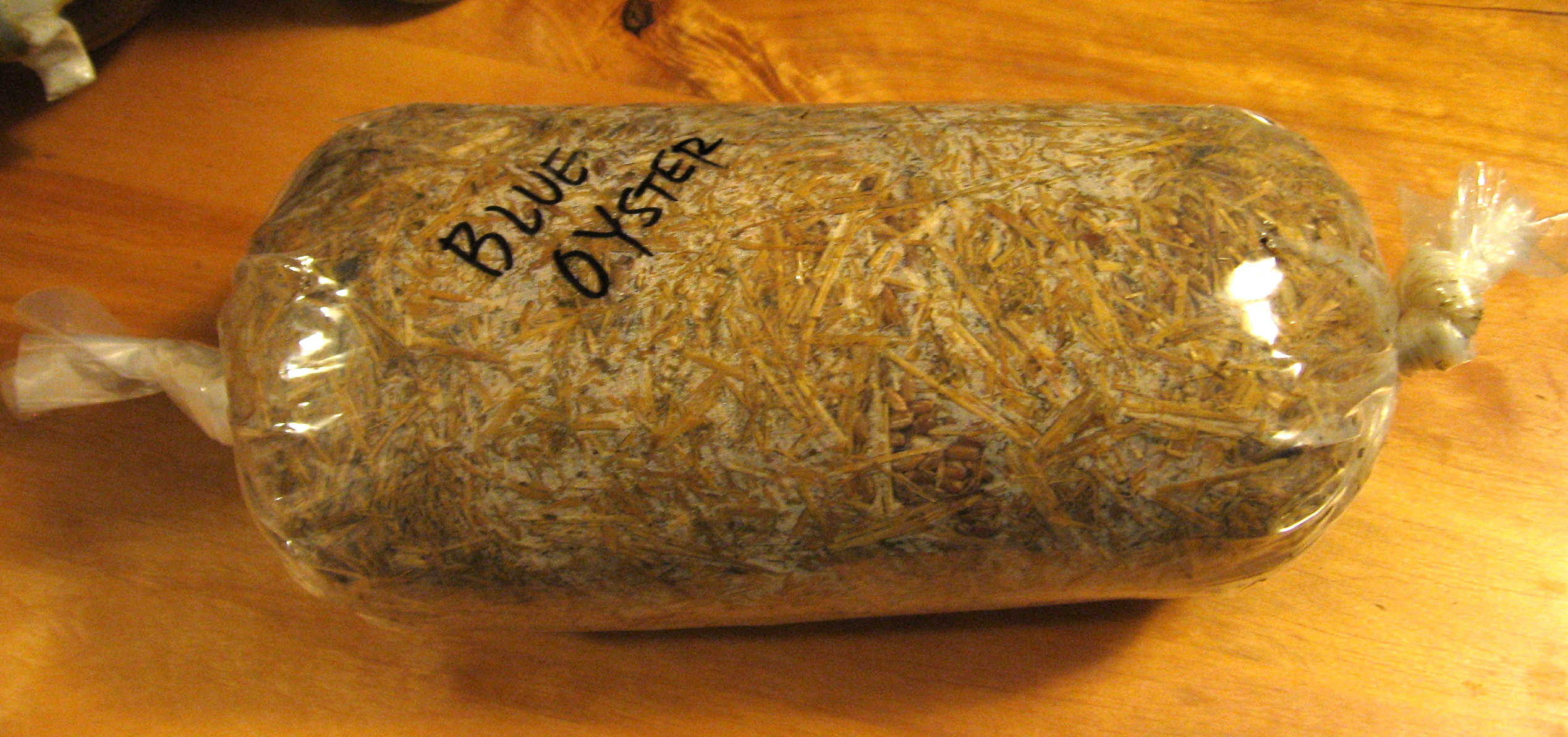
It is all new to me…but E loves to eat mushrooms, (and truffles someday, I’ll bet!) so I thought, why not try growing our own?
At the class we learned about sterilizing winter rye berries in a pressure cooker, then, inside an air-sealed glove box, using a syringe to inoculate the berries with spores. Within a few days the spores will develop, and within a few weeks you have a jar full of mycelium – the vegetative part of a fungus – using the berries as a host. After the mycelium develops, the berries are packed, along with pasteurized straw, into a plastic bag poked with a series of small holes to allow the fruit – the Blue Oyster Mushrooms in our case – to emerge.
So home I arrived with the straw filled bag, which I am storing in the basement – a dark warm, preferably humid place. In a few weeks I expect (hope, may be more like it) the bag will become engorged with tiny white strands of mycelium. At that point I will bring it out into the light, and keep it plenty moist, and it should form a fruiting body: the edible mushrooms.
Fungi are a separate kingdom, distinct from both plants and animals, with an estimated more than 5 million species. With over 32,000 sexes of spores (don’t ask) only need two to combine to grow into a mycelium mat. Paul Stamets, in “Mycelium Running” describes a “2,400-acre site in eastern Oregon had a contiguous growth of mycelium before logging roads cut through it. Estimated at 1,665 football fields in size and 2,200 years old, this one fungus has killed the forest above it several times over, and in so doing has built deeper soil layers that allow the growth of ever-larger stands of trees. Mushroom-forming forest fungi are unique in that their mycelial mats can achieve such massive proportions.”
Seems like science fiction to me, but it’s just another part of the wild world of nature. Incredible. And edible. For the most part.
 an Art Farm