Ohm, not om
Posted: February 6, 2026 Filed under: Child Centered Activities, Chronicles of a First Time Parent, Portfolio - David's work 3 Comments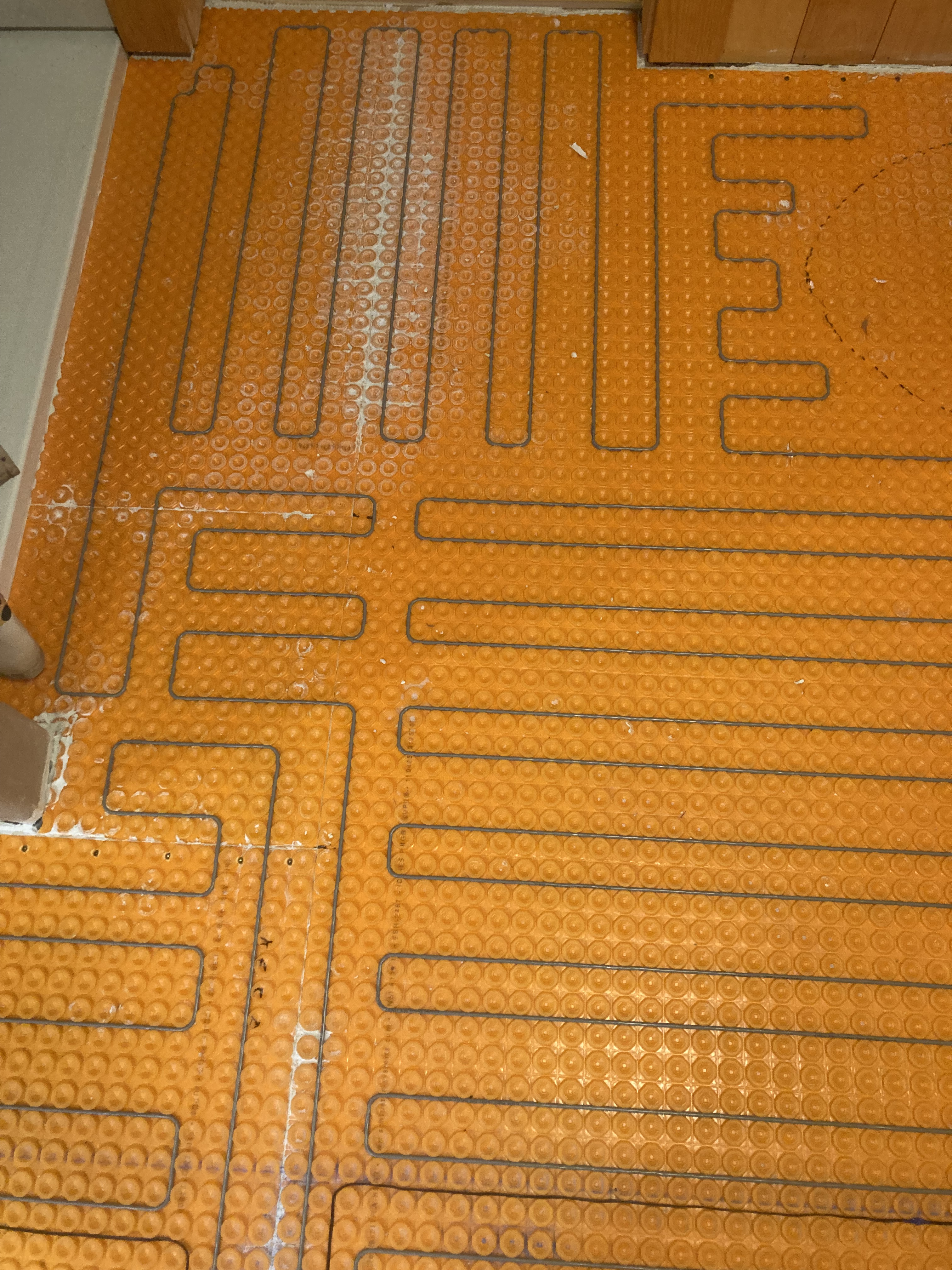
The Professor makes house calls.
His full title is the “Pema Professor,” to honor Pema Chödrön, the American-born Tibetan Buddhist. The Professor came to our house and held class in the bathroom, not about Om – the sacred syllable – but about Ohms, the measurement of electrical resistance in circuits or conductors.
We are doing the finish work, finally, in the bathroom we added onto our house back in 2017. For nine years that room has had the basic plumbing but no heat, and a subfloor painted grey. Immense is our blessing to be able to do this finish work now, when masked jackels rampage our community, when our brown skinned neighbors stay indoors afraid to leave their house, more than 200 people having been arrested and absconded during “Operation Catch of the Day,” while so many homeless still live on street corners begging for coins; that we are able to afford such luxury now is a privilege not lost upon us. But still, our addition needs to be finished.
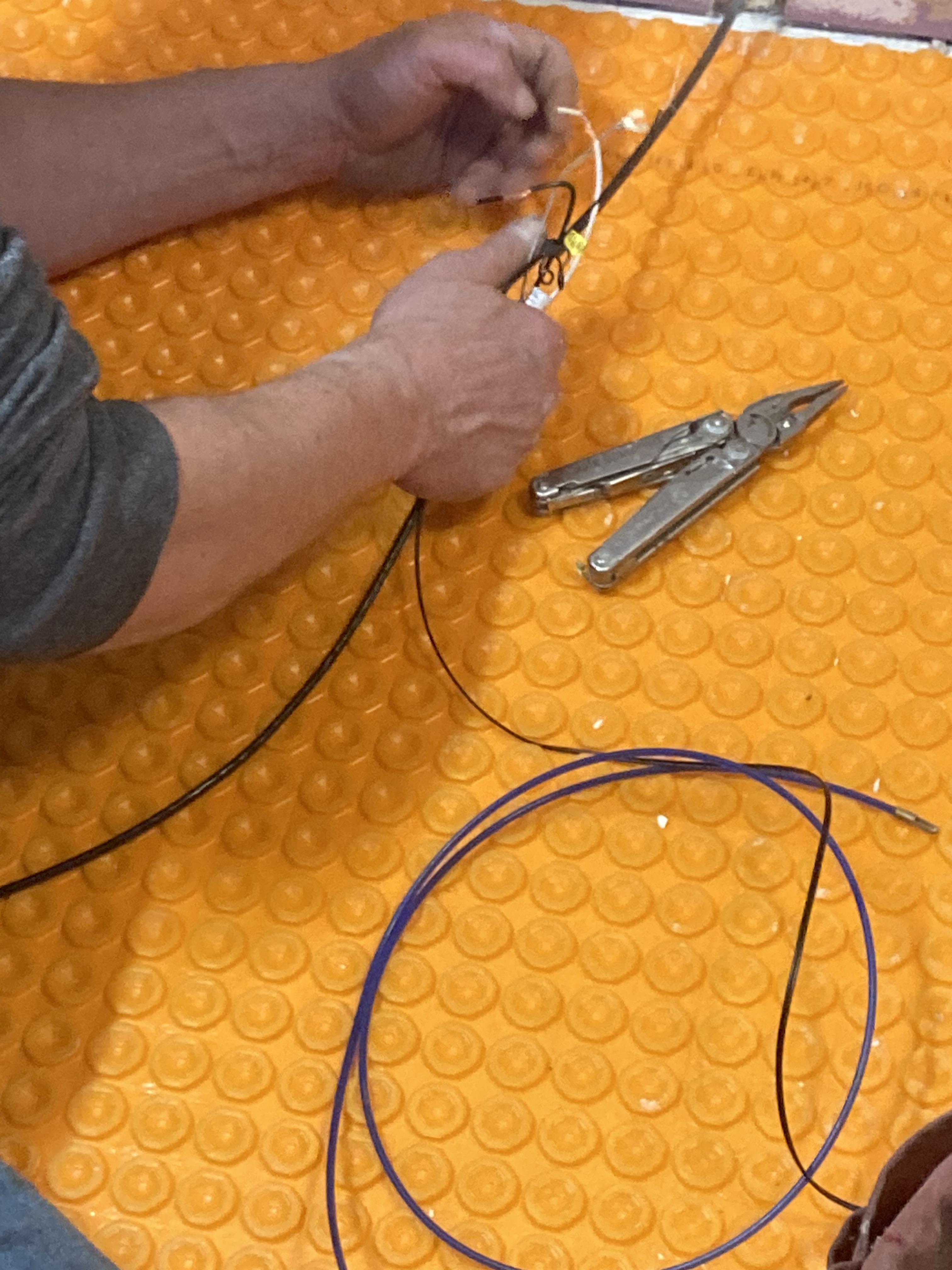
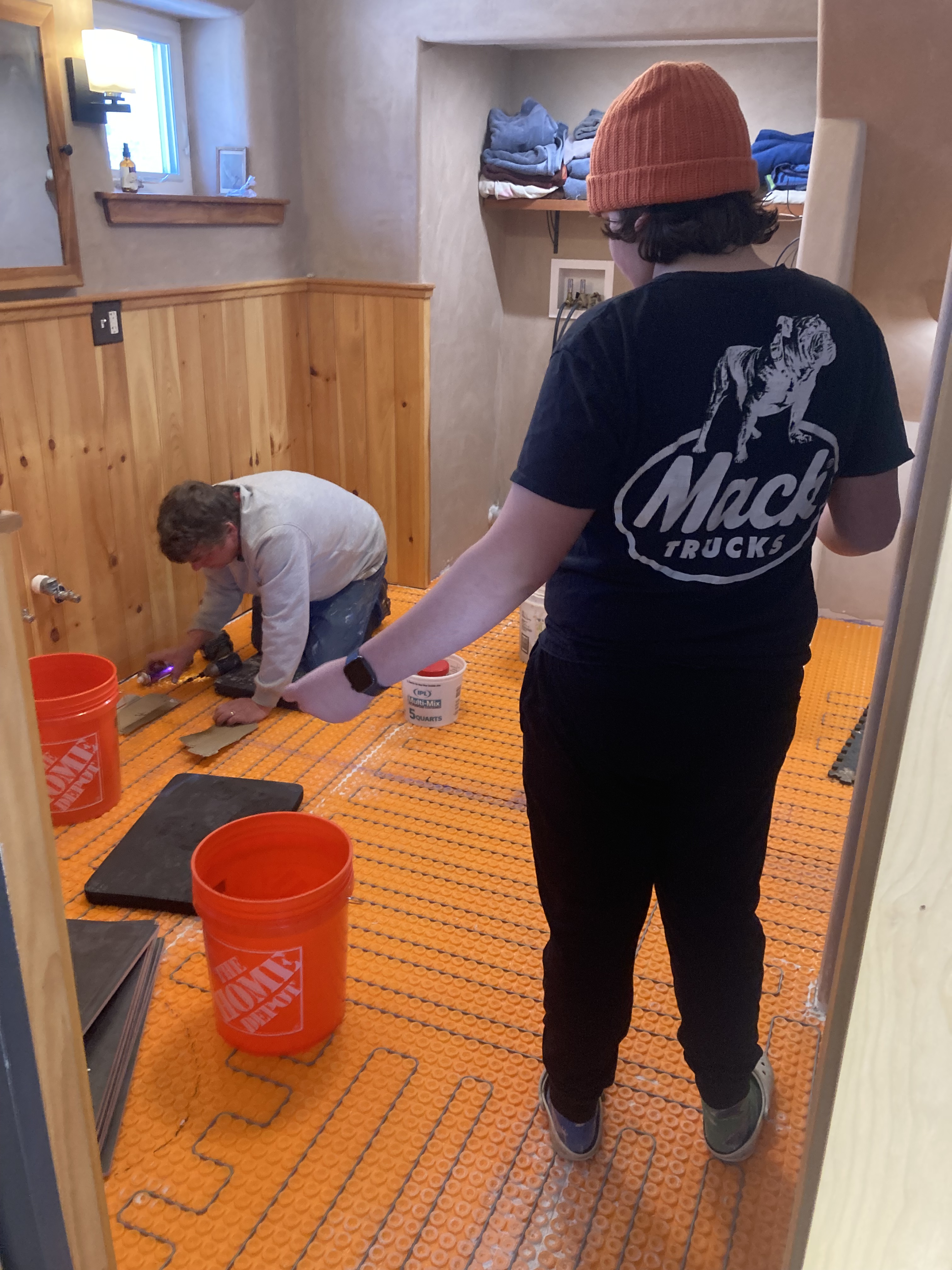
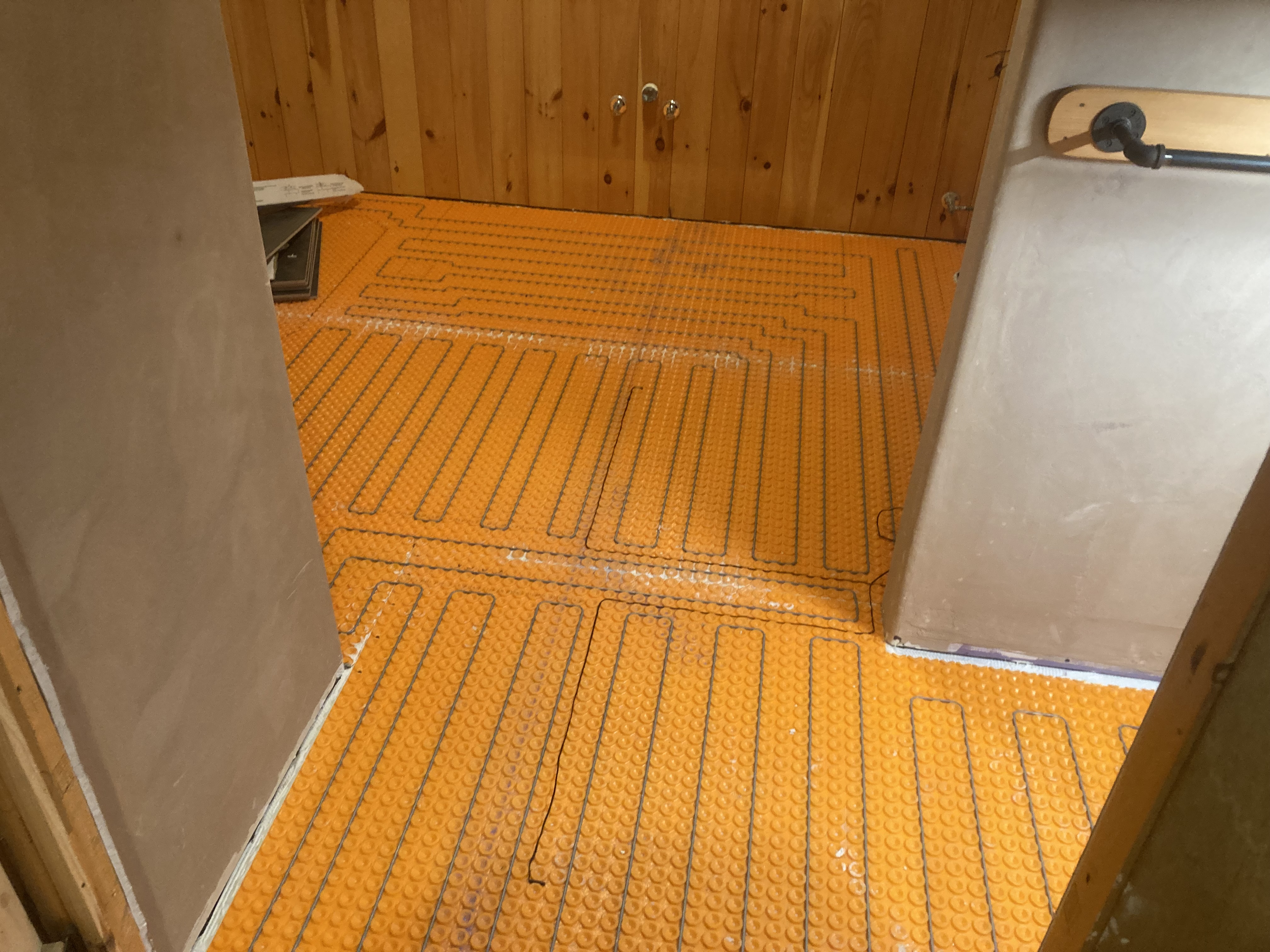
We are laying electric radiant heat on the bathroom floor, and then tiling. The Cadillac approach. The process begins by laying a waterproof uncoupling membrane which prevents tiles from cracking if the wooden subfloor moves. Into the membrane’s grid, we snapped in place 84 square feet of heating cable. That wire connects to a 15 amp Ground Fault Circuit Interrupter circuit breaker. Before laying tile, we needed to test both the Ohm resistance in the cable and its ground fault continuity, to ensure the integrity of the cable and circuit.
An Ohm is the measure of resistance, an object’s opposition to a flow of electric current. That resistance to flow creates friction, which friction creates heat, which is what we desire in the floor of the bathroom. We need to test this before laying tile.
Ohm’s formula is R = V/I, where V is voltage – the push driving the flow of electric charge – and I is current – the electric charge that flows past a specific point in a complete electric circuit. The formula for resistance was discovered by George Ohm, a high school teacher in Cologne, Germany, who published his theory and formula in 1827. The academics rejected his idea, but in 1841 Ohm was recognized and received the Royal Society’s Copley Medal. The unit of electrical resistance, the Ohm, is named in his honor.
In Language Arts my son has been learning the Greek alphabet. By happy coincidence, the Greek letter omega (Ω) is the symbol for ohms, chosen because its sound is similar to Ohm’s last name. Everything seems concordant here at the art farm.
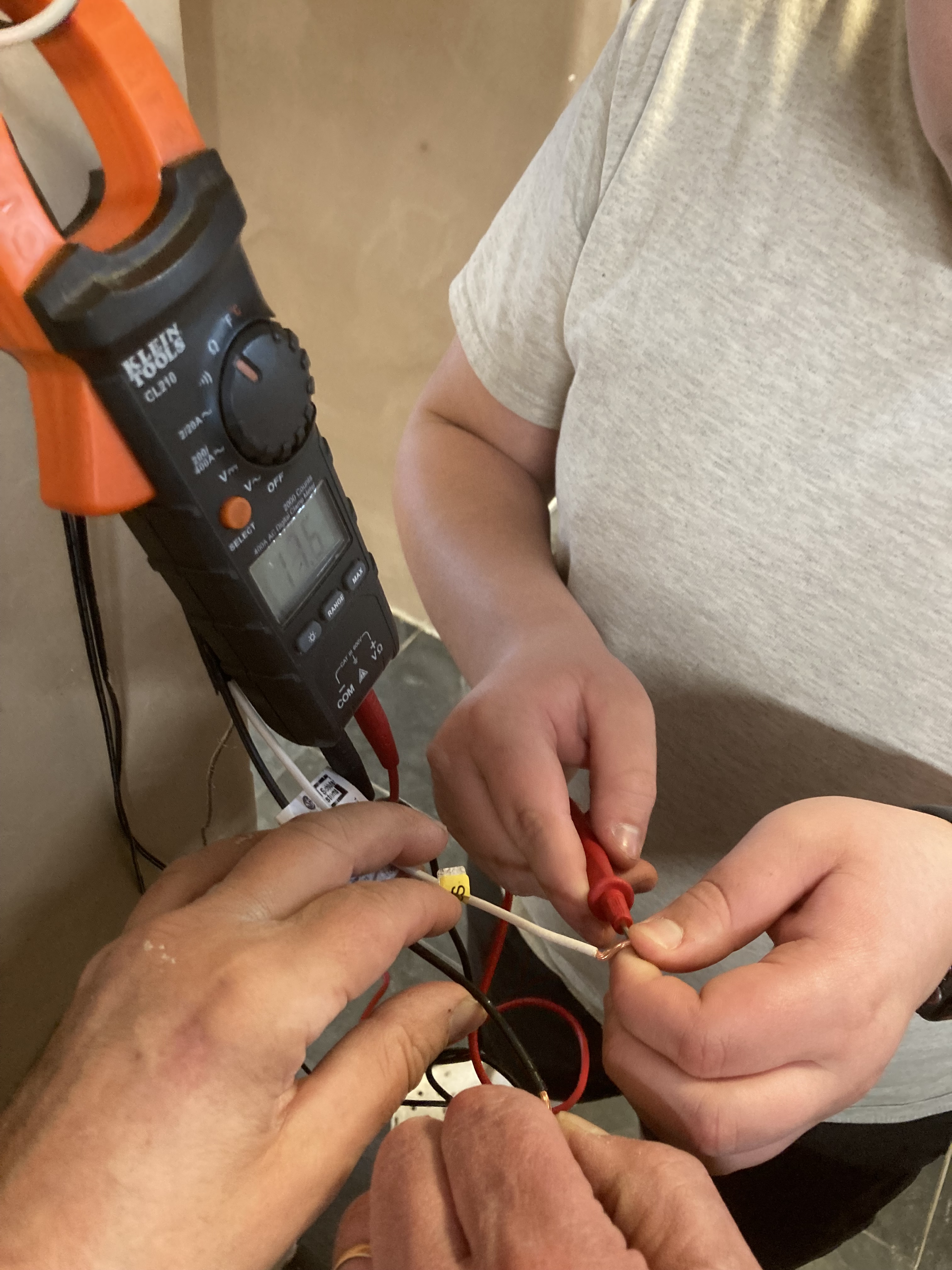
To install the radiant floor heating cable, we made multiple tests of “conductor resistance” to ensure the circuit was functional. We used the Professor’s megohmmeter to take an ohms reading between the two power leads. At the factory the cable tested 14.8 ohms, but our test before installation was 14.1, after cable installation was 14.2, and after tile installation was 13.4. The manufacturer allows a 10% variance, so we remain within that range. Our test was positive and we proceed.
Of note, if the tester uses his fingers to press the megohmmeter leads against the copper lines, then the resistance reading shows the resistance through his body; he has become a part of the circuit. As a homeschool experiential, my son tested the resistance that way and got a reading of 4.3 ohms. The Professor did same and had a 4.7 ohm reading. The lower the ohms the easier electricity flows through a circuit. The circuit breaker was off so he was not at risk. Salt and magnesium in my son’s body can account for the difference because they are conductive electrolytes which increase the flow of electricity. My son does take a magnesium supplement so there is a line of reasoning here.
And so life goes here at an art farm. Ohms not om, our homeschool tutorial was one step the toward tiling the new bathroom. Updates to follow, as this journey continues.
Closest to the Sun
Posted: December 12, 2025 Filed under: consciousness, Permaculture & Home Renovation, Portfolio - David's work | Tags: ecuador 1 Comment
Chimborazo is a snow covered inactive volcano, the highest mountain in Ecuador and the 39th highest peak in the Andes mountains. Located at the equator, its summit is the farthest point on Earth’s surface from the Earth’s center. To the locals it is “the closest volcano to the sun.”
Ecuador’s biodiversity is nearly unparalleled with diverse habitats and a high concentration of species. The Galapagos Islands, a province of Ecuador, inspired Charles Darwin’s theory of evolution. The Republic of Ecuador’s vast richness was acknowledged in 2008 when the country rewrote its constitution granting citizenship rights to natural habitats, embracing ecological balance, recognizing ecosystems as living entities and allowing citizens to sue on their behalf.
The Constitution’s Preamble states: “We women and men, the sovereign people of Ecuador; RECOGNIZING our age-old roots, wrought by women and men from various peoples, CELEBRATING nature, the Pacha Mama (Mother Earth), of which we are a part and which is vital to our existence, INVOKING the name of God and recognizing our diverse forms of religion and spirituality, CALLING UPON the wisdom of all the cultures that enrich us as a society, AS HEIRS to social liberation struggles against all forms of domination and colonialism AND with a profound commitment to the present and to the future, Hereby decide to build: A new form of public coexistence, in diversity and in harmony with nature, to achieve the good way of living, the sumak kawsay; A society that respects, in all its dimensions, the dignity of individuals and community groups, A democratic country, committed to Latin American integration—the dream of Simón Bolívar and Eloy Alfaro—, peace and solidarity with all peoples of the Earth….”
The basic principles include:
- Sovereignty lies with the people…with national unity in diversity
- Ecuador is a territory of peace
- The human right to water is essential and cannot be waived
- The Ecuadorian State shall promote food sovereignty
- The right…to live in a healthy and ecologically balanced environment that guarantees sustainability and the good way of living (sumac Kawsay), is recognized.
- The right to aesthetic freedom; the right to learn about the historical past of their cultures and to gain access to diverse cultural expressions.
- Education…shall guarantee holistic human development, in the framework of respect for human rights, a sustainable environment, and democracy.
- The State shall guarantee elderly persons…Specialized health care free of charge, as well as free access to medicines
- The State shall guarantee the rights of pregnant and breast-feeding women with free maternal healthcare services
- The right to migrate of persons is recognized. No human being shall be identified or considered as illegal because of his/her migratory status.
There is trouble in paradise, though, as corruption is endemic. Ecuador ranked 121st among 180 countries on the 2024 Corruption Perceptions Index. That put it among the most corrupt public sectors, and below average among countries of the Americas. By comparison, the USA was tied at 28th out of 180 countries, its lowest score since 2012, and its trend has been negative since 2015.
Ecuador is a hub for smuggling drugs produced in neighboring Columbia and Peru. The police, judiciary and executive branches are linked to crime, drug-trafficking and extortion. The World Justice Project’s 2022 report “The Rule of Law in Ecuador” found that “Ecuador saw the largest increases in the percentage of respondents who believe that some or all of the actors across [law enforcement, the executive branch, and the judiciary] are involved in corrupt practices. Among respondents in the Andean region, on average, Ecuadorians most often [three-quarters of all respondents] felt that top government officials engage in authoritarian behavior.…” The constitution speaks of noble ideals while the government is rife with graft.
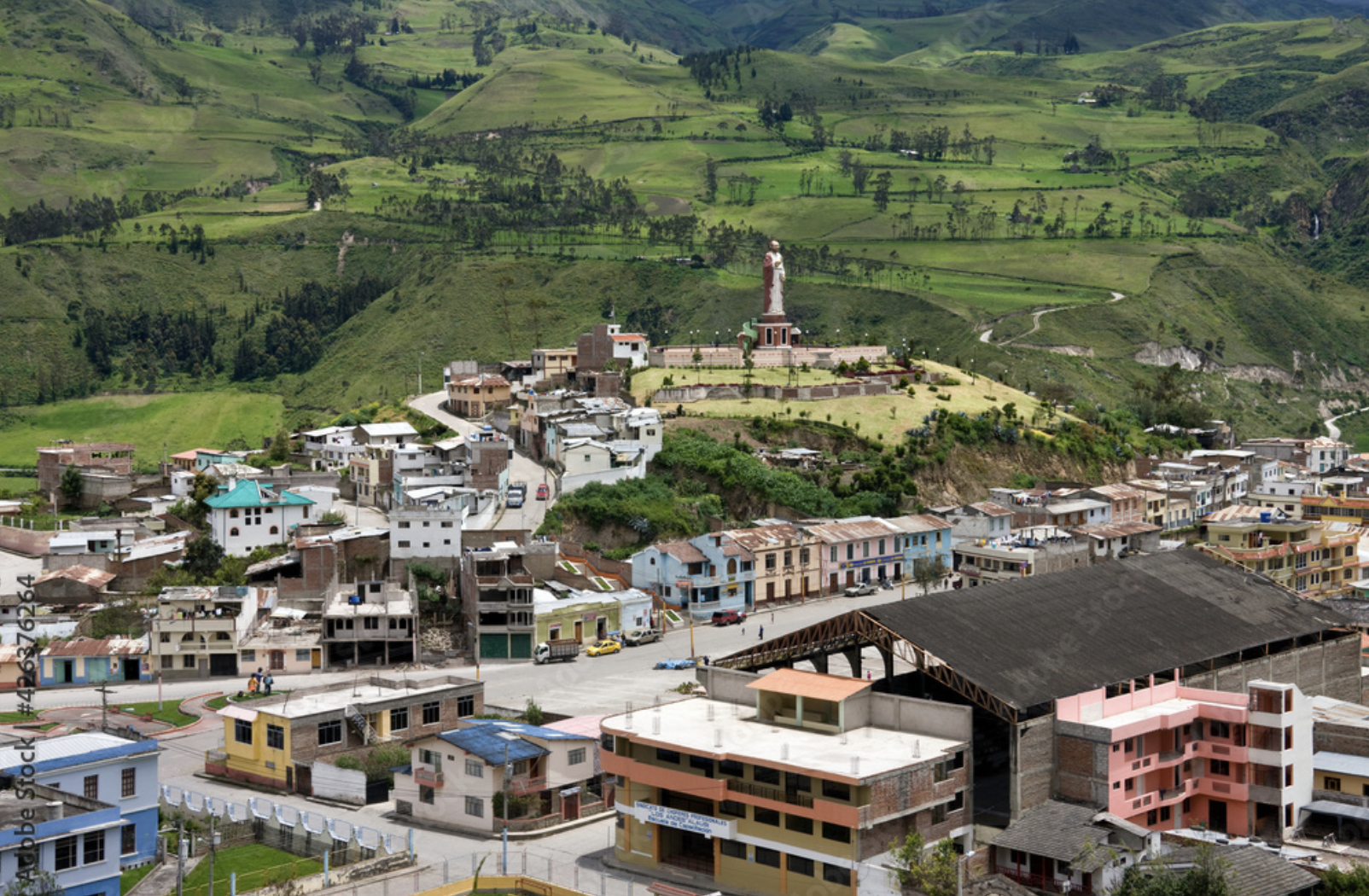
Anthony is a young man who grew up on Chimborazo. He is a father of children growing up in the Andes mountains, but because of the gangs and corruption he lives now in Massachusetts. A roofer, he works all around New England, traveling south to Rhode Island or Connecticut or as far north into Maine and Vermont.
Most all of the roofing crews in Southern Maine now are Hispanic. I see them driving their vans, loaded high with ladders and wheel barrows, doing all of the roofing jobs. For one job on the coast, I needed to remove a chimney on a very steep pitch. I asked the home owner to hire that out, and a Spanish speaking crew arrived. They had no safety equipment but climbed up without hesitation. Growing up in the Andes gives them a natural ease on heights.
The crew did not have the correct equipment and so I called the roofing contractor. Not surprisingly he showed up in his big truck, emblazoned with decals advertising his business. Dressed in sandals and shorts, it seemed we had interrupted him from working on his boat. He stood on the ground, looked up, doing nothing. The crew worked quickly and finished in about 3 hours. Most certainly the $1,500 paid to the boss did not include profit sharing. Every carpenter I know has similar stories to share.
We hired Anthony for the Tiny Cathedral, and by-passed the big-truck contractor. He and his cousin arrived, having driven two and a half hours north from Massachusetts. They did the job quickly and well and were paid cash for a full days wage, travel time included. The home owner still came out ahead, we avoided back-breaking labor, Anthony got a good break.
We shared pizza and beer over lunch. Between his broken English, and my pidgin Spanish, Anthony spoke about his roots, growing up in a small town closest to the sun. He described the exquisite beauty and how the ecotourism industry offers only a sanitized view while avoiding the gang and crime-ridden areas. Opportunity drew him north and he had not seen his son for seven years, nor did he expect to return home for another four years. He misses his son’s childhood but sends home money monthly.
That lunch was more than a year ago, and the self-righteous today likely would regard our act of civility as aiding and abetting. Ours is a transactional age where might makes right, where greed governs the strongmen, where earth is rare only in its industrial and financial value, but history is littered with the names of fallen despots, empires that came to pass. King Xerxes held such commanding power that after a storm destroyed his pontoon bridge, he had the sea whipped 300 times with chains, the engineers beheaded, to punish the sea for its disobedience preventing his Persian Army from conquering Greece. Long forgotten he is while daily still the tides rise and fall.
Wisdom endures on the side of “our age-old roots…the Pacha Mama of which we are a part and which is vital to our existence… diverse forms of religion and spirituality, …of all the cultures that enrich us [in] struggles against all forms of domination and colonialism.”
Closest to the Sun is closest to the light of truth.
Tiny Cathedral
Posted: December 5, 2025 Filed under: Permaculture & Home Renovation, Portfolio - David's work 1 Comment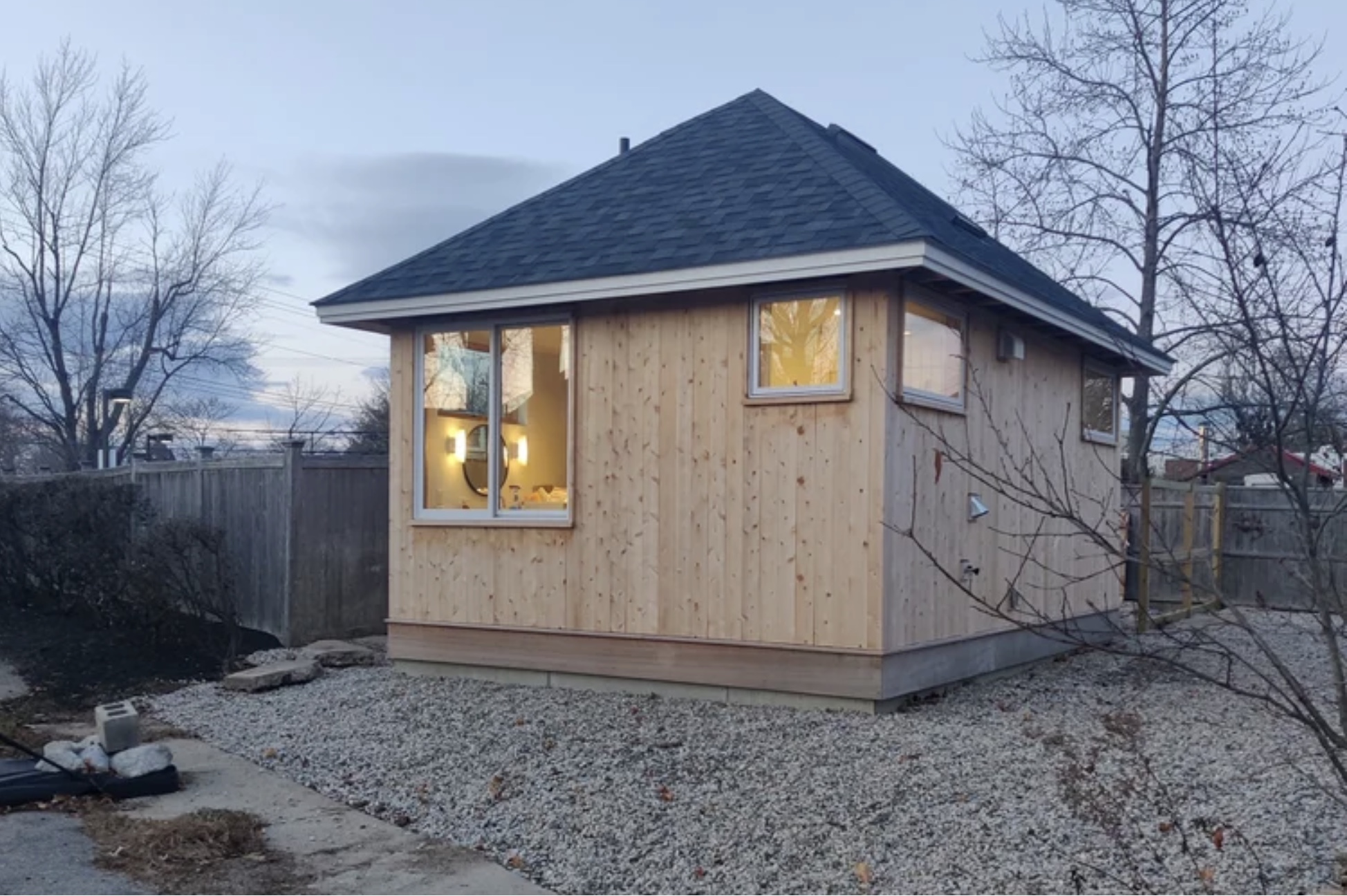
Not long ago we built a tiny cathedral at the top of Meetinghouse Hill. The hill was so named back in 1733 when the Purpooduck meeting house was built. “The old Meeting House was a large, square, two-storied, unpainted building, without a tower, with a porch on the front end which served as an entry. There were two outside doors, reached by two steps which ran the entire length of the porch. It was a great barn-like looking structure. The pulpit was an elaborate affair. It stood on one post elevated about eight or ten feet above the floor. It was reached by a flight of winding stairs.”
Our tiny cathedral was, in prosaic terms, the conversion of a non-conforming 106-year old garage into an apartment for a Mother-In-Law who lives in Switzerland. “Non-conforming” is a term of art of the Code Enforcement Office for a legally established building that no longer meets the current zoning laws. You can renovate but can neither expand nor replace those structures. There was not an inch to spare.

The 106-year old garage had serious issues but exactly one positive: it could provide the Mother-In-Law with the privacy of a 220 square foot bedroom “suite.” We had a chance to make something majestic. In order to effect this transformation we jacked up and moved the building off its existing slab, dug down to excavate and pour new stem walls with footings then used a crane to lift the garage back into place, exactly where it had been.
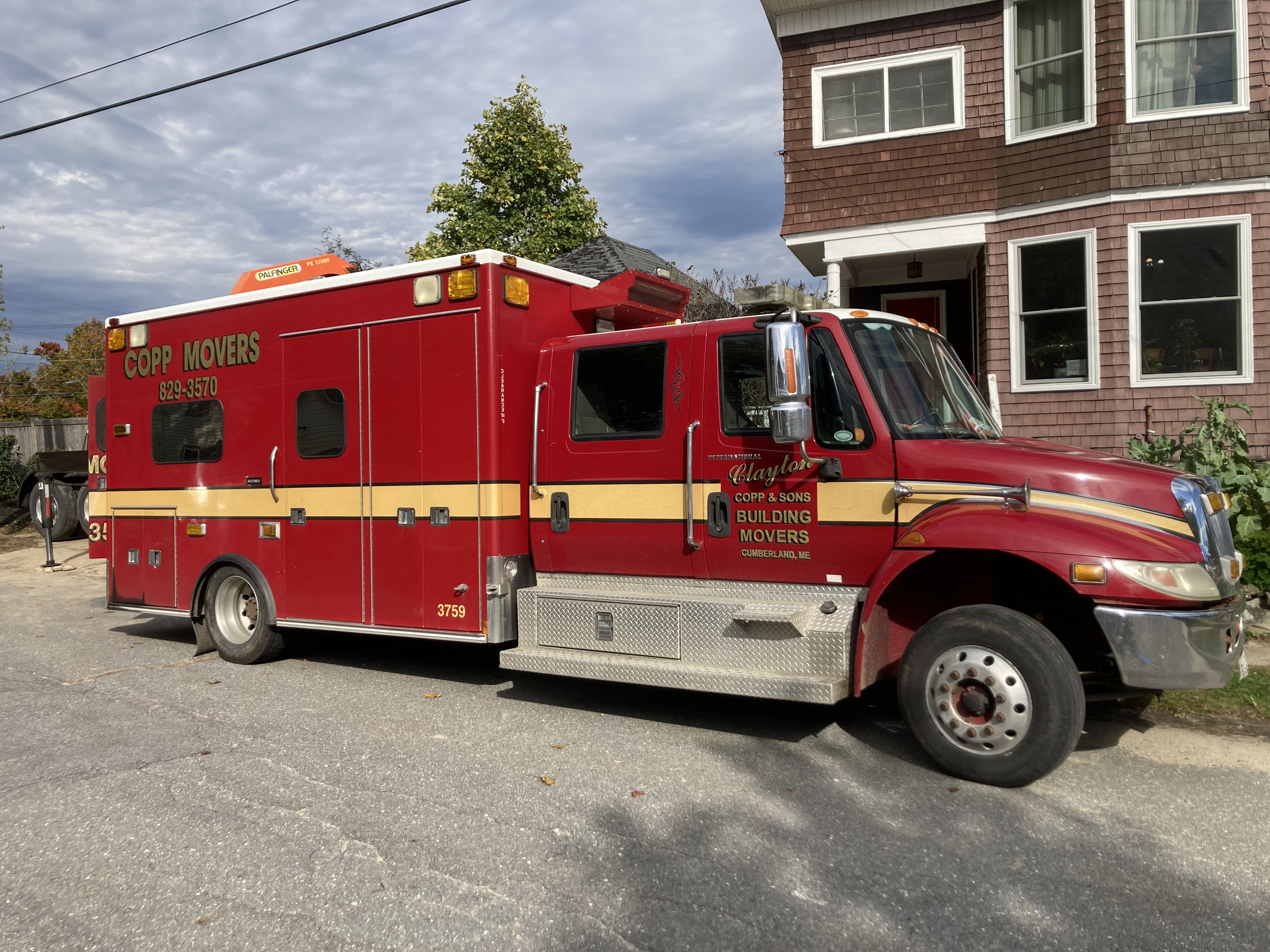
The Copp Brothers from Cumberland accomplished this Herculean task. For three generations they have been jacking and moving buildings and, like the “Ghostbusters,” the Uncles and Nephews arrived in a converted ambulance filled with tools of their trade. In less than 90 minutes they rolled the structure onto the street and onto the side yard. The crane lift back took less time.
The Professor – who currently teaches my son science by means of welding and small engine repair – was the mastermind of the project. When he showed up we got to work on the carpentry, plumbing, insulation, heating, roofing and siding. The electric work was straightforward, but the plumbing and bringing water to the garage was a challenge. Thankfully, the professor owns every tool known to mankind and has consummate skill using them all. No problem was insurmountable.
Because the space was limited, we added insulation to the outside of the building. The building remained exactly on its original footprint, and we expanded outward and upward, adding recycled foam insulation – 3” to the walls and 6” on the roof – to create a weathertight envelope that exceeded the new energy efficient Code requirements.
The homeowner, a trained architect who makes sculpture, designed the suite to maximize light, by means of windows, sliding glass doors and skylights. More than 20% of the wall space is windows, and that is how the garage became cathedral-like. Titus Burckhardt, a Swiss artist and art historian, has written, “When a Byzantine poet says, of the fullness of light in the vast inner space of the church, that it seems that ’the space is not illumined by the sun from without, but rather the illumination originates within,’ he is expressing an artistic ideal which Gothic architecture also sought to realize in its own way, by the introduction of transparent walls of stained glass.”
We did not use stained glass, but the amount of light filling that tiny suite is simply majestic. The story is told in detail here: https://npdworkshop.com/the-mother-in-law
The tiny cathedral represents one solution to the housing crisis. In 1850 the average American home was 888 square feet for 5.5 people. By 2015 homes had ballooned to 2,496 square feet for 2.5 people, on average. McMansions average 4,000 square feet, can grow upwards of 6,000 square feet, housing an average of 2.5 people. The trend shows a culture drunk in our profligacy.
The State of Maine needs 84,000 new housing units by 2030 to meet demand and to support the workforce. Maine’s median household income is approximately $90,730, while the median home price is $355,000. Affordability clearly is a major issue. The “supersize me” culture needs to wake up, and rather than build larger, we need to build smaller and smarter.
In Maine H.P. 1224 – L.D. 1829 was recently passed as “An Act to Build Housing for Maine Families and Attract Workers to Maine Businesses.” The law both increases housing density by 2 1/2 times while decreasing the lot size to 5,000 square feet per unit in areas with public water and sewer. This means smaller homes on much smaller lots, which makes the Tiny Cathedral a herald of things to come.

Empathy
Posted: October 10, 2025 Filed under: consciousness, Portfolio - David's work 1 Comment
When I was a child growing up in Deerfield, Illinois the ancient saying “Money is the root of all evil” still held currency in the culture. People actually thought that way, but now, decades later, that quotation seems less often spoken. An AI search reports that the phrase is popular on social media, but I would not know this since I do not frequent those haunts.
The sentence is a misquote from the Bible 1 Timothy 6:10 “For the love of money is a root of all kinds of evils.” So money itself is value neutral, while its craving and lust are the stuff of sin, a defining trait of this dark age of Mammon.
When I was a child growing up in Deerfield, Illinois there lived a young woman, whose father was from Guatemala and her mother an Anglo, a bi-racial family in a very caucasian Judeo-Christian small town. When her father died young, her mother’s strength held them strong and taught them to take pride in their work, meager as it may be. When that young woman came of age her work ethic and ambition lead her to food service, and eventually to found a catering company – with $300 dollars – called “Food For Thought.”
I worked with that company at its beginning, serving endless platters of Chicken Dijonnaise and Phyllo-wrapped Baked Brie, in the era when the Silver Palate Cookbook was changing the rules of the game, and American Cuisine was taking root. “Food For Thought” grew over the decades to become Chicago’s leading provider of corporate, social, and cultural event services with revenues now exceeding $22 Million per year.
In our Wise Women writings, we have discussed the “Commanding Intellect” – which this young woman had in abundance – but more fundamentally her’s is the gift of “Empathy” which is “the ability to understand and share the feelings of another.” Empathy’s first cousin “Forbearance” is “restraint and tolerance” by “demonstrating patience and showing tolerance toward others who are imperfect or have wronged you.” This woman built Food For Thought but what she did next is the story that bears mention, that demonstrates her wisdom. Commanding intellect built her first business. Empathy expanded her reach.
$80.7 Billion dollars are spent annually in the United States on public prisons and jails. Approximately 4,000 companies work in the for-profit prison industrial complex generating $5.2 Billion dollars in revenue annually. It costs more to send a teenager to a correctional facility than to put them through Northwestern University. Our Heroine reasoned that she could give the “throw away kids,” the gang-affiliated, the pregnant teen mothers, the dispossessed, the least among us a chance, to learn a trade through food service, at a cost less than $10,000 per child. She leveraged her food service savvy toward social justice by opening Curt’s Cafe, in Evanston, Illinois.
Curt’s Cafe (Cultivating Unique Restaurant Training) works to “improve outcomes for young adults (ages 15-24) living in at-risk situations through work and life skills training.” Over 650 students have completed the Cafe’s work and skill training, learning how to prepare and serve a full menu of breakfast and lunch items, how to work the cash register, how to do basic accounting, how to open a checking account, how to find an apartment. Nationally, the recidivism rate for ex-convicts returning to prison is 86% but at Curt’s Cafe only 1% having returned to prison. 1%! The average wage of incarcerated workers is $0.86 per day, but Curt’s Cafe provides its workers a living stipend and hope. These numbers only scratch the surface. The human stories are richer, deeper, and more meaningful.
It is best now to let Susan Trieschmann tell her own story:
_________________________________
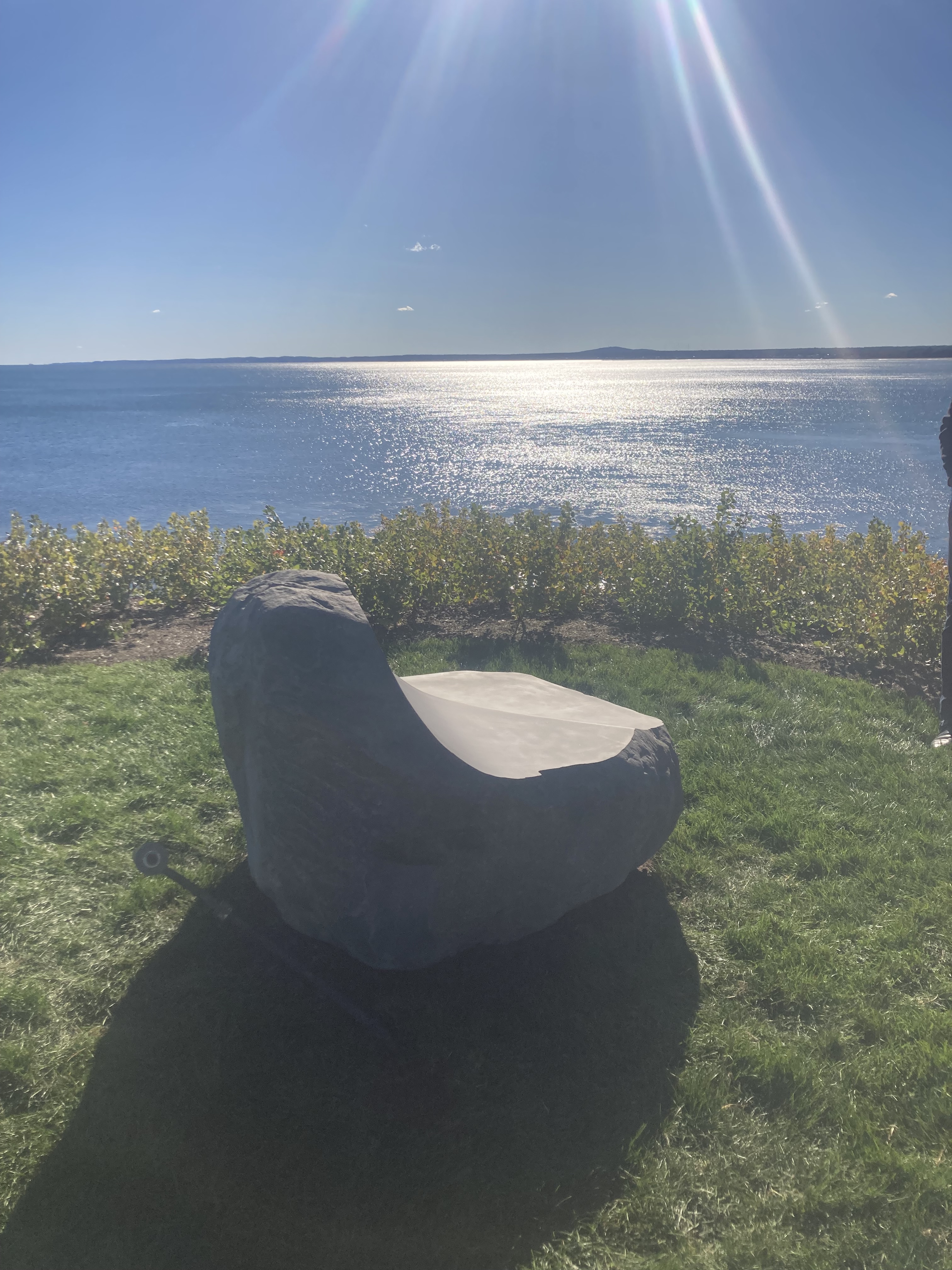
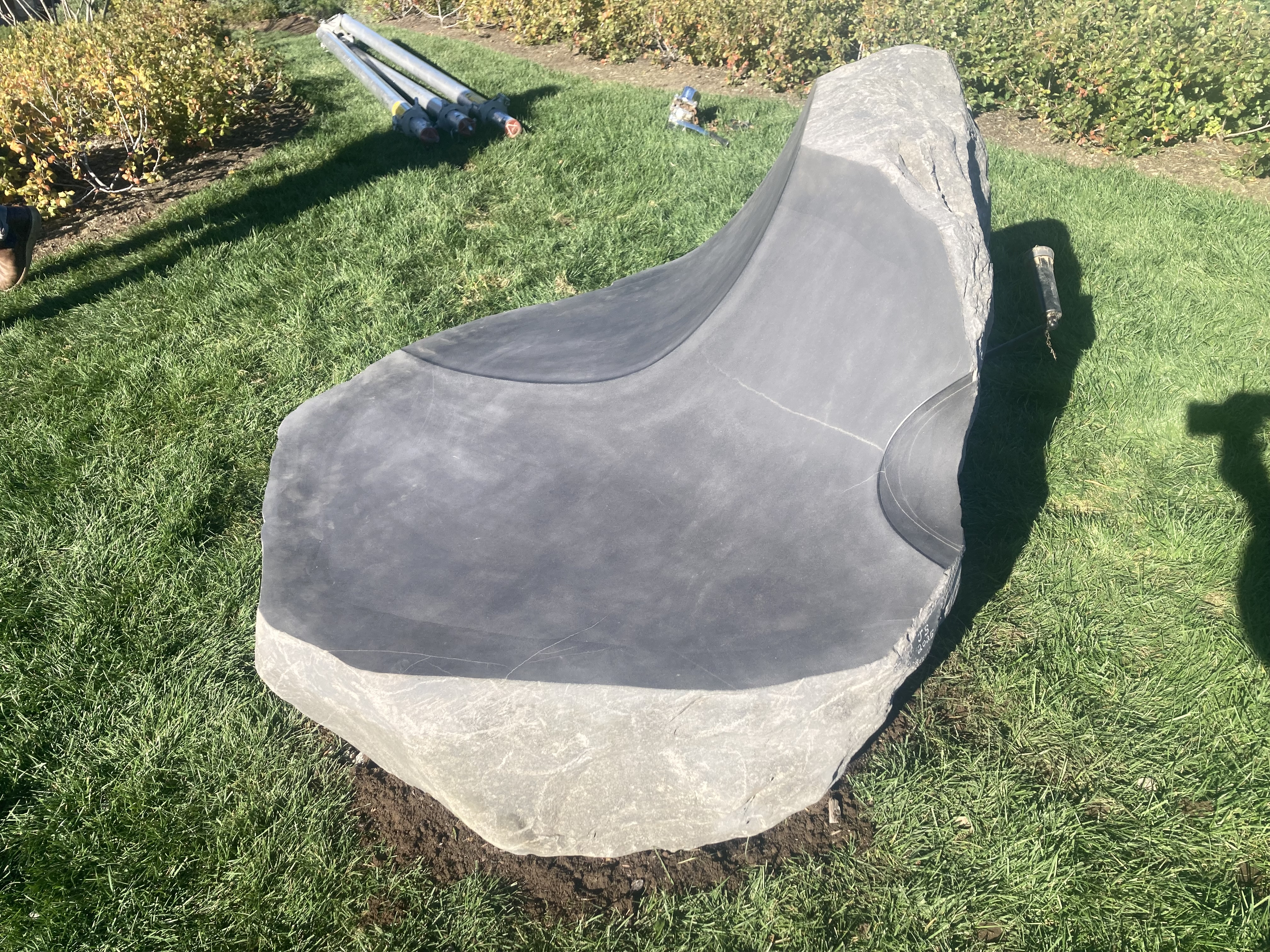
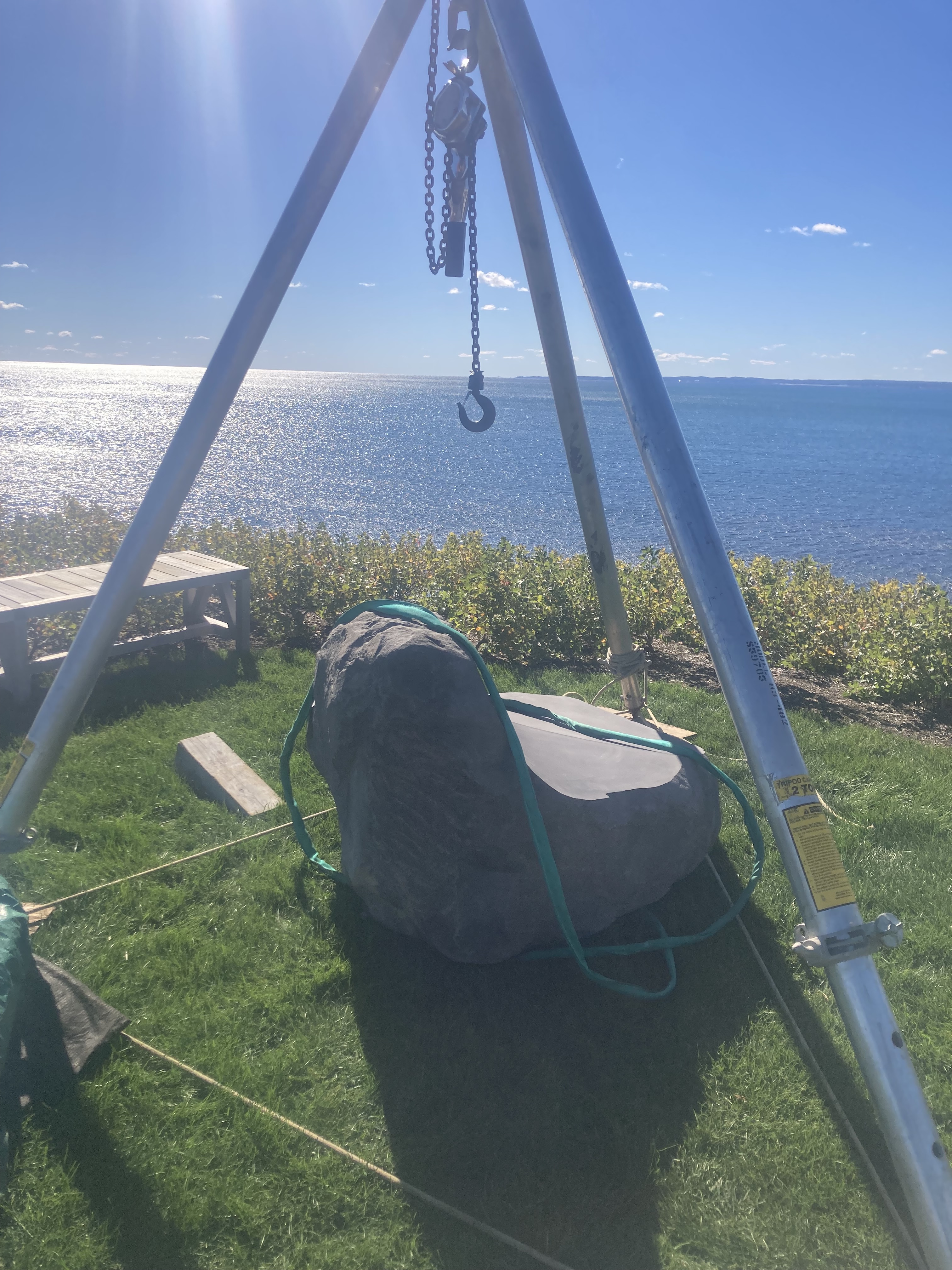
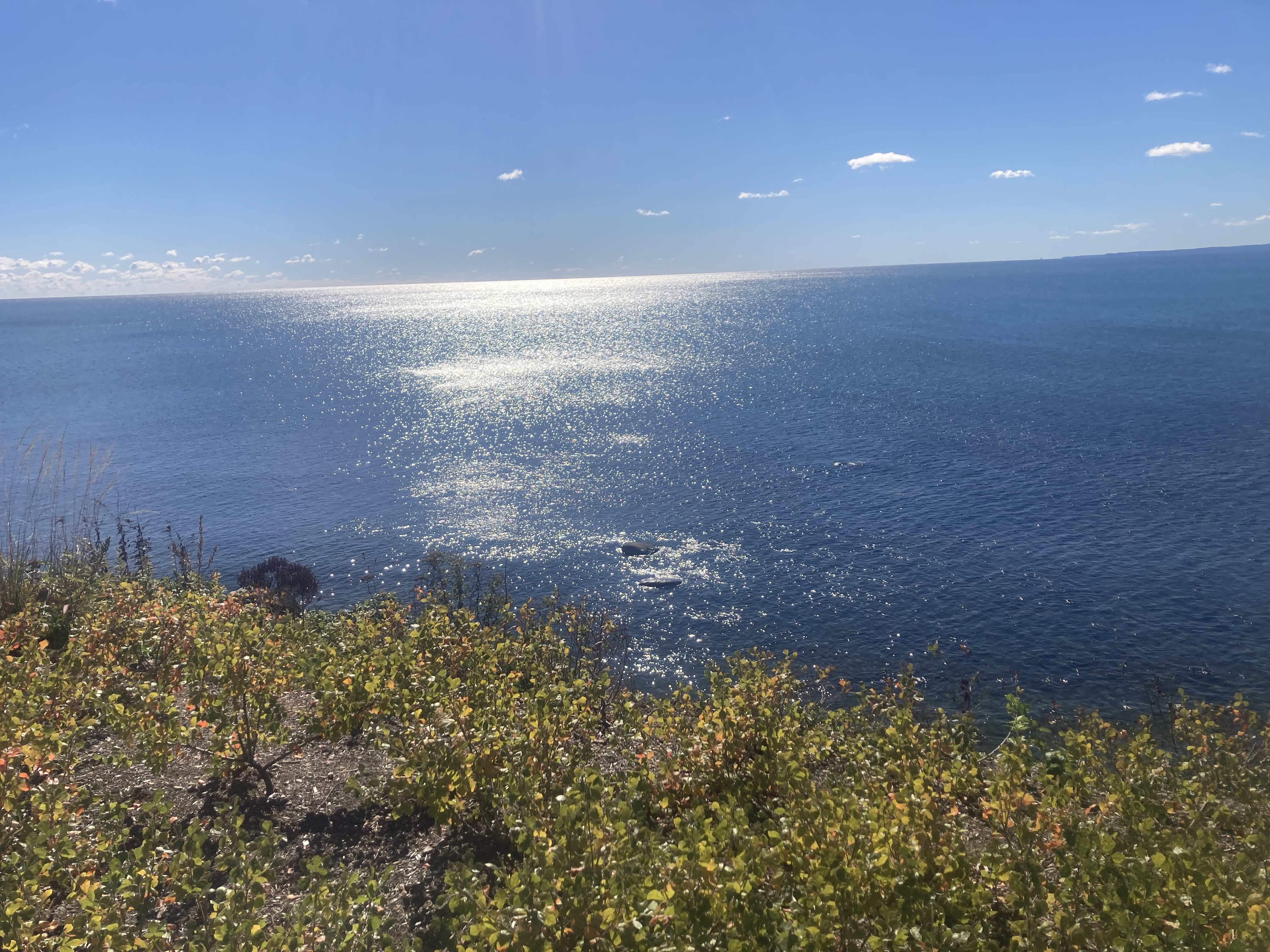
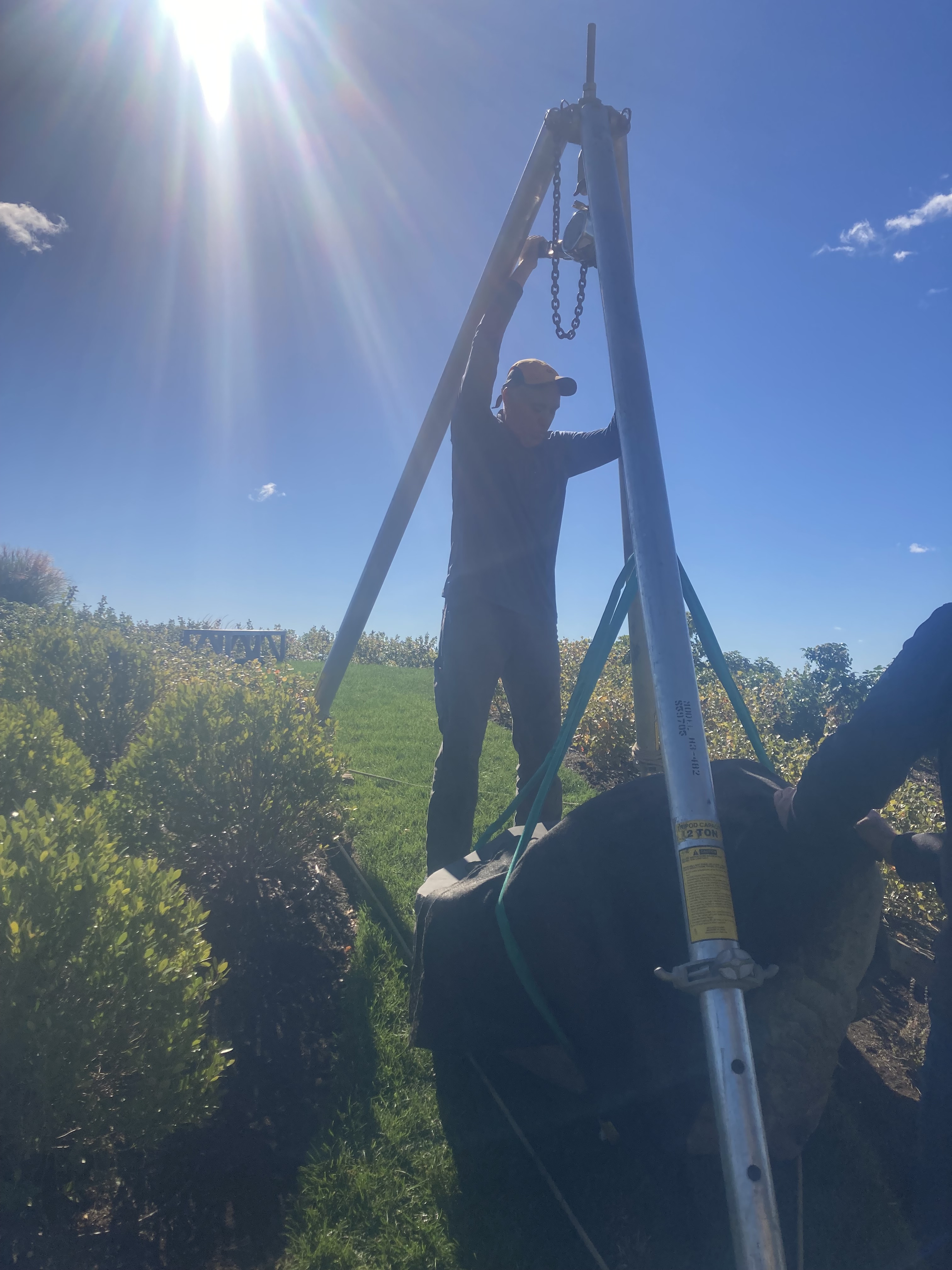
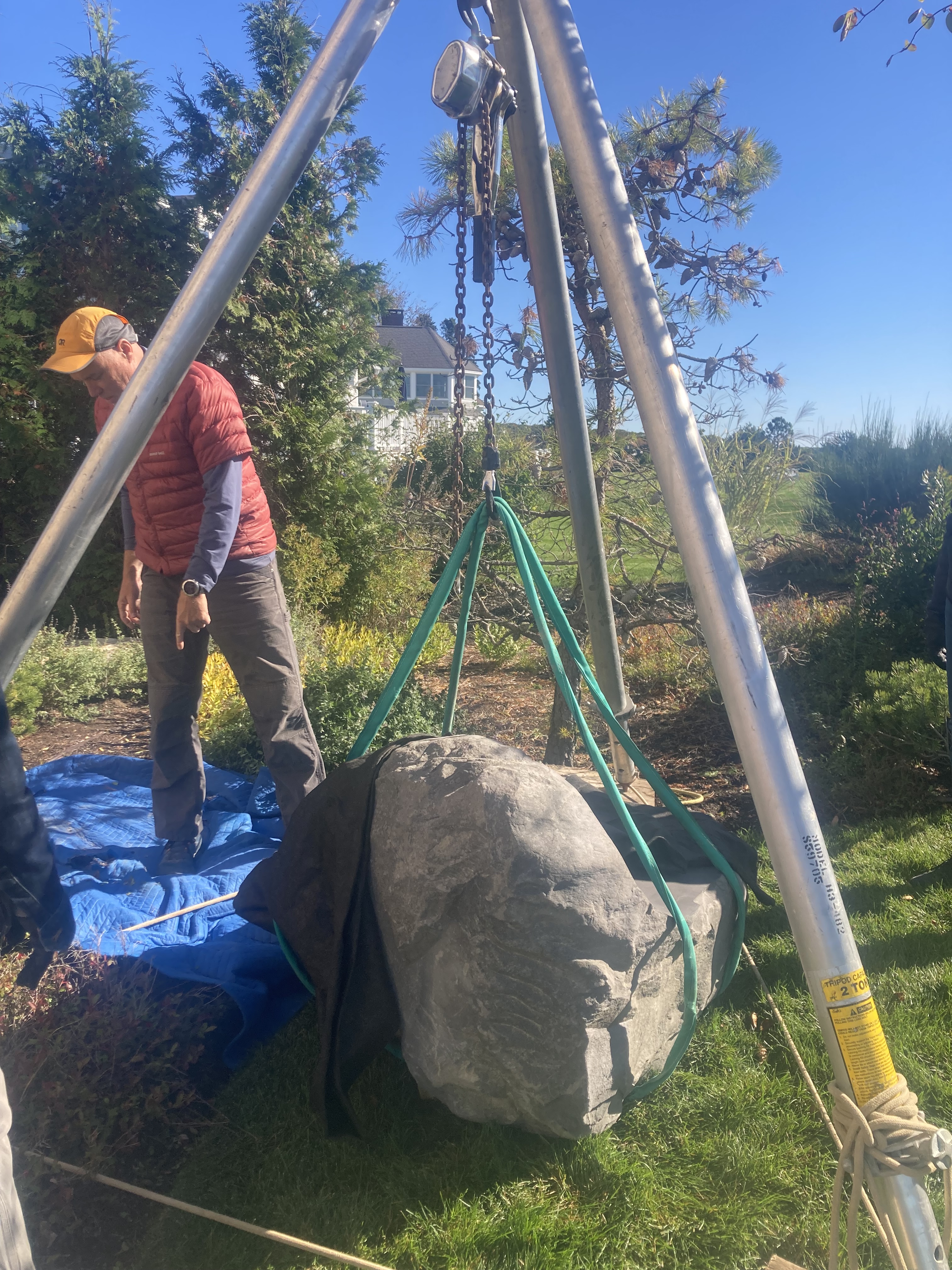
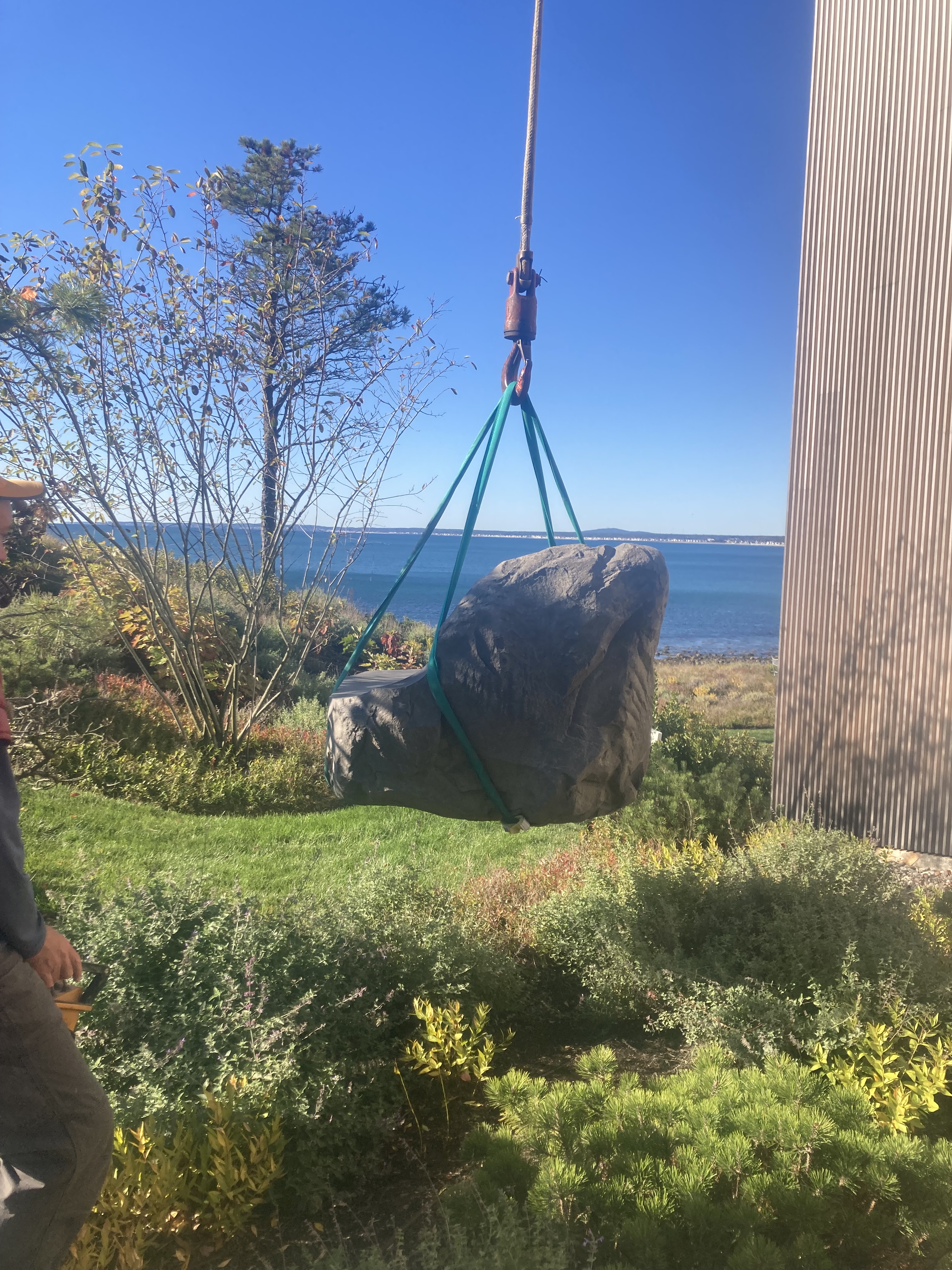
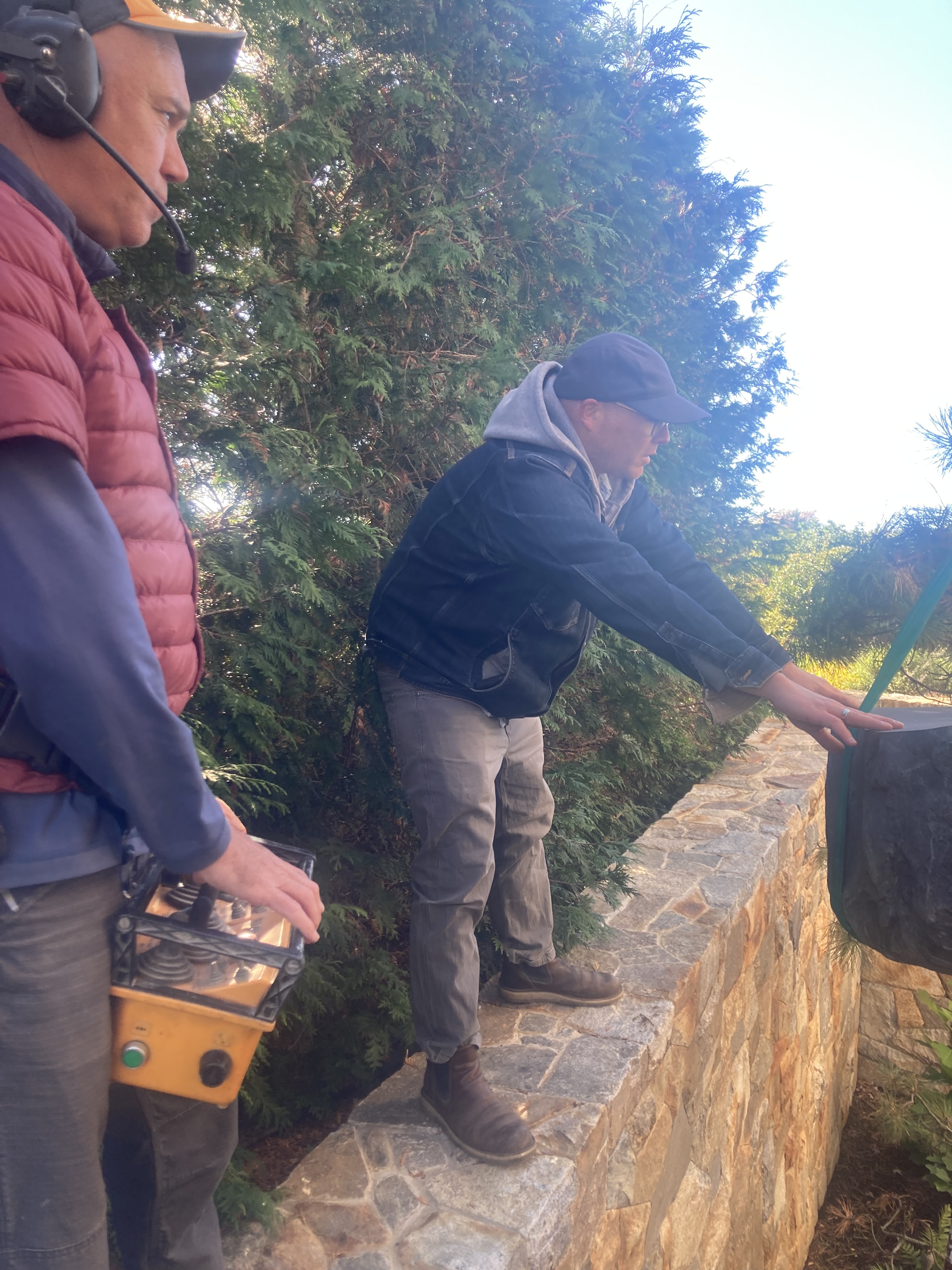
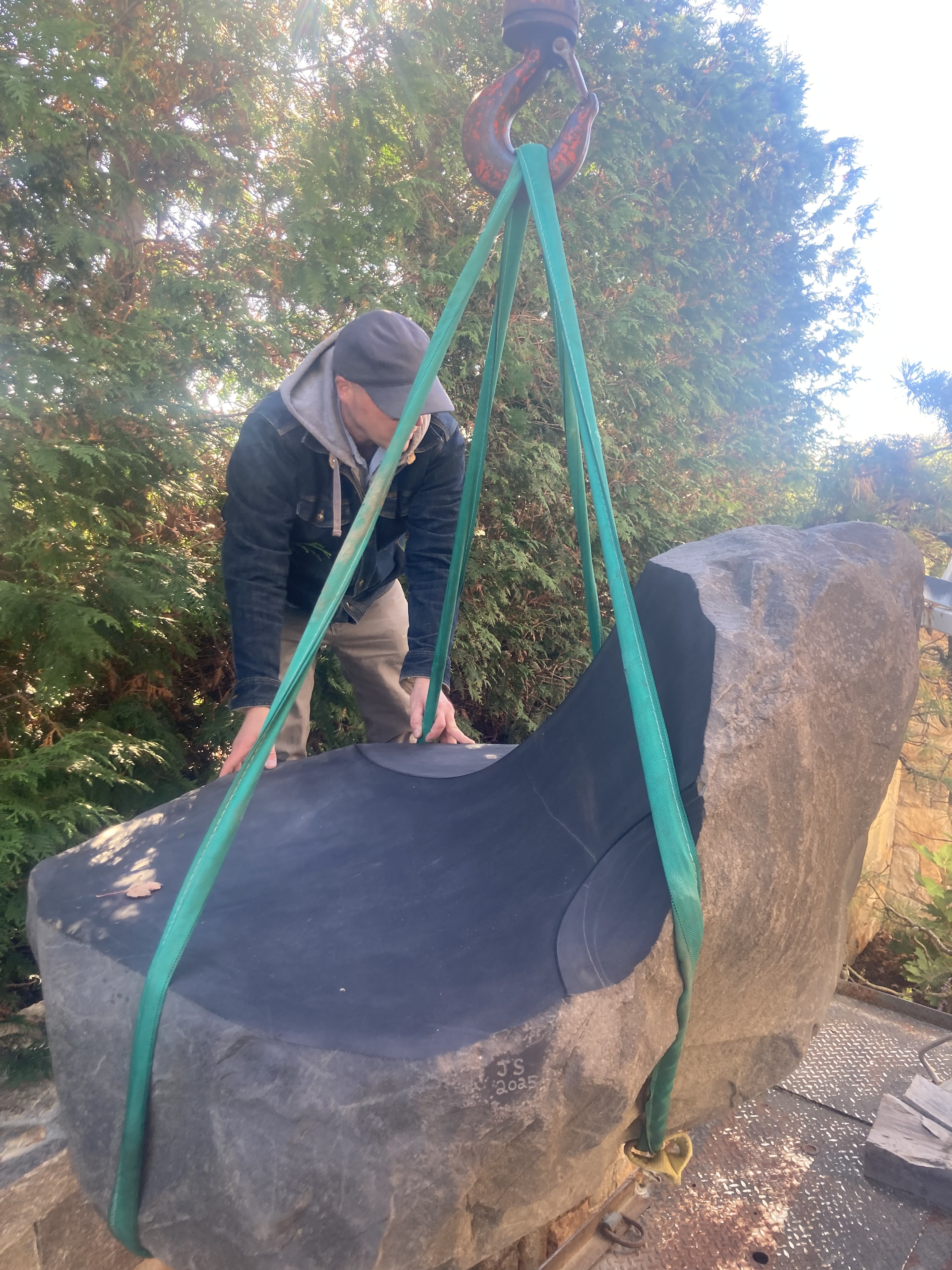
In other news, this week I helped install a sculpture down in Kennebunk. Jesse Salisbury is the esteemed maker of this seat carved from Basalt, a hard black volcanic rock. Heavy lifting 1.5 tons up that hill, but well worth the effort in the end. Ars long, vita brevis.





Wild Maybes
Posted: September 12, 2025 Filed under: Art & Healing, Portfolio - David's work, What is an Art Farm 2 Comments
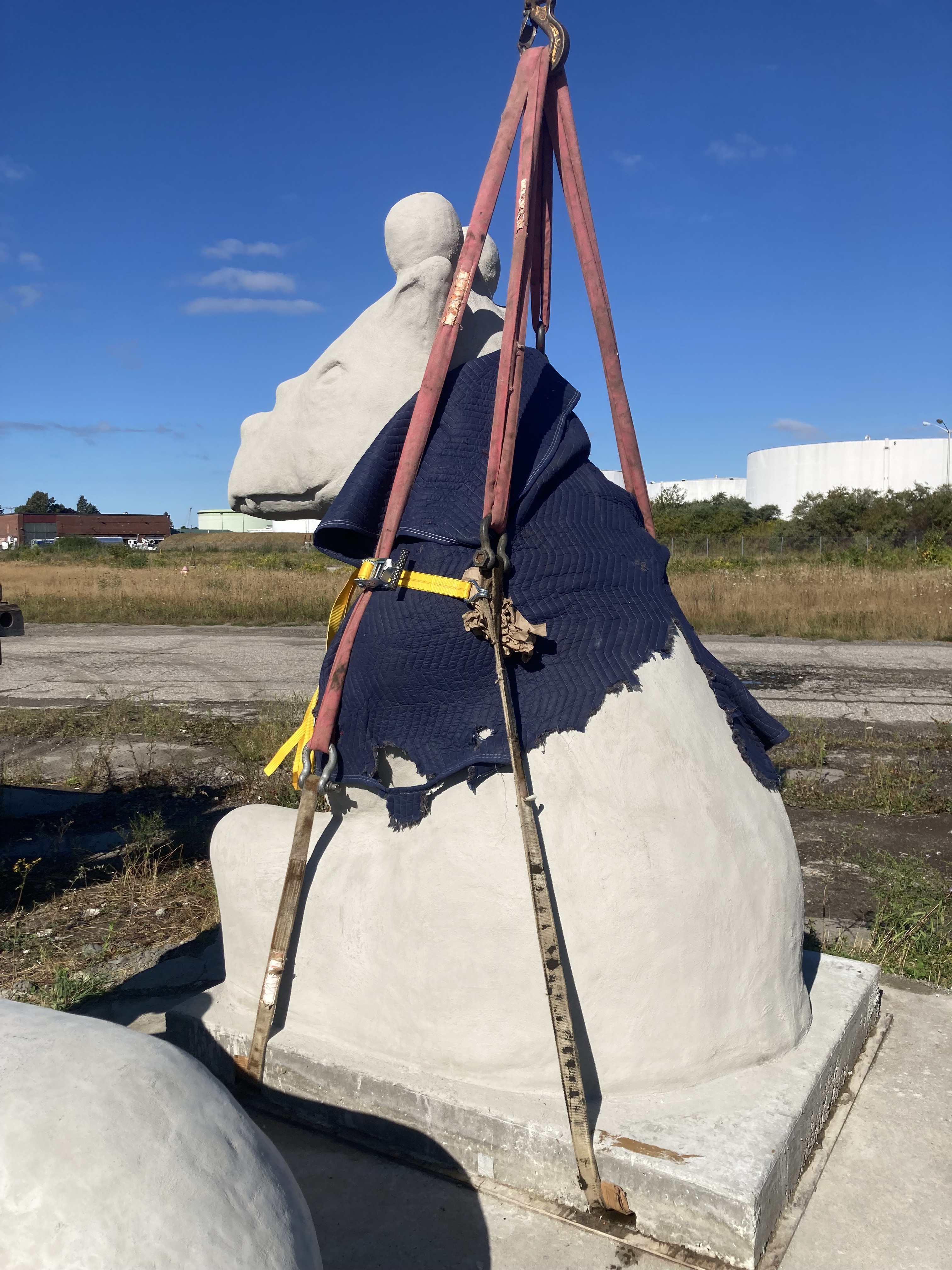
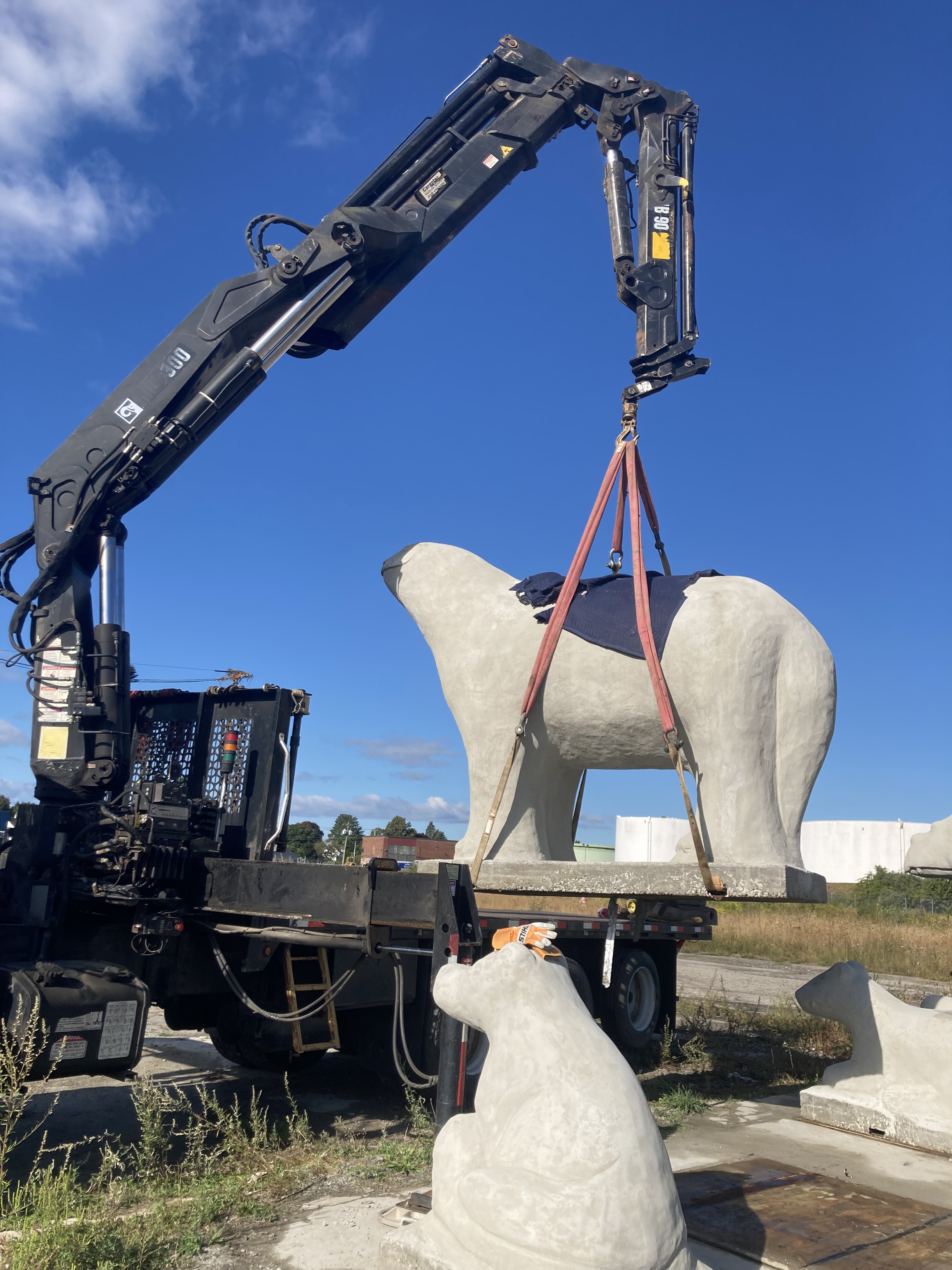
We interrupt our regular “Wise Women” programming to bring this special report of the “Wild Maybes of the Long Green Between.” The polymath maker, Chris Miller, has struck again, siting “visitors from an ancient Earth, as unknowable as the far future,” on the grassy knoll of Levine Park, in Waterville, Maine.
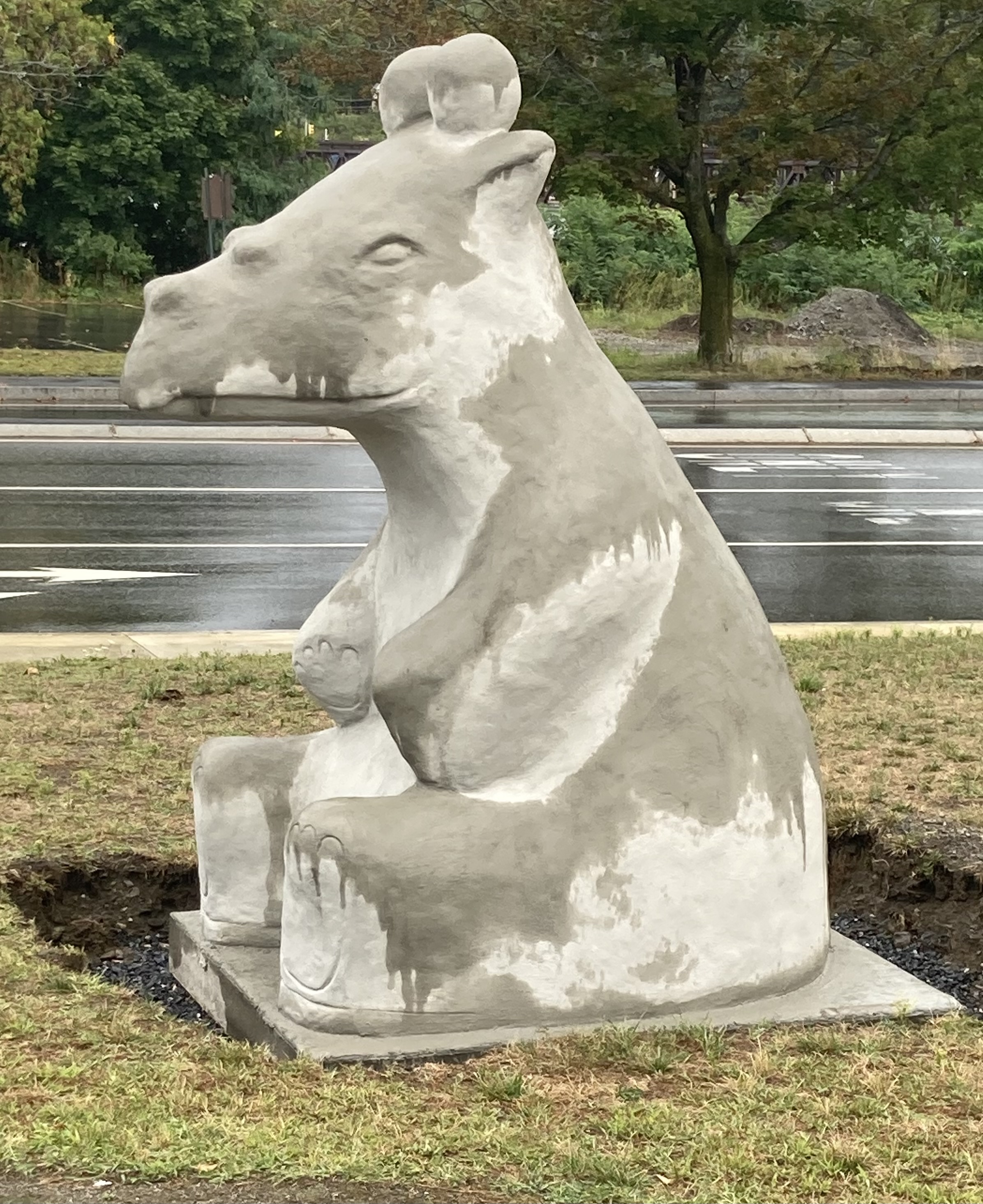
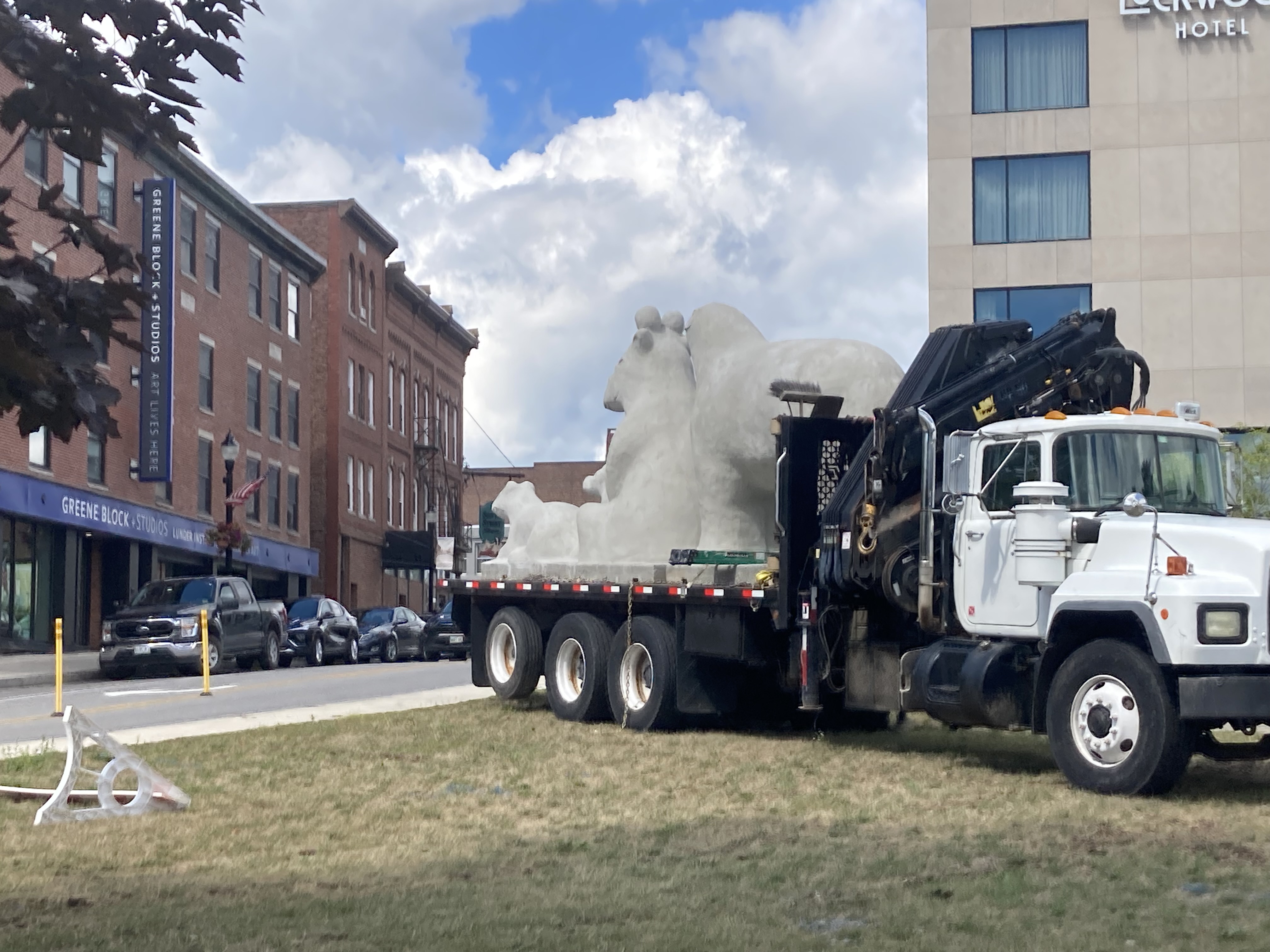
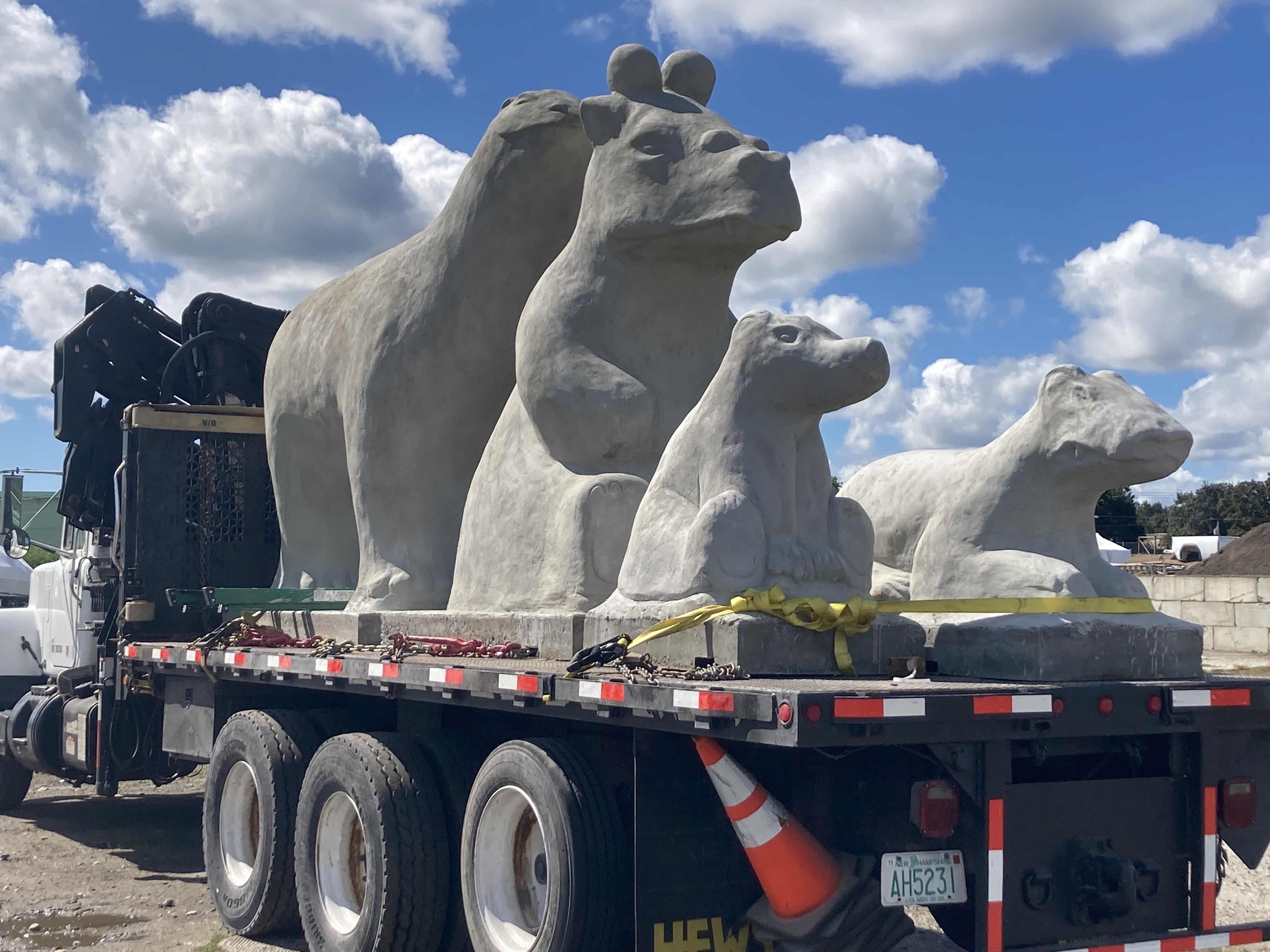
The Wild Maybes are “honorary crossing guards where the deep past and far future meet.” The public welcomed to roam “…in the richness and vastness of time beyond reckoning.” The four Maybes face the cardinal directions of North, East, South and West proudly beside the mighty Kennebec River as it flows ever to the Gulf of Maine.
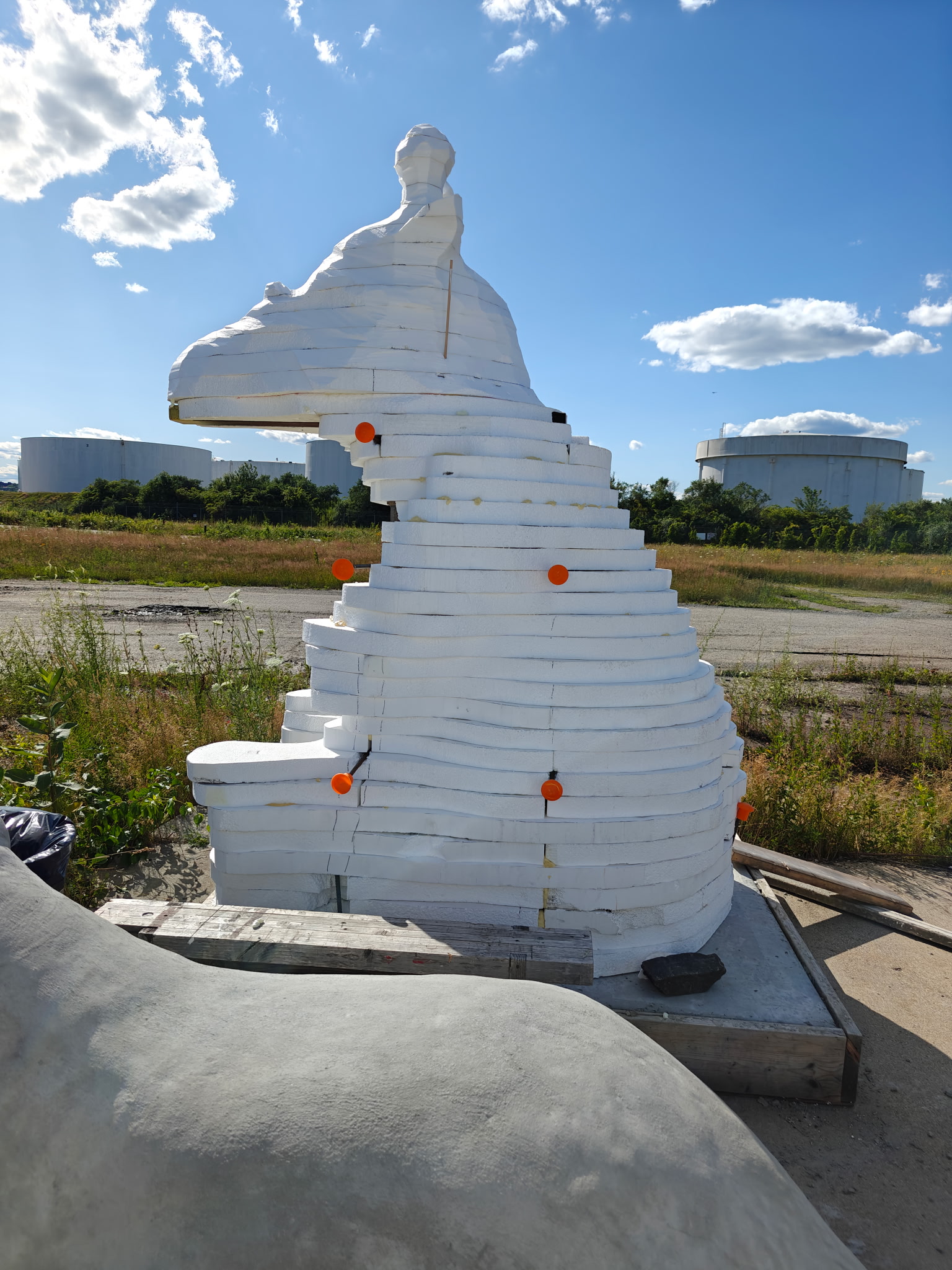
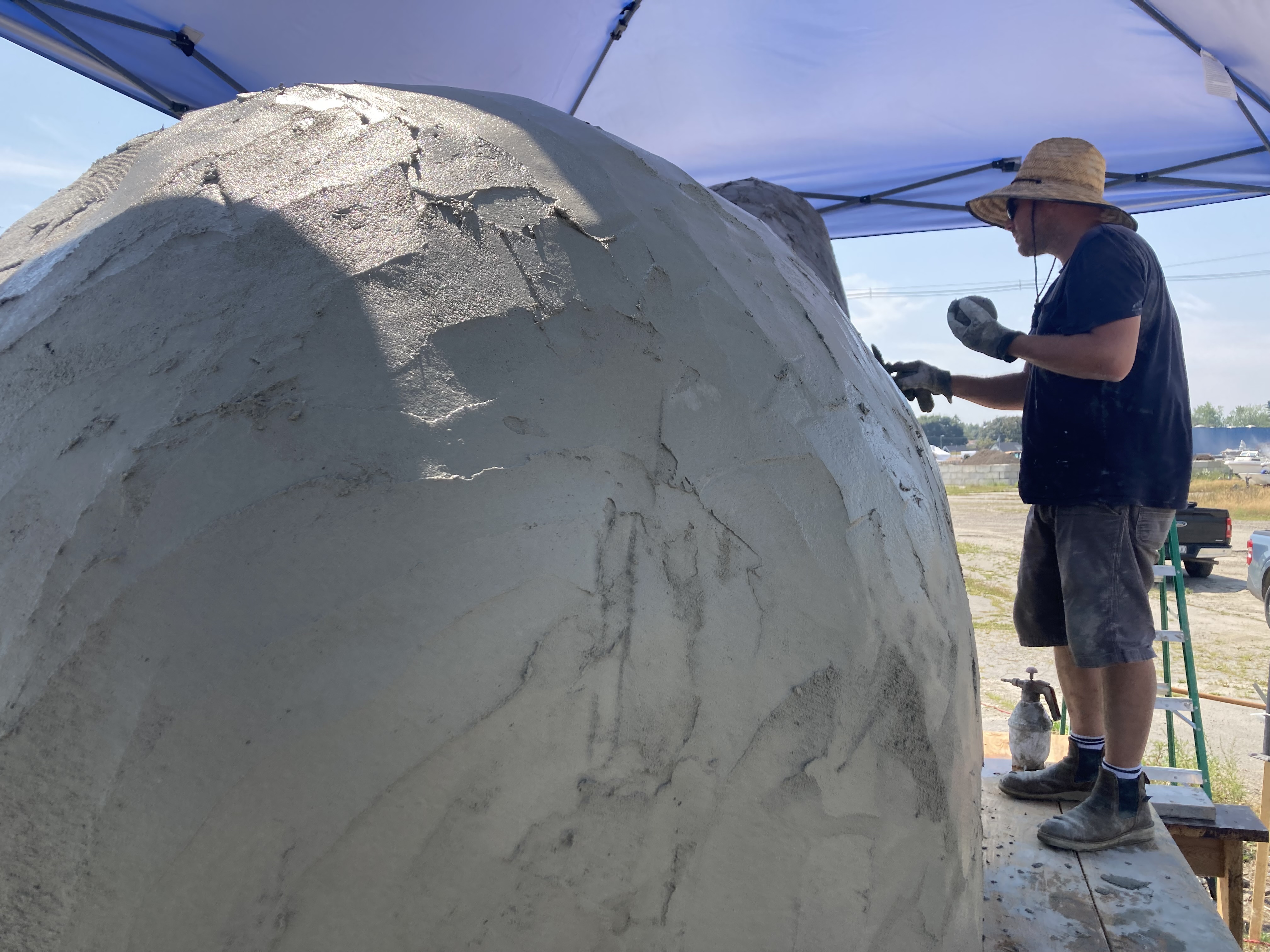
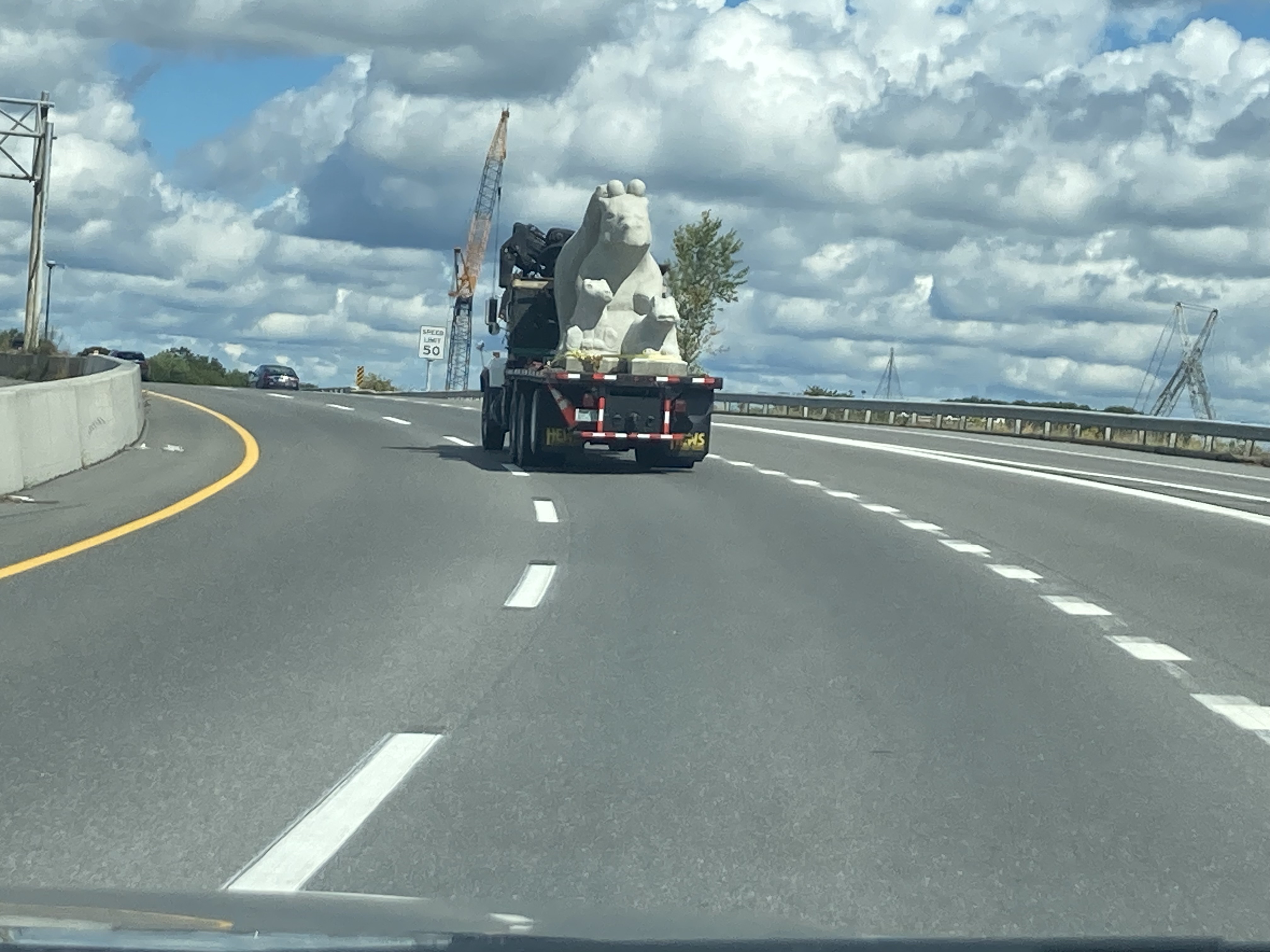
Modeled upon the earliest mammals, just post the dinosaur age, Chris conceived this public art installation as “a puzzle…based on shaky assumptions about dusty old bones.” They were made using a welded steel armature, foam, and structural concrete. I am honored to have been mere fabricator: building forms, cutting and stacking foam, mixing mud, troweling concrete, helping to load and then install: 15,000 pounds hauled 96 miles north.
There are four Maybes:
- Uni, the Uintatherium, a beast of the herbivorous Dinocerata mammal that lived in the now United States during the Eocene period;
- Eo, the Eocondon, of the triisodontid mesonychian genus that existed in the early Paleocene of Turtle Island (North America);
- Cory, a Coryphodon, named from the Greek “peaked tooth” an extinct genus of pantodont mammals, also local, speaking in terms of continents;
- Barry, a towering Barylambda, also of the pantodonts, from the middle to Late Paleocene era.

Tick-tock clock time is of man’s making, while Natura moves in other orbits. Chris wrote, “When 2.8 billion seconds ago (in 1934), historian Lewis Mumford pronounced that ‘…the clock, not the steam engine, is the key-machine of the modern industrial age,’ he went on to point out that there are still many other ways to mark time, and surely better ways to experience it. This long, narrow strip of grass, for instance, is a between place. It is the perfect kind of place to escape from the kind of time that is measured in seconds and minutes. Here in this long green between, time flows in seasons and eons, in eras and generations.”
And so Waterville is transformed, and kudos to them for stepping up, underwriting the permanent installation. What a marvelous life unfolds along the rocky coast, Northern terminus of the lower 48.
For more information about the Wild Maybes, click here: https://npdworkshop.com/wild-maybes






The Anti-Readymade
Posted: May 30, 2025 Filed under: Chronicles of a First Time Parent, Farming off the Farm, Gallery - Visual, Portfolio - David's work | Tags: Baroness Elsa von Freytag-Loringhoven, brancusi, dada, duchamp 2 Comments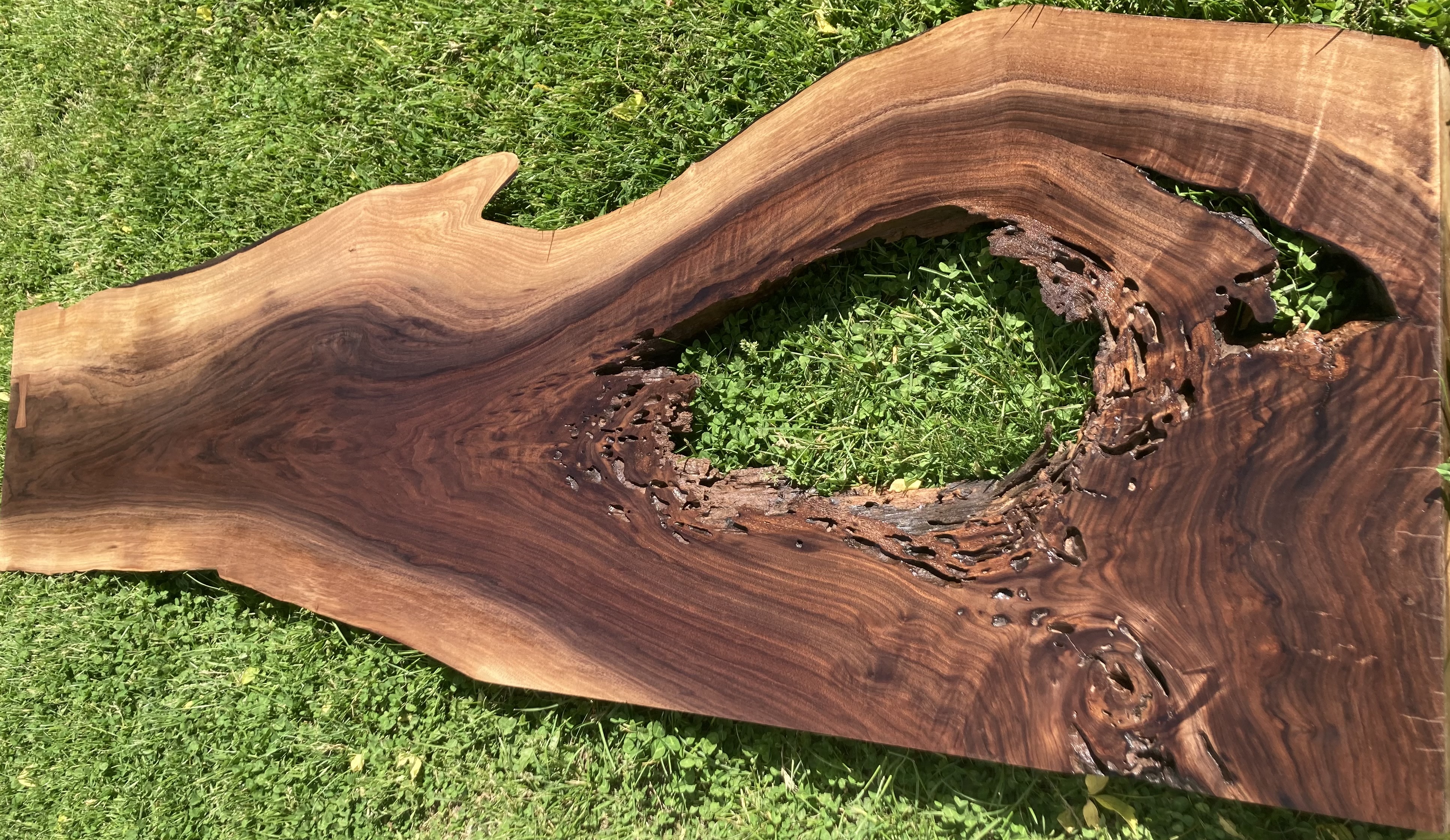
Marcel Duchamp, arguably the most influential artist of the 20th century, turned the art world upside down, in 1917, when he submitted a porcelain urinal as art for the inaugural Independent Artists’ exhibition in the Grand Central Palace of New York City. “Fountain” signed by R Mutt was rejected, which only drove that readymade sculpture to define the dada movement.
But wait…the Baroness Elsa von Freytag-Loringhoven more likely was its actual creator. R Mutt, a/k/a Duchamp elbowed her out. The Baroness embodied Dada, fought at the vanguard of the avant-garde to expose the irrationality of conformity and capitalism. Jane Heap, a publisher active in the development of modernism, described the Baroness as “the only one living anywhere who dresses Dada, loves Dada, lives Dada.” The Baroness Elsa appears to have been R Mutt.
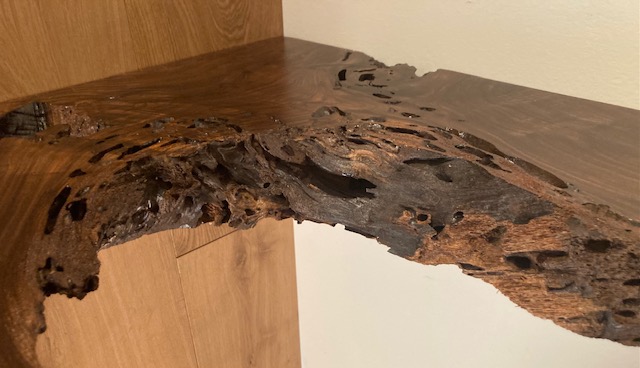
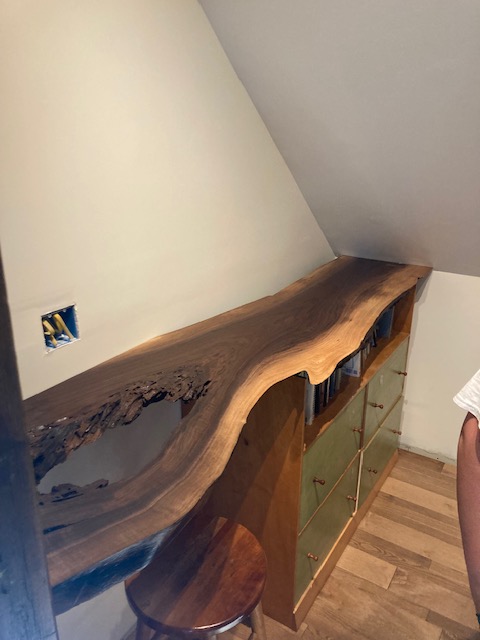
108 years later, when social media breeds conformity and capitalism reigns supreme, we are proud to present the Anti-Readymade: an object of exquisite natural beauty rendered into a utilitarian object of limited practical use. A countertop in my new office.
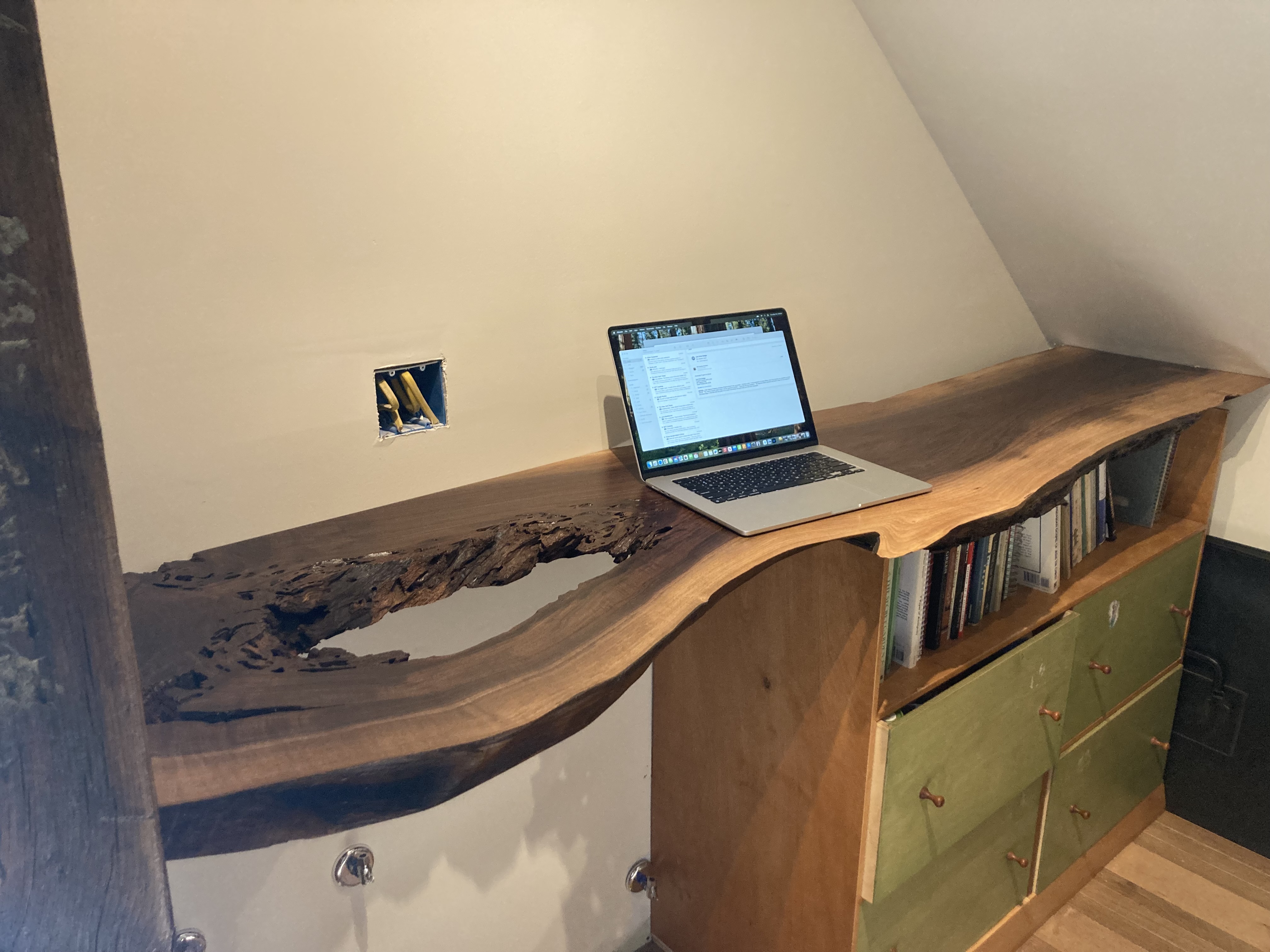
The slab is 2.25” thick American black walnut, which I happened to espie last December while at a lumberyard buying odd-lot flooring for our loft’s “charcuterie board” floor. I was seized by its commanding poetry, and given that my corporate bank account had excess capital, a tax write off was available. In our loft I had framed a wall using original boards from our 1840 barn, torn down when we first renovated the house. Boards cut and milled in 1840 would have sprouted circa 1700, so the history here equals the poetry. I sit here now as I write.
If beauty is in the eye of the beholder, then consider this from my childrens’ eyes. They remember when our loft was being framed, my son shoveled snow out the empty window openings. Just before COVID a friend helped me hang sheetrock, so when the shutdown began my wife had a home office. The nook wall is built of 325 year old boards, given a new life. Friends have loaned tools, John Hart built a bookcase then helped inlay the bowtie joint, my son helped clean out the many divots and found a walnut! The wild wood grain shouts out, and the hole speaks of the unknown where the “unusable” has been made beautiful in a community effort.
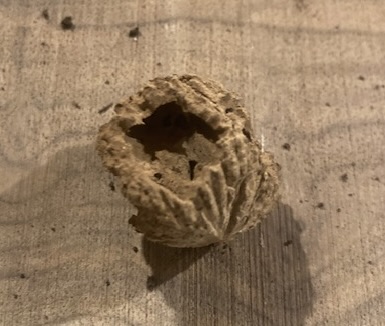
And what about that hole at the center? It screams of the void. Our zeitgeist, it seems, is a call to leap into the void. Musashi, the 16th century Samurai Master and strategist, considered a “sword saint” in Japan, taught that one must “strike from the void.” This means to strike using a calm, natural, intuitive approach, free of tension and over analysis. When stillness and clarity coincide, the body and spirit are in harmony.
And so our Anti-Readymade now stands ever ready, willing and able to remind us that stillness and clarity are keys to navigating these turbulent times.



___________________________________
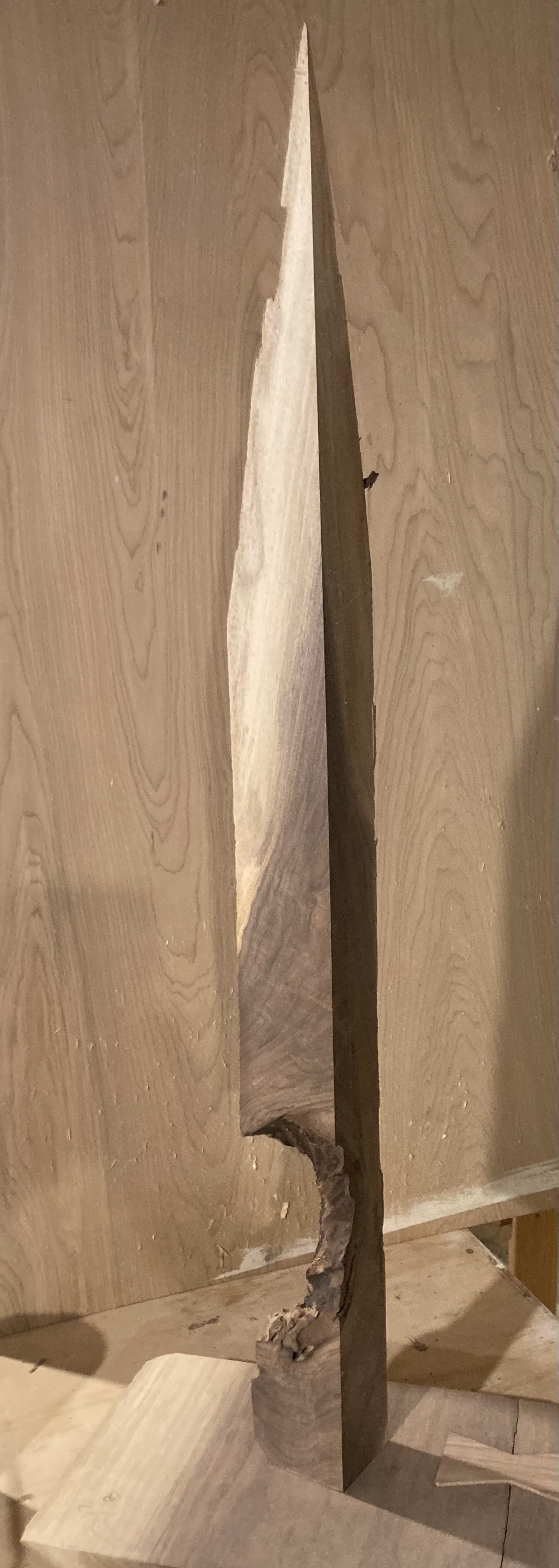
Even the slab cutoffs are sculptural. When squaring the slab’s end, this piece was cut off, which sings of Brancusi. It will become yet another piece in our mix-it-up loft.

Art Ark Redux
Posted: March 21, 2025 Filed under: Portfolio - David's work | Tags: Art Ark, Carousel Cosmos, Chris Miller, New Paradigm Workshop Leave a comment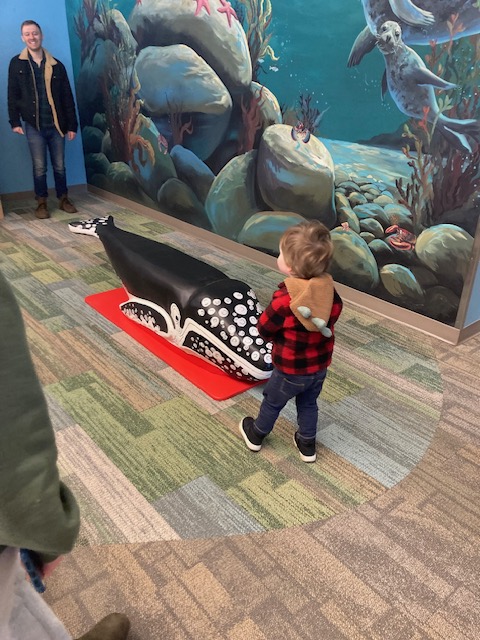
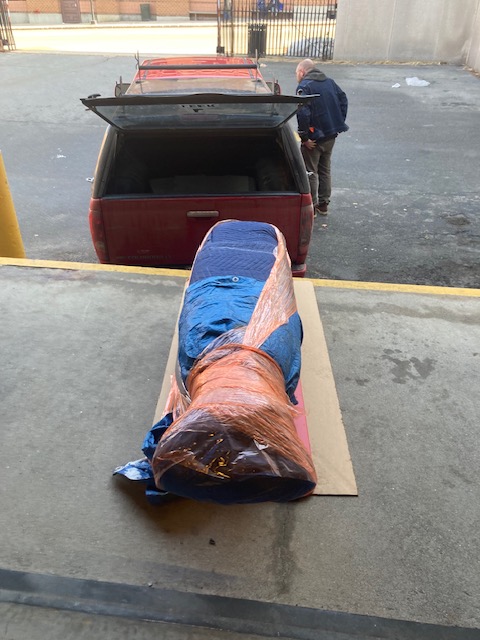
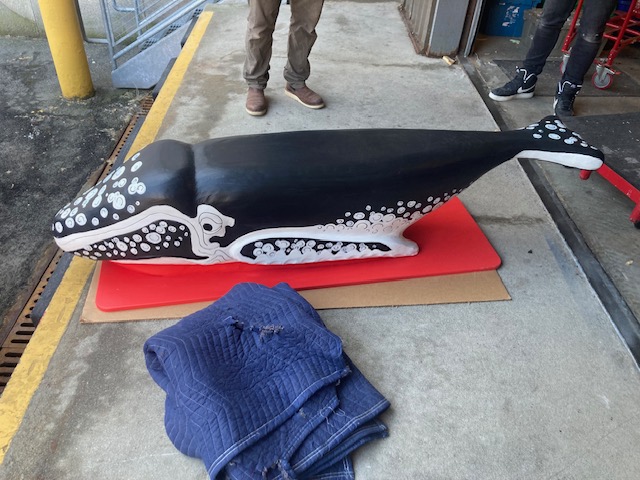
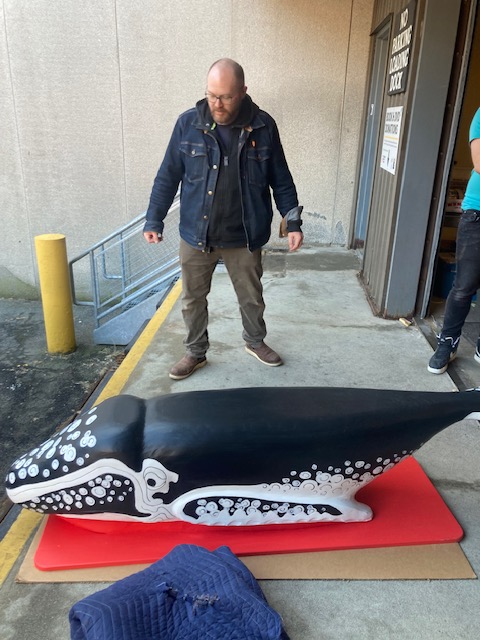
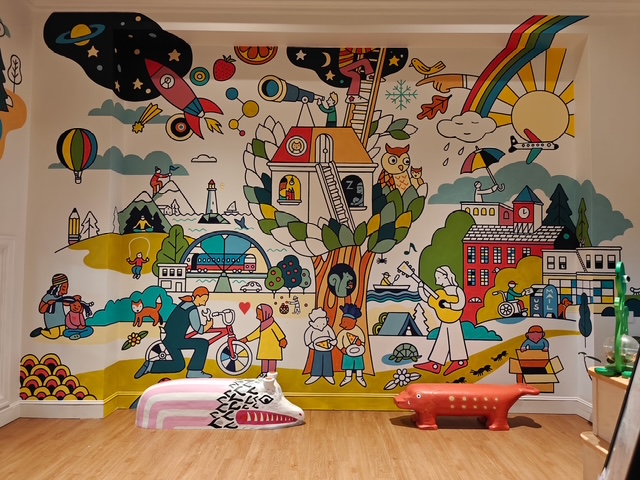
The Sea Monster Adoption program continues! We delivered last week Wendy the Whale to the Children’s Room at the Portland Public Library. Truth be told, donations are a daunting challenge. All was at a dead end until last minute Chris learned the Public Library is a “quasi Public institution” and thus, not under the direct domain of the City Government. The flood gates opened, the truck rolled and Wendy arrived at the loading dock. The Library staff, patrons and children were overjoyed!


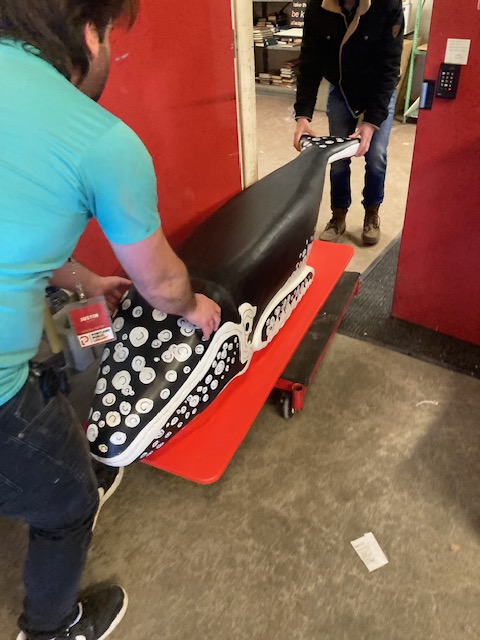


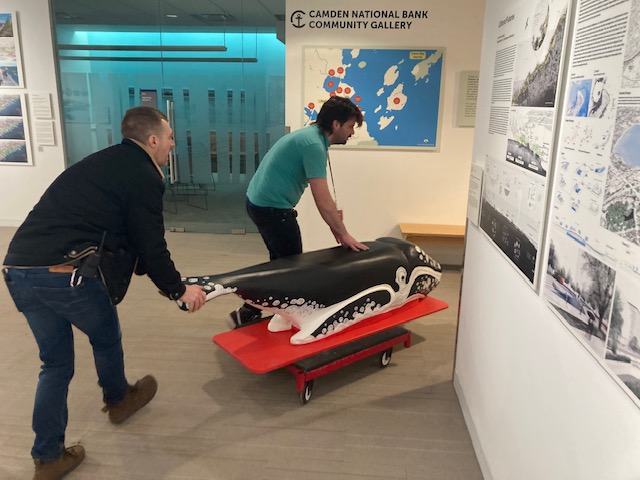
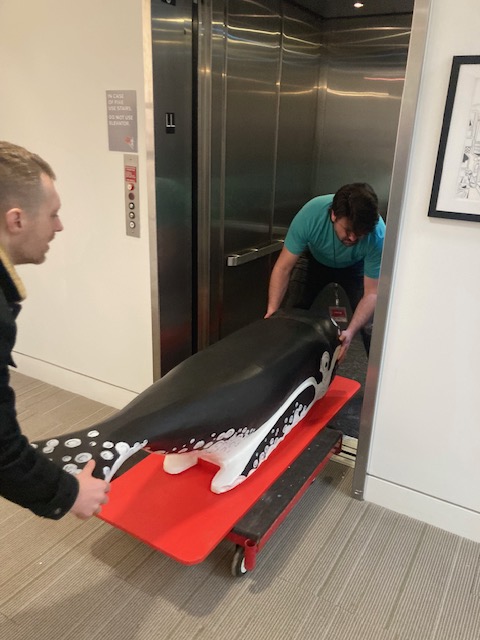


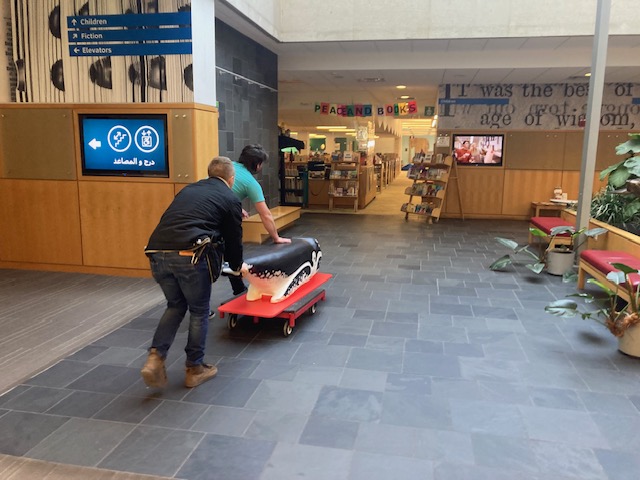
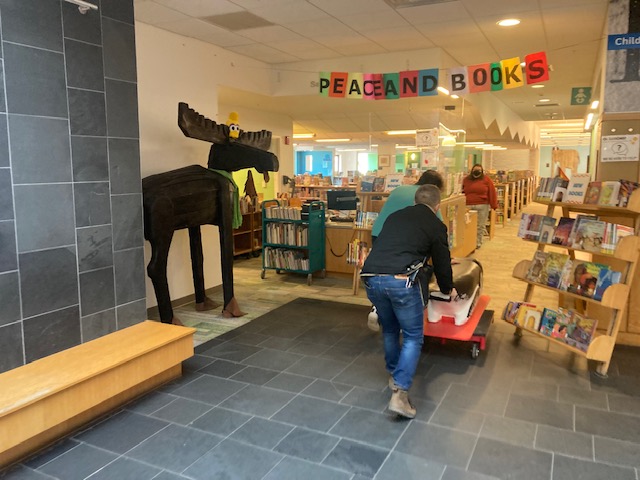
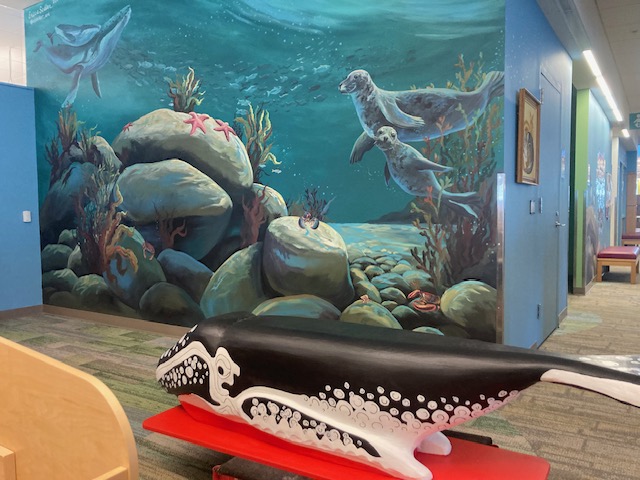
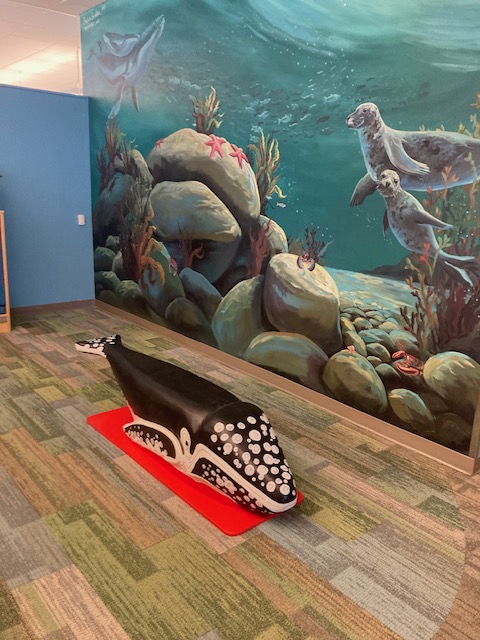
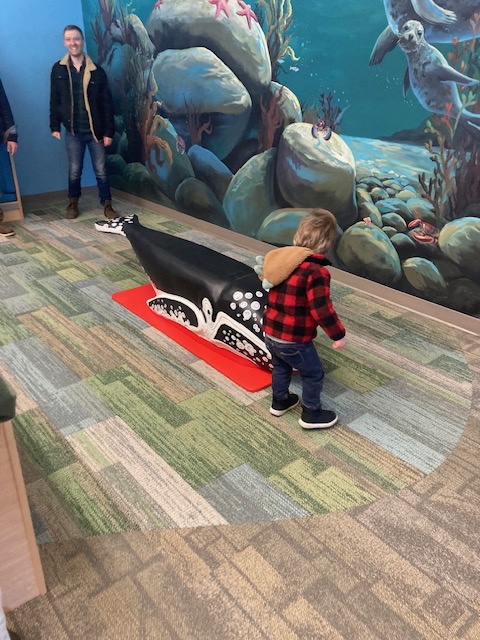
The Art Ark also rolled north, delivering Dottie the Dragon and Wanda the Walrus to their new home at the Children’s Discovery Museum in Waterville, Maine.
Senior Chairman of the Board; lunch in lower Manhattan; Dakota’s Coda
Posted: March 14, 2025 Filed under: Chronicles of a First Time Parent, consciousness, Portfolio - David's work, What is an Art Farm 2 Comments
Fred Turner was a titan in American commerce. 1956, in Des Plaines, Illinois, Fred started flipping hamburgers for Ray Kroc; while other young men were hustling to become a corporate Vice President, Turner saw his future: Kroc had a limitless vision, and Turner had the skill and drive to pragmatize the operation, globally. 38 years later, he was the Senior Chairman of the Board of Directors but I knew him as a neighbor, the father of classmates at Holy Cross School, I played the drums in his wife Patty’s jug band.
I wrote a letter requesting a meeting, and mentioned that I had lived off-grid recently. Douglas excoriated me, leaning in slowly, he spoke, “You…can…not…write…that….David! this is…the Chairman of the Board…of McDonald’s!!!” Brazen, I mailed the letter to the headquarters office, but then called Patty at their home.
Cautious at first, Patty happily arranged our meeting. Over a breakfast of eggs and hash browns, I explained my business concept. Fred listened politely, then replied, “If you are going to quote me, say ‘I don’t get it.’”
I always found that phrasing of interest. Having spent a career on quarterly earnings calls, convincing skeptical bankers and financiers of the promise that McDonald’s held, he had been quoted regularly in the Wall Street Journal, the New York Times, any paper reporting the news. Although it was just him and me, he still used that lens, “…if you are going to quote me…”
Having made his fortune selling hamburgers, the digital future was less clear. It was hard, then, to envision Google + You Tube + Starbucks, which essentially is what GDC encompassed. The power behind Global Data was less the media offerings and more the back-end data; with a growing user base the scope would become transformational, as proven in the real world financial success of Facebook and Google. But imagine all profits redounding not to stockholders but to the peoples of this planet, whereby “dignity credit” could be extended based upon local civic participation. GDC was an arbitrage of money and information.
Having met with Fred, it was arranged that I would speak to Edward R. Stavitsky. I had been told that his Uncle had financed Samuel “Goldfish” Goldwyn, Adolph Zukor, Marcus Low, as well as Cecil B. DeMille; with Chase Manhattan Bank, he had financed 100% of 20th Century and 25% for Universal and United Artists studios; had structured the financing of McDonalds Corporation in 1954, “invented” the trilogy structure: operations-franchisee-real estate holding company, which launched the venture. As of 2025, McDonald’s is believed to be the third largest holder of real estate in the world. Bill Gates owns nearly 270,000 acres, while the Catholic Church owns 177,000,000 acres of land.
We spoke on the phone and I was invited to fly out to Los Angeles, to meet in a hotel lobby just off Rodeo Drive. The meeting went well, he was quite friendly and supportive, but “others people money” would be the key. A moment of significance, I stood on the edge of the abyss: I needed to raise $38 Million USD.
My challenge was great. The absolute condition of the Information Alliance was no venture capital, which meant no equity sold. Debt was no option – negative cash flow can service no debt – so the model needed to be an endowment, the academic approach, an asset base generating yield to fund the venture. Progress was slow, very slow, as the calendar turned from 1994 into 1995.
Laurie’s star was ascendent. Employed as a business librarian at Altschuler, Melvoin and Glasser, an accounting and tax-audit firm on Chicago’s Wacker Drive, she was offered a job at Spencer Stuart, a leading global executive search firm. Laurie was lured to London, and so too Douglas, where he enrolled in the London School of Business, a globally respected MBA program, ranked higher than the Business schools of Harvard and the University of Chicago.
The transition was hard. The change complete. Douglas had gone global, on the road, again.
CODA
Our blessings can be our curse. The brilliant mind one wild tiger hard to tame. Douglas was mercurial, like quicksilver: when we were together, he was focused and present, but once apart, he was gone, completely gone. Years passed when we rarely spoke.
I recall standing, after the London move, on a beach in Rogers Park, Chicago, gazing out at the horizon. He spoke of his dream of becoming a college professor. I suspended disbelief until a few years later he was hired to teach at the Kelley School of Business at the University of Indiana. His was the gift of manifestation. Not surprisingly, he became a favorite of the students, annually ranked among the top professors. His light would fill any room, whether a small kitchen or a university lecture hall.
I pursued the endowment for another ten years. Like Sisyphus in an ice storm I struggled to climb that hill. I did deliver funds to Ed Stavitsky and we flew to Wall Street for meetings and meals with the banker, fine red wine not white with fish; contracts were signed but he failed to perform. Whether a potemkin or the real-deal remains an unknown. Ed died in July 1999. I attended his funeral, among many, laid a spadeful of dirt upon his casket.
Eventually I found my way to Maine, to build furniture for Thos Moser Cabinetmakers. I worked the A-shift. It was grounding. I collaborated with my sister on a pair of essays about heirloom furniture – my story was the making, hers the receiving – published in the Chicago Tribune’s Sunday edition. Tom flew me to Chicago to give a demonstration on chair making, then asked me to write an essay about his Customer-in-Residence program. I arranged for Tom to fly to his hometown, Chicago, for a tour of the estate of John Bryan, a major collector of American furniture.
At no one’s request I recruited the Head of the Art History Department at Yale University to create a course on three generations of New England/New York chair making: Hitchcock in the 1800s, Stickley in the 1900s, and Thos Moser into the future. And then on 9 January 2009, after the financial collapse which brought the Great Recession, I was laid off along with half the Thos Moser work force. Profits before collaboration. Money the measure of the man.
I found my way, working as a carpenter, fabricating public art and now, managing the plant and property at the Friends School of Portland.
On 21 December, this past solstice, I called Douglas and we picked up where we left off. We were immediately in synch, as though no time had passed. As our conversation ended, Doug laughed and said, “Hey man, let’s keep in touch more often!”
An opportunity presented itself. I have been thinking about launching a new community project, to teach furniture making to recovering addicts and former convicts. The act of making is at once both practical and therapeutic. My wife is a registered Art Therapist and a Licensed Therapeutic Counselor. I have an idea, she has the credentials, and a woodworker friend is getting a degree in counseling; the elements seem in place.
On 7 January 2025, just before the dawn, as the light returned over the horizon, I found myself thinking about Douglas. There is no one here with his energy, his spark, his purifying flame, and so I thought to reach out, to ask “can we rekindle our flame, chart a new path, ride together, again?”
Five hours later I received the call that he had died.
Bereft, I sat down to write this festschrift “celebration writing” for a deep true friend.
Would that he ride shotgun once again, in spirit, this time.
Rogue Hollywood; from the Library of Alexandria to Carnegie Libraries
Posted: March 7, 2025 Filed under: Chronicles of a First Time Parent, consciousness, Portfolio - David's work, What is an Art Farm | Tags: books, carnegie libraries, cosimo de'medici, Dreamworks SKG, education, history, library of alexandria, technology, travel 1 Comment
Douglas was attending classes in History and Theology at Loyola University but his most serious work was done at the RMG office. He and I were joined at the hip, constant conversation, swapping ideas at a fever pitch.
RMG formed the Information Alliance among leaders in library automation:
- Robert F. Asleson, Esq, had decades of experience as President of five library and information industry companies: University Microfilms International, R.R. Bowker, Information Handling Services, International Thomson Information, Inc., and The Library Corporation. He was thoroughly versed in all issues of copyright clearance.
- Brower Murphy, a self-described “information egalitarian” had pioneered the use of CD-ROM technology for data storage. He then developed NlightN®, a hypermedia universal network allowing a single search across the entire world of published electronic information. This was google before Google, except, created in 1991, it was not designed for the internet.
- Vinod Chachra, President and sole owner of VTLS, Inc. oversaw a staff of 70 with customers in 18 countries, requiring 16 difference languages and multiple character sets and scripts. His software provided a turn-key solution to all library functions.
- Rob McGee and Howard Harris, another RMG Consultant, formed the alliance and Rob acted as editor of the “Concept & Vision” and the business plan.
Our approach to the Worlds Digital Library was direct: “Empowering the individual by access through libraries to the world’s information, ‘anyplace, anytime.’” The philosophy was broad and inclusive, the battle plan was specific and precise. A holding company, the DLC would operate through subsidiaries, each business creating a component of the whole. The first subsidiary was The Index Company, which would:
- digitize book images from collections of widely-used library materials
- compile collections of machine-readable tables-of-contents and back-of-the-book-indexes for subject oriented sets and collections of books
- create and distribute merged collections of the indexed records to provide access to Digital Libraries.
The DLC was the economic engine driving GDC. On paper, the DLC projected a Year 1 loss of ($4.08 M) but turned positive in Year 3 and by Year 5 was in the black at a profit of $6.3 Million USD. At the end of the 20th century, “hockey stick” projections were not uncommon, but questioned by conservative bankers.
On 7 May 1994 the “Concept & Vision” paper was finished, and letters of support were received from:
- Chair of the Virginia State Library Board
- Librarian of Harvard College
- Executive Director of CAVAL (Co-operative Action by Victorian Academic Libraries [Australia])
- President Council on Library Resources
- Deputy Director General, National Library of Australia
- President of the Council of the European Information Industry Association
- Executive Director off the United States National Commission on Libraries and Information Science
It is worth noting some of their comments:
- The Librarian of Harvard College wrote, “There are going to be a number of modest efforts to build the digital library. Yours could be the one most likely to succeed on a large scale.”
- Deputy Director-General of the National Library of Australia wrote, “The approach envisaged in this paper is sensible and shows the appropriate understanding of the current state of the industry which is needed for success to be likely.”
- The President of the Council, European Information Industry Association, “…we shall have no hesitation in bringing this proposal to the attention of our members and examining ways in which we can lay a supportive role in Europe.”
While writing the “Global Data” plan, the landscape in Hollywood was changing. Steven Spielberg, Jeffrey Katzenberg, and David Geffen announced they were going rogue, to create their own live-action and animation film studio. This meant Hollywood’s studio model was being revolutionized, and the financier with whom I was hoping to meet had deep roots – I was told – in that old model. If the paradigm was changing, then I needed to write my own version.
One spring evening at the Chase Street house, Douglas and I sat down at the kitchen table to write “Top-Down meets Bottom-Up” which compared Paramount Communications and Global Dakota Corporation, a $10 Billion colossus versus our $38 Million start up. I was David out to slay Goliath. Working deep into the night, we laid out the categories and filled in the blanks, referencing medieval history through the Internet. Laurie, who is quite savvy in the C-suite, told us it was sheer hubris.
Libraries have been central to all civilizations, throughout recorded time, our collective repository of knowledge, a storehouse of the written word – cuneiform or bound – a place where scholars gather to share knowledge, to push the vanguard. The earliest libraries have been discovered in present-day Syria, and in temple rooms in Sumer (present day Iraq), each in the Cradle of Civilization. The Library of Alexandria, in Cleopatra’s Ptolemaic Egypt reigned among the most significant libraries of the Ancient World, the corpus of Greece and Egypt in one repository, until Julius Caesar’s boys came to town, on military conquest, they burned the library. Dust to dust, ashes to ashes.
30,000 clay tablets from the Library of Ashurbanipal have been discovered at Nineveh – the recorded wealth of Mesopotamia – while the University of Chicago holds baked clay tablets, the administrative backbone of the vast territory of Persia, written in Old Persian, Elamite, and Babylonian languages. The Imperial Library of Constantinople is worthy of mention, authors such as Plato, Aristotle, Demosthenes, Socrates, Thucydides, Homer and Zeno stored and sought. Themeistius, a pagan philosopher and teacher, hired calligraphers and craftsman to produce the actual codices then created a university-like school centered around the library. Lao Tzu, author of the Tao Te Ching, was the keeper of books in the earliest library in China. Into this majestic idea Rob McGee stepped as a young boy, his bike’s basket filled, riding home to 1505 Grace Street with “talking books” for his Grandmother, an armful for himself.
The Free Public Library is not free financially – it is paid for by taxes – so what is free is the access to information. Traditionally libraries had been the private domain of Princes and Kings, Bankers or Clergy. The Renaissance brought an awakening when, in 1444, Cosimo de’Medici created the San Marcos Library, one of the earliest public libraries. Cosimo combined his own extensive collection with the 800 manuscripts of Niccolo de Niccoli, a humanist who worked as a copyist and collator of ancient manuscripts, and was the creator of cursive script, known today as “italics.” Niccolo’s humanist vision was inclusive: “…to the common good, to the public service, to a place open to all, so that all eager for education might be able to harvest from it as from a fertile field the rich fruit of learning.”
Pierpont Morgan’s Library, in the grand style of the Italian Renaissance, was opened to scholars and the public in 1924, the gift of J.P. Morgan, the banker of legend, who indirectly was behind the greatest public library building program in history. In 1901, J.P. Morgan bought the Carnegie Steel Company for $18 Billion (in 2025 dollars), which allowed Andrew Carnegie to vastly expand his brick and mortar ambitions. Between 1883 and 1929 2,509 Carnegie Libraries were built around the world, free to the public. By 1929 almost half of the public libraries in the United States were Carnegie Libraries.
At the end of the 20th Century, many saw change on the horizon, bricks and mortar becoming digital, access universal, which seemed like Archimedes’ fulcrum, upon which we could move the world. Rational self-interest held no motivation for me; e-commerce and social media pale in comparison to the humanist tradition. Douglas, though, had that capitalist urge, and his enthusiasm was grounding for me. He and Rob delivered the Information Alliance which undoubtedly could make the products to drive revenues. The Digital Library Corporation was the core asset, while the Turtle News Network and the community retail outlets expanded our reach.
I played the hand I was dealt. “Top Down Meets Bottom Up” became page 41 of the Global Dakota Business Plan. On 1 July 1994 the Business Plan, with consolidating Pro-Forma Financial Statements, was complete, weighing in at 12 pounds, almost 1,000 pages printed on 100% post consumer recycled paper. Having finished the first task, I tackled the second challenge: a meeting with the Senior Chairman of the Board of McDonald’s Corporation.

Kennebunkport Patrician, Red-Neck Riveria, Skull Valley
Posted: February 21, 2025 Filed under: Art & Healing, Chronicles of a First Time Parent, consciousness, Portfolio - David's work, What is an Art Farm | Tags: history, nature, photography, travel 2 Comments
RMG Consultants, Inc. was mission driven, not pursuing rational self interest as conventionally defined. Rob’s mantra was to remain “ruthlessly objective” and have no conflicts of interest. We served the library as civic institution of learning and education.
Douglas became a corporate officer, with increasing responsibilities, was named Vice President of Operations and Treasurer of RMG Consultants, Inc. He encouraged Rob to pursue the for-profit sector and so they launched Infostrat, Inc., then formed an Australian-based company, RMG/CAVAL to pursue the Austral-Asian market. Douglas became an officer of those entities.
On the home front, I had left the barrio, moved north to Rogers Park, on the lakefront. Brian had graduated from Cornell College with a Bachelors of Arts in Economics and Political Science, moved back to Chicago, full-time at RMG, and lived with me. Douglas also moved to Rogers Park, but found a studio apartment off Howard Avenue, at the El terminus. I believe there was a crack house across the hall, and once he heard gunshots while walking on Howard Avenue. We were on very opposite sides of Sheridan Road.
In January 1991, the first patrician from Kennebunkport, Maine announced that Operation Desert Storm – the First Iraq War – would be televised live; we all pulled up chairs around the TV. Tal Lekberg, my carpenter friend, was in the Coast Guard and had been called to active duty in the Persian Gulf. Not knowing if he would return home alive, he brought his entire collection of single malt Scotch Whiskey to our apartment – at least two dozen bottles – asking me to safeguard it. “It’s okay if you drink it. Maybe some will remain if I return.” Like a fox guarding the hen house, we heartily imbibed while watching the destruction of the cradle of civilization, in pursuit of the quest for oil.
December 1991, Douglas and Laurie had decided to get married, and Douglas pined to be wed in Paris, at the Cathedral of Notre Dame, I as their witness. It made great sense and we all bought tickets, flew across the pond; I arrived first, Douglas and Laurie a day or two later. A friend arranged an apartment for me, and Laurie knew someone from the U of C who had a flat there. We met and celebrated love in Paris, when we were young and all life easily opened before us. But Notre Dame was not so easily scheduled and the wedding did not take place. We took the train south to Chartres, and beside the Cathedral I ran the table at a bakery beside the nave doors. I bought one of everything and together we ate pastries, at the foot of Chartres Cathedral. It was grand. Essentially they were married then, but officially it took two months more.
In February 1992 Douglas and Laurie got married. In April I moved off-grid, to Holmes County, Florida’s “red-neck riviera,” to a swamp along the Choctawhatchee River. Such was the synchronicity of the times, that even the swamp had a role in library automation.
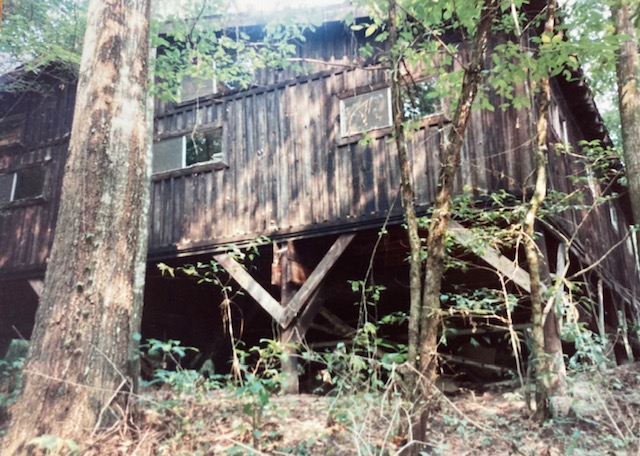
In the tradition of eccentric booksellers, Bob Allenson seems worthy of mention. He is a third-generation bookseller of religious literature but his passion is making bibliographies of rare antiquarian books; his “John Henry Newman, 1801 – 1890: A Preliminary Register of Editions from 1818 to 1890, Together with Original Editions Published Posthumously” is the definitive catalog of Newman’s work. Sometime in the 1980s he was hired by the American Theological Library Association to select the texts that would be digitized for their online corpus of theological literature. Bob was still working on that when I moved there.
Alec R. Allenson, Inc., was launched in London, then relocated to Baltimore, Maryland and eventually to Naperville, Illinois. Bob’s father was a businessman who created a successful company selling textbooks and research materials to Christian seminarians. Bob is a Quaker, committed to social justice who joined the March to Selma and has little interest in business. By 1979, he had decided to remove himself from the mainstream culture and purchased acreage along the Choctawhatchee River in rural Westville, Florida, population 261. Wanting to get away, he found his spot. A friend and I packed the Naperville bookstore – a most remarkable experience – and shipped five semi-trailers of books to the swamp, where Bob’s son-in-law Caleb had built two pole-barn houses where the books would be stored, for sale.
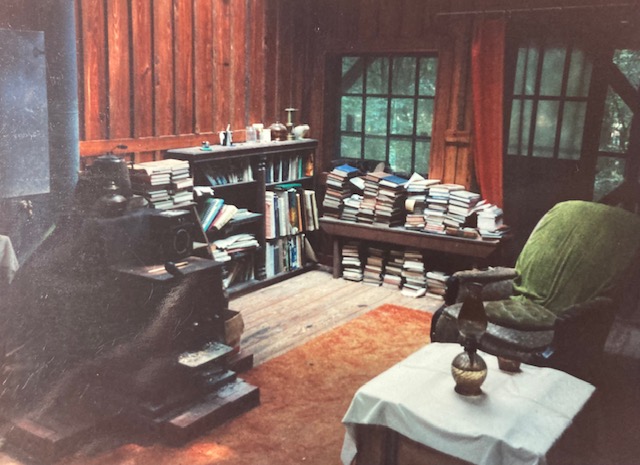
I had kept in touch with Bob, and he asked me to help him with the business. To my mind, at the age of 31, moving off-grid seemed a most sensible thing to do. In April of 1992, Brian and Douglas drove me to Union Station in Chicago, we said goodbye, then I climbed aboard Amtrak’s “City of New Orleans” southbound, down the Mississippi River to New Orleans. I spent the night at a hostel, then boarded a Greyhound Bus east, along the Mississippi and Alabama coast. Somewhere along Florida State Route 20 I got off the bus, then rode my bike north. The Sheriff and his men stopped and questioned me – I stood out like a sore thumb – but let me continue and eventually Bob and his wife Dorothy Ann drove down to pick me up.
Bob embodied his Quaker ideals by visiting prisoners in the State Penitentiary, and, for honesty and transparency, by wearing no clothes. I recall Bob in his kitchen, holding a glass of white wine, cooking ratatouille and lamb chops, discussing the Christian mystics Swedenborg and Meister Eckhart, all while standing buck naked in his birthday suit. To the question, “what’s the recent weather like over there Bob? I’m trying to figure out what to wear?” he replied “Well as far as I’m concerned, you don’t need to wear anything at all.” My guess is he wore clothes to the State Penitentiary.
There was no work to be done, and neither electricity nor running water, so in the swamp – which was, in fact, an oxygen factory – I mostly sat, listened and read. Storm clouds would amass over the Gulf of Mexico, then by afternoon would float north overhead. Almost daily, rain like a typhoon fell, massive amounts of water, relieving the humidity. Caleb and his family also lived in the swamp and at night we would paddle on the river, I in front with a flashlight, scanning for the green eyes of alligators at the water’s level. Once found, they would drop beneath the water and silently swim away, even beneath our canoe. Caleb laughed at his unseasoned passenger from the North.
Eventually it became clear that life there was not sustainable and so I returned to Deerfield, and then unexpectedly, moved out west to Prescott, Arizona. I settled into a trailer, at the foot of a butte, near Skull Valley. By coincidence I had been introduced to an older gentleman, who was active in trading agricultural commodities. Given my background, he was curious of my interests and offered to introduce me to a financier he knew, who purportedly had helped launch McDonald’s Corporation. He had two conditions: I needed to write a Business Plan and get the approval of the Senior Chairman of the Board of McDonald’s Corporation. No small task, although the writing seemed more daunting than the approval, so willing to shovel coal, I was willing to get to work.
The Chicago Tribune had announced an architecture competition for public housing, to redesign the Cabrini-Green projects. I entered. I had met Paolo Soleri, the architect and urban planner – a visionary, widely overlooked – who had built Cosanti and Arcosanti based upon the design of medieval cities of the Italian countryside; he advocated a hyper-dense city surrounded by open space and the natural environment. Living on the high desert, in a trailer with no phone or TV, I began to ponder the social contract, how design manifests those ideas, and the coming impact of unlimited access to information.


 an Art Farm