Question Box
Posted: March 3, 2014 Filed under: Art & Healing, Child Centered Activities 8 CommentsThe older I get, the less able I am to multitask. Or, perhaps it’s not age but hours of sleep I miss each night (see previous posting :). Either way, after tending to the household tasks, little ones’ needs, and work prep, by the end of the day I can only focus on one thing at a time.
It’s possible that this is in fact the time of day when my daughter’s charming curiousity cuts loose and needs the likes of Google-for-preschoolers to sate her questions: “Why do princesses have so many dresses? How did the creator create the world? Where did I come from?” Truth be told, there have been times I’ve just had to ask her to stop talking so I can finish the thought in my own head.
Several days ago I vented to our beloved Auntie Beth who, without blinking, offered up the idea of a Question Box – a special place to hold the question until I have time to give her the attention she seeks.
Using cardboard scraps and a glue gun, I constructed a small box with a piggy bank type slot on the top and a flap on the bottom to access the question cards.

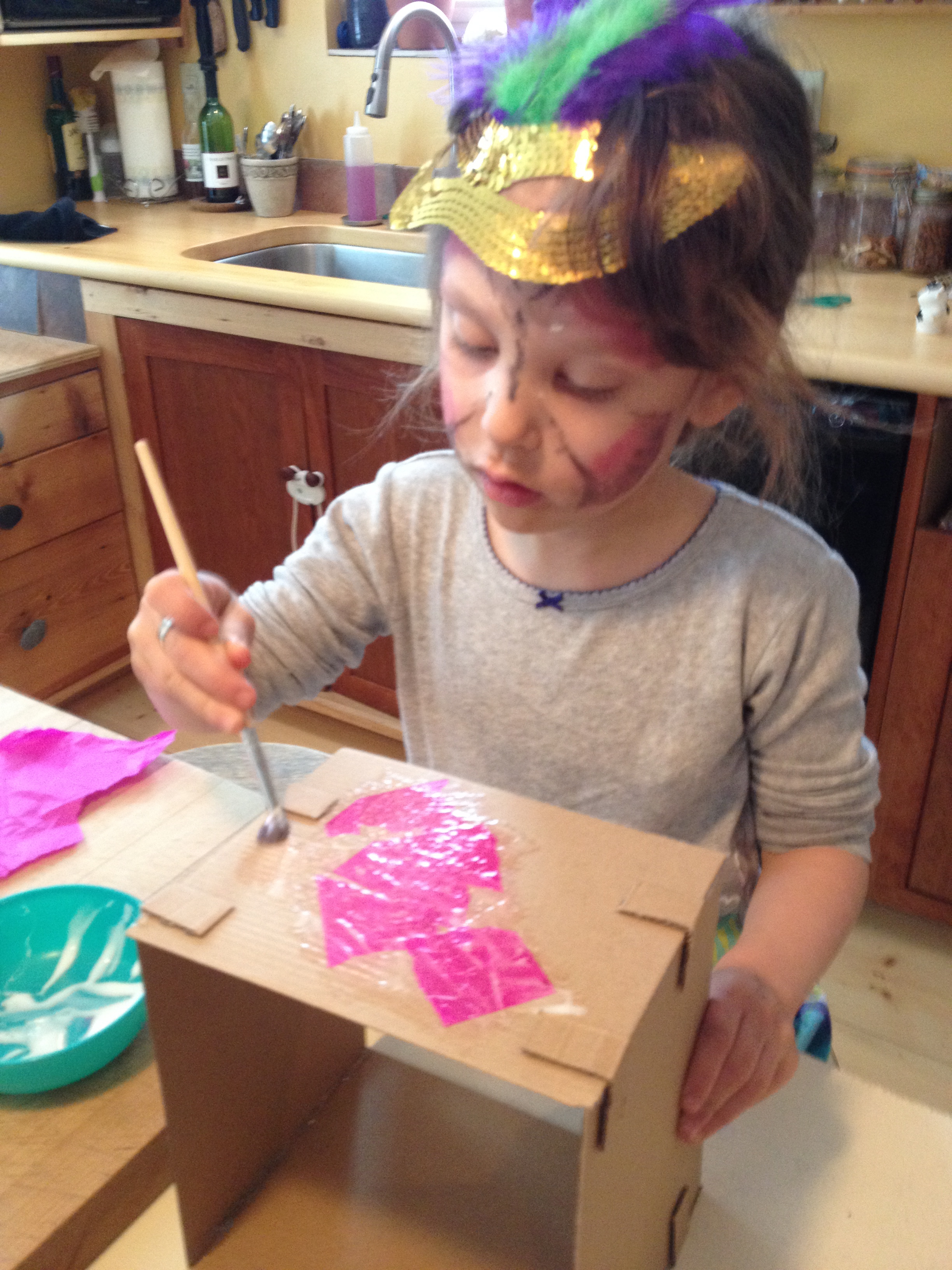
Elena decorated the outside of the box with tissue papers and aluminum foil. While the glue dried, she furiously worked on index cards drawing symbols and letters to record her thoughts.  Thankfully, collecting her questions in the box will allow me a little time to prepare my responses. “Why did the creator make bananas? Was that before the dinosaurs?” and “How does Peter Pan fly?”. I’ve got some research to do.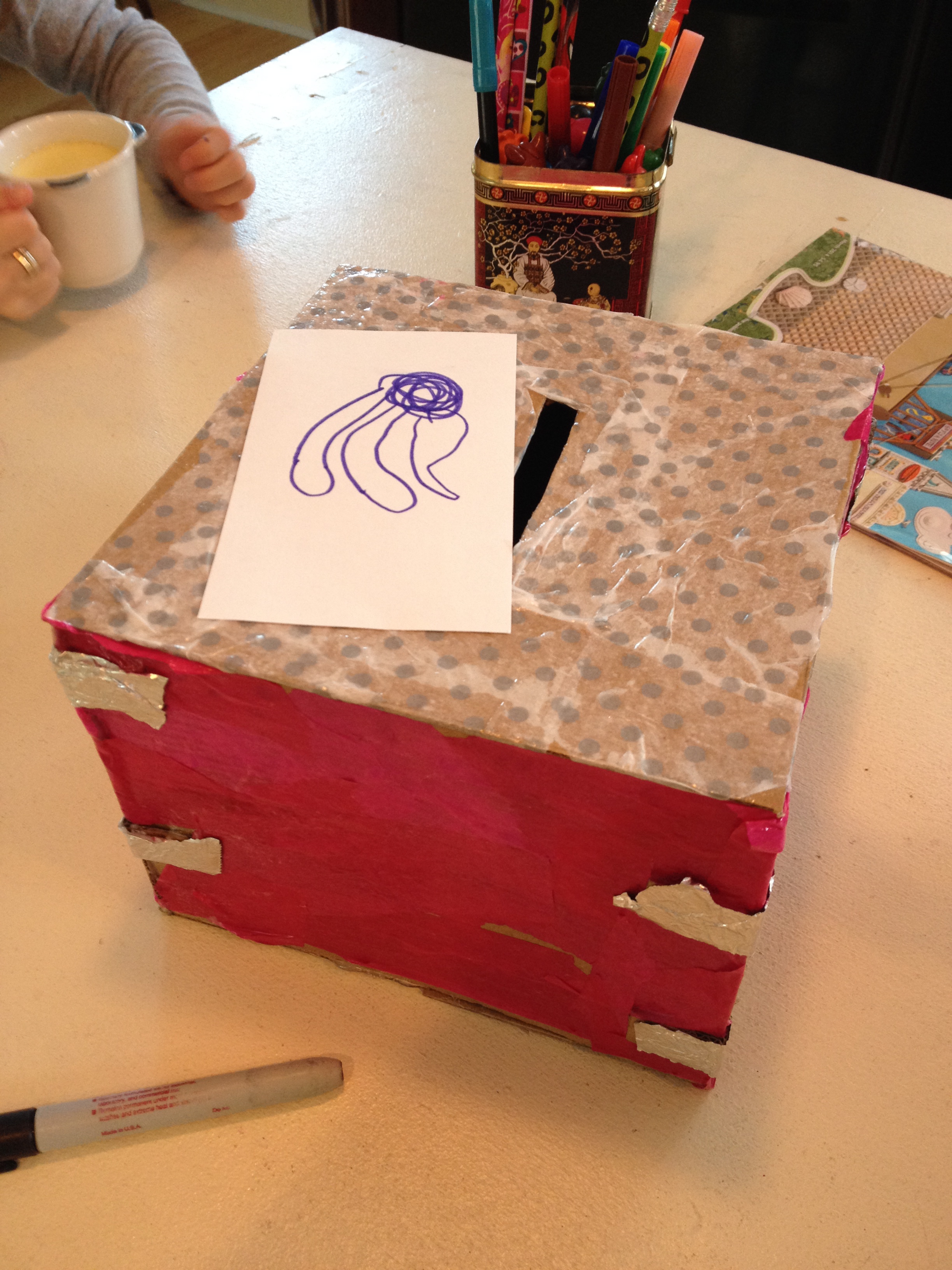
Birth Story Revisited
Posted: February 15, 2014 Filed under: Chronicles of a First Time Parent 12 Comments
I am blessed. Let me say it again, I am blessed. I have two beautiful children, an amazing husband, and an overall rich and full life.
I am also sleep deprived. Like, from the last 8 months, sleep deprived.
Ever since we tried transitioning our 14-month old son from co-sleeping in our bed, three out of four of us haven’t slept more than 2-3 hours at a time, sometimes up repeatedly for hours during the night. Thankfully our oldest sleeps soundly.
I’ve read books, talked with moms, spoken to the doctor, vented and cussed and struggled overall with how to help our boy. Pick him up, don’t pick him up, let him cry it out, don’t over-stress him…And until this week, I now realize, I was looking at the entire problem through the wrong, foggy-eyed lens.
We went to a sleep specialist, who is actually a pediatric nurse practitioner with a holistic philosophy. I find her utterly fascinating. I’ve known about her for some time, went to her once with our first-born, have friends who use her and am awestruck at how she weaves her understanding of biology and chemistry, perinatal psychology, energy therapies, nutrition and more, all within the family context of what she calls the “heart centered relationship”.
Milo wakes up often each night, in a highly agitated state. The specialist stated it was neither comfort seeking nor night terrors. She looked deeper and further back. She asked about his birth story.
Ever since his birth, December 10, 2012, I have looked back with great pride to the water birth, the one hour delivery from the time my water broke and the two pushes that carried him out and up into my arms. It was so fast that his head did not mold.
I never considered what his experience was. Could it be possible that what I considered -from my perspective- a beautiful successful birth was, for Milo, likely traumatic?
According to our specialist, an abrupt transition from the womb into the water was for my baby likely rough and rushed, flooded with adrenaline. She spoke of the cranial nerves which carry the impulses down from the brain and have ties to the nervous system. She mentioned that the presence of adrenaline will diminish the body’s natural release of oxytocin, the calming hormone.
Because of the nature of Milo’s birth, a pattern was set early for tension, hyper-vigilance, and adrenaline imbalance. This helped explain some of the early behaviors we have observed as well, extreme sensitivity to noise, need to touch my skin while he slept, hyper sensitivity to diaper changes, and a strong desire to be held.
Where do we go from here? We have a list of behavior modifications to try such as earlier bed time, increase melatonin rich foods to help stabilize sleep cycles, massage and joint compression to help him feel comfortable in his body, and more. We were also encouraged to visit an Osteopath who could provide manipulations to assist in calming Milo’s nervous system. Paramount here is to pattern behaviors that reassure our young Milo that the world is a safe and secure place.
Being a therapist, and advocate for children it was hard to realize I had overlooked Milo’s experience at birth and the ripples it could produce. We all are sensitive beings and our feelings, behaviors and physiology are connected to the experiences we have had. From the perspective of an infant entering the world, it is no different.
Spontaneous Art Making – 101
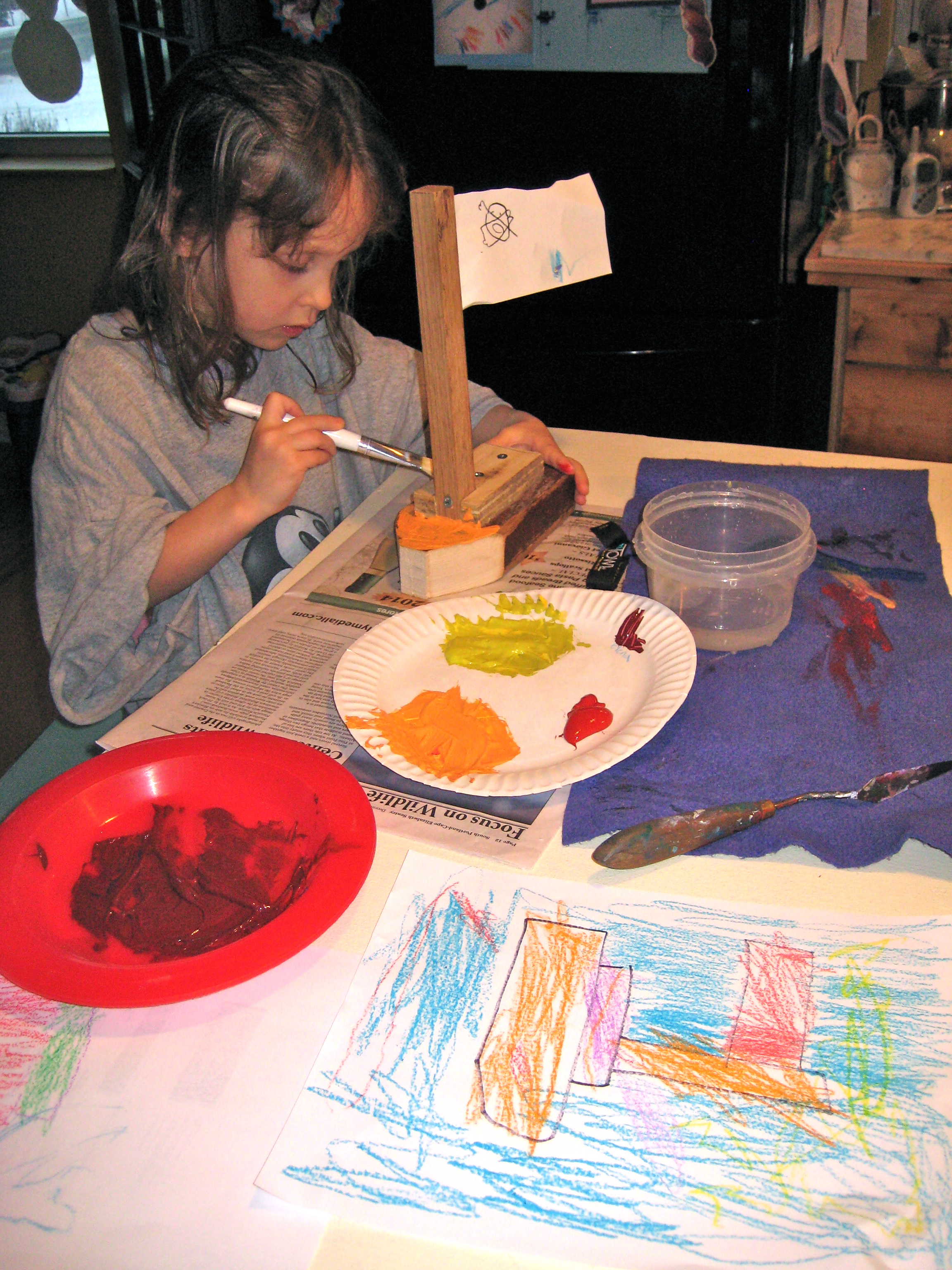
Posted: January 18, 2014 Filed under: Art & Healing, Child Centered Activities 4 CommentsJust before bed time last night, our daughter was inspired to make her 1 year old brother a pirate boat out of wood. In the basement wood shop she had her first lesson with her dad on using power tools. Furious that there was no time left to paint the boat before going to bed, we urged her to come up with a color plan. We drew a picture of a boat and encouraged her to plan out her colors. Off she went to bed and continued to draw, filling her notebook with countless drawings of pirate boats. Today, she had her first color mixing lesson and finished the boat. A most charming experience to watch.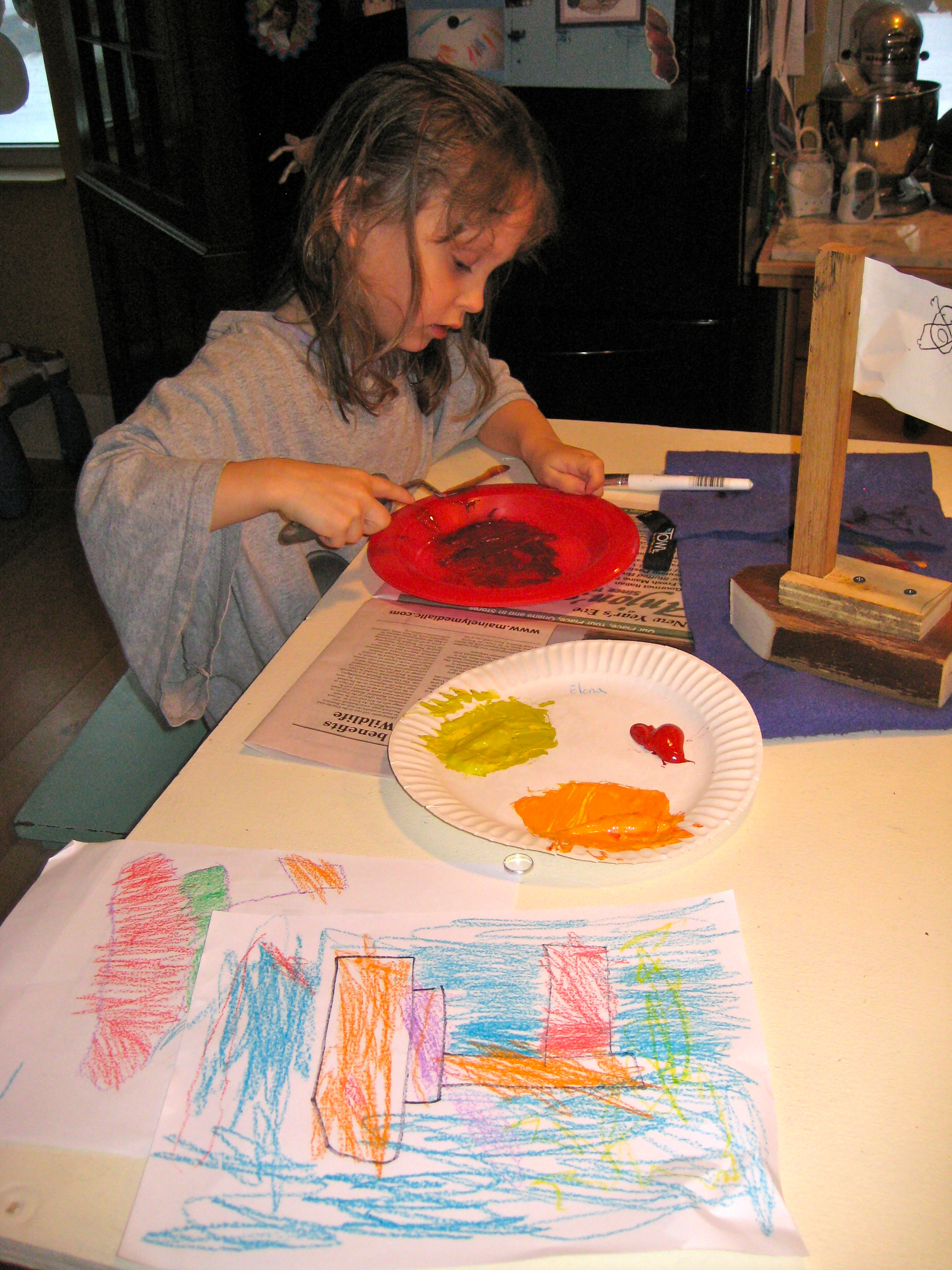

Sheet Mulch: where the Princess meets permaculture
Posted: January 6, 2014 Filed under: Art & Healing, Permaculture & Home Renovation 4 CommentsThere are three stages to the life cycle of corrugated cardboard: it arrives as a shipping container, becomes an enchanted fairy princess castle, is put to use restoring the soil. Each has its purpose, but the last pays dividends for a long, long time.
During our renovation, new appliances arrived packed in lots of cardboard. I was as excited for the packaging as for the appliances. The cardboard was repurposed quickly, as a fairy princess castle was ordered. I was up to that challenge. Many years back, I transformed, for my Nephew, some boxes into an underwater cave surrounded with schools of fish. 
These days my ambitions are less grand and a few cuts with a sharp knife sufficed here. The rest was left to our daughter’s imagination. Of which she has plenty.

Eventually that castle became part of the clutter in her room, and I was beginning to plan a large sheet mulch project. I carefully broached the topic that her castle would become a part of the garden. To my relief, she said, “That would be fine, Daddy.”
The corrugated cardboard became a key layer of the 12-inch sheet mulch for the 600 sf vegetable garden that we are preparing for next season. We layered the materials in October to allow them to decompose over the winter. 
I first learned about sheet mulch from David Homa, of Post Carbon Maine. He is a local maven of permaculture and gave me this list of ingredients: lawn, stone dust, crushed shells, seaweed, leaves, finished compost, newspaper, straw.
Toby Hemenway, author of Gaia’s Garden, has an excellent discussion of sheet mulch. His material list for “the perfect sheet mulch” is:
- newspaper, corrugated box cardboard without staples or tape. cloth, old clothing, or wool carpet, provided they contain no synthetic fabric, but these take far longer to decay than paper.
- Soil amendments: lime, rock phosphate, bonemeal, rock dust, kelp meal, blood meal, and so on.
- Bulk organic matter: straw, spoiled hay, yard waste, leaves, seaweed, finely ground bark, stable sweepings, wood shavings, or any mixture of these, ideally resulting in an overall C:N ratio of 100/1 to 30/1 about 4 to 8 cubic yards of loosely piled mulch for 100-200 square feet
- Compost, about 1⁄4 to 1⁄2 cubic yard (6 to 12 cubic feet).
- Manure: 1⁄4 to 1 cubic yard,
- A top layer of seed-free material, such as straw, leaves, wood shavings, bark, sawdust, pine needles, grain hulls, nut husks, or seagrass. You will need roughly 1 cubic yard
There is a wealth of information available on the web, including this site with photos showing each step in the process:
http://permaculturenews.org/2012/07/20/gorgeous-gardens-from-garbage-how-to-build-a-sheet-mulch/
My own recipe was based on the materials on hand. My first layer was about three inches of horse manure applied directly on top of the lawn.

I scattered stone dust and then layered the corrugated box cardboard. The cardboard was placed above the manure to create a barrier preventing hayseeds from sprouting. Newspaper was used to fill in the gaps between the pieces of cardboard.

Wood chips were spread thickly on top of the cardboard, and then, for bulk organic matter, we put maple leaves, grass clippings, end-of-season cuttings of comfrey, hosta and other perennials. The brown – carbon – side seemed to be dominant, so to boost the nitrogen side, I mowed my neighbors lawn (with fallen maple leaves) and added that into the mix. My neighbor was thrilled – and a bit incredulous – at my generosity, but I still think I got the better side of that trade.


I would have liked to add seaweed into the mix, but I never found the time to get down to the shore. Our final layer was loam, primarily as a weight to keep the leaves and clippings from blowing during late autumn storms.

I would have liked to top dress everything with a layer of finished compost, but that can wait until spring.
Gone are the days of “double dig” garden beds, and whether the rationale is carbon sequestration or protecting the soil structure, my back definitely was better off for following the sheet mulch approach. We are building the beds directly on top of the existing lawn. I have no idea what our final C:N ratio was but I remain steadfast in my belief that nature is forgiving. We were close enough, and will continue to add layers of rich organic mulch annually.
We have made a big step forward toward our sun-loving vegetable garden.


The Burden of Restoration
Posted: December 2, 2013 Filed under: Art & Healing, Chronicles of a First Time Parent, Permaculture & Home Renovation, What is an Art Farm 6 Comments
We bought our home in “as-is” condition, a cash only sale because no bank would finance the property. To our great fortune we found an angel to provide that cash, with an agreement that within two years I would pay them back with interest.
One year – almost to the day of moving in – we are completing a bank loan to honor that agreement, but in trading an angel for some bankers, I could not have fathomed the process, nor the word-smithing required, to meet bank standards.
At the earliest stage of the renovation we tore down the barn; too far gone for preservation, an easy choice, but we did keep a 200 square foot area that connected the barn to the Ell. Nothing sentimental, it was a matter of necessity to have storage for the things and stuff of family life.
Our shed is quite old – tree trunks, with bark still on, function as studs – and it is not pretty: roofline sags, the only remaining shutter hangs forlorn from its last hinge, asbestos siding is missing in places. At some stage I will take down the shed, and in its place erect a mudroom, second bathroom, and a bedroom for Becca and me. And storage space. But that is a project for some other season.
During the first year our focus has been the main house interior: to reduce the energy draw; to redo the plumbing, electric, kitchen, bathroom, and floors; to develop the garden beds for a permacultural homestead.
The timing of the refinance was an open question. Last spring, when rates were incredibly low, I risked a meager appraised value because work remained unfinished. The house was comfortably livable, but looked 90% done.
By early autumn, rates had increased, but my “punch list” was finished. I felt optimistic. Never could I have imagined the obstacle that would arise.

Twenty years ago I set out to work in “humanitarian finance.” My goal was to organize a trust fund to generate cash, free and clear, for media-based community development projects. Back in the Clinton era, end of the last century, the economy was roaring and people excitedly thought the internet would be a boon for democracy rather than commerce. The future seemed bright.
While reading in a Law Library I came across the “Philanthropy Protection Act of 1995”, Public Law 104-61, which allows not-for-profits to manage investments outside the constraints of the Investment Company Act of 1940, which, just happens to be the primary source of regulations for the mutual fund industry.
I found a loophole. Public Law 104-61 is not widely known. When I contacted McDermott Will & Emery, a law firm which has the largest tax practice in the United States, they declined to provide advice because no one on their staff had any knowledge of the law and they “didn’t want to learn at my expense.”
Naïve and strong willed, I forged ahead into the deep waters of off-shore finance.
Within a few years we held in trust assets of various and unusual form: safe keeping certificates for 100 metric tons of gold bullion held in the underground vaults at Kloten, Switzerland; a rough-cut emerald weighing 1,000 grams; title to thousands of acres in Ecuador.
The more rare the asset, the harder it seemed to manage. How do you establish a bankable value for a one-of-a-kind emerald? And after Sept 11, the likelihood of insuring such an asset became virtually impossible.
The Trust Fund also held, in Swiss bank accounts, liquid assets. Cash, the ubiquitous United States Dollar, caused the greatest difficulty when one of the bankers helped himself to the trust funds. Humanitarian finance was an oxymoron.
That banker went to prison in Lichtenstein. The Trustees, myself included, became Defendants in a lawsuit in a Federal Court. Ultimately the lawsuit was settled, but I was forced into bankruptcy. I have kept my distance since from the world of the glassy-eyed banker.

Coming into the refinancing my past was layered, but this is the means forward to secure this home and property for my family. The process of restoration has been life affirming, and once I was ready for the appraisal, I began to see it as the last step in absolving the deep-rooted shame and pain from that debacle.
My credit scored well. We locked in a good interest rate. Only the appraisal remained. We needed a value of $200,000.
The appraisal came in at $200,000 but subject to tearing down the shed. Given that, the underwriter refused the appraisal, because that verbiage would not be acceptable to the secondary market. We were dead in the water.
I told the bank that we would not tear down the shed just to complete the refi. We do intend at some point to tear down the shed – I look forward to building the new addition – but I am not going to rush into that.
The bank asked about repairing the shed. I made clear that would not be done before our interest rate lock expires, so that was a moot point. The third option was to restate the value of the home excluding the shed.
Our home and the shed passed the City’s building inspection with no issues. The home and shed are insured. It seemed incredulous, but if one bank insisted the shed was an obstacle, why would any other bank see it differently?
The Loan Officer was highly motivated to make the loan and went to the Bank President. The President, in turn, went back to the appraiser to appeal for a change of language. The appraiser, to our great surprise, consented. He changed his report.
Eighteen words made the difference: “the shed is not a safety hazard or concern. Settling is normal for a building of that age.” No repair needed, no tear down, no reduction in value. Our home is now financeable.
It will be a meaningful personal victory when we close the refinance on 4 December, but our work of restoration has a long way yet to go. The physical property may be the least of it.
The script of every life includes victories and struggles, and as a parent, my goal is to raise children not in the shadow of my circumstance but in resolution’s opening: healthy, intact, curious young souls able to explore, question, move forward without the baggage of their predecessors, the patterns of generations.
This burden of restoration reaches deep, and its ultimate measure will not be the financial, bankable asset, nor even the condition, of physical property, but the WHOLE self, the emotional, psycho-spiritual, playful aspects, that we nurture.
I had never seen it this way before, but through working to restore one piece of the earth, and to create a home and haven for my family, I have learned a new way to think for the second, let alone the seventh, generation.
Getting ready to roost
Posted: November 11, 2013 Filed under: Permaculture & Home Renovation, What is an Art Farm 3 Comments
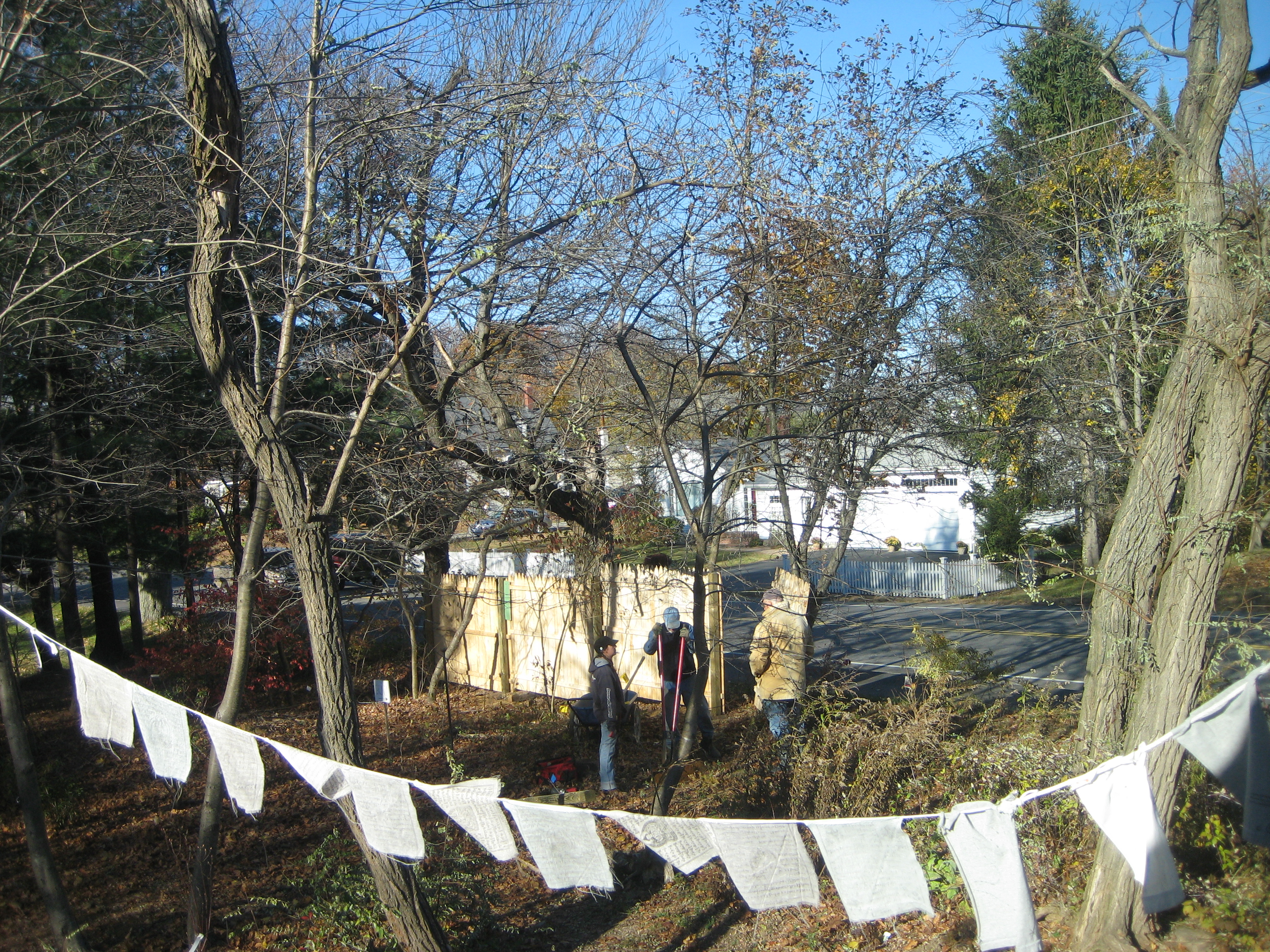
Chickens are coming! We have a winter before they arrive, but today, on a warm mid-autumn holiday, we got to work putting up a stockade fence.
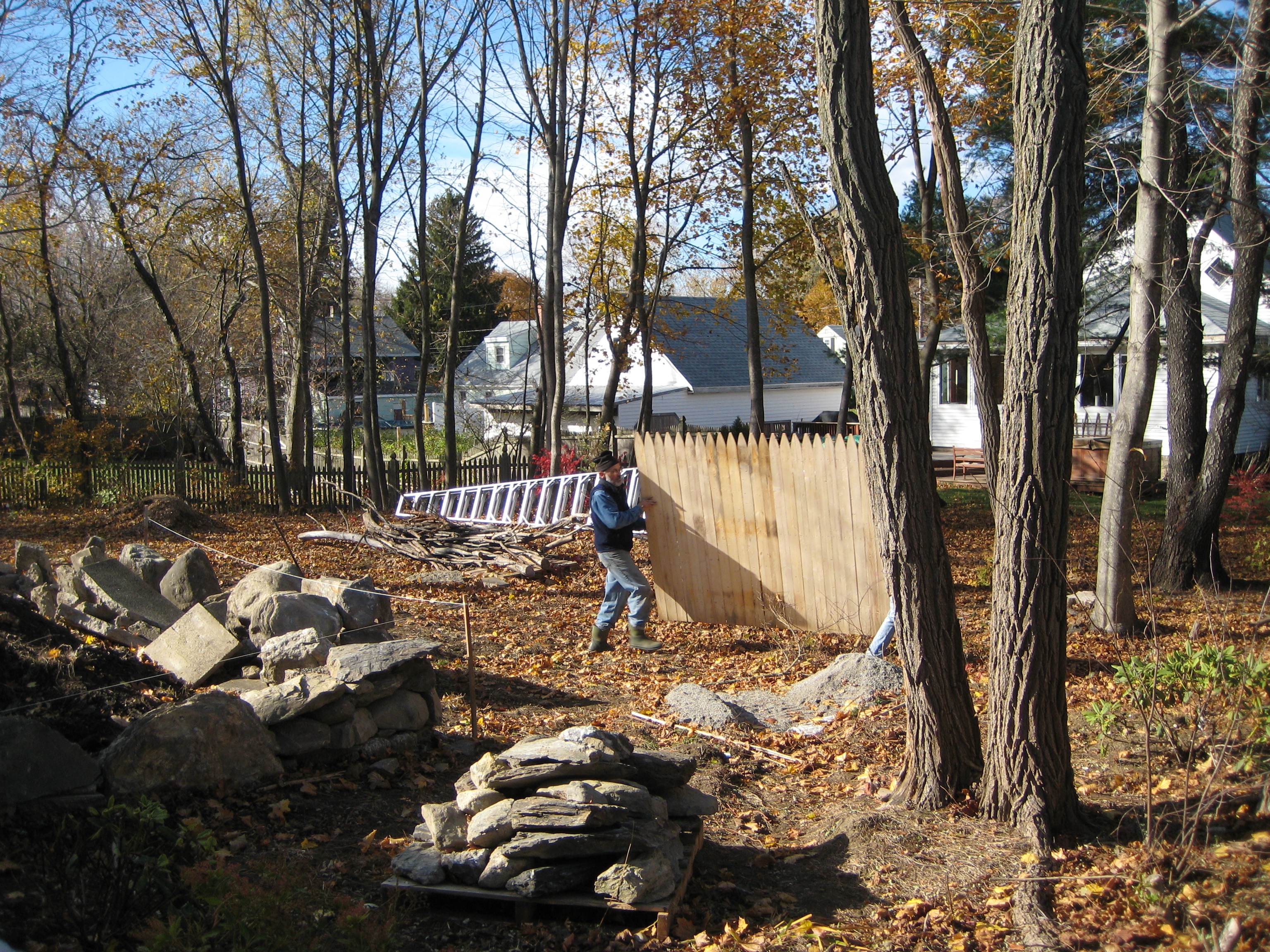
 Mel, a great gardener from the big house helped, and our neighbor Steve came over to see what was going on.
Our backlot is overgrown with roots aplenty, and not far underground lies ledge. By day’s end, the post hole digger was dented and bent. But six sections of fence went up. Privacy for the hens, and for us too.
The City of South Portland will allow six hens – no Roosters – per household. Muscovy Ducks would be welcome; they love to eat flies, maggots, mosquitos, mosquito larva, slugs, bugs of all sorts, black widow spiders, the brown fiddleback spider and any thing else that creeps and crawls. They are a boon to any garden.
 If two households pair up, would that allow twelve birds in total – a mixture of chickens and ducks? Steve had chickens decades ago, and welcomes the idea. Maybe we have the chickens and he keeps the ducks, and they waddle back and forth, foraging here and there as they go. Something fun to ponder as the winter winds begin to blow.


Autumn at Home
Posted: November 1, 2013 Filed under: Art & Healing, Gallery - Visual, What is an Art Farm 4 Comments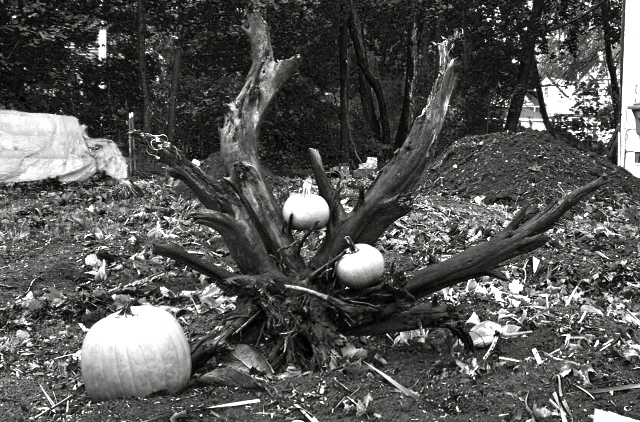
Newest sculpture, home grown
Posted: October 26, 2013 Filed under: Art & Healing, Permaculture & Home Renovation, What is an Art Farm 3 Comments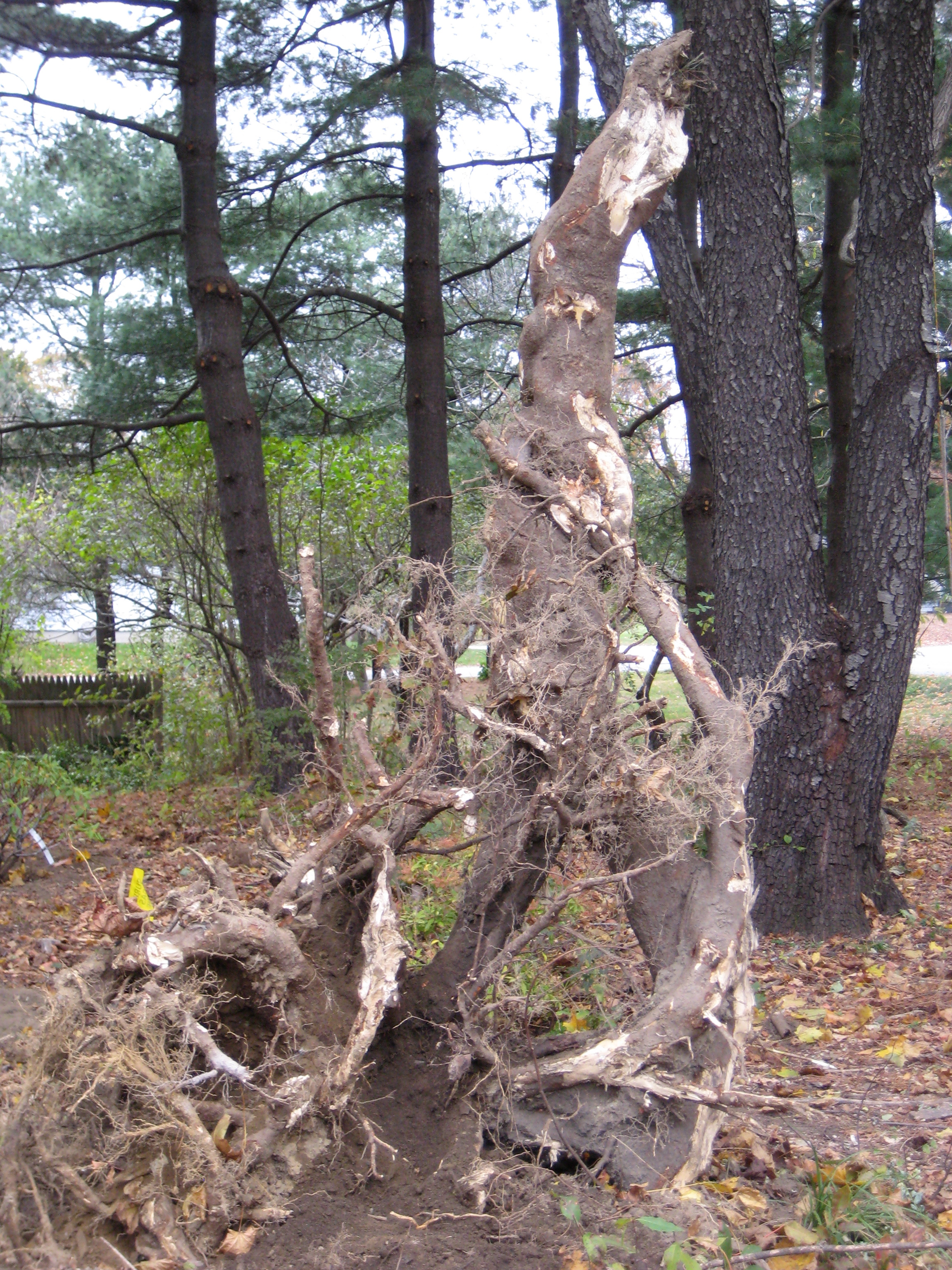
One of the issues in our untended yard is the saplings that took root too close to the house. On the back of our Ell, we had a Box Elder tree growing very close, and we feared its roots could impact the foundation.  Last December we cut down that tree.

The stump remained, and as we prepared to do site work for a new patio, we decided to try to remove it with the excavator.  That root just refused to come out, and the tap root – big as a Christmas Ham – had grown through the foundation into the crawl space beneath the Ell.

We were just about to give up when the root snapped and broke free. The Ell remains standing. Here is a photo of Jim Hamlin, excavator and big game hunter!

We decided that the root deserved a permanent place on our Art Farm. To make it safe, we dug a small hole and set the stump and root upright. It stands more than eight feet tall. Pretty amazing!

In My Backyard
Posted: October 17, 2013 Filed under: Art & Healing, Permaculture & Home Renovation 3 Comments
The tar sands debate – dark and dismal – always seemed focused on someplace far away: the Province of Alberta, Nebraska, West Texas. But en sotto voce, plans have been taking shape right out my back door.
The Casco Bay is the maritime port for Eastern Canada. Into this year round deep-water port, oil tankers arrive daily to unload their crude and then ship it by pipeline 236 miles north to Canada. Since 1941 – for almost three generations – over 4 billion barrels of crude oil have been pumped northward along the Portland-Montreal Pipeline.

It is no engineering feat to realize that a pipeline can flow in either direction. And as the Keystone XL pipeline became embroiled, rumors began to surface for shipping the tar sands oil east, from Alberta to Quebec then into Vermont and New Hampshire for export through the Gulf of Maine.
The pipeline can move 600,000 gallons per day. Its terminus is South Portland. The oil tank farm lies across the street. Tar sands would come here. Not without a fight.

The Portland-Montreal Pipeline Company has made no announcement of plans to reverse the pipeline. None, officially, but a strong grass roots coalition – raising voice from Vermont to South Portland – has been preemptive in resisting the possibility.
In South Portland, it is a zoning issue. On 5 November there is a referendum up for a vote. The citizen initiated Waterfront Protection Ordinance states that within the Shipyard District, the permitted use would include “facilities for the unloading of petroleum products from ships docking in South Portland” but “there shall be no enlargement or expansion of existing petroleum storage tank farms and accessory piers, pumping and distribution facilities….”
If you ask any of the activists in favor of Waterfront Protection, they make plain that the existing crude oil business is fine – the inbound unloading of tankers – but there should be no expansion that allows the outbound loading of tankers. Tar sands is the issue, and the related toxic fumes, emissions, and the very real risk of an oil spill. The high bitumen content of tar sands makes clean up difficult by an order of magnitude.
In debate, plain language is anything but, and big oil is funding the movement against Waterfront Protection. The Portland-Montreal Pipeline Company, which operates quietly out of a small red brick building over on Hill Street, and does have a sterling record of safety, is a subsidiary of Exxon-Mobil Corporation.
“It’s the Economy, Stupid,” is a slogan proven to win elections, and that is the crux of their argument. Upon a faulty premise, they have built a case carefully, and are broadcasting misinformation widely in glossy mass mailings, that arrive weekly. They are spending a reported $275,000 in their campaign against the ordinance.
They paid Charles Lawton, a local economist, $15,000 to quantify the impact of the ordinance shutting down all oil-related business. (Bear in mind, the ordinance clearly states that the status quo is fine, and only the expansion is restricted.) Given the premise of all operations ceasing, the economist logically projected over the next decade 5,600 jobs would be lost and $252 million dollars in earnings would vanish; the “economic multiplier” would impact the wider community to the amount of $26.6 million annually, eliminating about 250 jobs, $12 million in income, and $9.4 million in tax revenues.
In the 16 October edition of the Portland Press Herald, a columnist called this report, “a scare tactic masquerading as a fact. Pretty slick, huh? One minute Lawton is talking hypothetically about a waterfront sans workers – and the next his gloomy forecast is attached, as sure as tomorrow’s sunrise, to a “yes” vote on the Waterfront Protection Ordinance.” http://www.pressherald.com/news/Oil_guys_pollute_South_Portland_ordinance_issue.html
You have to wonder how Lawton regards this distortion, and what to make of his quote from the article : “I’m not uncomfortable with what I delivered…[but] I can’t say how it’s been represented in ads or handouts or fliers or whatever.” Is the public nothing more than a bunch of rats being lead through a dirty maze? Independent thought and fact checking are crucial.
Fear is an easy message to sell. Whether it is true or not seems hardly the issue. Big Oil has reportedly hired youths to go door to door, telling people they also want to protect the waterfront but the language is too restrictive. “It’s just the wording is wrong.”
Now firefighters statewide have raised their voices against the Waterfront Protection Ordinance. Their union also says the wording is wrong, and would restrict companies from upgrading for safety requirements. Really?
Bill McKibben, a bright light and outspoken environmental activist has said, “The Portland pipeline isn’t some obscure local issue — it’s a fuse leading straight to one of the most dangerous carbon bombs on the planet.”
A description of this “carbon bomb” – referred to as the most destructive project on earth – can be found at the web site http://allagainstthehaul.org/the-haul/the-heavy-haul/the-alberta-tar-sands/ :

The Alberta Boreal Forest, under which the oil is embedded, is equivalent to the size of England; the deforestation is so vast it can be seen from outer space.
The industrial process is massively consumptive of resources: four barrels of water, four tons of earth, and energy equal to three barrels of oil are required to extract one barrel of oil. 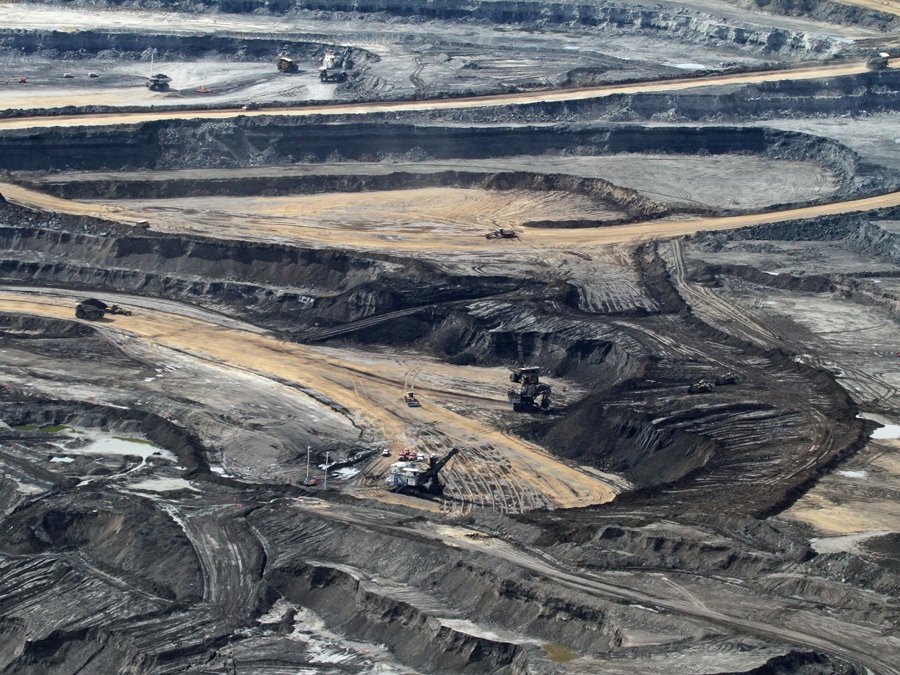
Ninety percent of water used in tar sands extraction cannot be returned to the Athabasca River due to quality issues.
The Tar Sands contain 17% more carbon than other types of crude oil, and the extraction process emits as much as four times more carbon dioxide than conventional drilling.
First Nations communities living close to the oil sands or downstream on the Athabasca River are suffering from higher-than-normal cancer levels and illness.
The facts of the tar sands are nightmarish, and its scale is overwhelming. This is an important moment for the members of our community to take a stand. The question before us, at its most basic, might be framed as whether, as a community, we want to remain dependent upon the fossil fuel economy, or shall we pursue a future that is restorative, that is abundant rather than austere, that embraces creativity as a means to discovery, and that teaches our children to think for themselves and neither follow blindly nor let fear fuel their decisions.
 an Art Farm