Mid Summer Garden

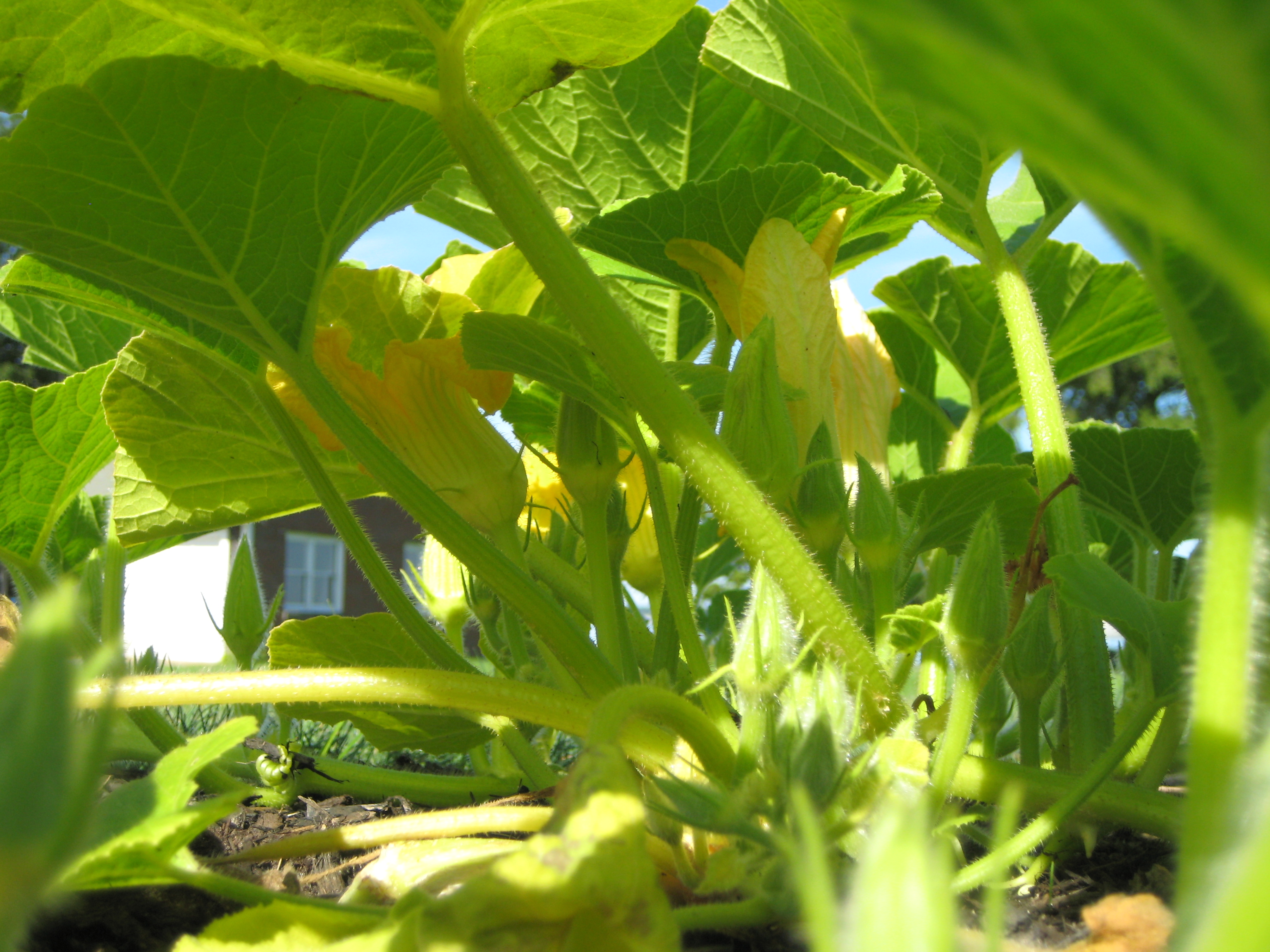
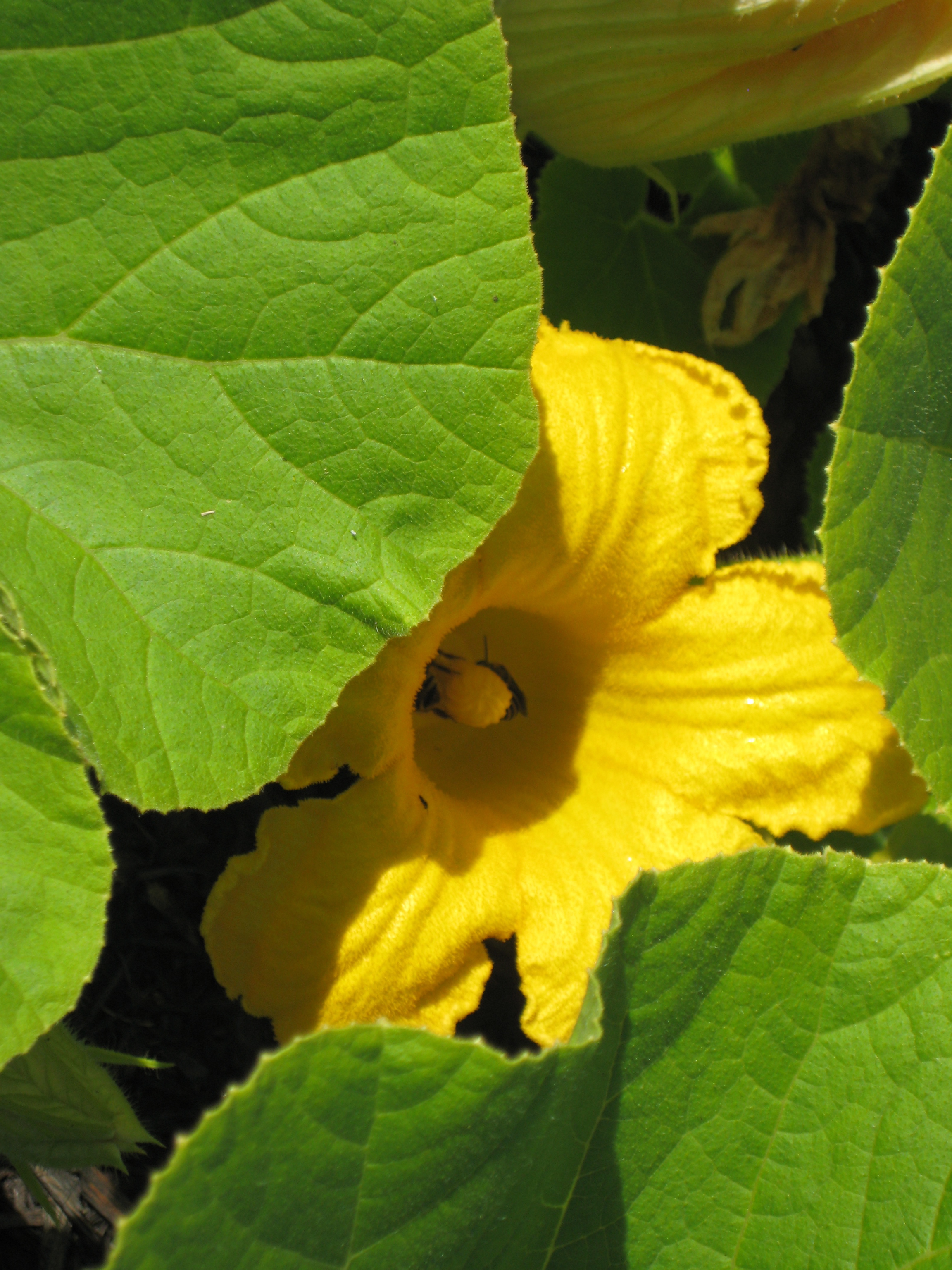
The garden is nicely producing with not too much work on our part at this point.  We’ve harvested probably close to 8 maybe 9, gallon size bags of mixed greens, arugula and kale.  We’ve had 2 rounds of radishes and expect to plant another group soon.  The tomatoes are coming along well and the eggplants and cucumbers are starting to take off. So much abundance to be thankful for!!!!


Line & Shape

Aren’t all images made up of lines and shapes? Our 3 year old has been more and more engaged in mark making in the last few weeks. We’ve been talking about how everything can be broken down into lines and shapes.  You can see how the ongoing dialog is helping her to organize her ideas. I notice a greater concentration and focus as well. So cool!! I post the images in the sequence in which they were created, over a several day period.

You’ve gotta love the “hair” in this one…


A Cathedral of Trees

In the State of Maine, I am now a Notary Public and authorized to wed beloveds.  Notaries are also authorized in Florida and South Carolina, and the latter caught my eye, for an anecdote once I heard.

A man from the low country told me that in South Carolina, when two beloveds stand beneath a Live Oak tree and give voice to their shared love, then that tree is their witness.  They are legally wed.

I cannot vouch that law stands, but I can vouch that Quercus virginiana – the southern Live Oak, known to live more than 1,000 years, with a trunk circumference of 40 feet or more, and a crown spread of 90 feet or more – has a powerful draw to couples seeking to give voice to their vows.

The fact is, our blog of June 16, 2011 “Thomas Berry and the Tree of Life” wrote about marriage beneath the live oak tree – that would be my elopement with Becca in August 2004 – and that blog has received the highest number of hits on our Art Farm.  Couples have pulled quotations from our text and shown links to our ceremony under the Tree of Life, in Audubon Park in New Orleans. Couples are drawn to that spot, and our experience stands as a marker now along their path.

To be sure, the draw is that tree, more than my prose, and that power is undeniable.  To the ancient Greeks, the oak tree was the domain of Zeus, a lightning god and their principal deity.  Its rustling leaves, the voice of Zeus.

But more than just elemental power, the oak provides habitat for hundreds of insects and invertebrates, not to mention birds and animals.  It is no wonder that the Gauls and Romans associated the tree with the god of agriculture and healing.  Healing, perhaps, drew me to the tree.

In Northern New England, Pine trees abound and in Breton legend, that was the tree Merlin climbed, had a revelation and never returned to mortal life; in this sacred tree the soul of Merlin awaits his return.  A tree of vitality and continuity, the Pine symbolizes the life force, death and resurrection.

Maine is the Pine Tree state.  In colonial days, all Pine trees of a certain girth belonged, by fiat, to the King of England, as masts for the ships of His Majesty’s Navy.  But before the English arrived the Indigenous Americans were calling trees, all trees, “our standing brothers,” the quiet center of being.

And if you look around you start to notice that in the ancient wisdom trees were at the center of many traditions: the Tree of Life; the Tree of Knowledge; the “Assembly Tree of the Gods”; the axis mundi of the cosmos; in pre-hieroglyphic script of Egypt, the word for “giving birth” is derived directly from the word for tree.  The Tree it seems is the great mother of creation.

They are the yeomen of the oxygen factory but photosynthesis is only one small aspect of their abundance.  They gift to us food, clothing and shelter and have informed the architecture of our great spaces.  Both Egyptian and Greek temples had columns originally made of trees, later stylized in stone, and from those buildings columns came to adorn places of worship, including banks and government buildings.

It has been argued that the arches and vaults of Gothic cathedrals represent the interlacing branches of trees; the path down the nave becoming a symbolic path among “our standing brothers.”  Chartres Cathedral, it has been claimed, was built upon the site of a grove sacred to the Druids.

It is hard to fathom how vast the symbolism may be, and yet easy to understand why lovers are ever drawn, nestled safely among the trees, to give voice to their love.


“La Vita Nuova”

This excerpt, from one of Dante’s lesser known works, captures the essence of meeting your beloved for the first time:

In that book which is

My memory…

On the first page

That is the chapter when

I first met you

Appear the words…

Here begins a new life.


a tree-mendous fort

A couple years ago, at my day job, we built a tree fort.  A furnituremaker helped, and the joinery made this something special; we cantilevered two platforms within an apple tree and it was quite beautiful, wrapped in blossoms during the spring flowering, hidden by leaves throughout the summer, ripe red fruit easily grabbed come autumn.

Something told me not to anchor the fort into the apple tree, and that premonition proved true a year later – last year – when we were told to move the fort to a different location.  Down came the pieces (and the tree remains pristine) and the platforms were reassembled, this time surrounded by Austrian Pine trees.  We added a crow’s nest, tucked high back among the pines.

But even that was not quite right.  As children love a spot to hide in, we wanted to add a roof, and enclose the second level.  Dimensioned lumber – your basic 4x4s or 2x4s – would not be right so off we went into the woods looking for beech and birch trees, to limb and cut down and use for the ridgepole, rafters and beams.  We “beavered” the rafters and notched the cross beams.  We used some pine boards for the walls and roof.


“Nice,” we were told, but “how about some old barn boards?  And maybe some lobster rope to wrap some of the boards, and maybe a control panel, and maybe some driftwood, and…we need to trick this out.”

Given those marching orders, off we set looking for old barn wood.  I put out a call to the network of Maine woodworkers, and found a woman whose husband dismantled a barn and has stored the wood in the loft of another barn on their farm.  She wrote, “About 35 years ago, we tore down a barn in Auburn and put the wood in the loft of our barn.  It has quite a few antique nails.  I’d love to find a good home for this wood, but I don’t know if this is what [you’re] looking for.  It is the siding of the barn, what was under the clapboard, and the wood is all different lengths much of it short.  It is not “finished” in any way – may be too rough… but I’d be happy to have you take a look.”

Maybe not the wide beams used in fancy floors, but for a tree fort, with an ocean view…this may just be right.  Soon I will be driving north in search of those special boards to add just the touch.  In the meantime, the fort sure is a nice place from which to watch the lobster boats crossing the Saco Bay homeward with their day’s catch.  As E said, as she tested out the fort, “Daddy, two thumbs up!”


“The Owl and the Pussy-cat” by Edward Lear

Recently, while reading this to little E, she asked me, “Daddy, will you be the Turkey?” Why, yes, indeed, and this classic surely belongs in our summer’s reading list of love.

The Owl and the Pussy-Cat


“Wedding of Andromache and Hektor:” Sappho

Sappho’s is the sun-drenched voice of the first female poet in the Western corpus.  She lived on Lesbos, an island in the Aegean Sea, a place of grains, grapes, olive groves and orchards.

Her lyric poems, written during the 7th century BCE, largely exist in fragments yet her voice rings bold with passion and candor, an ecstasy of the senses.  In this telling of a wedding feast you can feel the excitement, envision the coming together of family and friends, hear the heavenly songs of love.

Wedding of Andromache and Hektor

The translation is by Willis Barnstone.


Summer = Strawberries

By the calendar, summer came one day early (the leap year added one day to February).  But in truth, summer arrives when the strawberries are ready for picking.

And go picking today we did!

So now our household is all about whipped cream and shortcake and berries-a-plenty.  Alice Waters’ “The Art of Simple Food” has this recipe for Cream Biscuits – a/k/a shortcake; just add strawberries and whipped cream!

Preheat oven to 400 degrees.  Stir together in a large bowl: 1 1/2 cups all-purpose flour, 1/4 teaspoon salt, 4 teaspoons sugar (optional), 2 teaspoons baking powder.

Add 6 Tablespoons cold butter, cut into small pieces  then add the butter into the flour using your fingers or a pastry blender until they are the size of small peas.

Measure 3/4 cup heavy cream then remove 1 tablespoon and set that tablespoon aside.  Lightly stir into the flour the remainder of the cream with a fork until the mixture just comes together. Without overworking it, lightly knead the dough a couple of times in the bowl (this is pretty vague and not sure we hit the mark) turn it out onto a lightly floured board, and roll out about 3/4 inch thick (ours was about 1/4″ thick).

Cut into 1 1/2 inch circles or squares (we ended up with three or four times as many, but they worked fine all the same).  Reroll the scraps if necessary. Place the biscuits on a baking sheet lined with parchment paper and lightly brush the tops with the reserved cream. Bake for 17 minutes, or until cooked through and golden.  Let cool, then top with strawberries and whipped cream.

…and we hope you find a field to forage…


One Hundred Love Sonnets: Pablo Neruda

From the “Morning” sequence, this is sonnet XVI:

Cien Sonetos de Amor


Community Children’s Garden

Several community garden members and one Board member got together on Saturday to help plot out the Children’s Garden. We planted strawberries, pumpkins, lamb’s ear, mint, a lavender bush, tomatoes, a creeping onion and bean seeds.  A small butterfly bush will soon be added.  The lay out of the garden and walkway was designed to appeal to children’s senses and create easy interaction as they move throughout the space.  Brushing the mint and lavender will release aromas, and the tomatoes, beans and strawberries on the outer edges will let children easily pick from the sides of the bed.

My daughter and I added painted rock critters this morning – two butterflies and one beetle.  We will make several more soon.