Getting ready to roost
Posted: November 11, 2013 Filed under: Permaculture & Home Renovation, What is an Art Farm 3 Comments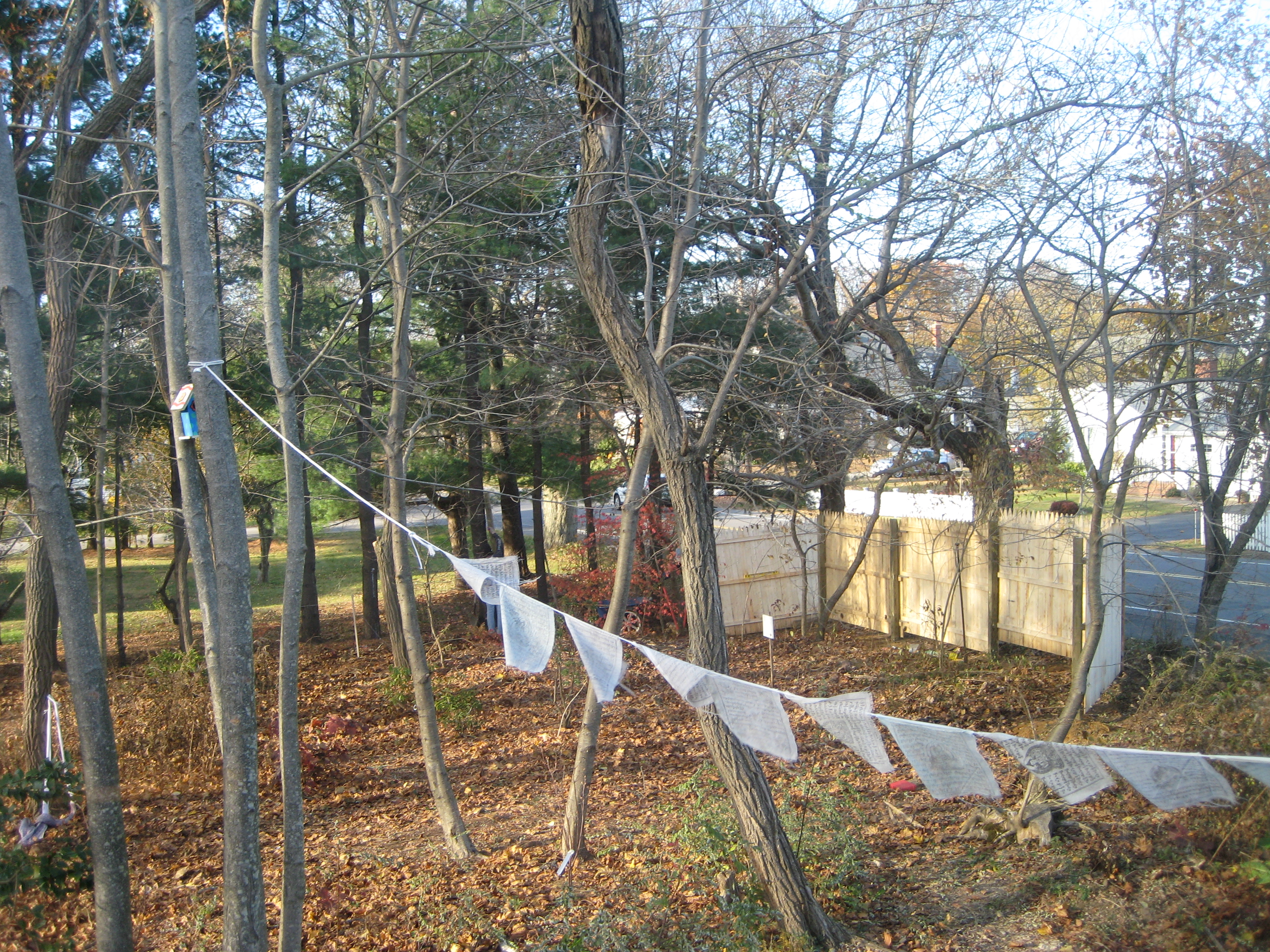
Chickens are coming! We have a winter before they arrive, but today, on a warm mid-autumn holiday, we got to work putting up a stockade fence.
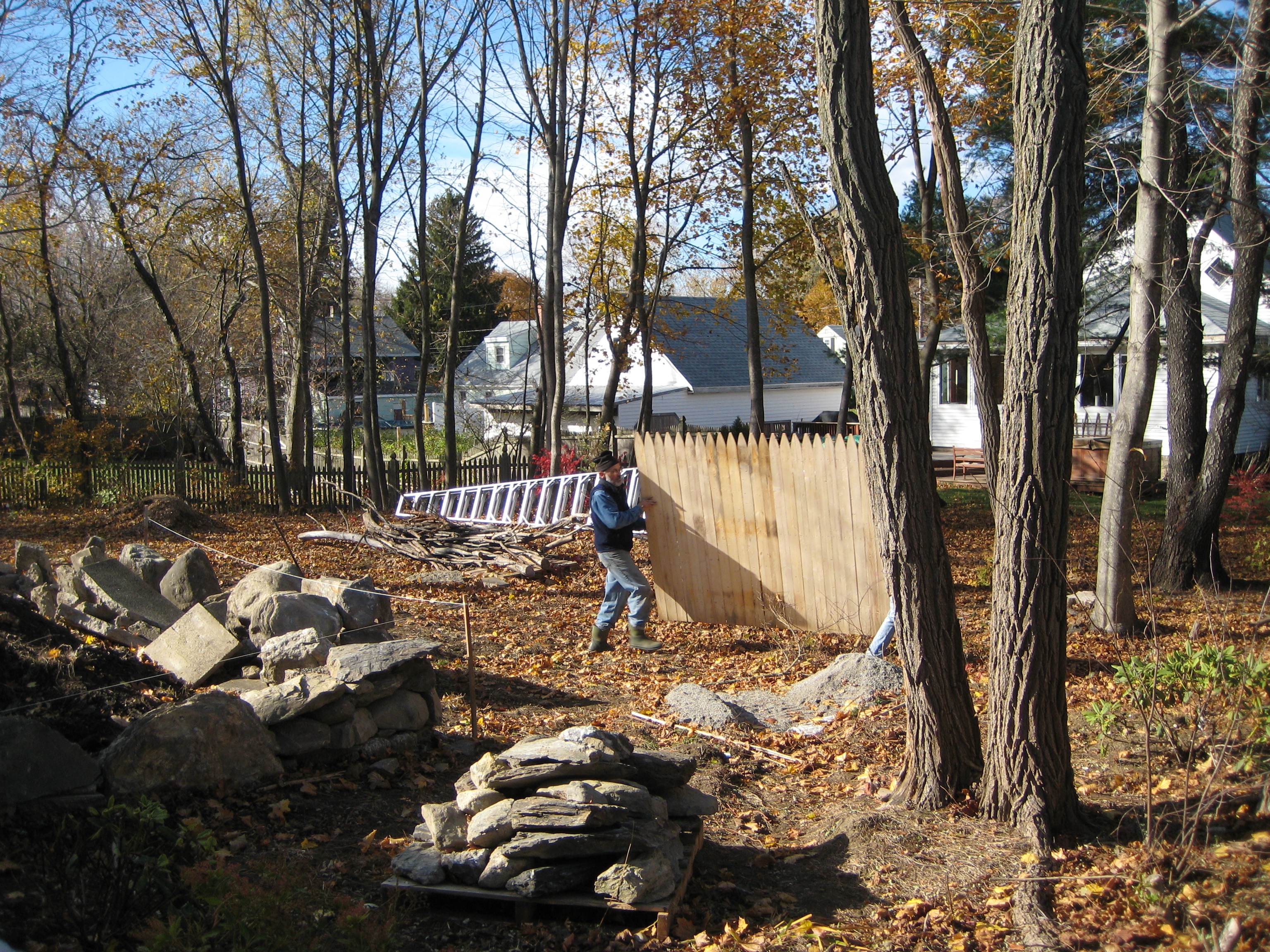
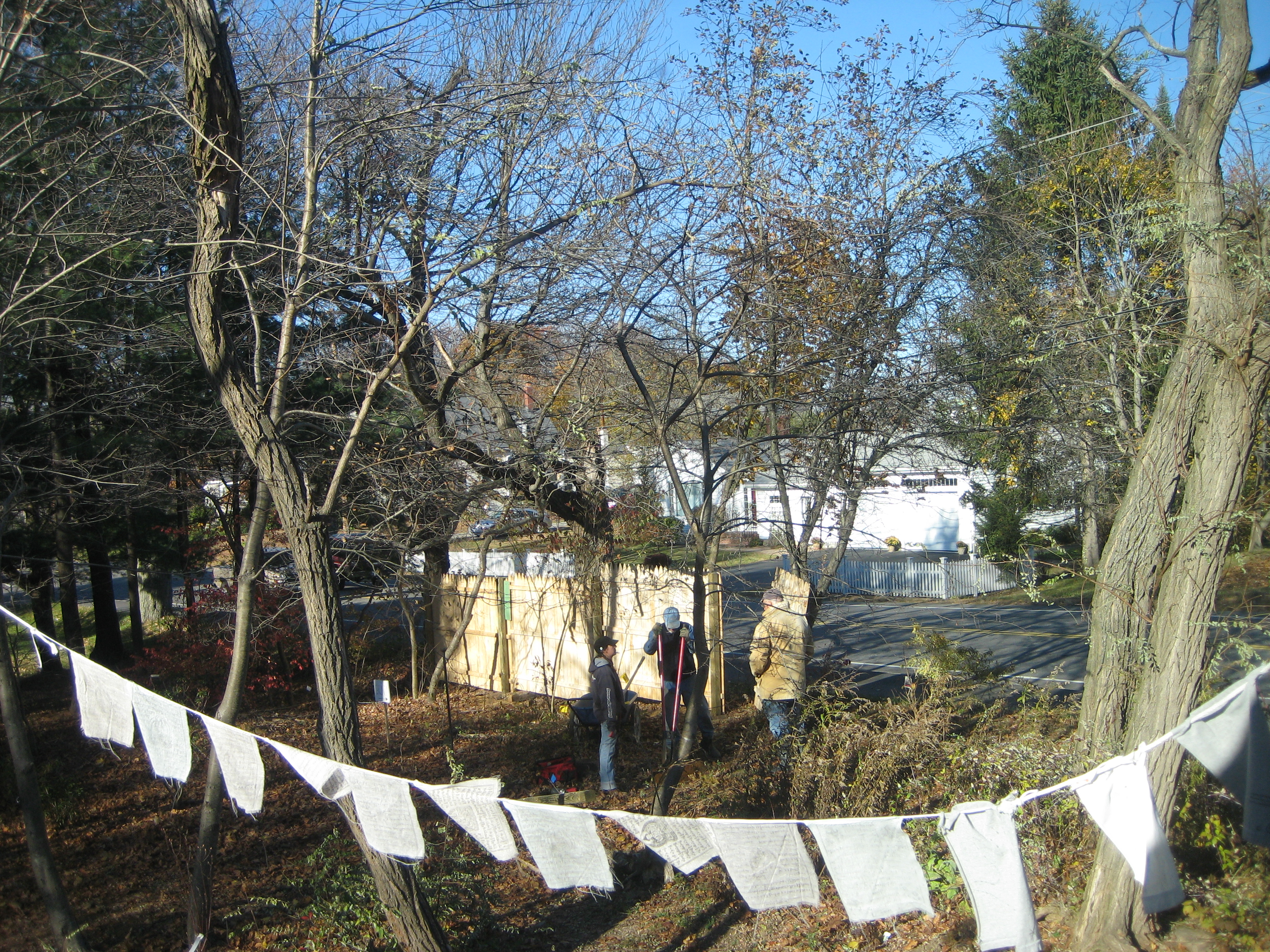
 Mel, a great gardener from the big house helped, and our neighbor Steve came over to see what was going on.
Our backlot is overgrown with roots aplenty, and not far underground lies ledge. By day’s end, the post hole digger was dented and bent. But six sections of fence went up. Privacy for the hens, and for us too.
The City of South Portland will allow six hens – no Roosters – per household. Muscovy Ducks would be welcome; they love to eat flies, maggots, mosquitos, mosquito larva, slugs, bugs of all sorts, black widow spiders, the brown fiddleback spider and any thing else that creeps and crawls. They are a boon to any garden.
 If two households pair up, would that allow twelve birds in total – a mixture of chickens and ducks? Steve had chickens decades ago, and welcomes the idea. Maybe we have the chickens and he keeps the ducks, and they waddle back and forth, foraging here and there as they go. Something fun to ponder as the winter winds begin to blow.


Newest sculpture, home grown
Posted: October 26, 2013 Filed under: Art & Healing, Permaculture & Home Renovation, What is an Art Farm 3 Comments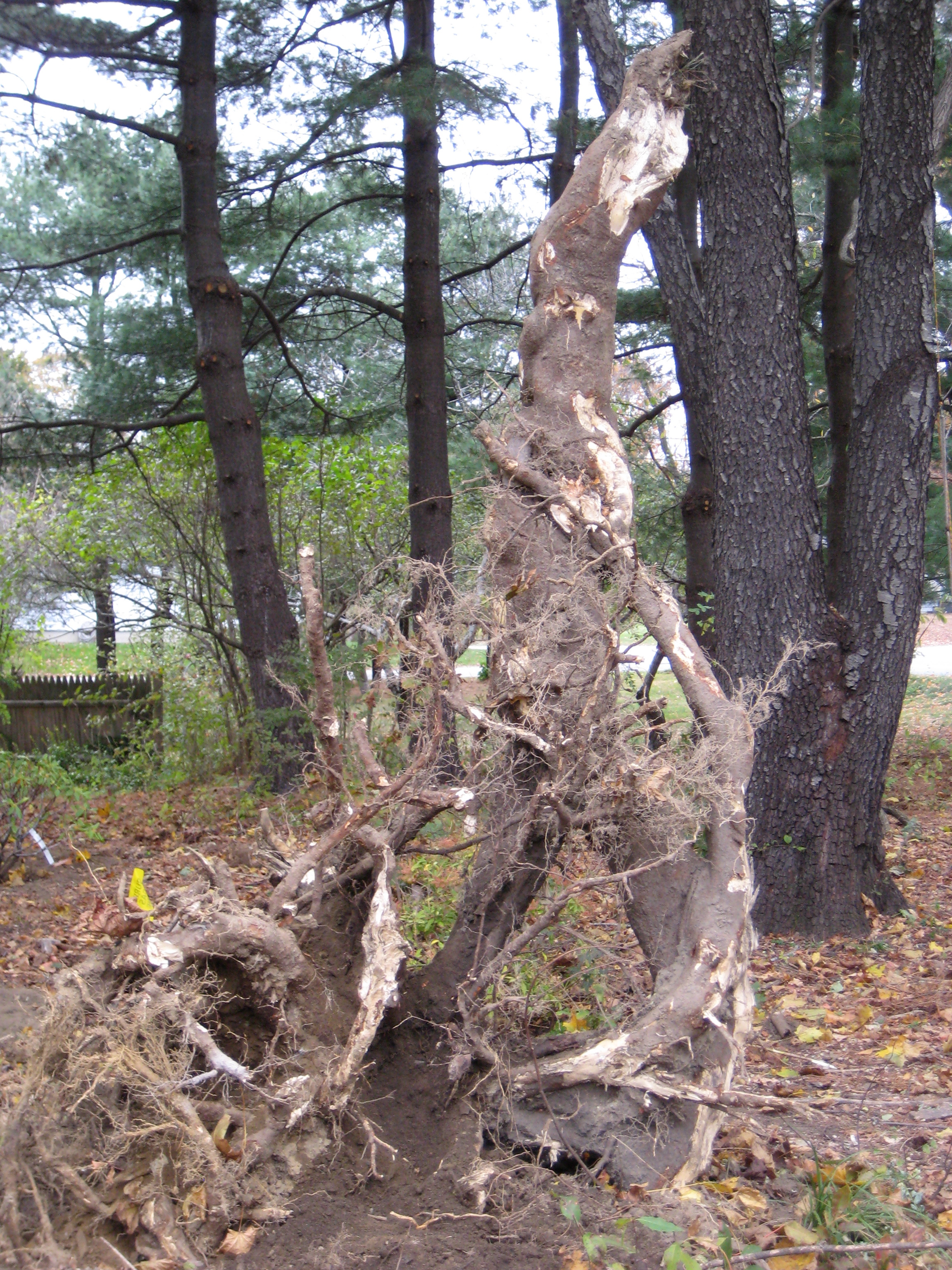
One of the issues in our untended yard is the saplings that took root too close to the house. On the back of our Ell, we had a Box Elder tree growing very close, and we feared its roots could impact the foundation.  Last December we cut down that tree.

The stump remained, and as we prepared to do site work for a new patio, we decided to try to remove it with the excavator.  That root just refused to come out, and the tap root – big as a Christmas Ham – had grown through the foundation into the crawl space beneath the Ell.

We were just about to give up when the root snapped and broke free. The Ell remains standing. Here is a photo of Jim Hamlin, excavator and big game hunter!

We decided that the root deserved a permanent place on our Art Farm. To make it safe, we dug a small hole and set the stump and root upright. It stands more than eight feet tall. Pretty amazing!

In My Backyard
Posted: October 17, 2013 Filed under: Art & Healing, Permaculture & Home Renovation 3 Comments
The tar sands debate – dark and dismal – always seemed focused on someplace far away: the Province of Alberta, Nebraska, West Texas. But en sotto voce, plans have been taking shape right out my back door.
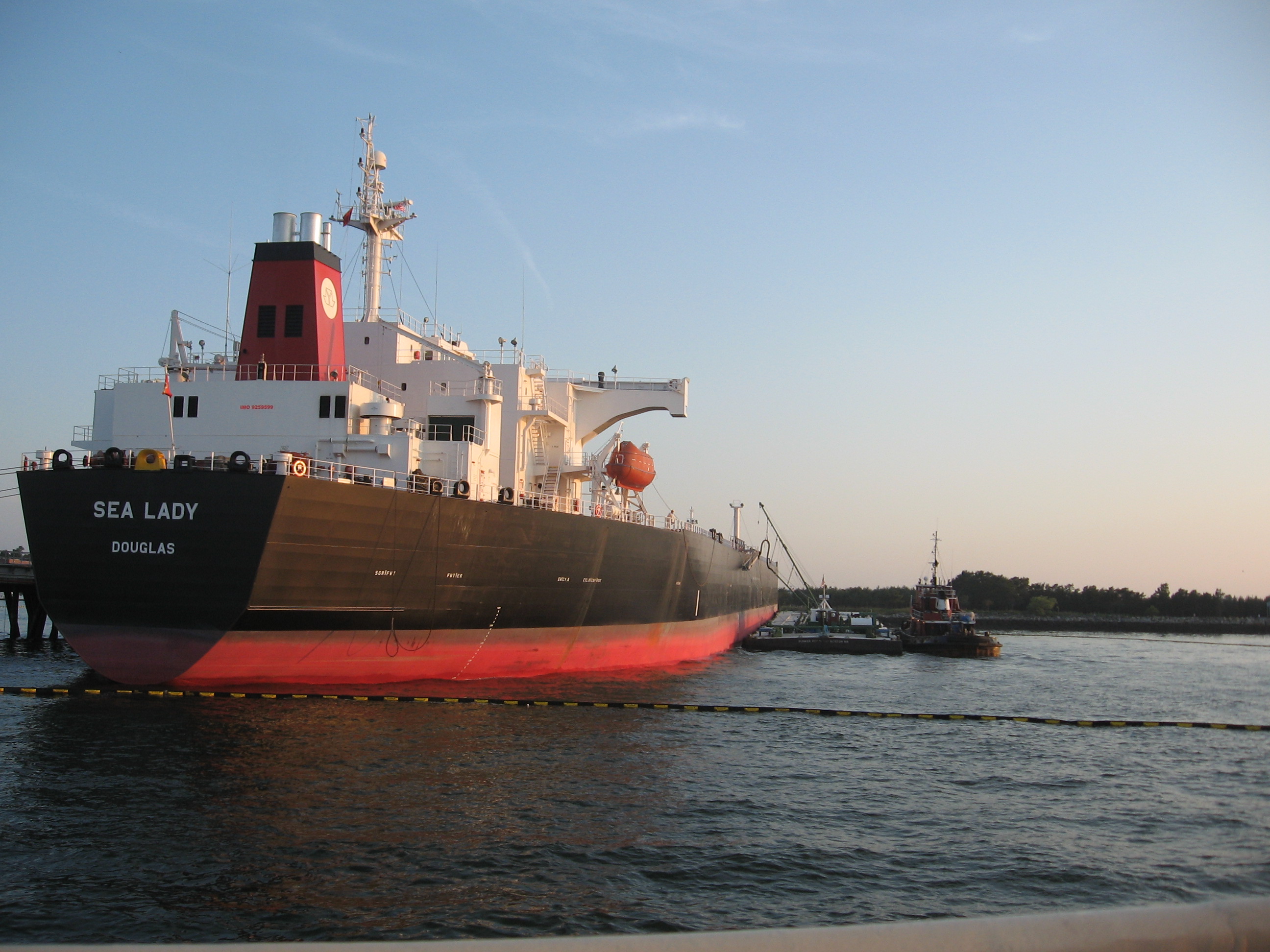
The Casco Bay is the maritime port for Eastern Canada. Into this year round deep-water port, oil tankers arrive daily to unload their crude and then ship it by pipeline 236 miles north to Canada. Since 1941 – for almost three generations – over 4 billion barrels of crude oil have been pumped northward along the Portland-Montreal Pipeline.
It is no engineering feat to realize that a pipeline can flow in either direction. And as the Keystone XL pipeline became embroiled, rumors began to surface for shipping the tar sands oil east, from Alberta to Quebec then into Vermont and New Hampshire for export through the Gulf of Maine.
The pipeline can move 600,000 gallons per day. Its terminus is South Portland. The oil tank farm lies across the street. Tar sands would come here. Not without a fight.

The Portland-Montreal Pipeline Company has made no announcement of plans to reverse the pipeline. None, officially, but a strong grass roots coalition – raising voice from Vermont to South Portland – has been preemptive in resisting the possibility.
In South Portland, it is a zoning issue. On 5 November there is a referendum up for a vote. The citizen initiated Waterfront Protection Ordinance states that within the Shipyard District, the permitted use would include “facilities for the unloading of petroleum products from ships docking in South Portland” but “there shall be no enlargement or expansion of existing petroleum storage tank farms and accessory piers, pumping and distribution facilities….”
If you ask any of the activists in favor of Waterfront Protection, they make plain that the existing crude oil business is fine – the inbound unloading of tankers – but there should be no expansion that allows the outbound loading of tankers. Tar sands is the issue, and the related toxic fumes, emissions, and the very real risk of an oil spill. The high bitumen content of tar sands makes clean up difficult by an order of magnitude.
In debate, plain language is anything but, and big oil is funding the movement against Waterfront Protection. The Portland-Montreal Pipeline Company, which operates quietly out of a small red brick building over on Hill Street, and does have a sterling record of safety, is a subsidiary of Exxon-Mobil Corporation.
“It’s the Economy, Stupid,” is a slogan proven to win elections, and that is the crux of their argument. Upon a faulty premise, they have built a case carefully, and are broadcasting misinformation widely in glossy mass mailings, that arrive weekly. They are spending a reported $275,000 in their campaign against the ordinance.
They paid Charles Lawton, a local economist, $15,000 to quantify the impact of the ordinance shutting down all oil-related business. (Bear in mind, the ordinance clearly states that the status quo is fine, and only the expansion is restricted.) Given the premise of all operations ceasing, the economist logically projected over the next decade 5,600 jobs would be lost and $252 million dollars in earnings would vanish; the “economic multiplier” would impact the wider community to the amount of $26.6 million annually, eliminating about 250 jobs, $12 million in income, and $9.4 million in tax revenues.
In the 16 October edition of the Portland Press Herald, a columnist called this report, “a scare tactic masquerading as a fact. Pretty slick, huh? One minute Lawton is talking hypothetically about a waterfront sans workers – and the next his gloomy forecast is attached, as sure as tomorrow’s sunrise, to a “yes” vote on the Waterfront Protection Ordinance.” http://www.pressherald.com/news/Oil_guys_pollute_South_Portland_ordinance_issue.html
You have to wonder how Lawton regards this distortion, and what to make of his quote from the article : “I’m not uncomfortable with what I delivered…[but] I can’t say how it’s been represented in ads or handouts or fliers or whatever.” Is the public nothing more than a bunch of rats being lead through a dirty maze? Independent thought and fact checking are crucial.
Fear is an easy message to sell. Whether it is true or not seems hardly the issue. Big Oil has reportedly hired youths to go door to door, telling people they also want to protect the waterfront but the language is too restrictive. “It’s just the wording is wrong.”
Now firefighters statewide have raised their voices against the Waterfront Protection Ordinance. Their union also says the wording is wrong, and would restrict companies from upgrading for safety requirements. Really?
Bill McKibben, a bright light and outspoken environmental activist has said, “The Portland pipeline isn’t some obscure local issue — it’s a fuse leading straight to one of the most dangerous carbon bombs on the planet.”
A description of this “carbon bomb” – referred to as the most destructive project on earth – can be found at the web site http://allagainstthehaul.org/the-haul/the-heavy-haul/the-alberta-tar-sands/ :

The Alberta Boreal Forest, under which the oil is embedded, is equivalent to the size of England; the deforestation is so vast it can be seen from outer space.
The industrial process is massively consumptive of resources: four barrels of water, four tons of earth, and energy equal to three barrels of oil are required to extract one barrel of oil. 
Ninety percent of water used in tar sands extraction cannot be returned to the Athabasca River due to quality issues.
The Tar Sands contain 17% more carbon than other types of crude oil, and the extraction process emits as much as four times more carbon dioxide than conventional drilling.
First Nations communities living close to the oil sands or downstream on the Athabasca River are suffering from higher-than-normal cancer levels and illness.
The facts of the tar sands are nightmarish, and its scale is overwhelming. This is an important moment for the members of our community to take a stand. The question before us, at its most basic, might be framed as whether, as a community, we want to remain dependent upon the fossil fuel economy, or shall we pursue a future that is restorative, that is abundant rather than austere, that embraces creativity as a means to discovery, and that teaches our children to think for themselves and neither follow blindly nor let fear fuel their decisions.
One step forward…
Posted: October 6, 2013 Filed under: Permaculture & Home Renovation 3 Comments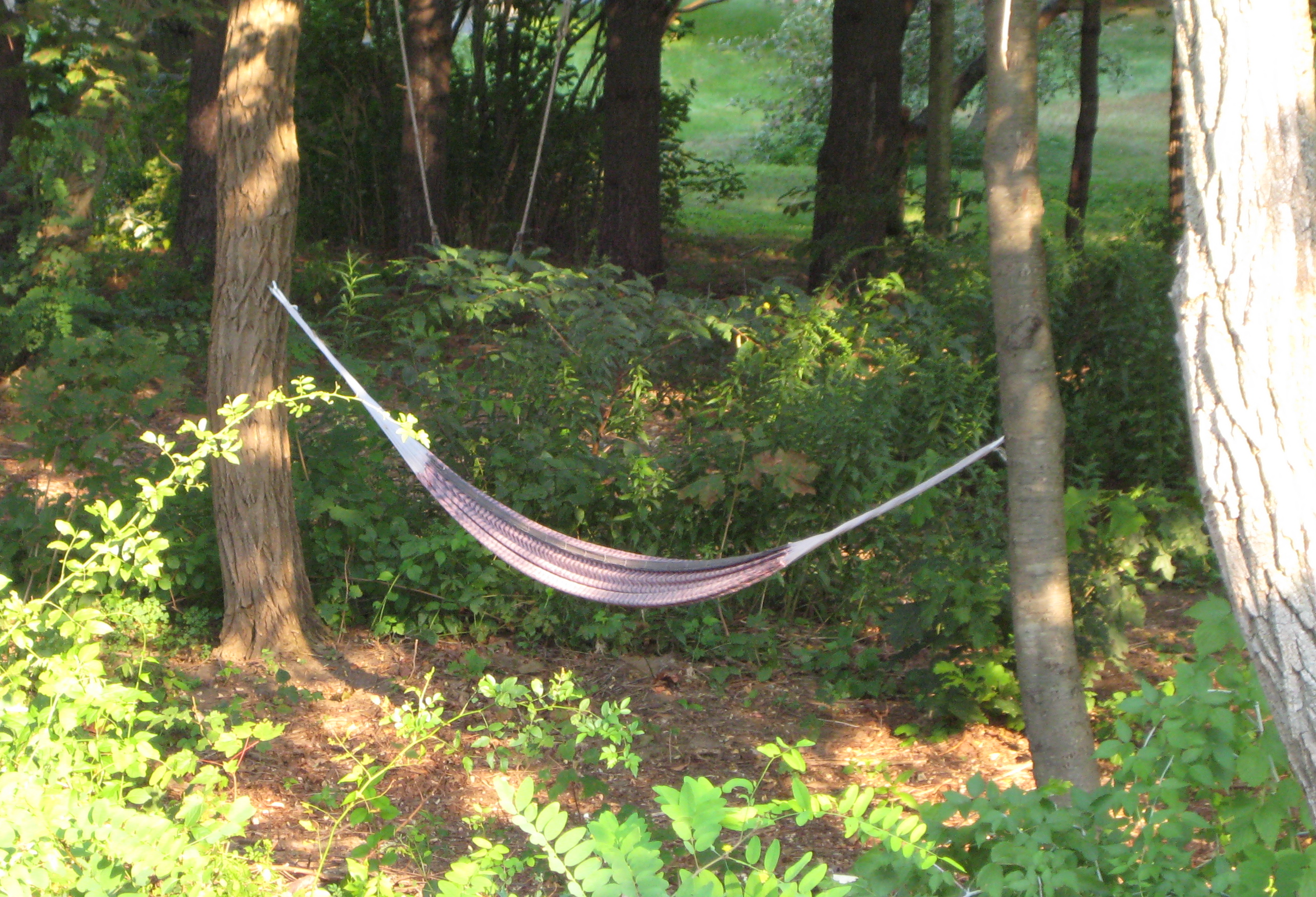
Working through the to-do list, we had reached the happy task of hanging a hammock. Was I ready for that.
And on the same weekend, back in July, Becca found a puddle of water on the computer desk. Looking up, we saw sheetrock sagging. Glug! The hammock went empty as I started ripping out the ceiling.
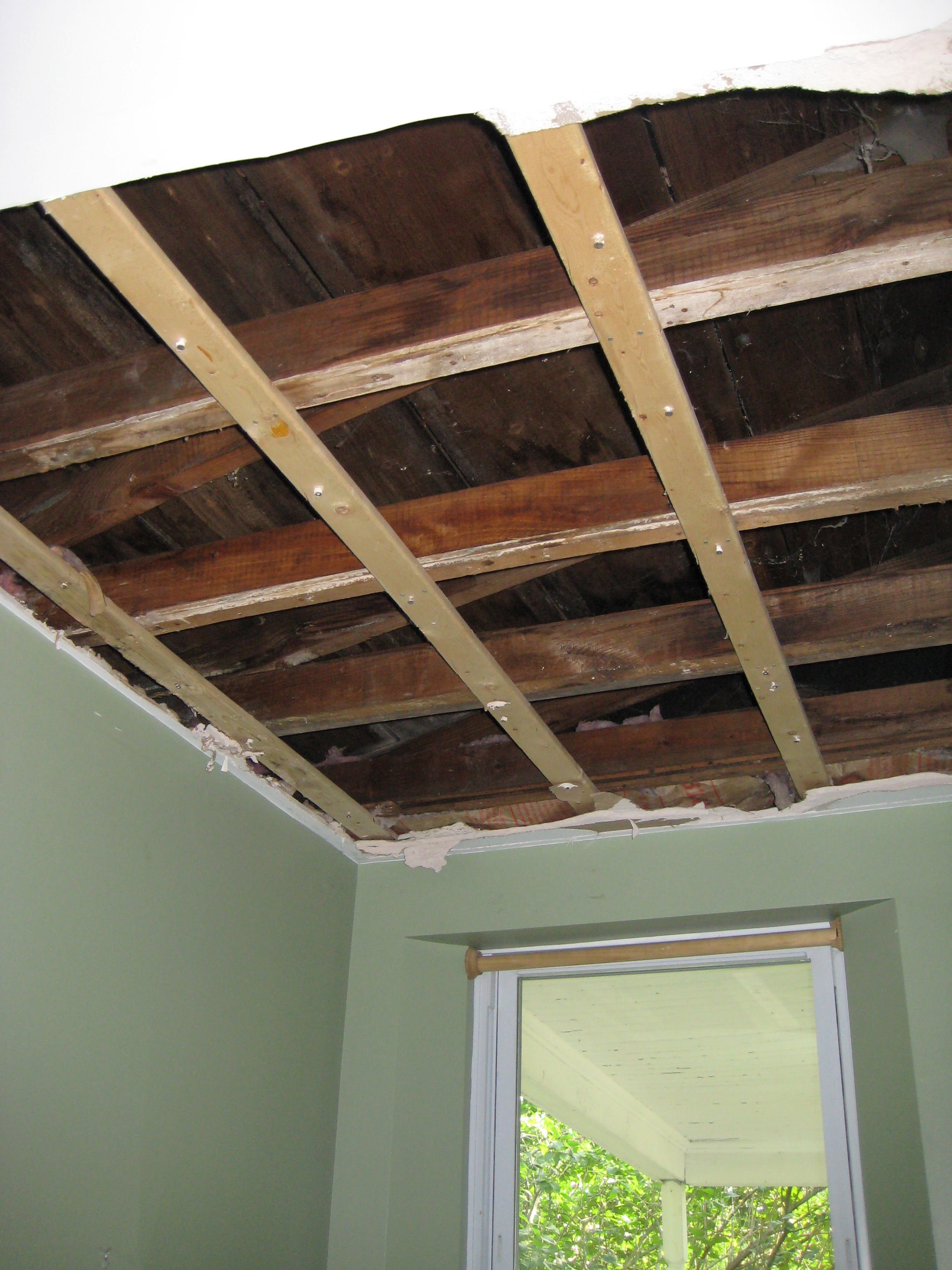
The roof on that section of the house had some pretty sloppy flashing. When we jacked up parts of the basement during our renovation last autumn – our goal was to level the kitchen floor – the upward pressure must also have shifted, ever so slightly, that section of roofline. Water was finding the path of least resistance. Into our house. Onto our desk.
“Look at it as an opportunity,” That was the advice of Noah, the builder who has been helping us. I never would have gone there but he had a point. During our renovation last autumn we superinsulated the main house and attic but did not do the ceiling cavity in this section. Since we had to expose part of the ceiling now, it made sense to rip out the entire section and re-do the insulation.
But I was slow to get started. Finally I removed all the sheetrock and strapping and then affixed rigid foam insulation between the rafters. I left air space between the rigid foam and the roof boards, then used spray foam to seal the edges and corners.
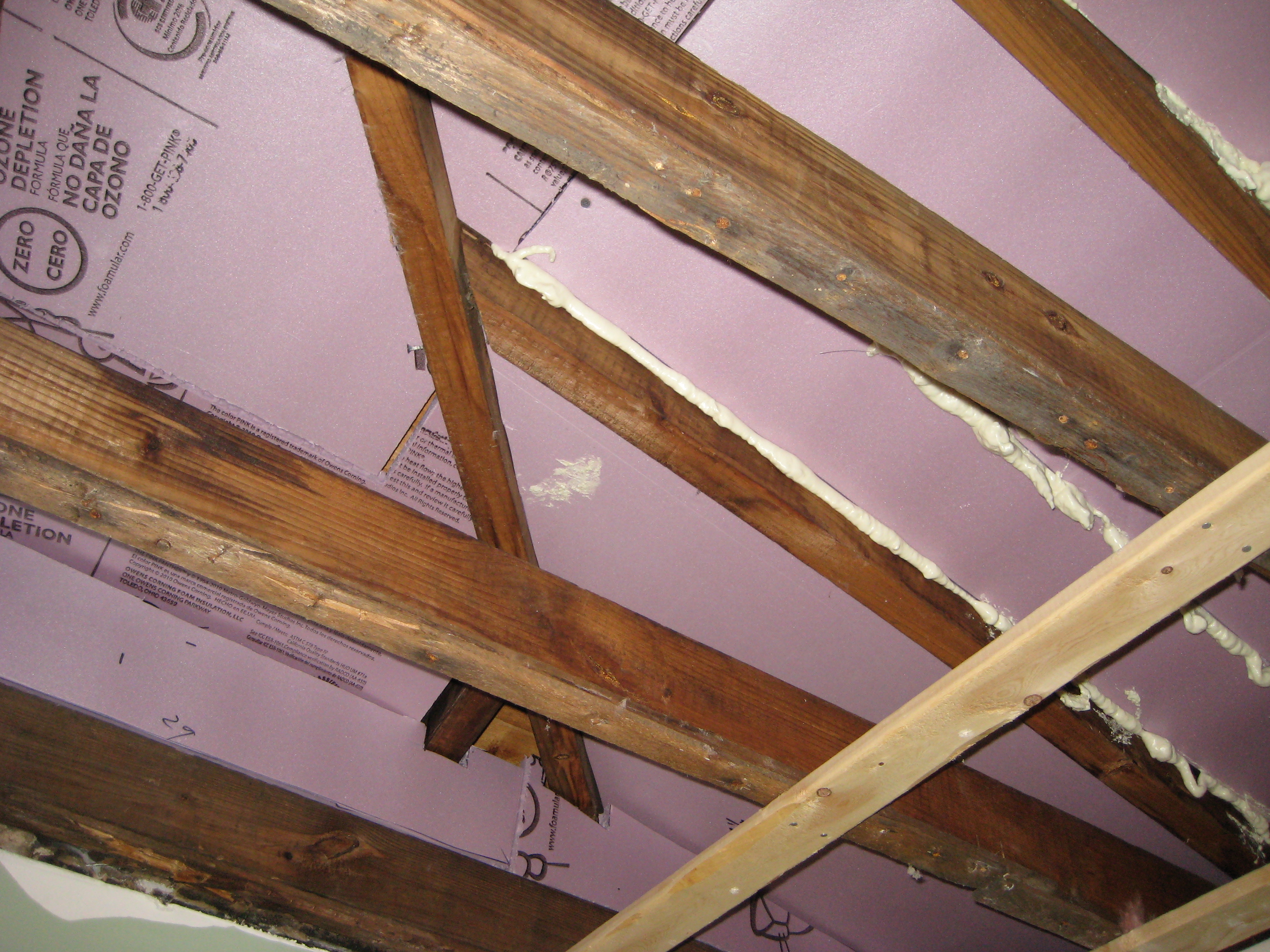 Rolls of insulation were placed across the rafters and a vapor barrier was stapled in place. I used a 1 mil plastic sheet.

Calculating the total insulation value we gained is an unsolved puzzle: R5 against the roof + spray foam + R30 rolls of pink insulation = I know not what, but it is much more than was up there before. In fact, I found a gaping hole between the house interior and the porch roof. Whoever built this addition felt that tar paper was adequate insulation against the winter cold. Amazing!
When I finished replacing the sheetrock, heavy rains fell and nothing appeared inside the house. That was the big test. I hired a professional to do the final taping and mudding; this was a prominent location and it was well worth having a skilled hand do the finish work. And that gave me the chance, on an Indian Summer afternoon, to go lie upon the hammock.

Cannon preservation
Posted: September 4, 2013 Filed under: Gallery - Visual 1 Comment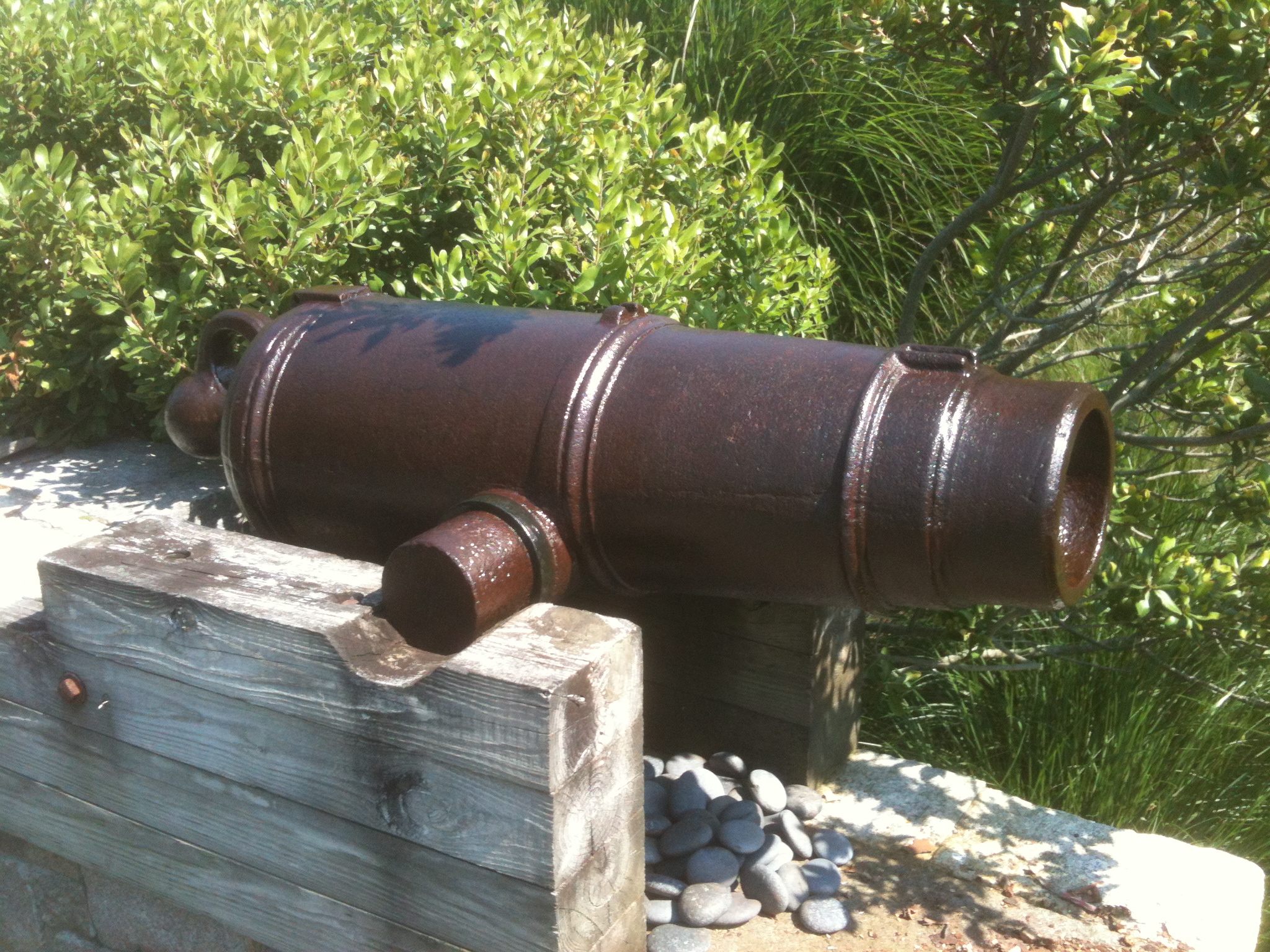
A Carronade is a short smoothbore cast iron naval weapon introduced circa 1778 by Carron Foundry in Scotland. The weapons have a short range, and ships with these became easy prey to those mounting rifled long guns, so after the War of 1812 the cannons were mostly discontinued. The Confederacy used some during the Civil War.
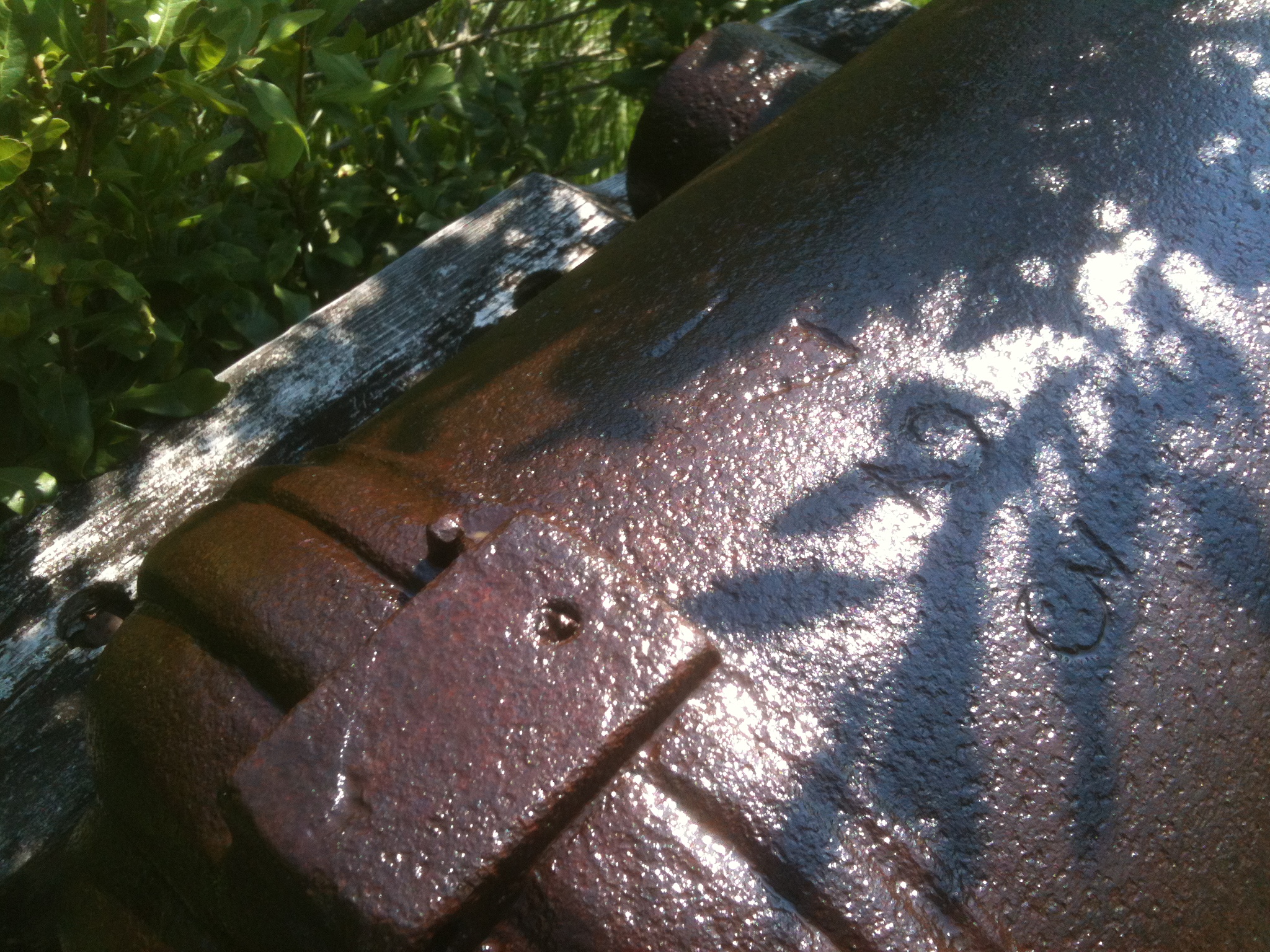 The inscription “1723” denotes the weight. This Carronade, a “32-pounder,” sits now at the big house, and the salt air will deteriorate the metal. We needed to do some preservation work.
Having absolutely no knowledge of metals, I did some research. The Superintendent of the Richmond National Battlefield Park recommended painting the cannon. We shied away from that. Oil seemed a safer route. The gun department of a local hunting outfitter advised that we not use any of their oils; they argued that metals have changed and modern oils would be risky.
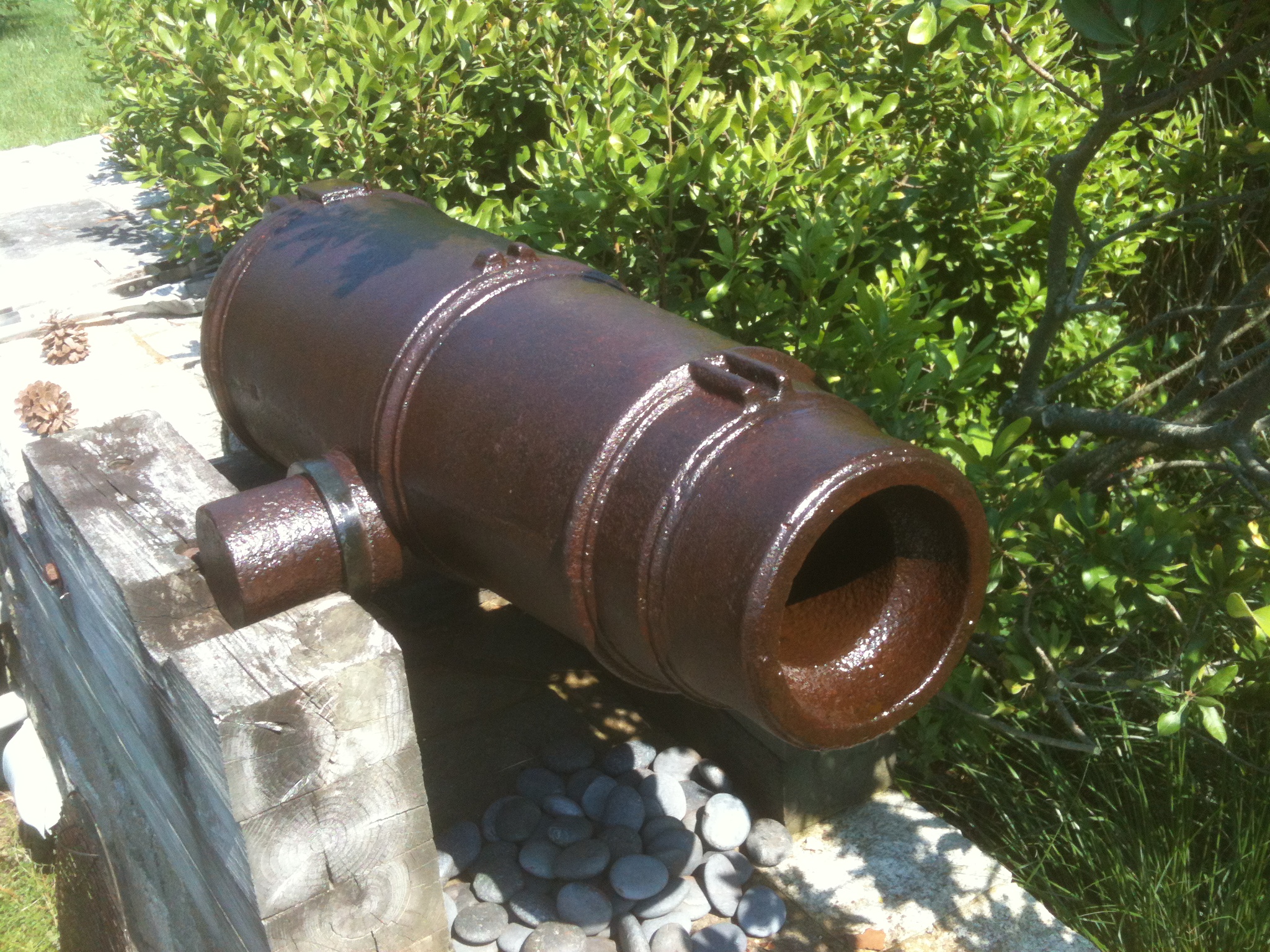
So I called Dereck Glaser, a Master Blacksmith and founder of the New England School of Metalwork. Dereck’s recipe was equal parts Boiled Linseed Oil and Thompson”s Water Seal, with a bit of Japan Driers added. It worked great! Dereck’s webs sites are: www.dereckglaser.com and www.newenglandschoolofmetalwork.com.
Here are before and after photos:

Dinner Interrupted
Posted: August 6, 2013 Filed under: Child Centered Activities, Farming off the Farm, In the Kitchen, Permaculture & Home Renovation 3 Comments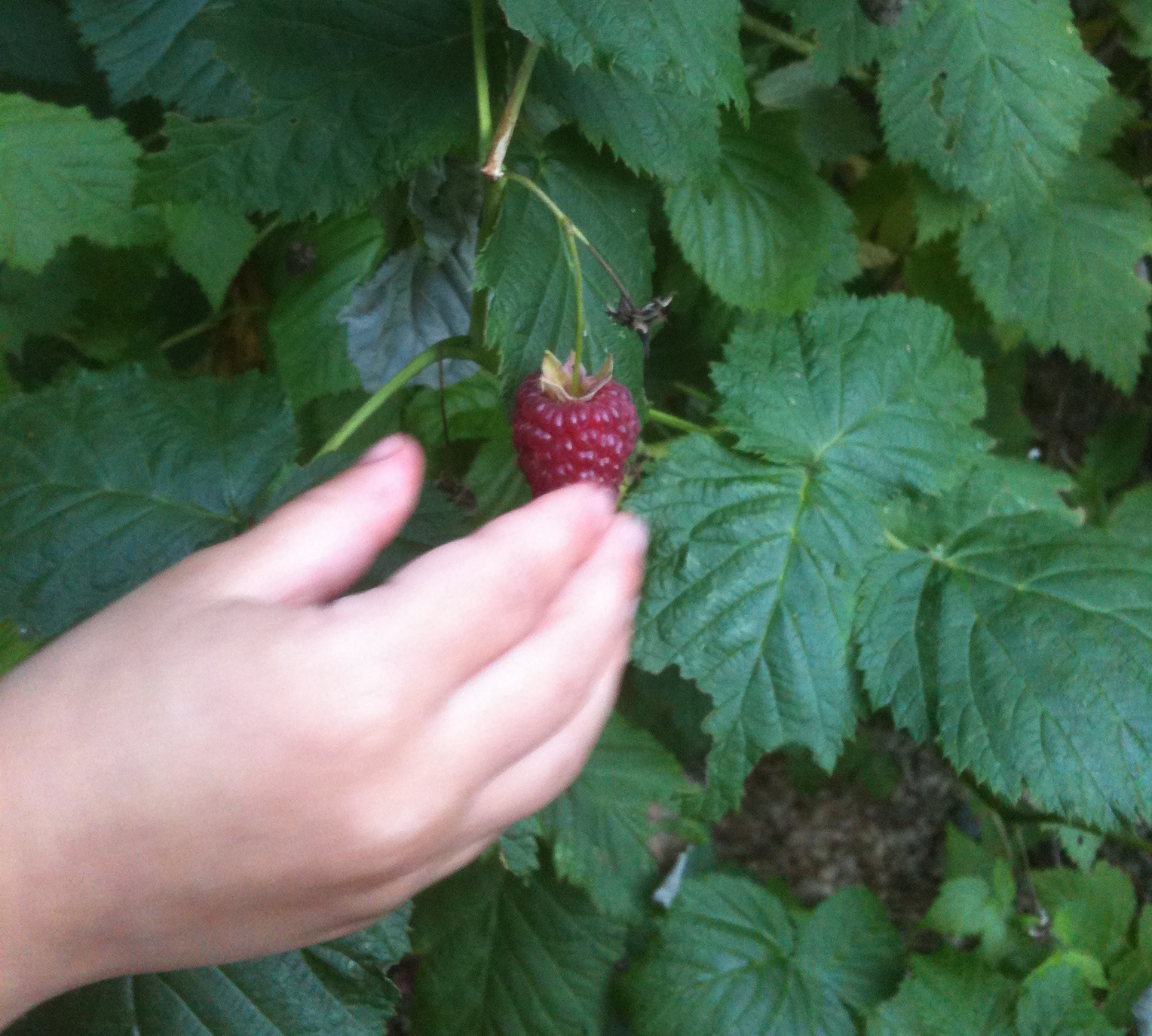
Last night, as we prepared to eat dinner on the porch, our neighbor Steve came walking down the magical path to our house. He told us that there was at least one quart of red raspberries waiting to be picked on the canes growing behind his house. That was a call to arms!
Our four-year old daughter E loves picking berries, and so this offer was the equivalent of Halloween and Christmas combined, in August. We quickly finished our dinner and then E and I ran down the path to Steve’s house.
Like little Sal in the famous story “Blueberries for Sal,” E eats 10 berries for every one she puts into the bucket. Which was not a problem here.


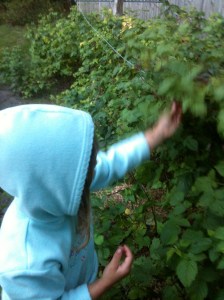
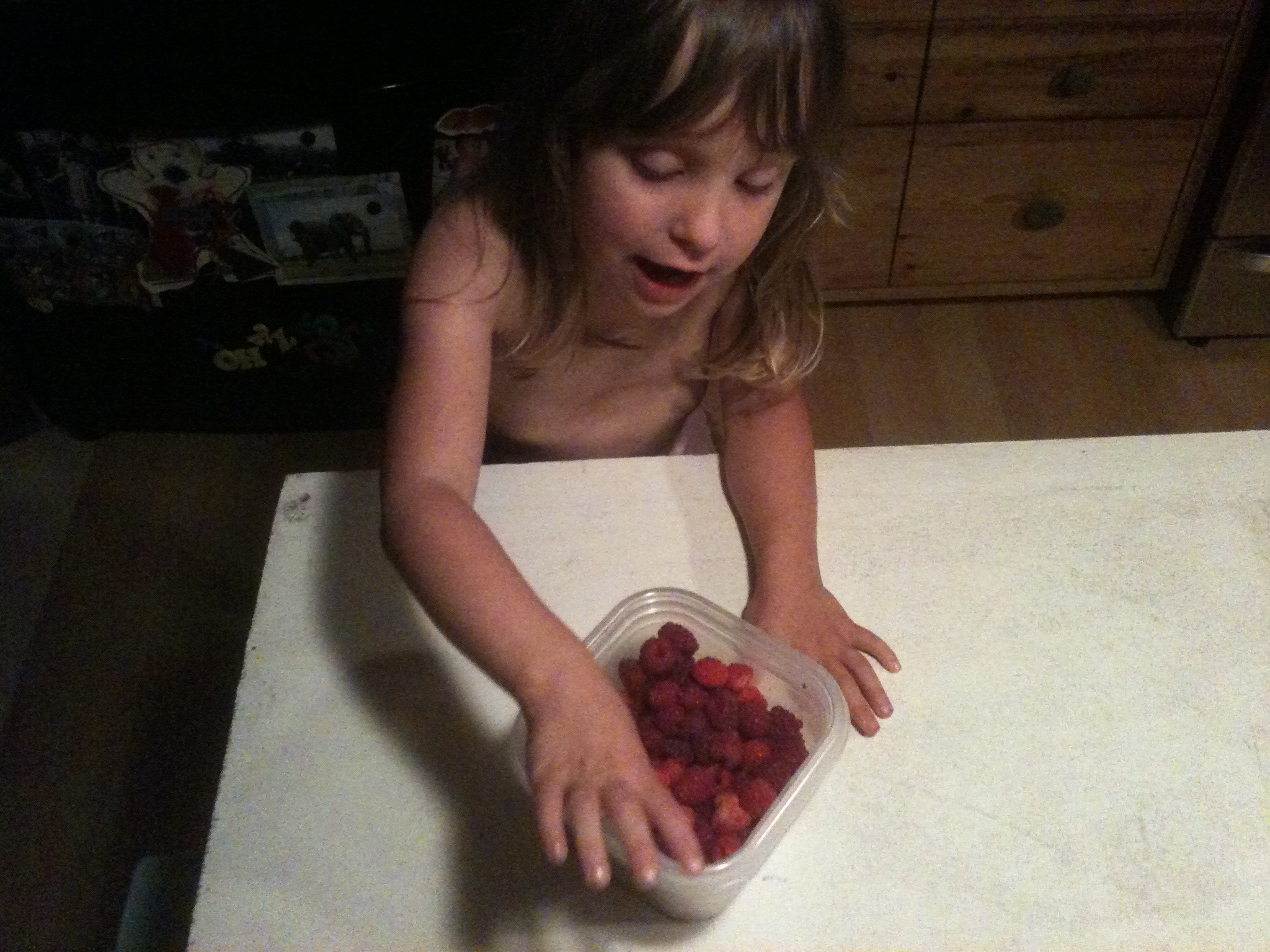
Before too long, she decided to run back home while I continued to fill up the bucket. There was blueberry pie waiting for dessert. Early August in Maine!


Independence…
Posted: July 4, 2013 Filed under: Art & Healing, Farming off the Farm, Gallery - Visual, Permaculture & Home Renovation, What is an Art Farm 4 Comments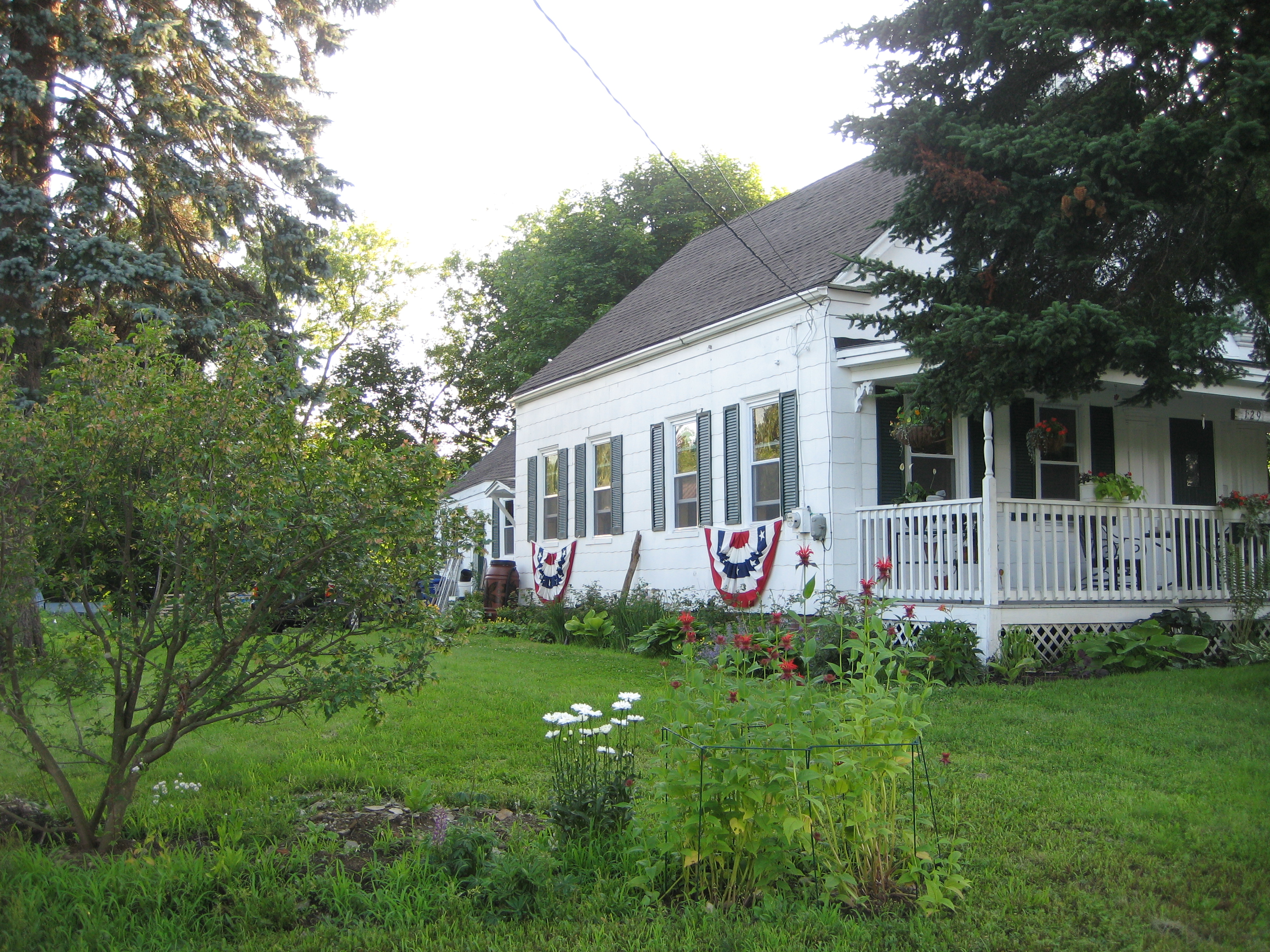
…for us: self sustaining, small footprint, resilience, listening to the land, freedom of choice and teaching our children about consequences, being connected to community, sharing our surplus, growing forward.
First Fruits
Posted: June 30, 2013 Filed under: In the Kitchen, Permaculture & Home Renovation 5 Comments
Our Red Haven peach tree is thriving. We were told not to expect fruit for about three years, but we seem to be ahead of schedule. We are novices here, and curious to learn.
We have room – and dreams – of planting another peach tree, a couple of sour cherry trees (think pie!) and many dwarf apple trees.
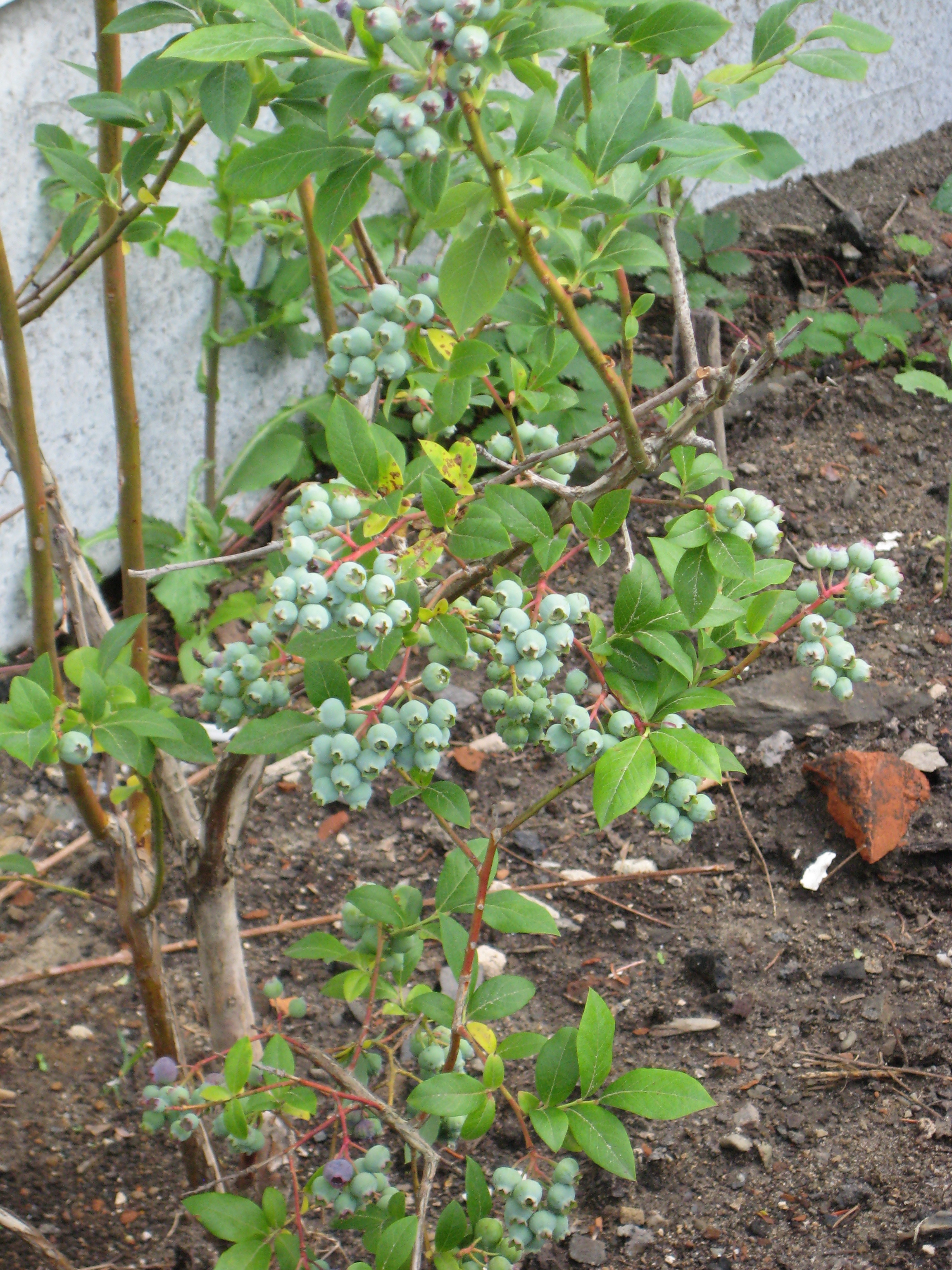
Four highbush blueberry plants fell into our possession; two one gallon plants came from a neighbor, and two quite large and developed plants came from our friends Ann & Kurt, who moved this week from Casco, Maine to New Orleans. What a great remembrance to have fruit from their farm now transplanted here!

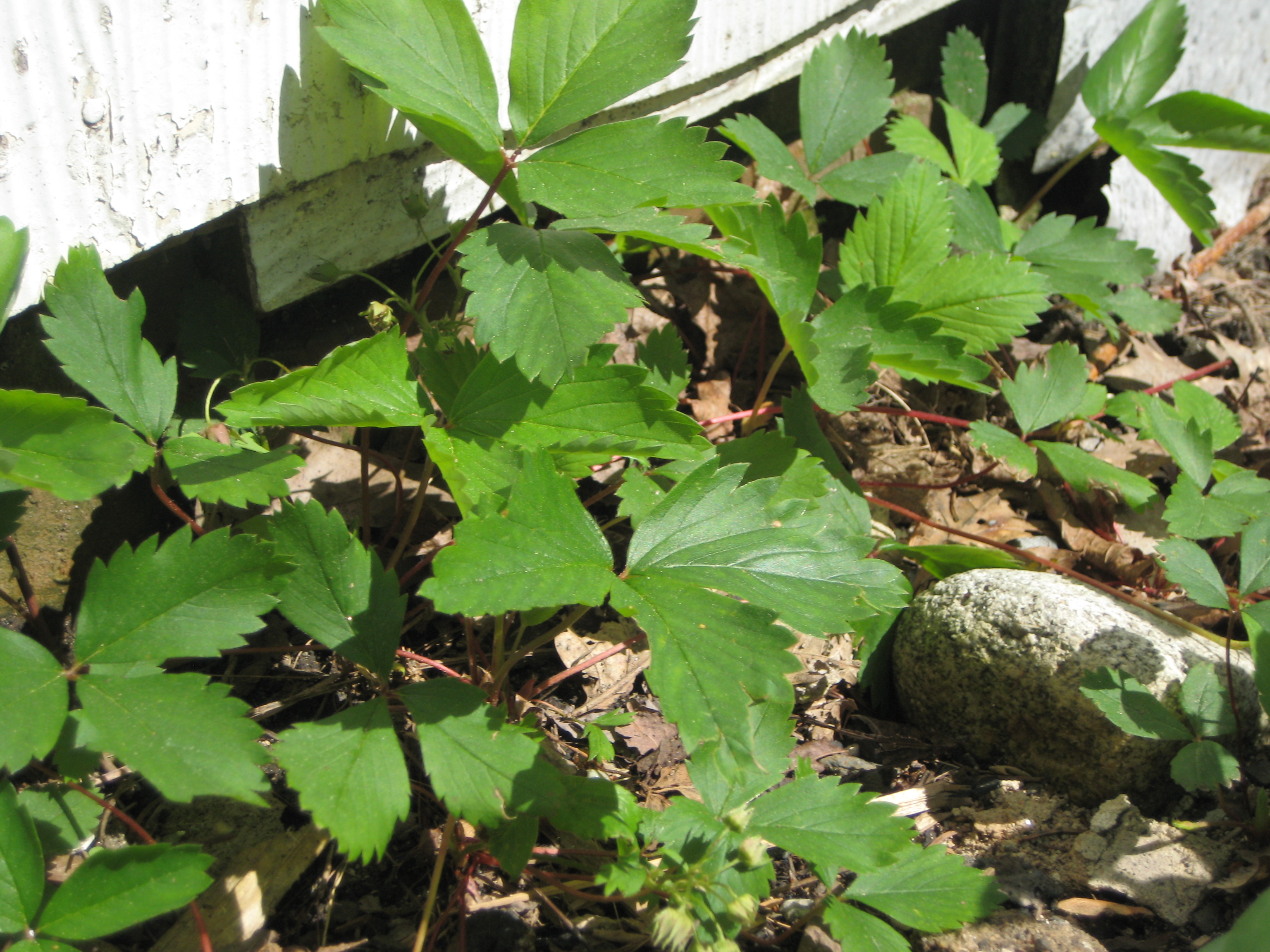
Ann & Kurt also gave us about forty strawberry plants. These were planted yesterday, and with all the rain, the timing was right.

Eleven blackberry canes came from other friends. Those went along the west edge of the backyard, part shade, but those are coming along well.
There are lots of wild berry plants – some strawberry and some raspberry (we think).

The grape stock is a mixed success. One cane is thriving, while the other has done nothing. These are cuttings of a seedless champagne grape that grows at the big house, so we will take some more cuttings and see if we can’t get more started. I am preparing to build a trellis from dead black locust trees, but that project is low on the to-do list right now.

Unplanned Renovations
Posted: May 27, 2013 Filed under: In the Kitchen, Permaculture & Home Renovation 4 Comments
Our property came with a falling down barn and a storm damaged box elder tree. And as sentry overlooking it all, a Pileated Woodpecker.
Our plan for a permacultural renovation was unilateral, and once I noticed our sentry I had a conflict; we were not turning back but we were going to turn him out.
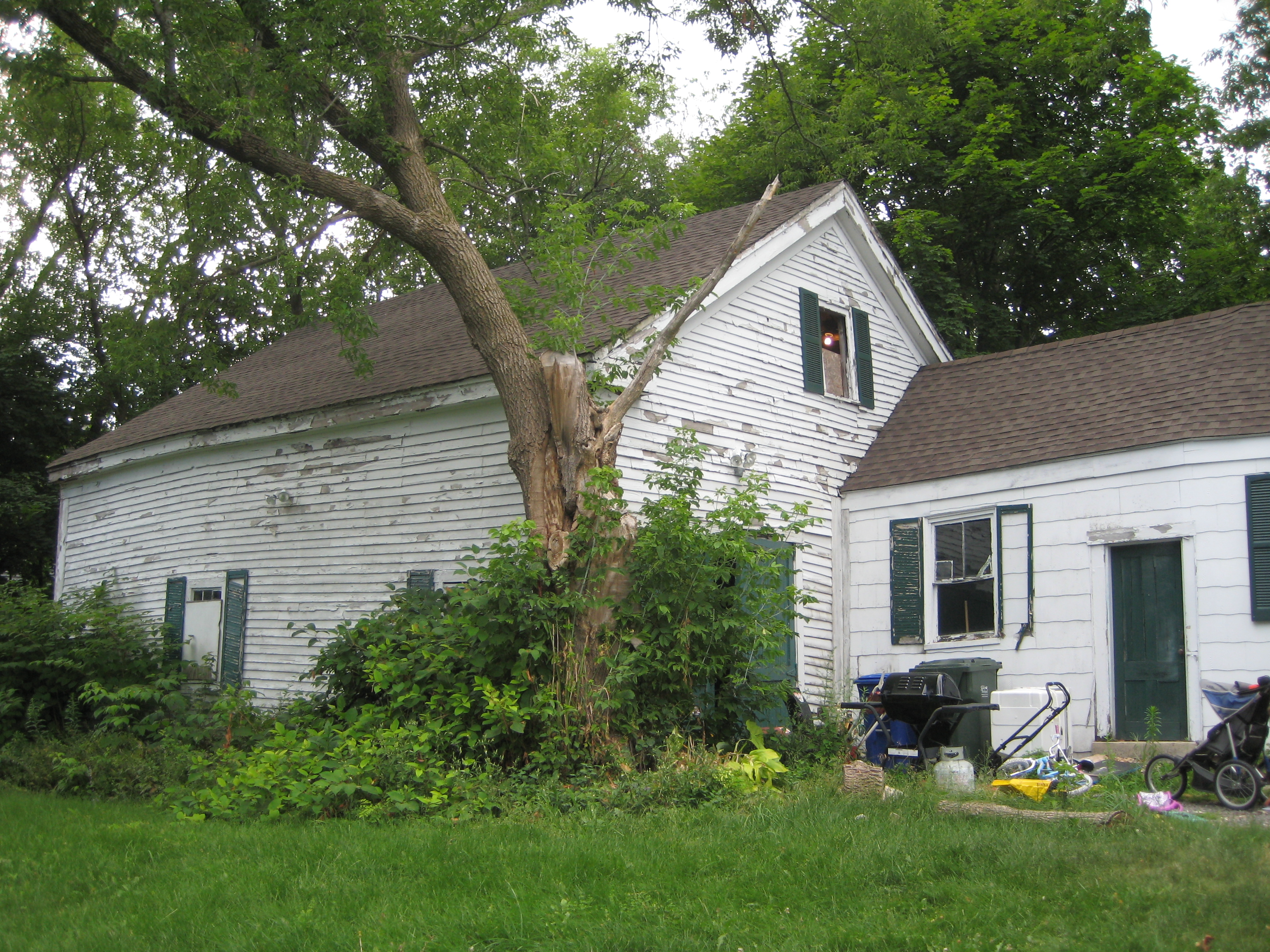

So one balmy afternoon last September, I paused and had a meditation with Mr. Pileated. I doubt it made a difference to him, but I pledged the branch would be remounted somewhere on the farm. He moved on and we moved forward. The branch was saved while the rest was razed.
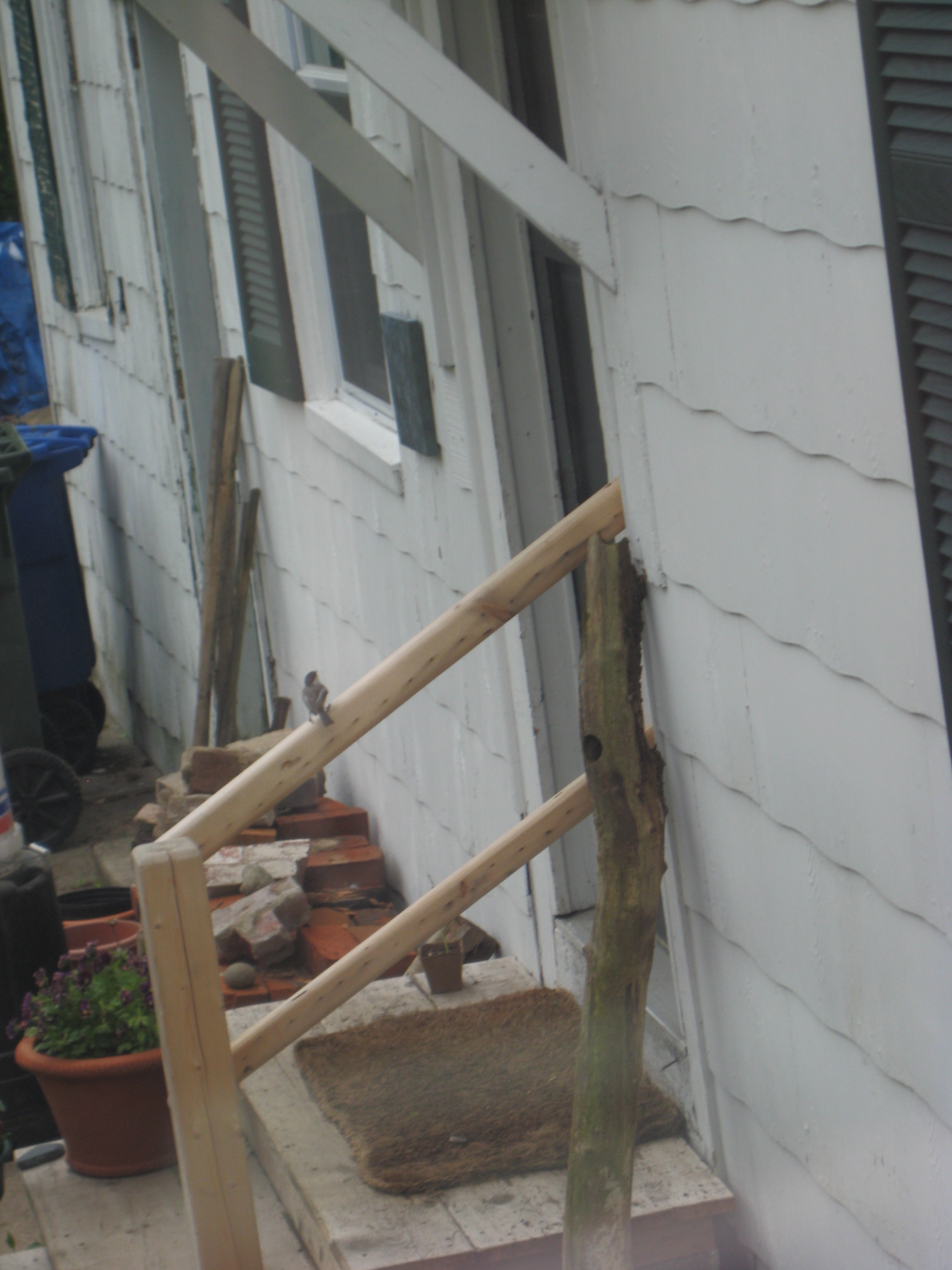
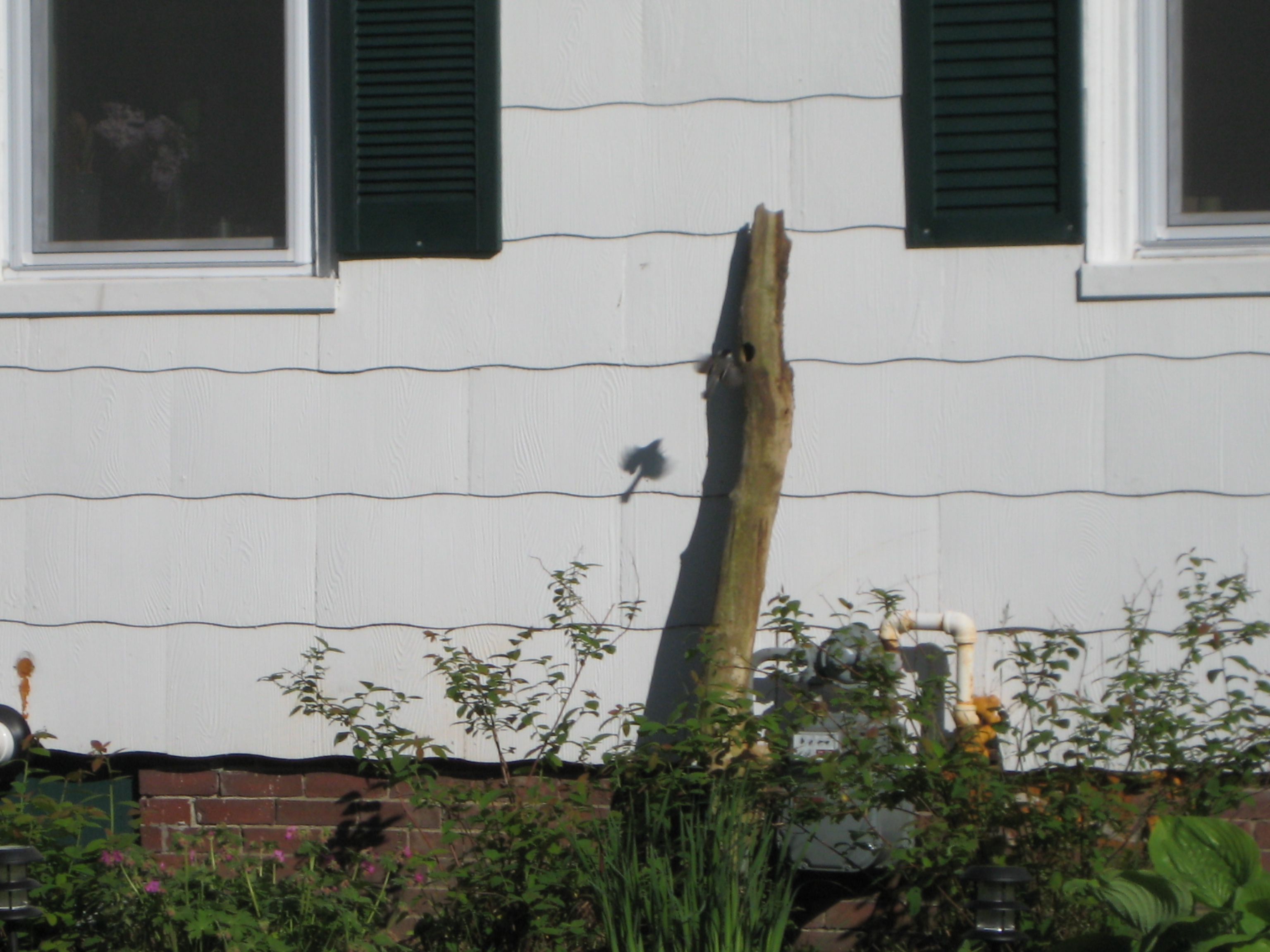
Yesterday I came across that branch lying on the ground. It had spent an ignominous winter buried under the snow. With a welcome recognition, I propped the branch against the stair railing and moved on. Within minutes, a pair of Chickadees moved in.
Becca had been watching this from the kitchen window. She pointed it out and said, “If you are going to move it, do it now!”
With no time to plan, and no tools at hand, I set the log at the back of the new foundation bed and leaned it against the house; protected from foot traffic, close to our bird bath and feeder, and next to the towering Blue Spruce.


The Chickadees are nesting. They shuttle now, non-stop, back and forth between their nest and the blue spruce. Outbound, debris is hauled from the log. They land in the Blue Spruce and release their detritus, then await their partner to make the round trip.
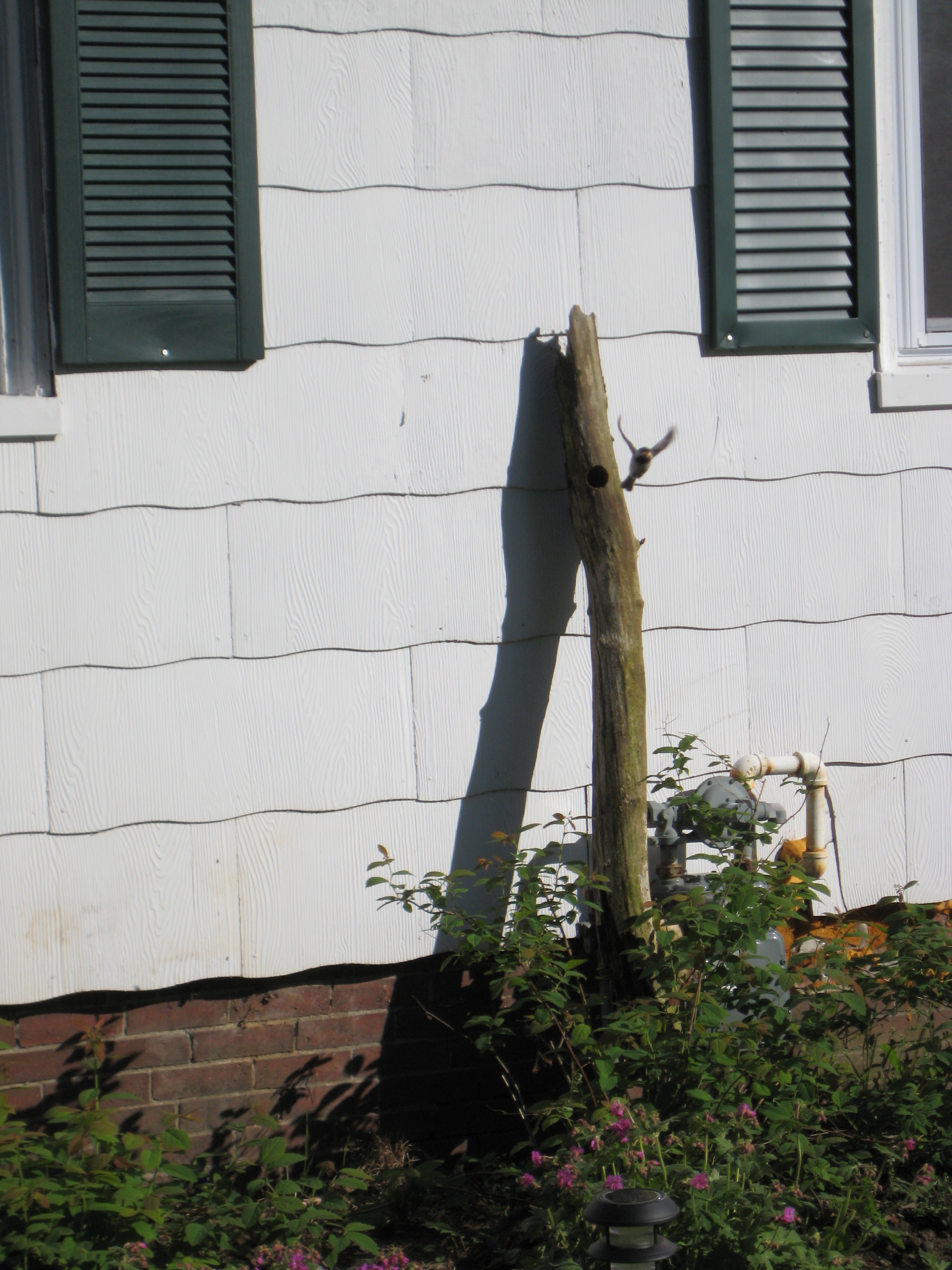
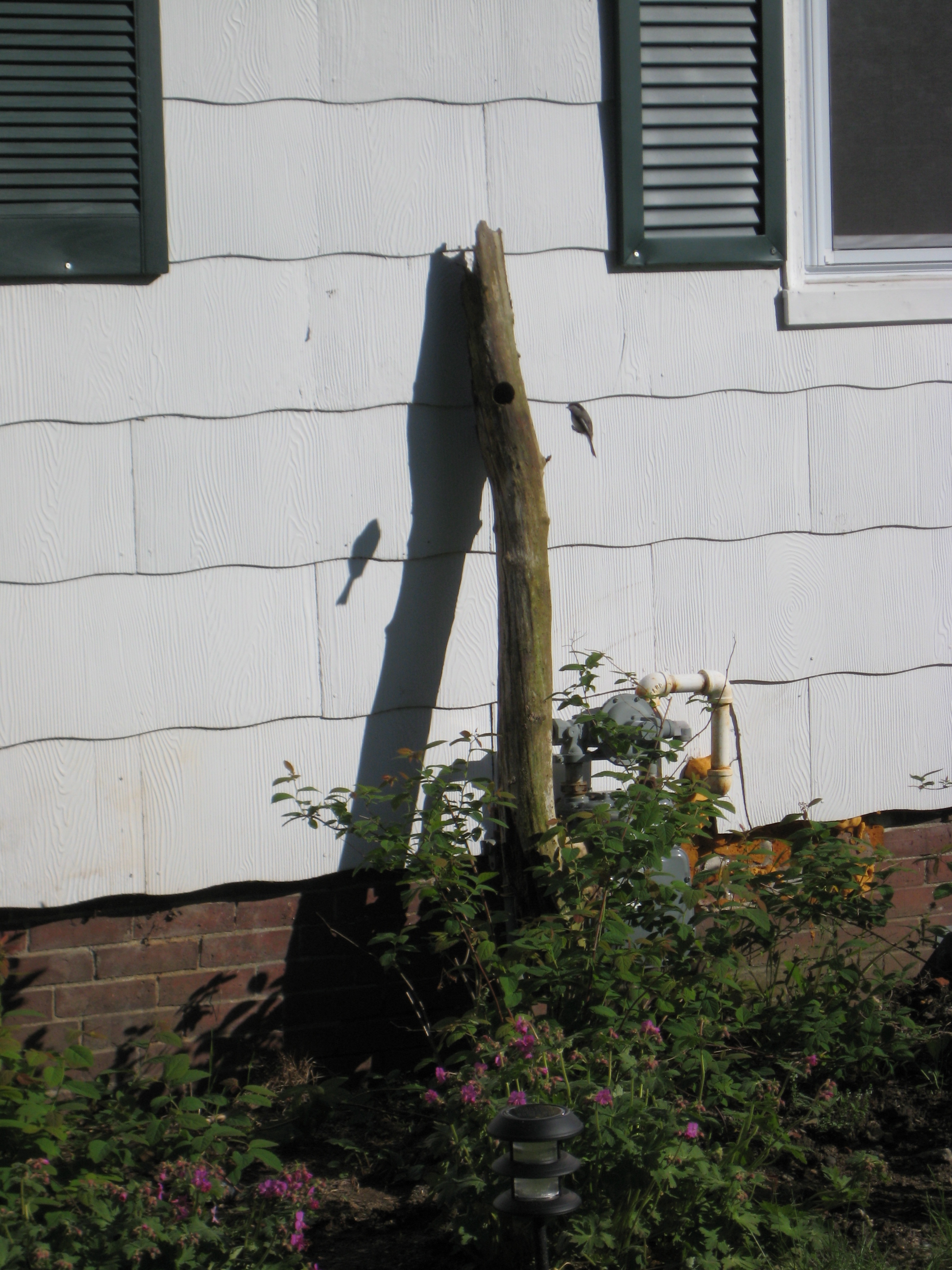
We are able to watch this from our kitchen window.

An amazing show. An affirmation, we hope, of our intentions.
Good Garden Karma
Posted: May 26, 2013 Filed under: Art & Healing, Permaculture & Home Renovation 3 Comments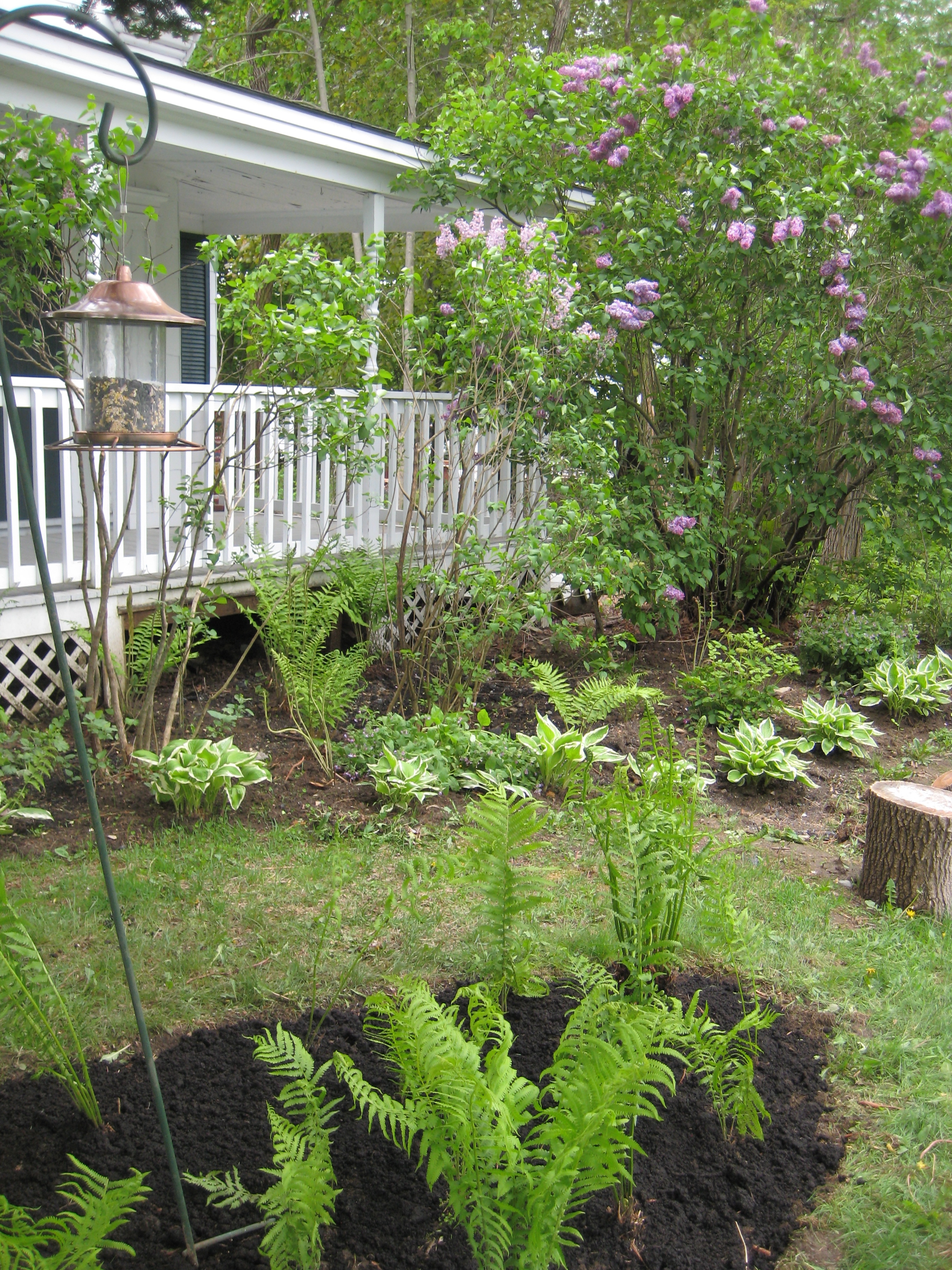
At the grey end of winter I made a list of plants for our art farm.
I opened my copy of “Dirr’s Manual of Woody Landscape Plants” – the authoritative tome on matters of shrubs and trees – and cross referenced against available nursery stock.
I have nursery wholesale accounts and looked forward to buying at discount. My wish list grew rapidly. Our bank balance had not.
The obvious approach was to disregard planning and go the “free and found” route.
There is no turning back. Nor need there be. We have to date spent $43 on all the plantings.
Estate gardens overplant. Where two Rhododendron should go, seven are planted. Trees arrive with trunks thick, the leafy canopy high and wide, accompanied by heavy equipment and work crews.
But it takes one year per inch of trunk diameter for the tree to settle into new terrain. Trees slowly overcome the transplant shock and you are better off buying a smaller tree and letting it grow into the landscape.
I know of one estate that solves this problem by handling trees like annuals. The arborist actually told me that he sometimes leaves the metal cage on the root ball to make it easier to remove and change out the trees later. Instant gratification. Ever-changing.
At the big house I manage, the planting phase was completed before my tenure. My job, my challenge is about editing. This season we attacked several problem areas.
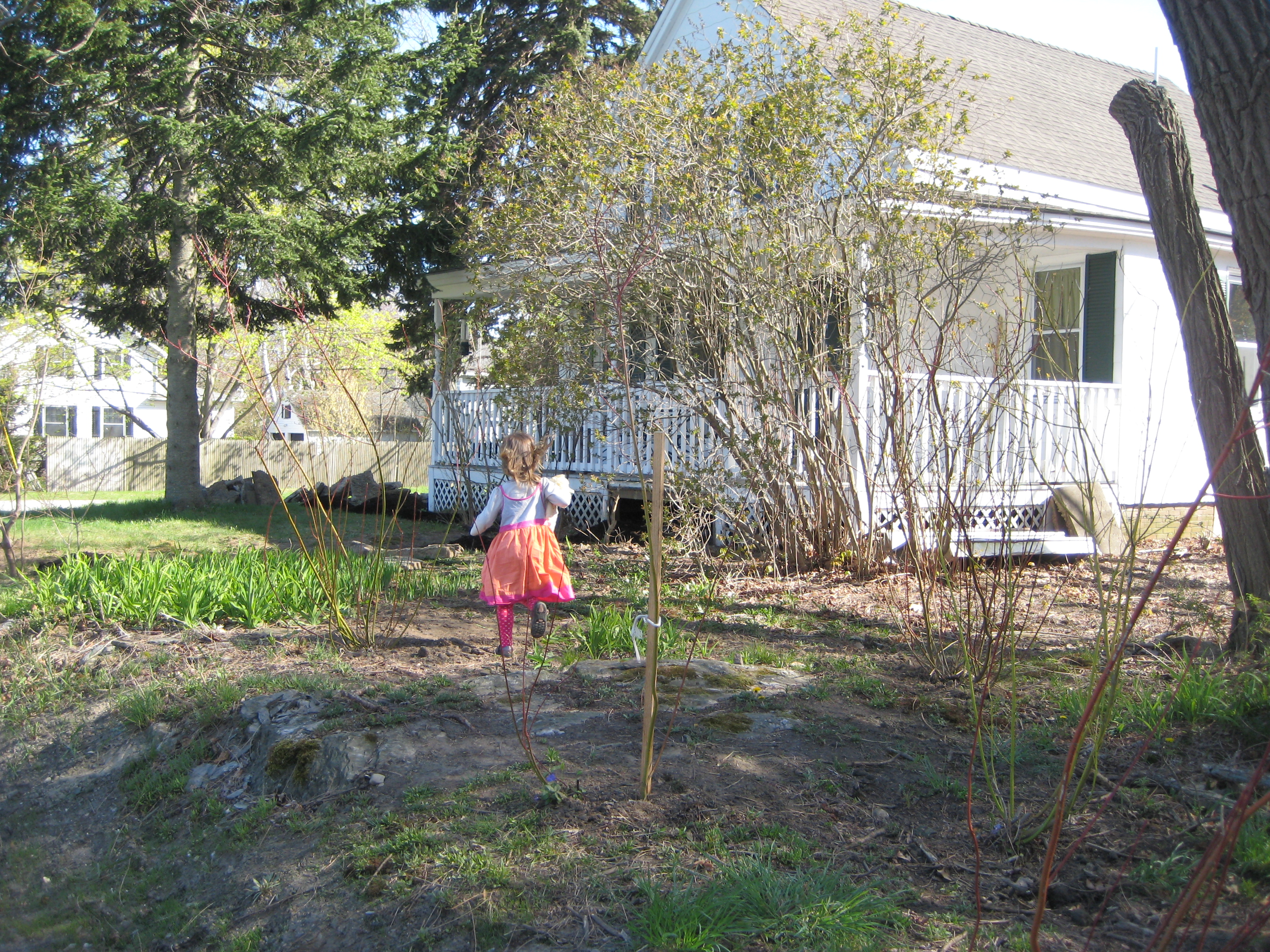
From a thicket of lilacs, dogwoods, spirea, and one still-unidentified shrub – truly the ugliest hedge anyone had seen, and no one could solve – I partially removed shrubs along a 20-foot section. Transplanted to our house this became the backdrop for our entire foundation beds, plus a privacy hedge along the street where our chicken coop will go.
Our plantings are scrawny, laughable like the Charlie Brown Christmas Tree, but with a quick pruning, generous serving of compost and space to grow they have leafed out and are ready to flower. We have good soil.

Bayberry, which is salt tolerant, expands by sending out runners to start new plants. While cleaning up the estate beds I harvested a handful of small – one gallon – shoots. Planted here along the street, and given time, they will form a dense fragrant semi-evergreen hedge protecting the shade garden at our front porch.
It will take some time.
If the estate gave us a solid start, bio-mass abundance came from our neighbor Gina. We were renters last summer, and prohibited, by our landlord, from gardening at that house. So when I had leftovers from the big house I passed them to Gina.
The return has been extraordinary; I delivered last summer a few one-gallon pots and this week hauled home car loads of 15 gallon pots: Rudbeckia, Monardia, Shasta Daisies, Pulmonaria, Lilies – common orange and Stella D’ora yellow, Astilbe, Iris, Lupine, Geraniums, Sedum. She has more to offer. I need time to make more beds.
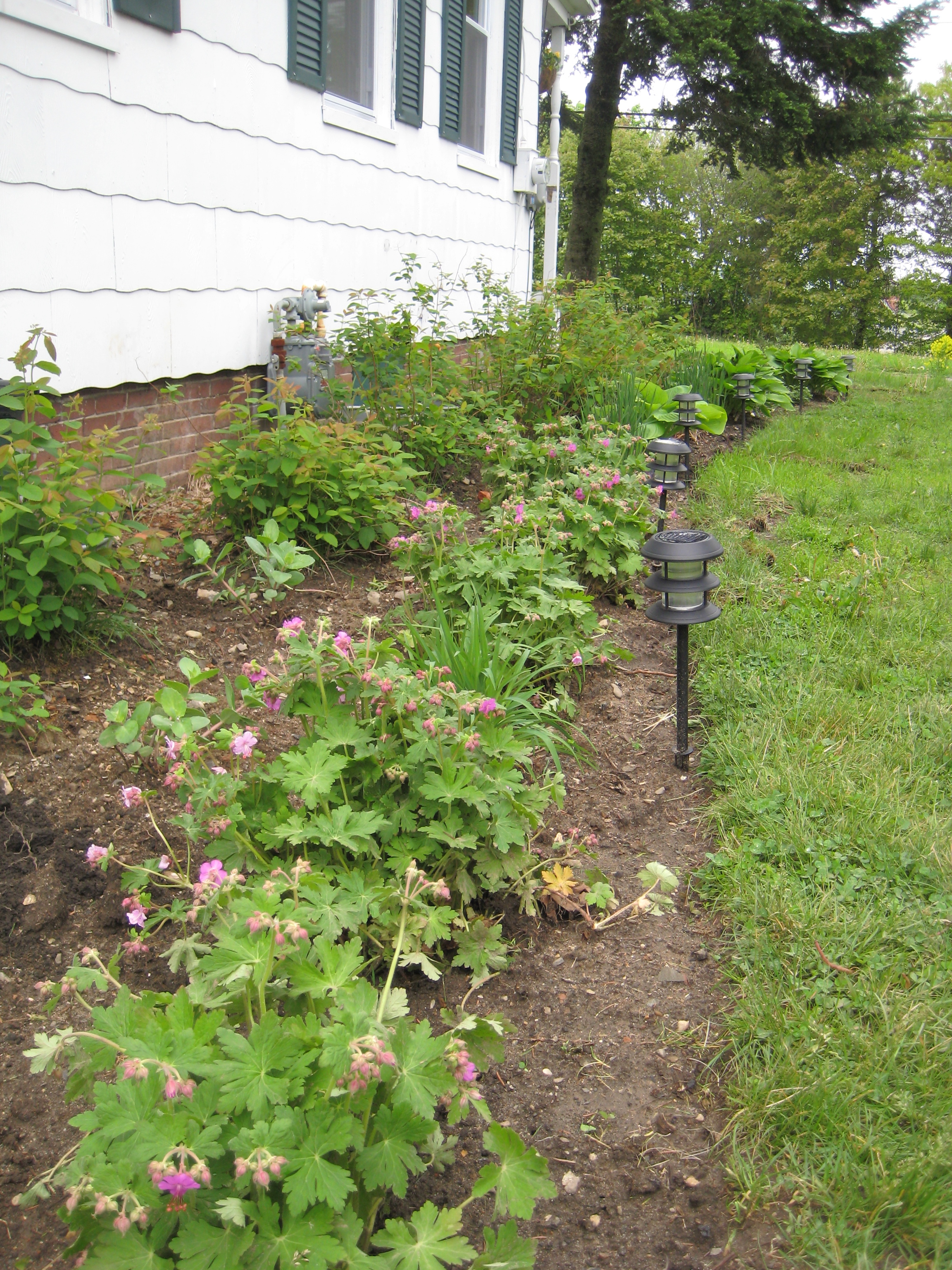
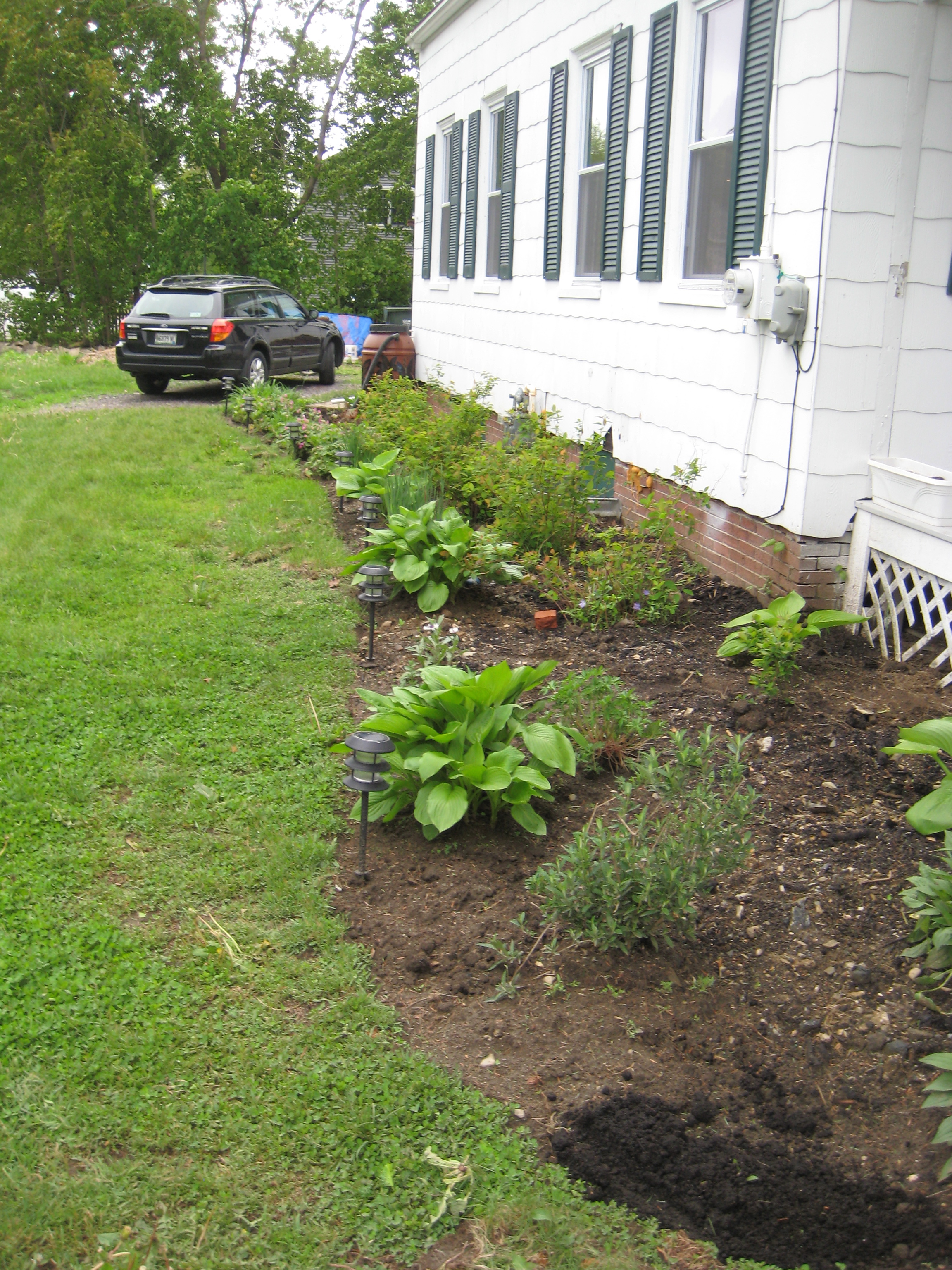
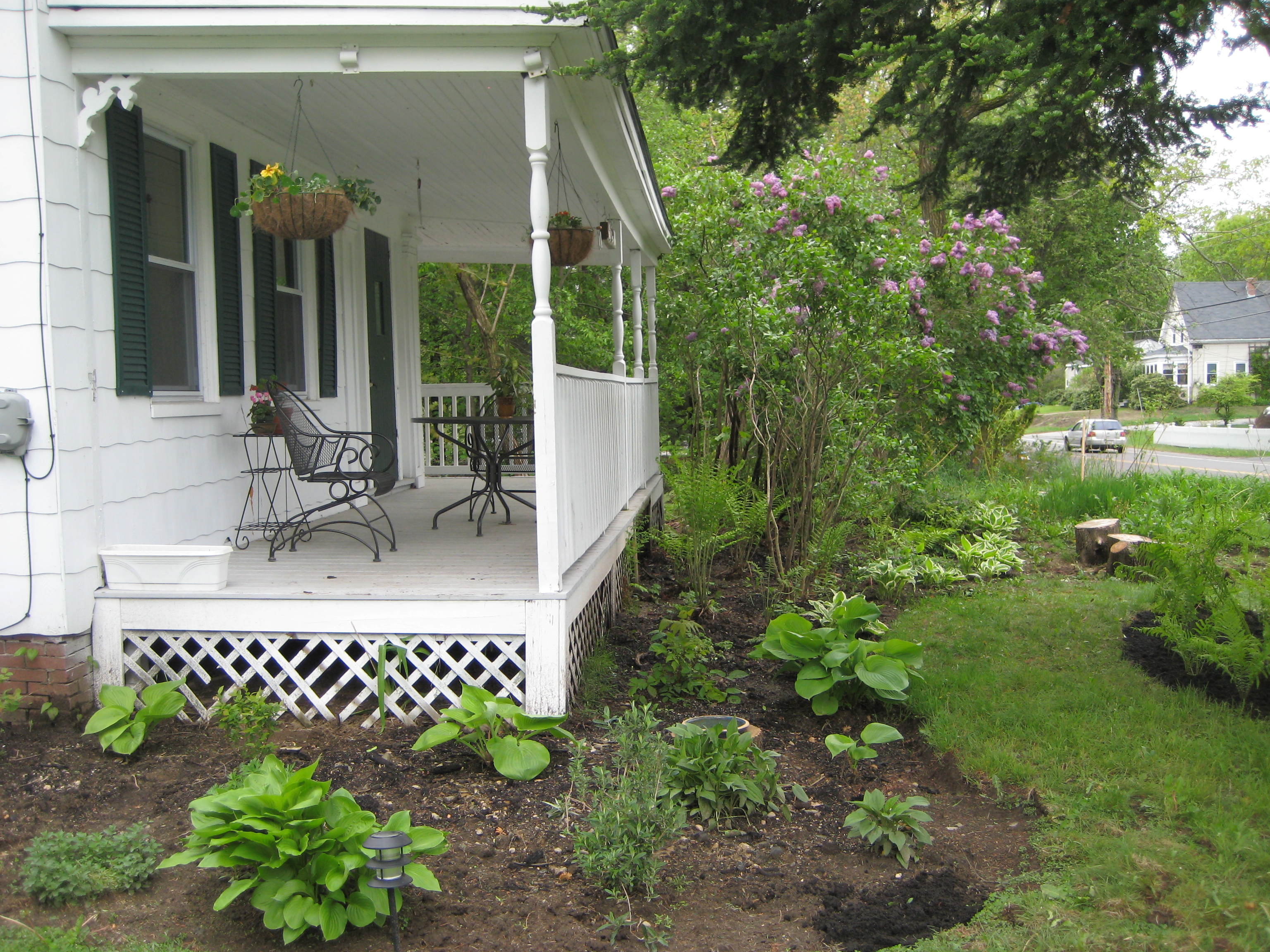
“Welcome to the neighborhood,” indeed! Pete, across the street, dropped off two highbush blueberry plants. Other friends delivered eleven blackberry canes. An orchardist gave us some grape stock, cuttings from the big house that he potted up a few years back. The roots are as long as the shoots so these are ready to grow.
We also purchased from him a Red Haven Peach tree. For the bees and butterflies I also planted Nepeta, Goatsbeard (Aruncus dioicus), and Buddleia davidii (Butterfly Bush).

The pace of arrival began to cause a backlog on planting. I found a solution to that problem.
Somewhere in search of “free & found,” most likely in either our untamed back yard, or the woods where I went to gather ferns, I brushed up against a poisonous plant. My skin is highly sensitive to the oils in poison ivy, and I have learned to be patient as it runs its course. But this season the rash took hold and spread like wildfire; think poison ivy on steroids.
In fact, my doctor said it was not poison ivy but did prescribe steroids as rexall. His diagnosis was “Type 4 hyper sensitivity reaction; immune system is on overdrive; caused by some plant material or pollen. Could be in roots or soil. Most likely from a wild uncultivated place.” Ah, toxins that protect plants, and aim to keep us away.
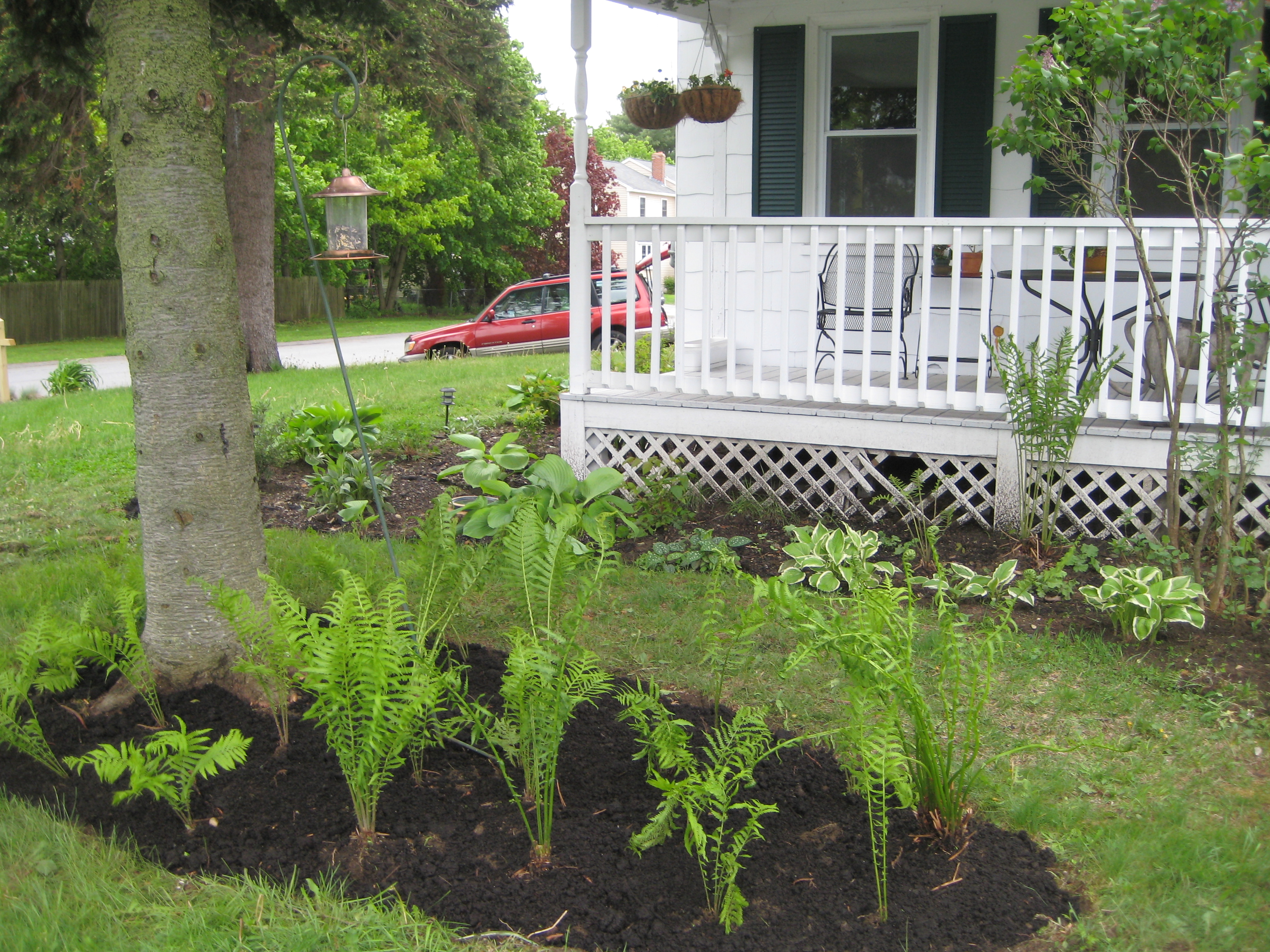
The steroids have worked wonders and my energy level is absurd. After a ten-hour workday at the big house, I was outside in our garden at 11pm. In a gentle rain, with spring peepers chanting in the distance, I planted, dare I say, more ferns. This time from the big house, not the woods. And this time fueled with performance enhancing steroids.
We have no budget for assistance so this has been solo work. Perennials and shrubs that arrive measured in gallon pot size are no problem. Trees with balled & burlapped roots are different by an order of magnitude.
We were given a multi-stem Acer ginnala (Amur maple). The tree was a gift from my Mother. She said that she wanted to give something long lasting, to have an enduring presence on the property. We have named it the “Family Flame” maple.
Well formed, at 7 feet tall by 6 feet wide, it will grow to about 15 feet tall and wide; we gain privacy from the street while the passing cars will enjoy its scarlet flame leaves in autumn.
This gift arrived with an estate sized root ball. In the back of my pick-up truck, it became an immovable object.
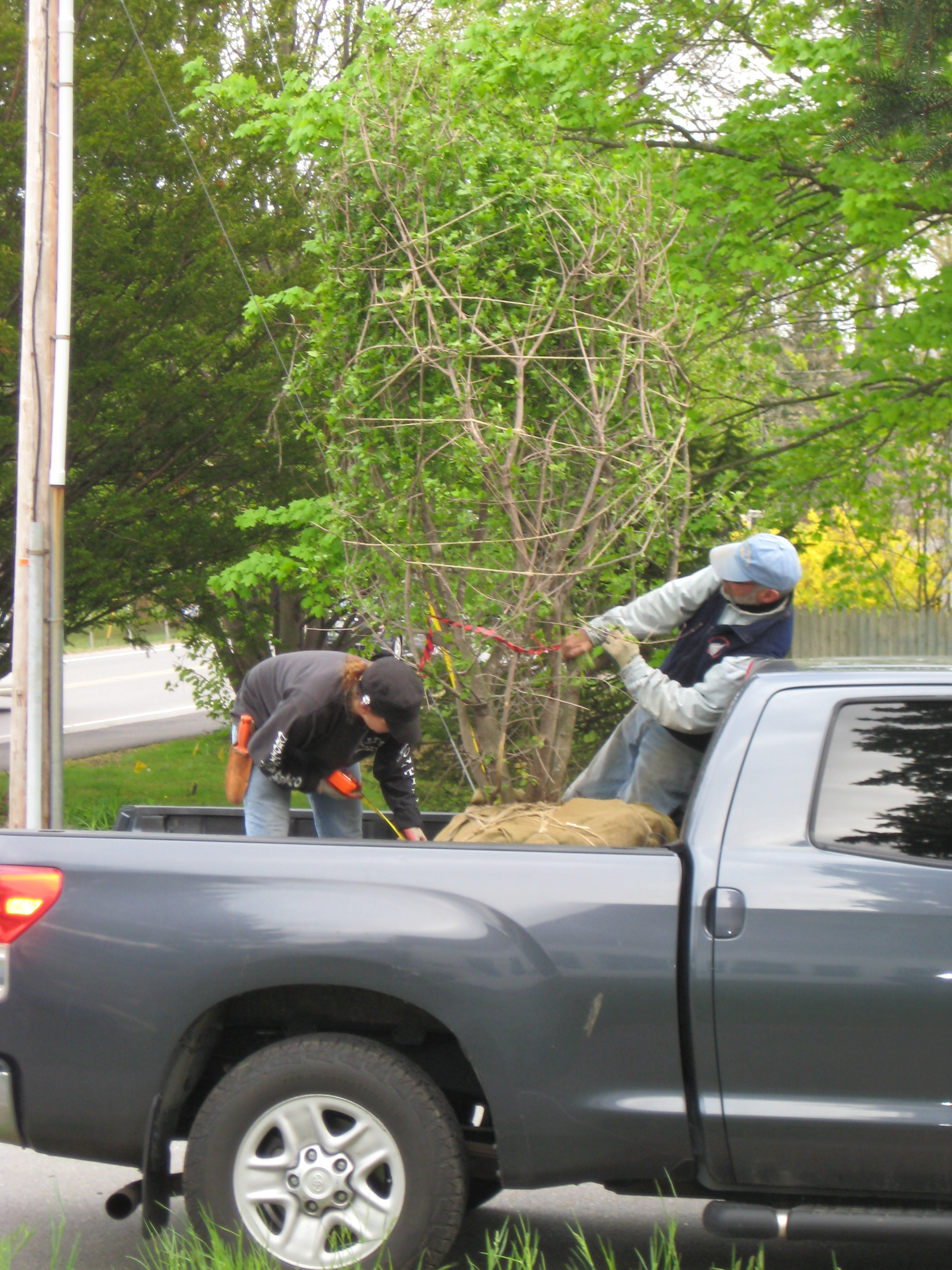
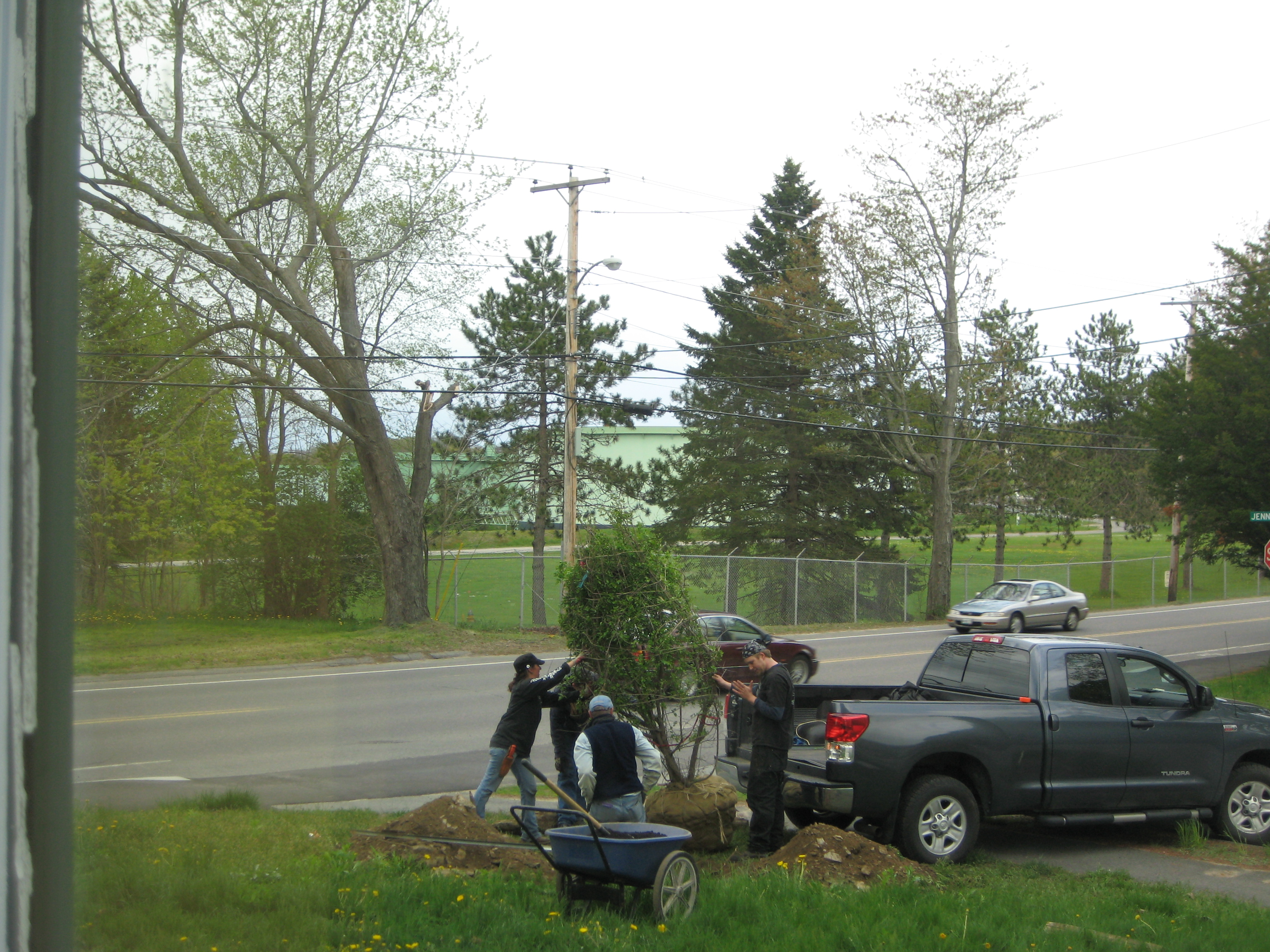
Until a neighbor drove by, shouted an offer of assistance and then recruited some young friends. Within minutes the tree was proudly in place. Our daughter ran around the yard shouting, “We thank you from the bottom of our hearts!” It was comic. And perfect.

And so has gone our first spring at this property and place of our own. Our art farm, transitioning from virtual to actual, has been about setting roots and feeding forward the good karma.
Our daughter, again, said it best, “Our tree is all about joy! Because you planted it.”
 an Art Farm