Beet Ice Cream, with Orange Zest, Mascarpone, and Poppy Seeds
Posted: August 21, 2011 Filed under: Child Centered Activities, In the Kitchen 3 CommentsThis recipe comes from “Jeni’s Splendid Ice Creams at Home.” Thanks go to June Gillis, who gifted the book to me.
Wrap two medium beets in aluminum foil and roast, at 400 degrees, until very soft, about 90 minutes.

When cool to the touch, peel and chop, and then puree in a food processor. Press the puree through a sieve, and combine 1/2 cup puree with 2 tablespoons sugar and set aside.
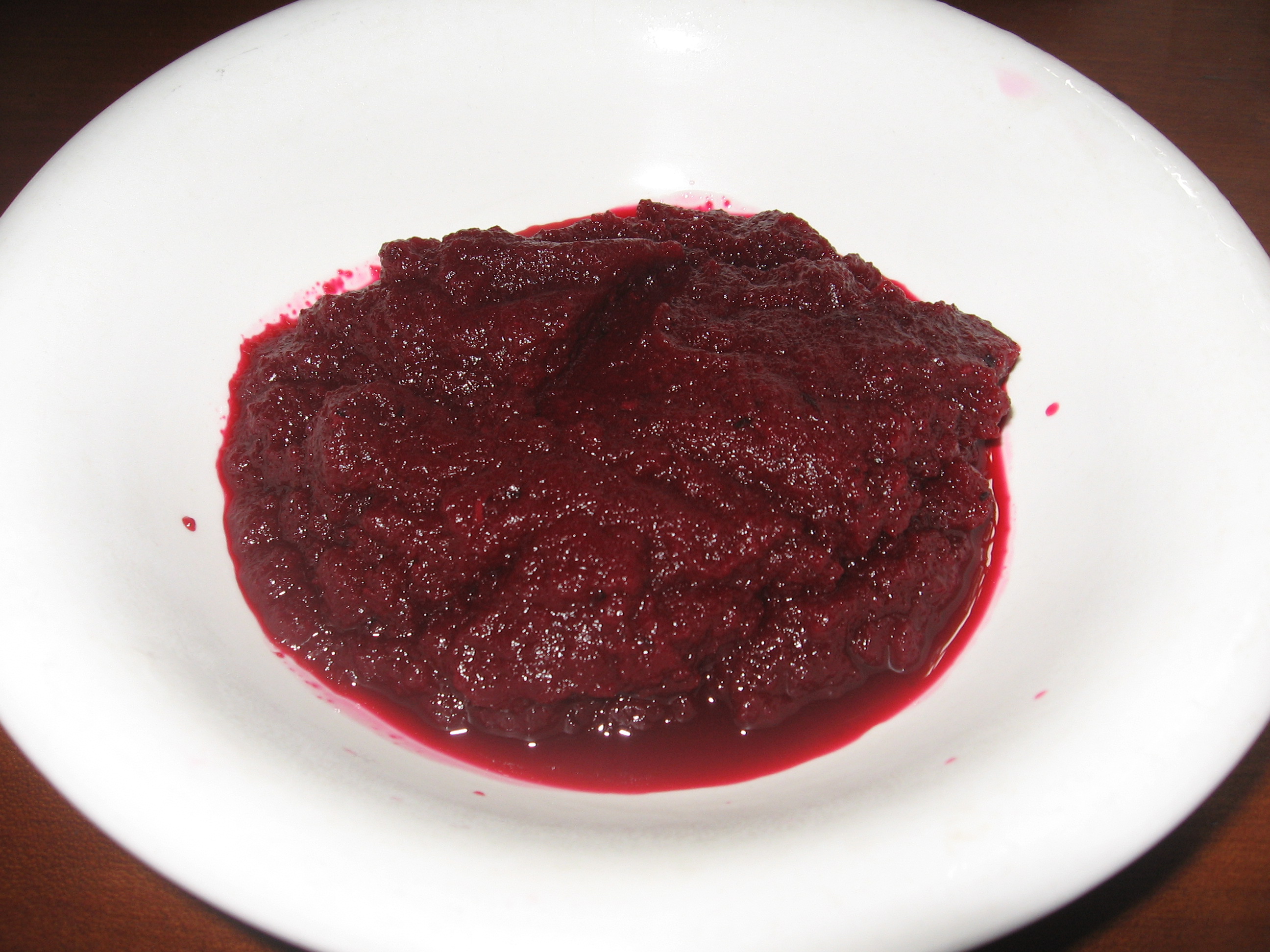
To the beet puree, add 2 tablespoons mascarpone cheese and 1/2 teaspoon sea salt. Mix until smooth and set aside.
Combine 2 tablespoons whole milk with 1 tablespoon plus 1 teaspoon corn starch to make a slurry. Set aside.
Combine 2 cups whole milk, 1 and 1/4 cup heavy cream, 2 tablespoons light corn syrup (or 1 tablespoon Agave Nectar), and zest of one orange (use a vegetable peeler so the zest is large pieces) and bring to a rolling boil for four minutes. Remove from the heat and wisk in the slurry, return to the heat and boil for one minute, until it thickens.
Remove the thickened base from the heat and slowly wisk in the beet/mascarpone mixture.

Pour the mixture into a one gallon zip-lock bag and submerge in an ice bath for 30 minutes, or until chilled.
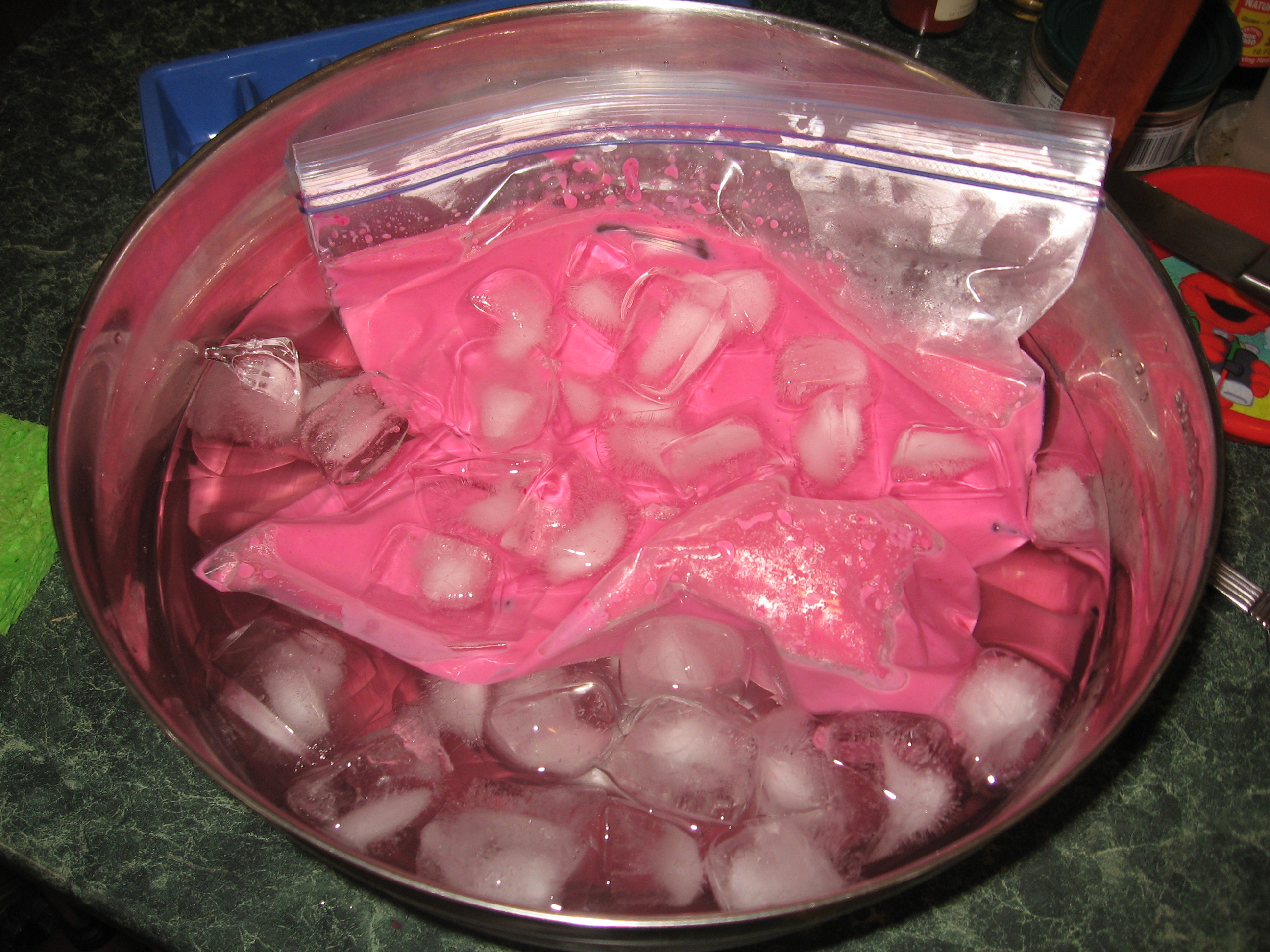
Once chilled, remove the orange zest and pour into an ice cream cannister. Add 2 tablespoons of poppy seeds and churn according to the manufacturers instructions. Once the ice cream has the thickness of soft serve, put into a one-quart container, cover with parchment paper and freeze, in the coldest part of your freezer, until firm, at least four hours.
Sure to please!
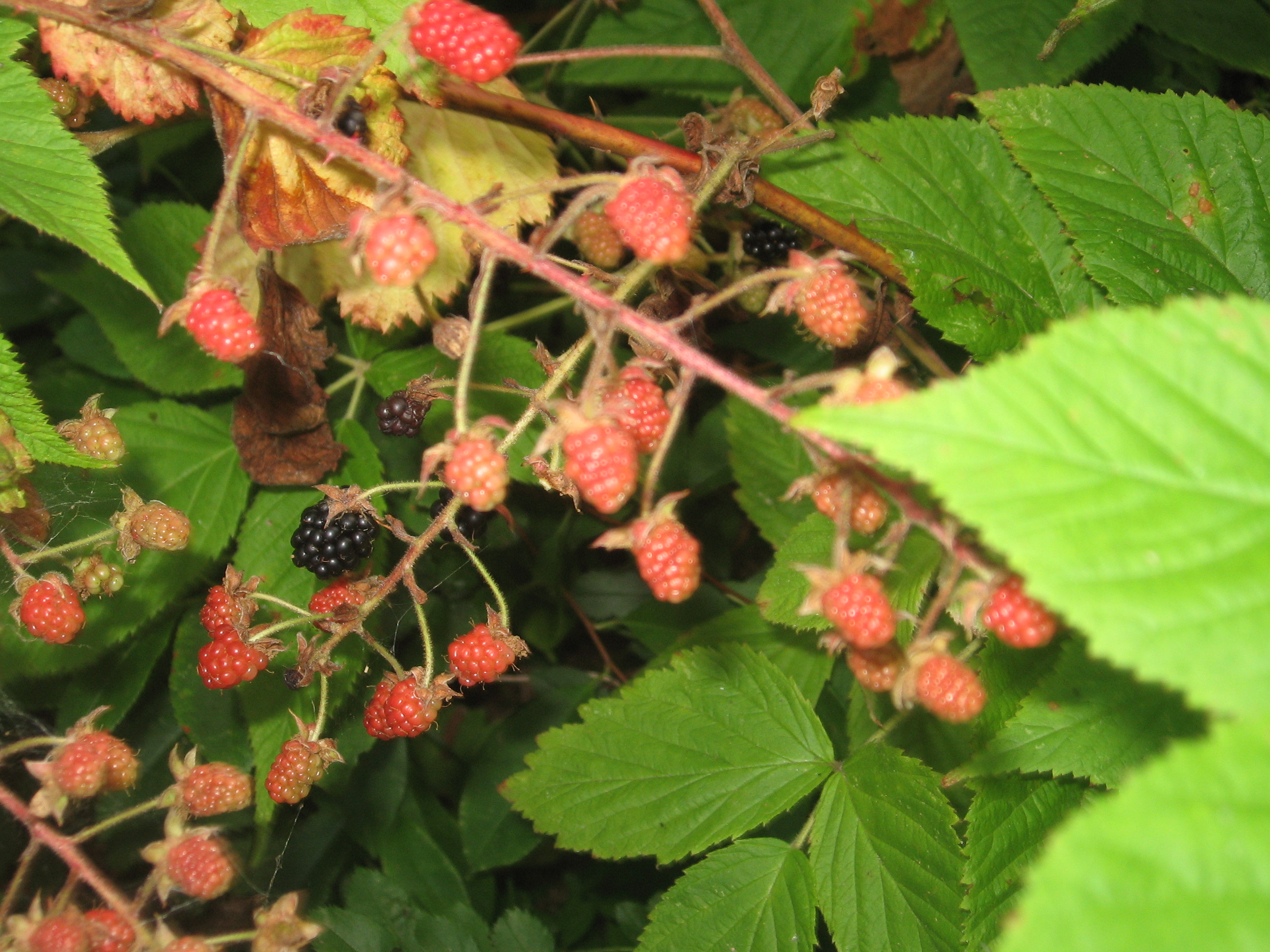
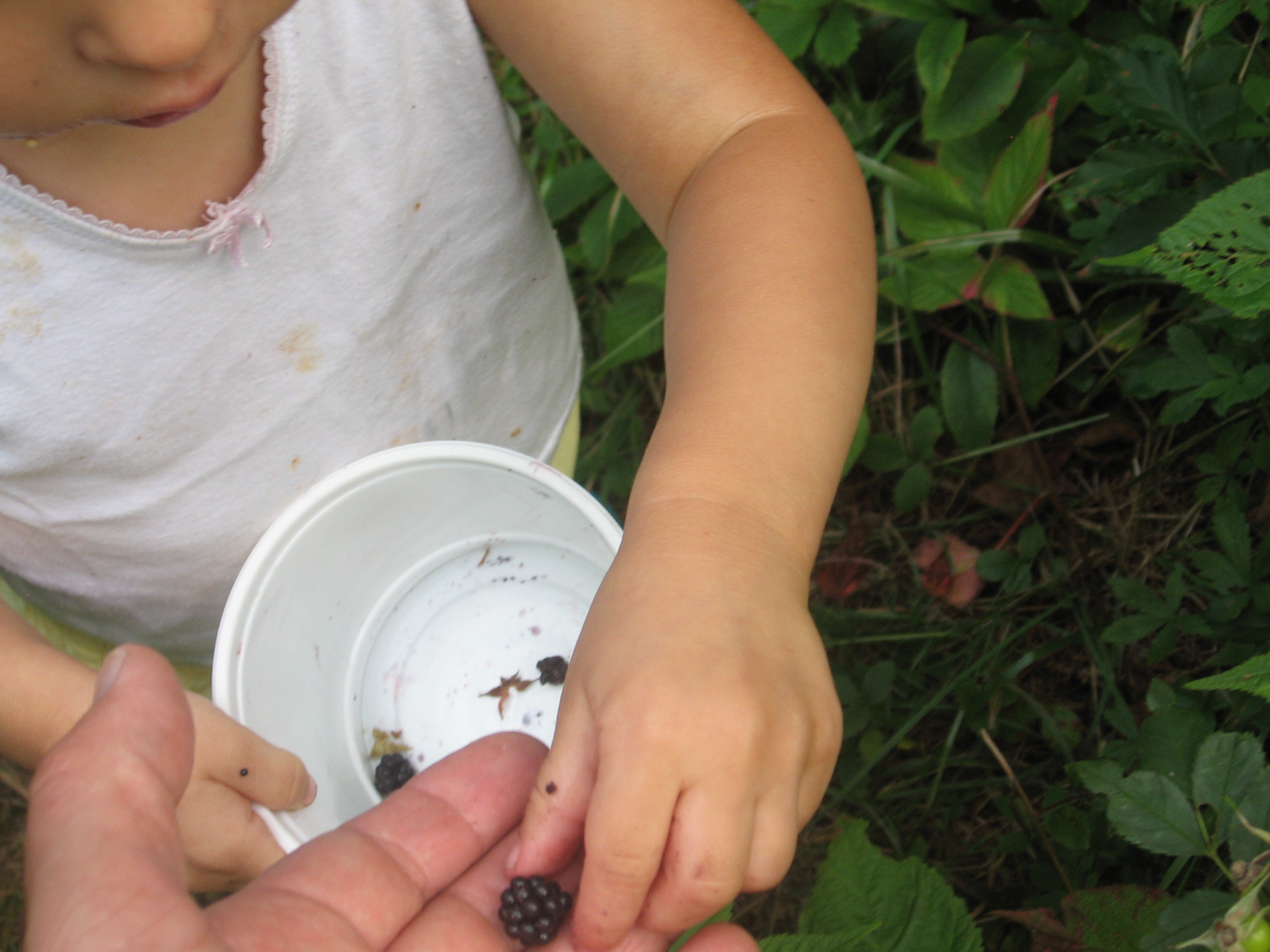
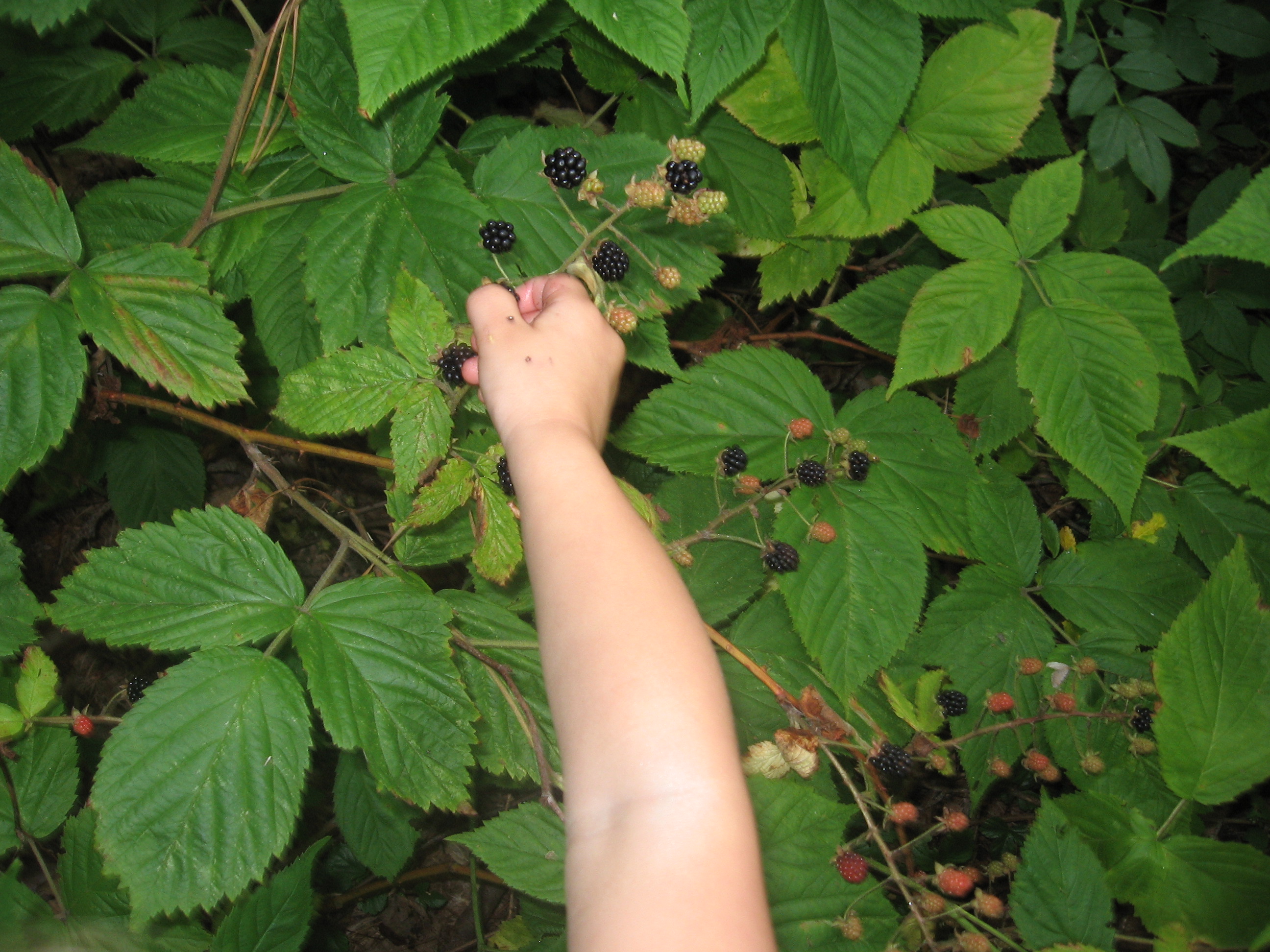
August means Blackberries
Posted: August 20, 2011 Filed under: Farming off the Farm, Gallery - Visual, Little Green Thumbs 1 CommentOn our way to the beach we foraged…


Richard Manning, “Against The Grain”
Posted: August 17, 2011 Filed under: Gallery - Quotes Leave a comment“There is a story in my family about my paternal grandfather, a respected and successful, albeit bullheaded, farmer in Northern Michigan. The story…occurred during the Great Depression, in a period of poor prices. Then, my grandfather raised mostly potatoes. That fall, he loaded a truck full of potatoes and took them to the local selling shed, where buyers offered him a price he thought pathetic. So he refused to sell, backed the truck across the road, dumped the potatoes in the ditch, and then drove the truck over them to crush them, as the buyers looked on. To this day, farmers are offered pathetic prices for crops, but no one in his right mind would do what my grandfather did.
As far as I know, he was in his right mind, and besides his potatoes, he also had at home cattle, hogs, chickens, eggs my grandmother used or sold, milk and cream from cows, apples, seed potatoes saved, and manure piling up to fertilize next year’s crop. A wood lot gave him lumber and fuel to heat the house. Neighbors supplied him with labor when he needed it, and he repaid them in kind. He had alternatives and could get through a year without selling his potatoes. His was the last generation of farmers to have that independence, before it got traded away for efficiency.”


David Abram: “Becoming Animal”
Posted: August 1, 2011 Filed under: Gallery - Quotes 1 Comment“This old notion, deeply layered into our Western language, neatly orders the things of the experienced world into a graded hierarchy – “the great chain of being” – wherein these phenomena composed entirely of matter are farthest from the divine, while those that possess greater degrees of spirit are closer to the absolute freedom of God. According to the dispensation of spirit, stones have no agency or experience whatsoever; lichens have only a minimal degree of life; plants have a bit more life, with a rudimentary degree of sensitivity; “lower” animals are more sentient, yet still stuck in the instincts; “higher” animals more truly aware – while humans alone in this material world, are really intelligent and awake.
This way of ordering existence, which depends upon an absolute distinction between matter and spirit, has done much to certify our human dominion over the rest of nature. Although it originates in the ancient Mediterranean and reaches its height in medieval Christianity, this old notion was never really displaced by the scientific revolution. Instead it was translated into a new, up-to-date form by a science still tacitly reliant on the assumption of a limitless human mind (or spirit) investigating a basically determinant natural world (or matter).
Yet as soon as we question the assumed distinction between spirit and matter, then this neatly ordered hierarchy begins to tremble and disintegrate. If we allow that matter is not inert, but is rather animate (or self-organizing) from the get-go, then the hierarchy collapses, and we are left with a diversely differentiated field of animate beings, each of which has its gifts relative to the others. And we find ourselves not above, but in the very midst of this living field, our own sentience part and parcel of the sensuous landscape. “
Richard Manning: “Against The Grain”
Posted: August 1, 2011 Filed under: Gallery - Quotes 1 Comment“The effects of modern industrial agriculture range from pesticide pollution to freshwater depletion, energy consumption, erosion, and salinization. We can, nevertheless, trace the Green Revolution’s swath across the planet, especially in marine systems, by focusing on a single element – nitrogen. Beginning in about 1950, the use of nitrogen fertilizer ballooned from less than five million tons annually worldwide to about eighty million tons today….
Most of the nitrogen leaves farm fields with runoff, so the most apparent damage is to rivers, wetlands, estuaries, and seas where it causes eutrophication, anoxia, and hypoxia, various types of oxygen depletion as a result of excess nitrogen. Dots of these water-borne problems pock the globe, wherever farming touches water, but the problem is most easily read in the Gulf of Mexico, which now bears a twenty-thousand square-kilometer hypoxic Dead Zone. Fish and shrimp have disappeared from this area; 85 percent of the gulf’s estuaries are affected. The nitrogen causing this all comes from the Mississippi River, which drains a vast region of the United States, but an Army Corps of Engineers study was quite specific about the source. Seventy percent of the Mississippi’s nitrogen comes from a relatively small six-state area that is the heart of the nation’s corn belt.”
Rachel Carson: “The Sense of Wonder”
Posted: July 27, 2011 Filed under: Gallery - Quotes 1 Comment“Those who contemplate the beauty of the earth find reserves of strength that will endure as long as life lasts. There is symbolic as well as actual beauty in the migration of the birds, the ebb and flow of the tides, the folded bud ready for the spring. There is something infinitely healing in the repeated refrains of nature – the assurance that dawn comes after night, and spring after winter.”
Henri Matisse: “Jazz”
Posted: July 20, 2011 Filed under: Art & Healing, Gallery - Quotes 1 Comment“Happy are those who sing with all their heart, from the bottom of their hearts. To find joy in the sky, the trees, the flowers. There are always flowers for those who want to see them.”
 an Art Farm