spring pageant
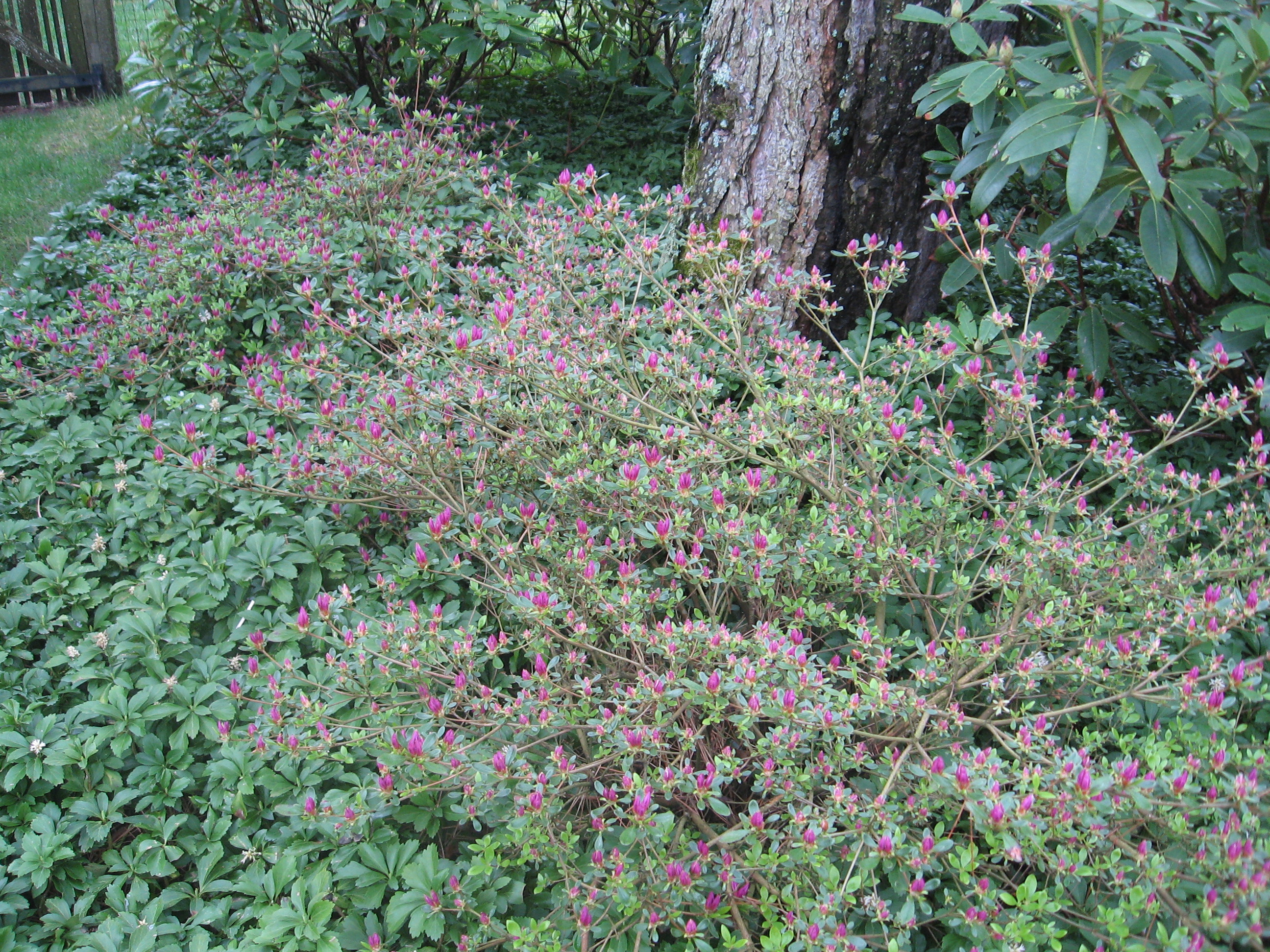
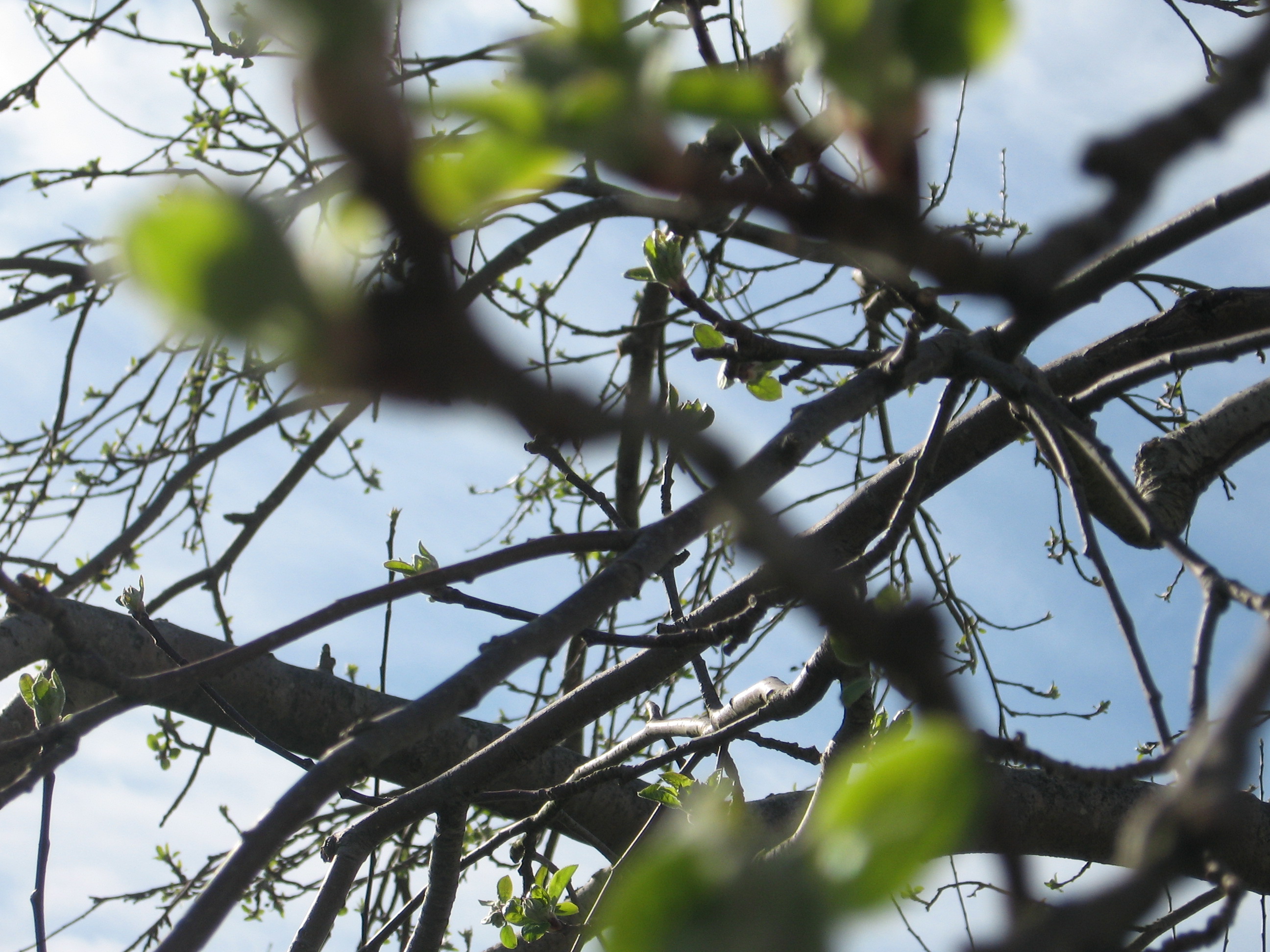
Posted: May 9, 2012 Filed under: Art & Healing, Gallery - Visual 2 CommentsHere in zone 6, on the ocean, there have been two weeks of cool, damp days. The trees and shrubs are happy, with buds ready to burst. This is the magic time, and with a day or two of sunshine, the apple orchard will be resplendent!




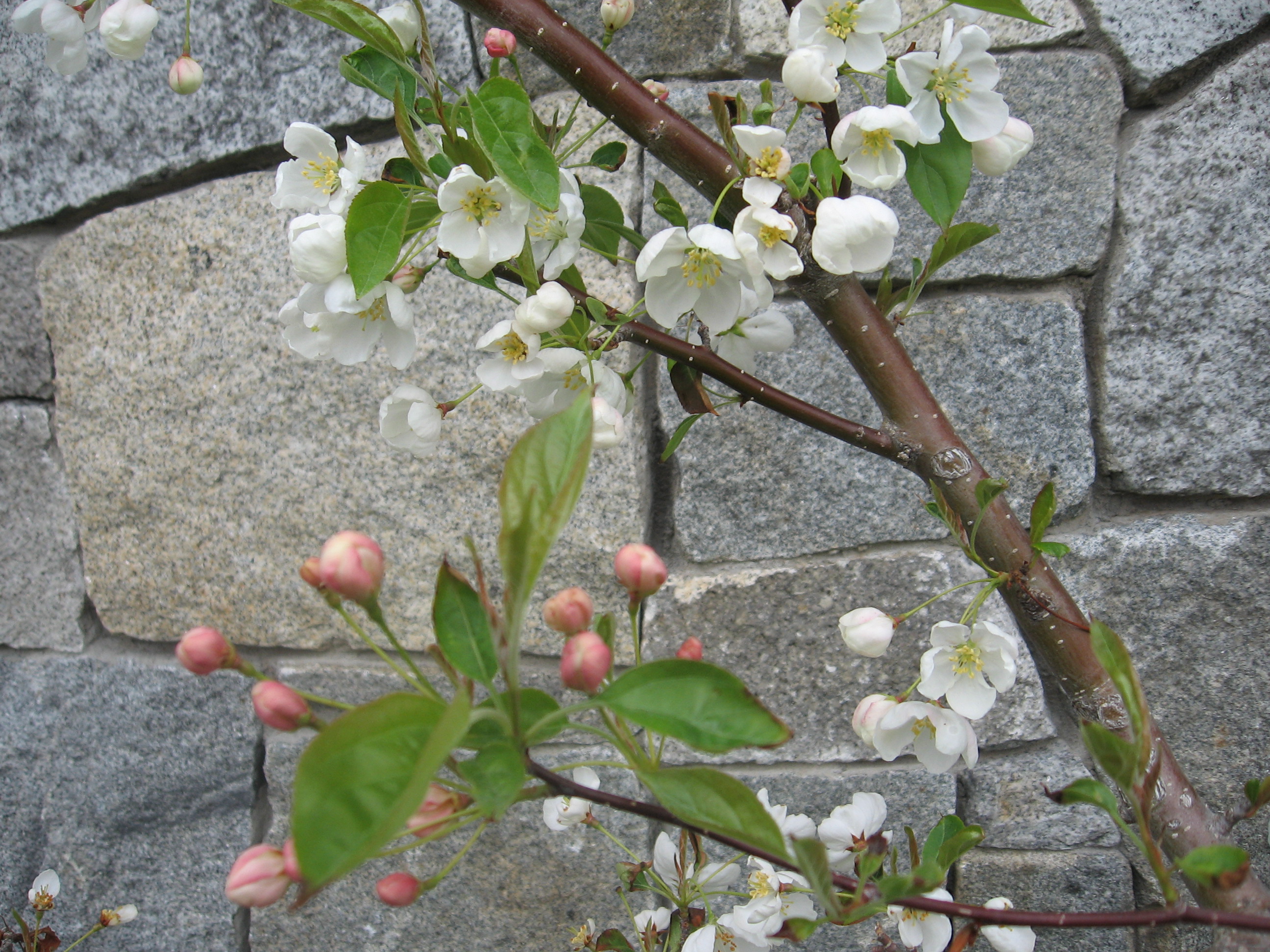
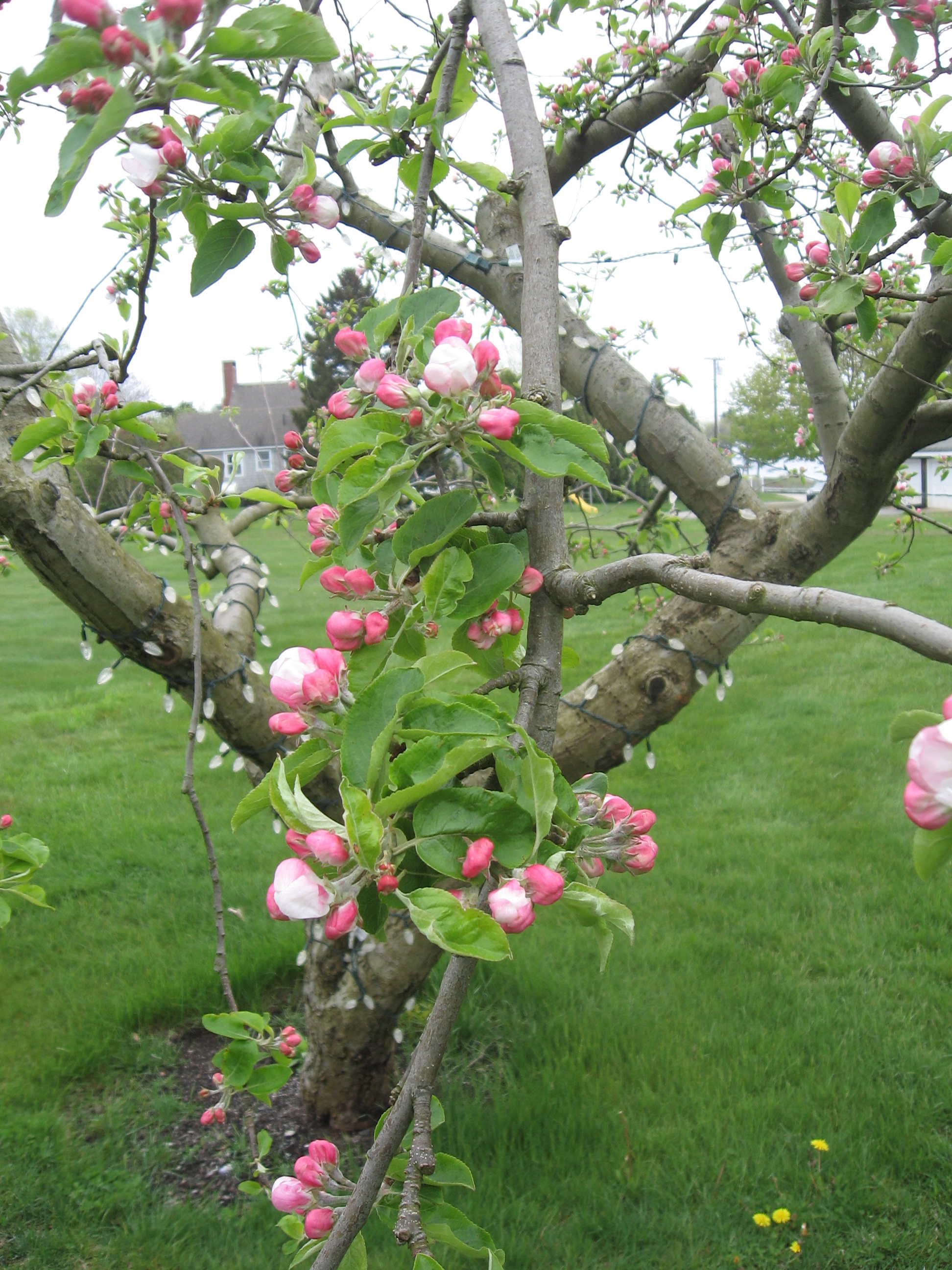
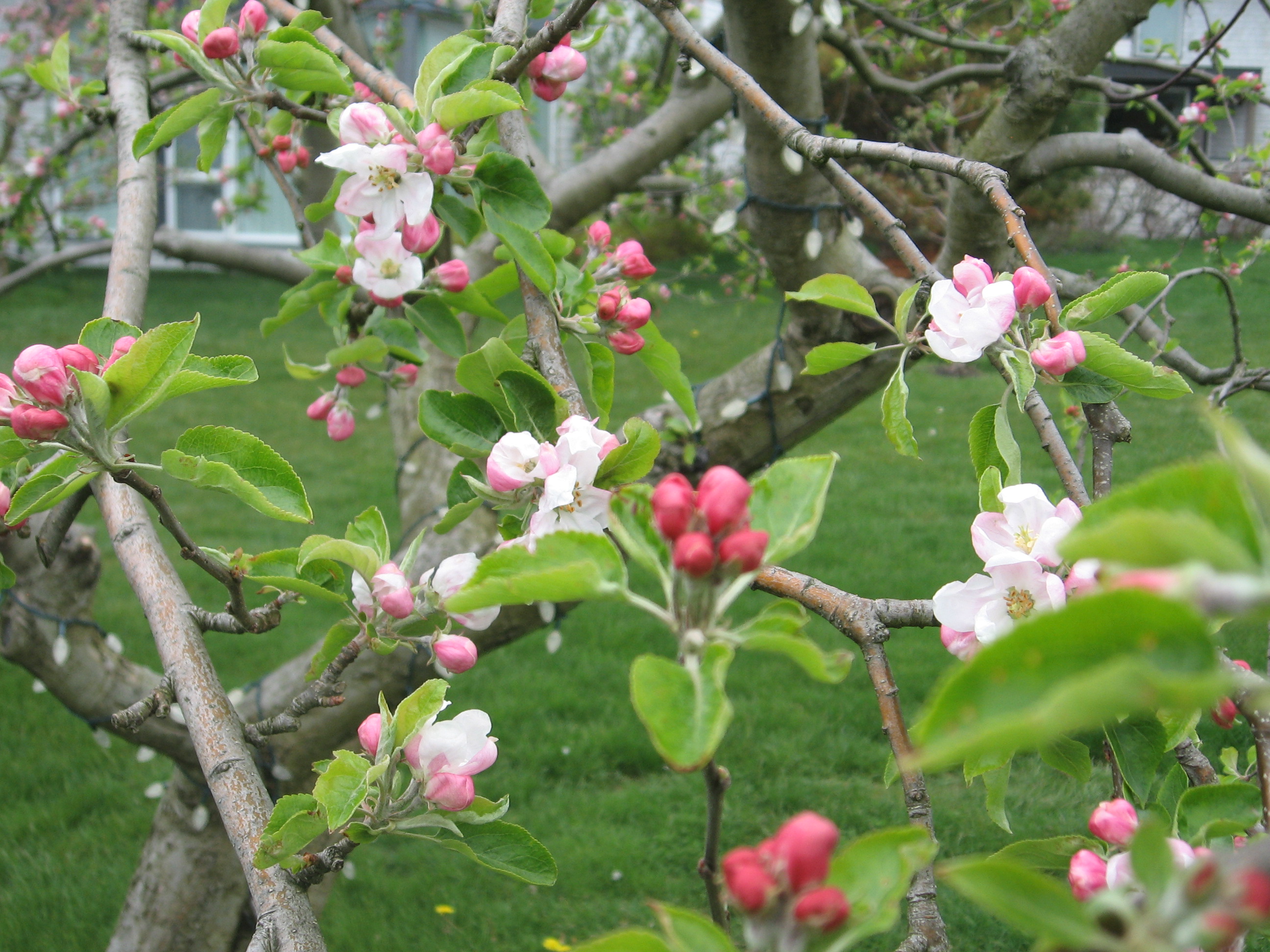

Spring blossoms
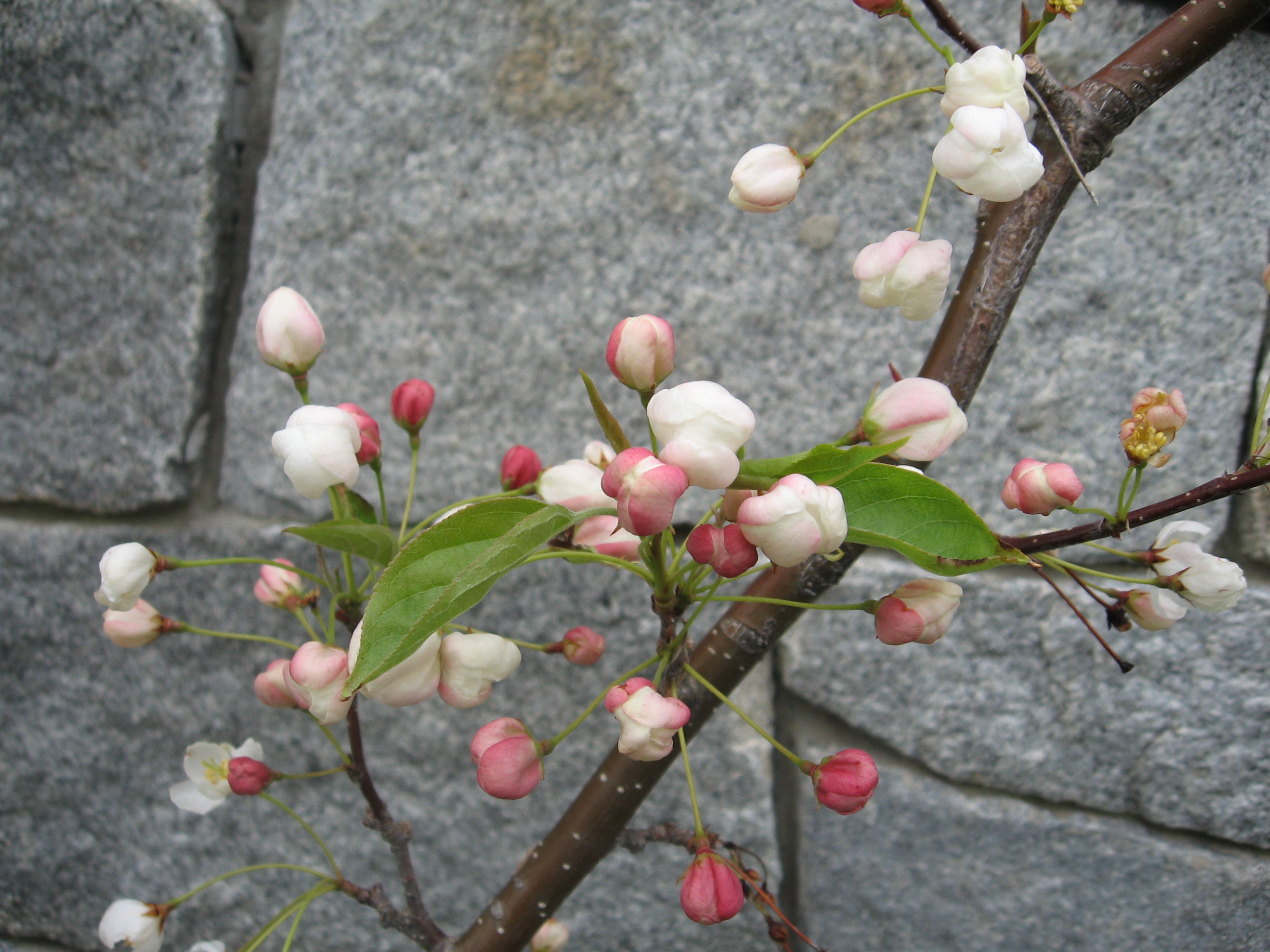
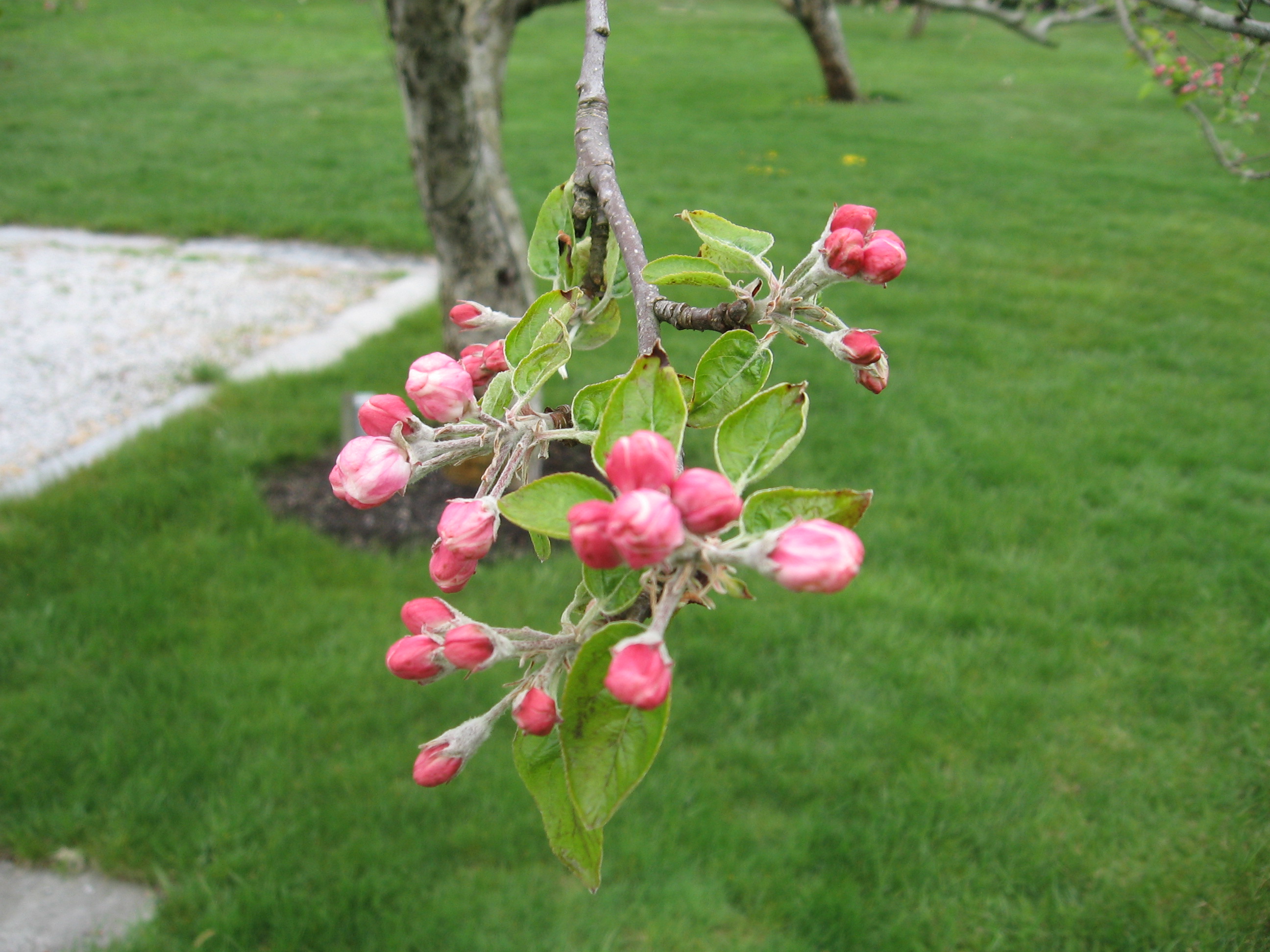
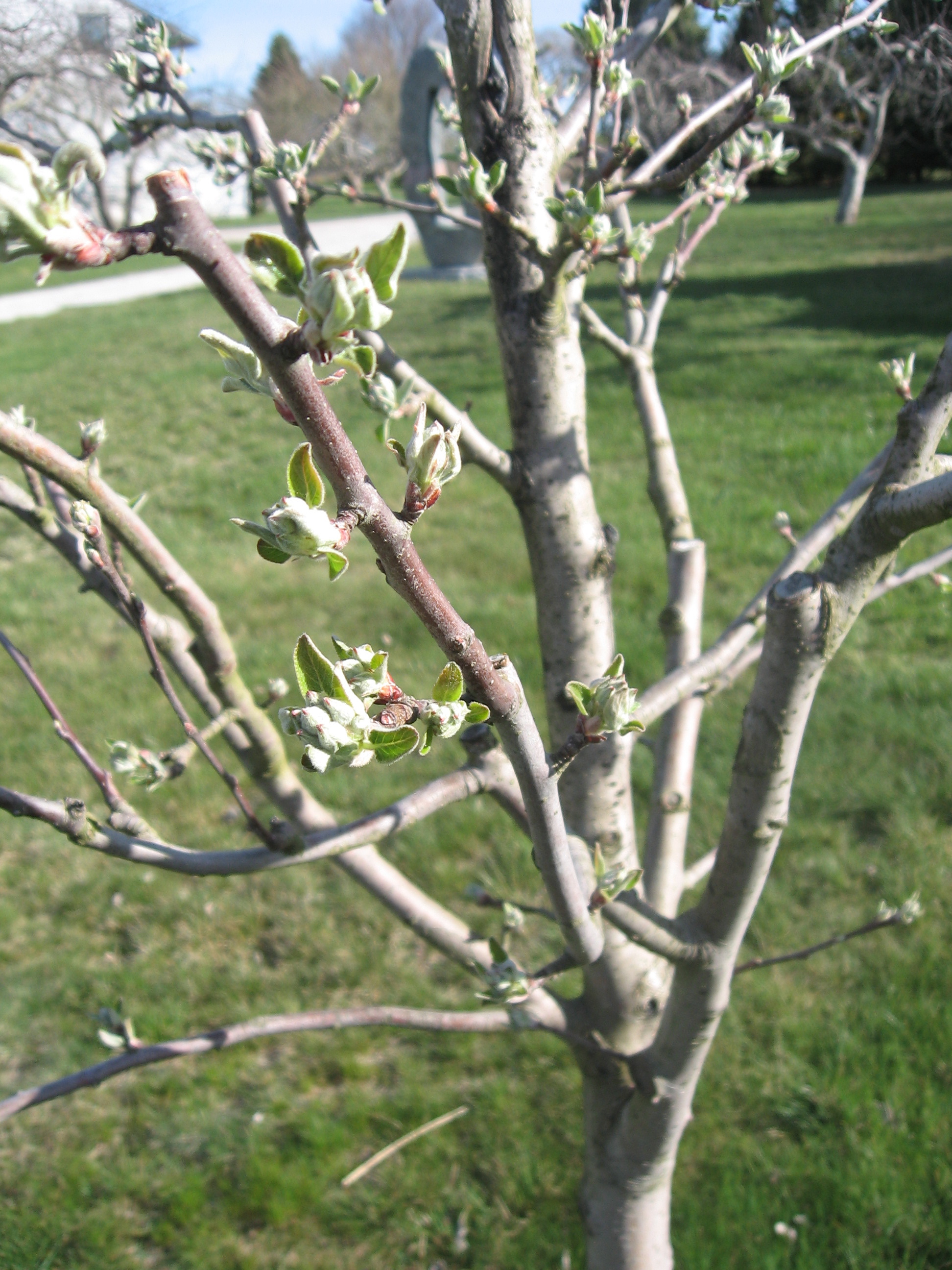
Posted: April 21, 2012 Filed under: Farming off the Farm, Gallery - Visual Leave a commentHere are photos of the apple orchard, taken April 18th. With the very warm March weather, we are about three weeks ahead of a “normal” spring. The buds are currently in the “half inch green” and “tight cluster” stages.

“Good things last”
Posted: February 2, 2012 Filed under: In the Kitchen 3 CommentsOur Great Uncle Don lives by that mantra. And he knows, having been, for almost four decades, a buyer of furniture and art. From Louisville, Kentucky – home of the Mint Julip and a refined southern comfort – he travelled the world each year, from Asia to Africa and all the way across Europe. He has a finely tuned eye. And his mantra makes sense.
In his eighties now, he doesn’t travel with the same aplomb. But he loves Peanut Butter Cookies and we baked and sent to him some treats: good things that won’t last.
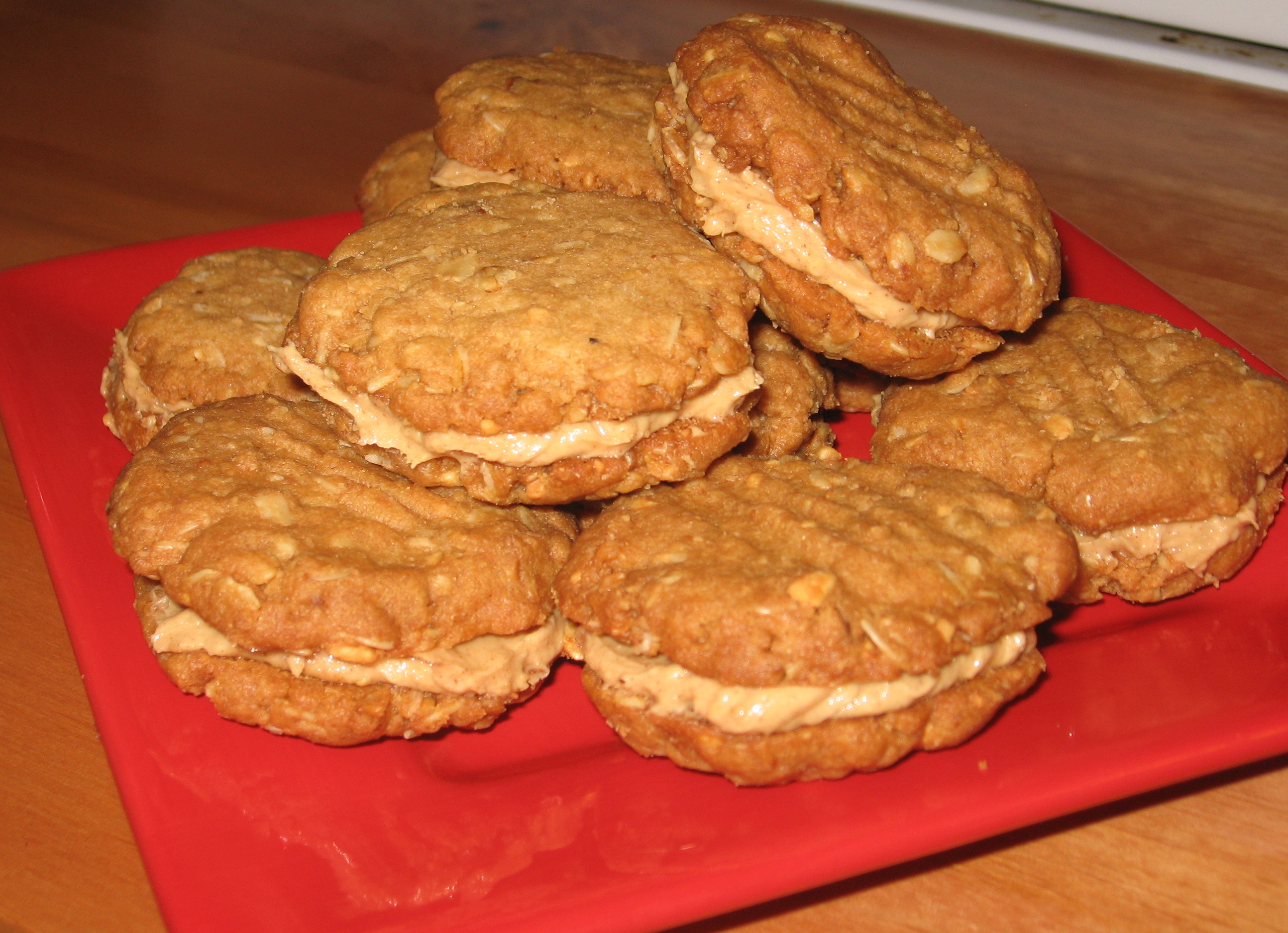
This recipe for peanut butter sandwich cookies is an adaptation of “Not Nutter Butter” from Nancy Silverton’s Sandwich Book. It made 52 individual cookies, or 26 sandwich cookies.
In a medium skillet combine: 4 oz unsalted butter, 1 vanilla bean (or about 1 tsp vanilla extract), and 2 Cups rolled oats and toast them over a medium heat until they are becoming caramelized:
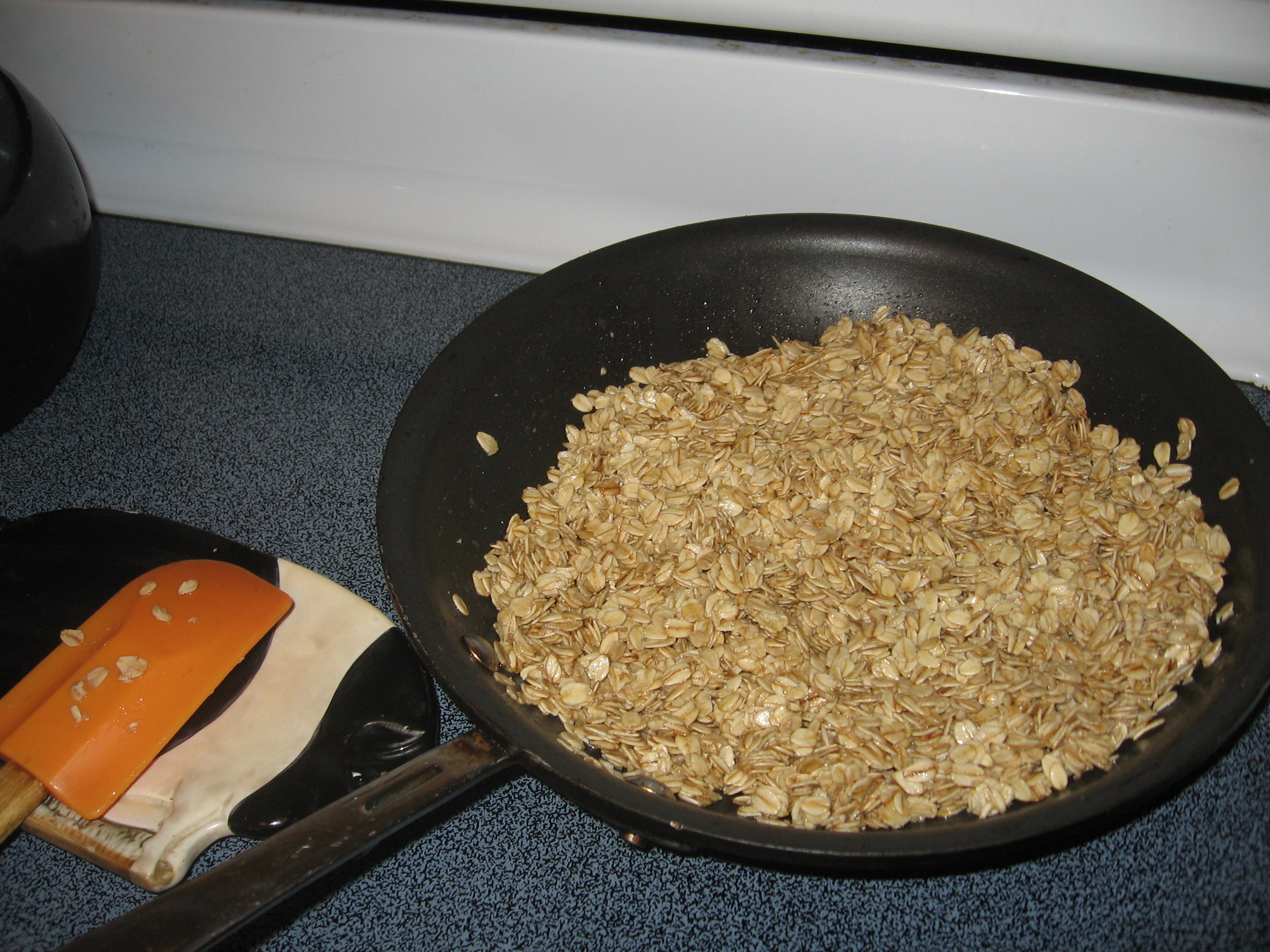
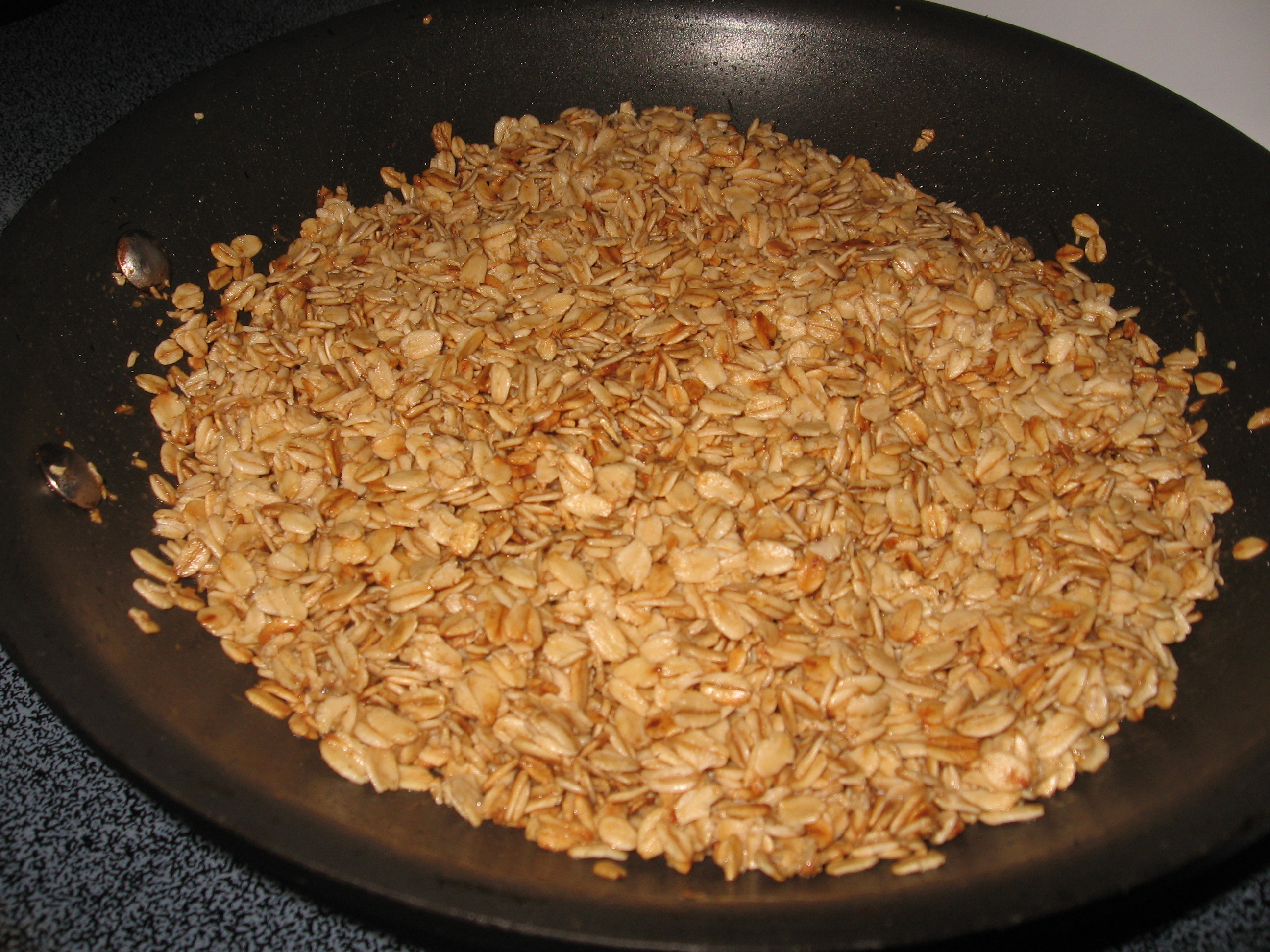
Meanwhile, cream together: 8 ounces unsalted butter, 2 tsp baking soda, and 2 tsp kosher salt until the butter is softened. Then add 3/4 Cup white sugar and 3/4 Cup brown sugar and mix until light and fluffy.
Next add 3/4 cup peanut butter (we used Whole Foods No Salt bulk peanut butter, but you could use any other brand. If using natural peanut butter pour off the excess oil before adding.) And then mix in the toasted oats and 2 1/4 Cup unbleached all-purpose flour. Blend until just combined.
Using a coffee scoop we portioned the cookies and then pressed them down, gently, to flatten them out:
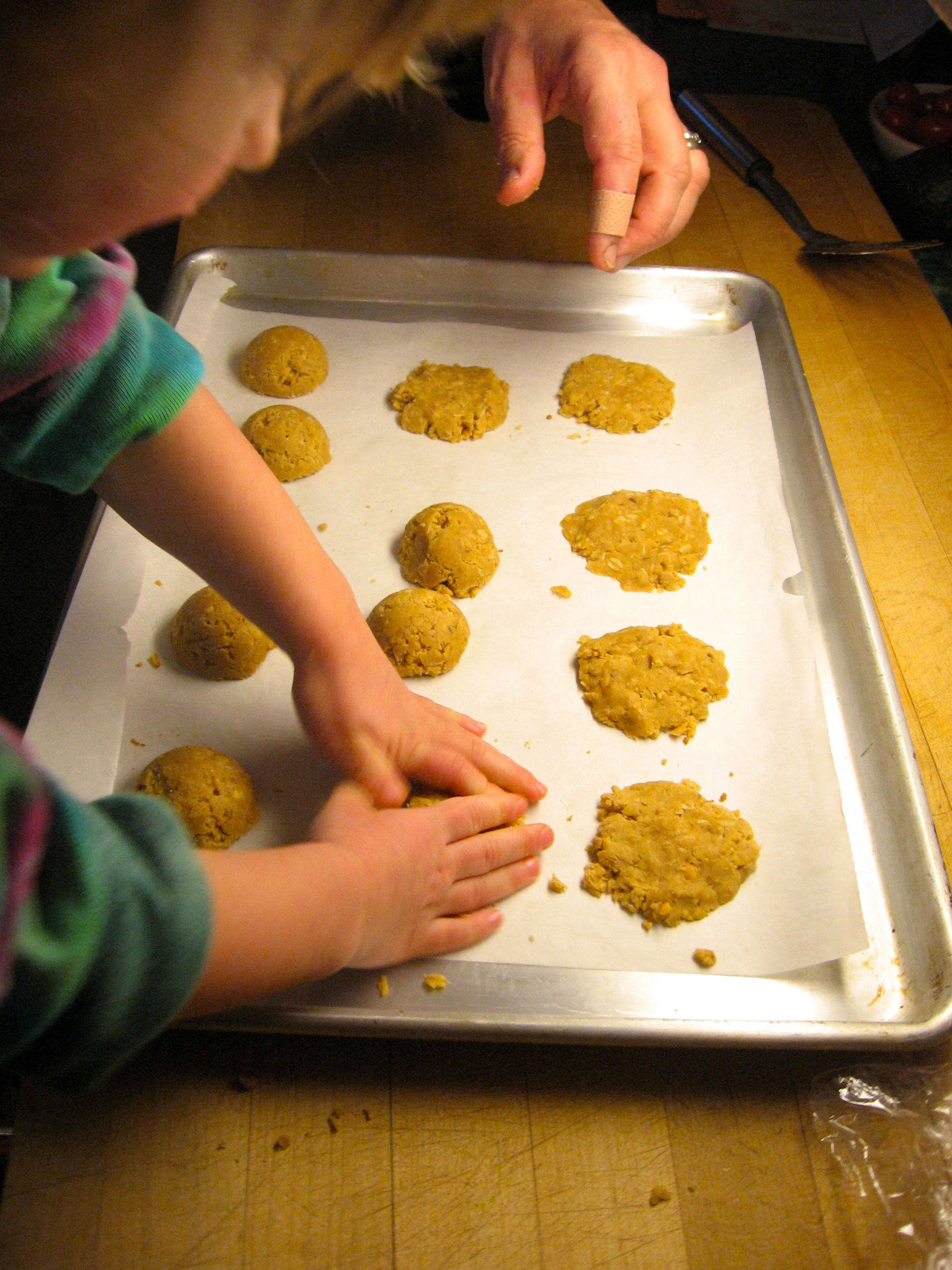
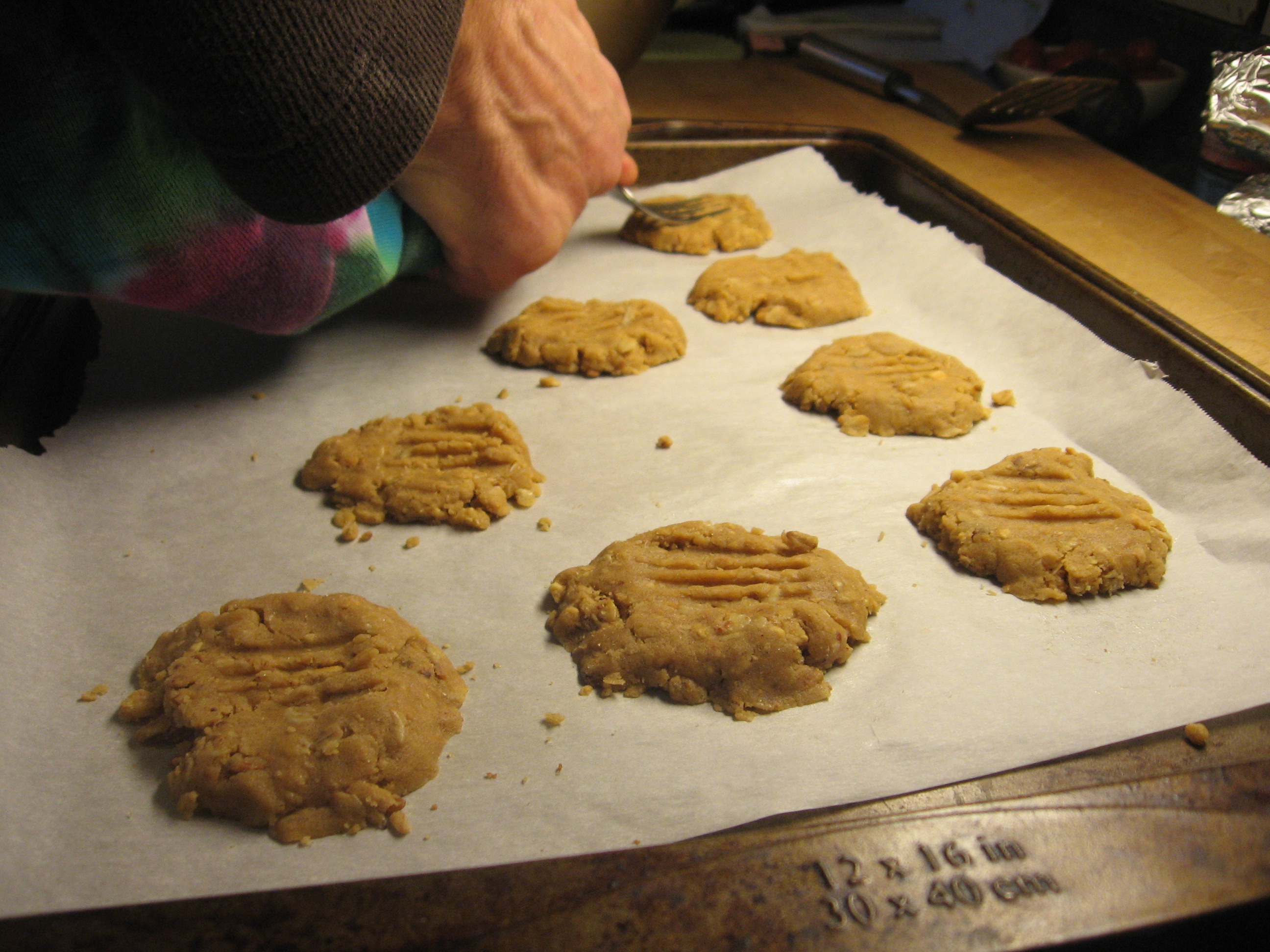
You might add the cross-hatch marks with a fork.
Bake the cookies on parchment paper at 350 degrees for about 17 minutes, or until just beginning to darken on the edges; we like them best when still just chewy in the middle. They will firm up as they cool.
For the filling, combine 3 ounces unsalted butter, 2 tsp kosher salt, 1/2 Cup + 2 Tbsp powdered sugar, 1/2 Cup bulk all natural no-salt peanut butter, and 1/2 Cup + 2 Tbsp almond butter, unsalted. Blend until smooth and creamy, and then spread the filling between two cookies.
Stone Turtle
Posted: January 28, 2012 Filed under: In the Kitchen 4 CommentsWent to a bread baking class today at the Stone Turtle Baking and Cooking School. Michael and Sandy Jubinsky are two people who love what they do. For 30+ years Michael was the spokesperson for King Arthur Flour and in 2011, he was voted one of the ten best bread bakers in America. He knows his stuff. www.stoneturtlebaking.com
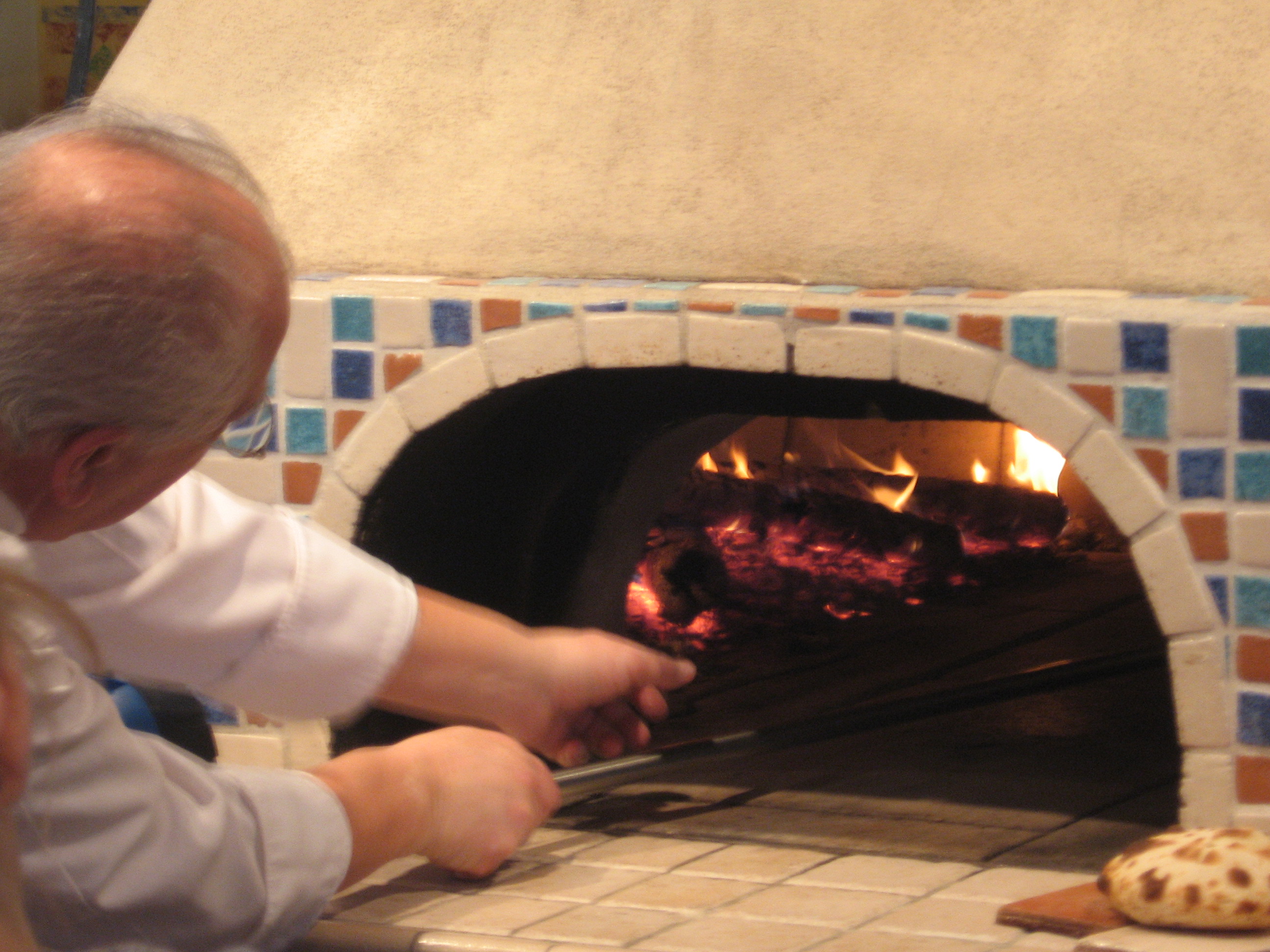
Michael is retired, and in a typical fashion up here, going stronger than ever. He and Sandy built a home, a classroom/bake shop and an awesome wood-fired Le Panyol Stone Oven from France. Stoking the fire with kiln-dried oak (4% moisture) and maple hewn from his property, the oven burns up to 1079 degrees at the dome, 982 degrees on the floor and and produces bread with crust and crumb to die for.
Today’s class was Italian-Style Hearth Breads: a biga pre-ferment, equal parts durum wheat and all-purpose flour (11.7% protein – less gluten than bread flour), some olive oil and slow-to-ferment gift you a tight textured, golden-hued piece de resistance. Perfect for toast! Great with a glass of wine!
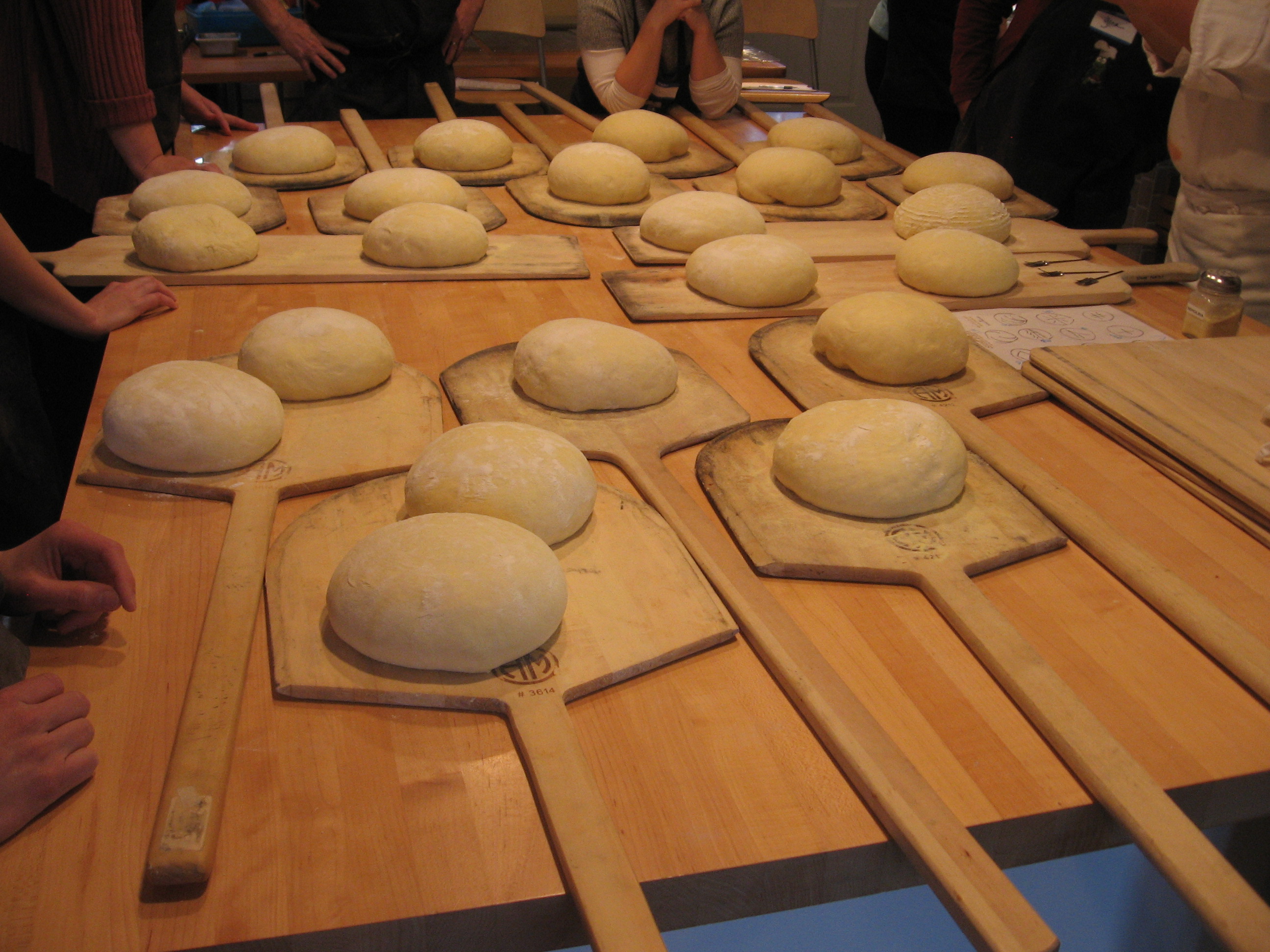
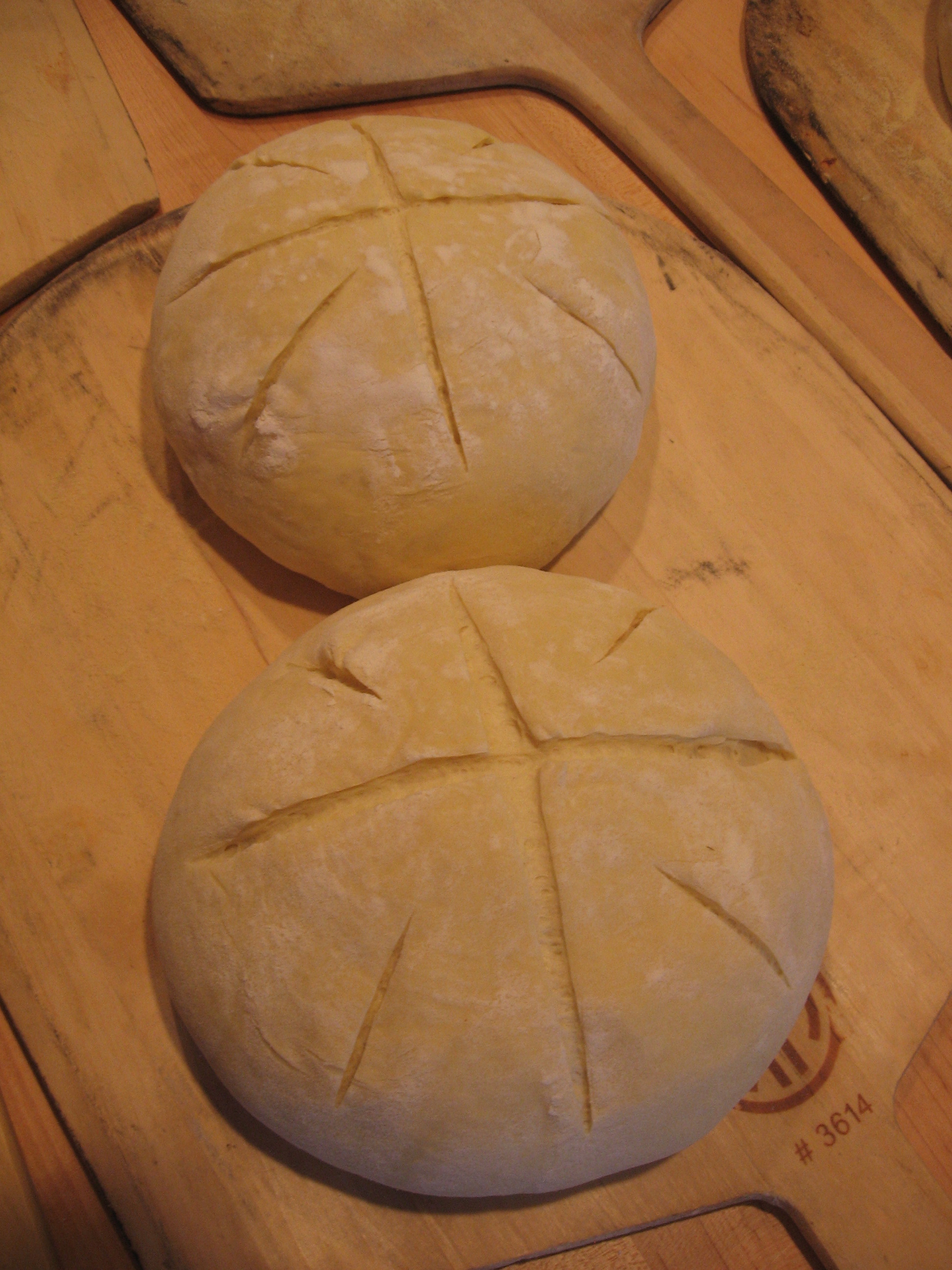
There were ten students in the class. We each made two loaves, 700 grams each with approx. 64% hydration (ratio of water to flour), proofed, stretched and folded three times, then ultimately shaped into a boule and placed upon a bread peel. The oven had cooled to just below 600 degrees, and the bread baked for 16 minutes.
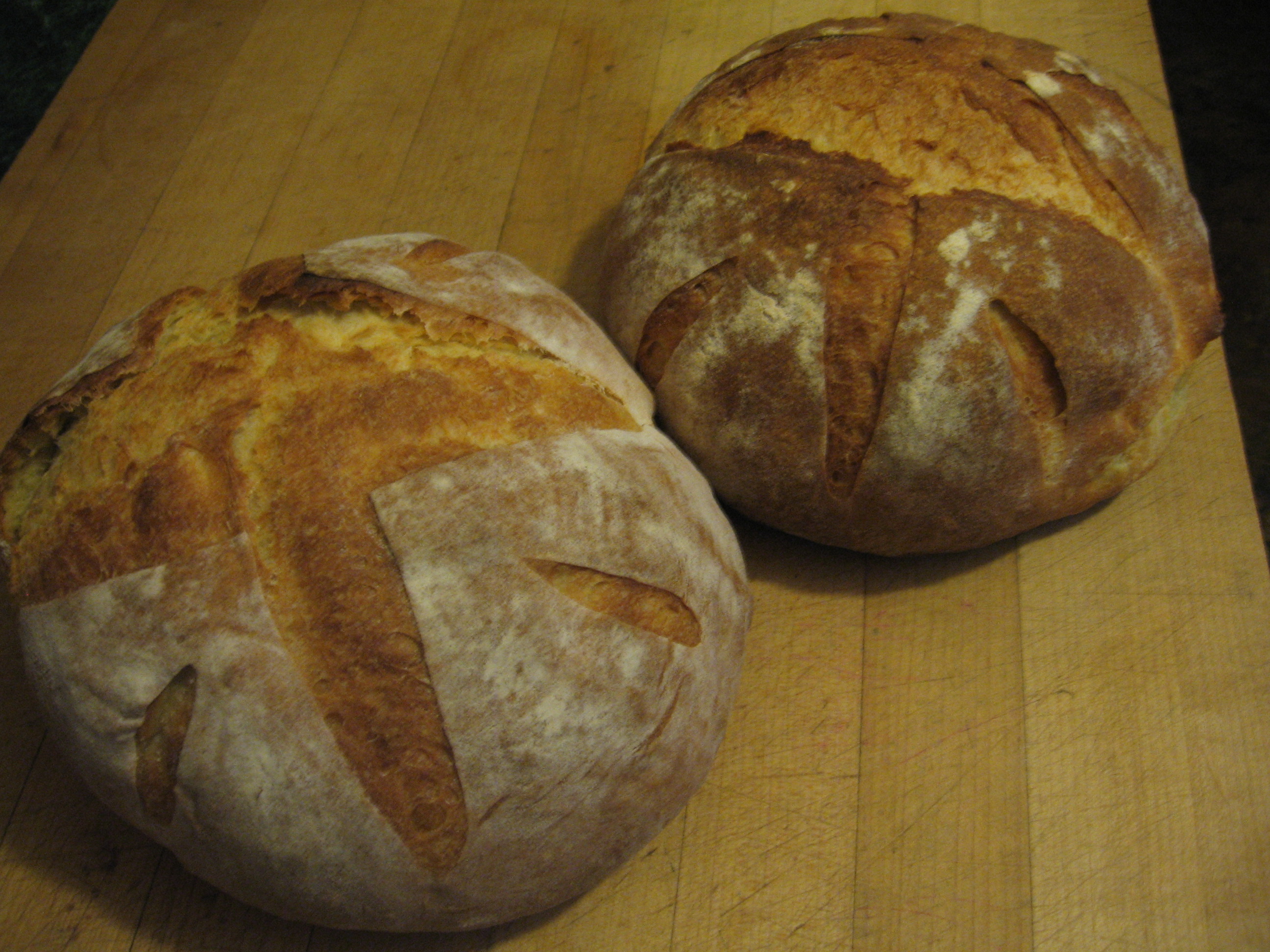
We each had a special marking pattern. My two loaves are in the photo to the right, below.
 The 64% hydration is somewhat “moderate”; Stephen Lanzalotta, a local baker, makes breads upwards of 85% + hydration – rather like pancake batter – that he kneads by hand, slowly forming the gluten strands that bind and form a superb crumb; his bread lines stretch out the door, buyers waiting up to an hour to purchase his breads.
Of late, wood-fired ovens are the vogue, but they have been around since at least 300 BC when the Greeks enclosed fire within a flame-resistant mortar shell. But history here is moot; what matters today is crust and crumb:
Blue Oysters
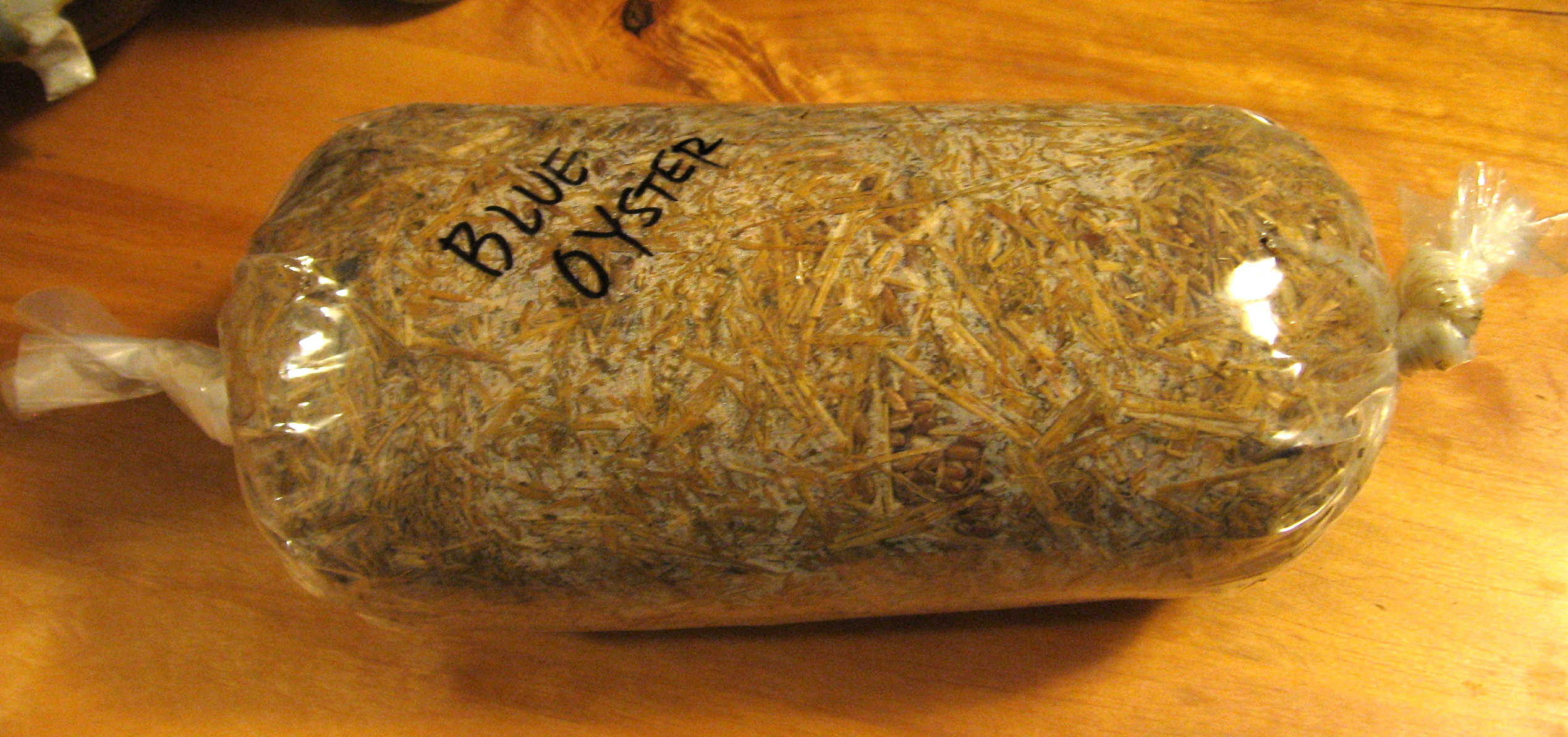
Posted: January 25, 2012 Filed under: Farming off the Farm, In the Kitchen 5 CommentsI went to a mushroom cultivation class today at the Urban Farm Fermentory and came home with a “log” of straw inoculated with spores of a Blue Oyster Mushroom.
It is all new to me…but E loves to eat mushrooms, (and truffles someday, I’ll bet!) so I thought, why not try growing our own?
At the class we learned about sterilizing winter rye berries in a pressure cooker, then, inside an air-sealed glove box, using a syringe to inoculate the berries with spores. Within a few days the spores will develop, and within a few weeks you have a jar full of mycelium – the vegetative part of a fungus – using the berries as a host. After the mycelium develops, the berries are packed, along with pasteurized straw, into a plastic bag poked with a series of small holes to allow the fruit – the Blue Oyster Mushrooms in our case – to emerge.
So home I arrived with the straw filled bag, which I am storing in the basement – a dark warm, preferably humid place. In a few weeks I expect (hope, may be more like it) the bag will become engorged with tiny white strands of mycelium. At that point I will bring it out into the light, and keep it plenty moist, and it should form a fruiting body: the edible mushrooms.
Fungi are a separate kingdom, distinct from both plants and animals, with an estimated more than 5 million species. With over 32,000 sexes of spores (don’t ask) only need two to combine to grow into a mycelium mat. Paul Stamets, in “Mycelium Running” describes a “2,400-acre site in eastern Oregon had a contiguous growth of mycelium before logging roads cut through it. Estimated at 1,665 football fields in size and 2,200 years old, this one fungus has killed the forest above it several times over, and in so doing has built deeper soil layers that allow the growth of ever-larger stands of trees. Mushroom-forming forest fungi are unique in that their mycelial mats can achieve such massive proportions.”
Seems like science fiction to me, but it’s just another part of the wild world of nature. Incredible. And edible. For the most part.
Balance
Posted: December 21, 2011 Filed under: Art & Healing, Chronicles of a First Time Parent, Gallery - Quotes, What is an Art Farm 1 CommentNicole Foss is an author whose focus is the crossroads of peak oil, real politik and global finance; her question is ultimately about sustainability. Writing under the pseudonym “Stoneleigh” she is the Senior Editor at the Automatic Earth [www.theautomaticearth.blogspot.com].
She travelled through Maine recently and I helped organize a presentation in Portland. With less than two weeks notice, we were able to get seventy people to attend on a Monday night. The discussion lasted four hours.
Nicole’s thesis is that the bursting credit bubble will result in a severe retraction of the money supply. By reducing or even eliminating credit, only cash will remain and become extremely scarce, thus reducing the velocity of money; the pendulum will swing away from “the orgy of consumption” toward “austerity on a scale we cannot yet imagine. …As a much larger percentage of the much smaller money supply begins to chase essentials, those [essentials]…will be the least affordable of all.”
This scenario is not, she says, just financial, but compounded by decreasing supplies of oil, with increasing costs of production. “The future is at our doorstep,” she writes, “and it does not look like the past as we have known it.”
No one can know for certain whether Nicole’s scenario will play out. But that provocative message caused us to wonder about what, as a parent, we need to do to prepare our little one for a future so uncertain.
Our response:
Embrace practical skills – planting a garden, baking bread, fixing a flat tire, living within a budget, to name but a few – because they are fundamentally necessary while also teaching self-reliance and help maintain freedom of action.
Live as close to the earth as practical and possible, and build social capital in our community. Personal integrity is the most enduring asset.
Play is essential. Especially in dark times, we need to create joy in our home. Art-making can fit within that, while also teaching resourcefulness and creative problem solving. That is what our art farm is really about.
Everything has its counterbalance. Even amidst dark and dire times, there is hope and light. That is not a pollyanna notion, but something essential; as a balance sheet must have assets to the liabilities, as yin has its yang.
A New England saying is “a rising tide lifts all boats.” But any Yankee fisherman also knows the tide always goes out. The real and natural cycle has both ebb and flow.
Therein lies the balance.
John Cage, 1928
Posted: December 15, 2011 Filed under: Gallery - Quotes 1 Comment“One of the greatest blessings that the United States could receive in the near future would be to have her industries halted, her business discontinued, her people speechless, a great pause in her world affairs created…. We should be hushed and silent, and we should have the opportunity to learn what other people think.”
Work-in-progress
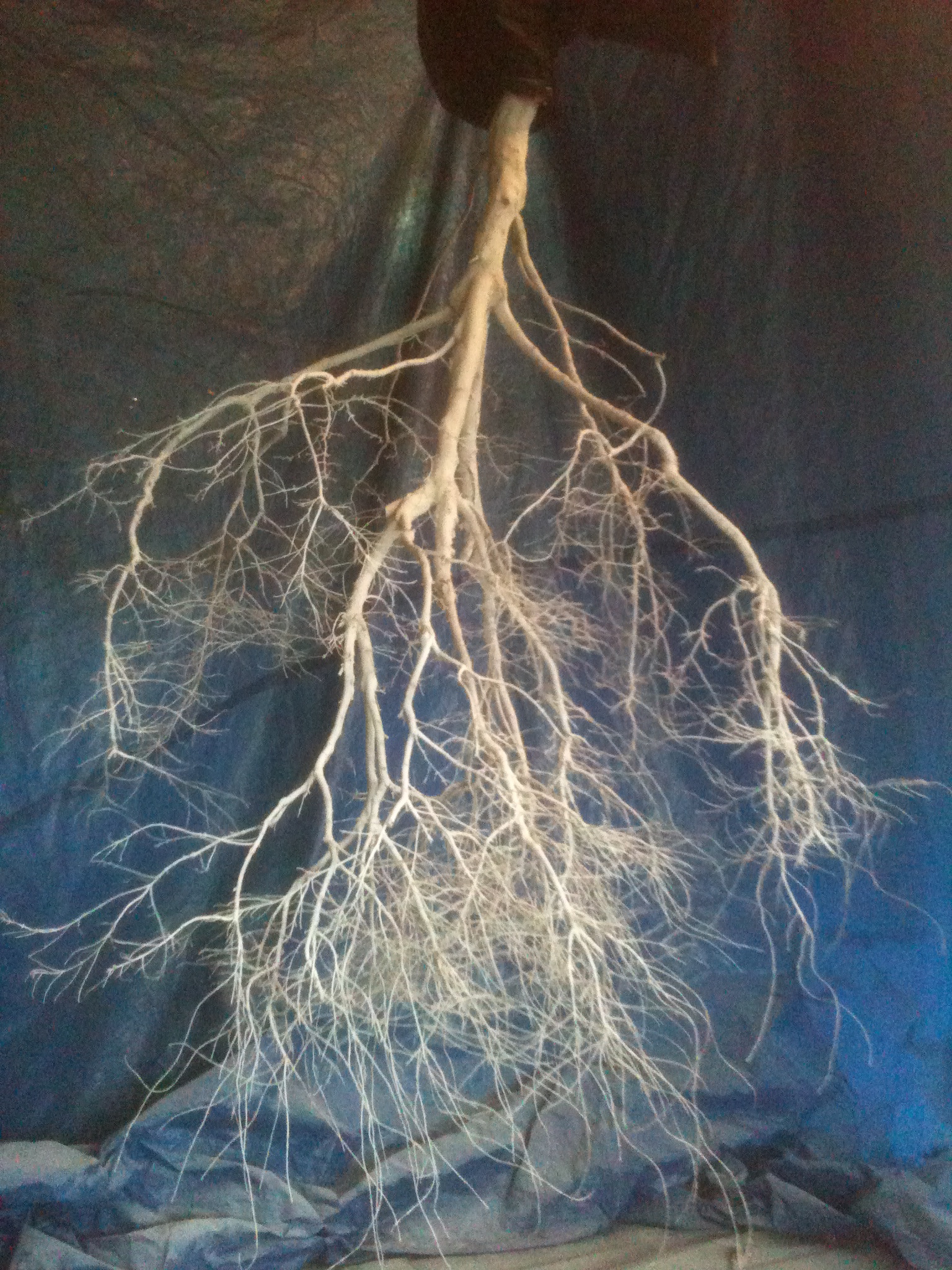
Posted: November 15, 2011 Filed under: Art & Healing, Gallery - Visual 1 CommentI am turning a Japanese Maple tree into a sculpture, spraying it with Chinese Red oil paint, with lacquer to follow. The piece will be mounted on a metal bracket attached to the wall. The roots will be left unpainted and dipped in thinned out lacquer. While painting, the tree hangs from the roots to allow me easily to turn it while I spray the color. These photos show the tree after three coats of primer, and then two successive coats of color. I anticipate several more coats will be needed to reach full color.


All Aboard!
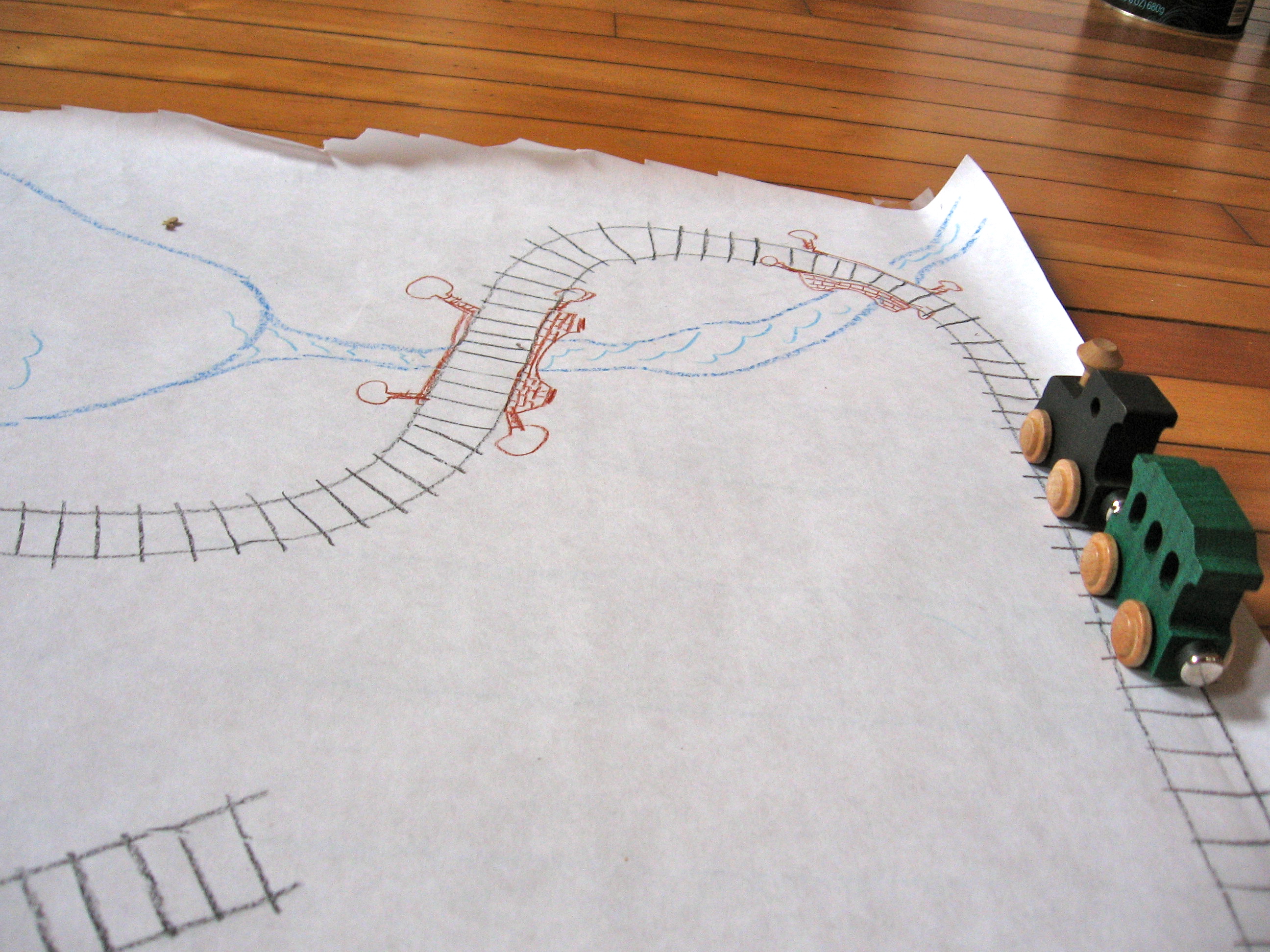
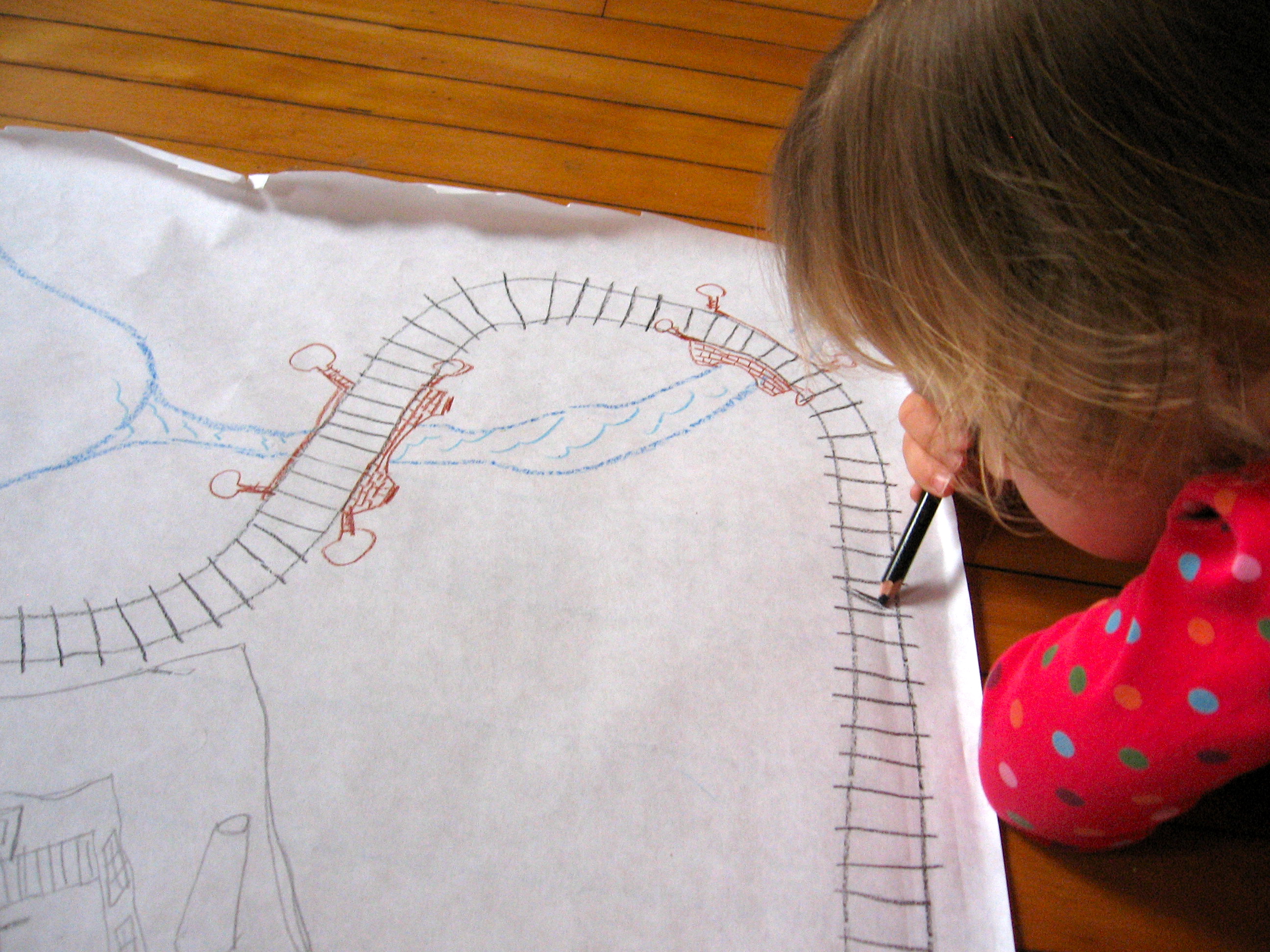
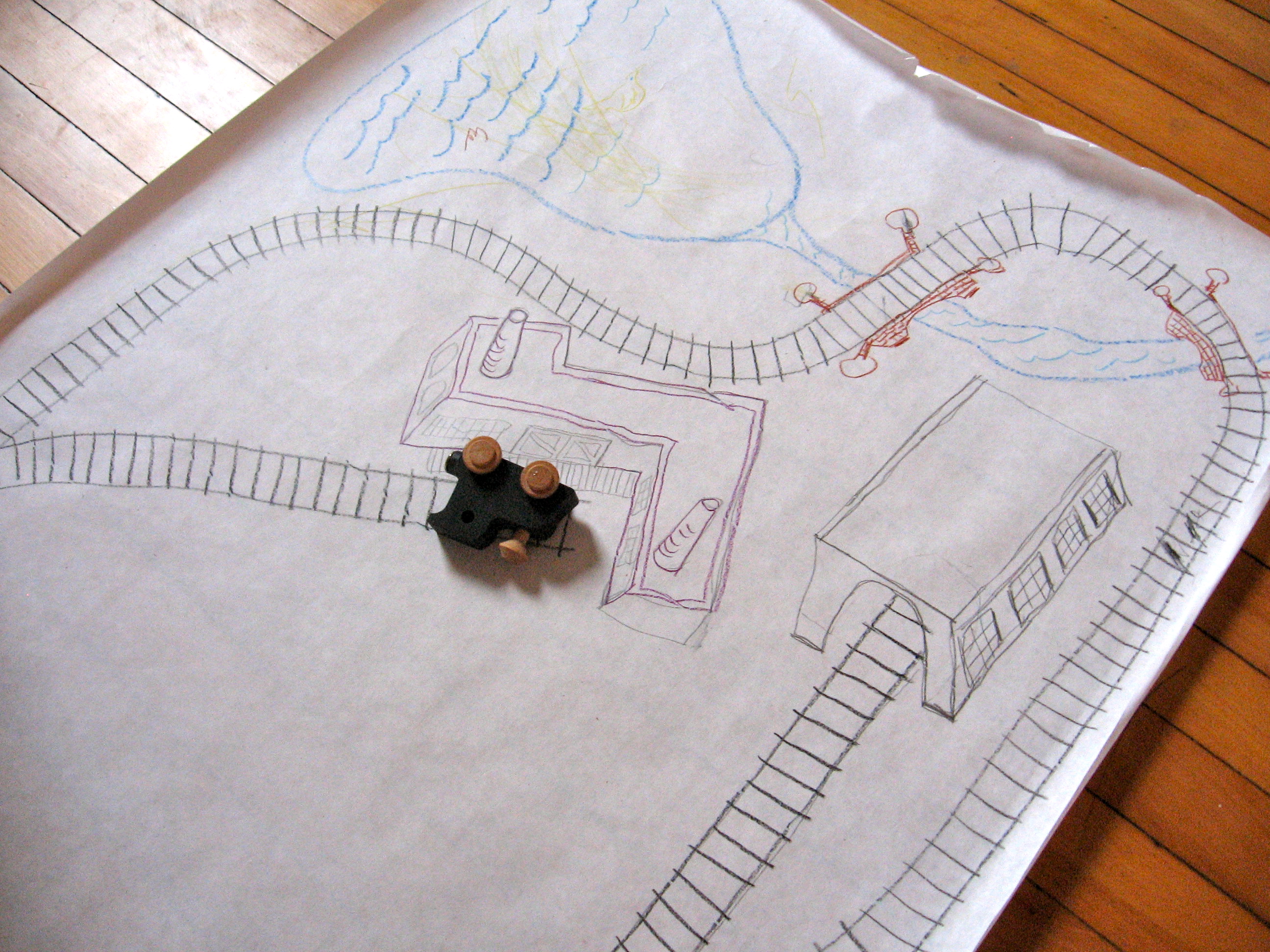
Posted: November 13, 2011 Filed under: Child Centered Activities 2 CommentsA roll of paper and colored pencils…
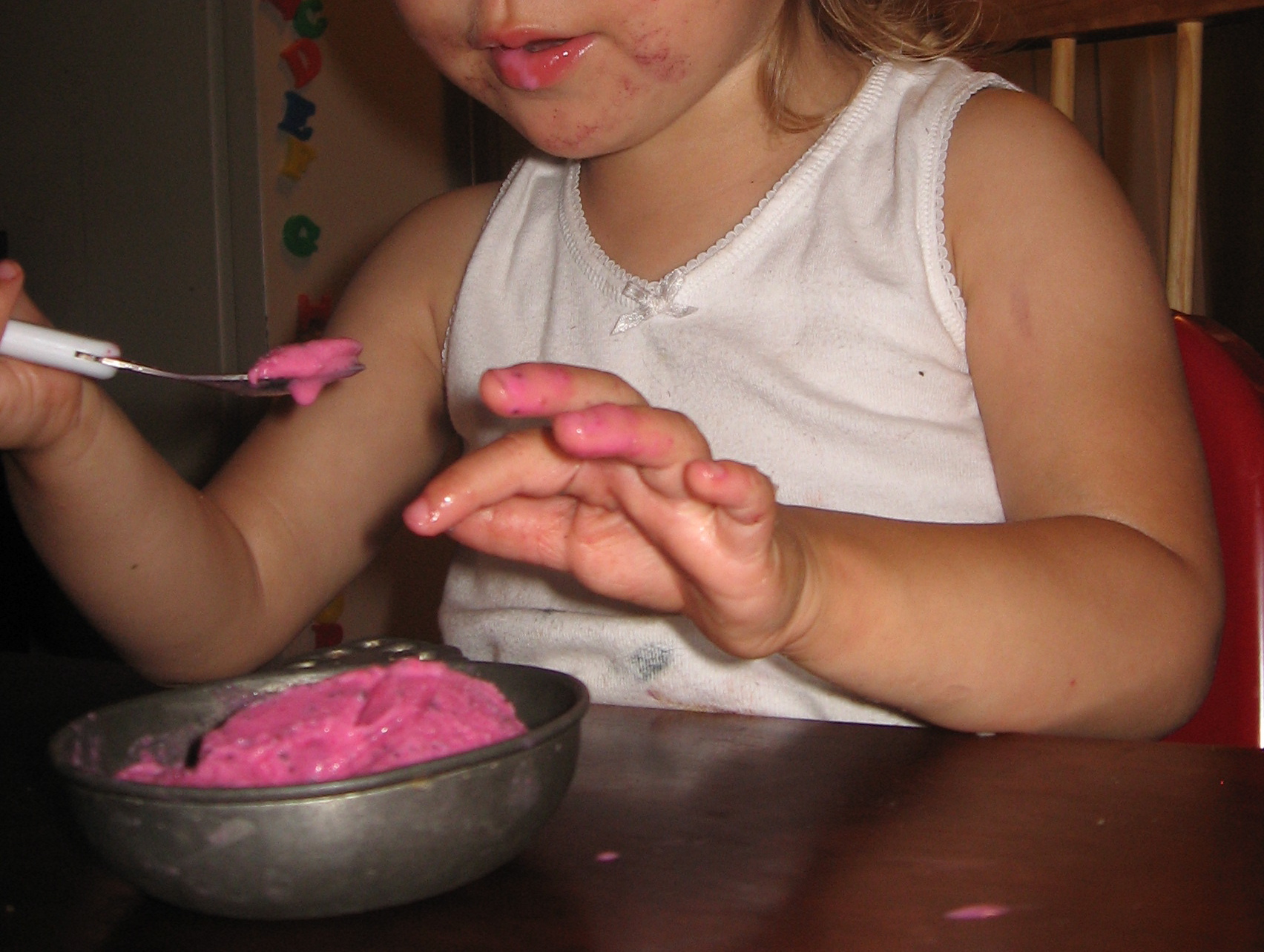
Beet Ice Cream, with Orange Zest, Mascarpone, and Poppy Seeds
Posted: August 21, 2011 Filed under: Child Centered Activities, In the Kitchen 3 CommentsThis recipe comes from “Jeni’s Splendid Ice Creams at Home.” Thanks go to June Gillis, who gifted the book to me.
Wrap two medium beets in aluminum foil and roast, at 400 degrees, until very soft, about 90 minutes.

When cool to the touch, peel and chop, and then puree in a food processor. Press the puree through a sieve, and combine 1/2 cup puree with 2 tablespoons sugar and set aside.
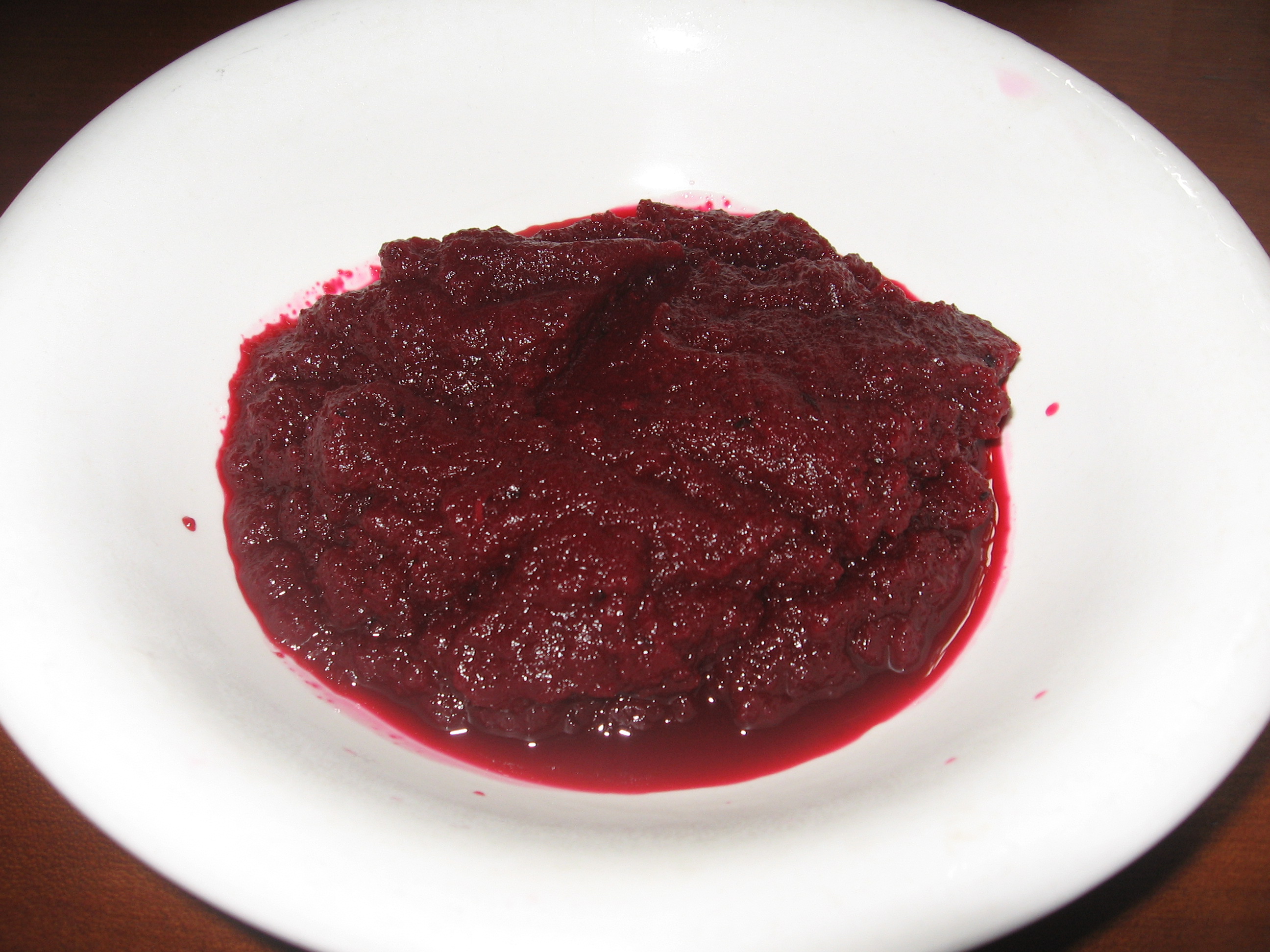
To the beet puree, add 2 tablespoons mascarpone cheese and 1/2 teaspoon sea salt. Mix until smooth and set aside.
Combine 2 tablespoons whole milk with 1 tablespoon plus 1 teaspoon corn starch to make a slurry. Set aside.
Combine 2 cups whole milk, 1 and 1/4 cup heavy cream, 2 tablespoons light corn syrup (or 1 tablespoon Agave Nectar), and zest of one orange (use a vegetable peeler so the zest is large pieces) and bring to a rolling boil for four minutes. Remove from the heat and wisk in the slurry, return to the heat and boil for one minute, until it thickens.
Remove the thickened base from the heat and slowly wisk in the beet/mascarpone mixture.

Pour the mixture into a one gallon zip-lock bag and submerge in an ice bath for 30 minutes, or until chilled.
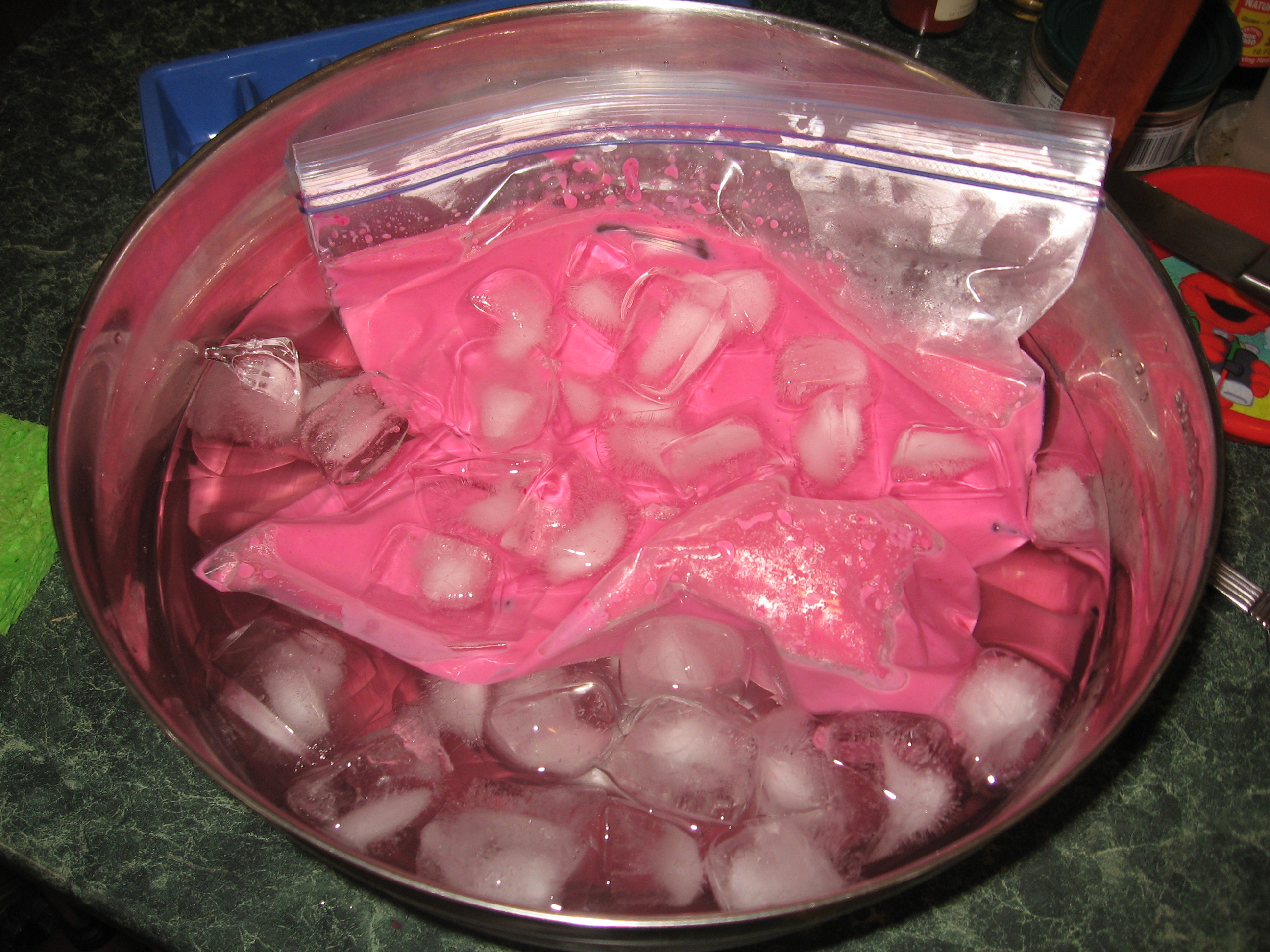
Once chilled, remove the orange zest and pour into an ice cream cannister. Add 2 tablespoons of poppy seeds and churn according to the manufacturers instructions. Once the ice cream has the thickness of soft serve, put into a one-quart container, cover with parchment paper and freeze, in the coldest part of your freezer, until firm, at least four hours.
Sure to please!