Planting Potatoes
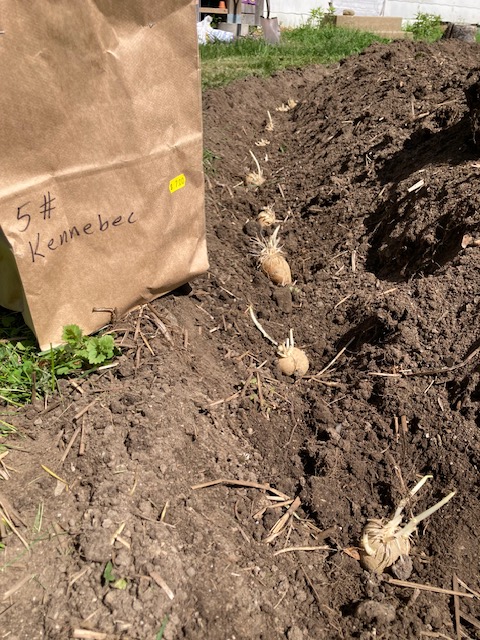
Posted: June 8, 2024 Filed under: Farming off the Farm, What is an Art Farm | Tags: irish american 2 CommentsHere at our Art Farm, we have been planting potatoes, three varieties this year: Dark Red Norland, Kennebec White, and Russian Banana Fingerlings. We have some “volunteers” returning from last year, never harvested. The bounty continues. Norland are early to mature, Kennebec are mid-season, Russian Banana are late to produce, which means potatoes all summer long.
Although of Irish heritage, I plant potatoes because, like a foraging groundhog, it is simply divine to rummage through the dirt and pull up a bouquet of spuds, hanging upon the vine. Gaia’s abundance is never closer at hand.

My long-deceased father rarely or never spoke about his origins, and through ancestry.com we have learned the barest of an outline. Phillip Mahaney immigrated, we believe, from the city of Cork, in the County of Munster, Ireland to the United States in 1850. The Great Potato Famine impacted that region, and between 1845 and 1855 more than 1.5 million adults and children left Ireland seeking refuge in America.
Thaddeus Shannon was born in Kildimo South, Miltown Malbay, County Clare, Ireland at the ancestral home named “Annagh Bridge House.” Thaddeus was not the eldest and therefore would not inherit the family farm, so he immigrated to the United States in 1884. Both Phillip and Thaddeus entered America on the Eastern seaboard, but traveled west to Bourbon County, in the bluegrass region of Kentucky. Their descendants – my grandparents – were married in June of 1924 in Paris, Kentucky.
The railroads were major employers of the Irish, and for the Mahany and Shannon families that is certainly the case. The Louisville & Nashville Railroad – “The Old Reliable” – was a major carrier serving fourteen states throughout the southern USA, and between 1880 and 1950 no less than 21 members of our extended family worked on those lines. The list of positions includes: Laborer, Shop Laborer or Section Laborer; Yard Master, Track Supervisor or Section Foreman (Boss); Machinist, Clerk or Messenger; Car Inspector, Brakeman, Conductor, Engineer or Head Engineer. My father’s first job, in 1944 at age 16, was Messenger at the Paris, Kentucky depot.

The sheer physical labor of the rail crews must have been daunting and the saying “Beneath every railroad tie there lies a dead Irishman” describes the struggles of the emigres. Although we know virtually nothing of our ancestors’ experience, something that happened but 10 miles from our farm tells a bone chilling story.
In the winter of 1864 the Royal Mail Ship “Bohemian” sailed from Liverpool, England to Quebec, Canada via Portland, Maine. A 295-foot, three-masted, bark-rigged ship, the Bohemian was also equipped with a 500-horsepower, double-cylinder steam engine, a screw propeller and six watertight bulkheads; the vessel’s design was considered very safe. On that final voyage there were 219 passengers with 99 crew members on board. 19 of the passengers were in cabins, while the remaining 200 were Irish immigrants in steerage.
“Steerage” class, effectively third or fourth class accommodations, was named because these passengers slept in the mechanical rooms of the ships, rather than cabins or public spaces. The passengers in steerage were literally looked down upon by the upper class passengers traveling on the decks above. The following description, from 1906, describes the conditions:
“[They] are positively packed like cattle, making a walk on deck when the weather is good, absolutely impossible, while to breathe clean air below in rough weather, when the hatches are down is an equal impossibility. The stenches become unbearable… [and the] division between the sexes is not carefully looked after, and the young women who are quartered among the married passengers have neither the privacy to which they are entitled nor are they much more protected than if they were living promiscuously. The food, which is miserable, is dealt out of huge kettles into the dinner pails provided by the steamship company.”
At 8pm on 22 February, amidst heavy fog, the ship struck Alden’s Rock, just off of Cape Elizabeth, Maine. The hull plates were ripped open and fire broke out. The Captain tried to run the ship to shore, but ran aground on Broad Cove Rock. Panic ensued. The first lifeboat safely transported 80 passengers to land. The Captain’s command was not “Women and children first” but the crew and upper class English went first. The Irish immigrants went last, and many – including women and children – jumped for life over board. More than 40 passengers and two crew members died at sea. Twelve of the bodies, thought to be Irish steerage passengers, were buried in a mass grave in Calvary Cemetery, Portland, Maine. During the exodus from the Great Potato Famine, an estimated 17,000 Irish immigrants were lost at sea attempting to migrate.
The topic of potatoes can stir an Irishman to great passion. An Irishman from Kentucky, whose ancestors lived in Henry County, not far from our Bourbon County, Wendell Berry wrote an essay, published in the Whole Earth Catalog in 1969, about the Civil Rights, Anti-War and environmental movements:
“The mentality that exploits and destroys the natural environment is the same that abuses racial and economic minorities, that imposes on young men the tyranny of the military draft, that makes war against peasants and women and children with the indifference of technology.
“The Confucian Great Digest says that the “chief way for the production of wealth” (and he is talking about real goods, not money) is “that the producers be many and that the mere consumers be few….” But even in the much-publicized rebellion of the young against the materialism of the affluent society, the consumer mentality is too often still intact: …In this state of total consumerism – which is to say a state of helpless dependence on things and services and ideas and motives that we have forgotten how to provide ourselves – all meaningful contact between ourselves and the earth is broken. We do not understand the earth in terms either of what it offers us or of what it requires of us, and I think it is the rule that people inevitably destroy what they do not understand.
Most of us, for example, not only do not know how to produce the best food in the best way – we don’t know how to produce any kind in any way. Our model citizen is a sophisticate who before puberty understands how to produce a baby, but who at the age of thirty will not know how to produce a potato. And for this condition we have elaborate rationalizations, instructing us that dependence for everything on somebody else is efficient and economical and a scientific miracle. I say, instead, that it is madness, mass produced.”
Some among us may not agree with his sentiments, but certainly we all can agree that upon the topic of potatoes an Irishman will have much to say.
The Patriarch
Posted: June 1, 2024 Filed under: consciousness, What is an Art Farm | Tags: consciousness, spirituality 1 Comment
It is generally considered there were six cradles of civilization on Planet Earth: Mesopotamia; ancient Egypt, India and China; the Caral-Supe of coastal Peru, and the Olmec of Mexico.
Mesopotamia, known as the Fertile Crescent, is significant as the location of the Neolithic Revolution circa 10,000 BCE, from which arose the invention of the wheel, the planting of cereal crops, the development of cursive script, mathematics, astronomy and agriculture.
The Kingdom of Sumer, situated between the Tigris and Euphrates rivers, is known for its innovations in language, governance, and architecture; the Sumerians are considered the creators of civilization as modern humans understand it.
The Akkadian Empire followed, reaching its political peak between the 24th and 22nd centuries BCE and generally regarded as the first empire in history.
The Babylonian empire arose circa 1894 BCE and became the dominant power under Hammurabi, an extraordinary leader who gave himself the title “King of Babylon, Sumer and Akkad and of the four quarters of the world.” Most well known for his detailed legal code, part of which remains on display in the Louvre, Hammurabai ranks highly among the great lawgivers of history. But he is not among the Patriarchs.
In southern Mesopotamia, maybe in the city of Camarina, or likely in the city of Ur, although most commonly believed to have been Ur of the Chaldeans was born, circa 1951 BCE, a male named Abraham, who once grown, heard the divine voice command, “And I will make of thee a great nation, and I will bless thee and make thy name great and thou shall be a blessing.” In an empire of polytheism, Abraham followed a singular voice and became the Patriarch of monotheism.
Abba Solomon Eban, the author of “My People: The Story of the Jews” tells the story of the Jewish odyssey as “…not a chronicle of remote, superhuman warriors. It does not resemble the vision a resplendent heroic world such as the Greeks and other ancient peoples saw as their original state. …In subsequent literature and memory the Hebrew nation looked back to its first ancestor as the prototype of two virtues: goodness and warmth in human relations and utter resignation, beyond mere humility, to the divine will. Both Christian and Muslim traditions accept the historic authenticity of Abraham and admit him as their spiritual ancestor. But to the Jews he is the first and unique Patriarch, the model of Hebrew excellence. Inspired by his covenant and welded together by the memories of three generations descended from his loins, the Children of Israel, precariously settled in Egypt, cross the frontier into established history in the middle of the second millennium B.C.E.”
Ancestry is important, and the loins of Abraham are central both to Judaism and to the Christian faith. Biblical tradition holds that the Twelve Tribes of Israel are the descendants of Jacob, descended from Abraham. Chartres Cathedral, considered the high point of French Gothic art, has stained glass windows on the west wall showing the genealogy of the Royal House of David, in the form of a tree which springs from the loins of Jesse – he, a descendant of Jacob, and thus of Abraham – to reach its flowering in the carpenter’s son from Nazareth.
There is neither historical nor archeological evidence of Abraham. More than one-hundred years of searching in the desert have produced no evidence of this man considered the founding father of the relationship between the Jews and God, the spiritual progenitor of all Christians and Eastern Orthodox, and in Islam, a link in the chain of prophets beginning with Adam and culminating in Muhammad.
With more than 2.6 billion Christians and Eastern Orthodox plus 1.9 billion Muslims plus approximately 15.2 million Jews, more than half of the world’s population regard Abraham as a central pillar of their faith. And Abraham’s heirs – whether biological or spiritual – have often been at war, among themselves.
War is of this world, not of the divine. Constantine, of In Hoc Signo Vinces fame, converted to Christianity, while commanding the largest Roman army. He hired as tutor to his son a philosopher named Lucius Caecilius Lactantius, who taught that the goals of any political power were always, “to extend the boundaries which are violently taken from others, to increase the power of the state, to improve the revenues,” by latrocinium, which in Latin means “violence and robbery.”
The Nazarene, avatar of consciousness, Abraham’s grandson – the 54th as counted by Luke or the 43rd as per Matthew – Jesus taught, “Render unto Caesar the things that are Caesar’s, and unto God the things that are God’s.” The Holy Roman Emperor was a Caesar, and the teachings of latrocinium were passed down. The Empire would rule for more than 1,000 years, until the 1800s.
Pope Urban called for the First Crusade, in 1096, to slay the infidels in the Holy Land. With alacrity his orders were carried out, thirty thousand people killed in three days. Raymond of Aguilers described it, “Piles of heads, hands and feet were to be seen. Men rode in blood up to their knees and bridle reins. Indeed it was a just and splendid judgment of God that this place should be filled with the blood of unbelievers.”
Robert the Monk, an abbot in France, argued the Muslims were a “vile and abominable race,” “despicable, degenerate and enslaved by demons,” “absolutely alien to God,” and “fit only for extermination.”
Many of the Knights stayed closer to home, in Europe, as Abba Eban writes, “ ‘Kill a Jew and save your soul’ became the shortcut taken by many a zealous Crusader. A small number of Jews accepted baptism to remain alive; the majority refused, and died.”
To the slaying, the Muslims responded in kind, an eye-for-an-eye, and Holy Jihad began. Between 1096 and 1272 there were a total of nine Crusades, until 1291 when the Egyptian Mamelukes drove the Crusaders out of the Holy City.
The story of Abraham has played out over more than 120 generations, and one is tempted to wonder for how many more generations will the Righteous continue their brutally horrid and inhumane fight? We would do well to contemplate Abraham’s cardinal virtues: “goodness and warmth in human relations and utter resignation, beyond mere humility, to the divine will.”
Be like a cat
Posted: May 25, 2024 Filed under: Chronicles of a First Time Parent, consciousness, What is an Art Farm | Tags: consciousness, rational mind, spirituality Leave a comment
Back in the aughts, when I lived in Chicago, I studied Qigong with Dr. Paul Hannah. In Chinese, Qi means “air” or “breath” but in a metaphysical sense it is “vital energy.” Gong means cultivation. Qigong is the cultivation of that vital energy, as a non-martial art.
Dr. Hannah had grown up in the inner city projects in Chicago, and learned Tai Chi – the Chinese martial art – in order to defend himself, and thus avoid joining a gang; his ability to defeat the gang members in combat was his protection and way out of the projects. He became a board-certified psychiatrist, as well as a Tai Chi Master, with additional studies in acupuncture, Qigong and energy healing. https://www.hannahsholistichealing.com/
During my sessions he would have me stand in a half-crouched position, arms outstretched at shoulder-height in a circle, my finger tips almost touching, for an unbearably long time. He would leave the room, and later return with hot herbal tea. I believe he was training me to empty my mind and become aware of something else.
On the wall of the studio was a poster of a black panther, gazing forward, directly into the camera. He explained the concept of observing without becoming engaged, of being present with neither future nor past, neither time nor space. Dr. Hannah told me that poster had gotten him through college.
I did not then know the idea of mindfulness, but would now understand his instructions as my introduction. Thich Nhat Hanh has written, “When I eat an orange, I can eat the orange as an act of meditation. Holding the orange in the palm of my hand, I look at it mindfully. I take a long time to look at the orange with mindfulness. Breathing in, there is an orange in my hand. Breathing out, I smile at the orange.”
During that same period, I practiced Qigong with a practitioner of Chinese medicine, including acupuncture. During one session at his office, he introduced me to a colleague from China, who was considered a Master of Qigong. I was told this man had not eaten solid food for many years; he drank liquids, but metastasized the inner chi for his sustenance. Such a concept is beyond both my comprehension and experience, however, I was and remain willing to suspend disbelief. Perhaps such is possible, and I should not cut myself off from such a possibility. We have entered the realm of the suprarational.
Here in South Portland, Ryan Nitz is an acupuncturist with a community clinic. He treats many patients onsite at his clinic and, quite interestingly, has begun treating patients via remote. I do not mean by a tele-health zoom session, but rather, from his office in South Portland, Maine he treats patients in, say, Kansas or California. He does not use needles, but instead the “subtle energies” to manifest healing in the patient. https://www.mainecenterforacupuncture.com/
Essentially this is a form of Reiki, the Japanese form of energy healing; “rei” means universal and “ki” means life energy. Clearly now, we are beyond the bounds of western allopathic medicine. As Dr. Paul Hannah taught me, “be like a cat,” suspend disbelief and calm the mind while focusing on the energy present.
At the vanguard of energy, one meets some mighty cool cats!

The Alpha and the irrational
Posted: May 11, 2024 Filed under: Art & Healing, Farming off the Farm, What is an Art Farm | Tags: consciousness, rational mind, spirituality 1 CommentIf one subscribes to the Great Man Theory, then history is defined by the deeds of great men; highly unique individuals whose attributes – intellect, courage, leadership or divine inspiration – have a decisive historical effect. Thomas Carlyle developed the theory, and wrote:
“Universal History, the history of what man has accomplished in this world, is at bottom the History of the Great Men who have worked here. They were the leaders of men, these great ones; the modelers, patterns, and in a wide sense creators, of whatsoever the general mass of men contrived to do or to attain; all things that we see standing accomplished in the world are properly the outer material result, the practical realization and embodiment, of Thoughts that dwelt in the Great Men sent into the world: the soul of the whole world’s history, it may justly be considered, were the history of these.”
Pythagorus of Samos, the ancient Ionian Greek philosopher and polymath, certainly ranks among these alpha males. He has been credited with mathematical and scientific discoveries, including the Pythagorean theorem, Pythagorean tuning, the five regular solids, the Theory of Proportions, the sphericity of the Earth and the identity of the morning and evening stars as the planet Venus. His ideas are ubiquitous: Plato’s dialogues exhibit his teachings, every high school student memorizes his theorem, and every carpenter or engineer uses the 3-4-5 triangle to square a room.

He saw beyond the material realm, and further developed ideas of mysticism. His “metempsychosis” – which means the “transmigration of souls” – holds that every soul is immortal and, upon death, enters a new body. He also devised the doctrine of musica universalis– literally universal music, also called music of the spheres or harmony of the spheres – which holds that the planets move according to mathematical equations and thus resonate to produce an inaudible symphony of music. The 16th century astronomer Johannes Kepler further developed this idea, although he felt the music was not audible but could be heard by the soul.
Aristotle characterized the musica universalis as follows:
“…since on our earth the motion of bodies far inferior in size and in speed of movement [produce a noise]. Also, when the sun and the moon, they say, and all the stars, so great in number and in size, are moving with so rapid a motion, how should they not produce a sound immensely great? Starting from this argument and from the observation that their speeds, as measured by their distances, are in the same ratios as musical concordances, they assert that the sound given forth by the circular movement of the stars is a harmony.”
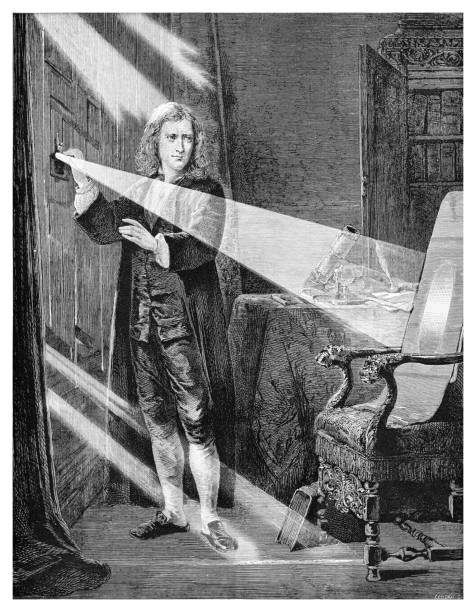
Clearly, Pythagorus was a big thinker, and his ideas influenced Isaac Newton, another of the alpha males. Newton – who established classical mechanics, invented calculus, formulated the laws of motion and universal gravitation – was a paragon of the rational scientific mind. Newton was a Great Man, by definition. He also was a leading alchemist.
In its purest form, alchemy is concerned not with turning base metals into gold, but as a symbolic language guiding the transmutation of the physical self into the ascendent consciousness of the anointed. Of an estimated ten million words of writing in Newton’s papers, approximately one million – 10% – deal with alchemy. This was more than a passing interest.
John Maynard Keynes, the Cambridge economist who restructured the post-WW2 global financial system – easily ranking him among the Great Men – had this to say about Newton:
“Newton was not the first of the age of reason. He was the last of the magicians, the last of the Babylonians and Sumerians, the last great mind which looked out on the visible and intellectual world with the same eyes as those who began to build our intellectual inheritance rather less than 10,000 years ago. Isaac Newton, a posthumous child born with no father on Christmas Day, 1642, was the last wonderchild to whom the Magi could do sincere and appropriate homage.”
Let us pause and consider: just as Pythagorus explained the physical realm he also saw celestial harmony beyond the physical; Newton mastered not only scientific thought but was a leading alchemist of his day. Two of the paragons of the rational alpha mind had secret lives as mystics.
The Western intellectual tradition is based entirely on the rational, and anything beyond the rational is defined by the negative form – “irrational” – which is decidedly pejorative. As wrote Carl Jung, ““Everything that the modern mind cannot define it regards as insane.” Pythagorus was denigrated as a cult leader. During Newton’s life, the English Crown considered alchemy to be a heresy, punishable by death. The burning of his alchemical writings perhaps was not an accident.
What if we expand our concepts and consider connections not defined by measurable facts? What if we begin to use the term “supra-rational”? No less than Albert Einstein – the modern paragon of rational thought – was compelled in this regard. In 1930 he published an essay “Religion and Science” which described the sense of awe and mystery which he termed a “cosmic religion” of “superpersonal content.” Einstein counseled to move beyond the anthropomorphic concept of god to “the sublimity and marvelous order which reveal themselves in nature … to experience the universe as a single significant whole.”

For Einstein, “science without religion is lame, religion without science is blind.” He said “God is a mystery. But a comprehensible mystery. I have nothing but awe when I observe the laws of nature. There are not laws without a lawgiver, but how does this lawgiver look? Certainly not like a man magnified. …some centuries ago I would have been burned or hanged. Nonetheless, I would have been in good company.”
The “Great Man Theory” was advanced in the 19th century Victorian era. In the 21st century we need to move forward, and expand the scope, even beyond gender, to all life, beyond the “either/or” and toward the “both/and” mindset.
I should like to propose that the “Great Man” be replaced by the “Great Soul,” and that we look beyond the rational, the material, the physical, and embrace the whole cloth, the harmony and music of “our higher angels,” the music of the spheres, “to experience the universe as a single significant whole.”
In fact, this “Great Soul” is in use; in the Hindu language, “Mahatma” from the Sanskrit word “mahātman,” literally means “great-souled.” Mahatma Ghandi is but one exemplar of this path.
The seeds of a new future surround us. We can be hopeful.
My pronoun is “We”
Posted: April 25, 2024 Filed under: Art & Healing, Chronicles of a First Time Parent, What is an Art Farm 1 CommentDuring my student days, reading Greek and Latin literature, the heavy hitters – grammatically speaking – were the nouns and verbs; adjectives and adverbs lived the fancy life, drove fast cars, added sparkle and pizazz to any sentence. Pronouns were back bench utility players.
In recent years pronouns have gained a place of prominence, which intrigues me. I first heard about the increasing awareness of pronouns when a friend, serving on the Board of the Friends School of Portland, described this new phenomenon. My children’s teachers now list their pronouns in emails. I am increasingly aware of this social trend.
In my work as a carpenter no one ever asks my pronoun; this topic is never discussed on the job site. And so I should like to announce here, that my pronoun is “We.” I have chosen the first person plural with specific intent, to message my commitment to collaborate, co-create, communicate and cooperate in building community.
I observe people use the third person: he, she, it, they, them. First and second person pronouns do not denote gender, while third person specifically denotes and identifies gender. While I affirm and embrace gender equality, fluidity, and transgender my deeper concerns lie with the increasing fragmentation and divide within our culture. Third person pronouns denote “other” which underscores separation.
The concept of “other” has been a central question of philosophy for centuries, for millenia. Within the European tradition everyone from Hegel to Husserl from Sartre to Simone de Beauvoir has opined upon “other.” In the main, “other” has been used to define “self” but I argue this falls within an “us versus them” mindset. What will it take for us to come together?
We do well to look further back to Plotinus, the Greek founder of Neoplatonism. He taught there is a supreme, totally transcendent “One,” containing no division, multiplicity, or distinction; the “One” was identified with the concept of “Good” and the principle of “Beauty.” Among his quotes is: “When we look outside of that on which we depend we ignore our unity; looking outward we see many faces; look inward and all is one head. If a man could but be turned about, he would see at once God and himself and the All.” First person plural, indeed.
Among the ironies of history is that a slave-holding patrician wrote that sterling sentence which begins “We the people of the United States, in order to form a more perfect Union….” How bold to set down those words, such pioneering thought, while Europeans were focused upon “other.” But slavery, treating some people not only as other but as property, bought and sold, would come to define the central challenge of the United States.
And so it was on 4 March in 1861 that an axe wielding brawny frontiersman, elected the 16th President of the young United States, stood upon the Capital steps, charged with the responsibility of holding together the Union. Abraham Lincoln’s First Inaugural Address outlined his thinking, a constitutional lawyer, on the civil discord simmering among the states. He closed out his speech with an appeal to unity, using the first person plural: “We are not enemies, but friends. We must not be enemies. Though passion may have strained, it must not break our bonds of affection. The mystic chords of memory, stretching from every battle-field, and patriot grave, to every living heart and hearth-stone, all over this broad land, will yet swell the chorus of the Union, when again touched, as surely they will be, by the better angels of our nature.”
If pronouns are to continue to gain in prominence, when the collective id has been let loose, when dark anger rages like a sharp knife in a street fight, in these times now going forward may we the people pursue the blessing of unity, accepting diversity in collaboration and a renewed commitment to community.
May “We” become the vogue, in these times, and going forward.
Light & color: making marks
Posted: July 2, 2014 Filed under: Art & Healing, Child Centered Activities, Chronicles of a First Time Parent, What is an Art Farm 3 Comments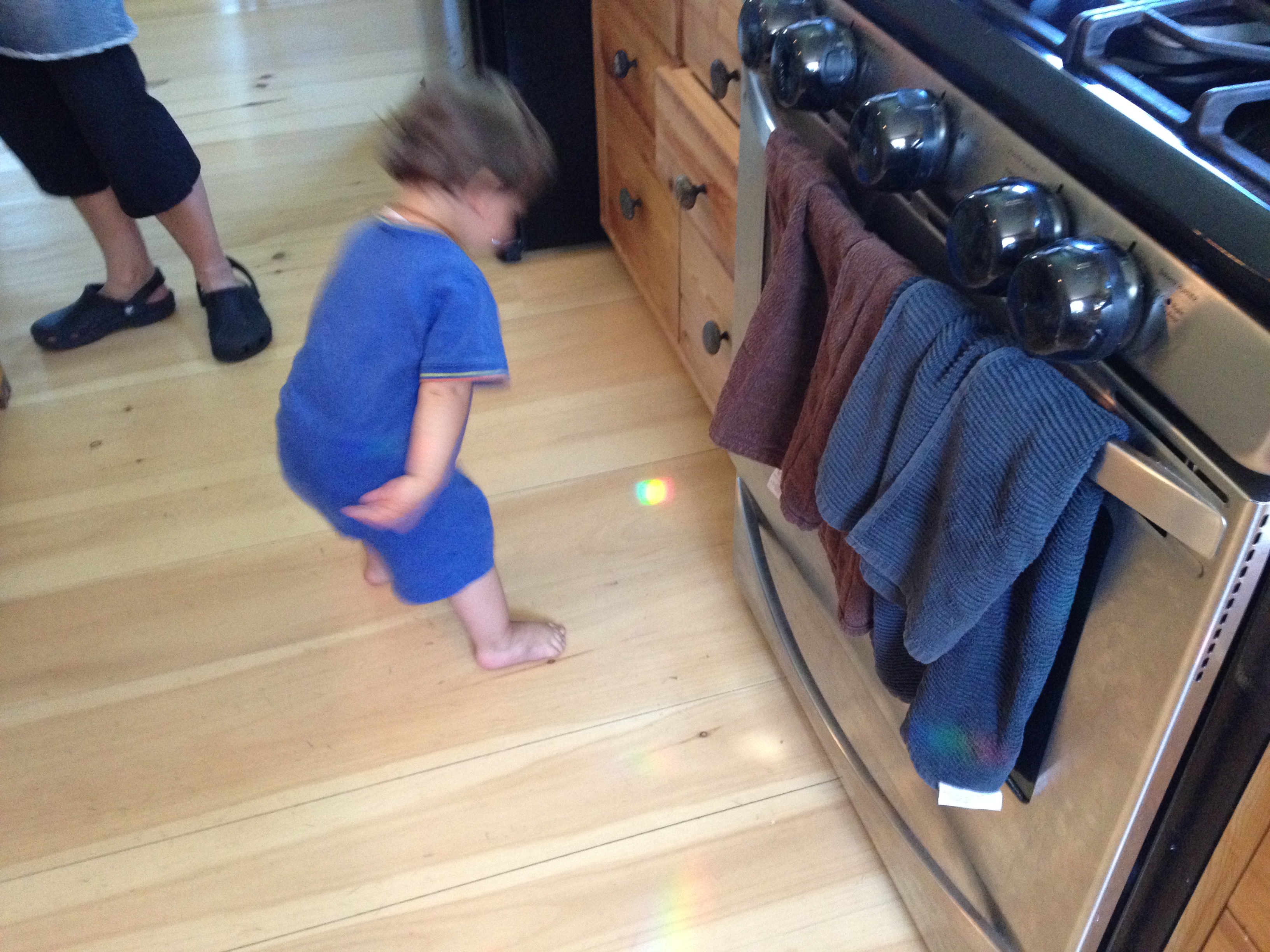


The Burden of Restoration
Posted: December 2, 2013 Filed under: Art & Healing, Chronicles of a First Time Parent, Permaculture & Home Renovation, What is an Art Farm 6 Comments
We bought our home in “as-is” condition, a cash only sale because no bank would finance the property. To our great fortune we found an angel to provide that cash, with an agreement that within two years I would pay them back with interest.
One year – almost to the day of moving in – we are completing a bank loan to honor that agreement, but in trading an angel for some bankers, I could not have fathomed the process, nor the word-smithing required, to meet bank standards.
At the earliest stage of the renovation we tore down the barn; too far gone for preservation, an easy choice, but we did keep a 200 square foot area that connected the barn to the Ell. Nothing sentimental, it was a matter of necessity to have storage for the things and stuff of family life.
Our shed is quite old – tree trunks, with bark still on, function as studs – and it is not pretty: roofline sags, the only remaining shutter hangs forlorn from its last hinge, asbestos siding is missing in places. At some stage I will take down the shed, and in its place erect a mudroom, second bathroom, and a bedroom for Becca and me. And storage space. But that is a project for some other season.
During the first year our focus has been the main house interior: to reduce the energy draw; to redo the plumbing, electric, kitchen, bathroom, and floors; to develop the garden beds for a permacultural homestead.
The timing of the refinance was an open question. Last spring, when rates were incredibly low, I risked a meager appraised value because work remained unfinished. The house was comfortably livable, but looked 90% done.
By early autumn, rates had increased, but my “punch list” was finished. I felt optimistic. Never could I have imagined the obstacle that would arise.

Twenty years ago I set out to work in “humanitarian finance.” My goal was to organize a trust fund to generate cash, free and clear, for media-based community development projects. Back in the Clinton era, end of the last century, the economy was roaring and people excitedly thought the internet would be a boon for democracy rather than commerce. The future seemed bright.
While reading in a Law Library I came across the “Philanthropy Protection Act of 1995”, Public Law 104-61, which allows not-for-profits to manage investments outside the constraints of the Investment Company Act of 1940, which, just happens to be the primary source of regulations for the mutual fund industry.
I found a loophole. Public Law 104-61 is not widely known. When I contacted McDermott Will & Emery, a law firm which has the largest tax practice in the United States, they declined to provide advice because no one on their staff had any knowledge of the law and they “didn’t want to learn at my expense.”
Naïve and strong willed, I forged ahead into the deep waters of off-shore finance.
Within a few years we held in trust assets of various and unusual form: safe keeping certificates for 100 metric tons of gold bullion held in the underground vaults at Kloten, Switzerland; a rough-cut emerald weighing 1,000 grams; title to thousands of acres in Ecuador.
The more rare the asset, the harder it seemed to manage. How do you establish a bankable value for a one-of-a-kind emerald? And after Sept 11, the likelihood of insuring such an asset became virtually impossible.
The Trust Fund also held, in Swiss bank accounts, liquid assets. Cash, the ubiquitous United States Dollar, caused the greatest difficulty when one of the bankers helped himself to the trust funds. Humanitarian finance was an oxymoron.
That banker went to prison in Lichtenstein. The Trustees, myself included, became Defendants in a lawsuit in a Federal Court. Ultimately the lawsuit was settled, but I was forced into bankruptcy. I have kept my distance since from the world of the glassy-eyed banker.

Coming into the refinancing my past was layered, but this is the means forward to secure this home and property for my family. The process of restoration has been life affirming, and once I was ready for the appraisal, I began to see it as the last step in absolving the deep-rooted shame and pain from that debacle.
My credit scored well. We locked in a good interest rate. Only the appraisal remained. We needed a value of $200,000.
The appraisal came in at $200,000 but subject to tearing down the shed. Given that, the underwriter refused the appraisal, because that verbiage would not be acceptable to the secondary market. We were dead in the water.
I told the bank that we would not tear down the shed just to complete the refi. We do intend at some point to tear down the shed – I look forward to building the new addition – but I am not going to rush into that.
The bank asked about repairing the shed. I made clear that would not be done before our interest rate lock expires, so that was a moot point. The third option was to restate the value of the home excluding the shed.
Our home and the shed passed the City’s building inspection with no issues. The home and shed are insured. It seemed incredulous, but if one bank insisted the shed was an obstacle, why would any other bank see it differently?
The Loan Officer was highly motivated to make the loan and went to the Bank President. The President, in turn, went back to the appraiser to appeal for a change of language. The appraiser, to our great surprise, consented. He changed his report.
Eighteen words made the difference: “the shed is not a safety hazard or concern. Settling is normal for a building of that age.” No repair needed, no tear down, no reduction in value. Our home is now financeable.
It will be a meaningful personal victory when we close the refinance on 4 December, but our work of restoration has a long way yet to go. The physical property may be the least of it.
The script of every life includes victories and struggles, and as a parent, my goal is to raise children not in the shadow of my circumstance but in resolution’s opening: healthy, intact, curious young souls able to explore, question, move forward without the baggage of their predecessors, the patterns of generations.
This burden of restoration reaches deep, and its ultimate measure will not be the financial, bankable asset, nor even the condition, of physical property, but the WHOLE self, the emotional, psycho-spiritual, playful aspects, that we nurture.
I had never seen it this way before, but through working to restore one piece of the earth, and to create a home and haven for my family, I have learned a new way to think for the second, let alone the seventh, generation.
Getting ready to roost
Posted: November 11, 2013 Filed under: Permaculture & Home Renovation, What is an Art Farm 3 Comments
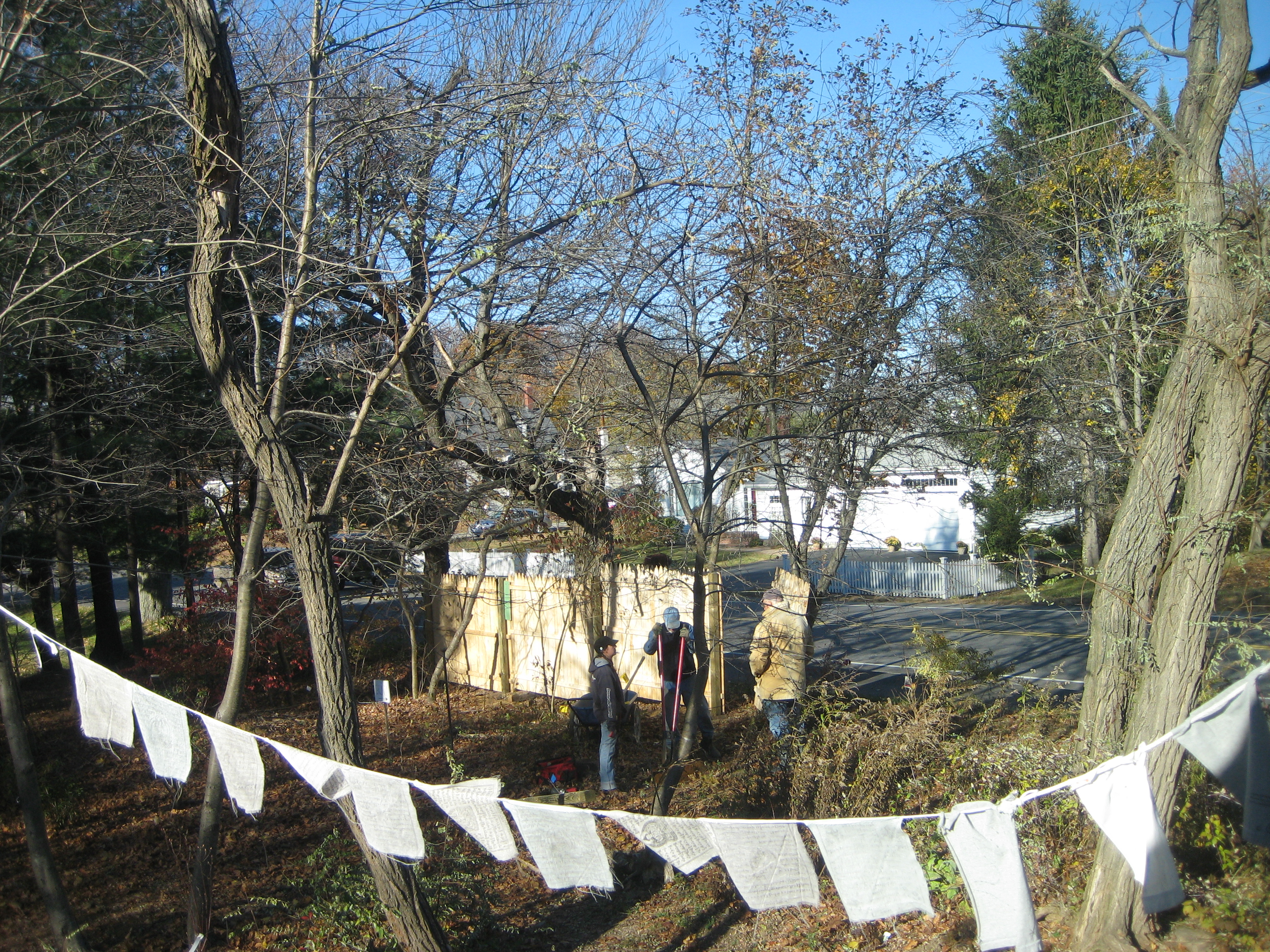
Chickens are coming! We have a winter before they arrive, but today, on a warm mid-autumn holiday, we got to work putting up a stockade fence.

 Mel, a great gardener from the big house helped, and our neighbor Steve came over to see what was going on.
Our backlot is overgrown with roots aplenty, and not far underground lies ledge. By day’s end, the post hole digger was dented and bent. But six sections of fence went up. Privacy for the hens, and for us too.
The City of South Portland will allow six hens – no Roosters – per household. Muscovy Ducks would be welcome; they love to eat flies, maggots, mosquitos, mosquito larva, slugs, bugs of all sorts, black widow spiders, the brown fiddleback spider and any thing else that creeps and crawls. They are a boon to any garden.
 If two households pair up, would that allow twelve birds in total – a mixture of chickens and ducks? Steve had chickens decades ago, and welcomes the idea. Maybe we have the chickens and he keeps the ducks, and they waddle back and forth, foraging here and there as they go. Something fun to ponder as the winter winds begin to blow.



Autumn at Home
Posted: November 1, 2013 Filed under: Art & Healing, Gallery - Visual, What is an Art Farm 4 Comments
Newest sculpture, home grown
Posted: October 26, 2013 Filed under: Art & Healing, Permaculture & Home Renovation, What is an Art Farm 3 Comments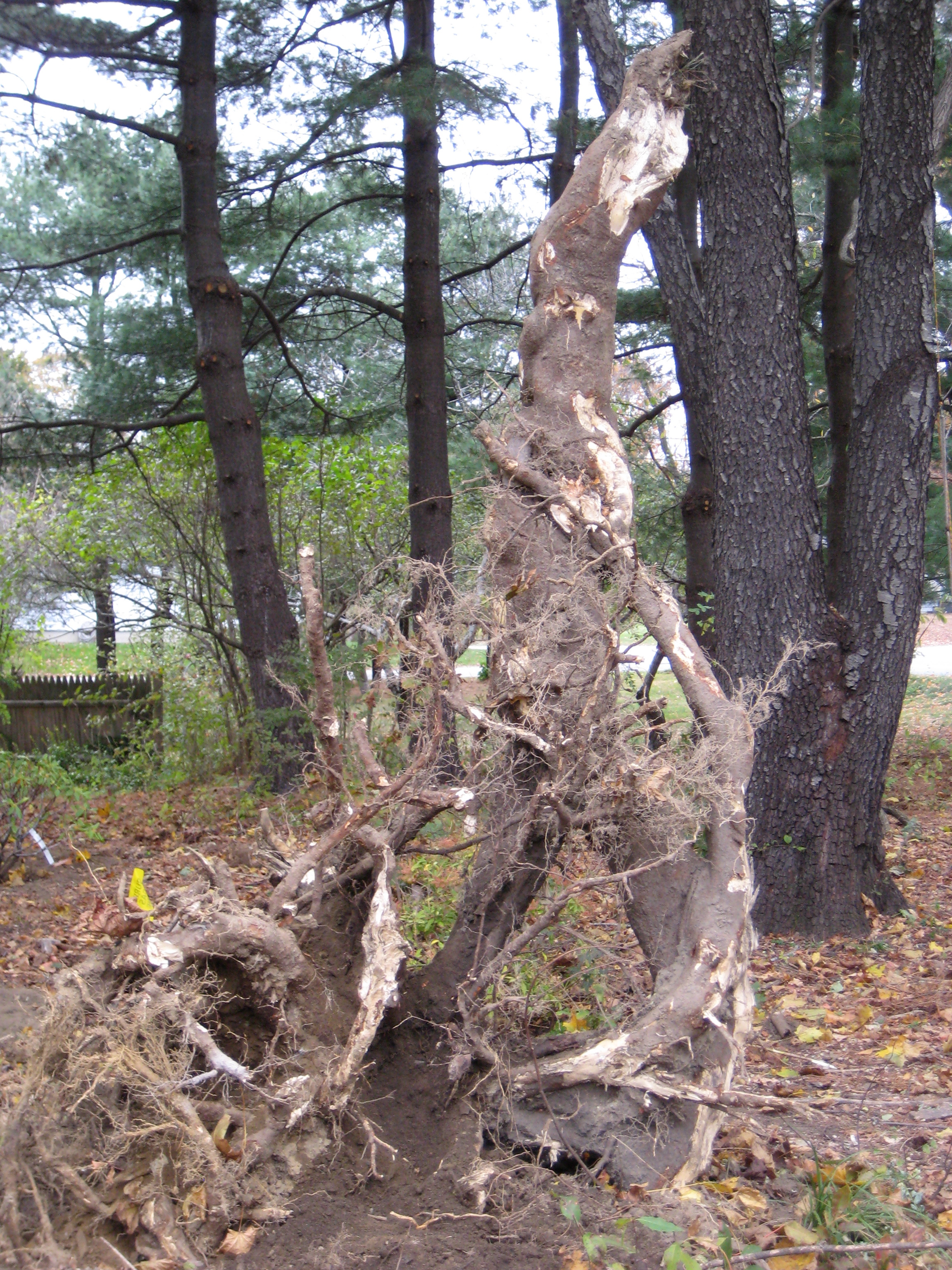
One of the issues in our untended yard is the saplings that took root too close to the house. On the back of our Ell, we had a Box Elder tree growing very close, and we feared its roots could impact the foundation.  Last December we cut down that tree.

The stump remained, and as we prepared to do site work for a new patio, we decided to try to remove it with the excavator.  That root just refused to come out, and the tap root – big as a Christmas Ham – had grown through the foundation into the crawl space beneath the Ell.

We were just about to give up when the root snapped and broke free. The Ell remains standing. Here is a photo of Jim Hamlin, excavator and big game hunter!

We decided that the root deserved a permanent place on our Art Farm. To make it safe, we dug a small hole and set the stump and root upright. It stands more than eight feet tall. Pretty amazing!


