Strawberry Ice Cream
Posted: July 4, 2011 Filed under: Child Centered Activities, In the Kitchen 1 Comment
This recipe comes from Alice Waters’ “The Art of Simple Food” and makes about 1 quart. In a small bowl, whisk briefly, just enough to break up:
3 egg yolks
Measure into a heavy-bottomed pot:
3/4 Cup half-and-half
1/2 Cup sugar
Heat the half-and-half over a medium heat, stirring to dissolve the sugar. When hot, whisk a little of the half-and-half into the egg yolks – this is called “tempering” the eggs – and then whisk the warmed yolks back into the hot mixture. Cook over medium heat, stirring constantly, until the mixture thickens and coats the back of the spoon. Do not let it boil. Remove from the heat (you can strain it, but I never bother) and add:
3/4 Cup heavy cream
Cover the mixture and chill. Meanwhile, wash, dry and hull:
3 Cups fresh picked strawberries
Mash, and then add:
1/4 Cup sugar
A dash of lemon juice
Let the strawberries macerate in their own juices, stirring occasionally, until the sugar has melted. Add the berries to the cold cream mixture and flavor with:
A couple drop of pure vanilla extract
A pinch of salt
Chill thoroughly, then freeze in an ice-cream maker.

This recipe will work with any berries, and you could add or substitute peaches and nectarines.
“…the softly focused gaze of Pissarro…”
Posted: July 2, 2011 Filed under: Art & Healing, Farming off the Farm, What is an Art Farm 1 Comment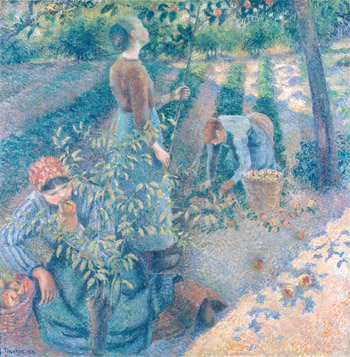
Late June
Posted: June 29, 2011 Filed under: Child Centered Activities, Farming off the Farm, Little Green Thumbs 1 Comment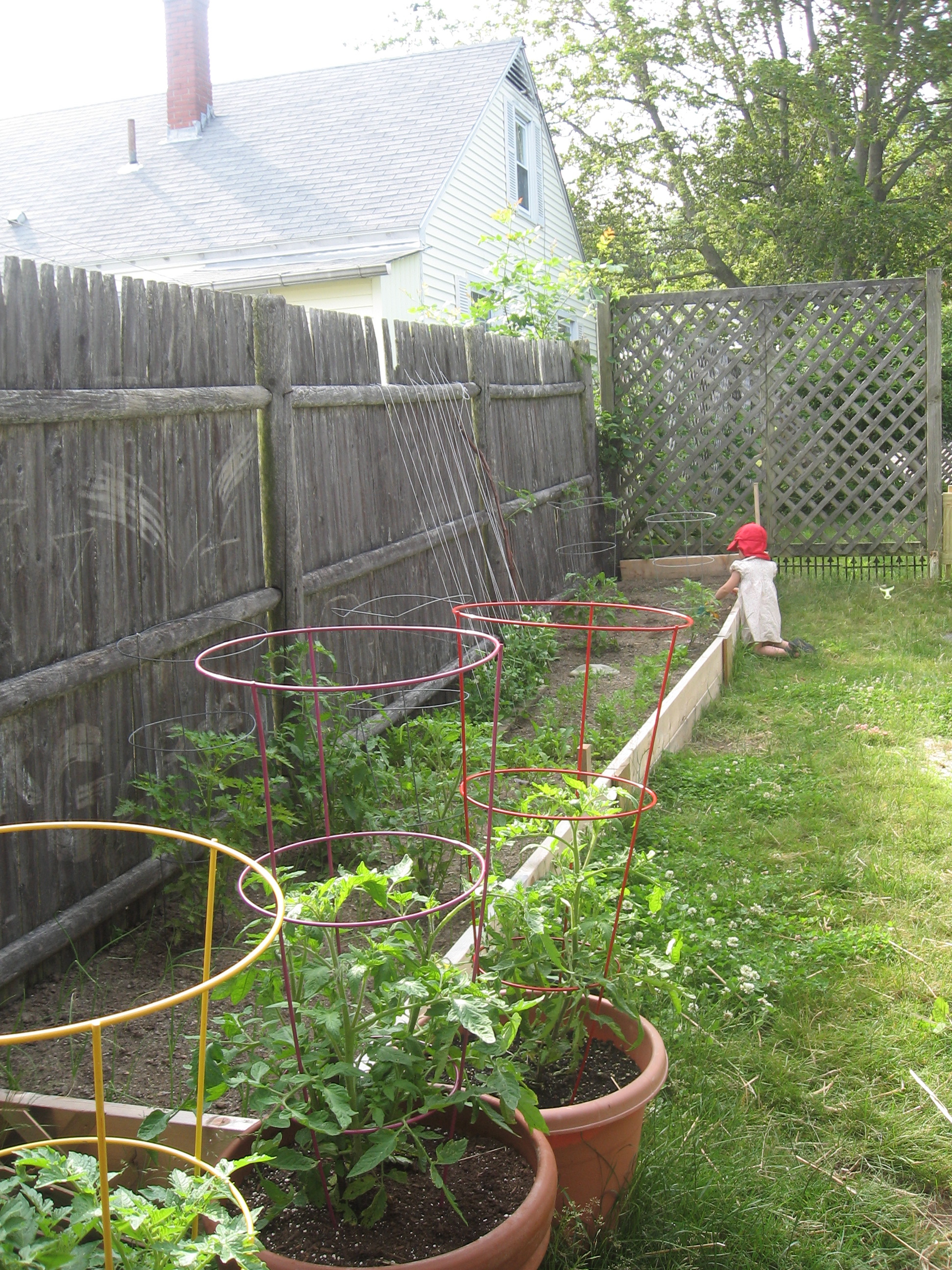

Ananda K. Coomaraswamy: “A Figure of Speech or a Figure of Thought?”
Posted: June 27, 2011 Filed under: Gallery - Quotes, What is an Art Farm Leave a comment“Plato, for example, remarks that ‘the expert, who is intent upon the best when he speaks, will surely not speak at random, but with an end in view; he is just like all those other artists, the painters, builders, ship-wrights, etc.’ and again, ‘the productions of all arts are kinds of poetry, and their craftsmen are all poets,’ in the broad sense of the word. ‘Demiurge’ (demiourgos) and ‘technician’ (technitnes) are the ordinary Greek words for ‘artist’ (artifex), and under these headings Plato includes not only poets, painters, and musicians, but also archers, weavers, embroiderers, potters, carpenters, sculptors, farmers, doctors, hunters, and above all those whose art is government, only making a distinction between creation (demiourgia) and mere labor (cheirourgia), art (techne) and artless industry (atechnos tribe). All these artists, insofar as they are musical and therefore wise and good, and insofar as they are in possession of the art (evtechnos, cf. entheos) and governed by it, are infallible. The primary meaning of the word sophia, ‘wisdom’ is that of ‘skill,’ just as Sanskrit kausalam is ‘skill’ of any kind, whether in making, doing, or knowing.”
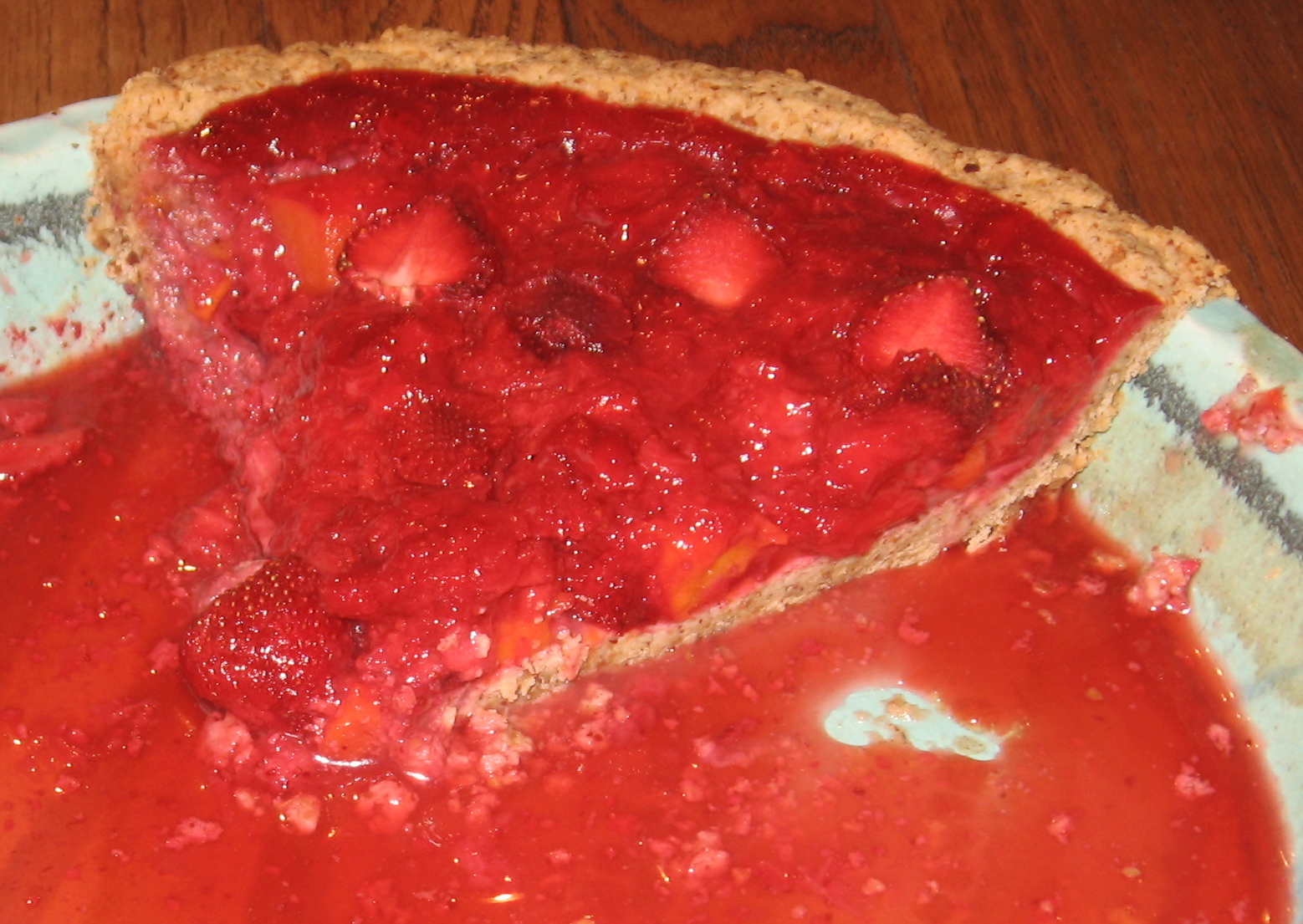
Wicked and Wonderful Strawberry Pie
Posted: June 26, 2011 Filed under: Child Centered Activities, In the Kitchen 1 Comment
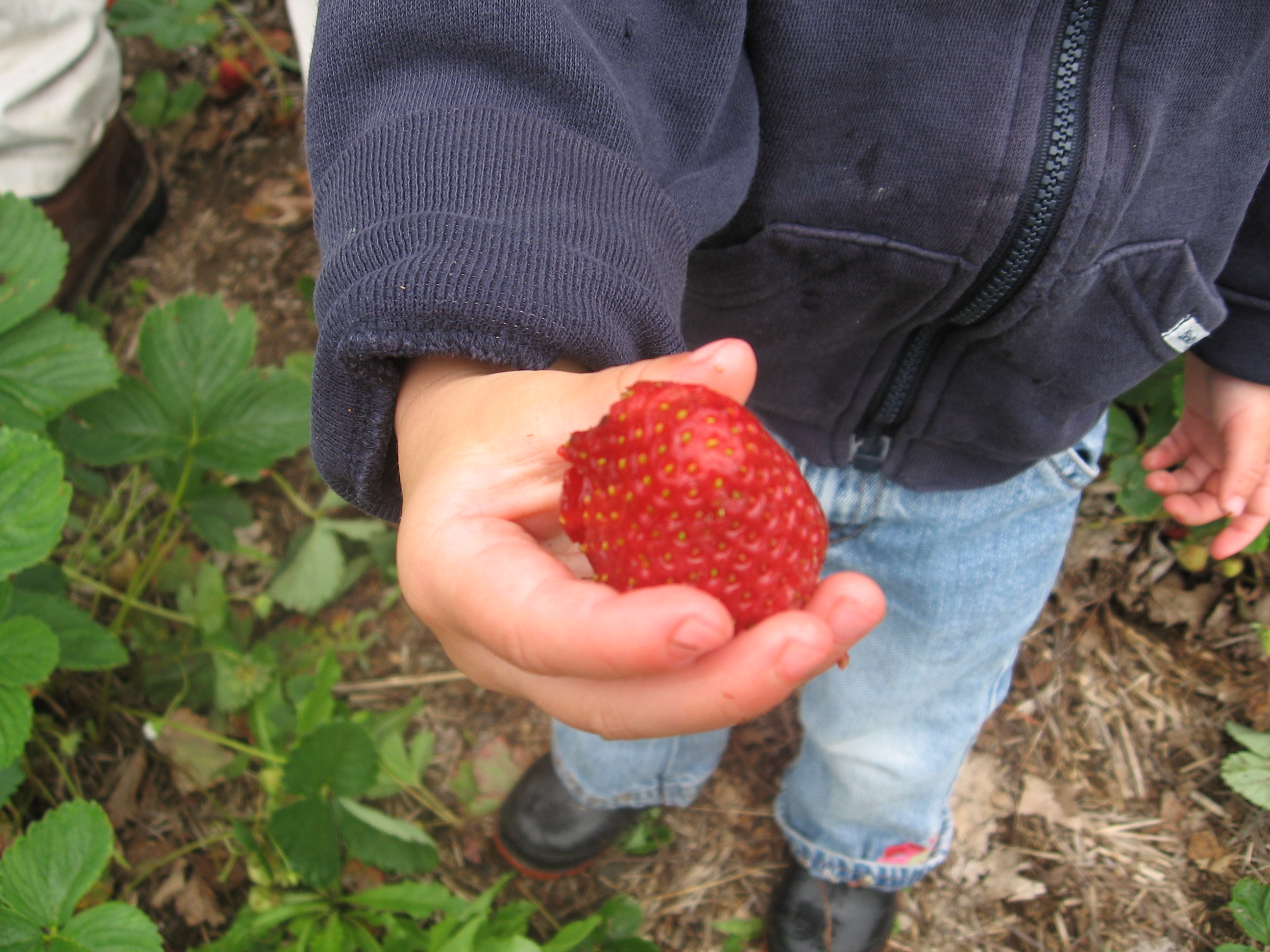
Back in the corn-belt, the measure of a strong crop was corn “knee high by fourth of July.” In these parts, folks measure and mark by the ripening fruits and this is the time for strawberries. June’s full moon was, after all, the Strawberry Moon. Along the coast, the berries have come ripe and the fields opened this morning. By chance, we were the first ones to arrive and picked about 6 quarts. E ate handfuls and was very happy.
About one hour inland the berries were ripe almost two weeks ago. Farmer Martha has gone picking several times. On one trip she hauled out 48 pounds. By her permission, we are posting this recipe for a quick and easy summer treat. The strawberry filling comes from her memory, while the nut crust comes from Martha Stewart’s “Pies & Tarts.”
For the crust, preheat the oven to 350 degrees, butter a pie pan and into a food processor put:
5 oz toasted almonds
Pulse until they are finely chopped, but not to the point of almond butter. Then combine in a bowl:
2T + 2t granulated sugar
1.5 Cup All Purpose Flour
Add the flour-sugar mixture into the processor and pulse, and then pour into the processor, through the top:
½ Cup unsalted butter, melted
Pulse just until the dough comes together. Then roll out the dough, nip and tuck to fit into the buttered pan, and bake for 20 minutes or until golden brown. Remove from the oven and let it cool.
Into the cooled crust slice lots of berries, until the crust is about, say, one-half full. If you like, add in some ripe mangoes. In the processor, combine and macerate:
a good handful or two or three of fresh strawberries,
1/3 Cup granulated sugar (or to taste)
3T corn starch
Put all this into a saucepan and heat until it thickens, stirring often. Pour the macerated berries over the sliced berries and chill.
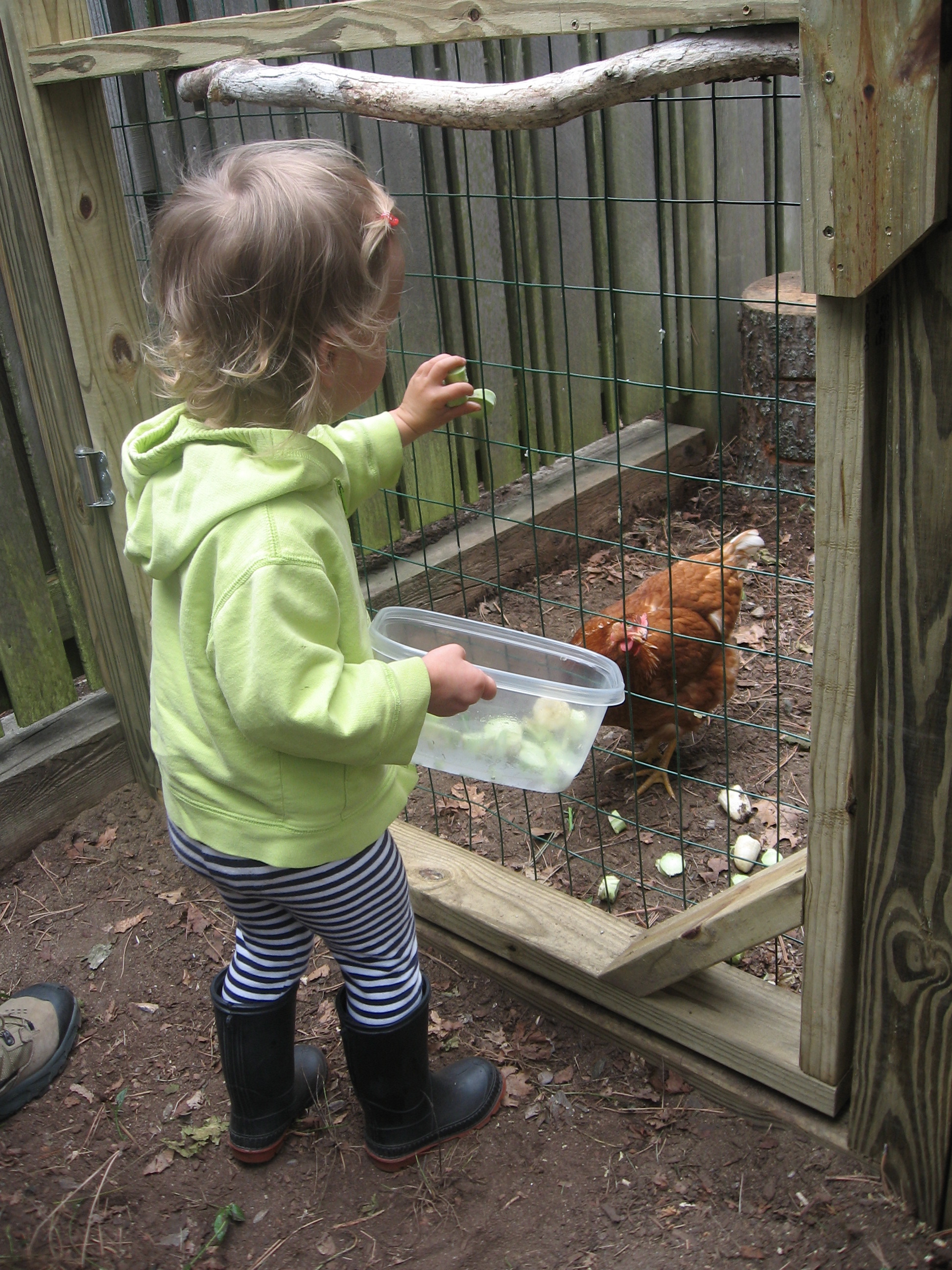
Feeding the Chickens
Posted: June 23, 2011 Filed under: Child Centered Activities, Farming off the Farm 1 Comment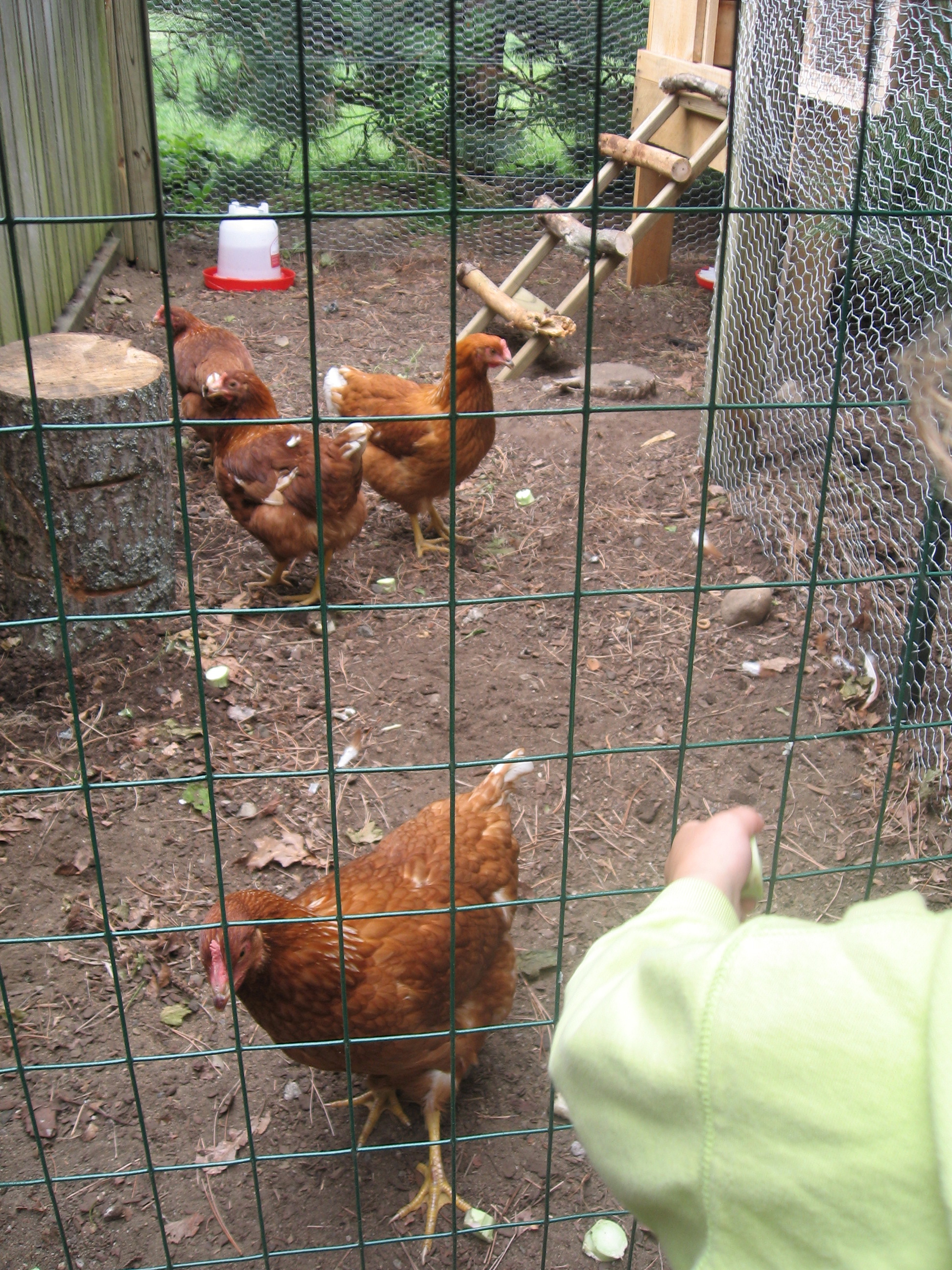
What is an Art Farm?
Posted: June 20, 2011 Filed under: Art & Healing, What is an Art Farm 2 CommentsThese days with lots of attention to localvore culture, “know your food, know your farmer,” food politics, etc, the link between art and agriculture seems less often explored, rarely celebrated. We began musing on this theme in ’01 while living on Chicago’s North Side (population density of >4,500 people per square mile) and later in ’06 when we settled in Maine (population density of 41 people per square mile). Big change in surroundings. No change in interest.
Along the way we heard about Farmer John at Angelic Organics, about the folks at the Wormfarm Institute (two sculptors who left Chicago to farm in southern Wisconsin), and the Bread & Puppet Theatre that ends each performance by sharing with the audience bread made by the cast and crew. Nance Klehm, a farmer, forager, social ecologist and good friend, in ‘08 taught a class at the UCLA School of Art on the topics of: “place and participation (or which of these bugs are edible?)/cultivating knowledge, participation, food in the age of monoculture/practical and critical processes for the hungry, lost and restless.” A Google search now brings up numerous sites under the term “art farm.”
Something is up. And still it is hard to wrap our mind around what is an art farm. More readily, we can say what it is not: neither a “get big or get out” USDA sanctioned operation, nor the world of Art as an insurable, bankable asset. But that doesn’t tell us much. Stating the affirmative, we could say this is equal parts “Cheap Art Manifesto” (see blog of 19 May) and a hands-in-the-dirt connection to the earth and ourselves.
Art-making is a behavior. Hard-wired into our DNA, it is a biological inclination. In a nutshell, this is the argument put forth by Ellen Dissanayake in her book What Is Art For?: “My own notion of art as a behavior…rests on the recognition of a fundamental behavioral tendency that I claim lies behind the arts in all their diverse and dissimilar manifestations from their remotest beginnings to the present day. It can result in artifacts and activities in people without expressed ‘aesthetic’ motivations as well as the most highly self-conscious creations of contemporary art. I call this tendency making special and claim that it is as distinguishing and universal in humankind as speech or the skillful manufacture and use of tools.”
What if art-making is not an attribute of society, but antecedent to society. Could it follow, then, that agriculture emerged as a “making special” adaptation? Are we putting the horse before the cart? These are questions we strive to grasp.
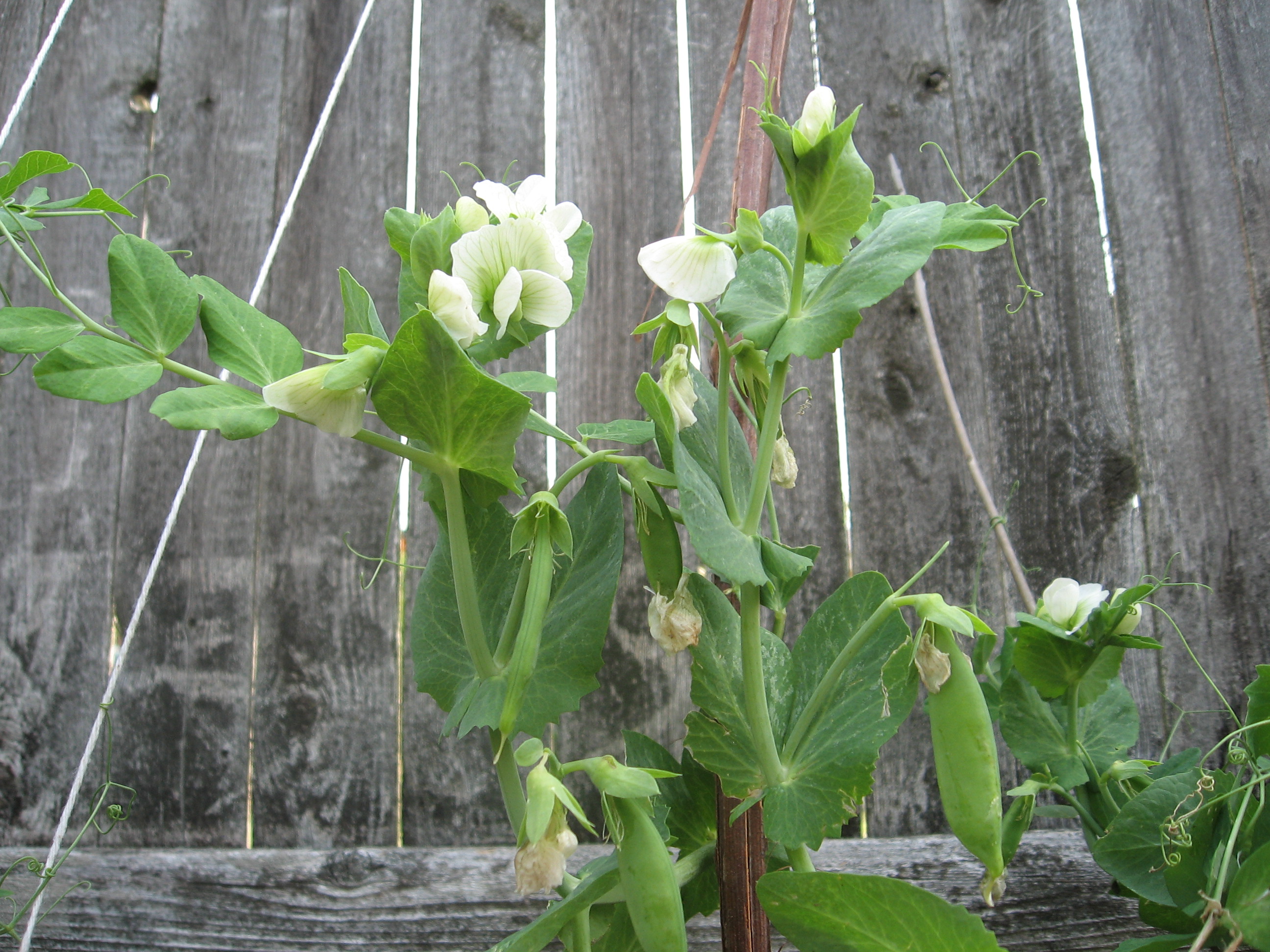
An art farm is about “place and participation” where obstacles become opportunities. We live in a rented house in South Portland, Maine. When our landlord said we could not have a garden, we made arrangements to plant a shared garden at the home where our daughter goes for day-care. And from that place we are now harvesting greens that feed our family. A few miles away, down by the Marsh, with Farmer Martha we are raising hens and, soon, broilers, and from the orchard, come autumn, again we will pick apples, press cider, make cobblers and applesauce. With a lot of sharing and creativity we are making do with what we have.
And as we go forward, we will tell the tales, share the stories and paint the pictures here at our blog, while the answers work themselves out. They always do.
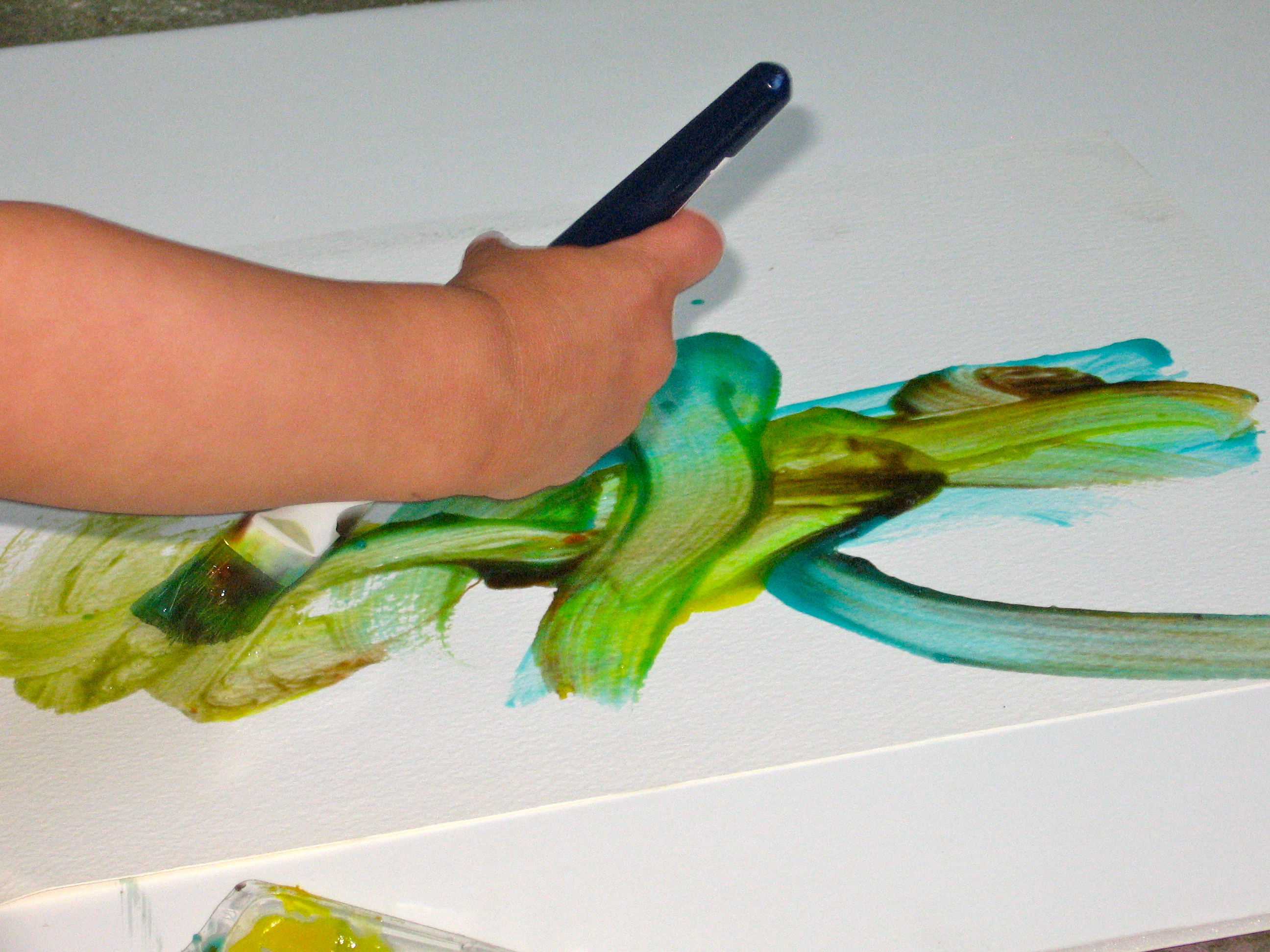
Homemade Finger Paints
Posted: June 19, 2011 Filed under: Art & Healing, Child Centered Activities, In the Kitchen 1 CommentA great recipe I found online – with my own tweaks added in:
2 TB sugar
1/3 C cornstarch
2 C cold water
1/4 C clear liquid dish soap
food coloring or food gel
Mix sugar with cornstarch and slowly add water. Cook over medium heat for 15-20 minutes or until mixture thickens and becomes semi-translucent. Once cooled, add dish soap (helps keep colors from staining – though still take precautions with clothes, etc.), then portion into desired containers and mix in the colors. In addition to fingers and paintbrush, collect some non-traditional tools (feathers, sticks, Q-tips, etc.) for your little one to explore with.



Ellen Dissanayake: “What Is Art For?”
Posted: June 19, 2011 Filed under: Art & Healing, Gallery - Quotes, What is an Art Farm Leave a commentMy own notion of art as a behavior…rests on the recognition of a fundamental behavioral tendency that I claim lies behind the arts in all their diverse and dissimilar manifestations from their remotest beginnings to the present day. It can result in artifacts and activities in people without expressed ‘aesthetic’ motivations as well as the most highly self-conscious creations of contemporary art. I call this tendency making special and claim that it is as distinguishing and universal in humankind as speech or the skillful manufacture and use of tools.
Making special implies intent or deliberateness. When shaping or giving artistic expression to an idea, or embellishing an object, or recognizing that an idea or object is artistic, one gives (or acknowledges) a specialness that without one’s activity or regard would not exist.
…From very early times it seems evident that humans were able to recognize and respond to specialness – at least this would seem to be the explanation for Acheulean people of 100,000 years ago selecting a piece of patterned fossil chert and flaking from it an implement that utilized the pattern, or carrying about with them an unusual but “useless” piece of fossil coral.
…Perhaps the proclivity to make special existed even a quarter of a million years ago in the use of shaped pieces of yellow, brown, red, and purple ocher found among the human remains in a sea-cliff cave in southern France. It might be supposed that these were chosen for the “special” color, and thus suitable for “special” purposes (Oakley, 1981). Red haematite was brought from a source twenty-five distant toan Acheulean dwelling site in India, probably for use as a coloring material (Paddayya, 1977). The presumably very ancient practice by humans of applying ornamental designs to their bodies can be interpreted as a way of adding or imparting refinement to what is by nature plain and uncultivated, of imposing human civilizing order upon nature – that is, making special.
Recognizing the ubiquity of making special, and its apparently effortless integration into the day-to-day life of many unmodernized societies (so that the sacred and profane coexist, the spiritual suffuses the secular), points out to us the degree to which art is divorced from life in our own society. It helps us to understand why art, which according to the modern notion is autonomous and “for its own sake,” is still conceptually stained with the residues of essential activities and predilections.
From an ethological perspective, art, like making special, will embrace a domain extending from the greatest to the most prosaic results. Still, mere making or creating is neither making special nor art. A chipped stone tool is simply that, unless it is somehow made special in some way, worked longer than necessary, or worked so that an embedded fossil is displayed to advantage. A purely functional bowl may be beautiful, to our eyes, but not having been made special it is not the product of a behavior of art. As soon as the bowl is fluted, or painted, or otherwise handled using considerations apart from its utility, its maker is displaying artistic behavior…. The housewife who puts down cups and plates any which way is not exercising artistic behavior; as soon as she consciously arranges the table with an eye to color and neatness, she is doing so. The functional, empty, unremarkable wall may be enlivened by a mural, or bas relief, or even graffito.
NB: These passages are taken from Ellen’s book, “What Is Art For?”, Chapter 4, “Making Special: Toward a Behavior of Art”, pages 92 – 101, published by the University of Washington Press, Seattle, (c) 1988.
Wendell Berry: “The Gift of Good Land”
Posted: June 18, 2011 Filed under: Gallery - Quotes Leave a comment“Speaking for myself, I acknowledge that the world, the weather, and the life cycle have caused me no end of trouble, and yet I look forward to putting in another forty or so years with them because they have also given me no end of pleasure and instruction. They interest me. I want to see them thrive on their own terms.”
 an Art Farm