This Week’s Menu and Affirmations
Posted: July 18, 2011 Filed under: Gallery - Visual, In the Kitchen 1 Comment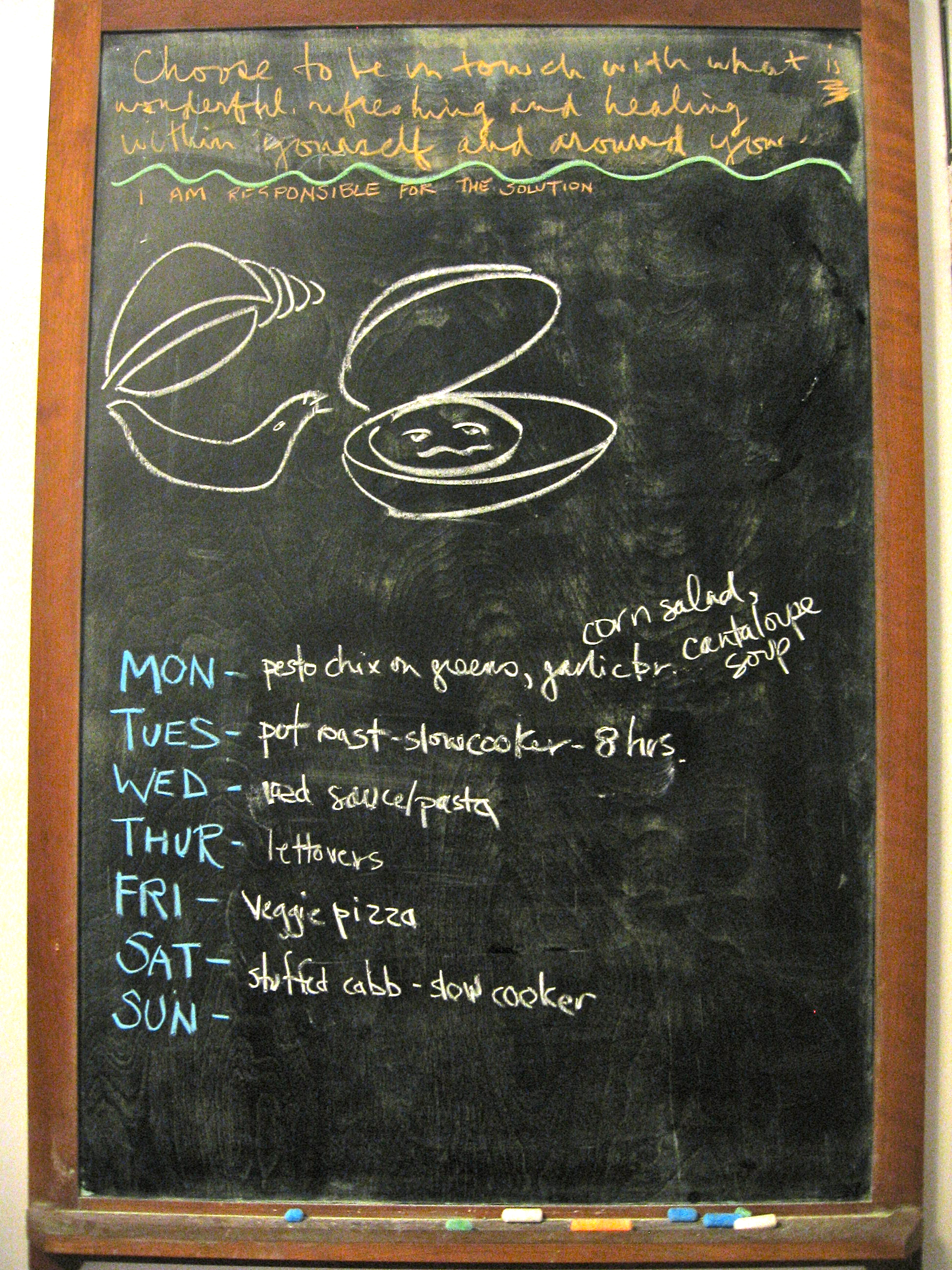
Thomas Merton: “Thoughts In Solitude”
Posted: July 17, 2011 Filed under: Gallery - Quotes 1 Comment“Society, to merit its name, must be made up not of numbers, or of mechanical units, but of persons. To be a person implies responsibility and freedom, and both of these imply a certain interior solitude, a sense of personal integrity, a sense of one’s own reality and of one’s ability to give himself to society.”
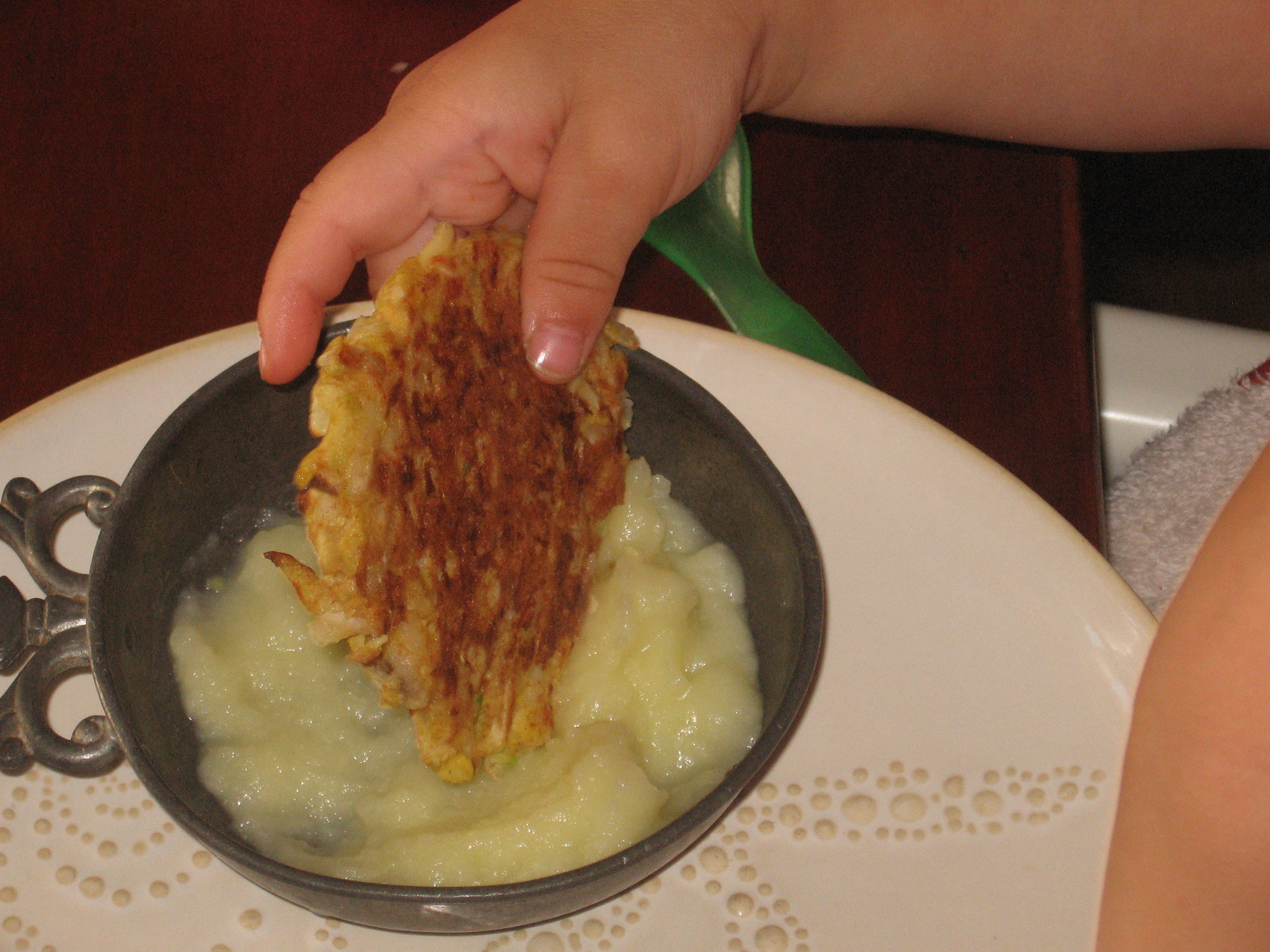
Squash & Potato Pancakes With Homemade Applesauce
Posted: July 14, 2011 Filed under: In the Kitchen 2 Comments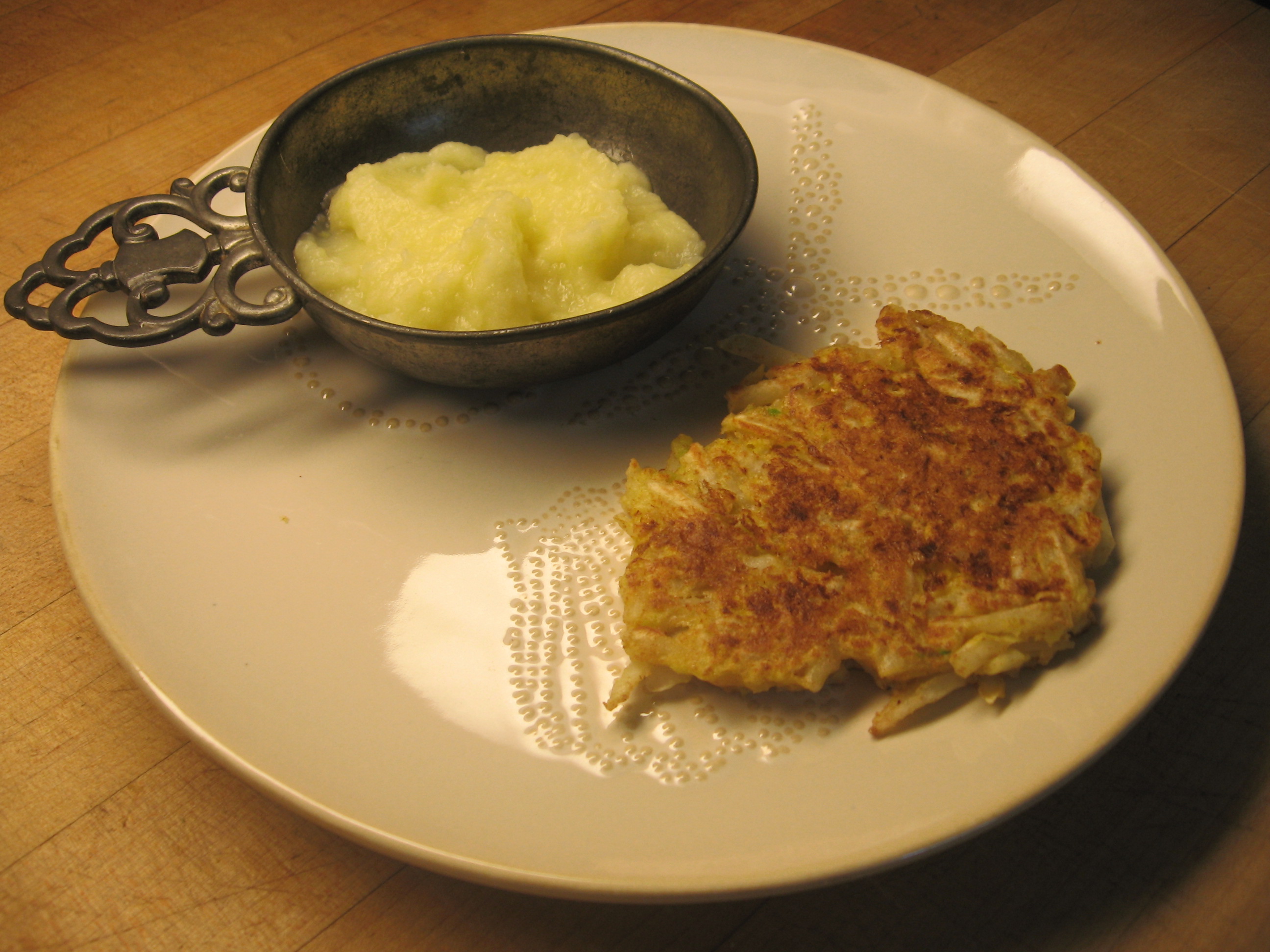
I found this yummy recipe in Jennifer Carden’s The Toddler Cafe – fast, healthy, and fun ways to feed even the pickiest eater. My beautiful sister (in law) gifted this book to us for fun ideas even though our daughter is a pretty adventurous eater – she’ll try just about anything. I made a few adjustments to the recipe and will indicate where.
One 10-ounce box frozen squash, thawed (I used peeled and shredded small yellow summer squash and small zucchini – sauteed until soft, strained and liquid reserved).
 1 beaten egg
1/4 C all-purpose flour (I used whole wheat)
1 tsp kosher salt
1 tsp sugar (I didn’t use)
1 tsp baking powder
8 ounces frozen hash-brown potatoes, semi-thawed (about 10 minutes out of freezer – next time I will try shredded sweet potatoes)
vegetable oil for frying
applesauce for serving (I made quickly while squash was sauting – just 3 tart apples – organic Pink Lady and Granny Smith, steamed then blended in food processor. I added some of the squash liquid to thin the applesauce.
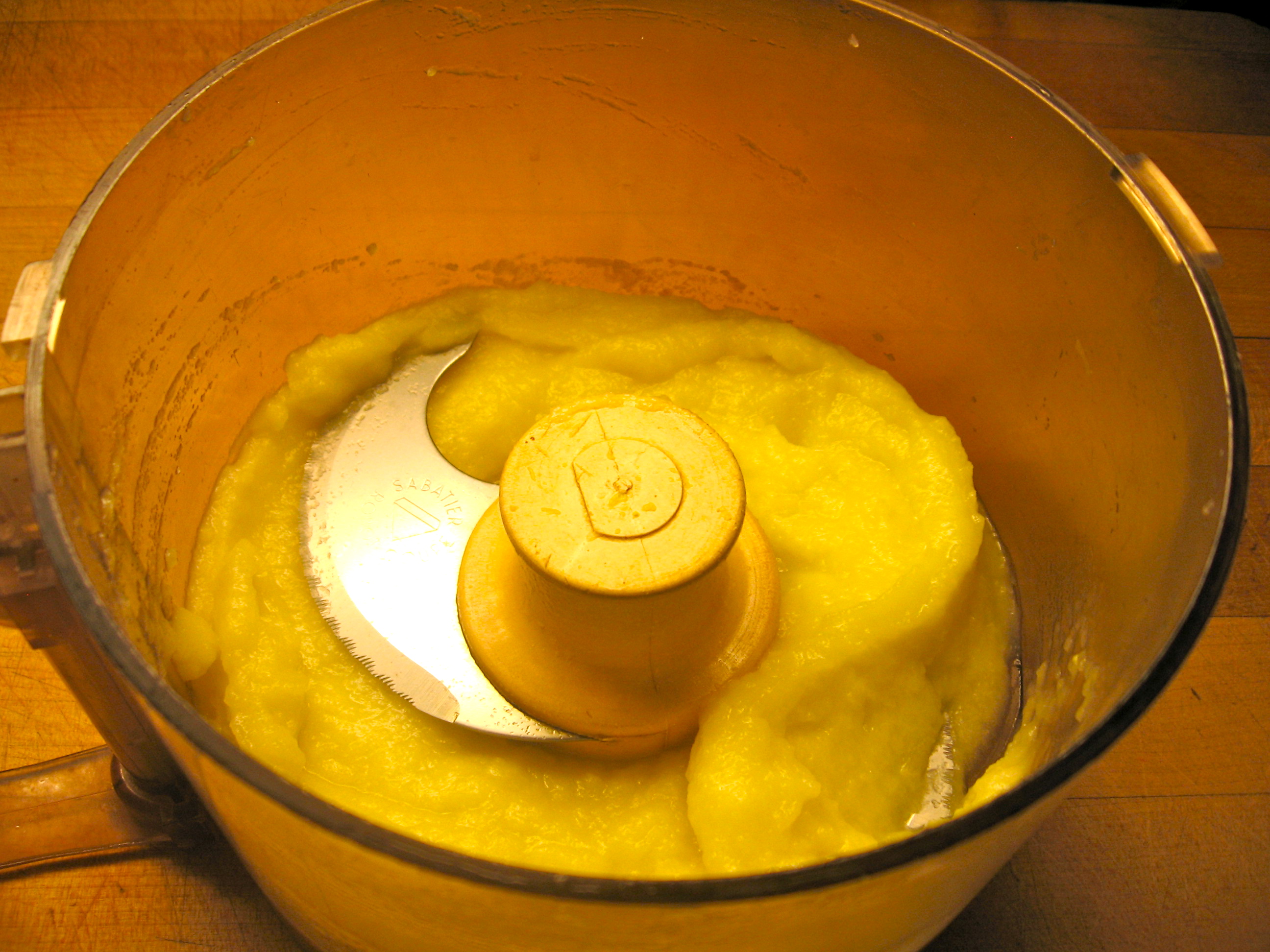
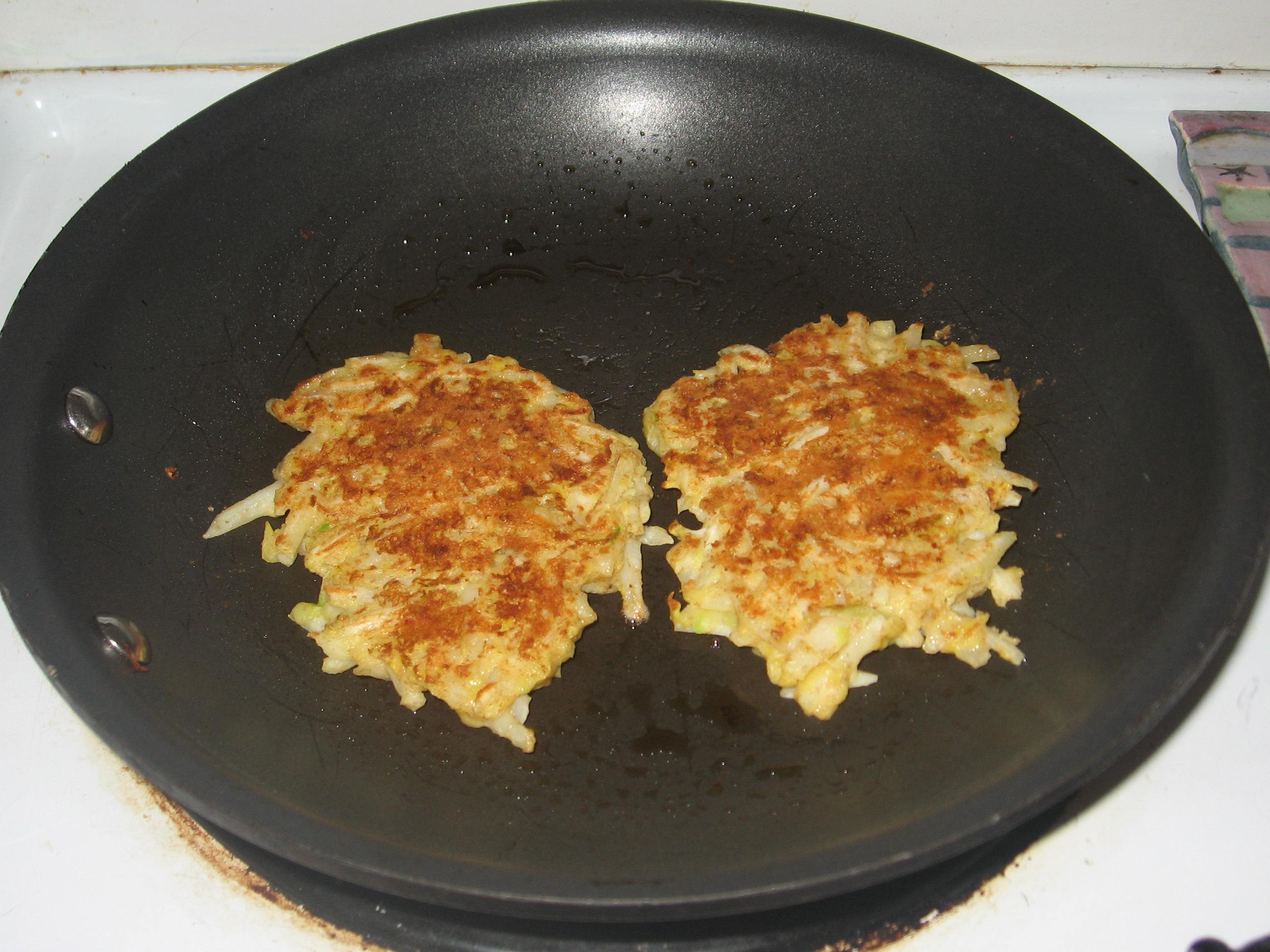
In a large bowl, mix cooled squash with beaten egg. Next add in flour, salt, sugar, baking powder. Add shredded potatoes and stir. Heat nonstick pan over medium heat and add just enough oil to to cover bottom of pan (I used sparingly and worked fine). Jennifer suggests portioning out about 2 Tb mixture into pan and fry on each side until browned (it’s a good idea to press mixture with spatula to thin out). Remove and drain on paper towel.
Emotions as Central: John Medina’s “Brain Rules for Baby”
Posted: July 13, 2011 Filed under: Chronicles of a First Time Parent, Gallery - Quotes 3 CommentsEmotions must be central
Parents face many issues on a daily basis in the raising of kids, but not all of them affect how their children will turn out. There is one that does. How you deal with the emotional lives of your children – your ability to detect, react to, promote, and provide instruction about emotional regulation – has the greatest predictive power over your baby’s future happiness.
Fifty years of research, from Diana Baumrind and Haim Ginott to Lynn Katz and John Gottman, have come to this conclusion…The critical issue is your behavior when your children’s emotions become intense…enough to push you out of your comfort zone. Here are the six spices that go into this parental rub:
- a demanding but warm parenting style
- comfort with your own emotions
- tracking your child’s emotions
- verbalizing emotions
- running towards emotions
- two tons of empathy


William Coperthwaite: “A Handmade Life”
Posted: July 10, 2011 Filed under: Art & Healing, Gallery - Quotes, What is an Art Farm Leave a comment“I want to live in a society where people are intoxicated with the joy of making things.”
Rosemary & Garlic Sea Salts
Posted: July 8, 2011 Filed under: In the Kitchen 3 CommentsA very gifted culinary friend introduced us to Celtic Sea Salts a while back in Chicago. We’ve been big fans ever since. She made several varieties but the rosemary/garlic blend (we call rosie salts) is what we use regularly. Once per year I purchase a 5 lb bag of the coarse, light grey salt from http://www.celticseasalt.com – about $21.

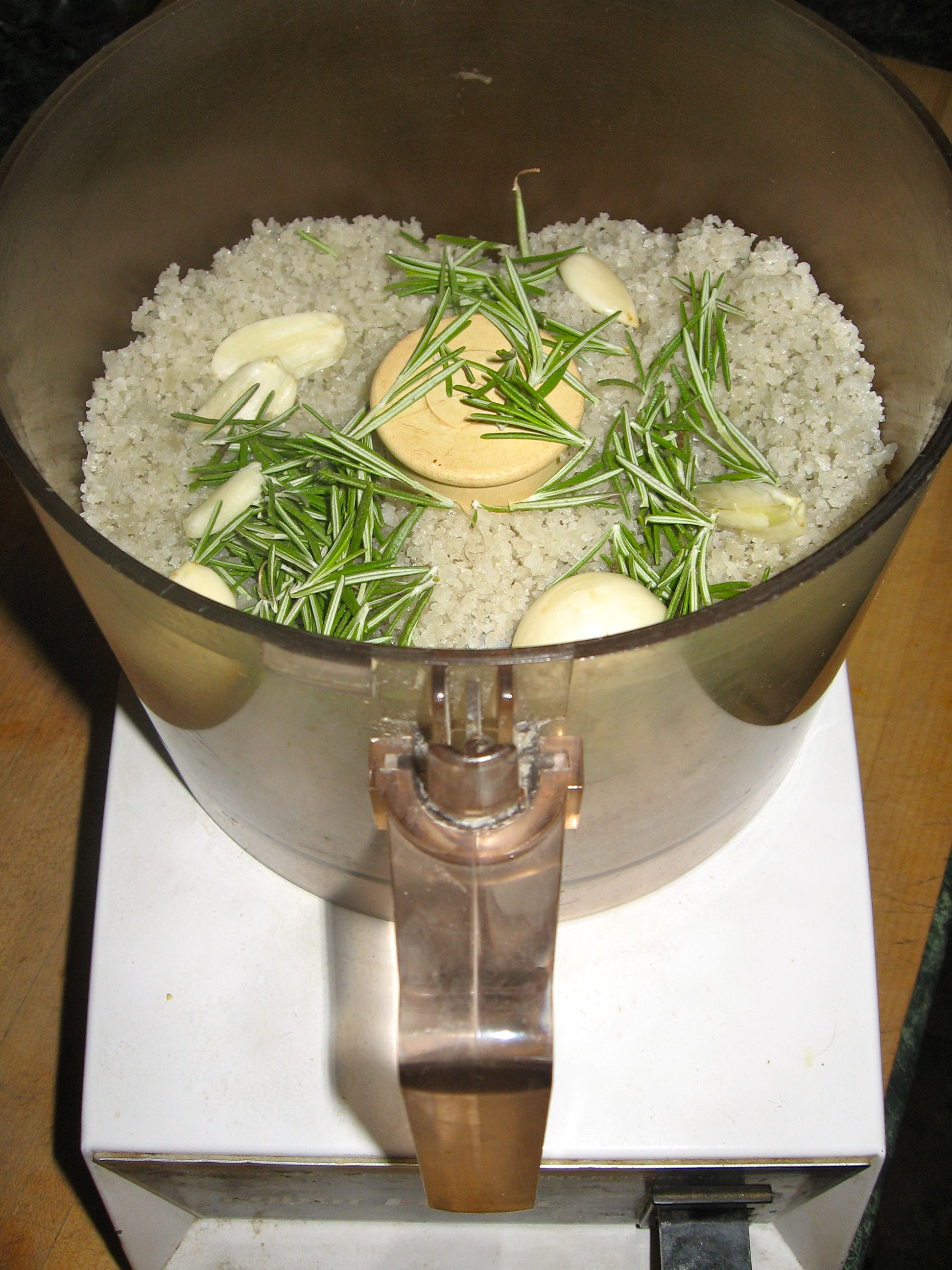
As needed, I put 3 or so cups of salt in a food processor with 5-6 fresh rosemary sprigs (leaves picked from stem) and 4-5 garlic cloves, smashed with skins removed. Pulse but do not blend.
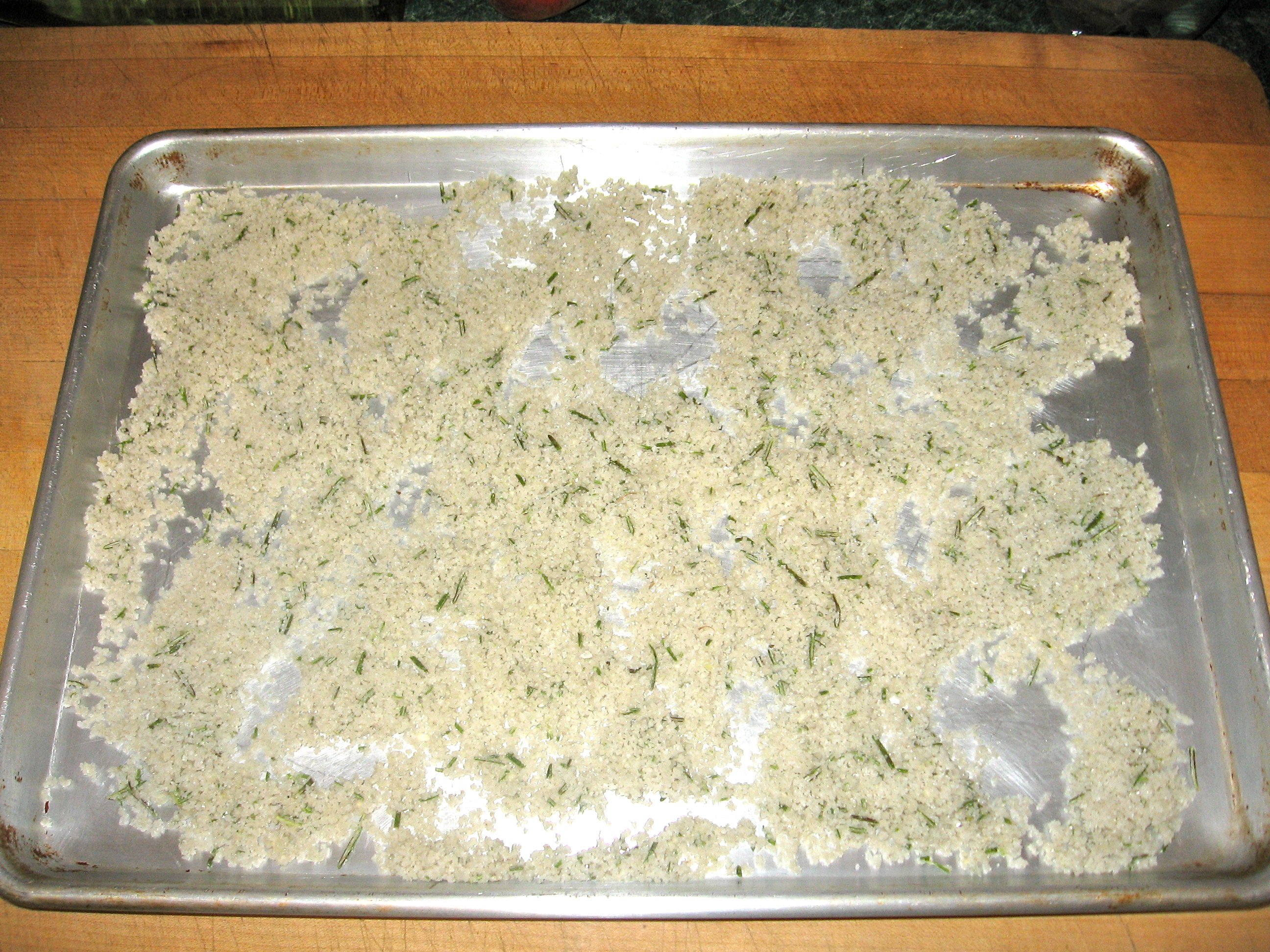
You then spread the contents onto a cookie/baking sheet and let air dry overnight as the mixture will be damp. You will pulse salt mixture again the next day, several times. Let air dry a second night.
According to the source, you may store it in a ceramic or glass container with a loose lid to allow the salts to breathe. I have a small jar right by stove always filled and ready for cooking. We use these salts for garlic bread, salads, and in general cooking. The flavor is superb.

John Medina’s “Brain Rules for Baby”
Posted: July 6, 2011 Filed under: Chronicles of a First Time Parent, Gallery - Quotes 2 CommentsThe brain’s day job is not for learning
First, I need to correct a misconception. Many well-meaning moms and dads think their child’s brain is interested in learning. That is not accurate. The brain is not interested in learning. The brain is interested in surviving. Every ability in our intellectual tool kit was engineered to escape extinction. Learning only exists to serve the requirements of this primal goal. It is a happy coincidence that our intellectual tools can do double duty in the classroom, conferring on us the ability to create spreadsheets and speak French. But that’s not the brain’s day job. That is an incidental byproduct of a much deeper force: the gnawing, clawing desire to live to the next day. We do not survive so that we can learn. We learn so that we can survive.
This overarching goal predicts many things, and here’s the most important: If you want a well-educated child, you must create an environment of safety. When the brain’s safety needs are met, it will allow its neurons to moonlight in algebra classes. When safety needs are not met, algebra goes out the window.
Anger Management
Posted: July 5, 2011 Filed under: Child Centered Activities, Chronicles of a First Time Parent 1 CommentWell, at 2 years old, there seems to be something of a daily roller-coaster ride between cuddling in mama’s arms, and running as fast as she can towards the busy street (despite my screams for her to stop). Have mercy. I’ve come to expect the split personality – “no I don’t want that, take it away” followed immediately by “it’s MINE, you cannot have it”.
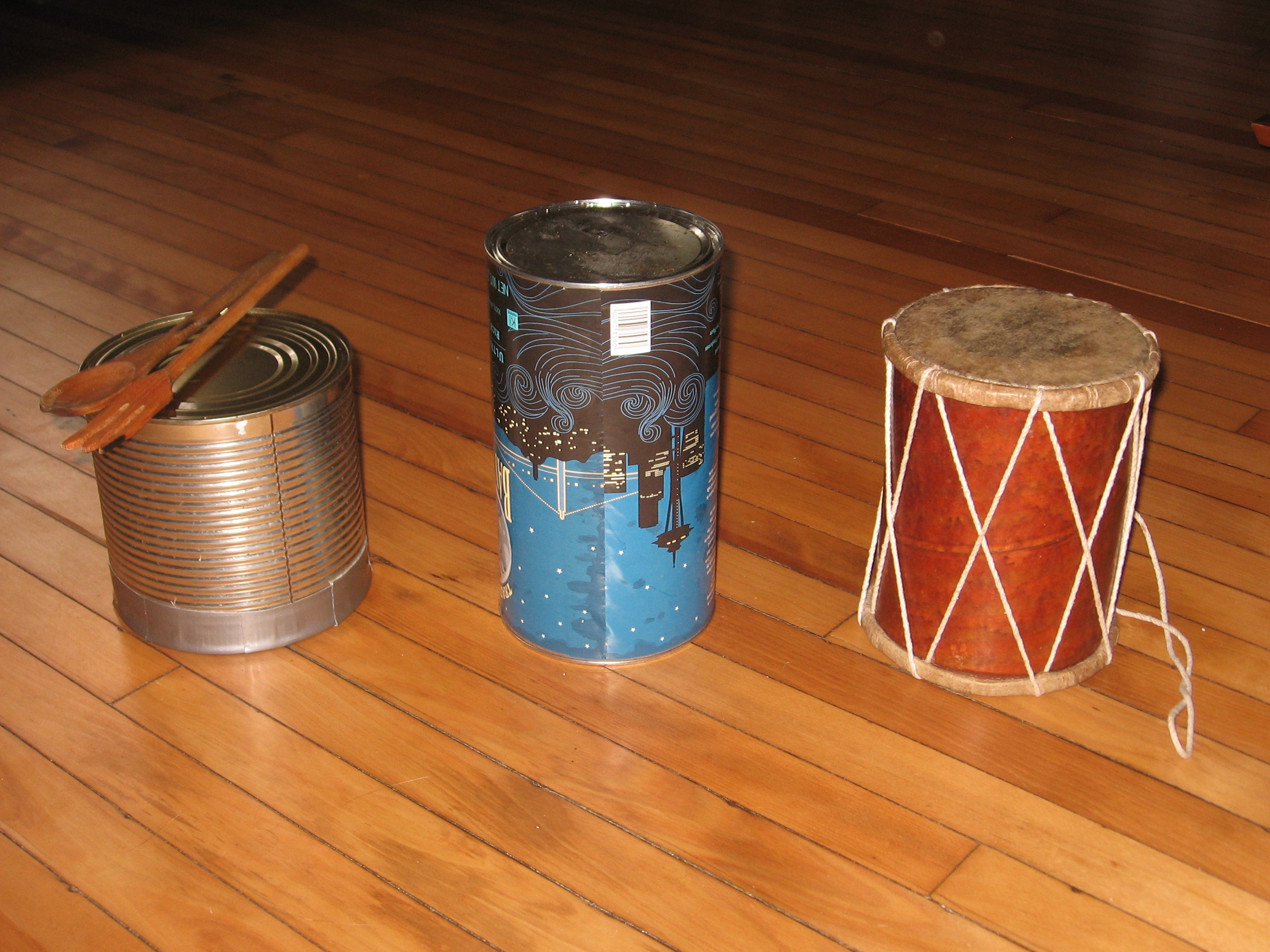
She is a passionate one, bellowing out her thoughts with such fervor, someone in earshot might think she’s protesting. Her fury has the same intensity. We’ve started a mini collection of drums and noise makers to go to when we “need to bang” on something. When she is having a moment, I suggest she choose a drum to “bang on until you feel better”. I act it out sporting a mad face. Between my looking silly impersonating a mad toddler, her feelings being acknowledged, and an outlet being offered, the drums haven’t been needed to diffuse the situation (yet).
4th of July with Pastrami Smoked Turkey
Posted: July 4, 2011 Filed under: In the Kitchen 3 Comments“Turkey?!?” I gasped when the idea of a 4 July BBQ was tossed around. But as a practical matter it made sense. With the fields beginning to show abundance, this is a time to make space in the chest freezer. Farmer Martha had a bird stashed away and so why not?
And then again, Benjamin Franklin had argued for the turkey as the symbol of the United States: “For my own part I wish the Bald Eagle had not been chosen the Representative of our Country. …For the Truth the Turkey is in Comparison a much more respectable Bird, and withal a true and original Native of America…He is besides, though a little vain & silly, a Bird of Courage, and would not hesitate to attack a Grenadier of the British Guards who should presume to invade his Farm Yard with a Red Coat on.”
So maybe turkey really does belong on the 4 July menu, but roasting was out of the question. This is grill season. Smoking the whole bird seemed a savory solution and – never having tried anything like this before – I adapted two recipes from Steven Raichlen’s “Barbecue! Bible”.
Not being sure the weight of the bird, I mixed up a pastrami dry rub by taking:
6 Tablespoons coriander seeds
Toast them and then grind coarsely in a mortar and pestle or coffee grinder, and combine with:
6 Tablespoons cracked black peppercorns
12 cloves garlic, minced
1 Tablespoon yellow mustard seeds, toasted
1 Tablespoon ground ancho chili
1/2 Cup kosher salt
1/2 Cup brown sugar
1/2 Cup sweet paprika
2 Tablespoons ground ginger
Mix the ingredients well, and then cover the bird completely, including beneath the skin on the breast, with the rub. Wrap the turkey and let it cure for 24 hours.

Before smoking, mix up an injector sauce using:
1/2 Cup chicken broth
3 Tablespoons butter
2 Tablespoons lemon juice
1 Teaspoon of the pastrami rub
Put everything in a sauce pan and heat just until the butter melts. Then using a kitchen syringe, inject the turkey at the drumsticks, thighs, and three or four places on both breasts.
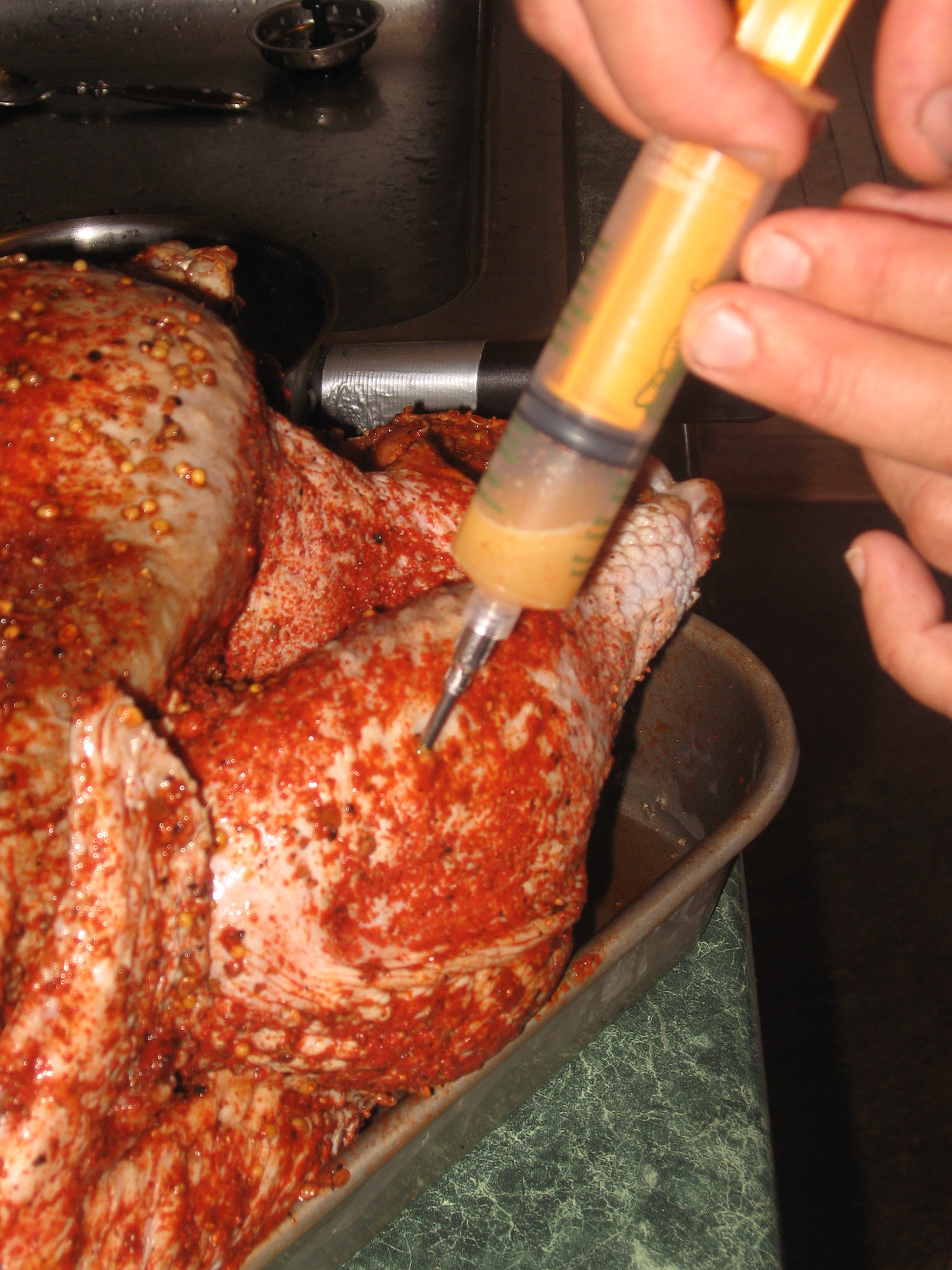
I don’t have a smoker, and in a fit of frugality years ago I purchased the 18.5″ Weber Grill instead of the larger model. Today, the size really made a problem as the bird just was too big for the indirect smoking set-up. The bird was too close to the coals
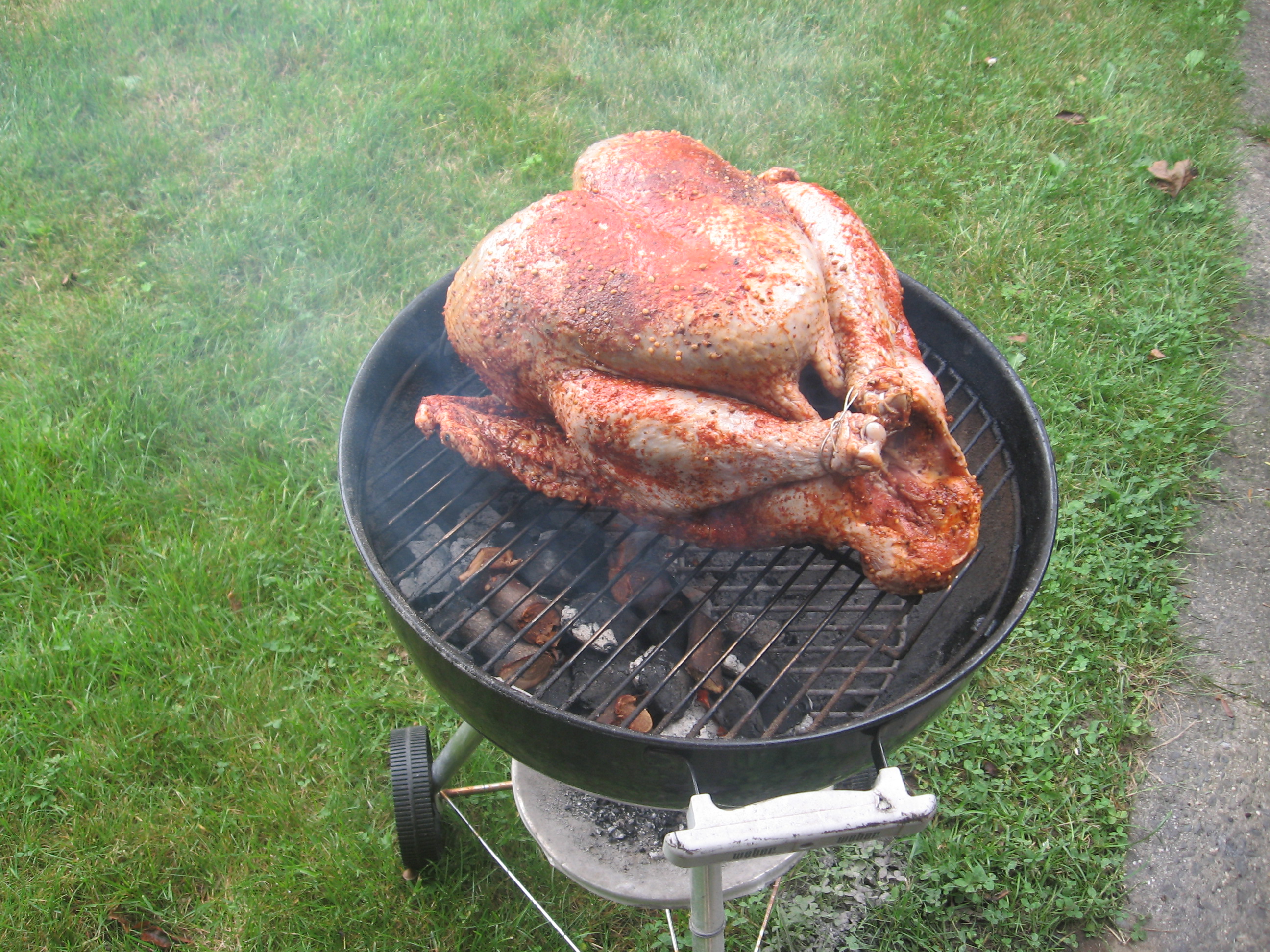
and the top wouldn’t fit. So I tried to adapt with foil.

The apple wood smoke was intense and the air flow too great. The temperature roared. After 45 minutes I opened the lid and the side closest to the flames was getting charred. Egads! I finished it in the oven at 350 degrees for about one and one-half hours, until the internal temp was 175.
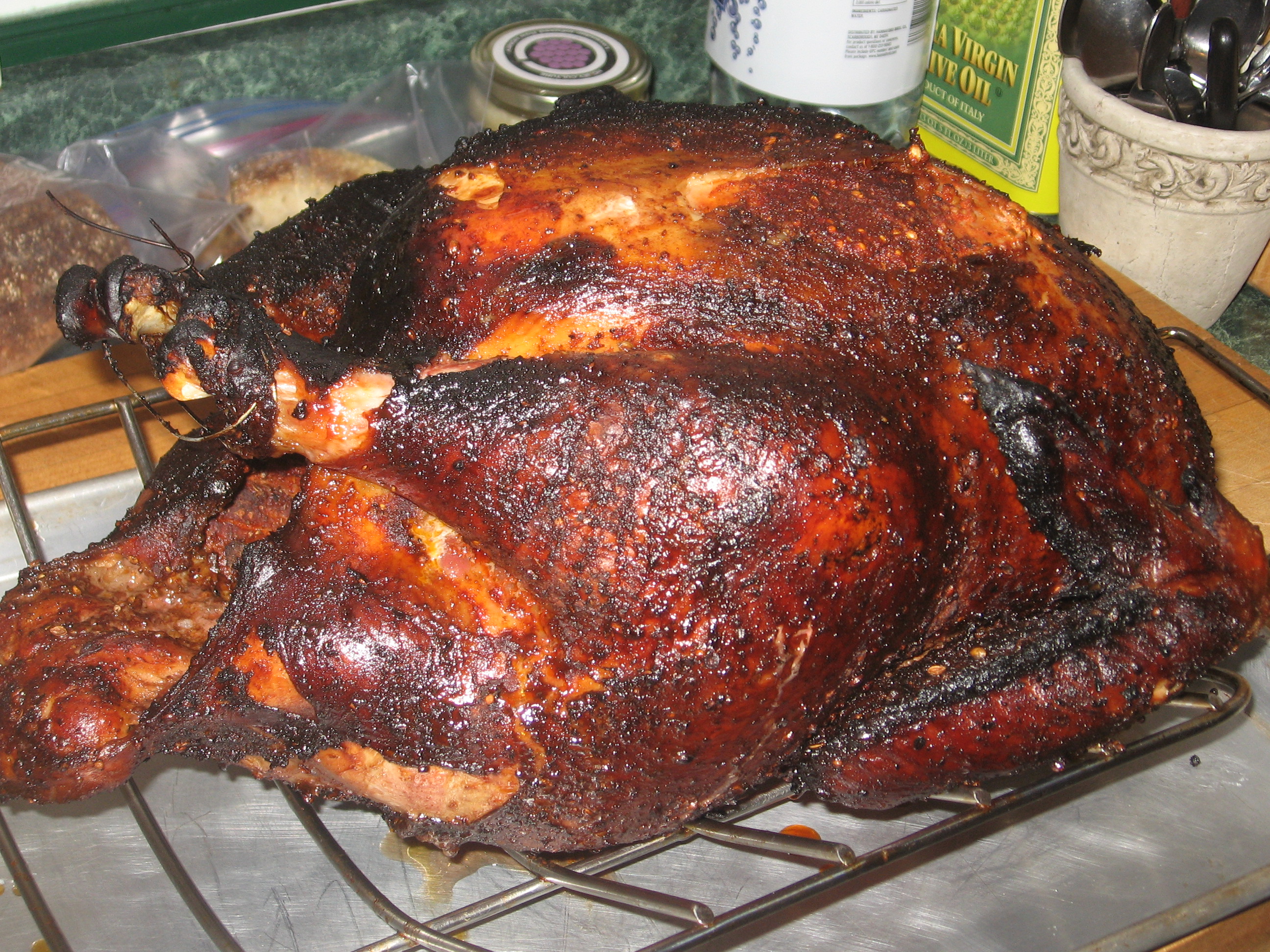
I am hoping that the injector sauce helped keep it from drying out but I won’t know how it all turned out until the picnic.
 an Art Farm