Abundance and Need
Posted: July 12, 2024 Filed under: Chronicles of a First Time Parent 4 Comments“Is that your Grandson?” he asked. “No,” I replied, proudly, “my Son. I have followed my own path in this life.” “Are you retired?” he continued. “No. My full time job is parenting. I do carpentry to pay the bills.”
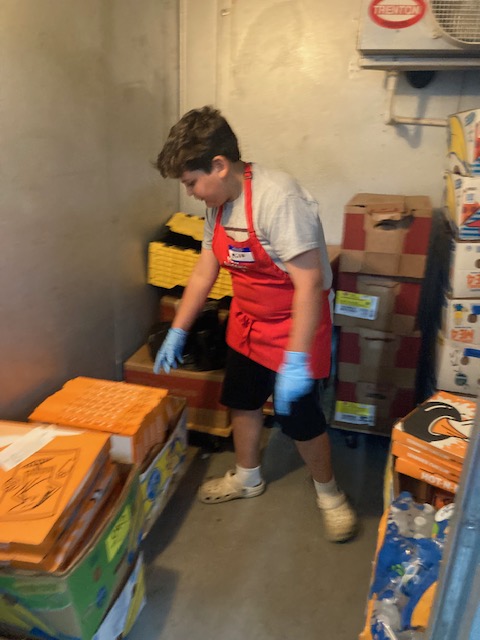
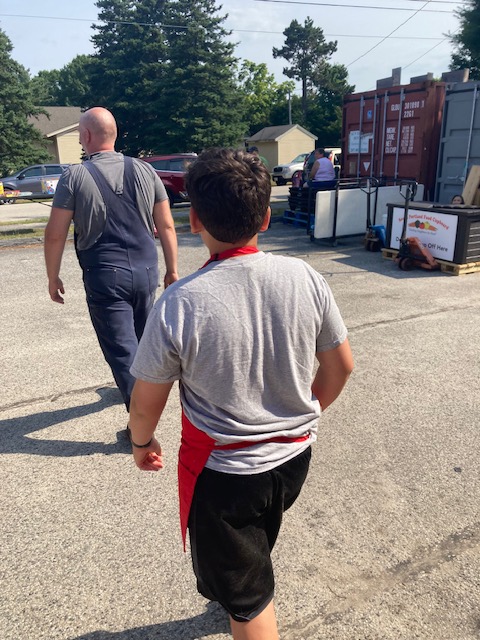
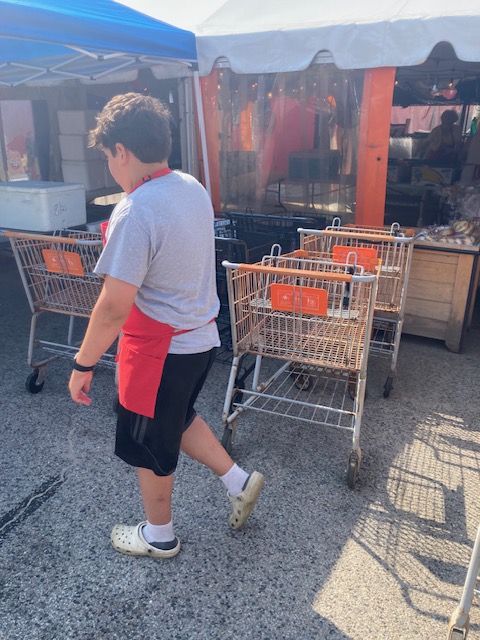
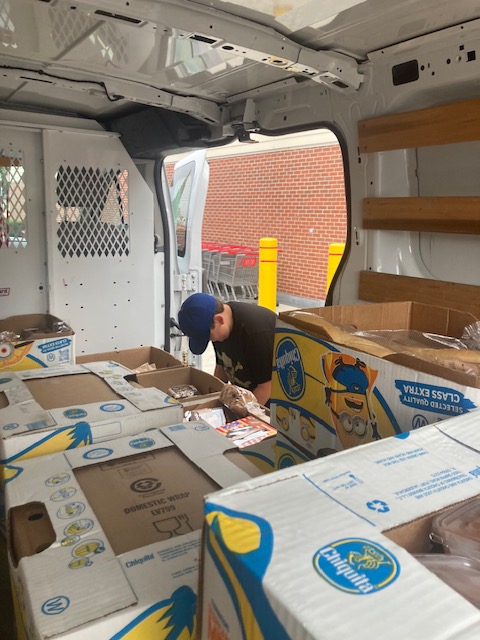
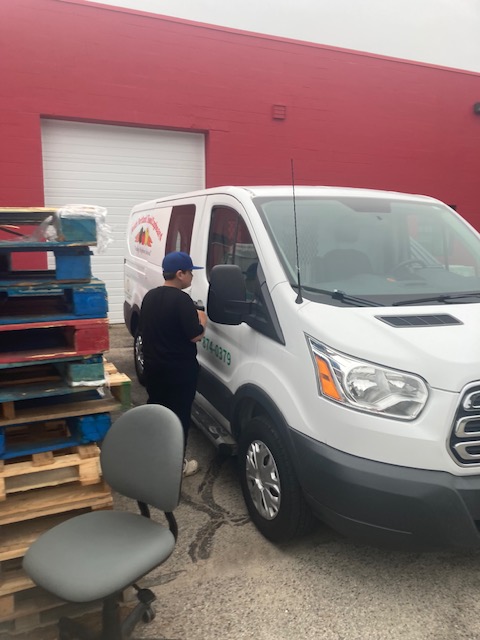
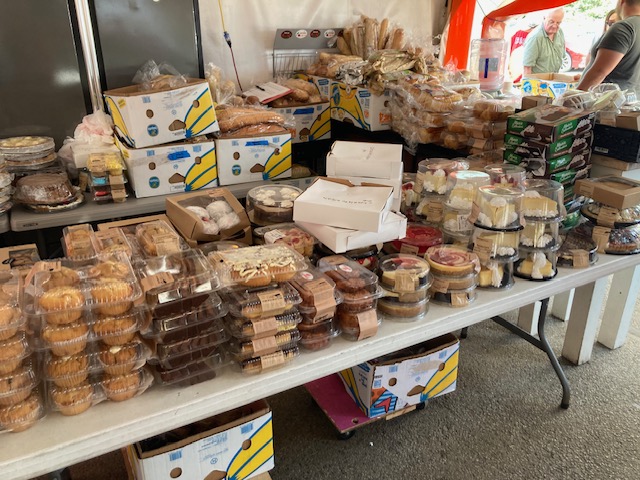
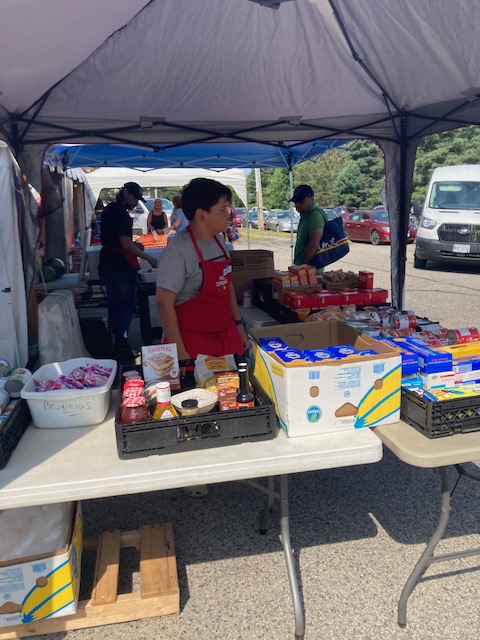
My son and I volunteered this week at the South Portland Food Cupboard. We pulled two shifts: one in “Food Distribution” (handing out food) and one in “Food Rescue” (driving the van to pick up out-of-date items). The Food Cupboard operates seven days per week, serving 800 families per week, which equals about 3,200 or 4,000 people, every week.
In the world’s richest country, the most consumptive society ever on the planet, food insecurity is a very real problem. According to the USDA, 12.8 percent of U.S. households – one in eight households – are food insecure at least some time during the year. That means: 44 million people, 13 million children, 100% of counties in America experience food insecurity.
Peter, the Warehouse Manager, told me, “There is no shortage of food. It is a problem of logistics.” Such, then, is the mission of the Food Cupboard, with its two vans, to scour our County to gather, sort, then distribute the food. The abundance is mind boggling. The need is humbling.
In another time and place, say, along the Sea of Galilee, this was the loaves and fishes, 5,000 fed – lepers, prostitutes, the unwashed – the “deplorables” some would say, but on that day they were healed and then fed.
Here in South Portland, on the second Tuesday of July, many supplicants were old and infirm but others were young and hip, fashionably dressed, manicured nails, dyed hair. The only question asked is “What do you want?” Proof of income is not required.
My son has an aptitude and logic for logistics and he found the work – the sorting and packing, the order of sequence – compelling. The apple does not fall far from the tree. During the 1990s, while I lived at home with my Mother, we volunteered weekly with other women of her parish. We would drive north, then cook and prepare food to serve the many food insecure in Waukegan, Illinois. My son and I here can ride our bike to the South Portland Food Cupboard.
Adamantly opposed to any summer camp, he found the volunteer work engrossing, and we will continue to sign up and volunteer. Among a sea of retirees, at age 11 he substantially lowered the median age of the volunteers. My work-for-hire may take a back seat to my role now riding shotgun, as he learns the path of compassion, with food as the means to the end of helping his brethren.
Wonders never cease.



Impeccable
Posted: June 21, 2024 Filed under: Chronicles of a First Time Parent, consciousness, Farming off the Farm | Tags: consciousness 2 Comments
When I was a child, the popular saying was “a man’s word is his bond.” I haven’t heard that expression now in decades.
King Solomon, David’s son, long ago commented “In all thy getting, get understanding.” For the better part of 40-years, the getting, it seems, has been primarily – for the few – immense material wealth. The 10 Commandments now seem laughably old fashioned.
Among ancient civilizations wisdom was rich, and we do well to revisit our past. The Toltec, a Meso-American culture that predates the Aztec, held four precepts to be key. Don Miquel Ruiz, a descendent of the Toltec, wrote “The Four Agreements” about “self-limiting beliefs.” The book, copyright 1997, has been published in 52 languages worldwide, and spent one decade as a New York Times bestseller.
The first precept, which he calls an “Agreement” is deceptively simple: “Be impeccable in your word.” He writes, “Your word is the power that you have to create. It is through the word that you manifest everything. Regardless what language you speak, your intent manifests through the word. What you dream, what you feel, and what you really are, will all be manifested through the word.”
“In the beginning was the Word, and the word was God” is the opening statement of the Christian Gospel of John. Ruiz explains and expands, “The word is not just a sound or a written symbol. The word is a force; it is the power you have to express and communicate, to think, and thereby to create events in your life. But like a sword with two edges, your word can create the most beautiful dream, or your word can destroy everything around you. One edge is the misuse of the word, which creates a living hell. The other edge is the impeccability of the word, which will only create beauty, love, and heaven on earth.”
As there is light, so there is darkness, which principle was embodied in the brilliant German orator whose message of fear and hatred manipulated a country of highly intelligent people. Again Ruiz, “He led them into a world war with just the power of his word. He convinced others to commit the most atrocious acts of violence. He activated people’s fears with the word, and like a big explosion, there was killing and war all around the world. …He sent out all those seeds of fear, and they grew very strong and beautifully achieved massive destruction.”
It is worth remembering that Hitler rose to power through a democratic election, via the German Workers Party, in 1932. Having campaigned as a populist, he consolidated power as a demon.
The Agreement’s verb is “impeccable,” which is derived from the Latin prefix in-, meaning “not,” and the verb peccare, meaning “to sin;” to be impeccable is to be without sin, but to the Toltec sin was different from the Christian meaning. Ruiz explains, “A sin is anything that you do which goes against yourself. Everything you feel or believe or say that goes against yourself is a sin. When you are impeccable, you take responsibility for your actions, but you do not judge or blame yourself. Being impeccable with your word is the correct use of your energy; it means to use your energy in the direction of truth and love for yourself.”
Simple truths are easily understood. Or are they? While driving on errands with my son, we talk about these. Again and again, to help guide his future, I draw from the past.
The Toltec had four agreements:
- Be impeccable with your word
- Don’t take anything personally
- Don’t make assumptions
- Always do your best
To this I would add two more:
- Let integrity be your bank account
- Let compassion, more than logic, guide your path
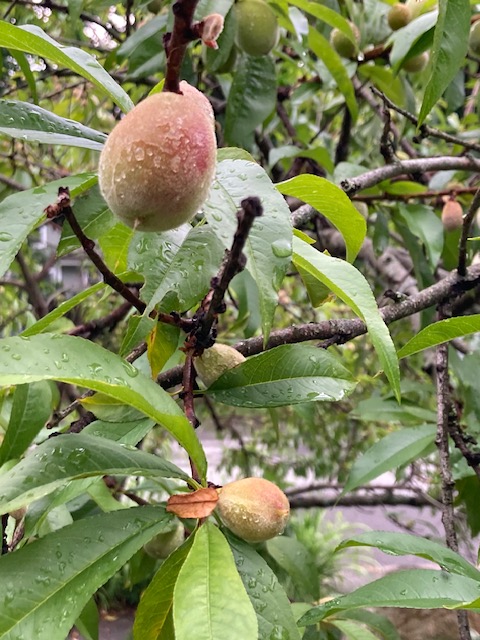
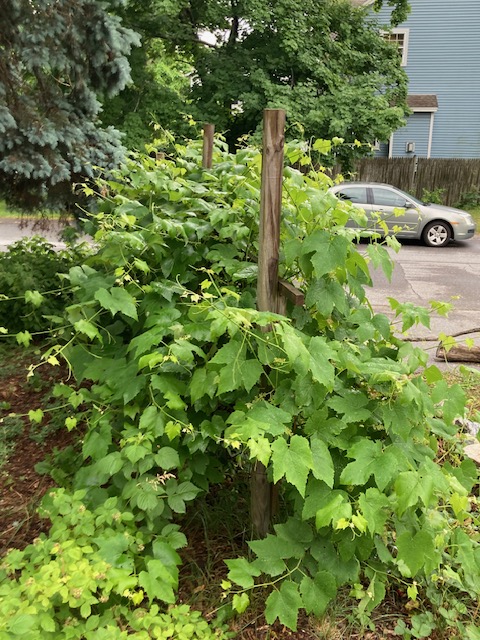
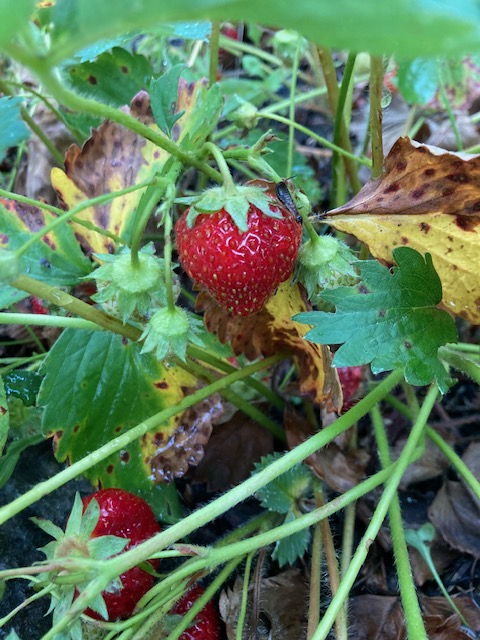
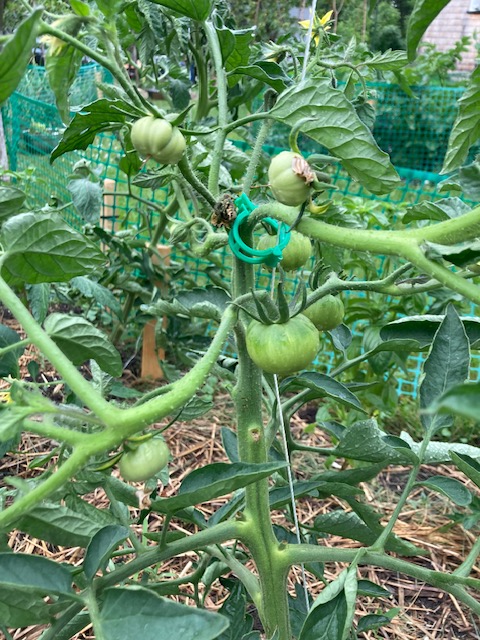
At this sun drenched solstice, fruits ripen and vines reach ever higher…







Garlic Scapes and Landscapes
Posted: June 15, 2024 Filed under: Child Centered Activities, Chronicles of a First Time Parent, Farming off the Farm, What is an Art Farm 2 CommentsBy the stars, it is late spring. By the warm temperatures and school having ended, it is summer. In our garden, it is the time when garlic stretches the curlicue scapes wildly upwards to the sun.

Summer brings heavy equipment to the farm, and equipment requires outbuildings, so we have been building, albeit in 1/16th scale.
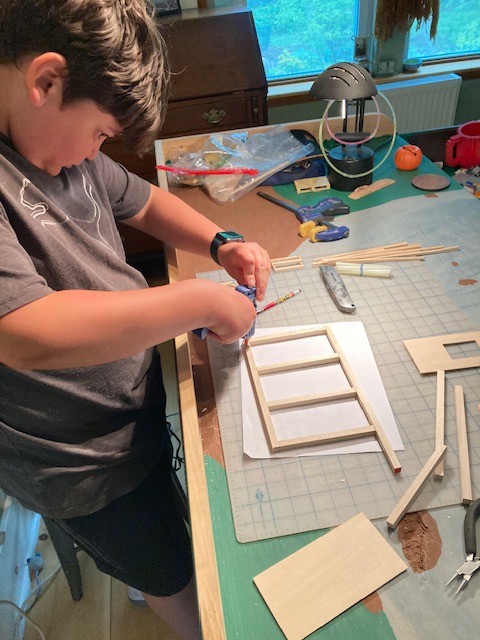


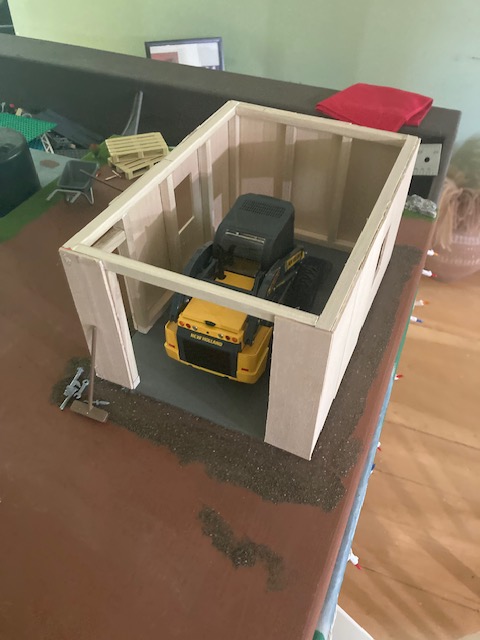

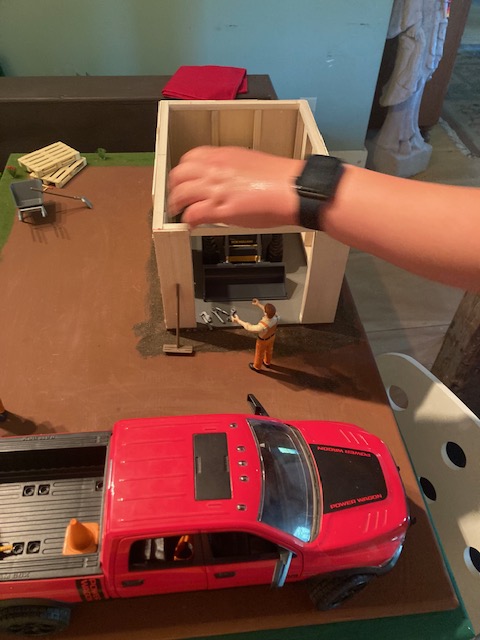
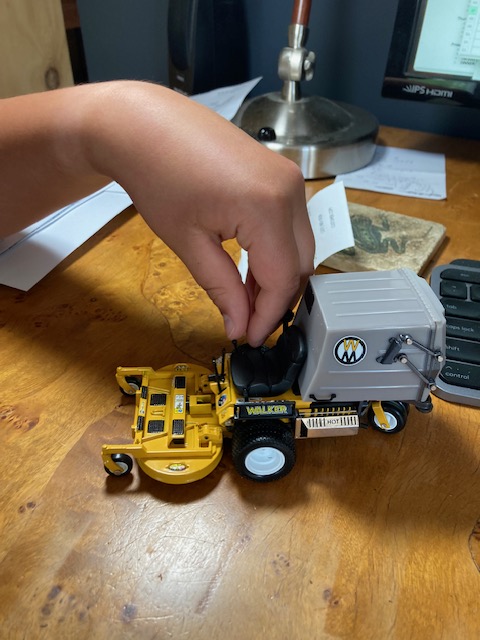
And finally, a new lawnmower, for a field of dreams, also in 1/16th scale.
Be like a cat
Posted: May 25, 2024 Filed under: Chronicles of a First Time Parent, consciousness, What is an Art Farm | Tags: consciousness, rational mind, spirituality Leave a comment
Back in the aughts, when I lived in Chicago, I studied Qigong with Dr. Paul Hannah. In Chinese, Qi means “air” or “breath” but in a metaphysical sense it is “vital energy.” Gong means cultivation. Qigong is the cultivation of that vital energy, as a non-martial art.
Dr. Hannah had grown up in the inner city projects in Chicago, and learned Tai Chi – the Chinese martial art – in order to defend himself, and thus avoid joining a gang; his ability to defeat the gang members in combat was his protection and way out of the projects. He became a board-certified psychiatrist, as well as a Tai Chi Master, with additional studies in acupuncture, Qigong and energy healing. https://www.hannahsholistichealing.com/
During my sessions he would have me stand in a half-crouched position, arms outstretched at shoulder-height in a circle, my finger tips almost touching, for an unbearably long time. He would leave the room, and later return with hot herbal tea. I believe he was training me to empty my mind and become aware of something else.
On the wall of the studio was a poster of a black panther, gazing forward, directly into the camera. He explained the concept of observing without becoming engaged, of being present with neither future nor past, neither time nor space. Dr. Hannah told me that poster had gotten him through college.
I did not then know the idea of mindfulness, but would now understand his instructions as my introduction. Thich Nhat Hanh has written, “When I eat an orange, I can eat the orange as an act of meditation. Holding the orange in the palm of my hand, I look at it mindfully. I take a long time to look at the orange with mindfulness. Breathing in, there is an orange in my hand. Breathing out, I smile at the orange.”
During that same period, I practiced Qigong with a practitioner of Chinese medicine, including acupuncture. During one session at his office, he introduced me to a colleague from China, who was considered a Master of Qigong. I was told this man had not eaten solid food for many years; he drank liquids, but metastasized the inner chi for his sustenance. Such a concept is beyond both my comprehension and experience, however, I was and remain willing to suspend disbelief. Perhaps such is possible, and I should not cut myself off from such a possibility. We have entered the realm of the suprarational.
Here in South Portland, Ryan Nitz is an acupuncturist with a community clinic. He treats many patients onsite at his clinic and, quite interestingly, has begun treating patients via remote. I do not mean by a tele-health zoom session, but rather, from his office in South Portland, Maine he treats patients in, say, Kansas or California. He does not use needles, but instead the “subtle energies” to manifest healing in the patient. https://www.mainecenterforacupuncture.com/
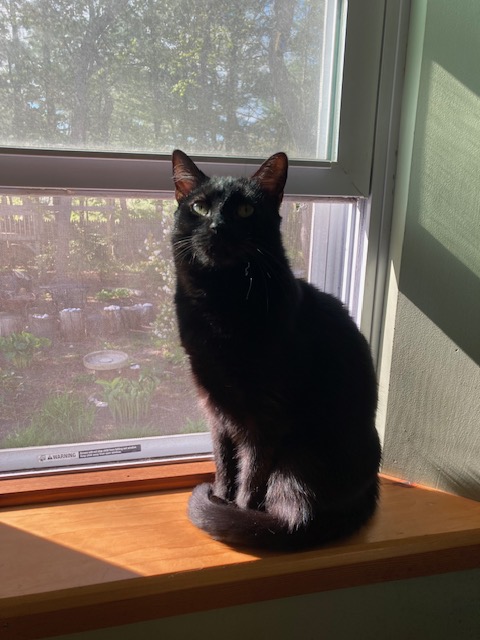
Essentially this is a form of Reiki, the Japanese form of energy healing; “rei” means universal and “ki” means life energy. Clearly now, we are beyond the bounds of western allopathic medicine. As Dr. Paul Hannah taught me, “be like a cat,” suspend disbelief and calm the mind while focusing on the energy present.
At the vanguard of energy, one meets some mighty cool cats!
My pronoun is “We”
Posted: April 25, 2024 Filed under: Art & Healing, Chronicles of a First Time Parent, What is an Art Farm 1 CommentDuring my student days, reading Greek and Latin literature, the heavy hitters – grammatically speaking – were the nouns and verbs; adjectives and adverbs lived the fancy life, drove fast cars, added sparkle and pizazz to any sentence. Pronouns were back bench utility players.
In recent years pronouns have gained a place of prominence, which intrigues me. I first heard about the increasing awareness of pronouns when a friend, serving on the Board of the Friends School of Portland, described this new phenomenon. My children’s teachers now list their pronouns in emails. I am increasingly aware of this social trend.
In my work as a carpenter no one ever asks my pronoun; this topic is never discussed on the job site. And so I should like to announce here, that my pronoun is “We.” I have chosen the first person plural with specific intent, to message my commitment to collaborate, co-create, communicate and cooperate in building community.
I observe people use the third person: he, she, it, they, them. First and second person pronouns do not denote gender, while third person specifically denotes and identifies gender. While I affirm and embrace gender equality, fluidity, and transgender my deeper concerns lie with the increasing fragmentation and divide within our culture. Third person pronouns denote “other” which underscores separation.
The concept of “other” has been a central question of philosophy for centuries, for millenia. Within the European tradition everyone from Hegel to Husserl from Sartre to Simone de Beauvoir has opined upon “other.” In the main, “other” has been used to define “self” but I argue this falls within an “us versus them” mindset. What will it take for us to come together?
We do well to look further back to Plotinus, the Greek founder of Neoplatonism. He taught there is a supreme, totally transcendent “One,” containing no division, multiplicity, or distinction; the “One” was identified with the concept of “Good” and the principle of “Beauty.” Among his quotes is: “When we look outside of that on which we depend we ignore our unity; looking outward we see many faces; look inward and all is one head. If a man could but be turned about, he would see at once God and himself and the All.” First person plural, indeed.
Among the ironies of history is that a slave-holding patrician wrote that sterling sentence which begins “We the people of the United States, in order to form a more perfect Union….” How bold to set down those words, such pioneering thought, while Europeans were focused upon “other.” But slavery, treating some people not only as other but as property, bought and sold, would come to define the central challenge of the United States.
And so it was on 4 March in 1861 that an axe wielding brawny frontiersman, elected the 16th President of the young United States, stood upon the Capital steps, charged with the responsibility of holding together the Union. Abraham Lincoln’s First Inaugural Address outlined his thinking, a constitutional lawyer, on the civil discord simmering among the states. He closed out his speech with an appeal to unity, using the first person plural: “We are not enemies, but friends. We must not be enemies. Though passion may have strained, it must not break our bonds of affection. The mystic chords of memory, stretching from every battle-field, and patriot grave, to every living heart and hearth-stone, all over this broad land, will yet swell the chorus of the Union, when again touched, as surely they will be, by the better angels of our nature.”
If pronouns are to continue to gain in prominence, when the collective id has been let loose, when dark anger rages like a sharp knife in a street fight, in these times now going forward may we the people pursue the blessing of unity, accepting diversity in collaboration and a renewed commitment to community.
May “We” become the vogue, in these times, and going forward.
Light & color: making marks
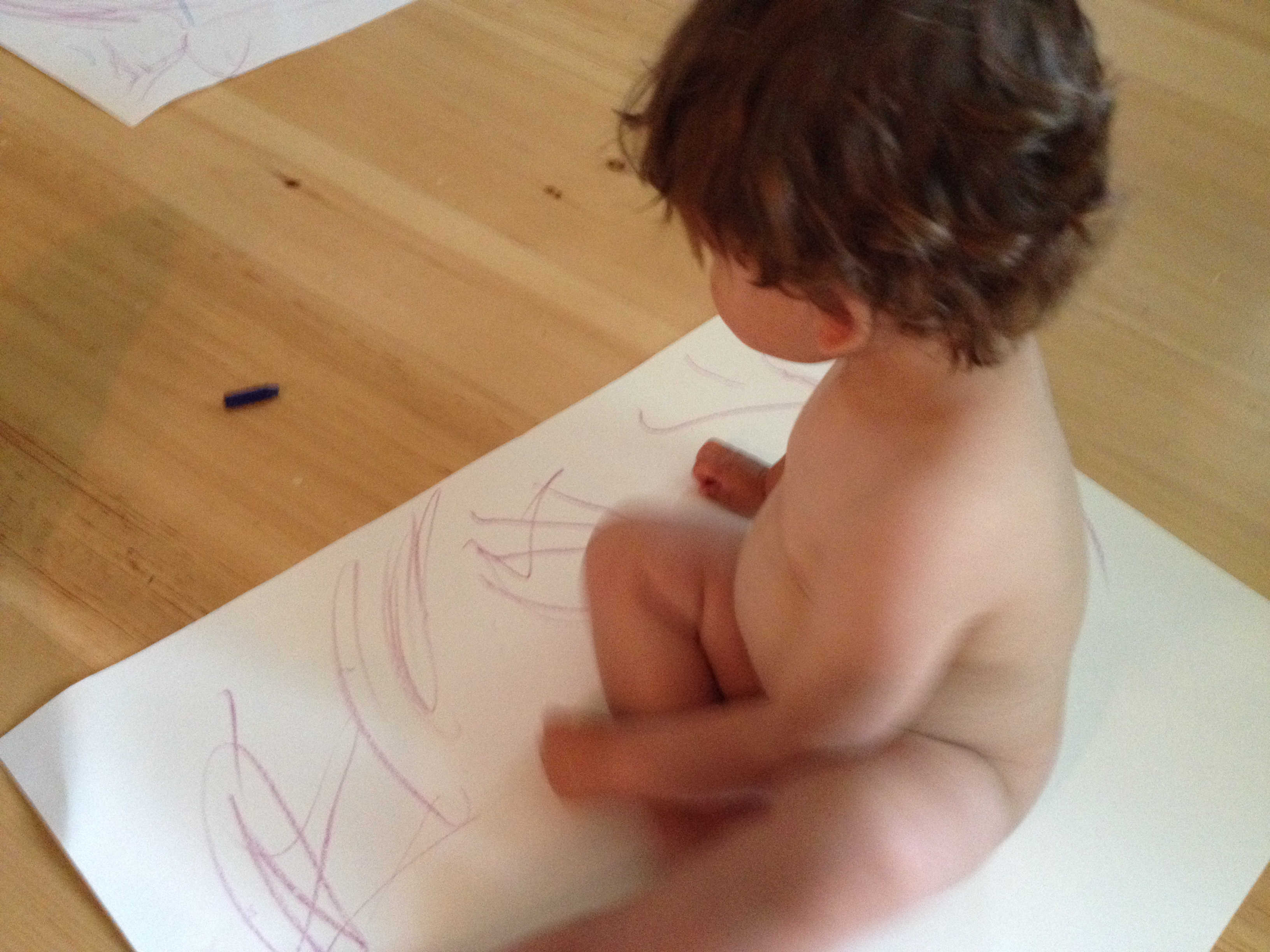
Posted: July 2, 2014 Filed under: Art & Healing, Child Centered Activities, Chronicles of a First Time Parent, What is an Art Farm 3 Comments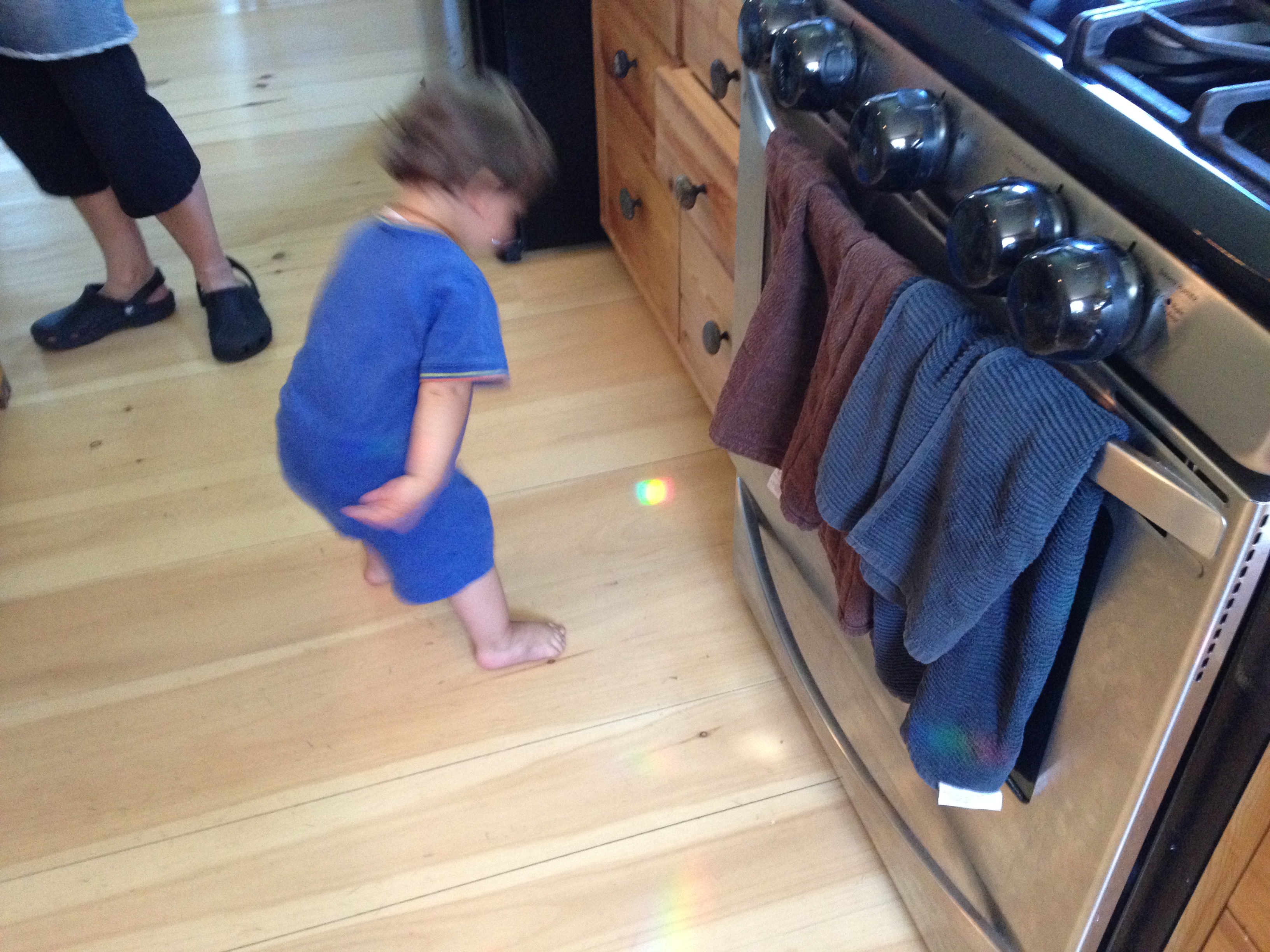


Birth Story Revisited
Posted: February 15, 2014 Filed under: Chronicles of a First Time Parent 12 Comments
I am blessed. Let me say it again, I am blessed. I have two beautiful children, an amazing husband, and an overall rich and full life.
I am also sleep deprived. Like, from the last 8 months, sleep deprived.
Ever since we tried transitioning our 14-month old son from co-sleeping in our bed, three out of four of us haven’t slept more than 2-3 hours at a time, sometimes up repeatedly for hours during the night. Thankfully our oldest sleeps soundly.
I’ve read books, talked with moms, spoken to the doctor, vented and cussed and struggled overall with how to help our boy. Pick him up, don’t pick him up, let him cry it out, don’t over-stress him…And until this week, I now realize, I was looking at the entire problem through the wrong, foggy-eyed lens.
We went to a sleep specialist, who is actually a pediatric nurse practitioner with a holistic philosophy. I find her utterly fascinating. I’ve known about her for some time, went to her once with our first-born, have friends who use her and am awestruck at how she weaves her understanding of biology and chemistry, perinatal psychology, energy therapies, nutrition and more, all within the family context of what she calls the “heart centered relationship”.
Milo wakes up often each night, in a highly agitated state. The specialist stated it was neither comfort seeking nor night terrors. She looked deeper and further back. She asked about his birth story.
Ever since his birth, December 10, 2012, I have looked back with great pride to the water birth, the one hour delivery from the time my water broke and the two pushes that carried him out and up into my arms. It was so fast that his head did not mold.
I never considered what his experience was. Could it be possible that what I considered -from my perspective- a beautiful successful birth was, for Milo, likely traumatic?
According to our specialist, an abrupt transition from the womb into the water was for my baby likely rough and rushed, flooded with adrenaline. She spoke of the cranial nerves which carry the impulses down from the brain and have ties to the nervous system. She mentioned that the presence of adrenaline will diminish the body’s natural release of oxytocin, the calming hormone.
Because of the nature of Milo’s birth, a pattern was set early for tension, hyper-vigilance, and adrenaline imbalance. This helped explain some of the early behaviors we have observed as well, extreme sensitivity to noise, need to touch my skin while he slept, hyper sensitivity to diaper changes, and a strong desire to be held.
Where do we go from here? We have a list of behavior modifications to try such as earlier bed time, increase melatonin rich foods to help stabilize sleep cycles, massage and joint compression to help him feel comfortable in his body, and more. We were also encouraged to visit an Osteopath who could provide manipulations to assist in calming Milo’s nervous system. Paramount here is to pattern behaviors that reassure our young Milo that the world is a safe and secure place.
Being a therapist, and advocate for children it was hard to realize I had overlooked Milo’s experience at birth and the ripples it could produce. We all are sensitive beings and our feelings, behaviors and physiology are connected to the experiences we have had. From the perspective of an infant entering the world, it is no different.
The Burden of Restoration
Posted: December 2, 2013 Filed under: Art & Healing, Chronicles of a First Time Parent, Permaculture & Home Renovation, What is an Art Farm 6 Comments
We bought our home in “as-is” condition, a cash only sale because no bank would finance the property. To our great fortune we found an angel to provide that cash, with an agreement that within two years I would pay them back with interest.
One year – almost to the day of moving in – we are completing a bank loan to honor that agreement, but in trading an angel for some bankers, I could not have fathomed the process, nor the word-smithing required, to meet bank standards.
At the earliest stage of the renovation we tore down the barn; too far gone for preservation, an easy choice, but we did keep a 200 square foot area that connected the barn to the Ell. Nothing sentimental, it was a matter of necessity to have storage for the things and stuff of family life.
Our shed is quite old – tree trunks, with bark still on, function as studs – and it is not pretty: roofline sags, the only remaining shutter hangs forlorn from its last hinge, asbestos siding is missing in places. At some stage I will take down the shed, and in its place erect a mudroom, second bathroom, and a bedroom for Becca and me. And storage space. But that is a project for some other season.
During the first year our focus has been the main house interior: to reduce the energy draw; to redo the plumbing, electric, kitchen, bathroom, and floors; to develop the garden beds for a permacultural homestead.
The timing of the refinance was an open question. Last spring, when rates were incredibly low, I risked a meager appraised value because work remained unfinished. The house was comfortably livable, but looked 90% done.
By early autumn, rates had increased, but my “punch list” was finished. I felt optimistic. Never could I have imagined the obstacle that would arise.

Twenty years ago I set out to work in “humanitarian finance.” My goal was to organize a trust fund to generate cash, free and clear, for media-based community development projects. Back in the Clinton era, end of the last century, the economy was roaring and people excitedly thought the internet would be a boon for democracy rather than commerce. The future seemed bright.
While reading in a Law Library I came across the “Philanthropy Protection Act of 1995”, Public Law 104-61, which allows not-for-profits to manage investments outside the constraints of the Investment Company Act of 1940, which, just happens to be the primary source of regulations for the mutual fund industry.
I found a loophole. Public Law 104-61 is not widely known. When I contacted McDermott Will & Emery, a law firm which has the largest tax practice in the United States, they declined to provide advice because no one on their staff had any knowledge of the law and they “didn’t want to learn at my expense.”
Naïve and strong willed, I forged ahead into the deep waters of off-shore finance.
Within a few years we held in trust assets of various and unusual form: safe keeping certificates for 100 metric tons of gold bullion held in the underground vaults at Kloten, Switzerland; a rough-cut emerald weighing 1,000 grams; title to thousands of acres in Ecuador.
The more rare the asset, the harder it seemed to manage. How do you establish a bankable value for a one-of-a-kind emerald? And after Sept 11, the likelihood of insuring such an asset became virtually impossible.
The Trust Fund also held, in Swiss bank accounts, liquid assets. Cash, the ubiquitous United States Dollar, caused the greatest difficulty when one of the bankers helped himself to the trust funds. Humanitarian finance was an oxymoron.
That banker went to prison in Lichtenstein. The Trustees, myself included, became Defendants in a lawsuit in a Federal Court. Ultimately the lawsuit was settled, but I was forced into bankruptcy. I have kept my distance since from the world of the glassy-eyed banker.

Coming into the refinancing my past was layered, but this is the means forward to secure this home and property for my family. The process of restoration has been life affirming, and once I was ready for the appraisal, I began to see it as the last step in absolving the deep-rooted shame and pain from that debacle.
My credit scored well. We locked in a good interest rate. Only the appraisal remained. We needed a value of $200,000.
The appraisal came in at $200,000 but subject to tearing down the shed. Given that, the underwriter refused the appraisal, because that verbiage would not be acceptable to the secondary market. We were dead in the water.
I told the bank that we would not tear down the shed just to complete the refi. We do intend at some point to tear down the shed – I look forward to building the new addition – but I am not going to rush into that.
The bank asked about repairing the shed. I made clear that would not be done before our interest rate lock expires, so that was a moot point. The third option was to restate the value of the home excluding the shed.
Our home and the shed passed the City’s building inspection with no issues. The home and shed are insured. It seemed incredulous, but if one bank insisted the shed was an obstacle, why would any other bank see it differently?
The Loan Officer was highly motivated to make the loan and went to the Bank President. The President, in turn, went back to the appraiser to appeal for a change of language. The appraiser, to our great surprise, consented. He changed his report.
Eighteen words made the difference: “the shed is not a safety hazard or concern. Settling is normal for a building of that age.” No repair needed, no tear down, no reduction in value. Our home is now financeable.
It will be a meaningful personal victory when we close the refinance on 4 December, but our work of restoration has a long way yet to go. The physical property may be the least of it.
The script of every life includes victories and struggles, and as a parent, my goal is to raise children not in the shadow of my circumstance but in resolution’s opening: healthy, intact, curious young souls able to explore, question, move forward without the baggage of their predecessors, the patterns of generations.
This burden of restoration reaches deep, and its ultimate measure will not be the financial, bankable asset, nor even the condition, of physical property, but the WHOLE self, the emotional, psycho-spiritual, playful aspects, that we nurture.
I had never seen it this way before, but through working to restore one piece of the earth, and to create a home and haven for my family, I have learned a new way to think for the second, let alone the seventh, generation.
Christmas Trees are for the Birds
Posted: January 8, 2013 Filed under: Art & Healing, Child Centered Activities, Chronicles of a First Time Parent, In the Kitchen 2 Comments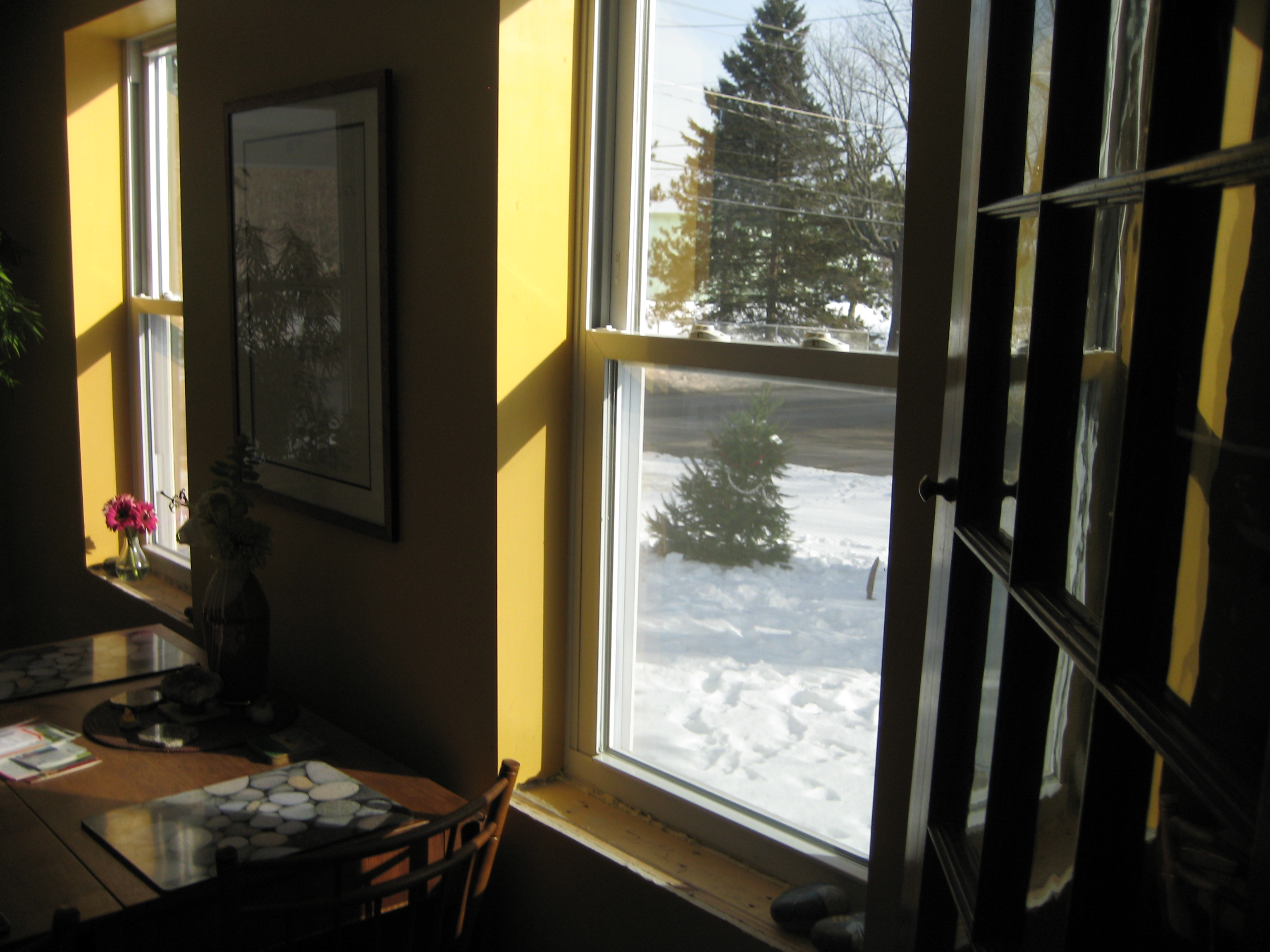
First year ever. We bought a Christmas Tree.
Out into the fields, Little Miss E and I went.
We toasted marshmallows, drank some hot chocolate then ran among the trees, E shouting, “This one! No, this one! No, no this one!!” In the fading light of a mid-December dusk I made a quick choice and cut rapidly with the saw. Oh, what a big event, and its momentum carried through the holidays.
And then last Sunday it was time to take down the tree. Along the roads now, balsams lie discarded, heaped upon the snow banks, so much trash waiting to be carted away. “Where do they go?” E asked, and I really don’t know. It got me wondering.
In our home, the threat of discarding the tree was too great. E had a meltdown. And I had an idea. I remembered my mother, an avid birder, telling me that our feathered friends love to take shelter in the boughs and branches of the trees – whether rooted or cut down does not matter – and so a plan was hatched. “Wait, we can help the birds!”
While Becca grabbed cranberries from the freezer, and a needle and thread, E and I hauled the tree outdoors, into the sunlight of the front yard. We stood the tree upright in the snow.
E was thrilled. Back into the house, she dashed to the art table and insisted “I can do it!” I showed her how to hold the needle and thread, how to position the fingers while pulling the needle through, and she was off. In her typical fashion, she shouted, “I can do it, I can do it. Give me space!”

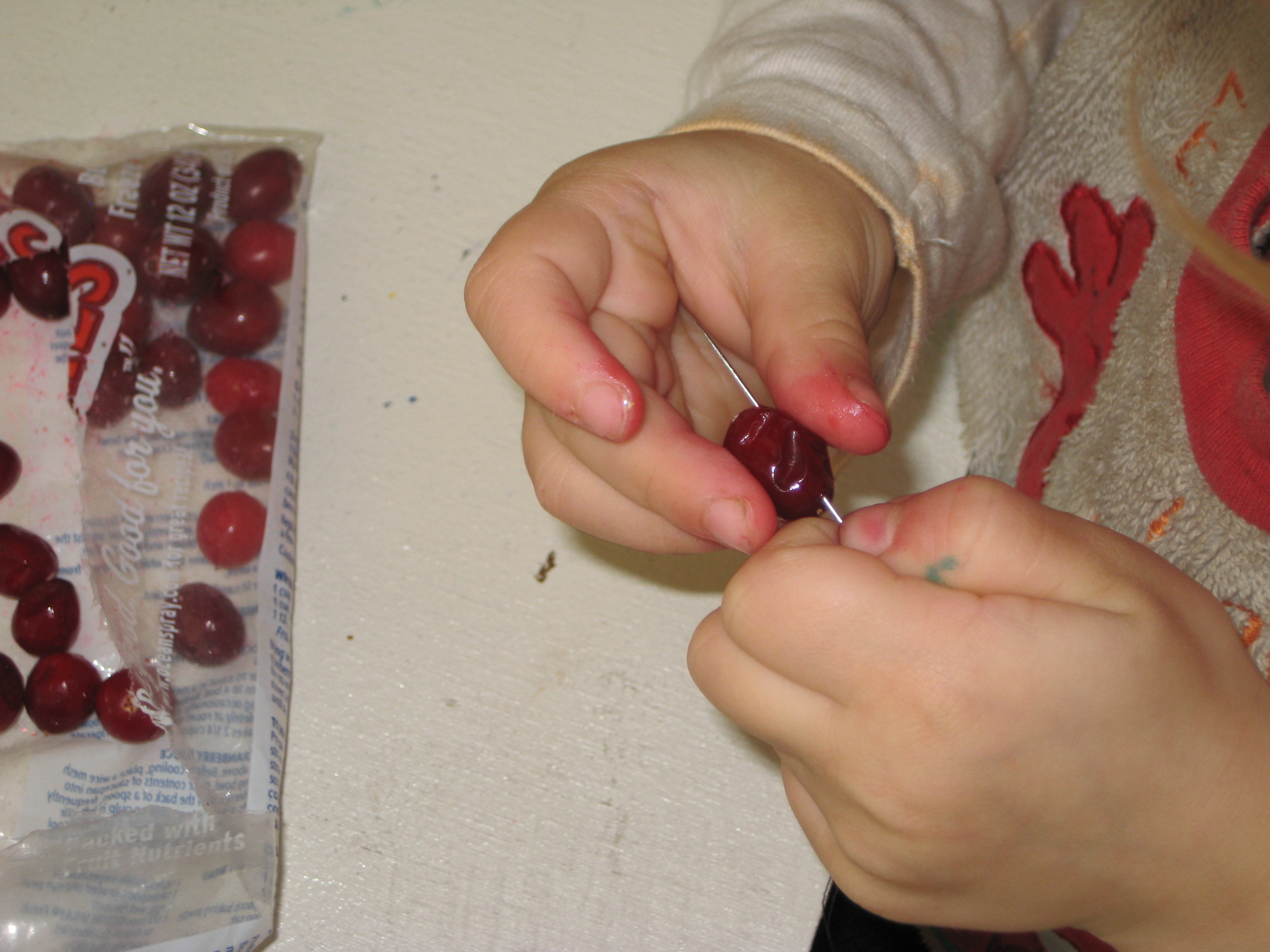
And for good style, she donned rabbit ears. Who knows why. It was quite a look.
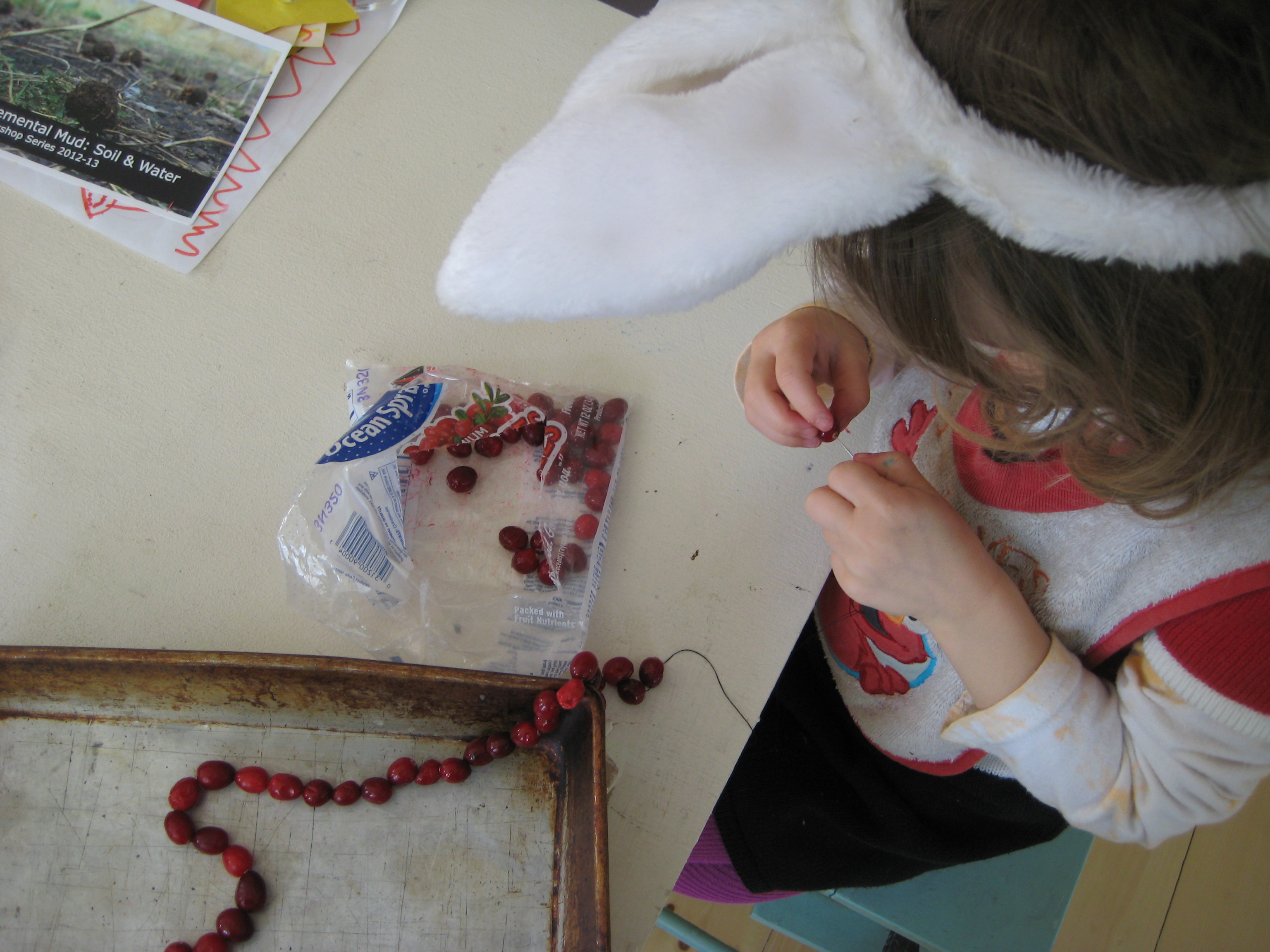
We transitioned from meltdown to excitement. She ate loads of raw berries, then danced as we hung them on the tree. Later, while stringing popcorn, she ate far more than she strung.
But we put together enough garland to encircle the tree several times. And so we answered her question about where our tree will go: at our house, it is for the birds.

Petrokus
Posted: December 15, 2012 Filed under: Chronicles of a First Time Parent, Farming off the Farm 2 CommentsPetrokus was our family’s pig. Well, half the pig was ours.

On a rainy saturday, one week ago, he was loaded into a trailer and I told my daughter E, “He is going to another farm.” That was true, by half. “Why?” she asked. “Well, he has gotten too big for Dan’s farm.” That was completely true. He had grown to almost 400 pounds.
He spent the weekend in that trailer, at the other farm, until Monday when he was taken to the slaughter-house. I wasn’t sure how to broach that topic with E so I had punted. But this morning, we made the long drive up to West Gardiner Beef. We loaded the car and headed back home. I felt it was time to talk about our payload.

Of all the “big” conversations I might have with my children, I would anticipate the topics of sex and drugs. The source of our family’s food, however, would hardly seem to belong on that list. But I was feeling pretty uneasy.
We are trying to live as close to the land as practical, and when friends offered to co-raise a grain-fed hog, that was a welcome opportunity. I love pork: braised, brined or roasted; pan seared or smoked “low & slow”; dry rub, salt cure, wet mop – whatever the manner, I love it all. My daughter does too. Becca is sure this gene was inherited from my side of the family.
We visited Petrokus during the summer. We talked about him when we purchased grain at the feed store. We touched upon the idea that Petrokus would provide our family with food. We want our children to know their food and its source. The issue of slaughtering may very well have been my own.
On the way to the slaughterhouse, I had told E that we were going to get some meat. Now I needed to add some details. I eased into the conversation.
“So, E…the meat that we are carrying is…from…Petrokus.”
I pondered that phrasing. Was it better, clearer to say “…is Petrokus” ? I distanced the animal and the act by inserting “from.” I continued, “He gave his life, gave us food.”
Silently, she looked out the window at the bare trees. I did not want to rush the conversation so I gave the silence plenty of time.
“Did the butcher…did the butcher…hurt him?”
The topic of “hurt” is commonplace in our conversations. She might ask if a pencil hurts paper when she makes marks, if it hurts a carrot when she takes a bite, if it hurts a tree when the winds blow. “Hurt” is her three-year-old variant of “Why?” So her question was not as loaded as it might seem.
I thought about Chuang Tzu’s zen tale of the butcher and the oxen. At first he “saw the Ox as one mass.” With experience comes insight and then “My whole being apprehends. My senses are idle. The spirit free to work without plan follows its own instinct, guided by natural line, by the secret opening, the hidden space, my cleaver finds its own way. I cut through no joint, chop no bone.”
What I said was, “The butcher did his job well. So it is okay.”
More silence.
“It is sacred,” I continued, “when an animal gives its life to feed us. We are thankful.”
Silence.
Her thoughts drifted to her new-born brother. “Will we be able to share this delicious meat with Milo?”
It must be in the genes! “Yes,” I said, not opening the question of how long before a newborn could be fed pork.
In silence, she looked out the car window.
Then finally, “Will we have another pig next year?”
So our conversation passed without trauma. Or perhaps this is just the first phase of a long ongoing conversation, with changing feelings, about the source of our food. Certainly she will have much to say on the topic.
For the record, here are some facts about the fattening of Petrokus:
– purchased the suckling pig on 1 May, approx 18 weeks old;
– consumed 1,100 pounds of Blue Seal “Pig & Sow” grain pellets and 650 pounds of Blue Seal “steamed flaked corn.”

